
The role of peer feedback through online word processors in acquiring accuracy on simple past tense usage
140
0
0
Texto completo
(2) PEER FEEDBACK AND GOOGLE DOCS IN VERB TENSE USAGE Declaration I hereby declare that my research report entitled:. The Role of Peer Feedback Through Online Word Processors in Acquiring Accuracy on Simple Past Tense Usage. •. is the result of my own work and includes nothing which is the outcome of work done in collaboration except as declared and specified in the text;. •. is neither substantially the same as nor contains substantial portions of any similar work submitted or that is being concurrently submitted for any degree or diploma or other qualification at the Universidad de La Sabana or any other university or similar institution except as declared and specified in the text;. •. complies with the word limits and other requirements stipulated by the Research Subcommittee of the Department of Foreign Languages and Cultures;. •. has been submitted by or on the required submission date.. Date: _October 24, 2019_________________________________________________ Full Name:. _Luis Fernando PRIETO SERRATO______________________________. Signature:. ____________________________________________________________.
(3) PEER FEEDBACK AND GOOGLE DOCS IN VERB TENSE USAGE. i. Abstract This research project aims to analyze the role of peer feedback through an online word processor in the improvement of simple past tense usage, with 10 to 12-year-old fifth-graders from a private Colombian bilingual school. The students are classified at the A2 level of the Common European Framework of Reference for Languages (CEFR), and after the analysis of various writing samples, their difficulties to use the simple past tense in written texts were evident. This project tracks their improvement in using the simple past tense accurately, as a result of collaborative work and peer feedback received from one another, when writing narrative texts, on an online word processor (Google Docs). The analysis of the data obtained during the implementation process through surveys, artifacts, checklists, semi-structured interviews, and a researcher’s journal suggests that the participants improved their accuracy in the usage of verbs in the simple past tense when writing thanks to the peer feedback strategy provided through the selected online word processor. Additionally, the participants increased their lexical variety and language awareness. Further research would enrich the discussion about the role of social interaction in the co-construction of knowledge regarding accuracy, as well as in the development of lexical variety. Key words: Accuracy; peer feedback; writing skills; simple past tense; online word processor. Resumen. El objetivo de este proyecto de investigación es analizar el rol de la retroalimentación entre pares a través de un procesador de textos en línea para mejorar el uso del tiempo pasado simple, con alumnos de quinto grado de 10 a 12 años de edad de un colegio bilingüe colombiano. Los estudiantes se clasifican como A2 del Marco Común Europeo de Referencia para las.
(4) PEER FEEDBACK AND GOOGLE DOCS IN VERB TENSE USAGE. ii. Lenguas (CEFR). Después del análisis de varias muestras de escritura, se evidenciaron sus dificultades para usar el pasado simple en textos escritos. Este proyecto hace un seguimiento de su progreso, como resultado del trabajo colaborativo y la retroalimentación entre pares recibida entre ellos, al escribir textos narrativos en un procesador de textos en línea (Google Docs). El análisis de los datos obtenidos durante la implementación sugiere que los participantes mejoraron su precisión en el uso de verbos en pasado simple al escribir, gracias a la estrategia de retroalimentación entre pares proporcionada a través del procesador de textos en línea seleccionado. Además, los participantes aumentaron su variedad léxica y su conciencia frente al lenguaje. Investigaciones futuras enriquecerían la discusión sobre el papel de la interacción social en la co-construcción de conocimiento con respecto a la precisión en el uso del lenguaje, así como en el desarrollo de la variedad léxica. Palabras claves: Precisión, retroalimentación de pares, habilidades de escritura, pasado simple, procesadores de texto en línea..
(5) PEER FEEDBACK AND GOOGLE DOCS IN VERB TENSE USAGE. iii. Table of Contents Abstract ............................................................................................................................................ i Resumen........................................................................................................................................... i Table of Contents ........................................................................................................................... iii Table of Figures .............................................................................................................................. v Table of Tables .............................................................................................................................. vi Table of Excerpts ........................................................................................................................... vi Chapter 1: Introduction ................................................................................................................... 1 1.1. Introduction to the study ......................................................................................... 1. 1.2. Rationale for the study ............................................................................................ 2 1.2.1 Rationale for the problem of the study ........................................................ 2 1.2.2 Rationale for the strategy selected to address the problem of the study ..... 4. 1.3. Research question(s) and objective(s) .................................................................... 5. 1.4. Conclusion .............................................................................................................. 5. Chapter 2: Literature Review .......................................................................................................... 7 2.1. Introduction ............................................................................................................. 7. 2.2. Theoretical framework ............................................................................................ 8 2.2.1 Writing Skills .............................................................................................. 8 2.2.2 Accuracy ................................................................................................... 10 2.2.3 Feedback ................................................................................................... 11 2.2.4 Google Docs .............................................................................................. 15. 2.3. State of the art ....................................................................................................... 16 2.3.1 Previous research on peer feedback in writing ......................................... 16 2.3.2 Previous research on accuracy .................................................................. 17.
(6) PEER FEEDBACK AND GOOGLE DOCS IN VERB TENSE USAGE. iv. 2.3.3 Previous research on Google Docs in collaborative writing ..................... 19 2.3.4 Justification of research question and objectives ...................................... 20 2.4. Conclusion ............................................................................................................ 21. Chapter 3: Research Design .......................................................................................................... 22 3.1. Introduction ........................................................................................................... 22. 3.2. Context .................................................................................................................. 23 3.2.1 Type of study............................................................................................. 23 3.2.2 Participants ................................................................................................ 24 3.2.3 Researcher’s role ....................................................................................... 25 3.2.4 Ethical considerations ............................................................................... 25. 3.3. Data collection instruments................................................................................... 26 3.3.1 Descriptions and justifications .................................................................. 26 3.3.2 Validation and piloting.............................................................................. 30. 3.4. Conclusion ............................................................................................................ 31. Chapter 4: Pedagogical Intervention and Implementation............................................................ 33 4.1. Introduction ........................................................................................................... 33. 4.2. Visions of language, learning, and curriculum ..................................................... 34 4.2.1 Vision of language .................................................................................... 34 4.2.2 Vision of learning...................................................................................... 36 4.2.3 Vision of curriculum ................................................................................. 37. 4.3. Instructional design ............................................................................................... 38 4.3.1 Lesson planning ........................................................................................ 38 4.3.2 Implementation ......................................................................................... 39.
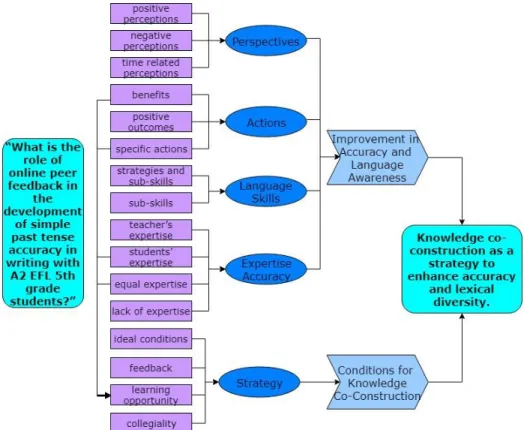
(7) PEER FEEDBACK AND GOOGLE DOCS IN VERB TENSE USAGE 4.4. v. Conclusion ............................................................................................................ 42. Chapter 5: Results and Data Analysis........................................................................................... 44 5.1. Introduction ........................................................................................................... 44. 5.2. Data management procedures ............................................................................... 45 5.2.1 Validation .................................................................................................. 47 5.2.2 Data analysis methodology ....................................................................... 49. 5.3. Categories ............................................................................................................. 52 5.3.1 Overall category mapping ......................................................................... 52 5.3.2 Discussion of categories............................................................................ 54 5.3.3 Core category ............................................................................................ 60. 5.4. Conclusion ............................................................................................................ 61. Chapter 6: Conclusions and Pedagogical Implications ................................................................. 63 6.1. Introduction ........................................................................................................... 63. 6.2. Comparison of results with previous studies’ results ........................................... 64. 6.3. Significance of the results ..................................................................................... 66. 6.4. Pedagogical challenges and recommendations ..................................................... 67. 6.5. Research limitations on the present study ............................................................. 68. 6.6. Further research .................................................................................................... 68. 6.7. Conclusion ............................................................................................................ 69. References ..................................................................................................................................... 70. Table of Figures Figure 1 Category mapping process. ................................................................................ 54.
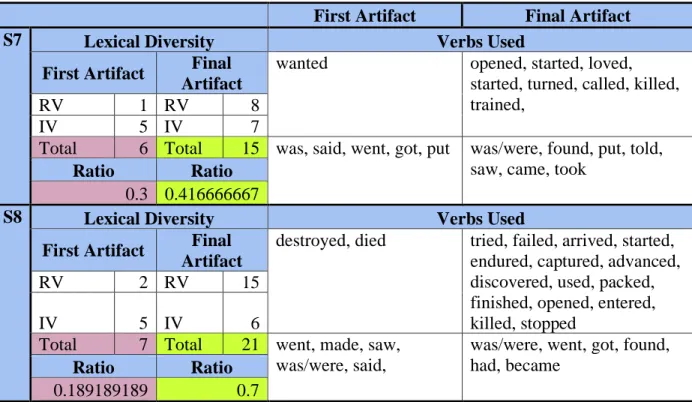
(8) PEER FEEDBACK AND GOOGLE DOCS IN VERB TENSE USAGE. vi. Table of Tables Table 1 Implementation Planning. ................................................................................... 40 Table 2 Qualitative and Quantitative Data Collection Process During the Implementation Phase ............................................................................................................................................. 46 Table 3 Sample of the First and Final Artifacts Statistical Analysis................................ 50 Table 4 Sample of the Comparison of the Lexical Diversity Demonstrated by the Participants in the Initial and Final Artifacts ................................................................................ 51. Table of Excerpts Excerpt 1. S12, Final Survey. ............................................................................................ 55 Excerpt 2. S14, Semi-structured interview. ....................................................................... 55 Excerpt 3. S6, Semi-structured interview .......................................................................... 56 Excerpt 4. S7, Semi-structured interview. ......................................................................... 56 Excerpt 5. S12, Semi-structured interview. ....................................................................... 57 Excerpt 6. S14, Semi-structured interview. ....................................................................... 57 Excerpt 7. S10, Semi-structured interview. ....................................................................... 57 Excerpt 8. S13, Final survey. ............................................................................................ 58 Excerpt 9. S7, S5, S11 Semi-structured interview. ............................................................ 59 Excerpt 10. S9, S8, Semi-structured interview. ................................................................. 59.
(9) PEER FEEDBACK AND GOOGLE DOCS IN VERB TENSE USAGE. 1. Chapter 1: Introduction 1.1. Introduction to the study Language acquisition is a multistage process. O’Grady (2001) has described it as a. “developmental sequence leading to the emergence of mature linguistic competence in the areas of phonology, vocabulary, morphology, and syntax” (p. 359). Brown (2007) argues that comprehension skills are usually developed faster than production skills. However, there is an interconnection between comprehension and production skills when it comes to learning a language. Learners need to decode a language in order to produce it, and vice versa (El-Koumy, 1997). Declarative knowledge (e.g. reading skills) supports the development of procedural knowledge (e.g. writing skills), thanks to the learning strategies used in the learning process of the target language (Chan, Chin, Nagami, & Suthiwan, 2011; Harmer, 2007). Additionally, written and oral discourses need to be structured in a manner that they are understood by readers or listeners for effective communication to happen (Harmer, 2007). The writing process implies communication between the writer and the reader through the text (Hyland, 2016). In other words, the writing process is not a unidirectional process but implies social interaction. This characteristic of the writing process can be used as a feature that can help L2 learners improve their writing skills if we encourage them to provide feedback to one another in their writing. In fact, providing peer feedback in the writing processes is a strategy that sets the conditions for learners to “enter into dialogues related to performance and standards” (N.-F. Liu & Carless, 2006, p. 280). Moreover, there are currently technological tools, such as online word processors, that, due to their characteristics, allow collaborative feedback to take place in real-time (Conner, 2008; Oishi, 2007; Ruby Yang, 2010). Google Docs (http://docs.google.com/) was chosen for the present study because it is an online word processor.
(10) PEER FEEDBACK AND GOOGLE DOCS IN VERB TENSE USAGE. 2. that enhances interaction and collaboration in writing and allows learners to provide peer feedback during their writing processes. The present study examined the effects of combining a peer-feedback strategy with the use of a word processor (Google Docs for the case of this study) on the writing skills of L2 English-learners; such an approach may also be relevant to other learner populations, such as other university or school students, with access to similar kinds of tools. 1.2. Rationale for the study 1.2.1 1.2.1.1. Rationale for the problem of the study Needs analysis and problem statement. The participants considered for this study were 14 students from a private school in La Calera, Colombia. Fifty percent of the students were girls, and the other fifty percent were boys. Their average age was 11.4 years. The first instrument used to identify the problem to be studied was their results on the English Cambridge KET exam (“A2 Key for Schools,” n.d.), taken by the participants as part of the school’s curriculum. According to their results, they were classified at the A2 level of the Common European Framework of Reference for Languages (CEFR) (Council of Europe, 2001), and it was evident that writing was the communicative skill for which the participants had more improvement opportunities. Twelve of them scored just 6 or less out of 10 possible points in the exam’s open cloze questions related to grammar, vocabulary, and spelling. To better determine which area of writing skills the participants most needed strengthened, they were required to write a narrative text as a writing pre-test (Appendix A), which was corrected and analyzed using a checklist (Appendix A.1) to record the mistakes they made with different language aspects, such as capitalization, spelling, subject-verb agreement, and accuracy in the usage of verb tenses. After analyzing the results of the writing pre-test, it.
(11) PEER FEEDBACK AND GOOGLE DOCS IN VERB TENSE USAGE. 3. was established that 25 out of the 28 students made mistakes related to simple past tense: the area in which more mistakes were committed (Appendix A.1.1). Therefore, the problem of accuracy in simple past tense usage in writing texts was selected for examination by the current study, and peer feedback was chosen as the strategy to address this problem. 1.2.1.2. Justification of the problem’s significance. Writing is a fundamental skill that needs to be strengthened at school, because “through writing, we create, store, and communicate knowledge, build up social networks, develop projects, inform colleagues and customers, and generate the basis for decisions” (Perrin & Jakobs, 2014, p. 1). The use of technology is leading us to use handwriting less every day since people do not need to necessarily take a pencil and a pen to express their ideas in writing (Suddath, 2009). Nevertheless, people still need to produce written texts to express their ideas, opinions, arguments, and feelings (Yildirim, 2014). In the writing process, there is no face-toface contact between the author and the reader to explain a point or stimulate the reader’s interest. Writing needs to be accurate for its message to be communicated effectively, which requires precise writing skills (Kaiser, 2016). In fact, the process of writing accurately requires a process (planning, drafting, and revising) if the writer is to express their understandings in such a way that the reader can clearly understand them (Lipson, Mosenthal, Daniels, & Woodside-Jiron, 2000). Accuracy is defined as “the ability to produce target-like and error-free language” (Housen, Vedder, & Kuiken, 2012). In the case of the present study, as might happen in other similar EFL contexts, the participants’ accuracy in the usage of the simple past tense was not high because it was determined, the students paid attention to correct meaning when producing.
(12) PEER FEEDBACK AND GOOGLE DOCS IN VERB TENSE USAGE. 4. written texts but they struggled to pay attention to form, not least when writing verbs in the simple past tense (Ellis, 2012). 1.2.2. Rationale for the strategy selected to address the problem of the study. One of the aspects to be considered in the learning process of an L2 is the affective domain, defined by Brown (2007) as “the emotional side of human behavior”. He argues that “second language learners need to be receptive both to those with whom they are communicating and the language itself” (p. 153). Based on this understanding, various studies have demonstrated that students tend to improve in the development of their writing skills and become better writers when they receive peer feedback, since students feel more comfortable and open to feedback when it comes from their classmates (Anjarwati, 2017; Benson, 2006; Bijami, Kashef, & Nejad, 2013; Topping, 2009). Additionally, in a controlled context, in which students with more solid writing skills are paired with those who need to strengthen them, students can become more critical of their own written productions, since by checking someone else’s work they develop a self-awareness of their own areas to improve (Kim, 2015). In writing processes, peer feedback is a strategy that can increase student confidence, since it brings a social context to the writing process (Bijami et al., 2013). This can positively affect students’ motivation and, therefore, their performance in writing tasks. In the present study, the strategy of peer feedback was expected to positively affect the students’ performance in writing tasks since they would not feel the pressure of being assessed by a teacher or tutor (M. Gielen & De Wever, 2015). Having the students working collaboratively, from the constructivist perspective, should lead to improved writing skills. As suggested by Vygotsky’s Zone of Proximal Development theory, understood as the “distance between learners’ existing developmental state and their potential development” (Vygotsky, 1978), learners achieve results they ignore they can achieve.
(13) PEER FEEDBACK AND GOOGLE DOCS IN VERB TENSE USAGE. 5. when working with peers under certain stimuli conditions (Brown, 2007). That is why using a strategy such as peer feedback, mediated through an online word processor such as Google Docs, can create a collaborative atmosphere in which English as a Foreign Language (EFL) learners interact and learn from each other while developing greater accuracy in their writing. 1.3. Research question(s) and objective(s) Considering the evidence about the participants’ problems with simple past tense usage. found through the needs analysis made to identify the problem of study (¡Error! No se encuentra el origen de la referencia.), as well as the benefits peer feedback can have on the development of writing skills in EFL learners (¡Error! No se encuentra el origen de la referencia.), this research project’s objectives were: 1.. To analyze the effects of providing peer feedback on the usage of the simple past tense in writing tasks.. 2.. To evaluate the role of online word processors in supporting peer feedback for written tasks.. The research question that guided this study was: “How does online peer feedback affect the development of accuracy with the simple past tense in writing with A2 EFL 5th grade students?” 1.4. Conclusion Learning an L2 can be a long process in which skills are developed at different stages and. paces. Comprehension competence is developed before production competence, and learners are believed to comprehend much more than what they can produce (Brown, 2007). When analyzing the writing samples taken from the participants in this study, simple past tense usage was identified as the area in which all of them made the most mistakes (¡Error! No se encuentra el origen de la referencia.); this problem with grammatical accuracy of verb tense.
(14) PEER FEEDBACK AND GOOGLE DOCS IN VERB TENSE USAGE. 6. was therefore chosen as the focus of the present study. Accurate use of verb tense is important in formal and informal writing because it helps the writer to convey their message and communicate their ideas more effectively (Perrin & Jakobs, 2014). Peer feedback was chosen as the strategy to tackle the focus problem of the current study because it has been shown to have a positive impact on learning processes in different contexts (Bijami et al., 2013). An online word processor was chosen for use in the present study’s pedagogical intervention because of its characteristics that facilitate collaborative work and immediate feedback in an interactive way while maintaining a record of the entire process (Conner, 2008; Oishi, 2007; Ruby Yang, 2010). All these elements combined to help the participants improve their writing skills through improving their accuracy with the simple past tense (of English verbs) in their writing. The following chapter (Chapter 2) explains writing as social interaction, as well as the reasons that peer feedback can be an effective strategy for helping learners strengthen their writing skills. The chapter explores the concept of accuracy in EFL learning and the ways it can be measured for research purposes to focus on the problem explored in this study regarding the accurate use of verbs in the simple past tense in writing. It also explains the choice of Google Docs as the tool selected for participants to provide feedback to one another and establishes social interaction as the common ground between the problem of focus (grammatical accuracy in writing), the strategy (peer feedback), and the tool (online word processors) used in the present study..
(15) PEER FEEDBACK AND GOOGLE DOCS IN VERB TENSE USAGE. 7. Chapter 2: Literature Review 2.1. Introduction As discussed in Chapter 1, the problem identified as the focus for the present study. (¡Error! No se encuentra el origen de la referencia.) concerned the participants’ accuracy with the usage of the simple past tense in written texts, where accuracy is understood as “the ability to produce target-like and error-free language” (Housen, Vedder, et al., 2012). Peer feedback was selected as the strategy to tackle this problem (¡Error! No se encuentra el origen de la referencia.) because it brings a social context to writing tasks and also because learners can feel more comfortable receiving feedback from peers rather than from teachers (Bijami et al., 2013). An online word processor (in the case of the present study, Google Docs, https://www.google.com/docs/about/) was chosen as the vehicle for providing peer feedback due to the desirability of a tool whose characteristics allowed participants to receive their peers’ feedback with immediacy and in an interactive manner. This chapter, Chapter 2, presents writing as a social act between the writer the reader and the text (Hyland, 2016), as well as the concept of accuracy, understood as the ability to produce a L2 without mistakes, considering the target language as a model (Hammerly, 1991; Housen & Kuiken, 2009; A. C. Lahuerta, 2018; Pallotti, 2009; Wolfe-Quintero, Inagaki, & Kim, 1998). The chapter also explores different perspectives on how accuracy can be measured (Housen, Kuiken, & Vedder, 2012; Pallotti, 2009). Additionally, the chapter considers the characteristics good quality feedback should have – clear criteria, generates change, timely, focused on task – (Chickering & Gamson, 1987; Gibbs & Simpson, 2004; Hattie & Timperley, 2007; Nicol & MacFarlane-Dick, 2006; Sadler, 1989), and shows how the interactions generated through peer feedback can support the development of collaborative learning, thinking skills, and social skills,.
(16) PEER FEEDBACK AND GOOGLE DOCS IN VERB TENSE USAGE. 8. among other side benefits (Bijami et al., 2013; Topping, 2009; Yarrow & Topping, 2001). Furthermore, Google Docs is presented as the tool chosen for the present study for the participants to provide feedback to each other, since its features allow social interactions, collaborative learning, and immediacy (Conner, 2008; Oishi, 2007; Ruby Yang, 2010). The state of the art presented in this chapter shows that different studies have been conducted to establish the role of peer feedback in the improvement of writing skills (Anjarwati, 2017; Chanski & Ellis, 2017; Jones, 2008; N.-F. Liu & Carless, 2006; N. Liu & Carless, 2006; Nilson, 2003), as well as on how to improve and measure accuracy in writing (Evans, Hartshorn, Cox, & Martin de Jel, 2014; Kuhi, Rasuli, & Deylami, 2014; A. Lahuerta, 2017; Polio, 1997; Polio & Shea, 2014; Wolfe-Quintero et al., 1998), and on the role of Google Docs in the development of collaborative writing skills (Chu, Kennedy, & Mak, 2009; Rienzo & Han, 2009; Seyyedrezaie, Ghonsooly, Shahriari, & Fatemi, 2016; Vallance, Towndrow, & Wiz, 2010; Zhou, Simpson, & Domizi, 2012). However, unlike the present study, none of those studies have integrated the problem (grammatical accuracy in writing), the strategy to tackle it (peer feedback), and the tool to implement such strategy (Google Docs), through their common feature: social interaction. And there is where the importance of the present study lays. 2.2. Theoretical framework 2.2.1. Writing Skills. Writing is a multidimensional experience; people write for different purposes, about different topics, through different genres and modes, and reflect on different stages of the writing process itself (Elbow, 1999). This makes mastering writing a long and difficult process, especially when students see evaluation as the sole purpose for writing (Elbow, 1999). Certainly, one of the purposes of writing in primary and secondary contexts is to support the.
(17) PEER FEEDBACK AND GOOGLE DOCS IN VERB TENSE USAGE. 9. development of certain skills that are themselves needed to help students produce more effective texts and help them reflect on what they write so that ideas clearly express the connections they make between concepts (Moos & Holder, 1988). However, as suggested by Hyland (2016), writing is also a social act that takes place in different contexts and is influenced by many factors, such as personal attitudes and prior experiences. In fact, beyond the act of writing itself, Hyland suggests that there are three dimensions to be considered in the writing process that coexist with and structure what writing is: the text, the writer, and the readers. The text dimension focuses on structure and implies that writing is a final product that “is accurate and conveys the writer’s meaning explicitly” (p. 5). The writer dimension considers personal creativity, the cognitive processes, and the immediate context as key elements that influence writing. At the same time, the reader's dimension focuses on the implicit interaction that happens between the writer and the reader, as well as the choices the writer makes, anticipating the desired reader’s response. Hyland’s three dimensions of writing are closely related to the processes of peer feedback, particularly the reader's dimension, with the presence of interaction between the writer and the reader, although in the case of peer feedback such interaction is oriented toward improving the text. During the implementation phase of the present study, described in section 4.3.2, writers and readers interacted through texts, participating in communicative interactions aiming to enhance understanding and co-construction of knowledge in terms of the usage of the simple past tense accuracy. Also, in the present study, special attention was also given to the text dimension, since grammatical accuracy (the correct usage of the simple past tense) was the problem of focus..
(18) PEER FEEDBACK AND GOOGLE DOCS IN VERB TENSE USAGE 2.2.2. 10. Accuracy. Based on Foster and Skehan (1996), the present study considers three different aspects of language production: complexity, understood as the learner’s capacity to take risks and produce more complex language structures; fluency, or the capacity to use language in real-time, using more idiom-based (instead of rule-based) language; and accuracy, which “may be the result of relatively simple, well-controlled forms being used to achieve a more target-like use of language” (Skehan & Foster, 1996, p. 304). Wolfe-Quintero, Inagaki, and Kim (1998) define accuracy as “the ability to be free from errors while using language to communicate in either writing or speech” (p. 33). Furthermore, various authors (Hammerly, 1991; Housen & Kuiken, 2009; A. C. Lahuerta, 2018; Pallotti, 2009; Wolfe-Quintero et al., 1998) suggest that EFL learners’ accuracy is determined through a comparison between their L2 production and the established norms for the target language. When it comes to writing, the “effectiveness of a piece of writing will be determined in part by its accuracy” (Baleghizadeh & Gordani, 2012, p. 165), and that is why writing accuracy was the focus of the present study. Although the characteristics of what accuracy is in L2 production seem to be clear, Housen, Kuiken, and Vedder (2012) suggest that the nature of the mistakes made in terms of accuracy, as well as their identification and evaluation, might be difficult to research. In this regard, Pallotti (2009) analyses how errors might be classified in different ways by considering the extent to which they compromise communication or the developmental sequence stage of an L2 learner. Polio (1997) has also studied the ways that different researchers use different approaches to measure linguistic accuracy. Therefore, accuracy is not a construct that can be measured or studied in a standardized fashion. Bearing in mind these perspectives, in the present study, accuracy was measured in terms of the knowledge the participants had about a specific.
(19) PEER FEEDBACK AND GOOGLE DOCS IN VERB TENSE USAGE. 11. grammar item (Tonkyn, 2012): the usage of verbs in simple past tense. During the implementation phase, as explained in section 4.3.2, a corpus of verbs (Appendix I) was identified by students as the most used in narratives. Accuracy was measured by obtaining the percentage of mistakes made by students in the usage of verbs in the simple past tense (out of the total simple past tense verbs produced in a writing assignment). 2.2.3. Feedback. Hattie and Timperley (2007) define feedback “as information provided by an agent (e.g., teacher, peer, book, parent, self, experience) regarding aspects of one’s performance or understanding” (p. 81). However, as feedback is formative, it also informs teachers about their own teaching practice and the choices they need to make to support the students’ learning process (Nicol & MacFarlane-Dick, 2006; Quinton & Smallbone, 2010; Sadler, 1989). When it comes to students, the main purpose of feedback is to generate actions for learners to close the gap between their actual performance and the desired performance; otherwise, that feedback would turn into loose, purposeless information (Butler & Winne, 1995; Gibbs & Simpson, 2004; Hattie & Timperley, 2007; Mory, 2004; Nicol & MacFarlane-Dick, 2006; Sadler, 1989; Soltanpour & Valizadeh, 2018). However, there remains considerable debate over what makes feedback effective or good quality (Chickering & Gamson, 1987; Gibbs & Simpson, 2004; Hattie & Timperley, 2007; Nicol & MacFarlane-Dick, 2006; Sadler, 1989). To produce good quality feedback, many researchers suggest that learners need to know and understand in advance the goals, assessment criteria, or level of achievement for the tasks they must perform, as well as the purpose of those tasks. Another characteristic of good quality feedback is that it should inform students on how to close the gap between their current level of achievement or understandings and the expected set.
(20) PEER FEEDBACK AND GOOGLE DOCS IN VERB TENSE USAGE. 12. criteria for the tasks. Furthermore, some authors (Chickering & Gamson, 1987; Gibbs & Simpson, 2004; Nicol & MacFarlane-Dick, 2006) suggest that good quality feedback must also be timely since that helps ensure the feedback remains relevant for the students’ learning process. When feedback is provided with delay, it may be too late for students to improve their outcomes or deepen their understandings. Besides the characteristics that have been presented, Nicol and MacFarlane (2006) note other features that good quality feedback should have: it facilitates self-assessment, encourages teacher and peer dialogues around learning, and encourages positive motivational beliefs and self-esteem (p. 205). Similarly, Gibbs and Simpson (2004) argue that feedback should focus on the task, not on the students themselves or their characteristics. For the present study, during the implementation phase described in Chapter 5, the participants gave each other feedback in a timely manner, based on previously established criteria, providing information to close the gap between their understanding and the desired outcomes, and they were also expected to take action based on the feedback received. In like manner, feedback can be implicit when mistakes themselves are not pointed out but their correction is encouraged using recasts or clarification requests (Adams, Nuevo, & Egi, 2011). However, in the present study, students were instructed to use explicit feedback through explicit correction and the use of metalinguistic information (Adams et al., 2011). The participants were instructed to provide explicit feedback in a corrective way, which means they had to make an explicit identification of their peers’ mistakes in the usage of verbs in the simple past tense and provide comments to help correct those mistakes (Adams et al., 2011). This kind of corrective feedback implies the verification of the correctness of the texts produced by learners, and the subsequent provision of information about how to correct the mistakes made (Mory, 2004). This process is important because when learners explain, clarify, and exemplify.
(21) PEER FEEDBACK AND GOOGLE DOCS IN VERB TENSE USAGE. 13. information about a topic, they are intellectually challenged and are more likely to obtain cognitive gains (Yarrow & Topping, 2001). 2.2.3.1. Peer Feedback. Various authors (Adams et al., 2011; Chickering & Gamson, 1987; Mory, 2004; Quinton & Smallbone, 2010) suggest that feedback is a social interaction between learners, in which they negotiate the resolution to a problem in a given context. They argue that feedback should go beyond informing learners about correctness. It should become a dialogue in which the agent providing feedback and the one receiving it establish new actions to be taken to foster success in the learning process. These interactions among learners, known as peer feedback, also influence the development of thinking skills, help them construct new knowledge, and deepen their understanding of concepts. It has been noted (Bijami et al., 2013; Topping, 2009; Yarrow & Topping, 2001) that peer feedback can provide various benefits in the language learning process. For example, it can help students work collaboratively on the identification of their strengths and weaknesses, as well as with developing plans for overcoming their difficulties, which can ultimately help them develop better metacognitive skills (Topping, 2009). Additionally, feedback can support the development of different language skills, encourage student participation in class, help develop social skills and critical thinking, and provide a social context for writing tasks, which can increase motivation towards them (Bijami et al., 2013). Peer feedback also helps guarantee that learners obtain more individualized and immediate feedback in writing tasks than feedback provided by teachers or instructors (Yarrow & Topping, 2001), which is a factor that has been shown to have positive effects on learning processes in different contexts (Kulik & Kulik, 1988; Shute, 2008). In the case of the present study, immediacy was encouraged throughout the use of.
(22) PEER FEEDBACK AND GOOGLE DOCS IN VERB TENSE USAGE. 14. an online word processor, as its characteristics (presented in section 2.2.4), which facilitate timely interaction between users. However, there have been doubts about whether L2 learners can provide good-quality peer feedback to their classmates (Brandl, 1995; Tsui & Ng, 2000). Some challenges associated with peer feedback have been related to poor quality resulting from the learners’ lack of experience in providing feedback (N.-F. Liu & Carless, 2006; Nilson, 2003). However, although some students might consider that the feedback received from their classmates to be not as good as the feedback they receive from their teachers, they might also prefer receiving feedback from their peers since they do not feel as emotionally affected (N. Liu & Carless, 2006). Since “a reliable assessment depends on knowing what one is trying to assess and by what means one comes to an accurate judgment” (N.-F. Liu & Carless, 2006, p. 280), in the present study, learners were instructed in how to provide good quality feedback and what to provide feedback about (S. Gielen, Peeters, Dochy, Onghena, & Struyven, 2010; N.-F. Liu & Carless, 2006; Nicol & MacFarlane-Dick, 2006; Nilson, 2003; Shute, 2008). Peer feedback in this study is seen as “a communication process through which learners enter into dialogues related to performance and standards” (N.-F. Liu & Carless, 2006, p. 280). The main reason this strategy was chosen is that the participants were expected to interact with one another and use comments to report on each other’s accuracy with the simple past tense in writing tasks. However, the students were not expected to give grades or marks to their counterparts, since the study also aimed to reduce the stress students can feel when receiving feedback or grades from teachers (Bijami et al., 2013)..
(23) PEER FEEDBACK AND GOOGLE DOCS IN VERB TENSE USAGE 2.2.4. 15. Google Docs. A word processor is a software application that is designed to write, edit, customize, and digitally store, documents (Covaleski, 2018). Nowadays, computers usually come with at least a basic preinstalled word processor. More advanced word processors might come at a price. However, there are some online word processors that can be used for free (Covaleski, 2018), such as Google Docs (https://docs.google.com/), part of Google Apps (https://apps.google.com/user/hub), a Web 2.0 package that, unlike conventional “first generation” Web pages, allows users to work collaboratively in the construction of content (“7 things you should know about Google Apps,” 2008). Multiple users can work simultaneously on the same Google Docs document and see the changes made by each other in real-time (Conner, 2008; Oishi, 2007; Ruby Yang, 2010). Users can also chat on the document and see other people’s chats (Gralla, 2010), a feature that permits the kind of immediacy that is useful for peer feedback, as discussed in section 2.2.3.1. As all documents created with Google Docs are stored on Google servers, users of Google Docs can access their documents from anywhere with an Internet connection (Conner, 2008). Additionally, just like most other word processors, Google Docs allows users to insert comments in the document. The advantage of Google Docs is that comments are received in real time, even if the users are working in different locations (Ruby Yang, 2010). Section 2.2.1 highlighted the social role of writing, which is seen as a dialogue between the writer and the reader through the text, which means there is an inherent social interaction in the writing process itself. Likewise, in section 2.2.3.1, peer feedback was presented as “a communication process through which learners enter into dialogues related to performance and standards” (N.-F. Liu & Carless, 2006, p. 280). Google Docs was chosen in the present study as.
(24) PEER FEEDBACK AND GOOGLE DOCS IN VERB TENSE USAGE. 16. the tool for participants to provide feedback to their peers, because it allows interaction between them (Conner, 2008; Gralla, 2010; Oishi, 2007; Ruby Yang, 2010) and it allows the immediacy feedback requires to be effective (Chickering & Gamson, 1987; Gibbs & Simpson, 2004; Nicol & MacFarlane-Dick, 2006). In other words, Google Docs is a technological tool that is aligned with the social dimension that writing and peer feedback have. 2.3. State of the art 2.3.1. Previous research on peer feedback in writing. Peer feedback in English L2 writing has long been a subject of study (Anjarwati, 2017; Chanski & Ellis, 2017; S. Gielen et al., 2010; Jacobs & Zhang, 1989; N.-F. Liu & Carless, 2006; Nicol & MacFarlane-Dick, 2006; Nilson, 2003; Osmani, Pajaziti, & Terziu, 2017; Shute, 2008; Topping, Smith, Swanson, & Elliot, 2000). Most studies have found peer feedback to have a positive effect on the improvement of grammatical accuracy not less effective than the traditional feedback learners usually get from their teachers. Other studies have reported additional collateral benefits from peer feedback, such as the development of self-assessment skills (Topping et al., 2000) and improved writing skills for those students who provided feedback (Chanski & Ellis, 2017). Students have also reported that they have felt that their concerns about writing processes are addressed with greater immediacy through peer feedback, which can affect their writing skills positively (Anjarwati, 2017; Kulik & Kulik, 1988). Further studies have found that to guarantee good quality feedback, learners need to be instructed about how and what kind of feedback they should provide (S. Gielen et al., 2010; N.-F. Liu & Carless, 2006; Nicol & MacFarlane-Dick, 2006; Nilson, 2003; Shute, 2008). However, there has been little research about the effect of using online word processors to improve the immediacy of peer feedback and any attendant effects on the accuracy of verb tense usage in writing tasks. This might be.
(25) PEER FEEDBACK AND GOOGLE DOCS IN VERB TENSE USAGE. 17. because, unlike this study, previous researchers have focused their work on other aspects of peer feedback as a strategy (efficacy, conditions), disregarding the element of social interaction, which online word processors can facilitate, and which is a common feature of both peer feedback and the writing process itself. The present study, in contrast, found common ground between the problem addressed (grammatical accuracy in writing), the strategy chosen to tackle that problem (peer feedback), and the tool used to implement the strategy (Google Docs), which is that they all involve or facilitate social interaction. Such social interaction mediated through Google Docs helped the participants discuss their written work in real-time, encouraging greater immediacy in the provision of peer feedback (Oishi, 2007; Ruby Yang, 2010; Suwantarathip & Wichadee, 2014; Zhou et al., 2012). Additionally, using Google Docs during the implementation of the present study allowed students to work autonomously, both in and out of class, if needed (“7 things you should know about Google Apps,” 2008; Conner, 2008). 2.3.2. Previous research on accuracy. Various studies on accuracy have assessed the conditions that can help L2 learners learn to write with greater accuracy and how accuracy should be measured to support research (Baleghizadeh & Gordani, 2012; Evans et al., 2014; Francis, Romo, & Gelman, 2002; Kuhi et al., 2014; A. Lahuerta, 2017; Nosratinia & Razavi, 2016; Polio, 1997; Polio & Shea, 2014; Saadi & Saadat, 2015; Wolfe-Quintero et al., 1998; Yılmaz, 2016). Polio (1997; 2014) and WolfeQuintero (1998) have analyzed the work of various theorists on the effects of different measures of accuracy (for example, holistic scales, error per clause, error-free clauses, error-free clauses per sentence, error-free T-units, error-free T-units/total T-units, error per t-unit, error classification systems, error counts, errors/words). Both conclude that it is not possible to.
(26) PEER FEEDBACK AND GOOGLE DOCS IN VERB TENSE USAGE. 18. determine whether one measure of accuracy is better than another, since they all have different focuses, and it depends on what the teacher wants to focus on for error identification. The present study focused on the accuracy of simple past tense usage in writing, and accuracy was measured by considering the number of errors out of the total number of verbs in simple past tense used by the participants in their writings. Equally important, some studies have focused their analyses on the types of texts that participants write. Kuhi (2014) compared how students at different proficiency levels performed when writing different types of texts – narratives, and cause and effect – in terms of complexity, accuracy, and fluency (CAF). In general terms, he concluded that, in the case of advanced and intermediate students, accuracy was not significantly affected by the type of texts participants wrote. Similarly, Lahuerta (2017) compared texts written by CLIL and non-CLIL students and concluded that the accuracy errors made by the participants did not vary significantly because of their learning background, although CLIL students tended to perform slightly better than nonCLIL students. In the case of the present study, narrative texts were chosen as the products students wrote, since this type of text usually provides more opportunities for students to use verbs in the simple past tense. The type of feedback provided by the participants to their peers was another aspect that was considered in the present study. Some studies (Azizian & Rouhi, 2015; Baleghizadeh & Gordani, 2012; Hyland & Hyland, 2006; Saadi & Saadat, 2015; Sato, 2013; Shafiee Sarvestani & Pishkar, 2015; Soltanpour & Valizadeh, 2018) have compared the effects of different types of feedback (written corrective feedback, metalinguistic corrective feedback, revision-mediated feedback, attention-mediated, feedback) on grammatical accuracy in writing. Most of these studies agree that corrective feedback can have a positive effect on the development of accuracy.
(27) PEER FEEDBACK AND GOOGLE DOCS IN VERB TENSE USAGE. 19. in writing. Some studies (Azizian & Rouhi, 2015; Sato, 2013) have focused on the effects of corrective feedback provided by peers, finding that corrective feedback can have a positive effect on grammatical accuracy in writing, even if the agent providing feedback is not the teacher. Considering this, participants in the present study were instructed to provide corrective feedback to their peers. 2.3.3. Previous research on Google Docs in collaborative writing. A number of studies regarding the effect of Google Docs in collaborative writing, both in English L1 and L2 contexts, have been conducted (Chu et al., 2009; Riaño Casallas, 2013; Rienzo & Han, 2009; Seyyedrezaie et al., 2016; Suwantarathip & Wichadee, 2014; Vallance et al., 2010; Zhou et al., 2012); all recognize the benefits this tool can provide for collaborative writing. For example, it has been noted that some students find it beneficial that this tool can reduce the need for face-to-face meetings when working collaboratively (Vallance et al., 2010; Zhou et al., 2012). Another study found out that students working in collaborative writing tasks through Google Docs reported better results than those students working collaboratively in faceto-face collaborative writing settings because they felt more motivated (Suwantarathip & Wichadee, 2014). Additionally, learners perceive Google Docs as a user-friendly tool, which can motivate them more during their learning process and make them consider using the tool for other purposes in the future (Chu et al., 2009; Suwantarathip & Wichadee, 2014). The present study uses the collaborative work and interaction opportunities that Google Docs offers to potentialize the social role of writing and peer feedback and thereby support the participants’ efforts to improve the accuracy when using the simple past tense in writing. This approach could also help tackle different kinds of problems with writing that other populations might face, as it encourages learners to interact and learn from each other..
(28) PEER FEEDBACK AND GOOGLE DOCS IN VERB TENSE USAGE 2.3.4. 20. Justification of research question and objectives. Writing skills are an opportunity for students to express, revise, and reflect upon learned concepts, as well as a form of social interaction (Hyland, 2016; Moos & Holder, 1988). The text, the writer, and the reader's dimensions of the writing process, as presented in section 2.2.1, are the components that make the writing process a social act (Hyland, 2016). The interaction between the writer and the readers through the text was the main reason the present study selected peer feedback as the strategy to address the participants’ problems with accurate use of the simple past tense in written texts. Peer feedback permits interaction between learners that can lead to improved performance in writing tasks (Luo & Liu, 2017). Additionally, peer feedback has been shown to help learners develop social and thinking skills (Bijami et al., 2013; Topping, 2009). Likewise, immediacy in feedback also benefits the learning process in different contexts (Kulik & Kulik, 1988; Shute, 2008). Various studies (Baleghizadeh & Gordani, 2012; Saadi & Saadat, 2015; Shafiee Sarvestani & Pishkar, 2015) have shown that corrective feedback can have a positive effect on grammatical accuracy in writing, and that an online word processor such as Google Docs can support collaborative work and interaction in real-time between users working on a text (Conner, 2008; Oishi, 2007; Ruby Yang, 2010). However, there have been no studies addressing all of the mentioned elements at the same time, probably because researchers have not focused on the common ground all these elements share: social interaction. Thus, the current study used the potential of social interaction to address problems with accuracy in writing, providing a different perspective on how peer feedback and technological tools (online word processors) can be used to support EFL teaching-learning processes..
(29) PEER FEEDBACK AND GOOGLE DOCS IN VERB TENSE USAGE 2.4. 21. Conclusion Numerous studies have analyzed the role of peer feedback in the improvement of writing. skills (S. Gielen et al., 2010; Jacobs & Zhang, 1989; N.-F. Liu & Carless, 2006; Nilson, 2003; Shute, 2008; Topping et al., 2000). Others have explored the role of Google Docs in the development of writing skills (Chu et al., 2009; Riaño Casallas, 2013; Rienzo & Han, 2009; Seyyedrezaie et al., 2016; Suwantarathip & Wichadee, 2014; Vallance et al., 2010; Zhou et al., 2012), and quite a few have explored the ways that accuracy in writing can be acquired (Baleghizadeh & Gordani, 2012; Evans et al., 2014; Francis et al., 2002; Kuhi et al., 2014; A. Lahuerta, 2017; Nosratinia & Razavi, 2016; Polio, 1997; Polio & Shea, 2014; Saadi & Saadat, 2015; Wolfe-Quintero et al., 1998; Yılmaz, 2016). However, not all of these studies have considered their subjects (writing skills, accuracy, peer feedback, online word processors) through the lens of social interaction. The present study identified a problem in a specific population (accuracy in the usage of verbs in simple past tense in writing) and, moreover, understood writing as a social act that should be treated as such, using a strategy that encourages participants to interact and learn from each other, using a tool (Google Docs) with features that facilitates such interaction. Thus, the present study might also provide insights on how to address similar problems in writing, in other contexts, with other populations. The next chapter (Chapter 3) explores in greater detail the population that participated in this mixed-methods study, as well as the instruments – artifacts, checklists, surveys, teacher’s journal, semi-structured interviews – used to collect qualitative and quantitative data. The teacher-researcher is presented as an active participant in identifying and solving a problematic situation in their own educational contexts, and strategies used to guarantee the validity of the data gathered are also described..
(30) PEER FEEDBACK AND GOOGLE DOCS IN VERB TENSE USAGE. 22. Chapter 3: Research Design 3.1. Introduction The previous chapter explored accuracy as the ability to express ideas, verbally or in. writing, without making mistakes (Housen, Vedder, et al., 2012; Schroeder, 2013). For the case of the present study, accuracy plays an important role, since it implies “making the right choices concerning syntactic patterns, [and] morphological inflections” (Agusten Llach, 2011, p. 42) in simple past tense usage. Peer feedback was discussed as a strategy to encourage interactions where participants would learn from each other’s writing skills (Canh, 2016). Equally important, the writing was explained as a social act between the writer, the reader through the text, (Hyland, 2016). Accordingly, Google Docs was selected as a tool that allows social interaction between people working on an online document (Conner, 2008; Oishi, 2007; Ruby Yang, 2010). All these constructs share the same feature: they encourage social interaction. The importance of the current study lies in combining explicit peer feedback on simple past tense usage, through an online word processor – Google Docs – to facilitate language mixed-abilities learners’ interactions when providing feedback to one another. To evaluate the effectiveness of the proposed strategy in the context of the present mixedmethods action research (Creswell, 2012, 2014; Sagor, 2000), the teacher-researcher (Burns, 2010; Mills, Gay, & Airasian, 2012) had to reflect and make decisions about the best strategies to help the participants overcome their difficulties with their usage of simple past tense verbs in writing. To achieve this purpose, the teacher-researcher used a teacher’s journal (Kemmis, McTaggart, & Nixon, 2014; Koshy, 2010; Nunan, 1992). Surveys (Creswell, 2014; McMillan, 2016; Mills et al., 2012) and semi-structured interviews (Creswell, 2012, 2014; McMillan, 2016) were other instruments used to collect qualitative data regarding the participants’ perceptions.
(31) PEER FEEDBACK AND GOOGLE DOCS IN VERB TENSE USAGE. 23. about their writing skills, their accuracy in the simple past tense usage in written texts, the peer feedback strategy, and the effectiveness of Google Docs as a platform to provide feedback to their peers. Additionally, quantitative data (Creswell, 2007, 2014) were collected through artifacts (McMillan, 2016; Norum, 2008; Saldaña, 2011) and checklists (Fraenkel, Wallen, & Hyun, 2012; McMillan, 2016; Meliha & Dündar, 2018) to document the participants’ progress in their grammatical accuracy in the usage of simple past tense in writing. All the data collected through the different instruments was triangulated to ensure its validity (Creswell, 2014; McMillan, 2016; Mills et al., 2012). 3.2. Context 3.2.1. Type of study. Action research is a strategy for teachers to collect and analyze data about their own practice, to reflect and decide on future actions to be taken in their teaching (Wallace, 1998). This action-research study was designed as a reflection process done by and for the teacherresearcher (Sagor, 2000) to find the most suitable strategy to solve the identified problem among the participants in using simple past tense correctly in their writings. This study was carried out with the sole purpose of helping the participants to tackle that specific problem related to their learning (Ferrance, 2000). This study followed a mixed-method approach in which both qualitative and quantitative data were collected and analyzed with the purpose of merging and combining them to better answer the research question (Creswell, 2012, 2014; Fraenkel et al., 2012). This approach facilitates the triangulation of information collected through qualitative and quantitative methods and lessens the possible biases or weaknesses such data collection approaches might have (Creswell, 2014). Additionally, a mixed-method approach helps to explain relationships between the variables found, explore those relationships in-depth, and.
(32) PEER FEEDBACK AND GOOGLE DOCS IN VERB TENSE USAGE. 24. cross-validate them to see if the quantitative and qualitative methods “converge on a single interpretation of a phenomenon” (Fraenkel et al., 2012, p. 558). Using a mixed-method approach was a decision made by the researcher to have a better picture of the participants’ needs and their progress with the implementation of the strategy. 3.2.2. Participants. The participants in this study were 14 fifth-grade students from a private school located in La Calera, Colombia. The group was composed of 7 girls and 7 boys. Their average age was 11.4 years. Based on their results on the English Cambridge KET exam (“A2 Key for Schools,” n.d.), they were classified at the A2 level for English of the CEFR (Council of Europe, 2001). Most of the participants had studied at the host school during their whole academic life. During the needs analysis stage, presented in section 1.2.1.1, it was established that these students had strong listening and speaking skills, probably because they went to a summer camp in Canada during the last month of the academic year prior to the study, where they socialized with native speakers, both their own age and adults. However, their reading and writing skills, as shown in the needs analysis, still needed some strengthening. This means that these students were “moving from registers expressing their firsthand experience in oral language to those expressing academic knowledge in writing” (Gibbons, 2003, p. 250). In other words, these students had solid basic interpersonal communicative skills (BICS), but they were still developing their cognitive academic language proficiency (CALP) (Cummins, 2008). The school where the study took place had a curriculum based on inquiry and constructivism, and therefore the participants were accustomed to working collaboratively. Sixteen (16) out of 54 hours of class a cycle (six days) of the curriculum were taught in English, including English and science classes..
(33) PEER FEEDBACK AND GOOGLE DOCS IN VERB TENSE USAGE 3.2.3. 25. Researcher’s role. In the present study, the researcher’s role was not that of an expert conducting a study from the outside (Stringer, 2007). The teacher-researcher in this study played an active role to “develop solutions to [their] own problems” (Mills et al., 2012, p. 509). This perspective on the researcher’s role implies following an action research cycle (McMillan, 2016), which starts with the identification of a problem, understood as areas that needed to be examined in greater depth to find possible answers according to the participants’ needs (Burns, 2010). This needs to be followed by solid reflection on teaching practices, leading to a systematic series of actions to collect and analyze data then used to establish an action plan (Mills et al., 2012), in this case, intended to help students improve their usage of verb tenses in writing. Once this process is completed, a new action research cycle starts. Participants benefit from this approach since the researcher’s purpose is to reflect and develop self-awareness on professional areas of improvement regarding their teaching practice (Wallace, 1998). 3.2.4. Ethical considerations. Ethics, understood as the “standards and principles that are used to guide conduct, to determine what is right or wrong, a virtue or vice, good or evil, often related to values and morals” (McMillan, 2016, p. 29), must be considered as a fundamental principle at all the stages of an action research. In the present study, ethical practices were developed to “guard against unwarranted intrusion into [the participants’] lives, maintain their privacy, and establish appropriate ownership and use of the products of investigation” (Stringer, 2007, p. 179). For that purpose, two different instruments were used. The first was a letter sent to the headmaster and the primary-level coordinator of the school where the study took place (Appendix O). That letter presented the purpose of the study and the implications its implementation had for the school, the.
(34) PEER FEEDBACK AND GOOGLE DOCS IN VERB TENSE USAGE. 26. participants, the parents, and the teacher-researcher. It also served to request official authorization from the school to conduct the study (Creswell, 2012). The second instrument used was an authorization letter (Appendix P) sent to the parents and/or caregivers of the students who wanted to participate in the study, considering that they were children. This letter, besides the previous information, clarified that the participation of the students in the study would not affect their academic results. 3.3. Data collection instruments 3.3.1 3.3.1.1. Descriptions and justifications Surveys. A number of studies (N.-F. Liu & Carless, 2006; Tsui & Ng, 2000; Y. Xu, Gelfer, & Perkins, 2005) have used surveys as an instrument to collect data related to students’ perceptions regarding the effectiveness of peer feedback in writing. This is because surveys are instruments created to “gather information about [the] group’s beliefs, attitudes, [and] behaviors” (Mills et al., 2012, p. 184) regarding their progress throughout the action research process. Surveys were chosen as data collection instruments for the current study because they would help the teacherresearcher gain a better picture of the participants’ opinions about the study, as well as on the target problem, the strategy, and the tools to be used to tackle such problem, besides providing characteristics of the group’s attitudes and behaviors (Creswell, 2014; McMillan, 2016). The initial online survey applied to the participants (Appendix B) gathered information about their initial perceptions about their own performance in writing, peer feedback, online word processors, and their accuracy in simple past tense usage in writing texts. At the end of the implementation phase, a final online survey was conducted (Appendix B) to collect data about the participants’ final perceptions on the their own performance in writing, peer feedback, online.
(35) PEER FEEDBACK AND GOOGLE DOCS IN VERB TENSE USAGE. 27. word processors, and their accuracy in simple past tense usage in writing texts, after the implementation phase. The purpose of having an initial and a final survey was to compare and contrast how the data gathered “concerning [the participant’s] affective, cognitive, [and] attitudinal issues” (Sagor, 2000, p. 104) might have changed with the implementation of the strategy selected to tackle their accuracy in simple past tense usage. 3.3.1.2. Artifacts. Artifacts are material evidence that is documented or recorded and serve to analyze their creators’ characteristics, values, and beliefs (McMillan, 2016; Norum, 2008; Saldaña, 2011). For educational research, artifacts can be defined as “written or visual sources of data that contribute to our understanding of what is happening in classrooms and schools” (Mills et al., 2012, p. 390). At different stages of the present research project, the participants were instructed to write narrative texts to monitor their accuracy in the usage of simple past tense. This decision was made because, in research, artifacts do not have to be previously produced but can be produced for research purposes (Norum, 2008; Saldaña, 2011). In the present study, two different kinds of written artifacts were considered. The first were hard-copy written samples, which were collected both at the beginning and at the final stage of the implementation. The second kind of artifact consisted of the digital written samples collected through Google Docs throughout the implementation. The first artifact that participants produced was a narrative text inspired by a given title, chosen as one of three options presented to them (Appendix A). This artifact served to diagnose the current state of their verb tense usage since the problem had originally been identified at the beginning of the school year and their accuracy in that regard could have changed since the needs analysis (1.2.1.1). During the implementation phase, some digital artifacts (Mills et al.,.
(36) PEER FEEDBACK AND GOOGLE DOCS IN VERB TENSE USAGE. 28. 2012) were collected digitally on Google Docs, since that was the tool selected for use in the current study. However, at this point, the participants did not produce the whole text at once. They followed a cycle of production-peer feedback-correction for each paragraph they wrote (as explained in detail in section 4.3.2). At the end of the implementation phase, the participants were instructed to develop another hard-copy narrative text artifact (McMillan, 2016) (Appendix C) similar to the initial one but with different triggering titles. Artifacts played an important role in this research because they helped the teacher-researcher to track the participants’ progress with the development of accuracy with using the simple past tense. Additionally, artifacts helped with the triangulation and validation of the data gathered through the checklists and the researcher’s journal. 3.3.1.3. Checklists. Checklists provide multiple options, regarding a specific topic or issue, for people to choose from. They can be designed for people to choose just one option or multiple options from those provided (McMillan, 2016). Other types of checklists can be constructed as a list of steps or behaviors, avoiding any kind of subjective statement or evaluation about the efficacy of their performance. Checkmarks are used in checklists to keep track of the steps or behaviors that are or are not being achieved (Fraenkel et al., 2012). Checklists are frequently used in research because they are systematic, cost-effective, convenient, and explicit (Meliha & Dündar, 2018). In this study, the participants had to assess certain artifacts (narrative texts) produced by their classmates by completing a checklist (Appendix D) on their accuracy in the usage of verbs in the simple past tense in writing. The use of this checklist – or rubric – was one of the actions taken to guarantee that the participants participated in the peer feedback process. The teacherresearcher also used a similar rubric (Appendix E) to track the participants’ accuracy when using.
(37) PEER FEEDBACK AND GOOGLE DOCS IN VERB TENSE USAGE. 29. verbs in the simple past. This was a measure taken to validate and triangulate the data gathered through the artifacts and the students’ checklists. Other studies (Topping et al., 2000; Walker, 2015; Zhu & Mitchell, 2012) have also used checklists to help students provide feedback to their peers or to identify participants’ perceptions about the strategy itself. 3.3.1.4. Semi-structured interview. An interview aims to collect information straight from the participants. The researcher asks questions to the participants and records their answers (Creswell, 2012). These questions can be structured, meaning that the participants are given some options to choose, or semistructured, which means that the researchers use open-ended questions (McMillan, 2016). In the present research project, a semi-structured interview was conducted at the final stage of the implementation phase (Appendix F) to encourage the participants to provide individual responses on their views and opinions (Creswell, 2014) regarding their writing skills, their accuracy in simple past tense usage, peer feedback, and the effectiveness of Google Docs as a tool to provide feedback to their peers. This semi-structured interview served to control the line of questioning, meaning that the teacher-researcher did not stick solely to the planned questions (Appendix F), but he allowed himself to ask new questions based on the students’ responses to encourage them to elaborate their ideas. As a result, he was able to find information on the participants’ responses that could have been overlooked in the data obtained through other data collection instruments, a situation that supports the triangulation of data. 3.3.1.5. Researcher’s Journal. A researcher’s journal can be a very valuable data collection instrument since it keeps a record of the researcher’s “authentic voice as described during the research process” (Koshy, 2010, p. 91). For a teacher, a researcher’s journal is also a reflection instrument, not only for.
(38) PEER FEEDBACK AND GOOGLE DOCS IN VERB TENSE USAGE. 30. particular situations that happen in a class but also on their feelings as a teacher-researcher in regards to the research process itself (Koshy, 2010). According to Nunan (1992), such an instrument can serve to reflect on the teacher’s practice, the students’ learning, the interactions between them, as well as his own interpretations of what happens during the research (Kemmis et al., 2014). In the present research project, a researcher’s journal (Appendix G) was used by the teacher-researcher to reflect mostly on the participants’ interactions regarding peer feedback in writing tasks, how Google Docs facilitated such interaction, as well as the participants’ progress regarding their accuracy in simple past tense usage. 3.3.2. Validation and piloting. Mills (2012) describes validity as “the degree to which qualitative data accurately gauge what we are trying to measure.” (p. 391). In the current study, the teacher-researcher designed the instruments and validated them with different experts on the relevant educational context, such as the primary school principal and colleagues. This form of democratic validity allowed the researcher to “gather multiple perspectives … from the relevant groups that have a stake in the problem, such as students, other teachers, parents, and administrators” (McMillan, 2016, p. 408). Validity plays an important role in research since it helps to determine the accuracy of the data collected through the instruments applied (Creswell, 2014). Additionally, this study was also conducted under certain conditions that ensured its reliability, understood as the dependability or consistency that action research guarantees through “(1) clearly conceptualize constructs, (2) … a precise level of measurement, (3) … multiple indicators, and (4) … pilot tests” (Neuman, 2007, p. 116). All the instruments used in the present study were piloted to guarantee that its design and content were not misleading the data collection process. As a result, their formats and questions were changed and/or improved.
Figure



+2
Documento similar
Keywords: iPSCs; induced pluripotent stem cells; clinics; clinical trial; drug screening; personalized medicine; regenerative medicine.. The Evolution of
Astrometric and photometric star cata- logues derived from the ESA HIPPARCOS Space Astrometry Mission.
The photometry of the 236 238 objects detected in the reference images was grouped into the reference catalog (Table 3) 5 , which contains the object identifier, the right
Given the much higher efficiencies for solar H 2 -generation from water achieved at tandem PEC/PV devices ( > 10% solar-to-H 2 energy efficiency under simulated sunlight) compared
TipC and the chorea-acanthocytosis protein VPS13A regulate autophagy in Dictyostelium and human HeLa cells.. Sandra Muñoz-Braceras a , Rosa Calvo a & Ricardo
Candidates have 78% more chances of being promoted if the committee includes, by luck of the draw, a strong connection such as their doctoral thesis advisor or a co-author; the
Public archives are well-established through the work of the national archive services, local authority-run record offices, local studies libraries, universities and further
In the “big picture” perspective of the recent years that we have described in Brazil, Spain, Portugal and Puerto Rico there are some similarities and important differences,
