CEST2011 – Rhodes, Greece Ref no:060/26-11-10
ASSESSMENT OF HYDROGEN AS SUSTAINABLE CLEAN ENERGY
C.FUNEZ GUERRA1, M.MONTES PONCE DE LEON1 and C. CLEMENTE-JUL2
1National Centre on Hydrogen and Fuel Cell Technology Experimentation,Puertollano.
13500. Ciudad Real. Spain.
2Department of Chemical Engineering and Fuels, Technical School of Mining Engineers. Technical University of Madrid (UPM).Rios Rosas 21, 28003. Madrid.Spain. Telephone: 34913366988. Fax: 34913366948
e-mail: [email protected]
EXTENDED ABSTRACT
The progressive depletion of fossil fuels and their high contribution to the energy supply in this modern society forces that will be soon replaced by renewable fuels. But the dispersion and alternation of renewable energy production also undertake to reduce their costs to use as energy storage and hydrogen carrier. It is necessary to develop technologies for hydrogen production from all renewable energy storage technologies and the development of energy production from hydrogen fuel cells and cogeneration and tri generation systems.
In order to propel this technological development discussed where the hydrogen plays a key role as energy storage and renewable energy, the National Centre of Hydrogen and Fuel Cell Technology Experimentation in Spain equipped with installations that enable scientific and technological design, develop, verify, certify, approve, test, measure and, more importantly, the facility ensures continuous operation for 24 hours a day, 365 days year. At the same time, the system is scalable so as to allow continuous adaptation of new technologies are developed and incorporated into the assembly to verify integration at the same time it checks the validity of their development.
The transformation sector can be said to be the heart of the system, because without neglecting the other sectors, this should prove the validity of hydrogen as a carrier - energy storage are important efforts that have to do to demonstrate the suitability of fuel cells or internal combustion systems to realize the energy stored in hydrogen at prices competitive with conventional systems. The multiple roles to meet the fuel cells under different conditions of operation require to cover their operating conditions, many different sizes and applications. The fourth area focuses on integration is an essential complement within the installation. We must integrate not only the electricity produced, but also hydrogen is used and the heat generated in the process of using hydrogen energy. The energy management in its three forms: hydrogen chemical, electrical and thermal integration requires complicated and require a logic and artificial intelligence extremes to ensure maximum energy efficiency at the same time optimum utilization is achieved.
Verification of the development and approval in the entire production system and, ultimately, as a demonstrator set to facilitate the simultaneous evolution of production technology, storage and distribution of hydrogen fuel cells has been assessed.
1. INTRODUCTION
If we make a historical survey of hydrogen we realize that since Cavendish discovers in 1766 as a result of a chemical reaction, many years passed until Lavoisier in 1781 assigned the name of hydrogen which is already listed in the Periodic System. Fuel cells were discovered in 1839 by Grove, while almost a century later, in 1935, Bacon constructed the first model. However, a few years before he started producing the hydrogen in industrial chemical. That is, the historical evolution of hydrogen has been slow, perhaps due to its low weight and the difficulty of retaining and have little visibility material.
However, hydrogen is the most abundant element in the universe, representing 92% of known matter, although in our planet perhaps because of its low density is the tenth element of the existing ones. Due to its strong reducing character, is in the water in oxidized form. With the water becomes part of the plant and animal world and therefore the organic matter, organic molecules were the generators of so-called fossil fuels later.
The presence of hydrogen in the world of fossil fuels and biomass does intervene in the energy cycles as well as carbon does, but always has done without being seen. Its importance as a fuel is starting to give in space projects, so that in 1962, NASA introduced a fuel cell in one of his missions. In 1970 he built the first hydrogen vehicle and fuel cell power generator and in 1977 began the program of hydrogen at the International Energy Agency with what is already receiving recognition as an energy carrier.
2. ASSESMENT OF HYDROGEN ENERGY SITUATION
The man, in his constant pursuit of quality of life, becomes ever greater use of energy. It is becoming more dependent on manufactured goods that require to be increasing energy consumption in the industrial field, increases mobility and thus increases the energy consumed in transportation and improving your comfort is quite dependent on energy. It is precisely this approach that man has made increasing use of electricity, as the energy form that is best suited for optimal quality of life. As the man is improving their quality of life and with it their culture, society is demanding that you live in a greater respect for the environment and reduce risks from industrial activities. Here begins a paradox which places energy at the top to strike the energy design of the future.
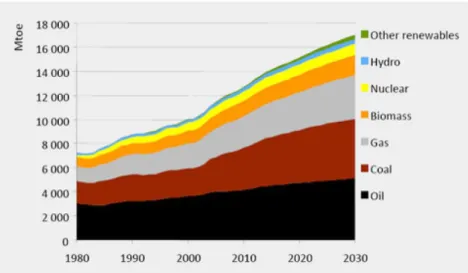
Earlier this century, energy consumption is mainly based on fossil fuels. It is precisely these fossil fuels that have the greatest negative impact on the environment. On the other hand, according to current estimates his life is limited, according to the International Energy natural gas and oil reserves are estimated for 40 years and 140 years for coal, but are sought, and must search, technological solutions aimed at making better use of these energy sources, it is clear that all solutions are temporary because their lives are limited and at best could be extended, but always come the day disappear.
Figure 1: Trend of the evolution of consumption of energy resources. World Energy Outlook 2008. International Energy Agency.
Nuclear power in the second half of the twentieth century appeared as the great solution for intensive energy generation, but it was precisely to improve the quality of life that has led society to rebel against it. Despite the great efforts made to ensure maximum safety has not achieved the degree of acceptance that will enable policy makers to restart the process to increase nuclear capacity.
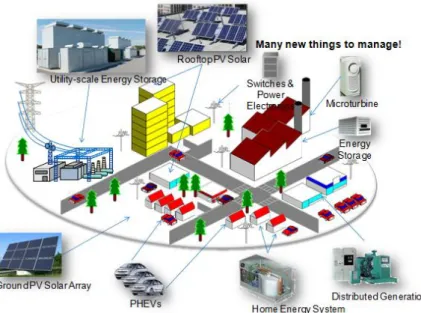
Figure 2: Microgrid. Horizon Energy Group.
If hydrogen is the storage system and the self-generation is the production system, there are those known as fuel cells as a forced system of electricity generation and heat electrolyzers as a hydrogen production system. With the latter takes advantage of the excess energy to produce hydrogen and fuel cells use the energy stored in hydrogen to produce electricity at the time that renewable energy can not produce. The current lack of economic competitiveness and technological situation of the emerging fuel cells are not obstacles to the important role they can play in the future and become technological and economic objectives as well as generating systems from renewable energy . In order to appreciate its importance should delve into their backgrounds, their types and their current status.
3. SINGULARITIES AND COMPETITIVE ADVANTAGES OF THE NATIONAL CENTRE OF HYDROGEN AND FUEL CELL TECHNOLOGY EXPERIMENTATION SPANISH PROJECT
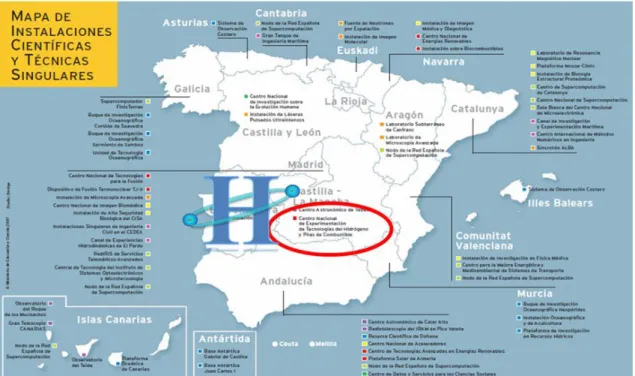
Figure 3: Map of Scientific Research and Technology Development installations
To provide the Spanish productive sector an approach to the hydrogen economy with some leadership commensurate with the achievements so far to renewable energy, this facility has been designed for the testing of hydrogen technologies and fuel cells. This installation is fully supportive of renewable energy to demonstrate the validity of hydrogen as its energy storage versus alternating production resources. However, it includes technologies related to fossil fuels to ease the transition between the current energy-economic system which may occur in the future.
The installation is intended to serve as a workshop and laboratory meeting between the productive sector applicant exploitable technologies and scientific and technological sector supplier of new knowledge and technology developer. This installation currently seeking the highest levels of scientific and technological quality while offering the maximum guarantees of confidentiality. The technical scientific field covered facilitates the evolution expected in the coming years providing a flexible and scalable installation that allows the gradual incorporation of all possible developments arising from the scientific community in various sizes, while it covers the possibility of providing development of that technology by providing access to researchers wishing to scale up its progress.
The installation will progress in equipment at the same time as demand evolves in technology, ensuring at all times complementary scientific technological services that are needed for the operation.
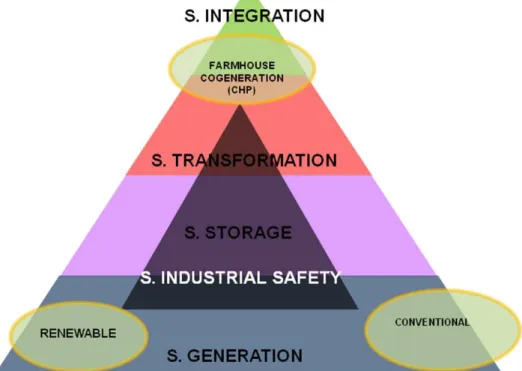
Will have a generation sector that can do testing of all existing technologies and research phase towards the production of hydrogen from all possible energy resources. The hydrogen produced will be used later in other parts of the installation and similarly be used in all individual experiments carried out in laboratories annexes. Research and experimentation in this field should lead to processes that ensure production of hydrogen at competitive prices in the energy market.
In this sector you have to experience to overcome the major drawback of storing hydrogen in large volumes because of its low density, at the same time have to get information on the compatibility of different storage technologies versus the chemical aggressiveness of this gas . Many efforts are being made to resolve this issue, which requires a special effort to have installation to handle hydrogen in all conditions.
The transformation sector can be said to be the heart of the system, because without neglecting the other sectors, this should prove the validity of hydrogen as a carrier - energy storage. Are important efforts that have to do to demonstrate the suitability of fuel cells or internal combustion systems to realize the energy stored in hydrogen at prices competitive with conventional systems. The multiple roles to meet the fuel cells under different conditions of operation require to cover their operating conditions, many different sizes and applications. You could say that this heart of the installation of very different experiments demands specialization, which requires the National Center of Hydrogen and Fuel Cell Technology Experimentation specialists have diverse working together, being one of its singularities, serving as a link enriching the national scientific community. The fourth area focuses on integration is an essential complement within the installation. We must integrate not only the electricity produced, but also hydrogen is used and the heat generated in the process of using hydrogen energy. The energy management in its three forms: hydrogen chemical, electrical and thermal integration requires complicated and require a logic and artificial intelligence extremes to ensure maximum energy efficiency at the same time optimum utilization is achieved.
When it comes to systems that use items or products that contain a certain aggressiveness, such as hydrogen is a strong reducing agent that can even react violently, we can not neglect the effort to consolidate its use of form secure, ensuring that security is ahead of use so that when they reach widespread use accompanied by all necessary security measures (Figure 4).
These sectors in the field of application of hydrogen to be covered with some areas of expertise that support the gap between knowledge and technological application.
The National Centre of Hydrogen and Fuel Cell Technology Experimentation should be adequately equipped with installations that enable scientific and technological design, develop, verify, certify, approve, test, measure and, more importantly, the facility must ensure continuous operation for 24 hours a day, 365 days year. At the same time, the system should be scalable so as to allow continuous adaptation of new technologies are developed and incorporated into the assembly to verify integration at the same time it checks the validity of their development.
Ultimately the installation should serve, and how a complementary system for basic research as a technological support to permit verification of the development and approval in the entire production system and, ultimately, should serve as a demonstrator set to facilitate the simultaneous evolution of production technology, storage and distribution of hydrogen fuel cells.
4. CONCLUSIONS
The depletion of fossil fuels is obvious, which is necessary to find alternative energy sources.
Renewables have a high potential to partially replace fossil fuels, but have the problem of alternation and variability.
Because of this alternation is necessary to have an energy store in order to store energy in times of high renewable generation and energy-efficient to use that energy in times of low and high generation renewable energy.
Hydrogen plays a key role as energy storage and renewable energy with this conception is the one that has designed the National Center of Hydrogen and Fuel Cell Technology Experimentation
REFERENCES
1. Van der Does, T. (1996);” Fuel cell co-generation: the future of co-generation” Journal of Power Sources 61, 49-51.
2. Rohland, B. et al, (1992), “Hydrogen and fuel cells- the clean energy system” Journal of Power
Sources 37, 271-277.
3. Hirshenhofer, J. H. et al, (1994) “Fuel cell. A Handbook (Revision 3)” DOE/METC-94/1006.
4. Jens Oluf Jensenet al, (2008) “Pre – investigation of water electrolysis”.
5. Dicks A., Larminie,J. (2003),"Fuel cell systems explained",2ª edición- West Sussex : John Wiley & sons.
6. Tsutomu Ioroi, Kazuaki Yasuda, Zyun Siroma, Naoko Fujiwara, Yoshinori Miyazaki,