
The impact of using authentic materials to promote listening comprehension in 4th grade students
225
0
0
Texto completo
(2) The Impact of Using Authentic Materials to Promote Listening Comprehension in 4th Grade Students 2. THE IMPACT OF USING AUTHENTIC MATERIALS TO PROMOTE LISTENING COMPREHENSION IN 4TH GRADE STUDENTS. Presented by:. Carlos Andrés Zárate Reyes. Director of thesis: Caterine Montaña. CORPORACION UNIVERSITARIA MINUTO DE DIOS FACULTY OF EDUCATION BOGOTÁ, COLOMBIA 2017.
(3) The Impact of Using Authentic Materials to Promote Listening Comprehension in 4th Grade Students 3. Note of acceptance:. ___________________________ Advisor. __________________________ Juror.
(4) The Impact of Using Authentic Materials to Promote Listening Comprehension in 4th Grade Students 4. ACKNOWLEDGMENTES I would like to thank teachers from the faculty who taught me the basis to proceed with this study, also I would like to thank my thesis director, Caterine Montaña but also I would like to thank my previous thesis directors who were Paula Ramirez, Maryluz Hoyos, Sebastian Concha and Blanca Cely who advised me at the very beginning of my thesis.. Finally, I would like to thank I.E.D. Colegio Prado Veraniego for giving me the permission to implement the sessions from this study..
(5) The Impact of Using Authentic Materials to Promote Listening Comprehension in 4th Grade Students 5. COPYRIGHT DISCLAIMER The materials and the theory retrieved from internet were used for fair use as stated in section 107 of the Copyright Act (United States Copyright Office, 1976), this means that this study was made for research and teaching purposes..
(6) The Impact of Using Authentic Materials to Promote Listening Comprehension in 4th Grade Students 6. TABLE OF CONTENT Abstract…………………………………………………………………………………8 Introduction …………………………………………………………………..…………9 Chapter 1…………………………………………………………………..…….….....12 Justification……...…………………………………………………..…….…..12 Research problem…………………………………………………..……….…14 Purpose statement……………………………………………..…………….....16 Research question…………………………………………..……….…………17 Research objectives…………………………………………..……………......17 Chapter 2………………………………………………………………..…………......18 Literature review………………………………………………………………18 Theoretical framework………………………………………………..….…....25 Listening……………………………………………………………..………...25 Listening comprehension…………………………………………….…….......30 Listening skills…………………………………………………….……….......32 Metacognition…………………………………………………………….........34 Types of listening…………………………………………………………...…34 Authentic material……………………………………………………………..35 Task Based Learning approach………………………………………………..41 Chapter 3…………………………………………………………………………........44 Research design……………………………………………………………….44 Research paradigm…………………………………………………………….44 Research approach…………………………………………………………….46 Setting…………………………………………………………………………48 Participants……………………………………………………………………49 Data collection instruments…………………………………………………...50 Observations…………………………………………………………………..50 Teaching journal………………………………………………………………51 Questionnaire………………………………………………………………….51 Classroom documents…………………………………………………………53.
(7) The Impact of Using Authentic Materials to Promote Listening Comprehension in 4th Grade Students 7. Ethical issues…………………………………………………………………..53 Chapter 4……………………………………………………………………………....54 Instructional design……………………………………………………………54 General objective……………………………………………………………...54 Specific objective……………………………………………………………...54 Chapter 5……………………………………………………………………………....72 Data analysis and findings…………………………………………………….72 Category 1: authentic materials………………………………………………..138 Category 2: topic selection as a way of raising learners’ awareness …………………………………………………………………………………..……150 Chapter 6………………………………………………..………………….………...156 Conclusions………………………………………..………………….……...156 Implications….……………………………………...……….………..……...159 Limitations……………………………………………………………..……..161 Further research…………………………………………………………..…..162 References…………………………………………….………………...…….164 Appendixes……………………………………………………………………175 Observations…………………………………………………………………..175 Lesson plans………………………………………………...…………………177 Teaching journals……………………………………………………………...207 Questionnaires……………………………………………………………..….214 Classroom documents…………………………………………………………215 Cambridge English: Young Learners test for starters…………………………216 Consent forms…………………………………………………………………224.
(8) The Impact of Using Authentic Materials to Promote Listening Comprehension in 4th Grade Students 8. ABSTRACT These days, globalization is opening the doors from the frontiers of communication among cultures, as now people can travel easily and the opportunities of having contact with a foreigner are higher than it used to be in the past years. This study included the participation of 34 4th graders from Prado Veraniego School where half of the course was selected randomly to get the information about their listening comprehension, afterwards a pre-test (Cambridge English: Starters (YLE starters), listening section) was placed to gather data about their listening comprehension before the implementation of authentic listening activities. Authentic videos selected taking into account students’ ages and were played to practice students’ listening comprehension within the usage of TBL (Task-Based Learning) in order to include the task cycle (1 pre-task, 2 while task and 3 post-task) where students could 1 know about the context, 2 practice listening comprehension with the audio input and 3 develop an activity related to the context. To gather the information and analyse the possible impact of implementing authentic TBL listening activities in 4th graders’ listening comprehension, three instruments were used: Teacher’s journal, Questionnaires and Classroom documents. After the sessions, the same test was placed to compare the results between the pre-test and the post-test. By analysing the results, it was evident that the authentic materials helped students’ listening comprehension as they had a good performance during the sessions because they learnt about a real context by learning vocabulary of the context, watching an authentic video and performing a post-task related to the topic but also the analysis shown that most of the participants had an improvement in the exit test. Key words: Authentic Materials, Listening comprehension, TBL (Task-Based Learning).
(9) The Impact of Using Authentic Materials to Promote Listening Comprehension in 4th Grade Students 9. INTRODUCTION This study is placed at Prado Veraniego School (Colegio Prado Veraniego), a public school where there are no listening activities in English but there are vocabulary activities where students learn English language; this was evident from the first two weeks of classroom observations. For this reason, the objective is to implement English as a Foreign Language (EFL hereafter) listening activities through authentic materials where students can practice listening comprehension within a real context. According to Basic Standards of Competence in a Foreign Language: English (Estándares Básicos de Competencias en Lenguas Extranjeras: Inglés) (2006) by Ministry of National Education (Ministerio de Educación Nacional – MEN hereafter), here in Colombia, English is seen as a foreign language which is not used outside the classroom (p. 5). The standards given by MEN have the aim of changing our society and more specific in this case, our future generations, so they can have the opportunity to exchange cultural aspects, beliefs and thoughts, with English speaking people. In other words, these standards aim to change students’ “comprehension and ability to express in a foreign language” (MEN, 2006, p. 7), in this case, the ability to interact in English. To cover this need of enhancing English proficiency to communicate, this research project is aimed at providing students with authentic listening comprehension activities. To face this listening need, authentic materials and Task Based Learning approach (TBL- hereafter) were used for 4th grade EFL classes where students could practice listening with authentic materials within the activities. The main reason for using authentic materials is that according to California Adult Literacy Professional Development Project (CALPRO) (2007) it helps students to learn within a real context. With authentic materials the intention is to create listening activities in which students.
(10) The Impact of Using Authentic Materials to Promote Listening Comprehension in 4th Grade Students 10. can practice listening comprehension. On the other hand, the idea of using Task Based Learning Approach is that according to McDonough & Chaikitmongkol (2007) TBL is “a methodological principle in which learners' attention is drawn to form in the context of meaning” (p. 108). In addition, there are some advantages of using TBL stated in a British Council article written by Frost Richard (2004) where it is said that students will be more exposed to language and the language is explored from students’ needs. Another reason for implementing TBL is that “the classes are followed by a structure of tasks (pre-task, task cycle and post-task) where tasks addresses students’ needs” (Methods, 2013, p. 5-7). The idea of including TBL within authentic material is that students practice authentic EFL listening comprehension e.g. pre-task, background information about a place; while task, authentic listening material within the context of the previous task and listening comprehension questions to verify the impact of the authentic EFL material used; post-task, an activity related to the while task where students can work in pairs. The following sketched example (sketched as it is just a possible topic for the implementation) describes how the class will be: Context, Carnivorous plants; objective, learn about the different kind of carnivorous plants, how to take care of a garden (in-house garden). Pre-task, researcher bring students authentic information about the carnivorous plants (pictures, names of the plants) and vocabulary related to the topic; while task, researcher play a conversation which is a podcast, in the conversation the presenter speaks with some people who own carnivorous plants where the presenter asks them how they take care of those plants; finally post-task, an activity where students work in pairs which consists in discussing which of the plants they.
(11) The Impact of Using Authentic Materials to Promote Listening Comprehension in 4th Grade Students 11. would like to have and they can also draw them in their notebooks or in a piece of paper. In chapter one, the research question about the impact of authentic EFL listening comprehension activities is included. After that, the research objectives are settled within the purpose of the study as they describe along the research the procedure and the results of implementing authentic EFL listening activities altogether with the TBL. Chapter two includes previous studies from both authentic listening materials and Task Based Learning approach to evidence the usage of those resources in other contexts. Also, the theoretical framework is included with four constructs which are divided in two main constructs (listening and EFL listening comprehension) and two sub-constructs (TBL and EFL authentic materials). Finally, chapter three includes the type of study, the research paradigm and the research approach, the setting of the study, the participants including how and why they were selected. Lastly, the data collection instruments which are observations, teacher’s journal, questionnaires and artifacts are included and specifying the reasons of using them during this research..
(12) The Impact of Using Authentic Materials to Promote Listening Comprehension in 4th Grade Students 12. CHAPTER 1 Justification During the observations carried out in the first week of the researcher’s teaching practicum, it was noticeable that there was a lack of listening activities as teachers didn’t use any audio source to learn new topics or practice listening. Instead, they only practiced English with the usage of vocabulary (just by reading the new words) where according to National Reading Panel (2000) “the reader is taught to translate the (relatively) unfamiliar words in print into speech, with the expectation that the speech forms will be easier to comprehend.” (Chapter 4. p, 15) This means that students learn the vocabulary by not just reading it but also they learn it by practicing the pronunciation. What is important in this course is that students from Prado Veraniego School are expected to accomplish A2 level according to Common European Framework of Reference (CEFR- hereafter) (2000, p. 24) and MEN (2006, p. 6). In this A2 level, students should “communicate in simple and routine tasks requiring a simple and direct exchange of information on familiar and routine matters” CEFR (p. 24) and “identify sequences of actions and associate them in a moment of the day when someone describes his/her daily routine.” MEN (p. 20). It is important for students to use authentic listening activities as they can practice the skill with material which is from a real context; for example, they can listen to radio broadcasts, a podcast, videos or any audio source from real world that will help them to practice and understand English on a daily basis and with real content, not just educational content with the aim that they can interact with foreigners in the future. To support this latter idea, there is a study from Barekat & Nobakhti (2014) where they.
(13) The Impact of Using Authentic Materials to Promote Listening Comprehension in 4th Grade Students 13. selected two groups of students from a cultural institute. They intended to carry out placement tests where one of the groups (experimental) used authentic materials (movies, authentic videos and television comedy drama) whereas the second group (control) used academic/unauthentic materials (course books) (p. 1061). The results showed that the experimental group, in both pre-test and post-test had better scores (p. 1062). In addition, listening is one of the most difficult skills to learn and improve, so implementing authentic listening activities is also important for students because with different listening inputs, they could interact more easily and understand the language better; so they might not have difficulties when talking with foreigners. Also, as Jou (n.d.) states, “Among four language skills, researches show that listening skill is employed most frequently” (p.1). Besides, it’s important to incorporate listening activities to give students a different input from teacher’s voice, so students can get more interested in the topic and learn in a more attractive way as some of the listening activities could be podcasts, videos, interviews and some other authentic materials which can get students attention and also motivate them to learn more. Another study to support this idea is from Ahour (2014) in which he used a soap opera to the experimental group one hour after the normal class with the aim of preparing students for the PET exam. The finding was “that the experimental group who received enough amount of exposure to authentic material had a better performance in their listening test than the control group who did not” (p. 291) Likewise, it is essential to take into account that listening is important not only to understand what another person is saying; in addition that it is a skill that people use to communicate without misunderstandings, because as Guo (2005, p. 3) stated,.
(14) The Impact of Using Authentic Materials to Promote Listening Comprehension in 4th Grade Students 14. “Listening is the first language mode that children acquire. It provides the foundation for all aspects of language and cognitive development, and it plays a life-long role in the processes of communication.” In addition, TBL is important to use as “It can help the student by placing him/her in a situation similar to the real world” (Methods, p. 3), it means that with the task cycle (pre-task, while task and post-task) students can learn from a real context with the use of the authentic listening activities. Finally, At Prado Veraniego School it is important to implement authentic TBL-EFL listening comprehension activities because the school can reach the goal of teaching future bilingual students. Saying this, students can get better job opportunities and they can communicate better with English foreigners whether if they travel abroad or they meet a native speaker. This study is also innovative because according to Jantz (2012), innovation is “the significant improvement to an existing product, service, technology, or administrative practice” (p. 4). Therefore, the researcher, the participants and the school can benefit from this study as the participants will have a newer way of practicing English language by using the technology that the school provide with the usage of authentic materials and the researcher benefit because the experience and the results from the study can be shared with colleagues and students from different institutions. Research Problem At Prado Veraniego School, specifically in fourth grade, students learn the English language by practicing more writing and reading skills. In addition to this, the field notes and observations made at the beginning of the research (appendix 1), revealed that in English classes students were reading, writing and learning vocabulary but there weren’t authentic listening activities or any other listening activities in.
(15) The Impact of Using Authentic Materials to Promote Listening Comprehension in 4th Grade Students 15. English; these authentic listening activities are important for them as they might reach a A2 level taking into account CEFR levels both global scale (p. 24) and self- assessment grid (p. 25) and MEN listening objectives for 4th and 5th grade (p. 20). To be more specific with one example from CEFR, it is stated in the global scale that A2 students “Can understand sentences and frequently used expressions related to areas of most immediate relevance (e.g. very basic personal and family information, shopping, local geography, employment).” (p. 24). A second example from CEFR’s self-assessment grid is that A2 students “can catch the main point in short, clear, simple messages and announcements” (p. 25). To complement these examples, there is a need of implementing authentic TBL-EFL listening comprehension activities as students can reach that academic goal through the use of tasks, therefore they can learn more about the real world inside the classroom using authentic listening material. To identify how EFL classes work at school, there were class observations where at the beginning of those observations findings were that there weren’t authentic EFL listening activities, a finding from an observation was that “As the class was just 1 hour, students spent the whole class writing, cutting and gluing the vocabulary also they coloured the images from the vocabulary” (observation #1), in other words, instead of implementing authentic EFL listening activities, teacher tended to provide vocabulary and in most of the cases the teacher used visual aids from the internet. Most of the cases students worked in the notebook with the vocabulary provided by the teacher, so the only listening that they receive is from the teacher’s voice. Finally, teacher used drilling technique where according to British Council (2005) drilling “means listening to a model, provided by the teacher, or a tape or another student, and repeating what is.
(16) The Impact of Using Authentic Materials to Promote Listening Comprehension in 4th Grade Students 16. heard” (paragraph. 5), with this technique students could remember the vocabulary and practice the pronunciation. Purpose Statement The purpose of this research study is to analyse the possible impact of authentic TBL-EFL listening activities in 4th graders’ listening comprehension at Prado Veraniego School (PVS-hereafter), this is because students can practice listening comprehension with the usage of these authentic materials. In addition, using authentic EFL listening materials is useful for students as they can practice Foreign Language (FL- hereafter) within real contexts. Besides, as the school uses technology in its classes, the idea is to use the available technological resources of the school to implement the activities. For example, authentic videos (music, news, documentaries) could be played through a video projector and songs from the computer. In this study, YouTube videos suitable for their age e.g. PBS kids’ YouTube channel, Sarepa’s YouTube channel and Learning English 101’ YouTube channel will be used as authentic EFL listening comprehension activities as they are useful for students because these materials include real contexts and to complement the idea, according to Jacobson (2003) “teachers are attempting to contextualize their instruction within the students’ lives” (p. 2). For this research, students’ interests and experiences are gathered through students’ journal discussed in chapter three. With this, students can practice their listening comprehension and learn within a real context..
(17) The Impact of Using Authentic Materials to Promote Listening Comprehension in 4th Grade Students 17. General research question How might the implementation of authentic TBL listening activities in 4th grade students’ improve their listening comprehension? Objectives General objective . Analyse the possible impact of implementing authentic TBL listening activities in 4th graders’ listening comprehension Specific objectives. . Identify the appropriate authentic materials that might influence students’ listening comprehension in 4th grade English classes.. . Evaluate the impact through the results of the listening comprehension pre-test and post-test implemented in class..
(18) The Impact of Using Authentic Materials to Promote Listening Comprehension in 4th Grade Students 18. CHAPTER 2 Literature Review In this chapter, different studies were explored to support the nature of this project. The first three studies are international and the last two are set in a Colombian context. These studies will be explained and subsequently, four constructs that give ground to this research study are going to be explained. The participants from the studies were adult centred where the materials were adapted according to the participants’ age, for that reason, the use of authentic materials in this study are adapted taking into account PVS students’ age and the use of these materials taken from YouTube can be useful because according to National Association for the Education of Young Children (NAEYC hereafter) (2012) “Screen media can expose children to animals, objects, people, landscapes, activities, and places that they cannot experience in person” (p. 7). This means that PVS students will practice English listening comprehension with the usage of technology and authentic materials where at the same time they will have new sensorial experiences while watching the videos. A quantitative study by Barekat, B. and Nobakhti, H. (2014) was set in the English department of Novinpouyan Cultural Institute in Arak, Iran. The aim of this study was to “To find out whether or not authentic materials are more effective than inauthentic materials in improving the listening comprehension ability of EFL learners at the intermediate level” (p. 1059) and investigate “the effect of authentic and inauthentic materials in cultural awareness training on EFL learners listening comprehension ability” (p. 1063). In addition, they stated that the cultural knowledge is fundamental for students in order to make inferences (p. 1059), this cultural knowledge.
(19) The Impact of Using Authentic Materials to Promote Listening Comprehension in 4th Grade Students 19. was presented during the study within the authentic material as they used an American television comedy-drama called Shameless (2011) (p. 1061). What they did in the study was: first of all select 60 random participants from 116 candidates and then divide those 60 participants in two groups, one group (the experimental group) used the comedy TV show mentioned above while the second group (the control group), used listening activities from the following course books: American English File by Clive Oxenden et al., Impact Values by Richard Day, et al., Tactics for Listening by Jack C. Richards, Tune in by Jack C. Richards and Kerry O‟Sullivan, Listen In by David Nunan. (p. 1061). Secondly, in the procedure, they carried out Oxford ELT placement test to select the 60 participants and then they used TOEFL as pre-test. After gathering the results of the participants, they stated that students had to receive 36 sessions which were placed three times per week and in total of twelve weeks. With it each group had their corresponding authentic and unauthentic material i.e. experimental group with the comedy show and control group with course books. After the competition of the sessions, participants took a TOEFL listening test in order to compare the results. Finally, with the usage of T-test (used in the post-test) and a one-way ANOVA test (used in the pre-test), looking at the results of each table from the pre- test and posttest, the findings from their study were that “it is confirmed that the treatment has significantly improved the listening comprehension ability of the participants” (table 8, p. 1063). The participants mentioned in the previous quote were the experimental participants of the study. Another finding was that “the experimental group has outperformed the control group” (table 9, p. 1063)..
(20) The Impact of Using Authentic Materials to Promote Listening Comprehension in 4th Grade Students 20. The previous study contributes to this research as it encourages to use tasks, as during the study, Barekat and Nobakhti implemented tasks which can be related to Task Based Learning approach (TBL) i.e. they implemented a pre task (pre-test), a task cycle (36 sessions, using authentic and unauthentic materials for each corresponding group) and finally, the post- task (post-test). In addition to this, the research also contributes to this study as they used authentic EFL listening materials and they could demonstrate that the usage of those authentic materials improved students’ listening comprehension. Another quantitative study by Sabet Masoud (2012) was placed in Koshyar nonprofit university located in Golsar district, Rasht, Guilan, Iran. The aim of this study was “to investigate the impact of authentic listening materials on listening skills of Elementary students at university level” (p. 206). In this study, Sabet stated that authentic materials “can provide easily-accessible and ready-made materials for users” (p.217), but also that those authentic materials give more than “just linguistic advantages” (p.219). On the other hand, he listed advantages of using authentic materials which are that “they have a positive effect on learner motivation, they provide authentic cultural information and exposure to real language, they relate more closely to learners’ needs and they support a more creative approach to teaching”. (Sabet, 2012, p. 220). During the research, Sabet used video and audio tracks which included the following topics: wildlife, urban perspective, treating with nature and some other not mentioned in the study (p. 222). Something interesting from this research is that Sabet described two reasons of using a control group, the first one which indicates that non authentic material is dominant in EFL classes and second, those academic materials are hardly used in EFL teaching (p. 222)..
(21) The Impact of Using Authentic Materials to Promote Listening Comprehension in 4th Grade Students 21. In this study, Sabet used four instruments which were the placement test from Oxford, a pre-test followed by a post-test (both included listening comprehension) and finally a student feedback survey. The aim of the pre and post-test was to compare the usage of both simplified (non-authentic) and authentic EFL materials. On the other hand, the student feedback survey’s intention was to identify the effectiveness of the authentic materials and how students felt during the course (p. 223). A T-test was conducted to gather the information from the pre and post-tests. At PVS the idea is to implement both pre-test, authentic listening materials and post-test to get accurate information and compare the results. At the end of the study, Sabet found that “exposing to authentic listening materials makes students more proficient in listening comprehension” (p. 223), additionally, Sabet found that “authentic listening materials had a positive effect on listening skills of elementary students” (p. 227). Finally, he found that in the qualitative survey, students from the experimental group (authentic EFL materials) had a “higher level of satisfaction with the authentic listening materials” (p.224). The contribution from the latter research is that it is important to know how to select the authentic materials to implement in class by its suitability of content, exploitability and readability (Sabet, p.220). In this case, 4th graders will have activities with content which fits their age. Also, selecting the materials is very important for students as they can get involved in the activity and the results may be more accurate. In addition, it is important aside from just implementing authentic EFL materials, also to know (with a survey) the effectiveness of the materials and activities placed from students’ perspective..
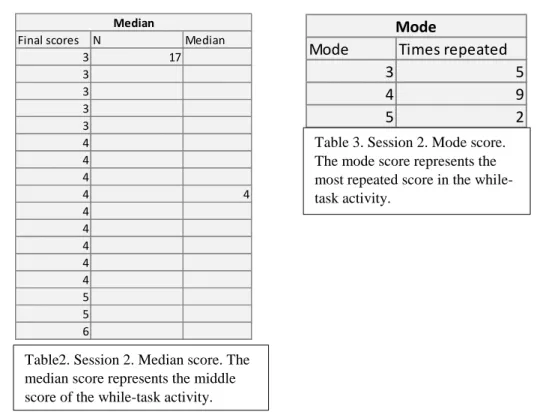
(22) The Impact of Using Authentic Materials to Promote Listening Comprehension in 4th Grade Students 22. A quantitative study from Ahour, T. (2014) was set in the Kish Institute of Science and Technology in Rasht, Iran. The aim of the study was to analyse the impact of exposing students to authentic material as Ahour stated that there is “a gap between what learners listen to in the lab and what they really listen in normal everyday conversation of real life.”(p. 287). Ahour selected the participants through the implementation of a proficiency test (PET), the study included 40 students out of 200 that participated in the test. Then, the 40 students were divided in two equal groups (20 students each). In both groups the students had the regular classes but Ahour’s intention was that the experimental group had an extra hour of class (20 sessions) to watch an American soap opera; something important from the study is that the soap was selected because of its “popularity among students” (p.289). After the sessions a post-test was redesigned and applied to students and afterwards the results were analysed. Ahour used a T-test to compare and analyse the gathered results in the post-test. With this test, the researcher found that between control group and experimental group there was a “significant difference” (p. 290). Something that is important to highlight from this study is that Ahour stated in the conclusion that “Learners by watching some movies in their free time even out of the class environment can improve their English without even trying to do so as formal studying” (p. 291). The previous statement encourage this study to implement EFL authentic listening material so students from Prado Veraniego School can practice EFL with authentic activities in class and authentic materials at home. Finally, something relevant for this study is the usage of the quantitative tests to compare and analyse the gathered information from the experimental and control groups (in this study, to.
(23) The Impact of Using Authentic Materials to Promote Listening Comprehension in 4th Grade Students 23. measure the information it was planned to use the mean, median and mode which will be described in Chapter 3). There is a qualitative study from Hernandez, P. and Vargas, M. (2013) where the authors found that their participants who were student-teachers had difficulties when trying to practice listening comprehension. The aim of the study was to provide authentic audio texts from participants’ partners i.e. the researchers asked participants to bring authentic audio texts so they could create listening activities and develop them in class with their partners. Another aim was to raise autonomous work at home and critical thinking. The activities included a pre-listening, a while listening and a postlistening task. In addition, researchers provided their participants “self and peer evaluation” (p. 6) where participants evaluated themselves but also evaluated their partners’ listening activities. At the end of the implementation, Hernandez and Vargas placed a survey so participants could tell about how they felt, what difficulties they had during the activities and any other suggestions they had. In the results, the researchers not only got information about the participants as they made a reflection about their strengths and weaknesses but also they could notice that participants improved their listening comprehension, their interest in listening authentic materials and that students “could understand different accents better” (p. 7) and that they could understand different speech rates easier than before. What is important to take into account from this study, is that at PVS the implementation of authentic materials can improve listening comprehension but also that students can practice listening with information that is not content-based, in other words, with information that is from the real world..
(24) The Impact of Using Authentic Materials to Promote Listening Comprehension in 4th Grade Students 24. A qualitative study from Zúñiga, E. (2015) where he implemented TBL using and integrating the four skills (listening, speaking, reading and writing) so participants could improve their communicative competence. What the author found before applying his study was that in classes, students learn the four skills but separately and they do not like so much reading and writing activities. In the study, Zúñiga designed and implemented 6 tasks that included each of the skills where in the pre-task he gave participants the instructions of the session, the goals and gave the materials to work. In the while task he proceeded with “pair-work discussion about the topic and showed the draft of the description they had already made” (p. 9) and finally in the post-task he asked them to present an oral presentation and gave them a self-evaluation. In the results from the study, the author found that participants were more encouraged to learn and practice English with TBL as the tasks included different activities with the usage of the four skills (listening e.g. videos and audios, speaking e.g. oral presentation, reading e.g. articles and writing e.g. questionnaires and reports) and he fund also that participants thought that TBL is an organized way to learn and practice English. What is important from Zúñiga’s study for this study at PVS is that students can practice listening comprehension with this methodology, not only because it is divided in organized tasks but also because it requires materials that are useful and appealing for students so they can practice listening English comprehension easier as in this study the idea is to give students in the pre-task visual aids that are from a real context, the while task which will include the authentic listening activity where they will answer a questionnaire but also they can produce Classroom Documents (which is described in.
(25) The Impact of Using Authentic Materials to Promote Listening Comprehension in 4th Grade Students 25. the data collection instruments’ section) and the post-task where students will work in pairs to solve an activity according to the previous tasks. There are four constructs which include theory that supports this study, the key constructs were listening, listening comprehension, authentic listening materials and task based learning approach. Theoretical Framework This chapter includes theory related to the constructs from this study which purpose is to support the idea of this mixed research project that is to evaluate the impact of authentic TBL-EFL listening authentic activities in 4th graders at Prado Veraniego School. Listening According to Illinois Speech and Theatre Association & Illinois State Board of Education (1982), listening is “a complex process beginning with hearing -the physical effect of sound waves upon the human eardrum-” (p. 2), in addition they stated that listening has four steps, those are first of all hearing, then interpret, also evaluate and finally respond. These four steps are related to hearing, using background knowledge from the sounds, choosing what is useful from those sounds and finally, responding to what the other speaker said. A point to highlight is about listening from them (Illinois Speech and Theatre Association -ISTA hereafter- and Illinois Board of Education –ISBE hereafter-) is that “listening is the most frequently used form of communication behaviour” (p. 1) but also “yet listening skills are the least taught of any of these communication skills. We devote the most instruction time to teaching writing, then reading, and, finally, speaking” (p..
(26) The Impact of Using Authentic Materials to Promote Listening Comprehension in 4th Grade Students 26. 1). With that said, listening is a very important skill that let people exchange information but the downside is that the skill is not taken into account like the other three skills. To complement the idea, Cardenas (2009) said that “listening practice is often neglected or handled inappropriately in the teaching learning process. This poses problems because listening is an integral part of conversations. Oral skills without equally well developed listening abilities are of little practical value” (p. 8), it is something that happens nowadays so it is important to teach and practice this skill, for that reason at PVS the lessons are focused on listening with the usage of authentic material. A definition of listening from Howatt and Dakin (1974) cited by Jou, Y. J. (2010) is that listening is the ability to identify and understand what others are saying. Another definition from the International Listening Association (ILA) cited on Human Communication (Pearson, 2008, p.111) is: “the active process of receiving, constructing meaning from, and responding to spoken and/or nonverbal messages. It involves the ability to retain information, as well as to react empathically and/or appreciatively to spoken and/or nonverbal messages”. In few words, listening is related to direct communication between individuals and communication within the environment. What makes important to teach listening is that students can learn to understand what others are saying but also that they learn to interpret external spoken sounds such as advertisements, news, videos, podcasts, radio ads and any audio source in the foreign language context. It is a good opportunity for PVS students to practice more listening as they can get more audio input in order to improve their understanding of what others say. Finally, PVS students will practice listening comprehension with authentic.
(27) The Impact of Using Authentic Materials to Promote Listening Comprehension in 4th Grade Students 27. materials which is better for them because the input that they are receiving is from a real context. There is a definition of listening from Gilajkani, A. (2016) who cited Hamouda (2013) where listening is an ability which allows the listener to interpret what the speaker says, this definition is similar to Jou’s citation (2010) from Howatt and Dakin (1974). In addition, another definition of listening also provided from Gilajkani who cited Purdy (1997) where “listening is the process of receiving, making meaning from, and answering to spoken and/or nonverbal messages” (p. 1671). A point to highlight from Gilajkani’s study is that he stated the importance of listening which it is that in listening it is necessary to take into account facial and body expressions within the context so the listener can get the gist of what the other person is saying or is trying to say (p. 1672). In PVS it is important to provide students listening activities which will help them to practice the skill but also it will give them the opportunity to understand what native speakers or FL speakers say. Finally, listening is also important in their contexts as they can interact better with their teachers and with their classmates. To get a better idea of how to teach listening at PVS, there are some authors that give ideas, suggestions or tips of how a class can include a better class procedure so as a result, there will be a better understanding of this listening skill. There is a text from Teachers of English to Speakers of Other Languages (TESOL hereafter) (n.d.) where they stated that “teaching listening help learners meet the challenge of real-life listening.” (p. 1), at PVS it is important to teach them listening as in the future they might travel abroad or they can work in a company where English is essential. One of the suggestions that TESOL give from teaching listening is that it is important to learn how to help students to correct their answers, for example the.
(28) The Impact of Using Authentic Materials to Promote Listening Comprehension in 4th Grade Students 28. teacher “would then discuss with students how they arrived at a certain answer, what prevented them from understanding parts of the text, and what could be done to improve their listening facilities” (p. 12). This means that it is important not to give the correct answer always but to talk with students how they chose their answers and if they chose wrong the teacher can help them to get the correct answer using clarifying questions e.g. are you sure? TESOL also suggested that it is important to avoid tasks that require memorization, as they stated that “Understanding a message does not mean remembering every single detail, so students’ inability to recall information does not always signal a lack of comprehension” (p. 12), this suggestion is important for this study at PVS because the idea is not to give students authentic listening materials to memorise every detail of the videos, the idea is that they can comprehend what the video was about and to practice English language as they can learn slangs, idioms and the understanding of different English accents. Another suggestion about how to teach listening according to TESOL is that in the procedure of teaching listening it should be included the Bottom-up and Top-down process. Bottom-up is referred to the recognition of sounds and words to improve their vocabulary, some examples of the skills that are included in the Bottom-up are “identify grammatical forms and functions, recognize contractions and connected speech” (p. 1415). The second process, Top-down is more related to the background knowledge of the students so the skills involved in this process are advanced as “listener draws on her knowledge of the context, topic, speakers, situation, and the world, matching it to the aural input” (p. 15), the skills used are related to getting the main idea of the.
(29) The Impact of Using Authentic Materials to Promote Listening Comprehension in 4th Grade Students 29. conversation, listening for specific information or to make predictions from the conversation. TESOL stated that Bottom-up is more useful for beginners, in this case it could be for 1st and 2nd graders whilst Top-down is more useful for 4th graders as they already have knowledge of the English language and it might not be difficult to get the main idea of an authentic listening conversation but as students at PVS do not have a lot of vocabulary, this Top-down strategy may be useful in some parts of the activities because some of the students know more vocabulary than the others which it could be also evidenced in the observations. The idea in this study at PVS is that students will use Bottom-up process which is very useful for them as TESOL stated that this process is more useful for beginners and as PVS students’ vocabulary is not very extensive. In the future they could use both Bottom-up and Top-down processes because they can practice in a more efficient way their listening comprehension. Finally, TESOL suggested that the role of the teacher where is involved in a “process-oriented classroom” (p. 19), this means that the teacher supports students during the listening activities by helping them and guiding them “in comparing responses and reflecting on different steps they took to achieve comprehension” (p. 19), so the idea is that at PVS the researcher won’t give the correct answer if the student make a mistake but instead the teacher can give them clues of how to get the correct answer or even the teacher can play a second time the listening activity so all students can check their answers. Vandergrift, L. (2004) suggested that the usage of visual aids is intended to “provide important contextual information to help the listener” (p. 10), this is important for students at PVS because the visual aids can help them to understand what is the.
(30) The Impact of Using Authentic Materials to Promote Listening Comprehension in 4th Grade Students 30. conversation about and they can learn vocabulary from those visuals. In addition, Vandergrift suggested the use of DVD captions where he stated that “students acquired more vocabulary and recalled the passage better with the help of both pictorial and written annotations instead of pictures only and written annotations only” (p. 7). At PVS it will be useful to use videos but instead of using DVD captions, the authentic listening materials are YouTube videos which are made by native English speakers and the content is related to the participants’ ages. In addition, the idea of the study is to use both visual aids for the pre-task and the YouTube videos for the while-task. Listening comprehension A definition of listening comprehension given from Colorado Department of Education. (2008) is that: “Listening comprehension refers to the understanding of the implications and explicit meanings of words and sentences of spoken language.” (p.71) this means that the listener must know how to interpret messages and follow instructions. Additionally, it is stated that listeners must listen to and understand information given by others, form opinions based on evidence and listen for specific purpose (p. 74). Speaking of comprehension, interaction is one of the factors that may be mastered during the process of learning through listening. Some of the elements included in interaction within conversation, according to Brown (2000) are: negotiation, clarification, attending signals, turn-taking, and topic nomination, maintenance, and termination. And as Brown (2000) stated: “so, to learn to listen is also to learn to respond and to continue a chain of listening and responding.” (p. 254), in other words, if the listener understands what the speaker is saying, then the listener change the role so becomes into the speaker and can continue with the process of exchanging information. This applies to the EFL context in the school as students can practice listening.
(31) The Impact of Using Authentic Materials to Promote Listening Comprehension in 4th Grade Students 31. comprehension with authentic materials so they can understand what a native or nonnative English speaker is saying, therefore, students can exchange information. A definition of listening comprehension from Nunan (1989) is that listening is the interpretation of “what we hear according to our purpose in listening and our background knowledge. We then store the meanings of the message rather than the forms in which these are encoded” (p. 23), with that said, at PVS it is important that while students are listening, they can use their previous knowledge to get a better idea of the context, even if they do not have a wide background knowledge in the foreign language, they can use their native background knowledge to interpret the messages from the authentic materials given in class which in this study are authentic videos. An aspect to highlight from Nunan is that similar to TESOL, he mentioned about the bottom-up and top-down processes where bottom-up is more important for PVS students as they do not have a rich vocabulary. The idea of using bottom-up according to Nunan is that students can “use the phonological cues to identify the information focus in an utterance” (p. 25), this is applied in the activities where students recognise what the speaker say in order to answer the question from the activities; on the other hand, top-down according to Nunan, students can “relate the incoming message to one’s background knowledge and inferring the topic of a discourse” (p. 26), in this study that happened in the post-task where students inferred the meaning of a song (session 7), but in general in every session they can use their background knowledge to understand the topic but also to give their opinion about it. Another definition of listening comprehension from Nunan (n.d.) is that listening comprehension is “the comprehension of aural messages” (p. 17). In this case, the listening comprehension is referred to what students can understand of what they.
(32) The Impact of Using Authentic Materials to Promote Listening Comprehension in 4th Grade Students 32. hear. Something important from Nunan’s research is that there is a concept called listening purpose where he stated that “course books for teaching listening sometimes seem to imply that listeners grimly focus on every word” (p. 23-24), what he said is an aim to this study as the intention is to use authentic materials where students can find specific information from the videos to complete the while-task but in addition they can analyse the information to give their opinion about the topic in the post-task; all the videos have a purpose as they are authentic materials where students can learn from the topic, apply it in real life but at the same time they can learn and practice English language through the listening activities. Listening skills According to Richards, J (1983), there is a list of micro skills which is helpful when selecting the materials for the listening activities as they specify what is needed to take into account. The micro skills lists are presented in two categories, the first one is the “Conversational Listening” (p. 228) that involves social interactions and “Academic Listening” (p. 229) which involves listening for information. The first category that is Conversational Listening, includes 33 micro-skills and the used during this study at PVS are the following: Ability to recognize vocabulary used in core conversational topics; ability to deduce causes and effects from events, ability to guess the meanings of words from the contexts in which they occur; ability to detect meanings expressed in differing grammatical forms/sentence types (i.e., that a particular meaning may be expressed in different ways); ability to distinguish between literal and implied meaning; ability to recognize the communicative functions of utterances, according to situations, participants, goals; ability to use real world knowledge.
(33) The Impact of Using Authentic Materials to Promote Listening Comprehension in 4th Grade Students 33. and experience to work out purposes, goals, settings, procedures; Ability to process speech at different rate; ability to make use of facial, paralinguistic, and other clues to work out meanings; ability to adjust listening strategies to different kinds of listener purposes or goals. (Richards, J. 1983, pp. 228-229). The second category, which is Academic Listening includes 18 micro-skills, similar to the previous category, the ones that were applied in this study are presented below: Ability to identify purpose and scope of lecture; ability to identify topic of lecture and follow topic development; ability to recognize key lexical items related to subject/topic; ability to identify relationships within discourse (e.g. major ideas, generalizations, hypotheses, supporting ideas, examples); ability to deduce causes and effects from events; ability to deduce meanings of words from context; ability recognize function of intonation to signal information structure; ability to follow lecture despite differences in accent and speed; ability to recognize irrelevant matter: jokes, digressions, meanderings. (Richards, J. 1983, pp. 229-230) At PVS, during the implementation of the authentic listening activities, these micro-skills were selected taking into account what was possible to use from the materials (videos) for instance, from session 4 (interjections), the speaker talked about some interjections that are commonly used to express a feeling or a point of view, so one of the skills implied in the video was the “ability to make use of facial, paralinguistic, and other clues to work out meanings” (p.229). To give a better idea of the usage of the listening skills from Richards, Chapter 5 will include the analysis and the explanation of the findings where these skills are presented..
(34) The Impact of Using Authentic Materials to Promote Listening Comprehension in 4th Grade Students 34. Metacognition Vandergrift (2012), defined metacognition as “our ability to think about our own thinking or “cognition,” and, by extension, to think about how we process information for a range of purposes and manage the way we do it” (p. 84). This means that in the study students could reflect on what they do during the task but also the process help them to think further. For example, they can use their previous knowledge in order to complete the listening activities but in addition, students can reflect about a topic. In addition, for monitoring comprehension in the metacognition process, Vandergrift suggested that “listeners can evaluate continually what they understand” (p. 107), in this study students can evaluate themselves in the questionnaire as one of the questions is related to how much they understood about the video, but in addition, the researcher can also ask students for clarification after playing the video in each of the sessions in order to verify that students could understand but also to give them the opportunity to listen again the conversation of the video and therefore they can check their answers. Types of listening Kline (1996), stated that there are some types of listening: informative listening, relationship listening and appreciative are listening. The first type of listening means that “Informative listening is the name we give to the situation where the listener’s primary concern is to understand the message” (p. 30), in this case the authentic materials used in this study provide information to students where they can understand what the speaker is saying. A point to take into account from Kline is that he talked about vocabulary where “increasing your vocabulary will increase your potential for better understanding” (p. 30), in this study at PVS it is important to provide students.
(35) The Impact of Using Authentic Materials to Promote Listening Comprehension in 4th Grade Students 35. vocabulary from the contexts of the lessons so they can familiarize with the topic, they can understand better what the videos are about but in addition they can improve their lexicon. The second type of listening, Kline stated that “Nonverbal cues are crucial in relationship listening; that is, your nonverbal behaviour indicates that you are attending to the speaker or that you aren’t” (p. 33), it is related to pay attention of what the other person is saying not only by listening but also by using physical expressions. This skill is observed at the beginning of the class where students practice with the opening activity where they pay attention to the teacher and communicate what they think but also during the post-task of the lessons where students work in pairs as they talk, listen but also express themselves to each other. Finally, the third type of listening is appreciative listening which is about “listening to music for enjoyment, to speakers because you like their style, to your choices in theatre, television, radio, or film. It is the response of the listener not the source of the message that defines appreciative listening” (p. 34). This type of listening aids in this study as the researcher could find authentic videos that might get students’ attention, those videos were created according to their ages (the videos are made for kids in general), so what is important for the lessons is not only the information that they will receive but also it is important that they enjoy what they watch and listen. Authentic material A definition from California Adult Literacy Professional Development Project (CALPRO) (2007) is that authentic materials are those materials which are on the daily basis and are useful for students to learn during classes, e.g. videos, voicemails, among others. On the other hand, Jacobson, E. (2003) states that authentic materials are printed.
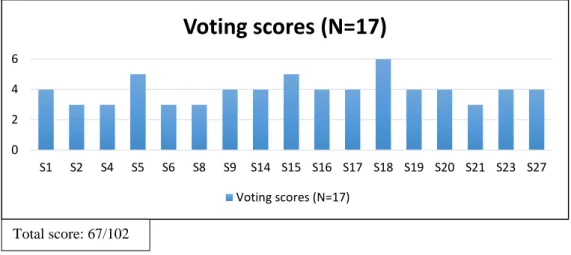
(36) The Impact of Using Authentic Materials to Promote Listening Comprehension in 4th Grade Students 36. materials that are useful not only in the educational context but also are useful on the daily basis of students. In one side, Jacobson is centred more in reading and writing using authentic text materials such as recipes, grocery lists, shopping lists, menus, grocery store labels, buying guides, among others; but he also put some suggestions so teachers can take into account what can be done in class i.e. what different contexts can be practiced with authentic materials. On the contrary, CALPRO talks not only about printed materials but also shows that there is another type of material which are “auditory materials” (p.1) e.g. Radio broadcast, podcasts, even phone-calls and so on. In this study at PVS the idea is to integrate videos from YouTube which are authentic and the plus side is that the material is not just auditory but also it is visual, so students get more interested in the activity as they need to get attention not only about what the people say but also it can include non-verbal gestures, such as faces, expressions or body movement which can help them to get an idea of what is happening in the video and what they talk about. According to the definition from Jacobson (2003), one emphasis of authentic material is that “A text is considered authentic if it is one of a type that is used by people in the world outside of a learning to- read/write setting (school)” (p. 43). In other words, a material can be authentic if it is taken from the real world without a contentbased purpose, this means that those materials have a “purpose for which it would be read or written in out-of school contexts” (p. 43), for example in this study students will watch videos which are authentic and that authenticity is related to the topics discussed, those topics are from a real context. One example of a context from the videos implemented in this study is voting, with this video students not only will know the meaning but also the importance of participating in elections, in addition students can.
(37) The Impact of Using Authentic Materials to Promote Listening Comprehension in 4th Grade Students 37. also use the knowledge from the video in their lives not only for president or mayor election but for any decision that they can make together. According to Stempleski, S. (1987) authentic material “is intrinsically motivating to students, presents real language, provides an authentic look at the culture, aids comprehension, and gives student practice in dealing with a medium” (p. 1). The idea at PVS is that the authentic videos are related to their age, videos that can teach them about a context from the real world but also that video is appealing for them. For this reason, the majority of the videos implemented in this study are from PBS Kids’ YouTube channel where its content is related to topic from the real world such as voting, eating healthy, and the environment awareness and so on. A very important point to highlight from Stempleski is that with the usage of authentic videos “Students experience a real feeling of accomplishment when they are able to comprehend material intended for native speakers. (…) they are further motivated to seek out and understand other authentic materials” (p. 5). With that said, it is important that PVS students enjoy the videos they watch while they learn about the context involved in that material. On the other hand, it is also important that students after watching the videos they can give their opinions through the questionnaire where the researcher can know how much they liked and what they liked the most from the video but also they can also give their opinions about that context. Finally, another point to take into account from Stempleski is that video presents the total communicative act. “Visual clues to meaning, such as the gestures speakers use, can help to make meaning clearer to student viewers. Even the music used on a video can be an aid to comprehension” (p. 6), with that said,.
(38) The Impact of Using Authentic Materials to Promote Listening Comprehension in 4th Grade Students 38. the video itself help students to understand better the situations of the context related to the video. A definition of authentic material from Hussain, M. (2015) who cited Swaffar (1985) is that authentic materials are those which are original and not artificial with the purpose of sharing information from native speakers. Hussain in his text stated two elements which determine how to verify the authenticity of any material, one of the elements is that the authentic material must be any “text, written, spoken or soundrecorded that comes from a native speaker of English for the listeners or readers” (p. 52). Examples from each cited materials from the real world are magazines, newspapers, podcasts, videos etc. and the second element stated by Hussain is the aim of the material which means that is not only useful for the class but also outside of it. The importance in this study at PVS is that the authentic materials are selected to put these materials into praxis in the real world e.g. a song which can teach students new vocabulary, social slangs or idioms. Another definition from Hussain who cited Spelleri (2002) is that “authentic materials refer to any items for the general community and not specifically for the ESL community” (p. 52). In this study, at PVS the selected materials are videos from YouTube which are authentic because they are created by native English speakers, the topics from the videos are not content-based and the videos are selected according to students’ age. An aspect to take into account from Hussain’s text is that he stated that “authentic materials help developing an understanding of life and culture thereby preparing students to have a practical approach to life” (p. 56), this means that at PVS the materials used are not just focused on the class but it is material from the real world where students learn from it and they can use it outside the class e.g. a video about the.
(39) The Impact of Using Authentic Materials to Promote Listening Comprehension in 4th Grade Students 39. usage of interjections which aim is not only to teach what are some common interjections but also to give students the context of each interjection so students can choose which interjections to use in the class and outside the class whether if they use these expressions with friends or if they listen a song or watch a video they can identify the item used and get a better idea of the context. Another characteristic to highlight from Hussain is that “like authentic materials in the language class make the teaching job easy, systemic and impressive, and also keep the learners focused, involved and motivated” (p. 63). Students at PVS enjoy more watching videos rather than just writing whether if it is a piece of paper or in the notebook, this was observed during the entry test before the implementation. The first lesson topic was about voting, the definition and the importance of it. Students paid attention to what the native speaker said from the video, so they could answer the whilelistening activity, they could make a decision together in the post-test and after that they developed a questionnaire where their opinions were evidenced. Another definition of authentic material is from Al Azri, R. (2014) who cited Herod (2002) where authentic “materials and activities' are designed to imitate the real world situations” (p. 250), another definition of authentic material from Al Azri who cited Martinez (2002) is that materials “are prepared for native speakers and not designed to be used for teaching purposes” (p. 249). In addition, Al Azri stated that “Exposing students to such language forms will enable them to cope with genuine interaction, whether it is inside or outside the classroom” (p. 249), this means that at PVS it is important to use authentic materials which include different real contexts where students can learn, talk and practice during the class but also outside; the materials that are implemented are useful for their lives and not just for their grades,.
Figure


+7

Documento similar
We know that this is the right way to look at it because firstly switching lensing on and off in the difference spectra for this case has only very little impact, and secondly
The aim of this paper is to demonstrate that reading authentic literary material in the English as a Foreign Language (EFL) classroom can improve students’ language learning skills as
To this end, this study departed from the following research questions (RQ): (1) What types of writing errors can be spotted in first year tertiary students in a History CLIL
The results obtained from students’ responses to the questionnaire used in this research study indicate that the academic trajectory of students in the Language Teaching program at
The development of the Programme based on the Intercultural Approach to improve reading comprehension in 3rd grade students of Simón Bolívar High school from
To understand the fundamentals of computer science it is essential for us to begin with study of the related mathematical topics ranging from discrete mathematics, concepts of
Almost all Neurobel variables have a strong association with the Peabody, indicating that vocabulary comprehension is strongly related to having good results in language
It is crucial for the academic success of students with migration background that schools offer courses in their native language It is important for the academic success of
