
Metanalysis: effectiveness of short course albendazole therapy versus long course for intraparenchymal neurocysticercosis
53
0
0
Texto completo
(2) Reconocimiento - No comercial - Compartir igual CC BY-NC-SA El autor permite entremezclar, ajustar y construir a partir de esta obra con fines no comerciales, siempre y cuando se reconozca la autoría y las nuevas creaciones estén bajo una licencia con los mismos términos. http://creativecommons.org/licenses/by-nc-sa/4.0/.
(3) FACULTAD DE MEDICINA HUMANA SECCIÓN DE POSGRADO. METANALYSIS: EFFECTIVENESS OF SHORT-COURSE ALBENDAZOLE THERAPY VERSUS LONG-COURSE FOR INTRAPARENCHYMAL NEUROCYSTICERCOSIS. THESIS. TO APPLY TO DEGREE OF MASTER IN MEDICAL RESEARCH. PRESENTED BY TEODORO EDMUNDO JERVES SERRANO. ADVISER DR. ANTONIO JORGE DA COSTA LEITE. LIMA, PERÚ 2016. i.
(4) JURY. President: José Carlos Del Carmen Sara, doctor in Public Health. Member: Pedro Javier Navarrete Mejía, doctor in Public Health. Member: Gabriel Niezen Matos, doctor in Education.. ii.
(5) To Elide, my unconditional sister who is with me in the good and bad times. iii.
(6) ACKNOWLEDGEMENTS. To Dr. Felipe Fregni and the PPCR family, where my journey in the research world started thanks to the opportunities they offered.. To Dr. Tamara Jorquiera Johnson and the San Martín de Porres University, who opened the door to continue this dream.. To Dr. Jorge Leite, whose help let me complete this thesis.. iv.
(7) INDEX Pages Cover page........................................................................................................... i Jury……………………………………………………………………………………… ii Dedication………………………………………………………………………………. iii Acknowledgments ……………………………………………………………………..iv Index…………………………………………………………………………………….. v Summary…………………………………………………………………………………vi Abstract…………………………………………………………………………………..vii INTRODUCTION ................................................................................................................ 1 CHAPTER I: THEORETICAL FRAMEWORK ............................................................... 4 1.1 Background .................................................................................................................. 4 1.2 Theoretical bases ......................................................................................................... 4 1.3 Definition of conceptual basic terms ....................................................................... 11 CHAPTER II: HYPOTHESIS AND VARIABLES ……………………………………………………. 14 CHAPTER III: METHODOLOGY ................................................................................... 16 3.1 Type of study and design…………………………………………………………………………………..…16 3.2 Sample design ............................................................................................................ 16 3.3 Data collection techniques ........................................................................................ 17 3.4 Data processing and analysis .................................................................................. 17 3.5 Ethical aspects............................................................................................................ 18 CHAPTER IV: RESULTS ................................................................................................ 19 CHAPTER V: DISCUSSION ........................................................................................... 32 CONCLUSIONS................................................................................................................ 35 RECOMENDATIONS ....................................................................................................... 36 SOURCES OF INFORMATION ..................................................................................... 37. v.
(8) TABLES INDEX Table 2.1. Classification of neurocysticercosis .................................................... 7. Table 2.2. Strategies to control of Taenia solium infection ................................ 11. Table 4.1. Main characteristics of included clinical trials. ................................ 19. Table 4.2. Persistence of neurocysticercosis lesions 3 months after therapy…………………………………………………………………20. Table 4.3. Persistence of neurocysticercosis lesions 6 months after therapy……………………………………………………………….. 21. vi.
(9) FIGURES INDEX. Figure 2.1. Geographical prevalence of Taenia solium. .....................................4. Figure 2.2. Growth stages of Taenia solium. ......................................................5. Figure 2.3. Life cycle of Taenia solium. ..............................................................6. Figure 2.4. MRI and CT scan of parenchymal cysticerci ....................................8. Figure 3.1. Selection strategy ...........................................................................16. Figure 4.1. Forest plot: Persistence of the Neurocysticercosis single transitional lesions 3-6 months after short-course vs long-course albendazole therapy ...........................................................................................22. Figure 4.2. Sensitivity analysis: Persistence of the neurocysticercosis single transitional lesions 3-6 months after short-course vs long-course albendazole therapy .......................................................................23. Figure 4.3. Forest plot: Persistence of the neurocysticercosis single transitional lesions 3 months after short-course vs long-course therapy in children (calcifications as persistence of the lesions) .....................24. Figure 4.4. Sensitivity analysis: Persistence of the neurocysticercosis single transitional lesions 3 months after short-course vs long-course therapy in children (calcifications as persistence of the lesions) ....25. Figure 4.5. Forest plot: Persistence of the neurocysticercosis single transitional lesions 3 months after short-course vs long-course albendazole therapy (calcifications as non-persistence of the lesions) ..............26. Figure 4.6. Sensitivity analiysis: Persistence of the neurocysticercosis single transitional lesions 3 months after short-course vs long-course. vii.
(10) albendazole therapy (calcifications as non-persistence of the lesions) ...........................................................................................27 Figure 4.7. Forest plot: Persistence of the neurocysticercosis single transitional lesions 6 months after short-course vs long-course albendazole therapy (calcifications as persistence of the lesions)......................27. Figure 4.8. Sensitivity analysis: Persistence of the neurocysticercosis single transitional lesions 6 months after short-course vs long-course albendazole therapy (calcifications as persistence of the lesions) .28. Figure 4.9. Forest plot: Persistence of the neurocysticercosis single transitional lesions 6 months after short-course vs long-course albendazole therapy (calcifications as non-persistence of the lesions) ..............29. Figure 4.10 Sensitivity analysis: Persistence of the neurocysticercosis single transitional lesions 6 months after short-course vs long-course albendazole therapy (calcifications as non-persistence of the lesions) ...........................................................................................30 Figure 4.11 Forest plot: Persistence of the neurocysticercosis single transitional lesions in adults 3 months after short-course vs long-course albendazole therapy (calcifications as non-persistence of the lesions) ...........................................................................................30 Figure 4.12 Forest plot: Adverse events after short-course vs long-course albendazole therapy .......................................................................31. viii.
(11) SUMMARY. The objective was to determine the effectiveness of long-course vs short-course treatment with albendazole in adults and children with cyst and transitional parenchymal neurocysticercosis, verified by neuroimaging.. The method used was a metanalysis for the clinical trials in humans of Medline and LILACS with a Jadad score >2. Additionally, Clinicaltrials.gov was reviewed, as well as experts in the topic were consulted by means of researchgate to identify completed or in the process of execution studies. Pooled RR and 95% confidence intervals were calculated for the persistence of radiological lesions as main end point and the presence of adverse events as secondary end point by using the Mantel-Haenszel fixed effect model. The analysis was performed in the software Stata 11. The heterogeneity was assessed by using the x2 test; p < 0.10 was considered statistically significant. Publication bias was assessed by sensitivity analysis and Egger’s test.. The result in the 4 included studies was that there is no difference between shortcourse and long-course of albendazole therapy for neurocysticercosis. The pooled RR of the persistence of radiological lesions after short-course vs long-course therapy was 1.05 (95%CI 0.72-1.54). Mantel-Haenszel test showed a p value of 0.789. Moreover, both sensitivity analysis and Egger’s test support the absence of publication bias. No significant difference was noticed regarding the adverse events.. In conclusion, the evidence suggests that there are no differences between short vs long-course treatments for single transitional parenchymal lesions, therefore shortcourse treatment can be used effectively. Keywords: metanalysis, effectiveness of short-course albendazole therapy, longcourse for intraparenchymal neurocysticercosis.. ix 1.
(12) RESUMEN El objetivo fue determinar la efectividad del tratamiento con albendazol de larga y corta duración en adultos y niños con neurocisticercosis parenquimatosa cística o transicional, verificado por neuroimagen.. El método fue un metanálisis de ensayos clínicos en humanos de Medline y LILACS con un puntaje de Jadad >2. Además, se revisó Clinicaltrials.gov y se consultó con expertos en el tema según researchgate para identificar estudios completos o en proceso de ejecución. Se calculó el RR combinado e IC del 95% para persistencia de lesiones radiológicas como principal resultado y la presencia de efectos adversos como resultado secundario, usando el modelo de efectos fijos MantelHaenszel. La heterogeneidad fue evaluada con la prueba Chi2. El sesgo de publicación fue evaluado por el análisis de sensibilidad y la prueba de Egger.. Cuatro estudios fueron incluidos. No hay diferencia entre la terapia de larga y corto duración para la neurocisticercosis. El RR combinado de la persistencia de lesiones radiológicas después del tratamiento a corto plazo en comparación al de largo plazo fue 1,05 (IC 95% 0,72-1,54). La prueba de Mantel-Haenszel demostró un valor de p de 0,789. Además, ambos el análisis de sensibilidad y la prueba de Egger apoyaron la ausencia de sesgo de publicación. No fue notada diferencia significativa respecto a los efectos adversos.. La evidencia sugiere que no hay diferencia entre el tratamiento de corto y largo plazo para las lesiones parenquimatosas transicionales únicas, por lo que el tratamiento de corto plazo puede ser usado efectivamente.. Palabras clave: metanálisis, eficacia del tratamiento con albendazol de ciclo corto, tratamiento prolongado para la neurocisticercosis intraparenquimatosa.. 2x.
(13) INTRODUCTION Neurocysticercosis (NCC) is parasitic infection of the central nervous system (CNS) by the larval stage of Taenia solium, which happens when a human acts like the intermediate host of the parasite life cycle.1,2 It can have a clinically significant impact, as it is considered a common cause of acquired epilepsy in adults and children.3 NCC is a pleomorphic disease. Thus, depending on the anatomical locus where the larvae lodge, it can be divided into 2 categories: cerebral or intraparenchymal and extraparenchymal (subarachnoid or cisternal, intraventricular, and spinal).4 A subclassification of parenchymal NCC includes the level of activity or stage of the lesion, namely active form when the cysticercus is alive, transitional form when it is in the degenerative phase, and inactive form when the parasite is dead.5,6 Magnetic resonance imaging (MRI) and computerized tomography (CT) are helpful to objectively classify NCC to determine the location, stage, and number of lesions. In addition, they evaluate the treatment effectiveness, showing the cysts’ complete resolution, persistence of the lesions or calcifications.7 The prognosis of NCC has improved after the introduction of symptomatic treatment with antiepileptic drugs and corticosteroids. Anticysticercal drugs play an important role in the resolution of active and transitional lesions.8 Albendazole bears better effectiveness than Praziquantel with less adverse events.9 However, the length and doses of albendazole treatment has not been defined ranging from 3 days to 30 days.9-11 Therefore, the objective of this work is to determine the length of treatment.12 Clinical trials have a myriad of results utilizing different outcomes, follow up times and therapy duration. It is currently unknown whether long-course albendazole therapy is better than short-course to eradicate the lesions’ persistence of active or transitional parenchymal neurocystecercosis. The patient immune response, number of lesions and stage of lesions can modify or influence the cysticidal effectiveness. To solve this problem, a metanalysis is designed to determine if long-course (≥8 days) albendazole therapy is better than short-course (<8 days), decreasing. 1.
(14) persistence of active or transitional parenchymal neurocystecercosis radiological lesions in adults and children. The present study had the following objectives: To identify and code the clinical trials about albendazole treatment effectiveness for neurocysticercosis comparing the therapy duration. To analyze the quality of each clinical trial using the Jadad score. To describe the main characteristics of the included studies as the randomization, blinding, follow-up time, loss to follow up, lesion stage, age group, dosage of albendazole, neuroimaging method, additional therapy and number of cysts. To calculate the pooled effect size of the main and secondary end points with a fixed or random model according to the heterogeneity. To evaluate the publication bias through funnel plots, Egger’s test and sensitivity analysis. This study is justified because neurocysticercosis is a pleomorphic disease, which management is performed after a careful evaluation and classification of the disease. Inasmuch as the group age, number and stage of cysts and individual immunity influence the effectiveness of the treatment.7 Even though, it is clear that albendazole is the standard treatment for NCC, duration of treatment is not defined. Therefore, the criteria divert the available studies.2 Treatment length varies from 7 days to 30 days.5 Moreover, there are studies that suggest only 3 days length of treatment.13 In this particular case, the query is if a long-course of treatment (≥8 days) with albendazole is better than short course (<8 days) for complete resolution of active or transitional parenchymal neurocystecercosis. Patients around the world are benefit due the strong external validity of the study, adults as well as children. Not significant results recommend the short-course dose in order to save money, time and resources, also decreasing undesired adverse events and increasing the compliance. On the other hand, positive results foster the use of a long-course treatment improving the patient treatment and wellness. Another advantage of this metanalysis is determined whether or not new studies are. 2.
(15) necessary to address the length of treatment with albendazole. All the obtained data will be published as a master’s thesis project in English sharing the results with the scientific community. Treatment differs for multiple and solitary parenchymal cysticercosis as well as for different stages of the cysticerci in the parenchyma.2 There are discrepancies in the administered dosage and duration of therapy.5 Although there have been several studies aiming to establish an optimal dosage and duration of therapy, these important therapeutic parameters have not been standardized yet. 12 The research question is the following: Is long-course (≥8 days) albendazole therapy better than short-course (<8 days) decreasing the persistence of active or transitional parenchymal neurocystecercosis radiological lesions in adults and children?. 3.
(16) CHAPTER I: THEORETICAL FRAMEWORK 1.1 Background Neurocysticercosis is defined as the infection of the CNS by the larval of tapeworm Taenia solium.14 The larval is also known as cysticercus.4 Although there are multiple clinical manifestations, seizures are the most common in almost 70% of the infected patients.3,4 NCC is a common cause of acquired epilepsy.14 Other symptoms include headaches, dizziness, psychiatric symptoms, focal deficits and sings of intracranial hypertension.1 Also, CNS parasites can be asymptomatic.7 Intensity of inflammatory reaction is important in the complex response to the disease.7 Women and children are more susceptible to the condition compared with men and adults.4 Some hosts genes have been identified as the cause of the heterogeneity, MMP-9 in patients with calcified lesions and TLR-4 in parenchymal infection with symptoms.7 1.2 Theoretical bases. Figure 2.1. Geographical prevalence of Taenia solium. Reproduced from Garcia et al.2 without permission. NCC is endemic in developing countries with poor sanitation like Latin America, subSaharan Africa, Indian subcontinent and southern Asia as depicted in the figure 1.6,7,15 However, prevalence has grown in the developed world such United States. 4.
(17) of America (USA) and Europe due to the immigration of people from endemic areas, mainly Latin America.4 In some western states of USA the prevalence of NCC ranges from 2 - 6 per 1 000 000 inhabitants.14 Apparently, the carriers facilitate the transmission from person to person and pigs perpetuated the life cycle.15 As is illustrated in the figure 2, the growth stages of the T. solium are the following: A.. Infective T. solium eggs: they are found in the feces and contain oncospheres.. B.. Larva or cysticercus: it is composed by a vesicular wall and the scolex.. C.. Evaginating cysticercus: The scolex leaves the cysts.. D.. Tapeworm scolex: Adult parasite adheres to small intestine walls with suckers and hooks.. E.. Tapeworm strobila: Adult stage 2-4 cm long with gravid proglottids in the terminal end.4,14. Figure 2.2. Growth stages of Taenia solium. Reproduced from Garcia et al (2) without permission. Humans are the only definitive hosts of the parasite while pigs and humans can be intermediate hosts.4 The life cycle of the Taenia solium summarized in the figure 3, begins with the adult parasite inhabits the small intestine of humans. In the normal pathway, gravid proglottids from the distal end of the tapeworm are detached and eliminated in the feces as fertile eggs. Pork eats the eggs that lose their coats liberating oncospheres after exposure to digestive enzymes, the cross the intestinal wall of the pork and travel to the tissues throughout bloodstream becoming cysticerci.2 Human consumption of inadequate cooked pork meat allows that the cysticerci enter to the human intestine where the scolices evaginate. Subsenquently, the scolex 5.
(18) multiples the proglottids and the cycle is repeated.2 In the alternative pathway, humans are intermediate hosts because they consume food with T. solium eggs or acquire the eggs from fecal-oral route. Then, the eggs travel to the CNS and muscles by bloodstream to grow as cysticerci. (2) Additionally, the blood-barrier limits the access of the immune response protecting the cysts.14. Figure 0.3. Life cycle of Taenia solium. Reproduced from Del Brutto et al.4 without permission. Because of the above explained cycle of life NNC, has been recognized in person without travel history to endemic areas.They got the infection by fecal-oral transmission through a household contact harboring the parasite in the intestine.4 Classification and prognosis Considering that NCC is a pleomorphic and intriguing disease with differences in location, stage of development and number of cysts, a classification is indispensable to determine the therapeutic measures and prognosis.4,15,16. 6.
(19) The main classification of NCC according to the location of cysts is comprised of two categories parenchymal and extraparenchymal, the ladder with worst prognosis and high mortality rates.2,6 Syndromes like hydrocephalus, vasculitis and arachnoiditis are potentially fatal.4,7,17 A detailed classification is illustrated in the table 1.. Table 2.1 Classification of Neurocysticercosis. Adapted from Garcia et al.2 without permission. Extraparenchymal. Intraparenchymal. neurocysticercosis. neurocysticercosis. - Basal. subarachnoid - Cysticercotic encephalitis. neurocysticercosis. - One. - Neurocysticercosis of the Sylvian fissure. or. several. cystic. or. degenerating lesions - Calcified cysts only. - Intraventricular neurocysticercosis - Small cysts in subarachnoid space of. the convexity. Intraparenchymal single or multiple lesions can be detected by MRI or CT.4 In endemic areas, NNC is regarded the as the great imitator because it can mimic any neurological disorder.2. These lesions evolve as follow: Vesicular stage: viable cysts with minimal inflammatory response. Described in the CT or MRI like small and rounded cysts with an eccentric nodule representing the scolex.4,6 Degenerative stage: maximal inflammatory response that produces edema divided into to two substages. -. Colloidal: Inflammatory response around the cysts.. 7.
(20) -. Granular: deposition of fibrotic tissue y collapse of the cysts described as ring. enhancing lesions in CT or MRI.4 Calcified stage: incorporation of calcium in the lesion. It may cause seizures when remodeling of the lesions release parasitic antigenic material.4,15. Figure 2.4. MRI and CT scan of parenchymal cysticerci. (A) MRI of vesicular cysticerci. (B) MRI of colloidal cysticerci. (C) MRI of nodular cysticerci. (D) CT scan of calcified cysticerci. Reproduced form Carpio et al (7) with permission. Extraparenchymal lesions are less understood. Nevertheless, the MRI techniques improvement like fluid-attenuated inversion recovery (FLAIR) and fast imaging employing steady-state acquisition (FIESTA) increase the possibility of diagnosis and some kind of NCC considered before rare as the case of spinal cords lesions are more frequently diagnosed.7, 15 Diagnosis The response to the disease depends on the host immune system. Higher response is associated to more signs and symptoms. Some patients can be asymptomatic.15. 8.
(21) A new onset seizure episode in endemic areas leads to the suspicion of the pathology. Neuroimaging and immunological test are helpful to confirm the diagnosis.6 Neuroimaging MRI or CT guides the classification determining the location, number of lesions and stage. CT is preferred by the lower cost in intraparenchymal lesions while MRI is better for extraparenchymal lesions and spinal cord.6,7 Many cysts in the brain can be lethal.2 Immunological diagnosis tests detecting the cysticercal antigens have gained importance in this disease.4 Western blot has a better sensitivity and specify but its cost is higher and sometimes makes prohibited compared to ELISA.2,4,6 Among the limitations are the low sensitivity and specify with a single lesion and the false positive due to intestinal infection.4Serum and cerebrospinal fluid could be analyzed weighing the accuracy with the risks and benefits of the procedures to obtaining the sample.1 Differential diagnosis of a parenchymal single lesion includes astrocytoma, hydatidosis, and metastasis in cysts. On the other hand, tuberculosis, toxoplasmosis, cerebral abscess, toxocariasis and metastasis should be rule out when the suspicion is a granulomatous lesion. Calcifications could be produced by toxoplasmosis and cytomegalovirus.6. Treatment Mainstay treatment is cysticidal drugs added to symptomatic control of the disease using corticosteroids to decrease inflammation and edema as well as antiepileptic drugs (AED) to control the seizures.1, 4 Moreover, treatment should be individualized based on viability of cysticerci, number and location.7 Scarce data exist about type of corticosteroids and treatment regime. 1 High doses and long duration carries to undesirable adverse events. Further studies identifying the specific inflammatory mediators and targeted therapy are demanded.7 More adequately performed randomized trials that evaluate the use of anthelmintics, corticosteroids, and both combined against placebo are needed.18. 9.
(22) Seizures may occur during any stage of the NCC but usually a single first line AED is enough to control them.1,. 4, 7. After resolution of the lesions, the AED can be. discontinued. However, in the case recurrent seizures because of calcifications or edema long-term AED is warranted.7 Extraparenchymal lesions are treated with different approaches and neurosurgery sometimes is necessary as the case of placing ventricular shunts for intracranial hypertension or hydrocephalus.1, 4 Controversies regarding the cysticidal treatment arise due to descriptions of spontaneous resolution with benign evolution.1 The goal of cysticidal drugs is the complete resolution of the degenerating or viable cysts.1,. 4. Albendazole and. praziquantel are proved effective cysticidal drugs against active and degenerative intraparenchymal neurocysticerci.19 Antihelminthic drugs are only 30 – 40% effective with patients with viable cysts.7 These drugs should be administered inpatient to control the possible adverse events produced by the exacerbation of inflammatory response.6, 14 Calcified lesions do not require antiparasitic treatment.2 A metanalysis has shown slightly better effectiveness with albendazole inducing overall clinical improvement with lower frequency of adverse events. 9,. 1, 2. Albendazole shows better penetration to CSF and its concentrations are not affected combined with steroids.14 According with Otte metanalysis albendazole provides improved rates of seizure freedom and hastens resolution of the solitary cysticercus granuloma.5 Garcia et al performed a double blinded randomized clinical trial using a combination of praziquantel and albendazole achieving a lower percentage of lesions persistence without difference in adverse events comparing with only albendazole. 20 The adverse events of the treatment encompass cephalea, nausea, vomit, fever and seizures because of the immune response as a consequence of the death parasites trigger inflammation.6 Furthermore, response to cysticidal treatment is heterogeneous. Some parasites are completely eradicated and others are pervasive.7 Higher concentrations of albendazole in the CSF of are correlated with the efficacy of NCC treatment.21. 10.
(23) The dosage and duration of the treatment with albendazole have not been established ranging from 3 to 30 days.15 So far, there is not a consensus regarding length of therapy and dosage.7,14,22 Abba et al performed a metanalysis comparing short-course therapy with albendazole vs long-course treatment without difference comparing symptoms resolution, lesions partial and complete resolution and adverse event. The only significant finding was less nausea and gastrointestinal adverse events in shortercourse therapy.12 Besides treatment, prevention plays a main role to control the disease and decrease the prevalence.4 Avoiding nonhygenic handling of food has proved to control the infection.15 Six approaches to control the infection are proposed. Table 2.2. Strategies to control of Taenia solium infection. Adapted from Takayanagui et al. 1 without permission. Long-therm. Short-term - Treatment of human carriers. - Improved sanitation. - Treatment of cysticercotic pigs. - Changes in pig husbandry. - Vaccinations of the pigs. - Higher levels of general education. 1.3 Definition of conceptual basic terms Adverse event: Any harmful occurrence in a patient or research subject who received a pharmaceutical product. It does not necessarily have a causal relationship with this product. Any untoward medical occurrence associated with the use of a drug in humans, whether or not considered drug related. 21CFR312.32. Albendazole: oral pharmaceutical product used for the treatment of parasitic worm infestations like giardiasis, trichuriasis, filariasis, neurocysticercosis, hydatid disease, pinworm disease, and ascariasis, among others.. 11.
(24) Anthelmintics: or antihelminthics are a group of pharmaceutical products that kill worm-like parasites called helminths. They are selectively toxic to the parasite and not the patient.. Arachnoiditis: a chronic pain disorder caused by inflammation of the arachnoid membrane and subarachnoid space of the spinal canal.. Astrocytoma: a type of brain cancer which originates in the cerebellum´s glial cells called Astrocytes.. Calcification: the accumulation of calcium salts in a tissue, which normally occurs in bone but can also abnormally happen in soft tissue, causing it to harden.. Corticosteroids: are a group of steroid hormones which are usually produced by the adrenal cortex from cholesterol. However, there are various synthetic pharmaceutical products used as potent anti-inflammatory.. Cyst: a closed structure, similar to a sac, filled with liquid, semisolid, or gaseous material.. Cysticercus: tapeworm in a larval stage in which the scolex is inverted in a sac, typically found in muscle.. Cytomegalovirus: part odf the Herpesviridae family, subfamily Betaherpesvirinae. It is a very common virus which is retained for life. It rarely causes symptoms in healthy people, and usually does when there is a weakened immune system.. Granuloma: in response to infection, inflammation, or a foreign body, immune cells known as histiocytes form a granulation tissue trying to separate the foreign or harmful substance when it cannot eliminate it. .. Hydatidosis: the cystic echinococcosis form of infection from a tapeworm which can affect liver, lungs, brain and other organs.. 12.
(25) Hydrocephalus: The accumulation of cerebro spinal fluid in the brain´s ventricles. Ventricles: four connected cavities which are filled with a liquid called cerebro spinal fluid in the center of the brain.. Jadad score: can also be called de Oxford quality scoring system. It is used to assess the methodological quality of a clinical trial.. Metastasis: the spread of a pathogen at a distance, from a primary site. Usually used to refer a cancer that has spread to a different part of the body from where it started.. Oncospheres: the earliest differentiated stage of the larvarl form of tapeworm, once it has been ingested by an intermediate host.. Pleomorphic disease: composed of several tuypes of tissue of by varios shapes and sizes depending on their stage.. Praziquantel: antihelmintic pharmaceutical product.. Proglottids: Part of the tapeworm, containing a complete sexually mature reproductive system. Several proglottids form the strobili.. Scolex: part of the tapeworm which has suckers and hooks for attachment to tissue.. Taenia solium: belongs to the Taeniidae family a cyclophyllid cestode. Also called pork tapeworm.. Vasculitis: an inflamed blood vessel with changes in its wall.. 13.
(26) CHAPTER II: HYPOTHESIS AND VARIABLES 2.1 Formulation of the hypothesis The effectiveness of long-course treatment (≥8 days) and short-course treatment (<8 days) with albendazole for active or transitional parenchymal NCC is not statistically or clinically significant in adults and children. There is no difference in the effectiveness of long-course versus short-course treatment for NCC regarding the group age, follow-up time or lesion persistence criteria. The adverse events are more common in the long-course treatment patients.. 2.2 Variables and their operationalization. Variable. Definition. Indicator. Scale. Full text paper. Categorical <8 days ≥ 8 days. Independent variable Duration of therapy. Times that subjects receive the albendazole. Dependent variables. Cysts persistence. Number of patients with incomplete resolution of the cysts. Adverse events. Number of patients with reported adverse events of the treatment. Full text paper. Categorical Yes/No Categorical Yes/No. Covariables Group age. Group age <18 or ≥ 18 years old.. Randomization. Randomized method in the study. Blinding. Blinding method in the study. Number of lesions. Number of intraparenchymal lesions. Stage. Stage of cysts. Year. Year of publication. Author Antiepileptic drugs Corticosteroids. Main author of publication Using concomitant antiepileptic drugs Using concomitant corticosteroids. 14. Categorical Adults Children Adults/Children Categorical Yes/No Categorical Yes/No Full text paper. Nominal Categorical Cysts Transitional Nominal Nominal Categorical Yes/No Categorical.
(27) Neuroimaging method. Method used to assess the cysts persistence.. Jadad score. Score obtained applying the quality assessment of Jadad.. Follow up time. Follow up time after treatment.. Loss to follow up Dosage. Number of patients who were lost the follow up Dosage of albendazole used. Type of analysis. Analyzed population by intention to treat or per-protocol. 15. Yes/No Categorical CT MRI Ordinal 0/1/2/3/4/5 Categorical 3 months 6 months Nominal Nominal Categorical ITT PP.
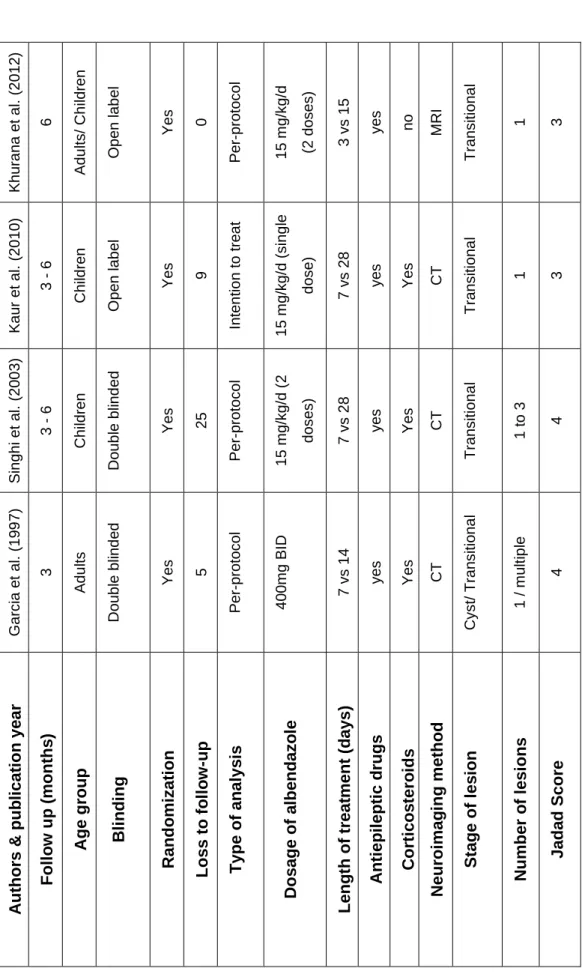
(28) CHAPTER III: METHODOLOGY 3.1 Type of study and design This study is a systemic review, specifically a metanalysis. The protocol was performed following the preferred reporting items for systematic review and metanalysis protocols (PRISMA-P) 2015 statement and the final report following the PRISMA statement.23, 24 The last metanalysis regarding albendazole treatment length was carried out 6 years ago. Six studies were included for different subset of analysis. However, 2 studies were not clinical trials and other 2 studies had low quality based on a Jadad score < 3.12 After searched in (PROSPERO), no current metanalysis about neurocysticercosis was identified.. 3.2 Sample design All the available studies were analyzed thus sampling was not required. Study selection criteria. Figure 3.1 Selection strategy 16.
(29) The studies were obtained from Medline and LILACS without date or languages limitations, searching only studies in humans. The key words used in the search strategy were albendazole AND neurocysticercosis. Additionally, Clinicaltrials.gov was reviewed, as well as experts in the topic were consulted by means of researchgate to identify completed or in the process of execution studies. Only clinical trials in adults and children with a Jadad score ≥ 3 were included.25 Two studies were excluded by low quality in a Jadad score < 3.26, 27. 3.3. Data collection techniques. Each study was coded and analyzed by the author and year of publication following the selection criteria detailed in the figure 3.1. until obtained only the included studies. A spreadsheet in Microsoft Excel 2007 was utilized for this purpose. After the full text analysis of the included studies, the variables described in the table 3.1. were summarized in an individual table. The main outcomes were illustrated in 2 tables, one with 3 months follow-up and another with 6 months follow-up. The data extracted from each study were author, year of publication, type of analysis, blinding, randomization, loss to follow up, Jadad score, time of follow up, neuroimaging method, age group, dosage of albendazole, length of administration of albendazole, stage of lesions, number of lesions, steroid usage, and antiepileptic drug usage. 3.4. Data processing and analysis. The main end point was categorical considering the persistence of radiological lesion or not measured by neuroimaging (CT scan or MRI) after a follow-up time of 3 or 6 months. A subset of data analysis was carried out to determine variation of the results considering calcifications as persistence or non-persistence of the lesion and the age group. The secondary end point was the presence of adverse events.. 17.
(30) Software Stata 11 was utilized to perform the statistical analysis. The heterogeneity between studies was assessed by using the x2 test; p < 0.10 was considered statistically significant in the analysis of heterogeneity. Pooled risk ratios (RRs) and 95% confidence intervals (CIs) for main and secondary end points were calculated by using the Mantel-Haenszel fixed effect model in the absence of heterogeneity. The pooled RRs were determined dividing the incidence of lesions persistence in short-course therapy by the incidence of lesions persistence in long-course therapy. Forest plots were depicted to represent the results. Publication bias was assessed by Egger’s test and sensitivity analysis. Funnel plots were not used because they are recommended only with at least 10 studies. 3.5. Ethical aspects. The protocol will be approved by the Universidad San Martín de Porres and the thesis director. No conflict of interest was identified. The whole information was kept in a computer with password to restrict the data access. Once approved, the protocol and any amendment were inscribed in PROSPERO to avoid duplication of the metanalysis and bias related to changes in the protocol. No financial support or sponsor exists, more than the author.. 18.
(31) CHAPTER IV: RESULTS Four studies were considered in the metanalysis. (28)(29)(30)(31) Differences among the studies, as well as main characteristics of each one are summarized in table 4.1.. 19.
(32) The included studies show similar features and the same dosage of albendazole.. None of them had a perfect Jadad score. In addition, the length of therapy goes. from 3 days to 28 days.. 20. }. Transitional 1. Yes CT Transitional 1 to 3 4. Yes CT Cyst/ Transitional 1 / multiple 4. Corticosteroids. Neuroimaging method. Stage of lesion. Number of lesions. Jadad Score. 3. CT. Yes. yes. yes. yes. Antiepileptic drugs. 7 vs 28. 7 vs 28. 7 vs 14. Length of treatment (days). dose). 3. 1. Transitional. MRI. no. yes. 3 vs 15. (2 doses). 15 mg/kg/d. Per-protocol. Intention to treat. doses). Per-protocol. Per-protocol. Type of analysis. 0. Yes. Open label. Adults/ Children. 6. Khurana et al. (2012). 9. 15 mg/kg/d (single. 25. 5. Loss to follow-up. Yes. Open label. Children. 3-6. Kaur et al. (2010). 15 mg/kg/d (2. Yes. Yes. Randomization. 400mg BID. Double blinded. Double blinded. Blinding. Dosage of albendazole. Children. Adults. 3-6. 3. Follow up (months). Age group. Singhi et al. (2003). Garcia et al. (1997). Authors & publication year. Table 4.1 Main characteristics of included clinical trials..
(33) Table 4.2 Persistence of Neurocysticercosis lesions 3 months after therapy.. Persistence of NCC* lesions. Persistence of NCC* lesions. (Calcification like lesion. (Calcification like lesion non-. persistence). persistence). Authors & publication year. Short-course. Long-course. Short-course. Long-course. therapy. therapy. therapy. therapy. Yes. No. Yes. No. Yes. No. Yes. No. 21. 37. 30. 32. 15. 43. 15. 47. 13. 49. 14. 46. 7. 55. 9. 51. -. -. -. -. 4. 1. 3. 1. Kaur et al. (2010) (28) Singhi et al. (2003) (30) Garcia et al. (1997)+ (31). *NNC = neurocysticersosis +Only. patients with single transitional lesions were included because patients with calcifications and. extraparenchymal neurocysticercosis were excluded from the analysis.. The study by Kaur et al analyzed 58 patients in short-course therapy and 62 in the long-course therapy. The study by Singhi et al analyzed 62 in the short-course therapy and 60 in the long-course therapy. The study by Garcia et al only contributed with 5 patients in the short-course therapy and 4 in the long-course therapy. The main reason for a small sample from the study by Garcia et al was that some patients were excluded from the analysis due to concomitant calcified lesions or extraparenchymal lesions.. 21.
(34) Table 4.3 Persistence of Neurocysticercosis lesions 6 months after therapy. Persistence of NCC* lesions. Persistence of NCC* lesions. (Calcification like lesion. (Calcification like lesion non-. persistence). persistence). Authors & publication year. Short-course. Long-course. Short-course. Long-course. therapy. therapy. therapy. therapy. Yes. No. Yes. No. Yes. No. Yes. No. 16. 19. 11. 24. 13. 22. 10. 25. 21. 37. 30. 32. 15. 43. 15. 47. 11. 51. 8. 52. 5. 57. 2. 58. Khurana et al. (2012) (29) Kaur et al. (2010) (28) Singhi et al. (2003) (30). *NNC = neurocysticersosis. The study by Kaur et al analyzed 58 patients in short-course therapy and 62 in the long-course therapy. The study by Singhi et al contributed with 62 in the shortcourse therapy and 60 in the long-course therapy. The study by Khurana et al provided 35 patients in each group for the subsequent analysis.. Figure 4.1 Forest plot: Persistence of the Neurocysticercosis single transitional lesions 3-6 months after short-course vs long-course albendazole therapy 22.
(35) The earlier follow-up time was considered and calcifications were contemplated as non-persistence of the lesions. Analysis shown a non-significant effect of heterogeneity (x2 (3) = 0.88, p=0.829). Therefore, fixed model was used for the remaining analysis. There was no statistically significant effect of treatment length in term of risk ratio. The pooled effect was z = 0.27 and the p value of Mantel-Haenszel was 0.789. Pooled RR = 1.05 (95%CI 0.72-1.54). Thus, there is not statistical significant difference between short or long-course treatment with albendazole.. Figure 4.2 Sensitivity Analysis: Persistence of the Neurocysticercosis single transitional lesions 3-6 months after short-course vs long-course albendazole therapy. 23.
(36) Sensitivity analysis does not exclude any study. Egger's test result was p=0.291. All these criteria do not suggest publication bias.. Figure 4.3 Forest plot: Persistence of the Neurocysticercosis single transitional lesions 3 months after short-course vs long-course therapy in children (calcifications as persistence of the lesions). Analysis shown a non-significant effect of heterogeneity (x2 (1) = 0.21, p=0.648). Therefore, fixed model was used for the remaining analysis.. There was no statistically significant effect of treatment length in term of risk ratio. The pooled effect was z = 1.22 and the p value of Mantel-Haenszel was 0.222. Pooled RR = 0.80 (95%CI 0.56-1.15). Thus, there is not statistical significant difference between short or long-course treatment with albendazole.. 24.
(37) Figure 4.4 Sensitivity analysis: Persistence of the Neurocysticercosis single transitional lesions 3 months after short-course vs long-course therapy in children (calcifications as persistence of the lesions). 25.
(38) Sensitivity analysis does not exclude any study. These criteria do not suggest publication bias.. Figure 4.5. Forest plot: Persistence of the Neurocysticercosis single transitional lesions 3 months after short-course vs long-course albendazole therapy (calcifications as nonpersistence of the lesions). Analysis shown a non-significant effect of heterogeneity (x2 (2) = 0.46, p=0.793). Therefore, fixed model was used for the remaining analysis.. There was no statistically significant effect of treatment length in term of risk ratio. The pooled effect was z = 0.17 and the p value of Mantel-Haenszel was 0.886. Pooled RR = 0.96 (95%CI 0.61-1.52). Thus, there is not statistical significant difference between short or long-course treatment with albendazole.. 26.
(39) Figure 4.6. Sensitivity analiysis: Persistence of the Neurocysticercosis single transitional lesions 3 months after short-course vs long-course albendazole therapy (calcifications as non-persistence of the lesions). Sensitivity analysis does not exclude any study. Egger's test result was p=0.238. All these criteria do not suggest publication bias.. Figure 4.7. Forest plot: Persistence of the Neurocysticercosis single transitional lesions 6 months after short-course vs long-course albendazole therapy (calcifications as persistence of the lesions). 27.
(40) Analysis shown a non-significant effect of heterogeneity (x2 (2) = 0.92, p=0.632). Therefore, fixed model was used for the remaining analysis.. There was no statistically significant effect of treatment length in term of risk ratio. The pooled effect was z = 1.03 and the p value of Mantel-Haenszel was 0.304. Pooled RR = 1.26 (95%CI 0.81-1.96). Thus, there is not statistical significant difference between short or long-course treatment with albendazole.. Figure 4.8. Sensitivity analysis: Persistence of the Neurocysticercosis single transitional lesions 6 months after short-course vs long-course albendazole therapy (calcifications as persistence of the lesions). 28.
(41) Sensitivity analysis does not exclude any study. Egger's test result was p=0.136. All these criteria do not suggest publication bias.. Figure 4.9. Forest plot: Persistence of the Neurocysticercosis single transitional lesions 6 months after short-course vs long-course albendazole therapy (calcifications as nonpersistence of the lesions). Analysis shown a non-significant effect of heterogeneity (x2 (2) = 3.68, p=0.158). Therefore, fixed model was used for the remaining analysis.. There was no statistically significant effect of treatment length in term of risk ratio. The pooled effect was z = 0.05 and the p value of Mantel-Haenszel was 0.961. Pooled RR = 1.01 (95%CI 0.73-1.39). Thus, there is not statistical significant difference between short or long-course treatment with albendazole.. 29.
(42) Figure 4.10. Sensitivity analysis: Persistence of the Neurocysticercosis single transitional lesions 6 months after short-course vs long-course albendazole therapy (calcifications as non-persistence of the lesions). Sensitivity analysis does not exclude any study. Egger's test result was p=0.399. All these criteria do not suggest publication bias.. Figure 4.11. Forest plot: Persistence of the Neurocysticercosis single transitional lesions in adults 3 months after short-course vs long-course albendazole therapy (calcifications as non-persistence of the lesions). 30.
(43) There was no statistically significant effect of treatment length in term of risk ratio. The pooled effect was z = 0.18 and the p value of Mantel-Haenszel was 0.860. Pooled RR = 1.07 (95%CI 0.52-2.18). Thus, there is not statistical significant difference between short or long-course treatment with albendazole.. Figure 4.12. Forest plot: Adverse events after short-course vs long-course albendazole therapy. Only gastrointestinal adverse events were considered important. There were no statistically significant adverse event episodes in term of risk ratio. The pooled effect was z = 0.99 and the p value of Mantel-Haenszel was 0.324. Pooled RR = 0.55 (95%CI 0.17-1.79). Thus, there is not statistical significant difference regarding adverse events between short or long-course therapy.. 31.
(44) CHAPTER V: DISCUSSION The total number of patients was 321, distributed 160 patients in the short-course therapy group and 161 in the long-course therapy group. The sample size of the studies was similar which was reflected in the absence of significant heterogeneity. The four included studies were similar regarding methodology. Major differences stated were that studies by Khurana et al and Kaur et al were open-label while studies by Singhi et al and Garcia et al were double blinded. The study by Khurana et al used the MRI to assess the persistence of the lesions and did not use corticosteroids as additional therapy. Only adults participated in the study by Garcia et al, children participated in the other three studies.29,28.31.30 Results supports that there is no significant statistical of effectiveness of albendazole duration therapy to neurocysticercosis single transitional parenchymal lesions. The pooled RR of the persistence of lesions comparing short-course therapy versus long-course therapy was 1.05 (95%CI 0.72-1.54), and p value of Mantel-Haenszel was 0.789. Assessment of publication bias through Egger’s test (p=0.291) and sensitivity analysis suggest no publication bias. The pattern is the same, in despite of the age group (adults versus children). Whether or not calcifications are contemplated as lesions persistence does not alter the results. More studies are needed to draw conclusions about the effectiveness of treatment duration in the case of multiple parenchymal lesions and when the stage of the lesion is cyst or viable. The majority of the studies only analyze single transitional lesions, making difficult the generalization of the finds to multiple lesions diseases. The last metanalysis carried out by Abba et al in 2010 showed no statistical significant difference between the short-course and long-course albendazole therapy for neurocysticercosis.. The pooled RR of the persistence of lesions. comparing short-course therapy versus long-course therapy was 0.98 (95%CI 0.641.50), and p value of Mantel-Haenszel was 0.92.It has concordance with the findings of the current metanalysis. The main differences among the studies lies that the current metanalysis included only high quality clinical trials. Therefore, 2 non-clinical 32.
(45) trials studies included in the previous metanalysis were not considered. In addition, 2 clinical trials with a Jadad score < 3 were taken out. On the other hand, 2 new clinical trials were taken into account.12 NCC has become a health problem from developing as well as developed nations. A globalized world has shortened the distances between the countries which expedite the transmission of NCC increasing the prevalence in some populations.(4) At the same time, the diffusion of the knowledge and therapies decreased the prevalence in other populations.32 The complexity of the NCC explains some barriers in defining the best dosage and length of therapy. The number of lesions can range from one to hundreds. Even more, a single lesion can produce seizures and multiple lesions can be asymptomatic. Likewise, parenchymal lesions symptoms depends on the location and cerebral area comprised.7 Thus, multiple neurological diseases can be simulated by NCC. Extraparenchymal lesions were briefly described in this study; they usually have a worse prognosis and are more likely to need surgery.33, 17 A management of this infectious disease that is spread via fecal-oral contact must include preventive measures such hand hygiene coupled with appropriated treatment.1 An individual evaluation of each patient taking into account the stage of the lesions, location, recurrence, must be carried out before starting the treatment and defining the times and dosage.4 Although corticosteroids and antiepileptic drugs are frequently used in the management of NCC, issues about dosage, type of corticosteroids, time treatment are still debated and their efficacy must be tested.34 Even though praziquantel is an option of treatment it is usually a backup after a metanalysis that showed albendazole better efficacy.(19) Albendazole therapy with 400mg twice per day in adults and 15mg/kg/d twice per day in children is the most common dosage therapy for NCC.29,28,31,30 A study conducted by Garcia et al increase the dosage of albendazole 22.5 mg/kg per day and combined the therapies of albendazole and praziquantel getting a better efficacy with combined therapy without increasing the adverse events, also 33.
(46) proposing a synergy based on previous in vitro studies. No significant differences in adverse events were reported between treatment groups.20 The combined therapy opened a discussion between the experts. The results of the current metanalysis support the use of short therapy (<8 days) with albendazole in single transitional parenchymal NCC lesions in adults and children. This argument is support based on the same of effectiveness between the compared treatment duration, albeit adverse events are not significant. Long-course albendazole therapy (≥8 days) for single and multiple lesions increases the cost of treatment and maybe adverse events without significant increase in effectiveness. However, some pitfalls were noticed after complete the meta-analiysis, such is the case of the persistence of lesions as the chosen main end point. (35) Most experts agree that the effectiveness of treatment should focus in the recurrence of the signs and symptoms, mainly seizures the most frequent presentation.(36) Limited studies considered seizures recurrence as the main end point.37,38 More high quality clinical trials with enhanced methodology are necessary to answer the remaining questions. The end point assessed should focus in the symptoms resolution. Adequate power is another point to consider in new studies. Besides, report of adverse events must be clearer. Immunity response and genetic factors are the less understood covariables in the equation. Developing of these areas in the following years can bring out valuable information to decipher this complex disease and the responses to the treatment. 7 The results of the study Effects of 2 different duration of Albendazole therapy in patients with neurocysticercosis in Brain ≤ 5 Lesions on CT will be helpful to clarify some of the unanswered queries. It was completed and the publication is pending as is depicted in the clinicaltrials.gov website.. 34.
(47) CONCLUSIONS Less than 8 days length of therapy with albendazole must be used for single transitional intraparenchymal neurocysticercosis. There is no difference between short-course and long-course of albendazole therapy for neurocysticercosis. The pooled RR of the persistence of the lesions was 1.05 (95%CI 0.72-1.54). Mantel-Haenszel showed a p value of 0.789. Moreover, both Egger’s test and sensitivity analysis support the absence of publication bias. Thus, combined information homogeneously supports that there is no difference in effectiveness because of the length of therapy with albendazole. Even though there was no significant difference regarding the adverse events, more data is needed to support the results.. 35.
(48) RECOMENDATIONS Even though there is no difference between short-course versus long-course of albendazole, some points are unclear. For instance, more studies are needed to establish if 3 days of treatment have the same effectiveness in comparison to 7 days. The effectiveness of higher dosage of albendazole or combination therapy with praziquantel must be analyzed. Nevertheless, high quality studies, like randomized clinical trials, are needed in order to draw conclusions about these points. The results of the study Effects of 2 different duration of Albendazole therapy in patients with neurocysticercosis in brain ≤ 5 Lesions on CT will be helpful to clarify some of the unanswered queries.. 36.
(49) SOURCES OF INFORMATION. 1. Takayanagui O. Neurocysticercosis. Arq Neuropsiquiatr. 2013; 71(9-B): p. 710-713. 2. García H, Nash T, Del Brutto O. Clinical symptoms, diagnosis, and treatment of neurocysticercosis. Lancet Neurol. 2014; 13: p. 1202–15. 3. Serrano Ocana G, Ortiz Sablon JC, Ochoa Tamayo I, Almaguer Arena L, Serrano Ocana LM, Govender S. Neurocysticercosis in patients presenting with epilepsy at St Elizabeth’s Hospital, Lusikisiki. S Afr Med J. 2009; 99: p. 588-591. 4. Del Brutto O. Neurocysticercosis: A Review. The ScientificWorld Journal. 2012. 5. Otte W, Singla M, Sander J, Singh G. Drug therapy for solitary cysticercus granuloma: a systematic review and meta-analysis. Neurology. 2013 Jan; 80(2): p. 152-62. 6. Saavedra H, Gonzales I, Alvarado M, Porras M, Vargas V, Cjuno R, et al. Diagnóstico y manejo de la neurocisticercosis en el Perú. Rev Peru Med Exp Salud Publica. 2010; 27(4): p. 586-91. 7. Carpio A, Fleury A, Hauser W. Neurocysticercosis: Five new things. Neurol Clin Pract. 2013 Apr; 3(2): p. 118-125. 8. Nogales-Gaete J, Arriagada C, Salinas R. Tratamiento de la neurocisticercosis: Revisión critica. Rev Méd Chile. 2006; 134: p. 789-796. 9. Matthaiou D, Panos G, Adamidi E, Falagas M. Albendazole versus Praziquantel in the Treatment of Neurocysticercosis: A Meta-analysis of Comparative Trials. PLoS Negl Trop Dis. 2008; 2(3). 10. Chaurasia R, Garg R, Agarwall A, Kohli N, Verma R, Singh M, et al. Three day albendazole therapy in patients with a solitary cysticercus granuloma: a randomized double blind placebo controlled study. Southeast Asian J Trop Med Public Health. 2010 May; 41(3).. 37.
(50) 11. Sotelo J, Del Brutto O, Penagos P, Escobedo F, Torres B, Rodriguez-Carbajal J, et al. Comparison of therapeutic regimen of anticysticercal drugs for parenchymal brain cysticercosis. J Neurol. 1990; 237: p. 69-72. 12. Abba K, Ramaratnam S, Ranganathan L. Anthelmintics for people with neurocysticercosis (Review). Cochrane Database Syst Rev. 2010 Jan; 20(1). 13. Bustos J, Pretell E, Llanos-Zavalaga F, Gilmanb R, Del Brutto O, Garcia H. Efficacy of a 3-day course of albendazole treatment in patients with a single neurocysticercosis cyst. Clinical Neurology and Neurosurgery. 2006; 108: p. 193–194. García H, Evans C, Nash T, Takayanagui O, White AJ, Botero D, et al. Current 14. Consensus Guidelines for Treatment of Neurocysticercosis. Clinical Microbiology Reviews. 2002 Oct;: p. 747–756. 15.. Del Brutto O. Neurocysticercosis: new thoughts on controversial issues. Curr Opin Neurol. 2013 Jun; 26(3). Kumar R, Rakholia R, Kumar Arya A. Clinical, sociodemographic, radiological. 16.. profile and response to albendazole therapy in children with neurocysticercosis in Uttarakhand. Journal of Mahatma Gandhi Institute of Medical Sciences. 2015; 20(2): p. 157-162.. 17.. Agapejev S, Da Silva M, Ueda A. Severe Forms of Neurocysticercosis. Arq Neuropsiquiatr. 1996; 54(1). Cuello-García C, Roldán-Benítez Y, Pérez-Gaxiola G, Villarreal-Careaga J.. 18. Corticosteroids for neurocysticercosis: a systematic review and meta-analysis of randomized controlled trials. Int J Infect Dis. 2013 Aug; 17(8). Del Brutto O, Roos K, Coffey C, García H. Meta-Analysis: Cysticidal Drugs for 19. Neurocysticercosis: Albendazole and Praziquantel. Ann Intern Med. 2006; 145: p. 43-51. Garcia H, Gonzales I, Lescano A, Bustos J, Zimic M, Escalante D, et al. 20.. Efficacy of combined antiparasitic therapy with praziquantel and albendazole for neurocysticercosis: a double-blind, randomised controlled trial. Lancet Infect Dis. 2014 Aug; 14(8): p. 687-95.. 38.
(51) Satoru Odashima N. Enantiomers of sulfoxide of albendazole: cerebrospinal 21. fluid and plasma levels and therapeutic efficacy in the treatment of patients with neurocysticercosis. Arq Neuropsiquiatr. 2003; 61(2-A): p. 321-324. Baird R, Wiebe S, Zunt J, Halperin J, Gronseth G, Roos K. Evidence-based 22.. guideline: treatment of parenchymal neurocysticercosis: report of the Guideline Development Subcommittee of the American Academy of Neurology. Neurology. 2013 Apr; 80(15): p. 1424-9. Moher D, Shamseer L, Clarke M, Ghersi D, Liberati A, Petticrew M, et al.. 23. Preferred reporting items for systematic review and meta-analysis protocols (PRISMA-P) 2015 Statement. Syst Rev. 2015 Jan; 4(1). Moher D, Liberati A, Tetzlaff J, Altman D. Preferred Reporting Items for 24. Systematic Reviews and Meta-Analyses: The PRISMA Statement. PLoS Med. 2009 July; 6(7). Moher D, Jadad A, Tugwell P. Assessing the quality of randomized controlled 25. trials. Current issues and future directions. Int J Technol Assess Health Care. 1996; 12: p. 195–208. Cruz I, Cruz M, Carrasco F, Horton J. Neurocysticercosis: optimal dose 26. treatment with albendazole. Journal of the Neurological Sciences 133. 1995; 133: p. 152-154. Alarcón F, Dueñas G, Diaz M, Cevallos N, Estrada G. Short course of 27.. albendazole therapy for neurocysticercosis: A prospective randomized trial comparing three days, eight days and the control group without albendazole. Revista Ecuatoriana de Neurologia. 2000 Dec; 10(1): p. 1-6. Kaur P, Dhiman P, Dhawan N, Nijhawan R, Pandit S. Comparison of 1 week. 28. versus 4 weeks of albendazole therapy in single small enhancing computed tomography lesion. Neurol India. 2010; 58: p. 560-564. Khurana N, Garg R, Verma R, Malhotra H, Singh M, Shukla R. Three-day 29.. versus 15-day course of albendazole therapy in solitary cysticercus granuloma: an open label randomized trial. J Neurol Sci. 2012 May; 316(1-2): p. 36-41.. 39.
(52) Singhi P, Dayal D, Khandelwal N. One week versus four weeks of albendazole 30. therapy for neurocysticercosis in children: a randomized, placebo-controlled double blind trial. Pediatr Infect Dis J. 2003; 22: p. 268–72. Garcia H, Gilman R, Horton J, Martinez M, Herrera G, Altamirano J, et al. 31.. Albendazole therapy for neurocysticercosis: A prospective double-blind trial comparing 7 versus 14 days of treatment. American Academy of Neurology. 1997; 48: p. 1421-1427. Esquicha J, Falcón N, Oshiro S. Características clínicas y epidemiológicas de. 32. los pacientes con neurocisticercosis en un hospital general de Lima. Rev Med Hered. 2012; 23: p. 4-10. Góngora-Rivera F, Soto-Hernández J, González Esquivel D, Cook H, 33.. Márquez-Caraveo C, Hernández Dávila R, et al. Albendazole trial at 15 or 30 mg/kg/day for subarachnoid and intraventricular cysticercosis. Neurology. 2006; 66: p. 436–438. Singh G, Rajshekhar V, Murthy J, Prabhakar S, Modi M, Khandelwal N, et al.. 34. A diagnostic and therapeutic scheme for a solitary cysticercus granuloma. Neurology. 2010 Dec; 75(24): p. 2236–2245. Carpio A, Kelvin E, Bagiella E, Leslie D, Leon P, Andrews H, et al. Effects of 35. albendazole treatment on neurocysticercosis: a randomised controlled trial. J Neurol Neurosurg Psychiatry. 2008; 79: p. 1050–1055. Garcia H, Javier Pretell E, Gilman R, Martinez S, Moulton L. A Trial of 36. Antiparasitic Treatment to Reduce the Rate of Seizures Due to Cerebral Cysticercosis. N Engl J Med. 2004; 350: p. 249-58. Romo M, Wyka K, Carpio A, Leslie D, Andrews H, Bagiella E, et al. The effect 37. of albendazole treatment on seizure outcomes in patients with symptomatic neurocysticercosis. Trans R Soc Trop Med Hyg. 2015 Nov; 109(11): p. 738-46. Das K, Mondal G, Banerjee M, Mukherjee B, Singh O. Role of antiparasitic 38.. therapy for seizures and resolution of lesions in neurocysticercosis patients: An 8 year randomised study. Journal of Clinical Neuroscience. 2007; 14: p. 1172–1177.. 40.
(53) ANNEX. Outcomes extracted from included studies.. Article. Authors & publication year. *NNC = neurocysticersosis. 41. Short-course therapy complete NCC* resolution Yes. No. Long-course therapy complete NCC* resolution Yes. No.
(54)
Figure


+7



Documento similar
amazonensis (IFLA/BR/1967/PH-8), and the course of infection was monitored for 115 days. When the animals developed ulcerated lesions presenting an average diameter of 2 to 3 mm,
The implementation of this activity is intended to make students more involved in the English language. For this, they have also been considered in evaluating the task, making
In this study, a porcine in vitro fertilization (IVF) system and seminal quality parameters of frozen–thawed boar semen were used to assess the effectiveness of two different
sites of Valencian speaking regions. They are grouped in this paper in accordance to the community they belong to. The main focus of this paper concerns the study of the
Evidence from experimental and observational studies, especially the findings of the Strategies for Management of Anti-Retroviral Therapy Study (SMART Study), 46 have
This course provides advanced training and specialized skills in the field of Sustainable Chemistry, introducing to the students the main principles and tools of this discipline and
In this study, there are 24 incidents of on- screen traumatic mechanisms in The Godfather, and there are 19 characters that die during the course of the film.. More of the
This course concerns the structure and functioning of European Union Courts which includes not only the study of the organs of this nature, but also their functioning in the
