
Damqatum : The CEHAO newsletter, 2015, nº 11 (versión en inglés)
22
0
0
Texto completo
(2) INDEX | N. 11 2015. p. 03. Solomon, Shishak and Controversies of Ancient Chronology: An Interview with Peter James p. 07. The Late Roman Lod Mosaic / Amir Gorzalczany p. 11. “Asiatic Copper” in New Kingdom Egypt / Javier Giménez p. 18. Workshop: Capital before Capitalism? Wealth, Inequality and State in the Ancient World / Damián Fernández p. 20. CEHAO Scholarly Participation 2015. CENTRO DE ESTUDIOS DE HISTORIA DEL ANTIGUO ORIENTE DEPARTMENT OF HISTORY FACULTY OF SOCIAL SCIENCES PONTIFICAL CATHOLIC UNIVERSITY OF ARGENTINA Damqātum is published by the Centro de Estudios de Historia del Antiguo Oriente (CEHAO). The CEHAO was founded in 2002 and is a non-profit, academic, scientific organization. Address: Av. Alicia Moreau de Justo 1500 P.B. C1107AFD. Buenos Aires, Argentina. Damqātum was founded by Juan Manuel Tebes. Editor: Francisco Céntola. Cover illustration (and p. 2): Abu Simbel (photo by Ken Adams). Design: Francisco Céntola. The opinions expressed here are those of the authors, and do not necessarily reflect the views of Damqātum. The authors of the articles published in this volume transfer their rights to the publisher (non-exclusively), to incorporate the digital version into the “Digital Library of the Catholic University of Argentina” Institutional Repository and into other databases of academic relevance.. N. 11 | 2015. DAMQĀTUM - THE CEHAO NEWSLETTER. 2.
(3) » Interview. SOLOMON, SHISHAK AND CONTROVERSIES OF ANCIENT CHRONOLOGY: AN INTERVIEW WITH PETER JAMES Damqātum is happy to publish an interview we made with British historian Peter James, one of the proponents of the controversial Centuries of Darkness (CoD) or ultra-low chronology for the ancient Near Eastern world. The excuse is the recent publication of the multi-authored book Solomon and Shishak, edited by James and Dutch colleague Peter van der Veen (2015).. (1) Q: Before getting into the book “Solomon and Shishak” and its main chronological debates, we would like to know about your initial steps in ancient history. How did you begin your studies? Why were you interested in the chronology of the ancient world? Like many others, my initial interest in ancient history began with a teenage fascination with Greek myth. I was extraordinarily lucky that my local library in Wimbledon then had a complete set of the Loeb Classical Library so I could self-educate. I was especially intrigued by legendary events such as the Trojan War, and wanted to find out whether it actually happened, and also when. I also came across the works of Immanuel Velikovsky, who raised the important issue of the (Iron Age) “Dark Ages” in the ancient Mediterranean. Usually characterised as a “crank,” he did ask many of the right questions – though his answers were far too extreme, involving an incredible 500-800 years lowering of Egyptian chronology. Many of my present colleagues also read Velikovsky in their youth; but as we went through our university studies, we realised the manifest problems with his work (a crucial one being his cavalier attitude towards stratigraphy). We also found that Velikovsky had a number of eminent predecessors including the British classical scholar Cecil Torr who in 1896 argued for a lowering of the start of the Egyptian New Kingdom by some 200 years. His arguments found favour with Jens Lieblein, the founding father of Norwegian Egyptology – who argued from the evidence of Egyptian genealogies as well as Anatolian archaeology for a considerable lowering of New Kingdom dates. They and other scholars were fighting a rearguard (and ultimately unsuccessful) action against the very high chronologies being developed by Petrie and other Egyptologists. (2) Q: Although you and your colleagues have published a lot about ancient chronology, there’s no doubt that the book. 3. DAMQĀTUM - THE CEHAO NEWSLETTER. “Centuries of Darkness” (James 1991) was and still is your major contribution on the subject. How was the book conceived? When I was undertaking postgraduate research in the early history of the Philistines at UCL in 1985 I met the other authors: starting with Nikos Kokkinos (now a senior expert on Herodian matters and Hellenistic chronography), Nick Thorpe (now Head of the Department of Archaeology at Winchester University) and John Frankish (a Minoan archaeologist who later moved into medicine). Hearing some of them arguing about dating methods in the lobby of the Institute of Archaeology I joined in and we started an informal discussion group, the Ancient Chronology Forum. We published a short pamphlet setting out the synchronisms throughout Near Eastern and Mediterranean cultures both in terms of trade (largely pottery) and links from texts between Late Bronze Age dynasties from the Hittites to Mesopotamia. All roads ultimately led to Egypt. As a multidisciplinary team, we continued collecting the widespread anomalies that resulted from reliance on the conventional Egyptian chronology and assembled them in a lengthy monograph entitled “Bronze to Iron Age Chronology in the Old World: Time for a Reassessment?” We published it in a self-founded journal Studies in Ancient Chronology, intended to be the first of a series – though we only managed to publish a first volume. Still, it proved to be immensely useful, not only as an effective first draft of Centuries of Darkness, but also to network our ideas. Copies were sent out to numerous experts on chronology, largely in the UK, and responses were encouraging, particularly from Colin Renfrew, Professor of Archaeology at Cambridge. In the meantime I had attended a lecture by Egyptologist Robert Morkot, when he expressed amazement at the conventional picture of the post New Kingdom “dark age” in Nubia, according to which abandoned settlements were repopulated centuries later by people with. N. 11 | 2015.
(4) the same pottery and culture. Naturally I invited Robert for a drink after the lecture. With an Egyptologist on board the team was ready to write CoD and we approached the publisher Jonathan Cape, who had had success with one of Renfrew’s books. By an extraordinary coincidence all the authors (and even our Cape editor) lived in the same area of south London, which made regular editorial meetings (and arguments!) easy to organise. Colin (now Lord Renfrew) kindly wrote a foreword in which he stated that “a chronological revolution is on its way,” even though he suspected that it might result in higher dates than the lower ones we were recommending. (3) Q: CoD caused a major polemic at its time, and is still regarded as a controversial book. What are the main hypotheses of the book? Why were they so provocative? It is indeed still regarded as a controversial book. On publication (1991) it received much praise, but in equal amount there were savage criticisms. It was easy to tar us with the Velikovskian brush. Otherwise we have been accused as being both biblical fundamentalists and minimalists! The critics were people who – in our view – clearly did not understand the mechanics of ancient chronology. Some of the kneejerk reactions to the book were ill-informed to the point of being amusing; we proudly added the worst to the website we developed for the book – http://www.centuries.co.uk. The main hypothesis of CoD is that Egyptian New Kingdom dates should be lowered by some 250 years and that the chronology of the subsequent Third Intermediate Period should be telescoped. This goes hand in hand with a lowering of related chronologies throughout the Mediterranean, Aegean, the Levant, Nubia, Mesopotamia and Iran – and the shortening (or closing) of the unlikely “dark ages” in each of those regions.. As to why these arguments were so provocative I would identify three factors: First, “academic lag” – the simple reluctance of some academics to re-examine the long held views they had been teaching for decades and common enough when a paradigm shift is proposed. Second, we were attacking numerous sacred cows, such as “Sothic dating,” which still provides the backbone of the standard Egyptian chronology. It relies on retrocalculations based on some poorly recorded hieroglyphic references to the appearances of Sirius (Sothis) and became widely accepted from the 19th century onwards as a solution to chronology – it had the aura of being scientific as astronomy was involved. I learnt as long ago as 1978 from the late great Archie Roy, Professor of Astronomy at Glasgow University, that Sothic dating has no real basis in astronomy but is actually based on a calendrical theory. Allegedly the Egyptian year (as it was short of the solar year by a quarter of a day) slowly shifted against the seasons, with relevant agricultural festivals only returning to match reality every 1460 years. I could probably count on one hand the number of Egyptologists who have actually understood the theory. Those who do have developed elaborate theories involving the Egyptians having up to three calendars running concurrently! They all overlook the obvious point that the Egyptians (like many Near Eastern cultures) may simply have corrected their calendar to stop it slipping against the seasons. Third, the model proposed in CoD challenged the standard view that the Iron IIA gateways at Hazor, Megiddo and Gezer were the work of King Solomon. Following Kathleen Kenyon we argued that these should be downdated to the time of the Omride dynasty (an idea famously taken up by Israel Finkelstein with no credit given either to us or Kenyon). Instead we proposed that a real archaeological reflection of the United Kingdom could be found towards the end of the Late Bronze Age. Again, this allowed us to be characterised as “fundamentalists,” particularly as this was the time when the “minimalist” schools at Copenhagen and Sheffield universities were on the rise. (4) Q: How do you feel about CoD twenty-five years after its publication? Do you think its original postulates still stand? Would you change anything about it?. Peter James, main author of Centuries of Darkness.. N. 11 | 2015. Though of course I have had my doubts – short of a time machine it is hard to “prove” anything in remote history! – I have continued to feel increasingly confident about the model proposed in CoD. Objections raised against it have simply dissolved under closer scrutiny. Naturally after 25 years there are many small things we would like to change, from matters of emphasis to some detailed points. Through lack of space (and time) I did not set out clearly enough how Mesopotamian chronology only needs to. DAMQĀTUM - THE CEHAO NEWSLETTER. 4.
(5) be reduced by some 125 years in order to enable a lowering of Egyptian chronology by some 250 years. The reason being is that most of the alleged synchronisms between Egypt and Kassite Babylonia (14th-13th centuries BC) are demonstrably false. The matter was taken up and better explained by Pierce Furlong in his PhD thesis, published as Aspects of Ancient Near Eastern Chronology (c. 1600–700 BC) (Furlong 2010). On more detailed points, we no longer feel that the sequence of tombs at Tanis justifies an overlap between the 21st and 22nd Dynasties of the length we suggested in the book – genealogical evidence only requires a shorter overlap for the CoD model to work. Regarding biblical archaeology, we suggested some attractive onomastic links between the ostraca from Lachish II and the time of Nehemiah (mid 5th-century BC). Peter van der Veen has given me reasons to doubt the case and revert, reluctantly, to the standard date of 587 BC for the destruction, with Nebuchadnezzar as the culprit. That does not mean that all is well with the conventional dating of the strata from Lachish, vitally important as a type-site for ancient Judah. The assumption that Lachish III was destroyed by Sennacherib in 701 BC is easily challenged: Lachish IV is much more likely to have been the city he conquered, as per his famous reliefs of the siege. Still, these are all small points of improvement. The basic model still stands. (5) Q: Now that you mention Peter van der Veen, co-editor of Solomon and Shishak, I have to ask you about how the book was conceived. These are the proceedings of a colloquium held at Cambridge, right? Is it the first to be held? We had previously held two meetings: one in Berlin (2006), the second at Cambridge University (2008), where the acronym BICANE (“Bronze to Iron Age Chronology in the Ancient Near East”) was decided on. Although the group remains an informal one, the organisers agreed on a steering committee (P. James, Dr Peter van der Veen, Dr John Bimson, Prof. Uwe Zerbst and Dr Robert Morkot). The suggestion arose that we began work on an edited volume covering the whole range of Dark Age problems throughout Europe, the Mediterranean, Near East and northeastern Africa. Peter van der Veen and I decided against such an encyclopaedic project – it would have taken years and would essentially have been a massive update on Centuries of Darkness. We decided it was better to focus future colloquia and publications on one area at a time. The questions surrounding Solomon and Shishak were and still are a very hot topic – central not only to biblical archaeology but to the wider questions of chronology, in particular that of Egypt. Hence our colloquium held in Cambridge in 2011, with the proceedings published in 2015 as Solomon and Shishak. (6) Q: What do you consider are the most important topics discussed in “Solomon and Shishak” and how do they contri-. 5. DAMQĀTUM - THE CEHAO NEWSLETTER. bute to our knowledge about the history of ancient Israel and Egypt? The two most important topics are the alleged “dead-reckoning” of Egyptian chronology back through the Third Intermediate Period, and the closely related issue of the identity of the Egyptian king Shishak – who, according to the Old Testament, engineered the downfall of Solomon’s empire c. 925 BC. In my contribution with Robert Morkot (along with that from Ad Thijs) we argued from calculations based on the best authenticated reign-lengths of the pharaohs – together with genealogical and art-historical evidence – that Shoshenq I should be placed in the mid-late 9th century BC and therefore could not be Shishak. Rather, as we suggested in CoD (as discussed in detail in one of van der Veen’s contributions) the name “Shishak” could be based on an attested abbreviation, Sysu, for the name of Ramesses III. Returning to the question of our precursors, we discovered (only recently) that Jens Lieblein had suggested as early as 1863 that Ramesses III (rather than Shoshenq I) was the “Shishak” of the Old Testament – a key synchronism proposed in CoD. He later moved away from this specific identification, but continued to argue for a significant lowering of Egyptian New Kingdom dates, on the basis of his thorough analysis of the genealogical information then available. Sparing too much detail, many recent epigraphic discoveries would have encouraged him further – such as those that show that there was an overlap in reigns between Takeloth II and Shoshenq III, and that the High Priest of Amun Osorkon did indeed take the throne as Osorkon III. Sorting out these questions is vital, not only to “biblical archaeology” but ultimately that of the whole Near East and Mediterranean. If Egyptian New Kingdom chronology can be lowered by some 250 years then the Dark Age problems in these regions can be resolved. With respect to ancient Israel and Egypt, the dispute between the minimalist and maximalist interpretations of the biblical account of Solomon’s reign has continued to the point of tedium and effectively reached a deadlock. We would see the disagreement here over historical matters as due to both sides working with a faulty chronology. Unfortunately the debate has even taken on political implications, which I should really avoid as they are so sensitive, though too obvious to escape any mention. (I hasten to add that the following remarks are entirely my own and not the responsibility of the authors of CoD or any members of BICANE). But, roughly speaking, interpretation of the biblical text has fallen into two camps regarding the biblical text: the Hebrew University of Jerusalem school which favours a more literal interpretation (that Solomon had a mini-empire based at a capital in Jerusalem) and the Tel Aviv University school (led by Finkelstein) which tends towards a minimalist one which would see the United Monarchy of David and Solomon as a. N. 11 | 2015.
(6) minor chiefdom. The weakness of the standard literalist interpretation – and conversely strength of the minimalist – is that there is little archaeology for a rich and powerful Solomonic kingdom at Jerusalem in Iron Age IIA. The Tel Aviv school would undermine claims of a “Solomonic empire,” while the maximalist school would allow that such a dominion did exist. Of course, one should not employ ancient texts as a charter for territorial claims. If we allow that Solomonic archaeology should actually be sought at the end of the Late Bronze Age (and the cusp with the early Iron Age), the entire picture changes. We find monumental building work at Jerusalem and – as Peter van der Veen’s ongoing survey work has shown – an array of Egyptian or Egyptianising objects towards the north of the city, many of which can be dated to the 19th Dynasty. Here, as well, Solomon is said to have built a palace for his Egyptian wife, the daughter of Pharaoh with whom he made an “affinity.” I have gone further and suggested that we can identify Solomonic archaeology at sites like Lachish and Megiddo, where the extraordinary cache of LBA ivories was found. Re-examining the biblical account it is clear that Solomon did not – as some passages might suggest – directly rule an empire from the border of Egypt to the Euphrates: other kingdoms existed such as those at Damascus, those in Philistia and the powerful mini-empire of Hiram of Tyre. Why then the discrepancy between the biblical accounts? I have argued that we need to distinguish between de facto and de jure control of the region, and that Solomon, at a time of political recession in Egypt was granted the unique privilege of becoming the viceroy of all the lands that the Egyptians thought they had legal rights to – up to their traditional boundary at the Euphrates River. The alleged differences between the two biblical versions then melt away. In Egyptian legal terms Solomon would have had rights to all those lands: but only “on papyrus,” as it were. I leave the reader here to consider the irony of Solomon having been an Egyptian vassal – reinforcing the point that ancient texts (Hebrew, Egyptian or otherwise) cannot be allowed to influence modern ideas of territorial boundaries. (7) Q: An obvious difference with CoD is that in this book not everyone agrees with the short chronology you support, and actually some scholars are overtly against it. How were the dynamics in this regard, both in the colloquium and in the editing of the book? Our aim was that the colloquium would reflect a wide variety of opinions on the questions in hand. We wanted an open debate, and are pleased that we had this both at the colloquium itself and in the printed proceedings. For example we invited Troy Sagrillo, who argued for the conventional position regarding Shishak = Shoshenq I, to add an appendix to his paper where he could respond to Peter van der Veen’s criticisms. Likewise, while I do not agree with Ad Thijs’ reliance on. N. 11 | 2015. “astronomical” dates, we were very glad to include his work in the proceedings. Peter and I wanted to encourage a serious dialogue with a whole spectrum of views and I hope we have succeeded in that. (8) Q: To finish, do you expect any major archaeological or epigraphic discovery that will settle the matter of chronology for good? Or should we expect a slow building-up of evidence throughout the years as we’ve had until now? Perhaps the best question of all and the most difficult to answer! Because of the limited accessibility of key sites, we can never reasonably expect the original Temple at Jerusalem to be excavated or, for that matter, Tyre where there would have certainly been a considerable archive in the Bronze Age. (The El Amarna letters said that the palace at Tyre was greater than that at Ugarit!). So the “dream ticket,” for example, of finding LBA cuneiform correspondence between Solomon and Hiram, or between them and Egypt or the Hittites may never be realised. So, for the moment, I think we do have to rely on a “slow building-up of evidence” as you put it, but I think that has already been considerable. It continues to build up with endless small finds in Babylonian, Hittite and Levantine epigraphy which do not fit the standard model and are treated as piecemeal problems – in the context of a much wider revision of chronology these can be resolved. Over the years an increasing number of scholars have taken a similar open-minded position to ours: such as Pierce Furlong whose revision of Mesopotamian chronology (which allows a lowering of Egyptian chronology by some 200 years) has been very encouraging. Perhaps the bottom line in answer to this question is that more specialists need to be made aware of the issues (both old and new) that we have raised and actually address them. So I am especially grateful to Damqātum for the opportunity to air these matters to a wider audience References Furlong, P. Aspects of Ancient Near Eastern Chronology (c. 1600–700 BC). 2010. Piscataway, Gorgias Press. James, P. 1991. Centuries of Darkness: A Challenge to the Conventional Chronology of Old World Archaeology. In collaboration with I.J. Thorpe, N. Kokkinos, R. Morkot and J. Frankish. London, Jonathan Cape. James, P. and P.G. van der Veen (eds.). 2015. Solomon and Shishak. Current Perspectives from Archaeology, Epigraphy, History and Chronology. Proceedings of the Third BICANE Colloquium held at Sidney Sussex College, Cambridge 26–27 March, 2011. BAR International Series 2732. Oxford, Archaeopress.. DAMQĀTUM - THE CEHAO NEWSLETTER. 6.
(7) » Research Insights. THE LATE ROMAN LOD MOSAIC Amir Gorzalczany | Israel Antiquities Authority (IAA) [email protected]. T. he city of Lod/Lydda (called in its heyday during the Roman period Diospolis) in central Israel is a good example of an ancient city inhabited for thousands of years, similarly to Jerusalem, Acre and Jaffa (for Lod see Oppenheimer 1988; Schwartz 1991; 2015). Therefore, Lod’s wealth of archaeological remains should not surprise us. Dozens of archaeological excavations were naturally carried out within its boundaries by the IAA and other institutions (e.g., Blockman 1997; Yannai and Merder 2000; Gopher and Blockman 2004; Paz, Rosenberg and Nativ 2005; for an exhaustive list see e.g., Kaplan 1993). Excavating historical cities is always a very difficult task, albeit a very gratifying one. An archaeological project in these areas must take into consideration significant difficulties. This is especially true in the older parts where ancient remains tend to accumulate. The problems include safety, logistics and infrastructure. Since people live and work in these areas, archaeological excavations have a high potential of becoming an annoyance, not to mention the numerous possible social, political and religious conflicts. It is important to work with the local people and to convince them that the ancient remains, rather than a nuisance, are an asset that must be protected, explored and retrieved. Some excavations were carefully planned in advance, but others were initiated unexpectedly, due to fortuitous and highly rewarding discoveries during inspections over infrastructure development work. Such was the case at Lod’s Neveh Yarak quarter in 1996. During the following rescue excavation carried out under the direction of Dr. Miriam Avissar on behalf of the Israel Antiquities Authority, a fine mosaic floor from the Roman period dating to the third century CE was uncovered. The floor was of a beauty and excellence never seen before in Israel (Avissar 1996; 1999; Talgam 2014: 65-71; 2015). The mosaic was made of small tesserae (paving stones) in a variety of colors—more than 15 shades. In some of the friezes many. 7. DAMQĀTUM - THE CEHAO NEWSLETTER. glass tesserae in shades of blue, pale blue, green and yellow were used, some of them coated with a thin layer of gold (golden glass, and see also Porath 2006: 125-127; Porath, Gorin-Rosen and Neguer 2005-6: 185-186, Figs. 5-7). The remarkable amount of glass and gold glass stones strongly suggests the existence of a building decorated with wall mosaics in the vicinity. The central panel probably belonged to a large audience room. It depicts fish, birds and other animals flanking an octagonal scene in which wild animals such as a lion, an elephant, a rhinoceros, a giraffe and a bull are represented. A couple of lions standing on steep cliffs and facing each other can be seen at the background. The cliffs are separated by a lake or stream, in which a mythological creature known as ketos (κῆτος) is swimming. The central panel is flanked by two other panels: the northern one depicts more animals, while the southern one exhibits real and mythological marine creatures flanking two Roman merchant ships (Casson 1971: 157-200; Avissar 2001; Haddad and Avissar 2003; Friedman 2004) of the well-known type navis oneraria. The depiction of the vessels was accurate and realistic, including sails, ropes and naval paraphernalia in rich detail. Artistic studies based on stylistic grounds suggested that the inspiration for the motives portrayed on the mosaic should be sought in Roman North Africa (Africa Proconsularis, and cf. Dunbabin 1978: 196-233; Ghedini 1991). The discovery aroused considerable interest among both scholars and the general public, and the event was given extensive media coverage both in Israel and abroad. Upon the completion of excavation and documentation the mosaic was carefully covered again for preservation. Years later and following a long deliberation, it was decided that the monument will be temporarily removed for maintenance and later on placed on display on the original spot, within a visitor’s center that would be built for this purpose. Part of the mosaic was provisionally removed and sent. N. 11 | 2015.
(8) Central panel of the Lod Mosaic.. N. 11 | 2015. DAMQĀTUM - THE CEHAO NEWSLETTER. 8.
(9) abroad, in a years-long tour that included exhibitions in some of the most prominent museums in the world. Among them were the British Museum in London, the Louvre in Paris, the Hermitage in Saint Petersburg, the Berlin Altes Museum, the Columbus Museum in Ohio, the Fine Arts Museum in San Francisco, the Frost Art Museum in Miami, the Waddesdon Manor in Aylesbury and the Museum of Archaeology and Anthropology of Philadelphia. During this interlude, the center was to be planned and constructed. Upon completion the mosaic was to be returned to its original location. New excavations were carried out in 2009 to allow the mosaic’s removal. Fieldwork was directed by Miriam Avissar and the author (Gorzalczany 2015; Gorzalczany et al. 2016). The removal of the mosaic and the thorough examination of the foundations had an added research value, as they permitted a broader investigation of the layout technique and the modus operandi of the craftsmen. The highlight of the discoveries underneath the mosaic floor were the footprints of the artisans, either barefoot or wearing sandals, imprinted in the plaster bedding. The remains of the synopia, namely the draft drawings performed on the wet plaster to guide and help the workers in laying down the colored tesserae in place, were also discerned. This was an exceptional case of synopia performed in five different pigments, a technique without known parallels (Piovesan, Maritan and Neguer 2012; 2014; Piovesan et al. 2012). An additional small-scale excavation was conducted at the site in 2009 while the mosaic was overseas, in order to clarify some important archaeological matters and to prepare the site for construction. Unexpectedly a second mosaic, also of superb quality and attractive design was partially exposed to the south of the previous one (Talgam 2015: 94-98; Gorzalczany et al. 2016). The excavation was interrupted due to budget constrictions and also as the present day street covered most of the new, southern mosaic, preventing its further exposure. This street being the main access road to a populous neighborhood, it could not be removed to uncover the whole monument. Only during 2014, after traffic was diverted to an alternative route, excavations directed by the author could be expanded into the total exposure of the new mosaic. The new floor postdates the one previously exposed, yet for some time the two co-existed. The new mosaic was located in the center of an open peristyle court and delimited by columns that separated it from a surrounding corridor paved with a white mosaic. The excavations reflected the association between both areas, and suggested that the court and its mosaic were a later addition aimed at enlarging a wealthy four-wings villa urbana (Gorzalczany 2015). The peristyle court was paved with a high-quality mosaic. It seems that this new mosaic was created by the same workshop as the previous one, though by different artists (Talgam 2015: 50). The mosaic consists of a series of rectangular concentric frames in the center of which three lines and three rows. 9. DAMQĀTUM - THE CEHAO NEWSLETTER. of medallions were distributed. The medallions, octagonal in shape, exhibited different subjects, mostly inspired by the animal kingdom: predation scenes, animals engaged in fighting, two threesomes of fishes, a basket with flowers and two partridges on both sides, an amphora flanked by branches and leaves, and a pair of doves in antithetical arrangement standing atop it. Additional finds, namely significant amounts of colored fresco and stucco fragments, as well as marble and pieces of opus sectile recovered at the site and the surroundings attest as well to a luxurious lifestyle. The renewed excavations allowed us a tentative reconstruction of the complex, now almost completely excavated. The proposal is based on the remains of walls and the analysis of robber trenches. After the villa was abandoned, it was covered by later mosaics, paved courtyards, water reservoirs, walls, cesspits and sewage channels dating to the Byzantine, Umayyad, Abbasid and Ottoman periods (Gorzalczany 2015: 48-49), attesting to a continuous occupation in the site. The last period represented at the site is the British Mandate, of which a military bonnet badge was retrieved (Gorzalczany 2012). Coupled with remains known from previous excavations, such as impressive mosaic floors discovered in the close environs of the excavation (e.g., Rosenberger and Shavit 1995, Figs. 53-54; Yannai and Erlich 2015), these finds emphasize the rare splendor of the Roman manor/villa urbana unearthed at Lod. This was not an isolated complex, but part of an affluent neighborhood. The mosaics laid in the large rooms, the fresco-coated walls and marble architectural remains all attest to a well-to-do environment, befitting the upper-class quarter of Diospolis during its heyday. This stunning mosaic is a tangible testimony to Lod’s daily life in its days of glory. Furthermore, besides its historical and archaeological value, it has also a social and educational role at present, as it could help develop a bond between the surrounding community and the past of its town, increasing awareness and local pride References Avissar, M. 1996. “Lod, the Mosaic Floor.” In: Hadashot Arkheologiyot – Excavations and Surveys in Israel 105, pp. 157-160 (Hebrew). Avissar, M. 1999. “Lod – Mosaic Pavement.” In: Qadmoniot 117 vol. 32/1, pp. 41-43 (Hebrew). Avissar, M. 2001. “The Representation of Two Merchants Ships on a Late Roman Mosaic Floor in Lod (Lydda), Israel.” In: Tropis 6, pp. 47-54. Blockman, N. 1997. The Lodian Culture (Jericho IX), Following the Excavations at Nevé Yaraq, Lod. MA Thesis, Tel Aviv University.. N. 11 | 2015.
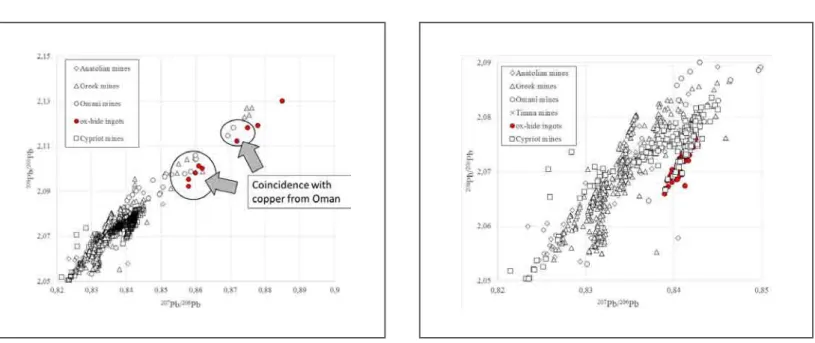
(10) Casson, L. 1971. Ships and Seamanship in the Ancient World. Princeton, Princeton University Press.. Distinguishing Criteria for the Identification of the Panting Technique.” In: Archaeometry 54/4, pp. 723-736.. Dunbabin, K.M.D. 1978. The Mosaics of North Africa. Studies in Iconography and Patronage. Oxford, Oxford University Press. Friedman, Z. 2004. “The Ships Depicted in the Lod Mosaic Reconsidered.” In: The International Journal of Nautical Archaeology 33/1, pp. 164-168.. Piovesan, R., L. Maritan and J. Neguer. 2012. “The Polychrome Synopia of Roman Mosaic at Lod (Israel): Pigments Characterization and Microstratigraphic Study.” In: M. Ioannides, D. Fritsch, J. Leissner, R. Davies, F. Remondino and R. Caffo (eds.), Progress in Cultural Heritage Conservation – EUROMED 4th International Conference. Limassol, Cyprus 2012. London, Springer, pp. 203-208.. Ghedini, F. 1991. “Iconografie urbane e maestranze africane nel mosaico della Piccola Caccia di Piazza Armerina.” In: Bulletino dell’Istituto Archeologico Germanico Sezione Romana 98, pp. 323-335.. Piovesan, R., L. Maritan and J. Neguer. 2014. “Characterising the Unique Polychrome Synopia under the Lod Mosaic, Israel: Pigments and Painting Technique.” In: Journal of Archaeological Science 46, pp. 68-74.. Gopher, A. and N. Blockman. 2004. “Excavations at Lod (Nevé Yaraq) and the Lodian Culture of the Pottery Neolithic Period.” In: ‘Atiqot 47, pp. 1-50.. Porath, Y. 2006. “Mansions in the Outskirts of Byzantine Caesarea.” In: Cathedra 122, pp. 117-142 (Hebrew).. Gorzalczany, A. 2012. “A British Mandate Military Bonnet Badge from Archaeological Excavations at Lod, Israel.” In: Strata: Bulletin of the Anglo-Israeli Archaeological Society 30, pp. 37-45. Gorzalczany, A. 2015. “The Roman Manor at Lod.” In: The Lod Mosaic. A Spectacular Roman Mosaic Floor. New York, Scala Arts Publishers, pp. 38-49. Gorzalczany, A., M. Avissar, H. Torgë, U. ‘Ad, E. Jakoel and Y. Elisha. 2016. “Lod. The Lod Mosaic. Preliminary Report.” In: Hadashot Arkheologiyot – Excavations and Surveys in Israel 128 (09/05/2016). Haddad, E. and M. Avissar. 2003. “A Suggested Reconstruction of One of the Merchant Ships on the Mosaic Floor in Lod (Lydda) Israel.” In: The International Journal of Nautical Archaeology 32/1, pp. 73-77. Kaplan, J. 1993. “Lod.” In: E. Stern (ed.), The New Encyclopedia of Archaeological Excavations in the Holy Land, vol. 3. Jerusalem, The Israel Exploration Society, p. 917. Oppenheimer, A. 1988. “Jewish Lydda in the Roman Era.” In: Hebrew Union College Annual 59, pp. 115-136. Paz, Y., D. Rosenberg and A. Nativ. 2005. “Excavations at Lod - Neolithic and Chalcolithic Remains and Egyptian Presence in the Early Bronze Age.” In: Salvage Excavations Reports 2, pp. 114-158.. Porath, Y., Y. Gorin-Rosen and J. Neguer. 2005-2006. “The ‘Birds Mosaics’ Mansion in the Suburbs of Caesarea Maritima, Israel.” In: Musiva et Sectilia 2-3, pp. 171-189. Rosenberger, A. and A. Shavit. 1995. “Lod, Newe Yaraq.” In: Hadashot Arkheologiyot – Excavations and Surveys in Israel 13, pp. 54-56. Schwartz, J. 1991. Lod (Lydda), Israel: From its Origins through the Byzantine Period, 5600 B.C.E-640 C.E. Oxford, Tempus Reparatum. Schwartz, J. 2015. “Ancient Lod: An Historical Survey from the Persian Period through the Byzantine Period.” In: The Lod Mosaic. A Spectacular Roman Mosaic Floor. New York, Scala Arts Publishers, pp. 24-37. Talgam, R. 2014. Mosaics of Faith. Floors of Pagans, Jews, Samaritans, Christians, and Muslims in the Holy Land. Jerusalem, Yad Ben-Zvi Press / University Park, The Pennsylvania State University Press. Talgam, R. 2015. “The Late Roman Mosaics at Lod.” In: The Lod Mosaic. A Spectacular Roman Mosaic Floor. New York, Scala Arts Publishers, pp. 50-107. Yannai, E. and O. Merder. 2000. “Lod.” In: Hadashot Arkeologiyot – Excavations and Surveys in Israel 112, pp. 63-65. Yannai, E. and A. Erlich. 2015. “Graves and a Building with Mosaics from the Roman Period at Lod-Diospolis.” In: Eretz-Israel 31, pp. 210-220 (Hebrew).. Piovesan, R., C. Mazzoli, L. Maritan and P. Cornale. 2012. “Fresco and Mezzofresco: Experimental Study and Objective. N. 11 | 2015. DAMQĀTUM - THE CEHAO NEWSLETTER. 10.
(11) » Research Insights. “ASIATIC COPPER” IN NEW KINGDOM EGYPT Javier Giménez | Department of Chemical Engineering, Universitat Politècnica de Catalunya [email protected]. T. his paper attempts to combine Lead Isotope Analysis (LIA) and ancient texts and depictions in order to describe the history of the presence of ox-hide copper ingots in Egypt. Ox-hide ingots, referred to as “Asiatic copper” by the Egyptians, represent a particular case where the information given by ancient sources and modern chemical analyses might be combined in order to establish the provenance of archaeological objects and the history of a particular material during the Bronze Age. The first kings of the Egyptian New Kingdom developed an impressive building program through the entire country and needed a supply of copper and other materials. According to several depictions and texts, three different regions supplied copper to Egypt: Syria, Cyprus and Crete. However, the LIA of the lead present in mined copper permits to establish that the ingots were made of copper from the Apliki mines, in Central Cyprus. The depictions in Egyptian tombs and temples probably represented not only the actual region of provenance but also the peoples involved in the commerce of ingots, since these were traded by Syrian merchants following a route that passed through Syria, Cyprus, Crete and Greece. 1. Introduction: Provenance Studies Based on the Chemical Composition of Archaeological Materials The provenance of some archaeological objects can be determined through the study of the composition of their materials, which might slightly differ depending on the geographical region of origin. Provenance studies compare the chemical composition of the materials from different quarries or mines worked in antiquity with the chemical composition of the materials found in archaeological sites. From this comparison, the most likely source or sources of the archaeological material and, therefore, of the archaeological object, might be elucidated (Pollard et al. 2007). For example, a previous article publi-. 11. DAMQĀTUM - THE CEHAO NEWSLETTER. shed in this journal studied the geographical variation of the chemical composition of obsidian, concluding that the most likely sources of the obsidian objects found in Egyptian Predynastic sites were some volcanoes in central Ethiopia (Giménez 2015; Giménez et al. 2015). The isotopic composition of lead present in the lead antimonite used to make ancient opaque glass was analyzed to establish the provenance of the raw materials from the Egyptian New Kingdom. The results indicated that ancient Egyptian artisans employed lead antimonite made of galena from the Gebel Zeit mines in the coast of the Red Sea (Giménez 2015). The main objective of this work is to describe the application of Lead Isotope Analysis (LIA) in order to determine the provenance of the so-called “Asiatic copper,” a particular type of copper ingots that had the shape of the hide taken from a real ox (see Figure 1) and are nowadays called ox-hide ingots. Ox-hide copper ingots appeared during the 17th century BC in Crete, and the last ingots are dated to the 10th century BC and were found in Sardinia. Ox-hide ingots were excavated in different archaeological sites in the Mediterranean, especially in Sardinia, Crete and Cyprus but also in the south of the Anatolian peninsula and in the Levantine coast. Depictions of these ingots were found in some Egyptian tombs and temples dated between the reigns of Hatshepsut and Ramses III. The ancient Egyptian sources, in particular texts describing the depictions of ingots in tombs and temples, convey contradictory information about their provenance, because they indicate that the ingots could come from Asia, Crete or Cyprus. The LIA of the ingots, based on the amount of lead present in mined copper, might shed light on the actual provenance of this material. 2. Ox-Hide Copper Ingots in Egypt There are two main sources of information in Egypt regar-. N. 11 | 2015.
(12) ding ox-hide ingots: (1) scenes in the walls of tombs and temples and accompanying texts, and (2) physical objects found in excavations. The first depictions of ox-hide ingots were found in some Theban tombs dated to the reigns of Hatshepsut and Thutmose III (although it is likely that the ingots arrived earlier in Egypt), while the latest were found in Ramses III’s funerary temple in Medinet Habu (Luxor) and in his tomb in the Valley of the Kings. 2.1. Ancient Egyptian Depictions of Ox-Hide Ingots in Tombs and Temples (and Accompanying Texts) There are more than twenty depictions of ox-hide ingots in Egyptian tombs and temples (Bass et al. 1967). The depictions show four different types of scenes, where ox-hide ingots appear as (a) foreign tribute, (b) the target of arrows shot by a king, (c) a raw material in metallurgical activities, and (d) an offering of an Egyptian king to a god. Figure 2 shows some examples of these scenes. The depictions of ox-hide copper ingots almost disappeared in Egyptian tombs at the end of the 18th dynasty, although there is one later depiction in the tomb of Ramses III in the Valley of the Kings (KV11). Only two more depictions are known from the 19th dynasty onward, both on the walls of the funerary temple of Ramses III, although these could be copies of similar scenes in the funerary temple of Ramses II, the Ramesseum (Bass et al. 1967). In some tombs, the depictions are accompanied by a text that provides clues to the provenance of ingots. In particular, the Rekhmire Theban tomb (TT100) contains some of the most important texts dealing with the provenance of ox-hide ingots according to ancient Egyptians. In one register showing foreigners bringing ox-hide ingots, the text indicates that these foreigners are “the chiefs of the land of Keftiu (and) the islands that are in the Great Sea.” In another register showing again foreigners bearing ox-hide ingots, the text reads “the chiefs of Retenu and of the farthest Asia.” In another wall of the tomb, a text accompanies a depiction of the metallurgical work carried out using as a raw material the “Asiatic copper that the King obtained after His victory in the land of Retenu in order to build the two doors of the Amun Temple in Karnak.” Other tombs also included references to the provenance of ingots, such. as the tomb of Useramun (TT131, in Thebes), where a text accompanying a depiction of ox-hide ingots reads “reception of the booty that His Majesty brought from the Northern countries, from the confines of Asia, and from the islands amidst the sea.” The texts corroborate the different ethnic characteristics of the foreigners depicted in the Rekhmire tomb. For example, Figure 3 shows two depictions of foreigners carrying ox-hide ingots. As it can be seen, the ethnic characteristics of both foreigners are very different, representing people from Syria and Crete. Therefore, texts and depictions in the tombs describe the three regions that ancient Egyptians considered as the suppliers of ox-hide copper ingots: a) Asia-Retenu, probably the region of Syria, including Ugarit, “the chiefs of Retenu and of the farthest Asia.” b) Greek islands, mainly Crete, “the chiefs of the land of the Keftiu.” c) Cyprus, “the islands that are in the Great Sea.” 2.2. Archaeological Artifacts Associated with Ox-Hide Ingots in Egypt Depictions in tombs and temples are not the only source of information available in Egypt about ox-hide copper ingots. On the one hand, a mold designed to make miniature ox-hide ingots was found in the copper mines in Timna (Ben-Yosef 2012). The mold could have been used to fabricate miniature ingots such as those excavated in the foundation deposits of two funerary temples in Thebes (of Tausert and Siptah) that, at least in one case, were engraved with the names of the king (as it was shown after the chemical cleaning of one of the miniature ingots; see Bass et al. 1967). The Timna mold would indicate that ingots were also fabricated in Egypt, and probably with Timna copper, but it should be noted that only one mold was found and only for miniature ingots. On the other hand, a fragment of an ox-hide ingot was discovered at Qantir/Pi-Ramses (Pusch 1995). Its lead isotopic composition coincides with that of the copper from the Apliki mines, in Central Cyprus (Gale and Stos-Gale 1999). Unfortunately, in spite of the relatively large number of depictions from Egypt, this was the only fragment of an actual ox-hide ingot found in Egypt and therefore no other chemical results are available to us for the time being. 3. Ox-Hide Ingots in the Mediterranean: History and Provenance Studies. Figure 1. Shape of an ox-hide copper ingot.. N. 11 | 2015. The determination of the provenance of copper by LIA presents some difficulties. In particular, copper might be re-used, and bronze or copper objects could be melted in order to fabricate new metal objects. Thus, the re-molten copper could be a product of the mixing of copper from different geographi-. DAMQĀTUM - THE CEHAO NEWSLETTER. 12.
(13) cal regions. If this is the case, lead isotopic composition will not be related to any mine because it would be the mixture of different isotopic compositions. Being aware of this and other minor limitations, the provenance studies based on LIA showed that the copper samples from different mines in the Eastern Mediterranean have in general different lead isotopic compositions and the provenance of most copper objects (in particular, ox-hide ingots) can be determined. The results obtained indicate that the provenance of the copper used as raw material for ox-hide ingots varied from the 17th century BC (when ox-hide ingots appeared in the Mediterranean) to the 10th century (when ox-hide ingots disappeared). 3.1. 17th to 16th Centuries BC The earliest ox-hide ingots were found in Crete and date between the 17th and the 16th centuries BC. Stos-Gale (1992). determined the lead isotopic composition of ox-hide ingots from the Cretan palaces of Kato Zakro and Hagia Triada. The main result of the comparison between the isotopic composition of copper ores and archaeological ingots was that neither Crete nor Cyprus was the source of these ox-hide ingots, which had much higher 208Pb/206Pb and 207Pb/206Pb ratios (Gale and Stos-Gale 1982). According to the authors, such high ratios corresponded to very old formations and pointed to a Middle Eastern provenance; therefore, copper would have arrived in Crete following a route through the Anatolian Peninsula, with Troy as a critical city dealing with the copper trade (Stos-Gale 1992). However, other copper mines provide copper with relatively high 208Pb/206Pb and 207Pb/206Pb ratios and could have been the source of Middle Eastern copper, such as the Samad, Suhar and Nizwa ores in Oman (Begemann et al. 2010; see Figure 4). Copper mines from Oman were the main source of Mesopotamian copper during the third and second. Figure 2. [top] Depictions of ox-hide ingots in Egypt. (a) [left] Amenhotep II’s stela from the Karnak Temple (Luxor Museum, J. 129), drawing after Chevrier 1929; (b) [center] Ramses III making offerings to Amun-Re as Thoth keeps record (treasury of the Medinet Habu temple, after The Epigraphic Survey 1932); (c) [right] bearers in Amenemopet’s tomb, TT276 (after Bass et al. 1967). Figure 3. [bottom] Depictions of foreigners carrying ox-hide copper ingots in the tomb of Rekhmire. (a) Minoan or Mycenaean, (b) Syrian (after de Garis Davies 1943).. 13. DAMQĀTUM - THE CEHAO NEWSLETTER. N. 11 | 2015.
(14) millennia BC, and the possibility that copper from Oman was employed in Crete for the fabrication of ox-hide ingots should not be disregarded. 3.2. 15th to 12th Centuries BC In the 15th century BC, the monopoly of the production of ox-hide copper ingots seems to have shifted to Cyprus. According to the LIA results, the copper used to fabricate ox-hide ingots came mainly from the Apliki mines in Cyprus, especially from the 13th century onward (Stos-Gale et al. 1997). Figure 5 shows the comparison between lead isotopic ratios of Mediterranean copper mines and copper ox-hide ingots from this period. As it can be seen, the isotopic composition of ox-hide ingots from different archaeological sites coincides with the isotopic composition of the Cypriot mines, in particular of the Apliki mines. However, the source of the copper of some ox-hide ingots found in shipwrecks from this period in the Eastern Mediterranean was outside Cyprus. Most ingots recovered in the Uluburun and the Cape Gelidonya shipwrecks showed isotopic ratios consistent with a Cypriot origin (Stos 2009), but there were some ingots with isotopic compositions related to the copper from the Lavrion mines, near Athens (Stos 2009; Gale 2009). In addition, one of the two ox-hide ingots found in another shipwreck in Hishuley Carmel, in the coast of Israel, has an isotopic composition that could point to a Greek provenance (Galili et al. 2013). On the contrary, fragments of ox-hide. Fig 4.. ingots found in a shipwreck in Kefar Samir, nearby Hishuley Carmel, might be related to the Apliki mines according to their lead isotopic composition (Yahalom-Mack et al. 2014). The isotopic composition of these ingots is shown in Figure 6. The existence of non-Cypriot ingots, together with the lower quality of such ingots, suggests the existence of an informal trade of copper through the Mediterranean, in parallel to the official trade of ox-hide ingots made of copper from the Apliki mines (Yahalom-Mack et al. 2014). 3.3. 12th to 10th Centuries BC The trade of ox-hide copper ingots in the Mediterranean changed drastically at the end of the Bronze Age, probably because of the events related to the Sea Peoples, which critically affected many important sites involved in the trade routes in the Mediterranean. In the 12th century BC, ox-hide ingots disappeared in the Eastern Mediterranean and were only found in Sardinia. The provenance of such ox-hide ingots and of Sardinian copper and bronze artifacts was established by LIA. The results obtained show that ox-hide ingots found in Sardinia have isotopic compositions corresponding to the Apliki mines (Gale 2006), which indicate that, after the events related to the Sea Peoples, Cyprus managed to restore its capacity to export copper, but the trade was circumscribed to Sardinia. Although copper was still worked in the Eastern Mediterranean, it seems that the use of ox-hide ingots was circumscribed to Sardinia until their disappearance, during the. Fig 5.. Figure 4. Comparison of the 17th-16th century BC ox-hide copper ingots with copper from different mines in the Mediterranean. Data from the Lead Isotope Ratios for Mediterranean Ores database: http://brettscaife.net/lead/data/. Figure 5. Comparison of the 15th-12th century BC ox-hide copper ingots with copper from different mines in the Mediterranean. Data from the Lead Isotope Ratios for Mediterranean Ores database: http://brettscaife.net/lead/data/.. N. 11 | 2015. DAMQĀTUM - THE CEHAO NEWSLETTER. 14.
(15) 11th century BC. Perhaps the arrival of the Sea Peoples affected the official trade of copper from Cyprus but the informal trade continued. 4. History and Provenance of Ox-Hide Ingots from Egypt 4.1. The Arrival of Ox-Hide Ingots in Egypt: Beginnings of the 18th Dynasty As it was mentioned above, ox-hide ingots were firstly depicted in Egypt during the reigns of Hatshepsut and Thutmose III, in the TT119 tomb in Thebes (of an official with a lost name). Therefore, some decades after their appearance in the Mediterranean, ox-hide copper ingots were already in Egypt. The use of foreign copper in Egypt could be due to the necessity of large quantities of copper for the ambitious building project throughout the country started by king Ahmose after the end of the Second Intermediate Period and the reunification of Egypt (Shaw 2004). Once the kingdom was re-united, and especially during Ahmose’s reign, there was an increase of the foreign exchanges between Egypt and some of its neighbors. In particular, contacts between Egypt and Crete were documented even during the Hyksos period in Egypt (Warren 1995). The excavations carried out in Tell el-Dab’a, which exposed paintings of Minoan manufacture (Morgan 1995; Bietak 1996; Cline 1998), corroborate the contacts with Minoans already indicated by the exchange of different objects and. Fig 6.. Figure 6. Comparison of the isotopic compositions of ox-hide ingots not corresponding to a Cypriot provenance found in shipwrecks with copper from different mines in the Mediterranean. Data from the Lead Isotope Ratios for Mediterranean Ores database: http://brettscaife. net/lead/data/.. 15. DAMQĀTUM - THE CEHAO NEWSLETTER. materials (Bietak 1995; Merrillees 1997). Actually, in addition to the contacts between Egypt and Crete, there were also important contacts between Egypt and Cyprus. The amount of Cypriot pottery found in Tell el-Dab’a was exceptionally high, even higher than in some Syrian and Levantine sites such as Ras Shamra and Akko (Maguire 1995). The increasing contacts between Egypt and the Mediterranean, driven by the increase of Egyptian building projects, could have included the exchange of ox-hide ingots, which were then depicted in tombs and temples, perhaps even as a symbol of the Egyptian assimilation of foreigners (Giménez forthcoming). 4.2. The Use of Ox-Hide Ingots in Egypt: 18th and 19th Dynasties Ox-hide copper ingots seem to have been widely used in Egypt during the New Kingdom. The depictions in tombs and temples include their arrival in Egypt, as well as their storage and use as a raw material in metallurgical activities. The LIA indicates that the ingots used in Egypt came mainly from the Apliki mines in Cyprus. On the one hand, the only Egyptian fragment analyzed has an isotopic composition which coincides with the copper from the Apliki mines. On the other hand, during the period of the 18th and 19th dynasties Cyprus was the main supplier of copper used in the Mediterranean (although small amounts of copper were traded through a non-official exchange route). In addition, the role of Cyprus as the main supplier of copper can be corroborated by the texts accompanying the depictions of ox-hide ingots in Egyptian tombs, which cite the “islands amidst the sea” as suppliers of ox-hide ingots. Other Egyptian textual sources describe the copper from Alashiya (Jones 2007; Graziadio 2014). In Thutmose III’s annals in the Karnak Temple, the pharaoh received after his campaigns 200 kg of copper from Isy (probably Cyprus), and in texts from the times of Ramses II, the pharaoh received “silver and bronze in uncountable quantities, millions, hundreds of millions… from Alashiya.” On the other hand, different Amarna letters mention huge quantities of copper from Alashiya that were given to the pharaoh (about 30 tons), which could have been depicted as ox-hide ingots in at least two Amarna tombs (Bass et al. 1967). From the ancient Egyptians’ point of view, Cyprus was not the only region supplying ox-hide ingots to Egypt, as the representation of human figures carrying the ingots reveal. However, it should not be forgotten that the so-called “tribute scenes” in private tombs in Thebes have been the object of a long discussion, in particular the question of the ethnicity of the figures who brought the “tribute” and the provenance of such “tribute.” Actually, in the case of the ox-hide ingots, the depictions and the texts indicate that the ingots came from Retenu. This probably reflected the ethnicity of the merchants controlling the exchange routes through the Mediterranean,. N. 11 | 2015.
(16) which were mostly Syrian (Merrillees 1997). In addition, ox-hide ingots could be made of Cypriot copper but the actual production of the ingots could have been carried out in Syria. The discovery of a mold to make ox-hide ingots in Ras Ibn-Hani could corroborate that Cypriot copper was shipped to fabricate ingots in Syria. Actually, the lead isotopic composition of droplets of copper probably ejected from the Syrian mould indicates that the copper came from Cyprus (Rehak 1997). On the other hand, the depiction of ox-hide ingots carried by Minoan figures as well as the texts referring to the “land of Keftiu” could be a consequence of the role of Minoans as intermediaries in the exchange of ox-hide ingots. The counter-clockwise exchange route in the Eastern Mediterranean would imply that copper reached Egypt after passing through Crete and Greece. Therefore, Minoans (and even Mycenaeans) could have been believed to be the suppliers of ox-hide ingots; besides, part of the ship’s crew could have been Greek, as Mycenaean sailors were enrolled in the Uluburun ship. 4.3. The Disappearance of Ox-Hide Ingots in Egypt: 20th Dynasty The situation drastically changed during the reign of Ramses III and with the intervention of the Sea Peoples, which caused an irreversible change in the geopolitical situation in the Eastern Mediterranean and critically affected the commercial routes that crossed the sea. The exchange of ox-hide copper ingots ceased in the Eastern Mediterranean and they never reached Egypt again. The last depictions of ox-hide ingots in Egypt are dated to the reign of Ramses III. On the one hand, there are two depictions of ingots in Ramses III’s funerary temple in Medinet Habu, and, on the other hand, ox-hide copper ingots were depicted in a wall of his tomb in the Valley of the Kings. Copper was still in use in Egypt, but it was now extracted from the Timna mines. 5. Conclusions The history of ox-hide ingots in Egypt during the New Kingdom provides a good example of the utility of LIA in Egyptology combined with the description of images and texts from tombs and temples. LIA can establish the provenance of the “Asiatic copper” and helps to understand the historical value of Egyptian depictions. The presence of Asiatic, Cretan, Mycenaean and Cypriot figures in the scenes showing the arrival of ox-hide ingots in Egypt should be understood within a mythic context, with foreigners paying tribute to the land of the gods. However, the depiction of the tribute scenes was based on the provenance of ingots according to ancient Egyptians. Therefore, they did not only depicted Cypriot figures related to the actual suppliers of ingots, as it is demonstrated by LIA, but also Syrian and Greek figures, which were directly involved in the trade of these objects . N. 11 | 2015. References Bass, G.F., P. Throckmorton, J.D.P. Taylor, J.B. Hennessy, A.R. Shulman and H.-G. Buckholz. 1967. “Cape Gelidonya: A Bronze Age Shipwreck.” In: Transactions of the American Philosophical Society 57, pp. 1-177. Begemann, F., A. Hauptmann, S. Schmitt-Strecker and G. Weisgerber. 2010. “Lead Isotope and Chemical Signature of Copper from Oman and Its Occurrence in Mesopotamia and Sites on the Arabian Gulf Coast.” In: Arabian Archaeology and Epigraphy 21, pp. 135-169. Ben-Yosef, E. 2012. “A Unique Casting Mould from the New Excavations at Timna Site 30 (Israel): Evidence of Western Influence?” In: V. Kassianidou and G. Papasavvas (eds.), Eastern Mediterranean Metallurgy and Metalwork in the Second Millennium BC. Oxford, Oxbow Books, pp. 188-196. Bietak, M. 1995. “Connections between Egypt and the Minoan World. New Results from Tell el-Dab’a.” In: W.V. Davies and L. Schofield (eds.), Egypt, the Aegean and the Levant. London, British Museum Press, pp. 19-28. Bietak, M. 1996. “Le début de la XVIIIe dynastie et les Minoens à Avaris.” In: Bulletin de la Société Français d’Égyptologie 135, pp. 11-44. Chevrier, H. 1929. “Rapport sur les travaux de Karnak (1927-1928).” In: Annales du Service des Antiquités de l’Egypte 28, pp. 114-128. Cline, E.H. 1998. “Rich beyond the Dreams of Avaris. Tell el-Dab’a and the Aegean World.” In: The Annual of the British School at Athens 93, pp. 199-219. de Garis Davies, N. 1943. The Tomb of Rekh-mi-re at Thebes. New York, Publications of the Metropolitan Museum of Art. Gale, N.H. 2006. “Lead Isotope Studies. Sardinia and the Mediterranean Provenance Studies of Artifacts Found in Sardinia.” In: Instrumentum 23, pp. 29-34. Gale, N.H. 2009. “Further Evidence for Bronze Age Production of Copper from Ores in the Lavrion Ore District, Attica, Greece.” In: Archaeometallurgy in Europe 2007. Selected Papers of the 2nd International Conference in Aquleia. Milano, AIM. Gale, N.H. and Z.A. Stos-Gale. 1982. “Bronze Age Copper Sources in the Mediterranean: A New Approach.” In: Science 216, pp. 11-19.. DAMQĀTUM - THE CEHAO NEWSLETTER. 16.
(17) Gale, N.H. and Z.A. Stos-Gale. 1999. “Copper Oxhide Ingots and the Aegean Metals Trade. New Perspectives.” In: P.P. Betancourt, V. Karageorghis, R. Laffineur and W.-D. Niemeier (eds.), Meletemata: Studies in Aegean Archaeology Presented to Malcolm H. Wiener as He Enters His 65th Year, vol. 1. Eupen, Kliemo, pp. 267-278. Galili, E., N. Gale and B. Rosen. 2013. “A Late Bronze Age Shipwreck with a Metal Cargo from Hishuley Carmel, Israel.” In: The International Journal of Nautical Archaeology 42, pp. 2-23. Giménez, J. 2015. “Egyptological Information from Chemical Analyses: The Provenance of Obsidian and Glass.” In: Damqātum - The CEHAO Newsletter 10, pp. 3-10. Giménez, J. (forthcoming). “Integration of Foreigners to Egypt: The Relief of Amenhotep II Shooting Arrows to a Copper Ingot and Related Scenes.” Giménez, J., J.A. Sánchez and Ll. Solano. 2015. “Identifying the Ethiopian Origin of the Obsidian Found in Upper Egypt (Naqada Period) and the Most Likely Exchange Routes.” In: Journal of Egyptian Archaeology 101, pp. 349-359. Graziadio, G. 2014. “The Oxhide Ingots Production in the Eastern Mediterranean.” In: Egitto e Vicino Oriente 37, pp. 5-25. Jones, M.R. 2007. Oxhide Ingots, Copper Production, and the Mediterranean Trade in Copper and Other Metals in the Bronze Age. MA Dissertation, Texas A&M University. Maguire, L.C. 1995. “Tell el-Dab’a: The Cypriot Connection.” In: W.V. Davies and L. Schofield (eds.), Egypt, the Aegean and the Levant. London, British Museum Press, pp. 5465. Merrillees, R.S. 1997. “Egypt and the Aegean.” In: E.H. Cline and D. Harris-Cline (eds.), The Aegean and the Orient in the Second Millennium. Proceedings of the 50th Anniversary Symposium. Liège, Belgium, pp. 149-158. Morgan, L. 1995. “Minoan Painting and Egypt: The Case of Tell el-Dab’a.” In: W.V. Davies and L. Schofield (eds.), Egypt, the Aegean and the Levant. London, British Museum Press, pp. 29-53.. 2007. Analytical Chemistry in Archaeology. Cambridge, Cambridge University Press. Pusch, E.B. 1995. “High Temperature Industries in the Late Bronze Age Capital of Piramesse (Qantir): II. A Quasi-Industrial Bronze Factory Installations, Tools and Artifacts.” In: F.A. Esmael (ed.), Proceedings of the First International Conference on Egyptian Mining and Metallurgy and Conservation of Metallic Artifacts. Cairo, Supreme Council of Antiquities, pp. 121-132. Rehak, P. 1997. “Aegean Natives in the Theban Tomb Paintings: The Keftiu Revisited.” In: E.H. Cline and D. Harris-Cline (eds.), The Aegean and the Orient in the Second Millennium. Proceedings of the 50th Anniversary Symposium. Liège, Belgium, pp. 39-51. Shaw, I. 2004. The Oxford History of Ancient Egypt. Oxford, Oxford University Press. Stos, Z.A. 2009. “Across the Wine Dark Seas… Sailor Tinkers and Royal Cargoes in the Late Bronze Age Eastern Mediterranean.” In: I. Freestone, Th. Rehren and A.J. Shortland (eds.), From Mine to Microscope. Advances in the Study of Ancient Technology. Oxford, Oxbow Books, pp. 163-180. Stos-Gale, Z.A. 1992. “Isotope Archaeology: Reading the Past in Metals, Minerals, and Bone.” In: Endeavour 16, pp. 85-90. Stos-Gale, Z.A., G. Maliotis, N.H. Gale and N. Annetts. 1997. “Lead Isotope Characteristics of the Cyprus Copper Ore Deposits Applied to Provenance Studies of Copper Oxhide Ingots.” In: Archaeometry 39, pp. 83-123. The Epigraphic Survey. 1932. Later Historical Records of Ramses III. Medinet Habu – Volume II. Chicago, The University of Chicago Press. Warren, P. 1995. “Minoan Crete and Pharaonic Egypt.” In: W.V. Davies and L. Schofield (eds.), Egypt, the Aegean and the Levant. London, British Museum Press, pp. 1-18. Yahalom-Mack, N., E. Galili, I. Segal, A. Eliyahu-Behar, E. Boaretto, S. Shilstein and I. Finkelstein. 2014. “New Insights into Levantine Copper Trade: Analysis of Ingots from the Bronze and Iron Ages in Israel.” In: Journal of Archaeological Science 45, pp. 159-177.. Panagiotopoulos, D. 2001. “Keftiu in Context: Theban Tomb-Paintings as a Historical Source.” In: Oxford Journal of Archaeology 20, pp. 263-283. Pollard, A.M., C.M. Batt, B. Stern and S.M.M. Young.. 17. DAMQĀTUM - THE CEHAO NEWSLETTER. N. 11 | 2015.
(18) » Workshop. CAPITAL BEFORE CAPITALISM? WEALTH, INEQUALITY AND STATE IN THE ANCIENT WORLD Damián Fernández | Northern Illinois University [email protected]. O. n August 6-7 2015, the workshop “Capital before Capitalism? Wealth, Inequality and State in the Ancient World” (¿Capital antes del capitalismo? Riqueza, desigualdad y Estado en el mundo antiguo) met in the city of Buenos Aires, at the Museo Roca, on the occasion of the Fifth International Colloquium of PEFSCEA (Programa de Estudios sobre las Formas de Sociedad y las Configuraciones Estatales de la Antigüedad). Scholars from Argentina, Germany, India, Spain, and the United States met to discuss the possible impact of two recently published books: David Graeber’s Debt: The First Five Thousand Years (2011) and Tomas Piketty’s Capital in the Twenty First Century (2014). The significant contributions of both books cannot be summarized here, but suffice it to say that papers at the workshop tackled two of the main issues raised by these books. While Graeber’s book investigates the potential relationship between cycles of debt-based economies vs. bullion-based economies, Piketty focuses on the dynamics of wealth concentration and income inequality. To be sure, we are dealing with concepts and ideas meant to explain economic inequality in modern capitalism (Piketty) or the role of debt in modern economies (Graeber). However, Graeber attempts to present his argument in historical perspective (reaching back to Uruk), and Piketty’s insights into the impacts of income inequality can potentially lead to more refined analyses of pre-modern economies. Papers at the colloquium were roughly divided between those that dealt with Graeber’s arguments and those focused on the Pikettian question of inequality – in this case in the ancient world. For reasons of space, I will limit my comments to the papers that discussed Piketty’s concepts, but there were excellent contributions that implicitly or explicitly discussed and, in most cases, challenged Graeber’s conclusions (Jairus Banaji, Marcelo Campagno, Carlos García Mac Gaw, Ariel López, Emily Mackil, and Domingo Plácido). Fortunately, the. N. 11 | 2015. PEFSCEA plans to publish the conference proceedings and these illuminating papers will become widely accessible. Papers dealing with Piketty’s work raised methodological questions pertaining to the study of inequality in the ancient world. Julián Gallego squeezed fourth-century Athenian sources to provide statistics on income inequality (Gini Coefficient), finding a middle ground between earlier studies. Gallego’s paper indicated that there are two questions the data must answer: first, whether fourth-century Athens was a particularly equal society in terms of pre-modern income inequality; and, second, if it experienced a more even income distribution in relationship to fifth-century Athens (Gallego seems to favor this thesis). Clifford Ando addressed the topic of inequality from an unusual perspective, namely the asymmetrical relation between city and village. In Ando’s opinion, there were diverse mechanisms through which cities enforced an unequal relationship towards villages, which presumably implied that city and village elites had different potentials for increasing economic and social power. Ando invited us to pay attention not only to economic mechanisms (for instance, the grant of market rights by a central state), but also to religious practices, such as the ability to impose demands on villages for religious celebrations. John Weisweiler used literary evidence from the early and late Roman periods to suggest that this documentation shows little sign of growing elite fortunes after the fourth century, contrary to what the current orthodoxy in late antique studies suggest. While, as Weisweiler himself acknowledged, the numbers provided by literary evidence should be regarded with suspicion, the lack of clear indication of growing aristocratic fortunes in the fourth century forces us to reconsider the received wisdom. Richard Payne used the always-evasive Sasanian evidence to trace the economic foundations of late-antique Iranian lineages. Family strategies, patterns of elite patrimony transmission, and translational trade were crucial, Payne argued, to the formation of an imperial aristocracy. Fi-. DAMQĀTUM - THE CEHAO NEWSLETTER. 18.
(19) nally, my own contribution focused on the archaeological evidence in post-Roman Iberia. The relatively poorer material culture after the fifth century is traditionally interpreted as a sign of the economic difficulties faced by the landowning aristocracy. I suggested, however, that we may be instead in the presence of changing managerial practices on rural estates, practices that did not result in the construction of archaeologically-visible infrastructure – and, that therefore, decreasing inequality is difficult if not impossible to prove. This summary does not do justice to the complexity of the papers’ arguments. The forthcoming collective volume will publish full versions of the presentations, and readers will have access to a more comprehensive discussion of each topic. Generally speaking, while all the papers tackling the question of inequality suggested either an increase of income concentration or the lack thereof at a specific period (Classical Greece, Hellenistic/Roman East, late Roman Empire, Visigothic Iberia, and the Sasanian Empire), their main contributions, I believe, lie in their awareness of the difficulties but also the potential that ancient evidence offers to trace economic inequality in the ancient world. We do not have access to the impressive array. of statistical information that forms the foundation of Piketty’s book. Ancient historians are forced to look creatively at the limited literary and material evidence to analyze the development of economic inequality. Gallego and Weisweiler, the two authors who discussed some quantitative information, warned us about the limitations of such data, while insisting that they retain some significance. Ando, Payne, and myself invited listeners to consider alternative sources, which is not exempt of its own risk. Despite all the caveats imposed by the limited evidence, the papers all advocated tackling the question of inequality, which is so central to current debates about our contemporary and future society References Graeber, D. 2011. Debt: The First Five Thousand Years. New York, Melville House. Piketty, T. 2014. Capital in the Twenty First Century. Cambridge, MA, Harvard University Press.. Workshop “Capital before Capitalism? Wealth, Inequality and State in the Ancient World” (photo by PEFSCEA).. 19. DAMQĀTUM - THE CEHAO NEWSLETTER. N. 11 | 2015.
(20) » Scholarly Activities. CEHAO SCHOLARLY PARTICIPATION. 2015 Cuenca, March 9-12. V CONGRESO IBÉRICO DE EGIPTOLOGÍA. Universidad de Castilla-La Mancha.. Paper by Jorge Cano Moreno: “Peak Sanctuaries and Elites in Minoan Crete: Interconnections and the Dynamics of Power.”. Paper by Graciela Gestoso Singer: “Shaushka, la diosa itinerante.”. Paper by Romina Della Casa: “Hannahanna hold the King, the Queen and the Land of Hatti: Hittite Imaginary Landscape in Perspective.”. Paper by Roxana Flammini: “Construcción, uso y pertinencia del concepto de ‘vasallo’ como descriptor de las prácticas de subordinación de los Hicsos en Egipto.”. Paper by Roxana Flammini: “Otherness and Antagonism in Egypt: The Construction of Differential Identity Processes during the Late Second Intermediate Period/Early New Kingdom.”. Tel Aviv, March 18. PUBLIC LECTURE. Tel Aviv University.. Buenos Aires, August 1. III JORNADAS INTERDISCIPLINARIAS DE JÓVENES INVESTIGADORES DE LA ANTIGÜEDAD GRECOLATINA. Universidad de Buenos Aires.. Paper by Roxana Flammini: “The Second Stela of Kamose: On Rulers, Rulership and Subordination Practices.” Ramat Gan, April 1. THE FORTY-ONE ARCHEOLOGICAL CONGRESS IN ISRAEL. Bar Ilan University. Paper by Amir Gorzalczany: “A Manor with Luxury Mosaics from the Roman Period at Lod – The New 2014 IAA Excavations.” (Hebrew) Córdoba, May 26-29. V JORNADAS NACIONALES DE HISTORIA ANTIGUA / IV JORNADAS INTERNACIONALES DE HISTORIA ANTIGUA. Universidad Nacional de Córdoba. Paper by Jorge Cano Moreno: “Santuarios de altura, agricultura y el poder de los grupos de elite en Creta durante el período Neopalacial.” Paper by Roxana Flammini: “Nuevas evidencias, nuevos debates: el Segundo Período Intermedio en Egipto y su problemática.” Buenos Aires, July 20-24. SBL INTERNATIONAL MEETING. Universidad Católica Argentina. Paper by Graciela Gestoso Singer: “Ingots, Scrap Metal, and Payments during the Amarna Period.”. N. 11 | 2015. Paper by Jorge Cano Moreno: “Minos ἐννέωρος: ¿una reinterpretación griega de la religión minoica?” Buenos Aires, August 24-28. SEMANA DE LA HISTORIA. Universidad Católica Argentina. Paper by Jorge Cano Moreno: “Santuarios de altura y las elites minoicas: Interconexiones y la dinámica del Poder.” Florence, August 25. 11TH INTERNATIONAL CONGRESS OF EGYPTOLOGISTS. Museo Egizio Firenze. Paper by Graciela Gestoso Singer: “Love and Gold in Cross-Cultural Discourse in the Amarna Letters.” Paper by Roxana Flammini: “What Is in a Title? On Rulers and Rulership in the Second Stela of Kamose.” Berkeley, California, September 14. PUBLIC LECTURE - OUTREACH LECTURING FUND, FULBRIGHT SCHOLAR PROGRAM. Bade Museum of Biblical Archaeology, Pacific School of Religion. Paper by Juan Manuel Tebes: “Ceramic Vessel Economies of the Levant and Arabia.”. DAMQĀTUM - THE CEHAO NEWSLETTER. 20.
Figure
Documento similar
Argentina is involved together with other nations that keep archaeological missions in North Sinai, such as France, Austria, England, Switzerland and Canada.[3] Since 1995 the
4200-3300 BP,[18] which represents either an overall increase in precipitation dating to that time, or possibly “a return [from a spring rainy season] to winter-dominated
3 West Semitic logo-syllabary commonly known as the Byblos syllabary or the pseudo-hieroglyphic script with acrophonic signs for twenty-two consonants and three vowels; and these 66
This nascent state, which can be safely identified as the biblical kingdom of Judah, became the southernmost political entity west of the Jordan valley precisely at the time when
