Author’s Accepted Manuscript
Abatacept in patients with rheumatoid arthritis and
interstitial lung disease: A national multicenter study of
63 patients
Carlos Fernández-Díaz, Javier Loricera, Santos
Castañeda, Raquel López-Mejias, Clara Ojeda-Garcia,
Alejandro Olivé, Samantha Rodríguez-Muguruza,
Patricia E. Carreira, Trinidad Pérez-Sandoval, Miriam
Retuerto, Evelin C. Cervantes Pérez, Bryan J.
Flores-Robles, Blanca Hernández-Cruz, Ana Urruticoechea,
Olga Maiz-Alonso, Luis Arboleya, Gema Bonilla,
Íñigo
Hernández-Rodríguez,
Desireé
Palma,
Concepción Delgado, Rosa Expósito Molinero, Ana
Ruibal Escribano, Belén Alvarez-Rodriguez, Juan
Blanco Madrigal, José A. Bernal, Paloma Vela
Casasempere, Manuel Rodríguez-Gómez, Concepción
Fito, Francisco Ortiz Sanjuan, Javier Narváez, Manuel
J. Moreno, Mireia López Corbeto, Natalia Mena
Vazquez, Clara Aguilera-Cros, Susana Romero Yuste,
Sergi Ordoñez, Ignacio Villa-Blanco, M. Carmen
Gonzélez-Vela, Víctor Mora-Cuesta, Natalia
Palmou-Fontana, José L. Hernandez, Miguel A. González-Gay,
Ricardo Blanco
PII:
S0049-0172(17)30636-4
DOI:
https://doi.org/10.1016/j.semarthrit.2017.12.012
Reference:
YSARH51293
To appear in:
Seminars in Arthritis and Rheumatism
Cite this article as: Carlos Fernández-Díaz, Javier Loricera, Santos Castañeda,
Raquel López-Mejias, Clara Ojeda-Garcia, Alejandro Olivé, Samantha
Rodríguez-Muguruza, Patricia E. Carreira, Trinidad Pérez-Sandoval, Miriam
Retuerto, Evelin C. Cervantes Pérez, Bryan J. Flores-Robles, Blanca
Hernández-Cruz, Ana Urruticoechea, Olga Maiz-Alonso, Luis Arboleya, Gema
Bonilla, Íñigo Hernández-Rodríguez, Desireé Palma, Concepción Delgado,
Rosa Expósito Molinero, Ana Ruibal Escribano, Belén Alvarez-Rodriguez,
Juan Blanco Madrigal, José A. Bernal, Paloma Vela Casasempere, Manuel
Rodríguez-Gómez, Concepción Fito, Francisco Ortiz Sanjuan, Javier Narváez,
Manuel J. Moreno, Mireia López Corbeto, Natalia Mena Vazquez, Clara
Aguilera-Cros, Susana Romero Yuste, Sergi Ordoñez, Ignacio Villa-Blanco,
M. Carmen Gonzélez-Vela, Víctor Mora-Cuesta, Natalia Palmou-Fontana, José
L. Hernandez, Miguel A. González-Gay and Ricardo Blanco, Abatacept in
patients with rheumatoid arthritis and interstitial lung disease: A national
multicenter
study
of
63
patients,
Seminars
in
Arthritis
and
image
www.elsevier.com/locate/bios
© 2018. This manuscript version is made available under the CC-BY-NC-ND 4.0 license http:// creativecommons.org/licenses/by-nc-nd/4.0/
This is a PDF file of an unedited manuscript that has been accepted for
publication. As a service to our customers we are providing this early version
of the manuscript. The manuscript will undergo copyediting, typesetting, and
review of the resulting galley proof before it is published in its final citable
form. Please note that during the production process errors may be discovered
which could affect the content, and all legal disclaimers that apply to the
journal pertain.
ABATACEPT IN PATIENTS WITH RHEUMATOID ARTHRITIS AND INTERSTITIAL LUNG DISEASE: A NATIONAL MULTICENTER STUDY OF 63 PATIENTS
Authors:
Carlos Fernández-Díaz1*, Javier Loricera1*, Santos Castañeda2, Raquel López-Mejias1, Clara Ojeda-Garcia3, Alejandro Olivé4, Samantha Rodríguez-Muguruza4 ,Patricia E.Carreira5, Trinidad Pérez-Sandoval6, Miriam Retuerto6, Evelin C. Cervantes Pérez7, Bryan J. Flores-Robles8, Blanca Hernández-Cruz3, Ana Urruticoechea9, Olga Maiz-Alonso10, Luis Arboleya11, Gema Bonilla12, Íñigo Hernández-Rodríguez13, Desireé Palma14, Concepción Delgado15, Rosa Expósito Molinero16, Ana Ruibal Escribano17, Belén Alvarez-Rodriguez17, Juan Blanco Madrigal18, José A. Bernal19, Paloma Vela Casasempere19, Manuel Rodríguez-Gómez20, Concepción Fito 21, Francisco Ortiz Sanjuan22, Javier Narváez23, Manuel J. Moreno24, Mireia López Corbeto25, Natalia Mena Vazquez26, Clara Aguilera-Cros27, Susana Romero Yuste28, Sergi Ordoñez29, Ignacio Villa-Blanco30, M Carmen Gonzélez-Vela1, Víctor Mora-Cuesta1, Natalia Palmou-Fontana1, José L. Hernandez1#, Miguel A. González-Gay1# and Ricardo Blanco1#
Affiliations:
1Hospital Universitario Marqués de Valdecilla. IDIVAL. University of Cantabria.
Santander (Spain), 2Hospital Universitario de La Princesa, IIS-Princesa, Madrid (Spain),
3Hospital Universitario Virgen de la Macarena. Sevilla (Spain), 4Hospital Universitario
Germans Trias i Pujol. Badalona (Spain), 5 Hospital Universitario 12 de Octubre. Madrid (Spain), 6Hospital Universitario de León. León (Spain), 7Hospital Santiago de Compostela. La Coruña (Spain), 8Hospital Universitario Puerta de Hierro. Majadahonda (Spain), 9Hospital Can Misses. Ibiza (Spain), 10Hospital Donostia. San Sebastián
(Spain), 11Hospital Universitario Central de Asturias. Oviedo (Spain), 12Hospital Universitario La Paz. Madrid (Spain), 13Hospital Universitario de Vigo. Pontevedra (Spain), 14 Hospital Rafael Méndez. Lorca Hospital, 15Hospital Clínico Universitario
Lozano Blesa. Zaragoza (Spain), 16Hospital Comarcal de Laredo. Laredo (Spain),
17
Hospital Universitario de Txagorritxu. Vitoria (Spain), 18Hospital de Basurto. Bilbao (Spain), 19Hospital General de Alicante. Alicante (Spain), 20Complejo Hospitalario Universitario de Ourense. Ourense (Spain), 21 Hospital de Navarra. Pamplona (Spain),
22
Hospital La Fe. Valencia (Spain), 23Hospital Universitari de Bellvitge. Hospitalet de Llobregat (Spain), 24Hospital Virgen de la Arrixaca. Murcia (Spain), 25Hospital Universitario Vall d'Hebron. Barcelona (Spain), 26Hospital Universitario de Málaga. Málaga (Spain), 27Hospital Virgen del Rocio. Sevilla (Spain), 28Hospital de Pontevedra. Pontevedra (Spain), 29Hospital U. Arnau de Villanova. Lleida (Spain), 30Hospital de Sierrallana. Torrelavega (Spain).
* Dr. Carlos Fernández Díaz and Dr. Javier Loricera shared first authorship.
# Dr. José L. Hernandez, Prof. Miguel A. González-Gayand Dr. Ricardo Blanco1 shared
senior authorship in this study.
Correspondence to:
Prof. Miguel A. González-Gay ([email protected])
Rheumatology Division Hospital Universitario Marqués de Valdecilla, University of Cantabria. Avda. Valdecilla s/n., ES- 39008, Santander. SPAIN.
Disclaimers: The views expressed in the submitted article are the authors own. No
funding from any pharmaceutical company was received for preparation of this manuscript.
This work was partially supported by RETICS Programs, RD08/0075 (RIER) and RD12/0009/0013 from ‘‘Instituto de Salud Carlos III’’ (ISCIII) (Spain).
ABSTRACT
Objective: Interstitial lung disease (ILD) is one of the most serious complications of
rheumatoid arthritis (RA). In the present study, we aimed to assess the efficacy of abatacept (ABA) in patients with ILD associated to RA.
Methods: National multicenter, non-controlled, open-label registry study of RA patients
with ILD treated with ABA.
Results: 63 patients (36 women) with RA-associated ILD undergoing ABA therapy
were studied. The mean±standard deviation age at the time of the study was 63.2±9.8 years. The median duration of RA and ILD from diagnosis were 6.8 and 1 year,
respectively. RA was seropositive in 55 patients (87.3%). In 15 (23.8%) of 63 patients the development of ILD was closely related to the administration of synthetic or biologic disease modifying anti-rheumatic drugs. After a follow-up of 9.4±3.2 months, two thirds of patients remained stable whereas one-quarter experienced improvement in the Modified Medical Research Council scale. At that time forced vital capacity remained stable in almost two thirds of patents and improved in one out of five patients assessed. Also, diffusing capacity of the lung for carbon monoxide remained stable in almost two thirds and showed improvement in a quarter of the patients assessed. At 12 months, 50% of the 22 patients in whom chest HRCT scan was performed due persistence of respiratory symptoms showed stabilization, 8 (36.4%) improvement and 3 worsening of the HRCT scan pattern. Eleven of 63 patients had to discontinue ABA, mainly due to adverse events.
Interstitial lung disease (ILD) is a common and serious complication of autoimmune diseases, including rheumatoid arthritis (RA)1,2. The pathogenesis, clinical presentation and histopathology of RA-associated ILD (RA-ILD) appears to be similar to that of idiopathic interstitial pneumonitis3,4.
The prevalence of RA-ILD varies from 19 to 44%5-7, and it is an important cause of mortality in patients with RA8,9. Currently, it is considered the second cause of death in patients these patients, after cardiovascular disease10. Thus, RA-ILD patients have 3-fold higher risk of death than RA patients without this complication11.
The management of RA-ILD represents a major clinical challenge. Several
conventional synthetic and biologic disease-modifying anti-rheumatic drugs (DMARDs) had been considered to be involved in the development or in the exacerbations of ILD. Methotrexate (MTX), leflunomide (LFN), anti-tumor necrosis factor (TNF)-α agents, rituximab (RTX), and tocilizumab (TCZ) have been reported to induce pneumonitis or worsen pre-existing RA-associated ILD12-15.
To date, the optimal treatment for RA-ILD has not yet been established17. Blockade of T cell costimulation by the cytotoxic T Lymphocyte Antigen 4 (CTLA-4)-Ig, a soluble chimeric fusion protein consisting of the extracellular domain of murine CTLA4 and a mouse IgG2a constant region, led to inhibition of lung inflammation in the murine hypersensitivity pneumonitis18. However, the experience on abatacept (ABA), an antagonist of T-lymphocyte co-stimulation, in patients with ILD associated to RA is generally scarce and limited19,20.
Taking into account all these considerations, in the present study we aimed to determine the potential efficacy of ABA in patients with ILD associated to RA.
PATIENTS and METHODS
Design, Enrollment Criteria and Definitions
A national multicenter, noncontrolled, open-label registry study of patients with ILD associated to RA treated with ABA was conducted. Patients with ILD attending the
Rheumatology divisions of 31 centers from Spain between 2000 and 2016 who had at least a 3-month follow-up period after starting ABA were assessed. Data were retrieved from the clinical records and stored in a computerized database.
RA was diagnosed according to the ACR 1987 classification criteria21 or the
ACR/EULAR 2010 criteria22 depending on the year of diagnosis. Seropositive RA was considered if the disease was associated to positive Rheumatoid Factor (RF) and/or cyclic citrullinated peptide antibodies (CCPA) in at least two different determinations. One or two senior radiologists, depending on each Center, performed the assessment of the high resolution computed tomography (HRTC) scans of the chest, independently. chest HRCT scans were assessed by a systematic review of all lung fields evaluating the presence and extent of ground glass attenuation, reticulation, honeycombing, decreased attenuation, centrilobular nodules, other nodules, consolidation, and emphysema. There were classified in 3 general radiological patterns according to standardized criteria of the American Thoracic Society/European Respiratory Society International Multidisciplinary Consensus Classification of the Idiopathic Interstitial Pneumonias 23. The different pulmonary patterns defined by lung biopsy or chest HRCT scans were as follows: a) usual interstitial pneumonia (UIP), b) non-specific interstitial pneumonia (NSIP); and c) “other patterns” (bronchiolitis obliterans [BO], organized pneumonia [OP] and mixed patterns) 23.
Disease activity score-28 (DAS28) was evaluated using the erythrocyte sedimentation rate (ESR) [DAS28 ESR]. RF was determined by nephelometry; CCPA were detected by standard commercial enzyme-linked immunosorbent assays (ELISA). Pulmonary function tests were performed based on the 2002 recommendations of the Spanish Society of Pneumology and Thoracic Surgery (SEPAR) 24.
For the inclusion in the present study RA patients had to be treated with at least one dose of ABA after the ILD diagnosis. Patients were diagnosed as having ILD based on pulmonary function tests and positive chest CT findings or lung biopsy at baseline, before receiving treatment with ABA. Nevertheless, in 3 patients FVC test could not be
performed because they were critically ill and the time of diagnosis of ILD. In these 3 patients a diagnosis of ILD was supported by chest HRCT scan results and other conditions, such as pulmonary infections and heart failure, were excluded. They also received treatment with ABA after the diagnosis of the ILD. Because of that, to provide information on the actual spectrum of severity of ILD associated to RA in patients undergoing ABA therapy, they also were included in the present study.
ABA was prescribed at standard intravenous dose (10 mg/kg/4 weeks) or
subcutaneously (125 mg/week). The time period between baseline chest HRCT scans and the ABA onset ranged between 1 and 2 weeks in all the cases.
Outcome Variables
The efficacy of ABA was evaluated according to the following measurements: a) Modified Medical Research Council (MMRC) scale24; b) Pulmonary Function Tests (PFT) that were performed following international criteria. We considered as significant, changes ≥10% in Forced Vital Capacity (FVC) and diffusing capacity of the lung for carbon monoxide (DLCO)25,26; c) Improvement, worsening or stability criteria in HRCT scans were evaluated in each center by an experienced radiologist. Confirmation by a second senior radiologist was required in doubtful cases, d) DAS28, CRP and/or ESR data were also assessed. All these variables were gathered at baseline and, when available, assessed at 3, 6 and 12 months of follow-up.
Statistical Analysis
Results were expressed as mean±standard deviation (SD) or as median [interquartile range (IQR), 25th-75th] as appropriate. Wilcoxon's test was used to compare continuous variables before and after ABA therapy (at 3, 6 and 12 months). Qualitative variables were compared by the Chi-squared test or Fisher test, as appropriate. STATISTICA software (StatSoft Inc., Tulsa, Oklahoma, USA) was used for the statistical analysis.
RESULTS
Baseline clinical characteristics at abatacept onset
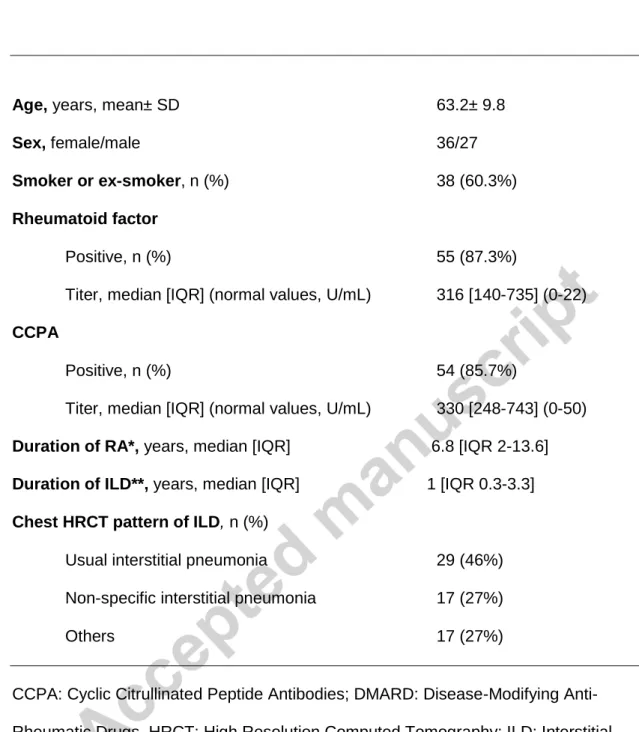
We studied 63 patients (36 women/27 men) with RA-associated ILD treated with ABA. Baseline features of the series before ABA onset are summarized in Table 1. The mean age at ABA onset was 63.2±9.8 years. At that time, the duration of RA and ILD from diagnosis were 6.8 (IQR 2-13.6) and 1 (IQR 0.3-3.3) years, respectively. Patients were positive for RF or CCPA in 55 (87.3%) and 54 (85.7%) of the 63 cases,
respectively. In addition to the use of HRCT for the diagnosis of ILD, histological confirmation of ILD by lung biopsy was obtained in 18 of 63 patients.
The most common patterns of RA-associated ILD were UIP (n=29 [43%]) and NSIP (n=17 [27%]). Before ILD diagnosis, 59 patients had received synthetic DMARDs and 19 biologic agents. At the time of the ILD diagnosis, patients were receiving the following conventional synthetic and biologic agents: MTX (n=38), LFN (n=15), hydroxychloroquine (HCQ) (n=7), etanercept [ETN] (n=7), adalimumab [ADA] (n=3), infliximab [IFX] (n=2), certolizumab pegol [CZP] (n=2), azathioprine (AZA) (n=4), sulfasalazine (SSZ) (n=1), gold salts (n=1), RTX (n=1) and TCZ (n=1). In 15 (23.8%) of 63 patients, the development of ILD was closely related to the administration of
synthetic DMARDs (MTX, n=5 and LFN, n=1) or biologic DMARDS (ETN], n=3, ADA, n=3, CZP, n=2 and IFX, n=1).
Regarding glucocorticoids, the median dose of prednisone at baseline was 10 [5-13.1] mg/day.
TABLE 1. Baseline clinical features of 63 patients with Rheumatoid Arthritis associated
with Interstitial Lung Disease treated with abatacept.
Age, years, mean± SD 63.2± 9.8
Sex, female/male 36/27
Smoker or ex-smoker, n (%) 38 (60.3%)
Rheumatoid factor
Positive, n (%) 55 (87.3%)
Titer, median [IQR] (normal values, U/mL) 316 [140-735] (0-22)
CCPA
Positive, n (%) 54 (85.7%)
Titer, median [IQR] (normal values, U/mL) 330 [248-743] (0-50)
Duration of RA*, years, median [IQR] 6.8 [IQR 2-13.6] Duration of ILD**, years, median [IQR] 1 [IQR 0.3-3.3]
Chest HRCT pattern of ILD, n (%)
Usual interstitial pneumonia 29 (46%) Non-specific interstitial pneumonia 17 (27%)
Others 17 (27%)
CCPA: Cyclic Citrullinated Peptide Antibodies; DMARD: Disease-Modifying Anti-Rheumatic Drugs, HRCT: High Resolution Computed Tomography; ILD: Interstitial Lung Disease.
Treatment with abatacept and outcome variables
ABA was used at standard intravenous dose for RA (10 mg/kg/4 weeks) after an induction period with 2 intravenous injections every other week in 26 patients. In the other 37 patients, this agent was administered subcutaneously (125 mg/week). These numbers did not allow us to draw conclusions on differences in the efficacy of the route of administration of ABA. It was prescribed as monotherapy (n= 26) or along with the following conventional DMARDs: LFN (n=15), MTX (n= 6), HCQ (n=10), SSZ (n= 4), AZA (n=4), chloroquine (CQ) (n=1) and cyclosporine A (CyA) (n=1).
At the time of ABA onset, the degree of dyspnea using MMRC scale was as follows: a) asymptomatic (grade 0 MMRC) (n=19); b) mild dyspnea (grade 1 MMRC) (n=17); c) mild-moderate dyspnea (grade 2 MMRC) (n=17); d) moderate-severe dyspnea (grade 3 MMRC) (n=8) and e) severe dyspnea (grade 4 MMRC) (n=2). At that time, DLCO and FVC measurements were performed in 48 and 60 patients with mean± SD values of 64.4±16.1% and 87.1±15.6%, respectively.
The number of patients assessed at each time period (baseline, at 3, 6 and 12 months) was the following: MMRC: at baseline 63 patients, at 3 months 63, at 6 months 55 (87% of the 63 assessed at baseline) and 36 patients at 12 months. FVC: at baseline 60 patients, at 3 months 33, at 6 months 33 (55% of the 60 assessed at baseline) and 26 patients at 12 months. DLCO: at baseline 48 patients, at 3 months 28, at 6 months 22 (46% of the 48 assessed at baseline) and 23 patients at 12 months.
The outcome of these parameters during the follow-up period is detailed in Figure 1. At 3 months after the onset of ABA therapy, maintained clinical stabilization or
improvement was seen in most cases. After a mean follow-up of 9.4±3.2 months, the following findings were found: a) 1 of 19 patients who were asymptomatic at baseline developed mild dyspnea (grade 1); b) about two thirds of patents remained stable whereas one-quarter experienced improvement of at least 1 point on the MMRC scale (Figure 1A); c) Regarding respiratory function tests, FVC remained stable in almost two thirds of patents whereas it showed an improvement of at least 10% from baseline
in one out of five patients assessed (Figure1B); d) DLCO remained stable in almost two thirds and showed at least 10% improvement in a quarter of the patients assessed.
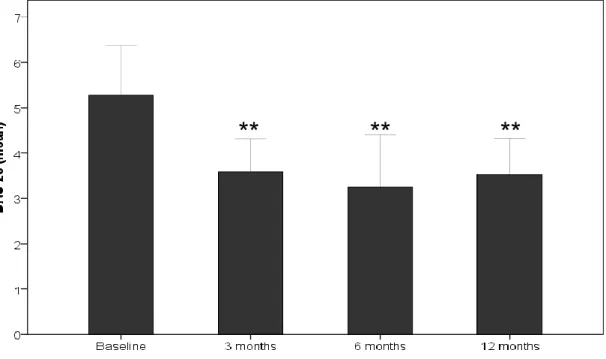
(Figure 1C); e) the mean DAS28 ESR score decreased from 5.03±1.42 at baseline to
3.34±1.25 at month 6 and 3.51±1.24 at month12 (Figure 2). A decrease in the median prednisone dose from 10 [5-13.1] mg/day at baseline to 5 [5-7.5] mg/day at month 12 was also achieved (Figure 3). At 12 months, chest HRCT scans were performed in 22 patients with persistence of respiratory symptoms. At that time, 11 of 22 patients showed stabilization of the ILD radiological features. Radiological improvement was found in 8 (36.4%) whereas worsening of the chest HRCT scan pattern was observed in 3 cases.
FIGURES 1A, 1B and 1C. Dyspnea (MMRC scale) and lung function tests results
(FVC and DLCO) at 3, 6 and 12 months in our series
Figure 1A
Figure 1C
Abbreviations (in alphabetical order): DLCO: Diffusion of the Lung for Carbon monoxide; FVC: Forced Vital Capacity; MMRC: Modified Medical Research Council. *p<0.05; **p<0.01 vs. baseline. Only the “improvement” variable was considered in the calculations.
FIGURE 2. Mean DAS28 ESR score at baseline, at 3, 6 and 12 months.
Bars represent 95% confidence interval (CI). **p<0.01 vs baseline values.
**
**
Abbreviations: DAS28: Disease activity score with 28 joints count.
FIGURE 3. Median prednisone dose at baseline, at 3, 6 and 12 months.
Bars represent 95% confidence interval (CI). **p<0.01 vs baseline values.
Adverse events
During the follow-up period, ABA had to be withdrawn in 11 of 63 patients. Due to inefficacy to improve the rheumatic manifestations in 3 of them (no improvement or worsening of DAS28), because of pulmonary worsening and joint inefficacy in 1 patient and due to adverse events in 7 patients. The main adverse effects were severe
respiratory infections (n=2), severe urinary infection (n=1) and serious cutaneous infusion reaction (n=1). One patient died during the follow-up due to ischemic heart disease. Another patient died two months after ABA withdrawal because of a flare of ILD.
**
**
DISCUSSION
We studied 63 patients with RA-associated ILD treated with ABA. We assessed the following data: dyspnea, lung function tests (FVC and DLCO) and HRCT findings. Most patients yielded stabilization or improvement of these variables.
The pathogenesis of RA-associated ILD remains unknown. There are several
predisposing factors such as male gender, older age, and cigarette smoking, that are also predictors of mortality27,28. Indeed, cigarette smoking may represent an upstream trigger leading to in situ development of citrullinated proteins, which may play an important role in both idiopathic pulmonary fibrosis and RA- associated ILD29.
Association between positivity of RF and CCPA and the development of ILD-RA has also been reported26,27,30,31. RF and CCPA have been detected in smokers with ILD even without clinical signs of RA29.
The predisposing factors discussed above are consistent with our data since in our series the mean age was 63.1± 9.6 years, more than 40% were men although the disease itself is more common in women, 87.3% and 85.7% were RF positive or CCPA positive, and 60.3% of them were active smokers or ex-smokers.
Paulin et al.29 proposed two potential mechanisms to explain the co-existence of RA and ILD. An immune response against citrullinated peptides taking place at the joints, which subsequently shifts to the lungs, leading to an interstitial lung inflammation, mainly to a NSIP pattern32. It was also postulated that individuals with a genetic susceptibility to RA may develop an immune response against citrullinated peptides in the lung, causing inflammation that subsequently affects the joints33.
On the other hand, it is well-known that several conventional DMARDs, especially MTX and LFN, have been involved in de novo development or in exacerbations of ILD.12,14,15. Furthermore, biological DMARDs may be the trigger of severe lung injuries by inducing idiosyncratic reactions, accelerating pre-existing ILD, modifying ILD into a more
Pérez-Álvarez et al.35 published 122 cases of new-onset ILD or exacerbation of ILD secondary to administration of biologic therapy, including 108 patients with RA. These authors observed that RA-associated ILD occurred in these patients after a mean of 26 weeks from the onset of the biologic therapy and had a high rate of mortality (29% of patients), mainly during the first 5 weeks of treatment. Panopoulos and Sfikakis36 reported 144 patients of new-onset or exacerbation of RA- associated ILD with the use of anti-TNF-α drugs. Nakashita et al.37 reported 58 patients with RA with a pre-existing
ILD and observed that the incidence of exacerbation of RA-associated ILD was higher in patients receiving anti-TNF-α agents (24.1%). Although no increase in the
prevalence of ILD following TCZ or ABA therapy has been reported, Kawashiri et al.38 reported a fatal case of exacerbation of ILD during treatment with TCZ. Also, Wendling et al.39 reported a patient with acute worsening of pre-existing RA associated to
pulmonary fibrosis and emphysema after 2 years of the TCZ onset.
Dixon et al.40 studied 367 patients with pre-existing RA- associated. These authors did not find an increase of mortality in patients with RA-associated ILD following treatment with anti-TNF therapy when compared with that related to the use traditional DMARDs. In our series, following ABA onset, 4 of 9 patients who had suffered ILD related to anti-TNF-α drugs experienced an improvement of dyspnea (measured by MMRC), and 2 and 3 of these 4 patients also had improvement of FVC and HRCT scan, respectively. The remaining 5 patients remained stable in terms of dyspnea, respiratory function tests and radiological findings.
The role of RTX in RA-associated ILD has been recently questioned due to the report of some cases of drug-induced ILD. Hadjinicolaou et al41 performed a systematic literature review to document all reported cases of RTX-associated interstitial lung disease. A total of 121 cases of potential ILD related with RTX were identified being fatal in 18 patients.
Different radiological patterns of pulmonary involvement associated with RA have been described, usually extrapolated from those of idiopathic pulmonary fibrosis23. The patterns commonly associated with RA in decreasing frequency are the following: UIP, NSIP, BO and OP. Classically, UIP has been associated with lower 5-year survival when compared to the other radiological patterns42. In our series, 46% of the patients presented with UIP, 27% had NSIP and 27% had other radiological findings including OP, OB and mixed patterns. After a follow-up of 12 months, we observed an
improvement in HRTC scans in 33.3% of patients with UIP, whereas 50% remained stable from a radiological point of view.
The diagnosis and treatment of RA-associated ILD represent a challenge for the clinicians for several reasons. First, respiratory infections and drug-induced pulmonary diseases need to be excluded. Second, some patients have progressive RA-associated ILD while others have a stable disease. This fact implies the need for regular clinical, imaging and pulmonary function test monitoring to effectively discriminate between these different courses of the disease. Third, the clinical evidence of the efficacy and safety of specific drugs for RA-associated ILD is quite limited43. Glucocorticoids have been traditionally the first-line treatment for RA-associated ILD. However, the mean dose of glucocorticoids in our series was relatively small, so we do not believe that they may have influenced the outcome of our patients. In cases of refractory disease, the use of other DMARDs such as mycophenolate, azathioprine or cyclophosphamide has been reported with controversial results44-46.
ABA is a fusion protein composed of the Fc region of the immunoglobulin IgG1 fused to the extracellular domain of CTLA-4. It binds human B7 (CD80/86) more strongly than CD28. ABA has demonstrated his efficacy on RA in different studies47,48. In
experimental studies, CTLA-4 has been tested as an important target in lung
inflammation in other pulmonary diseases such as hypersensitivity pneumonitis. In this setting, this biologic agent may be a potential therapy on RA- associated ILD49.
have been published19,20,50. Mera-Varela et al.19 reported 4 patients who developed ILD or exacerbation of preexisting ILD while they were undergoing anti-TNF-α therapy. They were subsequently treated with ABA without deterioration of respiratory function tests or remarkable side effects, suggesting that ABA may provide a better control of RA in patients with ILD unresponsive to conventional DMARD therapy. In contrast, Curtis et al20 performed a retrospective cohort study to evaluate ILD incidence and exacerbation among 109 ABA and 59 TCZ new users compared with those on anti-TNF-α agents. However, these authors did not find significant differences. Recently, Nakashita et al.50 reported 16 patients with RA-associated ILD treated with ABA without worsening of ILD in any of them. In addition, DAS28-ESR score and serum
metalloproteinase-3 levels decreased and the dose of glucocorticoids was also tapered. Our study has imitations due to its retrospective design, the variable duration of the ILD before the onset of abatacept and the relatively short follow-up time. Another potential limitation was the absence of a control group. Nevertheless, no prospective studies on RA-associated ILD are available. Moreover, a good number of our patients had clinical improvement and they remained stable during the follow-up. Finally, although the number of patients in whom a control CT-scan of the chest was performed at 1 year may appear to be low, it was only carried out in the patients who at that time had clinical manifestations related to the ILD, since in the rest of patients the symptoms were stable or had improved.
Taken together, our findings speak in favor of the potential use of ABA in ILD related to RA.
In conclusion, herein we report one of the largest series of RA-associated ILD patients treated with ABA. In this study, ABA seems to be an effective treatment for these patients. Large randomized prospective studies are needed to confirm these promising results.
To the members of the participating hospitals.
REFERENCES
1. Mathai SC, Danoff SK. Management of interstitial lung disease associated with connective tissue disease. BMJ 2016; 352: h6819.
2. O’ Dwyer D, Armstrong M, Cooke G, Dodd J, Veale D, Donnelly S. Rheumatoid arthritis (RA) associated interstitial lung disease (ILD). Eur J Intern Med 2013; 24: 597-603. 3. Tsuchiya Y, Takayanagi N, Sugiura H, Miyahara Y, Tokunaga D, Kawabata Y, Sugita
Y. Lung diseases directly associated with rheumatoid arthritis and their relationship to outcome. Eur Respir J 2011; 37: 1411-7.
4. Travis WD, Costabel U, Hansell DM, King TE Jr, Lynch DA, Nicholson AG, et al. An official American Thoracic Society/European Respiratory Society statement: update of the international multidisciplinary classification of the idiopathic interstitial pneumonias. Am J Respir Crit Care Med 2013; 188: 733.
5. McDonagh J, Greaves M, Wright AR, Heycock C, Owen JP, Kelly C. High resolution computed tomography of the lungs in patients with rheumatoid arthritis and interstitial lung disease. Br J Rheumatol 1994; 33:118-22.
6. Cortet B, Perez T, Roux N, Flipo RM, Duquesnoy B, Delcambre B, et al. Pulmonary functions tests and high resolution computed tomography of the lungs in patients with rheumatoid arthritis. Ann Rheum Dis 1997; 56: 596-600.
7. Dawson JK, Fewins HE, Desmond J, Plynch M, Graham DR Fibrosing alveolitis in patients with rheumatoid arthritis as assessed by high resolution computed
tomography, chest radiography, and pulmonary function tests. Thorax 2001; 56:622-7. 8. Sihvonen S, Korpela M, Laippala P, Mustonen J, Pasternack A. Death rates and
causes of death in patients with rheumatoid arthritis: a population-based study. Scand J Rheumvatol 2004; 33: 221-7.
9. Hakala M. Poor prognoses in patients with rheumatoid arthritis hospitalized for interstitial lung fibrosis. Chest 1988; 93:114-8.
10. Olson AL, Swigris JJ, Sprunger DB, Fischer A, Fernandez-Perez ER, Solomon J et al. Rheumatoid arthritis-interstitial lung disease associated mortality. Am J Respir Crit Care Med 2011; 183: 372-78.
11. Bongartz T, Nannini C, Medina-Velasquez YF, Achenbach SJ, Crowson CS, Ryu JH, et al. Incidence and mortality of interstitial lung disease in rheumatoid arthritis: a
population-based study. Arthritis Rheum 2010; 62: 1583-91.
12. Roubille C, Haraoui B. Interstitial lung diseases induced or exacerbated by DMARDS and biologic agents in rheumatoid arthritis: a systematic literature review. Semin Arthritis Rheum 2014; 43:613-26.
13. Ramos-Casals M, Brito-Zerón P, Muñoz S, Soria N, Galiana D, Bertolaccini L, et al. Autoimmune diseases induced by TNF-targeted therapies: analysis of 233 cases. Medicine (Baltimore) 2007; 86: 242-51.
14. Inokuma S. Leflunomide-induced interstitial pneumonitis might be a representative of disease-modifying antirheumatic drug-induced lung injury. Expert Opin Drug Saf 2011; 10: 603-11.
15. Conway R, Low C, Coughlan RJ, O'Donnell MJ, Carey JJ. Methotrexate and lung disease in rheumatoid arthritis:a meta-analysis of randomized controlled trials. Arthritis Rheumatol 2014; 66: 803-12.
16. Kundan I, Clive K. Treatment of rheumatoid arthritis-associated interstitial lung disease: a perspective review. Ther Adv Musculoskelet Dis 2015; 7: 247-267. 17. Mori S. Management of Rheumatoid Arthritis Patients with Interstitial Lung Disease:
Safety of Biological Antirheumatic Drugs and Assessment of Pulmonary Fibrosis. Clin Med Insights Circ Respir Pulm Med 2015; 8; 9 (Suppl 1): 41-9.
18. Israel-Assayag E, Fournier M, Cormier Y. Blockade of T cell costimulation by CTLA4-Ig inhibits lung inflammation in murine hypersensivity pneumonitis. J Immunol 1999; 163: 6794-6799.
19. Mera-Varela A, Pérez-Pampín E. Abatacept therapy in rheumatoid arthritis with interstitial lung disease. J Clin Rheumatol 2014; 20: 445-6.
20. Curtis JR, Sarsour K, Napalkov P, Costa LA, Schulman KL. Incidence and
complications of interstitial lung disease in users of tocilizumab, rituximab, abatacept and anti-tumor necrosis factor α agents, a retrospective cohort study. Arthritis Res Ther 2015; 17: 319.
21. Arnett FC, Edworthy SM, Bloch DA, McShane DJ, Fries JF, Cooper NS, et al. The American Rheumatism Association 1987 revised criteria for the classification of rheumatoid arthritis. Arthritis Rheum 1988; 31: 315-24.
22. Aletaha D1, Neogi T, Silman AJ, Funovits J, Felson DT, Bingham CO, et al. 2010 Rheumatoid arthritis classification criteria: an American College of
Rheumatology/European League Against Rheumatism collaborative initiative Arthritis Rheum 2010; 62: 2569-81.
23. American Thoracic Society; European Respiratory Society. American Thoracic Society/European Respiratory Society International Multidisciplinary Consensus Classification of the Idiopathic Interstitial Pneumonias. This joint statement of the American Thoracic Society (ATS), and the European Respiratory Society (ERS) was adopted by the ATS board of directors, June 2001 and by the ERS Executive
Committee, June 2001. Am J Respir Crit Care Med 2002; 15: 166(3): 277-304. 24. Compte L, Macian V, Blanco M. Volúmenes pulmonares In: Puente L, ed. Manual
SEPAR de procedimientos. Luzan (Barcelona) 2002; 67-37.
25. The Global Initiative for Chronic Obstructive Lung Disease. Global Strategy for Diagnosis, Management, and Prevention of COPD 2014. http://www.goldcopd.org 26. Raghu G, Collard HR, Egan JJ, Martinez FJ, Behr J, Brown KK, et al. An official
ATS/ERS/JRS/ALAT statement: idiopathic pulmonary fibrosis: evidence-based
guidelines for diagnosis and management Committee on Idiopathic Pulmonary Fibrosis. Am J Respir Crit Care Med 2011; 15: 183 (6): 788-824.
27. Giles JT, Danoff SK, Sokolove J, Wagner CA, Winchester R, Pappas DA, et al. Association of fine specifity and repertoire expansion of anticitrullinated peptide
antibodies with rheumatoid arthritis associated interstitial lung disease. Ann Rheum Dis 2014; 73: 1487-94.
28. Solomon JJ, Chung JH, Cosgrove GP, Demoruelle MK, Fernandez-Perez ER, Fischer A, et al. Predictors of mortality in rheumatoid arthritis-associated interstitial lung disease Eur Respir J 2016; 47(2): 588-96
29. Paulin F, Doyle TJ, Fletcher EA, Ascherman DP, Rosas IO. Rheumatoid arthritis-associated interstitial lung disease and idiopathic pulmonary fibrosis: shared mechanistic and phenotypic traits suggest overlapping disease mechanisms. Rev Invest Clin 2015; 67: 280-86.
30. Shidara K, Hoshi D, Inoue E, Yamada T, Nakajima A, Taniguchi A, et al. Incidence of and risk factors for interstitial pneumonia in patients with rheumatoid arthritis in a large Japanese observational cohort, IORRA. Mod Rheumatol 2010; 20: 280-6
31. Kelly CA, Saravanan V, Nisar M, Arthanari S, Woodhead FA, Price-Forbes AN, et al. Rheumatoid arthritis-related interstitial lung disease: associations, prognostic factors and physiological and radiological characteristics- a large multicentre UK study. Rheumatology 2014; 53: 1676-82
32. Gizinski AM, Mascolo M, Loucks JL, Kervitsky A, Meehan RT, Brown KK. Rheumatoid arthritis (RA)-specific autoantibodies in patients with interstitial lung disease and absence of clinically apparent articular RA. Clin Rheumatol 2009; 28: 611-13. 33. Lee HK, Kim DS, Yoo B, et al. Histopathologic pattern and clinical features of
rheumatoid arthritis-associated interstitial lung disease. Chest 2005; 127: 2019-27. 34. Jani M, Hirani N, Matteson EL, Dixon Wg. The safety of biologic therapies in
RA-associated interstitial lung disease. Nat Rev Rheumatol 2013; 10: 284-94.
35. Perez-Alvarez R, Perez de Lis M, Diaz-Lagares C, Pego-Reigosa JM, Retamozo S, Bove A et al. Interstitial lung disease induced or exacerbated by TNF-targeted therapies: analysis of 122 cases. Semin Arthritis Rheum 2011; 41: 256-64. 36. Panopoulos ST, Sfikakis PP. Biological treatments and connective tissue disease
37. Nakashita T, Ando K, Kaneko N, Takahashi K, Motojima S. Potential risk of TNF inhibitors on the progression of interstitial lung disease in patients with rheumatoid arthritis. BMJ Open 2014; 14; 4(8).
38. Kawashiri SY, Kawakami A, Sakamoto N, Ishimatsu Y, Eguchi K. A fatal case of acute exacerbation of interstitial lung disease in a patient with rheumatoid arthritis during treatment with tocilizumab. Rheumatol Int 2012; 32: 4023-6.
39. Wendling D, Vidon C, Godfrin-Valnet M, Rival G, Guillot X, Prati C. Exacerbation of combined pulmonary fibrosis and emphysema syndrome during tocilizumab therapy for rheumatoid arthritis. Joint Bone Spine 2013; 80: 670-1.
40. Dixon WG, Hyrich KL, Watson KD, Lunt M, BSRBR Control Centre Consortium D P M Symmons influence of anti-TNF therapy on mortality in patients with rheumatoid arthritis-associated interstitial lung disease: results from the British Society for Rheumatology Biologics Register Ann Rheum Dis 2010; 69(6): 1086-1091. 41. Hadjinicolaou AV, Nisar MK, Parfrey H, Chilvers ER, Ostör AJ. Non-infectious
pulmonary toxicity of rituximab: a systematic review. Rheumatology (Oxford) 2012; 51: 653-62.
42. Park JH, Kim DS, Park IN, Jang SJ, Kitaichi M, Nicholson AG, et al. Prognosis of fibrotic interstitial pneumonia: idiopathic versus collagen vascular disease-related subtypes. Am J Respir Crit Care Med 2007; 175: 705-711.
43. Brusselle G. Rheumatoid arthritis and interstitial lung disease. Rheumatology 2010; 49: 1425-26.
44. Nanki N, Fujita J, Yamaji Y, Maeda H, Kurose T, Kaji M et al. Nonspecific interstitial pneumonia/fibrosis completely recovered by adding cyclophosphamide to
corticosteroids. Intern Med 2002; 41: 867-70.
45. Swigris JJ, Olson AL, Fischer A, Lynch DA, Cosgrove GP, Frankel SK, et al.
Mycophenolate mofetil is safe, well tolerated, and preserves lung function in patients with connective tissue disease-related interstitial lung disease. Chest 2006; 130: 30-6.
46. Idiopathic Pulmonary Fibrosis Clinical Research Network, Raghu G, Anstrom KJ, King TE Jr, Lasky JA, Martinez FJ. Prednisone, azathioprine, and N-acetylcysteine for pulmonary fibrosis. N Engl J Med 2012; 366: 1968-77.
47. Schiff M, Keiserman M, Codding C, Songcharoen S, Berman A, Nayiager S et al. Efficacy and safety of abatacept or infliximab vs placebo in ATTEST: a phase III, multi-centre, randomised, double-blind, placebo-controlled study in patients with rheumatoid arthritis and an inadequate response to methotrexate. Ann Rheum Dis 2008; 67: 1096-103.
48. Westhovens R, Robles M, Ximenes AC, Nayiager S, Wollenhaupt J, Durez P et al. Clinical efficacy and safety of abatacept in methotrexate-naive patients with early rheumatoid arthritis and poor prognostic factors. Ann Rheum Dis 2009; 68: 1870-7. 49. Jiménez-Alvarez L, Arreola JL, Ramírez-Martínez G, Ortiz-Quintero B, Gaxiola M,
Reynoso-Robles R, et al. The effect of CTLA-4Ig, a CD28/B7 antagonist, on the lung inflammation and T cell subset profile during murine hypersensitivity pneumonitis Exp Mol Pathol 2011; 91: 718-22.
50. Nakashita T, Ando K, Takahashi K, Motojima S. Possible effect of abatacept on the progression of interstitial lung disease in rheumatoid arthritis patients. Respir Investig 2016; 5: 376-9.