Diego Alberto Mora Torres
Universidad Pedagógica Nacional
2 Peer edition as a means for fostering EFL short story writing in a local private school: An
Action Research.
By
Diego Alberto Mora Torres
A thesis presented to the Faculty of Humanities, Department of Languages at the Universidad Pedagógica Nacional as a requirement to obtain the degree of Master in the Teaching of Foreign
Languages
Under the supervision of thesis director Jairo Velandia, MA.
3 NOTE OF ACCEPTANCE
Thesis Director: ___________________________________________
Jairo Velandia, MA
Juror: ___________________________________________
4
Acuerdo 031 del 04 de diciembre de 2007 del Consejo Superior de la Universidad Pedagógica Nacional
Artículo 42, Parágrafo 2:
6 Acknowledgements
I thank my mom, who encouraged me with love and unconditional support. Also, I thank
my students because without their commitment and willingness, this would not have been
possible. Additionally, I thank Professor Luis Fernando Gomez Rodriguez (R.I.P.), whose
knowledge allowed me to see this process as something feasible and contributing. Besides, I
thank my mentor Professor Jairo Velandia, who suggested taking the path of Action research.
Likewise, I thank all the staff of Professors with whom I shared valuable moments of
co-construction of knowledge through discussions.
Last but not least, I specially thank MA Paola Mendez for supporting me, not only
sentimentally but also intellectually. Her knowledge and love were fundamental in all this
process. Whether life gives us the chance to continue to be together or not, I am forever indebted
7 Abstract
This action research study conducted with EFL ninth grade students at a coeducational
private school located in the city of Bogotá, Colombia, aimed to understand the role of peer
edition within EFL short story writing tasks construction. The importance of this proposal
radiates in the encouragement on students to take control of their EFL literacy processes by
editing their own written products through peer edition. The data collection instruments used for this purpose were artifacts, audio recordings, field notes and an open-ended questionnaire. The
data was collected during 10 sessions along the second semester of the school year, through a
pedagogical intervention following the school´s instructional model: induction, individual
learning, group learning and evaluation. The findings exposed that, despite not showing a
substantial progress in their EFL writing processes, the participants developed strategies to carry
out the Peer Edition practices. In these practices, they also evidenced a co-construction of
knowledge where they felt comfortable in a classroom which was not teacher-centered. Hence,
cooperation and building of knowledge among partners revealed expert power relations.
Key words: Peer edition, EFL writing, communicative competence, social constructivism,
8 Resumen
Este estudio de investigación-acción llevado a cabo con estudiantes de inglés de grado
noveno en un colegio privado mixto ubicado en la ciudad de Bogotá, Colombia tuvo como
objetivo entender el rol de la edición por pares En la construcción de historias cortas como tareas
escritas en inglés. La importancia de esta propuesta radica en el fomentar que los estudiantes
tomen control de sus procesos de alfabetización en inglés como lengua extranjera a través de la
edición de sus propios productos escritos a través de la edición por pares. Los instrumentos de
recolección de datos que se utilizaron para este propósito fueron artefactos, grabaciones de audio,
notas de campo y un cuestionario de pregunta abierta. Los datos fueron recogidos durante diez
clases del segundo semestre del año escolar a través de una intervención pedagógica siguiendo el
modelo institucional del colegio: inducción, aprendizaje individual, aprendizaje grupal y
evaluación. Los hallazgos revelaron que, a pesar de no haber mostrado un progreso sustancial en
sus procesos de escritura en inglés, los participantes desarrollaron sus propias estrategias para
llevar a cabo la práctica de edición por pares. En estas prácticas, también se evidenció una
co-construcción de conocimiento en la cual los participantes se sintieron cómodos en clases que no
fueron centradas en el profesor. Por lo tanto, la cooperación y la construcción de conocimiento
entre los participantes revelaron relaciones de poder de experticia.
Palabras clave: Edición por pares, escritura en inglés, competencia comunicativa,
9
FORMATO
RESUMEN ANALÍTICO EN EDUCACIÓN - RAE
Código: FOR020GIB Versión: 01
Fecha de Aprobación: 10-10-2012 Página 9 de 142
1. Información General
Tipo de documento Tesis de grado
Acceso al documento Universidad Pedagógica Nacional. Biblioteca Central
Titulo del documento
Peer edition as a means for fostering EFL short story writing in a local private school: an Action Research. (Edición por pares como medio para promover la escritura de historias cortas en inglés en un colegio privado local: un estudio de investigación acción)
Autor(es) Mora Torres, Diego Alberto
Director Velandia, Jairo
Publicación Bogotá. Universidad Pedagógica Nacional, 2020. 142 p.
Unidad Patrocinante Universidad Pedagógica Nacional
Palabras Claves Edición por pares, escritura en inglés, competencia comunicativa,
constructivismo social, aprendizaje cooperativo
2. Descripción
10
3. Fuentes
Amineh, R.J and Asl, H.D. (2015). Review of Constructivism and Social Constructivism. Journal of Social Sciences, Literature and Languages. Vol. 1(1), pp. 9-16
Andrews, R., Torgerson, C., Beverton, S., Freeman, A., Locke, T., Low, G., Robinson, A., and Zhu, D (2006), 'The Effect of Grammar Teaching on Writing Development', British
Educational Research Journal, 32(1), p.39-55, JSTOR [Online], Available at:
http://www.jstor.org/stable/30032657,(Accessed: 24 September 2016).
Babu, Sooraj K., et al. (2017). Collaborative Game Based Learning of Post-Disaster
Management: Serious Game on Incident Management Frameworks for Post Disaster Management. In: Technology for Education (T4E), 2016 IEEE Eighth International Conference on. IEEE.
Briesmaster, M. and Etchegaray, P. (2017) Coherence and cohesion in EFL students' writing production: The impact of a metacognition-based intervention. Íkala, revista de lenguaje y
cultura vol.22 no.2 Medellín May/Aug. 2017.
Bruner, J. (1990). Acts of Meaning. Cambridge, MA: Harvard University Press.
Burns, A. (2009). Action research in second language teacher education. ESL and applied linguistics professional series: Routledge
Canale, M., & Swain, M. (1980). Theoretical Bases of Communicative Approaches to Second Language Teaching and Testing. Applied Linguistics
Castillo, R. (2014). Teaching and learning another language strategically. Colombia. Doctorado Interinstitucional en Educación & Universidad Distrital Francisco José de Caldas
Chen, F. and Shang, H. (2009). Students’ perceptions of self-regulated strategy use on EFL writing performance. English Teaching & Culture, Vol. 5, 42-53
Cohen, L. Lawrence, M. and Morrison, K. (2007). Research methods in education: Routledge
Colegio Cafam. Proyecto educativo institucional.
Contreras, J., and Chapetón, C. (2017). Transforming EFL Classroom Practices and Promoting Students’ Empowerment: Collaborative Learning From a Dialogical Approach. Profile:
Issues in Teachers´ Professional Development, 19(2), 135-149. Retrieved from
https://doi.org/10.15446/profile.v19n2.57811
Council of Europe. (2001). Common European framework of reference for languages: Learning,
teaching, assessment. Cambridge, U.K: Press Syndicate of the University of Cambridge.
11
Denzin, N. K., & Lincoln, Y. S. (2005). The sage handbook of qualitative research. Thousands Oaks, CA: Sage.
Dewey, J. (1938) Experience and Education. New York: Collier Books.
Díaz, N. M. (2010). Peer-editing: A strategic source in EFL students’ writing process. Colombian
Applied Linguistics Journal, 12(1), 85–98. Retrieved from
http://revistas.udistrital.edu.co/ojs/index.php/calj/article/view/93/142
Díaz Ramírez, M. (2014). The impact of project work and the writing process method on writing production. HOW, A Colombian Journal for Teachers of English, 21(2), 31-53.
Dickinson, P. (2014). The effect of topic selection control on EFL writing fluency.
Dueranam, B. (2012). Teaching EFL writing: Understanding and Re-thinking the Thai Experience. Journal of Alternative Perspectives in the Social Sciences. Vol 4, No 1.
Dolgunsöz, E, Yıldırım, G. and Yıldırım, S. (2018). The effect of virtual reality on EFL writing performance. Journal of Language and Linguistic Studies, 14(1), 278-292.
Ferreiro, R. (2007). Nuevas alternativas de aprendizaje y enseñanza: aprendizaje cooperativo. Alcalá de Guadaira, Sevilla: Editorial Mad.
Firmin, M. (2008). Unstructured interview. The SAGE Encyclopedia of qualitative research
methods. Retrieved from https://sk.sagepub.com/reference/research/n475.xml
Foster, P. & Ohta, A. (2005). Negotiation for meaning and peer assistance in second language classrooms. Applied linguistics. Retrieved from
https://www.researchgate.net/publication/31062007_Negotiation_for_Meaning_and_Peer_ Assistance_in_Second_Language_Classrooms
Freeman, D. (1998). Doing teacher research: from inquiry to understanding. Heinle & Heinle, Pacific Grove.
French, J. R. P., Raven, B. (1959) The bases of social power. In D. Cartwright and A. Zander. Group dynamics. New York: Harper & Row.
Garavito, D. (2018) Enhancing oral production skills and students’ attitudes through collaborative learning in seventh grade students. Universidad Pedagógica Nacional.
Greenwood, R.D. (2017). Students’ Affective Responses to Computer Mediated Peer Feedback. Retrieved from https://www.semanticscholar.org/paper/Students%E2%80%99-Affective-
Responses-to-Computer-Mediated-Greenwood/5efa9aaec3f1157c2c08a869de82d169f1593135
Hagström, C. & Rivano, J. (2017). Qualitative questionnaires as a method for information studies research. Lund university publications. V (XXII). Retrieved from
12
Hatch, J. A. (2002). Doing qualitative research in education settings. Albany: State University of New York Press.
Hedge, T. (2000). Teaching and Learning in the Language Classroom. Oxford University Press
Herazo, J. D., Jerez, S. & Lorduy Arellano, D. (2009). Learning through Communication in the EFL Class: Going beyond the PPP Approach. Íkala. 14(3), pp.117-136.
Hernandez, R. Fernandez, C. and Baptista, P. (2010). Metodología de la investigación. (5ª Ed.). México: McGraw Hill Educación
Hojeij, Z. and Baroudi, S. (2018). Student perceptions on peer feedback training using a blended method: A UAE case. Issues in educational research. Retrieved from
https://www.researchgate.net/publication/327076070_Student_perceptions_on_peer_feed back_training_using_a_blended_method_A_UAE_case
Hu, G. (2005). Using peer review with Chinese ESL student writers. Language Teaching
Research, 9(3), 321–342. Retrieved from https://doi.org/10.1191/1362168805lr169oa
Hyland, K. (2009). Teaching and researching writing. Edinburgh, United Kingdom. Pearson.
Hymes, D.H. (1972) On Communicative Competence In: J.B. Pride and J. Holmes (eds) Sociolinguistics. Selected Readings. Harmondsworth: Penguin
Karadoc, D. & Köse, G. (2017) The impact of vocabulary knowledge on reading, writing and proficiency scores of EFL learners. Journal of language and linguistic studies. 13(1), 352-378; 2017
Kim, B. (2006) Social Constructivism. New York. Routledge
Klimova, B. (2015). The role of feedback in EFL classes. University of Hradec Kralove, 172. Retrieved from https://core.ac.uk/download/pdf/81125292.pdf
Johnson, D.W., & Johnson, F. (2009). Joining together: Group theory and group skills (10th ed.). Boston: Allyn & Bacon.
Kibbe, T. (2017). The history of communicative language teaching (CLT) and its use in the
classroom. United States Military Academy during Academic Year 2017.
Leigh, S. & MacGregor, J. (1992). What is collaborative learning? National Center on
Postsecondary Teaching, Learning, and Assessment at Pennsylvania State University.
Lundstrom, K. and Baker, W. (2009). “To give is better than to receive: The benefits of peer review to the reviewers own writing”, Journal of Second Language Writing, 18, 1: 30-43
McLeod, S. A. (2018). Jean Piaget's theory of cognitive development. Retrieved from
13
Mercer, N., & Fisher, E. (1992). How do teachers help childen to learn? An analysis of teachers' interventions in computer-based activities. Learning and Instruction, 2(4), 339–
355. https://doi.org/10.1016/0959-4752(92)90022-E
Miftah, M. (2012). Enhancing writing ability through idea listing technique. State Islamic Institute of Palangka Raya, Indonesia.
Min, H. T. (2005). Training students to become successful peer reviewers. System, 33(2), 293– 308.
Ministerio de educación nacional (n.d.). Programa nacional de bilingüismo Colombia 2004 –
2019.
Ministerio de educación nacional (n.d.). Lengua extranjera. Retrieved from
https://www.mineducacion.gov.co/1759/w3-article-364450.html?_noredirect=1
Mohite, M. (2014). An investigation into the English language writing strategies used by Polish EFL secondary school learners. London Metropolitan University.
Nunan, D. (1999). Second Language Teaching and learning. Boston, Massachusetts: Heinle and Heinle publishers.
Omaggio, A. (1986). Teaching language in context. United States of America. Heinle and Heinle publishers.
Palinkas, L. Horwitz, S. Green, C. Wisdom, J. Duan, N. Hoagwood, K. (2015). Purposeful sampling for qualitative data collection and analysis in mixed method implementation research. Administration and policy in health. Retrieved from
https://www.researchgate.net/publication/258315317_Purposeful_Sampling_for_Qualitativ e_Data_Collection_and_Analysis_in_Mixed_Method_Implementation_Research
Perrenoud, Ph. (2008). La evaluación de los alumnos: de la producción de la excelencia a la
regulación de los aprendizajes. Entre dos lógicas. Porto Alegre, Buenos Aires: Alternativa
Pedagógica.
Rahman, Md. (2016). The advantages and disadvantages of using qualitative and quantitative approaches and methods in language “testing and assessment” research: a literature review. Journal of education and learning. Retrieved from
https://www.researchgate.net/publication/309889936_The_Advantages_and_Disadvantag es_of_Using_Qualitative_and_Quantitative_Approaches_and_Methods_in_Language_Te sting_and_Assessment_Research_A_Literature_Review
Richards, J. (2012) Autonomous learner. Retrieved on Jan 20th 2020 from
14
Rollinson, P. (2005). Using Peer Feedback in the ESL Writing Class: ELT Journal, 59, 23-30. Retrieved from https://doi.org/10.1093/elt/cci003
Roosevelt F.D. (2008). "Zone of Proximal Development." Encyclopedia of Educational
Psychology SAGE publication.
Rouhi, A. and Azizian, E. (2013). Peer review: Is giving corrective feedback better than
receiving it in L2 writing? Procedia - Social and Behavioral Sciences
Ruíz, S. (2013) Working by projects: A way to enrich critical thinking and the writing process in a third grade EFL classroom: Colombian applied linguistics journal. V. 15, 205 - 220
Sagor, R. (2005). The action research guidebook: A four-step process for educators and school
teams. Thousand Oaks, Calif: Corwin Press.
Shabani, K., Khatib, M., & Ebadi, S. (2010). Vygotsky's Zone of Proximal Development: Instructional Implications and Teachers' Professional Development. English language
teaching, 3(4), 237-248.
Shatz, I (2017). Native Language Influence During Second Language Acquisition: A Large-Scale Learner Corpus Analysis. Proceedings of the Pacific Second Language Research Forum
(PacSLRF 2016). Hiroshima, Japan: Japan Second Language Association. pp. 175–180.
Shaughnessy, P. (1977). Errors and expectations: a guide for the teacher of basic writing. New York: Oxford University Press.
Strauss, A. L. (1987). Qualitative analysis for social scientists. Cambridge University Press.
https://doi.org/10.1017/CBO9780511557842
Strauss, A. and Corbin, J. (1994) Grounded Theory Methodology – An Overview, In Handbook of
Qualitative Research, N. K. Denzin and Y. S. Lincoln (Eds.), Sage Publications, Thousand
Oaks, pp. 273-285.
Tsui, A. B., & Ng, M. (2000). Do secondary L2 writers benefit from peer comments? Journal of
second language writing, 9(2), 147-170.
Van Lier, L. (2004). The ecology and semiotics of language learning : a sociocultural
perspective. Boston: Kluwer Academic
Vygotsky, L. S. (1978). Mind in society: The development of higher psychological processes (M. Cole, V. John-Steiner, S. Scribner & E. Souberman., Eds.) (A. R. Luria, M. Lopez-Morillas & M. Cole [with J. V. Wertsch], Trans.) Cambridge, Mass.: Harvard University Press. (Original manuscripts [ca. 1930-1934])
Vygotsky, L. S. (1986). Thought and language. Cambridge, MA: MIT Press.
15
https://www.researchgate.net/publication/276079367_How_Proficiency-
Pairing_Affects_Students'_Peer-Mediated_Revisions_of_EFL_Writing_Three_Case_Studies
Wang, X. (2006). Inhibitory control by an integral feedback signal in prefrontal cortex: a model of discrimination between sequential stimuli. US national library of medicine national
institutes of health. Retrieved from https://www.ncbi.nlm.nih.gov/pubmed/16371469
Wells, G. (1999) Dialogic inquiry towards a sociocultural practice and theory of education. Retrieved from
https://www.researchgate.net/publication/245919622_Dialogic_Inquiry_Towards_a_Socio cultural_Practice_and_Theory_of_Education
White, R. and Arndt, V. (1991) Process Writing. Essex: Addison Wesley Longman Ltd.
Verenikina, I. (2003). Understanding scaffolding and the ZPD in educational research. Proceedings of The Joint AARE/NZARE Conference. Retrieved from
http://www.aare.edu.au/03pap/ver03682.pdf
Yang, L. & Wilson, K. (2006). Second language classroom reading: a social constructivist approach. The reading matrix. Vol. 6, No. 3, December 2006. 5th Anniversary Special Issue — CALL Technologies and the Digital Learner.
Yusnani (2018). Theoretical perspectives on cooperative learning. The 1st Annual International
Conference on Language and Literature. Medan, Indonesia.
Ziad, A. (2013). The Negotiation of Meaning: contributions to Second Language acquisition
(SLA). Retrieved on Jan 20th 2020 from
https://www.moroccoworldnews.com/2013/05/89533/the-negotiation-of-meaning-contributions-to-second-language-acquisition-sla-2/
Zubaidi, N. (2015). Sociocultural theory. Retrieved from
https://www.researchgate.net/publication/277892662_Sociocultural_Theory
4. Contenidos
El siguiente proyecto de investigación está dividido en 6 capítulos. En el capítulo 1 se presenta la introducción, la situación problemática, la pregunta de investigación, la justificación, los objetivos y finalmente se incluyen algunos antecedentes investigativos relacionados con esta investigación. Estos antecedentes permitieron determinar aportes y dificultades que sirvieron para diseñar esta investigación acción.
16
El capítulo 3 contiene el diseño metodológico. Éste incluye el paradigma, tipo y enfoque investigativo. Igualmente explica el contexto y describe el perfil de los participantes que hicieron parte de la investigación. Finalmente explica el procedimiento y los instrumentos usados para la recolección de datos usados para tal fin.
El capítulo 4 describe la intervención pedagógica realizada en el contexto. Además, contiene la visión de lenguaje, de aprendizaje y de aula que el investigador tiene. En este capítulo también se describe y explica paso a paso cada una de las etapas llevadas durante todo el proceso investigativo.
El capítulo 5 contiene información relacionada con el proceso de análisis de los datos desde la conceptualización teórica. Se muestra cómo se ejecutaron tanto cada uno de los pasos para analizar la información como cómo fue hecha su interpretación. Este capítulo Igualmente contiene las categorías y las subcategorías con sus correspondientes hallazgos comparados y contrastados con los constructos teóricos desde la voz del investigador.
En último lugar se presenta el capítulo 6, el cual incluye las conclusiones resultantes después de todo el proceso investigativo, las limitaciones presentes durante la investigación y por último algunas sugerencias para posteriores investigaciones.
5. Metodología
La investigación acción llevada a cabo se realizó desde las siguientes etapas:
1. Acercamiento a la población para diagnosticar e identificar la problemática presente.
2. Aplicación de un cuestionario y de una entrevista no estructurada para ratificar la situación problema y así planear y ejecutar la intervención pedagógica.
La ejecución de la intervención pedagógica fue hecha durante siete clases. Cada historia corta fue escrita a partir de demandas curriculares de la institución, con una duración de casi nueve horas. Durante y después de la elaboración de cada escrito hubo un proceso constante de observación, reflexión y análisis.
6. Conclusiones
Después del análisis de datos, surgieron las siguientes conclusiones en respuesta a las preguntas de investigación planteadas.
17
concluyó que la identificación este tipo de errores principalmente ocurría porque los participantes notaban elecciones erradas de palabras y de tiempos verbales. También se observó que los participantes centraban su atención en estos aspectos porque eran los más notorios en los textos. Aparte de simplemente notar los errores, algunos participantes los corregían y hasta daban explicaciones sobre estos aspectos. La base de estas explicaciones venía de la transferencia de su L1.
La transferencia de la L1 puede ser un arma de doble filo porque, aunque ésta demostró ser útil para que los participantes explicaran aspectos formales de la lengua a sus pares, también demostró ser perjudicial cuando ésta es negativa. Debido a esto, el profesor no debería
sobreempoderar a los estudiantes durante la realimentación. Esto quiere decir que, a pesar del
empoderamiento, el profesor no se puede desligar de la enseñanza; es necesario que el docente supervise constantemente la calidad de la realimentación para que los estudiantes no se vean negativamente afectados en sus procesos de aprendizaje.
El rol del profesor no solo estuvo limitado a supervisar, éste también implicaba mediar prácticas de negociación. En este sentido, el profesor fue visto como un sujeto conocedor quien tuvo la última palabra en momentos en los cuales los participantes tenían dudas en cuanto al uso de la lengua.
Como resultado de la intervención, la cantidad de ayuda solicitada por los estudiantes disminuyó. La intención de algunos participantes de incluir al docente en sus discusiones llevó a la conclusión de que éste también era parte de la interdependencia positiva mencionada en la teoría del aprendizaje cooperativo. Lo anterior se dedujo porque tanto los participantes como el docente tenían un objetivo en común: fomentar la escritura en inglés a través de la edición por pares. Adicionalmente, con el fin de alcanzar este objetivo en común, tanto el docente como los participantes tenían roles asignados; los últimos tenían el rol de ser pares editores y el docente tenía el rol de mediador de discusiones en virtud de ser el experto en lengua.
La edición por pares puso en evidencia una co-construcción de conocimiento en la cual los participantes se sintieron cómodos dado que la clase no estaba centrada en el docente. Adicionalmente, ellos se percataron de que la dinámica de la edición por pares les permitió tener poder, no solo en términos de liderazgo al momento de editar al otro, sino también en términos de falta de confianza en su nivel de competencia en la lengua extranjera; de hecho, estos participantes que no se tenían confianza se dieron cuenta de que podían dar contribuciones valiosas al momento de crear textos. Como consecuencia, este tipo de poder podría dar confianza a los estudiantes, y así, motivarlos a estar involucrados más activamente en los procesos de aprendizaje del inglés. Por último, la asignación de este poder ratificó la existencia de andamiaje en el aula de lengua extranjera.
18
prácticas de realimentación por pares podría bajar los niveles de ansiedad propios del uso del inglés por parte de los estudiantes; especialmente en aquellos que no se tienen confianza al usarlo.
En cuanto a la comodidad, los participantes demostraron sentirse más cómodos formando parte de grupos de compañeros con quienes querían trabajar. En contraste, ellos consideraron que el trabajo individual era difícil; por lo tanto, se evidenció que hubo interdependencia cognitiva. También es importante señalar que los participantes se sintieron parte de la construcción de las clases. Usualmente, las clases se realizan siguiendo dinámicas centradas en el profesor. Sin embargo, a través de este estudio, los participantes se constituyeron como sujetos activos quienes tenían la posibilidad de contribuir con el desarrollo de la clase, aprender de otros y apoyar a sus compañeros. Considero que si los estudiantes son participantes activos y agentes empoderados que son escuchados, el aprendizaje de una L2 podría ser excusa para construir comunidad.
Elaborado por: Mora Torres, Diego Alberto
Revisado por: Velandia, Jairo
Fecha de elaboración del
19 Table of contents
Introduction ... 24
Chapter 1 ... 26
Contextualization. ... 26
Statement of the problem. ... 29
Needs analysis phase ... 29
The problem ... 33
Research question and objectives. ... 35
Research question: ... 35
Research objective: ... 36
Subsidiary objectives: ... 36
Rationale ... 36
Chapter 2 ... 39
Theoretical Framework ... 39
EFL writing... 39
Communicative competence... 42
Peer Edition (PE) ... 47
Social constructivism ... 49
20
State of the art ... 54
General advances in EFL writing. ... 54
Studies on Peer Edition (PE). ... 57
Chapter 3 ... 62
Research Design ... 62
Research paradigm. ... 62
Research approach ... 63
Action Research (AR) ... 63
Setting ... 66
Participants and sampling ... 67
Researcher’s role ... 68
Data collection instruments and procedures ... 68
Chapter 4 ... 71
Instructional Design ... 71
Curricular vision ... 71
Vision of language ... 72
Vision of learning ... 73
21
Instructional design... 74
Chapter 5 ... 83
Data analysis and findings ... 83
Data Analysis Approach ... 83
Procedures for Data Analysis ... 84
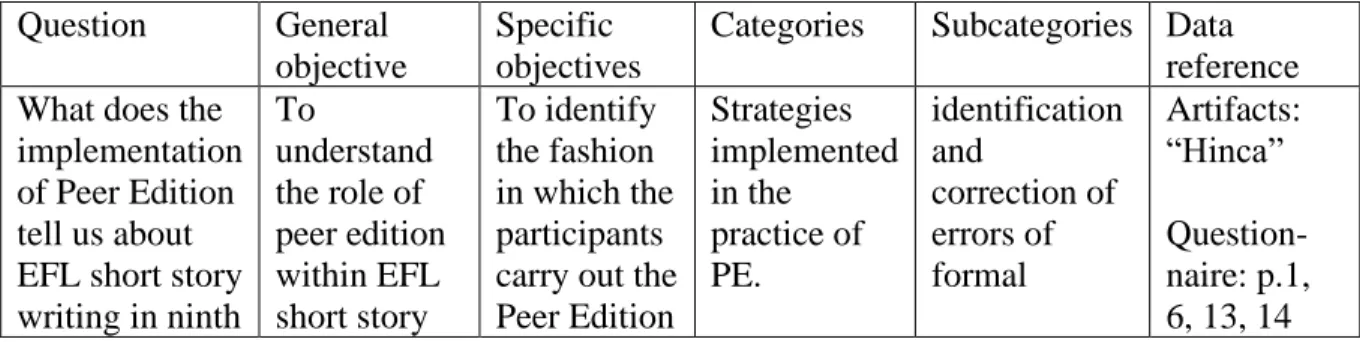
Categories ... 88
Category 1: Strategies implemented in the practice of PE. ... 89
Subcategory 1: identification and correction of errors of formal features of language ... 90
Category 2: Cooperative work. ... 95
Subcategory 1: Empowerment on students. ... 96
Subcategory 2: Individual Vs. Group assessment ... 103
Subcategory 3: Co-construction of knowledge through Meaning Negotiation (MN): ... 111
Chapter 6 ... 118
Conclusions ... 118
Implications ... 120
Limitations of the study ... 123
Further research ... 124
22 Appendixes ... 137
Appendix 1: Diagnosis questionnaire sample ... 137
Appendix 2: Consent form from the school: ... 138
Appendix 3: Consent form sample from parents: ... 139
Appendix 4: field note entry sample ... 140
Appendix 5: WhatsApp © group ... 141
Appendix 6: open-ended questionnaire ... 142
23 Table of figures
Figure 1. PET writing part 3 sample ... 38
Figure 2. Action research cycle. Taken from Burns, A. (2010). ... 64
Figure 3 Example of how Mentimeter was used ... 78
Figure 4 Categories graphic organizer ... 88
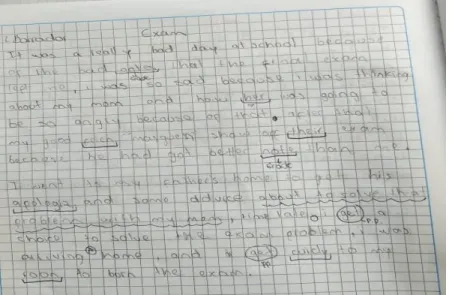
Figure 5. Hinca. Short story. Second draft ... 92
Figure 6 Short story. Second draft ... 108
Figure 7. Short story: final draft ... 108
Figure 8. Short story. Final draft ... 111
Figure 9. Short story: first draft ... 116
Index of tables
Table 1. Implementation description ... 80
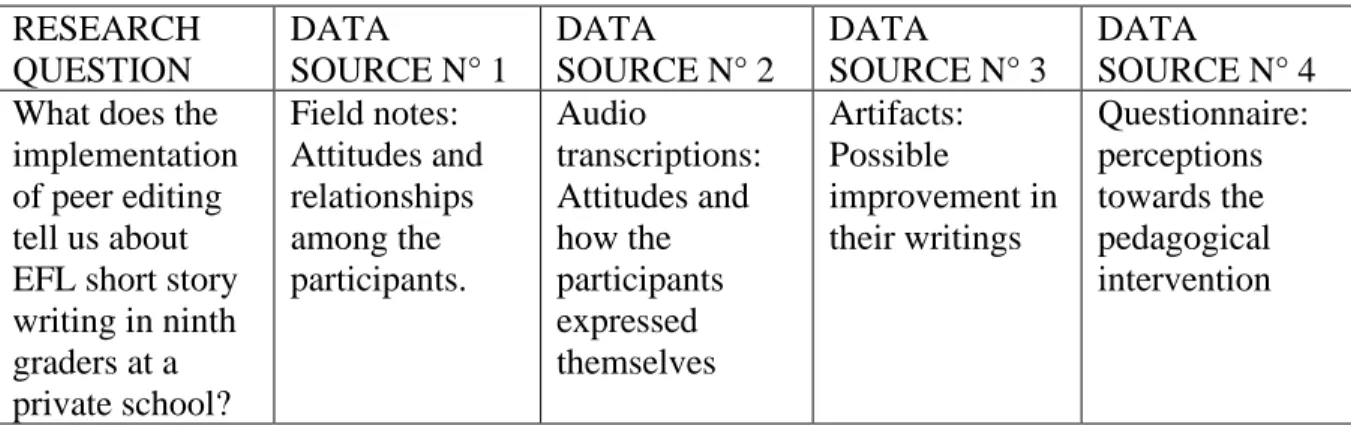
Table 2. Plan for triangulation. Based on Sagor (2005). ... 86
24 Introduction
The development of the communicative competence has been the main objective of the
Colombian Ministry of Education in the last decades. Consequently, Communicative Language
Teaching (CLT) emerged as an approach to teach this competence, which seeks to foster real life
communication in the classroom (Kibbe, 2017). CLT has been the approach which the
Colombian National Government opted for as a cornerstone to promote English teaching in the
country. As a matter of fact, one of the objectives set by the National Ministry of Education
(“National Bilingualism Program”, 2005, p. 5) is “to develop communicative competences in the
mother tongue and at least in a second language”. The school where this study was carried out is
not the exception for these dynamics that try to respond to standards of education worldwide.
Based on these dynamics, the purpose of this study was to foster the writing skill as a component
of the communicative competence.
From my teaching experience working as an English teacher in ninth grade, I found that
my students were obtaining low grades in the evaluation criterion related to writing. For instance,
I found that, in one of the groups where I oriented EFL, 13 out of 40 (32,5%) students had
disapproved this criterion. Therefore, this failure was affecting the accomplishment of the
institutional objective regarding communicative competence in EFL. Thus, I proposed this action
research to understand peer edition to foster the EFL writing skill through short story writing.
The interest in carrying out this intervention came from the need to observe processes of literacy
25 institutional goals. As a result, the following chapters will depict the generalities and specificities
26 Chapter 1
Contextualization.
This private school is subsidized by a Family Compensation Fund (FCF) which means
that the school is in service to the Colombian community and the students can enroll
independently of their socio-economic status. In order to achieve this compensation, the families
who belong to this FCF are granted a discount in the tuition fee. With regards to the school´s
facilities, it counts on large green areas which serve as playground for the students. Apart from
the conventional furniture classrooms counts on (whiteboard, desks, bin), most of them have a
TV set and internet connection to use different materials for classes. In 2018, there were 3,500
students from preschool to eleventh grade and around 150 teachers. Additionally, the school has
implemented an institutional bilingual education model which involves all the academic
community since 2008.
According to the National Ministry of Education (n.d.) and the school’s Institutional
Educational Project (IEP, in Spanish Proyecto Educativo Institucional PEI) this is a National
Bilingual School, which means that 50 % of the curriculum is taught in English. As a
consequence, English is also a means for both teaching and learning different content subjects
through the Content Language Integrated Learning (CLIL) methodology. The model
implemented by the school intends to provide students with tools not only for academic life but
27 reach level of B2 English proficiency according to the Common European Framework of
Reference for Languages (CEFRL) when they graduate from high school.
The school’s mission is to contribute with the well-being of its community members and
users of the organization through a high-quality IEP. Its vision is to have an up-to-date
curriculum needed for the offer of a quality service to its current and upcoming students up to
year 2020. The pedagogical approach is structured in accordance with three premises: human
beings are holistic and are in a continuous process of growth, societies have the responsibility to
motivate the development of human beings, and education is the process through which a society
makes such development possible. The school pursues to develop three main aspects in its
students: learning, competencies and autonomy. Learning should be assumed by the students
through the implementation of cognitive and metacognitive strategies which help them recognize
what they know, what they do not know, when they understand, when they need more
information, how to construct their own theories and test them. Secondly, the development of
competencies demand having a strong base of knowledge, understanding new concepts within
general conceptual frameworks and organizing information in a fashion which facilitates its
access and meaningful application. Lastly, autonomy is the development which allows a person
to take control of his/her life from social and intellectual dimensions.
To achieve the institutional goals mentioned above, the school follows its own
methodology in each subject matter lesson (math, social studies,etc.). It consists of four stages:
induction, individual learning, group learning and evaluation. The induction stage is about arranging the learning environment, and students and the teacher set a learning goal. The
28 group learning is the interaction among students in which they create, share and practice what they have learnt during the class. Finally, in the evaluation phase the students and teachers’ assess the achievement of the goal set at the beginning of the class.
For the purpose of this research, I focused my attention on the group learning dynamics because this social dimension has routed the path of the development of the school´s IEP which is
based on the pursuit of autonomy. This institutional document defines autonomy as:
“el desarrollo que permite a la persona tomar el control de su vida desde las dimensiones
social e intelectual. La dimensión social implica responsabilidad frente a los propios
actos, toma de conciencia y acción como miembro de una sociedad civil, y la intelectual
exige pensar por sí mismo y aprender a aprender”.
[the development which allows a person to take control of his or her life from the social
and intellectual dimensions. The social dimension implies responsibility before his or her
own the deeds, raising awareness and acting as a member of a civil society, and the
intellectual one demands thinking by him or herself and to learn how to learn](p. 4). I strongly believe that learning is a social construction which demands commitment and
cooperation among learners. Based on the school´s understanding of autonomy, it is seen that
learning not only is a self-construction, but it is also the result of social interaction. Students are
owners of their own learning processes. Therefore, they can contribute to their peers´ learning in
cooperative environments.
Regarding English as a subject matter, the school requires that students develop and
29 institution calls the set of activities evaluated per each skills performance indicators. The results of these assessment criteria served as data to identify language learning issues in any of the four
language skills. These students review English as a subject with a frequency of four lessons a
week, each lesson lasts 75 minutes. In ninth grade, they are expected to obtain B1 band according
to the CEFRL. Such measurement is done by applying the Cambridge Preliminary English Test
(PET). Nonetheless, this population is varied in the sense that, whereas some students are capable
of writing simple but coherent texts, some others have many difficulties submitting
understandable writings.
The ninth graders who served as participants of this study were 10 males and 9 females
whose ages ranged between 13 and 15. Each group of ninth grade was composed of 38 students.
This population is heterogenous in terms of socio-economic conditions as they belong to strata
two to four in Bogota. The students live in different districts of the urban area of the city and, in
some cases, they live in neighboring towns of the city. To conclude, the heterogenous population
opened the possibilities to different perspectives of learning; so did the school conditions that
permitted the implementation of this study grounded in a social construction framework.
Statement of the problem. Needs analysis phase
In order to define the problematic situation related to the students’ difficulties with the
writing skill mentioned above, I analyzed my students’ grades. After reviewing these grades, I
30 that 13 out of 40 of my students were below average in this indicator. In order for the students to
get the grade in this indicator, they had to submit two pieces of writing per term. To obtain the
grade from their writings, I took into account criteria such as task completion, grammar and
tense, vocabulary and spelling and coherence and cohesion. Each of these criteria were marked
from one to ten. Once I graded each of these criteria, I averaged these numbers to get the final
mark of the writings. My initial assumption was that they were not familiar with the correct use
of formal features of language such as grammar, syntax and transition words when writing.
Additionally, assessing and giving feedback on writing was a demanding task for teachers due to
the number of students and the lack of time.
To understand this issue, I had the necessity to design a questionnaire (Hagström &
Rivano, 2017) (Appendix 1. Diagnosis questionnaire) applied to 37 ninth graders. The students
answered it individually and anonymously. I chose to apply it in Spanish in order for them to
“feel safe and grounded in the English classroom” (Deller & Rinvolucri, 2008, p. 73 cited in
Fortune, 2012). I also wanted them to make full use of their lexical resources to express their
ideas and feelings regarding their processes in EFL writing. The aim of this instrument was to
identify their insights about their EFL teacher evaluation criteria when grading writing and what
the most common mistakes they made were during this process. Through their responses, I could
identify their prior knowledge about evaluation criteria of writing, which could be used for the
purpose of this study.
The first question of the questionnaire aimed at knowing the students’ trajectory in the
31 life in this institution. The results revealed that 92,5% of the students had been studying at the
school for about 8 years. The second question obtained information about rewarding experiences
the students had had on written tasks. Among the many different experiences reported, 16% of
the students affirmed obtaining good results when using prior vocabulary related to the assigned
task. This information was used in the pedagogical intervention plan. The third question aimed at
identifying the students´ insights about the possible subjectivity of teachers when grading texts.
89% of students affirmed knowing the evaluation criteria their teachers bear in mind when
grading writing, which made me conclude that the students regarded the evaluative practice of
their teacher as transparent and equal. Consequently, teachers take into account vocabulary and
spelling, grammar, task completion, coherence and cohesion as assessment descriptors. Ergo, in
the fourth question students expressed in which one(s) of these aspects they failed the most. The
results showed that 50% of them had difficulties with the usage of grammar and 43% misused or
lacked vocabulary. Even though the CLT approach implemented in this school states that a
message can be conveyed and understood despite grammatical and lexical errors, these two
formal features of language constitute a factor as well which may hinder the communication in
the target language; this is the reason why these two features are included in the evaluation
criteria for writing. Finally, As I assumed that the students’ difficulties stemmed from mistakes
coming from L1 interference, the intention of the fifth question was either state or discard this
assumption. This yes/no question was: “Do you think that relating the structures of Spanish with
the structures of English has had an impact when writing in English?”. As 56,7% of the students
answered “no” to this question, I concluded that they had no problems of interference of L1 in
32 Apart from applying a questionnaire, I collected some artifacts as well. The artifacts were
writings made by the students in class. These elements showed me that the students had difficulty
to express ideas in a coherent way. Besides, their written products lack cohesion. Hyland (2006
cited in Briesmaster & Etchegaray, 2017) defines coherence as "the ways a text makes sense to
readers through the relevance and accessibility of its configuration of concepts, ideas and
theories" (p. 311). Likewise, these same authors explain that cohesion is "joining a text together
with reference words (e.g. he, theirs, the former) and conjunctions (e.g. but, then) so that the
whole text is clear and readable" (Briesmaster & Etchegaray, 2017)
The data showed by both the questionnaire and the artifacts encouraged me to find a way
to foster the writing skill. Based on the results obtained from the questionnaire, I initially decided
to focus on grammar and vocabulary. Andrews, Torgerston, Beyerton, Freeman, Locke, Low,
Robinson, and Zhu (2006) proposed a definition of grammar as referring to written sentence
which includes the study of syntax, clause and phrase structure and the classification. Conversely,
Richards and Rodgers (2001 cited in Karadoc & Köse, 2017) define vocabulary as “the building
blocks of language learning and communication are not grammar, function, notions, or some
other unit of planning and teaching but lexis, that is, word and word combinations”. Additionally,
I intended to provide the students with writing strategies in order to promote autonomy in the
writing practice.
33 The problem
One important need detected in the institutional approval statistics was that there is still a
number of students who are failing EFL writing despite being at school for 7 hours a day. It is to
remark that studying at the school for years means being immersed in the bilingual program,
which also means being exposed to a considerable number of English lessons.
This research study also took into account the difficulties EFL teachers encounter
regarding time, number of students and other matters. In an unstructured interview (Firmin, 2008)
conducted to a fellow EFL teacher, she affirmed that, she did not have enough time to thoroughly
assess all their students’ written products as one of them stated: “…teniendo más de 120
estudiantes en total, que son cuatro writings al año pues es algo casi imposible para el maestro
dar un feedback apropiado e individual.” [“…having more than 120 students in total, and there
are four written tasks a year, it is almost impossible for the teacher to give an appropriate and
individual feedback”.]
It is to notice that this interviewee mentioned giving feedback as a concern to assess writing. According to Wang (2006, p. 42) “feedback is the information about current
performance that can be used to improve future performance”. Thus, this phenomenon exposed
the difficulty some EFL teachers had at the moment of providing their students with feedback,
that is, students did not have the opportunity to know the flaws in their written products that
could be improved.
In essence, writing is an individual exercise when sitting for foreign language tests, and it
34 writing -just like reading- were merely individual exercises; that was the reason why I always
assigned written activities to be individual. However, Dueranam argues the contrary:
“The social constructivists, on the other hand, claim that learning to write does not
confine to just what is happening in the writer’ s state of mind, but social interaction
is also a key to learn how to write successfully”. (Dueranam, 2012. p. 260).
Based on the previous statement, I shifted from an individual to a group perspective. Consequently, in this research I attempted to open a space for students to interact while they
edited their own writings on the basis that knowledge is constructed in social settings. Hence,
students not only submitted understandable texts but also shared their views on the writing and
editing processes. Following the idea of writing as a collective practice, Yang and Wilson
affirmed that “we learn not as isolated individuals, but as active members of society. What we
learn and how we make sense of knowledge depends on where and when, such as in what social
context, we are learning” (2006, P. 365). Such social interaction fosters the idea of writing as
collective practice which is guided and supported by the teacher who encourages students to
reach their learning goals and express their ideas.
This action research aimed at fostering peer editing practices among ninth graders while
they constructed their own individual short stories. In order to achieve this objective, the
participants underwent a first cycle of instruction on both: how to write a short story and how to
peer edit. During the edition practice I focused my attention on the data collection for research
35 Difficulties regarding EFL writing have been researched worldwide focusing their
attention on strategies and the misuse of vocabulary and grammar. Miftah (2012) and Dickinson
(2014) reported that a failure in writing stems from wrongly implementing writing strategies.
Whereas Miftah stated that less proficient students tend to use ineffective writing strategies,
Dickinson (2014) affirmed that, given that some students see writing as a vocabulary and
grammar evaluating tool utilized by the teacher, they tend to write too simple products in lexical
and grammatical terms as a strategy. Last but not least, Chen (2009) explained that one of the
difficulties students have in EFL writing is related to the structure of a written product varies
from one culture to other. Concerning my research proposal, I attempted to systematize my
experience when implementing peer editing. Even though I considered the correct use of
vocabulary and grammar within a written product, they were not the only aspects I observed from
the students’ texts. Among the research studies I reviewed regarding EFL writing, I found some
studies which mainly focus on linguistic aspects such as syntax and grammar. My contribution to
the field was not only to unite grammar, vocabulary, coherence and cohesion; but also to frame
them into cooperative learning practices.
Research question and objectives. Research question:
What does the implementation of peer edition tell us about EFL short story writing in ninth
36 Research objective:
To understand the role of peer edition within EFL short story writing tasks construction.
Subsidiary objectives:
- To identify the ways in which the participants carry out the Peer Edition on short stories.
- To characterize the Cooperative Learning practices within the framework of Peer Edition.
In order to answer the research question and achieve the objectives, I proposed a
pedagogical intervention which had the purpose to:
- Foster peer edition practices among students while they construct their own individual
written texts.
- Promote peer feedback focusing on the EFL writing skill.
Rationale
Learning EFL writing is a complex task. Not only because it is not the same writing in a
L1 as writing in an L2 (Kroll, 2003 cited in Mohite, 2014), but also because it implies several
sociocultural aspects such as purpose, content, audience and cognitive processes necessary for
this practice. In addition to this, EFL teachers encounter limitations regarding time, number of
students per group and groups for giving feedback to their students. Implementing peer edition
came in handy because it encouraged students to take control of their own literacy processes as
37 motive was to encourage participants to transform EFL writing from an isolated practice into a
social construction. Furthermore, this practice eases teachers work and decentralizes writing
assessment. Thus, these students focused their attention on form, content and other aspects above
mentioned. This implementation proved to work in other large classes also characterized by the
high number of papers submitted which demanded feedback (Leigh & MacGregor, 1992).
Accordingly, the purpose of this study was to foster writing by having students work in a
learning environment which allowed them to discuss, deconstruct and construct meaning among
themselves while completing the assigned task. This practice came from the idea that learning
occurs through dialogue. Learning is interactive in the sense that learners must interrelate with
the source of ideas/knowledge in social settings, as well as in the sense that they must take an
active part in reconstructing ideas/knowledge within their own minds (Vygotsky, 1978 cited in
Yang & Wilson, 2006).
It is to highlight the importance to contribute with the achievement of the EFL
communicative competence within bilingual education settings. The intention with this study was
to enhance the writing skill as one of the components of EFL learning and teaching practices.
Besides, the results of the analysis of the peer edition dynamics could unveil behaviors and
attitudes that can be useful for the foreign language learning. This intention was landed through
short story writing because that was the text typology which the students were reviewing in that
time. According to the English subject curriculum, short story writing as a text typology was
assigned in the PET (English proficiency test mentioned above), the students can submit a written
38 all the short stories the students wrote had similar lengths. Also, because they all were prompted,
all the students had to start their stories with the same opening sentence or phrase as the
following example shows:
Figure 1. PET writing part 3 sample
39 Chapter 2
Theoretical Framework
In this chapter, a description of the theory, concepts and the state of the art will be
presented that served as the foundation for this research. My project pursued to develop of EFL
writing as a language skill. Consequently, it was necessary to define the communicative
competence. In order to explore this issue, I used peer edition as a cooperative learning strategy,
which generates positive interdependence between team members. This strategy is framed in the
perspective that learning occurs as a social phenomenon and that there is a Zone of Proximal
Development (ZPD) with high-skilled members who scaffold those who are learning. Ergo,
social constructivism, scaffolding and ZPD are defined from a Vygotskyan viewpoint (1978).
EFL Writing
The view of EFL writing which underpins this construct is inherently connected with the
socio constructivist paradigm of this study. It is that interpretation where learners are to develop
greater understanding by working with more knowledgeable others (Hyland, 2009). Its
importance not only radiates in obtaining of good grades in the scholar context, but also in the
development of a solid communicative competence which allows the students to share their view
40 by setting out a sequence of cohesive ties to which the writer supplies the content. Each
outline consists of different words or key phrases, depending on the particular genre
which is being scaffolded. Writing frames guide learners through a writing activity by
giving them a structure within which they can concentrate on communicating what they
want to say, rather than getting lost in the form. (Hyland, 2009, p. 119)
Following this line, the students were provided with written models so that they could be
guided in the text structure. Additionally, they were not only given prompts to start their stories,
but also, before writing, they were presented some vocabulary they might need for their written
products. Thus, they would not get lost in the textual form they aimed to utilize.
Besides, writing can be considered as a very difficult skill to develop because “learning to
write -even in one’s native language- is not simply a matter of ‘writing things down’” (Omaggio,
1986 p, 221), and “it is probably the most difficult thing there is to do in language. It is
something most native speakers never master” (Nunan, 1999 p., 271). Likewise, writing is not
only difficult but also complex. It is a messy non-linear practice that involves different cognitive
processes which require intellectual effort over a considerable period of time (Castillo, 2014;
Shaughnessy, 1977; White & Arndt, 1991). From my experience as an EFL learner and teacher, I
can say that writing has been a challenging task that not everybody is willing to face. In formal
education it has been seen as mandatory and confusing due to the lack of instructions and tools to
achieve it in a proper way. However, through this study I attempted to approach writing by
listening students’ voices about their inquiries in this process. Besides, I did not ask my students
41 how to develop the different products I requested from them. Lastly, my intention was to
encourage participants to transform EFL writing from an isolated practice into a social
construction.
One highlighting characteristic of writing is the application of different cognitive stages to
carry out this exercise. Although there are several authors who suggest different orders for the
cognitive stages required for writing (Castillo, 2014; Nunan, 1999; Omaggio 1986), they can be
summarized in stages before, during and after the final task. These stages were used in the
development of the pedagogical intervention which will be detailed in further chapters.
Nunan (1999) defined two approaches for teaching writing: the product-oriented approach
(POA) and the process approach (PA). Whereas the former focuses on “the final product, the
coherent, error-free text” the latter concentrates on “the steps involved in drafting and redrafting a
piece of work” (1999, p. 272). Even though in PA it is stated that perfect texts are not possible,
they can get close to perfection through a production, reflection, discussion and successive
rework of drafts on a text (Nunan, 1999). On the other hand, POA concentrates in models which
the learner imitates, copies and transforms. These models are provided by the teacher and / or the
textbook (Nunan, 1999). Ideally, PA could be the most suitable technique for quality and
communication in writing. However, when students face an exam to submit, there is not available
time to do so. This implies the failure to overcome difficulties and successfully deliver a message
in a written way. In regard to this matter, Raimes (1993 cited in Nunan, 1999) suggested teaching
42 in a writing class, students need to be taught both how to use the process to their
advantage as language learners and writers, and also how to produce an acceptable
product on demand. (…) While students certainly need to learn how to pass exams, they
also need to perceive writing as a tool for learning, a tool that could be useful to the
throughout their professional and personal lives. (1993, cited in Nunan, p. 245)
In conclusion, to be proficient in a target language does not imply writing coherent
understandable texts. In formal education this productive skill is not only important for the
students when facing an exam, it is also important because it allows them to develop cognitive
skills and express their ideas. However, for these thoughts to successfully be delivered, they have
to be clear enough for the understanding of the reader; otherwise, communication may not occur.
In this vein, the necessity to define communicative competence emerges.
Communicative competence
According to Hymes (1967; 1972), communicative competence (CC) is the ability that
enables us to convey and interpret messages to negotiate meanings within specific contexts. This
competence has been dissected in different fashions. For example, Canale and Swain (1980)
made a distinction between form and function of language through three different approaches:
grammatical approach, which was based on linguistic or grammatical forms; communicative or
functional / notional approach, which was based on illocutionary acts of speech such as
43 particular settings or situations. Evidently, Canale and Swain made contributions to the
construction of the competences which the Common European framework of Reference manages
nowadays. Based on these theories and my experience as a teacher in this institution, I can
conclude that the school defines the grammatical approach as the linguistic competence, the
situational approach is understood as the sociolinguistic competence and the functional / notional
approach is the pragmatic competence.
I made a special emphasis on the conceptualization elicited by the CEFRL because it is
the set of guidelines which shed light on the bilingual program developed in the school serving as
setting for this study. As a matter of fact, in this school, the EFL performance of the students is
evaluated through the linguistic, sociolinguistic and pragmatic competence. Subsequently, I am
going to quote and discuss the definition that the CEFRL makes about these three competences
emphasizing on writing.
Linguistic competence includes syntactical knowledge. Also, it refers to the precise use
and cognitive organization of vocabulary and storing of expressions. It “depends, amongst other
things, on the cultural features of the community or communities in which the individual has
been socialized and where his or her learning has occurred” (CEFRL, 2001. p. 13).
Sociolinguistic competence refers to
the sociocultural conditions of language use. Through its sensitivity to social conventions
(rules of politeness, norms governing relations between generations, sexes, classes and
44 community), the sociolinguistic component strictly affects all language communication
between representatives of different cultures, even though participants may often be
unaware of its influence. (CEFRL, 2001. p. 13).
Pragmatic competence concerns with
“the functional use of linguistic resources (production of language functions, speech acts)
(…) It also concerns the mastery of discourse, cohesion and coherence, the identification
of text types and forms, irony, and parody. For this component even more than the
linguistic component, it is hardly necessary to stress the major impact of interactions and
cultural environments in which such abilities are constructed”. (CEFRL, 2001. p. 13).
The assessment criteria implemented for grading the writings was thought in function of
the competences mentioned above. The task completion criterion was thought so that the writer
bore in mind all aspects of language communication such as social conventions and the culture
where the written message takes place. Besides, grammar, tense, vocabulary and spelling
correspond to the linguistic competence, which concerns about formal features of language.
Lastly, the coherence and cohesion criteria, despite having elements related to the linguistic
competence, also deal with the functional part of language, such as the intention of the writer and
the text typology.
Even though the school included linguistic, sociolinguistic and pragmatic competences for
EFL instruction, for the purpose of this study I focused my attention on short stories as written
45 According to the CEFRL tasks are actions which are “performed by one or more individuals
strategically using their own specific competences to achieve a given result” (2001, p. 9). In this
research process, writing was not the only task, which was carried out by the participants, so was
peer editing. Peer editing is defined as a task as well because it required strategic thinking when
planning how they would help their peers achieve their writing task within cooperative learning
environment. Peer editing was utilized as a tool that could help my students to achieve the
communicative goals which stems from cooperative learning.
Cooperative Learning
Ferreiro (2007) and Johnson and Johnson (2009) affirmed that Kurt Lewin was one
of the first scholars in proposing the strengthening of the relationships among team
members aiming at achieving a common goal. The idea on the strengthening of the
relationships to achieve a common goal draws on Cooperative learning (CL) practices. CL
is “the instructional use of small groups so that students work together to maximize their
own and each other’s learning.” (Johnson & Johnson, 2009). This instruction must be
guided by clear objectives so “students engage in numerous activities that improve their
understanding of subjects explored” (Babu et al, 2016).
I chose this proposal to be underpinned by CL because it promotes threefold
interdependence. Firstly, cognitive interdependence refers to the collective representations
46 impact that learners have on each other as their life and daily activities intertwine. Lastly,
social interdependence promotes individual accountability, “interaction, appropriate use of
social skill and group processing” (Johnson and Johnson, 1989, 2005, cited in Yusmani,
2018). Each learner makes his/her own contribution for the creation of a collective
construction by virtue of sharing several hours on a daily basis at school. Such construction
is made through interaction, which causes an individual to have an impact on the other.
These three characteristics of CL implies students’ empowerment because CL practices
should enable learners to become autonomous subjects aware of their learning processes.
CL is classified in formal and informal practices according to Johnson and Johnson
(2009) and Babu et al (2017). Formal CL “is structured, facilitated, and monitored by the
educator over time and is used to achieve group goals in task work.” (Johnson & Johnson,
2009. p. 34). In contrast, informal CL can incorporate group learning with passive teaching
through a discussion either in the middle or at the end of the lesson (Johnson & Johnson,
2009). The latter practice enables the student to process, consolidate, and retain more
information learned (Ferreiro, 2007; Babu et al, 2017) apart from structured lessons. In this
proposal, formal and informal CL took place. It was formal because each lesson had a
structure because it contained an objective, the groups were carefully assembled, each
member knew his/her role was, the classroom was arranged in accordance with the
objective, and other formalities of a lesson. Also, my intervention was informal because, in
spite of the structural organization of it, I opened the spaces for students to discuss freely
47 Both Johnson and Johnson (2009) and Ferreiro (2007) remarked the importance of
involvement in interdependence because interaction implies personal and collective change
of thinking and doing. Therefore, the challenge of this proposal was to have the students
involved and motivated to work collaboratively within peer edition. Thus, the idea of group
working was grounded on the definition of some cooperative techniques. For instance,
Schul (2011 cited in Babu, 2017) stated that CL practices utilize student pairing, while
others utilize small groups of four or five students. In order to foster peer edition, I
Followed the idea of (Rouhi & Azizian (2013) in the sense that I allowed the students to
work in pairs because, in my teaching practice, I had noticed that they had a peer of choice
when working in groups. Consequently, it was extremely important to recognize and
analyze such interactions that pursued the CL essence. Hence, writing served as the
platform to understand the development of this skill as a collective process where each
member of the community takes part of and is heard.
Peer Edition (PE)
Nunan (1999) and Castillo (2014) suggested peer editing (PE) as a tool for improving
written products. To bring peer editing to discussion, I am going to mention some studies which
have been conducted through making use of PE. Many of these studies reported the findings
48 PE has been advocated as an effective writing technique both in L1 and L2 classroom (De
Guerrero & Villamil, 1994; Diaz, 2010; Tsui & Ng, 2000); Zhu, 2001, cited inRouhi & Azizian,
2013). This process also demands multiple drafting, extensive revision and pair work (Rouhi &
Azizian, 2013). These authors also affirmed that PE occurs in a framework of scaffolding where
students take roles of collaborators through activities which create opportunities for them to work
together constructively and develop their collaborative skills. I can affirm that this study served
as a mirror of collaborative learning where PE allowed students to work as a community and to
build knowledge.
The virtues of commenting on peers' writings has been pointed out by a number of
research studies (Hu, 2005; Min, 2005; Lundstorm & Baker, 2009; Rollinson, 2005; Tsui & Ng,
2000 cited in Azizian & Rouhi, 2013). One of the advantages of PE is to help learners to
understand better the way they write (Azizian & Rouhi, 2013). PE can also provide assistance
and a new form of assessment during the EFL writing process in a cooperative classroom
environment (Díaz, 2010). Assessing not only allows the learner to understand his/her peers’
written product, this practice can also support students’ understanding and apply cognitive skills
such as reflection, analysis and review. Another asset of having the students give feedback is to
reduce the workload that represents checking lots of writing in crowded EFL classrooms on
behalf of the teachers (Diaz, 2010; Azizian & Rouhi (2013). Consequently, the assets of PE
benefit both students and teachers regarding institutional duties and knowledge construction.
It is to remark that peer editing is a field that needs further study. De Guerrero and