
Automatic Sun Tracking Solar Electric Systems for Application on Transport
5
0
0
Texto completo
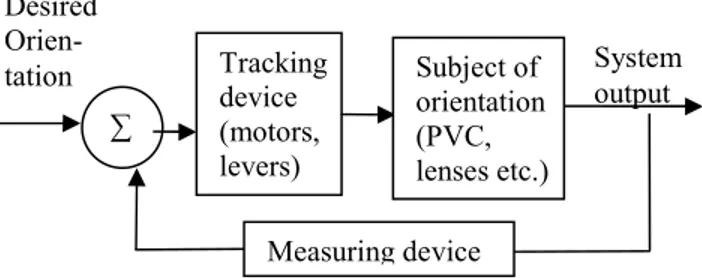
(2) 2010 7th International Conference on Electrical Engineering, Computing Science and Automatic Control (CCE 2010) Tuxtla Gutiérrez, Chiapas, México. September 8-10, 2010. PVC system without excessive cost-efficiency characteristics. Some estimation can now be easily made. In case of a bus (car) with 40 kW engine, the energy consumption in 1 hr is 40 kWh; for recharging in 6 hrs the PVCs power of 6.7 kW is needed. The average price of PVCs is now around $4 (US dollars) per W; it is constantly decreasing (contrary to the traditional fuel’s cost), and the minimal price in the market today is less than $2/W [9]; the information about prices of $1/W appears. Taking that PVCs utility life is 20 years and observing the existing tendencies on the market, we can safely use the price of $2/W, which gives for the 6.7 kW PVC system the total cost of $13,400. The existing electrical energy cost in México and USA is around $0.1/kWh, and not less than 50% growth is expected in the next 20 years; thus 40 kWh of consumption gives $4/day, which will amount to $24,000 in 20 years, much more than the PVC’s cost. As we see, the use of solar electric vehicles certainly needs initial investment, but quite soon it will be justified not just ecologically, but economically as well. On the other hand, a bus with 25 m2 roof surface can carry autonomous PVC set on the roof, thus increasing the total recharging time; to generate a power of 6.7 kW, the PVCs must have efficiency of around 26 %. It is higher than efficiency of average commercial PVC, but taking into account the Sun tracking effects and the existing tendencies of development of PVCs, we can think about this option as quite viable. Thus, the two options of recharging might be considered: the stationary grid-connected PVC set at the place where vehicles are “resting”, and the autonomous onboard PVC system. In the first case, more economic PVCs with average efficiency can be used, also a DC-AC inverter is needed to make the parameters of generated electrical energy compatible with those of grid; in the second case the inverters might not be needed, but there will be strong demands towards efficiency of PVCs. In both cases, Sun tracking gives additional advantages.. nm) and have correspondingly high reflection coefficient around 40% at normal incidence for n = 4.5. It is possible to reduce the reflection losses down to 5 – 10% using antireflection coating prepared from materials with refraction index lower than that for semiconductor (like TiO2 with n ≈ 2.5), and the thickness necessary for destructive interference of light beams reflected from coating’s boundaries. It is evident that in case of oblique incidence, the coating’s effective thickness will be different from that for normal incidence, so the antireflection effect will be essentially reduced. Thus, the use of tracking system will provide optimum conditions for antireflection coatings during all working period; the total tracking effect for stationary PVC with antireflection coating therefore will be 50 – 60%, and for moving PVC platform even greater. A. Sun tracking in moving vehicles Solar tracking ensures the correct orientation of the PVC elements (concentrator lenses, mirrors and/or the mount itself) towards the sun at all moments – during vehicle’s movement or parking – providing maximum irradiation of semiconductor converter of solar radiation into electrical current. A general block-diagram of one solar-tracking module (fig. 1) is essentially a closed- loop control system, consisting of: - Desired Orientation – orientation towards the Sun or towards South with Earth latitude compensation - Subject of orientation – PVC or PVC-array, possibly coupled with lenses or mirrors - Tracking device – motorized device which compares the measured orientation with the desired and rotates the subject of orientation around its axe (or axes) - Measuring device is a sensor array based on photodiodes (with tubes or umbrellas which produce shadow), PVC sensor or electronic compass coupled with a GPS-sensor - System output – the most efficient orientation of PVC converters, from the gathering sun rays point of view. III. EFFECT OF SUN TRACKING In order to assess the effect of system’s orientation towards the Sun, we use our results of previously conducted experimental and theoretical research [10, 11]. The experiment was performed in Queretaro, Mexico during summer solstice, with the result that the PVC efficiency gain in Sun tracking mode is 30% in comparison with PVC having ideal static orientation (meaning that the surface is oriented normally to the solar radiation flux at midday). Compared to the non-tracking PVC with orientation fixed for the whole year, the average gain will be close to 40%; these numbers could be taken as characteristic ones for any season. There is one more tracking effect connected with light reflection losses. It is known that all semiconductor materials have high refractive index n (in case of Si it varies from 5.5 to 3.8 with wavelength change from 400 to 600. IEEE Catalog Number: CFP10827-ART ISBN: 978-1-4244-7314-4 978-1-4244-7314-4/10/$26.00 ©2010 IEEE. Desired Orientation ∑. Tracking device (motors, levers). Subject of orientation (PVC, lenses etc.). System output. Measuring device. Fig. 1. General block-diagram of one solar-tracking module. 67.
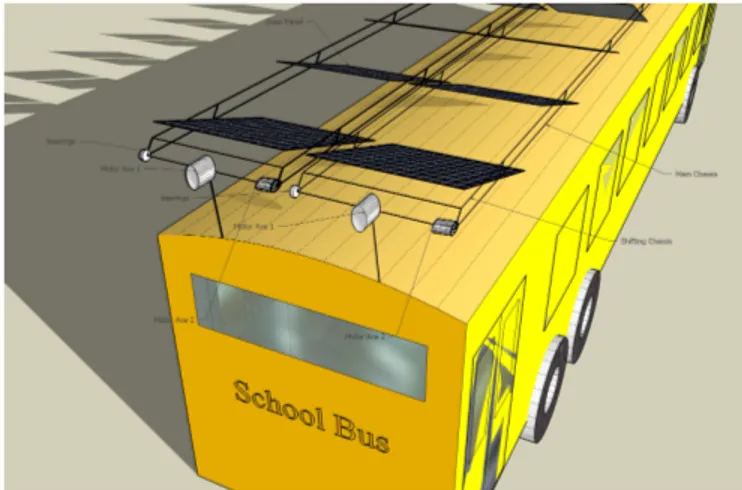
(3) 2010 7th International Conference on Electrical Engineering, Computing Science and Automatic Control (CCE 2010) Tuxtla Gutiérrez, Chiapas, México. September 8-10, 2010. Effective Sun tracking is only possible with frequent periodical measuring of the orientation and its correction towards the desired one. For example, with 1 Hz periodicity, the system’s movement is almost constant, which increases its power consumption and wearing of motorized parts. Additionally, this type of movement can become chaotic in cases of strong perturbation (clouds, tunnel passing). This tracking tactic is justified for several applications (racing car on sinuous road, flying tracing device), however, in case of massive transit objects (bus, train) this level of precision is not justified; we suggest geographical orientation as an option. In this case, the measuring device is an electronic compass coupled with a GPS-sensor. The compass measures the declination from South, while the GPS-sensor – system’s latitude.. PVC surface must be normal to the rays of the Sun. Therefore, a midday PVC’s obliquity angle should be equal to location’s latitude during equinoxes; 23 degrees less during summer solstice, and 23 degrees more during winter solstice, in case of the northern hemisphere. In Mexico or China these angles are smaller than, for example, in Russia, which simplifies this issue.. Fig. 3. 2-axis solar tracking PVC with radiation concentration. Fig. 3 and 4 show two prototypes of the 2-axis Sun tracking PVCs, with and without solar radiation concentration correspondingly, both created in our laboratory. Each prototype uses 2 pairs of phototransistors (one for each axis) positioned so that the difference of photo signal in each pair is zero when the panel is orientated normally to the radiation flux and increases with disorientation of the PVC; thus the difference mentioned we call the disorientation signal. This signal is feed to microcontroller PIC16f877 which realizes monitoring of the system using two geared servo motors: Colman EYQF33300-661 and Globe 407A-350. The motors work until the correct position is reached, and after that the system switches itself out for time interval (X = 15 – 30 min) which can be regulated; after that, the next correction is made.. Fig. 2. An example of the roof-mounted tracking system. A PVC-array in our case is a vehicle’s roof filled with converters. Each element of the array (or a group of elements) is mounted on an axe, which may be individually driven by a low power servomotor coupled with a gearreducer (cost is $50-100), or be united by a commune lever (fig. 2), in the manner of a lattice window, and be driven by one motor of greater power (cost $500-1000). At least two motors are needed for one mechanism of two-axe system. An example of a two identical mechanisms system is shown on fig. 2. Each mechanism drives a set of Solar Panels mounted on the Main Chassis (with bearings), driven by an Axe Motor 1. A Shifting Chassis is mounted over the bearings in the points where Solar Panels are mounted on the Main Chassis; a parallelogram mechanism, created this way, is similar to that one of a swing arm drafting lamp. The Shifting Chassis, driven by an Axe Motor 2 mounted over the Main Chassis, rotates the bearings of Solar Panel mounts, changing its angle of obliquity towards the Main Chassis. The design of a prototype for specific location should consider its geographical latitude, which would determine the limits of PVCs inclination, and thus, a mounting height over the vehicle’s roof. To have the maximum efficiency,. IEEE Catalog Number: CFP10827-ART ISBN: 978-1-4244-7314-4 978-1-4244-7314-4/10/$26.00 ©2010 IEEE. Fig. 4. 2-axis solar tracking PVC, non-concentrated radiation. 68.
(4) 2010 7th International Conference on Electrical Engineering, Computing Science and Automatic Control (CCE 2010) Tuxtla Gutiérrez, Chiapas, México. September 8-10, 2010. during the year follows the sinus law. To find the corresponding time intervals for summer and winter time, we calculate average value of sin ϕ at argument interval from 0 to π:. Thus the accuracy of tracking is determined by frequency of corrections (i.e. the value of X) and by the identity of phototransistors in each pair (if, for example, their response at equal illumination is 5% different, then the zero-signal orientation will be different from normal to the radiation flux). Our experiments have shown that for X = 20 min, the orientation error (deviation from normal light incidence) was less than 10o during the whole solar day.. sin ϕ =. π. 2. sin ϕdϕ = π∫ π. ≈ 0.64. 0. Thus the difference between the maximum and minimum solar daytime and 12 hrs (i.e. ± 1.44 hrs) must be multiplied by the coefficient just found, the result obtained added to 12 hrs, and finally divided by 6. It gives ΔTw = 1.8464 hrs (1hr 50.8 min) for winter and ΔTs = 2.154 hrs (2 hr 9.2 min) for summer. To estimate the accuracy of tracking (or error in comparison with ideal tracking when solar radiation flux at any time moment is normal to PVC’s plane) we must find the average value of cos θ - cosines of angle of incidence during PVC’s illumination at each position; it is evident that this error in our system will depend on the season of the year. First, we calculate the minimal error corresponding to the case when the solar daytime is equal to the averaged values found above (namely, 1hr 50.8 min in winter, and 2 hr 9.2 min in summer (there will be 4 actual days: February 1, May 11, August 1 and November 12). In this case an error is constant through the all day, and is determined by the average value of cos θ at the interval from − 15o to + 15o:. B. Stationary Sun tracking systems In case of stationary PVC set, the Sun-tracking system can be based on totally different concept: the automatic changes of PVC’s orientation in relation to the Sun radiation for a given geographic point could be realized according to the corresponding program which is only a little more sophisticated than a program for ordinary electronic clock. The motion does not need to be continuous, it is essential to keep an incidence of radiation flux approximately normal to the PVC’s sensitive plane: if the changes of the orientation of this plane corresponding to the Sun’s motion will be in steps such that deviation from normal light incidence never get larger than 15o (cos 15o = 0.966), it will be sufficient for tracking with an average error smaller than 2%. Thus for two-axis tracking system, PVC’s orientation in relation to one of them (axis 1) will change approximately once in one – two hours, and in relation to another one (axis 2) – twice a year, corresponding to the transition from winter time to summer time. To realize this step-like motion, the convenient and economic stepper motors can be used [12], for example, like KDE 11H. As an example, let us see how the consideration of geographic position mentioned above can be applied to a stationary Sun-tracking system installed in Queretaro, Mexico (latitude around 20о). We choose the inclination of axis 2 which define the midday PVC plane position to be 10o to the south at summer time (April – September) and 30o to the south at winter time (October – March); since the angular position of the Sun is changing from − 3o at June 22 (summer solstice) to + 43o at December 22 (winter solstice), the solar radiation flux at midday will always have normal incidence to the PVC plane with error less than 15o. The variation of the PVC’s orientation in relation to axis 1 we may program with 6 discreet positions with the angular difference of 30o, so that they form the following sequence: 15o from vertical for the beginning of the solar day (with the motion of the Sun, the incidence of radiation will change between − 15o and + 15o), then 45o, 75o, 105o, 135o, and 165o. Thus the PVC’s plane position will change 5 times during the day, and later return to the initial position. The time intervals between the movements mentioned are determined by duration of the solar day. In this case it is 13.44 hrs at June 22 and 10.56 hrs at December 22. It could be approximately assumed that the corresponding variation. IEEE Catalog Number: CFP10827-ART ISBN: 978-1-4244-7314-4 978-1-4244-7314-4/10/$26.00 ©2010 IEEE. 1. cosθ =. 6. π. 15o. 12. ∫ cosθdθ = π sin 15. o. = 0.9886. −15o. The actual error is equal to the difference between 1 and the value found: it is 1.14%. In any other day, an additional error appears due to the difference between the actual daytime and the averaged value taken. This difference is evidently maximal at equinox time, immediately before (after) transition from winter to summer time, when the daytime is 12 hrs; the error could vary during the day. We take for estimations the situation corresponding to March 21 when the orientation of PVC’s plane is still governed by the winter schedule. The sunrise in idealized situation is at 6 a.m. (the correct geographical time corresponding to the highest Sun position at noon, we return to this point later), whereas according to the averaged winter schedule, the solar irradiation should start at t1 = (12 − 6ΔΤω/2) = 6.461 a.m., and the programmed first change of plane’s position will be at the moment t2 = t1 + ΔΤω = 8.31 a.m. The actual Sun position at this moment will be equal to (180o/12)·2.31 = 34.65o, and the angle of incidence to the PVC’s plane 19.65o. Thus the error will be determined by the average of cos θ at the interval from − 15o to + 19.65o which is 0.984; so, error at this time interval is 1.6%. In similar way the error in the following time intervals can be. 69.
(5) 2010 7th International Conference on Electrical Engineering, Computing Science and Automatic Control (CCE 2010) Tuxtla Gutiérrez, Chiapas, México. September 8-10, 2010. evaluated; in all cases it will be less than 1.5%. So we can see that the proposed program of Sun-tracking can really ensure an error less than 2% during the whole year. At higher latitudes, the difference between winter and summer solar daytime will be greater, which brings correspondingly larger tracking errors. Thus, in northern part of Mexico (Sonora, Chihuahua) at latitude of 30o, the solar daytime at summer solstice is approximately 14 hrs, and at winter solstice – 10 hrs; in Moscow (56o of northern latitude) these values are correspondingly 17 and 7 hrs. In these cases, the different programming should be made, with larger amount of fixed positions. As we see, the tracking program must be adjusted to specific geographical point: the latitude gives winter and summer daytime and the corresponding positions of axis 2; the longitude gives the correct geographical time (it corresponds to the accepted belt time in the middle of the time belt denoted as φo); for any other longitude φ within the belt, the correction after the following expression must be added to the belt time: Δt =. φ − φo 7.5 o. REFERENCES [1] http://www.solarcity.com/residential/electric-vehicle [2] G. Mom, The Electric Vehicle: Technology and Expectations Automobile Age. Joihn Hopkins Universty Press, Baltimere, 2004. [3] http://www.teslamotors.com/ [4] http://www.adelaidacitycouncil.com.tindo [5] http://www.solarbus.org/ [6] Y. V. Vorobiev, J. González-Hernández, A. Kribus, Journal of Solar Energy Engineering, Vol. 128, pp. 258-260, 2006. [7] Y. V. Vorobiev, R. Ochoa Landin, R. Ramíres Bon, H. Esparza Ponce, J. González-Hernández, “Investigación de las posibilidades de optimización del dispositivo multi-unión de celdas solares con estructura monolítica, formada por uniones elementales de capas ¨p¨y ¨n¨con secuencia y conexiones variables” in Memoria de XXXII Semana Nacional de de Energia Solar, Mérida, Yucatán, Oct. 2008, MEXICO. [8] Yu. V. Vorobiev, J. González-Hernández, P. Gorley, P. Horley and L. Bulat, “A New Approach to Hybrid Systems of Renewable Energy Utilization”, in Leading Edge Research in Solar Energy (Patrick N. Rivers, editor), Nova Science Publishers, Inc., New York, pp. 147-164, 2007. ISBN 160021-336-7. [9] http://www.renewableenergyworld.com/rea/news [10] P. Y. Vorobiev, J. González-Hernández, Y. V. Vorobiev, “Optimization of the Solar Energy Collection in Tracking and Non-Tracking Photovoltaic Solar System”, Proceedings of the International Conference ICEEE, Acapulco, Mexico, September 8-10, 2004, pp. 310-314 [11] Yu. Vorobiev, P. Vorobiev, P. Horley, J. GonzálezHernández, “Experimental and Theoretical Evaluation of the Solar Energy Collection by Tracking and Non-Tracking Photovoltaic Panel”, Proceedings of 2005 Solar World Congress (ISBN-0-89553-177-1), August 6 -12, 2005, Orlando, FL, USA. [12] B. G. Liptak, Instruments Engineer’s Handbook: Process Control and Optimization, CRC Press, pp. 2244, 2005.. 0.5hr. On the whole, we see that the programmed stationary tracking systems are capable of providing high accuracy being at the same time simple and economic. IV. CONCLUSION At present time solar electric vehicles are more expensive than the conventional ones. However, there are many situations where their application is already technically and economically viable, in particular, with the use of solar tracking systems described. ACKNOWLEDGMENT The authors are grateful to CONACYT for financing of the research (Project CB-2005-01-48792). P. Vorobiev gives thanks to CONACYT for support of his doctorate study.. IEEE Catalog Number: CFP10827-ART ISBN: 978-1-4244-7314-4 978-1-4244-7314-4/10/$26.00 ©2010 IEEE. 70.
(6)
Figure
Documento similar