
The Construct Validity and Reliability of the ‘Characteristics of Successful EFL Teachers Questionnaire (CoSEFLT Q)’ Revisited
21
0
0
Texto completo
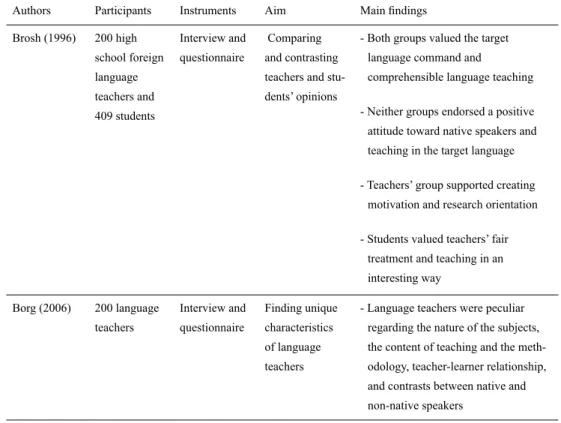
(2) Porta Linguarum Nº 31, enero 2019. 1. Introduction In every educational system, the successful education of students is reliant upon teaching and learning processes. Teaching is understandably a core topic among education researchers and theorists. Learning (as one of the most important goals of education) is the product of teaching and there is much interaction between the two concepts (Gholami & Asady, 2014). Teaching is a complex interactional activity including subject matter, content, teacher attributes, student features, pedagogy, resources, and the learning context (Campbell, 2000). Currently, one of the most essential elements that preoccupy educational authorities around the world is the concept of effective teaching (Rama, 2011). It is the foundation of education reform and vital for learners’ academic success (Whitehurst, 2002). Effective teaching has been defined as “that which produces beneficial and purposeful student learning through the use of appropriate procedures” (Centra, 1993, p. 42). It is a form of teaching through which students achieve more than expected in academic systems (Good, 1979). The results of several studies which have been carried out in different countries during the past 30 years has shown that the classroom level has a more influential role in explaining the students’ achievement, compared to the school level. Furthermore, a majority of classroom level variance appears to be associated with teachers’ behaviours and acts, and the way they structure the class (Kyriakides, Christoforou, & Charalambous, 2013). It also appears that teachers’ effectiveness is the main contributory factor in student achievements because it outweighs other factors that play a part in their success such as class size, socioeconomic statues, and gender (Sanders, 1999; Wenglinsky, 2000). Continuous deployment of effective teachers gives rise to invaluable outcomes for students in the educational system. This means that the deployment of ineffective teachers has an irreplaceable impact on student success, and the educational system more widely (Sanders, Wright, & Horn, 1997). Similarly, effectiveness of any language teaching instruction is heavily dependent on the role that teachers play in their classrooms. Teachers directly affect their students’ achievement or failure (Al Seghayer, 2006) by playing a significant role in the learning environment via various activities including the setting of goals, selecting textbooks, developing syllabi and lesson plans, conducting classes, setting the standards, and assessing learners’ achievements. They not only transfer their knowledge, but also teach their students how to learn, motivate them, and provide them with an appropriate learning environment (Williams & Burden, 2000). Given that there is little doubt about the significance of teachers’ role in language teaching and learning processes (Williams & Burden, 2000), many studies have attempted to delineate specific features for successful English as a foreign language (EFL) teachers and to design criteria to assess teachers’ pedagogical success with the purpose to facilitate growth and improvement. For instance, via interview and a 20-item questionnaire, Brosh (1996) determined the features of successful language teachers by high school teachers and learners. Both teachers and students valued the items related to language command and comprehensible teaching. However, items related to teaching in the target language and being native-like were disregarded. Furthermore, items regarding motivation development and research were more important for teachers rather than learners. On the other hand, teachers’ fair treatment of students and teaching in an interesting way were more important for students than teachers (cited in Park & Lee, 2006).. 54.
(3) Fatemeh Moafian et al.. The Construct Validity and Reliability of the CoSEFLT-Q.... Borg (2006) studied the distinctive features of language teachers. These features were collated by more than 200 pre-service and in-service language teachers from a variety of contexts. Furthermore, the opinions of experts in mathematics, history, science and chemistry were included to confirm the extent to which the features were specific for language teachers. Based on the outcomes of the study, language teachers were considered to be unique because of the (i) nature of subjects, (ii) teaching content and methodology, (iii) relationship between teachers and students, and (iv) clear difference between native and non-native speakers of a language. Table 1. Previous studies on the characteristics of successful language teachers. Authors. Participants. Instruments. Aim. Main findings. Brosh (1996). 200 high school foreign. Interview and. Comparing. - Both groups valued the target. questionnaire. and contrasting. language command and. language. teachers and stu-. comprehensible language teaching. teachers and. dents’ opinions. 409 students. - Neither groups endorsed a positive attitude toward native speakers and teaching in the target language - Teachers’ group supported creating motivation and research orientation - Students valued teachers’ fair treatment and teaching in an interesting way. Borg (2006). 200 language. Interview and. Finding unique. teachers. questionnaire. characteristics. - Language teachers were peculiar regarding the nature of the subjects,. of language. the content of teaching and the meth-. teachers. odology, teacher-learner relationship, and contrasts between native and non-native speakers. 55.
(4) Porta Linguarum Nº 31, enero 2019 Park and Lee. 169 high. (2006). school teach-. Questionnaire. Comparing and contrasting the. proficiency more than other factors. ers and 339. views of teachers. while the students valued pedagogical. high school. vs. students,. knowledge above other elements.. students. male vs. female students, and high achievers vs. low achievers. - The teachers valued English. - In socio-affective skills, male students revealed significantly different characteristics from the female students - In pedagogical knowledge and socio-affective skills, high achievers’ outlook was completely different from that of the low achievers. Shishavan. 59 English lan- Questionnaire. and Sadeghi. guage teachers. - Features like proficiency in the. (2009). and 215 EFL. Comparing. pedagogy, using particular techniques. learners at. and contrasting. and methods plus good personality. universities,. teachers and. were important for teacher. high schools,. students’ views. target language, rich knowledge of. and language. - Characteristics regarding teachers’ personality and his behaviour with. institutes. his students were more important for learners.. Khojaste-h-. 215 secondary. Interview and. Designing an. mehr and. school English. questionnaire. instrument and. strated that the tool of the study mea-. Takrimi. teachers. assessing its. sures four constructs: instructional. (2009). construct validity. - Results of factor analysis demon-. strategies, communication skills, personal characteristics, and knowledge. Moafian and. First group:. Interview and. Designing an. Pishghadam. five EFL. questionnaire. instrument and. specify the underlying factors. The. (2009). professors, 11. assessing its. results showed that the questionnaire. EFL teachers. construct validity. measures the following twelve. and 46 EFL. constructs: teaching accountability,. learners. interpersonal relationships, attention. Second group: 250 EFL learners in language institutes. 56. - Factor analysis was carried out to. to all, examination, commitment, learning boosters, creating a sense of competence, teaching boosters, physical and emotional acceptance, empathy, class attendance and dynamism.
(5) Fatemeh Moafian et al.. The Construct Validity and Reliability of the CoSEFLT-Q.... Park and Lee (2006) attempted to study the features of successful EFL teachers via a self-report questionnaire comprising three main classifications of English proficiency, pedagogical knowledge, and socio-affective skills. Korean high school teachers and students completed the questionnaire and results demonstrated that teachers’ attitudes were completely different from those of their students. For instance, teachers considered English proficiency as the most significant feature of an effective teacher, whereas, students valued pedagogical knowledge the most significant feature of an effective teacher. Shishavan and Sadeghi (2009) examined the traits of effective language instructors from Iranian EFL learners, and teachers. Questionnaires were given to 59 English language teachers and 215 learners of English at universities, high schools and language institutes. The findings showed that the mastery of the target language, good knowledge of pedagogy, the use of specific techniques and methods, and good personality were considered by the teachers as important characteristics that contributed to being an effective English language instructor. However, for the learners, the most important characteristics for effective language teaching were the teacher’s personality and behaviour towards students. Khojastehmehr and Takrimi (2009) investigated factors of teacher effectiveness using 215 English instructors in Khuzestan (a province in Iran) using a 50-item self-constructed questionnaire. Factor analysis of the responses demonstrated four constructs of teaching effectiveness (i.e., instructional strategies, communication skills, personal characteristics, and knowledge). Moafian and Pishghadam (2009) constructed a 47-item questionnaire including features of successful EFL teachers (Characteristics of Successful EFL Teachers Questionnaire; CoSEFLT-Q) and verified its construct validity. The CoSEFLT-Q was developed using the guidelines specified by EFL professors, teachers, and learners as well as Suwandee’s (1995) features of competent teachers. To assess the construct validity of the CoSEFLT-Q, 250 EFL learners were invited to participate in the study. The main focus of the study was on EFL learners’ views towards the features of successful EFL teachers. Factor analysis identified 12 constructs in the CoSEFLT-Q (i.e., teaching accountability, interpersonal relationships, attention to all, examination, commitment, learning boosters, creating a sense of competence, teaching boosters, physical and emotional acceptance, empathy, class attendance, and dynamism). Previous studies investigating the features of successful EFL teachers can be categorized into two types. In the first type, the studies’ main objective was to identify the most effective characteristics via comparison of different groups of participants (e.g., teachers vs. students, female students vs. male students, and high achievement students vs. low achievement students). The second type of studies focused on developing a survey instrument and assessing its construct validity (see Table 1). As the preceding literature review indicates, the studies by Khojastehmehr and Takrimi (2009) and Moafian and Pishghadam (2009) are located in the second type (see Table 1). However, in the two studies that created a survey instrument to assess the features of effective EFL teachers (i.e., Khojastehmehr & Takrimi, 2009; Moafian & Pishghadam (2009)), there was little in the way of rigorous testing of the instruments’ psychometric properties. Regarding the CoSEFLT-Q, admittedly, content validity of the items by experts was examined, and the construct validity of the CoSEFLT-Q was investigated using factor analysis. To further examine the construct validity of the CoSEFLT-Q developed by Moafian and Pishghadam (2009), the present study more rigorously tests the psychometric properties (via both exploratory and confirmatory factor analysis) of the CoSEFLT-Q, using a much bigger sample (from language institutes) than that used in the original study.. 57.
(6) Porta Linguarum Nº 31, enero 2019. 2. Method 2.1. Participants A total of 814 EFL learners participated in the study (343 females and 471 males). The age of the participants varied from 15 to 43 years old (M = 26.30 years, SD = 2.21) and 130 learners did not specify their age. 2.2. Instrument As noted earlier, the CoSEFLT-Q was developed from the guidelines provided by language professors, language teachers, language learners and Suwandee’s (1995) questionnaire concerning effective language teachers. The questionnaire comprised two sections. The first section contained demographic data of the students in terms of gender, age, educational level, study subject, and their language proficiency level. The second section elicited the students’ evaluation of teachers’ features and comprised the CoSEFLT-Q (Moafian & Pishghadam, 2009). The CoSEFLT-Q comprised 47 items and the respondents were required to indicate the extent to which they agreed with the criteria describing an effective teacher, employing a seven-point Likert scale ranging from strongly disagree (1) to strongly agree (7). A higher score indicated a higher level of agreement on the part of the learners. Results from a previous factor analysis showed that the CoSEFLT-Q comprised 12 factors: teaching accountability, interpersonal relationships, attention to all, examination, commitment, learning boosters, creating a sense of competence, teaching boosters, physical and emotional acceptance, empathy, class attendance and dynamism (Moafian & Pishghadam, 2009). The results of the analyses in the previous study demonstrated that the total reliability of the CoSEFLT-Q was very high (α=.94). The item-total correlations were also assessed for all items. Correlations for items were within acceptable ranges of 0.30 or greater (Wintergerst, DeCapua, & Itzen, 2001). They ranged from .40 to .62. The reliability of each factor, calculated via Cronbach›s alpha, was found to be as follows (Moafian & Pishghadam, 2009): (i) teaching accountability: α=.81, (ii) interpersonal relationships: α=.81, (iii) attention to all: α=.77, (iv) examination: α=.64, (v) commitment: α=.53, (vi) learning boosters: α=.77, (vii) creating a sense of competence: α=.64, (viii) teaching boosters: α=.55, (ix) physical and emotional acceptance: α=.55, (x) empathy: α= .62, (xi) class attendance: α=.65, and (xii) dynamism: α. 57. 2.3. Data collection The study was conducted using participants from different language institutes in six Iranian provinces (i.e., Fars, Gilan, Golestan, Ilam, Semnan, and Tehran). The language institutes and the individual’s participation in the study were voluntary, and the data were collected from self-selected convenience samples. The participants were asked to complete the questionnaires in the class and immediately handed them to the researchers after completing them. The questionnaire took approximately 20 to 25 minutes to complete. To obtain reliable data, the purpose of completing the questionnaires was explained to all participants and they were assured that their responses would be completely confidential and anonymous. Permission for the study was granted by the research team’s university ethics committee.. 58.
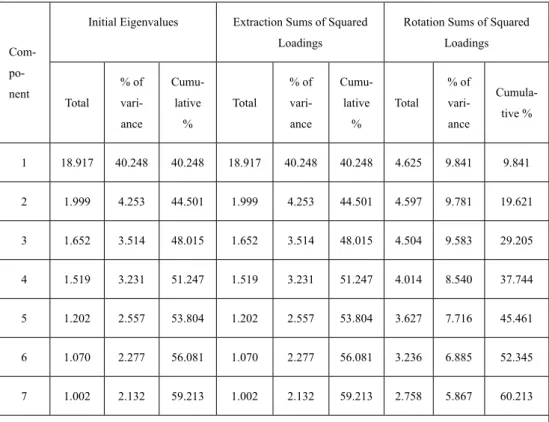
(7) Fatemeh Moafian et al.. The Construct Validity and Reliability of the CoSEFLT-Q.... 2.4. Data analysis Exploratory and confirmatory factor analyses and reliability analyses were carried out to examine the construct validity and reliability of the CoSEFLT-Q using Amos 22 and SPSS v 22. The level of significance was set P< .01. The Kaiser-Meyer Olkin (KMO) measure and Bartlett’s test of sphericity were applied to assess the sufficiency and suitability of the data. Exploratory factor analysis (EFA) was run, using a Maximum likelihood (ML) extraction method with an oblique rotation. The factors were identified according to Kaiser’s standard, namely, eigenvalues above 1 were considered (Costello & Osborne, 2005). The scree plot was also inspected to complement the result of Kaiser’s criterion and .30 was considered as the factor loading cut off point (Bailey, 2000). More specifically, the items that had factor loadings above .30 with the relevant factor in terms of content were kept. Items were eliminated if they had low factor loadings on the relevant factor in terms of content or high factor loadings on a factor with irrelevant content. Confirmatory factor analysis (CFA) was run to corroborate the attained factor structure of the CoSEFLT-Q. To carry this out, structural equation modelling with ML estimation was applied to estimate the succeeding fit indices: The ratio of chi-square to degrees of freedom (χ2/df), Tucker-Lewis Index (TLI), Comparative Fit Index (CFI), Normed Fit Index (NFI), Incremental Fit Index (IFI), Goodness-of-Fit Index (GFI), Adjusted Goodness of Fit Index (AGFI), the Root Mean Square Error of Approximation (RMSEA) and Standardized Root Mean Square Residual (SRMR). For χ2/df, a value < 3 is acceptable (Widaman & Thompson, 2003). For TLI, CFI, NFI, IFI, GFI and AGFI values, usually ≥ .90 is suggestive of a good model fit (Bentler, 1992); for RMSEA, the range of ≤.05 to .08 indicates a reasonable model fit (Bollen, 1989) and for SRMR, a value ≤.06 is suggested (Byrne, 1998). The internal consistency of the CoSEFLT-Q as well as the internal consistency of the subscales was evaluated via Cronbach’s alpha coefficients. Furthermore, the inter-correlations among the subscales were computed via Pearson correlation coefficients.. 3. Results 3.1. Construct validity 3.1.1. Exploratory factor analysis For EFA, the data were examined via SPSS v 22 software. The sufficiency and fitness of the sample were verified by the findings of KMO measure (KMO= .968) and Bartlett’s test of sphericity (χ2 (661) = 2155.679, p<.01). To check the factorial validity of the CoSEFLT-Q, EFA with ML extraction method, under multivariate normality assumption, was run. This method led to the extraction of seven factors with the eigenvalues greater than 1. To obtain ‘more interpretable factors’ (Kahn, 2006; Yong & Pearce, 2013), a Varimax rotation was employed. The eigenvalues and the percentage of the explained variance for each factor are listed in Table 2. As Table 2 demonstrates, seven factors with the eigenvalues greater than 1 were extracted. The first factor with the eigenvalue of 18.917 and the explained variance of 40.2% had the highest eigenvalue and explained variance among factors. In total, the seven factors accounted for 60.2% of the variance (see Table 2).. 59.
(8) Porta Linguarum Nº 31, enero 2019 Table 2. Eigenvalues and the Total Variance Explained of the CoSEFLT-Q Initial Eigenvalues. Extraction Sums of Squared. Rotation Sums of Squared. Loadings. Loadings. Component. Total. % of. Cumu-. vari-. lative. ance. %. Total. % of. Cumu-. vari-. lative. ance. %. % of Total. variance. Cumulative %. 1. 18.917. 40.248. 40.248. 18.917. 40.248. 40.248. 4.625. 9.841. 9.841. 2. 1.999. 4.253. 44.501. 1.999. 4.253. 44.501. 4.597. 9.781. 19.621. 3. 1.652. 3.514. 48.015. 1.652. 3.514. 48.015. 4.504. 9.583. 29.205. 4. 1.519. 3.231. 51.247. 1.519. 3.231. 51.247. 4.014. 8.540. 37.744. 5. 1.202. 2.557. 53.804. 1.202. 2.557. 53.804. 3.627. 7.716. 45.461. 6. 1.070. 2.277. 56.081. 1.070. 2.277. 56.081. 3.236. 6.885. 52.345. 7. 1.002. 2.132. 59.213. 1.002. 2.132. 59.213. 2.758. 5.867. 60.213. Extraction Method: Principal Component Analysis.. Table 3 shows the rotated factor matrix for the 47 items in the CoSEFLT-Q. As the Table indicates, all items were loaded on their respective subscales in terms of content except for two items (i.e., Items 26 and 34). If an item loads on two or more factors, it is placed in the factor with the highest factorial loading, i.e. closer to 1 or -1, and with a mathematical difference of more than 0.01 on the factorial loading when compared with other factors. Since Items 26 (‘My teacher is willing to help learners in and out of the classroom’) and 34 (‘My teacher accepts constructive criticism’) loaded on three factors with almost similar magnitudes of loadings, they were excluded. Accordingly, factor analysis of the CoSEFLT-Q resulted in seven main factors, namely, attention to all (Items 25, 38, 39, 40 and, 41), morality (Items 4, 5, 7, 8, 33, 36, 44, and 45), care and enthusiasm (Items 3, 9, 12, 13, 15, 24, and 46), teaching accountability (Items 2, 10, 11, 23, 35, 37, 42, and 43), evaluation (Items 16, 17, 18, 19, 20, and 27), teaching boosters (Items 1, 6, 14, 21, 22, 28, 29, and 30), and class attendance (Items 31, 32, and 47) (see Table 3).. 60.
(9) Fatemeh Moafian et al.. The Construct Validity and Reliability of the CoSEFLT-Q.... Table 3. Factor loadings of the CoSEFLT-Q items with ML and Varimax Rotation. Rotated Component Matrixa Component Subscales. Attention to All. Morality. Care and Enthusiasm. Items. 1. Item 39. .677. Item 38. .671. Item 40. .666. Item 41. .581. Item 25. .542. Item 26. .351. 2. 3. .356. Item 4. .752. Item 44. .700. Item 8. .584. Item 45. .579. Item 7. .568. Item 5. .557. Item 36. .457. Item 33. .441. Item 34. .433. .430. Item 9. .734. Item 3. .705. Item 24. .651. Item 15. .470. Item 12. .431. Item 13. .427. Item 46. .635. 4. 5. 6. 7. .349. .420. 61.
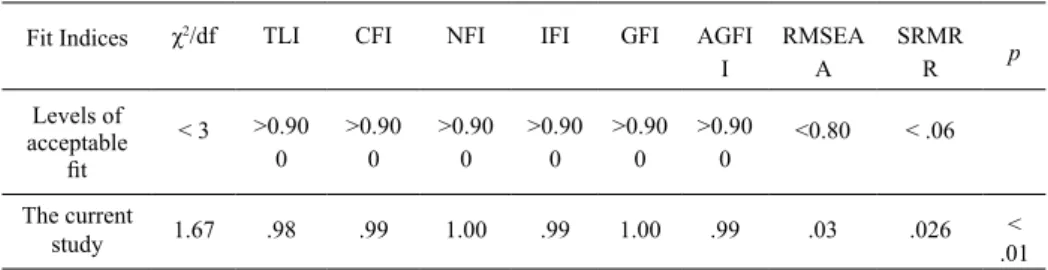
(10) Porta Linguarum Nº 31, enero 2019. Teaching Accountability. Evaluation. Teaching Boosters. Class Attendance. Item 10. .588. Item 2. .553. Item 11. .547. Item 43. .480. Item 35. .478. Item 23. .462. Item 37. .444. Item 42. .400. Item 19. .704. Item 17. .641. Item 20. .612. Item 18. .572. Item 16. .476. Item 27. .451. Item 14. .679. Item 1. .564. Item 28. .504. Item 29. .458. Item 6. .449. Item 21. .446. Item 22. .347. Item 30. .322. Item 31. .742. Item 32. .729. Item 47. .542. Extraction Method: Principal Component Analysis. Rotation Method: Varimax with Kaiser Normalization Rotation converged in 29 iterations. a. 3.1.2. Confirmatory factor analysis To further test whether the identified factor structure from the EFA of the CoSEFLT-Q proposed a good fit to the data, a CFA was carried out. Here, structural equation modelling with ML estimation via EQS 6.1 software was employed. The estimated fit indices included χ2/df, TLI, CFI, NFI, IFI, GFI, AGFI, RMSEA and SRMR and the results were as follows: χ2/df = 1.67, TLI = .98, CFI = .99, NFI = 1.00, IFI = .99, GFI = 1.00, AGFI = .99, RMSEA = .03, and SRMR=.026. The magnitudes of all indices were proper and within the satisfactory ranges. Therefore, it was concluded that the construct validity of the CoSEFLT-Q with 45 items was supported. The results of CFA are listed in Table 4 and depicted in Figure 1.. 62.
(11) Fatemeh Moafian et al.. The Construct Validity and Reliability of the CoSEFLT-Q.... Table 4. Confirmatory factor analysis for the CoSEFLT-Q Fit Indices. χ2/df. TLI. CFI. NFI. IFI. GFI. AGFI I. RMSEA A. SRMR R. Levels of acceptable fit. <3. >0.90 0. >0.90 0. >0.90 0. >0.90 0. >0.90 0. >0.90 0. <0.80. < .06. The current study. 1.67. .98. .99. 1.00. .99. 1.00. .99. .03. .026. p. < .01. Figure 1. The seven factors of the CoSEFLT-Q following confirmatory factor analysis. .51 .82 .36 44. Teachers Success. .42 .72 .33. Attention to All. .13 Morality Care and Enthusiasm. .18 .54 .26. .14. .22 .48 .60 .17 .45 .27. .24 .15 .44 16 Teaching Accountability 51 .20 .40 .50 13. Evaluation .34 .12. Teaching Boosters .24. .39. .15. .30. .31. 41. .31. .24. Class Altendance. 63.
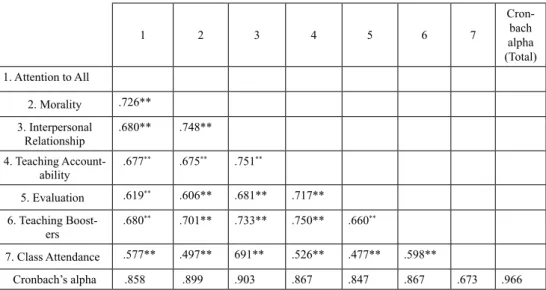
(12) Porta Linguarum Nº 31, enero 2019 3.2. Reliability analysis SPSS v 22 was used to evaluate the reliability of the CoSEFLT-Q as well as the inter-correlations among the different subscales. The whole reliability of the questionnaire, calculated via Cronbach’s alpha, was .96. The internal consistency of the factors, estimated via Cronbach’s alpha, varied from .67 to .90. Consequently, the obtained measures were within an acceptable range (Gardner & Gardner, 2012). Pearson correlation coefficients were computed to identify the inter-correlations among factors. The results demonstrated that there were positive significant associations among factors and the magnitudes of these associations ranged from .47 to .75. Table 5 lists the findings of the inter-correlations among the seven factors. Table 5. Alphas and inter-correlations of the CoSEFLT-Q subscales. 1. 2. 3. 4. 5. 6. 7. Cronbach alpha (Total). 1. Attention to All 2. Morality. .726**. 3. Interpersonal Relationship. .680**. .748**. 4. Teaching Accountability. .677**. .675**. .751**. 5. Evaluation. .619**. .606**. .681**. .717**. 6. Teaching Boosters. .680**. .701**. .733**. .750**. .660**. 7. Class Attendance. .577**. .497**. 691**. .526**. .477**. .598**. .858. .899. .903. .867. .847. .867. Cronbach’s alpha. .673. .966. 4. Discussion The present study assessed the psychometric properties of the ‘Characteristics of Successful EFL Teachers Questionnaire’ (CoSEFLT-Q) developed by Moafian and Pishghadam (2009), using rigorous statistical procedures on a relatively large and comprehensive sample of EFL learners. In the original version, the CoSEFLT-Q included 47 items and was administered to 250 EFL learners. EFA was the only statistical technique used to analyse the data. The original items of the CoSEFLT-Q loaded on 12 factors (i.e., teaching accountability, interpersonal relationships, attention to all, examination, commitment, learning boosters, cre-. 64.
(13) Fatemeh Moafian et al.. The Construct Validity and Reliability of the CoSEFLT-Q.... ating a sense of competence, teaching boosters, physical and emotional acceptance, empathy, class attendance, and dynamism). In the present study, the sample size was much bigger (N=814), and the construct validity was assessed more rigorously (via both EFA and CFA) using structural equation modelling, as well as testing the reliability of the CoSEFLT-Q. EFA results demonstrated that the items loaded on seven (rather than 12) factors except items 26 and 34 which loaded on three factors with similar loadings (and so were eliminated from the CoSEFLT-Q). Consequently, the number of items was reduced to 45 and the main factors reduced to seven (i.e., attention to all, morality, care and enthusiasm, teaching accountability, evaluation, teaching boosters, and class attendance). In order to check the overall fitness of the obtained model to the data, the 45-item CoSEFLT-Q was subjected to CFA. All the different fit indices (i.e., χ2/df, TLI, CFI, NFI, IFI, GFI, AGFI, RMSEA, and SRMR) were calculated, and the results of fit goodness indices confirmed the seven-item correlated subscale model as the best solution for describing the underlying structure of the CoSEFLT-Q. Table 6 compares the number of factors in the two versions, the items included in each factor, the labels assigned to the factors, as well as the reliability of the factors. As Table 6 demonstrates, there are three main differences between the two versions including the number of factors, the number of items in each factor, and the reliability of the factors. Compared with the first version, the second version had a reduced number of factors (12 down to 7). In the second version, each factor has five and above items except for one factor (Class attendance) which has three items. However, in the first version, there were four factors that had only two items (Physical and emotional acceptance, Empathy, Class attendance, and Dynamism). Finally, the reliability of the factors in the second version was .84 and above except for Factor 7 which was .67 due to the low number of items (Towers & Allen, 2009). Nonetheless, the reliability of the eight factors (i.e., Examination, Commitment, Creating a sense of competence, Teaching boosters, Physical and emotional acceptance, Empathy, Class attendance, and Dynamism) in the first version was .65 and below. Obtaining better results in the second version might also be related to the large size of the sample in the second study compared with the first one. As the size of the sample increases, the sample is likely be more representative of the population; consequently, more precise findings will be obtained (Terry and Kelley, 2012).. 65.
(14) Porta Linguarum Nº 31, enero 2019 Table 6. The comparison of the first and second versions regarding factors, the number of items, and reliability The first version Factor and its reliability. Items. My teacher . . . 13. Is interested in the subject matter he/she is teaching.. The second version Factor and its reliability. 1. Attention to all (α=.85). 21. Is well-prepared for the class.. 1. Accountability (α=.81). Items. My teacher . . . 25. Pays attention to all students. 38. Involves all students in learning.. 23. Emphasizes important materials and points.. 39. Creates equal opportunities for learners’ participation in the classroom.. 22. Is careful and precise in answering learners’ questions.. 40. Creates opportunities for discussion and asking questions.. 26. Is willing to help learners in and out of the classroom.. 41. Avoids discriminating against learners.. 30. Presents materials at learners’ level of comprehension. 34. Accepts constructive criticism.. My teacher . . . 7. Is good-tempered.. 2. Interpersonal relationships (α=.81). 2. Morality (α=.89). My teacher . . . 4. Respects learners as individuals.. 3. Is friendly towards learners.. 5. Understands learners well.. 9. Has a sense of humour.. 7. Is good-tempered.. 8. Is patient.. 8. Is patient.. 4. Respects learners as individuals.. 33. Respects all ideas.. 5. Understands learners well.. 36. Is impartial in grading.. 33. Respects all ideas.. 44. Avoids making fun of the learners. 45. Avoids being too strict.. 66.
(15) Fatemeh Moafian et al.. The Construct Validity and Reliability of the CoSEFLT-Q.... My teacher . . . 3. Is friendly towards learners.. My teacher . . .. 3. Attention to all (α=.77). 38. Involves all students in learning.. 9. Has a sense of humour.. 40. Creates opportunities for discussion and asking questions.. 12. Enjoys teaching.. 39. Creates equal opportunities for learners’ participation in the classroom.. 3. Care and enthusiasm (α=.90). 41. Avoids discriminating against learners.. 13. Is interested in the subject matter he/she is teaching. 15. Has the ability to stimulate learners in learning. 24. Is a dynamic and energetic person.. 25. Pays attention to all students.. 46. Creates self-confidence in learners.. My teacher . . . 2. Has up to date information. 10. Is aware of new teaching methods and strategies. 11. Uses extra instructional materials such as tapes, movies, etc. My teacher . . . 4. Examination (α=.64). 19. Holds adequate number of tests. 20. Is prompt in returning test results. 36. Is impartial in grading.. 4. Teaching account-ability (α=.86). 23. Emphasizes important materials and points. 35. Has the subject matter well-organized according to the number of sessions and hours. 37. Has creativity in teaching. 42. Attends to the learners’ problems in learning. 43. Divides class time appropriately for the different language skills according to the purposes of the course.. 67.
(16) Porta Linguarum Nº 31, enero 2019. 16. Knows his/her learners well (talents, abilities, weaknesses). My teacher . . . 5. Commitment (α=.53). 1. Has a good knowledge of subject matter. 2. Has up to date information.. 17. Uses good learners to help weaker ones. 5. Evaluation (α=.84). 18. Gives sufficient number of assignments. 19. Holds adequate number of tests.. 47. Emphasizes the presence of students in the classroom.. 20. Is prompt in returning test results. 27. Encourages learners in different ways (encouraging diversity).. My teacher . . .. 1. Has a good knowledge of subject matter.. 27. Encourages learners in different ways.. 6. Has the ability to manage the classroom well.. 43. Divides class time appropriately for the different language skills according to the purposes of the course. 6. Learning boosters (α=.77). 42. Attends to the learners’ problems in learning.. 21. Is well-prepared for the class. 6. Teaching boosters (α=.86). 22. Is careful and precise in answering learners’ questions.. 46. Creates self-confidence in learners.. 28. Speaks clearly with a correct pronunciation.. 10. Is aware of new teaching methods and strategies.. 29. Has clean and tidy appearance.. 35. Has the subject matter well-organized according to the number of sessions and hours. 68. 14. Has self-confidence.. 30. Presents materials at learners’ level of comprehension..
(17) Fatemeh Moafian et al.. The Construct Validity and Reliability of the CoSEFLT-Q.... My teacher . . .. 7. Creating a sense of comp-etence (α=.64). 16. Knows his/her learners well (talents, abilities, weaknesses). 15. Has the ability to stimulate learners in learning.. Class attendance (α=.67). 31. Enters the classroom on time. 32. Leaves the classroom on time. 47. Emphasizes the presence of students in the classroom.. 18. Gives sufficient number of assignments. 17. Uses good learners to help weaker ones. My teacher . . .. 8. Teaching boosters (α=.55). 6. Has the ability to manage the classroom well. 11. Uses extra instructional materials such as tapes, movies, etc. 12. Enjoys teaching. 14. Has self-confidence.. 9. Physical and emotional acceptance (α=.55). My teacher . . . 29. Has clean and tidy appearance. 28. Speaks clearly with a correct pronunciation. My teacher . . .. 10. Empathy (α=.62). 11. Class attendance (α=.65). 12. Dynamism (α=.57). 44. Avoids making fun of the learners. 45. Avoids being too strict. My teacher . . . 31. Enters the classroom on time. 32. Leaves the classroom on time. My teacher . . . 24. Is a dynamic and energetic person. 37. Has creativity in teaching.. 69.
(18) Porta Linguarum Nº 31, enero 2019 In essence, the outcomes of the study showed that the present CoSEFLT-Q assessing the characteristics of successful EFL teachers is a valid and reliable instrument that can serve several functions for different facets of education, encompassing teacher education programs and research. It is a qualified evaluative tool which can assess specific characteristics of EFL teachers; characteristics that are closely associated with their success in their occupation. Once there are clear cut attributes and behaviours of a pedagogically successful EFL teacher and when specific features are attributed to ‘good’ EFL teachers, then there will be specific and criterion-led aims to be achieved by EFL teachers and specific milestones will be required in EFL teacher education programs. Despite the rigour of the analysis carried out on the CoSEFLT-Q, the present study is not without its limitations. The data were self-report and collected from self-selected convenience samples from six provinces in Iran. The data may not necessarily be generalizable to EFL teaching outside of Iran. Given that the data were self-report, they are subject to well-known biases (e.g., desirability bias, recall bias, etc.). The CoSEFLT-Q appears to be useful for both in-service and pre-service language teachers but further research is needed to test the psychometric properties of the CoSEFLT-Q in other countries and cultures. Despite potential limitations of the CoSEFLT-Q, there appears to be a clear map to follow by EFL teachers and they will be guided towards meeting the requirements of being a good EFL teacher. Accordingly, the CoSEFLT-Q potentially provides a clear framework for pre-service teachers and a preferred pattern for in-service ones. As students’ opinions were employed in the development of the CoSEFLT-Q, teachers will become aware of the features that students appreciate in them. As a result of such awareness, they will have a better understanding of their students and will attempt to meet their needs. In-service teachers may also benefit from the results of the CoSEFLT-Q, that is, it can be of great help for both administrators and language teachers to receive feedback from the students on the teachers’ performance. Undoubtedly, feedback plays a crucial role in determining the success of any processes. The teaching process is not excluded from this rule. Therefore, appropriate and constructive feedback is one of the necessities in successful teaching. Other researchers can also apply the CoSEFLT-Q in conducting different research projects and to identify associations of EFL teacher effectiveness with other variables.. 5. References Al Seghayer, K. (2006). Characteristics of good English instructors. ESL Teacher Board. Available from: http://www.eslteachersboard.com/cgi-bin/articles/index.pl?page=7;read=1830, accessed 13 May, 2015. Bailey, A., Johnson, G. & Daniels, K. (2000). Validation of a multi-dimensional measure of strategy development processes. British Journal of Management, 11(2), 151-162. Bentler, P. (1992). On the fit of models to covariances and methodology to the Bulletin. Psychological Bulletin, 112, 400-404. Bollen, K. A. (1989). Structural equations with latent variables. New York: John Wiley & Sons. Borg, S. (2006). The distinctive characteristics of foreign language teachers. Language Teaching Research, 10(1), 3-31. Brosh, H. (1996). Perceived characteristics of the effective language teacher. Foreign Language Annals, 29, 125-136.. 70.
(19) Fatemeh Moafian et al.. The Construct Validity and Reliability of the CoSEFLT-Q.... Byrne, B. M. (1998). Structural equation modeling with LISREL, PRELIS, and SIMPLIS: Basic concepts, applications, and programming. Mahwah, NJ: Erlbaum. Campbell, L. (2000). The unspoken dialogue: Beliefs about intelligence, students and instruction held by a sample of teachers familiar with the theory of multiple intelligences. Unpublished doctoral dissertation, Santa Barbara, CA: The Fielding Institute. Centra, J. A. (1993). Reflective faculty evaluation: Enhancing teaching and determining faculty effectiveness. San Francisco: Jossey-Bass. Costello, A. B. & Osborne, J. W. (2005). Best practices in exploratory factor analysis: Four recommendations for getting the most from your analysis, in Practical Assessment, Research & Evaluation, 10(7), 1-7. Gardner, J. N. & Gardner, J. (2012). Assessment and learning. California: Sage Publication. Gholami, K. & Asady, M. (2014). The professors’ professional experience in relation to effective teaching phenomenon in higher education. Journal of Theory and Practice in Curriculum, 1(2), 5-26. Good, T. L. (1979). Teacher effectiveness in the elementary school. Journal of Teacher Education, 30(2), 52-64. Kahn, J. H. (2006). Factor analysis in counseling psychology research, training, and practice principles, advances, and applications. Counseling Psychologist, 34, 684-718. Khojastehmehr, R., & Takrimi, A. (2009). Characteristics of effective teachers: Perceptions of the English teachers. Journal of Education & Psychology, 3(2), 53-66. Kyriakides, L., Christoforou, C. & Charalambous, C.Y. (2013). What matters for student learning outcomes: A meta-analysis of studies exploring factors of effective teaching. Teaching and Teacher Education, 36, 143-152. Moafian, F., & Pishghadam, R. (2009). Construct validation of a questionnaire on characteristics of successful Iranian EFL teachers. Pazhuhesh-e-Zabanha-ye Khareji, 54, 127-142. Park, G. P. & Lee, H. W. (2006). The characteristics of effective English teachers as perceived by high school teachers and students in Korea. Asia Pacific Education Review, 7, 236-248. Rama, S. (2011). Professor’s performance for effective teaching (Kosovo case). Procedia-Social and Behavioral Sciences, 12, 117-121. Sanders, W. (1999). Teachers, teachers, teachers! Blueprint Magazine, 4. Sanders, W., Wright, S. P. & Horn, S. P. (1997). Teacher and classroom context effects on student achievement: Implications for teacher evaluation. Journal of Personnel Evaluation in Education, 11, 57-67. Shishavan, H. B. & Sadeghi, K. (2009). Characteristics of an effective English language teacher as perceived by Iranian teachers and learners of English. English Language Teaching, 2,130-143. Suwandee, A. (1995). Students’ perceptions of university instructors’ effective teaching characteristic. SLLT Journal, 5, 6-22. Terry, L., & Kelley, K. (2012). Sample size planning for composite reliability coefficients: Accuracy in parameter estimation via narrow confidence intervals. British Journal of Mathematical and Statistical Psychology, 65(3), 371-401. Towers, D. N., & Allen, J. J. B. (2009). A better estimate of the internal consistency reliability of frontal EEG asymmetry scores. Psychophysiology, 46, 132–142. Wenglinsky, H. (2000). How teaching matters: Bringing the classroom back into discussions of teacher quality. Princeton, NJ: The Milken Family Foundation and Educational Testing Service. Whitehurst, G. J. (2002). Teacher recruitment, preparation, and development. Washington, DC:. 71.
(20) Porta Linguarum Nº 31, enero 2019 U.S. Department of Education. Widaman, K. F. and Thompson, J. S. (2003). On specifying the null model for incremental fit indices in structural equation modeling. Psychological Methods, 8, 16-37. Williams, M. and Burden, R. (2000). Psychology for language teachers: A social constructivist approach. Cambridge: Cambridge University Press. Wintergerst, A. C., DeCapua, A. & Itzen, R. C. (2001). The construct validity of one learning styles instrument. System, 29, 385-403. Yong, A. G. & Pearce, S. (2013). A beginner’s guide to factor analysis: Focusing on exploratory factor analysis. Tutorials in Quantitative Methods for Psychology, 9, 79-94.. 6. Appendix Characteristics of Successful EFL Teachers Questionnaire My teacher …… Strongly disagree. Disagree. Somewhat agree. 1. Has a good knowledge of subject matter. 2. Has up to date information. 3. Is friendly towards learners. 4. Respects learners as individuals. 5. Understands learners well. 6. Has the ability to manage the classroom well. 7. Is good-tempered. 8. Is patient. 9. Has a sense of humour. 10. Is aware of new teaching methods and strategies. 11. Uses extra instructional materials such as tapes, movies, etc. 12. Enjoys teaching. 13. Is interested in the subject matter he/she is teaching. 14. Has self-confidence. 15. Has the ability to stimulate learners in learning. 16. Knows his/her learners well (talents, abilities, weaknesses). 17. Uses good learners to help weaker ones.. 72. Agree. Strongly agree.
(21) Fatemeh Moafian et al.. The Construct Validity and Reliability of the CoSEFLT-Q.... 18. Gives sufficient number of assignments. 19. Holds adequate number of tests. 20. Is prompt in returning test results. 21. Is well-prepared for the class. 22. Is careful and precise in answering learners’ questions. 23. Emphasizes important materials and points. 24. Is a dynamic and energetic person. 25. Pays attention to all students. 26. Is willing to help learners in and out of the classroom. 27. Encourages learners in different ways (encouraging diversity). 28. Speaks clearly with a correct pronunciation. 29. Has clean and tidy appearance. 30. Presents materials at learners’ level of comprehension. 31. Enters the classroom on time. 32. Leaves the classroom on time. 33. Respects all ideas. 34. Accepts constructive criticism. 35. Has the subject matter well-organized according to the number of sessions and hours. 36. Is impartial in grading. 37. Has creativity in teaching. 38. Involves all students in learning. 39. Creates equal opportunities for learners’ participation in the classroom. 40. Creates opportunities for discussion and asking questions. 41. Avoids discriminating against learners. 42. Attends to the learners problems in learning. 43. Divides class time appropriately for the different language skills according to the purposes of the course. 44. Avoids making fun of the learners. 45. Avoids being too strict. 46. Creates self-confidence in learners. 47. Emphasizes the presence of students in the classroom.. 73.
(22)
Figure

+3

Documento similar