
Didactic Digital Material for the Teaching of English to Second Grade Children
343
0
0
Texto completo
(2) DIGITAL MATERIAL FOR THE TEACHING OF ENGLISH TO CHILDREN 2. Abstract Key words 1. Problem Statement 2. Objectives 2.1. General Objective 2.2. Specific Objectives 3. Literature Review 3.1 Material design 3.2 Textbook 3.3 Characteristics of a textbook 3.4 Digital book 3.5 Stories 3.6 Communicative approach 3.7 Integrated skills 4. Method 4.1. Context 4.2. Participants 4.3. Thematic unit 4.4. Teaching English to children 4.5. Research design 4.5.1 Preliminary stage 4.5.2 Classroom diagnosis 5. Pedagogical Intervention.
(3) DIGITAL MATERIAL FOR THE TEACHING OF ENGLISH TO CHILDREN 3. 6. Limitations 7. Conclusions 8. Recommendations 9. Reference list 10. Annexes. Abstract.
(4) DIGITAL MATERIAL FOR THE TEACHING OF ENGLISH TO CHILDREN 4. The main objective of this work is to develop a digital teaching resource for teaching English to second grade children of the Liceo Patria School, Bucaramanga; in order to achieve this objective the researchers took into account the preferences and needs of students. The proposed resource; a digital fable's book was designed for this research with the aim of improving the speaking and listening skills in students. Aiming for the effectiveness of the teaching material, this research also integrates the use of CLIL methodology. This methodology seeks to integrate both the learning of contents and the learning of languages. Using the CLIL approach, students learn one or more subjects, learn about a topic, and at the same time learn a second language. Using this approach in class students can achieve the development of the skills for their learning (learning skills). In addition, the design of the material is presented, in which it seeks to develop in the student speaking and listening skills, for this reason all the activities revolve around the implementation of these skills in an individual and group way, seeking equally encourage cooperative work among students. Due to time constraints, this research project was designed and developed to a certain extent. The research proposes a pedagogical intervention along with the designed material, but was not implemented at the school. Keywords: skills, teaching-learning, education, didactic materials, thematic unit, digital book, English language.. 1. Problem statement.
(5) DIGITAL MATERIAL FOR THE TEACHING OF ENGLISH TO CHILDREN 5. In a world as modern as ours, it becomes necessary to learn a foreign language, in this case English. There are several reasons why a student should learn English, one of them being that learning this language opens doors to get better job opportunities, besides, good command of English might result in higher employability levels for graduates. Additionally, studying English allows learners to know about new cultures, different lifestyles and ways of thinking. Since English is a universal language, this means that as it is a spoken language it helps people to communicate without roadblocks, and provides the opportunity to visit and live in an Anglophone country for studying or working. Alike, it makes people improve being personally and socially more competent. On the other hand, Article 21 of the General Education Law (Law 115 of 1994) states that education systems must offer their students the learning of a foreign language from the basic level, even when schools offer education of English as a foreign language; the results are not the expected for level A2 stipulated in the Common European Framework of Reference for Languages. According to Revista Portafolio (2018) with the world classification on the level of competence of this second language realized by EF Education First of 2018, the country went from occupying the position 51 in 2017 to 60 in 2018. The low yields in the English area are presented in primary school students as well as in high school students; the most affected are clearly the children who are in primary school, so it is urgent to implement strategies that help strengthen this area in all or at least the vast majority of institutions in Colombia. However, Colombia has other vision and perception about learning and teaching language education and it is implementing new programmes like “Colombia Bilingüe”.
(6) DIGITAL MATERIAL FOR THE TEACHING OF ENGLISH TO CHILDREN 6. related with SLA. The focus of these programs is for students to learn through interaction and a communicative approach to reach a good English level. The correct development of bilingual programs and projects depend on political factors and on the other hand on academic variables and problems since they do not focus on the quality of the product and the impact it causes but on the result, so sometimes when executing them in the end no successful results are obtained. Colombia aims for establishing new educational policies on the subject and through previous studies and evaluations, it was evident that Colombian students are below the average of the countries of the region. The Education Law of 1994, Law 115, article 21 determines the acquisition of elements of conversation and reading in foreign language. Later, in 1996, the government promoted the program of English as a foreign language, popularly known as bilingual education. Through time, it has been expanding throughout all the schools in the country. During the years 2004 and 2010, the main objective of English Colombian education was for the population to acquire the ability to communicate in English, in accordance with international standards, to facilitate access to employment and educational opportunities (Ministerio de Educación, 2008). The Colombia Bilingüe 2004 Project is established, validating only English as a second language among Colombian students and seeking to promote quality in the English teaching programs. The goals that they wish to reach are that the Eleventh Grade students reach an intermediate level of proficiency in English, Level B1, according to the Common European Framework of Reference for Languages (CEFRL). This allows them to communicate in the language, to get appropriate knowledge and to use it effectively in real communicative situations. In terms of communicative competence, students must develop linguistic, pragmatic and.
(7) DIGITAL MATERIAL FOR THE TEACHING OF ENGLISH TO CHILDREN 7. sociolinguistic skills. The program also established that students should have a specific English level, A-2 from 4° to 7° and B-1 from 8° to 11°. In EFL classroom, students work with program textbooks and material from Cambridge - British Council-Colombia and others that promote educational and cultural relations in the country, running programmes in the arts education, governance and English language. Something to consider is that, the teaching and learning process of a second language not only depends on the methodologies applied by the teacher in the classroom, it is also necessary to promote appropriate learning environments and resources in such a way that they motivate the student to use it. A language can only be learned depending on the use of it, and this will always be related to the concept of language that is presented in the texts (Martín Peris, 2000). According to this, it is understood that developing an adequate teaching environment is highly important along with using proper materials and activities to promote language use in the classroom. These elements are essential for the teaching and learning process of the foreign language. In line with this, the lack of materials in the classroom or the use of materials that are not suitable for primary education is one of the reasons that hinder the teaching of English in public schools. According to Morales, L. Molano, L. & Rivera, E. (2012), the lack of resources offered by the MEN, as well as the little investment in training for teachers, texts out of context on the student culture, make the students see the foreign language only as a collection of content and not as a means of communication. Along with these, the lack of interest shown by the students, materials that are little or no updated and lack of personalized education are the main difficulties presented in the learning of the English language. A factor that hinders the teaching of English in public schools is that.
(8) DIGITAL MATERIAL FOR THE TEACHING OF ENGLISH TO CHILDREN 8. most of these teaching materials do not have the relevant guidelines that meet the academic, cultural and evaluative needs of students. Also, other factors such as the fact that the materials used by teachers in their classrooms are very traditional in terms of content, outdated books that do not respond to the needs of students in terms of learning a foreign language. Additionally, even when in Colombia there are some programmes from editorials that have interactive, didactic and dynamic materials and methodologies and they work following an active learning approach that is implicit in textbooks methodology, most of the teachers do not act or transmit a positive attitude towards them. If teachers do not promote that kind of behaviors or environments, the students’ reactions in front of the class will be passive and the classes will become boring or not interesting for them (Colombia, Ministerio de Educación, 2008). Based on the above, it is clear the importance of materials that affect students interacting with the environment and with themselves. A teacher has the possibility to investigate and propose diversity of support material like digital books or e-books and others digital resources to encourage motivation to his/her students, however, not all materials are conducive. It is necessary for the teacher to be innovative and create optimal teaching material and different from the traditional ones, so that working hand in hand with the (ICTs) is an excellent option. We are at a time when technology is advancing by leaps and bounds and is determined in a great way and has had an impact on learning in the present century (Benson & Chik, 2010) and that is why teachers have to adapt their curricula in the context of the digital age (Schmar & Dobler, 2003) so that in this way an education that responds to the needs of contemporary students is promoted..
(9) DIGITAL MATERIAL FOR THE TEACHING OF ENGLISH TO CHILDREN 9. According to Malla, N. (2015): The role of teaching materials within the educational system will reflect the decisions that have to do with the main objective of the material (e.g. presenting the content, facilitating communication among the students, helping them to be independent in their learning, etc.), the shape of the materials (e.g. if they are textbooks, audiovisuals, by computer, etc.), the relation of the materials with other types of resources and the skills of the teacher (eg. your level of competence in the second language, their degree of preparation, etc.). From this, we can state that the use of inappropriate materials not only delays the learning of the language but also it does not contribute in a meaningful way to the students' language development since their real context is not evidence in those materials. According to Malla, N. (2015): The needs of the students and what motivates them most when it comes to learning can be very useful information for the teacher when he or she is creating or selecting new material to use in class. It is important to keep in mind that students need to be and feel included in the curriculum planning process. The way in which they receive our activities and their comments on them serve as a guide to get an idea of the needs and interests of the students. The problem is not possibly in who teaches, but in the material used for the teaching of an English class, since it is not adapted to the needs of the students. The teacher should ask the students ' opinion about whether the material used is being useful in this way the teacher is making the students participate in the teaching-learning process..
(10) DIGITAL MATERIAL FOR THE TEACHING OF ENGLISH TO CHILDREN 10. In response to this problem, (lack of appropriate materials for teaching English as a foreign language), our study aims to contribute the lack of materials or materials not suitable used in classrooms. The results of this proposal would benefit second grade students of the Liceo Patria School in Bucaramanga, who will be instructed by the teachers in training (the researchers). In particular, we want to focus in this research question:. How to improve the teaching of the second language (English) to second grade students of the Liceo Patria school Bucaramanga through a digital book to reinforce the development of listening and speaking skills? 2. Objectives 2.1.General Objective To design a creative digital book tailored for the second grade children of Liceo Patria School to help them develop speaking and listening skills. 2.2.Specifics Objectives ● To identify interests, needs and the proficiency level of English of second grade students at Liceo Patria School. ● To design a thematic unit based on the second grade curriculum. ● To create the digital stories based on students’ interests and the second grade curriculum.. ● To select activities based on the stories that favor the development of the four skills.. 3. Literature Review.
(11) DIGITAL MATERIAL FOR THE TEACHING OF ENGLISH TO CHILDREN 11. Didactic materials are indispensable in the classroom for teaching-learning purposes however, choosing the right materials is not an easy task for the teacher because the teacher should look for materials that attract attention, that meet the needs of the students and at the same time motivate them to learn a second language (English). Over the last few years, there has been a lot of research on the subject seeking to solve these gaps in terms of educational materials for teaching English. Some of these researches have yielded positive results and other unfavorable results about whether. Certainly, the use of these materials helps in the process of English language learning. After checking the studies, different positions were found on the subject. Below, studies on the use of literary texts, technological tools, and selection of materials for the teaching of English are presented. Firstly, Pacheco, V. (2014), proposed for primary school a bilingual program since they noticed that teachers do not use literary texts for the teaching of English due to the syntactic difficulty of these texts preventing the development of a second language, in this case English. This is why the researchers opted for literary texts because they are authentic; they are an inexhaustible source that are available to students, as well as motivating and being a fundamental element in any learning process. The participants were second-grade students in a bilingual program in Spanish / English. In conclusion, the literary texts like the tales, are an excellent didactic resource to develop the communicative competencies in the classroom of a thematic content that is given in English, for instance, a science topic for second grade of primary.. In the same line, another study Lacarte, A. (2016), points to put authentic materials into practice to teach English to non-native students in the classroom since problems arise with.
(12) DIGITAL MATERIAL FOR THE TEACHING OF ENGLISH TO CHILDREN 12. this topic because of the lack of material in the field of academic studies on the potential of English literature for teaching English to non-native students. What is intended in this research is to seek and implement literature as authentic material in the classroom, because the original texts are proposed to native speakers making students benefit from the different linguistic forms present in the text, as well as a meaningful and communicative function, in the same way it is intended to benefit non-native students. The research conducted by Lacarte, A. (2016), was based on the methodology of practical work based on CLIL, communicative approach and cooperative work. This research managed to confirm the importance of literature in education because through it the imagination is developed, they learn about history and politics, social aspects, apart from the literary culture itself. It also concluded that literature awakens some interest in students by the experiences of the characters who invite them to focus on their own personal experiences, emotions, and opinions. Additionally, when talking about the use of literary texts as teaching materials, in this thesis presents didactic experiences of teaching English to children of bilingual institutions through literary texts. Ponz, M. & Vernet, M. (2011), point out that there must be a need to implement in the curriculum a variety of discursive texts that allow the student to have a great access in the literary culture and it is through these texts that the teacher can develop consciousness in the student about the kind of interaction that is set in a speech, the role of the participants, the theme and their function. From this research, it could be concluded that the literary texts are of much help for the learning of the students of the English language in real and authentic contexts through the connection of the language with other subjects..
(13) DIGITAL MATERIAL FOR THE TEACHING OF ENGLISH TO CHILDREN 13. On the other hand, authors such as Solís porpoises another type of didactic material through the use of ICTs. They reflected on the use of English to make ICTs considering the official primary curriculum in the region of Murcia, Spain. According to the study the incorporation of ICTs in the curriculum helps the student make use of a resource mediating teaching-learning English and at the same time serves as a motivation to practice and use language in real situations, it also helps to improve language skills in an interactive and collaborative way. Meanwhile, Fandino presented in his study the impact of a process of ICTs training for a group of teachers in the city of Bogota. Understanding the importance of the use of new technologies applied to education the authors decided to evaluate the teaching practices in the area of English, providing training to groups of teachers of public institutions in the city of Bogotá, in the use of technological tools for their classes. The results obtained in this research showed that it is possible to change the beliefs and attitudes of teachers toward the use of ICT and in this way improve the levels of teaching and learning and develop creative activities with higher difficulty. Clearly, there are many ways to teach English through ICTs, in their research, Garcia, M. Miranda, M. & Iñesta, E. (2018), wish to encourage oral communication in English (as a foreign language) using mobile devices in primary education through the use of photography and video because it is said that most teachers prefer not to teach oral skills, since they consider their approach, organization and evaluation difficult so the search for new educational approaches to improve the teaching of oral language is the key and this is done by incorporating M-Learning into the primary English classroom. It is indicated that the new educational practices have already redesigned the educational landscape. These.
(14) DIGITAL MATERIAL FOR THE TEACHING OF ENGLISH TO CHILDREN 14. sources consulted previously are useful for us as researchers of this topic because it will help us to reflect on why it is important to the use of ICTs as a resource for teaching in the classroom. Beside the use of ICTs in the classroom, there are other elements to take into account when talking about didactic materials, for example, Fonseca, M. & Pulido, S. presents guidelines for the selection of those materials. According to the article the amount of materials and resources available, they have opted to classify them in printed materials, real objects, the role of ICTs at early ages and audiovisual material.. This is a useful source for us as researchers of this topic because it. will help us to know about other didactic means that we can take into account when creating a digital book. In contrast to previous studies about ICTs as an influence on teaching, we found a study focused on modeling the use of electronic books to engage young readers of English as a foreign language in the teaching methodology of teachers. This emphasizes interactive reading and the incorporation of digital media that aims to attract students of English as a foreign language of the United Arab Emirates (UAE). For the creation of electronic books, teachers present strategies that promote interaction such as the animation of sound effects, hyperlinked vocabulary and other functionalities. The use of electronic books is considered to optimize the development of literacy Jong & Bus (2003); Lefever-Davis & Pearman, (2005) in English to students and teachers. According to Amor (2005), the traditional texts that are printed are no longer adequate since it is considered that the educational books are more interactive if they are influenced by ICT (Lefever-Davis & Pearman, 2005), through digital books that provide multimedia and visual and sound representations that, unlike.
(15) DIGITAL MATERIAL FOR THE TEACHING OF ENGLISH TO CHILDREN 15. traditional printed books, are referred to as story books on “cd rooms” that are endowed with text, audio, background music, sound effects, activities and games. Finally, a digital book is visually appealing and it is possible to engage the student much faster which gives him the ability to motivate and encourage students to read. In relation to the previous article, we consider another study that explores the effects of an e-book reading in aspects such as: vocabulary growth, the effects of learning English and the interest and motivation of reading and learning English. In addition, the study demonstrates that a teacher who promotes reading and teaching with an electronic book can be beneficial for ESL / EFL students. Another study like the previous statement that electronic books or electronic books provided to students and teachers a means or instructional tool that provides support to the student learning process. This study shows different information about the different types of electronic books, advantages, limitations, characteristics, skills and interests that help us to base the research and the impact of electronic books nowadays. Chang, C. (2017), presents in his study an analysis on how the use of teaching materials in English helps teachers and students learn in a meaningful way. This research concludes that when the teacher has a series of materials selected by professionals with updated content and well sequenced, in this ensures that the teacher will be able to develop the four skills and provide enough input for students. Both the previous and the one from Malla, N. (2015), analyses on the didactic selection of curricular materials and the role they play in teaching-learning processes are presented. The didactic materials that are in the educational system they are not related to the main objective of the material and these are: to present the content, to facilitate the.
(16) DIGITAL MATERIAL FOR THE TEACHING OF ENGLISH TO CHILDREN 16. communication between the students, to help them to be independent in their learning; on the other hand, the form of the materials: textbooks, audiovisuals, etc. In addition, the relation of the materials with another type of resources and the teacher's skills and their level of proficiency in the second language, taking into account all of the above, is why the researcher opted for analysis and selection of educational curricular materials useful in teaching processes learning. From this research it was concluded that the best curricular materials should inspire and attract both the student and the teacher. This material should help its students move from the dependency of the material used a more independent learning.. Finally, Núñez, A. & Téllez, M. (2009) (p, 132), propose a study in which teachers are intended to design their own materials taking into account the different guidelines, researchers want to provide teachers with an overview of the development of the materials, taking into account the experience acquired by two teachers in the English program of the School of Education of the Universidad Externado de Colombia in Bogotá. The teachers developed their own materials, applying their valuable knowledge applying their valuable knowledge and experience with respect to the needs of the students. From this research it was concluded that the material developed by the teachers promote not only the environments and the effective learning results, but also the pedagogical practice performance of the teachers. It was also concluded that effective materials make the students feel comfortable and safe because they perceive that both the content and the type of activities are meaningful and practical for their lives..
(17) DIGITAL MATERIAL FOR THE TEACHING OF ENGLISH TO CHILDREN 17. These are useful sources for us as researchers because they provide us with a guide of steps to follow to select didactic materials from valid sources and thus to achieve the task of fulfilling the needs of the students from the use of proper materials. There is a clear need for the creation of didactic materials that help enhance English teaching and learning. Although some teachers think that the use of ICTs and literary texts work very little for the teaching of English because of its complexity, we found materials such as those mentioned above, which were implemented and worked as expected. To finish we can say that the didactic materials, such as stories, literary texts and the correct use of ICTs, end up being a great help to motivate and satisfy students to teach English. That is why teachers must also be motivated to exploit their skills, their creativity to create and design teaching materials for teaching English. After reviewing different studies on materials for teaching English for children, the concepts relevant to research are presented below.. 3.1 Material design Didactic materials facilitate teaching and learning, they are used inside the classroom or outside of it. The design of materials fulfills several functions, such as: ●. Help shorten the issue and strengthen the key points.. ●. Encourage students to be attracted to the teaching material.. ●. Explain some points that are difficult for the student to learn by means of clear images, thus allowing the student to find it easier to learn.. ●. They make the explanation of what the theme is, more dynamic and attractive, achieving a good participation of the students, etc. I. (Talamantes, Functions of teaching materials, 2015)..
(18) DIGITAL MATERIAL FOR THE TEACHING OF ENGLISH TO CHILDREN 18. We can also find various teaching materials; these are: ●. Permanent work materials To these work materials we give a great use every day and they are the blackboard, the notebooks, the pencils, etc. One of the advantages of these materials is that they adapt to the pace of work and facilitate the participation of students.. ●. Printed and informative materials The book is the material used the most in the education system. The types of books can be used pedagogically. One of its advantages is that it is still the most powerful mean of communicating complex messages. ●. Graphic materials They are based on a projector that is translated to a screen, images. One advantage is the material is suitable for displaying diagrams and graphics of little detail.. ●. Audiovisual material They favor learning and support the teacher. One of its advantages is that they contain images and sounds that help the student to better understand and achieve meaningful learning.. ●. Auditory material Unlike the previous one, it only handles sounds that continues to be an excellent medium for student learning as they improve their listening and pronunciation skills.. ●. New technologies They promote new didactic creations. (A. Danae, Classification of teaching materials, 2013)..
(19) DIGITAL MATERIAL FOR THE TEACHING OF ENGLISH TO CHILDREN 19. The importance of these didactic materials is extremely high. Every teacher when giving a class must select a material that is of great help for teaching, but it is essential that the teacher chooses the appropriate resources or didactic materials to achieve a meaningful teaching and learning process. 3.2 Textbook In the encyclopedia of education (2008), “A textbook is defined as a printed and lined device that fulfills the function of showing ideas, examples and others, in order to transmit a learning. Textbooks are designed to continue a curriculum for a school system” (p,91) The textbook as resource of teaching, has been around for many years, it is almost as old as education. The textbook is an educational resource used most frequently by institutions, specifically in Colombia. However, sometimes these resources are designed in a very complex way, so students might present academic difficulties when using them. In addition, textbooks are a tool used by parents to check on students work. The textbook is the main instrument used to transmit a teaching or reinforce some ideas; this is its main objective. As we mentioned earlier, textbooks are old, “the first ones were made in different materials such as clay, parchments and even mass produced”, (Encyclopedia of Education, 2008). Ellsworth, Hedley & Baratta, (1994), mentioned, “The first textbooks in the sixteenth century were written in Latin because it was the common language at that time. Surely those textbooks were designed for the purpose of teaching reading and basic things” (P, 46). Also, Wakefield, (1998), stated that: “Some textbooks were used in ancient Greece, Rome, China, India, Egypt and other ancient societies. Aristotle established textbooks with.
(20) DIGITAL MATERIAL FOR THE TEACHING OF ENGLISH TO CHILDREN 20. various themes especially for educational development. In the fifteenth century books were only allowed to a minority of people, specifically the rich. In several centuries, textbooks in elementary schools were allowed regardless of age or grade level as these were specifically to help memorize those students. For almost a thousand years, the educational goal of textbooks and the institution was to retain (memorize) definitions of rules or other fact.” (p. 67) Although there are many learning materials, textbooks are and will continue to be the most used material by teachers to teach their students, making them their main teaching resource. "Dramatic changes in technology have changed the relationship between information, students and the access to them. A static resource can no longer maintain student’s attention, when they can access up-to-date information on any subject through an Internet connection" (Bierman, 2006, p. 52) that is, students not only have the resource of the textbook for an apprenticeship but also access to the internet, making this tool a mean to get more attention from the students and forgetting the textbook, a resource that has been the most used and that loses a little value from the students´ perspective.. 3.3 Characteristics of a textbook There are several didactic materials that are found in the market, and after having researched and reviewed those, textbooks were chosen as they are a didactic tool that is a great help for the teaching of English to children. In the previous section, the concept of a textbook was presented, below there are some characteristics that should be present in any textbook for them to be effective:.
(21) DIGITAL MATERIAL FOR THE TEACHING OF ENGLISH TO CHILDREN 21 ●. A textbook should provide more than theory that is; provide images, examples in such a way that they are put into practice. We cannot fall into the mistake of making of learning something that is always theory based. The main thing about developing a material is that all the learning is carried out and developed in a meaningful way.. ●. Make materials that are striking for students to avoid boredom and that students leave those materials aside. We must modernize the content of the textbook, which is the opposite of the books that have been around for a long time.. Likewise, some aspects that should be taken into account when designing a textbook are mentioned: Dedicate at least one unit or chapter to the topic, that is, dedicate more time to those topics that need more reinforcements, the ones students find difficult to learn. Provide images, examples and theories to achieve the student's reinforcement.. Frequently, one finds materials that are in commerce that are so outdated, they are almost unusable. A textbook should be designed so that it focuses on those important issues that a child can learn in elementary school. The content of a text should provide the necessary information.. 3.4 Digital book. In 1971 the Gutenberg project that was undertaken by Michael Hart, who made good use of the computer and carried out activities such as storing, retrieving and searching for information. It was from there that Hart gave him the name of e-book or electronic version of printed books. From there, the Gutenberg project creates thousands of free texts and copies of books that can be downloaded or read online. The Oxford Advanced Learner's.
(22) DIGITAL MATERIAL FOR THE TEACHING OF ENGLISH TO CHILDREN 22. dictionary (2011) defines an e-book “a book that is displayed on a computer screen or on an electronic device that is held in the hand, instead of being printed on paper. It is in multiple electronic formats” (p. 71). Additionally, Vassiliou (2008), divides the meaning of e-book into two parts, the first being electronic books that focus on digital objectives of textual and / or other content. As such it is the integration of the characteristics of a book that are promoted in an electronic environment. On the other hand, it refers to features in use, such as search and research features such as monographic references, hypertext links, bookmarks, dictionary and multimedia objects.. In education, there is a lot of information and studies related to the use of electronic books in the classroom as a means of teaching. Tan, (2009); Carty, (2000) electronic books, have different characteristics , adaptations and criteria that contribute a lot to the learning process and motivation Sasson (n.d.), electronic books offer multiple presentations and activities that can contain the amount of auditory or visual material including videos, images, dialogues, music, speeches, animations , etc. To teaching and learning problems Casey (1994), a good electronic book is efficient when it is able to record and organize information and also when students are able to interact with technology in EFL.. Reading an electronic book allows its readers to roam, interpret, organize and mark. In addition, it allows the interaction between electronic devices, the content of the book and allows the content and knowledge to be changed and expanded Gibbons, et al., (2003). The e-book varies a computer file and which contains the text of a physical book in which you can not only change the size of the letters and the page but also allows readers to interact.
(23) DIGITAL MATERIAL FOR THE TEACHING OF ENGLISH TO CHILDREN 23. with functions or options stories such as: highlight sentences, search for words and interact with multimedia applications of sound and music.. 3.5 Stories. The stories are very important for the development of children's learning and have a very meaningful function when it is implemented in the teaching of English because it allows children to imagine what they read and thus learn the language. According to Vygotsky, (1979, p14) knowledge is made up of knowledge derived from our linguistic competence. In other words, as in English, knowledge is structured through previous knowledge and the student's imagination ability to relate words.. Through stories, we can get children to learn English, to communicate in English. Additionally, these allow the student be interested and motivated. The stories can not only help to increase the lexicon of the student and understand situations in English, but also, to provide the communicative situations. In addition, Luque (2001, p.3) states that storytelling combines integrated lexical, grammatical and cultural elements and the reading process is a receptive and productive process that applies to the understanding and learning of a language, as well. This perfectly consolidates the teaching and learning process of a foreign language. According to “Cambridge assessment English”. the stories help children to:. ● Learn vocabulary (when the keywords are repeated in the text and in the images); ● Learn how to match words to construct sentences and texts;.
(24) DIGITAL MATERIAL FOR THE TEACHING OF ENGLISH TO CHILDREN 24. ● Learn the sounds, rhythm and intonation (especially when there are many sounds that rhyme); ● Use your imagination and reasoning ability to deduce meaning and predict what will happen next; ● Develop your understanding of the world, of life experiences, of relationships and feelings. Porras (2010) states that reading stories make students relate the oral language and the print that represent that oral language. When children read, the teacher stand out the word or line to emphasize those relations. The aim of reading stories is to provide students oral language input and a connection to literacy in the English language. To start the reading process, the teacher has first to do much of prereading which prepares the student to be able to understand the story. This process is focused on building up vocabulary through different activities such as games, puzzles, matching activities, songs and other activities that help students to become familiar with the new language. After reading, the learner can participate in a variety of post-reading tasks and language activities which can make the story more comprehensible and move them from receptive skills to productive skills. When reading, books are important since they can be a good source for teachers and students to make connections between the pictures and the written text. The pictures help children to associate pictures and words and achieve a better understanding. A story is more memorable if it can be related to a sequence of pictures, it makes students keep in mind the meaning of the words easier..
(25) DIGITAL MATERIAL FOR THE TEACHING OF ENGLISH TO CHILDREN 25. Also, repetition allows them to acquire some language items and forge others unwittingly. Using stories allows teachers to introduce new vocabulary by exposing children to the language in different contexts, enriching their thinking skills and presenting them to productive skills. Stories have a natural repetition of key vocabulary and structures that helps children remember details and learn to anticipate the facts of the story. Repetitive stories are particularly easy for children to memorize. Repetition makes books predictable and helps develop vocabulary and sequencing. Repetitive patterns can be the way for students' comprehension, for being able to predict the action in the plot and the ending. The recurring phrases and events can aid their understanding and memory. 3.6 Communicative approach From our childhood, human beings are acquiring and developing a capacity related to the fact of knowing when we can speak or when we should be silent, and also about what to do, with whom, where, for what and in what form. That is to say, from children we acquire knowledge not only of the grammar of our mother tongue but also we learn its different registers and its pertinence; we are able to take part in communicative events and to evaluate our participation and that of others. Furthermore, we can affirm that this competence is integral, since it also involves attitudes, values and motivations related to language, its characteristics and its uses, and to other communication systems in general. Naturally, the acquisition of such capacity must be linked to a social experience, to needs, to motivations and to an action. It is the capacity developed by a person throughout his life that serves to communicate.
(26) DIGITAL MATERIAL FOR THE TEACHING OF ENGLISH TO CHILDREN 26. effectively and adequately in a particular society, as we know from a very young age we are developing this ability since this is of vital importance for the normal development of our life. But to get to behave effectively within the communicative competence there is a set of rules that as speakers of a language we must respect, rules that teach us throughout our acquiring a language, starting from very small when we are in primary education, concepts that they serve us and that we keep in our cognitive part to continue deepening more in it when we reach the basic and superior education (Beghadid, 2013). Within this set of rules, we find the grammar, understood as the set of rules and rules to speak and write correctly a language and the other levels of linguistics such as phonetics, semantics, lexical, phonological, syntactic, aspects that help us to understand more deeply a language and the rules of the use of language related to the socio-historical and cultural context in which communication takes place, these have help us to understand discourse, text and communication. Starting from the idea that language is an instrument of communication. It means that knowing a language does not imply knowing the rules or structures that lead the communication process, but being able to use any resource or strategy that serves to facilitate and build the act of communication. In this way, grammatical knowledge goes to the background and, on the other hand the ability to use the language is the fundamental element of this new methodological approach. Emphasis is placed not only on the grammatically correct but also on the situation and the communicative context, because knowing how to speak a language is knowing what to say and how to say it in each context or situation..
(27) DIGITAL MATERIAL FOR THE TEACHING OF ENGLISH TO CHILDREN 27. Given the above, the project is aimed at a digital book that facilitates both teachers and students to build and facilitate the communicative action of learning a foreign language. This proposal emphasizes the development of listening and speaking and does not offer any explicit information about grammar rules or structures, it offers a wide variety of games and activities that promotes interaction and communication. The purpose is to ensure that students are motivated to participate and develop their communication skills through interactive readings that help not only academically but ethically and morally.. 3.7 Integrated skills in a textbook One point in favor of the English language teacher is the design of their own didactic material, but we know that this is not a simple task, designing an efficient material requires a hard process, that is why the integration of skills regularly is complex if purpose of this textbook is generating significant learning in the student. The development of skills can be more satisfactorily accepted if they are taught at an early age, which is why we have chosen to direct our research towards the design of textbooks for primary school students (Castro, Castro & Guzman, 2007). There are things that are easier for us than others and learning a foreign language is not the exception that is why some of the skills require a little more effort and understanding to develop them correctly. It means that to achieve that the child develops those skills according to the basic rights of learning and that children's command of the language is expected to be in an illustrative way to society. A very good option is to integrate the skills at the same time it means that the student develops the skills in an integrated way, While the student is listening to a story, at the same time he or she is reading it, and then explaining to the others what he or she could understand about this.
(28) DIGITAL MATERIAL FOR THE TEACHING OF ENGLISH TO CHILDREN 28. story and how these two skills are integrated. Of course there are days where emphasis should be placed more on a single skill and it is at this moment that the teacher in charge of the class will be attentive to correct and feedback if it is necessary, because we must not forget that they are children who are at this stage that we must solve all the doubts of our students without leaving gaps since it is in those gaps where several teachers make mistakes and these errors are those that persist in children even to older ages but are corrected and perfected on time. Another aspect to take into account in the integration of skills is the affective level. The research seeks to teach without leaving aside motivation. Motivation is an important piece in the teaching of English because it generates meaningful learning is by making students motivate and find in the English language a reason for learning it. According to Rojas (2010), the factors that can influence in a positive or negative way in learning are the school, the teacher, the family and the gender. 1. The work of the school and teacher is to prepare and motivate the student. The teacher has two options: to encourage the student and capture their attention to achieve significant learning or simply to spoil the student's attention making him lose all interest. 2. The family environment is extremely important for a child's learning since they are the first people with whom a child interacts. How can this affect or benefit a child in learning? Simple, parents are the people who can stimulate learning from children at home (Rojas, 2010). Examples:.
(29) DIGITAL MATERIAL FOR THE TEACHING OF ENGLISH TO CHILDREN 29. Language: teach the child to manage his vocabulary to successfully achieve that he can express his ideas in different contexts and situations. Disposition of the adult: the child may have all the disposition to learn but, this is where the adult must constantly help the child sharing knowledge to facilitate their learning. 3. Gender: gender as a factor influences learning because throughout the primary shcool the differences in the evolutionary level of boys and girls is very marked, since children are more delayed in aspects of work although they do well in mathematics and technical issues. In contrast, the case of girls who have greater maturity in fine motor skills and therefore are more skilled with handicrafts, which generates a positive attitude towards school. Taking into account that this study seeks to improve the teaching of English to second grade students of the Liceo Patria School, emphasizing the integration of listening and speaking skills, it is worthwhile to mention the benefits of integration of these specific skills. According to Bueno, Madrid & Mclaren (2005), “a good speaker is also a good listener. This rule is generally applicable to L2 students and has to do with the correlation between productive (writing and speaking) and receptive (reading and listening) skills” (p. 121) The authors refer to that usually these 2 skills (speaking-listening) tend to be always related to the extent that most activities to be developed in a classroom account with aspects of one or the other skill, as for example, in some activities that are specific to the listening skills as the songs, videos or texts of listening are the means to generate a practice of discussion or pronunciation. "The integrated activities also provide opportunities for the interaction of behavior students.
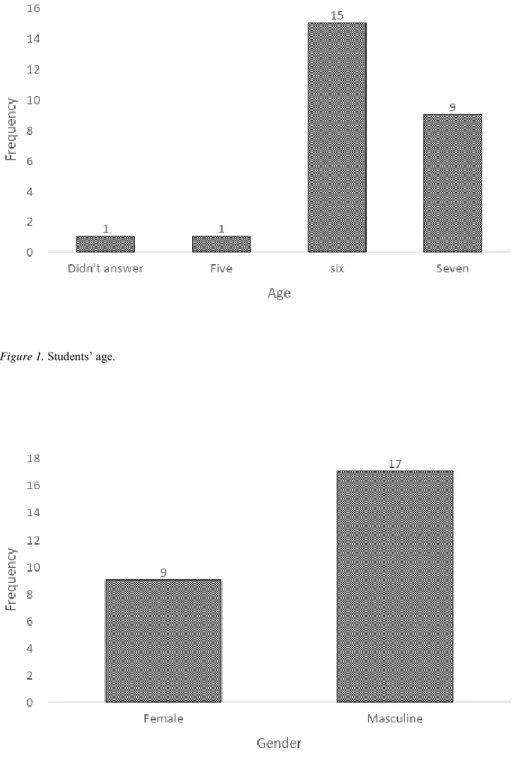
(30) DIGITAL MATERIAL FOR THE TEACHING OF ENGLISH TO CHILDREN 30. very necessary" (Lynch, 1997, p. 64). These are necessary in the process of learning a second language (English) because they give the student the opportunity to practice in real contexts between classmates thus generating more significant learning. It is clear that students generally feel more comfortable when talking with your classmates to when with his or her teacher or with an adult person The advantage of speaking with another person who shares the same daily experiences is that in this way the student can take more knowledge thus generating a co- learning in the classroom. 4. Method 4.1. Context The school where this study will take place is in 33th street # 18-53, San Alonso neighborhood in Bucaramanga, Santander. The institution belongs to the public sector and count with the following infrastructure: 20 classrooms, a biology laboratory, a teacher´s lounge, an office, a library, a playground, a soccer, basketball and volleyball field. Also, the institution has two ICTs classrooms: one for the elementary grades and one for the secondary ones. Liceo Patria´s mission indicates that they emphasize on natural sciences and environmental education. They offer a quality educational service forming people committed to their improvement and that of their natural, cultural and social environment. 4.2. Participants The participants of this study were 28 students from Liceo Patria school in second grade; 9 of the participants were seven years old with (58%) while the others 15 participants were around five and six years old (Figure 1). From our demographic information, we could also determine that 17 students (65%) were male and 9 (35%) were female (Figure 2)..
(31) DIGITAL MATERIAL FOR THE TEACHING OF ENGLISH TO CHILDREN 31. Figure 1. Students’ age.. Figure 2. Students’ gender.. After analyzing the data shown above, it proceeded to design the thematic unit together with the digital book..
(32) DIGITAL MATERIAL FOR THE TEACHING OF ENGLISH TO CHILDREN 32. 4.3 Thematic unit A thematic unit is a series of lessons linked to a central or main theme included within the curriculum of an educational institution in order for teachers to take it into account for the development of their classes. According to Cox (2018), it is important to use a thematic unit because motivates the student, it serves as a support for students to understand relationships, develop evaluation tactics linked to the curriculum, teachers would have less work as the thematic unit addresses all the issues and it’s based on what you live in the real world. Also, the topics presented in the thematic unit allow the teacher to relate the topic to explain with global issues such as literature, science and social Studies, in addition, thematic units show teachers different ways of structuring interdisciplinary/transversal teaching at a given time. According to Cox (2018), some key components of a thematic unit that can be considered are: Topic: is selected from those already stipulated in the Unit and in addition based on the common Basic Learning Standards, interests and experiences of the students. Grade level: select the appropriate materials for each grade level. Objectives: stipulate the objectives according to the thematic to be worked throughout the unit. Materials: specify materials to work during the unit. Activities: design activities pertaining to the theme of the unit and keep in mind that activities cover the curriculum. Discussion questions: produce a variety of discussion questions that invite students to think about the theme of the unit..
(33) DIGITAL MATERIAL FOR THE TEACHING OF ENGLISH TO CHILDREN 33. Selection of Literature: make a selection of a repertoire of literary books that correspond to the theme of the unit. Evaluation: it is important to know or to know the progress of the students, for that an evaluation must be applied to the students of the whole unit. Student growth can be assessed through headings or other means of evaluation. Likewise, some tips that must be taken into account for the creation of a thematic unit proposed by Cox (2018) are: first to find an attractive topic, that is, if the thematic unit account with a theme that call the attention this will generate interest and motivation in the student who will seek to learn more about the topic. At the time of choosing the skills that are intended to be develop in the children must be taken into account, or simply rely on the students’ interests expressed by themselves. Similarly, it should keep in mind that a thematic unit is usually designed for a week of classes for which it is necessary to create topics sufficiently striking that keep the student engaged with the lessons taught. Second, to create fun activities, these activities are the basis of the thematic unit because they seek to maintain the interest of the student, that is why during the development of classes must be sought that there is an interaction or cooperative work in the classroom oriented for the student to have practical experience while learning important skills. And finally, to evaluate the students´ learning, that is to say, it is necessary to evaluate what the student learned about the thematic unit in order to observe that the student learned about a particular subject. The evaluation of the learning can be done through different methods and not necessarily through a diagnostic test. The important thing is to report the progress that students had throughout the thematic unit..
(34) DIGITAL MATERIAL FOR THE TEACHING OF ENGLISH TO CHILDREN 34. The thematic unit designed revolves around animals. The researchers chose to name such a unit as the world of animals. The topic was chosen after reviewing the English module from the Colombian educative model for second graders leaded by the Colombian government. Once the thematic unit was chosen, the next step was the creation of the digital book to proceed to the design. The book has five stories each about dealing with a specific subject of the animal world. The first story is about animals in general, the second is about their habitat, the third is about what they can do like jumping, crawling, running, swimming, etc. The fourth is about wild and domestic animals and the latter is about animal descriptions. Likewise each story has its respective activities, these revolve around the understanding of the text and vocabulary. The activities seek to develop in the student the different skills with an emphasis on listening and speaking skills. In the digital book, you can find activities of different types such as writing, drawing, enumeration, listening, underlining and matching. (Annex B).. 4.4 Teaching English to children (MEN) Now we have seen that the exchange of cultures has become important because we are forced to learn a foreign language, this is why a country like ours, learning a foreign language has become something elemental, and the best way to begin to form children in the learning of a new language is since they are in primary education because it is where children are most receptive and tend to learn easier. After this brief introduction to what we want to achieve as researchers is that as a basic foundation of this research we can´t ignore the content for teaching English stated by the MEN, since these contents are the ones that govern education in Colombia and more specific in the area of English. According to the.
(35) DIGITAL MATERIAL FOR THE TEACHING OF ENGLISH TO CHILDREN 35. Common European Framework of Reference (CEFR), this is the international standard that defines the linguistic competence, this standard divides the learning of a foreign language by levels, levels that help to observe the control of a foreign language of a person in an English course and that also serve to determine the problem areas in the process of teaching and learning the foreign language and thus seek possible solutions to these problems. (Annex A). In Colombia it has been observed that most of the students obtain very low levels in the learning of a foreign language, often they do not manage to reach even the intermediate level and this is due to the ways in which we are teaching the classes, perhaps because the methodologies or the didactic materials are not the appropriate ones and therefore no significant learning is being generated in the students. For a country and more specific for Colombia, it is necessary to strengthen the command of a foreign language to be part of global academic, cultural and economic dynamics. This improvement would lead to the emergence of opportunities for citizens, that is, if we as Colombians have a good command of the language we could have job opportunities in English-speaking countries and in this way we could recognize, as well as the individual and collective growth of a country. The importance of a foreign language, in this particular case English, led the MEN to implement the Colombia Bilingüe Program as a strategy for improving the quality of English teaching in Colombia and as a strategy for promotion of the competitiveness of our citizens. In this context, the Colombia Bilingüe 2014-2018 program of the MEN has proposed the goal of raising the Pre-Intermediate level B1 from 2% to 8% by 2018 and from the 7% to the 35% of the students at level basic A2. If this goal is achieve, it is going to allow.
(36) DIGITAL MATERIAL FOR THE TEACHING OF ENGLISH TO CHILDREN 36. students from all over the educational system to communicate better and better in English and to have access to better work and professional opportunities. The levels mentioned define how much a person knows about learning the English language, a person who has a great English level is more competitive in the labor field. After mentioning the reference levels of the English language, we must also mention the basic learning rights created by the MEN, these are a tool both for parents and for teachers, as they will know what competences students must develop at each grade level, from first through eleven. The Basic Learning Rights are also a basic tool for teachers since as English language teachers, we must follow these parameters to carry out the development of our curriculum and that is in accordance with the guidelines of the MEN. In these basic rights is emphasized in the 4 basic skills (speaking, listening, reading and writing) because what is sought is that from very young we begin to inspire in the student the learning and implementation of these skills. Teaching English for children in Colombia, emerge of a program called "Colombia Bilingue" that focuses on teaching English through competencies including communicative competence, which is the ability to interact effectively, in different contexts, addressing various situations and realities and also the intercultural competence that develops and integrates with the sociocultural scope of the students in the school that directly or indirectly affect the interaction of a foreign language. Additionally, the curriculum is transverse with what you want to achieve with teaching in this case of English. We find the teaching and learning based on tasks, this gives the student the possibility of participating in multiple communicative activities, allowing them to communicate many ideas in a fluid and natural way..
(37) DIGITAL MATERIAL FOR THE TEACHING OF ENGLISH TO CHILDREN 37. On the other hand there is the teaching and learning based on projects, this is an approach that focuses on the student and their ability to apply the knowledge that he possesses and those that are acquired in the resolution of problems that resemble situations of daily life (Barrows & Meyers, 1993). Through this approach, students use the language as they act, interact and communicate. In addition, English curricular meshes offer us methodological and evaluative didactic routes that the teacher can use as a guide to materialize the curriculum. These routes are based on tasks and projects with elements focused on CLIC (Content and Language Integrated). The first is the task route, which is applicable from the first grade to the third grade, teachers must find search methodologies that are based on tasks with which students are involved and participate in learning a new language, in this case English to achieve a communicative objective. According to Skeham (1996), and Nunan and Carter (2010) divide the task into three phases: Pre-task, the teacher gives the introduction of the topic and the teacher proposes an activity to promote students' prior knowledge, activities can be as: brainstorming, narrating experiences, videos or illustrations, etc. The second phase is, the task cycle, here the student can work individually or in a group carrying out a communicative task and the third is the post-task, allows the student to use what has been learned to take it to his daily life or his social context..
(38) DIGITAL MATERIAL FOR THE TEACHING OF ENGLISH TO CHILDREN 38. 4.5 Research design and procedures. 1.1. 4.5.1. Preliminary stage. As researchers, we opted for qualitative research, since this method was of great help at the time of data collection because basically the information we needed to collect was according to the needs, personality, behavior, and reactions of the students in response to the application of a digital book as a proposal to improve the learning and teaching in classes of second-grade students. It is important to take into account some characteristics present in this research. Qualitative research is a research method that collects data, information with the intention of studying and explaining reality as we live it. Qualitative research needs a positive understanding with respect to human behavior, it is a decision made for research that is based on how and when it can be taken into account as an observation to small population groups such as a classroom or community. This type of research was chosen for being useful for our study because it uses methods such as observation, identification and analysis of data, which help to reconstruct, reinforce and provide new ideas or solutions to possible problems presented. Through this research, we can propose a solution to the problem of teaching English in primary school children. Qualitative research allows approaching several fields of study, to collect data and at the same time analyze it to make decisions focused on the object of study. For our research, we chose the case study as the right approach because we consider it a good technique to try to find a solution to the problem raised. There are different types of case studies:.
(39) DIGITAL MATERIAL FOR THE TEACHING OF ENGLISH TO CHILDREN 39. • Intrinsic case study: grant a clear of the phenomenon. • Instrumental case study: clear explanation of the theoretical information to be more comprehensible. • Collective case study: investigate the anomalies by means of a research to other cases. Researchers may find different types of case studies in the area of education, such as: • Descriptive: events that detail a state or phenomenon. • Interpretative: events that strengthen the theoretical or the realization of one. • Evaluative: events that guide and help choose a program. It is also well known that there are short and long term research according to the urgency to solve the phenomenon (Anderson. T., 2015). If you are looking for a short-term research, one of the best techniques is the case study, since it allows focusing on a specific population that in our case would be primary school children and the phenomenon to be solved. This is why the didactic materials implemented in a classroom is not giving the expected results. In a case study it is much more feasible for the researcher to study a particular community and a particular topic, since this way more profitable techniques are established to analyze unique and concrete situations, it should be emphasized that the population and the subject to be investigated has already been mentioned in the previous section (Anderson, T., 2015). There is a similar descriptive case of study that means, that at the end of a case study we will obtain an exhaustive and qualitative description of the specific situation or condition when carrying out a holistic and thorough investigation looking for all the possible causes of the phenomenon to be solved. The researcher must be.
(40) DIGITAL MATERIAL FOR THE TEACHING OF ENGLISH TO CHILDREN 40. inductive, must be able to develop hypotheses and find new relationships from the case study. Due to the fact that after observing, analyzing and classifying the facts or issues found in the field of study, it is possible to postulate a hypothesis that provides a solution to the problem posed. The researcher makes use of the induction, he proposes through various observations of the events, a conclusion that is general for all matters of the same type. The case study helps the researcher to research a particular issue and not issues in general, which makes it easier for the researcher to delve more deeply into the object of the study to be investigated. This methodology has been a great contribution to education when what is sought is to solve issues related to student learning, in early stages or in youth. A technique provides the necessary tools to research different problems presented in the classroom reflect on them and be able to intervene in these problems. It can be applied in the classroom in the teaching of a foreign language, making use of tools such as direct observation or interviews with the students by the teacher and it is done with the purpose of improving the educational process based on the results obtained during the educational experiment. Bearing in mind that our research will focus on the design of teaching materials, we opted for the case study method, since it tries to investigate, describe, explain, create and transform our object that in this case are the students, since From them we will acquire information about their sociocultural context, their preferences and their performance in English. This information is very useful to analyze the type of population we are addressing and its characteristics, this in order to energize the classes, focus the content of our class plans and design our digital book in order to help in the Academic needs of second grade students at Liceo Patria School. In many cases, the teacher's guide fails and that is why the.
(41) DIGITAL MATERIAL FOR THE TEACHING OF ENGLISH TO CHILDREN 41. objectives to be achieved are not met. This is why the case study will be our tool to: Create a didactic and innovated material that meets the characteristics of a book that engage second grade students and making them improve their language skills focused on the speaking and listening. This case study helps us to identify possible problems after knowing in depth our object of study. With relevant data collected, we will be able to identify conventional factors for the creation of our didactic material, the idea is that when designing this material, it has the appropriate characteristics so that it yields good results in learning and teaching, taking into account the contents, the methodology, strategies and dynamics of the class in contrast to the book based on didactic activities and reliable information. Taking into account the above, as researchers we must realize each problem, since it is what allows us to have a clearer idea of the product we are going to design focused on the students’ encouragement and the skills’ development contributing on the second grade students’ needs. Keeping this in mind and in order to answer our research question and shape our research design, we started with a preliminary stage in which a Needs Analysis, a Diagnostic Test and a teacher’s interview where applied in order to do the classroom diagnosis.. 4.5.2 Classroom diagnosis Each of the data collection instruments was used to obtain information from students. The need’s analysis was used in order to know the likes and dislikes of the students, the diagnostic test was used in order to know how the students responded to listening, reading.
(42) DIGITAL MATERIAL FOR THE TEACHING OF ENGLISH TO CHILDREN 42. and writing activities and the teaching interview was used in order to know what methodologies the teacher used in the classroom.The information collected was very important, because it helped researchers to reflect on the students’ needs and how to design an appropriated didactic material that allows them to improve the motivation of the class and the learning about a new language in an interesting and positive way. Besides, they allowed to obtain the data of the reality and once collected it was possible to move to the next phase of the processing of the information obtained. The need analysis and the teaching interview were designed by the researchers themselves and the diagnostic test was adapted from Cambridge English Young Learners. With these instruments, it looked for measure likes and knowledge of students. Due to the limitations that were made in the implementation of the diagnostic test and need analysis, it was implemented by 2 research groups. The groups had to implement the same because there were no more groups available so they had to join the two groups to implement the same diagnostic test. In the diagnostic test the speaking skill was not worked due to the short time for the implementation of the test, so, for time reasons it was decided to evaluate only listening, reading and writing skills. In the same way, the need analysis had to mix questions related to the object of study of one group and the other, this was done in order to give answer to the questions that were of more interest to the researchers. Once, it was decided to use a case study as the method for our research, and in order to answer our research question, the objectives (they are mentioned above) and shape our research design, we started with a preliminary stage in which a Needs Analysis, a Diagnostic Test and a teacher’s survey were made. The Needs Analysis was relevant.
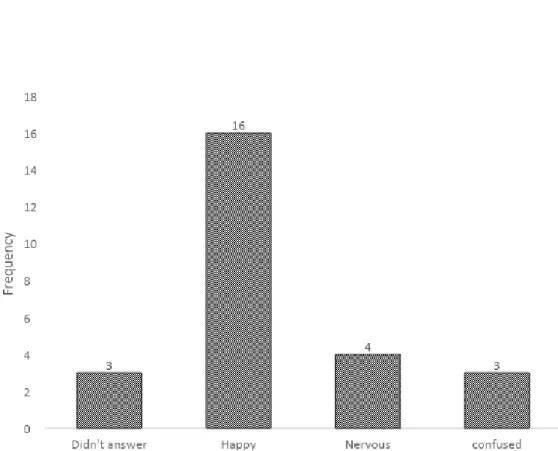
(43) DIGITAL MATERIAL FOR THE TEACHING OF ENGLISH TO CHILDREN 43. because it allowed us to gathered some demographic data about the participants in order to be able to characterize our sample; that demographic data will be shown in the participants’ section.. Figure 3. Feelings when being evaluated.. In this section, the researchers measured how the students preferred to be evaluated, it was made in order to they feel motivated to participated in the class and encourage them to be more active and they realize that if they wanted to obtain happy faces, they need to effort enough..
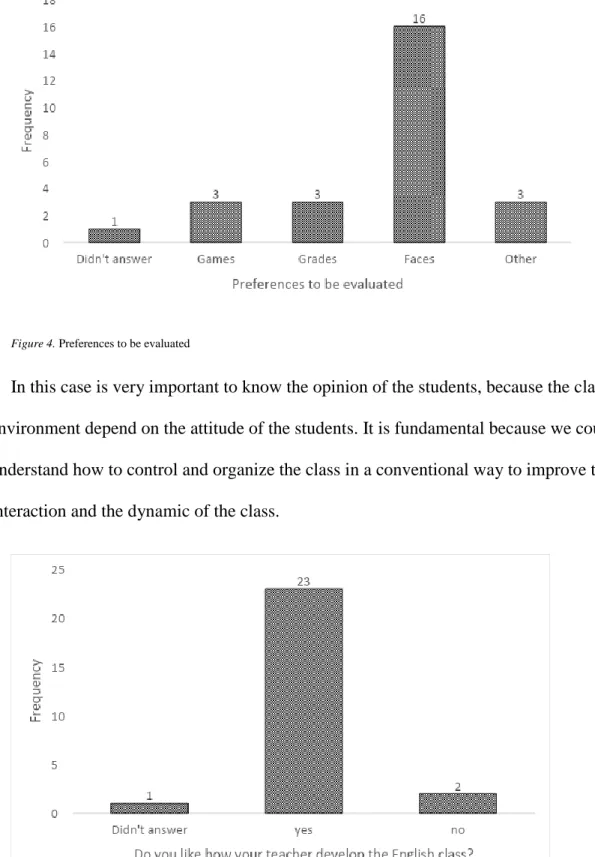
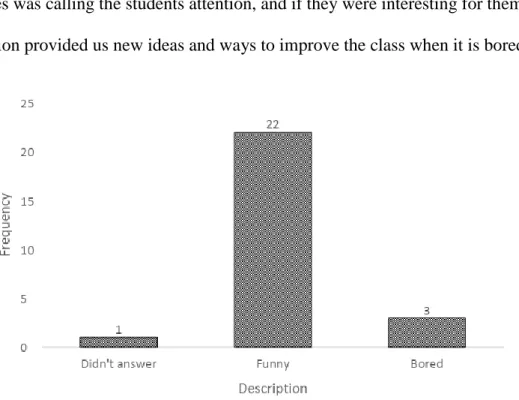
(44) DIGITAL MATERIAL FOR THE TEACHING OF ENGLISH TO CHILDREN 44. Figure 4. Preferences to be evaluated. In this case is very important to know the opinion of the students, because the class’ environment depend on the attitude of the students. It is fundamental because we could understand how to control and organize the class in a conventional way to improve the interaction and the dynamic of the class.. Figure 5. Do you like how your teacher develop the English class?.
(45) DIGITAL MATERIAL FOR THE TEACHING OF ENGLISH TO CHILDREN 45. This part is related to the above and it was going to make us to check and reflect if the classes was calling the students attention, and if they were interesting for them. This question provided us new ideas and ways to improve the class when it is bored.. Figure 6. Description about English classes.. After checking for the needs analysis we moved into the diagnostic test. Through its results we can as teachers know how much students know in relation to a specific subject. In this way, to begin the development of the lesson plans and to improve certain aspects or needs of the students with respect to the subject. When deciding on the diagnostic test, it was adapted of the Cambridge English Young Learners was used. This test also fulfilled some of the competences presented in the Curricular Guidelines of English (Estándares Básicos de Competencias en Lenguas Extranjeras: Inglés, 2006). (Annex D). As part of the design, for the first section (listening skill) of the diagnostic test, the tasks to be performed were, first, the students had to choose a picture by listening to a.
(46) DIGITAL MATERIAL FOR THE TEACHING OF ENGLISH TO CHILDREN 46. description. The second task was to choose an object in a picture and color it following the instructions. The vocabulary included in this section was: clothing, Fruits, prepositions, routines and colors. In the second section (reading skill) the tasks to perform were, first, to decide if a picture matches the words next to them and second, to decide if a picture matches sentences related to it. In this section, the vocabulary was animals, objects and actions. In addition, in the last section (writing skill) the task to be done was to answer questions about a picture story, in which the vocabulary was animals, clothing, vegetables and objects. Once the test was designed, it was carried out at Liceo Patria School. The test was implemented to the first grade students, it was implemented with first grade, because the diagnostic was applied one year before they started second grade, and the researchers started to develop the proposal. The students received instructions on how to do it. They were explained that this was an English test and that they will be evaluated in the three skills. Finally, once the students handed their test in, we proceed to analyze them. For analysis purposes, we made a coding book and a coding matrix in which we entered all student’s tests results..
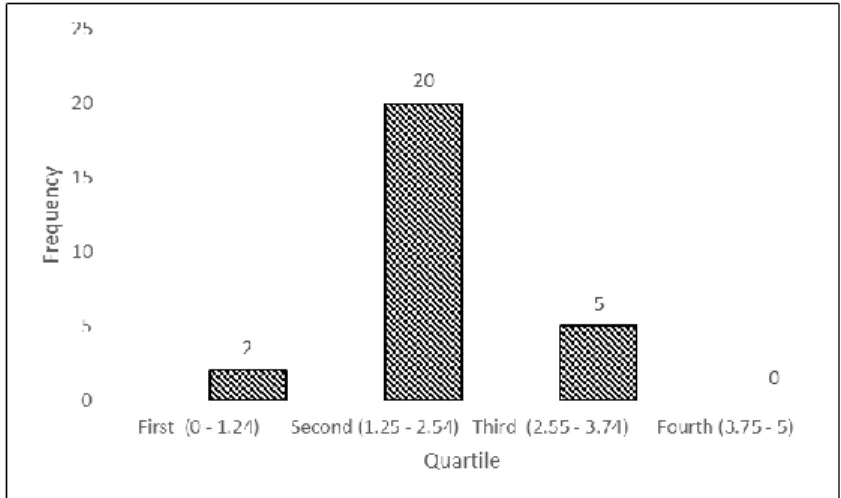
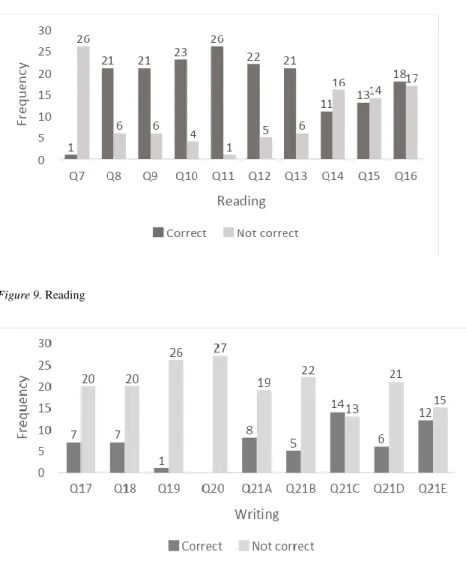
(47) DIGITAL MATERIAL FOR THE TEACHING OF ENGLISH TO CHILDREN 47. Figure 7. Quartiles. Then we proceeded to perform a more detailed analysis, question by question of each skill.. Figure 8. Listening.
(48) DIGITAL MATERIAL FOR THE TEACHING OF ENGLISH TO CHILDREN 48. Figure 9. Reading. Figure 10. Writing. For our last diagnostic instrument, we implemented a teacher´s survey that allowed us to identify very important aspects to keep in mind when we will begin the process with the students. This survey was answered by the homeroom teacher in charge of the students at that time; with the intention of knowing the homeroom teacher´s perception of the educational process, this survey used open questions all the time. (Annex E). The homeroom teacher stated that she had thirteen years of experience working as an educator with a Basic English level A1. For this research, it is relevant to mention that the homeroom teacher stated that she mainly uses images, videos, worksheets and games to.
(49) DIGITAL MATERIAL FOR THE TEACHING OF ENGLISH TO CHILDREN 49. develop her English classes. It is also important to mention her point of view about the most important skills that students develop in her classes, she mentioned that students were very interested in the pronunciation of the words to repeat them properly; also, in terms of writing students just transcribed from other texts but they could not take a dictation. Finally, in relation to speaking, she stated that students just pronounce words as they are written. This teacher survey gave us a better understanding on the student’s English learning process and their context.. 5. Pedagogical intervention After carrying out the diagnostic test, the needs analysis survey and analyzing these results, we opted for the creation of a didactic unit that contributes to the strengthening of certain skills in the second-grade students of the Liceo Patria School. This pedagogical intervention will be supported by the CLIL approach, according to Marsh (1994), “CLIL refers to situations where subjects, or parts of subjects, are taught through a foreign language with dual-focused aims, namely the learning of content and the simultaneous learning of a foreign language.” (p. 84) that is to say, CLIL integrates both the learning of contents and the learning of languages. Using The CLIL approach, students will learn one or more subjects, learn about a topic, and at the same time learn a second language. Using this approach in class students can achieve the development of skills for learning (learning skills). The development of such approach is established as an essential task in the practice of the approach, because the student is trained to build his own learning..
Figure
+3
Documento similar
Finally, four original activities will be presented on some English language collocations, in order to facilitate the teaching and learning of this type of
This article presents the results of an intervention through educational robotics for the development of computational thinking (understanding it as part of the teaching
The main goal of our work is to provide easy-to-use mechanisms for customizing dynamic web pages. To achieve this, a methodical approach for generating and
In broad terms, in both groups of textbooks, most of the activities follow traditional patterns for practising pronunciation, there is a clear predominance of tasks to
The main goal of the work presented is to provide easy-to-use mechanisms for personalizing dynamic web pages. To achieve this, a methodological approach for generating and authoring
Government policy varies between nations and this guidance sets out the need for balanced decision-making about ways of working, and the ongoing safety considerations
No obstante, como esta enfermedad afecta a cada persona de manera diferente, no todas las opciones de cuidado y tratamiento pueden ser apropiadas para cada individuo.. La forma
Therefore, the main objective of this work is to analyze the use of the mobile phone in VET students. For this purpose, the following specific objectives were
