
Enhancing capacities in disaster risk reduction in Burkina Faso and Mali
51
0
0
Texto completo
(2) Table of Contents Acronyms ............................................................................................................................................. 3 Project Summary .................................................................................................................................. 4 Theoretical Background ....................................................................................................................... 4 Training preparation and adaptation to West and Central Africa context..................................................... 6 Learning Needs Assessments ............................................................................................................................................. 7 Sierra Leone Assessments – Humanitarian Context ............................................................................................ 10 Planning the CCCM Training in Sierra Leone ......................................................................................................... 11. Cote d’Ivoire Assessments – Humanitarian Context ........................................................................................... 12 Planning the CCCM Training in Cote d’Ivoire ......................................................................................................... 12. Central African Republic Assessments – Humanitarian Context .................................................................. 13 Planning the CCCM Training in Central African Republic ................................................................................. 14. Partnership and Coordination............................................................................................................ 19 Sustainability ...................................................................................................................................... 22 Monitoring & Evaluation .................................................................................................................... 23 Conclusion .......................................................................................................................................... 25 Results Matrix .................................................................................................................................... 27 Work Plan ........................................................................................................................................... 36 Annex I Risk Assessment Plan ....................................................................................................................................... 45 Budget ................................................................................................................................................ 47 Bibliography ....................................................................................................................................... 51.
(3) Acronyms OCHA. United Nations Office of Coordination and Humanitarian Affairs. CCCM. Camp Coordination and Camp Management. GBV. Gender Based Violence. DRR. Disaster Risk Reduction. DTM. Displacement Tracking Matrix. IDMC. Internal Displacement Monitoring Center. IDP. Internally Displaced Person. IOM. International Organization for Migration. LNA. Learning Needs Assessment. NaCSA. National Commission for Social Action. NGO. Non-governmental organization. OFDA. Office of Foreign Disaster Assistance. ONS. Office of National Security. UNFPA. United Nations Population Fund. UNHCR. United Nations High Commissioner for Refugees. PRM. Bureau of Population, Refugees and Migration. ECOWAS. Economic Community of West African States. CADRI. Capacity for Disaster Reduction Initiative. MiGOF. Migration Governance Framework. NDC. National Disaster Centres. EWS. Early Warning Systems. IASC. Interagency Standing Committee. ACMAD. African Center of Meteorological Applications for Development. 3.
(4) I. Project Summary The West and Central Africa region has been experiencing recurrent flooding, causing significant material destruction and human casualties. In Burkina Faso and Mali, around 42,000 people were affected by floods during last year’s rainy season according to the UN Office for the Coordination of Humanitarian Affairs (OCHA, West and Central Africa: 2017 flood impact, 2017). However, despite the widespread impacts caused by natural hazards upon communities in a situation of vulnerability, comprehensive disaster risk reduction initiatives have not yet effectively been implemented. Both Burkina Faso and Mali have placed this issue as one of their priorities and have therefore requested IOM’s assistance to enhance their capacity with regards to disaster risk reduction. The proposed project will contribute to strengthen the capacity of the Ministry of Education and the Directorate General of Civil Protection, particularly in the areas of education, early warning system and public awareness. More specifically, the project will seek to achieve the two following outcomes: The Ministry of Education of both Burkina Faso and Mali integrate disaster risk reduction into school curriculum; The National Directorate of Civil Protection of both countries adequately and efficiently coordinate disaster preparedness and response actions through strengthened early warning systems. The overall objective is to mitigate disaster risk in the respective countries, thereby ultimately reducing forced displacement.. II. Theoretical Background 2018 has been an opportunity for me to take stock as I look back on our efforts to help governments in their efforts to assist and protect internally displaced people (IDPs) as a result of natural disasters and/or conflicts. Through the support of the Office of U.S. Foreign Disaster Assistance (OFDA) along with another branch of the US government, Bureau of Population, Refugees and Migration, (PRM) the International Organization for Migration (IOM) had initiated a regional capacity building project to prepare for, respond to and manage crisis-induced-displacement along with another project, Protecting Vulnerable Migrants in West and Central Africa. In the course of nearly two years, 20172018, as the regional capacity building officer, I oversaw the trainings of a number of national governments and local non-governmental organizations (NGOs) throughout West and Central Africa in the fields of Camp Management and Camp Coordination (CCCM). I joined the regional office of IOM in Dakar, Senegal in January 2017 as the regional capacity building officer and as such my duties among many others, have consisted primarily of the following activities:. 4.
(5) . Undertake Learning Needs Assessments (LNA) in target countries to establish local institutional learning priorities, identify target beneficiaries and inform contextualization of the training modules and methodology.. . Undertake contextualization and adaptation of training modules/materials to ensure relevance of training sessions on Camp Coordination and Camp Management (CCCM), and CCCM Cluster reference documents in each of the targeted counties.. . In coordination with Country Offices (COs) and IOM HQs build the capacity of national authorities and other actors in the Region in Camp Coordination and Camp Management and act as IOM Regional CCCM capacity building focal point.. . Update statistical information on trainings conducted and participant profile.. . Support Chiefs of Missions in developing, managing, implementing, fund-raising and reporting on projects related to capacity building (CB) in emergency response and transition.. . Actively participate to relevant meetings and global initiatives concerning capacity building communities of practice.. . Monitor the progress of the training implementation, identify and integrate best practices into the activities to improve the quality of the training and the overall capacity building component.. . Ensure the integration of gender analysis, protection mainstreaming specifically build the awareness, skills and attitude on the specific needs of vulnerable populations in displacement such as pregnant women, persons with disabilities, the elderly, children as well as other highly vulnerable groups within all emergency and transition activities.. To date, under the OFDA project, ‘To prepare for, respond to and manage crisis-induced displacement’ I have led trainings in Sierra Leone, Guinee Bissau, Benin, Cote d’Ivoire, Cabo Verde, Niger, Guinee, Central African Republic and Liberia and under the PRM project, ‘Protecting Vulnerable Migrants in West and Central Africa’ I have co-facilitated trainings in Burkina Faso, Gambia, Ghana and Senegal.. Both projects were created because of the high population mobility observed throughout the West and Central Africa region. As we know, population mobility is a key engine of economic and social development, but can also be the consequence of loss of access to basic services and rights, access to livelihoods, including the diffused practice of trade and/or a deteriorating security situation in the 5.
(6) case of conflict, natural disasters, and forced displacement. In the cases of relatively small crises in the region (e.g. recurrent flooding) national governments manage the emergencies mostly on their own, often with not fully trained staff and limited means; so through the support of the Office of U.S Foreign Disaster Assistance (OFDA) IOM has proposed to support, in collaboration with ECOWAS, the Economic Community of West African States, National Authorities and grassroots NGOs in the management of displacement through capacity-building activities and expand mapping of displacement and population movements through on the ground training on Displacement Tracking Matrix, DTM methodology for national authorities and grassroots NGOs. Similarly, the other project ‘Protecting Vulnerable Migrants in West and Central Africa” funded by the U.S Bureau of Population, Refugees and Migration aimed to reinforce the capacity of national capacity in dealing with irregular migration with an emphasis on addressing the needs of the most vulnerable migrants and consisted of a 5-day training on data collection, information management and on the management of displacement in humanitarian operations in the following countries: Burkina Faso, Gambia, Ghana and Senegal.. IOM, as global co-lead of the Camp Coordination and Camp Management (CCCM) Cluster for natural disasters, has an extensive knowledge in the management of displacement and has been working with national governments worldwide to improve local capacities to address displacement in compliance with international standards. And myself, not only as an experienced camp coordination and camp management officer but also an experienced certified CCCM trainer in the contexts of both conflicts and natural disaster, I was assigned to lead this project, which is near to successful completion, ending in January 2019. As a CCCM trainer, I have personally conducted or co-facilitated all the trainings herein mentioned. While the CCCM training package already existed prior to the project, it had to be adapted to the specific contexts in each country (conflict vs. natural disaster) thus the need for training preparation and adaptation.. Training preparation and adaptation to West and Central Africa context: I worked with the Information Management unit to develop training modules and materials to be used during the sessions. Taking from the already existing and well-developed CCCM Training, both CCCM materials and messages were tailored to the specific audiences.. 6.
(7) Learning needs assessments: each country selected to host a training benefited from a learning needs assessment (LNA) during which myself or one of my team members traveled to the country to meet with key stakeholders in order to better understand their training needs in order to adequately adapt and contextualize the trainings. The learning needs assessments were in fact crucial in deciding on this proposed project, “Enhancing Capacities in Disaster Risk Reduction in Burkina Faso and Mali” for each and every one of those assessments revealed the precarious situation of several communities in vulnerable situations or living in disaster prone areas throughout West and Central Africa. For instance either through the learning needs assessments or during the trainings, we would find out that during the rainy seasons many communities would often be flooded thus leading to massive internal displacement, without one exception, thus the potential to lead to conflict or creating a situation of conflict if not already in existence. While it is certainly worse for some countries than others each year, all of those countries herein listed can be subject to the same fate. I have seen firsthand how detrimental the rainy season can be in many of those countries, case in point, Sierra Leone, August 14, 2017.. Figure 1 Picture taken during the flood of August 14, 2017 in Freetown (Sun, 2017). Following the Sierra Leone landslide and flash floods of last year, I was called upon to do a follow up CCCM training for the those that would be involved in running the IDP sites as the government of Sierra Leone was forced to open 2 IDP sites to host a part of the affected population that was forcibly displaced as a result of their homes being destroyed. That is really when it dawned on me that we needed to start working more upstream in order to prevent this type of recurrent situation.. 7.
(8) Going back to the planning, in January 2017 we had already organized a CCCM training in Freetown targeting members of the national disaster management agency, ONS. As already mentioned in the executive summary the West and Central Africa region has experienced severe flooding in the 2017 rainy season, causing significant material and human casualties. And this year, 2018 was no different. In Mali for instance, “floods in several parts of the country have affected more than 18,000 people, killed three, and destroyed more than 3,200 houses (OCHA, West and Central Africa: Weekly Regional Humanitarian Snapshot (21 - 27 August 2018), 2018). And in Burkina Faso, no figures reported for this year yet but according to OCHA, last year, in May 2017, “floods and violent winds have killed three people, injured 18 others, and destroyed more than 750 houses across the country (OCHA, Burkina Faso: Floods , 2017). We could certainly cite many other major floods just these past couple of months in 2018 as well, for instance Cote d’Ivoire, Ghana, Liberia and Nigeria and so on, and each time the IOM was called upon as a co-lead of the CCCM cluster for natural disasters and myself I had the privilege to be part of the response team. Those rapid deployments have consolidated my conviction that we need to start working more upstream and stop waiting for a disaster to occur to set up response mechanisms. While IOM’s CCCM Training Program has provided invaluable support to strengthen the region’s technical capacity to respond to humanitarian emergencies, this capacity building project was not enough to mitigate and prevent those disasters. While no expert per se in DRR, I strongly felt that more work on disaster risk reduction needed to be done. For instance, while we may not stop the rain from coming we certainly can help reduce the damages and particularly the casualties if indeed we have an adequate early warning system in place and that people are adequately sensitized through solid awareness campaigns and education programs. ACMAD, for instance, the African Center of Meteorological Applications for Development is the weather and climate center with African continental competence, sends regular long range forecast enabling any country in the region to plan accordingly. For instance the figure below gives significant and weather and climate events update that would enable an informed decision.. 8.
(9) Figure 2 (ACMAD, 2018). In continuing the learning needs assessments for the CCCM trainings, I started focusing more on the gaps identified by the respective countries where I have conducted CCCM trainings and those were countries that have experience severe flooding repeatedly, namely Sierra Leone, Cote d’Ivoire and Central African Republic (CAR). CAR was in a particular precarious situation due to tensions, ethnic conflict between anti-Balaka and ex-Seleca has already led to massive internal displacement. So up until ten I have conducted the CCCM trainings in all those 3 countries and having already realized that there needs to be a shift toward more preparedness vs. response, I also switched my way of preparing for the CCCM trainings and I had the opportunity to examine those three countries much closer through an impact evaluation following the respective trainings, three contextually distinct countries but with ongoing displacement due to various ongoing ethnic and politically related conflicts compounded by recurrent floods or other natural disasters. As a result, we will take a look at the training preparations that took place in Sierra Leone, Cote d’Ivoire and Central African Republic (see graphs below each assessment. 9.
(10) section of the of each of the 3 countries) as those assessments were key in deciding on this proposed project, ‘Enhancing Capacities in Disaster Risk Reduction in Burkina Faso and Mali’. One may ask the question as to why this project is only targeting Burkina Faso and Mali. While it is explained in the rationale below, but it is worth noting again that it is a pilot project that if successful can be replicated throughout West and Central Africa. As just mentioned above, we will take a quick look at the learning needs assessments that took place in Sierra Leone, Cote d’Ivoire and Central African Republic, giving a brief overview of the Humanitarian context and the planning of the trainings in each scenario.. Sierra Leone Assessment – Humanitarian Context Sierra Leone has gone through a brutal civil war that went on for nearly over 10 years, 1991 to 2002, resulting in thousands casualties and over 2 million displaced people, but even after the conflict ended, the country has continued to face displacement due to a major health epidemic and increased flooding.. In early September 2015 after two consecutive days of heavy rains, riverbanks burst causing major destruction in eight communities in Bo and two in one Chiefdom in Pujehun District in southern Sierra Leone (OCHA, Sierra Leone: Bo District Profile , 2015).. On August 14, 2017, after three days of heavy rains and flash floods triggered a massive landslide in and around the capital Freetown with an estimated 3,000 people directly affected and nearly 500 dead. An estimated 7,000 people were displaced by the disaster (Aljazeera, 2017). According to OCHA, flash floods also affected at least four other communities in other parts of Freetown. To facilitate a response, the government activated emergency mechanisms that were established during the Ebola outbreak with staff and supplies deployed to badly-hit areas. Nine response pillars coordinated their response efforts with the ONS, who has the overall lead. Humanitarian partners provided emergency WASH, health, shelter and protection assistance to those in temporary collective centers and those in host families as well as in two IDP sites—Old Skool and Juba.. 10.
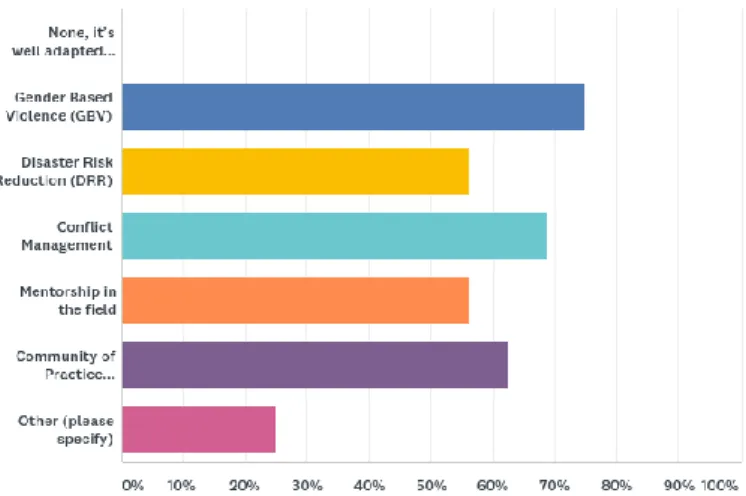
(11) Planning the CCCM Training in Sierra Leone: As previously mentioned, I visited Sierra Leone following the August 2017 mudslide disaster. Prior to that, in July 2017, I facilitated a one-day workshop on Disaster Risk Reduction (DRR) in Sierra Leone. After the August 14 disaster, I again visited Sierra Leone in early September to support the CCCM process with the set-up of two IDP sites, Old Skool and Juba Barrack as already mentioned. And I provided two half-day introductory trainings on CCCM at Old Skool and Juba Barrack transit sites with participants from the Office of National Security (ONS), the National Commission for Social Action (NaCSA), service providing agencies, as well as representatives from the affected households. A total of 52 people participated in the trainings which covered the camp life cycle, monitoring of standards, coordination with stakeholders, humanitarian and Do No Harm principles, and prevention and mitigation of gender-based violence (GBV). In addition, IOM collaborated with the United Nations Population Fund (UNFPA) for the GBV session in Juba Barrack transit site during the training. The main aim of the training was to provide the Government of Sierra Leone CCCM technical support and capacity building especially for those agencies directly involved as service providers in the transit sites. My onsite presence and first-hand knowledge of the emergency situation allowed me to directly coordinate with ONS and other stakeholders.. Figure 3 Areas Sierra Leone participants would like to included/increased in CCCM training (Dupuy, Evaluation: Camp Coordination Camp Management (CCCM), 2017). 11.
(12) Cote d’Ivoire Assessment - Humanitarian Context Over the past two decades, Cote d’Ivoire experienced two major political crises leading Ivoirians to be uprooted and internally displaced while others fled into neighboring countries, mainly Liberia, Ghana, Guinea, and Togo. According to the Internal Displacement Monitoring Center (IDMC), as of February 2015, about 87 per cent of the 2.3 million people displaced by violence since 2002 in Côte d’Ivoire had managed to return to their homes or find other settlement options as a consequence of the significant security improvements in Abidjan and the west of the country, bringing the latest IDP figure to at approximately 300,000 IDPs. Despite the apparent progress, the issues propelling displacement remain.. According to one report, sporadic clashes over land have taken place almost every year since election violence occurred in 2010. Nonetheless, politicization of ethnic identity and land, including a persistent tendency to designate people as either indigenous or migrants (from other parts of the country as well as neighboring states) continues to provide fertile ground for future conflicts. In October 2017, seven people were killed and 5,000 fled their homes when rival communities clashed over a 9,000-hectare cocoa plantation inside a protected forest in the Cavally Region (IRIN, 2017). There are a number of reports that indicate that current divisions, high availability of arms, including within the armed forces is increasing the likelihood of civil conflict violence will erupt again.. Planning the CCCM Training in Cote d’Ivoire The Cote d’Ivoire training was initiated to respond to existing IDP situations outside of Abidjan and to better prepare the government for new conflict or climate related displacements. Funding from the Office of U.S. Foreign Disaster Assistance (OFDA) allowed for a second training to take place in November following a first training in May 2017. The May training consisted primarily of civil servants and local NGO participants based in Abidjan. However, the November training targeted participants from outside Abidjan for the November training, thus assuring preparedness for a more widespread geographic response. In an effort to increase female participation, each institution was asked to select one female and one male participant.. 12.
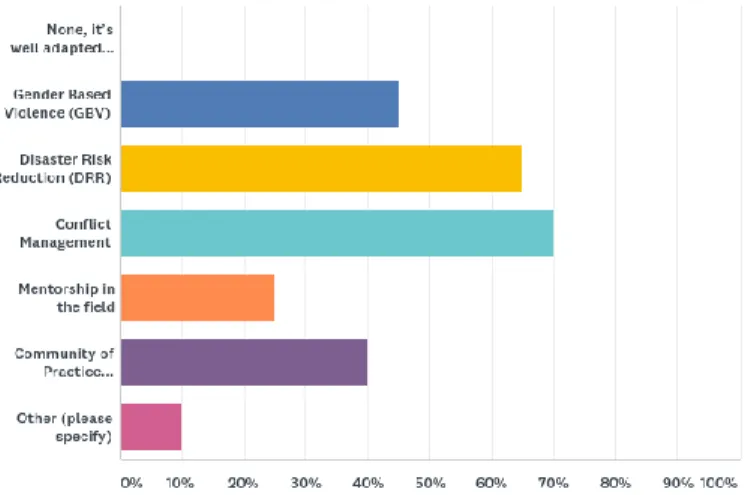
(13) Figure 4 Areas Cote d’Ivoire Participants would like to see included/increased in CCCM training (Dupuy, Evaluation: Camp Coordination Camp Management (CCCM), 2017). Central African Republic Assessment - Humanitarian Context The history of the Central African Republic (CAR) has been marked by intractable poverty, ethnic tensions, pervasive political instability, corruption and nepotism that led to a succession of armed conflicts (UNHCR, 2017). Since 2013, a war has been raging in CAR when the Seleka group, made up of a Muslim majority, rebelled against the government, accusing it of neglect and marginalization. They plundered entire towns and villages, leading to the formation of the anti-Balaka movement. Originally, a defense group comprising of mostly Christians, over time, the militia fell into the hands of uncontrollable gangs of armed youth.. The instability has resulted in the country ranking last in the Human Development Index (HDI 2016) list. Constant displacement, insecurity and lack of access to crops prevented people from farming. Nevertheless, the end of the political transition marked by the election of a democratically elected president generated a period of stability since the beginning of 2016. It encouraged the strategic reorientation of humanitarian action towards recovery and development programs, envisaged in the framework of the Plan of Recovery and Consolidation of Peace for the Central African Republic (RCPCA). However, as of the end of the third quarter of 2016, the security situation deteriorated with an acceleration and intensification of violence that continued throughout 2017.. 13.
(14) The continued violence in the CAR has triggered new levels of displacement. In August 2017, the number of Central African refugees in neighboring countries reached the highest number since the start of the 2013 crisis and the number of IDPs climbed to close to 600,000 by the end of August 2017 (UNHCR, UNHCR Situation Update: Central African Republic Situation, 2017). With nearly a quarter of its population (1.1 million people) displaced) inside CAR or as refugees in neighboring countries, the overall population displacement is at its highest level since 2013 (IOM, 2017).. Planning the CCCM Training in Central African Republic The December 2017 Central African Republic (CAR) training, was envisaged as an outcome of an IOM and the United Nations High Commissioner for Refugees (UNHCR) regional CCCM Training of Trainers (TOT) which occurred in Dakar in August of the same year. The CCCM leads invited IOM professional staff and partners in accordance with selection criteria delineated in a terms of reference by IOM’s Department of Emergency (DOE). At the end of the training, the participants developed an Action Plan obligating CCCM trainings to roll out in participant’s respective countries.. The Dakar TOT qualified five Bangui based CCCM trainers to conduct trainings. I oversaw the training initiative, recommending adaption of materials and allocating modules based on the new trainees’ specializations.. Figure 5 Areas CAR participants would like to see included/increased in CCCM training (Dupuy, Evaluation: Camp Coordination Camp Management (CCCM), 2017). 14.
(15) As seen in the three graphs above, there is a strong interest in Disaster Risk Reduction. While DRR was not necessarily the top area of focus, it still seemed reasonable for this project to focus on DRR as the needs are tremendous combined with the fact that there are already a number of programs looking at gender based violence and conflict management, the other two areas of focus as we know that gender based violence tend to increase during conflict and natural disaster that lead to displacement. Thus the proposed project will also seek to mainstream gender during the implementation. Aside from conflict, migration and displacement can result from different environmental actors. From gradual environmental degradation (including desertification, soil and coastal erosion) to the effects of natural hazards (such as earthquakes, floods or tropical storms). In addressing the mobility dimensions of environmental degradation and sudden-onset hazards, IOM supports Disaster Risk Reduction programming that helps to strengthen the resilience of populations in vulnerable situations, living in areas that make them exposed to natural hazards and thus, risk causing significant population movements. IOM’s DRR programs are implemented before, during and after crises, usually but not exclusively in the context of sudden and slow-onset natural hazards where there is a high risk of forced migration. These programs include efforts that contribute to increase the resilience of migrants in vulnerable situations. Despite the widespread impacts caused by natural hazards across communities throughout West and Central Africa, comprehensive Disaster Risk Reduction initiatives have not yet been effectively fostered at the national and sub national level. The Governments of Burkina Faso and Mali have recognized this and requested the Capacity for Disaster Reduction Initiative (CADRI) to conduct an assessment of their disaster risk reduction capacities at the national and local level. The Capacity for Disaster Reduction Initiative (CADRI) is a global partnership composed of 15 UN and non-UN organizations that works towards strengthening countries’ capacities to prevent, manage and recover from the impact of disasters. The CADRI Partnership draws upon the diversity of expertise of its members to offers a unique combination of knowledge, experience and resources to support countries implement the Sendai Framework for Disaster Risk Reduction. The objective of the CADRI Partnership is to support the identification of critical capacity gaps at country level in view of prevailing risks and the articulation of coherent UN and other stakeholder’s interventions to address those capacity gaps.The CADRI assessments herein mentioned. 15.
(16) took place in March 2015 in Burkina Faso and September 2015 in Mali and resulted in a number of prioritized recommendations1 and the four Sendai priorities2 as follows: Priority 1. Understanding disaster risk; Priority 2. Strengthening disaster risk governance to manage disaster risk; Priority 3. Investing in disaster risk reduction for resilience; Priority 4. Enhancing disaster preparedness for effective response and to “Build Back Better” in recovery, rehabilitation and reconstruction. The recognition of the Governments of Burkina Faso and Mali of the need to strengthen their DRR capacities is essential, as is the work undertaken through the CADRI assessments. The results of those assessments both in Burkina Faso and Mali identified the need to improve the early warning systems and integrate DRR programs in the educational systems. For instance, in Mali the assessment report specifically states that the important efforts undertaken in early warning systems would need to be reinforced (CADRI, RAPPORT D’EVALUATION DES CAPACITES NATIONALES POUR LA REDUCTION DES RISQUES, LA PREPARATION ET LA REPONSE AUX URGENCES AU MALI, 2015). In relation to public information and disaster risk education the report determines that “there are no integration programs linked to preparedness to disasters in the school curricula (other than a sensitization course on road safety for the first primary classes). In Burkina Faso, recommendations include the need for “Strengthening the capacities of Ministries of Education (MENA MESS MASSN, MJEFP), in collaboration with CONASUR through the development of a guide for disaster management in schools and the training of staff education. Ensuring that educational structures (preschool, primary, post-primary, secondary,) in high-risk areas have trained school teams that include authorities involved in emergency management (CADRI, 2015).. 1. « Rapport d’évaluation des capacités nationales pour la réduction des risques, la préparation et la réponse aux urgences au Mali » September 2015 (https://www.cadri.net/sites/default/files/Mali-Evaluation-des-capacitesnationales-RRC-Draft-2015.pdf) and « Rapport d’évaluation des capacités nationales pour la réduction des risques, la préparation et la réponse aux urgences au Burkina Faso », March 2015 2 Priority 1. Understanding disaster risk; Priority 2. Strengthening disaster risk governance to manage disaster risk; Priority 3. Investing in disaster risk reduction for resilience; Priority 4. Enhancing disaster preparedness for effective response and to “Build Back Better” in recovery, rehabilitation and reconstruction.. 16.
(17) It is urgent that the momentum is not lost and that there are continued efforts to strengthen national DRR capacities, as Mali and Burkina Faso continue to face recurring threats of severe floods and other natural hazards, which are likely to result in further loss of livelihoods and displacement. In coordination with the Ministry of Education and the General Directorate of Civil Protection, IOM will support both Burkina Faso and Mali in their governments’ efforts towards the development of modules on disaster risks, including ways in which risks could be mitigated, as well as how to prepare and what to do in the event of a disaster (e.g. evacuation routes, etc.) in order to integrate it in the school curriculum. IOM will also support with DRR workshops which will be duplicated and conducted by previously trained government officials (Ministry of Education). Under the overall mentorship of IOM, the new trainers from the Ministry of Education will be providing training to the selected teachers. A series of lessons learned workshops will also be held – one per country. This workshop series will provide an opportunity to further readjust the training curricula based on lessons learned during duplication. The final curricula will then be presented for validation by the related authorities.. Moreover, conveying critical early warning information needs to be strengthened, as indicated in the CADRI evaluation. IOM will, in coordination with the Direction de la Protection Civile as well as private cell phone service providers, pilot an early warning messaging system which will integrate affected, first responders and humanitarian actors by enabling the transmission of real-time information between disaster affected locations and centralized response systems. U-Report, for example, which is a free SMS social monitoring tool for community participation, is already supporting similar mechanisms (although of a different nature), in Mali. This system can equally be used to collect disaster data (civilians can provide information on disaster risks that they may encounter). IOM will support the National Disaster Centre (NDC) in the development and setting up of the SMS Central (the coordination hub) within the NDC Emergency Cell.. Firstly, IOM will support NDC in the setting up of the required server and modem and the installation and configuration of the Frontline SMS software for disaster management purpose. Secondly, IOM will provide technical assistance to the NDC in the development of the following tools: a) SMS Central Database, b) SMS distribution lists, c) SMS Codes, and d) SMS data report and analysis systems and will equip relevant NDC staff with sufficient training and information on the use of the system.. 17.
(18) With the support of the Ministries of Education and the General Directorate of Civil Protection there will be a public information campaign with strong emphasis on multi hazard early warning systems (EWS) and which will target communities at large and local government offices on how to make use of the two-way communication channels mechanism established by the project. Project design will ensure that the conveying and relaying of SMS will be promptly enabled within and amongst communities and between central and local level government.. There will also be Early Warning Systems (EWS) Drills and Simulation Exercise: the aim of this activity is to test the effectiveness and readiness of the new SMS Central services amongst all parties involved from the community to the government and humanitarian sector levels. The simulation exercise will take place on the same day for all communities and will be based on multi-hazard hypothetical scenario so as to assess the responsiveness of the system and of the parties involved to handle multiple flows of information originating simultaneously from different geographical sources.. This approach, an innovative pilot if successful, can be replicated/adapted to a larger scale in other regions. A similar system has been successfully implemented in Haiti in the aftermath of the 2010 earthquake and clearly showed the use of SMS and crowd mapping sought to provide real-time updating of situational information. In particular, the use of SMS Frontline software helped many search and rescue teams in better prioritizing their work, thus saving more lives.. IOM’s work on Disaster Risk Reduction (DRR) and environmental degradation contributes a great deal to the efforts of Member States to implement the Sendai Framework for Disaster Risk Reduction (DRR) 2015-2030 by advancing mobility-based strategies in disaster risk reduction and resilience. IOM has also long been established in Burkina Faso and Mali and is already implementing DRR programmes in the region, in particular in Sierra Leone.. As already mentioned, last year IOM conducted training workshops on data collection and displacement management in Burkina Faso and this year IOM is conducting similar training events in Mali. These experiences demonstrate a well-established rapport with the civil protection agencies operating in those countries as primary beneficiaries of those training events. IOM works closely with the UN International Strategy on Disaster Reduction (UNISDR) and agency partners to advance the global risk reduction agenda and is a member of the UN Senior Leadership Group on Disaster Risk 18.
(19) Reduction. IOM is an active participant of subsidiary bodies of the Inter-Agency Standing Committee (IASC) relevant to risk and resilience and recently acquired observer status in the Capacity for Disaster Reduction Initiative (CADRI). In its 2017-2020 Strategic Plan for Disaster Risk Reduction IOM sets out an operational plan to assist Member States in taking forward the priorities of the Sendai Framework for Disaster Risk Reduction. The plan situates mobility at the centre of IOM’s efforts to support States to reduce risk and build resilience. It outlines a set of concrete assistance activities organized under Prevention, Preparedness, Response, Recovery and Partnerships, stressing the intrinsic links between mobility, risk and resilience.. This project will also contribute toward the Sustainable Development Goals, particularly Goals 5 and 13 as the activities proposed herein will not only address the urgent needs to combat climate change and its impacts but they will also seek to achieve greater gender equality, ensuring the involvement of women and girls in the project activities.. Since IOM has worked with different partners and stakeholders throughout the trainings mentioned above, it seeks to further strengthen this partnership and coordination role in enhancing capacities in disaster risk reduction in Burkina Faso and Mali. Again as to the question of why Burkina Faso and Mali? Both governments have specifically requested IOM’s support in helping them enhance their capacities in disaster risk reduction, primarily in the areas of disaster risk education, early warning and public awareness, which this project will achieve, but this is also a pilot project that if successful, will be replicated/adapted to a larger scale in other countries throughout the region, namely those listed above.. III. Partnerships and coordination. All activities will be closely coordinated with the relevant governmental agencies, namely the General Directorate of Civil Protection and the Ministry of Education in both Burkina Faso and Mali taking into consideration the specific needs of target groups (including women, girls and boys, among others).. 19.
(20) The General Directorate of Civil Protection of both countries will be mainly responsible for: . Nominating an appropriate senior official to serve as IOM’s main focal points on issues relating to daily implementation of the project;. . Giving access to the IOM technicians team to their existing server rooms;. . Identifying National Disaster Centres (NDC) officers (including men and women) to participate in the DRR training activities as well in the pilot of the early warning messaging system;. . Supporting IOM project staff in the identification of the appropriate communities for the Early Warning Systems (EWS) Drills and Simulation Exercise.. The Ministry of Education of both countries will be mainly responsible for: . Identifying appropriate senior government officials (including men and women) to participate in the development of DRR training curricula along with IOM technicians;. . Selecting the teachers (including men and women) to attend the planned DRR duplication exercises.. . Duplicating the DRR workshop. The Regional Dakar IOM Office will be mainly responsible for: . Drafting terms of reference for the hiring of the consultant. . Developing the DRR training curricula. . Organizing the workshops to strengthen the DRR capacities including a session on gender, within the Ministry of Education.. . Organizing the master trainer’s certification. And in coordination with the General Directorate of Civil Protection and the Ministry of Education, IOM will be responsible for: . Running a post-training knowledge retention test and a simulation exercise 20.
(21) . Organizing a lessons learned workshop per country. . Developing and setting up the SMS central within the NDC Emergency Cell. . Conducting Early Warning Systems Drills and Simulation Exercise mainstreaming gender.. Overall, the project will be managed by IOM Dakar, ensuring that all partners maintain gender sensitivity in their approach and that government needs are considered continuously during the project, and that modifications are promptly introduced, as and when needed. Moreover, each IOM country office will convene a bi-monthly meeting to share information relevant to the project, overcome challenges of implementation as they arise, and identify new opportunities that may contribute to the achievement of the project’s objective and will report to the regional office in Dakar. Each country office will be responsible for compiling the minutes of each meeting and ensuring that each partner representative receives a copy and has the opportunity to comment on them priorio sharing with the Dakar regional office.. Each country office will also closely coordinate with civil society organizations and other partners working in the field such as UNICEF and the Red Cross to ensure maximum impact of project activities and to avoid duplication. The roles and capacities of all partners and stakeholders will be taken into account in designing the curriculum.. Moreover, IOM will encourage, to the extent possible, gender balance, active and equal participation of men and women officials in all project activities.. . The following are the main implementing partners.. Burkina Faso -. General Directorate of Civil Protection. -. Regional Direction of Agriculture and Food Security. -. Regional Direction of Environment. -. National School of Firemen. -. National Institute of Statistics and Demography. -. Superior Institute of Civil Protection Studies. -. Ministry of Social Action and National Solidarity. -. National Office of Water and Sanitation 21.
(22) -. Ministry of Education. Mali -. Organization of Response and Civil Security. -. National Directorate of Social Development. -. Regional Directorate of Social Development. -. Ministry of Solidarity, Humanitarian Action and Reconstruction of the North. -. National Directorate of Health. -. National and Regional Directorate of Hydraulics. -. Ministry of Education. IV.. Sustainability. IOM Burkina Faso and IOM Mali together with the Regional Office will capitalize on the momentum built by the project’s implementation to ensure its sustainability. Through the training of trainers, the project will promote the transfer of knowledge and expertise to partner institutions, thereby strengthening their in-house capacities in a self-reliant manner. Upon project completion, partner institutions will have gained the knowledge and expertise needed to respond to specific requests that are in line with their priorities. As such, the very nature of this engagement will contribute to improving national systems long after this specific action has ended. Through direct engagement with government and civil society stakeholders, including training and curriculum development, with a focus not only on the outcomes and outputs but also on the process itself, IOM will be able to maximize the effectiveness and sustainability of its capacity-building initiatives. During project implementation, IOM will guide the targeted governments in their curriculum development efforts to reduce and mitigate disaster risks, primarily in the areas of education and early warning. IOM will build upon and increase the existing skillsets among the relevant government stakeholders through specific training events.. 22.
(23) V.. Monitoring & Evaluation. A practical results matrix and work plan will be developed, which will allow for effective monitoring by the project team. The project’s progress will be closely monitored by the project implementation team, with overall monitoring to be conducted by the coordinating office in IOM RO Dakar. Upon confirmation of approval for funding, the project manager based in the Dakar regional office will notify the country offices of Burkina Faso and Mali of the award in order to start planning for the activities set forth in the project. A skype call with the focal points for each country will be set up with the project manager to decide that the project will begin two months after the award notification, thus giving us time to adequately plan for the activities. As specified in the results matrix below the first activity under outcome 1 will consist in drafting the terms of reference for the hiring of the consultant and the development of the DRR curriculum and upon which time the project management team will go over the work plan in order to make any adjustments as necessary.. Details on monitoring activities (non-exhaustive list): Several monitoring activities will accompany each action to capture progress, impact and lessons learnt. All the activities hereafter listed in the results matrix will be followed by an update report to be shared with all stakeholder. Other activities in addition to the update report will include the following: . Post training monitoring in both Burkina Faso and Mali will be performed in order to measure beneficiaries' satisfaction, assess the used methodology and the relevance of the activity. . Register of training attendance will be kept to monitor the presence of beneficiaries.. . Ad-hoc monitoring visits in both Burkina Faso and Mali by the consultant/project manager/focal point will be undertaken as well to follow progress and adjust course of action as needed.. . Regular exchanges between the IOM focal points of the two target countries with the project manager in Dakar to address any challenges that may be faced in one country in order to help better tackle those challenges.. Regular monitoring by the project manager will be utilized in order to provide adequate feedback to all partners involved in the project activities to ensure that all activities are carefully coordinated and that the expected results are delivered in a timely manner. As part of the regular monitoring, the project manager will convene a bi-monthly meeting in the respective countries where the project is 23.
(24) being implemented to share important relevant information, overcome challenges of implementation as they arise, and identify new opportunities that may contribute to the achievement of the project’s objective. The indicators listed in the results matrix below will be used to assess the progress of the project in a systematic manner and to report during the interim reports. Moreover, in coordination with the country offices along with the Ministry of Education and the Directorate General of the Civil Protection of both Burkina Faso and Mali, an interim narrative and financial report will be submitted every 6 months along with a final narrative and financial report that will be submitted three months after the end of the project. An internal ex-post evaluation will be conducted six to twelve months after the project’s end date. The evaluation will take into account the relevance, efficiency, effectiveness, impact and sustainability criteria and all the findings will be disaggregated by sex (where relevant and to the extent possible) and analyzed and reported on accordingly. The evaluation will aim to assess the level of achievement of outcomes and analyze whether the outputs of the project have been delivered. Cross-cutting issues such as gender, a human-rights based approach and sustainability will also be looked at (to the extent possible). More specifically, this includes analyzing sex-disaggregated data gaps in participation and addressing any gender-related challenges (such as why participation might be unequal or why the gender dimension is not being mainstreamed into activities), including through gender-specific recommendations. This will also include ensuring that interviews for the evaluation are conducted with a balanced, representative sample of key stakeholders. The evaluation will particularly examine the effectiveness of the early warning system through the use of the cell phone application along that of the DRR curriculum in the schools in order to be able to provide recommendations to the regional office and to the ECOWAS community to ensure the appropriateness of this model in the region and its impact.. 24.
(25) VI.. Conclusion. The Economic Community of West African States (ECOWAS) is a Regional Economic Commission of Fifteen Member States, established with the goals of promoting regional economic integration and ensuring peace and security as prerequisites for development within the region. As already mentioned above, natural disasters and internal wars and conflicts are the largest causes of refugees and IDPs flows in the region. As part of Action Plan of the ECOWAS Humanitarian Policy 2018-2022, their strategic objective 2 is the development and strengthening of institutions for the management of emergencies and response to humanitarian challenges and one of the activities under this objective is for member states to establish national platforms for disaster management in compliance with ECOWAS guidelines in close collaboration with the Disaster Risk Reduction and Emergency Response Programs of ECOWAS. The proposed project is well in line with this plan of action and we hope that it can serve as a model for other member states in the near future during the implementation of the ECOWAS action plan. Given limited financial and other resources, we hope that this project will serve as a catalyst for resource mobilization that is needed to provide the resources for the development of an expanded early warning system, more comprehensive DRR education programs in schools encompassing a new regional pilot program. These programs should be supported, continued, and reinforced throughout the region but there are few caveats: first policies are not in place and even when there are policies in place, they do not necessarily lead to successful implementation; and second, continued violence and conflict throughout the region may hinder the development of future programs throughout the region. For instance, many communities in Burkina Faso are still struggling to cope with the effects of violence, food insecurity and natural disaster. Owing to conflict and insecurity in neighboring Mali, Burkina Faso is now home to approximately 23,000 Malian refugees. Burkina Faso continues to be highly vulnerable to natural disaster, with recurrent drought and severe flooding that pose an annual risk to destabilize already vulnerable populations. And in Mali, the security situation has deteriorated so much that civilians, especially children and women, are suffering heavy collateral damage of the clashes between armed groups. It has been reported that more than 4 million people affected in the northern and central regions by the conflict, and those in the south by the floods, need protection (OCHA, SAHEL, Overview of Humanitarian Needs and Requirements, 2018). While both the governments of Burkina Faso and Mali have placed the issue of comprehensive disaster risk reduction as one of the priorities, and have requested IOM’s assistance to enhance their capacity with regards to disaster risk reduction, it is rather obvious that the communities that should in fact benefit from this initiative are even more at risk due to the conflict as already mentioned. Yet. 25.
(26) food insecurity and malnutrition are persistent and significant, so the challenge here is how to really make this a top priority in face of so many other dire needs. The path ahead must be must be based on a broader and more ambitious goal of truly mitigating disaster risk thereby ultimately reducing forced displacement as not to further exposing the civilian population to more collateral damage of clashes between armed groups, particularly in the northern region of both Burkina Faso and Mali mostly prone to the effects of violence, food insecurity, epidemics and natural disaster.. 26.
(27) VII.. Results matrix. Indicators. Data Source. Baseline/Target. and Collection Method Objective The project will strengthen the. . # of communities with. capacity of the Governments of. developed skills,. Mali and Burkina Faso to. reflexes and abilities to. reduce and mitigate disaster. better prepare for and. risks in these countries,. respond to disasters. primarily in the areas of. . Baseline: 0. # of ministry of. education and early warning. education personnel. Field visits. systems. trained to ensure that. and interviews. disaster risk reduction principles are incorporated into the school curriculum . 27. Target: 2. Assumptions.
(28) Indicators. Data Source. Baseline/Target. Assumptions. and Collection Method Outcome 13. . Number of schools. Field visits. Baseline: 0. The Ministries of Education of. actively utilized the. and. Target: 40 of the. The DRR training. both Burkina Faso and Mali. developed DRR training. interviews. existing schools. curriculum developed is. integrate disaster risk reduction. curricula.. utilized DRR. adapted to the local. training curricula.. contexts.. into school curriculum. 3. This outcome is aligned with MiGOF’s principle 3 that good migration governance relies on strong partnerships.. 28.
(29) . # of gender-sensitive. Participants. Baseline: 0. Good transition/handover in. training curricula adapted. Lists, photos. Target: 2, gender. case of a change in. authorities have their capacities. mainstreamed. leadership/personnel.. strengthened. training curricula. Outputs 1.1. National education. . Gender-sensitive. # of staff from the ministry of Education trained in. Baseline: 0. considerations are well. DRR, disaggregated by sex. Target: 40,. received and understood by. and gender.. disaggregated by. the relevant stakeholders.. sex and age Adequate training . # of trainers from Ministry. Baseline: 0. curriculum, interest and. of Education successfully. Target: 40,. participation of government. pass the post-test. disaggregated by. officials.. sex and age The trainers have sufficient knowledge and are willing . # of trainers mentored to. Baseline: 0. to conduct the duplication. duplicate DRR training to. Target: 40,. exercises.. the teachers, disaggregated. disaggregated by. by sex and gender. sex and age. The teachers are also willing to attend the training. Baseline: 0 29. and are available..
(30) . Target: 2. # of duplication exercises conducted by the qualified DRR trainers from the. Baseline: 0. Ministry of Education. Target: 40, disaggregated by. . sex and age. # of teachers attended the DRR duplication exercises, disaggregated by sex and. Baseline: 0. gender.. Target: 40 participants,. . Number of participants at. disaggregated by. duplication exercises who. sex and age. demonstrate a higher. . knowledge retention rate in. Baseline: 0. post-test.. Target: 2. # Lessons learned. Baseline: 0. workshop conducted.. Target: 40, disaggregated by. . sex and age. # trainers from the Ministry of Education certified as DRR Master trainers, 30.
(31) Indicators. Data Source and Collection Method. disaggregated by sex and gender.. 31. Baseline/Target. Assumptions.
(32) Indicators. Data Source. Baseline/Target. Assumptions. and Collection Method Safe and secure. Activities under Outcome 1. environment to allow for 1.1.1. Draft ToRs and hire a consultant;. unrestricted movement of. 1.1.2. Develop the DRR training curricula;. personnel.. 1.1.3. Identify and select senior Government officials to participate in the DRR training workshop; 1.1.4. Organize a workshop to strengthen DRR capacities including a session on gender, within the Ministry of Education;. Previously trained personnel is still available. 1.1.5. Run a post-training knowledge retention test and a simulation exercise; 1.1.6. Duplicate the DRR workshops: they will be conducted by the previously trained government officials from the Ministry of Education to the selected teachers and a session on gender-specific needs will be included. 1.1.7. Organize a lessons learned workshop per country: once the field-testing is complete, a series of lessons learned workshops will be held (one per country). The workshops will provide an opportunity to further readjust the training curricula based on lessons learned during the duplication. The final curricula, to be gender-sensitive, will then be presented for validation by the related authorities. 1.1.8. Master trainer certification: certify student trainers who successfully passed thematic post-tests as DRR Master trainers.. 32. and committed..
(33) Outcome 24 National Directorate of Civil. Directorate of Civil . # of institutions in Mali and. Direct. Baseline: 0. Protection remains. Protection adequately and. Burkina Faso with an effective. observation. Target: 2. engaged in the initiative.. efficiently coordinate disaster. EWS through cell phone. preparedness and response actions. applications. The relevant institutions. # of communities involved in. from both countries are. the EWS drills and Simulation. willing to coordinate. Exercise to better manage post-. their actions.. through strengthened early warning system. . disaster response. The Early Warning Systems are functional.. 4. Principle 2: Migration and related policies are best formulated using evidence and whole-of-government approaches and Objective 2: Good migration governance is based on effective responses to the mobility dimension of crises.. 33.
(34) . Number of NDC staff trained. Participants Baseline: 0. NDC staff remained. 2.1. Early warning systems. for the implementation of the. List. Target: 12,. committed to the. through cell phone applications. Early warning mechanisms,. Photos. disaggregated by sex. process;. are developed. disaggregated by sex and. Outputs. and gender Communities use SMS. gender.. . Baseline: 0. to relay and receive. Target: 12,. information.. # of NDC technicians trained. disaggregated by. on the use of the system put in. sex and gender. place, disaggregated by sex and. The EWS has been. gender.. adequately set up. Baseline: 0. . Target: 4. # of communities received. understanding of the. early warning messages Baseline: 0. through their cell phones. Target: 400 (200 per country), . High involvement and. # of communities targeted in. disaggregated by sex. the public information. and gender. campaign.. 34. communities..
(35) . # of people from the targeted community involved in the EWS Drills and simulation exercises, disaggregated by sex and gender. Safe and secure. Activities under Outcome 2 i. Develop and set up the SMS Central within the NDC Emergency Cell;. environment to allow. ii. Provide technical assistance to the NDC;. for unrestricted. iii. Deliver one-week training to NDC staff on the use of the system;. movement of. iv. Draft ToRs to hire a consultant for the design and implementation of the public information. personnel.. campaign; v. Develop and implement a gender-sensitive public information campaign in some targeted communities; vi. Develop a workplan with Directorate General of Civil Protection, Ministry of Education authorities, and targeted community’s leaders whom will be involved in the Early Warning Systems (EWS) Drills and Simulation Exercise (A detailed work-plan is expected to be produced); vii. Hold a series of planning meetings with all stakeholders in the EWS drills and simulation exercise to ensure their full engagement in this initiative; 2.1.8. Conduct Early Warning Systems Drills and Simulation Exercise mainstreaming gender.. 35.
(36) VIII.. Work plan Party. Activity. Time frame (Month). respo nsibl. 1 2 34. 5. 6 7. 8. 9. 10. 11 12. e 1.1.1. Draft ToRs to hire a consultant. IOM project manage ment staff. 1.1.2. Develop the DRR training curricula. Ministry of Educati on, National disaster centre IOM and other partners. 36. 13. 14. 15. 16. 17. 18. 19. 20. 21. 22 23. 24.
(37) Party Activity. Time frame (Month). respo nsibl. 1 2 34. 5. 6 7. 8. 9. 10. 11 12. e 1.1.3.. Ministry. Identify and. of. select senior. Educati. Government. on,. officials to. National. participate in the disaster DRR training. center,. workshop. IOM and other partners. 37. 13. 14. 15. 16. 17. 18. 19. 20. 21. 22 23. 24.
(38) Party Activity. Time frame (Month). respo nsibl. 1 2 34. 5. 6 7. 8. 9. 10. 11 12. e 1.1.4.. IOM. Organize a. project. workshop to. manage. strengthen DRR ment capacities. staff. including a session on gender, within the Ministry of Education. 38. 13. 14. 15. 16. 17. 18. 19. 20. 21. 22 23. 24.
(39) Party Activity. Time frame (Month). respo nsibl. 1 2 34. 5. 6 7. 8. 9. 10. 11 12. e 1.1.5.. Ministry. Run a post-. of. training. Educati. knowledge. on,. retention test and National a simulation. disaster. exercise. centre IOM and other partners. 1.1.6.. Ministry. Duplicate the. of. DRR workshops Educati on. 39. 13. 14. 15. 16. 17. 18. 19. 20. 21. 22 23. 24.
(40) Party Activity. Time frame (Month). respo nsibl. 1 2 34. 5. 6 7. 8. 9. 10. 11 12. e 1.1.7.. Ministry. Organize a. of. lessons learned. Educati. workshop per. on,. country. National disaster centre IOM and other partners. 1.1.8.. IOM. Master trainer. project. certification. manage ment staff. 40. 13. 14. 15. 16. 17. 18. 19. 20. 21. 22 23. 24.
(41) Party Activity. Time frame (Month). respo nsibl. 1 2 34. 5. 6 7. 8. 9. 10. 11 12. e 2.1.1. Develop. National. and set up the. Disaster. SMS central wihin Centre, the NDC. IOM. Emergency cell. and other partners. 2.1.2.. National. Provide. Disaster. technical. Centre,. assistance to. IOM. the NDC. and other partners. 41. 13. 14. 15. 16. 17. 18. 19. 20. 21. 22 23. 24.
(42) Party Activity. Time frame (Month). respo nsibl. 1 2 34. 5. 6 7. 8. 9. 10. 11 12. e 2.1.3.. National. Conduct one-. Disaster. week training for Centre, relevant NDC. IOM. staff on the use of and the system. other partners. 2.1.4.. IOM. Draft ToRs to. project. hire a. manage. consultant for. ment. the design and. staff. implementatio n of the public information campaign. 42. 13. 14. 15. 16. 17. 18. 19. 20. 21. 22 23. 24.
(43) Party Activity. Time frame (Month). respo nsibl. 1 2 34. 5. 6 7. 8. 9. 10. 11 12. e 2.1.5.. Ministry. Develop and. of. implement a. Educati. gender-sensitive on, public. National. information. disaster. campaign in some centre IOM targeted communities. and other partners. 2.1.6.. IOM. Develop a. project. workplan. manage ment staff. 43. 13. 14. 15. 16. 17. 18. 19. 20. 21. 22 23. 24.
(44) Party Activity. Time frame (Month). respo nsibl. 1 2 34. 5. 6 7. 8. 9. 10. 11 12. e 2.1.7.. IOM. Hold a series of. project. planning. manage. meetings. ment staff. 2.1.8.. Ministry. Conduct Early. of. Warning Systems Educati Drills and. on,. Simulation. National. Exercise. disaster. mainstreaming. centre. gender. IOM and other partners. 44. 13. 14. 15. 16. 17. 18. 19. 20. 21. 22 23. 24.
(45) Annex 1. Risk Assessment Plan. Risk Factor. Consequence. Continued insecurity High in the North of Mali. Likelihood and. Risk Treatment Plan. Timeline Continued. Targeting. insecurity. Changing the. communities where. throughout the. likelihood of the. there is less. duration of the. risk. potential for. project Parliamentary. Low. Elections to be held. insecurity. November-. Changing the. No activities will be. December. consequence of. directly. the risk. implemented in the. in Mali November/December. country at that. 2018. time. Activities can take place remotely. ToRs will be drafted at the Regional Office.. Increased Insecurity High. Continued. Changing the. Targeting. in Burkina Faso. insecurity. likelihood of the. communities where. throughout the. risk. there is less. duration of the. potential for. project. insecurity.. 45.
(46) Coordination on the Medium. Duration of the. Changing the. Advocating the. field among local. project. consequence of. importance of. the risk. coordination on the. governments. field.. 46.
(47) IX.. Budget. Project Title: Enhancing Capacities in Disaster Risk Reduction in Burkina Faso and Mali Project Type: DR Budget Amount Requested in USD: 200,000.00 Project Duration: 24. ITEM. WBS. A.STAFF Costs Program Manager (10%) SN National Program Support (20%) BK10 & ML10. Nr of Units. Unit Month(s) Month(s). 24 48. Unit Cost. Total. 8,000 1,500. 19,200 14,400. Total Staff Cost:. 33,600. B.OFFICE Costs Communications BK10 & ML10 Supplies BK10 & ML10 Office premises BK10 & ML10 Others Miscellaneous Office costs (Contibution to overall office running e.g. janiitorial services, electricity, fuel, secutity, water) BK10 & ML10 Office premises Costs SN. Month(s) Month(s) Month(s). 48 48 48. 100 100 80. 4,800 4,800 3,840. Month(s). 48. 78. 3,744. Month(s). 24. 100. 2,400. Total Office Staff:. 19,584. Total Staff and Office Costs:. 53,184. C.OPERATIONNAL Costs Output 1.1. National education authorities have their capacities strengthened. 47.
(48) Consultant for development of the training curricula, SOPs, work plans and other training materials (curriculum expert). Month(s). Printing of training documents (50 copies of training documents printed for participants) Printing of training certificates Training supplies (materials to facilitate training sessions including stationeries for 40 participants) Training Visibility (Stickers) Training Visibility (T - Shirts) Training Visibility (for national awareness on training programs, banners,etc.) Venue (venue rental for trainings in two locations - Mali (3 days) & Burkina Faso (3 days) Refreshment - Food and Beverages: Breakfast, lunch and coffee breaks, (40 participants+4 trainers x 3 days ) DSA / transportation reimbursement for participants (40 participants x 3 days) Venue (venue rental for 3 days trainings in 2 locations (Mali & Burkina Faso) Refreshment - Duplication of DRR workshops in two locations for 44 persons including trainers for 3 days (breakfast, lunch & 2 coffee breaks) DSA / Transportation for 40 persons for 3 days Trainers cost (Trainings and follow up of activities) Lessons Learned workshops Venue (venue rental for trainings in 2 locations for 3 days). 6. 3,500. 21,000. Item. 50. 30. 1,500. Each. 120. 2. 240. Item. 40. 50. 2,000. Item Each. 98 55. 2 10. 196 550. Each. 10. 75. 750. Day(s). 6. 400. 2,400. No. of Person. 44. 95. 4,180. No. of Person. 120. 60. 7,200. 6. 400. 2,400. 44. 95. 4,180. 120. 60. 7,200. 2. 4,000. 8,000. 6. 400. 2,400. Each No. of Person No. of Person No. of Person Day(s) 48.
(49) Refreshment - Lessons Learned workshops for 44 participants for 3 days in 2 locations (breakfast, lunch & coffee breaks) Transportation Reimbursement - Lessons Learned workshops for 40 participants for 3 days. Item Day(s). 44. 95. 4,180. 120. 60. 7,200. Total Output 1.1. 75,576. Output 2.1. Early warning systems through cell phone applications are developed Interface set up (computers) for 2 countries Interface set up (printers) for 2 countries Interface set up (hard drive) for 2 countries Interface set up (scanners) for 2 countries) Interface set up ( serveur) for 2 countries Interface set up (network) for 2 countries network will be maintained for 24 months IT Consultant expert (set up of IT systems including server) Simulation Drill Event held in 4 communities (Mali -2 & Burkina Faso - 2): vehicle rental Simulation Drill Event in 4 communities (Mali -2 & Burkina Faso - 2): refreshment Simulation Drill Event held in 4 communities (Mali -2 & Burkina Faso - 2): transport reimbursement Simulation Drill Event in 4 communities (Mali -2 & Burkina Faso - 2): materials. Item Item Item Item Item. 6 6 4 4 2. 1,300 1,000 200 300 5,000. 7,800 6,000 800 1,200 10,000. Item. 2. 5,000. 10,000. Month(s). 3. 3,500. 10,500. 12. 240. 2,880. 88. 25. 2,200. 88. 50. 4,400. 4. 300. 1,200. Total Output 2.1. 56,980. Day (s) No. of Person No. of Person Item. Output 2.2: Community members have increased awareness related to EWS. Leaflets/flyers produced and disseminated Posters produced and disseminated Wristbands produced and disseminated. Item Item Item. 5,000 2,000 4,000. 1.00 1.00 0.50. 5,000 2,000 2,000. Radio annoucements developed and broadcast. Item. 10. 150. 1,500. 49.
(50) Consultancy fees to create ToRs for the design and implementation of the gender-sensitive public information campaign. Months. 2. 500. 1,000. Total Output 2.2. 11,500. Evaluation. Evaluation (Ticket) Evaluation (DSA). Item Day(s). 1 6. 1,500 210. 1,500 1,260. Total Evaluation. 2,760. Total Operational Coasts. 146,816. GRAND TOTAL. 200,000. Percentage of S&O Cost:. 27%. *not subject to OVERHEAD * Percentage of S&O Cost - S&O total costs percentage should not be more than 30% of the total budget.. 50.
(51) Bibliography ACMAD. (2018). LONG RANGE FORECAST PRODUCT FOR AFRICA VALID FOR AUGUST-SEPTEMBER-OCTOBER AND SEPTEMBER-OCTOBER-NOVEMBER 2018 SEASONS. ACMAD. Aljazeera. (2017). Sierra Leone mudslide: What, where and why? Aljazeera. CADRI. (2015). RAPPORT D’EVALUATION DES CAPACITES NATIONALES POUR LA REDUCTION DES RISQUES, LA PREPARATION ET LA REPONSE AUX URGENCES AU MALI. CADRI. CADRI. (2015). RAPPORT D’EVALUATION DES CAPACITES NATIONALES POUR LA REDUCTION DES RISQUES, LA PREPARATION ET LA REPONSE AUX URGENCES AU MALI. CADRI. Dupuy, R. (2017). Evaluation: Camp Coordination Camp Management (CCCM). IOM. Dupuy, R. (2017). Evaluation: Camp Coordination Camp Management (CCCM). IOM. Dupuy, R. (2017). Evaluation: Camp Coordination Camp Management (CCCM). IOM. IRIN. (2017). Land clashes test Côte d’Ivoire’s fragile security. IRIN. OCHA. (2015). Sierra Leone: Bo District Profile . Reliefweb. OCHA. (2017). Burkina Faso: Floods . reliefweb. OCHA. (2017, October 18). West and Central Africa: 2017 flood impact. https://reliefweb.int/report/niger/west-and-central-africa-2017-floodimpact-18-oct-2017. OCHA. (2017). West and Central Africa: 2017 flood impact. https://reliefweb.int/report/niger/west-and-central-africa-2017-flood-impact-18oct-2017. OCHA. (2018). SAHEL, Overview of Humanitarian Needs and Requirements. OCHA. OCHA. (2018). West and Central Africa: Weekly Regional Humanitarian Snapshot (21 - 27 August 2018). https://reliefweb.int/report/democratic-republic-congo/west-and-central-africa-weekly-regional-humanitarian-snapshot-21-0. OCHA. (27 August 2017). Sun, T. (2017). Sierra Leone pleads for ‘urgent support’ after deadly floods. sunnewsonline.com. UNHCR. (2017). UNHCR. (2017). UNHCR Situation Update: Central African Republic Situation.. 51.
(52)
Figure


Documento similar
In this context, one advantage of using the multiplicity instead of the Hilbert-Samuel function (the invariant used by Hironaka in [14]) is that, at least when the
For instance, (i) in finite unified theories the universality predicts that the lightest supersymmetric particle is a charged particle, namely the superpartner of the τ -lepton,
On the other hand, the active packaging of fresh fruits and vegetables can achieve a significant decrease in respiratory activity and, therefore, a reduction in the heat produced
In particular, the reduction in both radiation load (net radiation) and wind speed due to the presence of the cover material leads to
The expansionary monetary policy measures have had a negative impact on net interest margins both via the reduction in interest rates and –less powerfully- the flattening of the
Jointly estimate this entry game with several outcome equations (fees/rates, credit limits) for bank accounts, credit cards and lines of credit. Use simulation methods to
In our sample, 2890 deals were issued by less reputable underwriters (i.e. a weighted syndication underwriting reputation share below the share of the 7 th largest underwriter
In order to achieve the depth and breadth of the localization of Chinese education in Spain, the following strategies should be adopted: Targeting the economic and cultural values
