
Development and morphological evolution in flowers : ontogenetic integration patterns and structural factors in the floral meristem
127
0
0
Texto completo
(2) 2. “La naturaleza es un templo donde pilares vivientes a veces dejan salir confusas palabras; allí se adentra el hombre entre bosques de símbolos que lo observan con miradas familiares.”. Correspondencias. Las Flores del Mal (1861) Charles Baudelaire..
(3) 3. ACKNOWLEDGMENT. I want to thank the theoretical and methodological support gave by my advisor María Fernanda Pérez Trautmann and my co-advisor Regine Claβen-Bockhoff during the realization of this thesis. I also want to thank Carmen Gloria Ossa for her assistance in the fieldwork and Maureen Murua for her support in the field and theoretical discussions. Finally, I want to thank to all the people that support me emotionally in many ways: family and friends. Finally, I want to thank the Consejo Nacional de Ciencia y Tecnología for the fund grant PCHADoctorado Nacional 2015 - 21150326 and the Fondo Nacional de Ciencia y Tecnología for the fund grants Fondecyt Regular 1141047 and 1171369.
(4) 4. INDEX. RESUMEN................................................................................................................................................5 ABSTRACT ..............................................................................................................................................7 INTRODUCTION ....................................................................................................................................9 Ontogenetic integration in two species of Schizanthus (Solanaceae): a comparison with static integration patterns ..................................................................................................................................30 Integration and allometric changes during development underlying floral diversification in Schizanthus (Solanaceae) ............................................................................................................................................54 The role of pedomorphosis and peramorphosis in pollinator-driven flower diversification in Schizanthus - a quantitative analysis. ...................................................... Error! Bookmark not defined. CONCLUSIONS ...................................................................................................................................124.
(5) 5. RESUMEN. Los patrones de diversificación floral están determinados por cambios tanto en la presión selectiva mediada por polinizador como en las trayectorias ontogenéticas. Particularmente, cambios en las proporciones entre órganos florales se asocian con cambios rápidos en el síndrome de polinización. Estos cambios han sido estudiados principalmente por tres aproximaciones: la co-variación entre órganos florales (integración morfológica), las tasas de crecimiento de cada órgano floral (alometría morfológica) y el cambio evolutivo en la temporalidad del desarrollo (heterocronía). En esta tesis, se estudiaron los patrones ontogenéticos de integración, alometría y heterocronía y su relación con la diversificación mediada por polinizador en el género Schizanthus. Tanto la integración como la alometría fueron medidos usando una división de dos estadios ontogenéticos o realizando un rastreo por rangos solapados de tamaños de yema creciente, para contestar las siguientes preguntas: 1) cómo la integración y las pendientes alométricas varían a lo largo de la ontogenia; 2) cómo estas variaciones se relacionan con los patrones de diversificación mediada por polinizador y 3) su relación a lo largo de la ontogenia y entre especies. Respecto a la heterocronía, análisis cuantitativos de tamaño y forma en un amplio rango de estadios ontogenéticos fueron usados para construir las trayectorias ontogenéticas y describir su relación con los patrones de diversificación mediada por polinizador en el género. Este estudio encontró que tanto la integración como la alometría variaron a lo largo de la ontogenia y entre las especies. Estos.
(6) 6. parámetros tendieron a co-variar a lo largo de la ontogenia, dado que eventos de baja integración tendieron a correlacionarse con una mayor diferencia de pendientes alométricas entre rasgos. Sin embargo, esta relación varió entre especies, sugiriendo que existe una relación biológica mucho más compleja que la sugerida la relación matemática entre integración y alometría a lo largo del desarrollo. Los patrones de integración y alometría durante el desarrollo fueron congruentes con los patrones de diversificación mediada por polinizador en el género: estructuras reducidas que perdieron su función en el proceso de polinización tienden a estar desacopladas del resto de la corola y tener menores pendientes alométricas durante el desarrollo. Mientras que estructuras más reducidas presentaron menores pendientes alométricas, estas no estuvieron más desacopladas, mostrando nuevamente que la relación entre integración y alometría durante el desarrollo es más compleja de lo esperado. Respecto a la heterocronía, los patrones de diversificación floral en el género se produjeron por transiciones a morfologías pedomorficas y peramorficas. Estas transiciones ocurrieron mediante diferentes combinaciones de procesos ontogenéticos (cambios en la aparición del rasgo o en sus tasas de crecimiento), los cuales pueden presentar efectos compensatorios a lo largo del desarrollo. De forma interesante, estructuras reducidas que no presentaron marcados patrones de desacople durante el desarrollo resultaron encontrarse más afectadas por cambios en su aparición, evidenciando que los patrones de integración se encuentran más afectados por cambios en las tasas de crecimiento. En conclusión, la integración y la alometría ontogenética y los cambios heterocronicos son procesos interrelacionados que varían a lo largo de la ontogenia, presentando efectos compensatorios y donde los cambios entre especies se relacionan con la diversificación floral mediada por polinizador..
(7) 7. ABSTRACT. Patterns of floral diversification are shaped by changes in both pollinator-selective pressure and ontogenetic trajectories. Particularly, changes in the proportions among floral organs are associated with rapid evolutionary shifts in the pollination syndrome. These changes have been studied mainly by three approaches: the co-variation among floral organs (morphological integration), the growth rate of each floral organ (morphological allometry) and the phyletic change in the timing of ontogeny (heterochrony). In this thesis, ontogenetic patterns of integration, allometry, and heterochrony and their relation with pollinator-driven diversification in the genus Schizanthus is studied. Integration and allometry were studied using either a two stages division of ontogeny or overlapping ranges of bud sized along ontogeny to answer the following questions: 1) how integration and allometry vary along ontogeny; 2) how these variations relate to pollination-driven diversification and 3) their relationship along ontogeny and among species. Regarding heterochrony, quantitative analysis of size and shape in a broad range of ontogenetic stages were used to build ontogenetic trajectories and describe their relation to pollinator driven evolution. This study found that ontogenetic integration and allometry vary along ontogeny and among species. These parameters tend to co-varied along ontogeny as low integration events tend to correlate with a greater difference among allometric slopes of traits. However, this relationship varied among species, suggesting a more complex biological relationship than expected by the mathematic relationship between integration and allometry along ontogeny. Ontogenetic integration and.
(8) 8. allometry were related with pollinator-driven diversification: reduced structures that lost their function in the pollination process tended to be decoupled from the rest of the corolla and have lower allometric slopes along ontogeny. While more reduced structures had lower allometric slopes, they were not more decoupled, showing again that the relationship between ontogenetic integration and allometry is more complex as previously thought. Regarding heterochrony, pollinator-driven diversification in the genus is produced by a transition to paedomorphic and peramorphic morphologies. These transitions occurred by different combinations of ontogenetic processes (changes in the onset of the trait or its growth dynamics), which can present compensatory effects. Interestingly, reduced structures that did not present strong decoupling patterns along ontogeny resulted in being more affected by changes in their onset, suggesting that integration patterns are more affected by the growth dynamics of each organ. Overall, ontogenetic integration and allometry, as well as heterochrony, are interrelated processes that varied along ontogeny presenting compensatory effects and which changes among species related to pollinator-driven diversification in Schizanthus..
(9) 9. INTRODUCTION. Flowers are modular structures composed by repeated units of the same type such as perianth (sepal, petals or tepals), androecium (stamens) and gynoecium (ovules and pistil). However, the arrangement, number, position, size, and shape of these organs may change, producing an astonishing diversity of flower morphologies. In basal Angiosperms, characterized mostly by spiral phyllotaxis and unfused floral organs, floral diversification occurred mainly by changes in arrangement, number, and position of organs (Endress 1990; Endress and Doyle 2015). In contrast, floral diversification in higher groups occurs mostly by flexibility in shape and size together with key innovations (Endress 2001; Ronse De Craene 2018). This increase in the stability of flower structure is related to evolutionary tendencies such as the appearance of petals stablishing the four-organ category, whorled phyllotaxis, syncarpy, and sympetaly (Endress 1990, 2010a). Changes in the proportions of floral organs are associated with rapid evolutionary changes and diversification in higher Angiosperms. These changes have been closely related to pollinatormediated selection enhancing cross-pollination and evolutionary shifts in the pollination system (Darwin 1859; Stebbins 1970; Armbruster et al. 2009; van der Niet and Johnson 2012; Van Der Niet et al. 2014). Particularly, specialization for particular functional groups of pollinators has triggered both floral divergence among related taxa and floral convergence in.
(10) 10. unrelated plan lineages (Faegri and van der Pijl 1979; Fenster et al. 2004). In this context, changes in floral size and shape are associated with changes in the function of floral parts during pollination (Castellanos et al. 2003; Armbruster et al. 2009). For example, the transition to bee pollination needs of a landing platform, which is usually reached by an expansion of the lower lip in bilabiate flowers (Castellanos et al. 2004; Wilson et al. 2007). In the other hand, transitions to hummingbird or moth pollination are more associated with an elongation of the corolla tube in order to facilitate the fit with the mouthpart of these pollinators (Nilsson 1988; Alexandersson and Johnson 2002; Muchhala and Thomson 2009; van der Niet and Johnson 2012; Johnson et al. 2016). It is widely recognized that changes in developmental processes produce the pre-existing diversity in which pollinator-selective pressure acts (Endress 1990; Ronse De Craene 2003, 2018; Specht and Howarth 2015; Benítez et al. 2015). However, in comparison with evolutionary and ecological approaches, changes in flower proportions have been only recently studied under a developmental approach. Several studies have focused on the role of development in evolutionary novelties, such as extra-floral organ whorls (e.g., staminodes), highly derived floral organs (e.g., Pappus) and floral outgrowths (e.g., Spurs)(reviewed in Becker et al. 2011; Glover et al. 2015). Equally important has been their role on diversification of size and shape: changes in reproductive meristem size may affect organ size and shape proportionally, leading to smaller or larger flowers, or not proportionally, being restricted to a single whorl or affecting particular organs within a whorl (reviewed in Moyroud and Glover 2017; De Craene 2018). Changes in organ shape and size, and their required a change in symmetry, has been studied at the molecular level regarding the identity and development of all organs within a whorl (Moyroud and Glover 2017), but also at the organ.
(11) 11. level with their correspondent changes of timing, size and/or pressure along ontogeny (Ronse De Craene 2018). Fixation of the number and relative position of organs favored not only the variation in shape and size of each fixed organ but also the structural coordination among them into intra-floral functional units or synorganization (Remane 1956, for animals; Vogel 1959, 1969, for plants). Variation in shape and size of synorganized elements opened a new dimension of morphological change. In higher groups, sympetaly and syncarpy increase the potential for synorganization (Endress 1990, 2011), imposing an evolutionary trend in angiosperms and being in some cases considered a key innovation (Endress 1987, 1990, 2001). Synorganization commonly occurs by means of developmental fusion of floral parts: either by congenital or postgenital fusion (Classen-Bockhoff and Heller 2008; Specht and Bartlett 2009; Endress 2016). However, the coordination of organs without fusion is also possible but has been much less considered in developmental studies (Endress 2006, 2010b). In this thesis, flower morphological diversification will be approached considering how changes in size and shape of floral organs and their coordination among species appeared during development. These two factors should be considered together, as changes in proportions in size and shape of an organ affect directly to its coordination with other organs, and therefore, the functional unit of which it is part. Changes in the coordination among organs without fusion will be studied under the conceptual framework of morphological integration (Armbruster et al. 2014; Klingenberg 2014), while the change of size and shape of floral organs will be studied under the conceptual framework of allometry and heterochrony (Gould 1965, 1977; Klingenberg 1998, 2016)..
(12) 12. Changes in the coordination among organs: morphologic integration. Synorganized units not assured by fusion process relies only in the coordinated growth among floral organs for their maintenance. The coordination among floral organs or floral integration is usually measured as the pattern and strength of correlations among traits in a population (Hallgrímsson et al. 2009; Haber 2011; Armbruster et al. 2014). Morphological integration is an important evolutionary trend in angiosperms, being considered a potential evolutionary route to modularity (Armbruster et al. 2014) and an important factor constraining and canalizing morphological evolution (Gould 1977, 2002; Lewontin 1978). Levels and patterns of integration can be shaped by different processes, such as pollinator driven selection, pleiotropy, coordinated gene expression or developmental factors (Cheverud 1982; Murren 2002; Pigliucci 2003; Pigliucci, Massimo; Preston 2004; Armbruster et al. 2014; Klingenberg 2014; Smith 2016). The action of natural selection on traits functionally linked during pollination result in higher correlations among those traits than with others (Diggle 2002; Ordano et al. 2008; Armbruster et al. 2009). Most studies focus on trait correlations in mature flowers (static integration sensu Klinberger, 2014) showing that integration can vary within and among species. Integration can vary within a whorl and among different functionally related whorls (Conner and Sterling 1996; Delph 1996; Herrera 2001; Diggle 2002; Herrera et al. 2002), and among species or populations in accordance with pollinators (Pérez et al. 2007; Rosas‐Guerrero et al. 2011; González et al. 2015). In any case, floral traits having different functions in the pollination process, such as traits that enhance pollinator attraction or those that favor a precise fit with the pollinator, can present different patterns of integration (Armbruster et al. 2009, 2014; Diggle 2014)..
(13) 13. Floral integration can also result from developmental factors imposing evolutionary tendencies that can evolve to match functional relationships or constraint them (Armbruster et al. 1999; Herrera 2001; Herrera et al. 2002; Armbruster 2004). Accordantly, a key issue to understand the developmental basis of floral diversification is to examine how floral traits become divided into functional units during ontogeny. To our knowledge, no studies have yet examined flower integration across ontogenetic stages (ontogenetic integration sensu Klingenberg, 2014), being usually studied at a particular developmental stage (developmental integration, Armbruster et al., 2014). Therefore, it is not known how ontogenetic integration varies along ontogeny and how this variation is related to static integration of mature flowers and differences among species. Changes in floral integration are expected to be closely related with changes in size and shape of each floral organ. However, of our knowledge there are no studies dealing with the relationship between integration and growth dynamics of particular organs through ontogeny. Changes of size and shape of organs: allometry and heterochrony studies Changes in size are usually studied under the conceptual framework of allometry, where growth curves are built to study how a traits varies in relation to either another traits or the overall size of the organism (Huxley et al. 1932; Mosimann 1970). Allometry can be measured at different levels: in adults populations within and among species, known as static allometry, and along ontogeny, known as ontogenetic allometry (Klingenberg and Zimmermann 1992; Klingenberg 1998). Changes of static allometry have been related to morphological diversification in flowers (Humeau and Thompson 2001; Hornung-Leoni and Sosa 2005; Feng et al. 2009) and, particularly, the transition among pollination systems (Ushimaru and Nakata 2002; Temeles et al. 2002; Summers et al. 2015). In the other hand,.
(14) 14. ontogenetic allometry is usually studied by allometric trajectories, which are built as the bivariated plots between traits or between traits and overall size through ontogeny (Klingenberg 1998). In plants, allometric trajectories can be conserved between ancestors and descendants (ontogenetic scaling) imposing evolutionary tendencies (Olson et al, 2009; Fen et al, 2009), or can evolve in coordination with pollinator-selective pressure (Hazle and Canne-Hilliker, 2005; Summers et al, 2015, Streling et al, 2017). Ontogenetic allometry is closely related to heterochrony, which is defined as a phyletic change in the timing of development (Gould 1977, 2002, Alberch et al, 1979). Heterochrony relates only to developmental process such as changes in onset of organs, in the cessation of growth, and/or in their growth rates, where the last directly relates with ontogenetic allometry (Gould 1966, 1977; Alberch et al. 1979). Due to this, is common that heterochronic process related to changes in the growth rate are assessed through allometric studies (e.g. Minter and Lord 1983; Altesor et al. 1994). However, to evaluate heterochronic changes in general, growth curves need to focus on the variation of shape, instead on the variation of size of a trait, in relation to another trait or overall size of the organism (Gould 1966). Heterochrony in plants has been usually studied in flowers, as they represent closed developmental systems similar to animals. However, as in flowers there is no clear differentiation among juvenile and adult phases, heterochrony have been defined differently than in animals. In flowers, Paedomorphosis and peramorphosis are defined as an extension and a contraction of trait development, respectively, and can occur by changes in the onset of the traits, in the rate of growth and/or in cessation of growth, but no longer related to the reach of maturity (Bateman and DiMichele 1994; Box and Glover 2010). Paedomorphosis is broadly extended in flowers and usually underlie transitions in the pollination system from cross to.
(15) 15. self-pollinated species (Lord 1982; Minter and Lord 1983; Gallardo et al. 1993; Stewart and Canne-Hilliker 1998; Pedersen and Ehlers 2000; Porras and Muñoz 2000; Li and Johnston 2001, 2010; Georgiady and Lord 2002; Box and Glover 2010). But also changes among in the pollination system among cross pollinated species: between specialized systems (Guerrant Jr 1982), from specialized to generalized system (Laurent et al. 1998; Box et al. 2008) and from generalized to specialized cross-pollinated species (Armbruster et al. 2013). How ontogenetic allometry and heterochrony are measure varies: while ontogenetic allometry is usually measured as a tendency during ontogeny (Pélabon et al. 2013), heterochrony considered change at discrete stages of ontogeny (Alberch et al. 1979). In contrast, only few studies on heterochrony consider comparative quantitative measurements among species (Bull-Hereñu et al. 2016; Naghiloo and Claßen-Bockhoff 2017). In plants, growth rates may vary during ontogeny (Mikhalevskaya, 2008) producing non-linear allometry during development (Kampny et al., 1993; McLellan, 1993), suggesting that scaling relationships among floral traits can vary along ontogeny. Similarly, different heterochronic processes can occur at discrete stages of ontogeny (Li and Johnston 2000) and the effect of this changes in floral morphology can be enhanced, reduced, or eliminated by later changes during development (Naghiloo and Claßen-Bockhoff 2017). Therefore, Quantitative analysis of allometry and heterochrony trough a broad range of ontogenetic stages are of key importance to determine the role of growth dynamics in floral morphological evolution. Model system: Schizanthus genus The genus Schizanthus Ruiz and Pavón (Solanaceae) comprises 13 species of annual and biannual herbs endemic to the southern South American Andean region (Grau and Gronbach.
(16) 16. 1984; Rodríguez et al. 2018). The genus diverged early from the rest of the Solanaceae family and represents a monogeneric tribe (Olmstead and Palmer 1992; Wikström et al. 2001; Knapp 2002; Olmstead et al. 2008). Schizathus flowers are morphologically unusual in the family with oblique zygomorphy and resupinated open flowers (Walters 1969; Grau and Gronbach 1984; Cocucci 1989a). The flower is sympetalous and pentamerous with highly zygomorphic corolla and androecium. The corolla presents a corolla tube and is bi-labiate: three petals, the banner, and the two lateral sections, compose the upper lip and two petals fused in their inner part (the keel) and their outer outgrowing (the wings) compose the lower lip. The androecium is composed of five stamens fused to the corolla tube, where only the two transverse stamens will develop into fertile bithecate anthers; the rest will remain as staminodes. Evolutionary transitions from bee- to hummingbird- and moth- pollination have occurred among the few species of the genus in association with marked changes of form and function of the lower lip (Pérez et al. 2006). Bee pollination is considered the ancestral morph in the genus and is characterized by extended lower lip (Pérez et al. 2006), where the keel retain the exerted stamens forming an explosive pollen discharge mechanism (Cocucci 1989b) and the wings act as a lading platform for insects. Transitions to hummingbird and moth pollination are accompanied by a complete lower lip reduction, in which the pollen-discharge mechanism and the landing platform is completely lost (Pérez et al. 2006). There is only one case of incomplete lower lip reduction, in which only the wings are reduced and the keel function as both the pollen discharge mechanism and as a landing platform (Pérez et al. 2006). Finally, the evolution of autonomous selfing accompanies increased specialization in pollination systems in some species (Pérez et al. 2009)..
(17) 17. The huge morphological diversity closely associates with shifts in the pollination described above can be summarized by comparing only five species in the genus. These characteristics make the genus particularly interesting and amenable to study the role of ontogenetic changes related to growth dynamics in pollinator-driven diversification.. HYPOTHESIS In this thesis, a quantitative analysis of growth dynamics is used to answer the following questions: 1. Does ontogenetic integration and allometry vary through the development and among species? Hypothesis: It has been described in the literature that growth dynamics of each organ can vary independently through ontogeny. Therefore, both integration and allometry should also vary along ontogeny and among species. 2. Are changes in ontogenetic integration congruent with changes of ontogenetic allometry in all species? Hypothesis: Strong variation of allometric slopes among floral traits are expected to reduce floral integration. Therefore, ontogenetic allometry and integration are expected to be strongly correlated through ontogeny in all species. 3. How does changes in ontogenetic integration and allometry among species relate to pollinator-driven morphological diversification in the genus?.
(18) 18. Hypothesis: intra-floral functional units tend to be maintained by natural selection and in consequence, being highly integrated. Thus, reduced traits that lost their function during pollination should present lower allometric slopes and being less integrated with the rest of the corolla. 4. How heterochrony does contributes to the diversification of Schizanthus species? Hypothesis: the relatively recent flower diversification of Schizanthus is expected to be produced by changes in the timing of development. Particularly, as the most common cases described in the literature, it is expected that morphological reductions represent paedomorphic morphologies produced by a neotenic process. Literature Alberch P, Gould SJ, Oster GF, Wake DB. 1979. Size and Shape in Ontogeny and Phylogeny. Paleobiology 5: 296–317. Alexandersson R, Johnson SD. 2002. Pollinator–mediated selection on flower–tube length in a hawkmoth–pollinated Gladiolus (Iridaceae). Proceedings of the Royal Society of London. Series B: Biological Sciences 269: 631 LP – 636. Altesor a., Silva C, Ezcurra E. 1994. Allometric neoteny and the evolution of succulence in cacti. Botanical Journal of the Linnean Society 114: 283–292. Armbruster WS. 2004. Floral integration, modularity, and precision: distinguishing complex adaptations from genetic constraints. Phenotypic integration: studying the ecology and evolution of complex phenotypes: 23–49. Armbruster W, Hansen TF, Pélabon C, Pérez-Barrales R, Maad J. 2009. The adaptive.
(19) 19. accuracy of flowers: measurement and microevolutionary patterns. Annals of botany 103: 1529–1545. Armbruster WS, Lee J, Edwards ME, Baldwin BG. 2013. Floral paedomorphy leads to secondary specialization in pollination of Madagascar Dalechampia (Euphorbiaceae). Evolution 67: 1196–1203. Armbruster WS, Pélabon C, Bolstad GH, Hansen TF. 2014. Integrated phenotypes: understanding trait covariation in plants and animals. Philosophical transactions of the Royal Society of London. Series B, Biological sciences 369: 20130245. Armbruster WS, Di Stilio VS, Tuxill JD, Flores TC, Velásquez Runk JL. 1999. Covariance and decoupling of floral and vegetative traits in nine neotropical plants: A re-evaluation of Berg’s correlation-pleiades concept. American Journal of Botany 86: 39–55. Bateman RM, DiMichele WA. 1994. Saltational evolution of form in vascular plants: a neoGoldschmidtian synthesis. Shape and form in plants and fungi: 63–102. Becker A, Alix K, Damerval C. 2011. The evolution of flower development: Current understanding and future challenges. Annals of Botany 107: 1427–1431. Benítez M, Azpeitia E, Alvarez-Buylla ER, et al. 2015. Dynamic models of epidermal patterning as an approach to plant eco-evo-devo. Current opinion in plant biology 38: 1–17. Box MS, Bateman RM, Glover BJ, Rudall PJ. 2008. Floral ontogenetic evidence of repeated speciation via paedomorphosis in subtribe Orchidinae (Orchidaceae). Botanical Journal of the Linnean Society 157: 429–454. Box MS, Glover BJ. 2010. A plant developmentalist’s guide to paedomorphosis: reintroducing.
(20) 20. a classic concept to a new generation. Trends in Plant Science 15: 241–246. Bull-Hereñu K, Ronse De Craene L, Pérez F. 2016. Flower meristematic size correlates with heterostylous morphs in two Chilean Oxalis (Oxalidaceae) species. Flora: Morphology, Distribution, Functional Ecology of Plants 221: 14–21. Castellanos MC, Wilson P, Thomson JD. 2003. Pollen transfer by hummingbirds and bumblebees, and the divergence of pollination modes in Penstemon. Evolution 57: 2742–2752. Castellanos MC, Wilson P, Thomson JD. 2004. ‘Anti‐bee’and ‘pro‐bird’changes during the evolution of hummingbird pollination in Penstemon flowers. Journal of evolutionary biology 17: 876–885. Cheverud JM. 1982. Phenotypic , Genetic , and Environmental Morphological Integration in the Cranium. 36: 499–516. Classen-Bockhoff R, Heller A. 2008. Floral synorganization and secondary pollen presentation in four Marantaceae from Costa Rica. International Journal of Plant Sciences 169: 745–760. Cocucci A. 1989a. Sobre el diagrama floral del Schizanthus (Solanaceae) y su interpretación. Kurtziana 20: 133–137. Cocucci A. 1989b. El mecanismo floral de Schizanthus (Solanaceae). Kurtziana 20: 113–132. Conner JK, Sterling A. 1996. Selection for independence of floral and vegetative traits: evidence from correlation patterns in five species. Canadian Journal of Botany 74: 642–644. Darwin C. 1859. On the origins of species by means of natural selection. London: Murray 247: 1859..
(21) 21. Delph LF. 1996. Flower size dimorphism in plants with unisexual flowers. Floral biology: studies on floral evolution in animal-pollinated plants: 217–237. Diggle PK. 2002. Modularity and intra-floral integration in metameric organisms: plants are more than the sum of their parts. Philosophical transactions of the Royal Society of London. Series B, Biological sciences 369: 20130253. Diggle PK. 2014. Modularity and intra-floral integration in metameric organisms: plants are more than the sum of their parts. Philosophical transactions of the Royal Society of London. Series B, Biological sciences 369: 20130253. Endress PK. 1987. Floral phyllotaxis and floral evolution. Botanische Jahrbücher für Systematik Pflanzengeschichte und Pflanzengeographie 108: 417–438. Endress PK. 1990. Patterns of floral construction in ontogeny and phylogeny. Biological Journal of the Linnean Society 39: 153–175. Endress P. 2001. Origins of flower morphology. Journal of Experimental Zoology 291: 105– 115. Endress PK. 2006. Angiosperm Floral Evolution: Morphological Developmental Framework. Advances in Botanical Research 44: 1–61. Endress. 2010a. Flower Structure and Trends of Evolution in Eudicots and Their Major Subclades 1. Annals of the Missouri Botanical Garden 97: 541–583. Endress. 2010b. Synorganisation without organ fusion in the flowers of Geranium robertianum Geraniaceae and its not so trivial obdiplostemony. Ann. Bot. 106: 687–695. Endress PK. 2011. Angiosperm ovules: Diversity, development, evolution. Annals of Botany.
(22) 22. 107: 1465–1489. Endress PK. 2016. Development and evolution of extreme synorganization in angiosperm flowers and diversity: a comparison of Apocynaceae and Orchidaceae. Ann Bot-london 117: 749–767. Endress PK, Doyle JA. 2015. Ancestral traits and specializations in the flowers of the basal grade of living angiosperms. Taxon 64: 1093–1116. Faegri KF, van der Pijl L. 1979. The Principles of Pollination Ecology.(3ra Edición) Pregamon press Ltd. New York. Feng X, Wilson Y, Bowers J, et al. 2009. Evolution of Allometry in Antirrhinum. : 2999– 3007. Fenster CB, Armbruster WS, Wilson P, Dudash MR, Thomson JD. 2004. Pollination syndromes and floral specialization. Annu. Rev. Ecol. Evol. Syst. 35: 375–403. Gallardo R, Dominguez E, Muñoz JM. 1993. The heterochronic origin of the cleistogamous flower in Astragalus cymbicarpos (Fabaceae). American Journal of Botany 80: 814–823. Georgiady MS, Lord EM. 2002. Evolution of the inbred flower form in the currant tomato, Lycopersicon pimpinellifolium. International journal of plant sciences 163: 531–541. Glover BJ, Airoldi C a., Brockington SF, et al. 2015. How Have Advances in Comparative Floral Development Influenced Our Understanding of Floral Evolution? International Journal of Plant Sciences: 000–000. González A V, Murúa MM, Pérez F. 2015. Floral integration and pollinator diversity in the generalized plant-pollinator system of Alstroemeria ligtu (Alstroemeriaceae). Evolutionary.
(23) 23. ecology 29: 63–75. Gould S. 1965. Allometry and size in ontogeny and phylogeny. Biological reviews 41: 587– 640. Gould SJ. 1966. Allometry and size in ontogeny and phylogeny. Biological reviews 41: 587– 640. Gould SJ. 1977. Ontogeny and Phylogeny. Cambridge: Belknap Press. Gould SJ. 2002. The structure of evolutionary theory. Cambridge: Belknap Press. Grau J, Gronbach E. 1984. Untersuchungen zur variabilitát in der Gattung Schizanthus (Solanaceae). Mitteilungen der Botanischen Staatssammlung, Munchen. Guerrant Jr EO. 1982. Neotenic evolution of Delphinium nudicaule (Ranunculaceae): a hummingbird‐pollinated larkspur. Evolution 36: 699–712. Haber A. 2011. A Comparative Analysis of Integration Indices. Evolutionary Biology 38: 476–488. Hallgrímsson B, Jamniczky H, Young NM, et al. 2009. Deciphering the palimpsest: studying the relationship between morphological integration and phenotypic covariation. Evolutionary biology 36: 355–376. Herrera CM. 2001. Deconstructing a floral phenotype: Do pollinators select for Corolla integration in Lavandula latifolia? Journal of Evolutionary Biology 14: 574–584. Herrera CM, Cerda X, Garcia MB, et al. 2002. Floral integration, phenotipic covariance structure and pollination variation inbumblebee-pollinated Helleborus foetidus. Journal of.
(24) 24. Evolutionary Biology 15: 108–121. Hornung-Leoni C, Sosa V. 2005. Morphological variation in Puya (Bromeliaceae): An allometric study. Plant Systematics and Evolution 256: 35–53. Humeau L, Thompson JD. 2001. The allometry of flower size dimorphism in dioecious Dombeya species on La Réunion. Ecology Letters 4: 221–228. Huxley J, Strauss RE, Churchill FB. 1932. Problems of relative growth. Johnson SD, Moré M, Amorim FW, et al. 2016. The long and the short of it: a global analysis of hawkmoth pollination niches and interaction networks. Functional Ecology 31: 101–115. Klingenberg CP. 1998. Heterochrony and allometry: the analysis of evolutionary change in ontogeny. Biological reviews of the Cambridge Philosophical Society 73: 79–123. Klingenberg CP. 2014. Studying morphological integration and modularity at multiple levels: Concepts and analysis. Philosophical Transactions of the Royal Society B: Biological Sciences 369: 33–35. Klingenberg CP. 2016. Size , shape , and form : concepts of allometry in geometric morphometrics. Development Genes and Evolution: 113–137. Klingenberg C, Zimmermann M. 1992. Static, Ontogenetic, and Evolutionary Allometry: A Multivariate Comparison in Nine Species of Water Striders. The American Naturalist 140: 601. Knapp S. 2002. Tobacco to tomatoes: a phylogenetic perspective on fruit diversity in the Solanaceae. Journal of Experimental Botany 53: 2001–2022..
(25) 25. Laurent N, Bremer B, Bremer K. 1998. Phylogeny and generic interrelationships of the Stylidiaceae (Asterales), with a possible extreme case of floral paedomorphosis. Systematic Botany: 289–304. Lewontin R. 1978. Adaptation. Scientific American 239: 212–231. Li P, Johnston MO. 2000. Heterochrony in Plant Evolutionary Studies through the Twentieth Century. 66: 57–88. Li P, Johnston MO. 2001. Comparative floral morphometrics of distyly and homostyly in three evolutionary lineages of Amsinckia (Boraginaceae). Canadian Journal of Botany 79: 1332– 1348. Li P, Johnston MO. 2010. Flower Development and the Evolution of Self-fertilization in Amsinckia: The Role of Heterochrony. Evolutionary Biology 37: 143–168. Lord EM. 1982. Floral morphogenesis in Lamium amplexicaule L.(Labiatae) with a model for the evolution of the cleistogamous flower. Botanical Gazette 143: 63–72. Minter TC, Lord EM. 1983. A comparison of cleistogamous and chasmogamous floral development in Collomia grandiflora Dougl. ex Lindl.(Polemoniaceae). American Journal of Botany 70: 1499–1508. Mosimann JE. 1970. Size Allometry: Size and Shape Variables with Characterizations of the Lognormal and Generalized Gamma Distributions. J Am Stat Assoc 65: 930–945. Moyroud E, Glover BJ. 2017. The Evolution of Diverse Floral Morphologies. Current Biology 27: R941–R951. Muchhala N, Thomson JD. 2009. Going to great lengths: selection for long corolla tubes in an.
(26) 26. extremely specialized bat–flower mutualism. Proceedings of the Royal Society B: Biological Sciences. Murren CJ. 2002. Phenotypic integration in plants. Plant Species Biology 17: 89–99. Naghiloo S, Claßen-Bockhoff R. 2017. Developmental Changes in Time and Space Promote Evolutionary Diversification of Flowers: A Case Study in Dipsacoideae . Frontiers in Plant Science 8: 1665. van der Niet T, Johnson SD. 2012. Phylogenetic evidence for pollinator-driven diversification of angiosperms. Trends in Ecology and Evolution 27: 353–61. Van Der Niet T, Peakall R, Johnson SD. 2014. Pollinator-driven ecological speciation in plants: New evidence and future perspectives. Annals of Botany 113: 199–211. Nilsson LA. 1988. The evolution of flowers with deep corolla tubes. Nature 334: 147. Olmstead RG, Bohs L, Migid HA, Santiago-Valentin E, Garcia VF, Collier SM. 2008. A molecular phylogeny of the Solanaceae. Taxon 57: 1159–1181. Olmstead RG, Palmer JD. 1992. A Chloroplast DNA Phylogeny of the Solanaceae: Subfamilial Relationships and Character Evolution. Annals of the Missouri Botanical Garden 79: 346–360. Ordano M, Fornoni J, Boege K, Domínguez C a. 2008. The adaptive value of phenotypic floral integration. New Phytologist 179: 1183–1192. Pedersen HÆ, Ehlers BK. 2000. Local evolution of obligate autogamy inEpipactis helleborine subsp. neerlandica (Orchidaceae). Plant Systematics and Evolution 223: 173–183..
(27) 27. Pélabon C, Bolstad GH, Egset CK, Cheverud JM, Pavlicev M, Rosenqvist G. 2013. On the relationship between ontogenetic and static allometry. The American naturalist 181: 195–212. Pérez F, Arroyo MTK, Armesto JJ. 2009. Evolution of autonomous selfing accompanies increased specialization in the pollination system of Schizanthus (Solanaceae). American journal of botany 96: 1168–76. Pérez F, Arroyo M, Medel R. 2007. Phylogenetic analysis of floral integration in Schizanthus (Solanaceae): does pollination truly integrate corolla traits? Journal of evolutionary biology 20: 1730–8. Pérez F, Arroyo M, Medel R, Hershkovitz MA. 2006. Ancestral reconstruction of flower morphology and pollination systems in Schizanthus (Solanaceae). American Journal of Botany 93: 1029–1038. Pigliucci, Massimo; Preston K. 2004. Phenotypic Integration: Studying the Ecology and Evolution of Complex Phenotypes. Oxford: Oxford University Press. Pigliucci M. 2003. Phenotypic Integration : Studying the Ecology and Evolution of Complex phenotypes. Evolution: 147–170. Porras R, Muñoz J. 2000. Cleistogamy in Centaurea melitensis L . ( Asteraceae ): Reproductive Morphological Characters , Analysis , and Ontogeny. International Journal of Plant Science 161: 757–769. Remane A. 1956. Die Grundlagen des natürlichen Systems, der vergleichenden Anatomie und der Phylogenetik. Leipzig: Akademische Verlagsgesellschaft. Rodríguez R, Marticorena C, Alarcón D, et al. 2018. Catálogo de las plantas vasculares de.
(28) 28. Chile. Gayana Botánica 75: 1–430. Ronse De Craene LP. 2003. The Evolutionary Significance of Homeosis in Flowers: A Morphological Perspective. International Journal of Plant Sciences 164: S225–S235. Ronse De Craene L. 2018. Understanding the role of floral development in the evolution of angiosperm flowers: clarifications from a historical and physico-dynamic perspective. Journal of Plant Research 131: 367–393. Rosas‐Guerrero V, Quesada M, Armbruster WS, Pérez‐Barrales R, Smith SD. 2011. Influence of pollination specialization and breeding system on floral integration and phenotypic variation in Ipomoea. Evolution: International Journal of Organic Evolution 65: 350–364. Smith SD. 2016. Pleiotropy and the evolution of floral integration. New Phytologist 209. Specht CD, Bartlett ME. 2009. Flower Evolution: The Origin and Subsequent Diversification of the Angiosperm Flower. Annual Review of Ecology, Evolution, and Systematics 40: 217– 243. Specht CD, Howarth DG. 2015. Adaptation in flower form: a comparative evodevo approach. The New phytologist 206: 74–90. Stebbins GL. 1970. Adaptive radiation of reproductive characteristics in angiosperms, I: pollination mechanisms. Annual Review of Ecology and Systematics 1: 307–326. Stewart HM, Canne-Hilliker JM. 1998. Floral development of Agalinis neoscotica, Agalinis paupercula var. borealis, and Agalinis purpurea (Scrophulariaceae): implications for taxonomy and mating system. International journal of plant sciences 159: 418–439. Summers HE, Hartwick SM, Raguso RA. 2015. Geographic variation in floral allometry.
(29) 29. suggests repeated transitions between selfing and outcrossing in a mixed mating plant. American Journal of Botany 102: 745–757. Temeles EJ, Linhart YB, Masonjones M, Masonjones HD. 2002. The Role of Flower Width in Hummingbird Bill Length-Flower Length Relationships1. Biotropica 34: 68–80. Ushimaru A, Nakata K. 2002. The evolution of flower allometry in selfing species. Evolutionary Ecology Research 4: 1217–1227. Vogel S. 1959. Organographie der Blüten Kapländischer Ophrydeen mit Bemerkungen zum Koaptation problem. Akademie der Wissenchaften under Literatur, Abhandlungen der mathematischnaturwissenschaftlichen Klasse.: 265–532. Vogel S. 1969. Ueber synorganisierte Blütensporne bei einigen Orchideen. Oesterreichische Botanische Zeitschrift 116: 244–262. Walters R. 1969. A revision of the genus Schizanthus. Wikström N, Savolainen V, Chase MW. 2001. Evolution of the angiosperms: calibrating the family tree. Proceedings of the Royal Society of London B: Biological Sciences 268: 2211– 2220. Wilson P, Wolfe AD, Armbruster WS, Thomson JD. 2007. Constrained lability in floral evolution: counting convergent origins of hummingbird pollination in Penstemon and Keckiella. New Phytologist 176: 883–890..
(30) 30. Original Article: Published in Flora (2016) Ontogenetic integration in two species of Schizanthus (Solanaceae): a comparison with static integration patterns. Chinga, J.a, Pérez, F.a a. Departamento de Ecología, Pontificia Universidad Católica de Chile. Corresponding author: Javiera Chinga Mail: [email protected] Phone number: +56(02)23541934 Complete postal address: Departamento de Ecología, Facultad de Ciencias Biológicas, Pontificia Universidad Católica de Chile, Alameda 340, Santiago, Chile. 8331150..
(31) 31. Abstract. Floral integration refers to the patterns of co-variation among floral traits and can result from genetic correlations, developmental constraints and the function of traits in pollination and reproduction. Most studies have examined variation of mature flowers within populations or species (static integration) with contrasting pollination systems in order to test the role of pollinator-mediated selection in floral integration. But little is known about the ontogenetic pattern of floral integration and how it is related to floral morphology and floral integration patterns. Here we examined floral variation across ontogeny (ontogenetic integration) in two related Schizanthus species with contrasting floral morphology, pollination syndromes and static integration patterns. We also estimated ontogenetic integration in early and late phases of ontogeny. We found that ontogenetic integration varies among species and during ontogeny in accordance with the function of traits in pollination and static integration patterns of mature flowers. Our results suggest that both ontogenetic and static integration patterns are showing functional relationship related to the pollination process.. Keywords: Static integration, ontogenetic integration, modularity, developmental tendencies, pollinator-mediated selection..
(32) 32. 1. Introduction The tendency to co-variation in morphological traits is known as morphological integration (Olson and Miller, 1958); it can result from different processes including pleiotropy, coordinated gene expression, functional relationships among traits and developmental factors (Cheverud, 1982a; Murren, 2002; Pigliucci, 2003; Pigliucci and Preston, 2004; Armbruster et al., 2014; Klingenberg, 2014). Trait correlations among individuals within a population or species are used to characterize integration patterns (Herrera, 2001;Herrera et al., 2002; Armbruster et al., 2009; Ellis et al., 2014; Gómez et al., 2014), but variation across ontogenetic stages of a single species has also been considered. In order to differentiate between these two levels of variation, Klingenberg (2014) proposed the terms “static integration” and “ontogenetic integration”, respectively, following the well-established nomenclature used in literature on allometry. The term allometry originally referred to the scaling relationship between the size of body parts of growing organisms (ontogenetic allometry), but the term was then extended to include variation among conspecific individuals at a particular ontogenetic stage (static allometry) (Cock, 1966; Gould, 1966). Little is known about how these two levels of variation are related and the few comparisons made have given contrasting results (Cheverud, 1982b; Klingenberg and Zimmerman, 1992; Klingenberg et al., 2001, 2012; Laffont et al., 2009; Gonzalez et al., 2011; Pelabón et al., 2013). Morphological integration has been considered a potential evolutionary route to modularity (Armbruster et al., 2014), playing an important role in constraining and canalizing morphological evolution (Lewontin, 1978; Gould, 1977, 2002). Berg (1960) was the first to suggest that flowers and vegetative traits can evolve in different modules, comprising different “correlation Pleiades”. She argued that a decoupling between floral and vegetative traits.
(33) 33. should occur in plants with specialized pollination systems as result of pollinator-mediated selection. The same mechanism can operate at the organ level: floral traits having different functions in the pollination process, such as traits that enhance pollinator attraction (like petals) or those that favor a precise fit with them (like style and stamen length), can comprise separate functional modules (Diggle, 2014; Armbruster et al., 2009, 2014). However, rather than reflecting only the result of pollinator-mediated selection, floral integration can result from developmental and genetic factors. Flowers have a metameric organization; each whorl comprises a different type of metamer that can be viewed as an independent developmental unit. Developmental factors are usually considered in terms of pleiotropic effects or spatial restrictions in the bud (Armbruster et al., 1999, 2004; Herrera, 2001; Herrera et al., 2002) that constrain the response to pollinator-mediated selection. Indeed, genes can simultaneously affect multiple floral traits through direct interaction between developmental pathways or through parallel effects on separate pathways, and therefore adaptive changes in one trait can cause negative changes in other, constraining morphological evolution and the response to natural selection (Wagner & Zhang, 2011). However, it has been shown that pleiotropy can be adaptive, i.e. it can have multiple positive effects on fitness, facilitating evolution (Ostrowski et al., 2005, Lovell et al., 2013). This evidence plus the fact that pleiotropy can itself evolve points out that pleiotropy may play an important role in achieving the coordinated evolution of interacting floral traits (Smith, 2016). To explore the role of pollinator-mediated selection and development on floral integration, several studies have measured floral trait correlations in mature flowers (static integration sensu Klinberger, 2014). It has been tested whether traits belonging to the same floral whorl exhibit higher or lower integration than traits from different functionally related whorls.
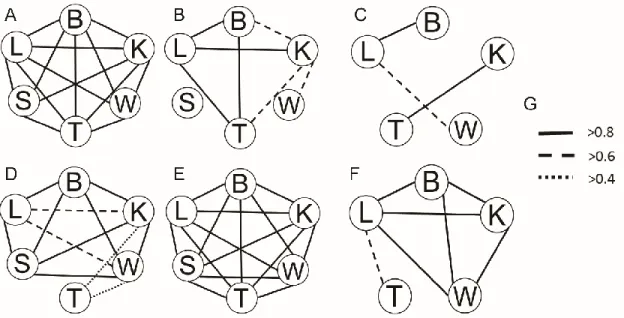
(34) 34. (Herrera et al., 2002; Conner and Sterling, 1995; Delph, 1996; Diggle, 2002) and also whether static integration patterns vary among species or populations in accordance with pollinators (Pérez et al., 2007; Rosas-Guerrero et al., 2010; González et al., 2014). However, to our knowledge no studies have yet examined integration during flower ontogeny and it is not known how ontogenetic integration is related to static integration of mature flowers, and to what extent ontogenetic integration reflects developmental factors and/or functional associations. In principle, ontogenetic integration might reflect a constraint imposed by developmental processes in the production of variant floral morphologies. Alternatively, ontogenetic integration may result from selection, but given that pollinators are able to exert direct selection only on mature flowers, static and ontogenetic integration should differ. However, if we consider that mature morphologies are the result of development and that changes in developmental process can have ecological significance (Gould, 1977; Alberch et al., 1979) with a positive impact on fitness, ontogenetic and static integration could be similar. The genus Schizanthus Ruiz and Pavón (Solanaceae) comprises 12 species of annual and biannual herbs, with bilabiate, zygomorphic, papilionaceous flowers. Evolutionary transitions from bee- to hummingbird- and moth-pollination syndromes have occurred in the genus (Pérez et al., 2006), accompanied by strong changes in function, shape and static integration patterns of mature flowers (Pérez et al., 2007). S. porrigens Graham has a bee syndrome; during pollination the lateral parts of the lower lip (wings) are used as a landing platform and the keel (inferior part of the lower lip) releases the stamens in an explosive pollen discharge mechanism (Cocucci, 1989). These structures are reduced and not functional in S. integrifolius Phil, with a moth syndrome. Functional differences among species are reflected in the patterns of static integration, indicating that these were shaped by pollinator-mediated selection; in S..
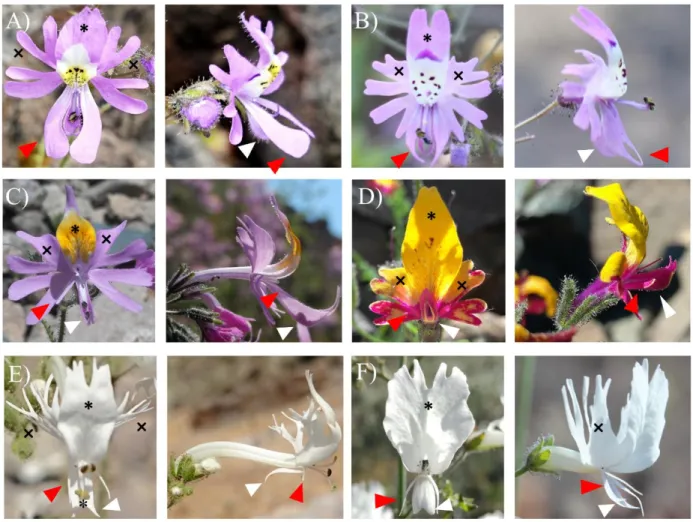
(35) 35. porrigens the size of wings and keel in mature flowers is correlated with the size of the upper lip, whereas in S. integrifolius the lower lip represents an independent module (Pérez et al., 2007). In this study we examined the floral ontogeny of S. integrifolius and S. porrigens. We estimated the patterns and magnitude of integration among floral parts during ontogeny (ontogenetic integration sensu Klingenberg, 2014), from the stages in which floral primordia are recently differentiated (and petals can be distinguished) until bud opening. We also estimated floral integration at early and late phases of ontogeny. In this way we address the following questions: Do Schizanthus species differ in their level and pattern of ontogenetic integration? If so, are the differences related to the function of traits during pollination? Is ontogenetic integration variable throughout ontogeny? If so, is the change during development linked to static integration? And finally, does ontogenetic integration show developmental constraints to morphological change?. 2. Material and Methods 2.1 Studied species We studied the flower development of two Chilean endemic species of Schizanthus, S. integrifolius and S. porrigens (Fig. 1). The former grows in the winter rainfall sector of the Atacama Desert and only emerges during rainy years associated with El Niño events. S. porrigens grows a little farther south under Mediterranean conditions. The corolla of both species consists of five petals partially fused in their lower extremes to form a narrow corolla tube that is short in S. porrigens and long in S. integrifolius. The three uppermost petals constitute the upper lip, which in turn is composed of the banner and two lateral sections. The two lowermost petals are profoundly dissected, and their inner portions are fused to form a keel..
(36) 36. S. porrigens has a pink-purple corolla with nectar guides, non-reflexed lateral sections, the wings extended as landing platform and the keel retains the stamens in an explosive pollen discharge mechanism. S. integrifolius has a pure white corolla with a long tube, backwardreflexed and highly dissected lateral sections, reduced lower lip and absence of explosive pollen discharge. This species has a moth pollination syndrome, but receives visits of bees and butterflies, which use the stamens as landing platform instead the wings or keel (which have no evident function during pollination). Although this species receives relatively few visits of pollinators in comparison to S. porrigens (Pérez et al., 2007. Table 1), it is highly dependent on pollinators (Pérez et al., 2009). These Schizanthus species have contrasting pollination systems (Pérez et al., 2006) associated with functional differences of the lower lip.. 2.2 Sampling We collected inflorescences of five individuals per species in September, 2014 from the same two populations studied by Pérez et al. (2007) (Fig. 1). Inflorescences were preserved in a 70% aqueous ethanol medium. Nine to ten inflorescences of different sizes representing different stages of floral ontogeny were removed per individual, resulting in 51 buds for S. integrifolius and 48 buds for S. porrigens. Buds were dissected under a zoom stereomicroscope (Nikon SMZ 745T) and photographed. Sepals and/or stamens were removed if necessary for petal visualization. SEM photos were also taken in order to visualize better organ differentiation in early stages. We recorded the length of the following six traits from digital images using the software Image J: banner, lateral section, wing, keel, corolla tube and stamen bud (Fig. 2). All measurements were log transformed before statistical analyses. 2.3 Statistical Analysis.
(37) 37. To characterize the levels and patterns of floral integration we estimated the Pearson correlation coefficient among each pair of traits across floral ontogeny, from the stage in which each petal primordial is clearly differentiated until the opening of the bud. We also divided developmental process into two arbitrary phases, ‘Early Phase’ and ‘Late Phase’. To distinguish the phases we considered the time when the lobe petals of the lower and upper lip grow enough to make contact (Fig. 3). We used this event because it has been argued that both spatial proximity and contact of structures can trigger an integration among them (Armbruster et al., 2014), and because the contact among the other petal primordia occurs before wing primordia are well differentiated. Pairwise correlation coefficients were used to construct three 6×6 correlation matrices per species corresponding to Early Phase (CM EI and CM EP), Late Phase (CM LI and CM LP) and Complete Ontogeny. The pattern of significant correlations per species and phase was depicted as a correlation diagram. The magnitude of floral integration (INT) for each species and phase was estimated from the variance of eigenvalues in each correlation matrix. A 95% confidence interval of INT was estimated by bootstrapping the original log-transformed data 10,000 times (Cheverud et al., 1989; Herrera et al., 2002). To compare the integration patterns among species and phases we performed pairwise comparisons among the six correlation matrices using matrix permutation tests (Cheverud et al., 1989). To assess whether ontogenetic integration patterns are related to the function of traits during pollination between species (as was reported for static integration patterns by Pérez et al., 2007), we compared the observed correlation matrices with two hypothetical correlation matrices. Matrix F1 represents the integration of banner, lateral sections, wings, keel and stamens, which are the traits that work together during pollination in S. porrigens (upper lip attracts pollinators, wings as landing platform, and the keel retains stamens prior to.
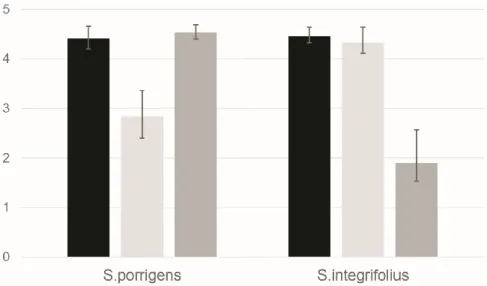
(38) 38. explosive pollen discharge), and was constructed by assigning 1 to correlations between them and 0 to the remaining correlations. Matrix F2 represents the decoupling of wings and keel, and the integration of traits that work together during pollination in S. integrifolius (upper lip attracts pollinators and stamens as landing platform), and was constructed assigning 1 to the correlations among them and 0 to the remaining correlations. To discriminate if observed data fit better to Matrix F1 or Matrix F2 we used the approach of Herrera et al. (2002): a difference matrix Z=F1-F2 was constructed, then a permutation test was performed between Z and each of the six observed matrices (a positive correlation indicates that observed data fit better to F1 than F2, and a negative correlation indicates that observed data fit better to F2 than F1). All analyses were conducted in R version 3.1.1 (R Development Core Team, 2014).. 3. Results Flowers of Schizanthus species showed high levels of ontogenetic integration. The INT values estimated across ontogeny (from primordia differentiation until bud opening) were 4.4 (95%CI=4.2-4.7, n=48) for S. porrigens and 4.5 (95%CI=4.3-4.6, n=51) for S.integrifolius, representing 73% and 75% of the maximum integration possible (Fig. 4). All correlations among floral traits were positive: r ranged between 0.90 and 0.98 in S. integrifolius, and between 0.86 and 0.98 in S. porrigens, (Table 2). The level of ontogenetic integration varied during ontogeny in both species, but following opposite patterns; while in S. integrifolius INT values decreased significantly from 4.3 to 1.9 (Early phase: 95%CI= 4.1-4.6, n= 34; Late phase: 95%CI=1.5-2.6, n= 17), INT values increased significantly from 2.8 to 4.6 in S. porrigens (Early phase: 95%CI=2.4-3.3, n=26; Late phase: 95%CI=4.4-4.7, n=22) (Fig. 4)..
(39) 39. Patterns of ontogenetic integration of Schizanthus species were more similar in the early phase of ontogeny (CMEI. vs. CMEP: r= 0.31, p=0.19) than in the late phase (CMLI vs. CM LP: r=-0.46, p=0.08) (Fig.5). Difference among phases in r values were statically significant (95%CI =0.31-0.46, r=0.77, p=0.02). In both species ontogenetic patterns tend to reflect the functional relationships among traits during pollination. As expected, integration patterns of S. porrigens at both ontogenetic phases fitted better to matrix F1 (representing the integration of upper lip, lower lip and stamens) than to matrix F2 (representing the functional decoupling of wings and keel) (CMEP vs. Z: r= 0.61, p=0.03; CMLP vs. Z: r=0.67, p=0.01). In contrast, the pattern of ontogenetic integration of S.integrifolius fitted better to matrix F1 than to matrix F2 at the late phase of ontogeny (CMLI vs. Z: r=-0.56, p=0.04), but not at the early phase of ontogeny (CMEI vs. Z: r= 0.18, p=0.30), revealing an ontogenetic tendency for corolla disintegration and decoupling of non-functional traits (wings and keel), as is also shown by the floral integration diagrams (Fig. 5).. 4. Discussion The patterns of ontogenetic integration differed among Schizanthus species, and the differences become more accentuated at the end of ontogeny. These results have not been reported previously for flowers, but studies in mammals suggest that ontogenetic integration can vary across development (Zelditch, 1988; Zelditch et al., 1992; Zelditch et al., 2006; Goswami et al., 2006). Variation among Schizanthus species is congruent with the differences in pollination syndrome, functional relationships among floral traits and static integration patterns observed in mature flowers (Pérez et al., 2007. Fig. 5). S. integrifolius has a moth pollination syndrome, but receives visits of bees and butterflies that use the stamens as landing.
(40) 40. platform instead of the wings or keel. These traits become decoupled from the remaining corolla lobes (the wing is decoupled to a greater degree than the keel) at the end of ontogeny. We propose that the decoupling of these traits (which arise from the same floral primordia) resulted from a relaxation of pollinator-mediated selection (see also Thompson et al., 1998; Anderson & Busch, 2006). Alternatively, decoupling can result from selection acting against a default co-variation pattern produced by developmental or genetic factors (pleiotropy). S. porrigens followed the opposite path of S. integrifolius; floral integration increased during ontogeny, but the patterns of integration remained constant, fitting the F1 model better at both early and late phase of ontogeny. This model represents the integration of all the traits that work together during the pollination process in S. porrigens (upper lip that attracts pollinators, wings as landing platform, and the keel retaining stamens prior to explosive pollen discharge). Static integration can be explained by pollinator-mediated selection acting on mature flowers (Kudoh et al., 2001; Ushimaro et al., 2003). Nonetheless, ontogenetic integration patterns must be explained in other terms as pollinators are not able to exert direct selection on floral buds. We suggest that developmental factors related to morphological integration may have consequences on the selection of adult morphology and therefore on the developmental programs that are maintained at the population level. The decoupling of wings and keel in S. integrifolius is related to the reduction of the lower lip during development. The reduction of wings and keel probably result from independent developmental processes, and has occurred at least three times in the phylogeny of Schizanthus (Pérez et al. 2006). Indeed, although the wings and keel emerge from the same floral primordia they do not co-vary, and therefore they do not comprise a developmental module. Ontogenetic decoupling of lower lip parts probably allowed the independent.
(41) 41. evolution of floral parts during the phylogeny of Schizanthus. This may be also the case of S. hookerii, in which the keel is integrated with the banner and the wings are almost completely decoupled from the rest of the corolla (Pérez, 2007). Also, we found that integration may occur among floral parts that are physically separated. The banner and lateral sections, for example, were always highly integrated even though they arise from different primordia. Lower and upper lips were highly integrated in S. porrigens although they are physically separated by two huge stamens (which may be somehow related to the zygomorphic bilabiate morphology present in the genus; Knapp, 2002) that are expected to act as a physical barrier against lip integration (Fig. 3). Nonetheless, these patterns may be affected by other developmental factors not considered in this study. Finally, we lack enough evidence to understand which mechanisms –if any- are triggered when the lips come into contact (the milestone used to define early and late phases), but surely this is a more gradual process than we could distinguish under a dissection microscope. This event is accompanied by an increase in integration between lips in S. porrigens and by a disintegration in S. integrifolius. In the latter species more time is required for the lower lip to grow large enough to touch the upper lip, so the interaction occurs in a larger and older bud, which may explain the interspecific differences.. 5. Conclusion Our results show that ontogenetic floral integration varies during ontogeny and among species. Changes in integration across ontogeny are related to the function of traits during pollination, and are more accentuated in S. integrifolius, which has a highly divergent and derived morphology. Ontogenetic integration patterns in the late phase of ontogeny are similar.
(42) 42. to static integration patterns described for mature flowers, and reflect that evolutionary tendencies shaped by pollinator-mediated selection and developmental tendencies are congruent. Future ontogenetic integration studies will focus on phylogenetic comparisons for a better understanding of evolutionary changes in the ontogenetic patterns that shape tendencies and constraints in floral evolution, as well as ontogenetic studies for a better understanding of the developmental process underlying the changes in integration patterns.. 5. Acknowledgements We thank Kester Bull and all the collaborators of the symposium “Contemporary studies on flower structure and biology” (Santiago, Chile) supported by Flores Network, Vicerrectoría de Investigación de la Pontificia Universidad Católica de Chile (Concurso Apoyo a la Formación de Redes) and the Instituto de Ecología y Biodiversidad (grants P05-002 from ICM and 364 PFB-23 from Conicyt). Funding was provided by FONDECYT 1141047 & CONICYTPCHA/Doctorado Nacional/2015-21150326.. References Alberch, P., Gould, S.J., Oster, G.F., Wake, D.B., 1979. Size and shape in ontogeny and phylogeny. Paleobiology 5(3), 296-317. Anderson, I., Busch, J., 2006. Relaxed pollinator-mediated selection weakens floral integration in self-compatible taxa of Leavenworthia (Brassicaceae). Am. J. Bot. 93(6), 860867..
(43) 43. Armbruster, W., Di Stilio, V., Tuxill, J., Flores, T., Velásquez, J.L., 1999. Covariance and decoupling of floral and vegetative traits in nine Neotropical plants: a re-evaluation of Berg´s correlation-peiades concept. Am. J. Bot. 86, 39-55. Armbruster, W., Pélabon, C., Hansen, T., Mulder, C.P., 2004. Floral integration, modularity, and accuracy: distinguishing complex adaptarions from genetic constraints. In: Pigliucci, M., Preston, K. (eds). Phenotypic integration: Studying the Ecology and Evolution of Complex phenotypes. Oxford University Press. New York. Pp. 23-49 Armbruster, W., Hansen, T., Pélabon, C., Pérez-Barrales, R., Maad, J., 2009. The adaptive accuracy of flowers: measurement and microevolutionary patterns. Ann. Bot. 103(9), 15291545. doi: 10.1093/aob/mcp095 Armbruster, W., Pélabon, C., Bolstad, G., Hansen, T., 2014. Integrated phenotypes; understanding trait covariation in plants and animals. Phil. Trans. R. Soc. B. 369, 20130245. Berg, R., 1960. The Ecological Significance of Correlation Pleiades. Evolution. 17, 171–180. Cheverud, J., 1982a. Phenotypic, genetic, and environmental integration in the cranium. Evolution 44, 520-538. Cheverud, J. 1982b. Relationships among ontogenetic, static, and evolutionary allometry. American Journal of Physical Anthropology, 59(2), 139-149. Cheverud, J. M., Wagner, G. P., Dow, M. M., 1989. Methods for the comparative analysis of variation patterns. Systematic Biology 38(3), 201-213. Cocucci, A., 1989. El mecanismo floral de Schizanthus. Kurtziana. 20, 113-132..
(44) 44. Cock, A. 1966. Genetical aspects of metrical growth and form in animals. Quarterly Review of Biology, 131-190. Conner, J., Sterling, A., 1995. Testing hypotheses of functional relationships: a comparative survey of correlation patterns among floral and vegetative traits in five insect-pollinated plants. Am. J. Bot. 82, 1399-1406. Delph, L., 1996. Flower size dimorphism in plants with unisexual flowers, In: Lloyd, D.G., Barrett, S.C.H. (eds) Floral biology: studies on floral evolution in animal-pollinated plants. Chapman & Hall Press, New York. pp. 241-273. Diggle, P., 2002. A developmental morphologist’s perspective on plasticity. Evol. Ecol. 16, 167-283. Diggle, P., 2014. Modularity and intra-floral integration in metameric organism: plants are more than the sum of their parts. Phil. Trans. R. Soc. B 369: 20130253 htt://dx.doi.org/10.1098/rstb.2013.0253. Ellis, A., Brockington, S., de Jager, M., Mellers, G., Walker, R., Glover, B. 2014 Floral trait variation and integration as a function of sexual deception in Gorteria diffusa. Phil. Trans. R. Soc. B 369: 20130563 http://dx.doi.org/10.1098/rstb.2013.0563. Gómez, J., Perfectti, F., Klingenberg, C. 2014. The role of pollinator diversity in the evolution of corolla-shape integration in a pollination-generalist plant clade. Phil. Trans. R. Soc. B, 369(1649), 20130257. Gonzales, P., Perez, S., Bernal, V., 2011. Ontogenetic allometry and cranial shape diversification among human populations from South America. Anat. Rec. 294, 1864-1874..
(45) 45. Goswami, A., 2007. Cranial modularity and sequence heterochrony in mammals. Evol.develop. 9(3), 290-298. Gould S. 1977 Ontogeny and phylogeny. Cambridge, MA: Belknap Press. Gould, S. 1966. Allometry and size in ontogeny and phylogeny. Biological Reviews, 41(4), 587-638. Gould S. 2002 The structure of evolutionary theory. Cambridge, MA: Belknap Press. Herrera, C., 2001. Deconstructing a floral phenotype: do pollinators select for corolla integration in Lavandula latifolia? J. Evol. Biol. 14, 574-584. Herrera, C., Cerda, X., García, B., Guitián, J., Medrano, M., Rey, P., Sanchéz-Lafuente, A., 2002. Floral integration, phenotypic covariance structure and pollinator variation in bumblebee-pollinated Helleborus foetidus. J. Evol. Biol. 15, 108-121. Klingenberg, C., Zimmerman, M., 1992. Static, ontogenetic, and evolutionary allometry: A multivariate comparison in nine Species of water striders. The Amer. Natural.. 140(4), 601620. Klingenberg, C., Badyaev, A., Sowry, S., Beckwith, N., 2001. Inferring Developmental Modularity from Morphological Integration: Analysis of Individual Variation and Asymmetry in Bumblebee Wings. The American Naturalist. 157(1), 11-23. Klingenberg, C., Duttke, S., Whelan, S., Kim, M. 2012. Developmental plasticity, morphological variation and evolvability: a multilevel analysis of morphometric integration in the shape of compound leaves. Journal of evolutionary biology, 25(1), 115-129..
(46) 46. Klingenberg, C., 2014. Studying morphological integration and modularity at multiple levels: concepts and analysis. Phil. Trans. R. Soc. B. 369: 20130249. Knapp, S., 2002. Floral diversity and evolution in the Solanaceae in: Cronk, Q., Bateman, R., Hawkins, J. (Eds) Systematics Association Special Volume: Developmental genetics and plant evolution. 65, 267-297. Kudo, G., Maeda, T., Narita, K., 2001. Variation in floral sex allocation and reproductive success within inflorescences of Corydalis ambigua (Fumariaceae): pollination efficiency or resource limitation?. Journal of Ecology. 89(1), 48-56. Laffont, R., Revoisé, E., Navarro, N., Alibert, P., Montuire, S., 2009. Morphological modularity and assessment of developmental processes within the vole dental row (Microtus arvalis, Arvicolinae, Rodentia). Evol. Dev. 11, 302-311. Mantel, N., 1967. The detection of disease clustering and a generalized regression approach. Cancer research. 27(2, Part 1), 209220. Lewontin R. 1978 Adaptation. Sci. Am. 239, 212–231. (doi:10.1038/scientificamerican 0978212) 15. Lloyd, D., Schoen, D. 1992. Self-and cross-fertilization in plants. I. Functional dimensions. International Journal of Plant Sciences. 358-369. Lovell J, Juenger T, Michaels S, Lasky J, Platt A, Richards J, Yu X, Easlon H, Sen S, Mckay J. 2013. Pleiotropy of FRIGIDA enhances the potential for multivariate adaptation. Proceedings of the Royal Society B: Biological Sciences 280: 20131043..
(47) 47. Murren, C., 2002. Phenotypic integration in plants. Pl. Sp. Biol. 17(2-3), 89-99. Olson, E. C., & Miller, R. L. 1999.Morphological integration. University of Chicago Press. Ostrowski E, Rozen D, Lenski R. 2005. Pleiotropic effects of beneficial mutations in Escherichia coli. Evolution 59, 2343–2352. Pélabon, C., Bolstad, G.H., Egset, C.K., Cheverud, J., Pavlicev, M., Rosenqvist, G., 2013. On the relationship between ontogenetic and static allometry. The Amer. Natural. 181(2), 105212. Pérez, F., Arroyo, M., Medel, R., Hershkovits, M., 2006. Ancestral reconstruction of flower morphology and pollinator systems in Schizanthus (Solanaceae). Am. J. Bot. 93, 1029-1038. Pérez, F., Arroyo, M., Medel, R., 2007. Phylogenetic analysis of flora integration in Schizanthus (Solanaceae): does pollination truly integrate corolla traits? J. Evol. Biol. 20, 1730-1738. Pérez, F., Arroyo, M., Armesto, J. 2009. Evolution of autonomous selfing accompanies increased specialization in the pollination system of Schizanthus (Solanaceae).American Journal of Botany, 96(6), 1168-1176. Pigliucci, M., 2003. Phenotypic integration: studying the ecology and evolution of complex phenotypes. Ecol. Lett. 6, 265-272. Pigliucci, M., Preston, K., 2004. Phenotypic integration: studying the ecology and evolution of complex phenotypes. Oxford University Press, Oxford..
(48) 48. R Development Core Team, 2008. R: A language and environment for statistical computing. R Foundation for Statistical Computing, Vienna, Austria. ISBN 3-900051-07-0, URL http://www.R-project.org. Smith, S. 2016. Pleiotropy and the evolution of floral integration. New Phytologist, 209(1), 80-85. Thompson, F., Hermanutz, L., Innes, D., 1998 The reproductive ecology of island population of distylous Menyanthes trifoliate (Menyanthaceae). Can. J. Bot. 76, 818-828. Ushimaro, A., Itayaki, T. Ishi, H., 2003. Floral correlations in an andromonoecious species, Commelina communis (Commelinaceae). Pl. Sp. Biol. 18: 103-106. Wagner G, Zhang J. 2011. The pleiotropic structure of the genotype–phenotype map: the evolvability of complex organisms. Nature Reviews Genetics 12: 204–213. Zelditch, M.L. 1988. Ontogenetic variation in patterns of phenotypic integration in the laboratory rat. Evolution 42(1), 28-41. Zelditch, M.L., Bookstein, F. L., Lundrigan, B.L., 1992. Ontogeny of integrated skull growth in the cotton rat Sigmodon fulviventer. Evolution 46(4), 1164-1180. Zelditch, M. L., Mezey, J., Sheets, H. D., Lundrigan, B. L., & Garland, T., 2006. Developmental regulation of skull morphology II: ontogenetic dynamics of covariance. Evol. Develop. 8(1), 46-60.
Figure



+7




Documento similar
L´ opez-Grao, J., Merseguer, J., Campos, J.: From UML activity diagrams to stochastic Petri nets: Application to software performance engineering. G´ omez Mart´ınez, E., Merseguer,
For a short explanation of why the committee made these recommendations and how they might affect practice, see the rationale and impact section on identifying children and young
The expansionary monetary policy measures have had a negative impact on net interest margins both via the reduction in interest rates and –less powerfully- the flattening of the
Jointly estimate this entry game with several outcome equations (fees/rates, credit limits) for bank accounts, credit cards and lines of credit. Use simulation methods to
In our sample, 2890 deals were issued by less reputable underwriters (i.e. a weighted syndication underwriting reputation share below the share of the 7 th largest underwriter
We find that individuals politically aligned to the regional incumbent shift responsibility to the central government upon receiving negative news about the number of contact tracers
At the same time, however, it would also be misleading and simplistic to assume that such Aikido habituses were attained merely through abstracted thought
We selected a sample of 27 high redshift quasars (4 ≤ z ≤ 6.4) from the SDSS, which contains the valuable diagnostic UV rest-frame emission lines (e.g., Siivλ1398+Oivλ1402,
