Universidad de Valladolid
School of Education and Social Work
Degree in Primary Education Teaching - Specializing in a Foreign
Language (English)
BACHELOR’S DEGREE FINAL RESEARCH PAPER
USING AUTHENTIC VIDEOS TO FOSTER
LISTENING AND ENGLISH PRONUNCIATION
IN THE THIRD YEAR OF PRIMARY
EDUCATION
Name: Lidia Gil González
Tutor: Fernando Colomer Serna
In Valladolid, June 2017
ABSTRACT
Spanish legislation on education emphasizes the role of listening and pronunciation in the English classroom. That is why the present article aims to research whether students can improve both skills thanks to authentic videos. Therefore, an action plan was implemented with two classrooms in 3rd Primary: experimental and control group. Data was collected by means of a pre and post listening test, pre and post pronunciation exercises and a teacher diary. The treatment consisted of a series of six short videos necessary to solve the increasingly demanding post-viewing activities. Having suffered a setback, results reveal that the experimental group does not progress as much as the control one in terms of listening, but videos do have a positive effect on vowel articulation and pace.
Keywords: listening, pronunciation, authentic videos, Primary Education.
RESUMEN
La legislación española en materia educativa prioriza el papel de la comprensión oral y la pronunciación en las clases de inglés. Por ello, el presente artículo pretende investigar si los alumnos pueden mejorar ambas habilidades gracias al uso de vídeos. Para ello, se ha puesto en marcha un plan de acción con dos clases de 3º de Primaria: grupo experimental y control. Los datos se recogieron utilizando un pre y post examen de comprensión oral, pre y post ejercicios de pronunciación y un diario del profesor. El tratamiento consistía en una serie de seis vídeos breves necesarios para resolver las actividades posteriores al visionado, que cada vez eran más exigentes. A pesar de enfrentarnos a circunstancias adversas, los resultados demuestran que en la comprensión oral el grupo experimental no progresa tanto como el control, pero que los vídeos sí que tienen un efecto positivo en la articulación de las vocales y el ritmo.
INDEX
1. Introduction ... 7
2. Justification ... 8
3. Objectives ... 10
3.1. General objectives ... 10
3.2. Specific objectives ... 10
4. Literature review... 11
4.1. Communicative competence... 11
4.2. Development of the oral skills ... 12
4.2.1. Listening skills ... 12
4.2.2. Pronunciation ... 13
4.3. Videos in the second language classroom ... 15
4.3.1. Timing of videos ... 15
4.3.2. Duration of videos ... 15
4.3.3. Activities to work with videos ... 16
4.3.4. Achievements ... 18
4.3.5. Limitations ... 19
4.4. Relevant studies ... 20
4.4.1. Videos as a means to foster listening skills ... 20
4.4.2. Videos as a means to reinforce pronunciation ... 23
4.4.3. Videos in Primary Education ... 25
5. Description of methodology ... 26
5.1. Objectives ... 26
5.2. Participants ... 26
5.3. Materials for data collection and resources ... 27
5.3.1. Materials for data collection ... 27
5.4. Procedure ... 29
5.4.1. Initial phase ... 30
5.4.2. Intermediate phase: treatment ... 31
5.4.3. Final phase ... 33
6. Analysis of results and discussion ... 34
6.1. Analysis of data ... 34
6.2. General objective 1: listening skills ... 35
6.3. General objective 2: pronunciation... 39
7. Conclusion ... 43
8. References ... 46
9. Appendices ... 53
9.1. Listening exercises ... 53
9.1.1. Listening: pre-test ... 53
9.1.2. Listening: post-test ... 59
9.2. Pronunciation exercises ... 65
9.2.1. Reading ... 65
9.2.2. Speaking ... 66
9.3. Treatment: Tasks related to TV series ... 67
9.3.1. Activity 1 ... 67
9.3.2. Activity 2 ... 71
6.3.3. Activity 3 ... 75
9.3.4. Activity 4 ... 79
9.3.5. Activity 5 ... 83
9.3.6. Activity 6 ... 88
9.4. Analysis of data ... 92
9.4.1. Listening answer key ... 92
LIST OF FIGURES
Figure 1. Summary of the procedure ... 30
Figure 2. General objective 1. Listening performance ... 35
Figure 3. General objective 1. Listening performance: experimental group ... 37
Figure 4. General objective 2. Pronunciation performance ... 39
Figure 5. General objective 2. Pronunciation performance: experimental group ... 41
Figure 6. Listening: pre-test p.1... 53
Figure 7. Listening: pre-test p.2... 54
Figure 8. Listening: pre-test p.3... 55
Figure 9. Listening: pre-test p.4... 56
Figure 10. Listening: pre-test p.5... 57
Figure 11. Listening: pre-test p.6... 58
Figure 12. Listening: post-test p.1 ... 59
Figure 13. Listening: post-test p.2 ... 60
Figure 14. Listening: post-test p.3 ... 61
Figure 15. Listening: post-test p.4 ... 62
Figure 16. Listening: post-test p.5 ... 63
Figure 17. Listening: post-test p.6 ... 64
Figure 18. Reading: pronunciation exercise ... 65
Figure 19. Speaking: pronunciation exercise ... 66
Figure 20. Power Point: activity 1 ... 69
Figure 21. Power Point: activity 2 ... 73
Figure 22. Power Point: activity 3 ... 77
Figure 23. Power Point: activity 4 ... 81
Figure 24. Power Point: activity 5 ... 85
Figure 25. Power Point: activity 6 ... 90
Figure 26. Listening key pre-test p.1 ... 92
Figure 27. Listening key pre-test p.2 ... 93
Figure 28. Listening key pre-test p.3 ... 94
Figure 29. Listening key pre-test p.4 ... 95
Figure 30. Listening key post-test p.1 ... 96
Figure 31. Listening key post-test p.2 ... 97
Figure 33. Listening key post-test p.4 ... 99
LIST OF TABLES
1. INTRODUCTION
We are currently living in a society where everyone feels the urge to master a second language; yet, regardless of how long we study English for, it is still the Achilles’ heel of most Spaniards. According to the European Commission (2012), Luxembourg, Latvia and Malta lead the ranking of countries that have a good command of English, with more than 92% of the population being able to communicate in either the mother tongue or a second language. However, it is not only the educational system that accounts for such remarkable results, but rather a constant exposure to English thanks to non-dubbed TV series and films (European Commission, 2012).
In 2011, a commission created by the Spanish Ministry of Education and Culture advocated automatic television in the original language (Belinchón, 2011). However promising this draft was, it did not take effect, and six years later we still need to have a good command of the remote control to relish the American and British accents. In the school, teachers are still afraid of incorporating the television into the classroom, as it is commonly associated with passive viewing (Shahani, Tahriri & Divsar, 2014), but, far from it. Both the Decreto 26/2016 and the Real Decreto 126/2014 encourage instructors to use cartoons, TV programmes and any other kind of audio-visual material so as to get students closer to the sounds of English and the general understanding of the language.
The more television we watch, the more we listen. And actually, listening is what children learn to do before they start talking (Thanajaro, 2000). Consequently, the second language classroom should emulate the natural learning process, therefore laying the foundations of listening before dealing with any further competence, such as pronunciation or oral production. That is why, it is necessary to develop more projects, such as the one in the present research, which blends TV series in the original version, listening skills and pronunciation.
2. JUSTIFICATION
Including TV series in the second language classroom has been my hobbyhorse ever since I started teaching English in my current place of work. Attending English classes every other day seemed insufficient for some parents, who wanted their offspring to receive constant input. Consequently, the most commonly asked question in every single teacher-parent meeting was the way children could become more proficient in English. Playing games on-line and watching some of their favourite films and TV series in the original version were the obvious answers, but I was never able to test my hypothesis with any kind of studies other than with my personal experience as an adult learner and my infatuation with sitcoms. According to Lantigua (2016), the amount of time in front of the television ranges from 134 to 144 minutes a day, so I firmly believed it could be beneficial to use all that input so as to boost the level of English. Nonetheless, whereas the first option (playing on-line games) was always willingly accepted, some parents were reluctant to play TV series in the original version on the grounds that (1) children would solely focus on the pictures and forget about the language; (2) a few parents wholeheartedly believed it was impossible for such young kids to understand any single word; and (3) nearly everyone claimed that no sooner had they changed the language than their kids started to complain. Thus, most of the families gave up before trying.
That is why, when I first set foot in the school Nuestra Señora la Real de Huelgas, I tried to make the most of the final dissertation and focused on using videos in the second language classroom so that the next time a parent asked me, I could provide reliable sources and results. After two weeks of observation, I realised that the teacher, in spite of having a very good command of the language, hardly spoke any English in the classroom, as otherwise students failed to understand what was being said. Pupils did not strive to use English either. However, they were constantly encouraged to read short extracts aloud with an accurate and standard pronunciation most were not able to achieve. In this light, Souto (2013) claims it is extremely easy to tell when someone is not a native speaker, a problem that Secondary Education students still struggle with. The second problem I faced was that the listening part had a pride of place in the mid-term exams. Instructors were constantly disappointed because the marks did not meet their expectations, but, as Thanajaro (2000) stated, students “have to listen to the words several times before they
listening skills is the first step before being proficient in speaking, reading, writing (Nunan, 2013; Byrnes, 1984, and Dunkel, 1986, in Thanajaro, 2000) and especially pronunciation (Lundsteen, 1993, in Espín & Padilla, 2014). Taking into account that learners spend between 42 and 57 percent of the time listening in the class (Wolving & Coakley, 1979, in Thanajaro, 2000), it is time teachers stopped thinking about it as an innate ability which does not need to be taught (Thanajaro, 2000) and, instead, it is given the importance it deserves.
The fact that we are working in 3rd Primary is also to our advantage, because children still enjoy short TV series with straightforward dialogues, short sentences and very simple vocabulary. Besides, the sooner learners get used to listening to English, the more they will develop their oral skills. As a matter of fact, it is very common to compare kids with sponges, as they both absorb knowledge easily (Brown, 2007, in Souto, 2013). Bearing in mind the above-mentioned remarks, the class of 3rd Primary of Las Huelgas
seemed the ideal context to implement the use of videos as a means to foster listening skills and consequently enhance pronunciation.
As far as the competences of the Degree in Primary Education Teaching are concerned, the present research complies with all six abilities listed in Universidad de Valladolid (2010), as well as with the competence related to the practicum (Orden
3. OBJECTIVES
The first subsection, which has been entitled “general objectives” intends to summarise the two main purposes of the Bachelor’s Degree Final Research Paper. In
order to achieve the aforesaid goals, I have taken some previous steps whose aims are listed in the “specific objectives” subsection.
3.1. GENERAL OBJECTIVES
• To verify if the students of 3rd Primary improve the listening skills as a result of using authentic audio-visual materials in the English as a Second Language Classroom.
• To prove if the students of 3rd Primary improve pronunciation as a result of using authentic audio-visual materials in the English as a Second Language Classroom.
3.2. SPECIFIC OBJECTIVES
• To get familiar with the concepts of “communicative competence”, “listening”, “pronunciation” and “audio-visual materials” as well as their place in the Spanish
curriculum.
• To explain when, for how long, with which activities and why audio-visual materials are used in the English as a Second Language Classroom.
• To examine the relevant studies done so far related to the development of listening and pronunciation by means of audio-visual materials in Primary Education.
• To justify why this research might be of some interest to the educational community.
• To select tools which provide reliable data when it comes to assessing listening and pronunciation.
• To provide teachers with a list of activities that might help to work on listening and pronunciation through TV series.
• To use realia in the English as a Second Language Classroom as a means to learn in an interdisciplinary way.
• To analyse the progress in listening and pronunciation in a Primary Education classroom over a certain period of time.
4. LITERATURE REVIEW
4.1. COMMUNICATIVE COMPETENCE
Tape recorders, videos and songs seem to be inherent to the second language classroom, but, as a matter of fact, the implementation of those materials did not take place until the late seventies, when the audiolingual method replaced or rather started to live together with the grammar-translation approach and the drill-and-practice technique (Boztepe, 2013). In all three of them, students made progress in both listening and pronunciation by ceaselessly repeating what the teacher or the tape recorder said and it was not until the communicative approach emerged that pupils could finally engage in meaningful interaction. Thanks to the aforesaid method, it was stated that the speaker’s competence was not only dependent on grammatically correct forms, but they also had to be aware of where, when and to whom they uttered these sentences (González-Vera & Hornero, 2016) in order to communicate successfully. That is why videos represent a powerful tool which helps contextualise dialogues and learn the language in context.
The need to move on beyond the grammar knowledge gave way to what Hymes referred to as “communicative competence” in 1971; that is, the ability to understand and
become understood in different situations. According to the Centro Virtual Cervantes
(n.d.a), Hymes distinguished four aspects: 1) systematic potential -the potential for creating language-; 2) appropriacy based on the context; 3) occurrence and frequency of an utterance; and 4) feasibility or possibility of existence.
Shortly afterwards, in 1983 (Bagarié & Mihaljević, 2007), Canale and Swain summarized the four key components of the communicative competence: 1) grammatical competence, including knowledge of grammar, vocabulary, pronunciation and spelling; 2) sociolinguistic competence and knowledge of the sociocultural rules; 3) discourse competence, comprising cohesion, coherence and adequacy to a variety of genres; and 4) strategic competence to make communication effective and be able to compensate any eventual breakdowns. The European Framework for Languages (Council of Europe, 2001) restricts the competences to the first two ones and includes the pragmatic competence, which is half way between the discourse and the strategic one, since it comprises coherence, cohesion and mastery of discourse.
legislation (LOMCE) states that the competence in linguistic communication comprises five major components: linguistic; pragmatic-discursive; socio-cultural; strategic; and personal.
4.2. DEVELOPMENT OF THE ORAL SKILLS
As it has been stated in the Common European Framework (Council of Europe, 2001) and in the Centro Virtual Cervantes (n.d.b), learning a foreign language includes the development of the five following communication skills: listening, reading, spoken production, oral interaction (Nóbrega, 2008) and writing. Likewise, some recent publications (Bloom, 1979; Bono, 1999; Fewings, 2015) identify thinking as the sixth skill. Based on the objectives underlined in section 3, this dissertation aims to focus on listening skills and pronunciation, which seems to be related to both the spoken production and reading, as well as the linguistic competence. We are therefore going to shed some light on both concepts and their position within the Spanish curriculum.
4.2.1. Listening skills
Listening has evolved from being described as a passive skill to an active process, in which the listener is not restricted to solely identifying the sounds of speech, but rather to transforming those sounds into understandable words or sentences (Rogers & Farson, 1989, as cited in Espín & Padilla, 2014; Nichols, 1974 as cited in Thanajaro, 2000). Likewise, in Lindsteen’s words (Purdy, 1997), listening differs from hearing in that the
latter receives stimuli in the brain whereas the former assigns meaning to it. After a thorough research on numerous studies, Thanajaro (2000) provides us with a more comprehensive definition: listening involves four activities “receiving aural stimuli,
attending to the spoken words, attaching meaning to the aural symbols, and responding to oral communication” (p. 12). That is to say, apart from decoding the message, the
audience also has to interpret it in line with their background and linguistic knowledge, and finally answer accordingly. Some years later, Harmer (2007) agrees that listening goes beyond simple meaning and that, as long as one understands the message as a whole, it is not necessary to assimilate every single word, notion previously stressed by Chastain and Lund (as cited in Thanajaro, 2000).
colloquial language. Stovall (1998) names two different techniques that contribute to the comprehension of the listening input: top-down and bottom-up strategies. The former depends on the background knowledge and the context, whereas in the latter students rely on the grammar, vocabulary and language they are able to spot in the text.
As far as the Spanish legislation is concerned, the Real Decreto 126/2014 holds that the main aim of Primary Education is, among others, to enhance the listening comprehension. Furthermore, in the first block, whose title is “understanding oral texts”, one of the contents outlines the need to identify the overall meaning, essential information and key points in small, short oral texts in standard language. Narrowing down the research to our Comunidad Autónoma, the Decreto 26/2016 from Castilla y León once again in section number one suggests “acercamiento al ritmo y sonoridad de la lengua a
través de las rimas, retahílas, trabalenguas, canciones, adivinanzas, series de dibujos animals, etcétera” (p. 34470, personal translation: “bringing the rhythm and sound of the second language closer to the students by means of rhymes, enumerations, tongue twisters, songs, riddles, cartoons, etc.”).
4.2.2. Pronunciation
The notion of pronunciation is often confused with two other terms: phonetics and phonology. The former is the study of all the speech sounds that take part in communication: how they are, how they are produced and how they are discerned (Cantero, 2003). In contrast, phonology is no longer interested in sounds, but rather in phonemes, and how speakers are able to identify and use them in context (Cantero, 2003).
Having limited the scope of these two misleading words, Bartolí (2005) states that pronunciation focuses both on speech sound production and on supra-segmental features (rhythm, stress and intonation).
• Rhythm is “an ordered recurrent alternation of strong and weak elements in the flow of sound and silence in speech” (Merriam Webster, n.d.), or as Cantero
(2003) held it is how frequently stressed syllables appear throughout the speech. In other words, it is the distance between two stressed syllables.
• Stress is the “point, in a word or phrase where pitch changes, vowels lengthen, and volume increases” (Harmer, 2007, p. 32). In fact, Cantero (as cited in Font &
the stressed part of the sentence and marks intonation changes-. Depending on where the stress falls in the sentence, it might lead to changes in meaning (Harmer, 2007, p.33): “Brad wants to MARRY my daughter?” and “BRAD wants to marry my daughter?”. Similar though these sentences are in terms of words, the
implications and reasons to be surprised are by no means the same.
• Intonation is, in Harmer’s words (2007), “the music of speech” (p. 28). Cantero (2003) also compares intonation with music, since they both make use of changes in pitch or tone in order to convey varied meanings. The higher the pitch, the more important the information; on the contrary, the lower the pitch, the less important the information. A falling pitch also signals the end of a conversation.
When it comes to learning pronunciation in the second language classroom, Morley (1991) advises us not to teach it in isolation, or else no improvement will be made when facing actual communication. That is why, using videos might be the ideal context to get comfortable with pronunciation in real-life situations.
Teachers should be aware of the fact that pronunciation is not a skill, but rather a subcomponent of the grammatical competence (Canale and Swain) or linguistic competence (Common European Framework, 2001), which is shared by both the speaking and reading skills. Consequently, in the Spanish curriculum, pronunciation is briefly mentioned in block 2 “oral text production: expression and interaction” and block 4 “written text production: expression and interaction”. The Real Decreto 126/2014 hardly makes any allusion to this field other than encouraging students to participate in simple and short conversations in spite of not having a very clear pronunciation. The
4.3. VIDEOS IN THE SECOND LANGUAGE CLASSROOM
Martínez, I. (1999) considered the video to be a synonym of video camera, cassette player and all the programmes that have been recorded on them. Soon afterwards, Luther (in Medina, 2014) couldn’t tell the difference between “television” and “video”, as they
were both alternative expressions. It was not until 2014 that Medina distinguished between the audio-visual means which show images on the screen (television) and the “reproducción de imágenes y sonidos en movimiento a través de un medio tecnológico
de comunicación” (p.117, personal translation: “display of motion pictures and sounds thanks to technological media”) (video). One of the assets of the video is that linguistic elements go hand in hand with non-linguistic features, thus complementing each other (Gadotti, 2003, as cited in Medina, 2014).
Salinas, in 2002 (in Medina, 2014) states there is not such a thing as an educational video. The most important factor, though, is for teachers to have the necessary knowledge to make the best use of audio-visuals.
4.3.1. Timing of videos
Challenging though it has been to find literature on when to play a video in the second language classroom, Stempleski & Tomalin (1990) agree on the fact that teachers should be using them throughout all the stages of education, particularly with beginners. Other than that, Shahani et al. (2014) have reluctantly accepted that most teachers “simply put a video at the end of the term and let the students watch a movie without making them involved actively in the task” (p.43); hence, they look up to those professionals who make
use of videos during the lesson to engage students in learning.
4.3.2. Duration of videos
4.3.3. Activities to work with videos
Watching a video in the classroom should not be restricted to listening and enjoying the startling motion pictures the way one does while comfortably sitting down on the couch, it should instead foster active viewing (Boztepe, 2013). Easier said than done. The question now is how to encourage students to take part in a a priori passive pastime. In an attempt to reach a satisfactory solution, many authors (Alburquerque, 1990; Gómez, 2003; Cabrero, 1988, as cited in Rocillo, 2014; Stovall, 1998; Van Duzer, 1997) have suggested a three-stage approach.
Pre-viewing activities
First and foremost, Stovall (1998) points out that the instructional goal of the task should be defined. Therefore, based on the characteristics of the target group, we will choose the video which best suits the students’ needs and which best adapts to the pupils’
proficiency level (Pastor, 2004, as cited in Rocillo, 2014; Stovall, 1998). Gómez (2003) underlines three key factors before making the final decision: the message must be clear, the scenes motivating and dialogues understandable.
Once the video has been painstakingly selected, it is introduced into the classroom. Apart from establishing the purpose of the listening and explaining the follow-up activities, some preparatory exercises must be done:
• Predicting and drawing inferences about what is going to happen (Alburquerque, 1990; Barrios, n.d.).
• Working on the vocabulary that might occur by using photos, pictures or freeze framing (Gómez, 2003; Yubero, 2010, as cited in Rocillo, 2014).
• Discussing background knowledge on the topic (Van Duzer, 1997).
Viewing activities
Most of the researchers (Alburquerque, 1990; Barrios, n.d.; Fernández y Suárez & Bravo, 1992) suggest not only listening to the passage once but rather twice, so that the first time students can focus on the main idea and the second one move on to more detailed information. Find below a list of possible activities classified according to Lund’s
categories (Lund, 1990, as cited in Van Duzer, 1997):
• Transferring: transforming the message into a picture (Barrios, n.d.; Lund, in Van Duzer, 1997;) or chart completion (Alburquerque, 1990).
• Choosing: ticking the words that appear in a given list, true/false test, multiple-choice test (Alburquerque, 1990), given three different written texts, choosing the perfect fit (Barrios, n.d.).
o Matching: matching pictures to what is being said (Alburquerque, 1990),
writing the right name for the main characters, matching the characters to their feelings and emotions, and matching sentences to the corresponding characters (Barrios, n.d.).
• Answering: gap filling (Alburquerque, 1990), answering short questions or finishing sentences started by the teacher (Barrios, n.d.).
• Condensing: story-line pictures, (Alburquerque, 1990), ordering the sentences so that the story makes sense (Barrios, n.d.).
• Duplicating: pressing the pause button in order for the students to repeat a problematic word or sentence.
• Extending: pressing the pause button right before a recurring sentence is about to be uttered so that students can recall it and say it out loud. Another possibility is for students to finish an incomplete phrase.
• Other activities: labelling (Alburquerque, 1990). Other than that, Stempleski & Tomalin (1990) advocate changing the stimulus with sound off, vision on or, conversely, sound on vision off techniques.
Post-viewing activities
These activities help reinforce previous knowledge (Alburquerque, 1990), urge learners to reflect upon their oral comprehension (Van Duzer, 1997) and assess learning; hence, students must “create” something based on the information they have listened to (Fernández y Suárez & Bravo, 1992). There is a fine line between while-viewing and post-viewing activities, thus some of them can be equally included in both sections. Some of the exercises instructors can work on after listening might be summarized as follows:
• Condensing information: summarizing, jigsaw listening (Van Duzer, 1997)
• Answering: answering medium-length questions about the text or fill-in the gaps exercises (Fernández y Suárez & Bravo, 1992)
• Extending: conjuring up how events could have happened otherwise (Marigómez, 2005).
• Modelling: students perform the scene either with gestures (Barrios, n.d.), role playing (Lonergan, in Boztepe, 2013) or by means of puppets (Barrios, n.d.).
• Conversing: correcting mistakes (Barrios, n.d.).
4.3.4. Achievements
When the communicative approach first emerged, teachers hastened to include all kind of audio-visuals, mainly videos, in the language laboratories, on the grounds that they brought the real world into the classroom and they provided some authentic input (Tomalin, 1986). Thenceforth, many are the studies that discuss the benefits of implementing activities with videos in the second language classroom. Chief among these advantages are the following ones:
• Promoting cross cultural awareness, that is, getting to know the culture of the target language (Davidson, 2009, as cited in Boztepe, 2013; Lonergan, 1984, as cited in Boztepe, 2013; Gómez, 2000, as cited in Gómez, 2003; Marigómez, 2005;
Revista de lingüística teórica y aplicada, 48 (2), as cited in Rocillo, 2014; Stempleski & Tomalin, 1990).
• Improving motivation (Marigómez, 2005; Medina, 2014; Yubero, 2010, as cited in Rocillo, 2014; Thanajaro; 2000; Tomalin, 1986). Based on his research, Quintos (2011) claims that less than 40% of the population is constantly motivated when using visuals.
• Developing a critical standpoint. In 1990, García Faura (as cited in Rocillo, 2014) held that students needed to decipher some codes and mechanisms commonly used in mass media, which would help students reflect upon all the messages they got.
• Increasing general knowledge, according to a report issued by GECA (Quintos, 2011).
• Improving student interaction with other classmates (Rice, 1993, as cited in Bajrami & Ismaili, 2016).
• Learning the target language in general terms (Gerngross & Puchta, n.d.; Gómez, 2003; Johnson, 1956).
• Heightening speaking and communicative skills (Allan, Lonergan, and Rifkin, as cited in Boztepe, 2013; Johnson, 1956; Tomalin, 1986). On top of that, some educational videos and/or documentaries might give students food for thought, thus encouraging them to take part in thought-provoking dialogues (Marigómez, 2005).
• Retaining lexical items (Johnson, 1956; Weyers, 1999).
• Fostering listening skills. Showing images along with sound helps reinforce oral comprehension (Rice as cited in Bajrami & Ismaili, 2016; Ur, O’Malley and Chamot, and Davidson, in Boztepe, 2013; Johnson, 1956; Tomalin, 1986).
• Reinforcing pronunciation (Johnson, 1956). Gerngross and Puchta (n.d.) concluded that children tend to imitate the rhythm of the main character. Much more succinctly, Gómez (2003), referring to Bello and Gómez, claims that students listen to the pronunciation, but also to the intonation, stress and rhythm.
Taking into account that the last two items are the main concern of the present research, they are going to be subject to further discussion in section 4.4.
4.3.5. Limitations
In spite of the numerous advantages watching videos in the second language classroom can bring along, some drawbacks are likely to appear as well. Marigómez (2005) warns teachers that videos should be engaging enough, or else they will not get the audience’s attention. Even so, sometimes students may fail to understand the language
4.4. RELEVANT STUDIES
As far as the present research is concerned, I have divided the “relevant studies” section into three different categories: (1) firstly, I have listed all the articles related to audio-visuals and listening skills chronologically; (2) next, I succinctly mention the still scarce studies on the effects of videos on pronunciation; (3) finally, all the research involving Primary Education students is put together. That way, the assets and weaknesses of previous studies can be assessed.
4.4.1. Videos as a means to foster listening skills
By the early nineties, studies on listening comprehension when using audio-visuals had already begun. One of the ground-breaking articles in this field was edited in Spain, where Rubin Joan (1990, as cited in Herron, Morris, Secules & Curtis, 1995) confirmed that 120 minutes of video shown over a six-week period reported better results in listening.
Secules, Herron, & Tomasello (1992) compared a traditional curriculum to a video curriculum. A total of fifty-two University students who learnt French as a second language took part in the experiment. While the two control classes included drilling, reading, pronunciation exercises and working on grammar; the experimental classes were taught the same contents using the French in Action video series. This last group scored higher in listening comprehension, including main ideas, detail and inference.
Herron et al. (1995) once again paid attention to French students at the University of Emory. The underlying theme of each lesson was presented by thirty-minute videos in the test group or by a written text in the control group. The listening pre and post-test consisted of open-ended questions about a French drama and a University of Minnesota proficiency test. Whereas there were no remarkable differences in the first test, the second one showed that, at the conclusion of the one-year instruction, the experimental group outperformed the control one in terms of listening comprehension.
group was twice as much as the one in the control group (7.45 and 4.29, respectively). Very similar results were reported by Maneekul (2002, in Bajrami & Ismaili, 2016).
Only one year had gone by when Thanajaro (2000) went back to using purpose-built materials. She played mini-lectures at the commencement of the class for five weeks with seven students in a High Intermediate Academic Listening and Vocabulary Development class. Her intention was to verify the “influences of aural authentic
materials on the listening comprehension” (p. 58) as well as to list the learning strategies and attitudes of the pupils. In response to the first research question, Thanajaro noticed that 4 out of 7 students, in particular those who had attended classes the most, had made progress in their listening skills. However, her results were based on teacher interviews and self-evaluation questionnaires, so no actual figures were provided.
From the beginning of the twenty-first century onwards, a large number of scholars have embarked on the publication of numerous articles where they mostly use real films and TV series. That is the case of Luo (2004, as cited in Ismaili, 2013), who examines the influence of playing nine DVDs throughout a whole academic year. These viewings were complemented with further activities, such as story-telling, picture description and discussions on hotly-debated topics. The findings showed that not only did DVDs decrease the level of anxiety, but they also improved listening skills.
In 2009, Arteaga, Guarín & García worked with a group of five pre-service teachers. Thanks to the exposure to a total of four different videos, the scholars concluded that the target group was increasingly more proficient when answering video-related questions. For the first time, the questions had to be answered in English rather than the mother tongue and they assessed general understanding regardless of the visuals. Even so, it was stated that the lack of images negatively affects the aural comprehension, which, on the other hand, is fostered by prior knowledge of the vocabulary.
It is undeniable that audio-visual materials allow learners to achieve outstanding results in terms of listening. As a matter of fact, similar findings have been reported by Illingwort in the hotel business (2012). A pre-test, post-test and a test done in-between help determine the upward evolution of correct answers following a six-month treatment where the teachers strived to include some videos from the textbook Touchstone.
Towards the end of the investigation, the last twenty students showed a significant improvement over the counterparts in several skills, including but not limited to listening. Having faced students’ lack of motivation whenever an activity required some
reading, Ismaili (2013) decided to take action and conduct a study comprising over sixty students. Half of them were able to watch the novel-based film in English before reading the actual book, whereas the other thirty pupils had no other choice but to solely read the novel and complete the follow-up activities (quiz). This quiz was done by both groups equally and it helped concluding that films provide some visual aid which leads, among others, to a better understanding.
Espín & Padilla (2014) set foot in the Jaime Roldós Aguilera school. They worked hand in hand with a class of thirty-one children aged 12 to 14, all of whom were keen on films and cartoons. The pre-test was made up of a series of questions related to the short film Puss in Boots. Only 10% of the students wrote satisfactory answers. Nonetheless, the percentage of pupils succeeding in the tests was increasingly higher: 65% in the The Ghost of Lord Farquad; 74% in The pig who cried wolf; 64% in The living carrot; and finally, 81% in The Puss in Boots post-observation. Therefore, the more the audio-visual input, the better scores in listening.
Rocillo (2014) in her Bachelor Dissertation confined herself to providing readers with a list of nine activities that might be carried out in the Primary Education English classes, namely Science. She acknowledges that she has only been able to implement a couple of ideas, that is why in her rambling conclusion she vaguely mentions how “útil […] pueden ser estos medios para el aprendizaje del inglés” (p. 47, personal translation: “useful these audio-visual materials can be when learning English”), since both
motivation and listening are enhanced.
& Sierra (2016) claimed that “their facial expressions showed no tension or stress, demonstrating almost no conflicts in comprehending the vocabulary in the video and completing the worksheet” (p.49). On top of that, students started to “laugh at the funniest part of the sitcom”, (p.50), thus proving they were able to grasp the message.
To finish with, the study by González-Vera & Hornero (2016) was geared towards three groups of future Primary Education teachers. These teachers-to-be approached their future audience by dint of two child TV series: Peppa Pig and Ben and Holly’s Little
Kingdom. The group which was being monitored had to do two multiple choice listening activities with no visual aid (pre-test), as well as some multiple choice and gap-fill exercises which complemented a total of four videos (treatment). Upon the conclusion of the experiment, the three groupings completed a gap-fill post-exam without any visual aid. The monitored students got better marks than any of the other two groups, despite the fact that one of them performed the best at Selectividad.
All in all, studies are consistent with one another: pupils do get higher listening comprehension scores. What makes them different is the methodology used. On the one hand, most researchers benefit from videos designed for English learning purposes (Arteaga et al., 2009; Boztepe, 2013; Herron et al., 1995; Rubin Joan, 1990, in Herron et al., 1995; Illingwort, 2012; Thanajaro, 2000; Secules et al., 1992). On the other hand, among the scholars who have shown authentic input, either they assess progress only with the videos used (Illingwort, 2012; Ismaili, 2013; Luo, 2004, as cited in Ismaili, 2013), or by means of personal observation (Estrada & Sierra, 2016). Other than that, Rocillo (2014) simply lists some personal ideas. After such a careful selection process, that only leaves us with three scholars who are closer to the present dissertation: Weyers (1999), Espín & Padilla (2014) and González-Vera & Hornero (2016). The three of them take advantage of both pre and post-tests, but it is only in Weyers (1999) and Herron et al. (1995) that the exam tests for aural recognition are standardized ones (The National Spanish Exam and the Minnesota Proficiency Test, respectively).
4.4.2. Videos as a means to reinforce pronunciation
twelve-week class using the Perfect English Pronunciation videotapes day in day out, towards the end, every single individual showed an improvement of between 80 and 95 percent.
After twelve years without any major breakthroughs, Domínguez (2011) questions a group of 404 students from the Universidad Baja de California about the benefits of using videos. Pronunciation overtakes listening with 107 pupils stating their pronunciation was better in contrast with 103 who believed they had advanced the most in terms of listening.
In 2013, Souto asked a group of 23 students to watch a short video at home and perform it in front of the classmates in the following lesson. Having the possibility to rehearse at home led to some improvement in the clarity of their speech, as well as in the articulation of most phonemes, namely the “s” and the “th” sound.
Shortly afterwards, Damar (2014) compared online tutoring programmes and videos to traditional second language classes. Forty-four University students were randomly assigned as test or control group. Both classes had to take a pre-test and post-test which included a perception task, a paragraph reading task and a talk task. The findings reveal that the test group outperforms the control one in all three tasks, especially when it comes to distinguishing stress, intonation and patterns in words and phrases.
The research by González-Vera & Hornero (2016) has been previously mentioned. All three groups had to read the script of one episode of Peppa Pig and another one of Ben and Holly’s Little Kingdom both at the beginning and at the end of the research. The main difference lies in the fact that the experimental group is able to watch both episodes in between the pre and the post-test. As a result, the articulation of this group came closer to the faultless British Received Pronunciation.
A study conducted in a Senior High School in Sukabumi (Akbar, 2016) aimed at the development of the speaking skills shows how videos solve one of the greatest pitfalls within the oral skills: pronunciation. Actually, pronunciation recorded the highest progress between the pre-test score and post-test score with 0.67 points of difference.
Last but not least, Gerngross & Puchta (n.d.) briefly mention a couple of examples. At the outset, students listen to the teacher telling a story about two wizards. Later, the very same input is received by means of a video, whose volume is lowered towards the third viewing. Students end up emulating the rhythm of the wizard.
(González-Vera & Hornero, 2016). Some other studies merely focus on the opinion of the students as to whether they have been able to improve pronunciation without carrying out any further research (Domínguez, 2011). In Davis (1999) and Gerngross & Puchta (n.d.) students practice the contents beforehand, so there are no reliable findings. Consequently, it is only the researches by Souto (2013) and Damar (2014) that resemble the present study, since they use trustworthy pre/post-tests.
4.4.3. Videos in Primary Education
Subsequent to a meticulous analysis of a total of twenty articles, there are no misgivings that University and adult learners prevail over any other target group. In spite of the fact that the number of studies geared to students aged 6 to 12 has rapidly increased since 2013, there is still a long way to go. Barrios (n.d.), Carla Rocillo (2014) and Gerngross & Puchta (n.d.) provide readers with a wide range of activities whose implementation is not subject to any further research.
These three theoretical studies are complemented by three more investigations. Last year, Estrada & Sierra (2016) maintained that listening improved thanks to the continuous exposure to videos, according to the teachers’ journals and the answers to
some video-related questions. The fact that we cannot compare the level of the students at the beginning and at the end of the experiment leads us to think that there might only be progress in the short term, as students get used to the same type of films and questions. For studies making use of both pre and post-tests, we need to go back as far as 2013, when Souto asserted that children bettered their pronunciation as a result of role plays based on some previous visual input. One year later, Espín & Padilla (2014) examined the effects of short cartoons on aural comprehension. However, in both cases, only one experimental group was used. It is also worth noticing that the pre and post observations in Espín & Padilla (2014) were all alike (students had to answer the exact same questions about the
Puss in Boots at the beginning and at the end of the treatment), hence the reason to get more answers right might stem from sheer repetition.
5. DESCRIPTION OF METHODOLOGY
5.1. OBJECTIVES
Whereas I have already listed the objectives of the final research paper in part 3, the present subsection aims to enumerate the goals of the research itself:
• To be aware of the starting level in terms of listening and pronunciation.
• To use some Internet sources which allow us to watch TV series online for free as educational tools.
• To choose the most suitable TV series and extracts based on the target group and the contents of the Curriculum.
• To create the most suitable activities to adapt to students with multiple intelligences thanks to the inclusion of visuals, audio-visuals, writing, speaking, individual thinking, interaction, body movement and creativity.
• To scaffold activities trying to get increasingly more independent students as well as more meaningful knowledge.
• To foster the motivation and participation of all the students, especially the ones with non-significant curricular changes.
• To promote group work and the solution of any eventual conflicts.
• To analyse the data collected before and after the treatment so as to confirm whether the general objectives have been achieved and whether they are consistent with previous studies.
5.2. PARTICIPANTS
The present investigation project was implemented in a Spanish school called
With the purpose of conducting the present research, I have worked with the two groups of 3rd Primary. The seating arrangement is similar in both groups. Santa María la Real de Huelgas supports cooperative learning, hence all the classes are divided into groups of four, maximum five pupils, with a wide variety of skills and assets.
Both classes are very keen on learning and yearning to use realia as well as any kind of motivational input. Conversely, they are also particularly talkative, feature which continually leads to the use of Spanish and a lack of effort, thus lowering the mark of exams, mainly in the listening part. In 3rd B, from now on referred to as “experimental group”, there are a total of 26 students: 14 boys and 12 girls. Much as it is a heterogeneous
group, there are no major differences among them, except for one specific student. She has a curricular adaptation due to some learning disabilities and cognitive limitations, consequently she will not be able to participate in the experiment. The results of the above-mentioned group are going to be compared with those of the “control group”; that is, 25 students in the group of 3rd A (12 boys and 13 girls).
5.3. MATERIALS FOR DATA COLLECTION AND RESOURCES
This section presents the framework of the tools used during the project. On the one hand, I analyse the instruments chosen by the instructor to verify the two objectives. On the other hand, there are the resources that the teacher needed to find, download, teach and play the videos for the treatment.
5.3.1. Materials for data collection
In order to verify the two general objectives, I am using three main tools: listening exercises, pronunciation exercises and a teacher diary.
Listening exercises (appendix 9.1.)
I have applied both a pre and a post-test. Whereas the former is a benchmark of the students’ level in terms of listening, the latter allows the teacher to weigh the initial marks up against the final ones, assessing whether there has been any significant improvement.
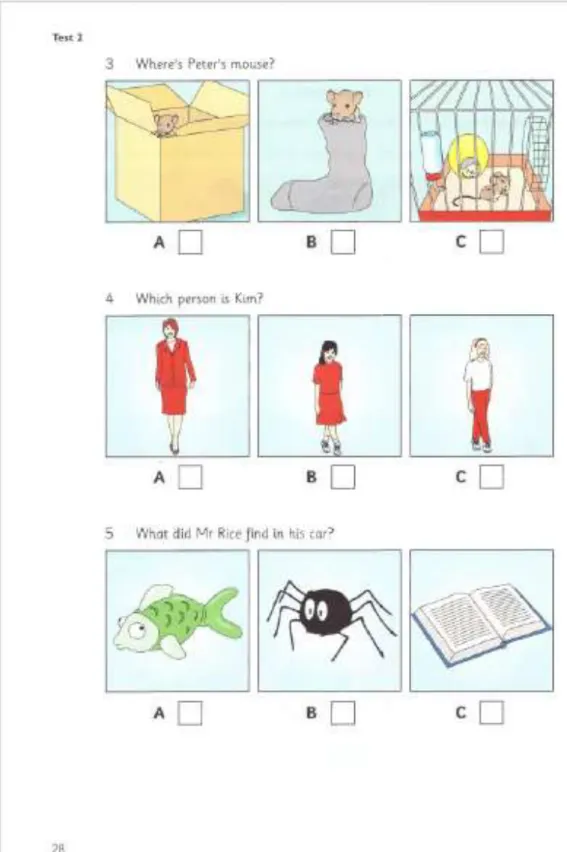
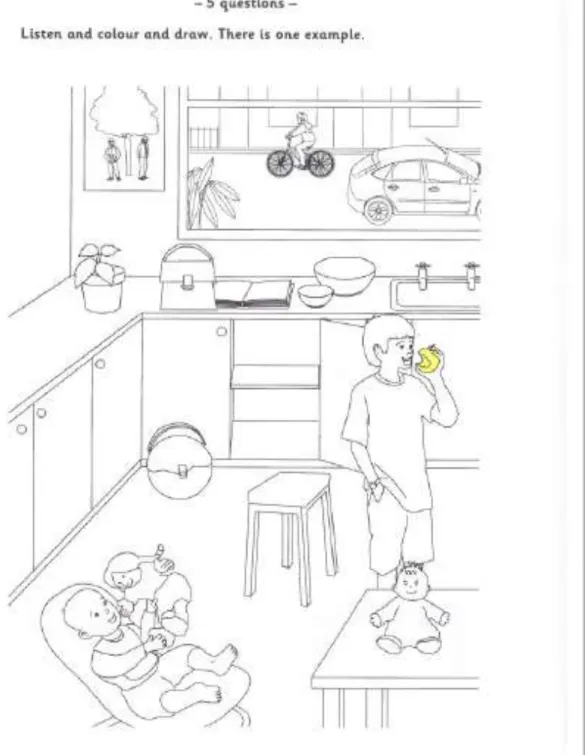
source in terms of level, it is unbiased, it provides us with quantifiable results and I am used to working with Cambridge exams in my workplace. Challenging though the level seemed at the outset for eight and nine-year-old students, the contents of the book fit in perfectly well with the vocabulary and grammar guidelines set for Movers. Only two exams were selected out of a total of 24 possibilities. Rather than choosing them randomly, I opted for the only ones which were sea-related.
In between the pre and the post-test, a series of activities were carried out (appendix 9.3.). Since they are the treatment itself, they will be duly explained in section 5.4.
Pronunciation exercises (appendix 9.2.)
Emulating the listening exercises, pronunciation was equally assessed before and after the treatment. Students had to read one hundred and twenty words on the topic of water sports (appendix 9.2.1.), plus they endeavoured to describe a picture (appendix 9.2.2.) making use of suitable vocabulary, as well as clear, concise and well-constructed sentences. Both papers were assessed according to a score guide (appendix 9.4.2.) which rates speech sound production (consonants, vowels, grammatical endings, grammatical beginnings and clarity of speech), rhythm (rhythm in sentences, thought groups and linking, and clarity of speech), stress (word stress) and intonation (intonation/pitch). This grid has been adapted from the diagnostic guide of Gerhiser & Grenn (2007) and the Cambridge template (2011). In imitation of the latter, for every item, the teacher should write a tick (meaning “good”) or a cross (meaning “not so good”) depending on the students’ performance. On top of that, the instructor is going to be in charge of underlining
the words that have been mispronounced in the reading part, hence complementing the results provided by the grid.
Unlike the listening tests, the pronunciation pre and post-tests do not differ from each other. Given that they are purpose-built, not standardized tests, using the same exercises makes comparison a great deal easier for the instructor. It also reduces the chances of making an increasing number of mistakes due to unnoticeable changes in the attainment level.
Teacher diary
A diary was written in order to reflect on the action plan. This diary registers information in three different moments: after the pre-test, during the treatment and after the post-test. The information gathered deals with the development of the activities, the personal opinion on the positive and negative aspects, and the reactions of students observed in class. Concerning the activities for the treatment, the data collected has been divided into several categories: comprehension of the videos, quality of the post-viewing activities, involvement of students, problems with the computer or other ICTs. The diary helps the teacher be aware of the evolution of the project, as well as notice any possible problem and thus carry out the required improvements.
5.3.2. Resources
Apart from making use of the digital board with the corresponding computer and loudspeakers, one of the most challenging aspects has been to search for videos in trustworthy and virus-free web pages. https://fmovies.io/ has a user-friendly interface and is one of the top TV shows streaming site. You can watch videos in the original version and download them easily in High Definition by just pressing a button. This site has been used mainly for the “Finding Nemo” film. As for the TV series, watchcartoonsonline.eu
has also allowed me to access materials for free. It is legally entitled to provide users with cartoons free of charge in exchange for the publication of adverts. Although it started in India, it has soon expanded its target audience. The same as fmovie.io, it provides users with a list of servers from which to download or watch videos online.
What I was not able to find, though, was a reliable tool to cut and edit videos limiting them to the fragments I was interested in. Consequently, I downloaded all the audio-visuals from the aforementioned webpages and played them in the class, regularly controlling the timing.
5.4. PROCEDURE
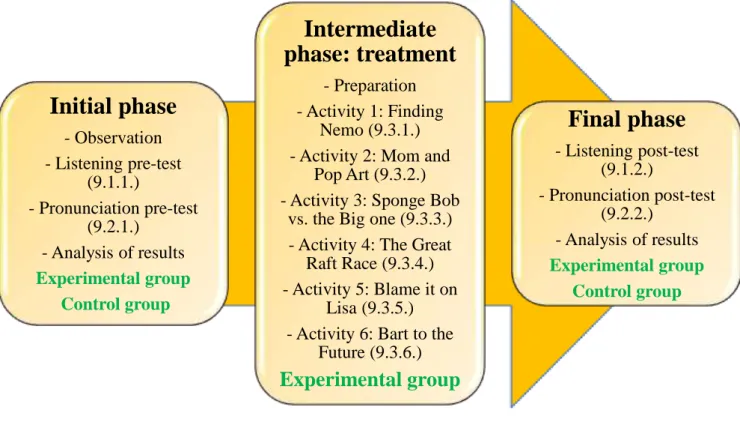
Figure 1. Summary of the procedure
5.4.1. Initial phase
No sooner had I arrived at the school than I started to monitor student learning in the classroom as well as to gather data on what the most long-lasting problems were. Thanks to the teacher’s remarks and a thorough two-week observation process, I soon
realised that students failed to read sentences clearly and fluently. On top of that, the listening marks did not live up to the teacher’s expectations and did not fulfil the 3rd
Primary standard requirements. Neither of the items required any type of memorisation skills, undoubtedly their strength. In contrast, they were both related to the oral skills and could thus be worked on at the same time.
In order to obtain more reliable and quantitative results, I dedicated one week (that is, two one-hour lessons) to the application of both pre-tests. Given that most of the students were not in any way familiar with the format of Cambridge exams, it was painstakingly explained before getting down to work. The listening exercise was completed in no more than 25 minutes. Consequently, I made the most out of these remaining thirty minutes of class and started assessing pronunciation individually. While the lead teacher was in charge of the big group, in alphabetical order, pupils went out into the corridor, where a chair, a small text and a picture awaited them. Firstly, they were encouraged to read the text, then to describe objectively the images of the picture. As
Initial phase
- Observation - Listening pre-test
(9.1.1.)
- Pronunciation pre-test (9.2.1.)
- Analysis of results
Experimental group Control group
Intermediate
phase: treatment
- Preparation - Activity 1: Finding
Nemo (9.3.1.) - Activity 2: Mom and
Pop Art (9.3.2.) - Activity 3: Sponge Bob
vs. the Big one (9.3.3.) - Activity 4: The Great
Raft Race (9.3.4.) - Activity 5: Blame it on
Lisa (9.3.5.) - Activity 6: Bart to the
Future (9.3.6.)
Experimental group
Final phase
- Listening post-test (9.1.2.)
- Pronunciation post-test (9.2.2.)
- Analysis of results
students were reading, I was discreetly taking note of their performance in accordance with the grid in section 9.4.2. A total of one day and a half was devoted to the pronunciation assessment.
Once all the initial information had been compiled, I started to analyse the preliminary results and register them thanks to the possibility to create tables and charts that the Excel tool provides us with.
5.4.2. Intermediate phase: treatment
As soon as the initial level and problems had been classified, I became engrossed in choosing the most suitable TV series, in accordance with the assigned contents: water sports, equipment and ‘going to’ future. So powerful the Internet is that, thanks to using
a wide variety of search engines and shortcuts for word searching, I was soon able to find several videos related to the topic. The most relevant extracts were selected and provided a basis for activity creation. As stated in the above-mentioned objectives, the exercises aimed to be gradually more demanding and suit every taste and ability in order to further participation and motivation. Taking into account the ground-breaking initiative of the school Santa María La Real de Huelgas, according to which students work collaboratively, group work also had to be promoted in those activities.
At the conclusion of the preparation process, there were six extracts from sundry films and cartoons, each one of them with their corresponding introductory Power Point and a worksheet (appendix 9.3.). During the following six lessons, one video was played at the very beginning of the classroom. Due to time constraints, the audio-visual together with the pre and post-viewing activities could not last more than thirty minutes, moment when the regular classes were resumed. Taking into account that students in 3rd Primary have two and a half hours of English per week, the treatment was over after only 3 weeks.
Getting used to the same routine is of utmost importance for Primary Education students. That is why, all six videos are preceded by an illustrated list of the top ten most difficult words (Gómez, 2003; Yubero, 2010, as cited in Rocillo, 2014) which might hinder comprehension. Thanks to the interactive Power Points in section 9.3., students were encouraged to have a guess before the picture was shown. Providing they didn’t get
While watching the assigned extracts, students had to answer the while-viewing activities (exercise number 1 in the worksheet, appendix 9.3.), one per video. The type of exercises I have opted for are analogous to those recurrent in Cambridge exams, in other words: choosing, matching, answering and condensing. Besides, I endeavoured to scaffold them: activity 1 requires no understanding at all, but rather paying attention to the pronunciation of words; activity 2 moves on to skimming and ordering the sentences; activity 3 involves scanning and judging the veracity of the sentences; finally, activity 4 takes the next step with writing. In activities 5 and 6 we go one step backwards, since we embark on grammar topics. Activity 5 is akin to number 1, as understanding is not required either. The sentences must be matched with the picture of the person who uttered them. In contrast, in activity 6 not only do we have to be aware of the meaning, but also gain an in-depth understanding of the video, in order to choose the correct option. The problem arises when realising that none of the questions can be answered by simply staring at the motion pictures. In contrast, the hearing process should take the lead. As soon as the while-viewing activities were corrected, pupils commenced discussing the post-while-viewing activities (exercise number 2 in the worksheets, appendix 9.3.), which were usually done in pairs or small groups. Apart from choosing, condensing and answering exercises, there were some hands-on, creative activities related to extending and modelling. Just like in the while-viewing activities, it was my intention for students to start with straightforward, effortless exercises and finish with more complex and demanding tasks. They are going to be explained below.
the shoulder-mates and group-mates, students learn to account for their answers, stand up for their ideas while respecting the others, and use one of the most well-known collaborative strategies (1-2-4). The exercise in video number 5 aims to replicate the study by Souto (2013). Bearing in mind the encouraging results provided by this author, I was looking forward to using drama techniques in education to enhance particularly the “ing”
pronunciation. Students had to act out the scene where the Simpsons are planning to set foot in Brazil, paying special attention to the articulation of words and the rhythm of sentences. After a brief rehearsal, they had to perform in front of their classmates, activity which took up a total of thirty extra minutes. However, the above-mentioned tasks are nowhere near as challenging as the final one. In Bart to the future, an Indian person makes use of a personal item to show Bart’s future on some flames. Taking this prompt as a
starting point, pupils had to create a dialogue from scratch where they pretended to guess each other’s future. Two days were finally needed to bring this activity to an end.
The students were handed in the worksheet with the activities long before playing the video, so as to know what was expected from them. That way, they could also understand the careful explanation provided by the teacher. As it has been mentioned above, the exercises were corrected in the classroom. Even so, the teacher provided further feedback at home. The results from these treatment-oriented activities will not be assessed, since the exercises differed greatly from each other and some answers were heavily biased due to the previous knowledge of the episodes.
5.4.3. Final phase
Upon the implementation of the treatment, which was carried out only in the experimental group, both classes (experimental and control) were given the listening and pronunciation post-tests. The procedure duplicates the conditions of the pre-test: the twenty-five-minute listening test was followed by an individual assessment of the pronunciation. What did differ, though, was the amount of time devoted to explaining either exercise, since pupils were already familiar with the layout. Consequently, all the evaluation process was completed in slightly less than an hour and a half.
6. ANALYSIS OF RESULTS AND
DISCUSSION
6.1. ANALYSIS OF DATA
The dependent variables that are going to be measured in order to assess the fulfilment of the two general objectives are listening and pronunciation. Firstly, regarding the listening, the mark of the test has been worked out based on the number of correct answers, according to the official answer key by Cambridge (appendix 9.4.1.).
Number of correct answers
X 100 A total of 25 items
A more specific analysis concerning solely the experimental group has been done as well. In this case, I have analysed separately the five different exercises that comprise the listening test comparing results before and after the treatment. Taking into account that every section has a maximum of 5 points, the data show the average number of correct answers. In other words, the formula is as follows:
Adding up the number of correct answers (out of 5) of every student A total of 25 students
With regard to pronunciation, I analysed students’ performance using therefore
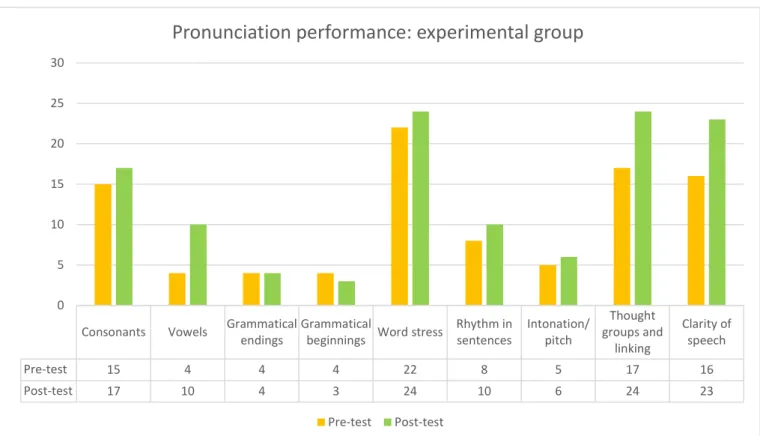
a scoring guide (9.4.2.). The information gathered has been examined in two different ways. On the one hand, the average number of “good” per person has been taken into
6.2. GENERAL OBJECTIVE 1: LISTENING SKILLS
Having outlined the objectives of this research, the tools for data collection and the process by means of which all the information has been gathered, we now have to analyse the results, and hence determine whether the treatment has been successful.
Figure 2. General objective 1. Listening performance
Experimental group Control group
Pre-test
Mean 36 40.64
Median 32 40
Standard deviation 18.62 25.94
Post-test
Mean 47.2 52.80
Median 40 56
Standard deviation 23.58 25.66
Table 1. Mean, median and standard deviation in the listening test
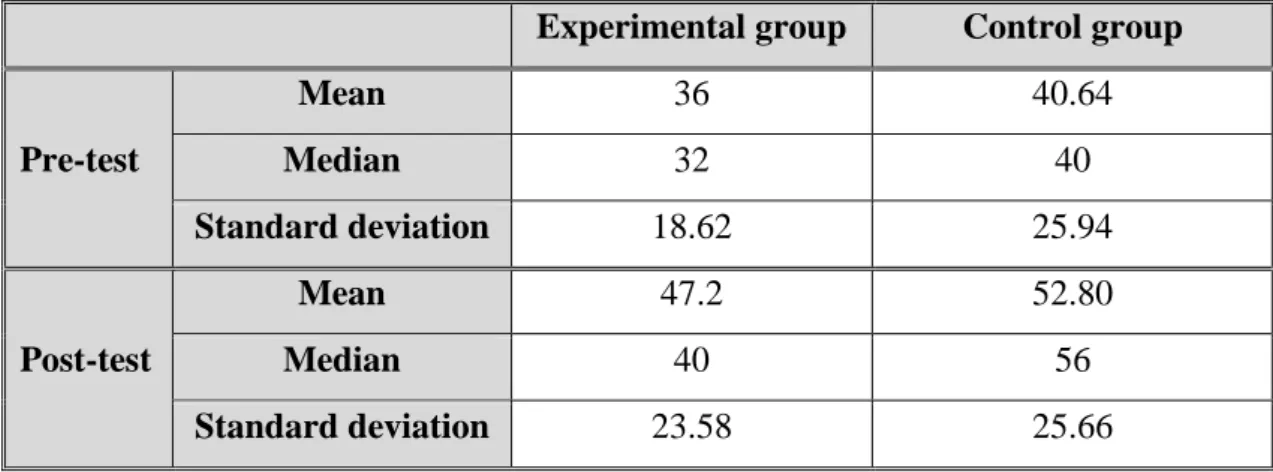
From the outset, the control group has a better command of the language, four points over the test group (40.64 versus 36), in spite of neither of them passing the Cambridge examination (>50.00). These results are actually reinforced by the median, according to which the level of the preceding group is even lower: fifty per cent of the sample have marks well below 32, whereas the other fifty per cent have marks above that threshold. The standard deviation sheds some light on this remarkable disparity between both groups: whereas the test group is rather homogeneous (18.62), the control one reveals important differences in English comprehension (25.94). As a matter of fact, two students failed spectacularly, with no answers right whatsoever, in contrast with a third pupil, who got full marks.
0 10 20 30 40 50 60
Experimental group Control group
Listening performance
Low though the grades may seem, they are beyond expectation, on account of the defeatist comments listened to upon the completion of the test. When facing the Cambridge exam for the first time, pupils could not help but constantly verify whether it was part of the summative assessment and thus counted towards the final mark. They were relieved to learn that the listening solely concerned the trainee teacher.
The worksheets that were handed in during the treatment were done and corrected in the classroom. The fact that many students changed the answers with pencils instead of a red marker, together with the increasing difficulty of the exercises they had to face, provides us with no reliable data in terms of gradual evolution.
As far as the post-test is concerned, both groups experience a significant improvement. All the pupils agreed that the second listening was less demanding than the first one; thus, they were no longer concerned about the result counting towards the final mark. The test group escalates from 36 to 47.2 (a total of 11.2 points), whereas the control group experiences a more remarkable increase, from 40.64 up to 52.80 (a total of 12.16 points). For the first time, half of the classroom of 3rd A attained the minimum marks required in order to pass the Cambridge test (>50). The median widens this gap: 40 points in the test group set against 56 in the control one. In other words, the level students achieve in the trial group following a three-week treatment equates to the preliminary answers by the control group (40 points on both occasions). Even more, whilst the control group has made a quantum leap in terms of the median (16 points, from 40 to 56), the test group hardly makes any significant progress (barely 8 points, from 32 to 40). Based on the data gathered, in the classroom of 3rd B, there are very few students who pass with flying colours, while in 3rd A those with higher results offset the numerous people with low marks.
It is actually in this last group that individual variation is more noteworthy (25.66). Contrary to the pre-test, no one got a zero in the exam, but still one person was below 10%, versus another student, who once again managed to get full marks. So similar was the standard deviation in both the pre and post-test that it did not attract my attention. Nonetheless, what did strike me as abnormal was the rise in the standard deviation within the experimental group.
the students were looking at the worksheet and listening with rapt attention, the recording was barely audible, except for those students sitting down by the digital board. In fact, their marks have been analysed together and have surged from 46.46 to 63.08, being these 16.62 points of difference still more significant than in the control group. Consequently, provided the loudspeakers had worked, the experimental group might have reported better results.
Figure 3. General objective 1. Listening performance: experimental group
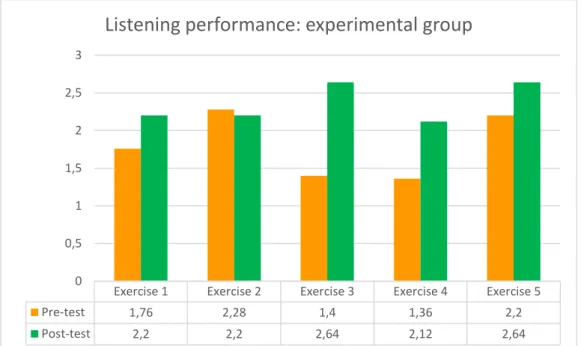
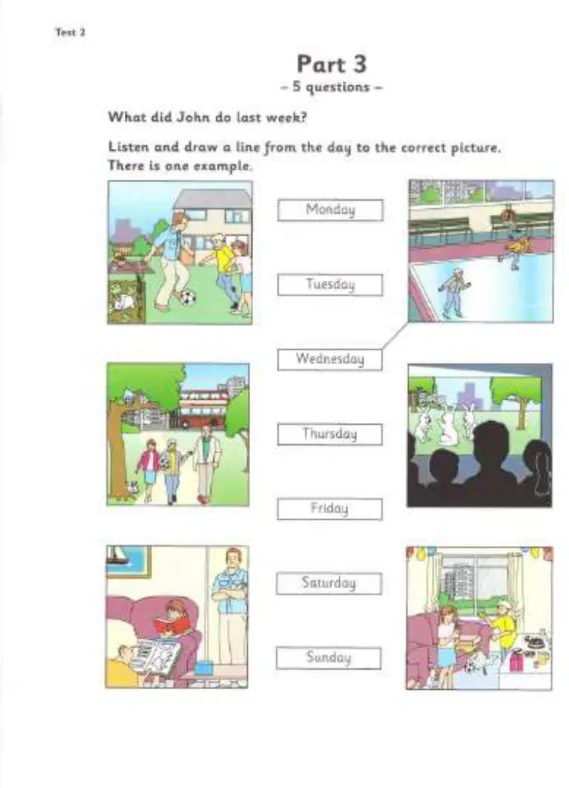
In order to analyse the listening skills which have developed the most, I have created the chart above. There is a noteworthy increase in exercise 3, that is, matching the days of the week with the right picture. In the pre-test, this activity recorded one of the lowest scores due to the fact that students took for granted that all the days of the week appeared in order. Furthermore, all the pictures had two common elements, namely, rabbits and football. Therefore, it required plenty of concentration and detailed listening so as to spot the subtle differences. However, in the post-test, pupils were aware that the days of the week were not necessarily mentioned in order and the pictures were utterly different from each other. Consequently, the number of answers right rose from 1.4 to 2.64 (a 1.24 improvement) probably owing to a more straightforward activity rather than a real increase in the listening skills.
Smaller though the progress is, the gap between the pre and the post-test has also widened in the case of activities number 1, 4 and 5. Exercise 4 seems to be the Achilles’ heel of most students both before and after the treatment, with the lowest score on both
Exercise 1 Exercise 2 Exercise 3 Exercise 4 Exercise 5
Pre-test 1,76 2,28 1,4 1,36 2,2
Post-test 2,2 2,2 2,64 2,12 2,64
0 0,5 1 1,5 2 2,5 3