IN THE SEVENTH-GRADE STUDENTS OF NUESTRA SEÑORA DE FATIMA SCHOOL IN TUNJA-BOYACÁ.
A Research Project Presented to
THE PROGRAM OF B.A. IN TEACHING ENGLISH AS A FOREIGN LANGUAGE SCHOOL OF EDUCATION
UNIVERSIDAD NACIONAL ABIERTA Y A DISTANCIA COLOMBIA
In Partial Fulfillment
OF THE REQUIREMENTS FOR THE DEGREE OF LICENCIADO EN INGLÉS COMO LENGUA EXTRANJERA
By
JUAN CARLOS PITA VARGAS
JUAN CARLOS PITA VARGAS
This research proposal determinates how the use of the CLIL method and the implementation of a web-page can contribute to strengthen the English learning process in a positive way in the seventh grade students of Nuestra Señora de Fátima School in Tunja-Boyaca, keeping in mind that according to the results achieved in the ICFES test, some students have obtained an A-2 English level, which this institution does not meet with the levels of schooling according to the National English Program, for that reason it is necessary to research what English skill with more weakness is, with the purpose to implement a strategy to solve this problem, using the CLIL method through a web-page to increase the motivation, interest, and confidence beginning with the seventh grade students, due to this grade should have the best English basis of A-2 English level before advancing to the next grade; This method will play an important role to strengthen the English learning, changing the way to acquire a second language using other subjects matters such as science, history, geography or others in the target language, practicing with different interactive activities to encourage the English class in order to facilitate their acquisition and comprehension with the impacts and advantages that the technology brings us especially in the English learning process.
Acknowledgments
First of all, this project has been possible thanks to the support and encouragement of my God, my family and my girlfriend who has given me the motivation and hopeto fulfill with this proposal at the beginning and at the end of this one, also I want to mention my gratitude to the following professors: Teacher Liliana Isabel Moreno Cervera for her valuable attention and accompaniment to long of all my career; Leader of ECEDU-ZCBOY Maricela Gutierrez for her confidence and interest to my proposal and my Teacher Dina Esperanza Bonilla for her professional advice and assistance in refining this paper.
Table of contents
JUSTIFICATION ...11
Statement of The Problem... 12
OBJECTIVES ...13
General Objective ... 13
Specific Objectives ... 13
LITERATURE REVIEW ...14
Bilingual education ... 14
Bilingualism ... 14
Significant Learning ... 15
CLIL: Content-based Instructional Approach to Second Language Pedagogy ... 16
Other researchers about CLIL method: ... 17
Technology in Content and Language Integrated Learning ... 18
The integration of using ICT in CLIL... 18
METHODOLOGY ...19
Type of study: ... 19
Research approach: ... 19
Population. ... 20
Procedure: ... 20
INSTRUMENTS ...21
Interview ... 21
Transcribing process. ... 22
Pre-knowledge and post-test: ... 23
Observation: ... 24
RESULTS ...25
Interview: ... 26
Online survey ... 28
Pre-knowledge test: ... 39
Topics that presented more difficulties among the seventh-grade students ... 41
Topics that presented the highest scores in the pre-knowledge test ... 42
CREATION OF THE WEB-PAGE ...43
DESCRIPTIONS OF THE WEB-PAGE ...48
Web-page reading contents and descriptions: ... 48
Web-page interactive activities and descriptions: ... 49
Web-page listening contents and descriptions: ... 50
OBSERVATION FORMAT ...52
Transcribing obtained from the observation format: ... 52
PROGRESS REPORT PER TOPIC ...57
ANALYSIS AND COMPARISONS ...66
DISCUSSION ...68
CONCLUSION ...70
RECOMMENDATIONS ...71
REFERENCES ...72
List of tables
Table 1. Interview template……… 23
Table 2. Observation format ………... 26
Table 3. Table about the questions and answers applied to the English teacher…………. 27
Table 4. Table with results obtained for each topic of the pre-knowledge test applied…… 41
Table 5. Contents of reading included in the web-page and descriptions……… 49
Table 6. Contents of interactive activities included in the web-page and descriptions…... 50
Table 7. Contents of listening material included in the web-page and descriptions……….. 51
Table 8. Transcription of the first observation format……… 54
Table 9 Transcription of the second observation format……….. 55
Table 10 Transcription of the third observation format……… 56
Table 11 Transcription of the fourth observation format………. 57
Table 12 Analysis per question of the results obtained in the first session………. . 58
Table 13 Analysis per student of the results obtained in the first session……….. 59
Table 14 Analysis per question of the results obtained in the second session……… 60
Table 15 Analysis per student of the results obtained in the second session………. 61
Table 16 Analysis per question of the results obtained in the third session……… 61
Table 17 Analysis per student of the results obtained in the third session……….. 62
Table 18 Analysis per question of the results obtained in the fourth session……….. 63
Table 19 Analysis per student the results obtained in the fourth session………. 64
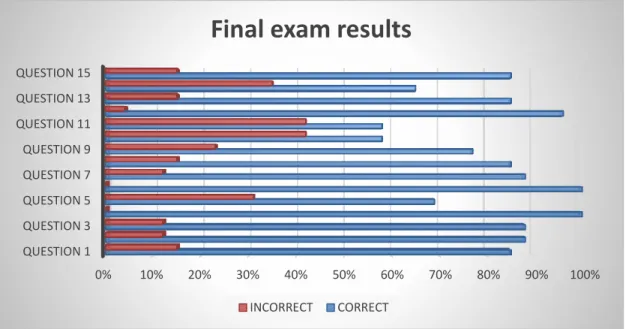
Table 20 Analysis per question of the results obtained in the final exam or post-test……….. 65
List of figures
Figure 1. First question of the survey applied to the seventh-grade students……… 30 Figure 2. Second question of the survey applied to the seventh-grade students………… 30 Figure 3. Results obtained from the third question of the survey applied to the seventh-grade students……… 31 Figure 4. Results obtained from the fourth question of the survey applied to the seventh-grade students………. 32 Figure 5. Results obtained from the fifth question of the survey applied to the seventh-grade students………. 32 Figure 6. Results obtained from the sixth question of the survey applied to the seventh-grade students………. 33 Figure 7. Results obtained from the seventh question of the survey applied to the seventh-grade students………. 34 Figure 8. Results obtained from the eighth question of the survey applied to the seventh-grade
students. ……… 34
Figure 9. Results obtained from the ninth question of the survey applied to the seventh-grade
students. ……… 35
Figure 10. Results obtained from the tenth question of the survey applied to the seventh-grade
students. ……… 36
Figure 11. Results obtained from the eleventh question of the survey applied to the seventh-grade
students. ……… 36
Figure 12. Results obtained from the twelfth question of the survey applied to the seventh-grade
Figure 13. Results obtained from the thirteenth question of the survey applied to the seventh-grade
students. ……… …. 38
Figure 14. Results obtained from the fourteenth question of the survey applied to the seventh-grade students……….. 39
Figure 15. Results obtained from the pre-knowledge test applied to the seventh-grade students. ……….. 41
Figure 16. Access to the Wix site. ……… 43
Figure 17. Access to the Wix account. ……… 43
Figure 18. Selection of template of website on Wix. ……… 43
Figure 19. Selection of type of website on Wix. ……….. 43
Figure 20. Options to select in order to build the website proposed……….. 44
Figure 21. Kind of letter to choose on Wix. ……….. 44
Figure 22. Tittle of the website proposed on Wix. ……….. 45
Figure 23. Pages and subpages created on the website proposed………. 45
Figure 24. Interactive activities on the website. ……… 46
Figure 25. Reading material on the website. ………. 46
Figure 26. Evaluation button on the webpage. ……… 46
Figure 27. Listening activities on the website. ……… 46
Figure 30. Photo taken during the first session……… 58
Figure 31. Photo taken in the second session. ……… 59
Figure 32. . Photo taken in the third session. ……… 61
Figure 33. Photo taken during the fourth session. ………. 62
Introduction
Justification
The significance of this study is to achieve that the application of the content and language integrated learning (CLIL) method, allows students to strengthen the acquisition of a second language due to the fact that it is an approach to teaching and learning whichcombines the learning of a foreign language with another discipline or class subject, also because Marsh (2002) defines CLIL “As a generic umbrella term which would encompass any activity in which a foreign language is used as a tool in the learning of a non-language subject in which both language and the subject have a joint curricular role”(P.58).
Statement of The Problem
This research proposal has emerged from the results obtained by the Nuestra Señora de Fatima School in Tunja-Boyaca in the ICFES test, the last three years it is evidenced that according to the Common European Framework of Reference for Languages, some students have obtained an A-2 English level, keeping in mind that in 2004, the Colombian Ministry of Education (MEN) created the National English Program, aimed at offering all school pupils the possibility of reaching a B1 level of proficiency in English at the end of their school studies (MEN 2006a:57), this program is intended to improve the learning of English as a foreign language with the following levels of schooling: A1 Students of third grade of primary education, A2 Students of seventh grade of secondary education, B1 Students of eleventh grade of basic education media, B-2 higher education and English Teachers, C-1 foreign language careers and others.
Objectives General Objective
To strengthen the English learning process, through the CLIL method and the use of a web-page as a motivational tool in the seventh-grade students of Nuestra Señora de Fatima School in Tunja-Boyacá.
Specific Objectives
To determinate the main English learning difficulties that the seventh-grade students have. To identify which class matter the seventh-grade students would like to work in English. To design and to apply a web-page with interactive activities to develop the CLIL method
in the class matter chosen by the students.
To evaluate the knowledge acquired by the seventh-grade students through a progress report per each session given.
Literature review
This research mentions different concepts which are important such as the Bilingual education, the significant learning, Content and Language Integrated Learning, and the use of Information and Communication Technology. The following authors have investigated the positive impact that these concepts offer to the community, focusing on learning a second language in the educational environment, in order to facilitate the English learning process.
Bilingual education
Nikuta (2016) mentioned the following argument about this topic:
Perhaps more children and students worldwide are educated in a second language (L2) than in their first language (L1). In many nations and societies, the language of schooling is not the same as the home language for a substantial group of learners. This is usually taken for granted (children will eventually learn anyway) or approached from a deficiency perspective (children need to overcome their language deficit in the educational context). Teachers, as a consequence, may feel that language development is their pupils’ own
responsibility or the responsibility of language teacher colleagues. In bilingual education, we have deliberately created challenges for content and language learning. By teaching content through an additional language, we aim to reach higher levels of L2 proficiency within the curricular programme, without lowering the aims for content learning outcomes (p.13).
Bilingualism
Ramirez & Kuhl (2017) defined this concept as follow:
Studies suggest that optimal learning is achieved when children begin learning two languages at an early age through high-quality interactions with live human beings (not through TV or other media), and both languages are supported throughout the toddler, preschool, and school years. Supportive environments for bilingual learning encourage caregivers to use the language in which they are most fluent and comfortable, value both languages equally, and view bilingualism as an asset (p.43).
Significant Learning
Fink (2003) argued that the central idea of the phrase “significant learning” is that all teachers not only want students to do something more than just learning course content into their short memory, but also they want to demonstrate that this kind of learning in most learners make a difference learn to become part of how they think, what they can and want to do, what they believe is true about life and we want this learning to increase their capability for living meaningfully, to achieve this it is necessary that they learn whatever topic with their life rather than just with their courses life, with the purpose that learning will have the potential for changing their lives in an important way.
On the other hand, it becomes just one of six major categories of significant learning and Fink (2003) affirmed that these categories can be briefly described as follows:
Foundational knowledge describes understanding and remembering specific information and ideas. This type of learning provides a basic apprehension of a particular subject.
Application means learning how to engage in some new type of intellectual, physical, or social action. It allows the other types of learning to be useful.
actions that may have initially seemed disparate. It strengthens the web of meaning through interrelatedness.
Human dimension refers to learning important information about oneself or others. It allows students to discover personal and social implications for their studies.
Caring involves developing new feelings, interests, and values. This type of learning allows students to interact with the subject on a personal level and thus create new energy and enthusiasm for learning.
Learning how to learn means becoming a better student by learning to be inquisitive and self-directed. It is important because it allows students to become lifelong learners and to engage in future studies with greater effectiveness and efficiency (p. 30-32).
CLIL: Content-based Instructional Approach to Second Language Pedagogy
Other researchers about CLIL method: Martinez (2012) affirmed:
The experience of Gabriele Azzaro and Richard Rice on different occasions in the recent past; we have used at least three variants of CLIL proper: we have had content as a support for developing language skills using technology, technology as a support for language skills necessary for study in a CLIL context and technology as a support to genuine CLIL experiences. In this case, students will need to be competent and fluent in a subject both in the foreign language and on their own. They should be able to mentally function as creatively as possible in both languages, and they will also have to be able to do so with the full appreciation of the foreign cultural make-up and background. This calls for at least three prerequisites. Intelligent students; motivated students; fluent students. When these conditions are not met, remedial work will be necessary, outside the classroom; this is where technology fits in well, especially with an eye for “inclusive” CLIL (p.154).
Martinez (2012) Keeping in mind the experience of Gabriele Azzaro and Richard Rice who argued the following:
In the early stages of CLIL programs, self-esteem, motivation, and enjoyment, in general, are threatened by the challenge of adapting to interaction in the foreign language, whereas at later stages communicating in L2 in the classroom is felt as a great personal achievement and therefore it increases motivation20 (p.173).
Martinez (2012) also mentioned that:
and the language used as a medium are involved more or less equally in defining the learning goals. According to the European Commission of languages, the main objectives of CLIL are three-fold: -to allow students to broaden their knowledge of a subject -to improve students' abilities in a foreign language -to give students an intercultural perspective of the subject, thus stimulating their interest in and shaping new attitudes toward other cultures In addition it is hoped that CLIL's multi-faceted approach will motivate students through more diversified teaching methods (p.2).
Technology in Content and Language Integrated Learning Martinez (2012) mentioned that:
Technology is by now inescapable in language teaching even in CLIL contexts. Although CLIL focuses neither on content nor language – both are interwoven – and is clearly different from EAL and content-based teaching, it expands on traditional language learning techniques, it is flexible, amenable to different learning contexts, and it involves a wide range of models suitable to different geographies and schools.
The integration of using ICT in CLIL:
For this research, it is necessary to keep in mind that the use of technology plays an important role to develop the activities proposed and also facilitates the English learning process, in order to practice a lot through different interactive activities until the understanding by the seventh-grade students obtaina comprehensible and accurate knowledge.
motivating and facilitate both content and language learning (Fazio, Salvador, Chiva Bartoll, Isidori & Barbatbun, 2018, p.246).
Methodology Type of study:
The research design for this study is descriptive because it is analyzed through qualitative methods, to identify numerous details about a subject through observation due to the need to apply interviews and questionnaires to identify the interest and motivation to strength the English learning process of seventh-grade students through the CLIL Method and the use of the ICT with the implementation of a web-page, in order to determinate their satisfaction levels at the end of this research proposal, derived from participant passive observation of their behaviors seen during the development of this study. On the other hand, it is descriptive because it is based on the concept learning English through technology, where the aim is describing what was observed during the application of a web-page to facilitate the learning process.
Research approach:
Population.
The population sample to be used in the development of this research corresponds to the seventh grade students of Nuestra Señora de Fátima School, which was founded in 1962 by the nun SOR TERESA DE SAN PABLO and it is located in the Capital of the Department of Boyacá, in Tunja. The students of this private institution are the police officers’ children., and the teaching methodology is offered in face to face environment. This institution has only one seventh-grade that it is integrated by 26 students: 9 girls and 17 boys between 12 to 14 years old. They have 5 hours per week for learning English language. On the other hand, in this year the English teaching hours were increased because the academic arearealized about the need of this matter in order to improve the results in the ICFES test, not only to fulfill with National English Program but also to achieve that the students can finish their education in this school with the best possible level before starting their high education in college.
Procedure:
Determination of the statement of the Problem Creation the type of study.
Application of an Interview to the English teacher of the seventh grade. Population surveys, about CLIL, the use of ICT and English skills. Transcription of the information obtained.
Evaluation through the web-page like a diagnostic test to determinate the English
knowledge of the subject matter chosen by the students.
Creation of the web-page and selection of the technological tools to practice the English
Practice by the students on the web-page.
Creation of an observation format to evaluate the behavior of the students during the
implementation of this research proposal. Final online evaluation through the web-page.
Comparison of the results obtained from the initial and final online evaluation. Conclusions.
Bibliography.
Instruments
The main data collection techniques used in this research study are the following: Interview
The main purpose of the structured interview in this study is to obtain information about the performance, experiences, beliefs, behavior, and motivations of the seventh-grade students in the English class.
Structured interviews are, basically, questionnaires administered orally, in which lists of predetermined questions are formulated, with little or no variation and without the possibility of follow-up questions to answers that justify further elaboration. As a result, they are relatively quick and easy to administer and can be particularly useful if clarifications of certain questions (Gill, Stewart, Treasure & Chadwick, 2008, p.291). Table 1
Interview template.
Question: How long have you been a teacher at Nuestra Señora de Fatima school of Tunja-Boyacá?
Question: Do you direct the English subject of the seventh-grade students?
Question: How do you describe the English performance of this group of students?
Question: Keeping in mind the national bilingualism program in Colombia and according to the common European framework reference (CEFR); Do you believe that the seventh-grade students meet with the English level according to their scholarship?
Question: What is the English level of the seventh-grade students?
Question: What kind of strategies do you use to improve the English learning process?
Question: Have you ever heard, or do you know about CLIL Method of the English teaching? Question: What do you think about including other subjects to be addressed in English?
Question: Do you believe that the implementation of a web-page could give a positive impact to strengthen and facilitate the English learning process by part of the Seventh-grade students? why?
Farewell and gratitude.
Note: This table is the interview template to ask questions to the English teacher of seventh-grade in order to know about the student's behavior and English performance.
Transcribing process.
Data for qualitative study may comprise written texts (e.g.documents or field notes) and/or audible and visual data (e.g. recordings of interviews, focus groups or consultations). Recordings are transcribed into written form so that they can be studied in detail, linked with analytic notes and/or coded (p.127).
Online survey
In this research emerged the idea to apply an online survey because it is a way to facilitate the collecting process, it was created with a technological tool called kahoot.com, through this tool it was possible to create and design an online survey out of the ordinary to obtain not only the results in a funny way, but also to achieve the interest and participation by the surveyed, as a result the seventh-grade students developed it as a game, the link to access to this online survey is:
https://play.kahoot.it/#/k/b6059058-1207-4884-a442-84548f966d97; With this tool it is possible to create online surveys and for this one different questions were included, such as multiple selections and closed elections addressed to the 26 students of the 7th grade of the Nuestra Señora de Fatima of Tunja – Boyacá.
Pre-knowledge and post-test:
To access to this pre-knowledge and post-test, the students received a brief introduction
about the online test posted in the following web-page:
https://juancarlos3042.wixsite.com/7nusefa-english-2018, it was created to evaluate the development of each topic given, where the students could access easily through the evaluation icon. It was created with https://www.quia.com/web. It is a complete online testing system that offers 30 days to use it with a free account, this resource contains automatic grading, immediate feedback, and detailed reporting, with this online tool, the students must enter with their first and last name before to solve the different questions, in order to obtain an excellent analysis with the results obtained.
Observation:
The observation plays an important role in this qualitative research because it was indispensable to be involved into the classroom keeping in mind that according to Gray (2009) argues that “Observation provides an opportunity to get beyond people´s opinions and self-interpretation of their attitudes and behaviors, towards an evaluation of their actions in practice” (p.397). On the other hand, it was used because the participant observations was involved in order to collect significant dates. Also conforming to Gray (2009) mentions:
The central intent of this method is to generate data through observing and listening to people in their natural setting and to discover their social meanings and interpretations of their own activities. Part of this process is the reporting of the researcher´s own experiences, feelings or fears (p.399).
about the behavior, time management and exceptional aspects during each session given through the following format to take notes.
Table 2
Observation format
Observation format
N° Session
Topic
Date of the observation Time of the observation
Grade
Number of students
Institution
Relevant information
Item Comments
Class development
Behavior
Time management
Exceptional aspects
Signature of the observer ______________________________
Note: It was created to take notes in the participant passive observation. Source: Own authorship
Results
Interview:
The following is the result obtained from the interview applied, to the English teacher:
Table 3
Table about the questions and answers applied to the English teacher.
Interviewed: Teacher Lyda Fonseca - English teacher of seventh-grade students. Question: How long have you been a teacher at Nuestra Señora de Fatima school of Tunja-Boyacá?
Answer: 6 years approximately with the schools of the Police and in Tunja-Boyacá 2 years ago.
Question: Do you direct the English subject of the seventh-grade students? Answer: Yes, I do.
Question: How do you describe the English performance of this group of students? Answer: They are good, they like the English language, however, some of them have some difficulties and sometimes they do not pay attention but they perform very well. Question: Keeping in mind the national bilingualism program in Colombia and according to the common European framework reference (CEFR); Do you believe that the seventh-grade students meet with the English level according to their scholarship? Answer: ¡Yes, sr!
Question: What is the English level of the seventh-grade students? Answer: We are working the A2 English level.
Answer: We are using ludic games and programs of roleplay because they like this. Question: Have you ever heard or do you know about CLIL Method of the English teaching?
Answer: No, I do not know about that.
Question: What do you think about including other subjects to be addressed in English?
Answer: I think that it will be an excellent idea, and it will help to improve the English level and handle it within a more realistic context.
Question: Do you believe that the implementation of a web-page could give a positive impact to strengthen and facilitate the English learning process of the Seventh-grade students? why?
Answer: Yes, I agree about it because I think that it will help them a lot, as they are in touch with the technology, and I believe that technology is a way to motivate them and It would bring them closer to learning a foreign language.
Farewell and gratitude.
Note. This table contains the transcribing process of each answer taken from the English teacher of seventh-grade students.
which let them to be interested and motivated, for that reason there is distraction during the class development. On the other hand, she knows that sometimes they do not pay attention during the class, where it is evident that she should change her teaching method to strengthen the learning process, furthermore she accepts that involving the CLIL method and the use of technology it is a great idea to improve the English level and facilitate the acquisitions of the target language.
Online survey
Once the students finished answering all questions, the following results per question were obtained:
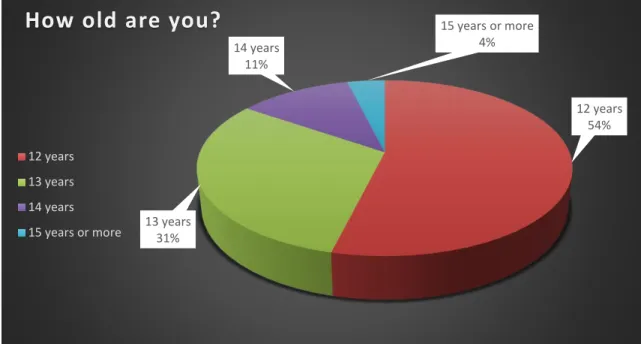
Figure 1. First question of the survey applied to the seventh-grade students.
This figure shows that the 85% of the students are 12 and 13 years old, and solely
the 15% of the students oscillate between 14 and 15 years old.
12 years 54%
13 years 31%
14 years 11%
15 years or more 4%
How old are you?
12 years
13 years
14 years
15 years or more
Female 35%
Male 65%
What gender are you?
Female
Male
The previous figure shows that in this grade the 65% of the students are male, and the 35% of them are female, it means that the predominant gender in seventh grade is the male.
Figure 3. Results obtained from the third question of the survey applied to the
seventh-grade students.
The most developed activity by the students in their free time is surfing on the internet with a 46% it means that the most part of the students enjoy the use of technology, the next activity most prefered by the students is playing video games with the 31%, and the 23% of the rest of students spend they free time watching TV or help their parents with the house activities.
31%
46% 11%
12%
What activity do you mainly do during your free time?
Playing video games
Surfing the Internet.
Watch T.V
Figure 4. Results obtained from the fourth question of the survey applied to the
seventh-grade students.
It is evident that the 58% like the English language and some of them think that not only it is interesting, but also it is easy, however, the 27% have difficulties with this language and the 15% of them consider that this language is boring.
Figure 5. Results obtained from the fifth question of the survey applied to the 0%
10% 20% 30% 40% 50% 60%
INTERESTING DIFFICULT EASY BORING
54%
27%
4%
15%
What do you think about the English
Language?
0% 10% 20% 30% 40% 50% 60% 70%
SUPPORT FROM YOUR PARENTS SUPPORT FROM YOUR FRIENDS USE OF THE INTERNET USO OF THE DICTIONARY
15% 4%
69% 12%
seventh-grade students.
According to the survey, the majority of the students use the internet as a strategy to develop their homework, the 27% prefer the use of the dictionary or the support by part of their parents and solely the 4% use the support of their friends.
Figure 6. Results obtained from the sixth question of the survey applied to the
seventh-grade students.
About the English skill that presents more difficulties to learn this language is reading, because the 46% of the students consider that it is a weakness, and the second one is listening with the 38% of them.
0% 5% 10% 15% 20% 25% 30% 35% 40% 45% 50%
READING SKILL SPEAKING LISTENING SKILL WRITING SKILL
46%
12%
38%
Figure 7. Results obtained from the seventh question of the survey applied to the
seventh-grade students.
The previous graphic shows that all students do not have knowledge about the CLIL method for teaching English.
Figure 8. Results obtained from the eighth question of the survey applied to the
seventh-grade students.
0% 20% 40% 60% 80% 100%
YES NO
0%
100%
Do you know or have you ever heard about the CLIL method for teaching English?
0% 10% 20% 30% 40% 50% 60%
HISTORY GEOGRAPHY SOCIAL SCIENCES NATURAL SCIENCES
27% 12%
4%
58%
This statistic graphics show us that the most preferred subject by the students is Natural Sciences to practice in English language, because the 58% of the students like this subject in their mother language and they want to learn it in the target language. The 27% of them like History, the 12% geography and only the 4% prefer the Social Sciences.
Figure 9. Results obtained from the ninth question of the survey applied to the
seventh-grade students.
According to the results obtained, the 96% of the students would like to learn English through a web-page, which means that most part of the students prefer the use of the technology to acquire a second language.
96% 4%
Would you like to learn English through a web-page?
Yes
Figure 10. Results obtained from the tenth question of the survey applied to the
seventh-grade students.
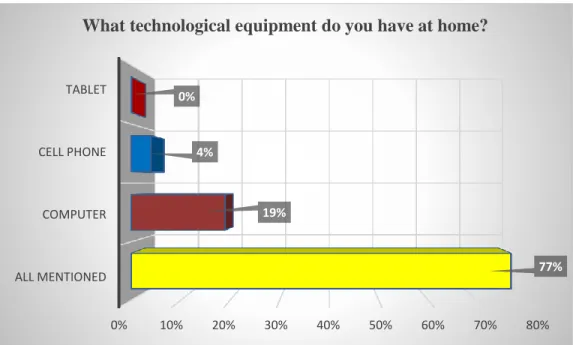
The majority of the students with 77% have the three technological devices mentioned in this survey, the 19% of them only have a computer in their house and the 4% have a cellphone, it means that the data most predominant about this grade of students is that a big part of them have a technological device.
0% 10% 20% 30% 40% 50% 60% 70% 80%
ALL MENTIONED COMPUTER CELL PHONE TABLET
77% 19%
4% 0%
What technological equipment do you have at home?
85% 15%
Do you have Internet in your house?
Yes No
Figure 111. Results obtained from the eleventh question of
The 85% of the students have the possibility of the use of internet at home, and only the 15% have not this possibility at home but they have the opportunity to use it in the school.
Figure 12. Results obtained from the twelfth question of the survey applied to the
seventh-grade students.
The figure N°12 shows us that the 65% of the students have used a web-page or program to practice English.
0% 10% 20% 30% 40% 50% 60% 70%
YES NO
65% 35%
Have you used a web-page or program on the internet to practice English?
Yes
Figure 13. Results obtained from the thirteenth question of the survey applied to the
seventh-grade students.
The 96% are motivated to practice English through interactive activities, it means that majority of them would like to practice the English language through technology and the difference of 4% could be related to the kind of the technological tool that most prefer.
96%
4% 0%
20% 40% 60% 80% 100% 120%
YES NO
Figure 14. Results obtained from the fourteenth question of the survey applied to
the seventh-grade students.
The previous statistic graphics shows that all students are motivated to practice English through online games and interactive activities, for that reason the 100% of them believe that the use of a web-page facilitate the English learning process, and as an important conclusion is that definitely, the most part of the students are interested to involve ICT in their English learning process.
Pre-knowledge test:
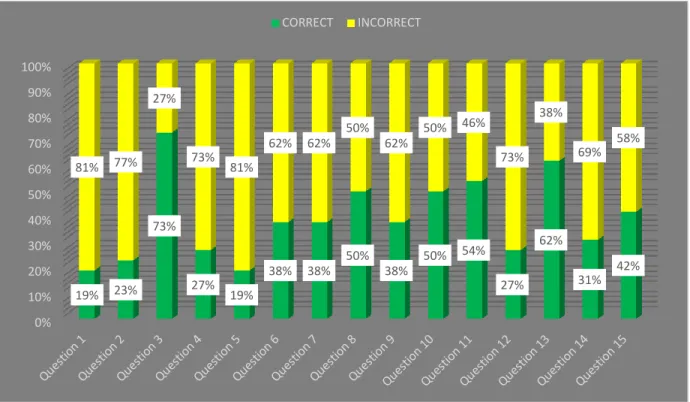
The following table and graphics explain the analysis obtained from the pre-knowledge test applied to the seventh-grade students located in the second option of the web-page, see more in the figure 15, otherwhise, it is divided into two parts: The topics that present difficulties and the topics that present the highest scores in the preknowledge test, as a meaningful commentary it is
0% 20% 40% 60% 80% 100%
YES NO
100% 0%
that the following topics were suggested by the English teacher keeping in mind that these topics are dominated by the learners in their mother language.
Table 4
Table with results obtained for each topic of the pre-knowledge test applied.
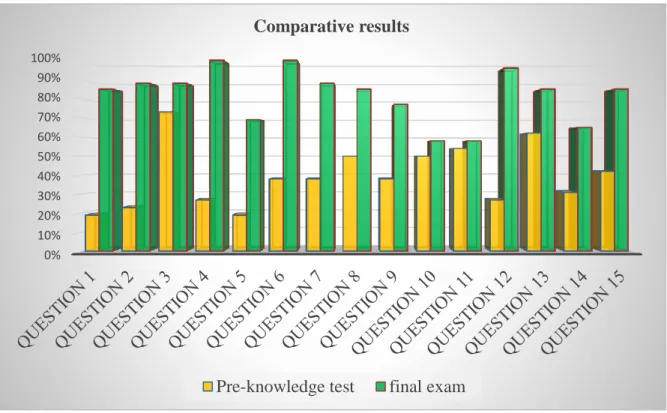
Question Topic Correct Incorrect
Question 1 Landforms 19% 81%
Question 2 Landforms 23% 77%
Question 3 Waterforms 73% 27%
Question 4 Waterforms 27% 73%
Question 5 Landforms 19% 81%
Question 6 Digetive System 38% 62%
Question 7 Digetive System 38% 62%
Question 8 Digetive System 50% 50%
Question 9 Digetive System 38% 62%
Question 10 Parts of Tree 50% 50%
Question 11 Parts of Tree 54% 46%
Question 12 Parts of Flower 27% 73%
Question 13 Parts of Flower 62% 38%
Question 14 The Seasons 31% 69%
Question 15 The Weather 42% 58%
Figure 16. Results obtained from the pre-knowledge test applied to the seventh-grade students.
Topics that presented more difficulties among the seventh-grade students:
Keeping in mind the results obtained from the pre-knowledge test applied to the sixth grade
students, it is possible to observe that they present some difficulties with the topic of landforms, because the results of these topics corresponding to the questions N. 1,2,4 and 5 obtaining the following percentages: only the 19%, 23% and 27% of the students answered the questions given about this topic correctly, it means that the lowest results obtained in this pre-knowledge test are related with the topic of landforms.
Another weakness detected in this result is about “the seasons”, because the question N. 14
given with this topic, only the 31% of the students answered this question correctly, it means that 69% of them have difficulties with it.
Whit the results obtained it is clear to detect another problem and it is about “the digestive system” because the questions N. 6,7,8 and 9 are with the 38% of the students answering this topic correctly, but without doubts this topic presents a weakness because the 62% of them answered these questions incorrectly.
On the other hand, the 58% of the students answered the question N. 15 about “the weather”
incorrectly, it means that this topic also presents a difficulty, because the 42% of them answered this question of the correct way.
In the results of the pre-knowledge test applied, the questions N. 10 and 11 about the topic “the
parts of the tree” obtained the 50% and 54% of the questions answered incorrectly, it means that the half of them also have some difficulties about this topic.
Topics that presented the highest scores in the pre-knowledge test:
According to the results of the pre-knowledge test, the question N.12 and 13 are about “the parts of the flower”, the result in the question N. 12 only the 27% of the students answered it correctly, however in the question N.13 the 62% of the students answered it correctly, nonetheless exist a little bit of confusion by part of the students and it is necessary to practice it, in order to clarify the doubts.
The questions N. 3 and 4 are about “the water-forms”, the N.3 presents the highest score in
Creation of the Web-page
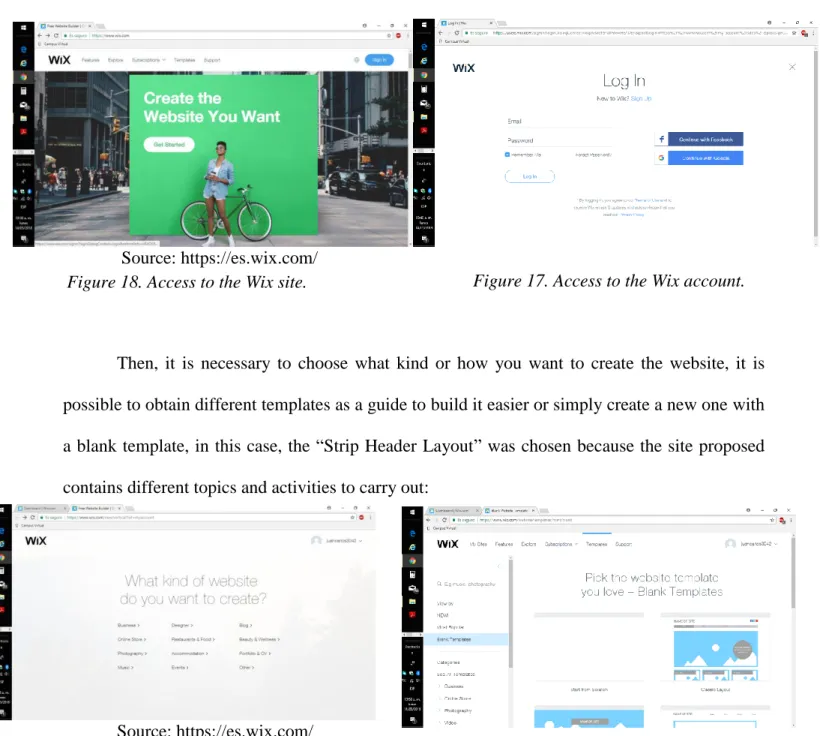
Firstly, the web-page was designed through https://www.wix.com/, it is a technological tool that allows creating a free website, it can be found on whatever browser to get the start, but it is necessary to subscribe with a Hotmail or G-mail accounts to sign in.
Source: https://es.wix.com/
Then, it is necessary to choose what kind or how you want to create the website, it is possible to obtain different templates as a guide to build it easier or simply create a new one with a blank template, in this case, the “Strip Header Layout” was chosen because the site proposed contains different topics and activities to carry out:
Source: https://es.wix.com/
Figure 18. Access to the Wix site. Figure 17. Access to the Wix account.
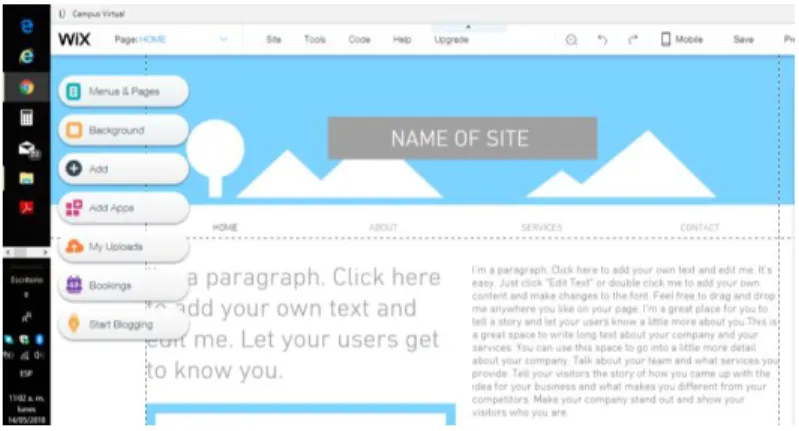
Once the template was chosen, this tool brings different options in order to build the website and organize it in the best possible way, adding menus, pages, pictures, sources, documents and different effects to attract the attention of the seventh-grade students that will be visiting the website.
Source: https://es.wix.com/
After that, it is necessary to choose what kind of letter do you want or for example, the position, the size, and distribution for each page selection to work on what the following icon that it is located into the same template:
Source: https://es.wix.com/
Figure 21. Options to select in order to build the website proposed.
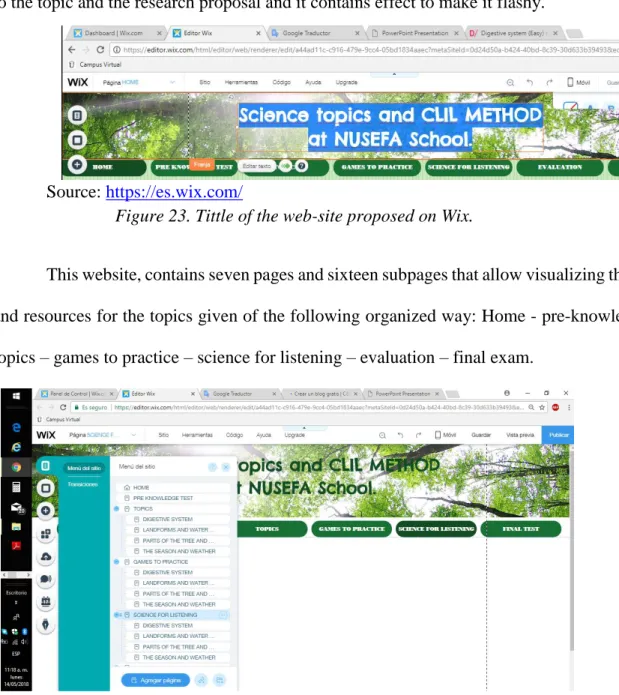
With the previous options it is possible to write the title of the web-page that is according to the topic and the research proposal and it contains effect to make it flashy.
Source: https://es.wix.com/
This website, contains seven pages and sixteen subpages that allow visualizing the contents and resources for the topics given of the following organized way: Home - pre-knowledge test – topics – games to practice – science for listening – evaluation – final exam.
Source: https://es.wix.com/
Figure 23. Tittle of the web-site proposed on Wix.
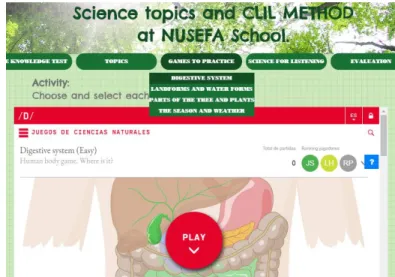
Secondly, when the web-page was configured, it was important adding the content for reading, because it was the skill with more weakness, for that reason the dynamic of this web-page begins with reading presentations for each topic, in order to practice each one to reinforce the reading skill and at the same time acquire new knowledge through online activities to practice and listening activities with the purpose to listen to the correct pronunciation of the new vocabulary acquired and each topic contains a short evaluation in order to check the knowledge acquired.
Source: https://es.wix.com/
Figure 26. Reading material on the web-site. Figure 27. Interactive activities on the web-site.
Finally, once the web-page proposed was ready only it is necessary to click on the save and publish buttons and immediately Wix.com throws a message with the link to copy and paste on the browser to work with the seventh-grade students.
Figure 29. Final web-page model proposed.
https://juancarlos3042.wixsite.com/8nusefa-english-2018
Descriptions of the web-page
Web-page reading contents and descriptions: Table 5
Contents of reading included in the web-page and descriptions.
Item Observations References
Introduction
This part of the web-page contains a brief introduction about what is natural sciences and two pictures about the topic.
Conserve Energy Future. (January, 01st. 2017). What is Environmental Science?. [Blog message]. Retrieved from https://www.conserve-energy- future.com/what-is-environmental-science-and-its-components.php
Pre-knowledge test
It contains 15 questions about the topics given, it was
created and
administrated through
https://www.quia.co m/web
MadameCarbonneau. (October 27th, 2011). Quizzes on
Quia [Video File]. Retrieved from
https://www.youtube.com/watch?v=UHSOPgP BhKY&t=44s
Digestive system
The digestive system information was taken from an online article available on the internet
Cleveland clinic. (2017). The Structure and Function of the Digestive System. Retrieved on November
27th, 2017 from
https://my.clevelandclinic.org/health/articles/70 41-the-structure-and-function-of-the-digestive-system
Landforms and water forms
The Reading material about landforms was taken from another website available on the internet, about the water forms were taken from an online dictionary also available on the internet.
Part of the tree and plants
The Reading material about plant parts and tree parts was taken from another website available on the internet.
Reddy, B. (2017). What are the parts of a plant and their
uses?. Quora. Retrieved from
https://www.quora.com/What-are-the-parts-of-a-plant-and-their-uses
KidZone.ws (2016). Trees. Retrieved from http://www.kidzone.ws/plants/trees.htm
The seasons and weather
The Reading material about seasons was taken from an online site, about the weather information only through the online dictionary.
Amsel, Sheri. "Changing Seasons - The Tilted Earth" Exploring Nature Educational Resource
©2005-2018. May 6, 2018<
http://www.exploringnature.org/db/view/Changi ng-Seasons-The-Tilted-Earth >
Evaluation Final exam
The pre-knowledge test was included 15 questions about the topics given, it was
created and
administrated through
https://www.quia.co m/web
Billie Haase. (9 de 05 de 2015). CAE Speaking Part 1[Archivo de video]. Retrieved on April 28th,
2018 from
https://www.youtube.com/watch?v=CvkmXC6p wyo&t=1s
Note:The table shows the different observations and resources which were taken.
Web-page interactive activities and descriptions: Table 6
Contents of interactive activities included in the web-page and descriptions.
Item Observations Resources
Digesti ve system
The online game was taken from
https://cienciasnaturales.dida ctalia.net/ that allows practicing the different parts of the digestive system, the game is available and it is
about to point out each par into the exact location on the online map.
Landfor ms and water forms
The online activity included in this topic was created through “Match the memory” it is an online tool that allows creating new games of matching style, it which you can upload different images about the topic needed and also the game can be free published.
Curtis Gibby, (November 2009). Match The
Memory. Retrieved from
https://matchthememory.com/create
Part of the tree and plants
The online activity included in this topic was created through “Educaplay” that it is an online page to facilitate training to the educational community, in order to create and publish free interactive activities. https://es.educaplay.com/ The seasons and weather
The online activity included in this topic was created through “Educaplay” that it is an online page to facilitate training to the educational community, in order to create and publish free interactive activities.
https://es.educaplay.com/
Note: this table was created to observe the different resources to practice included in the web-page.
Web-page listening contents and descriptions: Table 7
Contents of listening material included in the web-page and descriptions.
Item Observations Observation
Digestive system
The video file for this topic was included into the web-page proposal, because according to the
survey applied to the students the listening is the second skill with more difficulties, for that reason it was included in order to the seventh-grade students have the opportunity to listen to the correct pronunciation
about the new
vocabulary and it was taken from youtube.com.
https://www.youtube.com/watch?v=0eAI7kmir yQ
Landform
s and
water forms
The video file for this topic was included into the web-page proposal, because according to the survey applied to the students the listening is the second skill with more difficulties, for that reason it was included in order to the seventh-grade students have the opportunity to listen to the correct pronunciation
about the new
vocabulary and it was taken from youtube.com.
Dinaz L. (November 23th, 2015). What Are Landforms?. [Video File]. Retrieved from https://www.youtube.com/watch?v=uYUzvMF vnps
Part of the tree and plants
The video file for this topic was included into the web-page proposal, because according to the survey applied to the students the listening is the second skill with more difficulties, for that reason it was included in order to the seventh-grade students have the opportunity to listen to the correct pronunciation
about the new
vocabulary and it was taken from youtube.com.
XL Kids. (April 16th, 2013). Parts Of The Tree. [Video
File]. Retrieved from
https://www.youtube.com/watch?v=iwm32O8BXU k
Peekaboo Kidz. (March 25th, 2015). Parts Of A Plant | The Dr. Binocs Show | Learn Videos For Kids.
[Video File]. Retrieved from
The seasons and weather
The video file for this topic was included into the web-page proposal, because according to the survey applied to the students the listening is the second skill with more difficulties, for that reason it was included in order to the seventh-grade students have the opportunity to listen to the correct pronunciation
about the new
vocabulary and it was taken from youtube.com.
Armagan Citak. (March 9th, 2015). Seasons, weather and clothes. [Video File]. Retrieved from https://www.youtube.com/watch?v=eXFe4tUC d40
English Singsing. (October 12th, 2016). Kids vocabulary - Weather - How's the weather? - Learn English for kids - English educational video. [Video File]. Retrieved from https://www.youtube.com/watch?v=CXKj7bm 4Ops
Note: This chart shows the references of the videos taken from youtube included in the web-page.
Observation format
The observation in this study was fundamental to collect the information needed, before to the make a descriptive analysis, for that reason a format template was created in order to take important notes during the four sessions given into the classroom with the students, each session was developed for 1 hour and while the learners were working on the web-page, the role of the observer was carried out with the purpose to make an qualitative data analysis about their attitudes, feelings and behaviors.
Transcription obtained from the observation format: Table 8
Transcription of the first observation format.
Observation format
N° Session First session.
Topic The digestive system.
Date of the observation April 4th, 2018.
Time of the observation From 12:45 to 1:45 pm.
Grade Seventh-grade.
Number of students 26 students.
Institution Nuestra Señora de Fatima of Tunja-Boyacá. Relevant information
Item Comments
Class development
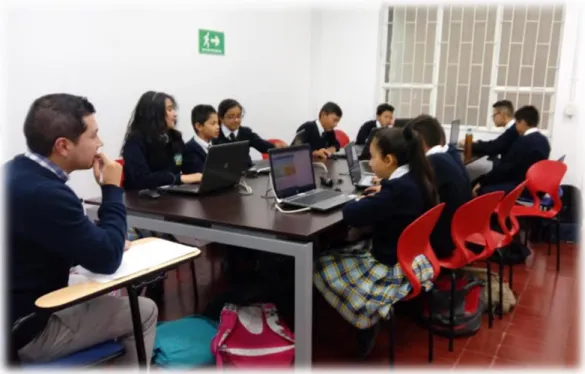
Firstly, the class began in the audiovisual room where there are 19 computers, then, it was important to bring them my computer and the English teacher´s computer because this grade is composed of 26 students, however 5 students do not have computers, for that reason it was possible that they work in pairs with another student; Then, the teacher socialized with a brief introduction the objective of the use of the web-page with science topics. After that, I explained them the dynamic, order and how to use the web-page correctly.
Behavior
During this session the seventh-grade students demonstrated a positive classroom behavior, their attitudes corresponded effectively to the correct use of the web-page, because the organization and their interest was notable during this first session given, however they asked a lot of questions about the use and order for each activity but it was normal because it was the first time to work on the web-page.
Time management
About the time, I believe that 1 hour is enough time, because the most part of them had finished the reading material about the different parts of the digestive system in 20 minutes, the next activity about the games to practice they finished it for 15 minutes, the listening activity for 5 minutes and 15 minutes to develop the evaluation to check their knowledge acquired for this topic. In total 55 minutes were destined to develop the activities proposed.
Exceptional aspects
Signature of the observer __Juan Carlos Pita Vargas___
Note: This is the transcribing process obtained from the first session.
Table 9
Transcription of the second observation format.
Observation format
N° Session Second session.
Topic Landforms and wáter forms.
Date of the observation April 26th, 2018. Time of the observation From 12:45 to 1:45 pm.
Grade Seventh-grade.
Number of students 26 students.
Institution Nuestra Señora de Fatima of Tunja-Boyacá. Relevant information
Item Comments
Class development
The class was developed in the same audiovisual room like the last class, keeping in mind that this classroom contains only 19 computers, the English teacher facilitated 4 computers more and my computer too to have 24 computers in total, however 2 students worked in pairs but it was not a problem because they are very friendly and it seems to be that they are very companions.
Behavior
The behavior for this topic was that in spite of they were tired because this is the last class hour, they were so motivated and animated to continue the use of the web-page, for this session was notable that all students arrived on time to the class and they wanted to choose a computer quickly with the purpose to discover what topic and activity were available for today.
Time management
Like the previous session I think that 1 hour is enough time to develop the activities proposed through the web-page, because the most part of them had finished the reading material about the landforms and water forms for around 30 minutes, the next activity about the games to practice they finished it for 15 minutes, the listening activity for 5 minutes and 10 minutes to develop the evaluation to check their knowledge acquired for this topic. In total 60 minutes were destined to develop all activities proposed.
Exceptional aspects
they were searching the meaning of the new words, on the other hand the activity that most liked them was the game included into the web-page about matching the picture with the correct vocabulay, because I observed that all students really were encouraged to develop this interactive activity and they also had a hight score during the evaluation to check their knowledge acquired of the topic given.
Signature of the observer _____ Juan Carlos Pita Vargas _________________________
Note: This is the transcribing process obtained from the second session.
Table 10
Transcription of the third observation format.
Observation format
N° Session Third session.
Topic The tree parts and plant parts.
Date of the observation May 7th, 2018.
Time of the observation From 08:45 to 9:45 pm.
Grade Seventh-grade.
Number of students 26 students.
Institution Nuestra Señora de Fatima of Tunja-Boyacá.
Relevant information
Item Comments
Class development
The class was developed in the digital point class classroom in this classroom there are a lot of computers, for that reason all students had one computer with the purpose to develop all activities individually, it was a positive point because they were concentrated developing all activities disciplined and organized. On the other hand, comparing the previous session, in the session, the students did not have any doubts about the use or the sequence to develop the activities proposed in the web-page.
Behavior The behavior for this topic was the organization of the students, the interest and the discipline that they had during the session, due to they developed all activities in silence and they were very concentrated in to learn new vocabulary about the topic.
Time management
For this session I realized that the most part of them had finished the reading material about the topic give through the web-page around 15 minutes, the next activity about the games to practice they finished it for 20 minutes, the listening activity was completed for 5 minutes and in 10 minutes they solved the online quiz, in total they spent 50 minutes, because all students developed all activities individually.
Exceptional aspects
included into the web-page and I observed that all students were happy and they also repeated it a lot of times, it was awesome because I sure that they could practice the vocabulary and it was useful to clear doubts and memorize new vocabulary even themselves can practice at home, because the web-page is available for them, in summary, I think that this topic was developed successfully and as an evidence all students had a hight score in the evaluation given.
Signature of the observer _______ Juan Carlos Pita Vargas _______________________
Note: This is the transcribing process obtained from the third session.
Table 11
Transcription of the fourth observation format.
Observation format
N° Session Fourth session.
Topic The seasons & weather and the Final exam. Date of the observation May 8th, 2018.
Time of the observation From 10:15 to 11:45 pm.
Grade Seventh-grade.
Number of students 26 students.
Institution Nuestra Señora de Fatima of Tunja-Boyacá.
Relevant information
Item Comments
Class development
The class was developed in the audiovisual room, like the first and second sessions in this one was important sumininstrate my computer and the teacher offered 4 computers, becuase this classroom only has 19 computers, but it was not problem, becuase the rest of the students worked in pairs, in this sessio were destined 1 hour with 30 minutes, due to on Tuesdays the teacher has 2 English hours, for that reason before to develop the last session I socialized them that 1 hour was destined to develop the last session and 30 minutes were divided into two parts; 15 minutes to review all previous topics and to study before to the final exam, and the rest of 15 minutes were to solve 15 questions that the online final exam contains.
Behavior
Time management
For this last session I realized that the most part of them had finished the reading material about the topic give through the web-page around 10 minutes, the next activity about the games to practice they finished it for 15 minutes, the listening activity was completed for 5 minutes and in 10 minutes they solved the online quiz, in total they spent 40 minutes, because all students developed all activities quickly due to this topic contains a short content and they used it as a strategy to have more time to study the previous topics and review all activities.
Exceptional aspects
As an outstanding aspect was the all students were so motivated to review all topics and activities that the web-page contains, also they demonstrated that the use of the web-page was useful to acquire new vocabulary, due to they used it again to review all topics and they realized that the order and sequence of the web-page was fundamental to review all topics, even some students developed the interactive activities twice before to solve the final exam. Finally, they presented the final exam and I realized that a big part of them were happy, because the score that they obtained was successful and after observed all grades obtained for them through Quia.com, I observed that all students had an excellent results comparing it with the pre-knowledge test applied before to begin with the sessions given, as a summary I think that all students are motivated and interested in to acquire new vocabulary from other subjects and it was a way to strengthen their English learning process.
Signature of the observer ___Juan Carlos Pita Vargas__________________
Note: This is the transcribing process obtained from the fourth session.
Source: Own autorship
Progress report per topic
The four sessions that were carried out for each topic as a reinforcement guides, the students developed an online quiz in order to check their knowledge acquired, for that reason the results obtained about each topic are in the following tables:
Table 12
Analysis per question of the results obtained in the first session
Topic Question Question type Correct Incorr
ect
N° Students who
received the quiz
Digestive system
Question 2 Multiple choice 100% 0% 26
Question 3 True-false 92% 8% 26
Question 4 True-false 100% 0% 26
Question 5 Multiple choice 92% 8% 26
Note: This table shows that all students obtained an excellent result in the evaluation.
Table 13
Analysis per student of the results obtained in the first session.
Student Points (out of 5) Correct % Incorrect %
Student 1 4 80% 20%
Student 2 5 100% 0%
Student 3 5 100% 0%
Student 4 5 100% 0%
Student 5 4 80% 20%
Student 6 5 100% 0%
Student 7 5 100% 0%
Student 8 5 100% 0%
Student 9 5 100% 0%
Student 10 5 100% 0%
Student 11 5 100% 0%
Student 12 5 100% 0%
Student 13 5 100% 0%
Student 14 5 100% 0%
Student 15 4 80% 20%
Student 16 5 100% 0%
Student 17 5 100% 0%
Student 18 5 100% 0%
Student 19 5 100% 0%
Student 20 4 80% 20%
Student 21 5 100% 0%
Student 22 5 100% 0%
Student 23 5 100% 0%
Student 24 5 100% 0%
Student 25 5 100% 0%
Student 26 4 80% 20%
Note: This chart contains the different scores and percentages obtained by each student the low score were 80% and the most part of the students obtained the 100%.
Table 14
Analysis per question of the results obtained in the second session.
Topic Question Question type correct Incorrect N° Students who
received the quiz
Landforms and water forms
Question 1 Multiple choices 96% 4% 26
Question 2 Multiple choice 85% 15% 26
Question 3 Multiple choice 88% 12% 26
Question 4 True-false 100% 0% 26
Question 5 Multiple choice 96% 4% 26
Question 6 Multiple choice 88% 12% 26
Note: This table shows that all students understand the topic given and obtained a high score in the evaluation.
Table 15
Analysis per student of the results obtained in the second session.
Student Points (out of 5) Correct Incorrect
Student 1 6 100% 0%
Student 2 5 83% 17%
Student 3 5 83% 17%
Student 4 6 100% 0%
Student 5 6 100% 0%
Student 6 5 83% 17%
Student 7 4 67% 33%
Student 8 6 100% 0%
Student 9 6 100% 0%
Student 10 4 67% 33%
Student 11 5 83% 17%
Student 12 5 83% 17%
Student 13 5 83% 17%
Student 14 6 100% 0%
Student 15 5 83% 17%
Student 16 6 100% 0%
Student 17 6 100% 0%
Student 18 6 100% 0%
Student 19 6 100% 0%
Student 20 5 83% 17%
Student 21 6 100% 0%
Student 22 6 100% 0%
Student 23 6 100% 0%
Student 24 6 100% 0%
Student 25 6 100% 0%
Student 26 6 100% 0%
Note: This chart contains the different scores and percentages obtained by each student the low score was 67% and the most part of the students obtained between 84 and100% of correct answers.
Table 16
Analysis per question of the results obtained in the third session.
Topic Question Question type Correct Incorrect N° Students who
received the quiz
Part of the tree and plants
Question 1 Multiple choices 96% 4% 26
Question 2 Multiple choice 100% 0% 26
Question 3 True-false 92% 8% 26
Question 4 Multiple choice 92% 8% 26
Note: This table shows that the most of them understood the topic given and they obtained a high score in the
evaluation.
Table 17
Analysis per student of the results obtained in the third session.
Student Points (out of 5) correct Incorrect
Student 1 5 100% 0%
Student 2 5 100% 0%
Student 3 4 80% 20%
Student 4 5 100% 0%
Student 5 5 100% 0%
Student 6 5 100% 0%
Student 7 5 100% 0%
Student 8 3 60% 40%
Student 9 5 100% 0%
Student 10 5 100% 0%
Student 11 5 100% 0%
Student 12 5 100% 0%
Student 13 5 100% 0%
Student 14 5 100% 0%
Student 15 5 100% 0%
Student 16 5 100% 0%
Student 17 5 100% 0%
Student 18 4 80% 20%
Student 19 5 100% 0%
Student 20 3 60% 40%
Student 21 5 100% 0%
Student 22 4 80% 20%
Student 23 3 60% 40%
Student 24 5 100% 0%
Student 25 5 100% 0%
Student 26 5 100% 0%
Note: This chart contains the different scores and percentages obtained by each student the low score was 60% and the most part of the students obtained 100% of correct answers.
Table 18
Analysis per question of the results obtained in the fourth session.
Topic Question Question type Correct Incorrect N° Students who
received the quiz
The seasons and weather
Question 1 Multiple choices 92% 8% 26
Question 2 Multiple choice 100% 0% 26
Question 3 True-false 100% 0% 26
Question 4 Matching 73% 27% 26
Question 5 Multiple choice 100% 0% 26
Question 6 Multiple choice 92% 8% 24
Note: This table shows that the most of them understood the topic given and they obtained a high score in the evaluation.