Ecological
impacts
of
atmospheric
pollution
and
interactions
with
climate
change
in
terrestrial
ecosystems
of
the
Mediterranean
Basin:
Current
research
and
future
directions
Raúl
Ochoa-Hueso
,
Silvana
Munzi
,
Rocío
Alonso
María
Arr
oniz-Crespo,
Anna
Avila
Victoria
Bermejo,
Roland
Bobbink,
Cristina
Branquinho,
Laura
Concostrina-Zubiri
Cristina
Cruz,
Ricardo
Cruz
de
Carvalho
,
Alessandra
De
Marco,
Teresa
Dias,
David
Elustondo,
Susana
Elvira,
Bel
en
Est
ebanez,
Lina
Fusaro,
Giacomo
Gerosa,
Sheila
Izquieta-Rojano,
Mauro
Lo
Cascio,
Riccardo
Marzuoli,
Paula
Matos,
Simone
Mereu,
Jose
Merino,
Lourdes
Morillas,
Alice
Nunes,
Elena
Paoletti
,
Luca
Paoli,
Pedro
Pinho,
Isabel
B.
Rogers,
Arthur
Santos
,
Pierre
Sicard,
Carly
J.
Stevens
,
Mark
R.
Theobald
Keywords: Air pollution Climate change
Coordinated research networks Environmental monitoring
a b s t r a c t
Mediterranean Basin ecosystems, their unique biodiversity, and the key services they provide are currently at risk due to air pollution and climate change, yet only a limited number of isolated and geographically-restricted studies have addressed this topic, often with contrasting results. Particularities of air pollution in this region include high O3levels due to high air temperatures and solar radiation, the stability of air masses, and dominance of dry over wet nitrogen deposition. Moreover, the unique abiotic and biotic factors (e.g., climate, vegetation type, relevance of Saharan dust inputs) modulating the response of Mediterranean ecosystems at various spatiotemporal scales make it difficult to understand, and thus predict, the consequences of human activities that cause air pollution in the Mediterranean Basin. Therefore, there is an urgent need to implement coordinated research and experimental platforms along with wider environmental monitoring networks in the region. In particular, a robust deposition monitoring network in conjunction with modelling estimates is crucial, possibly including a set of
common biomonitors (ideally cryptogams, an important component of the Mediterranean vegetation), to help refine pollutant deposition maps. Additionally, increased attention must be paid to functional di-versity measures in future air pollution and climate change studies to establish the necessary link be-tween biodiversity and the provision of ecosystem services in Mediterranean ecosystems. Through a coordinated effort, the Mediterranean scientific community canfill the above-mentioned gaps and reach a greater understanding of the mechanisms underlying the combined effects of air pollution and climate change in the Mediterranean Basin.
1. Introduction
Human activities and natural processes have shaped each other over ca. eight millennia within Mediterranean Basin ecosystems (Blondel, 2006). This coevolution, together with the heterogeneous orography and geology, the large seasonal and inter-annual climatic variability, the refuge effect during the last glaciations, and the crossroad location between European temperate ecosystems and North African and Asian drylands, has resulted in the high diver-sification of the flora and fauna that we observe today, making Mediterranean ecosystems a hotspot of biodiversity, but also of vulnerability (Schr€oteret al., 2005; Blondel, 2006; Phoenixet al., 2006). Moreover, the Mediterranean Basin is one of the world's largest biodiversity hotspots and the only one within Europe, otherwise dominated by temperate natural and semi-natural grasslands, temperate deciduous forests and boreal conifer forests (Myers et al., 2000). Species-rich ecosystems exclusive to the Mediterranean Basin include Spanishmatorralesandgarrigas, Por-tuguese matos, Italian macchias, Greek phryganas, and agro-silvopastoral ecosystems of high natural and economic value such as Spanishdehesasand Portuguesemontados(Cowlinget al., 1996; Blondel, 2006). However, the biodiversity and other ecosystem services of this region are currently at risk due to human pressures such as climate change, land degradation and air pollution (Schroter€ et al., 2005; Scarascia-Mugnozza and Matteucci, 2012). Air pollution in the Mediterranean Basin is primarily in the form of particulate matter, nitrogen (N) deposition and tropospheric ozone (O3) (Paoletti, 2006; Ferrettiet al., 2014; García-Gomez et al., 2014;
Fig. 1). Production of pollutants is mainly associated with industrial activities, construction, vehicle emissions and agricultural practices and, within the European context, is characteristically exacerbated by more frequent droughts and the typical stability of air masses in the region, with important consequences for ecosystem and human health (Millanet al., 2002; Vestrenget al., 2008; Izquieta-Rojano
et al., 2016a). This also has important social consequences for the Mediterranean region, where approximately 480 million people live, and where more frequent droughts, extreme climatic events and wildfires will only reinforce the current migrant and humani-tarian crisis (Werz and Hoffman, 2016).
Environmental pollution causes and interacts synergistically with climate change (Alonsoet al., 2001, 2014; Bytnerowiczet al., 2007; Sardans and Pe~nuelas, 2013). This is particularly true for seasonally dry regions like the Mediterranean Basin (Baronet al., 2014), but the effects of this interaction on the structure and function of Mediterranean ecosystems are not adequately
quanti-fied and, therefore, the consequences are poorly understood (Bobbinket al., 2010; Ochoa-Huesoet al., 2011). Projections for 2100 suggest that mean air temperatures in the Mediterranean Basin region will rise from 2.2C to 5.1C above 1990 levels and that precipitation will decrease between 4 and 27% (Christensen
et al., 2007andFig. 2). The sea level is also projected to rise, and a greater frequency and intensity of extreme weather events (e.g., drought, heat waves andfloods) are expected (EEA, 2005). These
changes will exacerbate the already acute water shortage problem in the region, particularly in drylands (Terray and Boe, 2013; Sicard and Dalstein-Richier, 2015), impairing their functionality and abil-ity to deliver the ecosystem services on which society and economy depend (Bakkeneset al., 2002; Lloretet al., 2004). Functions that will be synergistically impaired by air pollution and climate change include reductions in crop yield and carbon sequestration (Maracchiet al., 2005; Mills and Harmens, 2011; Shindell et al., 2012; Ferrettiet al., 2014). In addition, a higherfire risk is attrib-uted to higher temperatures and more frequent droughts coupled with an N-driven increase of grass-derived highly-flammablefine fuel (Pausas and Fernandez-Munoz, 2012~ ).
In the last decades, atmospheric concentrations of major anthropogenic air pollutants such as particulate matter and sulphur dioxide (SO2) have decreased in Southern Europe due to emission control policies and greener technologies (Querol et al., 2014; Barroset al., 2015; Aguillaumeet al., 2016;Avila and Aguillaume, 2017). However, mitigation strategies have not been equally effec-tive with other compounds such as reaceffec-tive N and tropospheric O3 (Fig. 1;Paoletti, 2006; García-Gomez et al., 2014; Sicardet al., 2016). For example, recent increases in N deposition, particularly dry deposition of NO3, have been detected in North-eastern Spain, where N deposition is estimated in the range of 15e30 kg N ha1
yr1 (Avila and Roda, 2012; Camarero and Catalan, 2012;
Aguillaumeet al., 2016). This has been attributed to increased ni-trogen oxide (NOx) and ammonia (NH3) emissions and changes in precipitation patterns (Aguillaume et al., 2016). Background O3 pollution is typically high in Mediterranean climates due to the meteorological conditions of the area (Paoletti, 2006) and recent reviews have demonstrated that while O3 in cities has generally increased, no clear trend, or only a slight decrease, has been detected in rural areas (Sicardet al., 2013; Querolet al., 2014); the annual average at rural western Mediterranean sites over the period 2000e2010 was 33 ppb, with a modest trend of0.22% yr1 (Sicard et al., 2013). The Mediterranean Basin is also exposed to frequent African dust intrusions, which can naturally increase the level of suspended particulate matter and nutrient deposition, changing the chemical composition of the atmosphere (Escudero
et al., 2005; Marticorena and Formenti, 2013; Avila and
Aguillaume, 2017). This has profound impacts on the
biogeo-chemical cycles of both aquatic and terrestrial ecosystems (Mona
(France, Italy, Portugal and Spain). In contrast, we discuss infor-mation generated through a variety of experimental approaches (field manipulation experiments, greenhouse studies, open top chambers [OTCs], observational studies, modelling, etc.) from studies carried out in a wide range of representative natural (e.g., shrublands, grasslands, woodlands and forests) and semi-natural (e.g.,montadosordehesas) ecosystems.
2. Measurement and modelling of atmospheric pollution and deposition
Estimating pollutant deposition loadings, particularly dry deposition, still presents important uncertainties and challenges, both in terms of modelling and measurements (Simpson et al., 2014). This is particularly true in studies at small regional scales and in regions with complex topography or under the influence of local emission sources (García-Gomez et al., 2014), which is very often the case in the Mediterranean Basin. Dry deposition in Mediterranean ecosystems can represent the main input of atmo-spheric N, contributing up to 65e95% of the total deposition (Fig. 1b;Sanzet al., 2002; Avila and Roda, 2012). For example, wet N deposition at the Levantine border of the Iberian Peninsula can be considered low to moderate (2e7.7 kg N ha1yr1), but total N deposition loads are comparable to more polluted areas in central and northern Europe (10e24 kg N ha1yr1) when dry deposition is included (Avila and Roda, 2012). Given that dry deposition is important in the Mediterranean Basin but is also difficult to mea-sure, we should ideally combine modelled dry deposition with wet deposition measures from representative monitoring stations. A recent modelling analysis has also highlighted that mountain ecosystems in Spain, where monitoring stations are even scarcer, are frequently exposed to exceedances of empirical critical N loads (García-Gomezet al., 2014, 2017). Moreover, mountain areas of the Mediterranean Basin also frequently register very high O3 con-centrations that are not recorded in air quality monitoring net-works (Díaz-de-Quijanoet al., 2009; Cristofanelliet al., 2015; Elvira
et al., under review). This observation should encourage the in-clusion of monitoring stations in mountain areas in air quality networks in the Mediterranean Basin to protect these highly valuable and vulnerable ecosystems (García-Gomez et al., 2017). Another important aspect to be considered in both deposition monitoring networks and model-based estimates is the quantifi -cation and characterization of ammonium (NH4þ) and the organic N fraction (Jickellset al., 2013; Fowleret al., 2015). Dissolved organic N (DON) can represent a significant component of wet and dry deposition fluxes but it is often overlooked and not routinely assessed (Mace, 2003; Violakiet al., 2010; Imet al., 2013; Izquieta-Rojano and Elustondo, 2017). However, DONfluxes may have sig-nificant implications in terms of critical loads, reaching up to 34e56% of the total N deposition (12 kg DON ha1yr1) in Medi-terranean agricultural areas (Izquieta-Rojano et al., 2016a). The quantification of temporal trends in air pollution is equally important for evaluating the impact of changing precursor emis-sions and informing local and regional air quality strategies.
3. Impacts of atmospheric pollution and climate change on natural and semi-natural terrestrial ecosystems
The ecological impacts of air pollution (particularly for N deposition and O3) on natural and semi-natural ecosystems have been primarily studied in the temperate and boreal regions of Europe and North America and, more recently, in steppe and sub-tropical areas of China (Paoletti, 2006; Xia and Wan, 2008; Bobbink
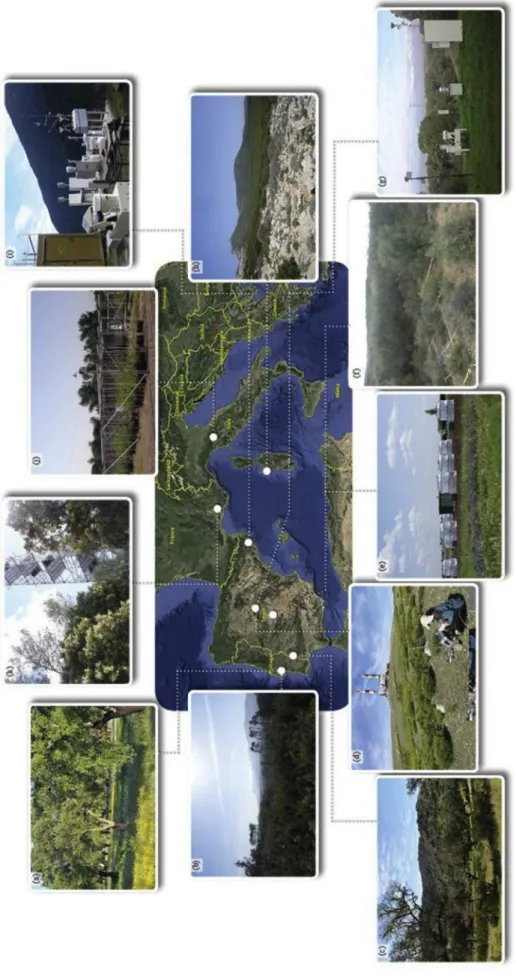
Mediterranean Basin have been carried out in just a small part of the geographic area (i.e. certain localities in Italy, Portugal and Spain) and have used different experimental design and method-ologies (Fig. 3and Supplementary Table 1). Similarly, instead of taking advantage of the development of statistical methods to integrate responses at the ecosystem level (e.g., structural equation modelling;Eisenhaueret al., 2015), studies have typically focused solely and independently on plants (community or, more frequently, individual species), lichens (community or, again more frequently, individual species) and soil properties (soil biogeo-chemistry, structure and functioning;Supplementary Table 1). One notable exception to this is NitroMed, a unique network of three comparable N addition experimental sites (Capo Caccia [0 and 30 kg N ha1yr1], Alambre [0, 40 and 80 kg N ha1yr1], and El Regajal [0, 10, 20 and 50 kg N ha1yr1]; seeFig. 3b, f and h) that is currently using common experimental methodology and structural equation modelling to understand the cause-effect mechanisms that determine changes in gas (CO2) exchange and litter decom-position and stabilization rates in response to N dedecom-position in semiarid Mediterranean ecosystems (see Ochoa-Hueso and Manrique, 2011andDiaset al., 2014for further details on experi-mental methodologies). Preliminary results suggest that N depo-sition increases soil N availability and reduces soil pH which, in turn, has an effect on microbial community structure (lower fungi to bacteria ratio) and overall enzymatic activity, direct responsible for reduced litter decomposition and higher stabilization rates (Lo Cascioet al., 2016). Similarly, a new coordinated project is looking at the effects of N addition at realistic doses (10 and 20 kg N ha1 yr1), in conjunction with P, on alpine ecosystems fromfive Na-tional Parks in Spain.
Moreover, most of these studies addressed the impact of one global change driver alone (often increased N availability, mostly the N load, or O3) and so comprehensive studies on the interaction between global change drivers (e.g., air pollution and climate change) are few. However, recent studies have described a het-erogeneous response of annual pasture species to O3 and N enrichment, with legumes being highly sensitive to ozone but not N, while grasses and herbs were more tolerant to O3 and more responsive to N (Calvete-Sogo et al., 2016). Thus the interactive effects of O3and N can alter the structure and species composition of Mediterranean annual pastures via changes in the competitive relationships among species (Gonzalez-Fernandezet al., 2013and references therein;Calvete-Sogoet al., 2014, 2016). Similarly, only a few studies have addressed the impacts on edaphic fauna and above- and below-ground biotic interactions such as mycorrhiza, biological Nfixation, herbivory or pollination in ecosystems from the Mediterranean Basin (Supplementary Table 1and references therein), despite the relevance of ecological interactions to main-tain healthy, functional ecosystems (Tylianakis et al., 2008). For example, Ochoa-Hueso et al. (2014a) found that edaphic faunal abundance, particularly collembolans, increased in response to up to 20 kg N ha1yr1and then decreased with 50 kg N ha1yr1, whereas 10 kg N ha1yr1were enough to completely suppress soil microbial Nfixation (Ochoa-Huesoet al., 2013a). Another notable exception isOchoa-Hueso (2016), who showed how even low-N addition levels (10 kg N ha1 yr1) can completely disrupt the tight coupling of the network of ecological interactions in a semi-arid ecosystem from central Spain, despite the lack of evident response of most of the individual abiotic and biotic ecosystem constituents evaluated (i.e., soils, microbes, plants and edaphic fauna). Ozone and N soil availability can also alter volatile organic compound (VOC) emissions, and thus biosphere-atmosphere in-teractions, of some Mediterranean tree and annual pasture species. The consequences of these interactions need to be further studied (Pe~nuelas et al., 1999; Llusia et al., 2002; Llusia et al., 2014).
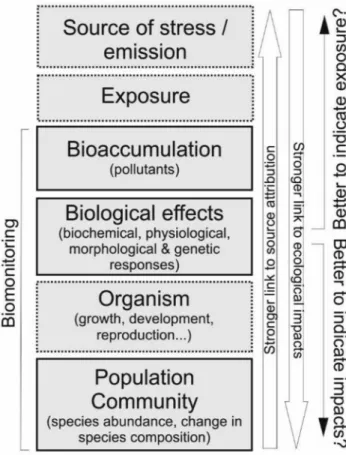
Therefore, a more comprehensive and integrative experimental approach is urgently needed to fully capture the real consequences of air pollution in the Mediterranean region (seeFig. 4).
3.1. Sensitivity of Mediterranean forests to air pollution and climate change
Mediterranean forest ecosystems have naturally evolved cross-tolerance to deal with harsh environmental conditions (Paoletti, 2006; Matesanz and Valladares, 2014). However, climate change, N deposition and O3are currently threatening Mediterranean for-ests in unprecedented and complex manners, with consistent stoichiometric responses to increased N deposition (higher leaf N:P ratios; Sardanset al., 2016), but with physiological and growth-related consequences forecasted to vary among the three main tree functional types (i.e., conifers, evergreen broadleaf trees, and deciduous broadleaf trees). As deposition increases, photosyn-thesis, water use efficiency, and thus growth, often increase in co-nifers (Leonardiet al., 2012), although under chronic N deposition, other nutrients such as P can become more limiting, counteracting the initial benefits of more N availability (Blaneset al., 2013). Ni-trogen deposition could also increase pine mortality rates in response to drought due to a decline of ectomycorrhizal coloniza-tion rates, a phenomenon of widespread occurrence in US dryland woodlands (Allenet al., 2010). On the other hand, their low sto-matal conductance and their high stosto-matal sensitivity to vapour pressure deficit and water availability might limit the diffusion of O3 to the mesophyll (Flexaset al., 2014). Similarly, conservative strategies of water and nutrient-use may also play a key role in allowing conifers to keep a positive balance between assimilation and respiration in response to climate change (Way and Oren, 2010). However, O3 exposure might be impairing their ability to withstand other environmental stresses such as those triggered by drought, high temperature and solar radiation (Barneset al., 2000; Alonsoet al., 2001).
In contrast, evergreen broadleaf species inhabiting resource-poor ecosystems might be jeopardized by N deposition by shift-ing biomass partitionshift-ing (Cambui et al., 2011) and altering allo-metric ratios (e.g., leaf area/sap wood or root/leaf biomass), which may have consequences for their ability to deal with water stress, particularly in the context of the characteristic summer drought period and climate change (Martinez-Vilaltaet al., 2003; Mereu
et al., 2009). Ecophysiological responses to O3vary from down-regulation of photosystems (Mereuet al., 2009) to reduced sto-matal aperture and increased stosto-matal density (Fusaroet al., 2016) and sluggishness (Paoletti and Grulke, 2005, 2010). However, Mediterranean vegetation usually has efficient antioxidant de-fences (Nali et al., 2004), which are key factors in O3 tolerance (Calatayudet al., 2011; Mereuet al., 2011), and is usually known to be more O3-tolerant than mesophilic broadleaf trees (Paoletti,
2006). Nevertheless, biomass losses and allocation shifts cannot be excluded, especially as a consequence of synergistic effects of N deposition and drought, although local differentiation may result in significant intraspecific tolerance differences (Alonsoet al., 2014; Gerosaet al., 2015).
phenomenon that could be exacerbated by excessive N. Deciduous broadleaf species also have lower capacity to tolerate oxidative stress than evergreen broadleaf species due to traits such as thinner leaves and higher stomatal conductance (Calatayudet al., 2010). Gas exchange and antioxidant capacity in deciduous broadleaves are, therefore, generally more affected by high O3concentrations than in evergreen broadleaves (Bussottiet al., 2014). Based on their levels of visible foliar injury and expert judgement, deciduous broadleaf species range from highly to moderately sensitive species such as Fagus sylvatica and Fraxinus excelsior, respectively (Baumgartenet al., 2000; Tegischeret al., 2002; Gerosaet al., 2003; Deckmynet al., 2007; Paolettiet al., 2007; Sicardet al., 2016), to O3 -tolerant species like some Quercus species (Q. cerris,Q. ilex and Q. petraea;Gerosaet al., 2009; Calatayudet al., 2011; Sicardet al., 2016).
Relatively little is known about the effects of O3 on annual, perennial and woody understory vegetation of Mediterranean forest ecosystems. Under experimental conditions, some species characteristic of the annual grasslands associated with Q. ilex dehesashave high O3sensitivity. Interestingly, Nfixing legumes, of higher nutritional value, are more O3 sensitive than grasses (Bermejoet al., 2004; Gimenoet al., 2004), particularly in terms of
flower and seed production (Sanzet al., 2007), which could affect their competitive fitness and, ultimately, reduce the economic value of the pasture. Nitrogen availability can partially
counterbalance O3effects on aboveground biomass when the levels of O3are moderate, but O3exposure reduces the fertilization effect of higher N availability (Calvete-Sogoet al., 2014). Anyhow, given that O3levels are higher in summer, when herbaceous species are dormant, Mediterranean species that are summer-active such as pines and oaks are more likely to be directly affected by O3than forbs and grasses. This suggests that the seasonality of O3 concen-trations as well as plant phenology and functional type must be considered if we are to fully understand the consequences of air pollution on the highly diverse Mediterranean plant communities. A unique ozone FACE (free air controlled experiment) is now available in the Mediterranean Basin (Fig. 3) to helpfill this gap (Paolettiet al., in preparation).
3.2. Role of environmental context in the response of biodiversity and C sequestration
The local abiotic (e.g., climate, soil properties) and biotic (e.g., vegetation type, community attributes, etc.) contexts are known to modulate ecosystem responses to environmental drivers at different temporal and spatial scales (Bardgettet al., 2013). Given that plant biodiversity at the regional (10e106 km2) and local (<0.1 ha) scales in Mediterranean ecosystems ranks among the highest in the world (Cowlinget al., 1996), this is a particularly relevant aspect for the region. Various studies in Mediterranean ecosystems have shown that increased N availability may have a positive (Pinhoet al., 2012; Diaset al., 2014), negative (Bonanomi
et al., 2006; Bobbink et al., 2010) or even no effect (Dias et al., 2014) on plant species richness, which is probably due to cumu-lative effects and modulating factors such as the ecosystem type, the initial N status of the system, the dominant form of mineral N in the soil (NH4þ, NO3), and/or the N form added. Positive effects on species richness, however, have only been observed in areas char-acterized by strong environmental stress and low nutrient avail-ability (e.g., open arid and semiarid Mediterranean ecosystems) and are often associated with an increase in nitrophytic and weedy species (Bobbinket al., 2010; Pinhoet al., 2011; Diaset al., 2014). The presence and density of shrubs, as well as the availability of inor-ganic phosphorus (P) and other macro and micronutrients, can also modulate the response of the herbaceous vegetation to N addition and plant invasion in semiarid Mediterranean areas (Ochoa-Hueso
et al., 2013b; Ochoa-Hueso and Stevens, 2015). For example,
Ochoa-Hueso and Manrique (2014)found that N addition increased the
nitrophytic element, particularly native crucifers, only when these species were present in the seed bank in relevant densities and there was sufficient P, whereas a closed scrub vegetation is known to be less susceptible to invasion by N-loving species than open shrublands, woodlands and grasslands (Diaset al., 2014). The role of soil nutrient availability, typically lower than in other Mediterranean-type ecosystems such as those from Chile (Cowling
et al., 1996), in the ecosystem response to extra N can also be linked to induced nutrient imbalances, particularly N in relation to P, and therefore to an alteration of ecosystem stoichiometry ( Ochoa-Huesoet al., 2014b; Sardanset al., 2016).
The behaviour of terrestrial ecosystems as a global C sink or source under increased N deposition or O3pollution scenarios is currently a research hot-topic and is of paramount importance for the mitigation of climate change (Felzeret al., 2004; Reich et al., 2006; Pereira et al., 2007). Recent studies have suggested that seasonally water-limited ecosystems, such as those typically found in the Mediterranean Basin, may have a disproportionately big role in the inter-annual C sink-source dynamics at the global scale due to higher C turnover rates (Poulteret al., 2014); this is attributed to their large inter-annual climatic variability, with unusually wet years contributing to strengthen the terrestrial C sink but where Fig. 4.The biomonitoring chain: from the source of stress to ecological impacts.
multiple processes likefire or rapid decomposition could result in a rapid loss of most of the accumulated C. These aspects are, however, still poorly understood in Mediterranean ecosystems, where different studies have reported contrasting results (Ochoa-Hueso
et al., 2013a, 2013c; Ferrettiet al., 2014). In Mediterranean ecosys-tems, ecosystem C storage should, therefore, be evaluated in terms of altered abundance and patterns of rainfall (both within and between years) (Pereiraet al., 2007), in relation to the levels of N saturation (NO3) and toxicity (NH4þ) in soil (Diaset al., 2014), as well as other site-dependent characteristics such as dominant vegeta-tion, soil type (texture and pH), and stand history and age (Ferretti
et al., 2014). Experimental and observationalfield studies suggest that, at least in the short-term, seasonal and inter-annual dynamics may override any potential effect of atmospheric N pollution, despite potential cumulative negative impacts in the long-term due to an overall decline in ecosystem health (Ochoa-Hueso et al., 2013c; Ferrettiet al., 2014).
Although within the Mediterranean Basin there is still a large gap in the knowledge of the impacts of atmospheric pollution and climate change on natural and semi-natural ecosystems, taken together, all the scattered information available suggests the particularly key role of spatial and temporal environmental het-erogeneity, biotic interactions, and ecosystem stoichiometry in mediating the ecosystem response to air pollution.
3.3. Critical loads and levels
The concepts of critical loads and critical levels were developed within the United Nation Economic Commission for Europe (UNECE) Convention on Long-Range Transboundary Air Pollution (CLRTAP) for assessing the risk of air pollution impacts to ecosys-tems and defining emission reductions. This tool is commonly used to anticipate negative effects of air pollution and, therefore, to protect ecosystems before the changes become irreversible. The derivation of empirical critical loads for nutrient N is based on experimental activities performed on different vegetation types and they are assigned to habitat classes, while the derivation of NH3 and NOxcritical levels is based on the responses of broad vegetation types such as higher plants or lichens and bryophytes. The pan-European critical level for atmospheric NH3is currently set at an annual mean of 1
m
g m3for lichens and bryophytes and 3m
g m3 for higher plants, while the NOxcritical level for all vegetation types is an annual mean of 30m
g m3 (CLRTAP, 2011). Although some modelling approaches exist to define critical N loads, the identifi -cation of empirical critical loads is recommended for Mediterra-nean ecosystems due to its particularities such as co-occurrence with other pressures and high seasonality (de Vrieset al., 2007; Fenn et al., 2011). Empirical critical loads of N for European-Mediterranean habitats have only been proposed for four ecosys-tems: (1) Mediterranean xeric grasslands (EUNIS [European Nature Information System] E 1.3), 15e25 kg N ha1yr1; (2) Mediterra-nean maquis (F5), 20e30 kg N ha1yr1; (3) Mediterranean ever-green (Quercus) woodlands (G 2.1), 10e20 kg N ha1yr1, and (4) Mediterranean Pinus woodlands (G 3.7), 3e15 kg N ha1 yr1 (Bobbink and Hettelingh, 2011). However, these critical loads are based on very little information and are thus classified as expert judgement. Similarly, NH3 critical levels have only been set for Mediterranean evergreen woodlands and dense holm oak forests. Critical levels of atmospheric NH3of<1.9 and 2.6m
g m3have been estimated for evergreen woodlands surrounded by intensive agri-cultural landscapes (Pinhoet al., 2012; Aguillaume, 2015), while for evergreen woodlands under little agricultural influence but strong oceanic influence, the critical level was estimated to be 0.69m
g m3 (Pinho et al., 2014). Nevertheless, the N critical loads and NH3 critical levels for many European-Mediterranean ecosystemsremain unstudied, despite their relevance for protecting relatively undisturbed and oligotrophic ecosystems. Therefore, long-term manipulation experiments across a range of typical Mediterra-nean terrestrial ecosystems are desperately needed to obtain a more complete set of reliable empirical critical N loads and levels for the Mediterranean Basin (Bobbink et al., 2010; Bobbink and Hettelingh, 2011). Ozone critical levels have also been proposed for the protection of natural vegetation at European level for two vegetation types, forests and semi-natural vegetation (CLRTAP, 2011). The newflux-based O3critical levels allow species-specific physiological conditions and O3 uptake mechanisms to be included considering the particularities of Mediterranean species. Interestingly, multiple studies performed with Mediterranean tree species recommend higher O3critical levels for the protection of Mediterranean forests than the values currently accepted (Calatayudet al., 2011; Alonsoet al., 2014; Gerosaet al., 2015). The possible definition of different O3 critical levels for different biogeographical regions or vegetation types is currently under analysis within the Convention (CLRTAP, 2011).
3.4. Cryptogams as indicators of the impact of air pollution and climate change
Lichens and bryophytes (i.e., cryptogams), very often used in the definition of critical loads and levels, are important components of the vegetation in Mediterranean ecosystems. These organisms are key drivers of ecosystem properties (soil aggregation and stability) and processes (C and Nfixation and nutrient cycling), particularly in the case of biological soil crusts (hereafter biocrusts), a functionally-integrated association of cyanobacteria, protists, fungi, mosses and lichens inhabiting the first millimetres of soil (Cornelissen et al., 2007; Maestre et al., 2011). Cryptogams are usually extremely sensitive to environmental changes and so they often provide early-warning indicators of impacts before any other constituent of the ecosystem, particularly in the case of N (Pardo
et al., 2011; Munziet al., 2012). For example, mosses have been used in N deposition surveys under the ICP-Vegetation framework (Harmenset al., 2014). The results showed that N concentration in mosses can potentially be used as an indicator of total atmospheric N deposition. Similarly,Rootet al.(2013)showed that lichens can be a suitable tool for estimating throughfall N deposition in forests. However, the relationship between N deposition and tissue N concentration can also be affected by environmental factors such as local climate and the form of N deposition.
Mosses and lichens have been instrumental to the evaluation of the impacts of global change drivers on temperate and boreal ecosystems (e.g.,Arroniz-Crespo et al., 2008), although the number of studies carried out in Mediterranean ecosystems is very limited. Recent studies have, however, reported significant impacts of increased N deposition on Mediterranean biocrust and epiphytic communities. For example, two studies carried out in the Iberian peninsula found higher tissue N content and a shift from N to P limitation in the terricolous mossTortella squarrosa(¼Pleurochaete squarrosa;Ochoa-Hueso and Manrique, 2013; Ochoa-Huesoet al., 2014a). Similarly, an alteration of physiological and chemical re-sponses in lichen transplants (Branquinhoet al., 2010; Paoliet al.,
2010, 2015) and a shift in epiphytic lichen communities from
oligotrophic-dominated to nitrophytic-dominated species have also been reported in Portugal (Pinhoet al., 2008, 2009) and Spain (Aguillaume, 2016). Recent studies have also observed a change in the isotopic N composition of mosses due to the impact of N from fuel combustion sources (shift to more positive
d
15N signature) and agricultural activities (shift to more negatived
15N signature;Cryptogam traits (e.g., morphology, anatomy, life form) are also strongly connected to water availability. For example, mosses from dry habitats are organized in dense cushions, naturally retaining water by capillarity and dehydrating slowly, whereas mosses from moist habitats have a less dense morphology and require the activation of specific mechanisms to survive during dry periods (Arroniz-Crespoet al., 2011; Cruz de Carvalho et al., 2011, 2012, 2014). Similarly, lichen growth form and photobiont type have been shown to be relevant traits in the response to water avail-ability in Mediterranean areas (Concostrina-Zubiri et al., 2014; Matoset al., 2015). Cryptogam traits related to water availability could, therefore, be equally effective biomarkers to detect climate-induced hydrological changes in Mediterranean ecosystems but the application of biomonitoring techniques using cryptogams in the Mediterranean region may be complicated by the fact that cryp-togam species are simultaneously exposed to both severe water restriction and pollution, and some biomarkers (e.g., ecophysio-logical responses) are similarly affected by both stress factors (Pirintsoset al., 2011). Thus, we need to disentangle the multiple environmental drivers (Munziet al., 2014a), possibly by integrating physiological and ecological data to understand the specific response mechanisms to different ecological parameters and environmental changes (Munziet al., 2014b).
3.5. Anticipating global tipping points using ecological indicators
The fact that ecosystem responses to air pollution and climate change are very often non-linear may complicate the use of bio-indicators in the Mediterranean Basin. Non-linear dynamics often manifest in the form of tipping points, defined as ecosystem thresholds above which a larger-than-expected change happens, shifting ecosystems from one stable state to another stable state (Scheffer and Carpenter, 2003). Due to its climatic peculiarities, tipping points may be particularly relevant for the Mediterranean Basin. One example is the ability of soils to store extra mineral N. Above a certain N deposition value, N-saturated soils will start leaching N down into the soil profile. This excessive N can also accumulate as inorganic N in seasonally dry soils and be leached by surfaceflows that, as in the case before, will eventually reach and, therefore, pollute aquifers and watercourses (Fennet al., 2008). Another relevant example is related to increasedfire risk due the accumulation of highly flammable leaf litter, particularly from exotic grasses, as a consequence of N deposition; above a certain N deposition threshold the probability of a fire to occur increases exponentially, priming the ecosystem for a state change (Raoet al., 2010).
Despite the potential prevalence of tipping point-like dynamics in Mediterranean ecosystems in response to air pollution and climate change, we are not aware of any vegetation-based tools available to predict ecosystem thresholds in the Mediterranean Basin context. A notable exception is the work byBerdugoet al.
(2017), who suggested that changes in the spatial configuration of drylands may be an early-warning indicator of desertification. However, we suggest that if we are to aim for universal indicators of environmental change (i.e., at wide geographical ranges) and to account for the role of the environmental context as a driver (i.e., across ecosystem types), functional trait-based approaches (e.g., functional diversity and community weighted mean trait values [CWM]) should be preferred over other widely used indicators, including species richness (Jovan and McCune, 2005; Valenciaet al., 2015). Functional diversity and CWM are independent of species identity and may be functionally linked to the environmental var-iable of interest (e.g., oligotrophic species, nitrophytic species, or subordinate species responding to eutrophication, species-specific leaf litter traits, etc.). More research is, however, needed to
integrate these concepts (ecological indicators, ecological thresh-olds and functional diversity) in a meaningful way.
4. Linking functional diversity to the provision of ecosystem services
The universal applicability and ecological relevance of the functional trait diversity concept makes it equally valuable to establish possible connections between global environmental change and the loss of ecosystem services. Ecosystem services that may be impaired by air pollution and climate change and that may be particularly associated with changes in functional diversity include C sequestration, soil fertility and nutrient cycling and pollination, among many others. However, research on the link between functional diversity and ecosystem services is lagging behind in the Mediterranean region where only a few controlled experiments exist (Hectoret al., 1999; Perez-Camacho et al., 2012; Tobneret al., 2014; Verheyenet al., 2016), species trait databases are still incomplete (Gachetet al., 2005; Paulaet al., 2009), andfield surveys along climatic and air pollution gradients are only recently starting to emerge (De Marcoet al., 2015; Sicardet al., 2016).
The few studies available within the Mediterranean Basin context have shown that N deposition has already induced changes in functional diversity of epiphytic lichens along a NH3deposition gradient in Mediterranean woodlands, with a drastic increase and decrease of nitrophytic and oligotrophic species, respectively (Pinhoet al., 2011). Similarly, a continuous increase of nitrophytic species (plants, lichens, mosses) has been detected in the Iberian Peninsula for the period 1900e2008 using the Global Biodiversity Information Facility (GBIF) database (Arino~ et al., 2011). Increased N availability in nutrient-poor ecosystems like Mediterranean maquis can also alter plant functional composition (e.g., higher proportion of short-lived species in relation to summer semi-deciduous and evergreen sclerophylls), leading to changes in litter amount and quality (e.g. higher proportion of evergreen sclerophyll litter from affected shrubs and a general increase in lignin and N content in litter and a decrease in lignin/N ratio) and microbial community (e.g., reduction in biomass and activity), thus affecting nutrient cycling (an ecosystem function) and, therefore, soil fertility (including soil C accumulation, an ecosystem service) (Diaset al., 2010, 2013, 2014). In another study, Concostrina-Zubiri et al.
(2016) showed that livestock grazing greatly affected the abun-dance and functional composition of mosselichen biocrusts in a Mediterranean agro-silvo-pastoral system, with direct negative consequences on microclimate regulation and other ecosystem processes (CO2fixation, habitat provision and soil protection). This also affected the cork-oak regeneration processes, one of the traditional and most economically valuable services in these sys-tems. Given the negative impacts of air pollution on cryptogamic biocrusts, a similar effect of air pollution on the cork-oak regener-ation processes mediated by biocrusts might be expected.
5. Common experimental design, data sharing and global networks
2010), where each partner surveyed sites in their local area ac-cording to an agreed protocol. Other networks have been successful using experimental approaches. For example, the Nutrient Network (NutNet) is a global network of over 90 sites following a common experimental protocol for nutrient addition and grazing (Borer
et al., 2014). Similarly, the previously presented NitroMed network, originated within the CAPERmedplatform, aims at using the same experimental protocols to integrate results from three comparable experiments in semiarid Mediterranean ecosystems. Other experimental networks have not used common experimental protocols, but through coordinated analyses have added value to individual experiments (Phoenixet al., 2012). Coordinated experi-mental networks (e.g., low-cost N addition experiments) bring many advantages such as the ability to assess the general applica-bility of results, additional statistical power resulting from well-established and robust statistical methods (e.g., linear mixed ef-fects models, hierarchical Bayesian models, structural equation modelling), and opportunities to explore interactions with other natural and human-caused gradients such as climate, ecosystem and soil type, land use, atmospheric pollution (including O3 gra-dients), etc. They can also provide support and collaboration for individual scientists. An inventory of the existing sites with manipulation experiments in the Mediterranean Basin would provide added value to the individual sites through the imple-mentation of common protocols and experiments.
In the Mediterranean region, another path to follow may be to build upon existing research and to participate more in already existing large-scale initiatives, in which the Mediterranean research community is not particularly well-represented. For example, interacting with the International Long Term Ecological Research (ILTER) network or with the International Cooperative Programme (ICP), established under the United Nation Economic Commission for Europe (UNECE) “Convention on Long-Range Transboundary Air Pollution” (CLRTAP) that includes several ini-tiatives such as ICP Forest, ICP-Vegetation, and ICP-IM, would facilitate the collection of large-scale spatial and temporal data series. Cooperation with other more specific networks like NitroMed (N deposition), ICOS (C cycle), and GLORIA (Alpine en-vironments) would also help to establish a wider and more collaborative research community focused on air pollution impacts in Mediterranean terrestrial ecosystems.
The need of more coordination and investment to better un-derstand the Mediterranean responses to climate change and air pollution has already been acknowledged by several groups of scientists both at the European (e.g. CAPERmed) and global scales (e.g. MEDECOS). These groups not only represent suitable arenas to discuss scientific results, but can also provide leading members able to manage the above-mentioned research and networking activities. However, all the presented approaches require consid-erable funding and determined political support to foster the ex-change of information and best practices across the entire Mediterranean region and, thus, to promote the development of concrete projects and initiatives. In this context, the European Commission, through funding programs like Horizon 2020, could and should have, in our opinion, a pivotal role in supporting research projects (as it happened with the CIRCE project) and to provide the logistic means for transferring the scientific knowledge to the society.
Increasing awareness about the effects of climate change and pollution among stakeholders and society is encouraging the development of several European and Pan-European Programs (e.g. UNECE/ICP, Climate-ADAPT). One important step towards the co-ordinated action of the Mediterranean-basin countries in relation to Adaptation to climate change was the creation of“The Union for the Mediterranean Climate Change Expert Group” (UfMCCEG), a
partnership promoting multilateral cooperation between 43 countries (28 EU Member States and 15 Mediterranean countries). These initiatives show that opportunities do exist for countries to make progress. Due to campaigning, and partially because of the considerable losses from extreme weather events in recent years, public awareness in Mediterranean countries about risks associated with climate and air pollution increased. Governments and orga-nisations at the EU level, national and sub-national level, have developed or are in the process of developing adaptation strategies. Therefore, there is an opportunity to make progress by actively engaging actors from all sections of the Mediterranean society.
6. Conclusions and future directions
The comparatively fewer number of studies on the effects of air pollution and its interactions with climate change on terrestrial ecosystems from the Mediterranean Basin is particularly note-worthy considering the high biodiversity, cultural value, and unique characteristics of this region such as high O3levels, domi-nance of dry deposition over wet deposition, and long dry periods. Therefore, we emphasize the need to urgently implement common and coordinated research and experimental platforms in the Mediterranean region along with wider and more representative environmental monitoring networks. In particular, a robust connection between N deposition monitoring networks and modelling estimates is crucial. Ideally, monitoring and assessment programs should regularly include a set of common biomonitors such as local and/or transplanted cryptogams to identify local pollutant sources and, thus, help refine pollutant deposition maps (physiological indicators) and to provide early warning indication of potential critical thresholds (community shifts). Only byfilling these gaps can the scientific community reach a full understanding of the mechanisms underlying the combined effects of air pollution and climate change in the Mediterranean Basin and, consequently, provide the science-based knowledge necessary for the develop-ment of sustainable environdevelop-mental policies and managedevelop-ment techniques and the implementation of effective mitigation and adaptation strategies. Finally, CAPERmed, a bottom-up initiative (from the researchers to the institutions), can be the longed-for catalyst that brings the Mediterranean community together and, therefore, represents an excellent opportunity to make all this happen.
Acknowledgements
This manuscript resulted from the 1st “Committee on Air Pollution Effects Research on Mediterranean Ecosystems” (CAPERmed) Conference celebrated in Lisbon, 2014 (http:// capermed.weebly.com/). All attendants to this conference are, therefore, greatly acknowledged. Fundaç~ao para a Ci^encia e Tec-nologia (FCT) is acknowledged through the Post Doc grant SFRH/ BPD/85419/2012 to Teresa Dias and the Investigador grant to Sil-vana Munzi. ADM, EP and PS thank the LIFE10 ENV/FR/208 project MOTTLES. EP thanks also the Fondazione Cassa di Risparmio di Firenze (2013/7956). ROH is supported by a Juan de la Cierva Fellowship (IJCI-2014-21252) of the Spanish Ministry of Economy and Competitiveness. The authors declare no conflicts of interest.
Appendix A. Supplementary data
References
Aguillaume, L., 2015. Nitrogen Deposition at Mediterranean Holm-oak Forests: Load and Indicators. PhD Dissertation. Universitat Autonoma de Barcelona. Aguillaume, L., 2016. La deposicion de nitrogeno en encinares Mediterraneos:
Cargas e indicadores. Ecosistemas 25, 110e113.
Aguillaume, L., Rodrigo, A., Avila, A., 2016. Long-term effects of changing atmo-spheric pollution on throughfall, bulk deposition and streamwaters in a Med-iterranean forest. Sci. Total Environ. 544, 919e928.
Allen, M.F., Allen, E.B., Lansing, J.L., Pregitzer, K.S., Hendrick, R.L., Ruess, R.W., Collins, S.L., 2010. Responses to chronic N fertilization of ectomycorrhizal pinon~
but not arbuscular mycorrhizal juniper in a pi~non-juniper woodland. J. Arid Environ. 74, 1170e1176.
Alonso, R., Elvira, S., Castillo, F.J., Gimeno, B.S., 2001. Interactive effects of ozone and drought stress on pigments and activities of antioxidative enzymes inPinus halepensis. Plant Cell Environ. 24, 905e916.
Alonso, R., Elvira, S., Gonzalez-Fernandez, I., Calvete, H., García-Gomez, H., Bermejo, V., 2014. Drought stress does not protectQuercus ilexL. from ozone effects: results from a comparative study of two subspecies differing in ozone sensitivity. Plant Biol. 16, 375e384.
Ari~no, A.H., Gimeno, B.S., Perez de Zabalza, A., Ibanez, R., Ederra, A., Santamaría, J.M.,~ 2011. Influence of nitrogen deposition on plant biodiversity at Natura 2000 sites in Spain. In: Hicks, W.K. (Ed.), Nitrogen Deposition and Natura 2000. Science&
Practice in Determining Environmental Impacts. COST Office, Brussels, pp. 140e146.
Arroniz-Crespo, M., Leake, J.R., Horton, P., Phoenix, G.K., 2008. Bryophyte physio-logical responses to, and recovery from, long-term nitrogen deposition and phosphorus fertilisation in acidic grassland. New Phytol. 180, 864e874. Arroniz-Crespo, M., Gwynn-Jones, D., Callaghan, T.V., Nunez-Olivera, E.,
Martinez-Abaigar, J., Horton, P., Phoenix, G.K., 2011. Impacts of long-term enhanced UV-B radiation on bryophytes in two sub-Arctic heathland sites of contrasting water availability. Ann. Bot. 108, 557e565.
Avila, A., Roda, F., 2012. Changes in atmospheric deposition and streamwater chemistry over 25 years in undisturbed catchments in a Mediterranean mountain environment. Sci. Total Environ. 434, 18e27.
Avila, A., Aguillaume, L., 2017. Monitorizacion y tendencias de la deposicion de N en Espana, incluyendo polvo sahariano. Ecosistemas 26, 16~ e24.
Bakkenes, M., Alkemade, J.R.M., Ihle, F., Leemans, R., Latour, J.B., 2002. Assessing effects of forecasted climate change on the biodiversity and distribution of higher plants for 2050. Glob. Change Biol. 8, 390e407.
Bardgett, R.D., Manning, P., Morri€en, E., De Vries, F.T., 2013. Hierarchical responses of plant-soil interactions to climate change: consequences for the global carbon cycle. J. Ecol. 101, 334e343.
Barnes, J., Gimeno, B., Davison, A., Dizengremel, P., Gerant, D., Bussotti, F., Velissariou, D., 2000. Air pollution impacts on pine forests in the Mediterranean Basin. In: Ne'eman, G., Traband, L. (Eds.), Ecology, Biogeography and Manage-ment ofPinus halepensisandP. brutiaForest Ecosystems in the Mediterranean Basin. Backhuys Publishers, Leiden, The Netherlands, pp. 391e404.
Baron, J.S., Barber, M., Adams, M., et al., 2014. In: Sutton, M.A., Mason, K.E., Sheppard, L.J., Sverdrup, H., Haeuber, R., Hicks, W.K. (Eds.), Nitrogen Deposition, Critical Loads and Biodiversity. Springer, Netherlands, Dordrecht, pp. 465e480. Barros, C., Pinho, P., Dur~ao, R., Augusto, S., Maguas, C., Pereira, M.J., Branquinho, C., 2015. Disentangling natural and anthropogenic sources of atmospheric sulfur in an industrial region using biomonitors. Environ. Sci. Technol. 49, 2222e2229. Baumgarten, M., Werner, H., H€aberle, K.-H., Emberson, L.D., Fabian, P., Matyssek, R.,
2000. Seasonal ozone response of mature beech trees (Fagus sylvatica) at high altitude in the Bavarian forest (Germany) in comparison with young beech grown in thefield and in phytotrons. Environ. Pollut. 109, 431e442. Berdugo, M., Kefi, S., Soliveres, S., Maestre, F.T., 2017. Plant spatial patterns identify
alternative ecosystem multifunctionality states in global drylands. Nat. Ecol. Evol. 1, 3.
Bermejo, V., Gimeno, B.S., Sanz, J., De La Torre, D., Gil, J.M., 2004. Assessment of the effects of ozone exposure and plant competition on the reproductive ability of three therophytic clover species from Iberian pastures. Atmos. Environ. 38, 2295e2303.
Blanes, M.C., Vi~negla, B., Merino, J., Carreira, J.A., 2013. Nutritional status ofAbies pinsapoforests along a nitrogen deposition gradient: do C/N/P stoichiometric shifts modify photosynthetic nutrient use efficiency? Oecologia 171, 797e808. Blondel, J., 2006. The“design”of Mediterranean landscapes: a millennial story of humans and ecological systems during the historic period. Hum. Ecol. 34, 713e729.
Bobbink, R., Hettelingh, J.-P., 2011. Review and revision of empirical critical loads-response relationships. In: Proceedings of an Expert Workshop, Noordwij-kerhout, 23e25 June 2010, p. 246.
Bobbink, R., Hicks, K., Galloway, J., et al., 2010. Global assessment of nitrogen deposition effects on terrestrial plant diversity: a synthesis. Ecol. Appl. 20, 30e59.
Bonanomi, G., Caporaso, S., Allegrezza, M., 2006. Short-term effects of nitrogen enrichment, litter removal and cutting on a Mediterranean grassland. Acta Oecol. 30, 419e425.
Borer, E.T., Seabloom, E.W., Gruner, D.S., et al., 2014. Herbivores and nutrients control grassland plant diversity via light limitation. Nature 508, 517e520. Branquinho, C., Pinho, P., Dias, T., Cruz, C., Maguas, C., Martins-Louç~ao, M.A., 2010.
Lichen transplants at our service for atmospheric NH3 deposition assessments.
In: Nash III, T. (Ed.), Biology of LichenseSymbiosis, Ecology, Environmental Monitoring, Systematics and Cyber Applications, pp. 103e112.
Bussotti, F., Ferrini, F., Pollastrini, M., Fini, A., 2014. The challenge of Mediterranean sclerophyllous vegetation under climate change: from acclimation to adapta-tion. Environ. Exp. Bot. 103, 80e98.
Bytnerowicz, A., Omasa, K., Paoletti, E., 2007. Integrated effects of air pollution and climate change on forests: a northern hemisphere perspective. Environ. Pollut. 147, 438e445.
Calatayud, V., Marco, F., Cervero, J., S anchez-Pe~na, G., Sanz, M.J., 2010. Contrasting ozone sensitivity in related evergreen and deciduous shrubs. Environ. Pollut. 158, 3580e3587.
Calatayud, V., Cervero, J., Calvo, E., García-Breijo, F.-J., Reig-Armi~nana, J., Sanz, M.J., 2011. Responses of evergreen and deciduousQuercusspecies to enhanced ozone levels. Environ. Pollut. 159, 55e63.
Calvete-Sogo, H., Elvira, S., Sanz, J., et al., 2014. Current ozone levels threaten gross primary production and yield of Mediterranean annual pastures and nitrogen modulates the response. Atmos. Environ. 95, 197e206.
Calvete-Sogo, H., Gonzalez-Fernandez, I., Sanz, J., et al., 2016. Heterogeneous re-sponses to ozone and nitrogen alter the species composition of Mediterranean annual pastures. Oecologia 181, 1055e1067.
Camarero, L., Catalan, J., 2012. Atmospheric phosphorus deposition may cause lakes to revert from phosphorus limitation back to nitrogen limitation. Nat. Commun. 3, 1118.
Cambui, C.A., Svennerstam, H., Gruffman, L., Nordin, A., Ganeteg, U., N€asholm, T., 2011. Patterns of plant biomass partitioning depend on nitrogen source. PLoS One 6, 1e8.
Lo Cascio, M., Ochoa-Hueso, R., Morillas, L., et al., 2016. Nitrogen deposition impacts on microbial abundance and decomposition in three Mediterranean sites: a coordinated study using the NitroMed network.figshare. http://dx.doi.org/ 10.6084/m9.figshare.3554598.v1.
Christensen, J.H., Hewitson, B., Busuioc, A., et al., 2007. Regional climate projections. In: Solomon, S., Qin, D., Manning, M., Chen, Z., Marquis, M., Averyt, K.B., Tignor, M., Miller, H.L. (Eds.), Climate Change 2007: The Physical Science Basis. Contribution of Working Group I to the Fourth Assessment Report of the Intergovernmental Panel on Climate Change. Cambridge University Press, pp. 848e940.
CLRTAP, 2011. Manual on Methodologies and Criteria for Modelling and Mapping Critical Loads and Levels and Air Pollution Effects, Risks and Trends. ICP-Vegetation Co-ordination Centre, UK.
Concostrina-Zubiri, L., Pescador, D.S., Martínez, I., Escudero, A., 2014. Climate and small scale factors determine functional diversity shifts of biological soil crusts in Iberian drylands. Biodivers. Conserv. 23, 1757e1770.
Concostrina-Zubiri, L., Molla, I., Velizarova, E., Branquinho, C., 2016. Grazing or not grazing: implications for ecosystem services provided by biocrusts in Medi-terranean cork oak woodlands. Land Degrad. Dev.http://dx.doi.org/10.1002/ ldr.2573.
Cornelissen, J.H.C., Lang, S.I., Soudzilovskaia, N.A., During, H.J., 2007. Comparative cryptogam ecology: a review of bryophyte and lichen traits that drive biogeo-chemistry. Ann. Bot. 99, 987e1001.
Cowling, R.M., Rundel, P.W., Lamont, B.B., Arroyo, M.K., Arianoutsou, M., 1996. Plant diversity in Mediterranean-climate regions. Trends Ecol. Evol. 11, 362e366. Cristofanelli, P., Scheel, H.E., Steinbacher, M., et al., 2015. Long-term surface ozone
variability at Mt. Cimone WMO/GAW global station (2165 m asl, Italy). Atmos. Environ. 101, 23e33.
Cruz de Carvalho, R., Branquinho, C., da Silva, J.M., 2011. Physiological consequences of desiccation in the aquatic bryophyte Fontinalis antipyretica. Planta 234, 195e205.
Cruz de Carvalho, R., Catala, M., Marques da Silva, J., Branquinho, C., Barreno, E., 2012. The impact of dehydration rate on the production and cellular location of reactive oxygen species in an aquatic moss. Ann. Bot. 110, 1007e1016. Cruz de Carvalho, R., Soares, R., Bernardes Da Silva, A., Almeida, A.M., Coelho, A.V.,
Marques Da Silva, J., Branquinho, C., 2014. Differential proteomics of dehydra-tion and rehydradehydra-tion in bryophytes: evidence towards a common desiccadehydra-tion tolerance mechanism. Plant Cell Environ. 37, 1499e1515.
Deckmyn, G., Op de Beeck, M., Low, M., Then, C., Verbeeck, H., Wip€ fler, P., Ceulemans, R., 2007. Modelling ozone effects on adult beech trees through simulation of defence, damage, and repair costs: implementation of the CASIROZ ozone model in the ANAFORE forest model. Plant Biol. 9, 320e330. Delgado, V., Ederra, A., Santamaría, J.M.J.M., 2013. Nitrogen and carbon contents and
d15N andd13C signatures in six bryophyte species: assessment of long-term deposition changes (1980e2010) in Spanish beech forests. Glob. Change Biol. 19, 2221e2228.
Dias, T., Malveiro, S., Martins-Louç~ao, M.A., Sheppard, L.J., Cruz, C., 2010. Linking N-driven biodiversity changes with soil N availability in a Mediterranean ecosystem. Plant Soil 341, 125e136.
Dias, T., Oakley, S., Alarcon-Gutierrez, E., et al., 2013. N-driven changes in a plant community affect leaf-litter traits and may delay organic matter decomposition in a Mediterranean maquis. Soil Biol. Biochem. 58, 163e171.
Dias, T., Clemente, A., Martins-Louç~ao, M.A., Sheppard, L., Bobbink, R., Cruz, C., 2014. Ammonium as a driving force of plant diversity and ecosystem functioning: observations based on 5 years' manipulation of N dose and form in a Medi-terranean ecosystem. PLoS One 9, e92517.
Eisenhauer, N., Bowker, M. a., Grace, J.B., Powell, J.R., 2015. From patterns to causal understanding: structural equation modeling (SEM) in soil ecology. Pedobio-logia 58, 65e72.
Escudero, M., Castillo, S., Querol, X., et al., 2005. Wet and dry African dust episodes over eastern Spain. J. Geophys. Res. 110. D18S08.
European Environment Agency (EEA), 2005. Vulnerability and Adaptation to Climate Change in Europe. EEA, 106 pp.
Felzer, B., Kicklighter, D.W., Melillo, J., Wang, C., Zhuang, Q., Prinn, R., 2004. Effects of ozone on net primary production and carbon sequestration in the contermi-nous United States using a biogeochemistry model. Tellus B 56, 230e248. Fenn, M.E.E., Jovan, S., Yuan, F., Geiser, L., Meixner, T., Gimeno, B.S.S., 2008. Empirical
and simulated critical loads for nitrogen deposition in California mixed conifer forests. Environ. Pollut. 155, 492e511.
Fenn, M.E., Allen, E.B., Geiser, L.H., 2011. Mediterranean California. Gen. Tech. Rep. NRS-80. In: Pardo, L.H., Robin-Abbott, M.J., Driscoll, C.T. (Eds.), Assessment of Nitrogen Deposition Effects and Empirical Critical Loads of Nitrogen for Ecor-egions of the United States. U.S. Department of Agriculture, Forest Service, Northern Research Station, Newtown Square, PA, 291 pp.
Ferretti, M., Marchetto, A., Arisci, S., et al., 2014. On the tracks of nitrogen deposition effects on temperate forests at their southern European range - an observa-tional study from Italy. Glob. Change Biol. 20, 3423e3438.
Flexas, J., Diaz-Espejo, A., Gago, J., Galle, A., Galmes, J., Gulías, J., Medrano, H., 2014. Photosynthetic limitations in Mediterranean plants: a review. Environ. Exp. Bot. 103, 12e23.
Fowler, D., Steadman, C.E., Stevenson, D., et al., 2015. Effects of global change during the 21st century on the nitrogen cycle. Atmos. Chem. Phys. Discuss. 15, 1747e1868.
Fusaro, L., Gerosa, G., Salvatori, E., et al., 2016. Early and late adjustments of the photosynthetic traits and stomatal density inQuercus ilexL. grown in an ozone-enriched environment. Plant Biol. 18, 13e21.
Gachet, S., Vela, E., Tatoni, T., 2005. BASECO: afloristic and ecological database of Mediterranean Frenchflora. Biodivers. Conserv. 14, 1023e1034.
García-Gomez, H., Garrido, J.L., Vivanco, M.G., et al., 2014. Nitrogen deposition in
Spain: modeled patterns and threatened habitats within the Natura 2000 network. Sci. Total Environ. 485e486, 450e460.
García-Gomez, H., Gonz alez-Fernandez, I., Vivanco, M.G., et al., 2017. Deposito
atmosferico de nitrogeno en Espa ~na y evaluacion del riesgo de efectos en los habitats terrestres de la Red de Parques Nacionales. Ecosistemas 26, 55e65. Gerosa, G., Marzuoli, R., Bussotti, F., Pancrazi, M., Ballarin-Denti, A., 2003. Ozone
sensitivity ofFagus sylvaticaandFraxinus excelsioryoung trees in relation to leaf structure and foliar ozone uptake. Environ. Pollut. 125, 91e98.
Gerosa, G., Finco, A., Mereu, S., Vitale, M., Manes, F., Denti, A.B., 2009. Comparison of seasonal variations of ozone exposure andfluxes in a Mediterranean Holm oak forest between the exceptionally dry 2003 and the following year. Environ. Pollut. 157, 1737e1744.
Gerosa, G., Fusaro, L., Monga, R., Finco, A., Fares, S., Manes, F., Marzuoli, R., 2015. Aflux-based assessment of above and below ground biomass of Holm oak (Quercus ilexL.) seedlings after one season of exposure to high ozone concen-trations. Atmos. Environ. 113, 41e49.
Gimeno, B.S., Bermejo, V., Sanz, J., et al., 2004. Growth response to ozone of annual species from Mediterranean pastures. Environ. Pollut. 132, 297e306. Gonzalez-Fernandez, I., Gerosa, G., Bermejo, V., 2013. Ozone effects on vegetation
biodiversity in a biodiversity“hotspot”(southern Europe). In: Mills, G., Wagg, S., Harmens, H. (Eds.), Ozone Pollution: Impacts on Ecosystem Services and Biodiversity. ICP Vegetation Programme Coordination Centre, UNECE-CLRTAP WGE, pp. 38e42.
Harmens, H., Schnyder, E., Thoni, L., et al., 2014. Relationship between site-specific nitrogen concentrations in mosses and measured wet bulk atmospheric ni-trogen deposition across Europe. Environ. Pollut. 194, 50e59.
Hector, A., Schmid, C., Beierkuhnlein, C., et al., 1999. Plant diversity and productivity experiments in European grasslands. Science 286, 1123e1127.
Hijmans, R.J., Cameron, S.E., Parra, J.L., Jones, P.G., Jarvis, A., 2005. Very high reso-lution interpolated climate surfaces for global land areas. Int. J. Climatol. 25, 1965e1978.
Im, U., Christodoulaki, S., Violaki, K., et al., 2013. Atmospheric deposition of nitrogen and sulfur over southern Europe with focus on the Mediterranean and the Black Sea. Atmos. Environ. 81, 660e670.
Izquieta-Rojano, S., Elustondo, D., 2017. Importancia de la deposicion de nitrogeno organico en el ciclo del N a nivel global. Ecosistemas 26, 7e15.
Izquieta-Rojano, S., García-Gomez, H., Aguillaume, L., et al., 2016a. Throughfall and bulk deposition of dissolved organic nitrogen to holm oak forests in the Iberian Peninsula: flux estimation and identification of potential sources. Environ. Pollut. 210, 104e112.
Izquieta-Rojano, S., Elustondo, D., Ederra, A., Lasheras, E., Santamaría, C., Santamaría, J.M., 2016b.Pleurochaete squarrosa(Brid.) Lindb. as an alternative moss species for biomonitoring surveys of heavy metal, nitrogen deposition andd15N signatures in a Mediterranean area. Ecol. Indic. 60, 1221e1228. Jickells, T., Baker, A., Cape, J., Cornell, S., Nemitz, E., 2013. The cycling of organic
nitrogen through the atmosphere. Philos. Trans. R. Soc. Lond. Ser. B, Biol. Sci. 368, 20130115.
Jovan, S., McCune, B., 2005. Air-quality bioindication in the greater Central Valley of California, with epiphytic macrolichen communities. Ecol. Appl. 15, 1712e1726. Leonardi, S., Gentilesca, T., Guerrieri, R., et al., 2012. Assessing the effects of nitrogen deposition and climate on carbon isotope discrimination and intrinsic water-use efficiency of angiosperm and conifer trees under rising CO2conditions.
Glob. Change Biol. 18, 2925e2944.
Lloret, F., Penuelas, J., Estiarte, M., 2004. Experimental evidence of reduced diversity of seedlings due to climate modification in a Mediterranean-type community. Glob. Change Biol. 10, 248e258.
Llusia, J., Bermejo-Bermejo, V., Calvete-Sogo, H., Penuelas, J., 2014. Decreased rates~
of terpene emissions inOrnithopus compressusL. andTrifolium striatumL. by ozone exposure and nitrogen fertilization. Environ. Pollut. 194, 69e77. Llusia, J., Pe~nuelas, J., Gimeno, B.S., 2002. Seasonal and species-specific
Mediterra-nean plant VOC emissions by MediterraMediterra-nean woody plant to elevated ozone concentrations. Atmos. Environ. 36, 3931e3938.
Lopez-Iglesias, B., Villar, R., Poorter, L., 2014. Functional traits predict drought per-formance and distribution of Mediterranean woody species. Acta Oecol. 56, 10e18.
Mace, K.A., 2003. Organic nitrogen in rain and aerosol in the eastern Mediterranean atmosphere: an association with atmospheric dust. J. Geophys. Res. 108, 4320. Maestre, F.T., Bowker, M.A., Canton, Y., et al., 2011. Ecology and functional roles of biological soil crusts in semi-arid ecosystems of Spain. J. Arid Environ. 75, 1282e1291.
Maracchi, G., Sirotenko, O., Bindi, M., 2005. Increasing climate variability and change. In: Salinger, J., Sivakumar, M.V.K., Motha, R.P. (Eds.), Increasing Climate Variability and Change: Reducing the Vulnerability of Agriculture and Forestry. Springer-Verlag, Berlin/Heidelberg, pp. 117e135.
De Marco, A., Proietti, C., Cionni, I., Fischer, R., Screpanti, A., Vitale, M., 2014. Future impacts of nitrogen deposition and climate change scenarios on forest crown defoliation. Environ. Pollut. 194, 171e180.
De Marco, A., Sicard, P., Vitale, M., Carriero, G., Renou, C., Paoletti, E., 2015. Metrics of ozone risk assessment for Southern European forests: canopy moisture content as a potential plant response indicator. Atmos. Environ. 120, 182e190. Marticorena, B., Formenti, P., 2013. Fundamentals of aeolian sediment transport:
long-range transport of dust. In: Shroder, J. (Ed.), Treatise on Geomorphology, vol. 11. Academic Press Inc., San Diego, pp. 64e84.
Martinez-Vilalta, J., Mangiron, M., Ogaya, R., Sauret, M., Serrano, L., Penuelas, J., Pinol, J., 2003. Sapflow of three co-occurring Mediterranean woody species under varying atmospheric and soil water conditions. Tree Physiol. 23, 747e758.
Matesanz, S., Valladares, F., 2014. Ecological and evolutionary responses of Medi-terranean plants to global change. Environ. Exp. Bot. 103, 53e67.
Matos, P., Pinho, P., Aragon, G., et al., 2015. Lichen traits responding to aridity. J. Ecol. 103, 451e458.
Mereu, S., Salvatori, E., Fusaro, L., Gerosa, G., Muys, B., Manes, F., 2009. An integrated approach shows different use of water resources from Mediterranean maquis species in a coastal dune ecosystem. Biogeosciences 6, 2599e2610.
Mereu, S., Gerosa, G., Marzuoli, R., et al., 2011. Gas exchange and JIP-test parameters of two Mediterranean maquis species are affected by sea spray and ozone interaction. Environ. Exp. Bot. 73, 80e88.
Millan, M.M., Jose Sanz, M., Salvador, R., Mantilla, E., 2002. Atmospheric dynamics and ozone cycles related to nitrogen deposition in the western Mediterranean. Environ. Pollut. 118, 167e186.
Mills, G., Harmens, H., 2011. Ozone Pollution: A Hidden Threat to Food Security. ICP Vegetation, 114 pp.
Mona, L., Amodeo, A., Pandolfi, M., Pappalardo, G., 2006. Saharan dust intrusions in the Mediterranean area: three years of Raman lidar measurements. J. Geophys. Res. Atmos. 111. D16203.
Munzi, S., Paoli, L., Fiorini, E., Loppi, S., 2012. Physiological response of the epiphytic lichen Evernia prunastri (L.) Ach. to ecologically relevant nitrogen concentra-tions. Environ. Pollut. 171, 25e29.
Munzi, S., Cruz, C., Branquinho, C., Pinho, P., Leith, I.D., Sheppard, L.J., 2014a. Can ammonia tolerance amongst lichen functional groups be explained by physio-logical responses? Environ. Pollut. 187, 206e209.
Munzi, S., Correia, O., Silva, P., Lopes, N., Freitas, C., Branquinho, C., Pinho, P., 2014b. Lichens as ecological indicators in urban areas: beyond the effects of pollutants. J. Appl. Ecol. 51, 1750e1757.
Myers, N., Mittermeier, R., Mittermeier, C., da Fonseca, G., Kent, J., 2000. Biodiversity hotspots for conservation priorities. Nature 403, 853e858.
Nali, C., Paoletti, E., Marabottini, R., et al., 2004. Ecophysiological and biochemical strategies of response to ozone in Mediterranean evergreen broadleaf species. Atmos. Environ. 38, 2247e2257.
Ochoa-Hueso, R., 2016. Non-linear disruption of ecological interactions in response to nitrogen deposition. Ecology 87, 2802e2814.
Ochoa-Hueso, R., 2017. Consecuencias de la deposicion de nitrogeno sobre la bio- diversidad y el funcionamiento de los ecosistemas terrestres: Una aproximacion general desde la ecología de ecosistemas. Ecosistemas 26, 25e36.
Ochoa-Hueso, R., Manrique, E., 2011. Effects of nitrogen deposition and soil fertility on cover and physiology ofCladonia foliacea(Huds.) Willd., a lichen of biological soil crusts from Mediterranean Spain. Environ. Pollut. 159, 449e457. Ochoa-Hueso, R., Manrique, E., 2013. Effects of nitrogen deposition on growth and
physiology ofPleurochaete squarrosa(Brid.) Lindb., a terricolous moss from Mediterranean ecosystems. Water Air Soil Pollut. 224, 1492.
Ochoa-Hueso, R., Manrique, E., 2014. Impacts of altered precipitation, nitrogen deposition and plant competition on a Mediterranean seed bank. J. Veg. Sci. 25, 1289e1298.
Ochoa-Hueso, R., Stevens, C.J., 2015. European semiarid Mediterranean ecosystems are sensitive to nitrogen deposition: impacts on plant communities and root phosphatase activity. Water Air Soil Pollut. 226, 5.