Handbook for conducting an
adolescent health services
barriers assessment (AHSBA)
with a focus on disadvantaged adolescents
Knowing which adolescents are being left behind
on the path to universal health coverage, and why
© UN Pho to / P ernac a Sudhak ar an © WHO / Anna K ari
Handbook for conducting an
adolescent health services
barriers assessment (AHSBA)
with a focus on disadvantaged adolescents
Knowing which adolescents are being left behind
on the path to universal health coverage, and why
Handbook for conducting an adolescent health services barriers assessment (AHSBA) with a focus on disadvantaged adolescents
ISBN 978-92-4-151507-8
© World Health Organization 2019
Some rights reserved. This work is available under the Creative Commons Attribution-NonCommercial-ShareAlike 3.0 IGO licence (CC BY-NC-SA 3.0 IGO; https://creativecommons.org/licenses/by-nc-sa/3.0/igo).
Under the terms of this licence, you may copy, redistribute and adapt the work for non-commercial purposes, provided the work is appropriately cited, as indicated below. In any use of this work, there should be no suggestion that WHO endorses any specific organization, products or services. The use of the WHO logo is not permitted. If you adapt the work, then you must license your work under the same or equivalent Creative Commons licence. If you create a translation of this work, you should add the following disclaimer along with the suggested citation: “This translation was not created by the World Health Organization (WHO). WHO is not responsible for the content or accuracy of this translation. The original English edition shall be the binding and authentic edition”.
Any mediation relating to disputes arising under the licence shall be conducted in accordance with the mediation rules of the World Intellectual Property Organization.
Suggested citation. Handbook for conducting an adolescent health services barriers assessment (AHSBA) with a focus on disadvantaged adolescents. Geneva: World Health Organization; 2019. Licence: CC BY-NC-SA 3.0 IGO.
Cataloguing-in-Publication (CIP) data. CIP data are available at http://apps.who.int/iris.
Sales, rights and licensing. To purchase WHO publications, see http://apps.who.int/bookorders. To submit requests for commercial use and queries on rights and licensing, see http://www.who.int/about/licensing.
Third-party materials. If you wish to reuse material from this work that is attributed to a third party, such as tables, figures or images, it is your responsibility to determine whether permission is needed for that reuse and to obtain permission from the copyright holder. The risk of claims resulting from infringement of any third-party-owned component in the work rests solely with the user.
General disclaimers. The designations employed and the presentation of the material in this publication do not imply the expression of any opinion whatsoever on the part of WHO concerning the legal status of any country, territory, city or area or of its authorities, or concerning the delimitation of its frontiers or boundaries. Dotted and dashed lines on maps represent approximate border lines for which there may not yet be full agreement.
The mention of specific companies or of certain manufacturers’ products does not imply that they are endorsed or recommended by WHO in preference to others of a similar nature that are not mentioned. Errors and omissions excepted, the names of proprietary products are distinguished by initial capital letters.
All reasonable precautions have been taken by WHO to verify the information contained in this publication. However, the published material is being distributed without warranty of any kind, either expressed or implied. The responsibility for the interpretation and use of the material lies with the reader. In no event shall WHO be liable for damages arising from its use.
Table of conTenTs
Contents
Foreword vii
Dedication viii
Acknowledgements x
List of assessment templates, tables, figures and boxes xii
Abbreviations xiv
Executive summary xvi
Introduction 1
leaving no one behind: adolescents and the sustainable Development Goal target of universal health coverage 1
Adolescent health programming Adolescent health service equity Global guidance on adolescent health
overview of the Handbook for conducting an adolescent health services barriers assessment 3
Target audience Objectives Modules
Meaningful adolescent participation The Tanahashi conceptual framework Social drivers of inequity
Gender analysis
Consideration of intersectionality
national adaptation of the handbook 10
Policy and programming context Adaptation within a national review Focus on three health conditions/services Acting on assessment findings
limitations of the handbook 13
Module 1: Preparation for the assessment 15
1.1. national stakeholder inception meeting 16
National inception meeting participants Selecting three health conditions/services Appointing an assessment committee Technical and logistical guidance
1.2. assessment committee preparation 18
Allocating staff or contracting a consultant Ethical clearance
Module 2: National key informant interviews 19
2.1. national key informant interview protocol 20
National key informant selection National key informant interview process
2.2. national key informant data analysis and reporting 24
National key informant data processing National key informant data analysis
2.3. national key informant report components 24
Module 3: Literature review 31
3.1. literature search 32
First level of search Second level of search Third level of search
3.2. Document review 36
3.3. literature review data analysis 38
3.4. literature review report components 38
3.5. assessment committee meeting 40
Module 4: Quantitative data mining 41
4.1. overview of the quantitative data mining 42
Analysis of health indicators by equity stratifiers Logistical and technical challenges
4.2. Data sources 44
4.3. Indicators and equity stratifiers 46
4.4. Quantitative data analysis 47
4.5. Data mining case-study: sexual and reproductive health services 50
4.6. Data mining case-study: general health services 52
4.7. Data mining report components 53
4.8. assessment committee meeting 54
Module 5: Subnational qualitative research 55
5.1. overview of the subnational research 56
5.2. Planning for subnational research 58
Subnational site selection Logistical arrangements
5.3. subnational key informant interviews 59
5.4. focus group discussion preparation 59
Focus group discussion composition
Focus group discussion participant recruitment Informed consent and assent, and parental permission
Table of conTenTs
5.5. focus group discussion and follow-up interview protocol 63
Focus group discussion setting and approach Focus group discussion questions
Conducting follow-up interviews
5.6. focus group discussion and follow-up interview data processing 67
5.7. subnational qualitative data analysis 67
5.8. subnational qualitative report components 69
Module 6: Reporting of findings and potential actions 71
6.1. synthesizing findings and drafting the preliminary report 72
6.2. small technical meeting to identify potential actions 73
Global guidance on evidence-based programming Technical meeting participants
Technical meeting objectives, process, and outputs Engagement at the subnational level
6.3. assessment report components 76
Module 7: National stakeholder workshop to review findings and plan actions 79
7.1. national review workshop participants 80
7.2. national review workshop agenda and aHsba report finalization 81
Conclusion 85
Appendices 86
1. Generic plan for a national adolescent health services barriers assessment 86
2. Top causes of adolescent morbidity and mortality 90
3. Glossary 94
4. online quantitative databases for potential mining 98
5. examples of health and health service indicators and equity stratifiers, by data source and age range 104 6. examples of indicators of health, risk factors, and Tanahashi coverage dimension, by data source, 108 dataset, and age range
7. overview of evidence-based adolescent health interventions 114
vii
foreworD
Foreword
The WHO Constitution states that the enjoyment of the highest attainable standard of health is one of the fundamental rights of every human being without distinction of race, religion, political belief, economic or social condition. This right to health is at the heart of the current WHO agenda for the realization of universal health coverage. The WHO Director-General, Dr Tedros Adhanom Ghebreyesus, in his statement for Human Rights Day 2017 said, “No one should get sick and die just because they are poor, or because they cannot access the health services they need.” When people are marginalized or face stigma or discrimination, their physical and mental health suffers. Discrimination in health care services is unacceptable and is a major barrier to development.
The principle of leaving no one behind is fundamental to achieving universal health coverage, as well as the other health-related targets in the Sustainable Development Goals. It is imperative that we all work together to fight against inequities and ensure for everyone the highest attainable standard of health. Adolescents are one sixth of the world’s population and they account for 6% of the global burden of disease and injury. The recent very rapid declines in mortality among infants and young children have not been mirrored among adolescents, who find themselves in the period when many risky behaviours start having a major impact on their future health as adults.
Investing in adolescent health is one of the ways to promote health across the life-course and to break the intergenerational transmission of health inequities. Despite this, millions of adolescents get left behind every day in accessing health services and in achieving positive health outcomes. What we need are that resources follow the desire for equity, so that we can identify who they are and why they are being left behind and work to transform this. The Adolescent Health Services Barriers Assessment (AHSBA) tool has the ability to change the lives of the most disadvantaged adolescents all over the world. Its use sends a powerful message from governments that they care about those adolescents struggling to access health care and that they are prepared to do what is necessary to make care inclusive of all persons, no matter their circumstances.
This resource supports the equity, gender and human rights principles found in the Global Accelerated Action for the Health of Adolescents (AA-HA!) country implementation guidance, helping to operationalize and achieve the right of adolescents to the fulfilment of the highest attainable standard of health.
Dr Princess Nothemba Simelela Assistant Director-General for Family, Women, Children and Adolescents
Dedication
This manual is dedicated to adolescents like aisha and samuel.
dizzy and weak. She was not able to attend antenatal appointments because of the distance to the health facility and the cost involved. Maternal and child health services were supposed to be provided for free in government facilities, but the nearest health centre was known to require extra payments, like tipping providers and paying for medications. The laboratory network in the area was also weak, so even if she had gone to prenatal check-ups, she would not have received some of the tests that she needed. When Aisha was 35 weeks pregnant she went into premature labour. She started to bleed heavily. A traditional birth attendant in her village helped her, but the woman did not at first recognize that Aisha’s blood loss was excessive. Five hours after Aisha started bleeding, her husband borrowed enough money from his neighbours to hire a car to take her to the government health facility.
When Aisha arrived at the health centre the staff attended her promptly, but she had lost too much blood. The health facility had a shortage of blood for transfusions, so she did not receive the amount she needed. Aisha died at age 15 of postpartum haemorrhage – excessive blood loss – a common yet treatable risk for anaemic pregnant girls and women (1, 2).
Aisha
Aisha was born in a remote village where, like her, most girls did not attend primary school and few learned to read and write.
As was common for girls in this community, Aisha’s parents arranged for her to marry a farmer when she was 14 years old. At that time Aisha moved to the household of her husband and in-laws. Aisha’s new family was eager for her to have a baby as soon as possible. Aisha secretly wished she could wait a few more years before becoming pregnant, because she was still adjusting to the responsibilities of her new life. Previously, her female cousins had told her it was possible to prevent pregnancy by wearing certain beads on a string around her waist, drinking a mixture of local herbs or visiting a health centre for medicine. However, the nearest government health facility was a three-hour walk away, and even if she could have gone to it, Aisha knew she would need the permission of her husband and in-laws before the doctor would give her contraceptives. Instead, she discreetly collected the herbs and drank the solution that her cousins had recommended.
Aisha soon became pregnant despite her attempts to prevent it. Food was scarce in her new household and from early in her pregnancy, Aisha felt hungry, tired,
ix
DeDIcaTIon Samuel
Samuel grew up in the countryside, sharing a two-room hut with his widowed mother and four siblings. Samuel’s mother was a member of an ethnic minority and a subsistence farmer who supported the family by working a small plot of rented land. After two years of crop failures, however, the family became severely malnourished. Samuel decided to leave home at age 12 to find work in the nearest city, so he could support himself and help his mother financially.
Once he was in the city, Samuel picked up odd jobs, like cleaning market stalls and hauling supplies at construction sites. At night, he slept on the ground of the big outdoor market with other boys. His new life was hard and sometimes dangerous, but Samuel liked that he got enough food to eat every day and sometimes he was even able to send money to his mother.
When Samuel was 14, he was pulling a cart on a busy road one day when he was hit by a motorcycle. Two of his friends took him to the state hospital. Samuel, like other street children, was not covered by health insurance.
His friends pooled their money to pay for his wounds to be cleaned and wrapped, but they could not afford the prescribed antibiotic and pain medication. Samuel returned to the streets to recover. Before long, one of Samuel’s wounds became infected and his friends again pooled their money to have him admitted to the hospital. Samuel’s wound healed, but afterward he had a permanent limp and recurring pain from his injuries.
Samuel started glue-sniffing with other street boys because it relieved his pain and helped him forget his troubles. At a certain point, he realized he had become addicted. He went to local health services to seek help, but they spoke to him harshly, and he felt ashamed and left. Fortunately, a new service for street youth had opened in the area, and one of the street workers approached Samuel to tell him about their drug treatment programme. Samuel decided to try it. Over time, he stopped sniffing glue. When Samuel was 17, the street programme helped him to find a job that paid enough money that he could rent a room. Finally, Samuel was able to get off the streets (3, 4).
Aisha’s and Samuel’s stories are just two that reflect hundreds of thousands of adolescents who suffer serious yet preventable illness, injury or death every year. These stories show how a person’s circumstances can play an important role in their exposure to risk factors, their access to services, their health outcomes and the non-health-related consequences of treatment (such as impoverishment or stigmatization). Many intersecting factors – such as poverty, adverse gender and cultural norms, discrimination based on ethnicity, transportation and cost barriers, and disability – can contribute to large groups of adolescents not having access to effective health services. By understanding which adolescents experience major barriers to effective health services, and what barriers they face, we can identify entry points and implement better interventions to ensure no adolescents are left behind.
Acknowledgements
The following people provided technical input; they are listed in alphabetical order, and all are WHO headquarters staff unless otherwise noted: Wole Ameyan (HIV); Lakshmi Narasimhan Balaji (United Nations Children’s Fund); Valentina Baltag (Maternal, Newborn, Child and Adolescent Health); Rebekah Thomas Bosco (Gender, Equity and Human Rights); Krishna Bose (The Challenge Initiative); Venkatraman Chandra-Mouli (Reproductive Health and Research); Veronica Magar (Gender, Equity and Human Rights); Mary Manandhar (Gender, Equity and Human Rights); Symplice Mbola Mbassi (WHO Regional Office for Africa); Rajesh Mehta (WHO Regional Office for South-East Asia); Mikael Ostergren (Maternal, Newborn, Child and Adolescent Health); Taiwo Adedamola Oyelade (WHO Regional Office for Africa); Pura Rayco-Solon (Nutrition for Health and Development); Julia Lynn Samuelson (HIV); and Anne Schlotheuber (Information, Evidence and Research). The previous contributions of Patricia Frenz to WHO work on barriers to adolescent health services, in the context of the 2016 Innov8 technical handbook (8) step 4 application in Nepal (which influenced some of the conceptual underpinnings in the AHSBA) are also noted. Special thanks to David Peters for support towards barriers assessment methods. Special gratitude goes to Princess Nothemba Simelela (Assistant Director-General, Family, Women’s and Children’s Health, WHO headquarters), Felicitas Zawaira (Director, Family and Reproductive Health Unit, WHO Regional Office for Africa), Tigest Ketsela Mengestu (WHO Representative for United Republic of Tanzania) and Wondimagegnehu Alemu (WHO Representative for Nigeria) for their overarching strategic guidance for the production of this handbook and its piloting.
National team members for the pilot in the Federal Republic of Nigeria included: Nkemdilim Ene,
Principal Investigator (Preston Healthcare Consulting); Nonso Onwudinjo (Preston Healthcare Consulting); Ibitola Omotayo (Preston Healthcare Consulting); This handbook builds on other assessments of barriers to
health services and work done on the integration of equity, gender and human rights into policies and programming (5–9). It is part of a wider World Health Organization (WHO) Gender, Equity and Human Rights workstream on barrier assessment methods. The workstream
operationalizes the emphasis on acting on barriers to universal health coverage within WHO’s Thirteenth General Programme of Work 2019–2023 (10). This handbook also draws from WHO’s work in adolescent health. Resources that informed the handbook include the 2017 Global accelerated action for the health of adolescents (AA-HA!): guidance to support country implementation (11); the 2012 WHO publication Barriers and facilitating factors in access to health services in the Republic of Moldova (5) and the 2017 WHO publication Towards universal coverage for preventive chemotherapy for neglected tropical diseases: guidance for assessing “who is being left behind and why” (9). The qualitative component additionally draws from similar research approaches that were used in Viet Nam by WHO and the Hanoi Medical University in 2015. This handbook was designed and commissioned through a cross-departmental technical collaboration led by Theadora Swift Koller (Technical Officer, Equity; Family, Women’s and Children’s Health; Gender, Equity and Human Rights) and David Ross (Medical Officer, Research and Development; Maternal, Newborn, Child and Adolescent Health) of WHO headquarters, under the general direction of Veronica Magar (Team Leader, Family, Women’s and Children’s Health; Gender, Equity and Human Rights) and Rajiv Bahl (Coordinator, Research and Development; Maternal, Newborn, Child and Adolescent Health).
The lead author of this handbook is Mary Louisa Plummer, WHO Consultant on Adolescent Health and Gender, Equity and Human Rights. Contributing authors include: Theadora Swift Koller; David Ross; and Katherine Gilchrist (Technical Officer, Family, Women’s and Children’s Health; Gender, Equity and Human Rights).
xi
acknowleDGemenTs Irene Obi (Preston Healthcare Consulting);
Andrew Lingililani Mbewe (WHO Country Office in Nigeria); Joy Ufere (WHO Country Office in Nigeria); and Oluyemisi Ayoola (Federal Ministry of Health). National team members for the pilot in the United Republic of Tanzania included: Emmanuel Matechi, Principal Investigator (independent consultant); Linda Mlunde (independent consultant); Bruno Focus Sunguya (Muhimbili University of Health Sciences); Nemes Joseph Iriya (WHO Country Office in the United Republic of Tanzania); Theopista John Kabuteni (WHO Country Office in the United Republic of Tanzania); Gerard Kihwele (Ministry of Health, Community Development, Gender, Elderly and Children); and Grace Mallya (Ministry of Health, Community Development, Gender, Elderly and Children).
Both the Nigeria and Tanzania national pilot teams were also supported by staff from the WHO Regional Office for Africa (Taiwo Adedamola Oyelade and Symplice
Mbola Mbassi), and WHO headquarters (in alphabetical order: Wole Ameyan, Valentina Baltag, Katherine Gilchrist, Kid Kohl, Theadora Swift Koller, Mary Plummer [Consultant], David Ross and Julia Lynn Samuelson). Katherine Gilchrist played a key role in facilitating ongoing coordination across the three levels of WHO in support of the pilots.
The contributions of Gerardo Zamora and Adama Diop, as well as Evelyn Finger and Aidana Zhumadilova are also noted. The document was supported by the content-editor Vanessa Betts and the layout and designer Elena Cherchi.
A special thanks goes to Dr Anshu Banerjee, Director, Maternal, Newborn, Child and Adolescent Health, WHO Headquarters, for his ongoing guidance and support throughout the development of this handbook.
Financial support: This project was funded with UK aid from the UK government.
Lists of assessment templates,
tables, figures and boxes
ASSESSMENT TEMPLATES
assessmenT TemPlaTe a: Debriefing form for an INDIVIDUAL key informant interview or focus group discussion/ interview set
assessmenT TemPlaTe b: First summary table for a SERIES of key informant interviews or focus group discussion/ interview sets: Adolescent subpopulation and barrier findings by type of health service assessmenT TemPlaTe c: Second summary table for a SERIES of key informant interviews or focus group discussion/
interview sets: Barriers to access to health services by coverage dimension
assessmenT TemPlaTe D: First literature review summary table of adolescent subpopulation and barrier findings: Source document, type of research, study population and type of health service, with examples assessmenT TemPlaTe e: Second literature review summary table of adolescent subpopulation and barrier findings:
Coverage dimension and type of health service
assessmenT TemPlaTe f: First data mining summary table of adolescent subpopulation and barrier findings: Data source, indicator, stratifier and type of health service
assessmenT TemPlaTe G: Second data mining summary table of adolescent subpopulation and barrier findings: Coverage dimension and type of health service
TABLES
Table 1. Tanahashi dimensions of health service coverage and examples of adolescent barriers Table 2. Selection criteria used for three levels of literature search
Table 3. Data sources that may have information on under-served adolescent subpopulations and health service barriers they experience
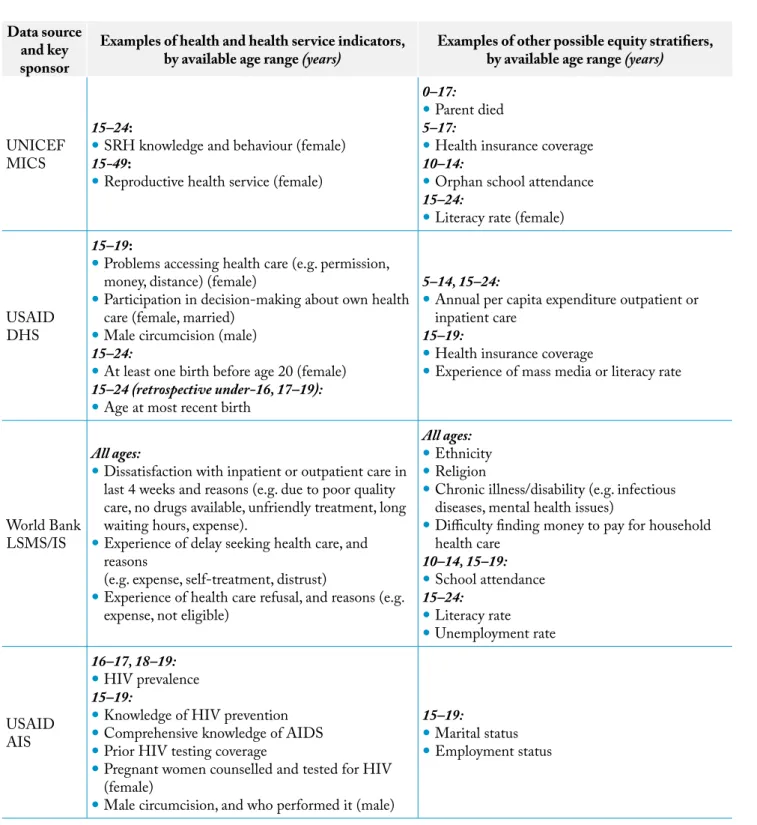
Table 4. Examples of data sources, indicators and stratifiers for an adolescent health services barriers assessment focused on family planning, HIV prevention and post-abortion care services
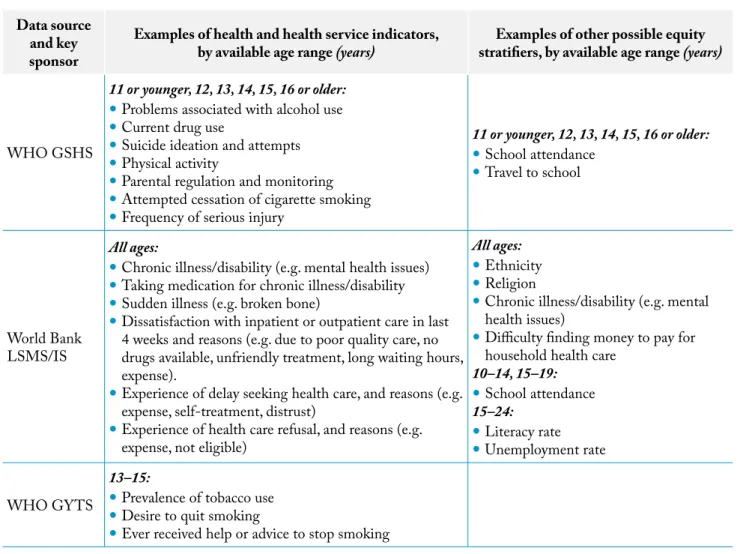
Table 5. Examples of data sources, indicators and stratifiers for an adolescent health services barriers assessment focused on services for substance use, self-harm and injury
Table 6. Overview of subnational qualitative data collection methods, with approximate time, number and templates for each
Table 7. Examples of a focus group discussion series involving male gang members, older adolescent girls in a specific ethnic group, and remote adolescents with high malaria mortality rates
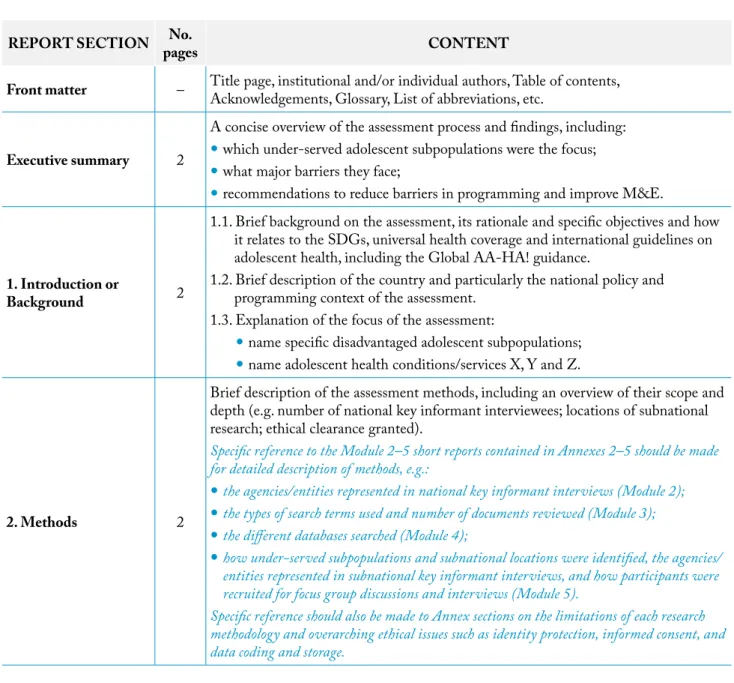
Table 8. Generic agenda for a small technical meeting to review assessment findings and identify possible action areas Table 9. Structure and content of the assessment report
xiii
lIsTs of assessmenT TemPlaTes, Tables, fIGures anD boxes FIGURES
fig. 1. Overview of the AHSBA process
fig. 2. Tanahashi conceptual framework illustrating how different dimensions of coverage are necessary to achieve effective service delivery
fig. a2.1. Estimated top causes of adolescent death, by sex and age group, 2015 fig. a2.2. Estimated top causes of adolescent death, by modified WHO region, 2015
fig. a2.3. Estimated top causes of adolescent disability-adjusted life years (DALYs) lost, by sex and age group, 2015 fig. a2.4. Estimated top causes of adolescent disability-adjusted life years (DALYs) lost, by modified WHO region, 2015 fig. a4.1. Examples of analyses and graphs that can be produced using HEAT software and the WHO
Health Equity Monitoring database
fig. a4.2. Example of in-country analysis of adolescent (15–19-years) fertility rates, by subnational region, using the online HEAT Built-In Database
fig. a4.3. Example of in-country analysis of adolescent (15–19 years) fertility rates, by economic status, place of residence and education, using the online HEAT Built-In Database
BOXES
box 1. Why assess health service barriers experienced by under-served adolescents? box 2. Priority-setting: steps recommended by the Global AA-HA! guidance box 3. Generic guide and script for interviews with key informants
box 4. Example of the composition of a focus group discussion series for three different adolescent subpopulations box 5. Assent, informed consent and adolescents’ evolving capacities
box 6. Generic guide and script for focus group discussions with adolescents
Abbreviations
aa-Ha! Global accelerated action for the health of adolescents: guidance to support country implementation aHsba adolescent health services barriers assessment
aIs AIDS Indicator Survey bmI body mass index
DalY disability-adjusted life year
DfID Department for International Development (United Kingdom of Great Britain and Northern Ireland) DHIs District Health Information System
DHs Demographic and Health Survey eQuIsT EQUitable Impact Sensitive Tool fGD focus group discussion
GsHs Global School-Based Student Health Survey GYTs Global Youth Tobacco Survey
H6+ A partnership of UNFPA, UNICEF, UN Women, WHO, UNAIDS and the World Bank Group Hbsc Health Behaviour in School-Aged Children
HeaT Health Equity Assessment Toolkit HmIs Health Management Information System HPV human papillomavirus
ImHe Institute for Health Metrics and Evaluation
Innov8 An approach for reviewing national health programmes to leave no one behind IPPf International Planned Parenthood Federation
IrIs Institutional Repository for Information Sharing
kI key informant
lGbTI lesbian, gay, bisexual, transgender or intersex lmIcs low- and middle-income countries
lsms/Is Living Standards Measurement Survey/Integrated Topic Survey m&e monitoring and evaluation
mIcs Multiple Indicator Cluster Survey n.a. not applicable
rHs Reproductive Health Survey
rmncaH reproductive, maternal, newborn, child and adolescent health sDG Sustainable Development Goal
xv
abbreVIaTIons srH sexual and reproductive health
sTI sexually-transmitted infection un United Nations
unaIDs the Joint United Nations Programme on HIV/AIDS unDP United Nations Development Programme
unfPa United Nations Population Fund unIcef United Nations Children’s Fund
usaID United States Agency for International Development wHo World Health Organization
Executive summary
The primary target audience for the handbook is programme managers at the national and subnational levels. The handbook is grounded in the Tanahashi framework, which describes five dimensions of effective health service coverage: availability, accessibility, acceptability, contact/use and effective coverage. The AHSBA process is broken down into seven modules (Fig. 1).
Module 1 – Preparation for the assessment Module 2 – National key informant interviews Module 3 – Literature review
Module 4 – Quantitative data mining Module 5 – Qualitative data collection
Module 6 – Reporting of findings and potential actions Module 7 – National stakeholder workshop to review
findings and plan actions
Appendix 1 outlines a generic plan for the assessment, including a timeline, terms of reference and budget items for each module. The AHSBA handbook is designed so that national governments and nongovernmental partners can adopt the methodology in full or in modular components, depending on their particular context and need. The assessment can be implemented as a stand-alone exercise in response to an identified adolescent health problem, as one component of a routine review of one health programme, as one component of a broader national adolescent health programme review, or as part of a multisectoral adolescent and youth services review. The AHSBA process can build upon a country’s Global accelerated action for the health of adolescents (AA-HA!) priority-setting exercise (11), and can feed directly into a country’s implementation of the Innov8 approach for reviewing national health programmes to leave no one behind (8).
With the adoption of the Sustainable Development Goals (SDGs) in 2016, the global community recognized universal health coverage as a critical priority. In recent decades, many governments have improved the quality and the coverage of their adolescent health services, but in every country there remain adolescent subpopulations which do not have effective coverage with health services. In keeping with the goals of universal health coverage and a human rights-based approach to health, all adolescents should have a fair opportunity to attain their full health potential, and none should be disadvantaged from attaining this potential (10–12).
A first step towards achieving universal health coverage for adolescents is for each country to assess which adolescent subpopulations do not have effective health service coverage and what the most important barriers are that prevent them from having it. This handbook for conducting an adolescent health services barriers assessment (AHSBA) with a focus on disadvantaged adolescents outlines how governments can assess health service equity and barriers at national and subnational levels in order to identify which adolescents are being left behind, and why. The handbook’s three objectives are: 1. to build in-country capacity to identify barriers which
prevent disadvantaged adolescents from having effective coverage with health services;
2. to trigger remedial action to address the barriers in order to promote high levels of programme performance and more equitable health outcomes among adolescents; 3. to catalyse integration of a focus on who is being
left behind and why into ongoing country-level monitoring and evaluation (M&E) of health services for adolescents.
xvii
execuTIVe summarY
fig. 1. overview of the adolescent health services barriers assessment (aHsba) process
Outputs:
• National inception meeting • Assessment committee formed • Three health services identified • Research plan
• Lead researcher contracted • Ethical clearance obtained
Outputs:
• National interview report • Suggestions for Modules 3-5,
e.g. under-served populations and subnational sites
Outputs:
• Technical meeting report • Penultimate assessment report
with synthesized findings and possible actions
Outputs:
• Agreed national priorities for action
• Agreed next steps, including timeline, responsible actors, resources, and alignment with planning cycles • Final assessment report
Output:
• Subnational research report
Outputs:
• Literature review report • Suggestions for Modules 4-5,
e.g. under-served populations and subnational sites • Assessment committee review
and planning
Outputs:
• Data mining report • Suggestions for Module 5,
e.g. under-served populations and subnational sites • Assessment committee review
and planning
Module 7:
National stakeholder workshop
to review findings and plan actions
Module 6:
Reporting findings and potential actions
Module 5:
Subnational qualitative research
At each of Sites 1, 2 and 3:Key informant interviews
Adolescent and adult focus group discussions
* Some Module 2-4 tasks may need extra time to arrange (e.g. access to specific interviewees, literature databases, or quantitative datasets). After the initial short report, such tasks can be continued and feed into the final report.
Module 4:
Quantitative data mining
*Module 3:
Literature
review
*Module 2:
National key
informant
interviews
*Module 1:
Preparation
for the assessment
IntroductIon 1
Adolescent health programming: The 1.2 billion adolescents in the world have diverse and complex health care needs. Some health services are universally important to all adolescents, because they address the physical, cognitive and psychosocial growth and development that takes place between the ages of 10 and 19 years. These include health services related to puberty, nutrition, skin, body image, the need for vaccinations (e.g. human papillomavirus (HPV) or tetanus vaccines), menstruation and hygiene (11, 13).
All societies recognize that there is a difference between being a child and becoming an adult. How this transition from childhood to adulthood is defined and recognized differs between cultures and over time. This handbook follows the World Health Organization (WHO) definition of adolescents as people aged 10–19 years old. Across all societies and settings, adolescents share key developmental experiences. These include rapid physical growth, hormonal changes, sexual development, new and complex emotions, an increase in cognitive and intellectual capacities, moral development and evolving relationships with peers and families (14).
In addition to adolescent-specific health services, adolescents may need services for a range of important health problems such as unintentional injury, interpersonal violence, sexual and reproductive health (SRH) concerns, communicable diseases, noncommunicable diseases and mental health issues (see Appendix 2). Access to effective health services is essential to prevent, detect and treat all of these conditions.
In recent decades, many countries have made great strides in improving adolescent health by developing adolescent-specific national health programmes and enabling laws
and environments to protect and promote the rights of adolescents (11, 15). Such efforts have led to substantial improvements in both the quality and the coverage of adolescent health services. They have also contributed to broader national attempts to achieve integrated, people-centred health services (16).
Adolescent health service equity: Despite substantial progress, legal and financial barriers to accessing health services tend to be greater in adolescents than in other age groups (17). Financial barriers include those related to access to money, lack of confidentiality when submitting insurance claims, and ineligibility for tax- or insurance-based funding schemes. Legal requirements for parental consent, or societal norms and traditions, also may cause adolescents to delay or avoid seeking services. Even when national legislation allows a particular health response, a provider’s attitudes and beliefs about the appropriateness of an action in the context of sex, gender, age, marital status, or partner or parental consent could affect their response to an adolescent.
In every country there are under-served adolescents who do not have adequate coverage of effective health services in relation to their actual health needs. Some of these adolescents experience barriers also faced by the broader population, such as those related to wealth, education, gender, rural/urban residency, migrant and refugee status, employment status, and different forms of social exclusion and discrimination (e.g. based on ethnicity or sexual orientation) (18). Samuel’s experience of extreme poverty in a rural setting, followed by homelessness in an urban setting, provides examples of such barriers to effective care and treatment. Other legal and health service barriers may be adolescent-specific, including those related to relative age (younger or older adolescent), school status, marital status, and status as legal minors or adults. For example, because Aisha was a young adolescent girl, her pregnancy
Introduction
LEAvING NO ONE BEHIND: ADOLESCENTS AND THE SUSTAINABLE DEvELOPMENT GOAL TARGET OF UNIvERSAL HEALTH COvERAGE
was high risk and she had a great need of early and adequate prenatal care. These circumstances increased the impact of the substantial barriers Aisha faced in obtaining effective health services, including adverse gender norms and distance/transportation.
Adolescence is also a period when health behaviours and social determinants, such as the ability to stay in school, can have lasting impacts on health equity across the life course. Effective coverage of health services for all adolescents can help prevent the intergenerational transmission of poverty, for example, by reducing rates of adolescent pregnancy and substance abuse.
Global guidance on adolescent health: The Global Strategy for Women’s, Children’s and Adolescents’ Health (2016–2030) (19) and the Global accelerated action for the health of adolescents (AA-HA!): guidance to support country implementation (11) stress that all adolescents should have a fair opportunity to attain their full health potential, and none should be disadvantaged from attaining that potential. This is in keeping with a human rights-based approach to health and its goal that all health policies, strategies and programmes progressively increase the realization of all people’s right to health and other health-related rights. With the adoption of the Sustainable Development Goals (SDGs) in 2016, the global community recognized universal health coverage as a critical priority. Universal health coverage means that all people, including adolescents, can use the promotive, preventive, curative, rehabilitative and palliative health services they need – of sufficient quality to be effective – while also ensuring that the use of these services does not expose them to financial hardship (11). Universal health coverage is a target of SDG 3 (Good health and well-being), but it fundamentally relates to other SDGs as well, including SDG 5 (Gender equality), SDG 10 (Reduced inequalities) and SDG 16 (Peace, justice, and strong institutions).
As emphasized in WHO’s Thirteenth General Programme of Work 2019–2023, a major challenge to achieving universal health coverage is persistent barriers to accessing health services; these are influenced by both supply- and demand-side factors (10). Supply-side
barriers are those which lie within the control of the
health sector (e.g. availability of staff with the necessary training and skills; accessibility of essential medicines and medical equipment). Demand-side barriers entail those which, even if the health sector adapts its delivery channels/approaches to the specific disadvantaged circumstances of a subpopulation, other sectors will also need to be involved to overcome the root causes (e.g. poverty, lack of education, gender norms, cultural beliefs about health, working and informal employment conditions). A first step towards achieving universal health coverage among adolescents is for each country (and/or subnational level) to assess which adolescent subpopulations are very under-served, and what are the most important barriers they face. Such findings can be used to improve adolescent health programming, with a focus on disadvantaged adolescents. This handbook outlines how a government can assess adolescent health service equity and barriers in order to identify which adolescents are being left behind in their countries or subnational areas (e.g. municipalities, provinces, districts), and why. The adolescent health services barriers assessment (AHSBA) process outlined in this handbook has been designed to be adapted in different country and subnational contexts. Box 1 outlines the rationale for such an assessment. Appendix 3 provides a glossary of key terms used throughout the handbook.
IntroductIon 3
box 1. why assess health service barriers experienced by under-served adolescents?
The primary reason to assess which adolescent subpopulations within a country experience great difficulty in accessing health services, and why, is that all adolescents have fundamental rights to life, development, the highest achievable standards of health and access to health services. These rights are supported by global human rights instruments to which almost all countries are signatories, including immediately binding obligations to ensure equality, non-discrimination, remedy and redress (18, 20, 21).
By understanding which adolescents have inadequate coverage of effective health services in comparison to other adolescent subpopulations, there is potential for strategic, impactful improvement of national adolescent health programming. This can result in substantial human rights gains, as well as public health, economic, security and demographic benefits for the country in both the short- and the long-term (17, 22, 23). For example, if an assessment of barriers experienced by disadvantaged adolescents finds that the adolescents with the least access to health services are out-of-school, internal or international migrant workers, and/or those who live in remote communities, this information could help the national government tailor its services more effectively to reach those adolescent subpopulations (e.g. through mobile services).
As an age group, adolescents may be under-served relative to other age groups in a country, or relative to national standards and expectations. It is important to note such overall inequities within the AHSBA process, but the main focus of this assessment is on relative disadvantage among adolescents within the country. The focus is therefore on particularly disadvantaged adolescents, and the barriers they face in
obtaining effective health services. The AHSBA handbook outlines how to identify differences in health service equity within a country’s adolescent population, not differences between adolescents and other age groups.
Given adolescents make up a sizeable minority of the population within a country, and their health service needs are as diverse as those of the broader population, it is beyond the scope of the assessment to scrutinize all possible adolescent health services, barriers and disadvantaged adolescent subpopulations. At the onset, the government will need to decide which three health services will be the focus of the assessment. The assessment will then identify examples of particularly under-served adolescent subpopulations, and scrutinize the barriers they experience, to better inform broader national adolescent health programming.
OvERvIEW OF THE HANDBOOK FOR CONDUCTING AN ADOLESCENT HEALTH SERvICES BARRIERS ASSESSMENT Target audience: The primary target audience for the
Handbook for conducting an adolescent health services barriers assessment is programme managers at the national and subnational levels. Secondary audiences are those who provide support to government authorities, including representatives of the United Nations (UN) system and other H6+ agencies, nongovernmental organizations and funding agencies, as well as researchers, educators, activists, representatives of patients’ associations and the private sector, and community and religious leaders.
Objectives: This handbook’s three objectives are: 1. to build in-country capacity to identify barriers which
prevent disadvantaged adolescents from having effective coverage with health services;
2. to trigger remedial action to address the barriers in order to promote high levels of programme performance and more equitable health outcomes among adolescents; 3. to catalyse integration of a focus on who is being left
behind and why into ongoing country-level M&E of health services for adolescents.
Modules: The main body of this handbook is broken down into seven modules:
Module 1 – Preparation for the assessment – outlines key steps preceding the assessment, including identification of the national focal person to lead the process, a stakeholder inception meeting, formation of an assessment committee, identification and contracting of the lead researcher, ensuring the meaningful
involvement of adolescents, establishing a research plan, and obtaining ethical committee clearance for the assessment.
Module 2 – National key informant interviews – describes selection of national key informants and provides an interview protocol, including a generic script and debriefing and summary forms.
Module 3 – Literature review – outlines a targeted literature review of health and social science journal articles, technical reports, evaluations, case-studies, presentations at technical meetings, working papers and briefings, recommendations from relevant human rights bodies, and other write-ups of qualitative research findings and quantitative survey analyses that explore health service coverage inequities and barriers. Module 4 – Quantitative data mining – provides
guidance on analysis of critical indicators from existing databases in order to generate new information about adolescent health service inequities and barriers. It primarily, but not exclusively, involves analysis of national-level data, disaggregated by sex, age group, education, district, rural/urban residence and other sociodemographic factors (such as ethnicity), where available.
Module 5 – Qualitative data collection – describes qualitative interviews with key informants at the district and community levels, as well as focus group discussions and interviews with under-served adolescents, their parents and other adults who work directly with them (e.g. social workers, community health workers or teachers) in three subnational areas.
Module 6 – Reporting of findings and potential actions – details how to synthesize findings from Modules 2–5, conduct a small technical meeting to review findings and identify potential entry points for action, and produce a draft assessment report.
Module 7 – National stakeholder workshop to review findings and plan actions – provides a generic agenda for a national stakeholder workshop to review the assessment findings, discuss their implications for policies, programming and M&E, and set priorities for action.
Formal short reports should be produced after completing each of Modules 2, 3, 4 and 5, which will then be adapted as annexes to the final report. The main body of the final report itself will be a concise synthesis of all findings and proposed actions. Fig. 1 provides an overview of the seven modules and their outputs. Appendix 1 outlines terms of reference and budget items for each of the modules. Meaningful adolescent participation: Throughout the assessment, it will be important to ensure the meaningful involvement of young people and especially adolescents, for both ethical and operational reasons. The right of adolescents to participate in decision-making that affects them is enshrined in the United Nations Convention on the Rights of the Child and reinforced in General Comment No. 20 (2016) on the implementation of the rights of the child during adolescence. Adolescent participation also allows decision-makers to tap into adolescents’ unique perspectives, knowledge and
experiences, which contributes to a better understanding of their needs and leads to better solutions (17, 18). Adolescent participation can take many forms, which can involve different levels of initiative and control by adolescents (11, 24). In the assessment process outlined in this handbook, adolescent collaborators participate in the planning, decision-making and monitoring of the assessment, while adolescent research participants are consulted through national and subnational qualitative discussions and interviews.
Adolescent collaborators may be recruited through multiple avenues. For example, they may be adolescent leaders within youth parliaments or councils, or volunteers or employees of nongovernmental organizations and civil society organizations that work directly with under-served youth. Depending on the context, this may include agencies that work with adolescents who are: low-income; out-of-school; rural or urban informal settlement dwellers; indigenous or ethnic minorities; migrants or refugees; disabled or living with a chronic illness; lesbian, gay, bisexual, transgender or intersex (LGBTI); street children; or otherwise disadvantaged. When seeking the involvement of adolescent collaborators, the assessment team should consider how disadvantaged adolescents may be included in a meaningful way, because their experiences and insights may be most relevant.
IntroductIon 5
At least four adolescent collaborators from different disadvantaged populations should participate in both the national stakeholder inception meeting and the final national review workshop, while two should participate in the assessment committee that monitors progress, and two in the small technical meeting that will review findings and propose actions. These should not be the same four adolescents in all four activities: the two adolescent collaborators invited to the final national review workshop should be new to the assessment.
The adolescent collaborators are likely to be much younger than other participants in the meetings above, and also are likely to have less education, training and experience. Even among the four adolescent participants there might be great differences in ability. It thus will be critical for the assessment team to ensure each adolescent is well oriented on the objectives and process of a meeting in advance, and is supported as needed to engage in the meeting itself. At least one adult team member should be assigned these responsibilities before and during the meeting. It may also be appropriate for individual adolescents to be accompanied by an adult (e.g. the nongovernmental organization contact person who recruited them), to assist in translating or explaining information as needed during the meeting.
In addition, during the assessment process, adolescents from different disadvantaged subpopulations will be consulted through national key informant interviews (n=2), subnational key informant interviews (n=6), and the focus group discussion series (approximately 12 focus group discussions, with 24 follow-up individual interviews).
These are minimal expectations of adolescent participation in the AHSBA process. Countries are encouraged to expand upon these plans and engage in other participatory methodologies as well.
AHSBA assessment teams can draw on a number of resources which provide practical guidance and case-studies of how to facilitate adolescent engagement through participatory methodologies, including:
2005 YouthNet/Family Health International and Advocates for Youth – Youth participation guide:
assessment, planning, and implementation (25);
2007 ECPAT – Ensuring meaningful child and
youth participation in the fight against commercial sexual exploitation of children (26);
2010 DFID–CSO Youth Working Group –
Youth participation in development: a guide for development agencies and policy makers (27);
2014 USAID – Youth engagement in development:
effective approaches and action-oriented recommendations for the field (28);
2015 WHO and UNAIDS – Global standards for
quality health-care services for adolescents: a guide to implement a standards-driven approach to improve the quality of health care services for adolescents (29);
2016 Global Kids Online – Method guide 8.
Participatory methods: engaging children’s voices and experiences in research (30);
2017 GAGE – Adolescent perspectives on services
and programmes in conflict-affected contexts: a participatory research toolkit (31);
2017 UNICEF – Adolescent participation in
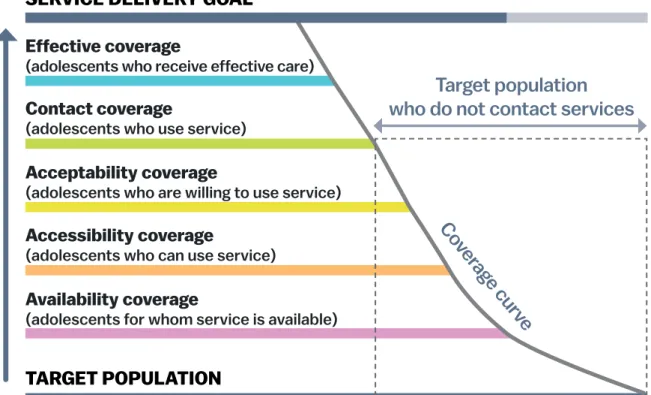
The Tanahashi conceptual framework: Numerous frameworks can be used to analyse barriers to health services. The AHSBA handbook is primarily grounded in the Tanahashi framework, which provides a step-wise approach to assessing health service coverage (33). Fig. 2 depicts the relationship between the five Tanahashi dimensions: availability, accessibility, acceptability,
contact/use and effective coverage. Table 1 gives examples
of barriers and facilitating factors associated with each dimension. Importantly, in the Tanahashi framework the quality of health services is a cross-cutting feature that underpins all five dimensions. It is represented by subcomponents, such as: availability of necessary inputs (availability coverage); perceived responsiveness of provider and perceptions of the quality of care (acceptability coverage); and treatment adherence and working referral systems (effective coverage).
Although the Tanahashi framework provides the main conceptual basis for this handbook, other frameworks have also been drawn upon. For example, three essential components identified by Tugwell et al. (34) – diagnostic accuracy, provider compliance and patient adherence – should all be taken into consideration when assessing effective health service coverage (Table 1). In another example, WHO and the Joint United Nations Programme on HIV/AIDS (UNAIDS) defined eight global standards for health services for adolescents: 1) adolescents’
health literacy; 2) community support; 3) appropriate package of services; 4) providers’ competencies; 5) facility characteristics; 6) equity and non-discrimination; 7) data and quality improvement; and 8) adolescents’ participation (29).
fig. 2. Tanahashi conceptual framework illustrating how different dimensions of coverage are necessary to achieve effective service delivery (33)
Note: this figure should be understood as a conceptual model, not as a representation of actual adolescent health service coverage.
Service delivery goal
TargeT populaTion
Co
ver
age curv
e
P
roc
es
s o
f s
ervic
e pr
ovision
accessibility coverage
(adolescents who can use service)
availability coverage
(adolescents for whom service is available)
effective coverage
(adolescents who receive effective care)
contact coverage
(adolescents who use service)
acceptability coverage
(adolescents who are willing to use service)
Target population
who do not contact services
IntroductIon 7
Table 1. Tanahashi dimensions of health service coverage and examples of adolescent barriers (13, 29, 33–35) Health service
dimension Examples of types of barrier or facilitating factor Examples of adolescent barriers
Availability coverage
Across the levels of the health system, the availability and sufficiency of resources for delivering an effective intervention, for example:
number or density of health facilities (or outreach/ community-based services such as immunization, or population-based services such as food fortification) availability of services for different diseases/health topics,
as appropriate for population burden of disease or injury availability of adequately skilled personnel
availability of necessary inputs (e.g. drugs, equipment, protocols, patient-safety measures, electrification, and water and sanitation in facilities)
The country does not have health worker pre-service training in adolescent health and development, and few facilities have staff who have had in-service training in the core competencies (13)
In rural or remote areas, or in
humanitarian crisis settings, adolescents die from avoidable or treatable conditions (e.g. lower respiratory infections, diabetes or conditions requiring emergency surgery) because health services are not available In a low-income area with high
agricultural pesticide use, paediatric cancer services are not available despite young adolescents having high rates of leukaemia
Accessibility coverage
Geographic:
distance, availability of transport, time for transportation Financial:
direct: out-of-pocket expenditures (e.g. co-payment, medicines)
indirect: opportunity costs (e.g. missed schooling, lost work, child care), transport costs
Organizational and informational: attention to schedules/opening times systems to schedule appointments
administrative requirements for care (e.g. registration in local area)
appropriate information sources on health topic, services, treatment
Discrimination in access
A low-income girl with a skin infection cannot afford services, medications and transportation costs, so she does not seek treatment for her condition
A boy working in the informal sector is not able to take time off to attend appointments required for voluntary medical male circumcision
Adolescents who are internal migrants are impeded when seeking services because they are not registered
Acceptability coverage
Cultural beliefs, and the extent of connectivity/ integration with indigenous/traditional health systems and providers
Gender-responsiveness of services (including same-sex provider where culturally appropriate)
Gender norms, roles and relations which inhibit access (e.g. inability to be autonomous in deciding when to seek care, or gender norms that prioritize care-taking of others or providing financially for the family over seeking treatment for oneself)
Age-appropriateness of services (e.g. adolescent-friendly) Extent to which confidentiality is protected and
stigmatization avoided Perceptions of service quality
Perceived and actual corruption among health providers (e.g. requesting informal payments to skip waiting lines or to obtain effective treatment; sale of medicines that should be free)
Discriminatory attitudes by providers (e.g. based on sex, ethnicity, marital status, religion, caste or sexual orientation)
Adolescents girls do not request desired services because they fear the provider will chastise them or violate their confidentiality
An adolescent boy does not seek mental health services because he perceives depression as weak, and not masculine LGBTI adolescents do not go to
emergency services after being attacked because they face discrimination An unmarried adolescent boy is refused
condoms because the health worker disapproves of sex outside of marriage
Health service
dimension Examples of types of barrier or facilitating factor Examples of adolescent barriers
Contact/use coverage
Actual contact between the service provider and the user when services are available, accessible and acceptable.
Barriers can relate to Global Standard no. 1, adolescent health literacy (29), i.e. adolescents not being
knowledgeable about their own health, or not knowing when and where to obtain health services. For example: lack of awareness of available health services (e.g. free
sexually transmitted infection (STI) treatment, HPV vaccination or meningitis vaccination)
insufficient understanding of the value of seeking services (e.g. counselling for dating violence, or treatment for malaria).
An adolescent girl does not seek diagnosis and treatment for chronic diarrhoea because she believes occasional diarrhoea is a normal part of life
An adolescent boy does not seek treatment for substance use problems because he does not know it is free at his local health facility
Effective coverage
Barriers in diagnostic accuracy (e.g. linked to insufficient inputs at health centres and in the laboratory network) Barriers in provider compliance (e.g. related to low levels
of training, lack of supportive system requirements, absenteeism or other accountability issues, or a weak referral and back-referral system)
Barriers in treatment adherence (e.g. due to unclear instructions, poor patient-provider relationship, mismatch between treatment prescribed and patient compliance ability, adverse social conditions and gender roles/relations preventing follow up by the patient). Impoverishing or catastrophic health expenditures as
a result of using services (e.g. related to the financial barriers listed under accessibility)
A provider does not respond
appropriately to an adolescent’s reported plan to harm himself
A girl requesting contraception is only allowed to take oral contraceptive pills, not long-acting methods, but she is not able to comply with daily pill use because she will be observed at home
An adolescent is not diagnosed with a treatable condition such as asthma, anaemia or gonorrhoea, because the facility does not have adequate diagnostic capacity
Social drivers of inequity: Social influences such as culture and gender can play an important role in adolescents’ coverage with health services. Culture is the set of distinctive spiritual, material, intellectual and emotional features of society or a social group which encompasses lifestyles, ways of living together, value systems, traditions and beliefs (36). While shared and coherent, culture is not a static set of beliefs and practices, but rather an ever-emerging array of collective values, ethics, assumptions and ideals. Cultures differ in the extent to which they attribute power, control and agency to adolescents and adults. For example, in an individualistic culture, older adolescent students may have permission to make independent decisions about their own health care, while in a collective culture this may be jointly decided by adults in an adolescent’s life.
During adolescence, context – such as families, schools, communities and health facilities – can also shape the way gender is learned, enforced and reinforced. For example, understanding of gender can be influenced by religious institutions and custodians, as well as sport, music and global culture. Health care seeking may be shaped by
gendered power imbalances, such as girls being taught less information about health services than boys, or having less power and freedom of movement to access health services. The health system response may also be influenced by cultural and gendered norms of masculinity and femininity. For instance, health workers may have different assumptions about what is appropriate and allowed for adolescent girls and boys of the same age, and may treat them differently as a result.
Gender analysis: Gender refers to the socially constructed
roles, behaviours, activities, attributes and opportunities that any society considers appropriate for men and women, boys and girls, and people with non-binary identities (37). Binary here refers to two distinct, opposite and disconnected forms of masculine and feminine, while non-binary refers to gender identities that are not exclusively masculine or feminine. Gender is a social and relational process rather than simply the difference between women and men; it interacts with, but is distinct from, biological sex. Gender is formed through the relationships between people and can reflect the distribution of power within those relationships. Gender