
Fostering self efficacy for descriptive writing in a group of participants from the sixth grade in a1 level through scaffolding strategies
102
0
0
Texto completo
(2) FOSTERING SELF-EFFICACY FOR DESCRIPTIVE WRITING IN A GROUP OF PARTICIPANTS FROM THE SIXTH GRADE IN A1 LEVEL THROUGH SCAFFOLDING STRATEGIES. FOSTERING SELF-EFFICACY FOR DESCRIPTIVE WRITING IN A GROUP OF PARTICIPANTS FROM THE SIXTH GRADE IN A1 LEVEL THROUGH SCAFFOLDING STRATEGIES. Mejorar la Auto-eficacia en la Escritura Descriptiva en un Grupo de Participantes del grado sexto en nivel A1 a través de Estrategias de Andamiaje.. Luis Alberto Perez Galvis. Research submitted in partial fulfillment of the requirements for the degree of Master in English Language Teaching for Self-directed Learning. Directed by PhD. Liliana Marcela Cuesta Medina. Department of Foreign Languages and Cultures Universidad de La Sabana Chía, Colombia 2014.
(3) FOSTERING SELF-EFFICACY FOR DESCRIPTIVE WRITING IN A GROUP OF PARTICIPANTS FROM THE SIXTH GRADE IN A1 LEVEL THROUGH SCAFFOLDING STRATEGIES. Abstract This qualitative study was conducted with students from Institución Educativa Simón Araujo, a public school in Sincelejo-Sucre, Colombia. The population for this study includes 16 students from the sixth grade between 10-12 years old, placed in A1 level (CEFR) of English language proficiency. The aim of this paper is to report the findings after implementing scaffolding strategies (learning logs and visual aids) to foster selfefficacy in English descriptive writing. The researcher used the principles of Grounded Theory to examine the different data gathered from several instruments such as students’ learning logs, a researcher journal, checklists, a pre-test and a post-test, as well as descriptive texts produced by participants. Results revealed a positive and significant impact of the strategy in the development of self-efficacy in the writing skill. Participants developed awareness of the language learning process by identifying particular areas of improvement, monitoring their learning and progress, and setting learning goals. This project also suggests novel ways to implement scaffolding strategies (learning logs and visual aids) in regional and national contexts. Keywords: Learning logs, self-efficacy, descriptive writing, self-monitoring, goal setting, self-directed learning, visual aids..
(4) FOSTERING SELF-EFFICACY FOR DESCRIPTIVE WRITING IN A GROUP OF PARTICIPANTS FROM THE SIXTH GRADE IN A1 LEVEL THROUGH SCAFFOLDING STRATEGIES. Resumen Este estudio cualitativo se llevó a cabo con estudiantes de la Institución Educativa Simón Araujo, una escuela pública en Sincelejo, Sucre-Colombia. La población de este estudio estuvo compuesta por 16 estudiantes del sexto grado entre los 10 y 12 años de edad, niños y niñas con un nivel A1 de dominio de la lengua extranjera de acuerdo al Marco Común Europeo de Referencias para las Lenguas. Este reporte de investigación da cuenta de dos estrategias de andamiaje (bitácoras de aprendizaje y ayudas visuales) utilizadas para fomentar la auto-eficacia en la escritura descriptiva en Inglés. El investigador implementó los principios de la teoría fundamentada para examinar los diferentes datos recopilados de varios instrumentos tales como los bitácoras de aprendizaje de los estudiantes, el diario de campo del investigador, listas de control, un pre -test y un post -test, así como los textos descriptivos producidos por los participantes. Los resultados revelaron un efecto positivo y significativo de la estrategia en el desarrollo de la auto-eficacia en la habilidad de la escritura. Los resultados indicaron que los participantes tomaron conciencia de su proceso de aprendizaje mediante la identificación de. áreas específicas de mejoramiento, la. supervisión de su aprendizaje y progreso, y la formulación de objetivos de aprendizaje. Las implicaciones pedagógicas derivadas de este proyecto sugieren una propuesta viable para la implementación de esta estrategia de andamiaje (mediada por el uso de bitácoras de aprendizaje y ayudas visuales) en diversos contextos de enseñanza de inglés como lengua extranjera a nivel regional y nacional. Palabras claves: Bitácoras de aprendizaje; auto-eficacia; escritura descriptiva, auto monitoreo, fijación de metas, aprendizaje autodirigido, ayudas visuales..
(5) FOSTERING SELF-EFFICACY FOR DESCRIPTIVE WRITING IN A GROUP OF PARTICIPANTS FROM THE SIXTH GRADE IN A1 LEVEL THROUGH SCAFFOLDING STRATEGIES. Table of Contents Introduction ............................................................................................................ 1 Statement of the Problem .................................................................................... 2 Research question ............................................................................................... 3 General Objective ............................................................................................... 3 Rationale ............................................................................................................ 3 Theoretical Framework ........................................................................................... 6 Self-efficacy ....................................................................................................... 6 Self-monitoring and Metacognition ............................................................... 10 Scaffolding as a strategy ................................................................................... 12 Scaffolding with learning logs ....................................................................... 13 Scaffolding through the usage of visuals in descriptive writing ..................... 15 Descriptive Writing........................................................................................... 17 Research Design ................................................................................................... 21 Type of Study ................................................................................................... 21 Role of the researcher ....................................................................................... 21 Context ............................................................................................................. 22 Participants ....................................................................................................... 22 Ethical considerations ....................................................................................... 23 Stages of Data Collection and techniques .......................................................... 23 Description of Data Collection Instruments ....................................................... 24 Pre- test and Post test .................................................................................... 24 Surveys ......................................................................................................... 25 Checklists ..................................................................................................... 25.
(6) FOSTERING SELF-EFFICACY FOR DESCRIPTIVE WRITING IN A GROUP OF PARTICIPANTS FROM THE SIXTH GRADE IN A1 LEVEL THROUGH SCAFFOLDING STRATEGIES. Researcher’s Diary or Journal ....................................................................... 26 Artifacts ........................................................................................................ 26 Learning logs: Process and Structure. ............................................................ 27 Validity and Triangulation ................................................................................ 28 Pedagogical Intervention ...................................................................................... 30 Objectives of pedagogical intervention ............................................................. 30 Instructional design ........................................................................................... 30 Implementing scaffolding strategies .................................................................. 33 Teaching writing with visual aids .................................................................. 33 Using learning logs ....................................................................................... 34 Data Analysis ....................................................................................................... 36 Data Analysis Method .......................................................................................... 36 Data Management and Procedures of Data Analysis.......................................... 36 Coding .............................................................................................................. 37 Open Coding ................................................................................................. 38 Axial Coding ................................................................................................ 38 Core Category ............................................................................................... 39 Findings ............................................................................................................ 40 Category 1: Increasing awareness of the learning process.............................. 40 Sub-category 1: Identifying areas for improvement ..................................... 40 Sub-category 2: Reflecting on learning.......................................................... 42 Sub-category 3: Developing learning initiative .............................................. 43 Category 2: Improving efficiency in their learning process ............................ 44 Sub-category 1: Setting achievable learning goals ........................................ 45.
(7) FOSTERING SELF-EFFICACY FOR DESCRIPTIVE WRITING IN A GROUP OF PARTICIPANTS FROM THE SIXTH GRADE IN A1 LEVEL THROUGH SCAFFOLDING STRATEGIES. Sub-category 2: Monitoring leaning and progress ........................................ 46 Sub-category 3: Responding to Instructional Scaffolding. ........................... 47 Conclusions and Pedagogical Implications............................................................ 54 References ............................................................................................................ 61.
(8) FOSTERING SELF-EFFICACY FOR DESCRIPTIVE WRITING IN A GROUP OF PARTICIPANTS FROM THE SIXTH GRADE IN A1 LEVEL THROUGH SCAFFOLDING STRATEGIES. Table of tables Table 1: Data collection instrument design process ............................................... 29 Table 2: Final Categories ...................................................................................... 39 Table 3: Learning logs excerpts: Identifying areas for improvement ..................... 41 Table 4: Learning log excerpts: Reflecting on learning ......................................... 42 Table 5: Researcher' journal: Developing learning initiatives ................................ 43 Table 6: Researcher's journal: Developing learning initiatives............................... 44 Table 7: Learning log excerpts: Setting learning goals .......................................... 45 Table 8: Learning log excerpts: Monitoring learning and progress ........................ 46 Table 9: Learning log excerpts: Scaffolding strategy with visuals ......................... 48 Table 10: Researcher's journal: Scaffolding strategy with visuals .......................... 48 Table 11: Learning log excerpts: Scaffolding strategy with visuals ....................... 49 Table 12: Learning log excerpts: Scaffolding strategy with visual aids .................. 50 Table 13: Learning log excerpts: Scaffolding strategy with learning logs .............. 52 Table 14: Learning log excerpts: Scaffolding strategy with learning logs .............. 53 Table 15: Excerpt from a student’s learning log .................................................... 56 Table 16: Student's learning log excerpt: Identifying area for improvement .......... 57 Table 17: Excerpt from a student’s learning log : Scaffolding with visuals ........... 58 Table 18: Researcher's journal: analysis of pre-test and post-test ........................... 58.
(9) FOSTERING SELF-EFFICACY FOR DESCRIPTIVE WRITING IN A GROUP OF PARTICIPANTS FROM THE SIXTH GRADE IN A1 LEVEL THROUGH SCAFFOLDING STRATEGIES. Appendixes Appendix A: Sample letter to school principal .......................................................65 Appendix B: Sample of consent letter for parents and participants .........................66 Appendix C: Sample of pre-test .............................................................................68 Appendix D: Sample of specific writing standards for fifth grade ..........................70 Appendix E: Sample of post-test ............................................................................71 Appendix F: Sample of specific writing standards for the sixth grade.....................73 Appendix G: Sample of rubric for pre-test and post-test .........................................74 Appendix H Sample of survey for learning resources and study habits ...................75 Appendix I: Sample of unit checklist .....................................................................77 Appendix J: Sample of researcher’s journal ...........................................................78 Appendix K: Sample of participants’ artifacts ........................................................80 Appendix L: Sample of learning log format ...........................................................84 Appendix M: Sample of Timetable ........................................................................85 Appendix N: Sample of a lesson worksheet ...........................................................86 Appendix O: Sample of lesson plan format by Dr. Joan Rubin ...............................88 Appendix P: Sample of task ...................................................................................90 Appendix Q: Sample of a student’s learning log ....................................................91 Appendix R: Sample of coding data .......................................................................92.
(10) FOSTERING SELF-EFFICACY FOR DESCRIPTIVE WRITING IN A GROUP OF PARTICIPANTS FROM THE SIXTH GRADE IN A1 LEVEL THROUGH SCAFFOLDING STRATEGIES. 1. Introduction Learner- centered approaches transfer to learners the responsibility of managing their own learning. This affirmation represents the thinking of those educators who believe that learning is a personal choice rather than an imposition from others. Self-directed and self-efficient learners know how to manage learning, they set their own goals and are able to monitor learning, as they keep themselves motivated and are always open to knowledge. Thus, the role of the teachers and the educational system in general is to help learners take the responsibility for their own learning, and also to encourage them to achieve life competences and skills. Thus, learning does not occur passively, the construction of knowledge requires the active participation of the learner. When learners actively participate in learning, they have more chances to develop knowledge and skills. For this reason, it is important for teachers to promote the ability of self-directed and lifelong learning in their students. Bandura (1993) states that “students’ beliefs in their efficacy to regulate their own learning and to master academic activities determine their aspiration, level of motivation and academic accomplishments” (p.117), therefore, applying Bandura’s self-efficacy on this paper is expected to have a positive impact on students’ academic performance given that selfefficient learners have a higher level of aspiration, motivation and commitment toward learning This study explores the literature on SDL (self-directed learning) and self-efficacy and proposes that it is possible to improve the writing skills with two types of scaffolding strategies. Firstly, teaching with visual aids, as a dynamic teaching and learning strategy.
(11) FOSTERING SELF-EFFICACY FOR DESCRIPTIVE WRITING IN A GROUP OF PARTICIPANTS FROM THE SIXTH GRADE IN A1 LEVEL THROUGH SCAFFOLDING STRATEGIES. 2 and secondly, the use of learning logs to develop learning awareness. This research study has been implemented with a group of A1 (CEFR) sixth graders from Institución Educativa Simón Araujo, a public school in Sincelejo, Sucre, Colombia. The study aims at fostering self- efficacy in the writing skill by implementing scaffolding strategies. Statement of the Problem Improving participants’ writing skills was the main motivation that fostered the development of this project. Students showed plenty of difficulties to write short texts in English, situation that was evident in the low performance of participants in exploratory and diagnostic evaluations, where most learners did not get satisfactory results in specific standards of writing according to the National Language Standards (2005). Students had problems with verb tenses, use of proper vocabulary and general grammar. It was also observed that many students only write in L2 for academic obligations such as homework, and other type of class activities. Many others argued that the process of writing in L2 is more difficult because of the complexity of the language, and others commented that they do not write because it is not a skill as appealing as speaking. This preliminary information motivated the researcher to explore alternative methods to approach the problem of the lack of motivation of the students and their low performance in writing.. This constant inquiry led to the decision of implementing. scaffolding strategies such as the usage of visual aids to teach writing and learning logs as a self-monitoring strategy. Thus, the researcher expected the learners to develop a higher degree of involvement in their learning process by allowing them to monitor their progress in the language..
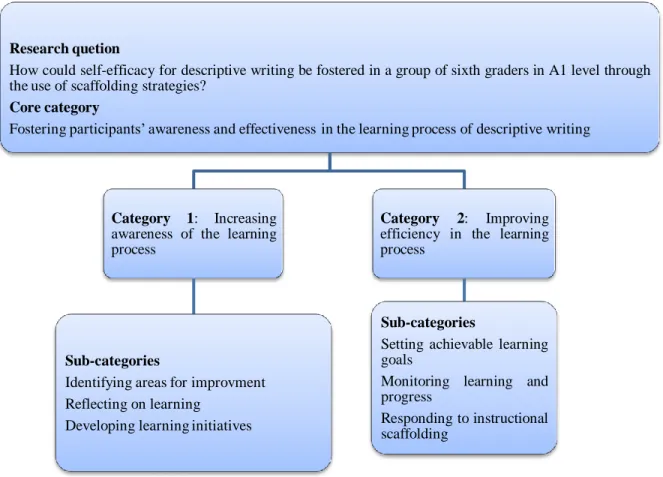
(12) FOSTERING SELF-EFFICACY FOR DESCRIPTIVE WRITING IN A GROUP OF PARTICIPANTS FROM THE SIXTH GRADE IN A1 LEVEL THROUGH SCAFFOLDING STRATEGIES. 3 Research question How could self-efficacy for descriptive writing be fostered in a group of sixth graders in A1 level through the use of scaffolding strategies? General Objective To determine whether scaffolding strategies (the use of learning logs and teaching with visual aids) could foster self-efficacy in descriptive writing in a group of sixth graders in A1 (CEFR) level. Rationale This project aims to supporting participants in the improvement of their writing due to the difficulties they experienced while writing short paragraphs. The evidence was supported by the results from the first and second academic terms (2012), in which most students had difficulties in writing short texts related to specific writing standards. During the needs analysis stage the usage of a pretest also confirmed a mismatch between the English writing competence participants were supposed to have and the results obtained. To solve these difficulties two scaffolding strategies have been planned; learning logs and visual aids for teaching descriptive writing. Learning logs are considered to be an important metacognitive strategy to help participants to reflect on their learning and decision-making processes. The researcher estimates that it is relevant to encourage students to develop skills to self-monitor their learning. This includes the capacity to identify areas of improvement. This fact is in line with Blanche (1998) who conducted research in the field of self-regulation of learning, in which, students have to develop skills to monitor learning. Blanche points out that with self-regulation of learning, learners are.
(13) FOSTERING SELF-EFFICACY FOR DESCRIPTIVE WRITING IN A GROUP OF PARTICIPANTS FROM THE SIXTH GRADE IN A1 LEVEL THROUGH SCAFFOLDING STRATEGIES. 4 able to identify their abilities and skills, monitor their progress and make assumption of what they can (or cannot yet) do with the skills they have developed. On the other hand, scaffolding with visual aids may contribute positively to the teaching and learning environment by attracting students’ interest, attention and imagination. This affirmation is coherent with Wright (1990) who adds that “pictures give contribution to students’ interest and motivation, sense of language in context, and also stimulate students’ ideas” (p. 19). Additionally, this fact is supported by the work of Thornbury (2004) whose findings revealed that the students’ interest in the pictures contributed to a positive attitude toward learning given that pictures were helpful elements of motivation. Therefore, applying scaffolding with visuals might contribute positively to improving the writing skills of the participants of this study. This fact is supported by the work of Kellner (2009) who has conducted inquiries on this field. For Kellner, visuals are “attractive resources that are able to help students to overcome their reluctance to write” (p.23). Thus, the implementation of scaffolding strategies with visuals and learning logs is expected to be an innovative approach in this specific local context because it will be the first time a strategy like this is implemented with students from IESA. This research report is divided into six parts. The introduction presents an overview of this study and the reasons for the selected strategy. The theoretical framework describes the main constructs, the review of the literature and the state of the art. The research design explains the type of study, the context in which it was developed, the participants, and the data collection instruments and procedures. The fourth part deals with the pedagogical.
(14) FOSTERING SELF-EFFICACY FOR DESCRIPTIVE WRITING IN A GROUP OF PARTICIPANTS FROM THE SIXTH GRADE IN A1 LEVEL THROUGH SCAFFOLDING STRATEGIES. 5 intervention and implementation while the fifth part describes data analysis and findings. Finally this paper shows the conclusions pedagogical implications..
(15) FOSTERING SELF-EFFICACY FOR DESCRIPTIVE WRITING IN A GROUP OF PARTICIPANTS FROM THE SIXTH GRADE IN A1 LEVEL THROUGH SCAFFOLDING STRATEGIES. 6 Theoretical Framework This framework will provide a review of the literature on the main constructs involved in this research. The state of the art will report on some international and national inquiries conducted in the field of study. It is important to clarify that in this literature search not many local projects relating to this research were found. Self-efficacy The history of self-efficacy begins within Bandura’s (1977) social learning theory, renamed social cognitive theory in 1986. One of Bandura’s major concepts in his theory is self-efficacy. Bandura (1993) conceptualizes self-efficacy “as the belief or perception that one is capable of organizing and executing the actions necessary to succeed at a given task” (p.148). In Bandura’s approach attitude is a key element; positive attitude related to how people feel, think, behave, and motivate themselves makes a big difference to breakthrough in life. On the other hand, negative or pessimistic attitudes, such as stress, depression, anxiety, and helplessness affect success. These reactions are conceptualized by Bandura (1977) as he states that “stressful and taxing situations generally elicit emotional arousal that, depending on the circumstances, might have informative value concerning personal competency” (p.198). Thus, a strong sense of efficacy facilitates cognitive processes and performance in a variety of settings, including the process of decision making and academic achievement. Many other authors have also inquired on the field of self-efficacy. For instance, Murphy and Alexander (2001) refer to it as “an individual’s judgment about being able to perform a particular activity” (p.50). Self-efficacy, then, deals with how people use their.
(16) FOSTERING SELF-EFFICACY FOR DESCRIPTIVE WRITING IN A GROUP OF PARTICIPANTS FROM THE SIXTH GRADE IN A1 LEVEL THROUGH SCAFFOLDING STRATEGIES. 7 capabilities to produce designated levels of performance over events that affect their lives. Such capabilities include cognitive, motivational, affective and selection processes. For Snyder and Lopez (2007) self-efficacy is an important aspect of human motivation and behavior that influences the actions that can affect an individual's life, they define self-efficacy as “what an individual believes he or she can accomplish using his or her skills under certain circumstances” (p.45). These individuals’ beliefs are related to intrinsic motivation which is defined as the internal stimulus of an individual for doing or facing an activity or task for its inherent satisfactions rather than for some separable external forces. Zimmerman (2000) has also contributed to the field of self-efficacy posing learning as “an activity that students do for themselves in a proactive way rather than as a covert event that happens to them in reaction to teaching” (p.64). In this sense, proactive learners are aware of their strengths and limitations and are able to monitor their behavior in terms of achieving their goals. Therefore, self-regulation refers to all the actions taken and oriented by the learner to attain goals, this actions includes self-generated thoughts, feelings, and behaviors (Zimmerman, 2000). Various studies have explored the field of self-efficacy applied to the writing skill. For instance, a research project on self-efficacy applied to writing by Jalaluddin, Yamat and Melor (2013) and sponsored by the Faculty of Modern Languages of University Putra and the Faculty of Education of National University in Malaysia. This case study was aimed to understand how writing self-efficacy level contributes to the development of learners’ writing skills. The researchers were especially interested in finding whether self-efficacy beliefs would make an independent contribution to the prediction of writing performance in.
(17) FOSTERING SELF-EFFICACY FOR DESCRIPTIVE WRITING IN A GROUP OF PARTICIPANTS FROM THE SIXTH GRADE IN A1 LEVEL THROUGH SCAFFOLDING STRATEGIES. 8 a group of students from a rural secondary school in Malaysia. Findings in this study show that the rural learners as writers could be involved in the process of planning, drafting, revising and editing. The process of writing not only allowed them to find direction in their writing but they were able to understand the process involved in the writing of their composition too. Another study was conducted by Parina and de Leon (2012) at the University de la Salle in Manila. The purpose of this study was to investigate if there was a significant relationship among language exposure, writing self-efficacy, and writing apprehension. This study was conducted with 64 respondents who were college freshman students at La Salle University currently taking up English communication at the time of the study. The study revealed that language exposure played an important role in the writing self-efficacy and writing apprehension of students. Another important study was conducted in 2011 by Singh and Rajalingam. The purpose of this study was to determine the level of writing apprehension and how writing apprehension level and writing self-efficacy beliefs influences writing proficiency level among pre-university students. It was carried out with 320 pre-university students from Universiti Sains Malaysia. Findings indicated that the writing apprehension levels among these subjects were found to be average. Self-efficacy factors revealed an inverse relationship with writing apprehension level. The relationship between writing apprehension level and writing proficiency indicated that the higher the apprehension level the better the respondents performance. In 2013, Sarkhoush from the Islamic Azad University of Shiraz, Iran investigated whether writing performance in students of English as a foreign language (EFL) was.
(18) FOSTERING SELF-EFFICACY FOR DESCRIPTIVE WRITING IN A GROUP OF PARTICIPANTS FROM THE SIXTH GRADE IN A1 LEVEL THROUGH SCAFFOLDING STRATEGIES. 9 related to self-efficacy in writing, writing apprehension, and attitude towards writing. In this study the author worked with 50 subjects (30 females and 20 males). His findings indicate that cognitive and emotional activities can deeply effects writing performance, as stated by Bandura (1993) “self-efficacy estimates might also be affected by somatic and emotional states” (p.117). In the national context, Alvarez (2013) investigated about fostering self-efficacy in descriptive writing. She conducted her research with a group of students between 16-17 years old from tenth grade in a public school in Chía, Cundinamarca, Colombia. Her finding indicates that the usage of scaffolding with learning logs and pictures can foster self-efficacy in descriptive writing. Alvarez’s study, in spite of exploring the same strategies, differs from the present research in the target population and the context. Her study included a target population of teenagers from tenth grade while this paper focused on children from sixth grade aged between 10 and 12 years old. Participants from Alvarez’s research had a previous experience of four years studying English, three hours a week, while students from this research studied English one hour a week in fourth and fifth grade. Mendoza (2013) investigated about the role of goal-setting in the development of self-efficacy for personal writing. Mendoza conducted his inquiry with 15 participants from seventh grade in a rural school in San Bernardo del Viento, Cordoba. The study revealed that at implementing goal-setting students progressed and improved not only in selfefficacy but also in the development of personal writing. Cardona and Novoa (2013) also explored the field of self-efficacy for writing skills. They investigated about the role of modeling strategies with a population of twenty.
(19) FOSTERING SELF-EFFICACY FOR DESCRIPTIVE WRITING IN A GROUP OF PARTICIPANTS FROM THE SIXTH GRADE IN A1 LEVEL THROUGH SCAFFOLDING STRATEGIES. 10 students from two different schools in Bogotá. Los Pinos bilingual school, and Colegio Integrado de Soacha, a state school.. Their findings revealed that modeling strategies. fostered the development of self-efficacy for writing through a gradual development of learners’ autonomous and cooperative behaviors. These three studies have provided valuable findings to support that it is feasible to develop self-efficacy through scaffolding strategies. First, Alvarez’s study proved that learning logs and visuals improved the writing skills of her sample population, which validates the choice of the strategy proposed in this research. Mendoza, on the other hand, found that at implementing goal setting, participants improved self-efficacy and personal writing, fact that is in line with the theory that supports this paper, which, states that selfefficient learners know how to manage learning. Finally, Cardona and Novoa demonstrated that self-efficacy can be achieved, but it is also possible to achieve acceptable levels of selfdirectedness in the learning of the writing skill. This last fact is significant, since one of the emphasis of this paper is to promote self-efficacy in writing skills among the group of participants. Self-monitoring and Metacognition To become strategic learners, students should assume ownership for their learning and achievement outcomes (Kistner et al., 2010). This practice allows students to visualize their progress and make changes as needed, and adjust their learning strategies. Self-monitoring is immersed in the concept of self-regulated learning, which is a process that assists students in managing their thoughts, behaviors, and emotions in order to successfully navigate their learning experiences. The notion of self-regulation has its origin in metacognition theory, which encompasses two domains of study: knowledge about.
(20) FOSTERING SELF-EFFICACY FOR DESCRIPTIVE WRITING IN A GROUP OF PARTICIPANTS FROM THE SIXTH GRADE IN A1 LEVEL THROUGH SCAFFOLDING STRATEGIES. 11 cognition and regulation of cognition (Brown et al., 1983). Knowledge about cognition refers to relatively stable information that human thinkers have about their own cognitive processes and those of others (Flavell, 1976). On the other hand, regulation of cognition involves self-regulatory mechanisms to regulate and oversee learning, such as planning, monitoring, revising, and evaluating, which are central to growth and change (Brown et al. 1983). Self-monitoring, as stated by Reder and Schunn (1996) and Shimamura (1996) involves “accessing information about ongoing cognitive or affective processes, states, or memory retrieval and evaluating that information on either implicit or explicit criteria” (p.38). It means that in developing writing skills self-monitoring might involve a permanent reflection about what it is being written, how it is being written and what it is being written for. Several studies about self-monitoring applied to writing skills in EFL/ESL have been carried out. For example Tsai and Lin (2012) developed a study in Taiwan. The aim of the study was to present an investigation about the efficiency of applying monitoring strategies (self and peer-editing) to writing among EFL (English as a foreign language) students at a Taiwanese university. It consisted of a qualitative and quantitative study that involved 35 Chinese-speaking EFL learners (8 males and 27 females). Findings in this study indicated that after applying the monitoring strategy, EFL learners pay more attention to aspects of writing, specifically focus, content development, organization, language style and conventions. It was also found that with self and peer-editing, these participants could enhance EFL writing proficiency..
(21) FOSTERING SELF-EFFICACY FOR DESCRIPTIVE WRITING IN A GROUP OF PARTICIPANTS FROM THE SIXTH GRADE IN A1 LEVEL THROUGH SCAFFOLDING STRATEGIES. 12 Another study developed by Xiang (2001) in a university in Eastern China aimed to investigate the use of monitoring technique in 29 Chinese students’ of English writing. The finding showed that the technique of self-monitoring gave students control over the feedback they receive. The results also showed that students can be trained to use selfmonitoring in their writing to improve the organization of their compositions. Sadeghi and Baneh (2009) investigated the effects of self-monitoring techniques and self-monitoring followed by pair and group peer feedback on Iranian EFL learners' writing improvement. This study was conducted with 54 low proficient female learners studying English for four years in one language institute in Baneh, Iran. This researcher developed a quantitative study in which they divided the participants into three experimental groups and a control group. Findings revealed that self-monitoring cannot affect low proficient learners' writing performance significantly and they recommended that EFL teachers, especially in Iran, change their attitudes towards teaching English writing. All in all, self-monitoring never operates alone. It is necessary to highlight that other cognitive strategies of self-regulated learning also have an important role along with selfmonitoring such as planning, self-motivation and goal setting. Therefore, in the field of language, self-monitoring creates opportunities for students to reflect on learning while they are developing language skills. This regulation is quite important, since the learner develop strategies to make the learning process more effective and efficient. Scaffolding as a strategy The term scaffolding belongs to Lev Vygotsky’s socio-cultural psychology. In the teaching and learning setting, scaffolding is understood as the assistance and support a teacher gives a learner in a learning situation. Thus, scaffolding allows the learner to go.
(22) FOSTERING SELF-EFFICACY FOR DESCRIPTIVE WRITING IN A GROUP OF PARTICIPANTS FROM THE SIXTH GRADE IN A1 LEVEL THROUGH SCAFFOLDING STRATEGIES. 13 from one level of competence to a higher level; not only with the skills that learner owns, but with the inclusion of the skills that the learner is likely to develop during the process of scaffolding. Mckenzie (2000) when referring to scaffolding states that “it provides clear direction and guidelines to reduce student confusion, explaining to them what to do to meet expectations, clarifying lessons or tasks, keeping students on task, and providing students with helpful resources” (p.58). For that reason, when including scaffolding as a strategy (the learning logs and visual aids), the researcher intends to help the students to reflect on learning while they develop the writing skill. Scaffolding strategies such learning logs might contribute to develop self-efficacy in the writing skills since they have been used in similar scenarios of teaching of the writing skills that will be described later. Scaffolding with learning logs Learning logs are diaries students keep to register their reflections about what they are learning and how they are learning it. Reid (1993) defines reflection “as a process of reviewing an experience of practice in order to describe, analyze, evaluate and inform learning about practice” (p.54). It is expected that with learning logs, learners can develop abilities to observe and reflect on their own learning, and to use monitoring for selfassessment and planning. Learning logs are founded in reflective writing, in which a learner can reflect about the process of learning and how to make it more personally and useful. In reflective writing an individual makes a link between his experience and the course content and therefore clarifies the relationship between theory and practice. Reflection helps an individual to raise awareness of his own learning. Biggs (1999) points out that “a reflection.
(23) FOSTERING SELF-EFFICACY FOR DESCRIPTIVE WRITING IN A GROUP OF PARTICIPANTS FROM THE SIXTH GRADE IN A1 LEVEL THROUGH SCAFFOLDING STRATEGIES. 14 in a mirror is an exact replica of what is in front of it” (p.16). In other words reflection is a transformational process of the being. There have been some studies regarding learning logs in EFL/ESL writing, such as the research project on the field of journal writings developed by Tuan (2010). This study investigated if journal writing enhanced the students writing skill in terms of fluency and accuracy. The quantitative research was conducted with 85 second-year students from two writing classes, in which one group was treated as the experimental group and the other as the control group. The findings indicate that journals were tools of motivation and reflection that allowed learners develop the writing skill while they were reflecting on learning. Another significant study was conducted by Uduma (2011) at Joseph Ayo Babalola University in Nigeria and focused on the potential of journals as tools for equipping students with the necessary skills for their day-to-day learning in the classroom. Findings indicated that there is a relevant connection between the reading and writing gap. This connection has been identified as a resource for success and literacy development. According to this study, journal keeping offer students the opportunity to explore and express their thoughts and ideas about learning a language. Porto (2005) conducted an inquiry at the National University of La Plata in Argentina with 95 subjects, Spanish-speaking college students between 19 and 21 years of age, who were enrolled in the English program of the Department of Modern Languages. The aim of this study was to analyze how subjects approach foreign language learning with learning diaries. The results of this study revealed that diaries were a vehicle for reflection.
(24) FOSTERING SELF-EFFICACY FOR DESCRIPTIVE WRITING IN A GROUP OF PARTICIPANTS FROM THE SIXTH GRADE IN A1 LEVEL THROUGH SCAFFOLDING STRATEGIES. 15 and autonomy in foreign language learning and that through these tools students could make decisions about monitoring their own learning. The evidence obtained from the aforementioned studies clearly demonstrate that incorporating scaffolding strategies (learning logs) in this paper might allow learners to have a higher level of involvement in their own learning process. Also, they corroborate that reflective writing has a significant effect on the students’ learning awareness by giving them the opportunity to reflect on their learning while they develop the writing skill in L2. Scaffolding through the usage of visuals in descriptive writing Methods and strategies for teaching foreign languages using visuals for productive skills have been vastly documented; most of them against the traditional models of ESL learning. Altman (1990) advocates that “language is primarily a continuum of sounds most often used against a backdrop of visual clues” (p.16). However, it is claimed that the assistance provided by visual images helps students activate prior linguistic knowledge, thus, increasing the effectiveness of the classroom teaching-learning process (Joshy, 1995). Several studies have highlighted the value of this strategy as described below. In a study carried out by Vissa (1994), it was found that the use of visual aids improved teaching since the receptive stimulus provided by the pictures was essential to sustain students attention which means that the use of visual aids in teaching English is significantly advantageous. In this view, Domin (2007) made a literature review about the application of visuals in several areas of teaching. She comments that visuals can enhance productive skills, and refers to Wright’s work (1990), who lists some roles for visuals in speaking and writing: -. To motivate students to speak or write.
(25) FOSTERING SELF-EFFICACY FOR DESCRIPTIVE WRITING IN A GROUP OF PARTICIPANTS FROM THE SIXTH GRADE IN A1 LEVEL THROUGH SCAFFOLDING STRATEGIES. 16 -. To create a context in which the language is being used. -. To provide the student with information, to cue responses to questions, substitutions and sentence completions. -. To guide spoken and written descriptions or narrations or dialogues. -. To promote discussion and to provide reference. Thus, Wright (1990) adds that “pictures are excellent resources that contribute to students’ interest and motivation, sense of language in context, and also stimulate students’ ideas”. (p.23). Pictures can be used for both, receptive skills and productive skills. For instance, pictures used to support productive skills (speaking and writing) can help students to draw students’ motivation and attention, and make them participate in their learning process. Besides, pictures can create contextualized language learning experiences and elicit target information useful to handle conversations. Joklová (2009) wrote her bachelor’s thesis titled “Using Pictures in Teaching Vocabulary”. In her work, she highlights the importance of pictures to teach vocabulary and produce various kinds of texts. Her findings indicate that pictures are excellent tools for the demonstration of meaning, especially regarding particular things. She also found that pictures have a positive effect on words retaining. Sa’diyah (2010) conducted an action research study to improve students’ ability in writing a descriptive text through the use of a picture series-aided learning strategy. His subjects were a group of tenth grade students of a public senior high school in East Java. His findings obtained from questionnaires and observation checklists, revealed that the picture series-aided learning strategy was able to improve the students’ attitude toward the.
(26) FOSTERING SELF-EFFICACY FOR DESCRIPTIVE WRITING IN A GROUP OF PARTICIPANTS FROM THE SIXTH GRADE IN A1 LEVEL THROUGH SCAFFOLDING STRATEGIES. 17 learning process as well as their learning behavior in doing the writing tasks because classwork became more interesting to students when pictures were presented. Another significant study was conducted in 2009 at the English Study Program of FKIP Riau University in Indonesia, which was aimed to increasing students’ ability in writing descriptive paragraphs by using pictures. The subjects of this study were 28 students who wrote texts in two different cycles (before and after), in which they were provided with pictures. The findings indicate that by using pictures students of the first year increased the ability in writing descriptive paragraphs. The researcher also found that her students’ scores in pre-test were lower than those in the post-test. After using pictures, the writer found a significant improvement in her participants’ writing. Descriptive Writing Speaking and writing have always formed part of the English teaching curriculum, but they are taught separated or simultaneously according to the criteria of the teachers and their institutional requirements. Even though, the most obvious differences between writing and speaking have to do with the processes that writers and speakers go through. In face to face interaction, there is a little time between production and reception: while in writing the mental process to produce a text involves the chance to write and edit ideas. According to Harmer (2004) “in writing, however, the final product is not nearly so instant, and as a result, the writer has a chance to plant and modify what will finally appear as the finished product” (p.8). This difference makes writing a more complex skill to master because written communication is, in fact, more demanding than verbal communication. Learning to write, unlike speaking, requires systematic instruction and practice..
(27) FOSTERING SELF-EFFICACY FOR DESCRIPTIVE WRITING IN A GROUP OF PARTICIPANTS FROM THE SIXTH GRADE IN A1 LEVEL THROUGH SCAFFOLDING STRATEGIES. 18 Such characteristics, unlike speaking, foster a different connection between the writer and the reader through their own senses of sight, hearing, smell, taste, and touch, as well as through their emotional feelings. In this way, both the writer and his reader asynchronously visualize common elements of the object being described. In the present study, pictures are conceived as important resources for descriptive writing. The roles of pictures in teaching descriptive writing is unquestionable; not only they are valuable resources to draw students’ motivation and attention, but also they are useful tools to foster contextualized language learning activities to stimulate imagination because they allow objective and subjective interpretation. With pictures, teachers can stimulate descriptive writing and speaking tasks, such as storytelling activities or discussions. Pictures allow a connection to the world outside the classroom. According to Heaton (1990), “in everyday life, students may sometimes be required to describe people, objects, places, and even processes” (p.107). Therefore, teaching writing with visuals is a way to stimulate meaningful learning since the learner can find a connection to his/her everyday life. Various studies on the field of descriptive writing have been conducted. For instance, Ani (2010) at Sebelas Maret University in Surakarta carried out an experimental study aimed to know whether the clustering technique was more effective than direct instruction in teaching descriptive writing for a group of second semester students. The result of the study leads to the conclusion that students who were taught with the clustering technique had better writing ability than those who were taught using direct instruction. The findings imply that the use of clustering technique can affect student’s writing competence..
(28) FOSTERING SELF-EFFICACY FOR DESCRIPTIVE WRITING IN A GROUP OF PARTICIPANTS FROM THE SIXTH GRADE IN A1 LEVEL THROUGH SCAFFOLDING STRATEGIES. 19 Thus, it was proved from the research findings that these students produced more accurate descriptive texts than those who were taught using direct instruction. Yudiati (2011) conducted an action research study at Wiraraja Sumenep University in Indonesia with first year students who had difficulties in writing descriptive paragraphs. The researcher assumed that with pictures students could develop their imagination and consequently they would be able to create better descriptive paragraphs. The finding of the research showed that with picture series students improved the ability in writing descriptive paragraph. Both, the pre-test and the post-test, marked a meaningful difference in the quality and extensions of students’ descriptive writing. Another action research study was carried by Hami (2010) at the Education faculty of Walisongo State Institute for Islamic studies in Semereang, Indonesia. This research aimed to solve students’ difficulties to write descriptions by implementing scattering games. Findings indicated that there was a substantial improvement in students’ ability to write descriptions. This improvement was demonstrated by the results from the pre-tests and the post-tests. In the post test students increased their scores in 80%. These results proved that implementing scattering games contributed positively to improve students’ writing, because participants worked actively in the process of learning. In the local context, Malaver (2012) investigated about authentic tasks to enhance descriptive paragraph writing in A1 CEFR students at Universidad de la Sabana. Students’ low performance in writing motivated the researcher to conduct an action research study to identify the reasons of this phenomenon, analyze the factors affecting the students’ writing learning process, and find a possible solution to improve their proficiency level. The researcher implemented the cognitive strategy of Practicing Naturalistically to help learners.
(29) FOSTERING SELF-EFFICACY FOR DESCRIPTIVE WRITING IN A GROUP OF PARTICIPANTS FROM THE SIXTH GRADE IN A1 LEVEL THROUGH SCAFFOLDING STRATEGIES. 20 to gain the confidence they needed to develop fluent writing through meaningful practice in context. The researcher found that the writing skill was the most unattended language skill among A1 students; as a consequence, they had poor performance in producing quality texts. She also found that authentic writing tasks add more meaningful value to empower students’ writing skill because these kinds of tasks bring students to a more real communicative context. In summary, this section has reviewed the main constructs associated with this research project. The literature review and the state of the art of the main constructs have shown relevant research that has been carried out locally and internationally. The next section will describe the research design that is aligned with the preceding theoretical principles and studies from the literature review..
(30) FOSTERING SELF-EFFICACY FOR DESCRIPTIVE WRITING IN A GROUP OF PARTICIPANTS FROM THE SIXTH GRADE IN A1 LEVEL THROUGH SCAFFOLDING STRATEGIES. 21 Research Design Type of Study This inquiry has been carried out under the principles of a qualitative action research study, which is defined as a form of applied research that helps change practices in teaching and learning where the instructor is actually the researcher, with the aim of improving the quality of teaching and learning action within it. Carr and Kemmis (1986) describe action research according to three correlated areas of teaching: the improvement of practice, the improvement of the understanding of practice, and the improvement of the situation in which the practice takes place. Consequently, implementing action research in this study contributes greatly to examine the convenience of using scaffolding strategies in a group of students interested in improving their writing process. The present study fits well to the principles of action research, since it is a type of inquiry that deals with specific classroom-based situations that can be analyzed in short term. Role of the researcher The nature of this study defines the role of the researcher as an observer and also as a participant, since action research is a type of classroom inquiry in which a researcher actively participates in designing and implementing actions directed to improve a particular situation within the classroom. Burns (2003) states that “participant observation involves entering the research context and observing oneself as well as others in that particular context” (p.28). In this case, the teacher as a researcher and also as an observer becomes an active member of the process in which he explores theories, designs and implements methods, and measures the scope of his/her research action..
(31) FOSTERING SELF-EFFICACY FOR DESCRIPTIVE WRITING IN A GROUP OF PARTICIPANTS FROM THE SIXTH GRADE IN A1 LEVEL THROUGH SCAFFOLDING STRATEGIES. 22 Context The Institución Educativa Simón Araujo (IESA) is a public school in SincelejoSucre; it is the oldest state school in the region (73 years). It has a population of 3000 students, most of them from a low socieconomic background. Almost 75% of students come from a low social stratum, and 25% come from families with better incomes and economic conditions. IESA is a point of reference for the quality of education in Sincelejo; it has been classified in the top three schools in Sucre for the last ten years. Many students from the school are considered outstanding students in the universities they attend. For example, in 2012 ten students were granted the Roble Amarillo scholarship by Universidad del Norte, this scholarship is granted to those students whose academic records in the last two years of secondary plus ICFES scores have been high. Many other IESA students also excel at soccer, baseball, skating and cycling. The staff of teachers is very responsible and committed with their duties, the sense of belonging to the institution is one of the factors for the good scores in national tests. The language staff is committed with the quality of the instruction and all efforts are targeted to keeping the status of the school in the region. Unfortunately, language instruction in IESA elementary schools (5 in total) is the weakest area, mainly because English is taught by primary teachers who do not have the language proficiency, the expertise, pedagogical background and training to teach foreign languages. Participants A group of sixteen (16) sixth graders from the morning section of the school, with an average age of 11, evenly distributed in a 50% female and 50% male team. They were.
(32) FOSTERING SELF-EFFICACY FOR DESCRIPTIVE WRITING IN A GROUP OF PARTICIPANTS FROM THE SIXTH GRADE IN A1 LEVEL THROUGH SCAFFOLDING STRATEGIES. 23 selected according to previous analysis of their academic level in English which corresponds to beginners or A1 according to language standards of the Ministry of Education and the Common European Framework of Reference for Languages. Another criterion for selecting this group of participants was the elementary school where they studied at least the 4th and 5th grade. El Minuto and El Progreso are two elementary schools that belong to Simón Araujo which are under academic control due to low level of academic achievements in the last three years. Ethical considerations The researcher sent a letter (Appendix A) to the Principal of the school asking for the permission to implement the research work with the group of participants from the sixth grade. Parents and participants were also consulted to take part of the project, they were asked to formalize their participation with their signatures of approval in consent letters (Appendix B). Stages of Data Collection and techniques Data was collected during from July to October, 2012. The researcher developed eight lessons plans with their corresponding lesson and worksheets; the length of each lesson was 60 minutes. During the implementation stage, the researcher used instruments focused on examining participants’ self-efficacy beliefs, goal setting, self-monitoring and personal reflection practices. These instruments were pre-tests and post-tests, surveys, checklists, a researcher’ diary, participants’ written products and learning logs..
(33) FOSTERING SELF-EFFICACY FOR DESCRIPTIVE WRITING IN A GROUP OF PARTICIPANTS FROM THE SIXTH GRADE IN A1 LEVEL THROUGH SCAFFOLDING STRATEGIES. 24 Description of Data Collection Instruments Pre- test and Post test Assessment is one of the most important aspects of teaching. The term assessment refers to a variety of ways of collecting information on a learner language ability or achievement. According to Fenton (1996), "an assessment is the collection of relevant information that may be relied on for making decisions”(p.22). Therefore, diagnostic assessment in language courses is related to the procedure to identify students’ needs, and skills. It is a key tool used by language teachers in planning instruction and setting appropriate learning goals to provide valuable information that may be used by teachers and students to determine what students already know and can do or identify problems that participants have with the language. The value of diagnostic assessment in this study is represented in the data provided by the Pre-test (Appendix C) which consisted in assessing specific writing standards for the fifth grade (Appendix D). Finally a Post-test (Appendix E) was intended to assess the skills developed by the participants at the end of the intervention in relation to specific writing standards for the sixth grade (Appendix F). The assessment for both pre-test and post-test was analyzed through the use of a rubric (Appendix G). The criterion for implementing a pre-test and a post-test relies in the fact that it was needed to assess the writing skills students were supposed to have from the fifth grade and the new skills they needed to develop in the sixth grade according to the language standards from the Ministry of Education..
(34) FOSTERING SELF-EFFICACY FOR DESCRIPTIVE WRITING IN A GROUP OF PARTICIPANTS FROM THE SIXTH GRADE IN A1 LEVEL THROUGH SCAFFOLDING STRATEGIES. 25 Surveys A survey may focus on factual information about individuals, or it may aim to collect the opinions of the survey takers. For Burns (1999), surveys are used to gain responses related to specific issues and may invite either factual or attitudinal responses. In this study, surveys had several applications. There was a preliminary survey to collect participants’ data regarding resources for learning and studying habits (Appendix H). The researcher considered this data important since they provided valuable information about participants’ resources and study habits and the way this information could influence participants’ performance. Experts agree that great success in the field of knowledge is due to good and consistent study habits. According to Azikiwe (1998) “study habits are the adopted way and manner, when a student plans his/her private readings, after classroom learning” (p.45) Checklists Checklists allowed gathering self-assessment information for both, product and process. They offered participants an organized framework to monitor their own progress, to revise their work and reflect on learning along the development of the implementation, providing valuable data for analysis. Checklists were also used in this study as selfassessment techniques in which participants rated their own progress and performance in the tasks proposed by the researcher. When planning the design of checklists there was not a unique model (Appendix I), this design corresponded to an eclectic choice and adaptation from different instructional sources based on the analysis of the participants’ profile. Checklists were useful instruments to collect information about how participants felt about their own learning.
(35) FOSTERING SELF-EFFICACY FOR DESCRIPTIVE WRITING IN A GROUP OF PARTICIPANTS FROM THE SIXTH GRADE IN A1 LEVEL THROUGH SCAFFOLDING STRATEGIES. 26 process, how they evaluated their performance and achievement to develop a target competence level in their writing skill. This tool allowed the researcher to know the participants’ self-regulation process when assessing their own progress. This was in line, with the theory of self-regulated learning, in which the individual is responsible of managing his own learning process. Researcher’s Diary or Journal A diary study is an in-depth reflection on learning processes or teaching experiences regularly kept by an individual and then analyzed to look for recurring patterns or significant events (Bailey, 1990). This introspective tool in language research has been used in this study to systematically collect data on the participants’ learning. Peachey (2008), on the other hand, points out that keeping a journal helps the researcher analyze and draw conclusions from data that will be collected In this study, the researcher designed a format (Appendix J) to write reflective entries and keep valuable data and information during the implementation of this project. The journal was designed to provide the researcher with an instrument to reflect on the whole process during the study. Artifacts Since artifacts were participants’ main product in each one of the intervention sessions of this study, these were considered as valuable instruments of data collection. Throughout all the intervention learners wrote texts from visuals or pictures, they gradually moved from simple sentences toward more complex and elaborated texts. During.
(36) FOSTERING SELF-EFFICACY FOR DESCRIPTIVE WRITING IN A GROUP OF PARTICIPANTS FROM THE SIXTH GRADE IN A1 LEVEL THROUGH SCAFFOLDING STRATEGIES. 27 this process, the researcher evaluated learners’ drafts and the final product in order to analyze the evolution of their writing (Appendix K). Learning logs: Process and Structure. Learning logs were the main instrument to collect data in this study. Leaning logs allowed participants to keep records about their reflections concerning what they were learning and how they were going about learning it. This type of technique is documented by Rae (2004) and as he explains, it is the most effective way of: -. Determining what the participants have learned.. -. Giving the learners time to reflect on their learning during the program prior to their completion of their post-training personal action plan.. -. Getting useful feedback in an organized manner, to help with future training planning, and. -. Ensuring trainees and learners follow-up their training with relevant actions to apply, improve, develop and reinforce learning attained.. When designing learning log formats (Appendix L) the researcher kept in mind two main purposes: (a) to facilitate participants’ reflection about their understanding and learning of the subject matter, (b) capture participants’ perceptions of the learning strategy they were using. At implementing learning logs the researcher explores the ability of participants to track cognitive strategies and meta-cognitive abilities. Literature review support the fact that learning logs enable students to demonstrate increasing awareness of their own learning and abilities to process concepts. This way, students learn how to elate new.
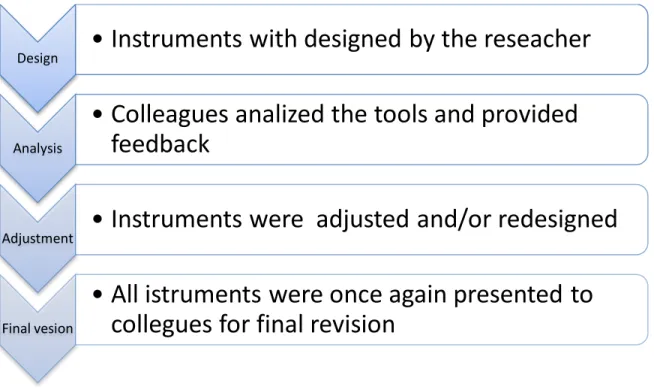
(37) FOSTERING SELF-EFFICACY FOR DESCRIPTIVE WRITING IN A GROUP OF PARTICIPANTS FROM THE SIXTH GRADE IN A1 LEVEL THROUGH SCAFFOLDING STRATEGIES. 28 knowledge to prior knowledge. At this regard, (Wenden, 1995) refers to learning logs as “learning strategies” because the act of keeping learning logs activates both self-reflective strategies and self-regulatory skills. Validity and Triangulation Triangulation is a method used by qualitative researchers to check and establish validity in their studies by analyzing a research question from multiple perspectives. The researcher first needs to revise the appropriateness of each instrument for the purpose of the study; it means that data collection instruments were selected in order to fit the characteristics and needs of this study. It was necessary to decide if they were the proper tools to address. In the validation stage, each instrument was designed by the researcher and was later shared with colleagues for evaluation. As a result, some pertinent adjustments were made. This action consisted in presenting the data collection instruments to teachers with more experience in the field of ELT research; they analyzed the tools and provided feedback in order to improve them. The following illustration shows the analysis of data collection instruments..
(38) FOSTERING SELF-EFFICACY FOR DESCRIPTIVE WRITING IN A GROUP OF PARTICIPANTS FROM THE SIXTH GRADE IN A1 LEVEL THROUGH SCAFFOLDING STRATEGIES. 29 Table 1: Data collection instrument design process. Design. Analysis. Adjustment. Final vesion. • Instruments with designed by the reseacher • Colleagues analized the tools and provided feedback • Instruments were adjusted and/or redesigned • All istruments were once again presented to collegues for final revision. In the triangulation process, data extracted from the instruments were contrasted and compared in order to find meaningful patterns that enabled the researcher to interpret and analyze data. Firstly, the researcher collected and read learning logs from participants. This action provided valuable information to know if participants were answering the questions regarding their performance according to the tasks the researchers assigned. Secondly, observation, registered in the diary, allowed the researcher to gather data from the students’ interactions. Finally, writing tasks and products from the students allowed the researcher to analyze the advances in the process of learning by contrasting and comparing the students’ production This section has described the type of research design, the researcher’s role, the characteristics of the context and participants, and the data collection instruments and procedures. The next section will present the pedagogical implementation and intervention designed to carry out in this study.
(39) FOSTERING SELF-EFFICACY FOR DESCRIPTIVE WRITING IN A GROUP OF PARTICIPANTS FROM THE SIXTH GRADE IN A1 LEVEL THROUGH SCAFFOLDING STRATEGIES. 30 Pedagogical Intervention Objectives of pedagogical intervention The pedagogical intervention trained participants to be able: . To apply self-monitoring skills by setting achievable learning goals to improve their writing skill.. . To develop self-monitoring skills by keeping records of learning experiences in their learning logs.. . To develop participants’ awareness of their strengths and weaknesses when writing short descriptive texts.. This pedagogical intervention describes two main stages carried out in this study: the instructional design and the implementation of the scaffolding strategies (teaching with visual aids and learning logs). Additionally, the section reports on the adjustments made within the implementation. Instructional design Developing self-efficacy of the writing skill through scaffolding strategies required the incorporation of dynamic approaches to teach the communicative feature of the language. That search required a review of the methods and approaches for language teaching which resulted in the choice of Communicative Language Teaching (CLT) and Task-based language teaching (TBLT). The rationale behind the choice of CLT and TBLT is related to the specific features of these approaches. In CLT the goal of language teaching is to develop communicative competence (Hymes, 1972) while in TBLT the purpose for language instruction is to enable learners to do things using language (Nunan, 1992). These.
(40) FOSTERING SELF-EFFICACY FOR DESCRIPTIVE WRITING IN A GROUP OF PARTICIPANTS FROM THE SIXTH GRADE IN A1 LEVEL THROUGH SCAFFOLDING STRATEGIES. 31 characteristics made possible to design tasks to teach the communicative purpose of writing rather than teaching participants to write with accuracy. For the implementation, the researcher planned a timeline (Appendix M) for data collection process. This timeline extended from July 9th to September 30th covering two academic terms of 2012 (third and fourth terms). It contains work patterns from the socialization stages till the reports of findings. Each week of the timeline covered three (3) hours of classwork, but self-study added up three more hours of independent work. During this time surveys were applied, eight lesson plans with learning logs were implemented, participants produced artifacts and analysis of the data was conducted to determine findings. Classroom sessions were held three times a week Tuesdays, Wednesday and Friday, with 180 minutes of classroom work per week. The language for instruction was a combination of English and Spanish, mainly because the nature of the tasks required the teacher to use the mother language to clarify some concepts participants found difficult to understand in English given their current language level. Every classroom session had the following stages: warm up and motivation, and presentation of the topic and content with modeling, but adapted to descriptive writing. In this way, lessons were introduced, studied and practiced. Usually topics and contents were first introduced in the classroom session along with the learning logs and the self-assessment checklist participants had to keep in their portfolios. Resources used in the implementations were facilitated in part by the school library that provided samples of Side by Side 1 student book published by Pearson Longman.
(41) FOSTERING SELF-EFFICACY FOR DESCRIPTIVE WRITING IN A GROUP OF PARTICIPANTS FROM THE SIXTH GRADE IN A1 LEVEL THROUGH SCAFFOLDING STRATEGIES. 32 (Molinsky and Bliss, 2001). Others resources were facilitated by the researcher like flash cards, worksheets (Appendix N), posters, audio, and video. The school also provided the computers for participants to do online work. Lessons plans followed a model provided by Universidad de la Sabana, which was adapted from Dr. Joan Rubin’s lesson planner (Appendix O). This lesson plan covers the most important aspects of a class preparation format, including subject identification, time of instruction, level of competence, lesson and type of goal (language and learning) with their respective type of assessment, material and resources and a complete distribution of the lesson time. The researcher designed assignments or homework participants had to do at home. This was convenient to the participants as they had more time to complement class sessions. Though definitions of homework can vary, Cooper (1989) defined homework as “tasks assigned to students by school teachers that are meant to be carried out during nonschool hours” (p. 36). It is thought that the value of independent work, assigned as homework, influences positively students’ academic achievement, in so that homework might provide students with opportunities to engage in a range of self-regulation practices. According to Corno (2000), children who complete homework outside of school often develop an aptitude for academic work through extra practice and are responsible for regulating their own behavior. As part of the adjustments, the researcher had to incorporate a preliminary lesson training stage in which students were instructed to use the English dictionary and identify the parts of the speech. A lesson plan about how to use the English dictionary was needed because of the lack of participants’ expertise with this resource. Its purpose mainly focused.
(42) FOSTERING SELF-EFFICACY FOR DESCRIPTIVE WRITING IN A GROUP OF PARTICIPANTS FROM THE SIXTH GRADE IN A1 LEVEL THROUGH SCAFFOLDING STRATEGIES. 33 on the productive use of dictionaries, mainly due to conceiving the dictionary as an important and valuable device for effective vocabulary learning. This lesson plan also involved training on parts of the speech since most of the participants could not define and make a distinction of the functions of a word. A common situation that the researcher usually observed during classes was that when participants found an unknown word in a text, they failed to infer the meaning through context and had difficulties identifying the multiple meaning words. Situations like this made necessary to instruct participants in how to identify and differentiate parts of the speech. Implementing scaffolding strategies In this study, scaffolding instruction aimed to examine the role of visual aids as a scaffolding strategy to support the development of the writing skill and to determine how learning logs could be used as scaffolds to guide participants from dependent to independent behaviors and self-regulated skills in their L2 descriptive writing process. Teaching writing with visual aids The implementation of visual input followed the Task -based learning approach as follows: Pre-task The teacher introduced the topic and handed in the visuals to the participants, as they got clear instructions on what they will have to do with them. Task Participants completed the task (Appendix P) individually using the target language, the visuals, and other resources like dictionaries and the internet..
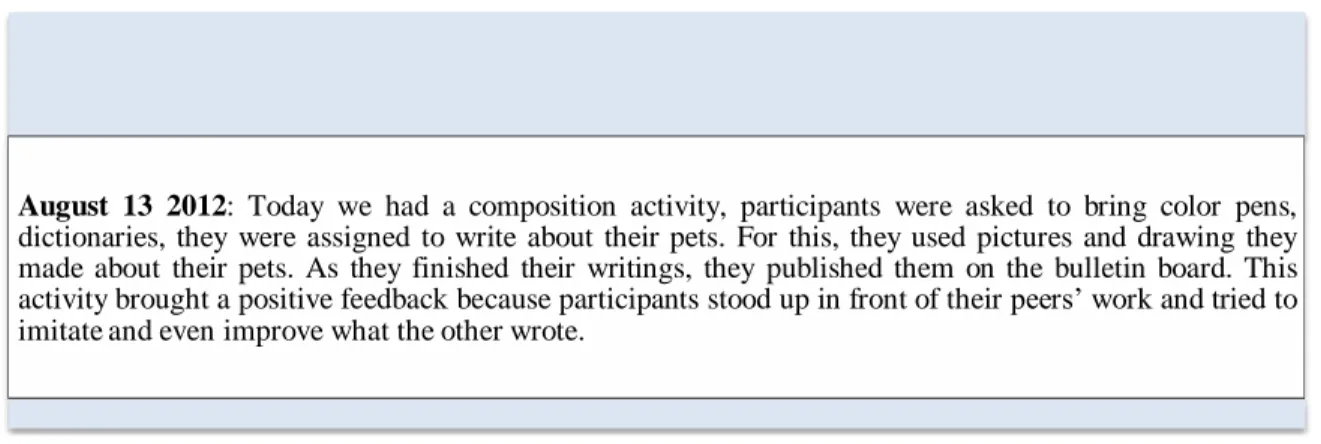
(43) FOSTERING SELF-EFFICACY FOR DESCRIPTIVE WRITING IN A GROUP OF PARTICIPANTS FROM THE SIXTH GRADE IN A1 LEVEL THROUGH SCAFFOLDING STRATEGIES. 34 Planning Participants planned their tasks with the support of the teacher who answered questions and collaborated when they asked for advice to clear up any language questions they could have. It was in this stage that leaning logs were used by participants in order to keep a record of what they have learnt and how they were learning it. A sample of a student’s learning log is displayed in Appendix Q. Report Participants then shared with the rest of the class their work. This work took many forms; they were generally conducted with a show and tell activity, which means a common classroom activity to teach young children the skills of public speaking. Participants elaborated big posters or any presentations on the internet or computer using MS Power Point™, Prezi™ or any other software they felt comfortable with. They stood in front of the class and presented their work. Participants also used the bulletin boards to display their works. These boards were placed in the classroom and also on the walls of the cafeteria where many others students could read them. Using learning logs Learning logs, viewed as a scaffolding strategy, were useful data collection instruments to assess students’ metacognitive development. By using this instrument, participants were prompted to think about their own learning process and have them think about the steps they were taking towards the objectives set in the study. This, according to Flavell (1976), fosters the interaction between meta-cognitive knowledge, meta-cognitive experiences, goals and strategies..
Figure


+7

Documento similar
The data for learning self-regulation (higher values in this variable mean that the students used more strategies oriented to learning goals) is coming from the
T-test revealed that the HIGH group scored significantly higher than the LOW group on self-efficacy, mastery goal orientation, and metacognitive strategies and reported more
The expansionary monetary policy measures have had a negative impact on net interest margins both via the reduction in interest rates and –less powerfully- the flattening of the
Jointly estimate this entry game with several outcome equations (fees/rates, credit limits) for bank accounts, credit cards and lines of credit. Use simulation methods to
In our sample, 2890 deals were issued by less reputable underwriters (i.e. a weighted syndication underwriting reputation share below the share of the 7 th largest underwriter
In relation to the learning strategies scales, EMI students have better learning strategies due to metacognitive self- regulation, time study management and effort regulation
Self-efficacy in refusing to drink was retained because of the relationship in use of these two substances (Table 7). The odds ratio for each variable shows that a) there is
The aim of this study was to examine the effect of the use of the flipped classroom on the level of self-efficacy and the assessment of clinical competencies in nursing
