Full Terms & Conditions of access and use can be found at
https://www.tandfonline.com/action/journalInformation?journalCode=kvir20
ISSN: 2150-5594 (Print) 2150-5608 (Online) Journal homepage: https://www.tandfonline.com/loi/kvir20
Aberrant T cell immunity triggered by human
Respiratory Syncytial Virus and human
Metapneumovirus infection
Andrea E. González, Margarita K. Lay, Evelyn L. Jara, Janyra A. Espinoza,
Roberto S. Gómez, Jorge Soto, Claudia A. Rivera, Katia Abarca, Susan M.
Bueno, Claudia A. Riedel & Alexis M. Kalergis
To cite this article: Andrea E. González, Margarita K. Lay, Evelyn L. Jara, Janyra A. Espinoza, Roberto S. Gómez, Jorge Soto, Claudia A. Rivera, Katia Abarca, Susan M. Bueno, Claudia A. Riedel & Alexis M. Kalergis (2017) Aberrant T cell immunity triggered by human Respiratory Syncytial Virus and human Metapneumovirus infection, Virulence, 8:6, 685-704, DOI: 10.1080/21505594.2016.1265725
To link to this article: https://doi.org/10.1080/21505594.2016.1265725
© 2017 Taylor & Francis Accepted author version posted online: 02 Dec 2016.
Published online: 06 Jan 2017.
Submit your article to this journal Article views: 371
REVIEW
Aberrant T cell immunity triggered by human Respiratory Syncytial Virus
and human Metapneumovirus infection
Andrea E. Gonzaleza, Margarita K. Layb, Evelyn L. Jaraa, Janyra A. Espinozaa, Roberto S. Gomeza, Jorge Sotoa, Claudia A. Riveraa, Katia Abarcac, Susan M. Buenoa,d, Claudia A. Riedele, and Alexis M. Kalergisa,c,f
aMillennium Institute of Immunology and Immunotherapy, Departamento de Genetica Molecular y Microbiologıa, Facultad de Ciencias Biologicas, Pontificia Universidad Catolica de Chile, Santiago, Chile;bDepartamento de Biotecnologıa, Facultad de Ciencias del Mar y Recursos Biologicos, Universidad de Antofagasta, Antofagasta, Chile;cDepartamento de Pediatrıa, Facultad de Medicina, Pontificia Universidad Catolica de Chile, Santiago, Chile;dINSERM UMR1064, Nantes, France;eMillennium Institute of Immunology and Immunotherapy, Departamento de Ciencias Biologicas, Facultad de Ciencias Biologicas y Facultad de Medicina, Universidad Andres Bello, Santiago, Chile;fMillennium Institute of Immunology and Immunotherapy, Departamento de Endocrinologıa, Facultad de Medicina, Pontificia Universidad Catolica de Chile, Santiago, Chile
ARTICLE HISTORY
Received 3 February 2016 Revised 22 November 2016 Accepted 23 November 2016
ABSTRACT
Human Respiratory syncytial virus (hRSV) and human metapneumovirus (hMPV) are the two major etiological viral agents of lower respiratory tract diseases, affecting mainly infants, young children and the elderly. Although the infection of both viruses trigger an antiviral immune response that mediate viral clearance and disease resolution in immunocompetent individuals, the promotion of long-term immunity appears to be deficient and reinfection are common throughout life. A possible explanation for this phenomenon is that hRSV and hMPV, can induce aberrant T cell responses, which leads to exacerbated lung inflammation and poor T and B cell memory immunity. The modulation of immune response exerted by both viruses include different strategies such as, impairment of immunological synapse mediated by viral proteins or soluble factors, and the induction of pro-inflammatory cytokines by epithelial cells, among others. All these viral strategies contribute to the alteration of the adaptive immunity in order to increase the susceptibility to reinfections.
In this review, we discuss current research related to the mechanisms underlying the impairment of T and B cell immune responses induced by hRSV and hMPV infection. In addition, we described the role each virulence factor involved in immune modulation caused by these viruses.
KEYWORDS
adaptive immunity; hMPV; hRSV; immunological synapse; T cells
Introduction
The human Respiratory syncytial virus (hRSV) and human metapneumovirus (hMPV), which belong to the Pneumoviridae family,1 are the main viral etiological agents of severe lower respiratory tract infection (LRTI), especially in infants, children and the elderly.2,3 HRSV and hMPV can lead to bronchiolitis and pneumonia, and have also been implicated in the development of recurrent wheezing and asthma.2-6
HRSV is the second most common etiological patho-gen for pneumonia after influenza virus around the world.7 Furthermore, it has been reported worldwide between 66,000 to 239,000 deaths per year of children less thanfive years of age, who suffered LRTI caused by hRSV.5,8
HRSV was first isolated in 1956 from a colony of chimpanzees that presented various symptoms, including coughing, sneezing, and purulent nasal discharge.9,10 The
illness quickly spread from sick chimpanzees to other monkeys, indicating the presence of a highly contagious pathogen that was originally denominated the chimpanzee coryza agent.10 In 1957, Chanock and Finberg isolated a similar agent from throat swab samples of infants with a severe respiratory disease,11,12 which was found to be identical to the one reported by Blount et al in chimpan-zees.10The isolated pathogen induced syncytia formation, via the virus fusion protein (F) on permissive cell types in cultures.12,13 Therefore, this pathogen was renamed as a hRSV.
On the other hand, hMPV was first isolated in 2001 from young Dutch children with a respiratory tract dis-ease.14HMPV is a member of the Pneumoviridae family and Metapneumovirus genus.1Genomic and phylogenic analyses suggest that hMPV diverged from avian MPV, a virus that causes serious respiratory diseases in chickens.15-17 Infection caused by hMPV presents a
CONTACT Dr. Alexis M. Kalergis [email protected]
© 2017 Taylor & Francis
2017, VOL. 8, NO. 6, 685–704
similar symptomatology as other respiratory viruses such as hRSV, parainfluenza virus and influenza,18 whereby the diagnosis is difficult. Symptoms of hMPV include rhinorrhea, cough, acute otitis media, fever, and, less frequently, conjunctivitis, rash, diarrhea and vomiting.19 Frequently, risk population, including young children and the elderly, infected with hMPV require hospitalization.20 Moreover, mortality as a result of hMPV can reach up to 10% in the elderly.3,20
Recurrent infections with hRSV or hMPV are common in children21,22 and adults.21-24 Studies in healthy young adults subjected to experimental challenge or natural infection, showed mild upper respiratory symptoms for both viruses infection.23,25 However, reports performed in humans and mouse dendritic cells (DCs) have described that both viruses infect these cells affecting DCs capacity of promote an adequate immunological memory due to their interference with na€ıve T cell priming.26-29
The ineffectiveness of the natural infection to induce long-term immunity has hampered vaccine generation and currently there is no licensed vaccine available to prevent the bronchiolitis and pneumonia caused either by hRSV or hMPV.30-34However, several candidate vac-cines are in different stages of development for prevent-ing the diseases caused by these viral agents. Candidate vaccines for hRSV and hMPV employ different approaches, including a chimeric virus (hMPV),35 live attenuated virus (hRSV),36 and purified proteins (hRSV),37 among others. Furthermore, recombinant Bacillus Calmette-Guerin (rBCG) vaccines have been developed using hRSV and hMPV antigens to provide a protective TH1 response in mice.31,38,39 In addition,
antibody-mediated immunity is relevant for protection against both viruses.40,41 For example, Palivizumab, an IgG1 humanized anti-F monoclonal antibody, is safe and effective when given in a prophylactic manner to children at risk of severe hRSV infection.42 Thus, the ideal vaccine for either hRSV or hMPV should provide both antibody and T cell-mediated immune protection.
In this review, we describe the most recent findings relative to the mechanisms employed by hRSV and hMPV to evade the host immune system. Further, we will discuss the virulence factors of each virus that contribute at modulating the adaptive immune response.
Adaptive immunity triggered by hRSV
The Humoral response against hRSV infection
The humoral immune response plays a major role in protecting humans from hRSV infections.43-45 Indeed, high titers of pre-existent mucosal IgG are correlated
with reduced viral loads in hRSV-infected infants.46 Similar correlation have been obtained for nasal IgA levels in naturally infection and in experimental chal-lenges in healthy adults.47,48 On the other hand, it has been described in mice that antibodies play a major role during reinfection, even more than in thefirst infection, giving a principal role to T cells in the clearance of the virus during thefirst hRSV challenge.49
Interestingly, prophylactic treatment with Palivizumab reduces severe hRSV-mediated LRTI,42,50 and conse-quently diminish hRSV-associated hospitalization of pre-mature infants, children with congenital heart disease (CHD) and children with cysticfibrosis (CF),50suggesting that a neutralizing antibody of high affinity and titer is enough to confer a clinical protection against hRSV dis-ease. However, in most adults antibody titers are under-neath the levels needed to reach a complete airway protection, despite repeated infection occurring through-out life.51Experimental challenges in healthy adults have shown that serum and nasal IgA titers increase after infec-tion but those levels are poorly maintained.47 Similar results have been reported for neutralizing antibodies lev-els in a birth cohort followed-up over three hRSV epidem-ics.52 These antecedents suggest that acute production of short-life antibody-secreting cells (ACS) is not impaired. However, a defect occurs in long-lived plasma cells that arise from the ASC population, which normally should migrate to bone marrow and respiratory mucosa.47 This phenomenon might explain, at least in part, as to why the specific hRSV-IgA generated humoral response is not suf-ficient to provide protection upon reinfection.
The cellular immune response against hRSV infection
Both memory CD4Cand CD8CT cells contribute signifi-cantly at achieving protective immunity upon hRSV infection.57-59 This applies especially in children with defective T cell responses, who exhibit severe hRSV infection and prolonged virus shedding.60 Supporting this observation, T cell depletion assays in BALB/c mice results in higher hRSV replication upon infection, while the adoptive transfer of virus-specific memory T cells enhances virus clearance in recipient mice.61 Further-more, it has been demonstrated that transfer of hRSV-N-specific T cells also contribute to reduce viral immu-nopathology.38,39Moreover, memory T cells appear to be clinically important in protecting from severe diseases caused by hRSV reinfections. This notion is supported by the fact that minor symptoms are observed in popula-tions of older children and young adults infected with hRSV, despite of defective responses in IgA B cell mem-ory and in hRSV-specific serum.47,62
Recently, it has been demonstrated that tissue-resi-dent memory (Trm) T cells are relevant to the capacity of the host to rapidly limiting the spread of pathogens in tissues.63,64Thus, hRSV-specific CD4Cand CD8CTrm T cells could provide immediate immunological protection against hRSV infections. In fact, analyses of hRSV-spe-cific CD8Cmemory T cells have shown that these cells mostly remain in lungs and a minority of these cells cir-culates in peripheral blood from healthy individuals.65,66 Moreover, increased activated hRSV-specific airway Trm T cell frequencies were observed in bronchoalveolar lavagefluid (BALF) from healthy adults inoculated with hRSV, which coincided with a reduction in the viral load.59
hRSV-mediated lung pathology in mice is not completely dissected and primary reports attributed this effect to T cells, specially CD8CT67,68but in humans, it has mostly been associated with a large influx of neutro-phils in the lungs of patients with bronchiolitis, as well as in fatal cases of infants.69-71It is suggested that neutro-phils recruitment induced by hRSV infection promote lung damage through the generation of reactive oxygen species and extracellular traps (NETs).72,73
Nevertheless, a recent study using experimental hRSV infection of adults in which a 65% of individuals pre-sented inflammation symptoms, has shown that the virus replicate in the lower respiratory tract, inducing cellular infiltration of CD8C T cells to the airways.59 Consistent with this notion, there is evidence that CD8CT cells can cause immunopathology in infants when a high amount of CD8C T cell encounter a large number of hRSV par-ticles in the tissue.74 However, the drawback of these
studies is that no other cell types were evaluated, therefore it is not possible to rule out the neutrophils contribution to the pathology. In addition, another study showed that T cell responses are reduced or absent in exacerbated lungs of fatal cases of infants infected with hRSV, who had a severe LRTI caused by this virus.71In these tissues a positive staining for macrophages and neutrophils was observed.71 Thus, in more severe cases of infantile viral LRTI caused by hRSV infection, lung inflammation appears to be due to a pronounced infiltration of neutro-phils and macrophages.
CD4CT cell response against hRSV and mechanisms
of evasion used by the virus
An adequate CD4CT cell response can efficiently aid at reducing viral load upon hRSV infection.39Indeed, it has been reported that adoptive transfer of CD4C T cells from immunized mice with a prototype vaccine consist-ing in a recombinant rBCG expressconsist-ing hRSV N protein (rBCG-N-hRSV), resulted in a significant reduced viral load in the lungs after infection in recipient mice, thus providing a protective TH1 antiviral response.38 These
data suggest that CD4CT cells itself stimulated with the proper antigens in can significantly contribute to hRSV clearance.
However, in infants and children naturally infections, an inefficient adaptive immune response occurs, which is characterized by 1) a skewed TH2 immune response;.75,76
2) a deficient anti-viral TH1 response and 3) a low
secre-tion of IFN-gand TNF-ain peripheral blood mononu-clear cells77 and in nasopharyngeal aspirates,78 respectively. Nevertheless, hRSV-infected infants suffer-ing from bronchiolitis present higher levels of TNF-ain BALF at day 1 of intubation, as compared with controls. This observation suggest that a mixed TH1/TH2 response
is generated at the first stage of the disease.79 Consis-tently with this observation, a mixed TH1/TH2 response
was also observed in the lung of hRSV-infected mice, although with a significant increase of IL-13, which is known to induce airway hyperreactivity.80,81
The predominant TH2 immune response observed in
infants and children could be due to the capacity of hRSV to polarize the adaptive immune response from a protective TH1 phenotype to a TH2-type response.76
However, whether a pathogenic TH2 immune response
significantly contributes to disease in at-risk human groups remains to be demonstrated.
OT-II CD4C T cells with hRSV-infected DCs, pulsed with OVA peptide,27showing a lack of sustained immu-nological synapse as well as reduced secretion of cyto-kines from OT-II cells, as compared with uninfected controls. This phenomenon was observed by using na€ıve T cells, in contrast, it has been described that memory/ effector T cells have different responses, which is less affected by hRSV-infected DCs.82 This phenomenon, could explain why healthy adults infected with hRSV can clear the virus and not in young children who have no memory T cells.
TH2 polarization also is induced by Tymic-stromal lymphoprotein (TSLP), an epithelial cell-derived cyto-kine that signals through the TSLP receptor (TSLPR).83 This cytokine potently activates myeloid DCs (mDCs), since these cells are known to express high levels of the TSLPR.84Then, TSLP-stimulated DCs upregulate OX40 ligand (L) cell surface expression and produce TH2
cell-attracting chemokines, including CCL17 and CCL22.84 Indeed, TSLP from in vitrohRSV-stimulated rat AECs induced the functional maturation of mDCs and enhanced the surface expression of the thymus-activa-tion-regulated chemokine (TARC) and OX40L on DCs,85 which induce mainly inflammatory TH
2-polar-ized immune responses.86 Experiments performed in BALB/c mice infected by hRSV shown elevated levels of TSLP protein in lungs compare with uninfected con-trol.80 The role of TSLP in the promotion of Th2 response under hRSV infection was evaluated using a TSLPR-deficient (TSLPR¡/¡) mice. These studies shown
a decrease hRSV-mediated immunopathology in this model after infection. In addition, analysis of superna-tant fluids of re-stimulated mediastinal lymph nodes (MLN) of TSLPR¡/¡ mice infected with hRSV show a significant decrease of IL-13 and IL-5 production, as compare with WT mice, but both mice produced equiva-lent levels of IFN-g and IL-17A. These results support, the notion that TSLP is required to TH2 polarization.80 In other studies, it has been shown that the TSLP-OX40L–OX40 axis contributes to the hRSV-induced air-way hyperresponsiveness (AHR) and inflammation after reinfection of mice that were initially infected as neo-nates. Further, administration of an OX 40L anti-body treatment during primary infection as neonates prevented the enhancement of the AHR upon reinfection 5 weeks later.86 Moreover, treatment with the anti-OX40L during primary infection in newborn BALB/c mice reduced the TH2 cytokines IL-5 and IL-13 in BALF upon reinfection.86
The pathogenic role of CD4C T during re-infection with hRSV in adult mice, after being infected as neo-nates, can be explained by the induction of an exagger-ated TH2 response, demonstrated by the cytokine profile
observed in these animals.87This could be explained, at least in part, by the upregulation of the IL-4Ra. Specific deletion of the IL-4Ra. gene in CD4C T cells abolished hRSV-induced airway AHR and lung damage upon rein-fection with hRSV.87 However, these results are contro-versial because several reports have shown that CD4CT cells are required for the clearance of the virus and to promote antibody response against hRSV.60,88-90 In this sense, it seems that dysregulation of CD4C T cells pro-mote harmful Th profiles but these cells are still required for hRSV clearance.
Additionally, an IL-17-mediated TH17 response is a
possible third type of immune response associated with the respiratory pathogenesis induced by CD4C T cells during hRSV infection.91,92 Indeed, binding of IL-17 to its receptor promotes an inflammatory response and increased viral loads in the lungs of infected BALB/c mice.92Stimulation of T cells with hRSV-infected human bronchial epithelial cells (HBEC) induced the production of IFN-g, IL-4, and IL-17, suggesting that hRSV can acti-vate these three THcell subsets.93Consistent with the
lat-ter, stimulation of PBMC from healthy donors with hRSV infected A549 cells induced the production of IFN-g and IL-4.94In other studies, the concentration of IL-17 in nasopharyngeal aspirates of children during hRSV infection was higher at the moment of discharge of the hospital.95 However, the data are controversial since the latter was only valid for infants that do not require ventilation.95
In addition to these mechanisms used by hRSV to avoid the CD4CT other studies have demonstrated that IL-25 and IL-17RB are expressed in lungs of hRSV-infected BALB/c mice and their expressions correlate with potentially pathogenic cytokines, such as IL-13 (TH2), IL-5 (TH2) and IFN-g (TH1), promoting the
hRSV-mediated lung disease.91
airways of infected children and then present antigens to T cells, but further evidence is necessary to support this idea.
Taken together, data derived fromin vivoandin vitro studies suggest that hRSV infection in the lung can induce different mechanisms to prevent an efficient CD4CT cell proliferation and differentiation into protec-tive antiviral memory or effector cells of the host.
CD8CT cell response against hRSV and mechanisms
of evasion used by the virus
It is well documented that CD8CT cells are pivotal at controlling respiratory viral infections, such as the one caused by hRSV.57Indeed, data from an adoptive trans-fer model demonstrated that transfused hRSV H2-Kd
-restricted Cytotoxic T lymphocytes (CTLs) specific for the M282–90 (KdM282) epitope, the most predominant
one of the M2 protein recognizedin vivo(dominant epi-tope)100 rapidly clear the virus from the lungs of recipi-ent BALB/c mice. However, a significant lung pathology was also observed.67 Consistent with that observation, BALB/c mice immunized with a DNA vaccine expressing the KdM282 epitope linked to humanb2-microglobulin
(b2m) developed an enhanced pulmonary inflammatory response after hRSV challenge, characterized by enhanced weight loss.101Likewise, intranasal administra-tion of the KdM282 epitope combined with Escherichia
coli heat-labile toxin (LT)/LTK63 elicited a strong antivi-ral CD8C T-cell response in BALB/c mice, but also enhanced lung pathology.102This data indicates that the KdM282 epitope-specific CD8C response is associated
with enhanced disease. In addition, Ruckwardt et al.103 demonstrated that infection of CB6F1/J mice with a recombinant hRSV containing a mutation in the domi-nant KdM2
82 epitope resulted in an increased response
of CD8C T cells specific for the subdominant epitope DbM187(M187-195) with significantly less clinical disease.
In contrast, hRSV containing mutations in this subdomi-nant epitope induced an augmented KdM282-specific
CD8CT cell response and increased severity of illness.103 Consistent with the latter, in CB6F1 hybrid mice, which recognize multiple MHC class I-restricted epitopes, it was described that DbM187specific CD8CT cells control
hRSV replication more efficiently with less pulmonary inflammation and illness than the KdM2
82specific CD8C
T cells.104In addition, another study has shown that after immunization with a recombinant PR8 influenza virus carrying the subdominant hRSV KdF85 epitope, KdF85
-specific CTLs were induced in BALB/c mice with a sig-nificant reduction of the viral load in the lungs upon hRSV challenge,105 indicating a protective effect against this virus. Taken together, these results from the mouse
models suggest that a subdominant epitope-specific CD8C T cell response could be more beneficial to the host by promoting an effective anti-viral immune response and reduced lung disease, than the dominant ones, which promote a robust anti-viral immune response but also an enhanced lung pathology upon hRSV infection.
Likewise, when CD8C T cells from rBCG-hRSV-N immunized-BALB/c mice are stimulated with hRSV N peptides, these cells produce significant amounts of
IFN-g, partially protecting recipient mice of hRSV infection.38 The efficiency of the CD8CT cell-mediated virus control
could depend on how the hRSV antigen is presented by DCs, since less IFN-g secretion was observed when BALB/c mice were immunized with purified hRSV N or M2 in alum, compare with when mice immunized with rBCG-N-hRSV and rBCG-M2-hRSV.38 Furthermore, CD8CT cell-mediated virus control and immunopathol-ogy is dependent on IFN-g production during early infection.67
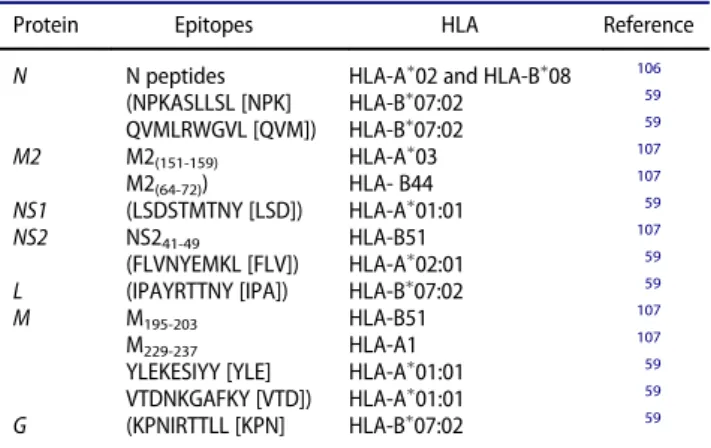
In human, has been described lesser about single epi-tope immune-modulation, in fact the majority only describe hRSV-derived peptides that induce IFN-g secre-tion by stimulated T cells,59,106,107 but they do not address their possible role during pathology. Table 1, summarizes the hRSV epitopes described so far for HLAs. It is possible that these epitopes are implicated in CD8CT cells response but further studies are required to demonstrate if these specific T cells response is favorable or harmful for an infected person.
The impairment of CTL function appears to be another immune evasion mechanism evolved by hRSV.57 How specific hRSV proteins affect these cells will be dis-cussed below, but here additional mechanisms that have not been related yet to specific hRSV proteins. For instance, the upregulation of the programmed-death ligand 1 (PD-L1), which binds PD-1 on CD8CT cells in human bronchial epithelial cells (BECs), occurs after hRSV infection and it has been shown to cause a
Table 1.hRSV epitopes described for HLA.
Protein Epitopes HLA Reference
N N peptides HLA-A02 and HLA-B08 106
(NPKASLLSL [NPK] HLA-B07:02 59 QVMLRWGVL [QVM]) HLA-B07:02 59
M2 M2(151-159) HLA-A03 107
M2(64-72)) HLA- B44 107 NS1 (LSDSTMTNY [LSD]) HLA-A01:01 59
NS2 NS241-49 HLA-B51 107
(FLVNYEMKL [FLV]) HLA-A02:01 59
L (IPAYRTTNY [IPA]) HLA-B07:02 59
M M195-203 HLA-B51 107
M229-237 HLA-A1 107
YLEKESIYY [YLE] HLA-A01:01 59
VTDNKGAFKY [VTD]) HLA-A01:01 59
functional impairment of CD8CT cells.150Indeed, block-ing PD-L1 with a specific-antibody in hRSV-infected BECs, co-cultured with CD8CT cells, enhances CD8CT cell effector functions and decreases hRSV gene expres-sion in BECs.108
In addition, CD8C T cells may not only be directly influenced by the impairment of the T cell priming by DCs, but also be indirectly affected by the modulation of cytokine environment, as NK cell-derived IFN-g produc-tion precedes lung CD8C T cell recruitment,109 in a mechanism similar to the Influenza A virus.110Also, tem-porally association has been made between CD8CT cells and neutrophils, where an important influx of neutro-phils to the airways in infants occurs before CD8CT cells activation. This initial neutrophil influx correlates to the expression of the most severe hRSV symptoms suggesting that the inflammatory environmental potentiated by neu-trophil influx could modulate CD8CT cell response.111
In summary, CD8C T cell function appears to be impaired by hRSV through different mechanisms.
Nonetheless, these different strategies used by this virus in targeting the CD8C T cell response may not be that relevant in populations of older children and young adults, since most of them have mild symptoms or are asymptomatic when undergoing hRSV viral infection.
Role of hRSV Proteins in Immunomodulation
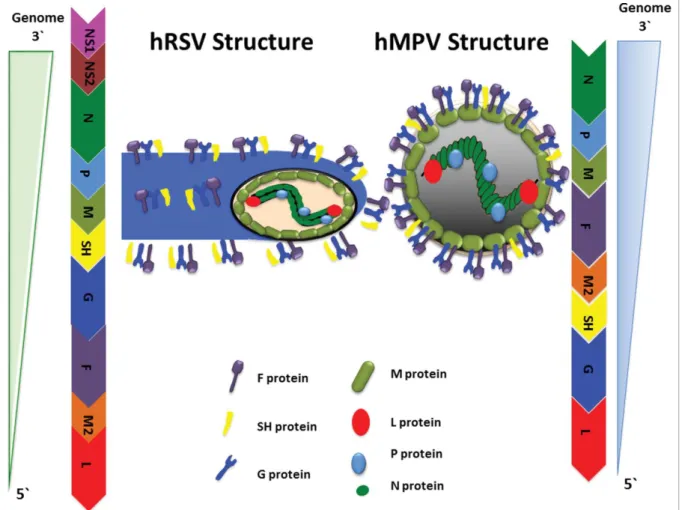
The hRSV genome consists of a 15.2 kb long, negative sense RNA, which contains 10 genes encoding for 11 proteins, with two overlapping open reading frames encoding two proteins: M2-1 and M2-2 (Fig. 1).112,113 Several hRSV proteins play a role in evading the immune system of the host (seeTable 2). The hRSV glycoproteins, located in the viral envelope, that have been involved in interfering the immune response of the host are:
HRSV Glycoprotein protein (G): this protein is involved in virus attachment114 and it also exists as a secreted form, which prevents opsonization and neutrali-zation of hRSV by anti-G specific antibodies.115
Moreover, the secreted form of the G protein has a che-mokine-like motif (CX3C) that competes with fractal-kine (CX3CL1) in binding to its receptor CX3CR1, thus reducing the CX3CR1CT cells response.116
HRSV Fusion (F) protein: this viral protein is required for the fusion of viral particle with the host cells4and also play a direct role in the ability of hRSV to decrease the pro-liferation of these cells by contact.117 In fact, when Vero cells express the F protein or are infected with a version of hRSV that only have F protein on its surface, they reduce the proliferation and response to mitogen stimulus.117
HRSV small hydrophobic (SH) protein: it is thought that this protein works as an important viroporin during hRSV pathogenesis.118This protein also inhibits apopto-sis in order to promote viral replication, as recombinant hRSV lacking the SH protein induced a significant cyto-pathic effect in different cell lines, compare with WT hRSV.119 In addition, the hRSV SH has been shown to inhibit the NF-kb pathway through a decrease in the TNF-aproduction in mousefibroblastic cells.119
Another studies have demonstrated that glycoproteins affect the innate and adaptive immune response to hRSV. In this study, immunization of BALB/c mice with a recom-binant strain of hRSV lacking both G and SH (CP52)
increased the number of pulmonary natural killer (NK) cells, as well as the levels of IFN-g and TNF-aat day 3 p.i. with a concordant reduced expression of the TH2 related
cytokines (IL-4 and IL-6) when compare with the parental RSV strain (B1).120However, in the same study it was also shown that during primary infection, RSV-specific MHC II CTL precursor frequencies were delayed in CP52-immu-nized mice compare with B1-immuCP52-immu-nized mice in BALF, cervical lymph nodes and spleen at day 5 p.i.120 Further-more, during secondary infection, both RSV-specific MHC I and MHC II CTL precursor frequencies were delayed in spleen at day 3 p.i in CP52- immunized mice, as compare with mice immunized with B1 or control Vero cell lysate.120 Altogether these data suggest that the hRSV G and/or SH proteins play a role in: a) downregulation of specific NK cell response, as mutants lacking these proteins increase pulmonary NK cells; b) polarization toward a TH2 immune
response, as RSV strains deficient in these proteins decrease TH2 related cytokines.
Beside glycoproteins, hRSV also expresses other pro-teins involved in the impairment of the host’s immune response, which are described below.
HRSV Non-structural (NS) proteins 1 and 2: these proteins impair the type I IFN pathway by targeting the Table 2.Function of hRSV and hMPV proteins and their roles modulation of immune response.
Protein Function Role in Immunomodulation Protein/Gene
hRSV hMPV hRSV hMPV References
G Attachment to host cells Attachment to host cells -Evasion of the anti-G antibody functions.
Inhibition of the type I IFN pathway (RIG-I)
114-116,155,156
-Impairment of CX3CR1CT cell migration and function (CX3C motif). F Fusion of viral particle
with host cells
Interfere with the proliferation of T cells by contact.
N/A 4,117
SH Virioporin Virioporin - Inhibition of apoptosis. -Inhibition of the NF-kB pathway
118,119,157
- Inhibition of TNF-a-mediated NF-kB signaling and
NF-kB activation.
NS1 N/A Impairment of the type I IFN pathway. (IRF-3)
N/A 121-127
NS2 N/A Impairment of the type I IFN pathway
N/A 121-127
M2.1 Transcription anti-terminator factor
Involved in viral replication through its Zinc binding domain
Activation of the NF-kB pathway N/A 52,53,145,160,161
M2.2 Regulatory factor in replication and in transcription
Regulatory factor in replication and in transcription
N/A Inhibition of the type I IFN pathway (Interaction with MAVS).
112,128,162,163
N Assembly of the nucleocapsid and protection of the viral RNA
Interaction with the viral RNA
-Interference with the immune synapse assembly.
N/A 129-131
- Inhibition of the Type I IFN pathway by MAVS interaction
M Viral particle assembly Viral particle assembly N/A It induces: 158,159
- Maturation of monocyte-derived DCs.
interferon-regulatory factor 3 (IRF3), thus inhibiting the IFN-a/b antiviral signaling.121 Additionally, these NS proteins suppress human DC maturation by downregu-lation of the type I IFN production; inhibit apoptosis; control protein stability; and regulate host cell mRNA.122-125 Moreover, the NS2 protein induces cell rounding and sheddingin vivoin hRSV-infected human ciliated cells in the large airways,124 promoting the reduction of viral titers in the airway mucosa and initiat-ing the obstruction of distal airways.124 In studies using co-cultures of WT or mutant hRSV-infected human DCs with autologous CD4CT cells, it has been demonstrated that NS1 protein promotes CD4C T cell proliferation with a TH2 immune response.126 In addition, NS1 was
shown to suppress the CD8C T cell anti-viral response, as there were increased levels of IFN-g in the superna-tant of lymphocytes co-cultured with human DCs infected with hRSVDNS1 as compare with lymphocytes co-cultured with DCs infected with WT RSV.126 In the same study, it was also shown that NS1 suppresses the CD8CCD103CT cell activation and proliferation, which is required to accomplish the cytolytic function of these cells at the mucosal epithelium of the respiratory tract.126 Therefore, the hRSV NS1 protein can impair the efficient anti-viral function of CD8CT cell in different manners. Further, in vivo suppression of the CTL response by hRSV is mediated by NS2, as BALB/c mice infected with a hRSV mutant deficient in the NS2 gene (DNS2) or both the NS1 and NS2 genes (DNS1/DNS2) showed increased pulmonary hRSV-specific CTL responses com-pare with those of mice infected with WT hRSV or with the virus lacking NS1 (DNS1).127
HRSV M2–1 protein: This is a transcription anti-ter-mination factor important for the efficient synthesis of full-length viral mRNAs.112 However, M2–1 has also been shown to activate the NFkb pathway as demon-strated by translocation to the nuclei of the NFkbfactor in A549 cell transfected with a M2–1 encoding vector.128
HRSV N protein: This protein is critical for the assembly of the hRSV nucleocapsid and protection of the viral RNA (Fig. 1).129Furthermore, the hRSV N pro-tein interfere with the type I IFN pathway by targeting the mitochondrial antiviral signaling protein (MAVS), thus inhibiting the MAVS-dependent antiviral path-way.130Moreover, hRSV-infected DCs are unable to acti-vate na€ıve CD4C T cells in vitro probably due to the impairment of the immunological synapse assembly by the hRSV N protein expressed at the host cell membrane (Fig. 2, upper left box), rendering T cells unresponsive to subsequent TCR engagement..27,93,131 Specifically, the Golgi apparatus polarization within T cells, an event needed for a proper immunological synapse assembly, is barely detectable in T cells co-cultured with
hRSV-infected DCs, in contrast to T cells co-cultured with mock-inoculated DCs.27Moreover, impairing this signal-ing event significantly decreases tyrosine phosphoryla-tion of TCR-associated CD3z-chain tyrosine-based activation motifs (ITAM) by LCK,132 in na€ıve T cells stimulated with a cognate antigen.27 Furthermore, immune synapse assembly inhibition is accompanied by a reduced binding of ICAM-1, suggesting that the N pro-tein interferes with receptor-ligand interactions at the immunological synapse, reducing the TCR clusters that are usually observed within a mature immunological synapse.131A putative viral mechanism of this inhibitory effect could be the interaction of the hRSV N protein with an element of the TCR complex, since central clus-tering of this protein occurs alongside the TCR, even in the absence of pMHC.131Further studies are required to define the molecular mechanisms underlying the immune synapse inhibition by RSV infection.
Adaptive Immunity Triggered by hMPV
The humoral response against hMPV infection
presented symptoms, despite their severity.134 hMPV-infected individuals presented low IgA and IgG titer com-pare with non-infected individuals, and also lower neu-tralizing capacity, consistent to what is observed in mice.134 Therefore, the humoral responses raised against hMPV following natural infection might not be sufficient to reduce re-infection episodes.22
The cellular response against hMPV infection
For hMPV, it was recently shown that the presence of virus-specific T cells in airways and in lungs of BALB/c
mice, are associated with an effective anti-viral immune response.139These data suggest that Trm T cells could also be important for controlling hMPV infection. However, further studies are still required, especially in humans.
expressing hMPV antigens, where vaccination with this hMPV vaccine expressing the M2–1 or P protein protects BALB/c mice from hMPV-mediated lung pathology and reduced viral load in lungs.31 However, this virus also evades these effective anti-viral immune responses.26 More-over, na€ıve BALB/c mice were shown to develop a biphasic immune responsein vivoafter hMPV infection.135During thefirst week, a TH1 response initially controls virus
repli-cation before polarizing toward a TH2 immune response
that facilitates viral persistence.135,136A recentin vivostudy, though, showed mixed TH1 and TH2 responses during the
first week of hMPV infection in BALB/c mice.141 Consis-tent with the notion observed in the mouse model, in adults undergoing hMPV infection, it has been described that PBMCs from these patients presented cytolitic activity, as evaluated by a Chrome-release assay, which suggest a TH1
response.142However, PBMCs, from healthy adults, stimu-lated with heat-inactivated hMPV promotes the induction of high levels IL-6 (a TH2 polarizing cytokine that prevents
TH1 differentiation143) and low levels of IFN-g and CCR5
(TH1 cytokines) when compare with hRSV-stimulated
PBMCs, thus suggesting a polarization toward a TH2
response.144 In contrast, other studies demonstrate that infants undergoing hMPV infection presented lower levels of pro-inflammatory cytokines compare with infants undergoing hRSV or influenza infection, including TNF-a
and IL-1b, two cytokines related to the chemotaxis of neu-trophils in lungs, as well as IL-12, IL-6 and IL-8.145 Further-more, in infants undergoing hMPV infection it was observed that a predominant TH1 response is generated,
since it was detected an increase in the IFN-g/ IL-4 ratio in nasal airway secretions. Taken together, this data indicate that hMPV induces a complex immune response, which might include a mixed TH1/TH2 response, similar to what
was observed in mice, though further studies are required to evaluate the T cell response in humans upon hMPV infection.
CD4CT cell response against hMPV and mechanisms
of evasion used by the virus
HMPV has also evasion mechanisms to interfere specifi-cally with CD4CT cell function that do not promote an efficient antiviral immune response and enhances lung pathology. Specifically, depletion of CD4C T cells in hMPV-infected BALB/c mice reduces lung pathology and airway obstruction, without affecting viral loads.140 These data demonstrate that the subset of CD4CT cells contributes to lung pathology but they are not critical for viral clearance.
As has been mentioned above, hMPV can induce a mixed TH1/TH2 response and this type of response is dependent of activation of TSLP pathway, which favors
TH2 response over TH1 response that is known is neces-sary for hMPV clearance. Related to this, hMPV infec-tion has been proven: to promote TSLP expression in both human AECs and mouse lungs; to stimulate OX40LCCD11bCDCs lung infiltration; and to increase the levels of pro-inflammatory TH2 cytokines-producing T cells, including TARC, IL-5 and IL-13, but also TNF-a in BALB/c mice,141as previously reported for OX40L on TSLP-activated DCs.86 Moreover, TSLPR¡/¡ mice showed decreased lung inflammation and hMPV replica-tion, as well as a higher frequency of CD8Cand CD4CT cells.141 These findings highlight the possibility that a repertoire of virus-specific TH and CTLs may
incom-pletely eliminate infected cells within the airways follow-ing primary infection, leadfollow-ing to an exacerbated inflammatory response, mainly mediated by the TSLP pathway, thus inducing an aberrant T cell response.141
Moreover, hMPV-infected DCs, similarly to hRSV-infected DCs, also impair the activation of CD4CT cells. Upon stimulation with hMPV-infected and antigen loaded DCs, na€ıve antigen-specific CD4C T cells dis-played significantly reduced proliferation, expression of surface activation markers, such as CD25 (IL-2 receptor/ IL-2Ra), CD69 and CD71 (transferrin receptor) and IL-2 secretion, as compare with T cells stimulated with uninfected control DCs.26 However, this inefficiency is not due to a deterioration of the immune synapse assem-bly since both TCR cluster formation and Golgi polariza-tion still occur (Fig. 2, upper left box).26This impairment may contribute to a delayed TH1 response. Indeed, CD4C
T cells elicit a poor IFN-gresponse when activated with hMPV-infected human peripheral blood mononuclear cells in vitro,144 suggesting that these hMPV-infected cells can also inhibit the function of CD4C T cells to stimulate an efficient antiviral TH1 immune response in
humans. The impairment of T cell immunity could be the result of impaired DC functions by hMPV, possibly through of a soluble factor derived from hMPV-infected DCs, as supernatants from these infected cells impairs T cells activation when stimulated by plate-bound anti-CD3e and anti-CD28.26 Thus, hMPV impairs the TCR signaling, without disturbing the immune synapse for-mation and Golgi polarization in T cells26(Fig. 2, upper right box). Consistent with the latter, the SH and/or G proteins reduced CD4CT cell proliferation in a co-cul-ture assay of hMPV-infected MDDC with CD4CT cells when compare with T cells co-cultured with DSH/G hMPV-infected DCs.146 Likewise, in vitro studies show that human and mouse hMPV-infected DCs lose the capacity to activate and expand na€ıve T cells, although to a lesser degree than hRSV-infected DCs.26,146-148
CD4C T cells, because no detectable neutralizing anti-bodies were observed in hMPV-infected mice depleted of CD4CT cells.140
CD8CT cell response against hMPV and mechanisms
of evasion used by the virus
In a similar manner as for hRSV, CD8CT cell response specific to hMPV antigens is critical for an effective viral clearance, as demonstrated in studies using vaccine can-didates against hMPV, such as virus-like particles har-boring hMPV F or hMPV M antigens.149Supporting this notion, hMPV-specific effector CD8CT cells, in BALB/c
mice that lack protective anti-hMPV antibodies and in the absence of CD4C T cells, no detection of virus load and reduction of lung disease were found upon hMPV infection, suggesting that the cytotoxic activity of CD8C T cells alone can confer protection against hMPV140and highlighting the importance of CD8CT cells in control-ling hMPV infection. Moreover, when specific hMPV M2 CTLs were transferred into RAG-1¡/¡ mice, these lymphocytes protected the host of hMPV challenge.150 Furthermore, hMPV-specific IFN-g-producing CD8C T cells can be found in the mucosa of the airways and in lungs, but not in the lymph nodes or in spleen of hMPV-infected BALB/c mice at 7 d p.i, suggesting the activation of the Trm T cells specific for hMPV epitopes.139 Never-theless, hMPV-virus specific CTLs were also induced 21 d p.i in spleen.139These data underscore the importance of Trm CD8CT cells in controlling rapidly hMPV infec-tions. Recently, in human has been described that mem-ory CD8CT cells are reactive to the majority of hMPV proteins (M, F, G, M2-1, N and SH) and particularly, CD8CT cells that recognize M and F protein can secrete IFN-g after 21 months post-infection.142 Nevertheless, further studies are required in humans to clarify if this CD8CT cells populations are protective or not, because independently of the presence of this population, hMPV keeps its capacity to generate re-infection episodes.
Recent studies associate the lack of the type I IFN pathway with CD8CT cell impairment.151In fact, hMPV infected-IFNAR¡/¡ mice had a higher peak of early viral replication, less airway dysfunction and lung inflammation, but cleared the virus with the same kinet-ics as observed in WT mice.151 Likewise, CD8CT cells from IFNRA¡/¡mice expressed similar levels of PD-L1 when compare with CD8CT cells from WT mice. How-ever, these cells showed an upregulation of the inhibitory receptor TIM-3, thus impairing the CD8C T cell func-tion.151 Additionally, CD8C T cells can be impaired by hMPV in a PD-1 dependent manner, similar to hRSV, as lung CD8CT cells are impaired in HLA B7.2 transgenic (B7tg) mice and had upregulated PD-1.152 Conversely,
blocking of PD-1 by administration of monoclonal spe-cific antibodies in B7tg mice prevented the CD8CT cells
impairment. Similarly, impairment of CD8CT cells was prevented on hMPV-infected PD-1¡/¡mice.152
In other studies, an impairment of lung hMPV-spe-cific memory CD8CT cells was observed inmMT mice,
which lack B-cells and are used as a model for hMPV reinfection, which suggest the importance of memory CD8C T cells in viral clearance during a second infec-tion.153Specifically, during reinfection, CD8CT cells had upregulated several inhibitory receptors, including PD-1.153Similarly to it is observed in B7tg mice, blockade of PD-1 in mMT mice restored lung CD8CT cell effector functions (i.e., degranulation and cytokine production) and enhanced viral clearance.153In other studies, immu-nization ofmMT mice with virus-like particles encoding the hMPV F and M proteins, generates hMPV F-specific and M-specific CD8CT cells in lungs, but their function
is impaired, as inhibitory receptors are upregulated on these cells, similar to what is seen in WT C57BL/6 mice under a second hMPV infection.149
On the other hand, the depletion of CD8CT cells in hMPV-infected BALB/c mice resulted in a lower lung pathological score, although to a lesser degree than depletion of only CD4C T cells.140 By other part, mice that was depleted of neutrophils showed a significant reduction of TNF-aand IL-13 secreted by CD8CT cells suggesting that neutrophils modulate the production of these cytokines by CD8C T cells, 141In this manner, CD8C T cells that infiltrate in the airways and secrete TNF-a and IL13 contribute to the lung pathology trig-gered by hMPV infection in mice.140,141
Taken together, CD8C T cells confer protection against hMPV infection through cytotoxic activities, but these cells may also contribute to lung pathology.140 Fur-thermore, the function of these cells can be hampered by evasion mechanisms of the virus. However, further stud-ies in humans are still required.
HMPV molecular characteristics and the role of its viral proteins in immunomodulation
targeting the retinoic-inducible gene 1 (RIG-I), thus it contributes in inhibiting the antiviral innate response of the host.156Likewise, the SH protein, a type 2 transmem-brane protein with properties as a viroporin, has been shown to inhibit the NFkbpathway, as infection with a recombinant virus lacking the SH gene increased the NFkb-dependent transcription pathway in BALB/c mice.157 The M protein, which participates in virus assembly and packaging,158stimulates the inflammatory responsein vitro by inducing the maturation of mono-cyte-derived DCs and the secretion of inflammatory cytokines by these cells, including IL-8, IL-6, IL-1band TNF-a(Table 2).159
In addition, the M2–1 protein is critical for hMPV replication and pathogenesis through its Zinc binding activity, since a recombinant hMPV carrying mutations in the zinc binging motif was highly attenuated in cotton rats.160 This is consistent with studies that demonstrate that hMPV lacking the M2–1 gene could not replicate in hamsters.161 However, is not essential for hMPV infec-tivity and growthin vitroas deletion of the ORF of the M2–1 protein is dispensable for viral replication in VERO cells.161 In contrast, the hMPV M2–2 protein, defined as a terminator factor, since it inhibits viral repli-cation and transcription,162 interact with MAVS,163 a protein that links the cytoplasmic viral sensors RIG-I and the melanoma differentiation associated protein 5 (MDA5) to the downstream TNF receptor-associated factors (TRAFs) and IkB kinases (IKKs), which are known to induce the type I IFN-pathway through the activation of IRF-3 and NFkB.163 Thus, hMPV M2–2 protein contributes in decreasing efficiently the anti-viral response.
Concluding remarks
Adequate T cell priming is critical for establishing effec-tive anti-viral immune responses.164,165 Due to the importance of this process several respiratory viruses, including hRSV27 and hMPV26 have evolved different mechanisms to impair T cell activation. Indeed, both of these viruses impair the T cell response, causing, at least in part, an aberrant adaptive immune response and poor immunological memory against hRSV71,166 and hMPV.136 However, in both cases, memory T cells are produced after infection but the role of these cells are still controversial because reinfection episodes are recurrent in both viruses. By the other hand, the viral mechanism underlying the inhibition of T cell functions for both viruses is different.26,131 hRSV impairs T cell activation by preventing a mature immune synapse assembly, pos-sibly through the hRSV N protein at the DC plasma membrane.131 Conversely, hMPV prevents T cell
activation,26 likely though a soluble factor(s) without interfering with the formation of a mature immune syn-apse and Golgi polarization in the T cell, as the inhibition of the TCR signaling is induced with the supernatants of hMPV-infected DCs.26
Interference at the immune synapse level by hRSV and T cell activation by hMPV prevents the TH1
polari-zation required to induce an efficient antiviral response.26,27Additionally, hRSV infection triggers detri-mental inflammation in the airways that is characterized by an exacerbated TH2 response, thus preventing
ade-quate viral clearance.167 This exacerbated TH2-type
immune response to hRSV could be mediated by TSLP through activation of the OX40/OX40L interaction, which consequently stimulates an inappropriate subset of T cells.80 In addition, IL-25, detected in lungs of infected hRSV mice, can also contribute to the hRSV-mediated lung pathology.91
Similarly to hRSV, hMPV activates the TSLP pathway to induce a mixture of TH2- and TH1-type responses,
most likely through OX40/OX40L interactions.141 This mixed induction causes pathology and promotes viral replication in mice lungs.141
Similarly, to T cells response, antibody response is not effective to reduce reinfection and probably this is medi-ated by the interaction between B and T cells during infection. Where T cells that present a polarization to Th2 in case of hRSV or Th1/Th2 in case of hMPV, mod-ulate B cell response generating non-protective antibod-ies. Contrary, has been showed that neutralizing antibodies are produced after infection with these viruses but the proportion between neutralizing and non-neu-tralizing could be mediate a better outcome.
The respective evasion mechanisms induced by each virus could synergistically act to prevent the activation of an effective anti-viral T and B cell response during infec-tion periods. In this sense, is important to advance in human studies with these two viruses and the mecha-nism behind its immune modulation.
Abbreviations
AEC Airway epithelial cell BEC bronchial epithelial cell BCG Bacillus Calmette-Guerin CTL cytotoxic T lymphocyte DC Dendritic cell
hMPV Human metapneumovirus IFN interferon
M matrix
pMHC peptide major histocompatibility complex hRSV human Respiratory Syncytial Virus SH small hydrophobic
SV Sendai virus TCR T cell receptor
TSLP Thymic stromal lymphopoietin
Disclosure of potential conflicts of interest
The authors declare no potential conflicts of interest.
Acknowledgments
The authors acknowledge Ms. Virna Salazar for critically read-ing the manuscript.
Funding
Funding awarded by Grants NO 1158262 and 3150559, from the National Fund for Scientific and Technological Develop-ment (FONDECYT) program, Ministry of Education, Chile; Grant NO D11/1080, from the Fund for the Promotion of Sci-entific and Technological Development (FONDEF), Ministry of Education, Chile; and Grant P09/P016-F, from the Millen-nium Institute of Immunology and Immunotherapy, Ministry of Economy, Chile.
References
[1] Afonso CL, Amarasinghe GK, Banyai K, Bao Y, Basler CF, Bavari S, Bejerman N, Blasdell KR, Briand FX, Bri-ese T, et al. Taxonomy of the order Mononegavirales: update 2016. Arch Virol 2016; 161:2351-60; PMID:27216929; https://doi.org/10.1007/s00705-016-2880-1
[2] Domachowske JB, Rosenberg HF. Respiratory syncytial virus infection: immune response, immunopathogene-sis, and treatment. Clin Microbiol Rev 1999; 12:298-309; PMID:10194461
[3] Boivin G, Abed Y, Pelletier G, Ruel L, Moisan D, Cote S, Peret TC, Erdman DD, Anderson LJ. Virological fea-tures and clinical manifestations associated with human metapneumovirus: a new paramyxovirus responsible for acute respiratory-tract infections in all age groups. J Infect Dis 2002; 186:1330-4; PMID:12402203; https:// doi.org/10.1086/344319
[4] Collins PL, Graham BS. Viral and host factors in human respiratory syncytial virus pathogenesis. J Virol 2008; 82:2040-55; PMID:17928346; https://doi.org/10.1128/ JVI.01625-07
[5] Nair H, Nokes DJ, Gessner BD, Dherani M, Madhi SA, Singleton RJ, O’Brien KL, Roca A, Wright PF, Bruce N, et al. Global burden of acute lower respiratory infections due to respiratory syncytial virus in young children: a systematic review and meta-analysis. Lancet 2010; 375:1545-55; PMID:20399493; https://doi.org/10. 1016/S0140-6736(10)60206-1
[6] Hansbro PM, Starkey MR, Mattes J, Horvat JC. Pulmo-nary immunity during respiratory infections in early life and the development of severe asthma. Ann Am Thorac
Soc 2014; 11 Suppl 5:S297-302; PMID:25525736; https://doi.org/10.1513/AnnalsATS.201402-086AW [7] Rudan I, O’Brien KL, Nair H, Liu L, Theodoratou E,
Qazi S, Luksic I, Fischer Walker CL, Black RE, Campbell H, et al. Epidemiology and etiology of childhood pneumonia in 2010: estimates of inci-dence, severe morbidity, mortality, underlying risk factors and causative pathogens for 192 countries. J Glob Health 2013; 3:010401; PMID:23826505; https://doi.org/10.7189/jogh.03.010101
[8] Lozano R, Naghavi M, Foreman K, Lim S, Shibuya K, Aboyans V, Abraham J, Adair T, Aggarwal R, Ahn SY, et al. Global and regional mortality from 235 causes of death for 20 age groups in 1990 and 2010: a systematic analysis for the Global Burden of Disease Study 2010. Lancet 2012; 380:2095-128; PMID:23245604; https:// doi.org/10.1016/S0140-6736(12)61728-0
[9] Beem M, Wright FH, Hamre D, Egerer R, Oehme M. Association of the chimpanzee coryza agent with acute respiratory disease in children. N Engl J Med 1960; 263:523-30; PMID:13798226; https://doi.org/10.1056/ NEJM196009152631101
[10] Blount RE, Jr, Morris JA, Savage RE. Recovery of cyto-pathogenic agent from chimpanzees with coryza. Proc Soc Exp Biol Med 1956; 92:544-9; PMID:13359460; https://doi.org/10.3181/00379727-92-22538
[11] Chanock R, Finberg L. Recovery from infants with respiratory illness of a virus related to chimpanzee coryza agent (CCA). II. Epidemiologic aspects of infec-tion in infants and young children. Am J Hyg 1957; 66:291-300; PMID:13478579
[12] Chanock R, Roizman B, Myers R. Recovery from infants with respiratory illness of a virus related to chimpanzee coryza agent (CCA). I. Isolation, proper-ties and characterization. Am J Hyg 1957; 66:281-90; PMID:13478578
[13] Walsh EE, Hruska J. Monoclonal antibodies to respira-tory syncytial virus proteins: identification of the fusion protein. J Virol 1983; 47:171-7; PMID:6345804
[14] Kahn JS. Human metapneumovirus, a newly emerging respiratory virus. Pediatr Infect Dis J 2003; 22:923-4; PMID:14551495; https://doi.org/10.1097/01.inf. 0000091347.27554.ff
[15] Collins MS, Gough RE. Characterization of a virus asso-ciated with turkey rhinotracheitis. J Gen Virol 1988; 69 (Pt 4):909-16; PMID:3356981; https://doi.org/10.1099/ 0022-1317-69-4-909
[16] Cook JK. Avian pneumovirus infections of turkeys and chickens. Vet J 2000; 160:118-25; PMID:10985803; https://doi.org/10.1016/S1090-0233(00)90486-6 [17] de Graaf M, Osterhaus AD, Fouchier RA, Holmes EC.
Evolutionary dynamics of human and avian metapneu-moviruses. J Gen Virol 2008; 89:2933-42; PMID:19008378; https://doi.org/10.1099/vir.0.2008/ 006957-0
[18] Schildgen V, van den Hoogen B, Fouchier R, Tripp RA, Alvarez R, Manoha C, Williams J, Schildgen O. Human Metapneumovirus: lessons learned over thefirst decade. Clin Microbiol Rev 2011; 24:734-54; PMID:21976607; https://doi.org/10.1128/CMR.00015-11
2012; 53:97-105; PMID:22074934; https://doi.org/ 10.1016/j.jcv.2011.10.002
[20] Boivin G, De Serres G, Hamelin ME, Cote S, Argouin M, Tremblay G, Maranda-Aubut R, Sauvageau C, Ouakki M, Boulianne N, et al. An outbreak of severe respiratory tract infection due to human metapneumovirus in a long-term care facility. Clin Infect Dis 2007; 44:1152-8; PMID:17407031; https://doi.org/10.1086/513204
[21] Bont L, Versteegh J, Swelsen WT, Heijnen CJ, Kavelaars A, Brus F, Draaisma JM, Pekelharing-Berghuis M, van Diemen-Steenvoorde RA, et al. Natural reinfection with respiratory syncytial virus does not boost virus-specific T-cell immunity. Pediatr Res 2002; 52:363-7; PMID:12193668; https://doi.org/10.1203/00006450-200209000-00009
[22] Pavlin JA, Hickey AC, Ulbrandt N, Chan YP, Endy TP, Boukhvalova MS, Chunsuttiwat S, Nisalak A, Libraty DH, Green S, et al. Human metapneumovirus reinfec-tion among children in Thailand determined by ELISA using purified soluble fusion protein. J Infect Dis 2008; 198:836-42; PMID:18680407; https://doi.org/10.1086/ 591186
[23] Falsey AR, Walsh EE. Respiratory syncytial virus infection in adults. Clin Microbiol Rev 2000; 13:371-84; PMID:10885982; https://doi.org/10.1128/CMR. 13.3.371-384.2000
[24] Haas LEM, Thijsen SFT, van Elden L, Heemstra KA. Human Metapneumovirus in Adults. Viruses 2013; 5:87-110; PMID:23299785; https://doi.org/10.3390/ v5010087
[25] Walsh EE, Peterson DR, Falsey AR. Human metapneu-movirus infections in adults: another piece of the puzzle. Arch Intern Med 2008; 168:2489-96; PMID:19064834; https://doi.org/10.1001/archinte.168.22.2489
[26] Cespedes PF, Gonzalez PA, Kalergis AM. Human meta-pneumovirus keeps dendritic cells from priming antigen-specific naive T cells. Immunology 2013; 139:366-76; PMID:23374037; https://doi.org/10.1111/imm.12083 [27] Gonzalez PA, Prado CE, Leiva ED, Carreno LJ, Bueno
SM, Riedel CA, Kalergis AM. Respiratory syncytial virus impairs T cell activation by preventing synapse assem-bly with dendritic cells. Proc Natl Acad Sci U S A 2008; 105:14999-5004; PMID:18818306; https://doi.org/ 10.1073/pnas.0802555105
[28] de Graaff PMA, de Jong EC, van Capel TM, van Dijk MEA, Roholl PJM, Boes J, Luytjes W, Kimpen JL, van Bleek GM. Respiratory syncytial virus infection of monocyte-derived dendritic cells decreases their capacity to activate CD4 T cells. J Immunol 2005; 175:5904-11; PMID:16237083; https://doi.org/10.4049/ jimmunol.175.9.5904
[29] Le Nou€en C, Hillyer P, Brock LG, Winter CC, Rabin RL, Collins PL, Buchholz UJ. Human metapneumovirus SH and G glycoproteins inhibit macropinocytosis-mediated entry into human dendritic cells and reduce CD4(C) T cell activation. J Virol 2014; 88:6453-69; https://doi.org/ 10.1128/JVI.03261-13
[30] Deffrasnes C, Hamelin ME, Prince GA, Boivin G. Iden-tification and evaluation of a highly effective fusion inhibitor for human metapneumovirus. Antimicrob Agents Chemother 2008; 52:279-87; PMID:17967906; https://doi.org/10.1128/AAC.00793-07
[31] Palavecino CE, Cespedes PF, Gomez RS, Kalergis AM, Bueno SM. Immunization with a Recombinant Bacillus Calmette-Guerin Strain Confers Protective Th1 Immunity against the Human Metapneumovi-rus. J Immunol 2014; 192:214-23; https://doi.org/ 10.4049/jimmunol.1300118
[32] Mazur NI, Martinon-Torres F, Baraldi E, Fauroux B, Greenough A, Heikkinen T, Manzoni P, Mejias A, Nair H, Papadopoulos NG, et al. Lower respiratory tract infection caused by respiratory syncytial virus: current management and new therapeutics. Lancet Respir Med 2015; 3(11):888-900; PMID:26411809; https://doi.org/ 10.1016/S2213-2600(15)00255-6
[33] Sun Z, Wang Q, Jia R, Xia S, Li Y, Liu Q, Xu W, Xu J, Du L, Lu L, et al. Intranasal administration of maleic anhydride-modified human serum albumin for pre-exposure prophylaxis of respiratory syncytial virus infection. Viruses 2015; 7:798-819; PMID:25690799; https://doi.org/10.3390/v7020798
[34] Schickli JH, Whitacre DC, Tang RS, Kaur J, Lawlor H, Peters CJ, Jones JE, Peterson DL, McCarthy MP, Van Nest G, et al. Palivizumab epitope-displaying virus-like particles protect rodents from RSV challenge. J Clin Invest 2015; 125:1637-47; PMID:25751145; https://doi. org/10.1172/JCI78450
[35] Pham QN, Biacchesi S, Skiadopoulos MH, Murphy BR, Collins PL, Buchholz UJ. Chimeric recombinant human metapneumoviruses with the nucleoprotein or phos-phoprotein open reading frame replaced by that of avian metapneumovirus exhibit improved growth in vitroand attenuationin vivo. J Virol 2005; 79:15114-22; PMID:16306583; https://doi.org/10.1128/JVI.79.24. 15114-15122.2005
[36] Gomez M, Mufson MA, Dubovsky F, Knightly C, Zeng W, Losonsky G. Phase-I study MEDI-534, of a live, attenuated intranasal vaccine against respiratory syncytial virus and parainfluenza-3 virus in seropositive children. Pediatr Infect Dis J 2009; 28:655-8; PMID:19483659; https://doi.org/10.1097/ INF.0b013e318199c3b1
[37] Munoz FM, Piedra PA, Glezen WP. Safety and immu-nogenicity of respiratory syncytial virus purified fusion protein-2 vaccine in pregnant women. Vaccine 2003; 21:3465-7; PMID:12850361; https://doi.org/10.1016/ S0264-410X(03)00352-9
[38] Cautivo KM, Bueno SM, Cortes CM, Wozniak A, Riedel CA, Kalergis AM. Efficient lung recruitment of respira-tory syncytial virus-specific Th1 cells induced by recom-binant bacillus Calmette-Guerin promotes virus clearance and protects from infection. J Immunol 2010; 185:7633-45; PMID:21084664; https://doi.org/10.4049/ jimmunol.0903452
[39] Bueno SM, Gonzalez PA, Cautivo KM, Mora JE, Leiva ED, Tobar HE, Fennelly GJ, Eugenin EA, Jacobs WR, Jr, Riedel CA, et al. Protective T cell immunity against respiratory syncytial virus is efficiently induced by recombinant BCG. Proc Natl Acad Sci U S A 2008; 105:20822-7; PMID:19075247; https://doi.org/10.1073/ pnas.0806244105
Hybridoma (Larchmt) 2005; 24:201-5; PMID:16120026; https://doi.org/10.1089/hyb.2005.24.201
[41] Mejias A, Chavez-Bueno S, Rios AM, Aten MF, Raynor B, Peromingo E, Soni P, Olsen KD, Kiener PA, Gomez AM, et al. Comparative effects of two neutralizing anti-respira-tory syncytial virus (RSV) monoclonal antibodies in the RSV murine model: time versus potency. Antimicrob Agents Chemother 2005; 49:4700-7; PMID:16251314; https://doi.org/10.1128/AAC.49.11.4700-4707.2005 [42] Subramanian KN, Weisman LE, Rhodes T, Ariagno R,
Sanchez PJ, Steichen J, Givner LB, Jennings TL, Top FH, Jr, Carlin D, et al. Safety, tolerance and pharmaco-kinetics of a humanized monoclonal antibody to respi-ratory syncytial virus in premature infants and infants with bronchopulmonary dysplasia. MEDI-493 Study Group. Pediatr Infect Dis J 1998; 17:110-5; https://doi. org/10.1097/00006454-199802000-00006
[43] Falsey AR, Hennessey PA, Formica MA, Cox C, Walsh EE. Respiratory syncytial virus infection in elderly and high-risk adults. N Engl J Med 2005; 352:1749-59; PMID:15858184; https://doi.org/10.1056/NEJMoa 043951
[44] Falsey AR, Singh HK, Walsh EE. Serum antibody decay in adults following natural respiratory syncytial virus infection. J Med Virol 2006; 78:1493-7; PMID: 16998887; https://doi.org/10.1002/jmv.20724
[45] Walsh EE, Falsey AR. Humoral and mucosal immunity in protection from natural respiratory syncytial virus infection in adults. J Infect Dis 2004; 190:373-8; PMID:15216475; https://doi.org/10.1086/421524 [46] Vissers M, Ahout IM, de Jonge MI, Ferwerda G. Mucosal
IgG levels correlate better with respiratory syncytial virus load and inflammation than plasma IgG levels. Clin Vac-cine Immunol 2015; 23:243-5; PMID:26656116; https:// doi.org/10.1128/CVI.00590-15
[47] Habibi MS, Jozwik A, Makris S, Dunning J, Paras A, DeVincenzo JP, de Haan CA, Wrammert J, Openshaw PJ, Chiu C. Impaired Antibody-mediated Protection and Defective IgA B-Cell Memory in Experimental Infection of Adults with Respiratory Syncytial Virus. Am J Respir Crit Care Med 2015; 191:1040-9; PMID:25730467; https://doi.org/10.1164/rccm. 201412-2256OC
[48] Walsh E, Falsey AR. Humoral and Mucosal immunity in protection from Natural Respiratory Syncytial virus infection in adults. J Infect Dis 2004; 190:373-8; PMID:15216475; https://doi.org/10.1086/421524 [49] Graham BS, Bunton LA, Rowland J, Wright PF, Karzon
DT. Respiratory syncytial virus infection in anti-mu-treated mice. J Virol 1991; 65:4936-42; PMID:1908028 [50] Homaira N, Rawlinson W, Snelling TL, Jaffe A.
Effec-tiveness of Palivizumab in Preventing RSV hospitaliza-tion in high risk children: A real-world perspective. Int J Pediatr 2014; 2014:571609; PMID:25548575; https:// doi.org/10.1155/2014/571609
[51] Lambert L, Sagfors AM, Openshaw PJM, Culley FJ. Immunity to RSV in Early-Life. Frontiers Immunol 2014; 5:466; PMID:25324843; https://doi.org/10.3389/
fimmu.2014.00466
[52] Sande CJ, Mutunga MN, Okiro EA, Medley GF, Cane PA, Nokes DJ. Kinetics of the neutralizing antibody response to respiratory syncytial virus infections in a
birth cohort. J Medical Virol 2013; 85:2020-5; PMID:23983183; https://doi.org/10.1002/jmv.23696 [53] Schuurhuis DH, Ioan-Facsinay A, Nagelkerken B, van
Schip JJ, Sedlik C, Melief CJ, Verbeek JS, Ossendorp F. Antigen-antibody immune complexes empower dendritic cells to efficiently prime specific CD8CCTL responsesin vivo. J Immunol 2002; 168:2240-6; PMID:11859111; https://doi.org/10.4049/jimmunol.168.5.2240
[54] Kruijsen D, Bakkers MJ, van Uden NO, Viveen MC, van der Sluis TC, Kimpen JL, Leusen JH, Coenjaerts FE, van Bleek GM. Serum antibodies critically affect virus-spe-cific CD4C/CD8CT cell balance during respiratory syn-cytial virus infections. J Immunol 2010; 185:6489-98; PMID:20971927; https://doi.org/10.4049/jimmunol. 1002645
[55] Kruijsen D, Einarsdottir HK, Schijf MA, Coenjaerts FE, van der Schoot EC, Vidarsson G, van Bleek GM. Intranasal administration of antibody-bound respiratory syncytial virus particles efficiently primes virus-specific immune responses in mice. J Virol 2013; 87:7550-7; PMID:23637394; https://doi.org/10.1128/JVI.00493-13 [56] Polack FP, Teng MN, Collins PL, Prince GA, Exner M,
Regele H, Lirman DD, Rabold R, Hoffman SJ, Karp CL, et al. A role for immune complexes in enhanced respira-tory syncytial virus disease. The J Exp Med 2002; 196:859-65; PMID:12235218; https://doi.org/10.1084/ jem.20020781
[57] Rossey I, Sedeyn K, De Baets S, Schepens B, Saelens X. CD8CT cell immunity against human respiratory syn-cytial virus. Vaccine 2014; 32:6130-7; PMID:25223272; https://doi.org/10.1016/j.vaccine.2014.08.063
[58] Christiaansen AF, Knudson CJ, Weiss KA, Varga SM. The CD4 T cell response to respiratory syncytial virus infection. Immunol Res 2014; 59:109-17; PMID:24838148; https:// doi.org/10.1007/s12026-014-8540-1
[59] Jozwik A, Habibi MS, Paras A, Zhu J, Guvenel A, Dhariwal J, Almond M, Wong EH, Sykes A, Maybeno M, et al. RSV-specific airway resident memory CD8CT cells and differ-ential disease severity after experimental human infection. Nat Commun 2015; 6:10224; PMID:26687547; https://doi. org/10.1038/ncomms10224
[60] Hall CB, Powell KR, MacDonald NE, Gala CL, Menegus ME, Suffin SC, Cohen HJ. Respiratory syncytial viral infection in children with compromised immune func-tion. N Engl J Med 1986; 315:77-81; PMID:3724802; https://doi.org/10.1056/NEJM198607103150201 [61] Cannon MJ, Stott EJ, Taylor G, Askonas BA. Clearance
of persistent respiratory syncytial virus infections in immunodeficient mice following transfer of primed T cells. Immunology 1987; 62:133-8; PMID:3498683 [62] Bagga B, Cehelsky JE, Vaishnaw A, Wilkinson T,
Meyers R, Harrison LM, Roddam PL, Walsh EE, DeVincenzo JP. Effect of preexisting serum and mucosal antibody on experimental Respiratory Syncytial Virus (RSV) challenge and infection of adults. J Infect Dis 2015; 212:1719-25; PMID:25977264; https://doi.org/ 10.1093/infdis/jiv281
[64] Schenkel JM, Fraser KA, Vezys V, Masopust D. Sensing and alarm function of resident memory CD8(C) T cells. Nat Immunol 2013; 14:509-13; PMID:23542740; https://doi.org/10.1038/ni.2568
[65] Oshansky CM, Zhang W, Moore E, Tripp RA. The host response and molecular pathogenesis associated with respiratory syncytial virus infection. Future Microbiol 2009; 4:279-97; PMID:19327115; https://doi.org/ 10.2217/fmb.09.1
[66] de Bree GJ, van Leeuwen EM, Out TA, Jansen HM, Jonkers RE, van Lier RA. Selective accumulation of dif-ferentiated CD8CT cells specific for respiratory viruses in the human lung. J Exp Med 2005; 202:1433-42; PMID:16301748; https://doi.org/10.1084/jem.20051 365
[67] Ostler T, Davidson W, Ehl S. Virus clearance and immunopathology by CD8(C) T cells during infection with respiratory syncytial virus are mediated by IFN-gamma. Eur J Immunol 2002; 32:2117-23; PMID:12209623; https://doi.org/10.1002/1521-4141 (200208)32:8%3c2117::AID-IMMU2117%3e3.0.CO;2-C [68] Cannon MJ, Openshaw PJ, Askonas BA. Cytotoxic T
cells clear virus but augment lung pathology in mice infected with respiratory syncytial virus. J Exp Med 1988; 168:1163-8; PMID:3262705; https://doi.org/ 10.1084/jem.168.3.1163
[69] Everard ML, Swarbrick A, Wrightham M, McIntyre J, Dunkley C, James PD, Sewell HF, Milner AD. Analysis of cells obtained by bronchial lavage of infants with respiratory syncytial virus infection. Arch Dis Child 1994; 71:428-32; PMID:7826113; https://doi.org/ 10.1136/adc.71.5.428
[70] McNamara PS, Ritson P, Selby A, Hart CA, Smyth RL. Bronchoalveolar lavage cellularity in infants with severe respiratory syncytial virus bronchiolitis. Arch Dis Child 2003; 88:922-6; PMID:14500316; https://doi.org/ 10.1136/adc.88.10.922
[71] Welliver TP, Garofalo RP, Hosakote Y, Hintz KH, Avendano L, Sanchez K, Velozo L, Jafri H, Chavez-Bueno S, Ogra PL, et al. Severe human lower respiratory tract illness caused by respiratory syncytial virus and influenza virus is characterized by the absence of pul-monary cytotoxic lymphocyte responses. J Infect Dis 2007; 195:1126-36; PMID:17357048; https://doi.org/ 10.1086/512615
[72] Hosakote YM, Jantzi PD, Esham DL, Spratt H, Kurosky A, Casola A, Garofalo RP. Viral-mediated inhibition of antioxidant enzymes contributes to the pathogenesis of severe respiratory syncytial virus bronchiolitis. Am J Respir Crit Care Med 2011; 183:1550-60; PMID:21471094; https://doi.org/10.1164/rccm. 201010-1755OC
[73] Funchal GA, Jaeger N, Czepielewski RS, Machado MS, Muraro SP, Stein RT, Bonorino CB, Porto BN. Respiratory syncytial virus fusion protein promotes TLR-4-dependent neutrophil extracellular trap forma-tion by human neutrophils. PLoS One 2015; 10: e0124082; PMID:25856628; https://doi.org/10.1371/ journal.pone.0124082
[74] El Saleeby CM, Suzich J, Conley ME, DeVincenzo JP. Quantitative effects of palivizumab and donor-derived T cells on chronic respiratory syncytial virus
infection, lung disease, and fusion glycoprotein amino acid sequences in a patient before and after bone marrow transplantation. Clin Infect Dis 2004; 39:e17-20; PMID:15307047; https://doi.org/10.1086/ 421779
[75] Roman M, Calhoun WJ, Hinton KL, Avendano LF, Simon V, Escobar AM, Gaggero A, Dıaz PV. Respira-tory syncytial virus infection in infants is associated with predominant Th-2-like response. Am J Respir Crit Care Med 1997; 156:190-5; PMID:9230746; https://doi. org/10.1164/ajrccm.156.1.9611050
[76] Bermejo-Martin JF, Garcia-Arevalo MC, De Lejarazu RO, Ardura J, Eiros JM, Alonso A, Matıas V, Pino M, Bernardo D, Arranz E, et al. Predominance of Th2 cyto-kines, CXC chemokines and innate immunity mediators at the mucosal level during severe respiratory syncytial virus infection in children. Eur Cytokine Netw 2007; 18:162-7; PMID:17823085
[77] Aberle JH, Aberle SW, Dworzak MN, Mandl CW, Rebhandl W, Vollnhofer G, Kundi M, Popow-Kraupp T. Reduced interferon-gamma expression in peripheral blood mononuclear cells of infants with severe respira-tory syncytial virus disease. Am J Respir Crit Care Med 1999; 160:1263-8; PMID:10508817; https://doi.org/ 10.1164/ajrccm.160.4.9812025
[78] Sung RY, Hui SH, Wong CK, Lam CW, Yin J. A com-parison of cytokine responses in respiratory syncytial virus and influenza A infections in infants. Eur J Pediatr 2001; 160:117-22; PMID:11271383; https://doi.org/ 10.1007/s004310000676
[79] McNamara PS, Flanagan BF, Selby AM, Hart CA, Smyth RL. Pro- and anti-inflammatory responses in respiratory syncytial virus bronchiolitis. Eur Respir J 2004; 23:106-12; PMID:14738241; https://doi.org/ 10.1183/09031936.03.00048103
[80] Lee HC, Headley MB, Loo YM, Berlin A, Gale M, Jr, Deb-ley JS, Lukacs NW, Ziegler SF. Thymic stromal lympho-poietin is induced by respiratory syncytial virus-infected airway epithelial cells and promotes a type 2 response to infection. J Allergy Clin Immunol 2012; 130:1187-96 e5; https://doi.org/10.1016/j.jaci.2012.07.031
[81] Lukacs NW, Tekkanat KK, Berlin A, Hogaboam CM, Miller A, Evanoff H, Lincoln P, Maassab H. Respiratory syncytial virus predisposes mice to augmented allergic airway responses via IL-13-mediated mechanisms. J Immunol 2001; 167:1060-5; PMID:11441116; https:// doi.org/10.4049/jimmunol.167.2.1060
[82] Rothoeft T, Fischer K, Zawatzki S, Schulz V, Schauer U, Korner Rettberg C. Differential response of human naive and memory/effector T cells to dendritic cells infected by respiratory syncytial virus. Clin Exp Immu-nol 2007; 150:263-73; PMID:17892510; https://doi.org/ 10.1111/j.1365-2249.2007.03497.x
[83] He R, Geha RS. Thymic stromal lymphopoietin. Ann N Y Acad Sci 2010; 1183:13-24; PMID:20146705; https:// doi.org/10.1111/j.1749-6632.2009.05128.x