
CLIL in teaching physical education: views of the teachers in the Spanish context
9
0
0
Texto completo
(2) SALVADOR-GARCIA CELINA; CHIVA-BARTOLL OSCAR --------------------------------------------------------------------------------------------------------------------------------------CLIL can transform the dynamics of the lessons towards a more student-centered, constructivist and motivational learning, since it allows the use of real language to access information and to understand and reformulate acquired knowledge (Pérez-Cañado, 2011). Besides, from the teacher’s viewpoint, Pérez-Cañado (2011) states that CLIL also increases generic competence acquisition and does not water down contents, but increases their learning. On the other hand, from the perspective of cognitive load theory (Sweller et al., 1994), it might be argued that students' working memory is overloaded by simultaneously processing new content and the foreign language. In this vein, it is very likely that CLIL students will often be struggling, with limited foreign language knowledge, lexically dense texts, and limited background knowledge of the subject matter (Bruton, 2015). Moreover, research conducted in actual CLIL classes also shows that it is difficult to achieve a strict balance of language and content (Mehisto et al., 2008; Salvador et al., 2016). Effects of CLIL on PE In order to contribute to a better understanding of the issue in the PE arena we should, therefore, inquire whether the goals of PE curriculum are achieved differently from the way they are achieved in L1, when the contents are taught through a CLIL approach (Coral and Lleixà, 2014). Focusing specifically on this field and according to literature, there are several key factors which underlie to its idiosyncrasy and essence that might be affected when applying CLIL such as (1) curricular effects, (2) insertion of the language, (3) teaching method, (4) motivation and (5) workload. To begin with, many researchers of the PE field assume that the foreign language development means that activities will have both PE and language goals (Coral, 2013; Clancy and Hruska, 2005; Hernando, 2015; Salvador et al., 2016; Zindler, 2013), what necessarily involves modifying curricular elements of PE such as objectives, evaluation or contents (Chiva et al., 2015; Figueras et al., 2011; González et al., 2013; Glackas, 1995; Hortigüela et al., 2016b; Molero, 2011; Zagalaz et al., 2012). Even though PE goals are the priority, some objectives related to language should be included (Clancy and Hruska, 2005; Hernando, 2015; Salvador et al., 2016; Zindler, 2013). Focusing on evaluation, many teachers wonder whether they should assess language, content or both (Coyle et al., 2010). In this sense, Coral (2013) determines that language should be evaluated, although this process must be considered bearing in mind the CLIL practitioners’ specific situation (Coyle et al., 2010). Moving now to the contents, there are opposite conceptions and arguments about it. While Figueras et al. (2011) conclude that from the participants' perception the specific contents of PE do not suffer any damage, Martínez and García (2017) warn that incorporating the foreign language entails reducing the quantity of specific contents. In the same vein, Hernando (2015) and Hortigüela et al. (2016a) refer to a slowdown in the content approach. Specifically, Coral (2010) and Lynott (2008) refer to losses in motor learning as a consequence of the shorter physical activity time available. When it comes to the insertion of the language, according to Coral (2012) it should be integrated with the motor skills development. In a like manner, the four linguistic skills should be practiced (Hernando, 2015; Hortigüela et al., 2016b) and opportunities to interact should be enhanced (Coral and Lleixà, 2014; Molero, 2011; Zagalaz et al., 2012). Even though, Molero (2011) and Zindler (2013) warn us because there is a risk of falling into a too theoretical approach that reduces the practical essence of PE. Hence, PE teachers are increasingly expected to be familiar with language pedagogy that makes content comprehensible for students (Chiva and Salvador, 2016; Coral, 2013; Gómez and Jiménez, 2012). Consequently, in order to allow a balance between the motor, linguistic and cognitive demands, PE teaching methods should be redefined to increase cooperation and verbal interaction among students (Coral and Lleixà, 2014; Figueras et al., 2011; Molero, 2011; Zagalaz et al., 2012). This results in the promotion of social interaction (González et al., 2013). Another point worth underlining in PE with CLIL is the motivation. In this case, two approaches exist: some authors express that CLIL is a motivating input for students, while others argue that it can distort educational practices. On the one hand, Coral (2010) mentions that students' intrinsic motivation for the movement has a positive influence on English learning, which becomes a reinforcement to learn specific PE content (Figueras et al., 2011). On the other hand, there are investigations warning that the foreign language may be transformed into an element that negatively affects students' interest in PE (Hernando, 2015; Ramos and Ruiz, 2011). Specifically, Baena and Granero (2015) suggest that learning a foreign language could generate stress and anxiety, which is confirmed by Figueras et al., (2011). Finally, regarding workload, we must highlight a lack of materials thought to develop language in PE tasks (Gómez and Jiménez, 2012; Mehisto et al, 2008). The truth is that there are few materials prepared and teachers have to choose between using those published or create their own (Coral, 2013). CLIL means a great challenge for teachers (Clancy and Hruska, 2005; Coral, 2012; Coral and Lleixà, 2014; González et al., 2013; Hernando, 2015; Molero, 2011), because it is necessary a linguistic and pedagogical formation whose lack would imply a handicap to make their messages understandable (Coral, 2013; Hortigüela et al., 2016a; Molero, 2011). ---------------------------------------------------------------------------------------------------------------------------- 1131 JPES ® www.efsupit.ro.
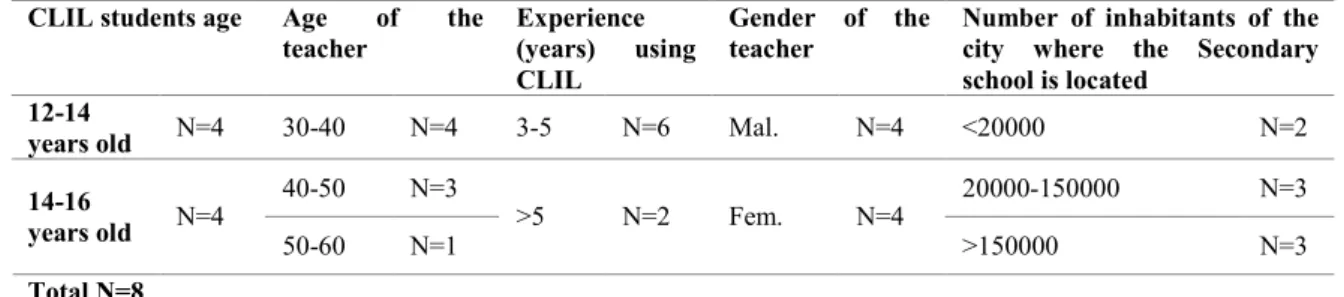
(3) SALVADOR-GARCIA CELINA; CHIVA-BARTOLL OSCAR --------------------------------------------------------------------------------------------------------------------------------------CLIL in the Spanish context CLIL is extensively used in non-English-speaking countries since this is the target language in most of the cases, as the one presented here. This fact explains that a considerable amount of researches concerning this specific methodology have been developed and published in countries such as Greece, Spain or Italy (Salvador et al., 2017). The particular interest of our research focuses on the Spanish context, where due to the introduction of plurilingualism in the education system, the use of CLIL is very widespread. In particular, we attempt to obtain insights into educational PE processes and practices related to the application of CLIL using English language within the Secondary education in the Spanish context. In order to explore what ‘happens’ in CLIL PE lessons it is relevant to give voice to the teachers who have been implementing them. In fact, it has been well-documented in the literature that understanding teachers’ views is significant when it comes to improving teaching practices (Tsangaridou, 2006). Several studies have already been developed in this sense and concerning CLIL methodology (Bolarín, Porto & García, 2012; Lova, Bolarín & Porto, 2013; Pavón & Rubio, 2010); however, they were not focused specifically on the PE subject and teachers. Therefore, this study will focus on considering and clarifying the PE teachers’ perspectives and beliefs. Currently, Spanish education is particularly sensitive to European initiatives regarding language policies. In fact, according to the national legal framework, it seems that plurilingualism has been enhanced progressively, particularly within the last decade. Nowadays, plurilingualism promotion is still increasing its relevance as can be perceived through the last educational decrees published. Generally, Spanish teachers who implement bilingual practices have to fulfil the following requirements: (1) at least B2 language level according to the CEFR (Common European Framework of Reference for the Languages), (2) official certificate or specific authorization that enables them to teach in the specific language. However, these may slightly differ depending on the autonomous region. The general purpose of this study was to explore PE teachers’ perspectives regarding the effects that CLIL methodology produces on their subject. This main aim was divided into more concrete research questions according with the literature review: (1) How does CLIL affect PE curricular elements? (2) How does CLIL affect the language used in the lessons? (3) How does CLIL affect the teaching method? (4) How does CLIL affect the motivation of the participants? and (5) How does CLIL affect the teachers’ workload? Material & methods Considering the research questions of this study, we opt for a pure qualitative research method. It focuses on the exploration of perceptions, meanings, beliefs, experiences, and feelings characteristic of the phenomenon under investigation (Halcomb and Davidson, 2006), which in this case is the specific insight into educational PE practices of CLIL within the Secondary education context in Spain. First, existing research helped to frame our approach. That is, the a priori theoretical orientation used influenced the development of our research questions, interview protocols, and subsequent data analysis (Creswell, 2012). In this way, the five categories introduced in the theoretical framework determined the research questions and the data analysis, which was divided in the following categories: (1) curricular effects, (2) insertion of the language, (3) teaching method, (4) motivation and (5) workload. After the data classification, these main categories were broken into several subcategories, some of them in accordance with the literature review, whereas others were emergent and were not expected (Renner and Taylor-Powell, 2003). Participants The sample was composed by eight PE teachers (four female and four male) from different Spanish Secondary schools who have been applying CLIL methodology at least during the last three academic years. Moreover, all of them have an official certificate that enables them to teach their subject in English through CLIL. This purposive sampling has been selected to attempt to achieve representativeness (Patton, 2002). The attributes for sample selection are displayed in Table 1. Their selection sought to approximate as much as possible the defining features of the study population. Table 1. Configuration and main features of the participants involved. CLIL students age. 12-14 years old. N=4. 14-16 years old. N=4. Age of teacher. the. 30-40. N=4. 40-50. N=3. 50-60. N=1. Experience (years) using CLIL. Gender teacher. of. the. 3-5. N=6. Mal.. N=4. >5. N=2. Fem.. N=4. Number of inhabitants of the city where the Secondary school is located <20000. N=2. 20000-150000. N=3. >150000. N=3. Total N=8. 1132---------------------------------------------------------------------------------------------------------------------------JPES ® www.efsupit.ro.
(4) SALVADOR-GARCIA CELINA; CHIVA-BARTOLL OSCAR --------------------------------------------------------------------------------------------------------------------------------------The participants of our study have been chosen because comprehending them will lead to better understanding, perhaps better theorizing, about a still larger collection of cases in the analyzed context (Stake, 2000). To make a proper selection of cases we opt for a parallel sampling design that will promote credible comparisons of them. This design implies comparing each case to all others in the sample, focusing mainly on perceptions and experiences referred to the theoretical nuclei determined. The teachers in this study had received thorough information about ethical considerations regarding informed approval and confidentiality, building on guidelines from our University ethics committee and had thereafter accepted to participate in the study. Instrument Semi-structured interviews were used in this study since they have found favor with many researchers as they permit the participants to describe detailed personal information, but at the same time the interviewer has good control over the information received (Creswell, 2012). Therefore, a list of key points was used to construct the interview guide, although other questions emerged from the dialogue between interviewer and interviewee to probe for more relevant data (DiCicco and Crabtree, 2006; Mackey and Gass, 2005). Each of these topic areas was introduced by, at least, an open question, ended by a confrontational one and in between several theorydriven questions were asked. By following this procedure it is possible to reconstruct the interviewee’s subjective theory without biasing it. In this sense, open-ended questions aim to get the knowledge that the interviewee has already got at hand, theorydriven questions are focused on trying to make this knowledge more explicit and the pursuit of confrontational questions is the re-examination of these notions (Flick, 2009). Examples of each type of these inquiries are the following ones: ‘In your opinion, is CLIL suitable for the Secondary education level in PE? Why?’ (openended), ‘Have specific contents been lessened or reduced due to the use of CLIL?’ (theory-driven), ‘Do you feel more responsible for the development of communicative competence when you are using CLIL?’ (confrontational). The interviews took between 55 and 70 minutes and were recorded with a SONY ICD-P530F recorder. Pseudonyms are used to protect the interviewees’ identities. Data translation The interviews were developed in Spanish, therefore data were translated into English by the authors after its analysis took place. A professional translator assisted in the translation process of the quotes that appear in the results section. Data analysis and trustworthiness We have followed the steps proposed by Halcomb and Davidson (2006) to analyze the audiotape recordings, through which a series of categories and subcategories have been differentiated. In alignment with Creswell (2002), the subcategories can be classified as expected (those that had previously emerged from the literature review), and unexpected (those which were adventitious). First, the interviews were transcribed and then a preliminary content analysis was conducted. In the secondary content analysis each researcher individually analyzed recurrent topics across categories which were then shared. Subcategories agreement was reached by examining the data and discussing our interpretations. Finally, the recordings were relistened to make any necessary change and illustrative examples with which to demonstrate the participants’ perspectives concerning each category and subcategory were selected. We consider that our experience as researchers in CLIL has helped to strengthen the trustworthiness of the present study, in that we thereby have pre-understanding of the topic under investigation. With respect to the validity of the study, often referred to as authenticity in qualitative research, we claim that the ethical considerations concede a given degree of authenticity (Lincoln et al., 2011). Moreover, there is authenticity involved in the fact that we do not attempt to find general results about CLIL in PE, but merely for the Spanish context, which is supported by the sample selected. Finally, a member-check process was implemented. Results Below we present the main outcomes of the analysis according to the five research questions in which the results have been divided. Later on the five categories were broken into several subcategories. Curricular effects Developing CLIL may imply a modification of the PE curriculum (Pavón & Rubio, 2010). However, when asked about this topic through an open-ended question, all the teachers agreed that from a general viewpoint there was not a significant change in their subject. ‘Actually, I believe that nothing has changed, everything has been more or less the same’ (Teresa) was one of the responses obtained, in line with the words of the other seven interviewees. Nevertheless, when enquiring about the modification of more specific aspects of the curriculum, we found that some adjustments were made. In this line, three interrelated subcategories were set. The first one concerning the objectives, the second one focused on evaluation, and the third one related to content. Objectives showed clear consonance among the teachers because for them ‘the most important are PE goals since we are ---------------------------------------------------------------------------------------------------------------------------- 1133 JPES ® www.efsupit.ro.
(5) SALVADOR-GARCIA CELINA; CHIVA-BARTOLL OSCAR --------------------------------------------------------------------------------------------------------------------------------------doing PE’ (Jaime). Despite this fact, the interviewees stated that linguistic goals were added with more or less relevance, depending on each case: ‘You introduce English objectives such as the vocabulary and structures that you want them to learn, the fact that you want them to communicate in English, etc.’ (Lidón). On the contrary, the second subcategory, focused on evaluation, may be divided into two different approaches. On the one hand, there are some teachers who do not evaluate language because according to them ‘language is assessed in the English subject’ (Àngels). On the other hand, we find those who do introduce language on the evaluation, albeit they ‘try it not to have too many consequences on the mark’ (Iñaki). In fact, one of the teachers mentioned that ‘basically I take into account their ability to communicate and express themselves’ (Pablo) and another admitted that ‘regarding English language, I think that PE should only assess the students’ effort. I am not going to grade English more than PE content’ (Iñaki). Therefore, those who do include English in the assessment do it in a very subtle way. Regarding contents, the teachers agreed that specific PE contents were not diminished. In one of the interviewees’ words, ‘the idea was that the level of contents remained the same’ (Ester). Moreover, in general, they did not believe that students had a shorter engagement physical activity time. Although in certain occasions, ‘explanations could be longer’ (Jaime); other times they were even ‘more direct and dynamic’ (Manuel) because students language level avoided its overuse. Therefore, ‘the essence of sport and physical activity stayed the same, without stop’ (Lidón). Language insertion A second category was established focusing on language insertion and divided into two subcategories: linguistic skills and attention to communication. ‘The four linguistic skills were introduced in a way or another’ (Pablo). Depending on each skill, they were given more or less emphasis in order not to disturb the usual development of the lesson. Although there were no relevant modifications in the communicative interaction, moving to the second subcategory, a thoroughly consideration regarding communication appeared as a general characteristic of PE teachers when using CLIL. Undoubtedly, ‘PE content was the priority’ (Ester), however, they bore more in mind communicative competence when following this methodology. I believe that English makes the teacher to pay more attention to communicative competence. Undoubtedly, in ordinary lessons we should pay it as much attention as possible, but as we have to develop our lessons in English, communicative competence concerns us even more. (Pablo). Furthermore, there was an agreement on the fact that teachers want to make sure of the students’ understanding. There was a general worry and they opted for different strategies to cope with possible comprehension problems and ensure effective communication. ‘I wanted somebody else [student] to give the explanation to make sure whether they had understood or not. Besides, it means that students are receiving the message through different ways’ (Manuel). Teaching method Related to the previous category, the methodology used by the teacher is another of the aspects which may be influenced by the introduction of English language in the PE subject. This category has been broken into three different subcategories. Teaching style and group work were in line with the literature review, but the third subcategory, major relevance of social constructivism, emerged after the data analysis. In relation to the first subcategory, as a consequence of the aforementioned increase of the attentiveness to communication during the lessons, teachers agreed that they tend to use more open and participative teaching styles. I think that [CLIL needs] the adoption of a more deliberative approach, by using teaching styles which are not directive and that do not have a concrete answer. I offer a problem, a challenge, and each group has to look for its own answer or possible answers. Later on, they have to share it with their classmates and justify their choices. (Àngels) In this same line, appears the second subcategory. Cooperative and collaborative work was also highlighted as another possibility to favor communication and the use of the language because ‘group work is important’ (Iñaki). There was a harmony among the teachers’ responses and all of them followed the same ideas. One of the ways to encourage the use of the language is proposing cooperative tasks. At the level of the structure of the session, it seems quite evident that we must search cooperative structures if we want to encourage the use of the language. (Ester) This methodological and organizational option was also conceived as an excellent possibility which enables students’ understanding and learning. In words of one of the teachers ‘to facilitate students’ understanding, the fact that they worked in group was a key point to facilitate their learning’ (Pablo). Closely linked with this regard, the third subcategory, major relevance of social constructivism, emerged. Teachers expressed that these changes helped to integrate all the pupils because through group work ‘they can help each other more’ (Lidón) and learn together. Maybe in Spanish they do not have problems, but now there must be more cooperation among them. If they work in groups, they can correct each other and if someone does not know something, a classmate can help him or her. (Lidón) 1134---------------------------------------------------------------------------------------------------------------------------JPES ® www.efsupit.ro.
(6) SALVADOR-GARCIA CELINA; CHIVA-BARTOLL OSCAR --------------------------------------------------------------------------------------------------------------------------------------Motivation This category has been subdivided into two subcategories, maintenance or increase of motivation, which was set a priori; and the unexpected more attentiveness. All the teachers interviewed showed a congruity regarding students’ motivation. According to them, ‘in general, motivation was high and kept at a high level’ (Pablo). Besides, some of them expressed that it was not only because of the PE subject, but language played a role too. The fact of using English and see that the rest of the students are understanding them and that they can express themselves in English, although it is not through a perfect use of the language (…); I think it has got a direct connection with motivation. (Manuel) However, they also express that there were exceptions because ‘there is always a student who does not care about studies, is apathetic and disconnects’ (Jaime). Otherwise, according to the teachers’ perceptions, an unexpected subcategory emerged, more attentiveness, since many students increased their level of attention during the lessons. In this way, ‘even students who did not understand tried to get the information and, therefore, maybe they were more focused on the explanations’ (Ester). In this sense, teachers agreed to say that the use of English implied an increase of students’ attentiveness because they had to focus on both, understanding and performing the tasks of the class. Workload Albeit it cannot be conceived as a direct effect of the introduction of CLIL in the lessons, workload does have an impact on the teacher and his or her tasks; that is why it has been established as the fifth category of analysis. This category has also been broken into two different subcategories, the expected increase of planning and the emergent unacknowledged (hard)work. With respect to the former, every single one of the teachers interviewed agreed with the fact that ‘in PE with English, there is a higher effort regarding planning’ (Pablo). Maybe lessons do not significantly change in view of the tasks, nevertheless the amount of time that teachers have to spend to plan adequate lessons is considerably higher since they are paying more attention to language and communication. There is a lot of vocabulary that I have to search prior to the lessons to be able to explain everything adequately. Besides, I have to explain it in a way in which they understand me. I cannot use just the translation of a word because they are not going to understand. I have to plan how I am going to make myself understood. (Teresa) In addition, it is not only the time what teachers highlighted, but also the effort and the fact that anybody acknowledges their (hard)work. In this line, one of the teachers stated that introducing language implies ‘a lot of work without any compensation’ (Pablo). However, all of them agreed to say that it was a motivating work of which they were proud of. ‘It has been a great effort, but it was not a sacrifice’ (Manuel) were the words used by one of the teachers and another expressed that ‘it was an effort, but it was worth it. It was an exciting task’ (Pablo). Dicussion The results obtained from the data analysis complement and reinforce the state of the art. By means of the interviews five categories were established which let us configure the PE teachers’ perceptions on the effect of introducing CLIL methodology in their lessons. Firstly, related to curricular effects, what they made clear is the fact that the most important aspect of the lessons is still PE despite the insertion of the language, which is completely in accordance with the words of Fernández-Barrionuevo (2009), who stated that the main goal was the teaching of PE content, and the L2 (second language) would only be the tool through which get the objectives. Regarding the subcategory of objectives modification, the interviewees recognized that PE goals remain similar but some linguistic ones are added, in accordance with Clancy and Hruska (2005), Hernando (2015), Salvador et al., (2016) and Zindler (2013); therefore, PE curriculum should be slightly re-adapted to fit with CLIL (Hortigüela et al., 2016b; Molero, 2011). The third subcategory deals with alterations and changes in the evaluation. In this sense, teachers’ perceptions may be differentiated in two viewpoints. On the one hand, some teachers stated that language was not considered within the evaluation of their PE subject. On the other hand, we find those who do include some kind of linguistic issue in their evaluation process, although the majority of them introduces it in a quite subtle way intending the mark is not influenced, in line with Coral (2013). This divergence shows that there is not a clear discourse when a decision has to be made regarding the inclusion of language in evaluation (Coyle et al., 2010). Focusing specifically on contents, teachers expressed that there was no loss on engagement physical activity time nor specific PE learning, in accordance with Figueras et al., (2011), although in specific situations or moments explanations could be longer or students could need more time to understand the activities. Therefore, in their opinion, generally there was not any delay on learning or a loss of time due to language, contrasting with Coral (2010), Hernando (2015) and Martínez and García (2017), who warned about a possible decrease of the motor learning time available. Related to language insertion, according to Amade-Escot and O’sullivan (2007:197), ‘particular knowledge has to be covered and explained in specific ways by the teacher […]. This fact has an effect on the ---------------------------------------------------------------------------------------------------------------------------- 1135 JPES ® www.efsupit.ro.
(7) SALVADOR-GARCIA CELINA; CHIVA-BARTOLL OSCAR --------------------------------------------------------------------------------------------------------------------------------------type of interactions in use in classrooms’. In this vein, the teachers interviewed coincided in their assertion that language was not a handicap in the development of the lessons. In fact, it was determined that they tried to integrate language and motor skills, which is in agreement with Coral (2012). Furthermore, the four linguistic skills were incorporated (Hernando, 2015; Hortigüela et al., 2016b), despite doing it with different emphasis depending on the skill; and there was a growing concern over communication. In this sense, Molero (2011) and Zagalaz et al. (2012) defended that opportunities to communicate and interact should be enhanced while Coral and Lleixà (2014) focused their study on different strategies to favor such communication. Regarding the teaching method, the results evinced that more open and participative teaching styles were promoted over those that are more directive to favor communication. In this vein, Glakas (1993) suggested this modification to happen in order to enhance language learning. Moreover, according to the responses obtained, teachers attempted to create messages understandable for students, as reported by Coral (2013), to facilitate the communicative act (Molero, 2011; Zagalaz et al., 2012). Cooperative and collaborative group work are also raised because they increase language use and better understanding. In this sense, through tasks which are not individual or require an opponent, social interaction is enhanced, which at the same time entails a more important role of the language (Bolarín et al., 2012; Coral and Lleixà, 2014; González et al., 2013). Furthermore, these changes in teaching style and tasks implied a growth of learning values and more integration among students, according to the teachers’ answers. This may mean that PE in CLIL alludes to a learning based on social constructivist principles (Vygotsky, 1995), as reported by Figueras et al., (2011), who arrived at this same conclusion after their experience. Motivation is a category that represents a key factor in the learning process (Shropshire et al., 1997; Subramaniam and Silverman, 2007). Perlman (2013) states that different forms of teacher instruction can influence students' motivational responses within Secondary physical education. In this sense, the interviewees mentioned that, in general, motivation in class was high and remained high when using CLIL. In this sense, the interviewees mentioned that, in general, motivation in class was high and remained high. However, there were specific cases in which language could affect negatively to some particular students, as previously reported by Ramos and Ruiz (2011). It is worth saying that this does not always happen and, in fact, in other cases language may become a positive element to increase motivation (Figueras et al., 2011; Zindler, 2013). Hence, it might be remarked that each learner is unique and, consequently, the introduction of another language can affect differently. In this line, another effect that, according to the teachers, was caused by the language: an increase in some of the pupils’ attentiveness. This fact is in accordance with Figueras et al. (2011), although in their study participants were at university and, therefore, they were supposed to be more mature and serious towards the learning process. According to Zindler (2013), PE with CLIL is cognitively more challenging and, consequently, pupils might have to be more focused on what is happening in the lesson if they want to follow properly the class, understand everything and avoid having to ask for more information. Finally, workload was highlighted by the teachers as a relevant factor that affected their tasks. In this sense, planning becomes an essential aspect that must be considered (Martínez and García, 2017) because when introducing CLIL teachers not only have to plan PE lessons, but also integrate the language and prepare a proper discourse and the scaffolding that might be needed (Coral, 2013; Gómez and Jiménez, 2012; Ramos and Ruiz, 2011). Moreover, the lack of materials already prepared (Coral, 2013; Gómez and Jiménez, 2012; Mehisto et al., 2008) in the end means even greater effort (González et al., 2013; Lova et al., 2013). Teachers also remarked the fact that nobody acknowledged their work, which could turn into an increase of burn-out and, therefore, less teachers willing to continue with their CLIL practices. Conclusions The analysis applied encourages us to raise the following conclusions. Considering the interviewed teachers’ perspectives and beliefs, the application of CLIL within the Secondary education in Spain does not endanger the essence of the PE. From a general viewpoint, there is not a significant change in the PE curriculum implementation despite subtle adjustments. Moreover, the use of the four linguistic skills is not a handicap to achieve the essential aims and contents of the subject. Indeed, to favor communication more participative teaching styles and cooperative work are developed. In addition, there is a maintenance or increase of students’ motivation and attentiveness in the majority of the cases. As a counterpart, the study highlights a need to improve the workload and acknowledgement of teachers involved in CLIL. This fact allows us to predict that in the medium and long term the good functioning of the educational process could be diminished due to teacher burn-out and demotivation. Therefore, given the importance of CLIL for the plurilingual model to which the Spanish educational system aspires, it is important that the administration takes action on this matter before it is too late. All in all, these conclusions may be significant for other countries using CLIL since its implementation features are certainly shared. Thus, this is a first approach that, later on, may trigger further studies of CLIL practices in PE. For instance, one dimension that could complement this paper to cover the impact of CLIL on PE on a more comprehensive way could be to include the perceptions of the pupils. 1136---------------------------------------------------------------------------------------------------------------------------JPES ® www.efsupit.ro.
(8) SALVADOR-GARCIA CELINA; CHIVA-BARTOLL OSCAR --------------------------------------------------------------------------------------------------------------------------------------Conflicts of interest: the authors declare that there are not conflicts of interest. Funding: this work was supported by SPIEDA project of the University Jaume I (Reference number-3256). References: Amade-Escot, C., & O'sullivan, M. (2007). Research on content in physical education: theoretical perspectives and current debates. Physical Education and Sport Pedagogy, 12(3), 185-204. Baena, A., & Granero, A. (2015). Versión española del Sport Satisfaction Instrument (SSI) adaptado al aprendizaje de la Educación Física bilingüe en Inglés. Porta Linguarum, 24, 63-76. Bolarín, M. J., Porto, M., & García, R. M. (2012). Los programas bilingües en la Región de Murcia: situación y valoraciones de profesores de disciplinas no lingüísticas. Educatio Siglo XXI, 30(2), 255-288. Bruton, A. (2015). CLIL: Detail matters in the whole picture. More than a reply to J. Hüttner and U. Smit (2014). System, 53, 119-128. Cenoz, J., Genesee, F., & Gorter, D. (2014). Critical analysis of CLIL: Taking stock and looking forward. Applied Linguistics, 35(3), 243-262. Chiva, O. & Salvador, C. (2016). Aprendizaje integrado de Educación Física y lengua inglesa. Barcelona: INDE. Chiva, O., Isidori, E., & Fazio, A. (2015). Educación Física bilingüe y pedagogía crítica: una aplicación basada en el Judo. Retos, Nuevas Tendencias en Educación Física, Deporte y Recreación, 28, 110-115. Clancy, M. E., & Hruska, B. L. (2005). Developing language objectives for English language learners in physical education lessons. Journal of Physical Education, Recreation & Dance, 76(4), 30-35. Coral, J. (2010). L'aprenentatge de l'anglès a través de l'educació física: el programa'Mou-te i aprèn'. Temps d¿ Educació, 39, 149-170. Coral, J. (2012). Aprenentatge integrat de continguts d’educació física i llengua anglesa: educació física en AICLE al cicle superior de primària. PhD Thesis, Universitat de Barcelona, Spain. Coral, J. (2013). Physical education and English integrated learning: How School Teachers can Develop PE-inCLIL Programmes. Temps d'Educació, 45, 41-64. Coral, J., & Lleixà, T. (2016). Physical education in content and language integrated learning: successful interaction between physical education and English as a foreign language. International Journal of Bilingual Education and Bilingualism, 19(1), 108-126. Coyle, D., Hood, P., & Marsh, D. (2010). CLIL. Cambridge: CUP. Creswell, J.W. (2002). Educational Research: Planning, Conducting, and Evaluating Quantitative. Upper Saddle River: Prentice Hall. Creswell, J.W. (2012). Qualitative Inquiry and Research Design: Choosing among Five Approaches. London: Sage. DiCicco, B., & Crabtree, B. F. (2006). The qualitative research interview. Medical education, 40(4), 314-321. Fernández-Barrionuevo, E. (2009). La secuenciación de contenidos lingüísticos dentro de la Educación Física Bilingüe. Revista Innovación y Experiencias Educativas, 23, 1-9. Figueras, S., Flores, C., & González- Davies, M. G. (2011). Educació Física en anglès: Percepcions dels estudiants entorn d’una experiència metodològica en el marc universitari. Aloma: revista de psicologia, ciències de l'educació i de l'esport Blanquerna, 29, 61-80. Flick, U. (2009). An Introduction to Qualitative Research. London: SAGE. Glakas, B. A. (1993). Teaching secondary physical education to ESL students. Journal of Physical Education, Recreation & Dance, 64(7), 20-25. Gomez, C. L., & Jimenez-Silva, M. (2012). The physical educator as a language teacher for English language learners. Strategies, 25(4), 14-17. González, S., Villar, L., Pastor, J. C, & Gil, P. (2013). Propuesta didáctica interdisciplinar en educación primaria en España: la enseñanza de la educación física y el inglés. Paradígma, 34(2), 31-50. Halcomb, E. J., & Davidson, P. M. (2006). Is verbatim transcription of interview data always necessary? Applied Nursing Research, 19(1), 38-42. Hernando, A. (2015). Caracterización de los aspectos metodológicos empleados en la enseñanza de la materia de Educación Física en los centros públicos de secundaria con sección bilingüe en inglés de Castilla y León. PhD Thesis, Universidad de Burgos, Spain. Hortigüela, D., Hernando, A., & Pérez-Pueyo, A. (2016a). ¿Qué estrategias metodológicas utiliza el profesorado de educación física bilingüe en el aula? In: M.I. Amor, J.L. Luengo & M. Martínez (eds). Educación intercultural: metodología de aprendizaje en contextos bilingües. Granada: Atrio, pp. 103-106. Hortigüela, D., Pérez-Pueyo, A., Casado, O., & Herran, I. (2016b). Bilingüismo y cooperación en educación física a través de la dramatización ¿cómo integrarlo? In: Actes X Congrés internacional d’activitats físiques cooperatives, Barcelona, Spain, 3-6 July 2016, pp.152-153. Barcelona: Institut de ciències de l’educació de l’UAB. Köller, O., Leucht, M., & Pant, H. (2012). Effekte bilingualen Unterrichts auf die Englischleistungen in der Sekundarstufe I. Unterrichtswissenschaft, 4(4), 334-350. ---------------------------------------------------------------------------------------------------------------------------- 1137 JPES ® www.efsupit.ro.
(9) SALVADOR-GARCIA CELINA; CHIVA-BARTOLL OSCAR --------------------------------------------------------------------------------------------------------------------------------------Lieberman, L. J., Columna, L., de la Vega Mansilla, P. M., & Taylor, C. (2010). Infusing Sign Language and Spanish into Physical Education. Journal of Physical Education, Recreation & Dance, 81(4), 45-49. Lincoln, Y. S., Lynham, S. A., & Guba, E. G. (2011). Paradigmatic controversies, contradictions, and emerging confluences, revisited. The Sage handbook of qualitative research, 4, 97-128. Lova, M., Bolarín, M. J., & Porto, M. (2013). Programas bilingües en Educación Primaria: valoraciones de docentes. Porta Linguarum, 20, 253-268. Lynott, F. J. (2008). Integrating other subject matter without jeopardizing physical education goals: The content linkage approach. Strategies, 22(1), 10-17. Mackey, A. & Gass, S.M. (2005). Second Language Research. Methodology and design. New Jersey: Lawrence Erlbaum. Marsh, D. (2002). CLIL/EMILE the European Dimension. Finland: University of Jäyvskylä. Martínez-Hita, F.J. & García-Canto, E. (2017). Influence of Bilingualism on Engagement Motor Time in Physical Education. Retos, Nuevas tendencias en educación física, deporte y recreación, 32, 178-182. Mehisto, P., Marsh, D., & Frigols, M.J. (2008). Uncovering CLIL Content and Language Integrated Learning in Bilingual and Multilingual Education. Oxford: Macmillan. Molero, J.J. (2011). De la Educación Física a la Educación Física bilingüe: un análisis desde el punto de vista metodológico. EmásF: revista digital de Educación Física, 2(10), 7-16. Nguyen, H. T., & Watanabe, M. F. (2013). Using visual supports to teach English language learners in physical education. Journal of Physical Education, Recreation & Dance, 84(8), 46-53. Nold, G., Hartig, J., Hinz, S. & Rossa, H. (2008) Klassen mit bilingualem Sachfachunterricht. Englisch als Arbeitssprache. In: E. Klieme (ed). Unterricht und Kompetenzerwerb in Deutsch und Englisch. Weinheim: Belzt, pp. 451-457. Pavón, V., & Rubio, F. (2010). Teachers' concerns and uncertainties about the introduction of CLIL programmes. Porta Linguarum, 14, 45-58. Patton, M.Q. (2002). Qualitative Research and Evaluation Methods. London: Sage. Pérez-Cañado, M.L. (2011). The Effects of CLIL within the APPP: Lessons Learned and Ways Forward. Studies in honour of Ángeles Linde López, 13-30. Perlman, D. J. (2015). Help motivate the amotivated by being a supportive teacher. Physical Education and Sport Pedagogy, 20(2), 204-214. Ramos, F., & Omeñaca, J. V. R. (2011). La educación física en centros bilingües de primaria inglés-español: de las singularidades propias del área a la elaboración de propuestas didácticas prácticas con AIBLE. Revista española de lingüística aplicada, 24, 153-170. Renner M and Taylor-Powell E (2003) Analyzing Qualitative Data. Madison: University of Wisconsin. Salvador, C., Chiva, Ò., & Fazio, A. (2016). Características del Aprendizaje Integrado de Contenidos de Educación Física y Lengua Extranjera. Retos, Nuevas Tendencias en Educación Física, Deporte y Recreación, 29, 120-125. Salvador, C., Chiva, Ò., & Isidori, E. (2017). Aprendizaje de una lengua extranjera a través de la educación física: una revisión sistemática. Movimento. 23(2), 647-660. Santillan, Y., Jacobs, J. M., & Wright, P. M. (2015). Integrating Best Practices in ELL Classrooms with Quality Physical Education Instruction. Journal of Physical Education, Recreation and Dance, 86(3), 51-53. Sato, T., & Hodge, S. R. (2016). Elementary physical education teachers’ experiences in teaching English language learners. Education and Urban Society, 48(3), 262-287. Sato, T., Walton, J., & Kim, I. (2017). Elementary physical educators’ positioning in teaching English language learners. European Physical Education Review, 1-18. Shropshire, J., Carroll, B., & Yim, S. (1997). Primary school children's attitudes to physical education: gender differences. European Journal of Physical Education, 2(1), 23-38. Stake, R.E. (2000). Case studies. In: N.K. Denzin & Y.S. Lincoln (eds). Handbook of qualitative research. Thousand Oaks: Sage, pp. 435-454. Subramaniam, P. R., & Silverman, S. (2007). Middle school students’ attitudes toward physical education. Teaching and teacher education, 23(5), 602-611. Sweller, J. (1994). Cognitive load theory, learning difficulty, and instructional design. Learning and instruction, 4(4), 295-312. Tsangaridou, N. (2006). Teachers’ Beliefs. In: D. Kink, D. MacDonald & M. O’Sullivan (eds). The handbook of Physical Education. London: Sage, pp. 486-501. Zagalaz, M.A., Molero, D., Cachón, J., et al. (2012). Diseño de un cuestionario para medir la formación bilingüe del profesorado de EF. Revista Iberoamericana de Ciencias del Deporte 1(1), 7–12. Vygotsky, L.S. (1995). Pensamiento y lenguaje. Barcelona: Paidós. Zindler, K. (2013). Content and Language Integrated Learning and PE in England. An Exploratory Study. PhD Thesis, University of Sheffield, UK.. 1138---------------------------------------------------------------------------------------------------------------------------JPES ® www.efsupit.ro.
(10)
Figure
Documento similar
The aim of the Academic Activity Index (AAI) is to measure in a single value the different activities of teaching, research and management of teachers in a Spanish university,
Four questions were devised to determine (1) which conceptions the university faculty has about sustainability in the context of the Spanish higher education (2) what
The article analyzes perception of students in the Major of Physical Education Teachers (1 st and 2 nd ), regarding the self-assessment process lived during this pedagogical
Versión española de la escala de necesidades psicológicas básicas en educación física / Spanish Version of the Basic Psychological Needs in Physical Education
A basic resource for university education in the training model of the European Higher Education Area is the teaching guide, which should serve, not only to plan the teaching
In the preparation of this report, the Venice Commission has relied on the comments of its rapporteurs; its recently adopted Report on Respect for Democracy, Human Rights and the Rule
In the “big picture” perspective of the recent years that we have described in Brazil, Spain, Portugal and Puerto Rico there are some similarities and important differences,
The aim of this paper is to analyse the Physical Education teachers’ attitudes towards gender equality, and compare attitudinal differences between male and female teachers..
