PROGRAMA DE DOCTORADO EN CONSERVACIÓN Y USO
SOSTENIBLE DE SISTEMAS FORESTALES
DOCTORAL THESIS / TESIS DOCTORAL
Phenotypic variation among natural
populations of pines. Implications for the
management and conservation of genetic
resources
Variación fenotípica entre poblaciones
naturales de pinos. Implicaciones para la
gestión y conservación de recursos genéticos
Presentada por Andrés Flores García para optar al
grado de
Doctor por la Universidad de Valladolid
Dirigida por:
Dr. Ricardo Alía Miranda
Phenotypic variation among natural populations of pines. Implications for
the management and conservation of genetic resources
Variación fenotípica entre poblaciones naturales de pinos. Implicaciones para
la gestión y conservación de recursos genéticos
PhD Student:
Andrés Flores García
Supervisors:
Dr. Ricardo Alía Miranda
INIA-CIFOR. Dpto. of Ecology and Forest Genetics
Research Institute on Sustainable Forest Management
Madrid (Spain)
External Reviewers:
Natalia Vizcaíno Palomar
BIOGECO UMR 1202, INRA - Université de Bordeaux
Álvaro Soto de Viana
Department of Systems and Natural Resources
Polytechnic University of Madrid
Doctorate programme/Programa de doctorado:
Conservación y Uso Sostenible de Sistemas Forestales
Escuela Técnica Superior de Ingenierías Agrarias
Universidad de Valladolid, Palencia (España)
Place of Publication:
Palencia, Spain
Year of Publication:
2018
I know that I know nothing
Agradecimientos
A mi director de tesis, Ricardo Alía, por asistirme y orientarme durante mi formación
doctoral. Destaco su gran objetividad para dirigir las investigaciones que me sugirió realizar.
A los coautores de mis trabajos: Juan José Robledo-Arnuncio, José Climent, Javier
López-Upton, Valentín Pando, José Manuel García del Barrio, Cristobal Rullán-Silva, Adriana E.
Olthoff y Cuauhtémoc Sáenz-Romero. Todos personajes claves en el desarrollo de la presente
tesis.
Al personal técnico e investigador de España y México del INIA, INIFAP, SEMARNAT,
COLPOS, AFE, y CONAFOR. Invaluables compañeros que contribuyeron en el inicio y
desarrollo de las metodologías.
Al grupo de profesores e investigadores del programa de doctorado del Instituto Universitario
de Investigación en Gestión Forestal Sostenible (iuFOR) de la Universidad de Valladolid.
Al Instituto Nacional de Investigaciones Forestales, Agrícolas y Pecuarias (INIFAP) por
permitir capacitame en el área de genética forestal en España y proporcionarme el apoyo
económico necesario.
Al Consejo Nacional de Ciencia y Tecnología (CONACyT) por becarme para iniciar y
concluir mis estudios en el extranjero.
A todos los compañeros que me compartieron su tiempo y amistad en Palencia y Madrid.
Increíbles personas que jugaron un papel importante durante mi estancia.
1
Contents
List of Figures ... 4
List of Tables ... 6
Abstract ... 9
Resumen ... 11
Outline of the thesis ... 13
General introduction ... 15
1. Introduction to the pine species of study ... 17
1.1.
Pines of Europe and Mexico ... 17
1.2. Species studied ... 17
2. Genetic variation in trees ... 18
3. The role of environmental heterogeneity ... 20
3.1. Genetic variation and environmental heterogeneity ... 20
3.2. Phenotypic variation and environmental heterogeneity ... 21
3.3. Phenotypic plasticity and environmental heterogeneity ... 22
4. Intraspecific variation in forest trees ... 23
5. Conservation of forests genetic resources (FGR) ... 25
5.1. Conservation strategies ... 27
5.2. Utilization of forest genetic resources ... 28
6. Objectives of the thesis ... 29
7. References... 29
Chapter I - Relationship between regional environmental heterogeneity
and phenotypic variation and plasticity within Mediterranean pine
populations ... 35
1. Abstract ... 37
2
3. Materials and Methods ... 40
3.1. Plant material and experimental design ... 40
3.2. Within population phenotypic variation and plasticity ... 41
3.3. Regional climatic heterogeneity ... 41
3.4. Relationships between phenotypic and regional climatic heterogeneity variables
... 42
4. Results ... 43
4.1. Relationship among intrapopulation phenotypic variance and environmental
heterogeneity ... 44
5. Discussion ... 47
6. Conclusion ... 48
7. References... 48
Chapter II - Intraspecific variation in pines from the Trans-Mexican
Volcanic Belt grown under two watering regimes: implications for
management of genetic resources ... 53
1. Abstract ... 55
2. Introduction ... 56
3. Materials and Methods ... 58
3.1. Plant material ... 58
3.2 Experiment description and experimental design ... 59
3.3 Variables measured ... 60
4.1 Response to watering regimes ... 63
4.2 Allocation patterns ... 63
4.3 Intraspecific variation ... 64
4.4 Phenotypic variation of the Mexican species under full capacity and drought
stress treatments ... 68
5. Discussion ... 68
3
7. References... 72
Chapter III - Defining areas for conservation and use of forest genetic
resources in four Mexican pines ... 77
1. Abstract ... 79
2. Introduction ... 80
3. Material and methods ... 82
3.1. Genetic zones ... 83
3.2. Conservation units ... 84
3.3. Use and conservation of genetic resources ... 85
4. Results ... 86
4.1. Genetic zones ... 86
4.2. Conservation units ... 87
4.3. Use and conservation of genetic resources ... 88
5. Discussion ... 92
6. Conclusion ... 95
7. References... 95
Annex ... 105
Supplementary material (Chapter I) ... 107
Supplementary material (Chapter II) ... 121
4
List of Figures
General introduction
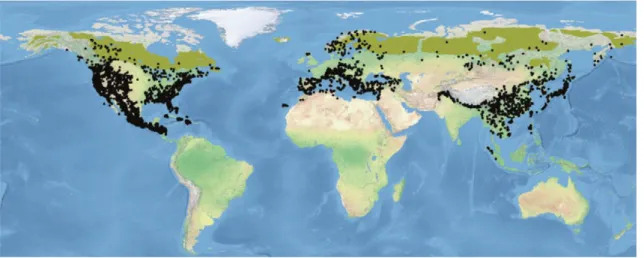
Figure 1. The global distribution of the genus Pinus, figure from Aljos Farjon & Filer (2013).
Figure 2. The effects of temporal environmental variation on the susceptibility of tree populations to pests and pathogens, figure from Telford, Cavers, Ennos, & Cottrell (2015).
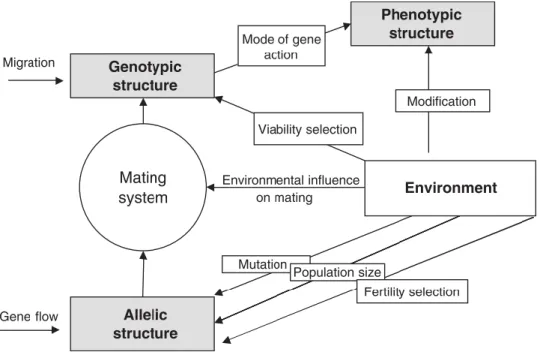
Figure 3. The environmental impact on phenotypic structures, figure from Finkeldey & Hattemer (2007).
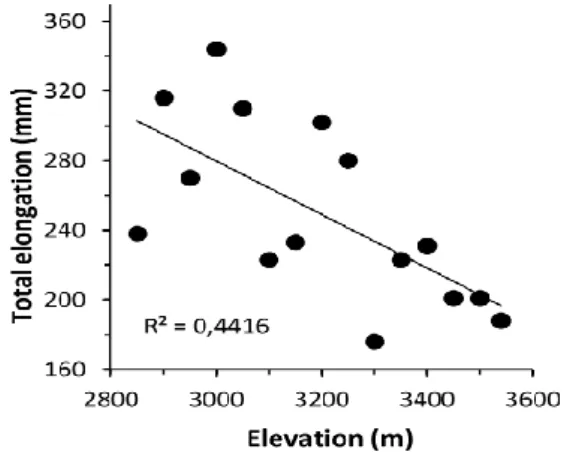
Figure 4. Regression of means per population in 15 populations of A. religiosa collected at Cerro de San Andrés, Michoacán, Mexico, against the provenance elevation (masl), for total elongation. Figure from Ortiz-Bibian et al., (2017).
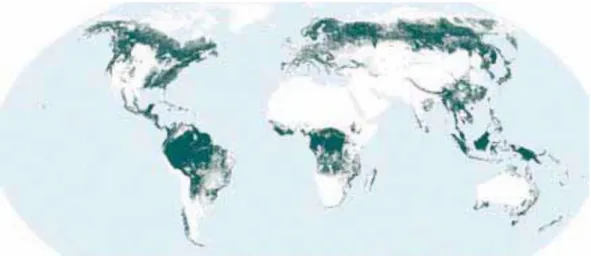
Figure 5. The World Forest, figure from FAO (2010).
Chapter I
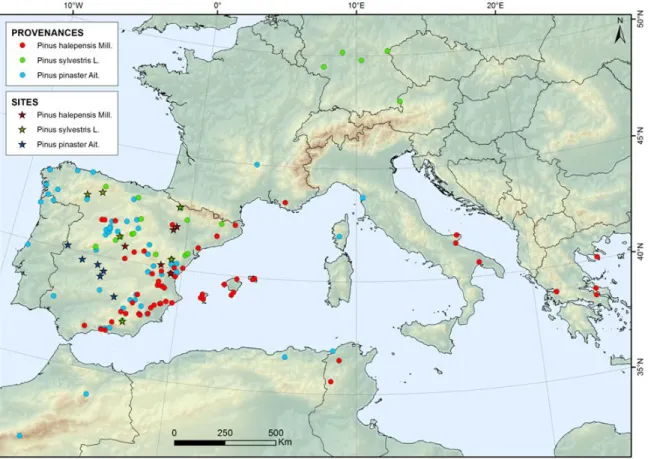
Figure 1. Populations and Common garden experimental sites of Pinus sylvestris, Pinus pinaster
and Pinus halepensis used in the study.
Chapter II
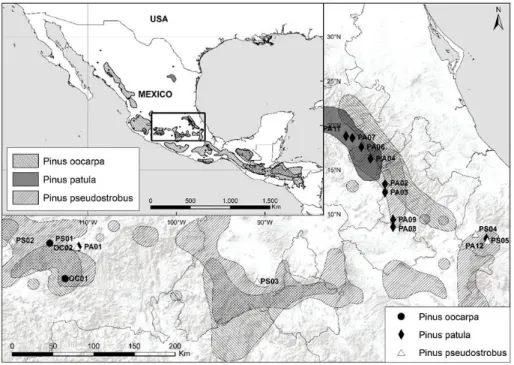
Figure 1. Location of sampled populations and distribution range of the species (Farjon and Filer 2013) for Pinus oocarpa, P. patula and P. pseudostrobus.
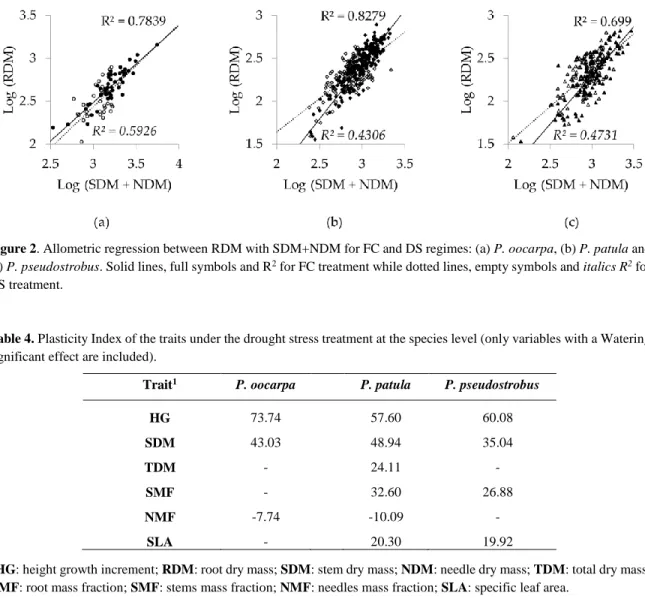
Figure 2. Allometric regression between RDM with SDM+NDM for FC and DS regimes: (a) P. oocarpa, (b) P. patula and (c) P. pseudostrobus. Solid lines, full symbols and R2 for FC treatment
while dotted lines, empty symbols and italics R2 for DS treatment.
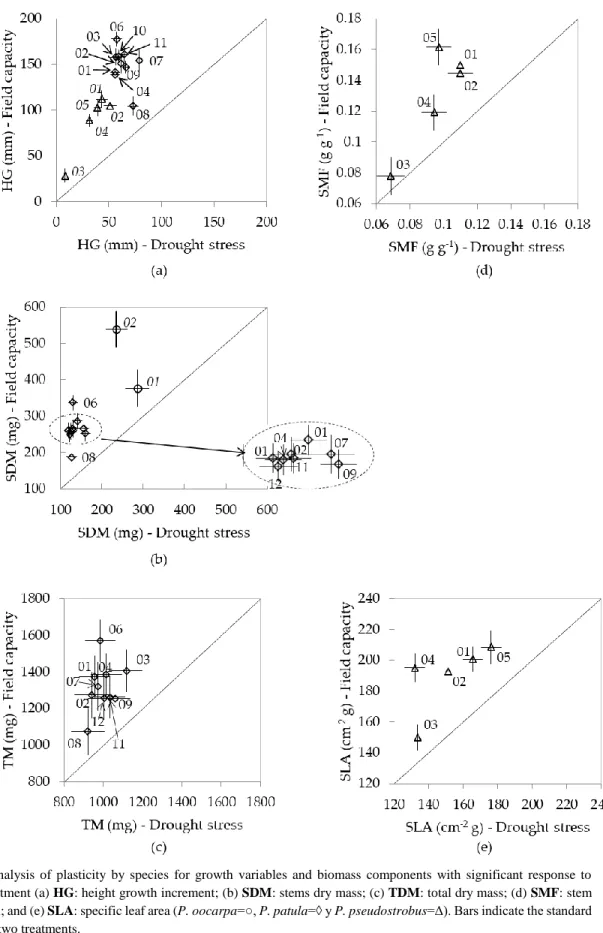
Figure 3. Analysis of plasticity by species for growth variables and biomass components with
significant response to watering treatment (a) HG: height growth increment; (b) SDM: stems dry
mass; (c) TDM: total dry mass; (d) SMF: stem mass fraction; and (e) SLA: specific leaf area (P.
oocarpa=○, P. patula=◊ y P. pseudostrobus=Δ). Bars indicate the standard errors in the two
treatments.
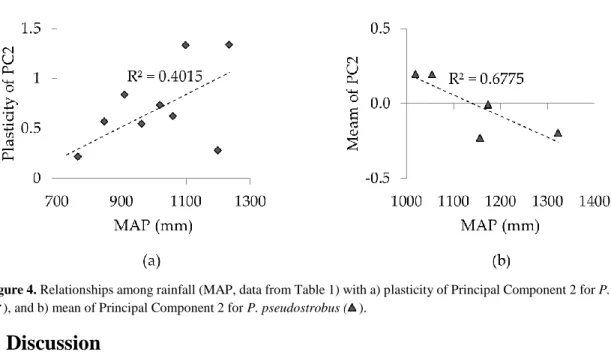
Figure 4. Relationships among rainfall (MAP, data from Table 1) with a) plasticity of Principal
Component 2 for P. patula (♦), and b) mean of Principal Component 2 for P. pseudostrobus (▲).
Chapter III
Figure 1. Distribution of the pine species studied following NFLI, 2004 to 2007, (CONAFOR 2017) and Germplasm Transfer Zones defined in México (CONAFOR, 2016).
Figure 2. Conservation units and genetic zones (polygons colored) for four Mexican pine species.
Figure 3. Populations and their zones considered as the most suitable source for use for reforestation.
Supplementary material - Chapter II
5
Figure S2. Biplot off the variables (X) and populations on the plane defined by the two Principal
Components, for P. patula (♦) and P. pseudostrobus (▲). Full symbols and population’s number
represent FC treatment while empty symbols and underlined population’s number represent DS treatment.
Supplementary material - Chapter III
6
List of Tables
Chapter I
Table 1. Climatic variables selected for the three species.
Table 2. Weighted average of the parameters across all models, including the coefficient of determination (R2), the regression coefficients (β) and standard deviation (sd), and relative
importance of each regional climatic heterogeneity variable (RI).
Chapter II
Table 1. Location and general characteristics of the Pinus spp. populations sampled in Mexico.
Table 2. Mean squares and level of significance in the inter-specific analysis estimated for all species for different functional traits in three Mexican pines.
Table 3. Mean squares and level of significancein the intra-specific analysis per species for different functional traits in three Mexican pines.
Table 4. Plasticity Index of the traits under the drought stress treatment at the species level (only variables with a Watering significant effect are included).
Chapter III
Table 1. Criteria for selection of genetic of conservation units within a genetic zone.
Table 2. Effort and importance of the genetic zones in conservation and management of genetic resources.
Table 3. Status of target species.
Table 4. Conservation efforts and use of genetic resources by genetic zone and species (PS: P. pseudsotrobus, OC: P. oocarpa, PA: P. patula, GR: P. greggii).
Table 5. Importance for conservation and use of forest genetic resources by genetic zone and species (PS: P. pseudsotrobus, OC: P. oocarpa, PA: P. patula, GR: P. greggii).
Supplementary material – Chapter I
Table S1. Description of provenance tests by species.
Table S2. Summary of models obtained for each phenotypic variable, geographical spatial scale and species.
7
Supplementary material – Chapter II
Appendix A. Experimental detailsTable S1. Analysis of survival in the drought experiment for the three species.
Table S2. Values of survival and ontogenic stages recorded per population.
Table S3. Mean (± standard errors) for growth variables and biomass fractions for the two watering treatments (FC / DS).
Table S4. Analysis of unequal slope and intercept estimated among watering regimes by species.
Table S5. Percentage of the total variance explained by components and weights obtained among their variables.
Supplementary material – Chapter III
Table S1. General climatic and edaphic patterns of target species.
Table S2. Test sites and origin sites for provenance trials.
Table S3. Test sites and origin sites for progeny trials.
Table S4. Populationsfor genetic diversity analysis.
Table S5. Physiographic Provinces and Germplasm Transfer Zones (CONAFOR 2016).
Table S6. Minimum requirements for genetic conservation units (Koskela et al. 2013).
Table S7. Volume of timber for target species per state, across their natural distribution.
Table S8. Population and genetic zone considered as the most suitable source for use in reforestation.
Table S9. Conservation units for P. greggii, P. oocarpa, P. patula and P. pseudostrobus.
9
Abstract
The study of variation at different levels is a constant topic of research. In the field of genetics, it is necessary to know the causes and the effects of variation in traits that influence traits of individuals in their natural habitats. Genetic variation is considered the most basic level of biological diversity and a prerequisite for the variability of species, populations, and ecosystems. Populations that lose genetic variation cannot evolve since evolution cannot proceed without genetic variation and populations that are unable to adapt to changing conditions will go extinct. Forest genetics studies have shown that environmental heterogeneity influences the genetic differentiation among tree populations, creating geographic genetic patterns that are consistent with phenotypic traits. One can look at this association to detect climate variables that are shaping the genetic structure of populations or even identify which genes are under pronounced natural selection. Genetic conservation aims to protect and preserve genetic variation, vital for the maintenance of adaptive potential within populations and species. Conserving forest genetic resources (FGR) constitute a unique and irreplaceable resource for the future, including for sustainable economic growth and progress and environmental adaption.
The aim of this thesis is to investigate the phenotypic variation among natural population of pines at local and regional scales, and define its implications in the use and conservation of genetic resources. At first step, we analyzed the relationship between within-population variance in fitness-related phenotypic traits (survival, height and diameter), phenotypic plasticity of these
traits, and environmental (climatic) heterogeneity in the region surrounding provenances of Pinus
sylvestris, P. pinaster and P. halepensis. We used multi-site tree provenance tests of Iberian pine species and a model selection approach to infer the relationship between them. It was found that climatic heterogeneity at different spatial scale can explain a significant part of the intrapopulation phenotypic variation in different traits, but the relationships depend on the species and traits considered.
Second, we assessed the inter- and intraspecific genetic variation in seedling drought tolerance in
10 Third, we identified areas for gene conservation and proposing measures for the conservation and
sustainable use of forest genetic resources for four pines species: P. greggii, P. oocarpa, P. patula
11
Resumen
El estudio de la variación en diferentes niveles es un tema constante de investigación. En el campo de la genética, es necesario conocer las causas y los efectos de la variación en los rasgos que influyen en las características de los individuos en sus hábitats naturales. La variación genética se considera el nivel más básico de diversidad biológica y un requisito previo para la variabilidad de las especies, las poblaciones y los ecosistemas. Las poblaciones que pierden la variación genética no pueden evolucionar ya que la evolución no puede avanzar sin una variación genética y las poblaciones que no pueden adaptarse a las condiciones cambiantes se extinguirán. Los estudios de genética forestal han demostrado que la heterogeneidad ambiental influye en la diferenciación genética entre poblaciones de árboles, creando patrones genéticos geográficos que son consistentes con los rasgos fenotípicos. Se puede observar esta asociación para detectar variables climáticas que están dando forma a la estructura genética de las poblaciones o incluso para identificar qué genes están bajo una pronunciada selección natural. La conservación genética tiene como objetivo proteger y preservar la variación genética, vital para el mantenimiento del potencial de adaptación dentro de las poblaciones y las especies. La conservación de los recursos genéticos forestales (RGF) constituye un recurso único e irremplazable para el futuro, incluido el crecimiento económico sostenible, el progreso y la adaptación al medio ambiente.
El objetivo de esta tesis es investigar la variación fenotípica entre la población natural de pinos a escala local y regional, y definir sus implicaciones en el uso y la conservación de los recursos genéticos. En el primer paso, analizamos la relación entre la varianza dentro de la población en rasgos fenotípicos relacionados con su eficacia biológica (supervivencia, altura y diámetro), la plasticidad fenotípica de estos rasgos y la heterogeneidad ambiental (climática) en la región que
rodea procedencias de Pinus sylvestris, P. pinaster y P. halepensis. Para ello usamos pruebas de
procedencia de árboles en sitios múltiples de especies de pino ibérico y la selección de modelos para inferir la relación que había entre ellos. Se encontró que la heterogeneidad climática a diferentes escalas espaciales puede explicar una parte significativa de la variación fenotípica intrapoblacional en diferentes características, pero las relaciones dependen de la especie y los rasgos considerados.
En segundo lugar, evaluamos la variación genética inter e intraespecífica en la tolerancia a la
sequía de plántulas en Pinus oocarpa, P. patula y P. pseudostrobus del Eje Volcánico Transversal
12 mexicanos presentan diferencias en la respuesta al estrés hídrico. Las respuestas difirieron entre las especies, incluidos los cambios fenotípicos alométricos en la asignación de biomasa (plasticidad), las diferencias genéticas entre las poblaciones y las diferencias en la plasticidad fenotípica entre las poblaciones.
En tercer lugar, identificamos áreas para la conservación genética y propusimos medidas para la conservación y el uso sostenible de los recursos genéticos forestales en cuatro especies de pinos:
13
Outline of the thesis
This thesis focuses on the understanding of the relationships between environmental heterogeneity and phenotypic variation and plasticity among natural populations of pine species at local and regional scales, and the analyzing what are their implications for their use and conservation of forest genetic resources. The information may provide a valuable insight for forest management and conservation of resources.
The first study (Chapter I) is addressed to test whether under spatially variable environments, gene flow among locally adapted populations is a persistent source of genetic variation at the intrapopulation level for Pinus sylvestris L., P. pinaster Aiton, and P. halepensis
Mill. It was found that climatic heterogeneity at different spatial scale can explain a significant part of the intrapopulation phenotypic variation in different traits, but the relationships depend on the species and traits considered.
The second study (Chapter II) is focused on P. oocarpa Schiede ex Schltdl., P. patula
Schiede ex Schltdl. & Cham., and P. pseudostrobus Lindl. to assess whether there are inter- and
intraspecific genetic variation in seedling drought tolerance at a fine geographical scale. It was found that even at reduced geographical scale, these pines present differences in the response to water stress but responses differed among species.
14 This thesis has generated three original manuscripts for articles. The second of them is already published in a SCI journal, the other two are in preparation phase for publication.
Flores, A.; Alía, R.; Robledo-Arnuncio, J.J. Relationship between regional environmental
heterogeneity and phenotypic variation and plasticity within Mediterranean pine populations. (In preparation).
Flores, A.; Climent, J.; Pando, V.; López-Upton, J.; Alía, R. Intraspecific variation in pines from the Trans-Mexican Volcanic Belt grown under two watering regimes: implications for management of genetic resources. Forests. 2018. 9(2), 71; doi: 10.3390/f9020071.
Flores, A.; García, J.M.; López-Upton, J.; Rullán, C.; Olthoff, A.; Alía, R.; García del
15
General introduction
17
1. Introduction to the pine species of study
Overall, the genus Pinus is with 113 species the largest genus of conifers. It has the widest distribution of all genera in the family Pinaceae (Figure 1).
Figure 1. The global distribution of the genus Pinus, figure from Aljos Farjon & Filer (2013).
1.1.
Pines of Europe and Mexico
For Europe and the Mediterranean, the genus Pinus has 13 species (including a species
in the Canary Islands). Several of these have been subdivided into subspecies and/or varieties, and several of these have again been raised to species. The Balkans and the Mediterranean have the greatest of this limited diversity, in part reflecting the refugia for tree species that existed south of the Alps and Pyrenees during the Pleistocene glaciations (Farjon and Filer 2013).
The distribution of the genus Pinus is very similar to that of all conifer species in Mexico. This is not surprising as the taxonomic diversity of the genus reflects adaptations to virtually all
types of habitat in which conifers occur in that country. At the precipitation scale, the genus Pinus
is rare or absent in the wettest montane rainforests and in lowland tropical rainforest. A total of
46 species of Pinus is recognized (Perry 1991), and while this genus is comparatively well studied,
new species are being described, often as minor segregates from already known species. A
number of these are here recognized as subspecies and varieties, taking the total of taxa in Pinus
in Mexico to 56 (Farjon 2010; Farjon and Filer 2013).
1.2. Species studied
The Mediterranean species studied during this work were Pinus sylvestris L., P. pinaster
18 important role in ecological and economical activities in Spain and Mexico, and due to they are species for using and conservating in both countries.
2. Genetic variation in trees
The study of variation within individuals, among individuals, among populations, and among species is a constant subject to analyze for geneticists. In general, genetic variation is the basis for potential evolutionary change in a taxon and this provides the underpinning of modern biological thought (Falk and Holsinger 1991). For forest, the study of genetics is important precisely because of the unique biological nature of forest trees and also because of the social and economic importance of forests in the world (White et al. 2007).
Genetic variation is considered the most basic level of biological diversity and a prerequisite for the variability of species, populations, and ecosystems (Fox and Wolf 2006; Primack 2006). Diversity is also crucial for the fitness and survival of individuals, the viability of populations, and the ability of species to adapt to environmental change (Allendorf and Luikart 2007). Populations that lose genetic variation cannot evolve since evolution cannot proceed without genetic variation and populations that are unable to adapt to changing conditions will go extinct (Spielman et al. 2004). The presence of sufficient genetic variation in trees is crucial for the persistence of populations. The loss of genetic variation will lead to a lower adaptive ability in response to current and future changes, such as climate change, habitat loss, and new pathogens (Figure 2) (Frankham 2005). For pathogens, for example, variation in resistance to particular pathogen is presumed to be an important selective force for increased genetic variation (Bremermann 1980); the existence of a range of genotypes in a population may result in the survival of a few individuals after pathogen attack (Falk and Holsinger 1991).
When we understand the causes and consequences of phenotypic variation within and among populations, we can detect evolutionary processes operating at a variety of ecological levels: within random-mating populations; within and among subpopulations distributed over a species' geographic range; and even among multispecies associations. These goals, however, require a clear understanding of the nature of phenotypic variation (Fox et al. 2001).
19
Figure 2. The effects of temporal environmental variation on the susceptibility of tree populations to pests and pathogens, figure from Telford, Cavers, Ennos, & Cottrell (2015).
There are two types of variations based on traits: Qualitative and Quantitative. Qualitative trait is the one which there are a fewer number of discrete phenotypes that can be distinguished by visual observation. A fewer number of genes determine such traits. Data can be put into a few discrete classes. Such traits are less affected by environment (Miglani 2010). Examples of qualitative traits include diseases, seed characteristics, and compositional traits. Because they are amenable to Mendelian analysis, the chi square statistical procedure may be used to determine the inheritance of qualitative genes (Acquaah 2012). Quantitative trait is one for which there is a range of phenotypes differing by degree. Data cannot be put into a few discrete classes. A large number of genes with small additive effect are generally involved in determination of such traits. Quantitative traits are conditioned by many to numerous genes (polygenic inheritance) with effects that are too small to be individually distinguished. They are sometimes called minor genes. Qualitative traits have been found to be more useful for understanding the mechanics of inheritance (Miglani 2010; Acquaah 2012).
20 (e.g., protein content, sugar content of a plant part) require various tests or devices for evaluating them (Acquaah 2012).
During the past 20 years, different molecular tecniques have been used in trees, such as simple sequence repeats or microsatellites (SSR), chloroplast microsatellites (cpSSR), random amplified polymorphic DNA (RAPD), amplified fragment length polymorphisms (AFLP), polymerase chain reaction-restriction fragment length polymorphisms (PCR-RFLP), and sequence variation in both mitochondrial DNA (mtDNA), and chloroplast DNA (cpDNA) regions (Wehenkel et al. 2017). Different genetic diversity parameters have been usually calculated, such as the expected heterozygosity (He), the percentage of polymorphic loci (% P), the Shannon
diversity index (S), the total haplotype diversity (H), the nucleotide diversity (π), the observed
degrees of Gregorius’ total differentiation (δT), and mean genetic diversity (vmean,2) among many
others (Wehenkel et al. 2017).
Specific genes or sequences of DNA from seeds and needles collected in the field can be examined with electrophoretic surveys of proteins and with a variety of molecular techniques. Surveys of electrophoretically detectable genetic variation of proteins, or allozyme variation, have been used to measure the genetic variation and describe the geographic variation of many species of conifers (Hamrick et al, 1979; Hamrick and Godt, 1990; Loveless and Hamrick, 1984; Mitton, 1983). The DNA from the nucleus, from mitochondria, and from chloroplasts can be sequenced, or examined for restriction fragment length polymorphisms (RFLPs) (Wagner, 1992a,b), including examination of the variable number of tandem repeats (VNTRs), also popularly referred to as DNA fingerprints (Smith and Hinckley 1995).
3. The role of environmental heterogeneity
3.1. Genetic variation and environmental heterogeneity
21 Natural selection can cause populations to adapt to their local environment, resulting in fine-scale microgeographical variation; and genetic heterogeneity may be the result of differential gene exchange, influenced by variation in flowering phenology among local habitats (Gram and Sork 2001). Chance associations caused by genetic drift or founder effects could also create genetic heterogeneity, as founders colonize different sites but gene flow is not sufficient to homogenize differences (Husband and Barrett 1996). If gene flow is locally restricted because of limited pollen and seed dispersal of the species, then the genetic differentiation of populations will show a pattern of isolation-by-distance (Wright 1943), which is considered to be the main force in the establishment of neutral genetic structure in plant populations (Temunović et al. 2012). Theoretically, gene flow is expected to homogenize the distribution of genetic variation unless selection is quite strong (Slarkin 1985). Thus, we cannot assume that environmental heterogeneity will lead to genetic heterogeneity for all traits or for all plant species. Even when selection is strong enough within the range of gene flow to create population differentiation (Antonovics and Bradshaw 1970), other aspects of the genome may remain undifferentiated (Gram and Sork 2001).
Forest genetics studies have shown that environmental heterogeneity influences the genetic differentiation among tree populations, creating geographic genetic patterns that are consistent with phenotypic traits (Savolainen et al. 2007). One can look at this association to detect climate variables that are shaping the genetic structure of populations (Foll and Gaggiotti 2006) or even identify which genes are under pronounced natural selection (Jump et al. 2006; Joost et al. 2008). If we are trying to understand the potential impact of climate change, analyzing the genetic structure of populations overlaid on current and future climate gradients could help identify tree populations that are put at greatest risk by rapid climate change (Sork et al. 2010).
3.2. Phenotypic variation and environmental heterogeneity
Differences in environment cause phenotypic variation at a range of scales. On a small scale, phenotypic variation between neighboring trees in the same stand is caused by differences in microclimate, microsite, competition and exposure to insects and diseases. Large-scale environmental effects on phenotypic expression include differences in elevation, rainfall, temperature regimes and soils that cause tremendous differences in growth rates, form and morphology among populations of the same species growing in different locations (White et al. 2007).
22 symbolizes the interaction between environmental and genotypic effects, which often differs from simple additivity of both components (Finkeldey and Hattemer 2007).
Phenotypic traits deserve particular interest if they are important for the adaptation of trees to their environment (adaptive traits) or for the value of a tree (economic traits). Adaptive traits and economic traits are controlled by both genetic and environmental factors for most tree species (Finkeldey and Hattemer 2007).
In line with the definition of genetic structures, the frequency distribution of particular phenotypes is defined as the phenotypic structure of a population. Apart from the direct impact of the environment on the phenotype (P=G×E), there are numerous impacts of the environment on genotypic structures (Figure 3). The environmental conditions influence mutation rates, are crucial for population sizes and, hence, the importance of genetic drift, cause changes of allelic structures owing to fertility selection and genotypic structures owing to viability selection, and have an impact on the mating system. Thus, manifold human alterations of environmental conditions do not only directly affect phenotypes of forest plants, but also change the genotypic structure of populations (Finkeldey and Hattemer 2007).
Figure 3. The environmental impact on phenotypic structures, figure from Finkeldey & Hattemer (2007)
3.3. Phenotypic plasticity and environmental heterogeneity
23 can expand or contract to accommodate various traits, it is important to keep the definition narrow with respect to which aspects of trait variation we refer to as plasticity (DeWitt and Scheiner 2004). Despite numerous models have been developed to examine the conditions favoring the evolution of plasticity within a population (Scheiner 1993; Tufto 2000), the potential impact of plasticity on population differentiation has not been directly tested (Sultan and Spencer 2002).
Studies of genetic variation in plants are often confounded by phenotypic plasticity. A common definition of phenotypic plasticity is the environmentally sensitive production of alternative phenotypes by given genotypes (Stearns 1989). Phenotypic plasticity embraces genetics, development, ecology, and evolution and can include physics, physiology, and behavioral science (DeWitt and Scheiner 2004). Phenotypic response to environmental change may facilitate the exploitation of some environments and provide protection from others, the level of plasticity in a given trait is thought to be molded by selection (Bradshaw 1965). With recognition of the importance of phenotypic plasticity, in the equation VP = VG + VE, the variance
partition is expanded to VP = VG + VE + VG×E + Verror (Scheiner and Goodnight 1984), which
includes explicit recognition of a systematic environmental effect (VE) and, perhaps more
important, a genotype–environment interaction (VG×E). This interaction specifies that the
environment’s effect is different for some genotypes relative to others. A number of methods exist to quantify phenotypic plasticity with the use of various indices such as the trait mean, the trait variation coefficient, the trait reaction norm, and the trait extreme values and phenotypic distances (Valladares et al. 2006).
4. Intraspecific variation in forest trees
Although the natural distribution of some forest trees are latitudinally restricted, considerable environmental variation could exist among most of the populations. If the expected variation in some seed traits among populations can be associated with the juvenile growth, it will be of great value for early selection or early identification of outstanding provenances or genotypes (Salazar 1986). Variation in seed quality occurs as a result of climatic conditions, crown position and crown orientation; this variation normally is reflected in early seedling variation (Kamra and Simak 1968).
24 The assessment of genetic variation in forest tree species has a long history in forestry (Langlet 1971). Most studies of quantitative genetic variation within and among natural populations of forest trees are based on family analysis (Fins et al. 1992). For this, it could be used seed, which are then sown into one or more nursery or greenhouse environments (i.e. seedling common gardens). Seedling common gardens have advantages in artificial environments (White et al. 2007), such are: a) many provenance locations can be studied since the studies are conducted on young seedlings; b) a large amount of data can be collected in a very short time on morphological, phenological and physiological traits that often effectively discriminates among provenances; c) the experiments are very powerful and are therefore very effective for demonstrating and modeling adaptive variation among provenances; and d) the experimental environments can be manipulated to assess adaptive variation among provenances in resistance to stresses such as frost, drought or disease. These advantages are appropriate for:
Characterizing genetic patterns of natural geographic variation (clinal, ecotypic or both,
e.g. Figure 4)
Understanding the differential selective forces that have caused observed patterns of
adaptive genetic variation (e.g. selection for earlier growth cessation in high elevations)
Developing preliminary seed transfer guidelines within a region for later verification by
long-term field provenance tests (Westfall, 1992)
Narrowing down the number of promising provenances for a reforestation program to be
subsequently tested in long- term field trials
Figure 4. Regression of means per population in 15 populations of A. religiosa collected at Cerro de San Andrés, Michoacán, Mexico, against the provenance elevation (masl), for total elongation. Figure from Ortiz-Bibian et al., (2017).
25 seed source studies (White et al. 2007). For each trait measured, the variation among all families in the experiment is partitioned by analysis of variance into variation due to differences among populations in the region and due to families within populations (Namkoong 1979). Patterns of variation among population means are used to examine whether populations are genetically associated with geography or environment (Hernández-Pérez et al. 2001). Variation among families within locations estimates only a portion of the total genetic variation within populations. This is because genetic variation among individuals within families and within individuals is not accounted for (White et al. 2007). The use of several common gardens in contrasting environments allows inferences of how genotypes respond to a diversity of environmental conditions. Although common garden studies reveal differences among genotypes and patterns of performance along environmental gradients, individual genes are not identified (Smith and Hinckley 1995).
A very common approach to both characterizing natural geographic variation and developing seed transfer guidelines is the use of short-term, common garden experiments planted in artificial (non-field) environments (Ying and Yanchuk 2006). The interest often centers on the extent to which differences in provenance means for individual traits, or clusters of traits, are associated with environmental differences across the landscape in order to describe adaptive patterns of variation (White et al. 2007).
5. Conservation of forests genetic resources (FGR)
26
Figure 5. The World Forest, Figure from FAO (2010)
Forest trees are crucial for the maintenance of all biological diversity in terrestrial ecosystems, as well as for the production of fibre-fuel biomass, so the importance and justification of forestry research of all kinds, including genomics, will be a higher priority in the future (Neale and Kremer 2011). The enormous range of goods and services provided by trees and forests trees is both a function of and testimony to the genetic variability contained within them. Conserving FGR is therefore vital, as FGR constitute a unique and irreplaceable resource for the future, including for sustainable economic growth and progress and environmental adaption (Rajora and Mosseler 2001). Forest tree species are generally long lived and extremely diverse. One species can naturally occur in a broad range of ecological conditions. In addition, many forest species have evolved under several periods of major climatic change, and their genetic variability is needed for adaptation to climatic regimes different from those in which they have evolved. FGR have provided the potential for adaptation in the past, and will continue to play this vital role as humankind addresses the challenge of mitigating or adapting to further climate changes (FAO 2014).
27 combination of selective forces, increased levels of inbreeding and genetic drift due to small population size and isolation that may foster the development/origin of interesting genotypes (Rajora and Mosseler 2001).
5.1. Conservation strategies
FGR can be conserved in situ and ex situ (Ledig 1986). In situ conservation represents a
more evolutionarily dynamic approach compared with the more static ex situ conservation
approach (Brush 2000). In situ conservation is commonly the preferred approach for maintaining
the genetic diversity of forest trees. Genetic material of forest trees is also conserved ex situ in
seed banks, seed orchards, clone collections, provenance trials, planted conservation stands and botanical gardens to complement in situ conservation efforts (Schueler et al. 2013). In situ
conservation of forest trees has several advantages as compared to ex situ conservation (Rotach
2005), such as: a) in situ conservation is dynamic allowing temporal and spatial changes in genetic
diversity while ex situ conservation is mostly static maintaining the once-sampled genetic
diversity, b) trees within in situ conservation units remain exposed to evolutionary processes, as
they continue interacting with their environment and competing with individuals of the same or other species c) it is easier and cheaper to conserve tree populations in their natural habitat than under ex situ conditions, and d) larger population sizes can be managed in situ than ex situ
(Schueler et al. 2013).
The overall objective of an in situ conservation program is to ensure that the maximum
possible range of genetic diversity is represented within the minimum number and size of reserves, established and run with a minimum of costs (Maxted et al. 2000). Since genetic conservation is a long term task for the benefit of future generations, reserve sites as well as site conditions should be sustainable for the foreseeable future. In order to minimize the need for
interventions and thus running costs, populations selected as in situ reserves should possibly be
growing under optimal habitat conditions, in sufficiently large, viable populations and in ecosystems with a maximum of intact natural processes and functions (Rotach 2005). For these objectives, the next information is required:
a) Population structure with its spatial and temporal dynamics
b) Eco-geographic distribution of the species and its genetic structure
c) Autochthony of populations, value and potential of the genetic resources
d) Habitat requirements and habitat breadth of the species, availability and quality of
habitats
28
f) Relevant biotic and abiotic factors of the natural ecosystem, including interactions and
natural processes, dynamics of relevant processes, their sensibility to human impact and their actual status
g) Threats to the species and its environment, causes and intensities, current conservation
status
h) Socio-economic value, importance of resources from an international perspective
i) Existing protected areas, ownership; stakeholders, land use planning, legal and financial
factors and other relevant information.
5.2. Utilization of forest genetic resources
FGR have been utilized extensively in systematic way only for about 100 years. The oldest form is the testing of tree species and their provenances for different uses and under different environmental conditions (Koskela et al. 2014). The main purpose of provenance research has been, and still is, the identification of well-growing and sufficiently-adapted tree populations to serve as seed sources for reforestation (König 2005). Due to the long timeframe to reach recommendations it has been challenging for many countries and research organizations to maintain trials, and to continue measuring them. Unfortunately, several important trials have been abandoned and some collected data lost (Geburek and Konrad 2008). Furthermore, there are old trial data sets sometimes dating back decades that have not yet been thoroughly analysed and published (FAO 2014). As provenance trials are costly to establish and maintain, new approaches, such as short-term common garden tests in nurseries and molecular analyses in laboratories, are increasingly used for testing provenances (FAO, 2014). However, while usefully complementary, these approaches cannot fully substitute for provenance trials, which are still needed for studying long-term growth performance, including the plastic and adaptive responses of tree populations to climate change (Alfaro et al. 2014).
In addition to maintaining old provenance trials, it is necessary to invest in establishing new ones. Often, existing trials have not been established in marginal sites that would be particularly useful for analyzing climate change related tree responses. Furthermore, many trials were established long before climate change became a research topic and the traits that were or are being measured may not be the most important ones in this context (Koskela et al. 2014; Alfaro et al. 2014).
29 Mesoamerican pines, and it has had a major role in transferring tree germplasm for breeding purposes. From the 1980s, it undertook range-wide seed collections of 191 provenances of six
Mesoamerican pines (P. tecunumanii, P. oocarpa, P. caribaea, P. maximinoi, P. patula and P.
greggii) and it has established provenance or progeny trials at 823 locations in ten countries (Dvorak et al. 2018).
6. Objectives of the thesis
This thesis is designed to investigate the phenotypic variation among natural population of pines at local and regional scales, and define its implications in the management and conservation of genetic resources, with the following specific objectives:
To assess the relationships between environmental heterogeneity and phenotypic
variation and plasticity among natural populations of pine species (Chapter I).
To evaluate the inter- and intraspecific genetic variation of natural populations of pine
species drought tolerance (Chapter II).
To propose measures for the conservation and sustainable use of forest genetic resources
for natural populations of pine (Chapter III).
7. References
Acquaah, George. 2012. Principles of Plant Genetics and Breeding. 2nd ed. Noida, India: John Wiley & Sons.
Agrawal, A. A. 2001. “Phenotypic Plasticity in the Interactions and Evolution of Species.” Science 294 (5541): 321–26. doi:10.1126/science.1060701.
Alfaro, René I., Bruno Fady, Giovanni Giuseppe Vendramin, Ian K. Dawson, Richard A. Fleming, Cuauhtémoc Sáenz-Romero, Roberto A. Lindig-Cisneros, et al. 2014. “The Role of Forest Genetic Resources in Responding to Biotic and Abiotic Factors in the Context of Anthropogenic Climate
Change.” Forest Ecology and Management 333 (December): 76–87.
doi:10.1016/j.foreco.2014.04.006.
Allendorf, F W, and G Luikart. 2007. Conservation and the Genetics of Populations. Oxford, UK: Blackwell Publishing. http://www.loc.gov/catdir/toc/ecip067/2006001707.html.
Antonovics, Janis, and A. D. Bradshaw. 1970. “Evolution in Closely Adjacent Plant Populations. 8. Clinal Patterns at a Mine Boundary.” Heredity 25: 349–62.
Bradshaw, A. D. 1965. “Evolutionary Significance of Phenotypic Plasticity in Plants.” Advances in Genetics 13: 115–55. doi:10.1016/S0065-2660(08)60048-6.
Bremermann, Hans J. 1980. “Sex and Polymorphism as Strategies in Host-Pathogen Interactions.” Journal of Theoretical Biology 87 (4): 671–702. doi:10.1016/0022-5193(80)90111-3.
Brush, Stephen B. 2000. Genes in the Field. On-Farm Conservation of Crop Diversity. Boca Raton, FL. USA: Lewis Publishers.
30
Debat, Vincent, and Patrice David. 2001. “Mapping Phenotypes: Canalization, Plasticity and Developmental Stability.” Trends in Ecology & Evolution 16 (10): 555–61. doi:10.1016/S0169-5347(01)02266-2.
DeWitt, Thomas J, and Samuel M Scheiner. 2004. “Phenotypic Variation from Single Genotypes: A Primer.” In Phenotypic Plasticity: Functional and Conceptual Approaches, edited by Thomas J. DeWitt and Sanuel M. Scheiner, 247. New York, NY, USA: Oxford University Press.
Dvorak, W.S., J.K. Donahue, and G.R. Hodge. 2018. “Fifteen Years of Ex Situ Gene Conservation of Mexican and Central American Forest Species by the CAMCORE Cooperative.” Forest Genetic Resources. No. 24. http://www.fao.org/docrep/008/w3354e/W3354E07.htm.
Falk, D.A., and K.E. Holsinger. 1991. Genetics and Conservation of Rare Plants. doi:10.2307/4117957.
Fallour-Rubio, D., F. Guibal, E. K. Klein, M. Bariteau, and F. LefÈvre. 2009. “Rapid Changes in Plasticity across Generations within an Expanding Cedar Forest.” Journal of Evolutionary Biology 22 (3): 553–63. doi:10.1111/j.1420-9101.2008.01662.x.
FAO. 2010. Global Forest Resources Assessment 2010. Main Report. Rome, Italy: FAO.
———. 2014. The State of the World ’S Forest Genetics Resources. Rome, Italy: FAO.
———. 2016. State of the World’s Forests. Forests and Agriculture: Land-Use Challenges and Opportunities. Rome, Italy: FAO.
Farjon, Aljos. 2010. A Handbook of the World’s Conifers (2 Vols.). Vol. 1. Leiden, The Netherlands: Brill. Farjon, Aljos, and Denis Filer. 2013. An Atlas of the World’s Conifers: An Analysis of Their Distribution, Biogeography, Diversity and Conservation Status. Leiden, The Netherlands: Brill. doi:10.1017/CBO9781107415324.004.
Finkeldey, Reiner, and Hans H. Hattemer. 2007. Tropical Forest Genetics. Berlin, Heidelberg: Springer-Verlag. doi:10.1007/978-3-540-37398-8.
Fins, L, ST Friedman, and JV Brotschol. 1992. Handbook of Quantitative Forest Genetics. Edited by Lauren Fins, Sharon T. Friedman, and Janet V. Brotschol. Forest Science. Vol. 39. Forestry Sciences. Dordrecht, The Netherlands: Springer Netherlands. doi:10.1007/978-94-015-7987-2.
Foll, Matthieu, and Oscar Gaggiotti. 2006. “Identifying the Environmental Factors That Determine the Genetic Structure of Populations.” Genetics 174 (2): 875–91. doi:10.1534/genetics.106.059451. Foster, Susan A, and RenÈ E Vaillancourt. 2007. “Parallel Evolution of Dwarf Ecotypes in the Forest Tree
Eucalyptus Globulus.” New Phytologist 175 (2): 370–80. doi:10.1111/j.1469-8137.2007.02077.x.
Fox, Charles W., Derek A. Roff, and Daphne J. Fairbairn. 2001. Evolutionary Ecology: Concepts and Case Studies. New York, NY, USA: Oxford University Press.
Fox, Charles W, and Jason B Wolf. 2006. Evolutionary Genetics: Concepts and Case Studies. Oxford University Press.
Frankham, Richard. 2005. “Genetics and Extinction.” Biological Conservation 126 (2): 131–40. doi:10.1016/j.biocon.2005.05.002.
Geburek, Thomas, and H. Konrad. 2008. “Why the Conservation of Forest Genetic Resources Has Not Worked.” Conservation Biology 22 (2): 267–74. doi:10.1111/j.1523-1739.2008.00900.x.
Giertych, M, and C Matyas. 1991. Genetics of Scots Pine. Amsterdam, The Netherlands: Elsevier Science Publishers.
Gram, Wendy K., and Victoria L. Sork. 2001. “Association between Environmental and Genetic Heterogeneity in Forest Tree Populations.” Ecology 82 (7): 2012–21. doi:10.1890/0012-9658(2001)082[2012:ABEAGH]2.0.CO;2.
Greenwood, M S, and K W Hutchison. 1993. “Maturation as a Developmental Process.” In Clonal Forestry I: Genetics and Biotechnology, edited by M.R. Ahuja and W.J. Libby, 1:14–33. New York, NY, USA: Springer-Verlag. doi:10.1007/978-3-642-84175-0 e-ISBN-13:978-3-642-84175-0.
31
Grenier, S., P. Barre, and I. Litrico. 2016. “Phenotypic Plasticity and Selection: Nonexclusive Mechanisms
of Adaptation.” Scientifica 2016. Hindawi Publishing Corporation: 1–9.
doi:10.1155/2016/7021701.
Hackett, W.P. 1985. “Juvenility, Maturation, and Rejuvenation in Woody Plants.” In Horticultural Reviews, edited by E L Proebsting, K C Sink, and M T Vittum, 7:109–55. Minnesota, MN, USA: The AVI Publishing Company, Inc. doi:10.1002/9781119281269.
Hamid, H.A. 2006. “Effects of Tree Age and Size on Growth, Physiology and Water Use of Acer Pseudoplatanus L. and Fraxinus Excelsior L. Doctor of Philosophy.” University of Edinburgh.
Heide, Ola M. 1974. “Growth and Dormancy in Norway Spruce Ecotypes (Picea Abies) I. Interaction of Photoperiod and Temperature.” Physiologia Plantarum 30 (1): 1–12. doi:10.1111/j.1399-3054.1974.tb04983.x.
Hernández-Pérez, Carlos, J. Jesús Vargas-Hernández, C. Ramírez-Herrera, and A. Muñoz-Orozco. 2001. “Variación Geográfica En La Respuesta a La Sequía En Plántulas de Pinus Greggii Engelm.” Revista Ciencia Forestal En México 26 (89): 61–79.
Hufford, Kristina M., and Susan J. Mazer. 2003. “Plant Ecotypes: Genetic Differentiation in the Age of Ecological Restoration.” Trends in Ecology and Evolution 18 (3): 147–55. doi:10.1016/S0169-5347(03)00002-8.
Husband, Brian C., and Spencer C. H. Barrett. 1996. “A Metapopulation Perspective in Plant Population Biology.” The Journal of Ecology 84 (3): 461–69. doi:10.2307/2261207.
Huxley, Julian S. 1938. “Clines: An Auxiliary Taxonomic Principle.” Nature 142 (3587): 219–20. Isik, K. 1986. “Altitudinal Variation in Pinus Brutia Ten.: Seed and Seedling Characteristics.” Silvae
Genetica 35: 58–74.
Joost, Stéphane, Michael Kalbermatten, and Aurélie Bonin. 2008. “Spatial Analysis Method (SAM): A Software Tool Combining Molecular and Environmental Data to Identify Candidate Loci for Selection.” Molecular Ecology Resources 8: 957–60. doi:10.1111/j.1755-0998.2008.02162.x.
Jump, Alistair S., Jenny M. Hunt, José A. Martínez-Izquierdo, and Josep Peñuelas. 2006. “Natural Selection and Climate Change: Temperature-Linked Spatial and Temporal Trends in Gene Frequency in Fagus Sylvatica.” Molecular Ecology 15: 3469–80. doi:10.1111/j.1365-294X.2006.03027.x.
Kamra, S.K., and M. Simak. 1968. “Germination Studies on Scots Pine (Pinus Silvestris L.) Seed of Different Provenances under Alternating and Constant Temperatures.” Studia Forestalia Suecica 62: 1–14.
König, A.O. 2005. “Provenance Research: Evaluating the Spatial Pattern of Genetic Variation.” In Conservation and Management of Forest Genetic Resources in Europe, edited by T. Geburek and J. Turok, 275–333. Zvolen, Slovakia: ARBORA Publishers.
Koskela, Jarkko, Barbara Vinceti, William Dvorak, David Bush, Ian K. Dawson, Judy Loo, Erik Dahl Kjaer, et al. 2014. “Utilization and Transfer of Forest Genetic Resources: A Global Review.” Forest Ecology and Management 333. Elsevier B.V.: 22–34. doi:10.1016/j.foreco.2014.07.017.
Langlet, Olof. 1971. “Two Hundred Years Genecology.” Taxon 20 (5/6): 653. doi:10.2307/1218596. Ledig, F.T. 1986. “Conservation Strategies for Forest Gene Resources.” Forest Ecology and Management
14 (2): 77–90. doi:10.1016/0378-1127(86)90093-9.
Linhart, Yan B., and Michael C. Grant. 1996. “Evolutionary Significance of Local Genetic Differentiation
in Plants.” Annual Review of Ecology and Systematics 27 (1): 237–77.
doi:10.1146/annurev.ecolsys.27.1.237.
Manel, Stéphanie, Michael K. Schwartz, Gordon Luikart, and Pierre Taberlet. 2003. “Landscape Genetics: Combining Landscape Ecology and Population Genetics.” Trends in Ecology and Evolution 18 (4): 189–97. doi:10.1016/S0169-5347(03)00008-9.
32
Mergen, Francois. 1963. “Ecotypic Variation in Pinus Strobus L.” Ecology 44 (4). Wiley Online Library: 716–27.
Miglani, Gurbachan S. 2010. Developmental Genetics. New Delhi, India: IK International Pvt Ltd.
Mitton, Jeffry B. 2000. Selection in Natural Populations. New York, NY, USA: Oxford University Press on Demand.
Morgenstern, E K. 1996. Geographic Variation in Forest Trees: Genetic Basis and Application of Knowdlege in Silviculture. Vancouver, BC, Canada: UBC Press. doi:9780774841771.
Namkoong, Gene. 1979. “Introduction to Quantitative Genetics in Forestry.”
Neale, David B, and Antoine Kremer. 2011. “Forest Tree Genomics: Growing Resources and Applications.” Nature Reviews Genetics 12 (2). Nature Publishing Group: 111–22. doi:10.1038/nrg2931.
Nevo, E., A. Beiles, and R. Ben-Shlomo. 1984. “The Evolutionary Significance of Genetic Diversity: Ecological, Demographic and Life History Correlates.” In Evolutionary Dynamics of Genetic Diversity. Lecture Notes in Biomathematics, Vol 53, edited by G.S. Mani, 53:318. Berlin, Germany: Springer-Verlag Berlin Heidelberg. doi:10.1007/978-3-642-51588-0.
Nicotra, Adrienne B, and Amy Davidson. 2010. “Adaptive Phenotypic Plasticity and Plant Water Use.” Functional Plant Biology 37 (2): 117. doi:10.1071/FP09139.
Oleksyn, J., J. Modrzyński, M. G. Tjoelker, R. Zytkowiak, P. B. Reich, and P. Karolewski. 1998. “Growth and Physiology of Picea Abies Populations from Elevational Transects: Common Garden Evidence for Altitudinal Ecotypes and Cold Adaptation.” Functional Ecology 12 (4): 573–90. doi:10.1046/j.1365-2435.1998.00236.x.
Ortiz-Bibian, Marisol Alejandra, Arnulfo Blanco-García, Roberto A Lindig-Cisneros, M Gómez-Romero, Dante Castellanos-Acuña, Y Herrerías-Diego, N M Sánchez-Vargas, and Cuauhtémoc Sáenz-Romero. 2017. “Genetic Variation in Abies Religiosa for Quantitative Traits and Delineation of Elevational and Climatic Zoning for Maintaining Monarch Butterfly Overwintering Sites in Mexico, Considering Climatic Change.” Silvae Genetica 0 (0): 1–36. doi:10.1515/sg-2017-0003.
Perry, J. P. 1991. The Pines of Mexico and Central America. Portland, OR, USA: Timber Press, Inc.
Petit, Rémy J., Jérôme Duminil, Silvia Fineschi, Arndt Hampe, Daniela Salvini, Giovanni G. Vendramin, D Duminil, et al. 2005. “Comparitive Organization of Chloroplast, Mitochondrial and Nuclear Diversity in Plant Populations.” Molecular Ecology 14 (3): 689–701. doi:10.1111/j.1365-294X.2004.02410.x.
Pollard, D F W, and C C Ying. 1979. “Variance in Flushing among and within Stands of Seedling White Spruce.” Canadian Journal of Forest Research 9 (4). NRC Research Press: 517–21.
Primack, Richard B. 2006. Essentials of Conservation Biology. 4th ed. Sunderland, MA, USA: Sinauer Associates, Inc.
Rajora, Om P., and Alex Mosseler. 2001. “Challenges and Opportunities for Conservation of Forest Genetic Resources.” Euphytica 118 (2): 197–212. doi:10.1023/A:1004150525384.
Rehfeldt, G E, and W R Wykoff. 1981. “Periodicity in Shoot Elongation among Populations of Pinus Contorta from the Northern Rocky Mountains.” Annals of Botany 48 (3). Oxford University Press: 371–77.
Rotach, Peter. 2005. “In Situ Conservation Methods.” In Conservation and Management of Forest Genetic Resources in Europe, edited by T. Geburek and J. Turok, 535–65. Zvolen, Slovakia: Arbora Publishers.
Rudel, Thomas K, Laura Schneider, Maria Uriarte, BL L Turner, R. DeFries, Deborah Lawrence, Jacqueline Geoghegan, et al. 2009. “Agricultural Intensification and Changes in Cultivated Areas, 1970-2005.” Proceedings of the National Academy of Sciences 106 (49): 20675–80. doi:10.1073/pnas.0812540106.
33
Sáenz-Romero, C., and B. L. Tapia-Olivares. 2008. “Genetic Variation in Frost Damage and Seed Zone Delineation within an Altitudinal Transect of Pinus Devoniana (P. Michoacana) in Mexico.” Silvae Genetica 57 (3): 165–70.
Salazar, Rodolfo. 1986. “Seed and Seedling Provenance Variation under Greenhouse Conditions of Pinus Caribaea Var. Hondurensis Barr et Golf.” Instituto de Pesquisas E Estudos Florestais (IPEF) 32 (1): 25–32.
Savolainen, Outi, Tanja Pyhäjärvi, and Timo Knürr. 2007. “Gene Flow and Local Adaptation in Trees.” Annual Review of Ecology, Evolution, and Systematics 38 (1). Ecology, Evolution, and Systematics: 595–619. doi:10.1146/annurev.ecolsys.38.091206.095646.
Schaal, B. A., W. J. Leverich, and S. H. Rogstad. 1991. “A Comparison of Methods for Assessing Genetic Variation in Plant Conservation Biology.” In Genetics and Conservation of Rare Plants, edited by D. A. Falk and K. E. Holsinger, 123–134. Oxford, UK: Oxford University Press.
Scheiner, Samuel M. 1993. “Genetics and Evolution of Phenotypic Plasticity.” Annual Review of Ecology and Systematics 24 (1): 35–68. doi:10.1146/annurev.es.24.110193.000343.
Scheiner, Samuel M, and Charles J Goodnight. 1984. “The Comparison of Phenotypic Plasticity and Genetic Variation in Populations of the Grass Danthonia Spicata.” Evolution 38 (4): 845–55. doi:10.1111/j.1558-5646.1984.tb00356.x.
Schueler, Silvio, Stefan Kapeller, Heino Konrad, Thomas Geburek, Michael Mengl, Michele Bozzano, Jarkko Koskela, et al. 2013. “Adaptive Genetic Diversity of Trees for Forest Conservation in a Future Climate: A Case Study on Norway Spruce in Austria.” Biodiversity and Conservation 22 (5): 1151–66. doi:10.1007/s10531-012-0313-3.
Slarkin, M. 1985. “Gene Flow in Natural Populations.” Annual Review of Ecology and Systematics 16 (1): 393–430. doi:10.1146/annurev.es.16.110185.002141.
Smith, W.K., and T.M. Hinckley. 1995. Physiological Ecology. San Diego, CA, USA: Academic Press, Inc. doi:10.1016/B978-0-12-168250-7.50001-8.
Soolanayakanahally, Raju Y., Robert D. Guy, Salim N. Silim, Eric C. Drewes, and William R. Schroeder. 2009. “Enhanced Assimilation Rate and Water Use Efficiency with Latitude through Increased Photosynthetic Capacity and Internal Conductance in Balsam Poplar (Populus Balsamifera L.).” Plant, Cell and Environment 32 (12): 1821–32. doi:10.1111/j.1365-3040.2009.02042.x.
Sork, Victoria L., Frank W. Davis, Robert Westfall, Alan Flint, Makihiko Ikeami, Hongfang Wang, and Delphine Grivet. 2010. “Gene Movement and Genetic Association with Regional Climate Gradients in California Valley Oak (Quercus Lobata Née) in the Face of Climate Change.” Molecular Ecology 19 (17): 3806–23. doi:10.1111/j.1365-294X.2010.04726.x.
Spielman, D., B. W. Brook, and R. Frankham. 2004. “Most Species Are Not Driven to Extinction before Genetic Factors Impact Them.” Proceedings of the National Academy of Sciences 101 (42): 15261– 64. doi:10.1073/pnas.0403809101.
Stearns, Stephen C. 1989. “The Evolutionary Significance of Phenotypic Plasticity.” BioScience 39 (7): 436–45. doi:10.2307/1311135.
Sultan, Sonia E. 2000. “Phenotypic Plasticity for Plant Development, Function and Life History.” Trends in Plant Science 5 (12): 537–42. doi:10.1016/S1360-1385(00)01797-0.
Sultan, Sonia E, and Hamish G Spencer. 2002. “Metapopulation Structure Favors Plasticity over Local Adaptation.” The American Naturalist 160 (2): 271–83. doi:10.1086/341015.
Telford, A., S. Cavers, R. A. Ennos, and J. E. Cottrell. 2015. “Can We Protect Forests by Harnessing
Variation in Resistance to Pests and Pathogens?” Forestry 88 (1): 3–12.
doi:10.1093/forestry/cpu012.
Temunović, Martina, Jozo Franjić, Zlatko Satovic, Marin Grgurev, Nathalie Frascaria-Lacoste, and Juan F. Fernández-Manjarrés. 2012. “Environmental Heterogeneity Explains the Genetic Structure of Continental and Mediterranean Populations of Fraxinus Angustifolia Vahl.” PLoS ONE 7 (8): 1– 13. doi:10.1371/journal.pone.0042764.
34
Tufto, Jarle. 2000. “The Evolution of Plasticity and Nonplastic Spatial and Temporal Adaptations in the Presence of Imperfect Environmental Cues.” The American Naturalist 156 (2): 121–30. doi:10.1086/303381.
Turesson, G. 1922. “The Genotypical Response of the Plant Species to the Habitat.” Hereditas 3: 211–350. doi:10.1111/j.1601-5223.1922.tb02734.x.
Valladares, Fernando, David Sánchez-Gómez, and Miguel A. Zavala. 2006. “Quantitative Estimation of Phenotypic Plasticity: Bridging the Gap between the Evolutionary Concept and Its Ecological Applications.” Journal of Ecology 94: 1103–1116. doi:10.1111/j.1365-2745.2006.01176.x. Van Valen, Leigh. 1965. “Morphological Variation and Width of Ecological Niche.” The Amercian
Naturalist 99 (908): 377–90. doi:10.1086/282379.
Via, S. 1993. “Adaptive Phenotypic Plasticity: Target or by-Product of Selection in a Variable Environment?” The American Naturalist 141 (2): 352–65. doi:10.1086/285542.
Viveros-Viveros, Héctor, Cuauhtémoc Sáenz-Romero, J. Jesús Vargas-Hernández, Javier López-Upton, Gustavo Ramírez-Valverde, and Amalio Santacruz-Varela. 2009. “Altitudinal Genetic Variation in Pinus Hartwegii Lindl. I: Height Growth, Shoot Phenology, and Frost Damage in Seedlings.” Forest Ecology and Management 257 (3): 836–42. doi:10.1016/j.foreco.2008.10.021.
Vucetich, John A., and Thomas A. Waite. 2003. “Spatial Patterns of Demography and Genetic Processes across the Species’ Range: Null Hypotheses for Landscape Conservation Genetics.” Conservation Genetics 4 (5): 639–45. doi:10.1023/A:1025671831349.
White, Timothy L., W. Thomas Adams, and David B. Neale. 2007. Forest Genetics. Cambridge, MA, USA: CABI. doi:10.1079/9781845932855.0000.
Wright, Sewall. 1943. “Isolation B Y Distance.” Genetics 28: 114–38.
Ying, Cheng C., and Alvin D. Yanchuk. 2006. “The Development of British Columbia’s Tree Seed Transfer Guidelines: Purpose, Concept, Methodology, and Implementation.” Forest Ecology and Management 227 (1–2): 1–13. doi:10.1016/j.foreco.2006.02.028.
35
Chapter I
Relationship between regional environmental heterogeneity
and phenotypic variation and plasticity within Mediterranean
pine populations
37
1. Abstract
Intrapopulation genetic variation of forest tree species is a major driver for in situ
adaptation under climatic change conditions, but we need to determine at what extent the potential positive correlation between environmental heterogeneity and within-population genetic diversity may be modulated by the extent of phenotypic plasticity of the traits under consideration. We used multi-site tree provenance tests and a model selection approach to infer the relationship between within-population variance in fitness-related phenotypic traits (survival, height and diameter), phenotypic plasticity of these traits, and environmental (climatic) heterogeneity in the region surrounding provenances of three Iberian pine species: Pinus sylvestris, P. pinaster and P. halepensis. We show that climatic heterogeneity at different spatial scale can explain a significant part of the intrapopulation phenotypic variation for the different traits, but the relationships depend on the species and traits considered, reflecting that the role of genotype–environment interactions, population structure and stabilizing selection also plays an important role in determining the levels of intrapopulation genetic variation.