
The Water Framework Directive observatory: an assessment of the WFD implementation process in Spain
26
0
0
Texto completo
(2) La Roca, F. and G. Ferrer (2010). 1. INTRODUCTION. important challenges to the traditional water. Water planning in Spain has a strong. management in Spain (Arrojo 2002). For instance,. tradition, built all along the 20th century. Since. concepts like demand management or cost. the creation of the first river basin authority (Ebro,. recovery are strange to the traditional supply. in 1926), the planning, and building, of storage. oriented water policy.. and transport infrastructures by the state, with the. The WFD was conceived with the purpose. main objective of supporting private irrigated. of overcoming the shortcomings of a fragmented. agriculture and hydroelectric production, has. approach (European Commission 1996). In a first. been the cornerstone of Spanish water policy. This. attempt, existing directives on water quality for. approach that mostly flourished during Franco’s. specific uses (bathing, drinking …) were to be. dictatorship had shown exhaustion signs by the. complemented with a new one on ecological. end of the century. By the same time,. the. quality (European Commission 1994). Instead of. discussion and approval of the European Water. that, a framework directive was made in order to. Framework Directive took place (European Union. create a coherent instrument for the European. 2000). In the last decades, supply oriented water. water policy. The implementation of the new tool. policies. limits:. benefited from advances in other areas of. water. environmental policy, based on sound science -as. supplied at low or no cost, the growing scarcity of. stated in the Sixth environment action programme. adequate locations for new dams, as well as the. of the European Community (Commission of the. emergent opposition of a population with new. European Communities 2001a).. had. uncontrolled. shown. their. increasing. environmental. demands. the. Taking into account the ecological and. 2004).. In. cultural diversity in the European Union, the WFD. coherence with an approach based on the public. defines a path to be followed by the Member. provision of hydraulic works, water administration. States in their river basins, in order to attain the. has been led in an exclusive way by civil. common goal of preventing further deterioration. engineers. The new issues and actors introduced. of aquatic ecosystems by promoting a sustainable. by. or. water use. This process consists of several steps:. ecological status of the water bodies, have. first, the diagnosis of the present situation,. revealed the lack of specialized staff at the water. including the characterisation of the reference. administration offices.. status of water bodies and the economic analysis. the. and. constraints. WFD,. like. freed. for. from. dictatorship. values. strategic. (MMA. citizens. participation. By the turn of the century, two political. of water uses; second, the establishment of goals. processes with divergent aims coincided in time.. in measurable terms and the determination of the. On the one hand, in 2001, the National Water. gap between the present and the goal status; and. Plan -Plan Hidrológico Nacional or PHN- (Jefatura. third, the proposal, discussion and cost-effective. del Estado 2001), the epitome of traditional. selection of a programme of measures aimed to. hydraulic planning, got its approval after a long. bridge that gap. These elements are integrated. debate. On the other, and after a long legislative. into a River Basin Management Plan (RBMP),. process, the endorsement of the WFD became a. which, once approved, must be implemented,. fact. Despite some common features, the water. evaluated and reviewed, six years afterwards.. management style inspired by the WFD put Ambientalia SPI (2010). 2.
(3) La Roca, F. and G. Ferrer (2010). Full cost recovery (polluter paid based). contribution to democratizing the role of scientific. and public participation are the two principles of. knowledge in public decision making (Cortner. WFD most contrasting with the Spanish current. 2000). The ODMA has benefited from previous or. practice.. parallel projects of the FNCA, such as the works of. Since. the. 1930’s,. Spanish. water. administration has been organised in river basins. the Scientific Panel on water policy1 or the Iberian Congresses. on 2. Water. Planning. and. The Observatory’s results have. and decision making procedures included a. Management.. limited participation of selected users. Therefore,. been presented in annual open conference.3. some aspects of the new policy framework are not. The Observatory’s raison d’être can be. radically new. On the contrary, it should be. described as the involvement of a group of. highlighted that the widening of the participation. committed scientists and technicians in the. spectrum to other non-traditional users and the. improvement of water policy’s quality in a context. general public demands a deep revision of the. of deep conceptual and instrumental change.. administrative practices and attitudes.. Professionals involved in the project contribute. This paper deals with the follow up of the. with their specific knowledge and competences to. WFD’s implementation process in Spain through. the analysis of the problems and opportunities. an innovative initiative: The Water Framework. coming up in the WFD implementation process.. Directive Observatory. In chapters 2 to 4 the. The project’s main goal is twofold. On the one. Observatory’s concept, functioning and activities. side, it is aimed at helping decision makers and. are explained. Through chapters 5 to 9, a. other. synthesis of the most relevant outcomes of the. approach and concepts underlying the new. Observatory’s works since 2006 is presented. The. European water policy. On the other side, it is. article closes with some general remarks on the. intended to aid water policy actors getting familiar. political challenges for the next period and the. with the tools adequate to the new situation.. Observatory’s future tasks.. Special attention is paid to social actors committed. interested. parties. to. understand. the. with innovation in water policy, through the 2.. THE. OBSERVATORY:. SCOPE. AND. METHODOLOGICAL OUTLOOK. The. Water. Framework. Directive. Observatory (Observatorio de la Directiva Marco del Agua - ODMA) is a pioneering experience of scientific support to public participation in water policy making. At present, it constitutes one of the main. projects. in. the. programme. of. the. Foundation for a New Water Culture (Fundación por una Nueva Cultura del Agua – FNCA). The birth of the Foundation itself can be seen as an innovative initiative of scientific and technical intervention in the public debate, because of its. Ambientalia SPI (2010). provision. of. scientific. knowledge. and. the. development of technical capabilities. Since its launching in January 2006, the ODMA has focused the attention on the quality of the WFD implementation process in Spain -in line with the conceptual frameworks of quality of decision making process (Funtowicz et al. 1998) and procedural rationality (Simon 1983). In order to carry out this task, the ODMA has brought into play two intertwined working groups. On the one hand, an interdisciplinary group of experts with experience in water issues (economists, ecologists, biologists, engineers, hydrologists, sociologists, geographers, lawyers). These experts –mainly,. 3.
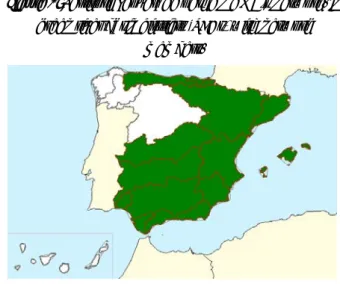
(4) La Roca, F. and G. Ferrer (2010). coming from the academia- are in charge of. Figure 1: Territorial coverage of the ODMA’s network. In. providing the conceptual framework for the. green river basin districts (RBDs) with network. evaluation of the practical implementation of. members.. WFD’s different steps. On the other hand, a group of people involved in water planning processes in different river basin districts (most of them, environmental activists and practitioners in the water sector). This second group contributes to the evaluation task by providing direct knowledge and. information. regarding. how. the. WFD. implementation is taking place in each river basin district,. taking. into. account. its. particular. circumstances.. the Environment and for Rural and Marine Environment. This double approach (interdisciplinary and. territorial). Source: own elaboration using the Spanish Ministry for. allows. for. building. up. (MARM)’s map template (2010). an. integrated picture to assess the quality of the WFD’s implementation in Spain. At the same time,. 3. CONCEPTUAL FRAMEWORK FOR THE ODMA’S. useful information on particular dynamics or. ASSESSMENT. practices developed in some of the river basin districts can be grasped.. The ODMA’s research is aimed to answer a. The current territorial coverage of the ODMA’s network includes (Figure 1):. main. question:. Does. the. Spanish. implementation of the WFD fulfil the WFD’s requirements, both in form and in substance? The. - internal river basin districts: Basque. first part of this question seems to be easier to. Country, Catalonia, Andalusia (Mediterranean. answer as it is mainly related to the compulsory. district, Tinto-Odiel district and Guadalete district),. implementation schedule imposed by the own. Balearic Islands; and,. Directive. The second part, however, enquiries. - inter-communitarian river basin districts: Tagus,. Ebro,. Júcar,. Cantabrian and Segura.. Guadiana,. Guadalquivir,. about the implementation process’ quality and requires comparing the Spanish practice with the WFD content requirements. Post-normal science (Funtowicz & Ravetz 1994) is the approach which frames the analysis of how and to what extent the WFD is being implemented in Spain. Water policy issues present the features of post-normal problems (Funtowicz & Ravetz 1994): decisions, which can imply irreversible changes in ecosystem services hardly replaceable, must be made; a variety of values and interests are at stake, at different temporal and spatial. Ambientalia SPI (2010). scales;. and,. an. important. level. of. 4.
(5) La Roca, F. and G. Ferrer (2010). uncertainty regarding the evolution of the socioecological system must be managed.. - preventing further deterioration and protecting the status of aquatic ecosystems and. From our point of view, the post-normal. dependent terrestrial ones; and,. science approach fits the perspective depicted by. - promoting sustainable water use based. the WFD for addressing water policy issues. The. on long-term protection of available water. Directive. resources.. starts. recognising. the. particular. multidimensional nature of water (Preamble #1). In order to throw light on these issues, the. and the deterioration of water resources and. Spanish practice is compared to the contents and. depending ecosystems as human pressures on. timing. water resources increased during the last decades. implementation.. (Preamble #4). The need for action to protect Community. waters. in. qualitative. and. in. quantitative terms is stated (Preamble #4). The need for an integrated water policy at Community level (Preamble #9) as well as for further integration of water policy into sector oriented economic policies (Preamble #16) is highlighted. Moreover, the environmental character of the water. policy. is. pointed. out,. emphasizing. precautionary preventive action, correction at source, and “polluter pays” as the main policy principles. (Preamble. subsidiarity. (Preamble. #11) #13). together and. with public. participation principles (Preamble #14). Integrated surface and groundwater management, at river basin scale (Preamble #33) is established as the suitable water management model, including transitional and coastal waters (Preamble #17). The purpose of the WFD, as declared in its article 1, is the general assessment framework of ODMA’s activities. Therefore, ODMA’s research is addressed to evaluate if the Spanish WFD’s implementation assures the protection of inland surface waters, transitional waters, coastal and groundwater. The ODMA’s assessment pays particular attention to whether Spanish water plans under elaboration are in line with the objectives of:. Ambientalia SPI (2010). required. by. the. WFD. for. its. The WFD establishes a rationale in order to tackle water planning from a practical point of view, based on the DPSIR model (EEA 1999; Kristensen 2004) -which allows to encompass physical and socio-economic knowledge at the relevant scale- and on the inclusion of public participation in the water policy decision making (planning,. implementation,. monitoring. and. evaluation phases), since the early stage (WFD Preamble #14 and #46, WFD article 14, and CIS, 2003). It also clearly explains the general environmental objectives to be achieved by 2015, and the restrictive room for applying explicitly ruled exemptions (WFD article 4). The WFD planning process is organised in several consecutive -and to a certain extent, overlapping-. phases:. diagnosis. (2000-2004);. identification of significant management issues (2004-2007); building of the programme of measures (2004-2009); and, drafting and approval of the River Basin Management Plan (RBMP) (2007-2009). Once. the. Plan. is. approved,. its. implementation, follow up and evaluation should be carried out between 2010 and 2015. By the end of 2015, a new RBMP containing a new programme of measures should be delivered and enforced.. 5.
(6) La Roca, F. and G. Ferrer (2010). 4. THE IMPLEMENTATION OF THE ODMA’S. administration. METHODOLOGY. representatives from environmental organizations,. and. the. private. sector,. The ODMA’s work has been organised by. and members from the ODMA). All presentations. phases whose focus have been conditioned by. made during the Conference as well as the report. the Spanish WFD’s implementation advancement.. produced during this phase can be downloaded. In each phase, the reference framework for. from the ODMA’s webpage (ODMA 2007).. assessing the quality of the WFD’s implementation. Second phase (2007-2008). During this. process has been developed and applied, through. second phase, ODMA’s activities consisted of: the. the interaction of the ODMA’s expert working. following. group and the ODMA’s territorial informant. participation processes, including proposals for. network.. improving processes in place; the assessment of. up. and. evaluation. of. public. First phase (2006-2007). During this. access to- and quality of available information as. period, the following activities were carried out:. well as proposals of improvement; and, the. the evaluation of the Spanish legal adaptation to. analysis and elaboration of comments and. the WFD’s requirements; the analysis of the. suggestions to the Spanish Ministry for the. Spanish. to. Environment’s drafts of both the Water Planning. implement WFD; the investigation of the Spanish. Guideline and the Significant Water Management. information and public participation practices;. Issues documents.. public. administration. suitability. and, the assessment of the quality of contents of Spanish reports on WFD’s Articles 5, 6 and 7.. Research activities were similar to those of the previous phase, although complemented with. Research activities carried out during this. the high quality input of the 20 reports produced. phase included the legal analysis of the Spanish. by the Scientific-Technical Panel for Following up. water regulation as compared to the WFD’s. the Water Policy in Spain. These reports were. requirements; interviews to public administration. publicly presented in an one-day Conference held. practitioners; collection of information from river. in Seville on 24th January 2008. Full text versions. basin districts through the development of an. of all these reports are available on the Scientific-. extensive. Technical Panel webpage (FNCA-Panel Científico-. questionnaire. on. institutional,. participation, ecological and economic aspects of. Técnico 2008).. water policy to be fulfilled by ODMA’s informant. The main products of this phase were. network; analysis of the river basin districts’. three reports and an one day Conference for. reports on WFD’s Article 5, 6 and 7; analysis of. presenting the assessment results achieved. Two. information available on authorities’ websites.. of. the. reports. addressed. methodological. The two products of this first phase were. questions of the planning process (“Comments of. the report entitled “Analysis of the WFD’s. the Foundation for a New Water Culture to the. implementation in Spain, 2005-2006“ and an one-. Ministry for the Environment’s Water Planning. day Conference to present the achieved results of. Guideline. this phase. This Conference took place on 12 June. Foundation for a New Water Culture to the. 2007 in Madrid, with a participation of 100 people. Ministry for the Environment’s Significant Water. (water sector practitioners from. Management Issues Guideline draft“). The third. the public. draft”. and. “Comments. of. the. one presented an evaluation of the information Ambientalia SPI (2010). 6.
(7) La Roca, F. and G. Ferrer (2010). accessibility and quality (“Report on the access to the. information. in. the. framework. of. the. The main products of this phase were four reports; a collection of full text allegations to the. application of the WFD and the elaboration of. public. New River Basin Management Plans”). The. Management Issues draft documents produced by. Conference took place on 13th June 2008 in. the informants’ network; and, a two days. Madrid, with a participation of 70 people (water. Conference to address the main issues identified. sector practitioners, from the public administration. as crucial for the elaboration of the River Basin. and the private sector, representatives from. Management Plans. Reports include a paper. environmental organizations, and members from. summarising the Second European Conference on. the ODMA). All presentations made during the. Water debate; the “Assessment of the Significant. Conference as well as the three reports produced. Water. during this phase can be downloaded from the. documents presented in inter-communitarian river. ODMA’s webpage (ODMA 2008).. basin districts in Spain”; the “Assessment of the. consultation. of. Management. Significant. Issues. (SWMI). Water. draft. Third phase (2008-2009). The activities. RBMP draft presented in Balearic Islands” and the. carried out during this period focused on: the. report “Public Participation in the process of. following. elaboration of RBMP in Spain”.. up. and. evaluation. of. public. participation processes, including proposals for. The two-day Conference took place on. improving processes in place; the collection and. 2nd and 3rd October 2009 in Madrid, with a. analysis of comments presented in different river. participation. basin districts in the framework of the public. practitioners from the public administration and. consultation. on. the. Management. Issues. identification. of. the draft. Significant. private. 120. people. sector,. (water. representatives. sector from. the. environmental organizations, and members from. water. the ODMA). All presentations made at the. management issues for the elaboration of river. Conference as well as the abovementioned. basin management plans; and, the assessment of. reports produced during this phase can be. contents of (available) river basin management. downloaded from the ODMA’s webpage (ODMA. plans drafts and elaboration of comments and. 2009a).. strategic. documents;. Water. of. significant. suggestions. Research activities carried out during this. 5. TEN YEARS OF WFD IN SPAIN: LEVEL OF. phase included the legal analysis of the Spanish. FULFILMENT. water regulation as compared to the WFD’s. SCHEDULE. requirements; interviews to public administration practitioners; the collection of information from river basin districts through the ODMA’s informant network; the analysis of the river basin districts’ reports; the analysis of information available on authorities’ websites; and, the ODMA’s members participation in the Second European Conference on Water organised by the European Commission.. Ambientalia SPI (2010). OF. THE. IMPLEMENTATION. The WFD establishes a binding schedule for. its. implementation.. One. of. the. main. milestones of the implementation process is the approval and enforcement of the RBMP, which the WFD states for 22nd December 2009, as the latest. In the case of Spain, any of the RBD has approved its RBMP until now. However, the gap. 7.
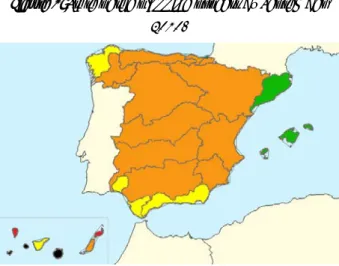
(8) La Roca, F. and G. Ferrer (2010). between the current state of the planning process. Figure 1: State of the planning process by September. and the approval of the RBMP varies from RBD to. 2010.. RBD. Figure 2 graphically shows such a diversity of situations. Catalonian RBD and Balearic Islands RBD (green area in Figure 2) are the most advanced ones. While the Catalonian RBMP final proposal has been delivered recently for Government adoption, in the Balearic Islands, the public consultation of the RBD draft was finished, although the final proposal has not been delivered yet.. Source: own elaboration using the MARM’s map template (2010) and compiled data from Prat (2010),. In five RBDs the period for public. Govern de les Illes Balears – Conselleria de Medi. consultation of RBMP draft is ongoing (yellow. Ambient (2008, 2009), Agencia Andaluza del Agua. area in Figure 2): Galicia-Costa RBD, Tinto-Odiel-. (2010), Augas de Galicia (2010), Agencia Vasca del. Piedras RBD, Guadalete-Barbate RBD, Tenerife. Agua (2010), MARM (2008b, 2009), Consejo Insular de. Island RBD and Andalusia’s Mediterranean RBD.. Aguas de Tenerife (2010a, 2010b), Consejo Insular de. A main part of the RBDs have finalised the public. consultation. of. the. Aguas de Gran Canaria (2010), Consejo Insular de Aguas de Fuerteventura (2009), Cabildo Insular de La. provisional. Palma (2010), Consejo Insular de Aguas de El Hierro. identification of Significant Water Management. (2009), Consejo Insular de Aguas de La Gomera (2009),. Issues phase (orange area in Figure 2): all inter-. Consejo Insular de Aguas de Lanzarote (2009). communitarian ones, Basque Country RBD and Fuerteventura Island RBD.. 6. TEN YEARS OF WFD IN SPAIN: ASSESSMENT OF. There are two island RBDs (Lanzarote and La Palma) where the public consultation of the provisional identification of SWMI is currently ongoing (red area in Figure 2).. INSTITUTIONAL ASPECTS The ODMA’s analysis of the institutional aspects related to the implementation of the WFD in Spain has been divided into two areas: the. Finally, in Gran Canaria Island RBD, El. Spanish legal adaptation to the WFD; and, the. Hierro Island RBD and La Gomera RBD (black area. organizational. in Figure 2) public consultation of provisional. administrations for applying the WFD.. accuracy. of. water. public. identification of SWMI has not yet started. This overview clearly shows that the most of the Spanish RBDs will accumulate a delay of 2 or 3 years, as compared to the deadline established by the WFD. This estimation, however, can be considered optimistic. It only takes into account the time strictly required for carrying out public. consultation. processes. and. technical. 6.1. THE SPANISH LEGAL ADAPTATION Since the early stages, the quality of the WFD implementation process in Spain has been strongly conditioned by the poor adaptation of the Spanish legal framework as required by the WFD. As explained by La Calle (ODMA 2007),. elaboration of the RBMP final proposals.. Ambientalia SPI (2010). 8.
(9) La Roca, F. and G. Ferrer (2010). deficiencies steam from both incomplete and. modification does not mean that the transposition. incorrect adaptation.. requirements had been successfully fulfilled.. Incomplete adaptation. The WFD asks for. The WFD article 24 states that Member. a major change of water policy’s objectives,. States shall bring into force the laws, regulations. instruments and administrative organization as. and administrative provisions necessary to comply. compared to the Spanish water policy’s tradition.. with this Directive at the latest 22 December 2003.. A first step in the WFD implementation is the. Issues such as competent authorities’ designation,. complete adaptation of Member States’ legal. delimitation of river basins, delimitation of river. framework to the European regulation. For. basin districts or regulation of water planning. carrying out this task, the WFD established a. process were not in force by the end of 2003. In. deadline: 22nd December 2003. By the time the. fact, decrees partially addressing these issues were. WFD was enforced, water issues were at the top. approved during 2007 (MMA 2007a, 2007b,. of the Spanish political agenda (approval of the. 2007c).. PHN and growing social conflicts against water. Guidance for Water Planning (MARM 2008a),. transfers). The Directive pushed water policy in a. which sets the legal requirements, methods and. divergent direction than that adopted in the PHN.. procedures to be applied for the elaboration of. The three-year period established by the Directive. the River Basin Management Plans (RBMP), was. to carry out its transposition would have been a. approved on September 10th 2008; almost by the. precious time for developing an open minded. time the WFD scheduled the delivery of the. public debate on the scientific, social-economic. RBMP’s draft versions to public consultation.. and political bases, alternatives and consequences. The. legally. Together. binding. with. these. Administrative. late. legal. of the Spanish water policy, its geographical. developments,. particularities, importance of water uses, and the. remain: the absence of geographical definition of. challenges posed by the WFD A public debate. river basins, the incorrect (or lack of) delimitation. like this would have been a very positive input to. of river basin districts, and the lack of constitution. the complex process of adaptation of the national. of organic participatory entities (River Basin. legal framework to the WFD. Unfortunately,. District’s Water Councils) with functional roles in. during this period, the WFD was ignored in the. hydrologic planning and public participation. Spanish debate around water, focusing the. development, just to mention some of them. This. political and media attention on the PHN’s project. combination of uneven legal developments has. of new Ebro’s water transfers.. hindered the WFD’s implementation process in. The modification of the Water Act to incorporate the WFD was carried out almost. important. unsolved. problems. Spain. Incorrect. adaptation.. Besides. its. without parliamentarian debate (La Calle 2008),. incompleteness, the Spanish legal adaptation to. including it as the article 129 into the Act 62/2003. incorporate the WFD is incorrect in the substance. of 30th December 2003, of administrative and. (ODMA 2007).. fiscal measures and of social order (Jefatura del Estado 2003). As explained by La Calle (ODMA 2007, 2008), the fact of making such a legal. Ambientalia SPI (2010). The highest priority given by the WFD to the ecological protection as the water policy goal is not reflected in the Spanish water regulation.. 9.
(10) La Roca, F. and G. Ferrer (2010). The Water Act modification operated in 2003. the Spanish transposition establishes only mere. introduced a. 40.2). cooperative relationships among them (MARM,. establishing that water policy is aimed to serve. 2007b). As a consequence, the operative capacity. sectoral plans and strategies set by Public. and effectiveness of the RBD’s Committees of. Administrations, while pushing environmental. Competent Authorities have been reduced.. new. paragraph. (article. protection into the background, as a mere. The Spanish legal framework previous to. instrumental goal for management (but not for. the WFD uses the concept of river basin in two. planning and strategic policy).. ways. The first one refers to the natural. The WFD’s general water policy principle. boundaries of a watershed. The second one refers. of preventing any further deterioration to the. to the geographical area grouping one or more. status of water bodies was incorporated in a. watersheds attending to administrative criteria. In. subsidiary and vague way. It was included in the. order to avoid this confusion between the natural. Spanish Water Act in a more inexact way. boundaries of the terrestrial water cycle and the. (“prevention of deterioration”) and restricted to. administrative boundaries of water management. the water protection policy, but not for the whole. organizations, the WFD’s article 2 differentiates. water policy.. Moreover, 31st December 2003. river basin from river basin district. However, the. (enforcement date of the WFD’s bulk transposition. Spanish legislators in charge of the WFD’s. into Spanish law) was the reference date to. transposition do not seem to have understood this. establish the baseline water bodies’ status which. distinction and its importance for the water policy. should not be worsened, rather than the WFD’s. in a semi-federal state like Spain. The Spanish. enforcement date, 23rd December 2000.. Constitution (1978) establishes that river basins. requirements. that spread over more than an autonomous. regarding the specification of river basins, river. region are under the exclusive competence of the. basin districts and river basin district’s competent. central government, while those stretching only. authorities. an. over an autonomous region can be entirely. unsatisfactory way. First of all, a clear specification. managed by regional governments (Jefatura del. of river basin territorial scope has not been done.. Estado 1978) –if the autonomous region includes. Secondly, the territorial scope of river basin. such a competence in their statutory rules. When. districts has not been defined correctly. In some. the WFD was transposed to the Spanish legal. cases,. been. framework, this constitutional statement was. geographically defined in a way that divides a. mechanically applied to the concept of river basin. river basin into two o more river basin districts.. districts rather than to the concept of river basin,. The inter-communitarian Cantabrian RBD, internal. impeding a satisfactory involvement of regional. Basque RBD, and internal Cantabrian RBD are. authorities into the river basin district’s competent. examples of this situation. In other cases, the. authorities committee. These circumstances have. territorial scope of the river basin district has not. given rise to a perverse framework for water. been defined yet. That is the case of the Júcar RBD. management and planning in Spain. On the one. and internal RBD of Valencia) (MMA 2007a).. side, a strong political struggle is taking place. Thirdly, while the WFD requires coordination. among regional governments for dominating the. relationships among RBD’s competent authorities,. use. The. river. WFD’s. has. been. basin. Ambientalia SPI (2010). article. 3. addressed. districts. have. in. of. water. through. inadequate. legal. 10.
(11) La Roca, F. and G. Ferrer (2010). instruments, regardless the rationale of integrated. under the WFD in Spain. In this sense, it seems. river basin management and planning. Moreover,. clear that, if the WFD objectives are to be attained,. serious shortcomings for the application of the. the Spanish Water Act (and, accordingly, the legal. WFD are on the floor, like it has been happening. rules that develop it) must be urgently and deeply. in the Júcar river basin district, where the dispute. modified in order to gain coherence and practical. among regional and central authorities on the. effectiveness. Although during the period 2004-. district components and boundaries has blocked. 2008 the Ministerio de Medio Ambiente (MMA). the planning process.. carried out technical work in order to propose the. such a modification, the initiative was finally. current Spanish legal framework has to do with. discarded due to the lack of political momentum.. the economic scheme established by the Water. The absence of political ambition and leadership. Act.. regarding. Another. It. deficiency. prevents. a. detected. transparent. in. economic. the. achievement. of. WFD’s. accounting of water services as well as the. environmental goals as required in its article 4 is at. application of an effective cost recovery policy. the origin of the abovementioned shortcomings.. according to the WFD’s article 9. In fact, the economic-financial scheme for water use costs. 6.2. ORGANIZATIONAL ACCURACY. repercussion remains the same as approved in the Water Act of 1985 (MMA 2001). This scheme does not account for all the water services as stated by the WDF and applies indiscriminately subsidies to water infrastructure’s investment costs as well as cross subsidies between different types of water users.. Spain has a long tradition of public water administration at river basin scale. The first river basin. authority. was. created. in. 1926. (Confederación Sindical Hidrográfica del Ebro), for dealing with surface water –competences on groundwater management and planning were introduced in the Water Act of 1985. However,. Last but not least, the Spanish adaptation. since its creation, Spanish public authorities. of the WFD article 14 applies a very restrictive. oriented their action to a water supply aimed. reading of public participation in water policy. management. making: active public involvement in water policy. administration was designed to build up and. decision making has been interpreted in a very. exploit big water public works for providing cheap. formalistic and rigid way, in form of a semi-closed. water to economic users (irrigation, hydroelectric. static processes working in parallel to the water. production, drinking water and other industrial. planning process, with very limited interaction of. uses). On the contrary, the WFD has posed a quite. stakeholders from different sectors (hydroelectric. wider. industry,. irrigation,. sustainable management of water ecosystems.. industrial. and. public. service. firms,. administrations, social. actors,. environmentalists, etc.) among themselves and within the planning process.. and. and. more. Sustainable. planning.. complex. Water. public. challenge:. management. of. the. water. ecosystems means a strong change in water policy priorities as well as the values underlying. These conceptual misunderstandings and. the decision making process: now, the focus is on. the temporal distortion in the Spanish legal. water demand management rather than on the. adaptation. supply one; a multiplicity of confronting criteria. have. negatively. affected. the. development of this first cycle of water planning Ambientalia SPI (2010). 11.
(12) La Roca, F. and G. Ferrer (2010). (ecologic, social, economic) must be managed in. values and attitudes into public administrative. decision making; and, the water policy community. structures and procedures.. (Pérez Díaz & Mezo 1998), traditionally integrated. In the Spanish case, the traditional. by irrigators, hydroelectric producers, sectoral. organizational model of the public river basin. policy makers, water policy makers and civil. administrations has remained without major. engineers, should be extended to other interested. changes,. parties like environmentalists, commons’ users,. communitarian river basin districts. Since early. environmental and social scientists, etc.. 2000s, the constitution of the regional water. The path from a system oriented to supply. particularly. in. the. case. of. inter-. agencies in Andalusia and Galicia and the. water for economic uses to another one oriented. administrative. to manage water for ecosystems and for. communitarian river basin districts authorities (like. sustainable human uses requires changes in both. Guadalquivir, Miño-Sil or Cantábrico) were time. the organizational culture and the pool of. consuming. knowledge used in the decision making process.. advancement. From the organizational perspective, the new. contrast, the Catalan Water Agency carried out. water. formal and informal changes in its structures and. management. organizational. model. of. which. WFD. inter-. slowed. the. implementation.. In. public. actions for its personnel, which were aimed at. administration levels, fluid communication and. improving their competences for both dealing. cooperation among departments, and, easy public. with a growing amount of diversified knowledge. accountability of decisions. From the knowledge. and information, and implementing participation. perspective, it calls for a higher diversification and. processes at river basin scale in close dialogue. deepness of scientific and practical knowledge to. with the technical water planning.. and. as. processes. some. procedures. This Agency also set up training. within. such. of. better. coordination. competences. demands. reform. between. be taken into account in the decision making process.. Spanish public river basin district administrations,. For these reasons, the implementation of a. water. In spite of the variety of situations at the. management. sustainability. into. the. model existing. oriented river. to. basin. organizations is a highly resource demanding process: - new professional profiles with scarce or. a set of shortcomings common to most of them can be identified (although their degree of incidence varies from one case to another): -. Engineering. continues. being. the. dominant profile in high level technical jobs. Although. an. important. number. of. young. null presence in the traditional public water. environmental scientists have been recruited last. authorities must be incorporated;. years, their role is secondary in the establishment. - financial resources must be invested; - social abilities must be developed; and, - amount of time required to encompass the whole process. Obviously, a clear political leadership of this process is essential in order to embed the new Ambientalia SPI (2010). of technical criteria. Professionals with profiles of social sciences and aquatic ecology are still rare as part of the public river basin administrations staff. As a consequence, crucial technical tasks in the river basin planning process have been carried out of external consultancy firms. That is the case of public participation processes in the majority of. 12.
(13) La Roca, F. and G. Ferrer (2010). RBDs. This circumstance has hampered the. Despite the timid wording of the legal. creation of new long-term dynamics inside the. text, citizens’ participation is a key stone in the. public administration for encouraging new ways. logic of the WFD. The need of public involvement. of interaction between public officers and the. in. public as well as the internalization of an. recognized in different agreements and legal texts. integrative approach to the multidimensionality of. (UNECE 1998; Commission of the European. water issues.. Communities 2001b; European Union, 2003).. environmental. policy. has. been. officially. - Multi-level and multi-sector coordination. Main arguments supporting participated decision. and cooperation competences need still to be. making processes have to do with the use of. developed in order to be able to take integrative. diverse, disseminated knowledge for making. actions and decisions. This situation has hindered. decisions,. the possibility of implementing effective measures. responsibility of agents affected by the decision. to act on the driving forces behind the pressures. (CIS. and impacts affecting the status of water bodies.. participation. - Internal re-organization of structures and procedures needs to be further developed in order to promote transversal styles of working, flexible thinking, accountability and accessibility of information (including background documents), and integration of inputs from public participation into management and planning processes.. and. 2003).. It in. with is. the. fostering. also. argued. planning. and. that. of. co-. public. management. deepens democracy, otherwise reduced to mere formality or tokenism (Arnstein 1969). Funtowicz and Ravetz (1994) have proposed a general frame, so called post-normal science, in order to place the role and function of science assisting decision making in complex socio-ecological systems. Central to the core of post-normal science is the extension of the peer community to the people potentially affected by a certain decision,. 7. TEN YEARS OF WFD IN SPAIN: ASSESSMENT OF PUBLIC. INFORMATION. AND. PARTICIPATION. ASPECTS. science. In Funtowicz and Ravetz (1994) own words, [a]s the policy process becomes a dialogue,. Public participation in water policy’s elaboration,. widening the basis for a quality assessment of. and. of legitimate perspectives and commitments, and. evaluation processes is one of the greatest. provides new norms of evidence and discourse.. challenges posed by the implementation of the. Sound science for environmental policy requires. WFD in Spain. The WFD distinguishes three. not only interested parties’ involvement, as WFD’s. different forms of public participation with an. art. 14 reads, but general public participation,. increasing. since all of vital interests are at stake.. information,. implementation,. level. of. public. monitoring. post-normal science encompasses the multiplicity. involvement: consultation. access and. to. active. involvement. While Member States shall ensure the first two, the later shall be encouraged (WFD, article 14). How these forms of public participation are to be enforced is a question to be decided by Member States, in application of the subsidiarity principle.. Ambientalia SPI (2010). In. Spain,. administrations. have. river. basin. scarce. districts’. tradition. in. participative decision making processes open to the general public and common interest’s actors. Traditionally, actors defending their own private exclusive right to use water have had an outstanding. participation. into. water. policy. 13.
(14) La Roca, F. and G. Ferrer (2010). making. Irrigators, electric energy producers and. district. drinking water providers have been actively. Cantabria and of Navarra have carried out. taking part of water administration’s decisional. valuable initiatives of public participation related. structures for decades. Information flowed at. to the WFD.. greater or lesser extent inside this political. authorities,. As. regional. explained. in. governments. previous. of. chapters,. community as decisions had to be made. But,. sustainable water planning and management are. water decision making processes have been a. multidimensional, complex issues, in which a. black box to the rest of the society. Participation of. variety of scientific knowledge and uncertainty. the other interested parties (environmentalists,. play an important role for decision making. For. workers, final consumers, common users, etc.) and. public participation being a useful tool for. the general public has followed a passive model,. decision. usually limited to personal consultation of the. empowered. That is to say, they have to be able to. documents at the administration office and. understand which interests are at stake, how. written communication with the authority.. ecological and socio-economic systems interplay. The. transition. from. the. traditional. making,. participants. need. to. be. with each other, which scientific evidence is, and. perspective of public participation processes. which. towards the wider and deeper one required by. knowledge. the. political. empowerment requires a variety of technical and. transformational leadership (Kotter 1995; Bass. financial capacities and competences not easily. 1990). This transformational leadership is needed. available. to guide and to encourage changes of perspective. governmental. and practice in decision making. On the one side,. circumstance. political leadership is needed in order to foster. asymmetry among users of water commons and. internal cultural changes (in values, attitudes and. users with exclusive rights on water, due the later. organizational. public. have much more financial and technical resources. administration). On the other side, political. as compared to the former. Financial and. leadership is required in order to raise external. technical. credibility of the transition. In particular, it is. administration side to compensate this civil. needed to convince (non-traditional) water actors. society’s weakness has been very limited –some. about the effectiveness and transparency of public. isolated actions were taken in the Ebro’s river. participation in decision making processes (Bush. basin. et al. 2005).. comprehensive one developed by the Catalan. WFD. (art.14). needs. culture. strong. inside. the. In the Spanish case, such a political. levels. of. are.. in. The. a. from. during. available of. environmental. organizations creates. of. development. Spanish. support. district. uncertainty. (NGOs).. strong. the. 2009,. civil. nonThis. opportunity’s. Spanish. and. a. public. more. Water Agency.. transformational leadership has been weak and. A common appreciation in the ODMA. the inertia has prevailed in the assimilation of the. analysis is that the public administration has. WFD requirements of public participation into the. interiorised public participation as a “tick box”. traditional administrative practice. The public. requirement, rather than as a useful tool for. participation process developed by the Catalan. feeding the water policy making (ODMA 2009,. Water Agency is the only remarkable exception to. 2010). The Catalan Water Agency is the main. the general trend in Spain. Out from river basin. exception to this statement, followed by the. Ambientalia SPI (2010). 14.
(15) La Roca, F. and G. Ferrer (2010). regional initiatives carried out by the Regional. procedures is missing. Produced information. Governments of Cantabria (Gutiérrez et al. 2008). (mainly, long technical reports) is inadequate to. and Navarra (García-Balaguer 2008). In the case. reach the lay public.. of Catalonia, a new specific administrative unit. Low quality of information. Information. was created at an early stage of the planning. supplied for public consultation and active. process aimed at promoting and managing public. involvement processes has been deficient due to:. participation processes. As a result, a coherent and consistent participation methodology was developed and implemented, involving a wide range of interested parties in the discussion of relevant water management topics at river basin scale, from the diagnosis to the programme of measures. Benchmarking this kind of good practices should be encouraged in order to advance. in. the. institutional. learning. for. sustainability management. In. the. next. sections,. the. ODMA’s. assessment of the public participation processes in Spain is presented following the three different levels of public involvement in decision making stated by the WFD: public information, public consultation and active public participation.. - the incompleteness of contents (for instance, regarding reference conditions for water bodies, exemptions to environmental objectives, cost-recovery characterization and evaluation, etc.). - the length and complex organization of reports. Reports follow a regulatory logic rather than being oriented to facilitate target groups to understand. water. policy. issues.. Moreover,. produced documents are huge in extension, without providing good summaries that allow participants getting a whole idea of the issues for further. deepening. into. the. detailed. documentation, if necessary. In fact, among participants there is a feeling of “report burying” rather than information supply. - the lack of integration of contents and. 7.1. ACCESS TO INFORMATION AND ADEQUACY. mismatch territorial scales. Links among drivers,. OF INFORMATION SUPPLIED. pressures, impacts and the state of water bodies. The amount of information available to. and their gap to good status are not easily visible.. public access has been significantly higher than in. This is due to the patchy presentation of different. previous. (Basin. types of data related to water bodies as well as the. Hydrological Plans developed during the late ‘90s. different –non comparable- scales of reference of. and the National Water Plan approved in 2001).. the supplied data.. water. planning. processes. From 2006 onwards, the public access to information has been made easier through ICTs (water authorities’ websites and the European CIRCA. ftp. libraries).. However,. supplied. information is far from being adequate for an effective public participation. Lack of attention to the lay public. A communication strategy addressed to raise public awareness. on. WFD’s. Ambientalia SPI (2010). goals,. principles. and. - the missing traceability (data sources, methodologies applied, etc.) of supplied data. - the inappropriate language. Information supplied is plenty of technicalities which are unintelligible for non-expert people. - the information provided to participants is frequently outdated as compared to that is currently used in the water planning process. For instance,. the. data. made. available. by. the. 15.
(16) La Roca, F. and G. Ferrer (2010). Ministerio de Medio Ambiente y de Medio Rural y. In the Spanish legal framework, public. Marino (MARM) through the Integrated Water. consultations have been interpreted in a formal. Information. de. way, assimilating them to the administrative. Información del Agua, SIA) are updated to 2007.. process of “public information”. Allegations taken. In several cases, the General Study of the River. into account are the written ones.. System. (Sistema. Integrado. 4. Basin. District. (Estudio. General. de. la. Besides,. administration’s. feedback. to. Demarcación), published by 2007, contained an. participants from the second round of public. outdated. as. consultations –on significant water management. compared to that planners were using by the. issues-, has not yet been accomplished (at. same time. This circumstance weakens the. September 2010), in spite of the main part of. usefulness of public participation for decision. these consultations ended in January 2009 (inter-. making. communitarian river basin districts, except Júcar).. delimitation. as. of. water. participant’s. bodies. comments. and. suggestions are based on old data.. As mentioned in the previous section,. WFD’s article 14 establishes that [o]n. documents submitted to public consultation were. request, access shall be given to background. very long and difficult to understand for non-. documents. expert people.. and. information. used. for. the. development of the draft river basin management plan. However, it is very difficult for the public to exercise this right, as an exhaustive list of background. documents. and. sources. of. information used in water planning is not provided. Therefore, it is not possible to request. 7.3. ACTIVE PUBLIC PARTICIPATION The practical implementation of active public participation has varied from one river basin district to another, particularly in intracommunitarian river basin districts. A common. them. In any case, public authorities should guarantee they fulfil the requirements set by the Spanish Act 27/2006, specifically, articles 5, 10, 11 and 12 related to access to environmental information (Jefatura del Estado 2006). This law regulates citizen’s rights of access to information, public participation in decision-making, and access to justice in environmental matters in accordance. framework. been. developed. for. inter-. communitarian river basin districts (the main part of the Spanish territory). This. common. framework. approaches. active involvement from a very formal, sectoral and organic perspective. Having in mind that one of the main added values of this kind of participation is to contribute to knowledge integration,. with the Aarhus Convention (UNECE 1998).. has. mutual. understanding. and. co-. responsibility, a more informal (dialogue driven), functional (thematic focused) and integrative. 7.2. PUBLIC CONSULTATIONS Public. consultations. (inter-sectoral and open meetings) scheme would largely. failed. in. maintaining the WFD’s schedule, accumulating more than 1 year of delay, particularly in the intercommunitarian river basin districts.. have been desirable (Bush et al., 2005). In general, active participation has been implemented through meetings with (a closed list of) representatives from the same interest’s sector (traditional users –irrigators and hydroelectric. Ambientalia SPI (2010). 16.
(17) La Roca, F. and G. Ferrer (2010). producers-,. public. economic. - an economic analysis of water uses. unions-, and. together with the analysis of the degree of water. organised civil society agents –environmental. services cost recovery (including environmental. NGOs, Universities, Foundations, common users. and resource costs) for different users.. agents -enterprises. administrations, and trade. associations, etc.).. WFD’s articles 6 and 7 call for reporting a. In most cases, participative techniques for facilitating meetings were not adequate or not. characterization of water bodies influencing or included into protected areas.. well applied: digital presentations and collection of. impressions. from. By the middle 2005, a main part of. –without. Spanish river basin districts delivered these reports. previous information on the topic tackled; lack of. concerning WFD’s article 5, 6 and 7 -on time. explanation. according. about. participants how. the. conclusions. the. WFD’s. schedule.. However. elaborated during the participative session will be. submitted reports were weak regarding the. taken into account in the planning process;. quality of contents: they had been elaborated on. absence of people in charge of the water. the. planning able to collect and react to participants’. information from a variety of sources. As a. questions and positions; inadequate meeting. consequence, these reports presented problems. schedule; etc.. such as the absence of data, the mismatch of. basis. of. simple. collection. of. existing. spatial and/or temporal scale, non comparability, 8. TEN YEARS OF WFD IN SPAIN: ASSESSMENT OF. the use of inadequate metrics, etc. Reports. ECOLOGICAL AND ECONOMIC ASPECTS. produced by the Catalan Water Agency were the. The WFD’s analysis and design scheme is. only exception in the Spanish context.. based on the DPSIR logic (drivers-pressure-state-. Obviously, this lack of enough and good. impact-response), adopted by the European. quality information has been a drawback for a. Environment Agency by the middle of 1990’s as a. suitable development of the whole planning. sound. of. process, as it started from a weak diagnosis. The. 1999).. ODMA carried out an analysis of contents of all. Additionally, the WFD has foreseen its own. the Spanish reports concerning WFD’s art. 5, 6. implementation as a participative process that. and 7, delivered in 2005. A set of common. covers planning, implementation, monitoring and. shortcomings was detected (ODMA 2007) and it. evaluation phases.. is schematically summarized as follows:. approach. environmental. for. the. indicators. development (EEA,. -. The diagnostic phase’s milestone is the. Unclear. identification. of. reference. delivery of a comprehensive report (according to. conditions for water bodies and of metrics to be. WFD’s art. 5) including:. applied. - the characterization of water bodies, their current ecological status and the gap to the good status of all water bodies; - the identification of pressures and impacts at the water body level; and,. Ambientalia SPI (2010). to. measure. water. bodies’. status.. Incomplete assessment of water bodies’ status. Accordingly,. unreliable. estimation. of. gaps. between current and good status of water bodies. - Incorrect methodology for assessing the water bodies’ risk of not achieving good status in. 17.
(18) La Roca, F. and G. Ferrer (2010). 2015, particularly in inter-communitarian river basin districts. -. Overestimation. - Absence of information related to alternative measures for improving the status of. of. available. water. water bodies.. resources and insufficient transparency about the. - Absence of reversibility analysis related. estimation methodology (for both, surface and. to the preliminary designation of heavily modified. groundwater bodies).. water bodies.. - Environmental flows and environmental. On the positive side, these diagnostic. volumes are not mentioned or the ways proposed. exercises allowed the authorities to identify the. to establish them are not scientifically consistent.. data and methodological gaps to be overcome. - Insufficient or no attention at all is paid. during the next period.. to transition and coastal water bodies.. During the period 2005-2007, a main part. - Lack of specification (in quality and in. of river basin district administrations improved. quantity terms) of water needs for fulfilling. their quality of data: water bodies were delimited. protection objectives in designated protected. again, calculation of water resources in natural. areas.. regime were refined, sampling campaigns for - Deficient economic analysis of water. uses: lack of integration between the economic analysis of water uses (driving forces) and pressures and impacts affecting the status of water bodies; sectoral, patchy approach to socialecological systems; mismatch of spatial scales between social-economic and physical analyses. - Rough estimation of water prices, without detailed information concerning subsidies and users benefiting from them. - Confusion around the meaning and the application of the concept of environmental and resource costs in the context of economic analysis of water uses and water services cost-recovery. - Overestimation of rates of cost recovery of water services from users. Amount of water services’ cost paid by users is not compared to the total amount of water services’ cost, but to the. updating. This particular aspect has not been modified to be adapted to the WFD, and continues as at the date of approval, 1985.. Ambientalia SPI (2010). chemical. and. biological. indicators were carried out, additional information on impacts and pressures was collected, etc. However, these new or updated data were not included in the River Basin District’s General Study, the technical document submitted to public consultation by the middle of 2007. This technical information comprised a summary of the outdated reports delivered in 2005 (to accomplish the WFD art. 5, 6 and 7). This circumstance undermined manifestly the. sense. and. usefulness. of. the. whole. participation process as a tool for contributing to improve the decision making process in water policy. Trust on the reliability and the quality of supplied information, as well as the sharing of a common floor for defining problems to be solved, constitute the basic blocks for a healthy public discussion about water policy.. portion of water services’ cost that the Spanish Water Act considers to be refundable by users.. physical,. By the middle of 2008, almost every intercommunitarian. river. basin. district. authority. (except the Jucar’s one) submitted to public consultation for six months an interim overview of the. significant. water. management. issues. 18.
(19) La Roca, F. and G. Ferrer (2010). identified in the river basin (SWMI report). The. every indicator is good. That is to say, in case no. Jucar’s river basin district authority so did by the. data are available for an indicator, when such an. end of 2009.. indicator is combined with another one, the. The content organization of these SWMI. resulting combination takes the value of the. reports distorted the WFD’s water planning logics. second one (the former has not influence, which,. while fitting better with the traditional hydraulic. in practical terms, yields the same result as if it had. planning, water supply oriented. The section on. a value of good). Therefore, in a context of. water allocation among uses and guarantee of. incomplete information, the methodology applied. water delivery to such uses –the traditional role of. tends to overestimate the status of water bodies.. water planning in Spain- was the most relevant. - No new information has been publicly. one. The achievement of the environmental. delivered concerning economic analysis and cost. objectives, the management of extreme events,. recovery analysis –in spite of the time elapsed. and the improvement of knowledge and water. since 2005 and the multitude of issues that should. governance were addressed in a sketchy, trivial. be improved.. and inaccurate way. It is remarkable the lack of an. In Spain, a main pressure on a huge. integrative strategic view of the water policy. number of surface water bodies is the alteration of. together with the economic policies (agriculture,. their natural hydromorphological regime (ODMA. energy, land use planning, etc.). Economic policies. 2007). In this context, the implementation of. constitute the driving forces that create pressures. environmental. and impacts on the environment.. achieving the WFD’s environmental objectives.. flows. regimes. is. crucial. for. inter-. Despite the relevance and urgency in setting such. communitarian SWMI reports remained being. regimes, up to now (2010), no technical report for. incomplete, particularly regarding water bodies’. determining them has been delivered to the. status, pressures and impacts, protected areas. public. It is worth noting that after such technical. water requirements, and economic aspects and. information. instruments. Some examples can be mentioned:. compromising. The. supplied. information. in. - The lack of detailed information on water demands, water prices and rights for water use. -. Accurate. information. on. foreseen. measures to be included in the Programme of Measures was missing. - Neither fish indicators nor environmental flows regimes were taken into account in assessing the ecological status of surface water bodies.. being. available,. their. a. process. implementation. for with. interested parties –included privative users- has to be launched. Only after the implementation of environmental flow regimes is agreed, it will be incorporated. to. the. river. basin. district. management plan as a measure. Again, the unique remarkable exception is the case of the Catalan intra-communitarian river basin district which ruled this issue in 2006 (Departament de Medi Ambient i Habitatge, 2006).. - When assessing the status of water bodies, the applied methodology for integrating biological, physical-chemical as well as chemical information assumes that the default value of. Ambientalia SPI (2010). 19.
(20) La Roca, F. and G. Ferrer (2010). 9. TEN YEARS OF WFD IN SPAIN: EXEMPTIONS, A CRITICAL ISSUE. 10. ODMA’S FUTURE TASKS At present (September 2010) only seven. WFD. considers. of. out of the twenty four RBMP drafts have been. exemptions to the achievement of good status of. produced. No plan draft has been presented for. water. certain. transboundary river basin districts –neither by. circumstances and if a set of conditions are met.. Spain nor by Portugal. The coordination of Iberian. WFD’s article 4 regulates such circumstances and. international catchments is reduced to the. the associated conditions to be met. Member. minimum established by the Albufeira Agreement.. States have to establish how exemptions will be. For the main part of the Spanish water districts,. implemented in operative terms. In the Spanish. draft documents of the RBMPs have been. context, this issue remains unclear. Neither the. repeatedly announced, but the publicized dates. Water Planning Regulation (MMA 2007c) nor the. have been shifted again and again.. bodies. by. the. 2015,. possibility under. Administrative Guidance for Water Planning. The. Observatory’s. approach. to. the. (MARM 2008a) throws enough light on how. analysis of RBMP draft documents is double sided.. exemptions must be operatively applied and. On the one hand, the conformity with the legal. justified in RBMPs. MARM’s representatives –who. requisites established by the WFD will be. are in charge of the coordination of WFD. scrutinized in form of a compliance analysis. On. implementation in inter-communitarian river basin. the other hand, a detailed reading of the plan’s. districts- have explained they will articulate the. draft will be carried out with the aim of identifying. application. of 5. exemptions. from. a. general. perspective.. Such an approach, at least in. principle,. incompatible. is. requirements. for. with. detailed. the. justification. WFD’s and. evaluation of alternative measures. It. should. be. recalled. planning quality improvement possibilities. As stated before, public participation processes have shown important deficiencies. The lack of opportunities for the most environmentally conscious social agents to intervene in the. that. the. planning process till now, could be recovered in. implementation of exemptions on grounds of. the next phase. In order to support the. disproportionate costs or technical infeasibility. participatory task of environmental NGOs and. must be dealt with in a coherent way to the. social movements, ODMA’s expert working group. WFD’s general objectives and logics. Therefore,. will produce a set of thematic guidelines.. the suitable scale for their application and justification is that of individual water body. Besides, not only the economic capacity of affected users should be taken into account, but also that of the affected territories and the society as a whole. However, exemptions are not allowed when negatively affecting conservation objectives of protected areas (Natura 2000) or undermining objectives of previous water related European Directives.. 11. CONCLUSIONS During the last two years the WFD’s implementation process in Spain has been slowed, so increasing the already accumulated delay as compared to the WFD’s schedule. Moreover, the environmental. political. ambition. of. water. authorities remains limited. The main decision makers’ concern seems to be how to allocate as much water as possible –even at the expense of. Ambientalia SPI (2010). 20.
(21) La Roca, F. and G. Ferrer (2010). environmental flows regimes. A renaissance of the. interested. use of water scarcity and drought as arguments. implementation of the WFD.. for relaxing the WFD’s requirements is taking place in the political arena.. in. an. environmentally. sound. - Identification together with social actors of key issues and actions for promoting a correct. Results from the first generation of. WFD’s implementation at local level.. Hydrological Plans in Spain (river basin plans. - Delivery of policy oriented scientific. approved in 1998) have not been critically. reports and conferences on the implementation of. evaluated, even though a general deterioration of. the WFD in Spain, including methodological. water bodies’ status has been found during the. documents addressed to decision makers.. WFD’s diagnosis phase. Instead, river basin authorities as well as central and regional government. authorities. consider. such. hydrological plans as the “most valuable basis” for the current round of water planning, despite their clear contradiction with the WFD approach. Failures. detected. in. the. It is foreseeable that the WFD objectives will not be achieved by 2015, to a large extent. The accumulated delays and the lack of political will among a relevant part of the water public administration leaders, make such an achievement highly unlikely. Nevertheless the stubbornness of. WFD. facts, the social capital invested in improving the. implementation process, the current penchant of. quality of both the ecosystem status and the. the Spanish water authorities towards a supply. policy making prevent us from talking about a lost. driven approach and the maintenance of the. decade.. status quo in the water policy community do not invite to be optimistic regarding the effectiveness of the WFD.. REFERENCES. In our opinion, it is not overstated to say. Agencia Andaluza del Agua (2010) Resolución de. that the ODMA’s work has contributed to. 17 de mayo de 2010, de la Dirección General de. encourage. sound. Planificación y Participación de la Agencia. implementation of WFD in Spain from the civil. Andaluza del Agua, por la que se anuncia la. society side. Its main contributions can be. apertura del período de consulta pública de los. summarised as follows:. documentos «Propuesta de Proyecto de Plan. an. environmentally. Hidrológico». e. in order to allow interested parties getting a. Ambiental». del. whole. been. hidrológica correspondiente a las demarcaciones. implemented in different Spanish river basin. hidrográficas de las cuencas intracomunitarias. districts.. situadas en Andalucía, Boletín Oficial de la Junta. - Organization of the available information picture. on. how. WFD’s. has. - Identification of general trends, particular approaches. and. good. practices. in. WFD’s. implementation.. «Informe proceso. de de. Sostenibilidad planificación. de Andalucía nº 98, 21.05.2010. Agencia Vasca del Agua (2010) Resolución de 27. de mayo de 2010, del Director General de la. - Consolidation of a scientific-territorial. Agencia Vasca del Agua, por la que se ordena la. network for exchange of information and advice. publicación en el Boletín Oficial del País Vasco de. oriented. la aprobación del Esquema de Temas Importantes. to. NGOs. Ambientalia SPI (2010). and. social. movements. 21.
(22) La Roca, F. and G. Ferrer (2010). en Materia de Gestión de Aguas de las Cuencas. for. Internas del País Vasco, Boletín Oficial del País. Communities, Luxembourg. Official. Publications. of. the. European. Vasco nº 119, 24.06.2010. Commission. of. the. European. Communities. A Ladder of Citizen. (2001a) Communication from the Commission to. Participation, Journal of The American Institute of. the Council, the European Parliament, the. Planners, vol.35, nº4, July; 216-224.. Economic. and. Committee. of. Arnstein,. S.R.. (1969). Arrojo, P. (2002) El PHN. Tornar las claves del. fracaso en argumentos de futuro, III Congreso Ibérico sobre planificación y gestión del agua, Seville, 13th to 17th December [online] URL:. Social the. Committee. Regions. on. and the. the sixth. environment action programme of the European Community 'Environment 2010: Our future, Our choice'. -. The. Sixth. Environment. Action. Programme , COM/2001/0031 final, Brussels. http://grupo.us.es/ciberico/archivos_acrobat/sevil laponenarrojo.pdf (consulted on 23.09.2010). Commission. Auguas de Galicia (2010) Resolución de 11 de. of. the. European. Communities. (2001b) European governance. A white paper, COM(2001) 428 final, 25.7.2001, Brussels. agosto de 2010 por la que se anuncia la apertura del período de consulta pública del borrador del. Consejo Insular de Aguas de El Hierro (2009). Plan hidrológico de la demarcación hidrográfica. Acuerdo de la Junta de Gobierno del Consejo. de Galicia-Costa, Diario Oficial de Galicia nº 160,. Insular de Aguas de El Hierro, reunida en sesión. 20.08.2010.. ordinaria el 10 de diciembre de 2009. to. Consejo Insular de Aguas de Fuerteventura. transformational leadership: learning to share the. (2009) Anuncio de 19 de noviembre de 2009,. vision, Organizational Dynamics, nº 18; 19-31.. relativo a la consulta pública de los documentos. Bass,. B.. M.. (1990). From. transactional. que constituyen la fase previa del proceso de Bush, I.G., Gilson, A., Hamilton, M. & Perrin, M. (2005). Public. participation. –. drawing. the. planificación. hidrológica,. Boletin. Oficial. de. Canarias nº 251, 24.12.2009.. boundaries. Water and Environment Journal, nº19; 181–188. Cabildo Insular de La Palma (2010) Anuncio de. Consejo Insular de Aguas de Gran Canaria (2010). http://www.aguasgrancanaria.com/. (consulted. on 05.10.2010).. 11 de mayo de 2010, por el que se somete a información pública el Esquema de temas. Consejo Insular de Aguas de La Gomera (2009). importantes del Plan Hidrológico de La Palma,. Anuncio de 16 de diciembre de 2008, relativo a. Boletin Oficial de Canarias nº 99, 21.05.2010.. información pública de la Actualización del Plan. CIS (2003) Common Implementation Strategy for. Hidrológico Insular de La Gomera, Boletin Oficial de Canarias nº 49, 12.03.2009.. the Water Framework Directive (2000/60/EC) Guidance document no. 8. Public Participation in. Consejo Insular de Aguas de Lanzarote (2009). relation to the water Framework Directive, Office. Anuncio de 15 de abril de 2009, relativo a información pública de la Actualización del Plan. Ambientalia SPI (2010). 22.
Figure
Documento similar