
Gamification: a mission to foster students’ engagement and interaction in the EFL classroom
102
0
0
Texto completo
(2) “Learning and innovation go hand in hand. The arrogance of success is to think that what you did yesterday, will be sufficient for tomorrow.” William Pollard.
(3) FORMATO RESUMEN ANALÍTICO EN EDUCACIÓN - RAE Código: FOR020GIB Fecha de Aprobación: 10-10-2012. Versión: 01 Página 1 de 6. Tipo de documento. 1. Información General Trabajo de grado.. Acceso al documento. Universidad Pedagógica Nacional. Biblioteca Central. Gamification: A mission to foster students’ engagement and interaction in the EFL classroom.. Título del documento. Gamificación: Una misión para promover el compromiso/motivación y la interacción de los estudiantes en el salón de inglés como lengua extranjera.. Autor(es). Esquivel Gomez, Laura Milena.. Director. Montaño Moreno, Johanna.. Publicación. Bogotá. Universidad Pedagógica Nacional, 2019. 102 p.. Unidad Patrocinante. Universidad Pedagógica Nacional. UPN.. Palabras Claves. GAMIFICATION; GAME PRINCIPLES; GAME MECHANICS; INTERACTION; ENGAGEMENT; INVOLVEMENT.. 2. Descripción El presente trabajo de grado da cuenta de una investigación acción participativa en un aula de quinto grado del IED Domingo Faustino Sarmiento, sede B en la ciudad de Bogotá. Este proyecto se basó en la promoción de la participación y motivación de los estudiantes mediante el uso de la estrategia de gamificación en el aula con el fin de mejorar su interacción durante la clase de inglés como lengua extranjera. Lo anterior, dado que el diagnóstico reveló que la principal dificultad de los estudiantes era comunicarse usando la lengua extranjera. Como conclusión, se determinó que, mediante la estrategia de gamificación, los estudiantes encontraron una buena fuente de motivación para desarrollar sus habilidades de interacción en clase a través de las actividades planteadas que les permitieron acercarse a un uso real de la lengua conociendo su entorno y comunicando sus propias ideas.. Documento Oficial. Universidad Pedagógica Nacional.
(4) FORMATO RESUMEN ANALÍTICO EN EDUCACIÓN - RAE Código: FOR020GIB Fecha de Aprobación: 10-10-2012. Versión: 01 Página 1 de 6. 3. Fuentes - Allazzam, M. (2015). Learning from Dewey and Vygotsky Perspective. International Journal of Scientific & Engineering Research, 1854-1867. - Blandford, A. (2013). Semi-Structured Qualitative Studies. The Encyclopedia of Human-Computer Interaction. - Brown, H. (1994). Teaching by Principles. New Jersey: Prentice Hall. - Burke, B. (2014). Gamify: How gamification motivates people to do extraordinary things. Biblomotion. - Burns, A. (2005). Handbook of research in second language teaching and learning. Mahwah: Lawrence Erlbaum Associates. - Chou, Y.-K. (2013). Gamification Framework: Gamification & Behavioral Design. Retrieved from http://yukaichou.com/gamification-examples/octalysis-complete-gamification-framework/ - Darling, H., & McLaughlin. (1995). Policies that support professional development. - Delgado, J., & Chapetón, M. (2015). Getting the Picture of Iconography: An innovative way to teach English to young learners. Bogotá: Aula. - Denzin, N., & Lincoln. (2005). Handbook of qualitative research. California: Thousand Oaks. - Dinçer, A., Yeşilyurt, S., & Demiröz, H. (2017). Multidimensional classroom engagement in EFL contexts. Turkey. - Dornyei, Z. (2001). Motivational Strategies in the Language Classroom. Cambridge Language Teaching Library. - Driscoll, D. (2011). Introduction to Primary Research:. Writing spaces: readings on writing. - Ellis, R., & Barkhuizen, G. (2005). Analyzing Learner Language. Oxford: Oxford University Press. - Emerson, R., Shaw, L., & Fretz, R. (1995). Writing Ethnographic Field Notes. Contemporary Sociology. - Europe, C. o. (2011). Common European Framework of Reference for Languages (CEFR). Retrieved from https://www.coe.int/en/web/common-european-framework-reference-languages/levels - Garland, C. (2015). Gamification and Implications for Second. St. Cloud State University. - Goleman, D. (1995). Emotional Intelligence. New York: Bantam Books. - Grund, K. (2015). How game and game elements facilitate learning: a literary review. Lecture Notes in Informatics, University of Ausburg, 1279-1293.. Documento Oficial. Universidad Pedagógica Nacional.
(5) FORMATO RESUMEN ANALÍTICO EN EDUCACIÓN - RAE Código: FOR020GIB Fecha de Aprobación: 10-10-2012. Versión: 01 Página 1 de 6. - Halliday, M. (1979). El lenguaje como semiótica social: la interpretación social del lenguaje y del significado. México : Fondo de Cultura Económica. - Herazo, J. (2010). Authentic Oral Interaction in the EFL Class:. Profile: Issues in Teachers´ Professional Development, 47-61. - Hernández, D. (1993). El currículo: una construcción permanente. Revista Educación y Cultura. CEID-FECODE. -Hine, G. (2013). The importance of action research in teacher education. Issues in Educational Research, 151-163. - Hoyo, M., & Allen, D. (2006). The Use of Triangulation Methods in. Journal of College Science Teaching, 42-47. - Kapp, K. (2012). The Gamification of Learning and Instruction: Game-based Methods and Strategies for Training and Education. San Francisco, CA: Pfeiffer. - Martin, J., & Torres, A. (2016). What is student engagement and why is it important? National Association of Independent Schools. - MEN. (2006). Publicaciones: Ministerio de Educación Nacional. Retrieved from https://www.mineducacion.gov.co/1759/w3-article-115174.html?_noredirect=1 - Mohseni, A., & Rahmanpanah, H. (2017). Engagement and Motivation in EFL Classroom: Humanizing the Coursebook. journal of Language and Translation, 69-88. - Morris, M., Leung, K., Ames, D., & Lickel, B. (1999). Views from inside and outside: integrating emic and etic insights about culture and justice judgment. Academy of Managment Review, 781-796. - Moyal, D. (Without date). Coming to Language: Wittgentein's Social "Theory" of Language Acquisition. 291-313. - Norton, B., & Toohey, K. (2001). Changing perspectives on good language learners. TESOL Quarterly, 307-322. - Oxford, A. (2016). OXAN. Retrieved from https://www.worldgovernmentsummit.org/api/publications/document?id=2b0d6ac4-e97c-6578-b2f8ff0000a7ddb6 - Parkinson, G., & Drislane, R. (2011). Online dictionary of the social sciences. Retrieved from http://bitbucket.icaap.org/dict.pl - Pink, D. (2009). Drive: The Surprising Truth About What Motivates Us. Riverhead Books. Documento Oficial. Universidad Pedagógica Nacional.
(6) FORMATO RESUMEN ANALÍTICO EN EDUCACIÓN - RAE Código: FOR020GIB Fecha de Aprobación: 10-10-2012. Versión: 01 Página 1 de 6. - Reeve, J. (2009). Understanding motivation and emotion. Hoboken, NJ: Wiley. - Reeve, J. (2012). A Self-determination Theory Perspective on Student Engagement. Handbook of Research on Student Engagement, 149-172. - Sarmiento, I. D. (n.d.). Principios Institucionales: Dofasa. Retrieved from https://dofasa2017.webnode.com.co/principios-institucionales/ - Shpancer, N. (2004). What Makes Classroom Learning a Worthwhile Experience? The Nea Higher Education Journal, 23-35. - Skinner, E., Kindermann, T., & Furrer, C. (2009). A Motivational Perspective on Engagement and Disaffection. Educational and Phsychological Measurement, 493-525. - Triana, J. (2014). Gamification: Gameful Design of Engaging Environments and Activities for Communicative Skills. Bogotá: Universidad Pedagógica Nacional. - Vygotsky, L. (1978). Mind in society: the development of higher psychological processes. United States of America: Harvard University Press. - Willig, C. (2013). Introducing Qualitative Research in Psychology. New York: Open University Press. - Yi, F. (2006). EFL classroom management: Creating a positive climate for learning. Retrieved from wlkc.nbu.edu.cn/jpkc_nbu/daxueyingyu/download/013.pdf - Yufrizal, H. (2001). Negotiation of Meaning and Language Acquisition by Indonesia EFL Learners. TEFLIN Journal, 60-87. - Zhang, S. (2009). The Role of Input, Interaction and Output in the Development of Oral Fluency. English Language Teaching, 91-100.. 4. Contenidos Este trabajo de grado comprende seis capítulos los cuales presentan el desarrollo de una investigación acción basada en el paradigma cualitativo desde la contextualización e identificación del problema, hasta los resultados obtenidos de la intervención pedagógica llevada a cabo. El primer capítulo presenta la introducción, la cual comprende el contexto institucional y local, la caracterización de los participantes, la descripción del problema, la justificación del proyecto y la. Documento Oficial. Universidad Pedagógica Nacional.
(7) FORMATO RESUMEN ANALÍTICO EN EDUCACIÓN - RAE Código: FOR020GIB Fecha de Aprobación: 10-10-2012. Versión: 01 Página 1 de 6. pregunta y los objetivos de investigación que delimitan el estudio. El segundo apartado incluye el estado del arte y el marco teórico que fundamentan y soportan los conceptos previamente mencionados en la pregunta de investigación. A continuación, el tercer capítulo especifica la metodología que posibilitó el desarrollo del proyecto a través de un paradigma de investigación cualitativo y el tipo de investigación acción. Además, este capítulo incluye los instrumentos y procedimientos de recolección de datos. Por su parte, el capítulo cuatro refiere las visiones de currículo, aula, aprendizaje y lengua de la investigadora y expone la propuesta de intervención pedagógica que fue diseñada e implementada teniendo en cuenta el problema, la pregunta de investigación y los objetivos ya planteados. Por último, el capítulo cinco contiene el análisis de resultados que emergió del proceso de codificación y categorización de la información obtenida a través de la aplicación de los instrumentos de recolección de datos, con el fin de responder a la pregunta de investigación. Finalmente, el apartado seis presenta las conclusiones, implicaciones, obstáculos y propuestas para posibles investigaciones futuras.. 5. Metodología Este proyecto se llevó a cabo bajo los lineamientos del paradigma de investigación cualitativa y la investigación acción, los cuales guiaron el diseño de la metodología, los instrumentos de recolección de datos y el subsecuente análisis de éstos. Los instrumentos utilizados fueron una entrevista a la docente titular, dos encuestas a los estudiantes durante la intervención pedagógica, trabajos elaborados en clase, diarios de campo y grabaciones de audio de algunas interacciones registradas en clase. A partir de la información obtenida, los datos fueron agrupados y codificados para encontrar similitudes y diferencias a la luz de la teoría fundamentada, que permitió la categorización y obtención de resultados y conclusiones provenientes de la implementación de la propuesta pedagógica planteada.. Documento Oficial. Universidad Pedagógica Nacional.
(8) FORMATO RESUMEN ANALÍTICO EN EDUCACIÓN - RAE Código: FOR020GIB Fecha de Aprobación: 10-10-2012. Versión: 01 Página 1 de 6. 6. Conclusiones La realización de esta investigación permitió dilucidar las siguientes conclusiones en relación al uso de la gamificación como estrategia pedagógica en el fortalecimiento de un entorno llamativo y agradable con el fin de mejorar la interacción en el aula de quinto grado del IED Domingo Faustino Sarmiento: -. La gamificación tuvo un impacto positivo en la actitud, participación, motivación y desempeño de los estudiantes en la clase de inglés, como lengua extranjera.. -. Las mecánicas y principios de juego contribuyeron a crear un ambiente centrado en la interacción estudiante-estudiante, la cual aumentó gradualmente y permitió el desarrollo de las habilidades de los estudiantes.. -. La gamificación posibilitó la construcción de un ambiente propicio para el aprendizaje de la lengua extranjera, en el cual los estudiantes tuvieron la oportunidad de monitorear su propio proceso de aprendizaje siendo conscientes de sus debilidades y fortalezas y descubriendo poco a poco qué hacer para mejorarlas.. -. La interacción entre los estudiantes aumentó gradualmente evidenciando una mejora, no sólo en sus habilidades comunicativas, sino también en su autoconfianza y fluidez al hablar.. -. La construcción de un entorno de aprendizaje llamativo y centrado en los intereses de los estudiantes es clave en el mejoramiento de sus habilidades en lengua extranjera.. Elaborado por:. Laura Milena Esquivel Gomez. Revisado por:. Profesora Johanna Montaño Moreno. Fecha de elaboración del Resumen:. Documento Oficial. Universidad Pedagógica Nacional. 30. 04. 2019.
(9) TABLE OF CONTENTS LIST OF TABLES LIST OF FIGURES LIST OF APPENDICES ABSTRACT. CHAPTER I ..............................................................................................................................1 Local and institutional context .................................................................................................1 Participants ..............................................................................................................................2 Problem statement ...................................................................................................................3 Rationale of the study ..............................................................................................................5 Research question ....................................................................................................................6 Research objectives .................................................................................................................6. CHAPTER II .............................................................................................................................7 State of the art .........................................................................................................................7 Theoretical framework........................................................................................................... 11 Gamification: a pedagogical strategy in educational contexts. ............................................ 11 Interaction as an imperative factor in EFL learning. ........................................................... 15 Engagement as an influential factor in EFL learning. ......................................................... 18. CHAPTER III ......................................................................................................................... 21 Research paradigm ................................................................................................................ 21 Type of study......................................................................................................................... 22 Data collection instruments .................................................................................................... 23 Procedures for data collection ................................................................................................ 26. CHAPTER IV ......................................................................................................................... 27 Vision of curriculum .............................................................................................................. 27.
(10) Vision of learning .................................................................................................................. 28 Vision of language ................................................................................................................. 28 Vision of EFL classroom ....................................................................................................... 29 Instructional design ............................................................................................................... 30 Mission I: The birth............................................................................................................ 33 Mission II: The awareness. ................................................................................................. 33 Mission III: The finding. .................................................................................................... 34. CHAPTER V ........................................................................................................................... 35 Procedures for data analysis ................................................................................................... 35 Categories of the analysis ...................................................................................................... 37 Category 1. Gamification provides an engaging environment for EFL learning. ................. 39 Category 2. Engagement as an influential factor on the enhancement of interaction in EFL learning. ............................................................................................................................. 49 Category 3. Active interaction leads to the improvement of students’ skills in EFL. ........... 55. CHAPTER VI ......................................................................................................................... 63 Conclusions of the study ........................................................................................................ 63 Implications of the study........................................................................................................ 66 Limitations of the study ......................................................................................................... 67 Further research ..................................................................................................................... 68. REFERENCES ........................................................................................................................ 69.
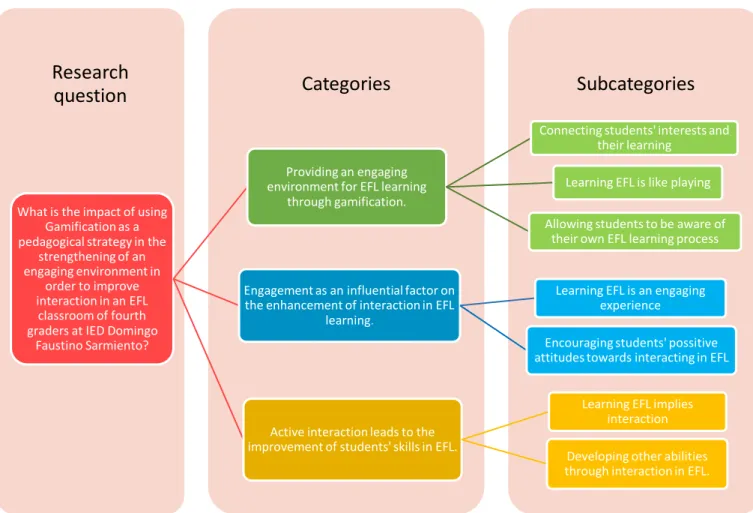
(11) LIST OF TABLES. Table 1. Game principles of the research………………………………………………………..12 Table 2. Mechanical elements of gamification of the research………………………………....13 Table 3. Types of interaction included in the research………………………………………......17 Table 4. Engagement sub-dimensions of the research…………………………………………...19 Table 5. Pedagogical intervention proposal…………………………………………………...…30. LIST OF FIGURES. Figure 1. Interrelation between the constructs of the research………………………………….20 Figure 2. Categories and subcategories of the analysis………………………………………….38.
(12) LIST OF APPENDICES. Appendix A. Students’ Survey N° 1…………………………………………………………….74 Appendix B. Students’ Survey N° 2…………………………………………………………….75 Appendix C. Field Note Sample…………………………………………………………………76 Appendix D. Consent Form Sample…………………………………………………………….77 Appendix E. Lesson Plan N° 1………………………………………………………………….78 Appendix F. Scorecard………………………………………………………………………….80 Appendix G. Teacher’s Interview……………………………………………………………….81 Appendix H. Recordings’ Transcription Sample……………….……………………………….83 Appendix I. Students’ Artifacts Sample…………………………………………………………84.
(13) ABSTRACT This qualitative action research study aimed to determine the impact of using gamification, as a pedagogical strategy in fostering engagement with the purpose of improving interaction at, IED Domingo Faustino Sarmiento in an EFL classroom of fourth graders between the ages of 8 and 11 years old. To this effect, data collection instruments used were interviews, field notes, surveys, and recordings; these were applied for ensuring the reliability and validity of data triangulation. Moreover, the methodology selected was the grounded approach through which categories of analysis were established to understand and explain the problem found in the field. Findings revealed that gamification had a positive impact on students’ agentic, behavioral, and emotional engagement which influenced significantly learners’ attitude and performance towards interaction. Moreover, data showed that interaction improved notoriously throughout the implementation of game mechanics, game principles, and activities which were intended to increase learner-learner and learner-group interaction with a communicative focus.. Key Words: Gamification, game principles, game mechanics, engagement, interaction, communication..
(14) GAMIFICATION: A MISSION TO FOSTER STUDENTS’ ENGAGEMENT AND INTERACTION IN THE EFL CLASSROOM CHAPTER I Local and institutional context This research study took place at IED Técnico Domingo Faustino Sarmiento. The school offers the levels of elementary, high school, and technical education to 11th graders in the accounting and recreation areas during the morning and afternoon shifts. The institution has four branches; nevertheless, this project was held at branch B, located at 91A Street # 60 – 01 which belongs to the Rionegro neighborhood and to the Barrios Unidos locality, on the northwest of Bogotá. This neighborhood is characterized by being a residential area with small industries; however, it is composed also of several parks, recreational areas, and cultural centers. This school was founded in 1969 in the Bejamín Herrera neighborhood with the name “Colegio Experimental Benjamín Herrera”, but three years later, it was moved to Rionegro neighborhood and it was renamed as “Colegio Distrital Domingo Faustino Sarmiento” honoring a famous Argentinian pedagogue. The institution began the accounting technical education in 1987 while the recreation program started in 2014; therefore, nowadays, the school offers the two possibilities of technical education to its students. In relation to the PEI “Calidad educativa para la formación integral y laboral”, the school aims to develop the different domains of students, to turn them into citizens capable of transforming the Colombian society based on values such as respect, dignity, love, and peace. Moreover, the school pursuits an integral and multidimensional development for its students by working in all their dimensions: cognitive, socio-affective, psycho-creative, sexual, personal, and occupational (IED Domingo Faustino Sarmiento). For this reason, it is evident that they pursuit. 1.
(15) GAMIFICATION: A MISSION TO FOSTER STUDENTS’ ENGAGEMENT AND INTERACTION IN THE EFL CLASSROOM not only academic success, but also the optimal development of their students by promoting the development of their affective and emotional domains. Furthermore, the institutional mission and vision are centered on educating students with a human and professional quality, who are guided by principles, values, and scientific knowledge and who are able to accept diversity. For this reason, the pedagogical model followed by the institution is Social Constructivism, which emphasizes on the collaborative nature of learning and social interaction as key elements in the educational process. Because of this, language is conceived as the most important mediator of interaction, between students; its relevance is not only on the right use of the mother tongue as a tool for learning and interacting, but also on acquiring a foreign language, as a necessary instrument for nowadays communication. For this purpose, the institution has implemented immersion classes to approach children to English during extra class time. Participants The students who participated in this project belonged to grade 402-502, which was composed of 30 students between the ages of 8 and 11 years old. Among them, there were three students with special needs (Down syndrome and Cognitive deficit), and two students who came from social foundations. Due to these characteristics of the participants, educational inclusion played an essential role in the development of classes and in the construction of interpersonal relationships among students. Regarding EFL lessons, these students had three English class sessions a week; each one lasted 45 minutes. However, some of the children took one more hour of class because they belonged to the immersion classes after curricular hours at school.. 2.
(16) GAMIFICATION: A MISSION TO FOSTER STUDENTS’ ENGAGEMENT AND INTERACTION IN THE EFL CLASSROOM Problem Statement Considering the diagnosis made based on the data collection instruments and procedures applied (teacher’s interview, students’ survey, and observations made in field) during the first stage of the research, it was possible to evidence that due to the lack of an involving, engaging, and motivating environment during EFL classes, the strongest difficulty of students was that they were not able to interact spontaneously among them by communicating their own ideas using EFL. These learners must be reaching the A2 level of language proficiency according to the Guía de Estándares Básicos de Competencias en Lengua Extranjera. Hence, students should be prepared to participate in short conversations using sentences with predictable structures and to talk about issues related to their environment (MEN, 2006). However, even though students could create short sentences with simple structures, they hardly put them into practice orally by using them in conversations, because this kind of activities which demand interaction between student-teacher and student-student, were not fostered in their EFL classes. Therefore, interaction should be enhanced to allow learners to communicate by using the foreign language and to be proficient users of it in concordance to the level they should have for being fourth graders, as stated in the Estándares Básicos, published by the Ministry of Education. Taking into account communication as a key element of the learning process, being a proficient user of the language implies to manage abilities of reception, interaction, and production (Council of Europe, 2011); as well as developing the necessary abilities to comprehend, understand, and express meaning in order to be able to communicate a message. Bearing these aspects in mind, this problem seemed to be caused by two main factors: lack of interaction to allow communication among students using EFL, and lack of strategies. 3.
(17) GAMIFICATION: A MISSION TO FOSTER STUDENTS’ ENGAGEMENT AND INTERACTION IN THE EFL CLASSROOM which promote involvement by giving special attention to engagement. In relation to the first factor, interaction between peers was limited and it was not fostered during class time; as a result, students had their strongest difficulties in expressing and communicating their own ideas. This could have been caused due to the vision of EFL as an isolated set of grammatical structures, which are not put into practice in a communicative way and as part of real-life situations. In this way, most of the time students worked individually and they did not even use EFL to participate in class. In view of this, it was necessary to pursuit the objective of allowing students to use the foreign language in a realistic context, which implied reaching communication and interaction as the main objectives of their learning processes. The second aspect was related to the repetitive activities that students carried out in class, such as writing sentences and always using the same vocabulary which could result in a decline of engagement and involvement during EFL classes. As the Council of Europe suggests: “Successful task performance is more likely where the learner is fully involved; a high level of intrinsic motivation to carry out the task – due to interest in the task or because of its perceived relevance, for example to real life needs or to the completion of another linked task (task interdependence) – will promote greater learner involvement; extrinsic motivation may also play a role, for example where there are external pressures to complete the task successfully (e.g. to earn praise or in order not to lose face, or for competitive reasons).” (2011, p. 161) Because of this, learning a foreign language must be conceived as an experience to involve students in their active learning process by increasing their interest and motivation. This might be achieved by changing the perception of EFL only as a school subject which implies. 4.
(18) GAMIFICATION: A MISSION TO FOSTER STUDENTS’ ENGAGEMENT AND INTERACTION IN THE EFL CLASSROOM isolated grammar. Consequently, it is necessary to look for new strategies which allow students to have an approach to real life communication and its dynamics resulting in interaction. Rationale of the Study It is universally acknowledged that the main purpose of communication is to generate an exchange between its participants. Thus, a language should allow human beings to express themselves, to be part of social interaction by establishing new relationships, and to have a major access to today’s world through a wide approach to knowledge. Therefore, a language should not be thought just as a way to develop intrapersonal skills, but to allow interaction and communication between people all around the world by enhancing interpersonal skills as well. For this reason, it is vital to remark that the primary purpose of the great majority of learners interested in EFL is to communicate in the real world; in this aspect, interaction plays a central role in communication (Council of Europe, 2011). Because of this, the EFL classroom should be conceived not as an isolated place where students learn and repeat grammatical structures and verbal tenses; but as a rich environment which allows the exchange of knowledge, ideas, and different kinds of messages between the diverse participants of the classroom and the educational community. To achieve this, it is indispensable to include interaction as one of the main objectives of the curriculum. For all of this to happen spontaneously, a fully- engaging and involving EFL environment should be conceived as a crucial element in the improvement of communication in the EFL classroom. In order to achieve this goal, realistic communicative topics and situations should be included in EFL classes, to allow students to have an approach to daily life communication. For this, new strategies and activities which imply students’ engagement considering their interest. 5.
(19) GAMIFICATION: A MISSION TO FOSTER STUDENTS’ ENGAGEMENT AND INTERACTION IN THE EFL CLASSROOM and needs, might be imperative in an EFL learning context. At this point, gamification becomes essential as a pedagogical strategy to allow students to have a new experience of language learning, through the use of game elements adapted to an educational context, and as a possibility to enhance real interaction in EFL. Research Question -. What is the impact of using Gamification as a pedagogical strategy in the strengthening of an engaging environment in order to improve interaction in an EFL classroom of fourth graders at IED Domingo Faustino Sarmiento?. Research Objectives General objective: To determine the impact of using gamification as a pedagogical strategy in the strengthening of an engaging environment in order to improve interaction in an EFL classroom of fourth graders at IED Domingo Faustino Sarmiento. Specific objectives: -. To identify the role of gamification in the strengthening of an engaging environment in an EFL context.. -. To examine the impact of students’ engagement on the enhancement of interaction in an EFL classroom.. -. To identify the types of interaction and engagement which occur in an EFL class which implements gamification as a pedagogical strategy.. 6.
(20) GAMIFICATION: A MISSION TO FOSTER STUDENTS’ ENGAGEMENT AND INTERACTION IN THE EFL CLASSROOM In this way, the theoretical constructs which underpin this research study will be depicted in the next chapter, in order to provide support to the question and objectives formulated in this section as part of the diagnosis carried out throughout the first stage of the present study.. CHAPTER II In this chapter, the theoretical framework and the state of the art are presented by taking into account the three main constructs of this research. First of all, in the state of the art; some research studies were reviewed and consulted as a support from previous and relevant investigation carried out around the principal theoretical concepts of this project. Secondly, a general overview of each construct is presented: the first one is Gamification as a pedagogical strategy to enhance students’ engagement in their learning process, the second one is Interaction understood as a fundamental condition for EFL learning, and the third construct is Engagement as a key element in the EFL classroom. State of the Art This section presents the review of five research projects which study the influence of gamification in non-game contexts, the role of interaction in the EFL classroom, and the importance of engagement in the EFL learning process. Three of these research studies are international projects, one comes from a national university, and the last one is part of the Languages Department’s database of Universidad Pedagógica Nacional. Firstly, the article “How games and game elements facilitate learning and motivation: a literary review” by Christian Karl Grund (2015) examines different research projects to present the theoretical foundation of the influence of game elements in learning. The methodology used. 7.
(21) GAMIFICATION: A MISSION TO FOSTER STUDENTS’ ENGAGEMENT AND INTERACTION IN THE EFL CLASSROOM consists on the categorization of theory taking a neutral perspective. According to the research, there are six theories that have to do with the use of game elements and structures to enhance motivation in the learning process; three of them (flow theory of motivation, self-determination theory, and experiential learning theory) are the most mentioned in the reviewed articles. Thence, the author describes in detail these theories and emphasizes on the effect they have in gamification to facilitate learning and motivation. Finally, some theory-driven design guidelines for game-based learning are presented. Owing to this, the relevance of this research to my project is that it provided me with a wide variety of theory in relation to gamification and its theoretical background. It also presented enough references to enrich this research process. Secondly, Christopher M. Garland (2015) conducted the research “Gamification and Implications for Second Language Education: A Meta-Analysis”, which is based on discovering what elements are important when using gamification in an educational situation and what the effect of gamification is in an educational setting. To solve these questions, the researcher carried out a deep literature review in order to obtain data for a meta-analysis to find the overall effects of gamification on learning a second language; some of them have to do with game design elements, age level, instructional medium, etc. Subsequently, the implications for second language acquisition are described by mentioning that even though there is not enough research in the field of gamification in second language acquisition, “evidence strongly suggests that gamification could have beneficial effects in the language classroom” (Garland, 2015. p. 65) when specific game elements and variables are considered. This research was significant for my study, as it revealed the relationship between gamification and educational settings, and most specifically the advantages it could have in an ESL setting; however, it also showed the possible. 8.
(22) GAMIFICATION: A MISSION TO FOSTER STUDENTS’ ENGAGEMENT AND INTERACTION IN THE EFL CLASSROOM negative effects which were taken into account in the building of the pedagogical proposal of this project. Thirdly, the research “Authentic Oral Interaction in the EFL Class: What It Means, What It Does not” (2010) carried out by José David Herazo Rivera at the Universidad de Córdoba conceived interaction and oral communication as key elements which need to be included in EFL secondary school classrooms in Montería. For this purpose, the researcher worked with studentstudent and teacher-student interaction by applying four samples of oral communication exchanges using script-based dialogues between students and teacher-student IRF interaction. The results of this project claim that “both the script-based dialogue and the teacher-student IRF interaction have very little to offer in terms of EFL proficiency growth” (Herazo, 2010), because of the lack of spontaneity between the participants. In light of these results, the author suggests that the role of “relegating students to passive members of the language exchange” (Herazo, 2010) must be changed to provide them with opportunities to automatize their language. In view of this, the relevance of this research to my project was that the results brought up the question of what activities should be planned to allow the interaction to occur spontaneously and in what way should they be developed? This was an essential aspect in this research in which gamification played a central role. Furthermore, the project “Gamification and gameful design for communicative skills” (2014) presented by Triana intended to determine the influence of implementing gamification on communicative skills of intermediate students at UPN’s Centro de Lenguas. Hence, the researcher established the categories of gamification, gameful design, and the development of communicative skills in a gameful environment. The research was carried out under the. 9.
(23) GAMIFICATION: A MISSION TO FOSTER STUDENTS’ ENGAGEMENT AND INTERACTION IN THE EFL CLASSROOM paradigm of qualitative research and the action-research type of study; additionally, the data collection instruments used included field notes, questionnaires, and artifacts. The results demonstrated that gamification was a successful strategy in terms motivation, engagement, and involvement to improve students’ communicative skills in the EFL classroom. The relevance of this research to my project was that it contained an interesting variety of references to be reviewed and also that it showed the positive effects of gamification as a helpful tool in the foreign language learning process. Lastly, the research “Multidimensional classroom engagement in EFL contexts” (2017) held by Ali Dinçer, Savas Yeşilyurt, and Hakan Demiröz aimed to extend the researchers’ knowledge about language learners’ classroom engagement taking into account the variables: course achievement, course absence, and motivational orientation to learn English. The participants of this research were 122 adult EFL learners from the faculty of education of a Turkish state university. Additionally, the authors included theory about engagement and its subdimensions, and the data collection instruments used were a self-report questionnaire, the attendance record, and a multi-dimensional classroom engagement scale. The findings showed that classroom engagement changed according to the achievement obtained in the last students’ test, also according to the absence rate, and students with less motivational orientation to learn English were less engaged than others. With all this in mind, the significance of these results for my research was that they allowed me to discover some factors which influence students’ engagement and how it would be reflected on their achievement in the foreign language class.. 10.
(24) GAMIFICATION: A MISSION TO FOSTER STUDENTS’ ENGAGEMENT AND INTERACTION IN THE EFL CLASSROOM Theoretical Framework The following paragraphs present the three constructs of this research based on a literature review under the light of theory. First of all, Gamification is considered as a meaningful pedagogical strategy in educational contexts. Secondly, Interaction is conceived as a vital element for EFL learning. Finally, the significance of an emotional factor such as Engagement is considered as essential in the EFL classroom.. Gamification: a pedagogical strategy in educational contexts. According to Kapp (2012) Gamification entails using game-based mechanics and game thinking to engage people, motivate action, promote learning, and solve problems in non-game contexts. These aspects mentioned by Kapp come originally from video games and are being increasingly applied today to non-virtual environments. In addition, the inclusion of game elements into other areas of life focuses on joining what make games too appealing and enjoyable to common daily life situations. Therefore, Gamification becomes into the craft of deriving all the fun and engaging elements found in games and applying them to real-world activities to make them delightful (Chou, 2013). Moreover, Gamification is also being used to develop skills and change behaviors (Burke, 2014) due to its motivational power. This motivational factor represents one of the key elements of gamified environments because its success is really all about motivating players to achieve their goals; even the ones they may not even know they have (Burke, 2014). In this way, this strategy could be applied to diverse contexts by taking into account that it intends to engage. 11.
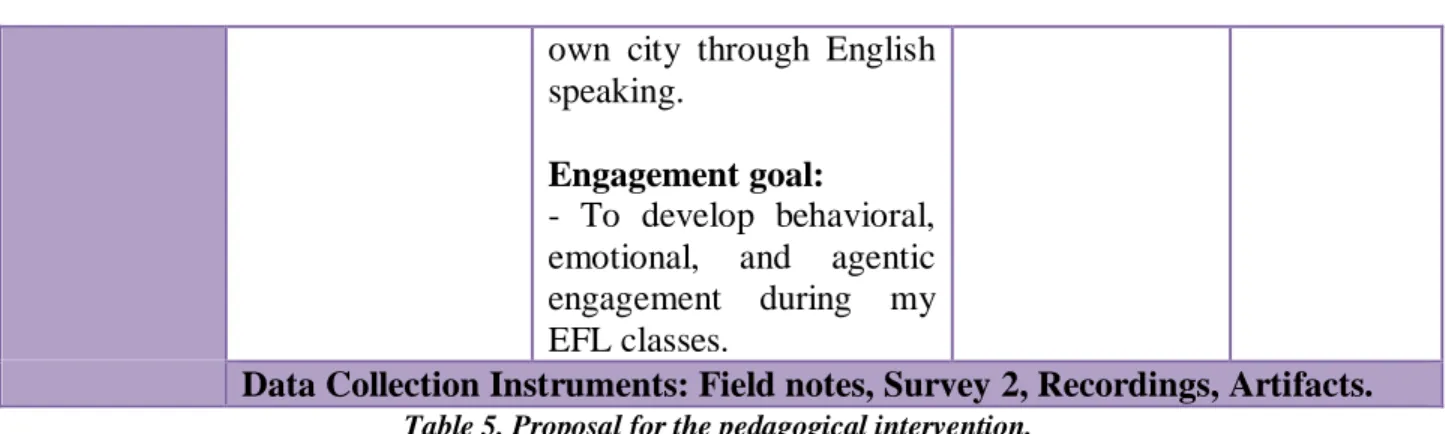
(25) GAMIFICATION: A MISSION TO FOSTER STUDENTS’ ENGAGEMENT AND INTERACTION IN THE EFL CLASSROOM people at a meaningful level in which they are able to maximize their own skills and be aware of their progress with a clear purpose. However, specifically in the educational field, the need to ensure students’ interest and participation has meant that game mechanics have become core teaching tools (Oxford Analytica, 2016). To this extent, Gamification is perceived in this project as a student-centered strategy which allows learners to be aware of their own learning processes by keeping engaged due to the fact that they live learning as an everyday involving experience. Likewise, it enhances students’ engagement at school. Gamifying an educational system leans on the insertion of some game principles, mechanics, and emotional features to teaching-learning practices. Regarding game principles, it is essential to know that all games share some fundamental characteristics: they have a clearly defined set of rules, a rapid feedback system, a well-established goal, and levels (Oxford Analytica, 2016). For this project, all these elements not only operate as the structure which regulates the gamified system; but also provide students with a well stablished set of rules and dynamics which gives them confidence about the way the gamified EFL classes work. Table 1 shows the game principles that were used in this research. Game principles Rules. The commands which guide the structure of a game and which allow players to know how to act and what to do in most of the cases. As Kapp (2013) stated: without rules, games would not exist.. 12.
(26) GAMIFICATION: A MISSION TO FOSTER STUDENTS’ ENGAGEMENT AND INTERACTION IN THE EFL CLASSROOM Feedback System. It allows the player to be conscious of the consequences of his/ her actions but without telling him /her how to fix them. It must be often instant to allow the student to be aware of his/her own process.. Goal. It is the main purpose or objective of the game, “the simple introduction of a goal adds purpose, focus, and measurable outcomes” (Kapp, 2013). Usually, there are several mini-goals to achieve before reaching the biggest one which means that the game is over.. Levels. This is the element which allows the participants to observe their progress, achieve mini-goals, and improve their skills progressively according to the abilities required in each one of the stages of the game. Table 1. Game principles of the research. Furthermore, mechanical elements constitute the features which create an environment to stimulate learning, promote motivation, enhance engagement, and incentivize involvement; these include: reward structures, avatars, and leaderboards. Table 2 presents these elements. Mechanical elements Reward structures. These include points and badges as visible symbols of achievement which aim at triggering motivation for participants to keep interested and engaged in the game (Oxford Analytica, 2016).. 13.
(27) GAMIFICATION: A MISSION TO FOSTER STUDENTS’ ENGAGEMENT AND INTERACTION IN THE EFL CLASSROOM Avatars. They provide players with a customized representation of themselves designed with creativity and self-expression to build up a profile which includes achievements and progression of the participant.. Leaderboards. This element is a powerful motivator which consists on a list that shows the top scores and includes competition between participants. Although they could be motivational for the students at the top, those at the bottom could suffer loss of confidence (Oxford Analytica, 2016); that is why they should be used carefully. Table 2. Mechanical elements of gamification of the research. Gamification’s mechanical elements are of special importance because they work on the premise that we all have an innate desire to improve. Thus, reward structures become vital to add motivation to learning activities which allow students to work on mastering their skills by overcoming the challenges presented. In relation to this aspect, Burke (2014) affirms: The rewards, such as points and badges, are the hallmarks of gamification. But how can badges and points motivate people? The simple answer is that they don’t. It’s what they mean that motivates people. In some cases, they mean progress toward reaching a seemingly impossible goal and, ultimately, the triumph of succeeding.. On the other hand, avatars become the players’ or students’ representation of themselves and their peers, and a leaderboard functions as the observable measure of avatars’ progress which depicts social recognition. Thereby, both elements are useful to certify skills attainment and goals achievement and they are necessary to incorporate social recognition as a powerful motivator (Burke, 2014).. 14.
(28) GAMIFICATION: A MISSION TO FOSTER STUDENTS’ ENGAGEMENT AND INTERACTION IN THE EFL CLASSROOM Finally, there is a last key emotional element known as Flow Theory of Motivation, this is one of the theories behind Gamification of learning. Flow is defined as a mental state of full involvement, engagement, and focus on the task at hand (Oxford Analytica, 2016); for this reason, it is conceived as the ideal goal of designing gamified activities and environments. However, it is necessary to bear in mind that for students to achieve this mental state, there must be a balance between challenge and the skills required to accomplish the main goals of the game. Interaction as an imperative factor in EFL learning. The role of Interaction has been considered as fundamental in language learning from the sociocultural theory of Vygotsky, who stated that children learn a language by watching others interacting until they finally reach their independence by developing their own ability to communicate and interact with others (1978). This means that learning a language is a social process which is carried out through the socialization of the child with his/her environment and his/her peers by concluding on successful communication. At this point, Vygotsky’s Zone of Proximal Development plays a central role, because it implies the distance between a student’s ability to perform a task under an adult’s guidance and/or with peer collaboration and the student’s ability to solve the problem independently (Vygotsky, 1978). For this reason, the ZPD becomes the fundamental zone where learners interact and communicate among them with the purpose of achieving learning. In this respect, the concept of Scaffolding becomes crucial as it is “the dialogic process by which one speaker assists another in performing a function that he or she cannot perform alone” (Ellis, 2005, p. 180). In this way, Scaffolding is conceived in this study as a kind of interaction commonly held between the teacher and the student with the purpose of helping students to be. 15.
(29) GAMIFICATION: A MISSION TO FOSTER STUDENTS’ ENGAGEMENT AND INTERACTION IN THE EFL CLASSROOM able to interact spontaneously with their peers in an immediate future. For this reason, the most knowledgeable speaker will not always be the teacher, but also the student when interacting with his/her classmates. As Scaffolding and ZPD occur in a parallel way, Interaction may always be taking place in an EFL classroom; consequently, learning occurs during Interaction held in the ZPD. Such affirmation leads us to the definition of Interaction built for this research: language development may also take place during Interaction, since “feedback which learners get from their teachers and peers drives them to test their hypotheses and refine their development knowledge of the language system” (Hedge quoted by Zhang, 2009). Because of this, Interaction among EFL learners makes possible the improvement of the different language skills, even though it focuses on oral production. This is evident as through interacting among peers, students should not be just speaking, but also listening and constructing grammar structures to produce short conversations by themselves. Moreover, Interaction approaches learners to real life communicative events and situations; “in the era of communicative language teaching, interaction is, in fact, the heart of communication; it is what communication is all about” (Brown, 1994); because of this, Interaction has become one of the most fundamental elements in an EFL classroom by allowing students to be part of daily-life situations which imply communication. In fact, oral interaction in an EFL context can occur in different ways; these include: learner-teacher, learner-learner, and learner- group interaction (See table 3).. 16.
(30) GAMIFICATION: A MISSION TO FOSTER STUDENTS’ ENGAGEMENT AND INTERACTION IN THE EFL CLASSROOM Types of Interaction in an EFL Context Leanerlearner. This is the main kind of interaction addressed in this research, as it allows the participants to be part of real-life situations by using the foreign language as their main means of communication. By interacting directly with a classmate every student approaches him/herself to the real use of English as a foreign language intended to allow verbal exchanges among its participants.. Learnergroup. Learner-group interaction provides every student with the confidence necessary for being part of daily life communicative events. In this way, when a learner interacts not only with one classmate but with all of them at the same time by participating actively during class time and going in front of the whole group to speak loudly, he/she could acquire the security necessary to speak in the foreign language.. Learnerteacher. It is conceived as one of the most common kinds of oral interaction in an EFL context; however, its purpose should be to promote the previous two kinds of interaction by allowing students to be part of real communicative events. Also, learner-teacher interaction is part of the ZPD and scaffolding strategies functioning as a tutoring and guiding opportunity for both participants. Table 3. Types of interaction included in the research. However, it is essential to mention one of the most renowned effects of Interaction, which is included in the learner-learner kind: Negotiation of Meaning. It is about verbal exchanges that occur when speakers try to prevent the breakdown of the communicative event (Ellis and Barkhuizen, 2005). Nonetheless, this Negotiation of Meaning should be addressed as a. 17.
(31) GAMIFICATION: A MISSION TO FOSTER STUDENTS’ ENGAGEMENT AND INTERACTION IN THE EFL CLASSROOM goal to achieve during the whole process of EFL learning, and not as an immediate result of isolated activities. Additionally, negotiation of meaning should result because of the implementation of activities which promote learners’ self-interest on interaction, as a meaningful strategy to communicate by using the foreign language. Engagement as an influential factor in EFL learning. Engagement refers to the quality of a learner’s connection or involvement with the endeavor of learning (Mohseni & Rahmanpanah, 2017). Therefore, it becomes an influential learning factor because of its importance in students’ involvement in foreign language acquisition. Engagement has to do especially with behavioral and emotional aspects which depict the extent to which learners indicate on-task attention, effort, persistence, interest, enthusiasm, and enjoyment (Skinner, Kinderman, & Furrer, 2009); thus, it represents a meaningful element for students to achieve learning in a catching and appealing way which provides them not only with learning, but also with delight at the same time. Additionally, for a student to be fully engaged, there are key elements which should motivate him/her such as the environment, strategies, activities, and the context which surrounds him/her when learning. Thus, “meaningful student involvement throughout the learning environment” (Martin & Torres, 2016, p. 1) should be part of an engaging EFL learning context. As a result, learners will be caught up into a meaningful environment where not only the development of their skills will be promoted, but also their interests will be taken into account to achieve their goals. As Goleman (1995) states “an engaged learner is absorbed in what he is doing as if his awareness is merged with his actions.”. 18.
(32) GAMIFICATION: A MISSION TO FOSTER STUDENTS’ ENGAGEMENT AND INTERACTION IN THE EFL CLASSROOM Thereby, Engagement is understood in this research as a multidimensional construct associated with student achievement, positive behaviors, enjoyment, and interest; which is also a determining factor in the process of learning a foreign language. It includes four sub-dimensions: behavioral, emotional, cognitive, and agentic (Dinçer, Yeşilyurt & Demiröz, 2017) from which only three will be included in this project, due to their relationship with the two constructs presented previously (See Table 4). Engagement sub-dimensions Behavioral. It is related to putting effort, attention, and concentration on developing a specific task and keeping high persistence to achieve goals. (Reeve, 2012).. Emotional. It has to do with the presence of task-facilitating emotions around a learning activity such as: interest, curiosity, enthusiasm, effort, attention, etc. (Reeve, 2012).. Agentic. It refers to the proactive, intentional, and constructive contribution into the flow of the learning activity; this means enriching the learning activity, rather than passively receiving it as a given. (e.g., offering input, making suggestions, participating actively). (Reeve, 2012). Table 4. Engagement sub-dimensions of the research. Finally, it is also essential to mention the interrelation between Engagement and Motivation. Although these two concepts are deeply related to each other and could cause confusion, the main distinction is that while Engagement refers to the extent of a student’s active involvement in a learning activity, Motivation refers to any force that energizes and directs behavior (Reeve, 2009). The key aspect is that “motivation is a private, unobservable. 19.
(33) GAMIFICATION: A MISSION TO FOSTER STUDENTS’ ENGAGEMENT AND INTERACTION IN THE EFL CLASSROOM psychological, neural, and biological process that serves as an antecedent cause to the publicly observable behavior that is engagement” (Reeve, 2009, p. 151). Hence, Motivation is not an observable behavior while Engagement is. Nevertheless, some Motivation elements such as Mastery, proposed by Daniel Pink, are observable behaviors which were also included in this research. Mastery is defined as the desire to improve; if a learner is motivated by mastery, he/she will likely see his/her potential as being unlimited, and he/she will constantly seek to improve his skills through learning and practice (Pink, 2009). Noticeably, these kinds of elements become crucial when observing the results of promoting learners’ Engagement.. Interaction. Engagement. Gamification. Figure 1. Interrelation between the constructs of the research. 20.
(34) GAMIFICATION: A MISSION TO FOSTER STUDENTS’ ENGAGEMENT AND INTERACTION IN THE EFL CLASSROOM The three constructs and the literature review presented in this chapter constitute the theoretical framework of this research, which can be understood as the basis of the analysis process which will be conducted according to the methodological design and data collection procedures, which will be described in the next chapter.. CHAPTER III. This chapter presents the research design followed in this study. It includes a brief description of the type of study and the research paradigm, an account of the data collection instruments and procedures, the explanation of the methodology for data analysis, and the ethical issues addressed in this study. All these elements and instruments are focused on ensuring the reliability and validity of data triangulation. Research Paradigm This research study followed a qualitative research paradigm which was fundamental to determine the impact of using Gamification as a pedagogical strategy in the strengthening of an engaging environment in order to improve Interaction in the EFL classroom. A qualitative research uses methods such as participant observation or case studies which result in a narrative, descriptive account of a setting or practice (Parkinson & Drislane, 2011). Thus, previous observation of the setting to identify a problem or a need of students is a key aspect of qualitative research, which ended into an effort to find a solution to the problem and to provide a detailed description of its results.. 21.
(35) GAMIFICATION: A MISSION TO FOSTER STUDENTS’ ENGAGEMENT AND INTERACTION IN THE EFL CLASSROOM Additionally, qualitative research “turns the world into a series of representations, including field notes, interviews, conversations, photographs, recordings, and memos to the self. It involves an interpretive, naturalistic approach to the world” (Denzin & Lincoln, 2005.p. 3). Because of this, even though the data collection instruments necessary for a qualitative research do not provide measurable analysis of data, they allow the researcher to build up a wide description of the results including experiences, limitations, impacts, and reflections including his/her own voice. According to Merriam (quoted by Delgado & Chapetón, 2015), qualitative research seeks information related to the way people interpret experiences and the way these have an impact in their lives. Because of this, the present study aims to collect information about students’ experiences in relation to their involvement into a gamified class which promotes engagement and interaction in the EFL learning process. For this purpose, the qualitative paradigm of this study goes hand in hand with the action-research type of study. Type of study This research project belongs to the action-research type of study due to its approach based on the identification of a problem and the subsequent attempt to improve it. In this way, observations made in field and the immersion in a real EFL context at a public school of Bogotá made possible the characterization of the dynamics of the class based on students’ interests and needs to formulate the problem of this research. Action- research is held within the ongoing social processes of particular societal contexts, and it typically involves developments and interventions inside those processes to bring about improvement and change (Burns, 2005). For this, especially in education, action-research. 22.
(36) GAMIFICATION: A MISSION TO FOSTER STUDENTS’ ENGAGEMENT AND INTERACTION IN THE EFL CLASSROOM aims to impact students’ and teachers’ dynamics and practices “teachers are empowered to make changes related to teaching and learning” (Hine, 2013. p. 153). By following the cyclical process of this type of study, researchers can find reliable results. The first stage is related to the design of the study and the plan of the processes to be followed. The second step is to collect data using different instruments and procedures. Thirdly, the information gathered is analyzed and classified. Next, the communication stage focuses on presenting the outcomes to an audience. Finally, the researcher uses the outcomes of the study to solve the problem previously identified. In view of this, due to the problem found about the lack of strategies and activities which promote engagement and interaction; this study focuses on using gamification as a pedagogical strategy to foster students’ engagement, to allow them to be involved enough to interact with others by using the foreign language with confidence in the EFL class. Thus, action-research type of study is evident by identifying a problem on a specific population, gathering data, and endeavoring to find a positive outcome for it. Data Collection Instruments The instruments used for this research study aim to ensure that the data collected for the subsequent analysis in the triangulation process are valid and reliable. Triangulation “involves the carefully reviewing of data collected through different methods in order to achieve a more accurate and valid estimate of qualitative results for a particular construct” (Hoyo & Allen, 2006. p. 42); that is to compare the information gathered through the different instruments to make it reliable. For this reason, interviews, field notes, artifacts, surveys, and recordings will provide different perspectives of the data collected in this research study.. 23.
(37) GAMIFICATION: A MISSION TO FOSTER STUDENTS’ ENGAGEMENT AND INTERACTION IN THE EFL CLASSROOM Interviews. As “interviews are best suited for understanding people’s perceptions and experiences” (Blandford, 2013. p. 23), this instrument is perfect to hold a conversation which allows the researcher to gather specific data needed, which cannot be observed. In this research, a semi-structured interview allowed the researcher to plan the specific questions necessary to obtain detailed information about the subject matter, but also to ask other additional information or explanations if it was necessary. In this way, one interview was applied to the homeroom teacher at the beginning of the research process to know her perceptions about students’ characteristics and needs in terms of EFL learning (See Appendix G: Interview N° 1). Field notes. Field notes are written records to describe what is happening in the research place by using the strategy of note-taking. Nonetheless, they are not just a narrative of what is happening in the class but are focused on a particular aspect of teaching and learning (Wallace quoted by Delgado & Chapetón, 2015). For this reason, in this study field notes focused on registering students’ experiences, reactions, and attitudes in relation to the use of gamification, the improvement of engagement, and interaction. Moreover, a key aspect for the use of field notes is that decisions about what to write and what aspects require special attention are essential in elaborating a field note (Emerson et al, 1995). Because of this, the field notes used in this study took into account not only the narrative description of what happened during the EFL class, but also the observer’s interpretation of those events. With these characteristics in mind, this study implemented field notes as a data collection instrument present in the entire research process; a field journal was made with the observations made in the field. (See Appendix C: Field Note N° 1).. 24.
(38) GAMIFICATION: A MISSION TO FOSTER STUDENTS’ ENGAGEMENT AND INTERACTION IN THE EFL CLASSROOM Surveys. This data collection instrument consists on a series of questions which are focused on gathering specific information to find patterns in the group of students. Through a survey, a researcher can get data about a community’s beliefs and behaviors (Driscoll, 2011). Taking this into account, in this research project, surveys were xused as an instrument to obtain information related to students’ behavior, experiences, and attitudes of the students about gamification as a pedagogical strategy to promote engagement and interaction in the EFL class. For this reason, two surveys were applied to students: one at the beginning to characterize the population (See Appendix A: Survey N°1), and another one (See Appendix B: Survey N° 2) during the implementation of the pedagogical intervention to know students’ perceptions about the process held. Recordings. This data collection instrument allows the researcher to obtain qualitative data with the opportunity of not losing details of the information gathered. Specifically, in this research, recordings were of vital importance in terms of having a register of the interaction between students. Therefore, several samples of recordings of some students’ interaction were taken during the three cycles of the pedagogical intervention (See Appendix H: Recordings’ Transcription) to analyze students’ progress in the EFL learning process. Furthermore, this instrument was of vital importance when analyzing data around the types of interaction held during the English sessions. Artifacts. It refers to the written, visual, and physical material relevant to the study (Merriam quoted by Delgado and Chapetón, 2015). Specifically, for this research, artifacts were understood as students’ work done in class, which was useful to evidence the skills that learners developed in relation to engagement and interaction in the EFL class time. This implies that. 25.
(39) GAMIFICATION: A MISSION TO FOSTER STUDENTS’ ENGAGEMENT AND INTERACTION IN THE EFL CLASSROOM during the research, several pieces of artifacts were collected (See Appendix I: Students’ Artifacts) in order to include physical objects found within the study setting (Merriam quoted by Delgado and Chapetón, 2015). Thus, these artifacts were collected and registered along the pedagogical intervention process. Procedures for data collection The procedures for data collection of this research started by sending the consent form (See Appendix D, Consent Form) to the parents of the 30 students from group 402 at IED Domingo Faustino Sarmiento in which all the parents authorized their children to participate in this project. On the other hand, the observations and field notes started on February 15 th of 2018 and finished on May 6th of 2019. Moreover, the cycles of action-research were applied in accordance to the context of the study to characterize the participants, build the diagnosis, gather information, identify the problem, and define the methodology of this research. On the other hand, the cycles of the pedagogical intervention started to be applied on August 14th of 2018 and finished on May 6th of 2019. The first cycle and half of the second one were applied during the second semester of 2018, and the second half of the second cycle and the last cycle were applied on the first months of 2019. Along this time, data collection instruments were applied in order to gather data for their following analysis process. Recordings, field notes, and artifacts were collected constantly as activities were developed. However, surveys were applied in November of 2018 and May of 2019. On the other hand, the teacher’s interview was applied in February of 2018 to characterize students and their needs. This chapter provided the reader with a detailed description of the methodological design, data collection procedures and instruments, type of study, and research paradigm, which are the. 26.
(40) GAMIFICATION: A MISSION TO FOSTER STUDENTS’ ENGAGEMENT AND INTERACTION IN THE EFL CLASSROOM guidelines underpinning this research study. Bearing all these characteristics in mind, some of the researcher’s visions and the instructional design for the implementation of the pedagogical intervention of this project will be depicted in the next chapter.. CHAPTER IV In this chapter, the visions of curriculum, learning, language, and EFL classroom are presented, as well as the instructional design which contains the cycles of development of the gamified proposal for the implementation stage of this project. The elements included in this section are closely interrelated with the three constructs presented previously, so that the pedagogical intervention is consistent with the theoretical framework of the research. Vision of Curriculum The concept of curriculum has been conceived throughout history in multiple ways, being commonly understood as the syllabus of any training program. However, there are essential sociocultural and philosophical foundations which underlie the curricular vision; in addition to some elements such as educational objectives, activities, and learning, which make up this construct. Bearing these considerations in mind, the curriculum is conceived in this study as “an instrument of education that allows a human group to create a possible material and spiritual image of what they want to be” (Hernández, 1993. p. 34). Thereby, the curriculum involves students’ interests and needs, as well as the current conditions of the educational context. Moreover, it underlies the ideologies of the educational community around the pedagogical model, education, learning, and language, as well as the conception of man and society that an. 27.
(41) GAMIFICATION: A MISSION TO FOSTER STUDENTS’ ENGAGEMENT AND INTERACTION IN THE EFL CLASSROOM institution wants to reach throughout the learning process. From there, the syllabus, learning objectives, assessment criteria, and activities emerge. Vision of Learning Nowadays, it is a well-known fact that learning is a process which takes place since we are in the womb of our mothers and ends until the day we die. However, for this to happen, interaction becomes one of the fundamental sources of learning. In this project, social interaction is understood as part of everyday life and of the real world; because it is in interaction where the construction of knowledge happens. Dewey believed that children should come to school to practice with others in a community that gave them the experiences to share with a society (Allazzam, 2015). In this way, EFL settings should be perfect scenarios to allow interaction between students, because it is there where students from an early age have the possibility to have an approach to real communicative situations. “When social interaction becomes part of the classroom dynamics, classrooms become active places” (Darling-Hammond & McLaughlin, 1995); thus, learning occurs in an active, involving, and engaging way. For this reason, it should always be enjoyable to the learner (Vygotsky quoted in Allazzam, 2015). Vision of Language The concept of language has been widely studied going from structuralism to theories that are closer to its social dimension. On account of the fact that social interaction was a central construct in this project, a definition from the social point of view of language is presented. As Halliday states, “language is the means by which people interact” (1979, p. 19); so, language is conceived as a human behavior which contributes to the integral development of a human being. Furthermore, language is rooted in our primitive reactions, and transmitted socio-culturally;. 28.
Figure


+2
Documento similar
The analysis revealed significant differences in categories such as word count, clout, emotional tone, or analytical thinking when comparing the texts written by an
In the edition where the SPOC materials were available, we have observed a correlation between the students’ final marks and their percentage rate of
The results obtained from students’ responses to the questionnaire used in this research study indicate that the academic trajectory of students in the Language Teaching program at
The expansionary monetary policy measures have had a negative impact on net interest margins both via the reduction in interest rates and –less powerfully- the flattening of the
Jointly estimate this entry game with several outcome equations (fees/rates, credit limits) for bank accounts, credit cards and lines of credit. Use simulation methods to
In our sample, 2890 deals were issued by less reputable underwriters (i.e. a weighted syndication underwriting reputation share below the share of the 7 th largest underwriter
In the last few decades, a growing body of research has shown the potential of these methodologies, such as GBL, to develop and foster amongst college students’ engagement,
The aim of this study was to examine the effect of the use of the flipped classroom on the level of self-efficacy and the assessment of clinical competencies in nursing
