A psychological perspective on crowding describes it as a situation of perceived high density that compromises privacy, the individual’s control over desired interactions and the security offered by personal space (Hombrados-Mendieta, 2010). The concept has evolved over time. While initial approaches highlighted the negative effects of high density and information overload as the causes of environmental stress (Milgram, 1970), subsequent approaches shifted the focus to “control”, leading to an approach which allows relationships between perceived density and control to be dealt with when assessing environmental settings (Rodin, Solomon, & Metcalf, 1978).
As Altman and Rogoff (1987) recognized in their refl ection on “World Views in Psychology” regarding the scope of Environmental Psychology, the theoretical and methodological assumptions which manipulate and study complex realities as if they were schemes of simple relationships – a major trend in Environmental Psychology – have led to partial, unsatisfactory results to the problems that have been broached. This situation would justify the interest in and the effort to defi ne and make operational wide-ranging approaches to the study of behavior and its contexts. Along these lines, the advances in integrated approaches to behavior and their contexts in Environmental Psychology (Wapner & Demick, 2002) have introduced broader perspectives that have been operationalized through people-environment transactional proposals from a holistic viewpoint of their components and process (Werner, Brown, & Altman, 2002).
Most of empirical research on crowding has focused on the search for personal and situational variability. To a large extent, the categorization of environments according to the level of perceived
ISSN 0214 - 9915 CODEN PSOTEG Copyright © 2016 Psicothema www.psicothema.com
Bio-psycho-social correlates of the perceived crowding in different contexts
Rafael Tomás, María Amérigo and Juan A. García
Universidad de Castilla-La Mancha
Abstract
Resumen
Background: This paper analyzes the experience of crowding through a biopsychosocial approach to human behavior which empirically joins different dimensions that the literature has analyzed separately. The main aim consists of identifying factors involved in perceived crowding from (a) the emotional response and affective meaning (BIO dimension); (b) the perception of psychological well-being and personality traits (PSYCHO dimension), and (c) sociodemographic characteristics (SOCIO dimension). Method: 761 adults completed an online questionnaire that included an assessment of images representing four high- and low-density functional and residential contexts. The data were analyzed through four hierarchical regressions, one for each spatial context. Results: Although the results vary depending on the contexts analyzed, the prevalence of the variables from the BIO dimension in functional contexts, as opposed to residential contexts, is highlighted. The latter spaces show greater heterogeneity regarding the explanatory power of the experience of crowding. Conclusions: The response to crowding experienced in residential environments shows a greater range of variables involved, supporting the idea of these spaces’ greater complexity, insofar as they are psychologically adaptive.
Keywords: Crowding, bio-psycho-social approach, context.
Correlatos bio-psico-sociales del hacinamiento percibido en diferentes contextos. Antecedentes: esta investigación analiza la experiencia de hacinamiento mediante una perspectiva bio-psico-social del comportamiento humano que contemple distintas dimensiones que la literatura ha analizado empíricamente de forma independiente. El objetivo principal consiste en identifi car factores implicados en el hacinamiento percibido provenientes de: a) la respuesta emocional y el signifi cado afectivo (dimensión BIO); b) la percepción del bienestar psicológico y los rasgos de personalidad (dimensión PSICO); y c) las características sociodemográfi cas (dimensión SOCIO). Método: 761 adultos respondieron a un cuestionario online que incluía la evaluación de imágenes representativas de cuatro contextos funcionales y residenciales de alta y baja densidad. Los datos fueron analizados a través de cuatro regresiones jerárquicas, una por cada contexto espacial. Resultados:
aunque los resultados varían en función de los contextos analizados, cabe destacar la prevalencia de variables provenientes de la dimensión BIO en contextos funcionales frente a los residenciales. Estos últimos muestran mayor heterogeneidad en la capacidad explicativa de la experiencia de hacinamiento. Conclusiones: la respuesta a la experiencia del ambiente en los espacios residenciales muestra una mayor amplitud de variables implicadas en la vivencia, percepción y adaptación a estos entornos, reforzando la idea de una mayor complejidad de estos espacios, en tanto que psicológicamente adaptativos.
Palabras clave: hacinamiento, aproximación bio-psico-social, contexto.
Psicothema 2016, Vol. 28, No. 4, 394-400
doi: 10.7334/psicothema2015.336
Received: December 20, 2015 • Accepted: June 10, 2016 Corresponding author: María Amérigo Cuervo-Arango Facultad de Humanidades de Toledo
Universidad de Castilla-La Mancha 45071 Toledo (Spain)
control allows us to understand crowding as it is experienced in different settings, where the characteristics linked to these settings exert an infl uence on the perception of specifi c density conditions (Stokols, 1976). Nonetheless, as Santoyo and Anguera (1992) admit, most of these studies have been tackled from a “focal” perspective. These scholars suggest analyzing crowding as a “context” to complement focal approaches, taking into account the specifi c features of the spaces when effects are produced on the perception of density and the generation of particular behaviors. There is, however, very little literature on this contextual perspective of crowding. One exception is the paper by Bonnes, Bonaiuto and Ercolani (1991), who found that perceptions of crowding and housing satisfaction were related to and qualifi ed by the socio-physical context. Gómez-Jacinto and Hombrados-Mendieta (2002) followed a similar conceptual approach. These scholars analyzed the interactive effects of household and community crowding on psychological stress and residential satisfaction, including social support as a mitigating factor for the negative effects caused by perceived excessive density.
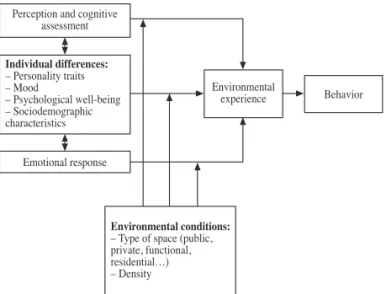
The approach adopted as a general point of reference in this paper has assumed the need of broaching the multi-dimensional complexity involved in analyzing human behavior in general and spatial behavior in particular (Bell, Greene, Fisher, & Baum, 2001). This study’s framework turns out to be particularly apt for the specifi c case of crowding, construed as a balance between the privacy one strives for and the privacy obtained in the midst of environmental expectations and conditions, which can lead to a possible perception of discomfort and/or loss of control over personal space (Altman, 1975). To the extent by which control over privacy and personal space are deemed unsatisfactory, the situation will therefore require recurring to adjustment mechanisms to balance out the perceived threatening conditions and the expectations of well-being sought in the person-environment adaptation. From this standpoint, the experience of crowding is conceptualized as an interdependent synthesis of environmental and social as well as cognitive and affective processes and components, as formulated in Environmental Psychology research by integrative multidimensional scheme approaches (Bell et al., 2001). Such an approach, as represented in Figure 1, could be tackled by combining factors from biological-refers to the inferences about psychological states based on physiological events, as considered by Environmental Psychophysiology (Parsons & Tassinary, 2002)-, psychological, and social dimensions, analyzing the relationships among these dimensions and perceived crowding and their variations across different environmental conditions.
The experience of crowding can thus be analyzed from a bio-psycho-social perspective that contemplates both the affective response and the emotional reaction as the subject’s fi rst-level response (Ittelson, 1973) that interacts with cognitive assessment. The existing interdependence between the emotional and cognitive levels in environmental experience has been dealt with analytically through essential operating axes, like pleasure and arousal (Russell & Pratt, 1980), or security linked to “impact” and “control” factors (Corraliza, 1987), constituting a new more wide-ranging psychological level that interacts intensively with emotional (fear or anxiety) and motivational (security or comfort) factors. Furthermore, as can be seen in Figure 1, psychological dimension play a signifi cant role in the environmental experience of crowding as a subjective representation of the density conditions perceived, where an individual’s psychological aspects like
personality, mood or perceived mental health can be related to the conditions perceived at an individual level (Aziraj & Ceranic, 2013). Hence, differential psychological factors constitute variability factors in an individual’s response to the variation in environmental conditions through their changing expressions in the experience that is felt of environments, spatial behavior and the defense and regulation of personal space. Lastly, the meanings attributed to the environment’s representations and images are to a great extent the outcome of the meanings acquired by social groups of reference (stereotypes, values, etc.) and reproduced in day-to-day social interactions connected with the use of space (Aragonés, Amérigo, & Pérez-López, 2010), as well as in personal perceptions and images of the environment. Due to all of the above, the role played by other social variables which are also linked to representations of the environment and to spatial behavior patterns, such as socioeconomic conditions, educational level, residential habitat or cultural background (Ozdemir, 2011), can be highlighted in addition to classical variables like gender and age.
Although some research papers have been highlighted which broach a contextual conception of crowding, as far as the authors are aware there are no studies which empirically seek to establish a joint analysis of crowding’s determinants from a bio-psycho-social perspective, as described above. This paper aims to empirically develop such a theoretical proposal by exploring the joint impact on perceived crowding in different settings, through factors coming from a) the emotional response and affective meaning (BIO dimension); b) the perception of psychological well-being and personality traits (PSYCHO dimension) and c) sociodemographic characteristics (SOCIO dimension).
Method
Participants
A convenience sample was used, consisting of participants who were recruited by an invitation to participate in an online survey. It was distributed through a variety of dissemination channels (e-mail, social networks and personal contacts). Seven-hundred sixty-one adults from general Spanish population took
Perception and cognitive assessment
Individual differences:
– Personality traits – Mood
– Psychological well-being – Sociodemographic characteristics
Emotional response
Environmental
experience Behavior
Environmental conditions:
– Type of space (public, private, functional, residential…) – Density
part in the study. The average age was 40.9 years (SD =11.54). The distribution of participants by gender was 61.8% females. Concerning habitat, 45.5% of participants were essentially urban dwellers (from medium-sized and large cities and their suburbs).
Instrument
An online questionnaire structured around three sections was designed. Firstly, data on sociodemographic variables like residential habitat (large city, large city suburb, medium-sized city and rural environment), dwelling size (m2), age, gender, educational level and socioeconomic condition were collected.
The second section contained measures of perceived mood/ psychological well-being and personality traits. The Mental Health Scale (MH-5), a reduced fi ve-item version obtained from the SF-36 Health questionnaire adapted by Alonso, Prieto and Antó (1995), was used for the former. This scale assesses the degree to which the person has experienced depression and anxiety symptoms in the last month on a six-point scale, ranging from always to never, with better mental health associated with a higher score. Personality was measured following the Big Five Model through an inventory adapted by Terracciano et al. (2005), comprised of 30 items, six for each personality trait, which are assessed through a fi ve-point semantic differential scale.
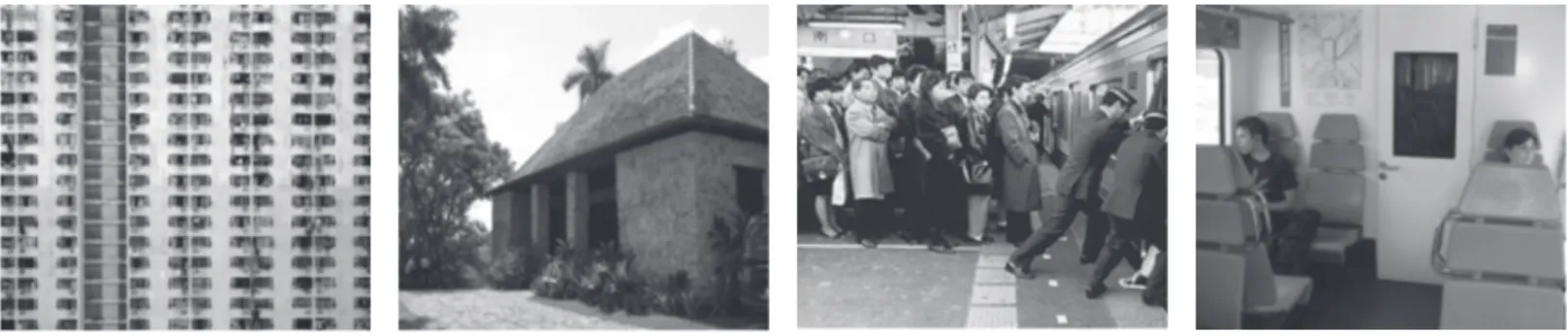
The questionnaire ended by requesting the participant to assess four images representing four contexts (Figure 2) defi ned on the basis of two dimensions: density (high or low) and type of space (residential or functional). These images were chosen according to the results obtained by Tomás (2015).
Participants had to assess each of the four images based on the following variables:
– Affective assessment by means of the Self-Assessment Manikin (SAM) designed by Bradley and Lang (1994), where the participant indicated on a nine-point scale his/her level of pleasure (pleasant-unpleasant) and arousal (calm-aroused) after viewing the image.
– Additionally, an alternative affective assessment measure through the scale developed by Corraliza (1987) appeared only in the fourth image to avoid boredom. This instrument is comprised of 16 bipolar adjectives, on a fi ve-point semantic differential scale, and measures the environmental meaning associated with a place through four dimensions: pleasure, arousal, impact, and control.
– Perceived crowding by means of the single-item crowding measure proposed by Vaske and Shelby (2008). The item
assesses the sensation of crowding as perceived social density on a nine-point scale, ranging from comfort to discomfort.
The order in which the four images were shown changed depending on a randomized sequence.
Procedure
The survey was accessible between November 2012 and March 2013. The data obtained were analyzed in a comprehensive way, relating the perceived crowding in each of the four contexts with three group of explanatory variables: the biological (BIO: affective assessment), psychological (PSYCHO: psychological well-being and personality traits) and social (SOCIO: age, gender, educational level, socioeconomic conditions, residential habitat and dwelling size) dimensions. These analyses were conducted with hierarchical regressions in which the predictive variables were all those which made up the three aforementioned dimensions. Each of these composed a block and were included in the regression hierarchically in order to analyze each dimension’s joint contribution. The perceived crowding in each context was the criterion variable. Statistical analysis was carried out using IBM® SPSS® Statistics 19.0 and R 3.1.1.
Results
Reliability analysis and descriptive statistics
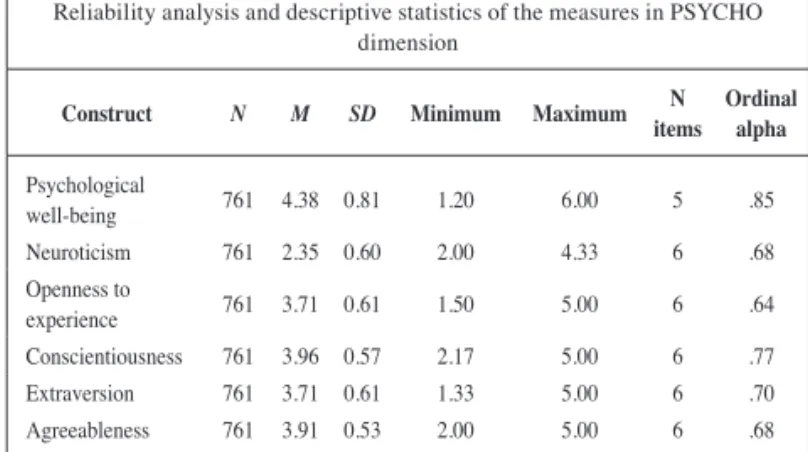
Initially, the reliability of the psychological well-being and the fi ve personality traits scales was assessed by calculating the ordinal alpha, as recommended by Gadermann, Guhn and Zumbo (2012) for scales with two to seven response options. Table 1 shows the descriptive statistics of each one of them and the ordinal alpha. On the one hand, high average scores can be observed for psychological well-being, as well as for the traits of conscientiousness, agreeableness, extraversion and openness to experience. On the other hand, intermediate average scores were found for neuroticism. The reliability analysis showed appropriate values above or very close to .7, with the exception of the scale which measures the openness to experience, whose ordinal alpha turned out to be .64.
The reliability of the biological dimension, which corresponds to the affective variables obtained through the scale developed by Corraliza (1987), was also analyzed. As mentioned in the instrument’s description, this scale was only applied to the image
Figure 2. Images representing the study’s four contexts
shown fourth and last. Table 2 shows the reliability analysis and descriptive statistics of this scale. Taking into account the different contexts, the ordinal alpha shows a high reliability for pleasure and control, adequate values for impact (except in the high-density residential context with an ordinal alpha of .54) and very low reliability for arousal (which in no context reaches the value of .6). A decision was therefore taken to disregard the latter variable in successive analyses, since an alternative measure from the SAM was available.
Table 2 also shows the descriptive statistics of the affective assessment obtained through the SAM and the perceived crowding. Data show: high values for arousal and low values for pleasure in high-density residential and functional contexts; and high values for pleasure and relatively low values for arousal in low-density residential and functional contexts. In consonance with these results, the descriptive statistics for the measure of perceived crowding show high values in high-density residential and functional contexts, and low values in low-density residential contexts.
Analysis of the biological, psychological and social dimensions of crowding
Before proceeding with the analysis of the impact of the biological, psychological and social dimensions on perceived crowding in each of the four contexts, any nominal or ordinal variables having more than two categories were converted into dummy variables with a value equivalent to 1 for the case of subjects: a) with university studies; b) who were in paid employment (workers); and c) who lived in a dwelling measuring more than 100 m2.
Table 3 shows the four regression analyses in which the three dimensions were hierarchically included in each of the equations in ordered blocks. It is thus possible to assess the increase in R2
resulting from the inclusion of each of the dimensions under study. We underline that pleasure as measured through the SAM had high collinearity, a logical circumstance if it is taken into account that a measure of pleasure proposed by Corraliza (1987) was also available. That is why it was decided to dispense with “Pleasure - SAM”, as the alternative measure turned out to have high internal consistency. Furthermore, it also was also necessary to exclude independent variables from one or several regressions on a specifi c basis when the Variance Infl ation Factor (VIF) indicated the existence of collinearity.
As can be observed in Table 3, the explained variance percentage ranged from 36% in the case of the crowding perceived in a low-density functional context to 15% in a high-low-density functional context. By conducting a segmented study on each of the dimensions, it was confi rmed that the biological dimension is the one which best explains a greater proportion of the variance in the crowding perceived in three of the four contexts under study (HDR, HDF and LDF). In the case of the LDR, the psychological dimension takes on greater importance, explaining 18% of the perceived crowding’s variance within this context. As for the social dimension, the increase in R2 resulting from taking into consideration this kind of
variables only turned out to be signifi cant for residential contexts (HDR and LDR) and not for functional contexts (HDF and LDF).
Table 1
Reliability analysis and descriptive statistics of the measures in PSYCHO dimension
Construct N M SD Minimum Maximum itemsN Ordinalalpha
Psychological
well-being 761 4.38 0.81 1.20 6.00 5 .85
Neuroticism 761 2.35 0.60 2.00 4.33 6 .68
Openness to
experience 761 3.71 0.61 1.50 5.00 6 .64
Conscientiousness 761 3.96 0.57 2.17 5.00 6 .77
Extraversion 761 3.71 0.61 1.33 5.00 6 .70
Agreeableness 761 3.91 0.53 2.00 5.00 6 .68
Table 2
Reliability analysis and descriptive statistics of the measures in BIO dimension and perceived crowding
Construct/
Context N M SD Minimum Maximum
N
Items Ordinal
alpha
Arousal - SAM
HDR 761 4.64 2.81 1 9 1 n.a.
LDR 761 3.06 2.09 1 9 1 n.a.
HDF 761 5.63 2.82 1 9 1 n.a.
LDF 761 2.57 1.57 1 9 1 n.a.
Pleasure - SAM
HDR 761 1.87 1.46 1 9 1 n.a.
LDR 761 7.56 1.52 1 9 1 n.a.
HDF 761 1.66 1.36 1 9 1 n.a.
LDF 761 5.57 1.77 1 9 1 n.a.
Arousal
HDR 174 4.09 0.69 1.33 5.00 4 .59
LDR 142 2.48 0.49 1.00 3.67 4 .52
HDF 248 4.39 0.54 2.33 5.00 4 .34
LDF 197 2.70 0.55 1.00 4.33 4 .41
Pleasure
HDR 174 1.58 0.73 1.00 5.00 4 .91
LDR 142 4.49 0.53 3.00 5.00 4 .85
HDF 248 1.26 0.43 1.00 3.50 4 .87
LDF 197 3.53 0.74 1.00 5.00 4 .88
Control
HDR 174 1.76 0.74 1.00 5.00 4 .83
LDR 142 4.16 0.58 1.75 5.00 4 .68
HDF 248 1.61 0.63 1.00 4.00 4 .81
LDF 197 3.80 0.70 2.00 5.00 4 .78
Impact
HDR 174 3.24 0.85 1.00 5.00 4 .54
LDR 142 3.68 0.63 2.00 5.00 4 .73
HDF 248 2.95 0.91 1.00 5.00 4 .63
LDF 197 3.15 0.43 2.00 4.75 4 .68
Perceived crowding
HDR 761 7.55 2.11 1 9 1 n.a.
LDR 761 1.79 1.56 1 9 1 n.a.
HDF 761 8.20 1.67 1 9 1 n.a.
LDF 761 2.21 1.50 1 9 1 n.a.
Discussion
Results reveal that the factors that best explain perceived crowding are those included in the BIO, followed by SOCIO and PSYCHO dimensions, though the order of the latter depends on the environmental context under analysis. More specifi cally, the variables in the BIO dimension are the ones which best explain the variation in crowding in functional and in high-density residential contexts. On another hand, variables in PSYCHO dimension turned out to explain perceived crowding best in the case of the-low density residential context.
There was a direct relationship between perceived crowding and arousal, and an inverse relationship with pleasantness in the BIO dimension. This outcome is consistent with the results obtained by Tomás, Amérigo and Aragonés (2016), who revealed that low-density spaces generated more pleasant feelings while high-low-density spaces generated a greater degree of arousal. A negative effect of control on crowding was also found in low-density functional
contexts. This is consistent with the description of secondary spaces outlined by Stokols (1976), which are characterized by transient, anonymous and discontinuous meetings where people usually put up barriers to discourage interactions with strangers.
As regards the variables analyzed in the PSYCHO dimension, both perceived well-being as well as personality traits only turned out to be signifi cant in low-density contexts. The negative association between psychological well-being and crowding was congruent. On another hand, openness to experience was associated with less crowding both in functional and residential contexts, whereas extroversion was associated with greater perceived crowding in residential contexts, contrary to what would be expected. The Big Five Model in residential contexts has been studied in connection with the inference of traits through decoration by Aragonés et al. (2010). Nevertheless, according to these authors (Pérez-López, Aragonés, & Amérigo, 2013), it seems that more consistent results could be obtained with more comprehensive models linked to social cognition, such as the Stereotype Content Model (SCM). The design of valid reliable instruments adapted to the Spanish context to measure the SCM’s dimensions of competence and warmth – like the one recently drawn up by Aragonés, Poggio, Sevillano, Pérez-López and Sánchez-Bernardos (2015) – will allow future research to obtain fi ndings more consistent than the ones contained herein.
As for the SOCIO dimension, this had no signifi cant impact on functional contexts. In residential environments, however, males and workers showed less tolerance to crowding in high-density conditions, and university graduates showed greater tolerance in low-density conditions. The fi ndings on gender contrast with those found by Yildirim and Akalin-Baskaya (2007) in public spaces regarding the handling of personal space by males, who showed a greater tolerance to intrusion. Similarly, these fi ndings do not coincide with the results obtained by Tomás et al. (2016), who found that almost all the average scores for the arousal elicited by different high and low-density environments were greater among women. Nonetheless, these studies did not analyze the different variables’ intervention on environmental experience jointly. Future research on this fi eld should look into the moderating effect of gender on crowding in different settings.
To sum up, the results of this study have shown that there is a more homogenous response pattern to crowding in functional settings that is less dependent on individual differences. It is essentially defi ned by an affective response and marked by the need to control these spaces in low-density contexts, and the experience of high arousal and low pleasantness in high-density settings. These results are consistent with classic studies conducted on behavior in public spaces taking different approaches (Goffman, 1971; Hall, 1966; Morris, 1979). Nonetheless, in the case of residential environments, different explanatory variables for crowding appear which are linked to individual differences and associated with these spaces’ more personal character and identity. The response to the experience of the environment in residential spaces therefore shows a greater range of variables involved in the experience and perception of and adaptation to these environments, giving greater weight to individual differences, thereby supporting the notion of these spaces’ greater complexity, in so far as they are psychologically adaptive environments (Rollero, 2013; Tomás et al., 2016).
These results reveal that relevant contributions can be deduced when spaces to optimize people-environment interactions are designed. For example, an interesting result is the higher explained
Table 3
Hierarchical regression analyses for the perceived crowding in high/low-density residential/functional contexts
Block/Explanatory variable
Perceived crowding
HDR LDR HDF LDF
Block 1. Biological dimension
Arousal - SAM .07 .06 .25*** .17*
Pleasure -.40*** -.11 -.14* -.12
Control .13 -.37***
Impact -.02 .03 .06 .02
ΔR2 .20 .05 .11 .28
F change 10.80*** 1.44 8.91*** 14.25***
Block 2. Psychological dimension
Psychological well-being .09 -.25* .03 -.04
Neuroticism .07
Openness to experience .04 -.20† .02 -.14†
Conscientiousness -.11 -.14 -.02 -.03
Extraversion -.01 .27* .05 .01
Agreeableness .03 -.13 .03 -.05
ΔR2 .03 .18 .01 .05
F change 0.94 5.20*** 0.41 2.04†
Block 3. Social dimension
Age .01 .12 -.15
Genderd (1=male) .21* .00 .08 .08
Educationd (1=university studies) -.03 -.30*** .03 -.02 Socioeconomic condition (1=worker) .18* .08 -.13 Residential habitatd (1=rural
environment) -.10 -.09 .07 .06
Dwelling size (1=more than 100 m2) .02 -.07 -.09 -.03
ΔR2 .08 .10 .03 .03
F change 2.93* 2.49* 1.15 1.28
R2 .31 .33 .15 .36
F 3.96*** 3.35*** 2.53* 5.45***
Note: HDR=High-Density Residential; LDR=Low-Density Residential; HDF=High-Density Functional; LDF=Low-HDF=High-Density Functional; ddummy variable. Missing variables in the regression models were excluded due to collinearity
variance of crowding obtained in low-density areas (especially functional) compared to high-density. This fi nding enables designers and architects realize that low-density spaces will not necessarily be perceived as being not very crowded. According to the results, control over space seems to be a determining factor in the design of functional low-density environments with regard to crowding. Although a particular context has been used here – the inside of a train carriage (Figure 2)–, similar results have as a matter of fact been found for other functional contexts. According to Molina, Meléndez and Navarro (2008), the institutionalized elderly felt a lower degree of control over the environment than the non-institutionalized, which results in less subjective well-being.
As Werner et al. (2002) points out, the holistic approach of a transactional world view is often needed in Environmental Psychology. Although the conceptual and methodological developments presented in this study are still far from reaching this goal, the analysis of the biological, psychological and social dimensions of the experience of crowding through the results obtained offers an interpretation of people-environment interaction schemes in an effort to move forward in an integrated analysis of environmental experience. The diffi culty encountered in conducting a joint causal analysis of the multiple measures taken into account has to be considered. Any improvement along these
lines, for example using structural equation modeling to assess relationships between BIO, SOCIO and PSYCHO dimensions, would therefore constitute an advance in the multidimensional comprehension of perceived crowding. Another limitation connected to the research procedure has to do with the fact that all the information obtained was from a self-administered survey, including the assessments made of virtual environments. It is believed that such an experience would elicit a response similar to the one that would probably be associated with the physical experience of the environments themselves. The constraints arising from the use of an indirect record for the assessment of the experience of crowding and from the application of a technique using images, as opposed to real environments, leaves the research’s design open to questioning. The role played by other relevant variables associated with confronting environmental stress, such as social support (Gómez-Jacinto & Hombrados-Mendieta, 2002) or place attachment (Magalhães & Calheiros, 2015), also remains open for future research.
Acknowledgements
The authors wish to thank the two anonymous reviewers for their helpful comments on an earlier version of this paper.
References
Alonso, J., Prieto, L., & Antó, J. M. (1995). La versión española del SF-36 Health Survey (Cuestionario de Salud SF-SF-36): un instrumento para la medida de los resultados clínicos [The Spanish version of the SF-36 Health Survey: An instrument for measuring clinical outcomes].
Medicina Clínica, 104, 771-776.
Altman, I. (1975). The environment and social behavior. Monterey, CA: Brooks/Cole.
Altman, I., & Rogoff, B. (1987). World-views in psychology: Trait, interactional, organismic and transactional perspectives. In D. Stokols & I. Altman (Eds.), Handbook of environmental psychology, Vol. 1
(pp. 7-40). New York: Wiley.
Aragonés, J. I., Amérigo, M., & Pérez-López, R. (2010). Perception of personal identity at home. Psicothema, 22, 872-879.
Aragonés, J. I., Poggio, L., Sevillano, V., Pérez-López, R., & Sánchez-Bernardos, M. L. (2015). Measuring warmth and competence at inter-group, interpersonal and individual levels. Revista de Psicología Social, 30, 407-438.
Aziraj, V., & Ceramic, S. (2013). Differences in the size of personal space between persons with anxious and persons with psychotic disorders.
Psychiatria Danubina,25, 163-169.
Bell, P. A., Greene, T. C., Fisher, J. D., & Baum, A. (2001). Environmental psychology. Orlando, FL: Hartcourt College Publishers.
Bonnes, M., Bonaiuto, M., & Ercolani, A. P. (1991). Crowding and residential satisfaction in the urban environment: A contextual approach. Environment and Behavior, 23, 531-552.
Bradley, M. M., & Lang, P. J. (1994). Measuring emotion: The Self-Assessment Manikin and the semantic differential. Journal of Behavioral Therapy and Experimental Psychiatry, 25, 49-59. Corraliza, J. A. (1987). La experiencia del ambiente. Percepción y
signifi cado del medio construido [The environment experience. Perception and meaning of the built environment]. Madrid: Tecnos. Gadermann, A. M., Guhn, M., & Zumbo, B. D. (2012). Estimating ordinal
reliability for Likert-type and ordinal item response data: A conceptual, empirical, and practical guide. Practical Assessment, Research & Evaluation, 17(3). Retrieved from: http://pareonline.net/pdf/v17n3.pdf Goffman, E. (1971). Relations in public: Microstudies of the public order.
New York: Basic Books.
Gómez-Jacinto, L., & Hombrados-Mendieta, I. (2002). Multiple effects of community and household crowding. Journal of Environmental Psychology, 22, 233-246.
Hall, E. T. (1966). The hidden dimension. New York: Doubleday. Hombrados-Mendieta, I. (2010). Hacinamiento [Crowding]. In J. I.
Aragonés & M. Amérigo (Eds.), Psicología ambiental (pp. 141-162). Madrid: Pirámide.
Ittelson, W. H. (1973). Environment and cognition. New York: Seminar Press.
Magalhães, E., & Calheiros, M. M. (2015). Psychometric properties of the Portuguese version of place attachment scale for youth in residential care. Psicothema, 27, 65-73.
Milgram, S. (1970). The experience of living in cities. Science, 167, 1461-1468.
Molina, C., Meléndez, J. C., & Navarro, E. (2008). Bienestar y calidad de vida en ancianos institucionalizados y no institucionalizados [Well-being and life quality among old people living and not living in institutions for the elderly]. Anales de Psicología, 24, 312-319. Morris, D. (1979). Manwatching: A fi eld guide to human behavior. New
York: Abrams.
Ozdemir, M. (2011). Marketing management in construction industry: Cultural differences in consumers’ housing choice. Problems of
Management in the 21st Century, 1. Retrieved from http://www.
scientiasocialis.lt/pmc/view/biblio/year/2011/volume/1
Parsons, R., & Tassinary, L G. (2002). Environmental psychophysiology. In R. B. Bechtel & A. Churchman (Eds.), Handbook of environmental psychology (pp. 172-190). New York: Wiley.
Pérez-López, R., Aragonés, J. I., & Amérigo, M. (2013). Thin slices of competence and warmth via personalized primary spaces. Psyecology, 4, 267-286.
Rodin, J., Solomon, S. K., & Metcalf, J. (1978). Role of control in mediating perceptions of density. Journal of Personality and Social Psychology,
36, 988-999.
Russell, J. A., & Pratt, G (1980). A description of the affective quality attributed to environments. Journal of Personality and Social Psychology, 38, 311-322.
Santoyo, C., & Anguera, M. T. (1992). El hacinamiento como contexto: estrategias metodológicas para su análisis [Crowding as context: Analytical and methodological strategies]. Psicothema, 4, 551-569. Stokols, D. (1976). The experience of crowding in primary and secondary
environments. Environment and Behavior, 8, 49-86.
Terracciano, A., Abdel-Khalek, A. M., Adam, N., Adamovová, L., Ahn, C-k., Ahn, H.-n., McCrae, R. R. (2005). National character does not refl ect mean personality trait levels in 49 cultures. Science, 310, 96-100.
Tomás, R. (2015). Hacinamiento, estrés ambiental y espacio personal: una aproximación bio-psico-social al comportamiento espacial en
humanos [Crowding, environmental stress and personal space: A
bio-psico-social approach to human spatial behavior]. Retrieved from https://ruidera.uclm.es/xmlui/handle/10578/7766
Tomás, R., Amérigo, M., & Aragonés, J. I. (2016). Affective assessment of high and low-density residential and functional environments. Anales de Psicología. doi: 10.6018/analesps.32.3.220941
Vaske, J. J., & Shelby, L. B. (2008). Crowding as a descriptive indicator and an evaluative standard: Results from 30 years of research. Leisure Sciences, 30, 111-126.
Wapner, S., & Demick, J. (2002). The increasing contexts of context in the study of environment behavior relations. In R. B. Bechtel & A. Churchman (Eds.), Handbook of environmental psychology (pp. 3-14). New York: Wiley.
Werner, C. M., Brown, B. B., & Altman, I. (2002). Transactionally oriented research: Examples and strategies. In R. B. Bechtel & A. Churchman (Eds.), Handbook of environmental psychology (pp. 203-221). New York: Wiley.