Vol. 40 No. 3 [2010]
*Nursing Supervisor, Ministry of Health, Syrian Arab Republic. Nursing, Faculty of Nursing, University of Alexandria.
**Critical Care and Emergency Nursing, Department of Critical Care and Emergency Nursing, Faculty of Nursing, University of Alexandria.
*** Critical Care and Emergency Nursing, Department of Critical Care and Emergency Nursing, Faculty of Nursing, University of Alexandria.
528
Critical care nurses' knowledge and attitudes regarding the
"Do Not Resuscitate (DNR) status"
Saeer Naheem Taha*, Hayam Ibrahim Asfour**, Amal kadry Attia ***
ABSTRACT
Background: Patients in the critical care unit (CCU) are, by definition, the sickest patients in acute care hospitals and face higher risk of death than any other hospital population and usually require advanced life support such as mechanical ventilation, inotropes, or dialysis. Since every day critical care nurses encounter death and dying in the critical care units, Nurses are vital to end-of-life care as they are the ones present at the bedside, they have an opportunity to observe behaviours and actions that are barriers to a peaceful and dignified death while they provide end-of-life care. Do-not- resuscitate orders (DNR) are used in many countries to limit the use of cardiopulmonary resuscitation (CPR) in certain situations. There is still a continuing debate about the ethics, legalities and the appropriate medical indications for use of DNR. The status of DNR can raise many issues for nurses, including ethical dilemmas, conflict, and power struggles among members of the health care team.
Objective: This study was carried out to describe critical care nurses' knowledge and attitudes regarding the Do not resuscitate (DNR) status in Critical Care Units. A descriptive design was used was conducted in the critical care units of Alexandria Main University Hospital, namely the: Casualty Care Unit (Unit I), General intensive Care Unit (Unit III), Chest intensive Care Unit, Coronary care unit, Neurosurgery intensive Care Unit, Triage and the Burn intensive care unit. Methods: A convenient sample consisting of one hundred and forty (140) critical care nurses working in the previously mentioned intensive care units were included. They were interviewed by using knowledge and attitudes regarding do not resuscitate (DNR) status structured interview schedule. Results: The majority of critical care nurses have knowledge about DNR status regarding the following: the meaning of DNR as withholding CPR, provided care as administering oxygen, the medical management as defibrillation / cardioversion and documentation. Regarding critical care nurses’
attitudes towards DNR status, most of them were of the opinion of continuing monitoring patients' vital signs, providing care as suctioning artificial airway. Conclusions: Clear policy and documentation for DNR status are suggested to reduce confusion and promoting nurses’ involvement in decision making process of DNR and improving nursing practice.
INTRODUCTION
Critical care units (CCUs) are designed primarily to save the lives of the people
who are critically ill and /or dependent on life sustaining support, or who areat risk of
life-threatening problems and therefore in needs of continuous intensive monitoring.(1,2) According to the American Association of critical care nurses, critically ill patients are defined as those patients who are at high risk for actual or potential life-threatening health problems. The more critically ill the patient is, the more likely he or she is to be highly vulnerable, unstable and complex, thereby requiring intense and vigilant nursing care.(3)
Patients in the critical care unit (CCU) are, by definition, the sickest patients in acute care hospitals and face higher risk of death than any other hospital population and usually require advanced life support such as mechanical ventilation, inotropes, or dialysis.(4) Since every day critical care nurses encounter death and dying in the critical care units, nurses are vital to end- of-life care as they are the ones present at the bedside. They have an opportunity to observe behaviours and actions that are barriers to a peaceful and dignified death
while they provide end-of-life care.(5) End- of-life care is the care provided to people in their final stages of life.(6) It is emerging as a comprehensive area of expertise in the CCU and demands the same high level of knowledge and competence as all other areas of CCU practices.(7)
The goal of end-of-life care is to maintain the comfort, choices, and quality of life of a person who is recognized to be dying (in the terminal phase), to support their individuality, and to care for the psychosocial and spiritual needs of themselves and their families. End of life care also aims to reduce inappropriate and burdensome healthcare interventions (8,9). As nursing has progressed as a profession, the level of nurses' input into decision making has slowly increased.
Although the medical profession continues to be legally responsible for medical diagnosis and ordering most therapeutic measures, nurses have attempted to differentiate their own roles by rejecting
medical diagnostic terminology and developing their own nursing diagnosis. As nurses gain autonomy and move to a more professional status, nursing roles are expanded and their responsibilities have increased.(5,10) Such role expansion occurred as a result of advances in treatment, devices and technology in CCUs. The new roles and responsibilities of critical care nurses allowed them to participate in decision making related to patient's care in CCU.(11-12)
End-of-life decision making is the process that healthcare providers, patients, and patients’ families go through when considering what treatments will or will not be used to treat a life-threatening illness.
Several forms of this decision making are possible. Among these are advance directives (i.e, living wills and/or durable power of attorney for healthcare) which provide an opportunity for patients to express their preferences in writing before a critical illness occurs.(13)
Advance directives (ADs) are widely regarded as the best available mechanism to ensure that patients’ wishes about medical treatment at the end of life are respected. Patients who had such a directive were significantly more likely to have a do-not-resuscitate (DNR) order.(14-
15) Another common form of end-of life decision making centers on resuscitative efforts. These decisions may result in DNR orders. A third form of end-of-life decision making is withholding or withdrawing life- sustaining therapies, such as antibiotic therapy, use of vasopressors, dialysis, administration of fluids and nutritional feedings, and mechanical ventilation.
Decisions about these therapies most often occur simultaneously with or after decisions to forgo resuscitation (DNR orders).(14-16)
Cardiopulmonary resuscitation consists of measures undertaken by nurses, medical staff or other skilled practitioners in the event of either a respiratory or a
cardiac arrest. Nurses have two roles: to provide basic life support as a holding measure to ensure adequate circulation and perfusion of vital organs and to participate in or initiate advanced cardiac life support (ACLS). ACLS requires the ability to manage the patient’s airway, initiate intravenous access, read and interpret electrocardiograms, and deliver emergency pharmacology that aims to treat or reverse the cause of the arrest.(17) Cardiopulmonary resuscitation was originally designed to save patients who suffered an unexpected cardiac or respiratory arrest, and do-not-resuscitate orders were designed to ease the dying of the terminally ill.(18) With advances in health care technology, nurses have become increasingly involved in the care of patients with a do not resuscitate (DNR) order. A trend in the increase in and wider application of DNR Status has become evident.(19) Strictly defined, DNR is the decision to forgo cardiopulmonary
resuscitation (CPR) and was formally introduced as an option for end-of-life care in the early 1970s.(20) DNR" is a written medical order stating that cardiopulmonary resuscitative measures will not be initiated in the event of a cardiac or respiratory arrest and often applied to critically ill patients who are considered to have a poor prognosis.(21- 22)
Patients with Do-Not resuscitate (DNR) orders are very likely to die in the hospital.
A DNR order is an excellent marker for identifying inpatients at the very end of life, and studying such patients provides an excellent opportunity to learn about the quality of end-of-life care in the hospital.(23) Do-not-resuscitate orders (DNR) are used in many countries to limit the use of cardiopulmonary resuscitation (CPR) in certain situations. There is still a continuing debate about the ethics, legalities and the appropriate medical indications for use of DNR. (24) The status of DNR can raise many issues for nurses, including ethical
dilemmas, conflict, and power struggles among members of the health care team.(25) Therefore, this study was carried out to describe critical care nurses' knowledge and attitudes regarding the Do not resuscitate (DNR) status in Critical Care Units.
The aim of this study is to describe Critical care nurses' knowledge and attitudes regarding the "Do Not Resuscitate (DNR) status in Critical Care Units.
Subjects and Method
Study design: A descriptive design was used in this study.
Study setting: The study was conducted in the critical care units of Alexandria Main University Hospital, namely the: Casualty Care Unit (Unit I), General intensive Care Unit (Unit III), Chest intensive Care Unit, Coronary care unit, Neurosurgery intensive Care Unit, Triage and the Burn intensive care unit.
Subjects: A convenient sample consisting of one hundred and forty (140) critical care
nurses working in the previously mentioned intensive care units were included in the study. Nurses were distributed as follows: 23 nurses from Casualty Care Unit (Unit I), 42 nurses from General intensive Care Unit (Unit III), 7 nurses from Chest intensive Care Unit, 14 nurses from Coronary care unit, 15 nurses from Neurosurgery intensive Care Unit,15 nurses from Triage and 24 nurses from Burn intensive care unit.
Tools: Two tools were used in this study.
The tools were developed by the researcher based on reviewing the related literature.(17-20)
Tool (1): "Critical care nurses’ knowledge of DNR status"
This tool was used to measure critical care nurses' knowledge regarding DNR status. This tool covered 33 items geared towards eliciting critical care nurses' knowledge regarding DNR status. These items are distributed into five main broad categories including the following:
understanding the meaning of DNR Status (withholding CPR, withholding treatment, withdrawal of support), the provision of care (suctioning artificial airway, administering oxygen, administering pain medications, providing emotional support), the medical management (Chest compressions, resuscitation drugs administration, defibrillation/cardioversion), documentations / hospital system: orally, written (medical condition of patient, DNR in medical record, causes of DNR) and DNR policy, decision making process done by ( physician, nurse, patient, family ).
Items were rated on a two-point scale (Yes, No).
Tool (2): "Critical care Nurses’ attitudes towards DNR status"
This tool was used to measure critical care nurses' attitudes regarding DNR status. This tool covered 67 items distributed into six main broad categories related to: continuing or discontinuing medical therapies such as (ventilatory
support, inotropic administration), provision of care (suctioning the airway, positioning the patient for comfort, immobilizing and providing emotional support), factors influencing DNR status (patient, family, institutional), medical diagnoses influencing a DNR status (cardiac, respiratory, neurological), feelings surrounding DNR decision (frustration, depression, confusion and powerless), and the strategies used by nurses to help them in dealing with patients with DNR status as (ensure the patient looks presentable, ensure patient does not die alone etc…………., Items were rated on a five- point likert scale ranging from (strongly disagree to strongly agree).
In addition to critical care Nurses’
characteristics such as age, sex, level of education, unit of employment, critical care nursing experience etc……,
METHODS
A permission to conduct the study was obtained from Alexandria Main University
hospital administrative authorities after explanation of the aim of the study.
The tools of the study developed by the researcher based on reviewing the related literature.(17-20) and were translated into Arabic, and tested by seven experts (four from the Faculty of Nursing and three from the Faculty of Medicine of University of Alexandria) for content related validity and the necessary modifications were done accordingly (e.g. modifications related to Arabic translation).
The tools were tested for its reliability using the test re-test reliability method after 20 days intervals for the same nurse on a sample of 20 subjects. This method provided the opportunity to compare the same measures obtained at different times on the same individual. The correlation coefficient was:
-(r) = 0.83for subscale, Nurses' knowledge regarding the "Do not resuscitate (DNR) status".
-(r) = 0.85 for subscale, Nurses' attitudes
regarding the “Do not resuscitate (DNR) status"
Informed consent was obtained from critical nurses to participate in the study after explanation of the study aim. The anonymity and confidentiality of nurses' responses and the right to refuse to participate in the study were emphasized to nurses.
A pilot study was conducted on 7 nurses not included in the study to test the clarity and evaluate the feasibility and applicability of the tools, as well as to identify obstacles and problems that might be encountered during data collection and the necessary modifications were done accordingly.
Each nurse was interviewed individually once by the researcher using the tools. Nurses were interviewed in the morning, afternoon, and at the beginning of the night shift during their break time.
Each interview lasted from 20 to 30 minutes. Data collection took
approximately 3 months starting from the beginning of January to the end of March 2010.
Statistical analysis
The raw data were coded and transformed into coding sheets. The results were checked. Then, the data were entered into SPSS system files (SPSS package version 11) using personal computer. Output drafts were checked against the revised coded data for typing and spelling mistakes. Finally, analysis and interpretation of data were conducted.
The following statistical measures were used:
• Descriptive statistics including frequency, distribution, were used to describe different characteristics.
• Univariate analyses including: T test and
Mann-Whitney test were used for comparing the means of two groups among normally and abnormally distributed variables respectively.
Moreover, one way ANOVA (F test) and
Kruskal Wallis test were used to compare more than 2 means of quantitative variables among normal and abnormal distributed variables respectively. The significance of the results was at the 5%
level of significance.
• Linear correlation was performed to
measure the linear inter-relationship between knowledge, attitude score and different characteristics of the studied group.
RESULTS
Results are presented in the following order: The first section is devoted to the description of critical care nurses' characteristics (Table1). Following this, is the description of critical care nurses' Knowledge regarding DNR status in relation to five domains (table 2), then critical care nurses' attitudes regarding DNR status in relation to six domains (table 3), and finally the statistical analysis conducted to test the research questions (tables 4- 5).
Table 1: illustrates the distribution of
critical care nurses according to their characteristics. Around two thirds of nurses were less than 25 years old. Nearly one fourth of nurses were in the age group 25 to 35 years, and 14.3 % were more than 35 years. It can also be noted that the majority of the nurses (88.6%) were females and 11.4% were males. Regarding the type of CCU, the table reveals that 30% of critical care nurses were working in the general ICU, 17.2% in the burn ICU, 16.4 % in casualty ICU 10 % were working in coronary ICU, and 10.7% in neurosurgery and , the triage ICUS, respectively. Only 5% of the nurses were working in the chest ICU.
Regarding nurses' experience in the CCU, it was found that nearly three quarters of the nurses had less than 10 years experience and
only 6.4% of them had more than 19 years of experience. Moreover, their working experience ranged from 1-26 years with a mean of 6.04 years of experience. Regarding critical care nurses' experience related to the care of patient with DNR status, the majority of critical care nurses had experience in caring for patients with a DNR status, while only 8.6%
nurses had no previous experience. In relation to critical care nurses level of education. It can be seen that 62.1 % held a Baccalaureate degree, 15.7 % were graduates of the Technical Institute Nursing, while 22.1%
held diplomas in Secondary Technical Nursing.
Concerning the courses attended by nurses, 61.4% of nurses attended all courses (nursing ethics, critical care nursing and, emergency nursing).
Table (1): Characteristics of critical care nurses.
Critical care nurses characteristics
Nurses (n=140)
No. %
Age (years)
<25 years 87 62.1
25-35years 33 23.6
>35 years 20 14.3
Sex Male 16 11.4
Female 124 88.6
Level of education
Baccalaureate degree 87 62.1
Technical Institute Nursing 22 15.8 Diploma of Secondary Technical Nursing 31 22.1
Type of CCU
General ICU (Unit III) 42 30.0
Casualty care unit (Unit I) 23 16.4
Coronary care unit (CCU) 14 10.0
Chest ICU 7 5.0
Burn ICU 24 17.2
Neurosurgery ICU 15 10.7
Triage 15 10.7
CCUs experience
1 - <10 101 72.1
10- <19 30 21.5
19 -<28 9 6.4
Min-Max 1-26
Mean±SD 6.04±6.34
Experience DNR status Yes 128 91.4
No 12 8.6
Attended courses
Nursing ethics 29 20.7
Critical Care Nursing 19 13.6
Emergency Nursing 6 4.3
All of the above courses 86 61.4
Tables 2: illustrates critical care nurses' knowledge of DNR status in relation to the five domains (understanding the meaning of DNR status, provision of care and medical management, documentation/Hospital system, and decision making process).
Table 2-A shows the frequency
distribution of critical care nurses' in relation to their knowledge of the meaning of DNR status. The majority of the nurses knew that DNR doesn't mean (withholding treatment (87.1%) or withdrawal of support (85.0%)).
Eighty three point six percent of them knew that DNR doesn’t mean "no care". Seventy
nine point three percent of the nurses knew that DNR means withholding CPR. Nearly three quarters of the nurses knew that DNR order doesn’t involve limitation in therapeutic measures (ventilation 74.7%, Gastric feeding 74.3%, intravenous fluids 70.7 %).
Table 2-B shows the frequency distribution of critical care nurses' in relation to their knowledge of the provision of care.
The majority of nurses knew that the provision of care is important for patients with DNR status such as controlling bleeding which was reported by 94.3%, oxygenation (93.6%) and suctioning artificial airway (90.7%). It can also be noted that more than 3 quarters of the nurses knew that providing emotional support, positioning the patient, and administering pain medications) are important nursing interventions these were reported by 82.1 %, 78.6%, and 76.4%, respectively by the study subjects.
Table 2-C shows the frequency
distribution of critical care nurses' in relation to their knowledge of medical management.
Nearly 3 quarters of the nurses knew that the medical management is not important for patients with DNR status such as performing chest compressions reported by 71.4%, and administering resuscitation drugs known by 73.6 % of the study subjects. Also more than 3 quarter of the study subjects knew that applying respiratory assistance measures reported by75.1%, and inserting artificial airway insertion known by77.0% are not considered important management for patients with DNR. The majority of the nurses 92.1 % knew that defibrillation/
cardioversion is not usually done.
Table 2-D shows the frequency distribution of critical care nurses' in relation
to their knowledge of
documentation/hospital system of DNR status. It can be noted that the majority of critical care nurses (94.3 %) knew that DNR order is given only orally and isn't written in
the medical record. Moreover the majority reported that the following factors are not included in the documentation; causes of DNR, decision maker for DNR, participants, consent and that their hospital doesn’t have a written DNR policy.
Table 2-E shows the frequency distribution of critical care nurses' knowledge regarding decision making
process. All critical care nurses mentioned that the physician is the responsible person for the designation of DNR status. On the other hand, the majority of critical care nurses mentioned that nurses, patients and families are not responsible for the designation of DNR status (99.3%, 95.0%
and 90.75%, respectively).
Tables 2: Distribution of nurses according to their knowledge of DNR status.
Table 2-A: Frequency distribution of critical care nurses' in relation to their knowledge of the meaning of DNR status.
Meaning of DNR Status
Nurses' response
know Do not know
No. % No. %
Not Withholding treatment. 122 87.1 18 12.9
Not Withdrawal of support 119 85.0 21 15.0
Withholding CPR. 111 79.3 29 20.7
Care. 117 83.6 23 16.4
Not limiting therapeutic measures:
-Ventilation. 106 74.7 34 24.3
- Gastric feeding. 104 74.3 36 25.7
-IV fluids. 99 70.7 41 29.3
- Morphine sulfate. 89 64.6 51 36.4
- Inotropes. 83 59.3 57 40.7
Table 2-B: Frequency distribution of critical care nurses' in relation to their knowledge of the provision of care for patients DNR with status.
Provision of care
Nurses' response
know Do not know
No. % No. %
Controlling bleeding 132 94.3 8 5.7
Oxygen administration 131 93.6 9 6.4
Suctioning 127 90.7 13 9.3
Emotional support 115 82.1 25 17.9
Positioning 110 78.6 30 21.4
Pain medications 107 76.4 33 23.6
Immobilization 104 74.3 36 25.7
Table 2-C: Frequency distribution of critical care nurses' in relation to their knowledge of medical management for patients with DNR status.
Medical management
Nurses' response
know Do not know
No. % No. %
Defibrillation / cardioversion 129 92.1 11 7.9
Artificial airway insertion 108 77.0 32 22.9
Respiratory assistance 105 75.1 35 25.0
Resuscitative drugs 103 73.6 37 26.4
Chest compressions 100 71.4 40 28.6
Table 2-D: Frequency distribution of critical care nurses' knowledge in relation to documentation/hospital system of DNR status.
Documentation/Hospital system of DNR Status
Nurses' response
know Do not know
No. % No. %
Presence DNR policy. 140 100 0 0.0
Oral 132 94.3 8 5.7
Written DNR in medical record 132 94.3 8 5.7
Documentation:
Causes 132 94.3 8 5.7
Decision marker 132 94.3 8 5.7
Participants 132 94.3 8 5.7
Consent 132 94.3 8 5.7
Written medical condition of patient 104 74.3 36 25.7
Table 2-E: frequency distribution of critical care nurses' knowledge regarding decision making process of DNR status.
Decision making process
Nurses' response
know Do not know
No. % No. %
Physician 140 100 0 0.0
Nurse 139 99.3 1 0.7
Patient 133 95.0 7 5.0
Family 125 90.7 13 9.3
Tables 3: describes the critical care nurses' attitudes regarding patients with DNR status in relation to the following six domains; (medical management, provision of care, factors influencing DNR status, medical diagnoses influencing a DNR status, feelings surrounding DNR decision, and strategies used by nurses to help them in dealing with patients DNR.
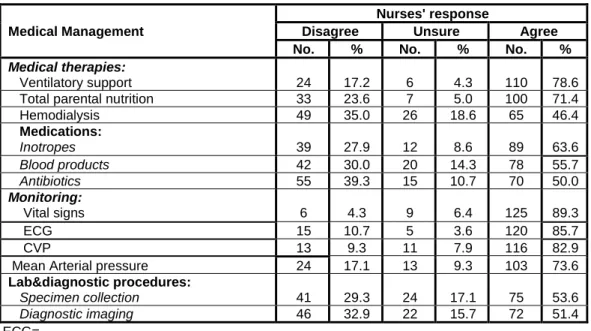
Table 3-A: shows the frequency distribution of critical care nurses' attitudes towards patients with DNR status in relation to the medical management. This table reveals that 78.6% and 71.4% respectively of the critical care nurses were of the opinion of continuing ventilatory support and total parental nutrition for patients with DNR status and only 46.4% for
hemodialysis therapy. In relation to medications administration 63.6% of critical care nurses agreed about administering inotropes for patients with DNR status, while 55.7% and 50.0% agreed for blood products and, antibiotics, respectively.
Furthermore, the majority of nurses were of the opinion of continuing monitoring patients with DNR status vital signs (89.3%), ECG (85.7%) and CVP (82.9%) whereas, more than half of critical care nurses agreed about continuing specimen collection and diagnostic imaging for patients DNR status as cited by 53.6% and 51.4%, respectively of the study subjects.
Table 3-B: shows the frequency distribution of critical care nurses' attitudes towards patients with DNR status in relation
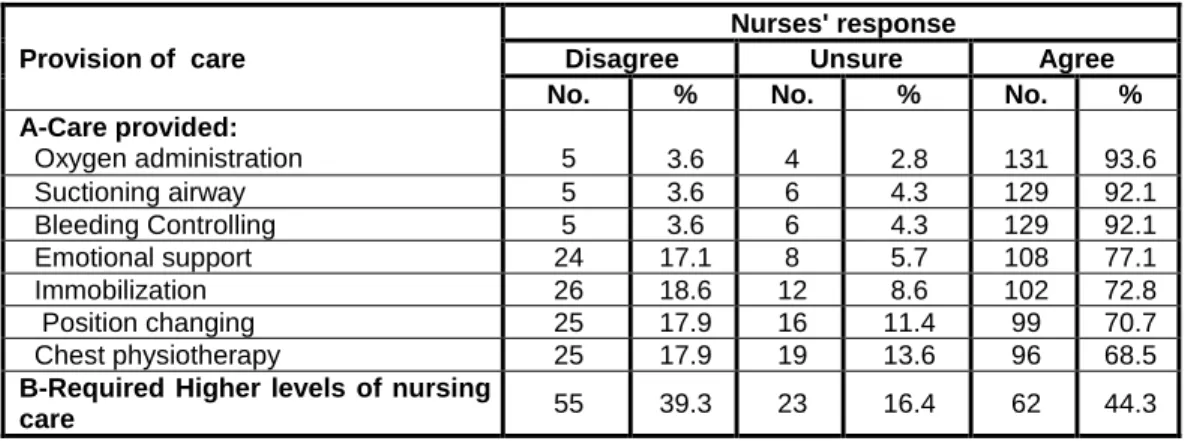
the provision of care. It can be noticed that the majority of critical care nurses agreed about administering oxygen (93.6%), suctioning artificial airway (92.1%) and controlling bleeding 92.1 %) for patients with DNR status.
Also, it can be noticed that 77.1% of critical care nurses agreed about providing emotional support for patients with DNR status. On the other hand, less than half of the study subjects (44.3%) were of opinion that patients with DNR status require higher levels of nursing care.
Table 3-C: shows the frequency distribution of critical care nurses' attitudes regarding factors influencing DNR status. It is clear that the highest percent of nurses (78.6%, and 70.7%) reported their agreement about patient factors (medical diagnosis, and functional status respectively). Also, it was found that 18.6%
and 10.7 % of critical care nurses' agreed about considering factors related to family (the next of kin or surrogate requests of DNR and the socioeconomic status) influencing DNR status. On other hand,
70% of the critical care nurses disagreed about considering the risk of legal complication, the cost of health care and the need for critical care bed respectively to be among the factors influencing DNR status.
Table 3-D: shows the frequency distribution of critical care nurses' attitudes in relation to medical diagnoses influencing DNR status. This table reveals that the medical diagnoses mostly influencing DNR status as reported by critical care nurses were MODS (60%), cancer (52.9%) and respiratory failure (47.9%).
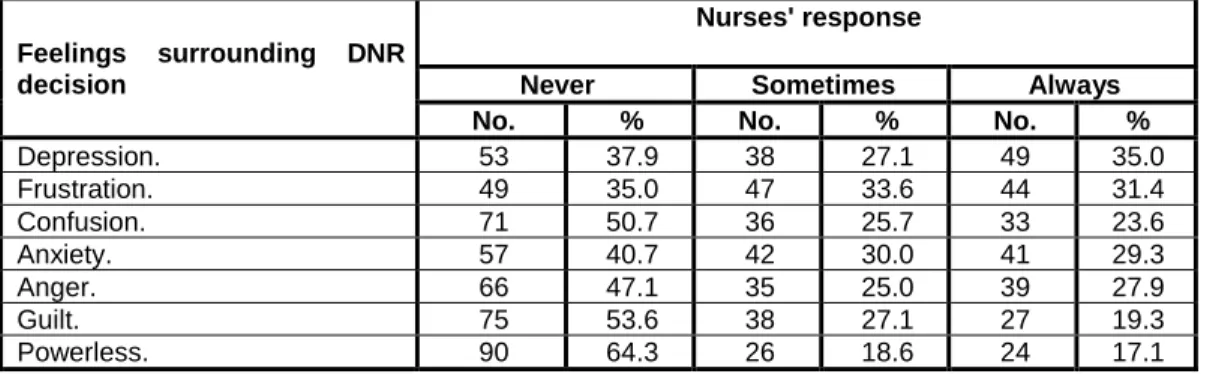
Table 3-E: shows the frequency distribution of critical care nurses' attitudes regarding feelings towards patients with DNR decisions. This table reveals that the higher percent of critical care nurses always felt depressed regarding DNR status as mentioned by 35% of critical care nurses followed by feeling frustrated (31.4%), whereas feeling powerless was reported by 17.1% of critical care nurses.
Table 3-F: shows the frequency distribution of critical care nurses' attitudes concerning the strategies used to help them in dealing with patients with DNR status.
The highest percent of critical care nurses reported that they always ensure that the patient looks presentable (48.6 %), followed
by ensuring that the patient doesn’t die alone 38.6 % and believing that patient condition will improve (22.1%).On other hand, 43.6% of critical care nurses believed that doing extras for family may help them in dealing with patients with DNR status .
Table 3: Critical care nurses' attitudes of DNR status.
Table 3-A: Frequency distribution of critical care nurses' attitudes towards patients with DNR status in relation to the medical management.
Medical Management
Nurses' response
Disagree Unsure Agree
No. % No. % No. %
Medical therapies:
Ventilatory support 24 17.2 6 4.3 110 78.6
Total parental nutrition 33 23.6 7 5.0 100 71.4
Hemodialysis 49 35.0 26 18.6 65 46.4
Medications:
Inotropes 39 27.9 12 8.6 89 63.6
Blood products 42 30.0 20 14.3 78 55.7
Antibiotics 55 39.3 15 10.7 70 50.0
Monitoring:
• Vital signs 6 4.3 9 6.4 125 89.3
ECG 15 10.7 5 3.6 120 85.7
CVP 13 9.3 11 7.9 116 82.9
Mean Arterial pressure 24 17.1 13 9.3 103 73.6
Lab&diagnostic procedures:
Specimen collection 41 29.3 24 17.1 75 53.6
Diagnostic imaging 46 32.9 22 15.7 72 51.4
ECG=
CVP=
Table (3-B): Frequency distribution of critical care nurses' attitudes towards patients with DNR status in relation to the provision of care.
Provision of care
Nurses' response
Disagree Unsure Agree
No. % No. % No. %
A-Care provided:
Oxygen administration 5 3.6 4 2.8 131 93.6
Suctioning airway 5 3.6 6 4.3 129 92.1
Bleeding Controlling 5 3.6 6 4.3 129 92.1
Emotional support 24 17.1 8 5.7 108 77.1
Immobilization 26 18.6 12 8.6 102 72.8
Position changing 25 17.9 16 11.4 99 70.7
Chest physiotherapy 25 17.9 19 13.6 96 68.5
B-Required Higher levels of nursing
care 55 39.3 23 16.4 62 44.3
Table 3-C: Frequency distribution of critical care nurses' attitudes regarding factors influencing DNR status.
Factors influencing DNR status
Nurses' response
Disagree Unsure Agree
No. % No. % No. %
A-Patient
Medical diagnosis 20 14.3 10 7.1 110 78.6
Physical Functional status 25 17.9 16 11.4 99 70.7
Benefit of treatment 30 21.4 27 19.3 83 59.3
Severity of illness 43 30.7 17 12.1 80 57.1
Level of consciousness 82 58.6 12 8.6 46 32.8
Mental status 71 50.7 25 17.9 44 31.4
Length of hospital stay 82 58.6 21 15.0 37 26.4
requests for DNR 82 58.6 25 17.9 33 23.6
Age 94 67.1 14 10.0 32 22.9
Discomfort 88 62.9 22 15.7 30 21.4
Socioeconomic status 98 70.0 17 12.1 25 17.9
B- Family
Next of kin or surrogate requests 98 70.0 16 11.4 26 18.6
Socioeconomic status 106 75.7 19 13.6 15 10.7
C-Institutional
Length of hospital stay 103 73.5 12 8.6 25 17.9
Hospital policy 100 71.4 22 15.7 18 12.9
Risk of legal complications 98 70.0 27 19.3 15 10.7
Cost of health care 98 70.0 20 14.3 22 15.7
Need for critical care bed 98 70.0 17 12.1 25 17.9
Table 3-D: Frequency distribution of nurses' attitudes of DNR status regarding Medical diagnoses influencing DNR status.
Medical diagnoses
Nurses' response
Never Sometimes Always
No. % No. % No. %
Cardiac
Congestive heart failure 74 52.9 39 27.9 27 19.2
Dysrhythmia 91 65.0 24 17.1 25 17.9
Acute myocardial infarction 108 77.2 15 10.7 17 12.1
Respiratory
Respiratory failure 57 40.7 16 11.4 67 47.9
COPD 63 45.0 37 26.4 40 28.6
Pulmonary edema 82 58.6 23 16.4 35 25.0
Gastrointestinal
perforation 104 74.3 16 11.4 20 14.3
bleeding 92 65.7 30 21.4 18 12.9
obstruction 98 70.0 26 18.6 16 11.4
Neurological
Coma 72 51.5 38 27.1 30 21.4
Stroke 89 63.6 31 22.1 20 14.3
Renal system
Renal failure 72 51.4 35 25.0 33 23.6 Multi system
MODS 33 23.6 23 16.4 84 60.0
Septic shock 55 39.3 40 28.6 45 32.1
Hypovolemic shock 83 59.3 33 23.6 24 17.1
Cancer 39 27.9 27 19.2 74 52.9
COPD=
MODS=
Table 3-E: Frequency distribution of critical care nurses' attitudes regarding feelings toward patients with DNR status.
Feelings surrounding DNR decision
Nurses' response
Never Sometimes Always
No. % No. % No. %
Depression. 53 37.9 38 27.1 49 35.0
Frustration. 49 35.0 47 33.6 44 31.4
Confusion. 71 50.7 36 25.7 33 23.6
Anxiety. 57 40.7 42 30.0 41 29.3
Anger. 66 47.1 35 25.0 39 27.9
Guilt. 75 53.6 38 27.1 27 19.3
Powerless. 90 64.3 26 18.6 24 17.1
Table 3-F: Frequency distribution of critical care nurses' attitudes concerning the strategies used to help them in dealing with patients with DNR status.
Strategies used by Nurses
Nurses' response
Never Sometimes Always
No. % No. % No. %
Patient :
Ensuring Patient looks presentable. 33 23.6 39 27.8 68 48.6 Ensuring Patient does not die alone. 42 30.0 44 31.4 54 38.6
Believing Patient will improve. 29 42.1 50 35.7 31 22.1
Requesting Assignment change. 84 60.0 32 22.9 24 17.1
Patient avoidance. 114 81.4 18 12.9 8 5.7
Family:
Avoidance the family 15 10.7 40 28.6 85 60.7
Doing extras for family 42 30.0 37 26.4 61 43.6
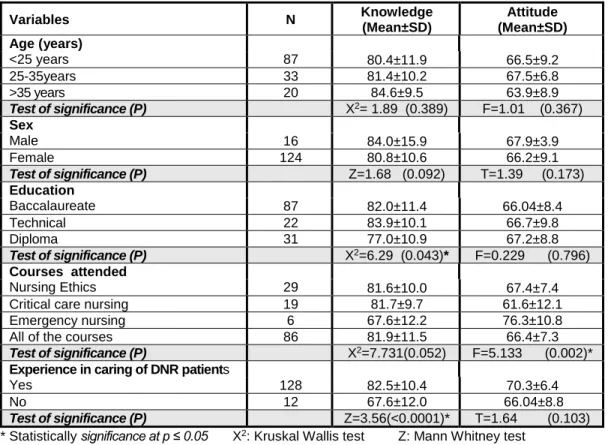
Table 4: ilIllustrates the relation between total critical care nurses knowledge, attitudes scores and their characteristics. It can be observed that a statistical significant relationship exists between critical care nurses educational level and their total knowledge score about DNR status for nurses holding a technical institute nursing degree (x2 = 6.29, p=0.043). Furthermore, a statistical significant
relationship was found between courses previously attended namely emergency nursing and critical care nurses total attitudes score about DNR status (F=5.133, p=0 .002).
additionally, critical care nurses experienced in caring of patients with DNR status had better total knowledge score than those not experienced and found to be statistically significant (Z=3.56,p>0.0001).
Table 4: Relation between total critical care nurses knowledge, attitudes scores and their characteristics.
Variables N Knowledge
(Mean±SD)
Attitude (Mean±SD) Age (years)
<25 years 87 80.4±11.9 66.5±9.2
25-35years 33 81.4±10.2 67.5±6.8
>35 years 20 84.6±9.5 63.9±8.9
Test of significance (P) X2= 1.89 (0.389) F=1.01 (0.367) Sex
Male 16 84.0±15.9 67.9±3.9
Female 124 80.8±10.6 66.2±9.1
Test of significance (P) Z=1.68 (0.092) T=1.39 (0.173)
Education
Baccalaureate 87 82.0±11.4 66.04±8.4
Technical 22 83.9±10.1 66.7±9.8
Diploma 31 77.0±10.9 67.2±8.8
Test of significance (P) X2=6.29 (0.043)* F=0.229 (0.796) Courses attended
Nursing Ethics 29 81.6±10.0 67.4±7.4
Critical care nursing 19 81.7±9.7 61.6±12.1
Emergency nursing 6 67.6±12.2 76.3±10.8
All of the courses 86 81.9±11.5 66.4±7.3
Test of significance (P) X2=7.731(0.052) F=5.133 (0.002)*
Experience in caring of DNR patients
Yes 128 82.5±10.4 70.3±6.4
No 12 67.6±12.0 66.04±8.8
Test of significance (P) Z=3.56(<0.0001)* T=1.64 (0.103)
* Statistically significance at p ≤ 0.05 X2: Kruskal Wallis test Z: Mann Whitney test
Table 5: illustrates the correlation between critical care nurses attitudes, knowledge and duration of experience with patients with do not resuscitate status. This table shows that no
statistical significant difference was found between critical care nurses attitudes;
knowledge and duration of experience with patients with do not resuscitate status.
Table 5: Correlation between critical care nurses' attitudes, knowledge and duration of experience with patients with do not resuscitate status.
Variable Knowledge Attitude
R P R P
Attitude (total score) -0.117 0.172 --- ---
Duration of experience in ICU 0.086 0.311 -0.115 0.185
R=Correlation coefficient.
DISCUSSION
Critical care units (CCU) are designed to provide essential therapies for critically ill patients in order to save patients' lives.
Ideally, patients who are expected to die and who are unlikely to benefit from intensive therapies are not admitted to these units. Nurses commonly encounter ethical dilemmas surrounding issues of cardiopulmonary resuscitation (CPR) and do not attempt resuscitation (DNAR) decisions. Lack of consensus exists related to nurses’ role in DNR decision making and their role in dealing with conflicts that arise once the decision for DNR has been made. A common conflict involves disagreement regarding the aggressiveness of care for patients once DNR status has been designated.(21)
The do-not-resuscitate order can invoke strong emotion among patients and health care providers, yet this order and its implications are often poorly understood. A do-not resuscitate order prohibits the use of resuscitation measures in the event of cardiopulmonary arrest.(21) When a DNR decision has been made, conflict with the nurses’ own personal moral beliefs, moral conflict occurs. Therefore, this study was conducted to describe critical care nurses' knowledge and attitudes regarding the Do not resuscitate (DNR) status.
Nurses' knowledge regarding the "Do not resuscitate (DNR) status. Critical care nurses used diverse meanings for DNR, the majority of nurses in the current study are able to correctly identify DNR as
‘‘withholding CPR only’’. These findings are in line with findings in that nurse always forget CPR in case of cardiopulmonary arrest in patients with DNR status.(22) However, these findings are in opposition with those of others who found that only one forth of nurses were able to correctly identify DNR as ‘‘withholding CPR only"(21) Critical care nurses in the current study emphasized that DNR doesn’t mean withholding treatment. This is supported by.sabatino (2007)(23) who reported that DNR order doesn't mean "do not treat."
Rather, it means that CPR only will not be performed. Other treatments such as administering antibiotic therapy and transfusions, performing dialysis, or the use of a ventilator that may prolong life can still be provided. Treatment that keeps the person free of pain and comfortable (called palliative care) should always be given.
Critical care nurses stated that DNR doesn’t mean no care is provided. This is supported by others(24,25) who found that do
not resuscitate order didn't not mean no care. On the other hand, Lui (2003)(26) found that nurses support withdrawal of care as an end-of-life option, especially when desired by the patient or next of kin.
Critical care nurses reported that DNR order doesn't involve limitation in therapeutic measures namely gastric feeding, intravenous fluids, inotropes and morphine sulfate administration. These findings are consistent with Bellini, et al (2009)(21) who stated that the term DNR is sometimes expanded or misapplied to include options that pertain to limiting the scope of resuscitative efforts or treatment modalities such as withholding feedings to the overuse of other treatment modalities such as morphine sulfate to decrease respiratory drive, according to the ordering and interpretation of DNR orders. The findings of the present study regarding the meaning of DNR status may be interpreted correctly by nurses who stated that the DNR orders indicate that no resuscitation
should be attempted in the event of cardiopulmonary arrest and applies only to the unresponsive, clinically pulseless patient.
Critical care nurses believed that, providing care in the form of bleeding, administering oxygen, suctioning, caring of artificial airway (ETT), providing emotional support, positioning the patient and administering pain medications are considered important for patients with DNR status. This may be attributed to the fact that nurses would keep their patients comfortable and would not do anything to prolong their suffering. This finding is emphasized by Chen (2009).(27) who found that provided care to patient with DNR status should include: suctioning the airway, administering oxygen, positioning for comfort, splinting or immobilization, bleeding control, providing pain medication and providing emotional support.
In this respect, Dar al-lfta al-Misriyyah
"fatwa council" has issued about taking
terminally ill patients off life support machines under no 11 dated.(28) "It is permissible to take terminally ill patients off life support machines which sustain life without improving a patients' prognosis.
Such patients are declared 'clinically dead ' and are taken off life support only upon the recommendation of a physician. However, it is impermissible to take patients off machines that are for other purpose such as suction machines used to aspirate fluids to facilitate breathing ".
End-of-life decision making frequently occurs in the critical care unit (CCU).
There is a lack of information on how a do- not-resuscitate (DNR) order affects treatments received by critically ill patients in CCUs. The critical care nurses reported that the medical management isn’t important for patients with DNR status such as performing chest compressions, administering resuscitation drugs, applying respiratory assistance measures, inserting artificial airway and performing defibrillation /
cardioversion. This is may be attributed to the fact that cardiopulmonary resuscitation has been considered an unsuitable modality for patients with no hope of recovery. This result is supported by another study which revealed that DNR means that basic and advanced cardiopulmonary resuscitation will not be initiated in the event of cardiopulmonary arrest.(9)
Critical care and oncology nurses know that without a written DNR order, nursing staff are obliged to resuscitate the patient.
Critical care nurses reported that many factors are not included in the documentation of DNR order such as the causes, decision maker, participants, and consents of DNR which may be related to the risk of litigation. This is in opposition to findings which revealed that the majority of nurses considered that DNR order was documented in the medical notes, of nurses additionally it identified varying practices regarding the documentation of the
rationale for the DNR decision; involvement of the patient and the next-of-kin in DNR decision-making.(30)
In this respect, palmer (2007) (34) added that documentation of DNR is essential in the progress notes and should include the following and be written or co-signed by the attending physician: the decision-making process which has been and will be followed, role of professional staff involvement, role of patient, family and other decision-makers, data on which decision is to be based. On the other hand, the majority of nurses in the current study reported that DNR order is only given orally and isn’t written in the medical record. This is supported by another study finding which stated that verbal DNR permission was more popular in the clinical setting in Korean.(32)
Policies of DNR orders should be written, designed and implemented at the level of the institution. In the current study all nurses stated that the hospital doesn’t
have a written DNR policy and attributed this to the hospital system. These findings are in opposition with another study which revealed that more than half of nurses knew that they had a local DNR policy and that policies facilitate standardization of decisions and reduce controversy relating to DNR status which may improve nursing practice.(24)
The end-of-life decision including DNR is made between the physician and a family member with verbal communication or written form when death is near or when an arrest occurs. The current study revealed that the physician is the responsible person for the designation of DNR status since the physician has the legal responsibility for making the decisions of diagnoses. This is in agreement with other findings which revealed that the physicians remain responsible for the ultimate DNR decision.(33)
Moreover, the current study showed that nurses, patient and family aren't
responsible for the designation of DNR status since patients are often critically ill, and have altered level of consciousness or intubated thus cannot express their concerns or desires. In addition to the fact that our culture doesn’t support DNR decision. This is supported by Palmer (2007)(34) who found that although nurses regularly initiate resuscitation attempts;
they are often not included in decision- making relating to resuscitation status and lack of involvement of patients and their families. However, this is in opposition to Gendt et al (2007)(22) who revealed that nurses were always consulted in DNR decision-making on a critical care unit because nurses' provide care for hospitalized patients on a daily basis and spend more time with them than physicians do. Moreover, they are mostly well informed about patients’ total situation and preferences regarding the end of life.
Also(30) Giles, et al(2004) found that nurses generally agreed that the patient and next-
of-kin should be involved in DNR decisions.
Nurses' attitudes regarding the "Do not resuscitate (DNR) status were identified In relation to six domains (medical management, provision of care, factors influencing DNR status, medical diagnoses influencing a DNR status, feelings surrounding DNR decision ,strategies used by nurses to help them in dealing with patients with DNR ). DNR orders do not exclude interventions such as parenteral fluids, nutrition, oxygen, sedation, analgesia, vasopressors drugs. Critical care nurses were of the opinion of continuing medical therapies for patients with DNR since blood products, inotropics, frequently measuring vital signs, CVP, specimen collection, performing diagnostic imaging and initiating hemodialysis therapy are considered among essential management of patients with DNR status. However, this is contradictory to others who reported that many nurses agreed with the discontinuation of these treatments.(35)
Moreover, critical care nurses reported their agreement about the continuous monitoring of patients with DNR status for electrocardiograph ECG, as well as the administering of antibiotics, total parental nutrition and ventilatory support. This is in line with others who found that the majority of nurses disagreed with discontinuation of the following: fluid therapy; electrocardiographic monitoring; antibiotics; total parenteral nutrition; ventilatory support.(35) This may be attributed to the fact that critical care nurses' believes that decisions about continuing medical therapies should be based on patients' rights as the right to live since nurses usually take the responsibility of serving as the patients advocate.
Critical care nurses emphasized the importance of providing care to patients with DNR status in the form of suctioning artificial airway , administering oxygen, controlling bleeding, and changing position for comfort, performing chest physiotherapy, and immobilization. These
findings are also emphasized by state of(36) which revealed that provided care to patients with DNR status should include;
suctioning the airway, administering oxygen, positioning for comfort, splinting or immobilization, bleeding control, providing pain medication and providing emotional support.
Critical care nurses rating of issues involving a lack of staff and resources is based on the recognition of patients' needs at the end-of-life for high levels of nursing care. Nearly half of critical care nurses reported their agreement that patients with DNR status require higher levels of nursing care. This is because patients with DNR orders would tend to receive more psychological and physical comfort support.
However, these findings stand in line with others who assessed the nursing workload associated with caring for 60 patients with do-not-resuscitate orders and found that this group of critically ill patients required higher levels of nursing care. Hemphill et al
2004.(37,38) results doesn’t support the current study finding that the use of measures to limit care, such as do-not resuscitate (DNR) orders in critically ill patients is a common aspect of care in many hospitals, especially in the setting of severe neurological impairment.
Critical care nurses considered patients' functional status, medical diagnosis, benefit of treatment, severity of illness and level of consciousness among the factors influencing DNR status since there is no hope of reversing the disease process responsible for imminent death. In this respectotherreseanches showed that DNR practices may vary with particular medical institutions, age, and life expectancy and quality of life, severity of illness, medical diagnosis, benefit of treatment , discomfort , mental status, level of consciousness, different social, cultural, educational and economical environments, legal and impaired functional status that may influence DNR status.(35,39,40)
Critical care nurses have observed patients' medical diagnoses influence a DNR status. This has been validated by many findings.(24) reporting that cancer, septic shock, renal insufficiency, multiple organ-system failure, congestive heart failure, arrhythmia, chronic obstructive pulmonary disease, pulmonary edema, acute respiratory failure gastrointestinal (bleeding, perforation obstruction), stroke, coma were more prevalent among patients who have DNR orders during their hospitalization.
Also, next of kin or surrogate requests of DNR, and the socioeconomic status related to family were reported by critical care nurses among factors influencing DNR status since critical care nurses believe that decision-making should be done through collaboration between patient, family, physician, and nurse. This is supported by other studies which revealed that the presence of DNR order was associated with having a surrogate decision-maker,
next of kin who had the right to request a DNR.(42,43)
On other hand, institutional factors such as length of patients' hospital stay, hospital policy, cost containment of health care, and risk of legal complications were not considered by critical care nurses to influence DNR status. This may be due to the fact that most patients have gratis treatment in addition to the lack of a hospital policy related to DNR status. This is supported by other findings that the shortage of critical care beds, length of Hospital stay, cost containment of health care, and risk of legal complications were not perceived by nurses to influence DNR status.(24)
Exposure to death and dying, and the lack of perception of feeling are viewed as major stresses for intensive care nurses.
Critical care nurses' always felt frustrated, depressed, confused, powerless, anxious, angry, and guilty towards patients with DNR status since they are unable to change
things happening to their patients, also they added, that dealing with patients of DNR status affect their personal lives. These findings are substantiated by.others who stated that nurses reported their feelings as confusion, guilt, depressed, frustrated, anger, guilt, powerless, anxiety towards patients with DNR status.(21,24,34)
Concerning the strategies used by nurses to help them in dealing with patients with DNR status. Critical care nurses reported that they always ensure that their patients look presentable, do not die alone, believe that patients' condition will improve, provide emotional support, and do extras for patients' families. This may be related to nurses' believes that these strategies provide better completion of nursing duties based on ethical values and save patients' dignity. Doing extras for the family;
ensuring ther the patient looks comfortable;
believing that patients' condition will improve and ensuring that the patient will
not die alone were among the strategies used by critical care nurses in dealing with designated DNR patient.
Relation between total knowledge, attitudes scores and critical care nurses characteristics. statistical significant relationship was found between critical care nurses' educational level and their total knowledge scores about DNR status for nurses holding Technical Institute Nursing degree. This may be related to the fact that these nurses had more experience in caring with DNR patients.
Furthermore, a statistical significant relationship was found between courses previously attended namely emergency nursing and critical care nurses total attitudes score about DNR status. This may be due to the fact that emergency nursing course content includes details related to cardiopulmonary resuscitation subject. On the other hand, critical care nurses experienced in caring of patients
with DNR status had better total knowledge score than those not experienced and found to be statistically significant. This may be due to the fact that nurses who gave caring for patients DNR status led to increase in understanding the do not resuscitate status.
The health care providers' lack of education and training in potential ethical dilemmas can also make them more reluctant to get involved in such difficult issues. The current study revealed no association between nurses' age, education, and attitudes about DNR status since they are nearly in the same age and have the same level of education. This is in agreement with another study.(44)
Finally, do not resuscitate issue continues to be a complex problem faced by the health care team. There is no easy resolution to this dilemma. When nurses act as a patient advocate frequently they come into conflict with many institutional regulations and policies. This conflict does
not release the nurse of the burden to act in a morally correct manner. The focus must remain on the patient and fulfilling their wishes. Thus, critical care nurses must continue to act as the patients' advocate and make his or her values heard.
Limitation of the study
The small sample size may decrease the generalizability of the study findings.
The sample is not large enough to allow correlation of study results based on variations in demographic data. Moreover, data were collected only from the University Hospital i.e. one sector of health care institutions and from one geographical area in Arabic Republic of Egypt (ARE) which may hinder the generalizability of the study findings.
CONCLUSION AND RECOMMENDATIONS Based on the findings of the present study, it can be concluded that, the majority of critical care nurses have knowledge about DNR status regarding the following:
the meaning of DNR as withholding CPR,
provided care as administering oxygen, the medical management as defibrillation / cardioversion and documentation.
Moreover, the responsible person for DNR decision making is the physician and not the nurse, patient or the family. Regarding critical care nurses attitudes towards DNR status, most of them were of the opinion of continuing monitoring patients' vital signs, providing care as suctioning artificial airway. As for the factors influencing a DNR status, the highest percent of nurses reported patients' functional status, next of kin or surrogate requests for DNR, length of hospital stay and the patients' medical diagnosis such as multiple organ- system failure. Also, the majority of critical care nurses felt frustrated when dealing with DNR patients.
RECOMMENDATIONS
Based on the findings of the current study, the following recommendations are suggested:
On educational level
• Educating undergraduate nursing
students about the meaning of DNR and advance directives in lectures given including instructions about how to deal with these issues.
• Providing in-service training programs for health care professionals; nurses, physicians regarding DNR status.
• Fostering nurses to attend workshops about DNR status important to clarify their further role in nursing care and decision-making process.
• Educating and encouraging physicians to communicate directly, in a more open manner, with each other and with nurses, patients, and patients’ families are essential to care for patients with DNR status.
On administrative level
• Establish Clear policy for DNR status with responsible authority, which reflect the need for famly-oriented culture.
• DNR decisions should be recorded in the patients' medical notes.
• Provide comfortable and supportive environment to the family, private areas should be available for family and multidisciplinary meetings.
On research level
Further studies are needed regarding
• Incorporating the results of the current study into interventions that focus on multidisciplinary efforts to improve current communication and understanding of the complex issues surrounding DNR status.
• Nurses' role in the DNR process.
• Ways to meet the needs of patients’
families for information and ways to incorporate the families’ input in decision making about do not resuscitate status.
• Replicate the study of nurses' knowledge and attitudes regarding do not resuscitate (DNR) status on a large sample size.
REFERENCES
1. Angus, D, Barnato A, Linde-Zwirbie
W, Weiss field L, Watson S, Ricket T, Rubenfeld G. Use of intensive care at the end of life in the United States:
an epidemiologic study. Crit Care Med 2004; 32(2):638-43.
2. Gross A. End-of-life obstacles and facilitators in the critical care units of a community hospital. Journal of Hospice and Palliative Nursing 2006;
8(2): 92-102.
3. Definition of critical care nursing.
American Association of Critical-Care Nurses.2008 [cited 2010 June 15]
Available from:
http://www.aacn.org/AACN/ About Critical Care Nursing.htm. Retrieved on: 15/ 6 /2010.
4. Cook D, Rocker G, Giacomini M, Sinuff T, Heyland D. Understanding and changing attitudes toward withdrawal and withholding of life support in the intensive care unit. Crit Care Med. 2006; 34(11): 317-23.
5. Kirchhoff K, Beckstrand R. Critical care nurses' perceptions of obstacles and helpful behaviors in providing end-of-life care to dying patients. Am J Crit Care. 2000; 9(2): 96-105.
6. Westrick S. Orser L. Critical care nurses' perception of end-of-life care.
Master of Science in Nursing.
Southern Connecticut State University USA 2007 [cited 2010 June 24]
Available form:
http://proquest.umi.com/pqdweb?did=
1441210071&sid=18&Fmt=2&clientId
=45596&RQT=309&VName=PQD 7. Truog R, Brackett S, Brackett S,
Burns J, Curley M, Danis M, DeVita M, Rosenbaum S, Rothenberg D, Sprung C, Webb S, Wlody G, Hurford W. Recommendations for end of life care in the intensive care unit: The ethics committee of the society of critical care medicine. Crit Care Med.
2001; 29 (12): 2332-48.
8. Rabow M, Hardie E, Fair M,