For this purpose and due to the negative impact that supply chain risks have, companies must develop an effective risk management process to mitigate these risks. The objective of this paper is to conduct an in-depth research on supply chain risk management approaches.
Background
Motivation
In the year 2000, Ericsson lost 400 million euros after their supplier's semiconductor plant in New Mexico caught fire. Honda indicated in 2011 that supply chain and production issues stemming from the recent earthquake and tsunami in Japan were leading to "reduced volume. production" at its UK manufacturing division.
Thesis Problem
In 2002, the entire West Coast ports were closed due to dock workers striking idle manufacturers and high costs while parts were flown in. In 2007, toy manufacturer Mattel repeatedly made headlines for a recall of toys that contained significant amounts of lead in its products. the paint.
Aim and Objective
Thesis Model
Structure of the thesis
Exploratory Case study
Propositions
Research Design
Case Study
- Study Questions
- Proposition
- Unit of analysis
- The logic linking the data to the propositions
- Criteria for interpreting findings
Case study is a research methodology of a particular event as an event, program, person, social group or an institution/organization (Merriam 1994). Yin 2003) illustrated five components that are important in case study research design. On the other hand, looking at alternative explanations for the findings can be considered for interpreting findings in a qualitative case study.
Research Method of Thesis
The unit of analysis covers what the case is actually about, for example; an individual, organization, an event or an entity. Pattern matching can be used for the aspect of linking the data to propositions by comparing data from two different propositions.
Data Collection Sources
Primary data
Through semi-structured interviews conducted electronically, observation of the workflow and key statistical data for risk assessment. Statistical data from the business area can also be used to gain more knowledge about how risk management helps to achieve competitive advantage.
Secondary data
Analytical Generalization
Validity and reliability
Risk and Uncertainty
In another literature on risk, Paulson (2005) identifies risk as “an event with negative economic consequences”; Christopher and Lee (2004) also broadly define it as any negative consequence resulting from an external event. While Juttener et al. (2003) specifically defined supply chain risk as a “variation in the distribution of possible supply chain outcomes, their probability and their subjective value”, indicating that some authors consider risk as the variance of the outcome , It does not matter whether it affects the organization positively or negatively (Spekman and Davis, 2004; Crone, 2006).
Recent Trends in Supply Chain that Cause Disruptions
At the same time, companies in a supply chain become increasingly dependent on each other as they outsource functions and reduce their supplier base. Firms unable to respond to such problems may even collapse themselves and pass the initial disruption on to the next firm in the production process, as the collapse of one firm can lead to harm to partners much further down the supply chain.
Classification of supply chain risks
External supply chain risk
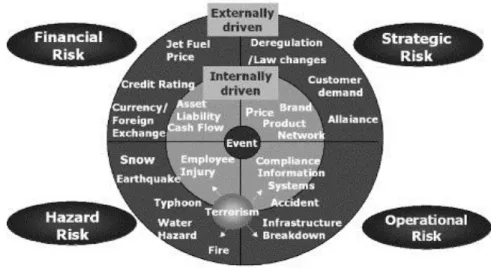
External risks facing supply chains are the result of environmental factors that can directly and indirectly affect the supply chain. Supplier failure, supplier quality problems, oil crisis, IT system malfunction, accident (e.g. fire) and natural disasters can be considered as criteria for classifying external supply chain risks.
Internal supply chain risks
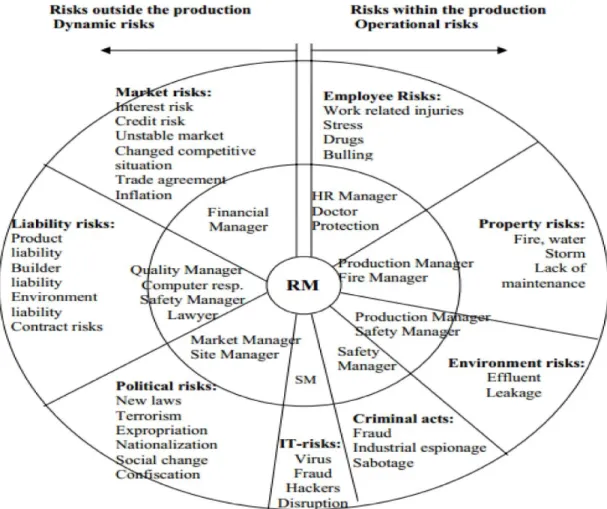
The left half includes dynamic risks found outside of production, such as inflation, new laws, and terrorism, and this half is included in the circle of risks to provide a comprehensive view of the organization's risk posture. Nowadays, the employees in a company are responsible for most of the economic crimes in the organizations.
Supply Chain Risk Management
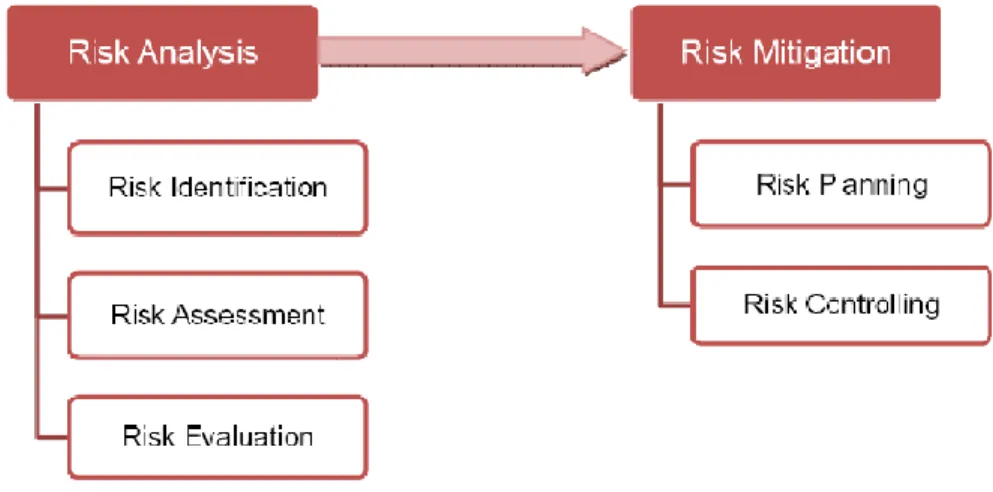
Supply Chain Risk Management Framework
- Risk Identification
- Risk Assessment
- Risk Evaluation
- Risk Mitigation
- Risk Monitoring
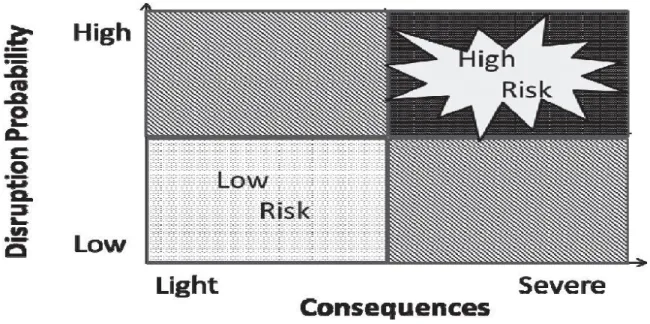
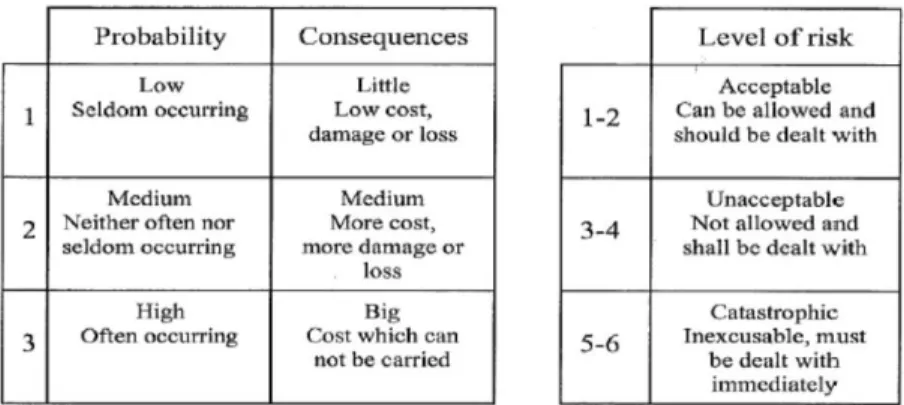
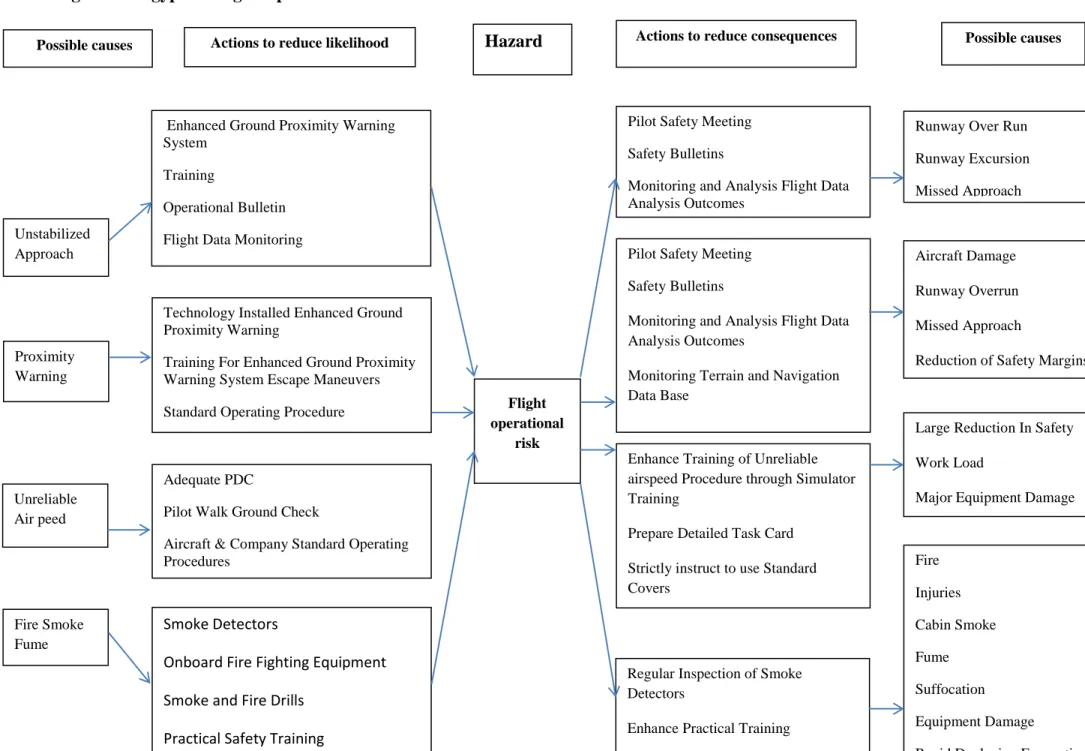
Risk reduction: Risk reduction can be achieved by reducing the likelihood and/or consequences of a risk. While in the event of an unknown both risky event and its consequences, companies implement so-called crisis management. Various aspects such as: risk portfolio, supply chain organizational network and overall supply chain competitive strategy are taken into account when selecting an appropriate risk mitigation option (Kersten et al., 2007).
In addition to checking the design and operation, it is also important to look at the results of the risk reduction.
Robust strategies for mitigating supply chain disruptions
Challenges created by Robust Strategies to handle Supply Chain Risks
Some firms may express concern about the required costs associated with these robust strategies, while others will recognize the additional benefits. Although these strategies improve a company's ability to better manage supply and demand, they may not fit with the company's overall business strategy. First, suppose that a firm has chosen to reduce product variety as a means of rationalizing its product lines, then the value of the postponement strategy is reduced.
Second, if a retailer has positioned itself as an "everyday low price" store, then the dynamic pricing and promotional strategy is inconsistent with the retailer's strategic position in the market.
Barriers to Supply Chain Risk Management
46 Additionally, lack of understanding and lack of skilled employees are explored as possible barriers to SCRM. Misunderstanding seems to be more important than insufficient training of employees, especially for risk management.
Characteristics of an Effective Risk Management Program
Supply chain risk and performance
Overview Airline industry
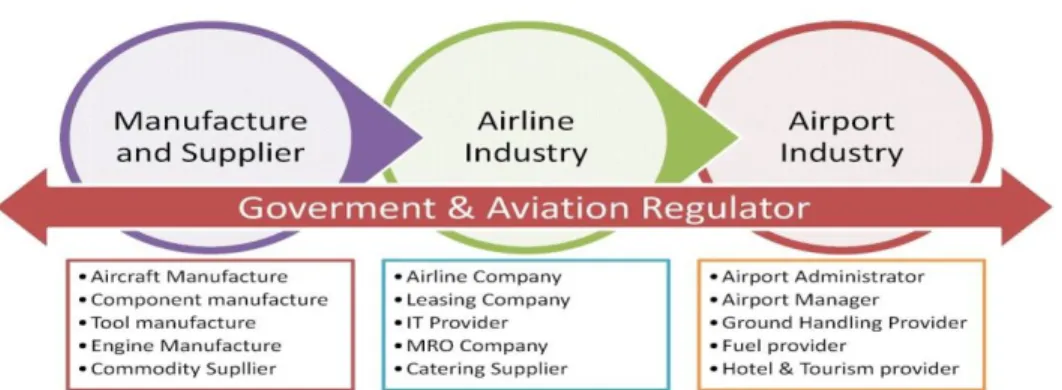
Charter airlines achieve the lowest costs, and recently a new business model for expensive airlines has emerged for the business class market. Guillen and Ashish (2004) found that airline business models can be defined with significant differences in network structure and airport choice. In the aviation system, there are four main entities: supply entity, demand entity, internal entity and external entity, as described below. Internal entity: direct influence on the aviation system, internal entity is the government and other political organizations.
External device: influence indirectly in the aviation system, this device can be controlled by implemented technology.
Air Travel Demand Elasticity
Potential sources of Demand Uncertainty
Pop-ups are usually general aviation, military, or last-minute flights set up by airliners. The primary reasons for this are congestion en route and late departures from their original airports. Although flights can arrive early, they tend to arrive later than their assigned arrival time.
Aviation Crisis
The aviation industry is a long-term business planning that needs various investments such as purchasing aircraft, securing flight crews and securing airport facilities.
Impact of 11 September Simultaneous Terrorist Attacks in the USA
Airlines experienced at least a 30 percent drop in demand during the initial shock period immediately after reopening. A 2007 Cornell University economic study found that federal baggage screenings resulted in about a 6 percent decrease in passenger traffic across the board, with a 9 percent decrease at the nation's busiest airports, totaling nearly a billion dollars in losses for the airline industry . The airline industry is generally characterized by high fixed costs and low profit margins, particularly for jet fuel, debt servicing, staffing and aircraft leasing.
In addition, the airline industry is highly competitive and is particularly susceptible to price discounts to fill unsold seats.
Egyptair Company Presentation
Analysis of Egyptair Risks
- Risks from political crises, wars or natural disasters
- Environmental Risks
- Risks from Market Developments and Competition
- Fuel Price Movement Risk
- Investment Risk
- Operational Risks
- Operational Safety Culture in Egyptair
With a good safety culture, Egyptair has been able to successfully internalize safety as a fundamental value of the organization, with staff at every level in the organization sharing a common commitment to safety. One of the most important elements is effective support from the top levels of the organization for safety. The safety management system is defined as the systematic management of the risks associated with operational activities to achieve a high level of safety performance.
Coordination/follow-up of the human factors approach - Safety information feedback to the responsible manager - Promotion of safety in the organization.

Analysis of Egyptair Situation due to the 25th of Jan. Revolution Crisis
Identifying risk
Assessing risk
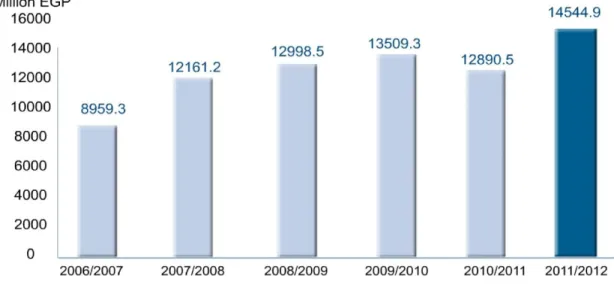
The figure and table above show the effect of the 25th revolution on Egyptair's profits. Furthermore, due to these unstable situations, many Egyptair employees had been unable to come to work. The few employees who were able to come to work worked endless hours in significantly difficult conditions to keep Egyptair flying as well as possible. Wael al-Maddawy (Egypt's Minister of Civil Aviation) "Egyptair's losses are huge but not catastrophic as they will not lead to the closure or sale of the company".
Handling Risk
Toronto is served four times weekly with aBoeing777-300ER, offering 1,356 one-way seats per week. Air Canada in return placed its code on Egyptair services between Cairo and London and Frankfurt. As a side effect, Egyptair was forced to review service routes, review business investment rates, and even now some negative effects from this political risk still remain.
Another view of this political risk as positive aspects is that the reviews were carried out as a turning point.
Conclusion
Based on the mitigation strategies discussed in the theoretical part of the thesis, Egyptair relies on several mitigation strategies of risk avoidance, risk reduction and risk acceptance, and creating flexibility to adapt to different situations. From a theoretical point of view, separating the 'less uncertain' and the 'highly uncertain' parts of travel demand, and creating stable schedules for the less uncertain part, and flexible schedules to accommodate changes for the uncertain part (here by focusing on transfer traffic) are two important aspects of creating flexibility to adapt to changes. As a general conclusion, an emphasis on identifying and concretizing risks can help companies develop effective risk management strategies and a robust business environment.
Risk management strategies and actions potentially differ between different departments within the same organization, and risks identified in one department may be addressed at different levels in the organization.
Future Research
73 In addition, the prioritization of certain types of risks changes over time, as the internal and external situations surrounding the organization change over time, increasing the need for continuous reviews of risk management strategies and monitoring of mitigation and plans. strong to ensure their validity. Risk management needs further attention from researchers and practitioners to help organizations adapt to the highly uncertain contemporary market situation.
Limitations
International Journal of Logistics Management logistics and supply chain management: creating value-adding networks, harlow [u.a.], financial times/student hall. Global Supply Chain Risk Management Strategies”, International Journal of Physical Distribution & Logistics Management, Vol. Bode, Christopher.(2008), An empirical investigation of supply chain performance along various dimensions of risk, Journal of.
Supply Chain Risk: A Handbook of Assessment, Management and Performance", New York: Springer Science + Business Media, LLC.
Egyptair Forcasted Annual and Traffic Growth
Safety Management Organizational Chart
Egyptair Operational Risk Management at Alexandria Airport
Statistics on airline flights Alexandria International Airport during the first