Care at the heart of sustainable development with gender equality
- Care as a link between productive and reproductive processes
- The social organization of care
Care and the sustainability of life
The right to care
- The right to care in Latin American and Caribbean constitutions and regulations
- The State as guarantor of the right to care
Towards the care society
- The care society poses a challenge to the current development pattern
- What is the care society?
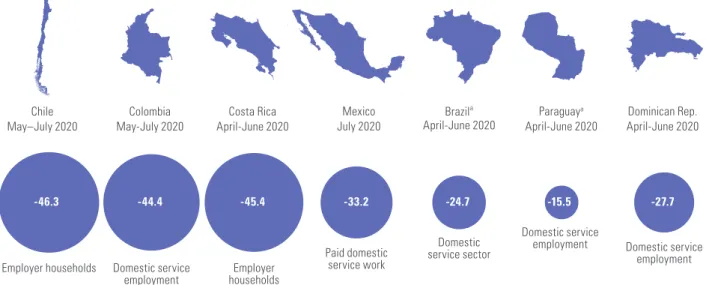
Fifteenth Session of the Regional Conference on Women in Latin America and the Caribbean Regional Plan. Source: Economic Commission for Latin America and the Caribbean (ECLAC), based on the countries' official figures and projections. ECLAC (Economic Commission for Latin America and the Caribbean) (2022a), The sociodemographic impact of the COVID-19 pandemic in Latin America and the Caribbean (LC/CRPD.4/3), Santiago.
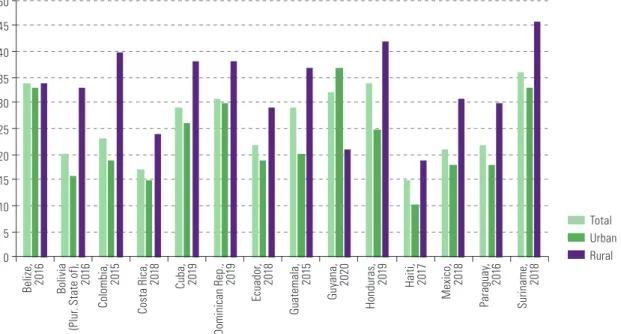
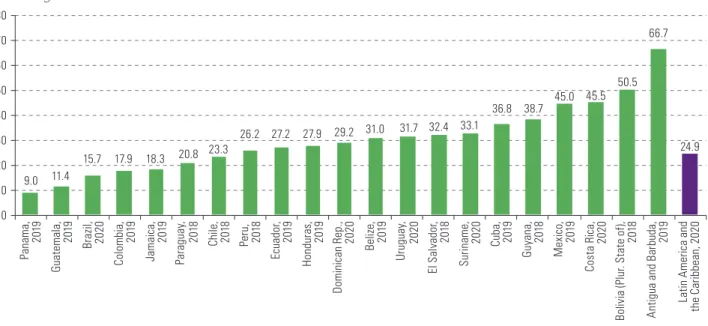
Latin America and the Caribbean (18 countries, weighted average): paid female domestic workers as a share of all employed women and workers contributing to or enrolled in the social security system, around 2020a (Percentages). Latin America and the Caribbean (8 countries): paid female domestic workers without a written contract, around 2020 (Percentages). Latin America and the Caribbean (33 countries and territories): paid paternity leave (postnatal for the father) a.
Unsustainable natural resource exploitation and its effects on women in all their diversity
- Extractivism, environmental degradation and their impact in relation to gender inequalities
- Extractivism as applied to women’s time and work
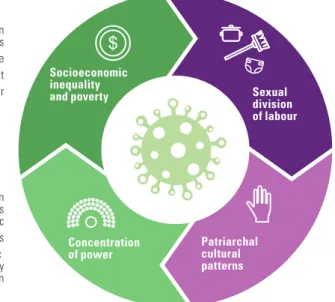
Sexual division of labour, its links with other structural inequality challenges and its impact
- Socioeconomic inequality and the persistence of poverty are perpetuating the care crisis
- Patriarchal, discriminatory and violent cultural patterns reinforce the sexual division of labour
- The persistent concentration of power and hierarchical gender relations consolidate
Sexual division of labour and care organization in territories
- A territorial perspective
- Mobility and migration of women caregivers
In 2020, 81% of the population of Latin America and the Caribbean lived in urban areas, making it the most urbanized developing region in the world (United Nations, 2019a, cited in ECLAC, 2022e). 2022e), Sociodemographic impacts of the COVID-19 pandemic in Latin America and the Caribbean (LC/CRPD.4/3), Santiago. 97 (LC/G.2400-P), Santiago, Economic Commission for Latin America and the Caribbean (ECLAC). 2022), "Agri-investment scholars of the world unite.
From a health point of view, the population of Latin America and the Caribbean has been one of the hardest hit worldwide (ECLAC, 2022a). Latin America and the Caribbean (17 countries): Structural challenges of gender inequality in the care economy. Latin America and the Caribbean are structurally heterogeneous in the economic, manufacturing and trade fields.
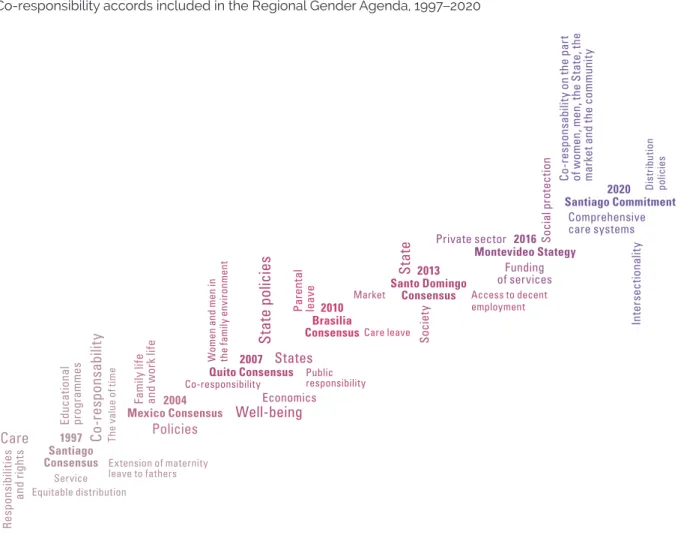
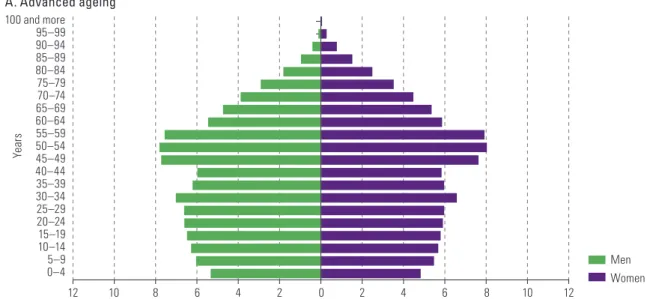
Effects of demographic, economic and epidemiological trends on the supply of and demand for care
The COVID-19 crisis: aftermath and lessons learned
The way in which these elements combine produces different configurations of supply and demand for care (both present and future). The COVID-19 pandemic has once again highlighted the unsustainability of the current care organization and the current development model. The shift to a society of care means the realization that care is fundamental to the sustainability of life and the well-being of the population in general.
The trend in moderately aging countries is likely to result in a reduction in the demand for care until 2050. The aforementioned demographic transitions took place in the framework of the major transformations of the economic models that took place in the last century. From the 1960s, the population of the cities grew to outweigh the population of the countryside.
The increase in the economically active population as a percentage of the total has been accompanied by massive migration from rural to urban areas. The majority of households in Latin America do not fall into the two-parent nuclear category, which represented 49% of the total in 2020. Growth of single-person and single-parent households 14% of households in the region are single 13.1% of households in the region are monoparental Distribution of the population.
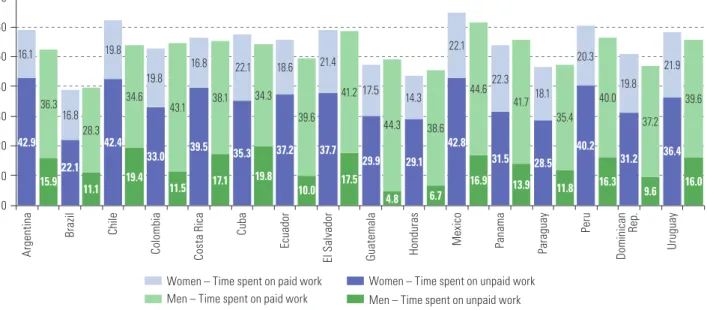
Source: Economic Commission for Latin America and the Caribbean (ECLAC), based on special calculations of data from time-use surveys carried out in the respective countries. In the context of population aging in Latin America and the Caribbean, the increased care needs of dependent older adults have become particularly relevant in the social organization of care. The pandemic has therefore affected fertility in the region, although the extent of the impact is still unclear (ECLAC, 2022a).
Community responses and the support of non-institutional care networks were fundamental in the most remote areas, where the presence of the state is still weak, and social protection covers only a minority of the population (Fournier and Cascardo, 2022; Pleyers, 2021) .
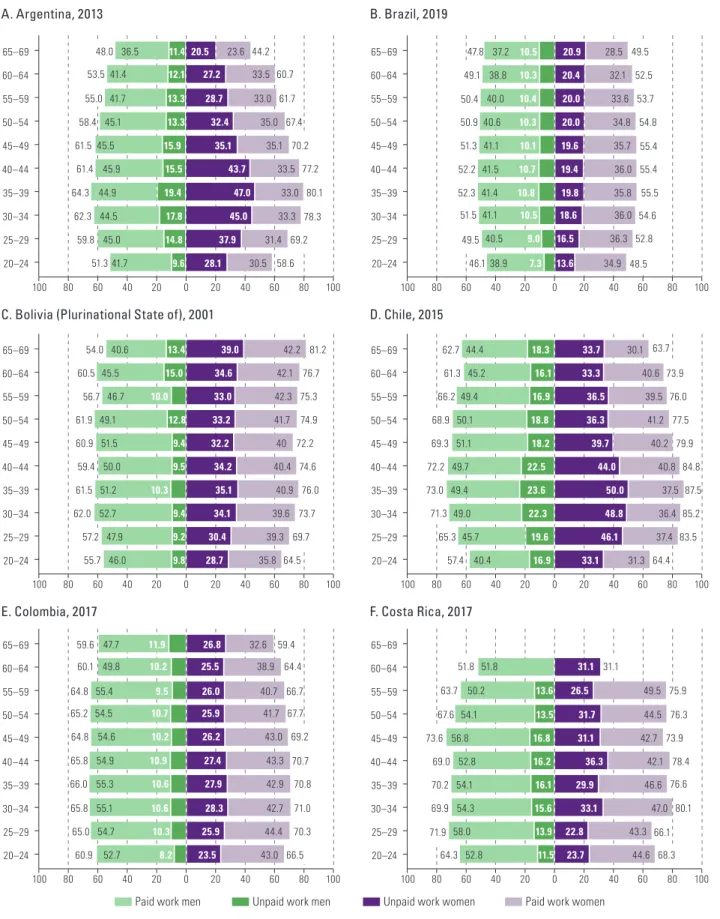
A model sustained by women’s time
- Labour market and time spent on care
Taking care of paid caregivers
- Conditions for paid female domestic workers
- Continuity of health care
- Working conditions in the education sector
Source: Economic Commission for Latin America and the Caribbean (ECLAC), based on the Repository of Time Use in Latin America and the Caribbean. This figure represents 1% of the companies located in the state (2.4 million), which is the industrial epicenter of Brazil. The move towards a care society requires recognition of the value of care work, by families and the state or market.
Families in the region must provide a significant portion of the health care needed to recover from an illness or an accident. The global scenario is evolving in the wake of the social and economic impacts of the coronavirus disease (COVID-19) pandemic. The macroeconomic environment and surpluses of the global economy and international prices affect the momentum of trade in the region.
Challenges of women's labor participation in the context of trade specialization of the region trade specialization of the region. Sector-level analysis requires an understanding of gender implications in production and trade processes in the region. In this context, the underrepresentation of women in STEM careers is one of the main problems worldwide and in the region.9.
Countries in the region are increasingly aware of the gender-differentiated impacts of fiscal policy. Second, investment in the care sector can create jobs and stimulate other interrelated sectors of the economy (such as public works). Indeed, the role of the state in the formulation of care policies and services is directly related to the "gaps" in other components of social protection.
This will be in addition to the commitments made in the framework of the regional gender agenda aimed at combating illicit financial flows. This proposal is particularly important in the context of the creation of comprehensive care systems and the expansion of care services, which can generate new job opportunities. It is essential to promote the transformational potential of the care economy as a central element in the pursuit of a transformative recovery with equality.
121
123
The links between international trade, the production structure and women’s economic autonomy
- The constraints of trade and production specialization in moving towards a care society
- The challenges of women’s labour participation in the context of the region’s trade specialization
The structural and conjunctural challenges of fiscal policy for equality
- The main fiscal challenges in Latin America and the Caribbean
- The need to value the care economy economically and invest in it
Latin America (13 countries, weighted average): change in the number of women employed in selected high export sectors and the share of women by sector, circa 2018-2020. The two sectors that export goods and are the most important for the employment of women in the region are agriculture and livestock and textiles and clothing. Employment in tourism, one of the most important high-export services for women in the region, has a high proportion of women (see figure V.2) and the most precarious working conditions in terms of access to social security (see infographic V.3).
9 In the region, with the exception of five countries where information was collected (Argentina, Belize, British Virgin Islands, Panama and Uruguay), the share of female graduates in STEM careers does not exceed 40% (ECLAC, 2019b). Although situations vary widely across the region, the average tax burden in Latin America and the Caribbean in 2019, before the COVID-19 pandemic, was 10.7 percentage points of GDP lower than the average of the Organization for Economic Affairs and Climate Policy countries Economic Cooperation and Development. (OECD and others, 2022). Source: Economic Commission for Latin America and the Caribbean (ECLAC), based on the Household Survey Data Bank (BADEHOG).
Preferential VAT treatments, especially for basic products, are the predominant tax exemptions in the region. The onset of the COVID-19 crisis was reflected in the fiscal domain by two main elements: the widespread absence of automatic stabilizers and the application of expansionary fiscal policy (ECLAC, 2021b). Amid the pandemic, some countries have relaxed requirements for accessing unemployment insurance, such as extending support to the unemployed and self-employed.
Latin America and the Caribbean is the world's most indebted region, with total debt service accounting for 59% of goods and services export earnings in 2020. Amid the COVID-19 pandemic, international cooperation has been limited; and Latin American and Caribbean countries had access to a smaller flow of multilateral resources than in previous crises, such as the 2008–2009 global financial crisis (ECLAC, 2021a). Ten countries in the region have now calculated the monetary contribution of unpaid domestic work.
Female employment would increase by 4.2 percentage points in the former and total employment would increase by 3.9% in the latter.
Based on this, the current chapter deals with the need to restore the central role of the State as a pillar and guarantee of development and the transition to a caring society. The absence or weakness of care policies and systems in Latin America has been shown to affect the economic, physical and decision-making autonomy of the region's women. On this path, it is crucial to strengthen the role, resources and capacity of the state at different levels (local, national and regional) to remove the structural constraints on equality in Latin America and the Caribbean.
The state is responsible for providing social protection goods and services for the welfare of the population. Similarly, the role of the state in the implementation of care systems and policies with a gender and cross-sectoral perspective presents an opportunity to increase the efficiency of other pillars of well-being. The guiding and regulatory role of the state is vital to guarantee the quality of care in all spheres.
Public management of healthcare policy will also be more or less facilitated, depending on the position in the hierarchy of the institution that leads it. In particular, the existence of gender equality in public policy making (national and local) and the degree of mobilization of society in general and of the women's and feminist movement in particular are factors that deserve special attention in the design and the implementation of care. policy. Demographic transformations and changes in the healthcare needs of the population as a whole mean that urgent attention needs to be paid to the conditions in which healthcare providers work and the type of care they can provide.
As stated in the Paris Agreement and other agreements resulting from the Conferences of the Parties to the United Nations Framework Convention on Climate Change (UNFCCC), carbon emission levels must be drastically reduced. In order to achieve gender equality and the transition to a society of care, it is essential to eliminate patriarchal, discriminatory and violent cultural patterns and the dominance of the culture of privilege. 2021d), Towards a Society of Care: Contributions of the Regional Gender Agenda to Sustainable Development (LC/MDM.61/3), Santiago.
Contribution of Working Group I to the Sixth Assessment Report of the Intergovernmental Panel on Climate Change, V.
The State for the care society
- The State as duty bearer
- The role of the State in providing, coordinating and regulating care
Removing the constraints of gender inequality to make the transition to a caring society to make the transition to a caring society.
Public policies for the care society
- Guiding principles for the design of care policies
- Comprehensive care policies and systems
- Fiscal compacts for the care society
- Labour market policies for the transition to a care society
- Inclusive digitalization and the closing of the digital gender gap
- Caring for the planet
Removing the constraints of gender inequality to make the transition to a care society
- Sustainable and inclusive growth
- The redistribution of work, time and resources
- A culture of rights and equality
- Parity democracy
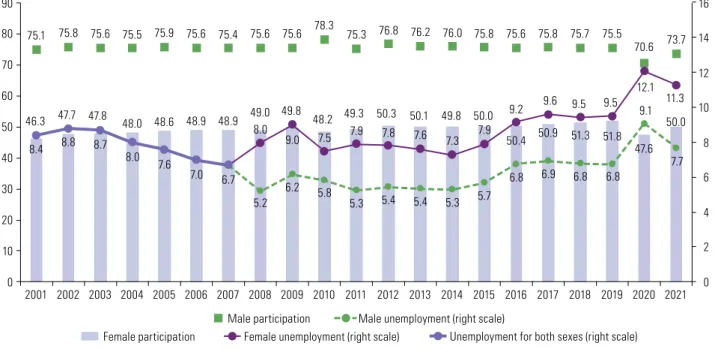
Latin America (17 countries, weighted average): distribution of individual labour income,
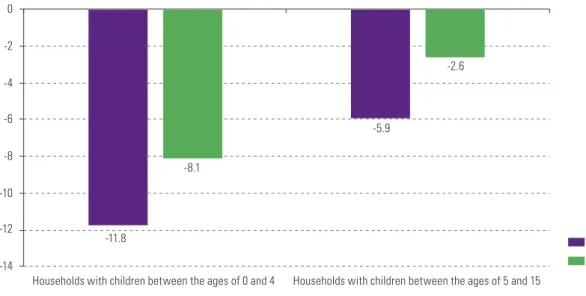
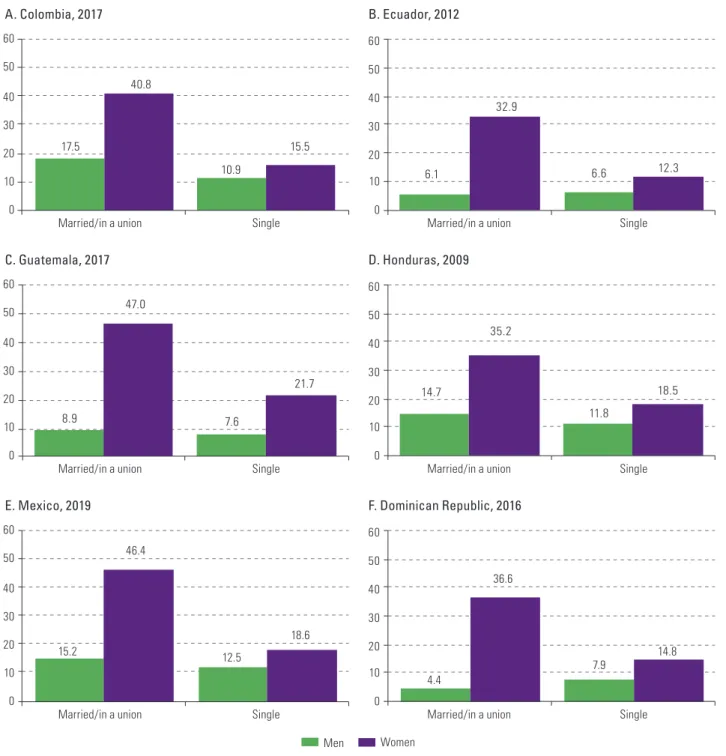
Latin America (4 countries): time spent providing care and the participation rate for the population aged 15 and over, by gender and by the presence of children in the household. Hours per week and percentages).
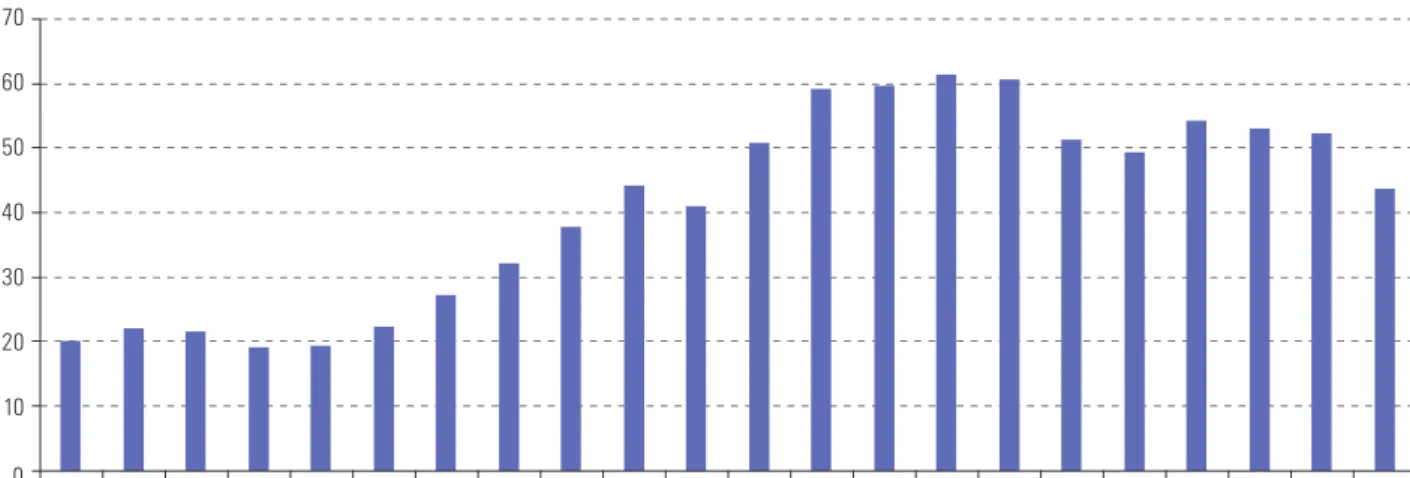
Latin America (15 countries): additional full-time jobs needed to cover unpaid work
Latin America and the Caribbean (17 countries): the structural challenges
Latin America: characteristics of the health sector workforce, around 2020
Latin America: characteristics of the education sector workforce, around 2020
Latin America (13 countries, weighted average): comparison of the situation
Latin America (12 countries, weighted average): export employment
Latin America (13 countries, weighted average): employment characteristics