Thank you for the trust and for encouraging me to be a better researcher and professional every day. Thank you for all the long hours we spent in the lab from the first day we started together in UCAM.
INTRODUCTION
OLT and CT intervention do not affect body composition of basketball players during the competitive phase of the season. Players in the OLT and MCT groups showed maximum dynamic lower body strength gains during the competitive phase of the season.
HYPOTHESES
GENERAL HYPOTHESES
A review of the current state of the literature shows that resistance training is fundamental for team sport athletes, from both a performance and injury prevention perspective. Consequently, it is also hypothesized that other training protocols such as CT and OLT will be effective alternatives to apply to team sports athletes, namely basketball players, to increase strength and neuromuscular performance during the competitive phase of the season.
SPECIFIC HYPOTHESES
CA intensity, intervention duration, and ICRI are moderating factors that explain positive adaptations in sprinting and VJ performance after CT programs in team sports. OLT and CT produce maximal dynamic increases in upper and lower body strength in basketball players during the competitive phase of the season.
OBJECTIVES
GENERAL OBJECTIVES
SPECIFIC OBJECTIVES
To systematically review the literature and perform a meta-analysis on the short-term effects of sprint CT and VJ interventions in team sports athletes. To investigate the effects of OLT and CT on vertical and horizontal jump performance, sprinting and COD ability in semi-professional basketball players during the season.
GENERAL OVERVIEW OF THE STUDIES
STUDY 1: ACUTE EFFECTS OF TWO DIFFERENT RESISTANCE
INTRODUCTION
METHODS
- Study design
- Participants
- Testing procedures
- Horizontal jump test – Standing long jump
- Vertical jump test – Countermovement jump
- Change of direction test – T-test
- Repeated sprint ability test
- Bench press power output test
- Rating of perceived exertion – Borg CR-10 scale
- Training protocols
- Statistical analysis
RESULTS
- Vertical and horizontal jumps
- Shooting
- Repeated sprint ability and change of direction
- Bench press power output
- Rating of perceived exertion – Borg CR10 scale
DISCUSSION
CONCLUSIONS PRACTICAL APPLICATIONS
STUDY 2: SHORT-TERM ADAPTATIONS FOLLOWING
INTRODUCTION
METHODS
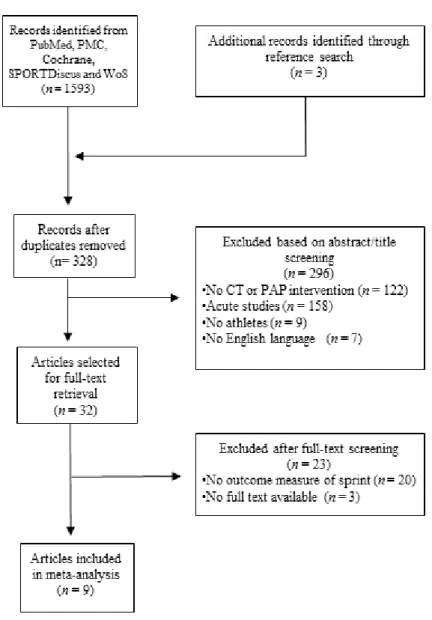
- Literature research and data sources
- Inclusion and exclusion criteria
- Study selection
- Data extraction and analysis
- Risk of bias
RESULTS
- Characteristics of included studies
- Characteristics of the interventions
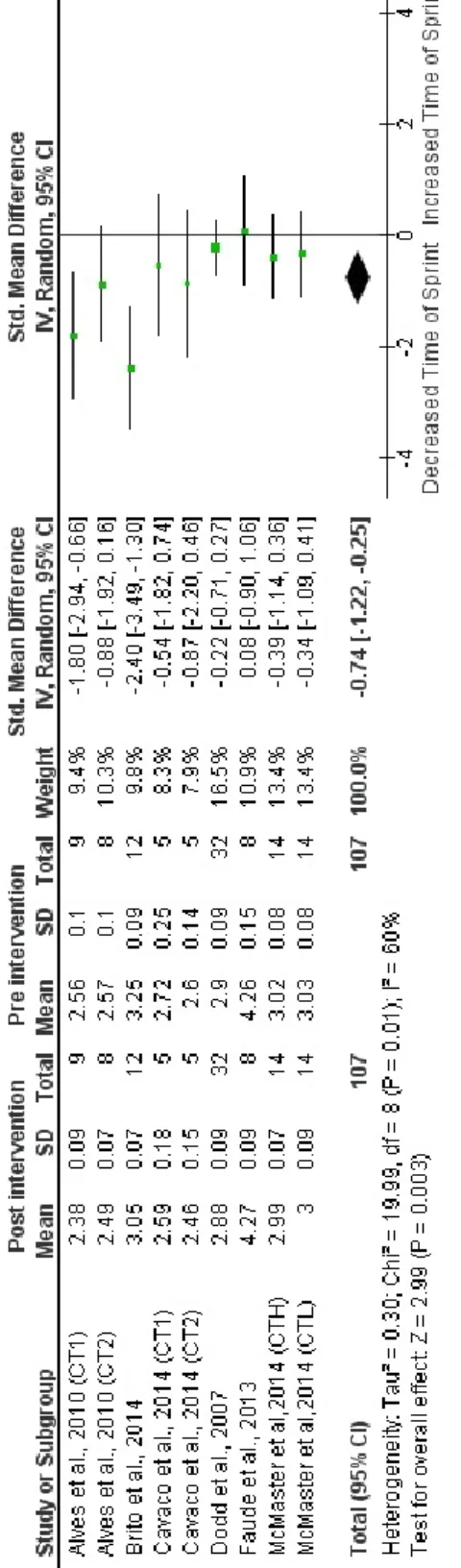
- Main effects analysis
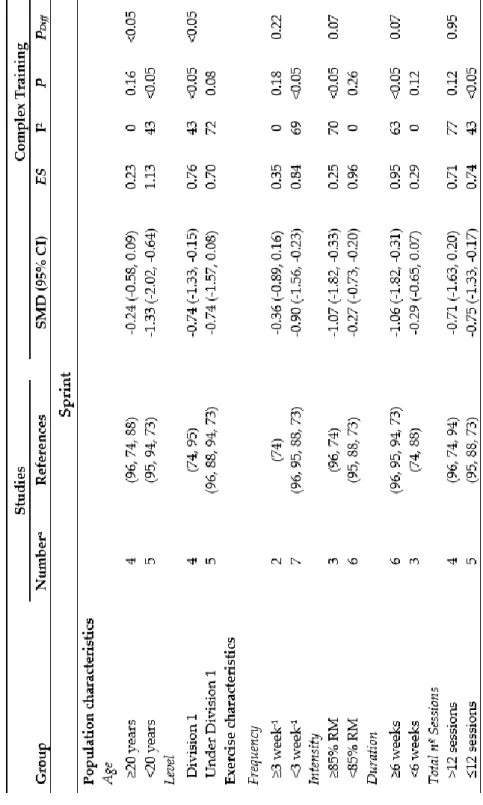
- Subgroup analysis
- Evaluation of potential bias
DISCUSSION
- Age and level
- Training frequency
- Duration of intervention and total number of sessions
- Intensity of the conditioning activity
- Intracomplex rest interval
- Team-sports modality
- Limitations
CONCLUSIONS AND PRACTICAL APPLICATIONS
STUDY 3: SHORT-TERM OPTIMAL LOAD TRAINING VS A
INTRODUCTION
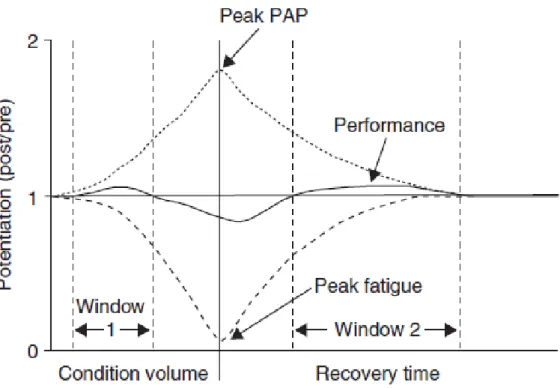
During the season, various resistance training methods are prescribed to improve athletic performance in team sports. These promising results seem to indicate that OLT may be a suitable option to use in team sports, although further research is needed. However, recent evidence regarding team sports suggests that heavy loads may not be the most appropriate to induce PAP (177) or to be used in CT interventions (174).
A recent meta-analysis investigated short-term adaptations after CT in team sports (174) and reported positive training effects on sprint and VJ performance. CHAPTER VII:STUDY3 109 both OLT and CT are methods that can lead to performance improvements in team sports. Given the potential benefits reported when using optimal loads in team sports (44), we considered it important to investigate how a CT consisting of a moderate-intensity CA followed by an exercise performed with a load that maximizes power output may influence neuromuscular adaptations.
METHODS
- Study design
- Participants
- Testing procedures
- Anthropometric measurements
- Maximal dynamic strength
- Power-load profiling
- Horizontal jump test - Standing long jump
- Vertical jump test - Countermovement jump
- Change of direction test - T-test
- Training protocols
- Statistical analysis
The relaxed and flexed arm, waist, hip and leg circumferences were measured twice with a 2 m tape measure (CESCORF, Porto Alegre, Brazil) and the two values were averaged. All skinfolds were measured three times and the average of the measurements was taken as the true skinfold. For the hip thrust, the 1RM was determined according to traditional guidelines (184), because there was no equation that allowed an accurate prediction of maximal dynamics.
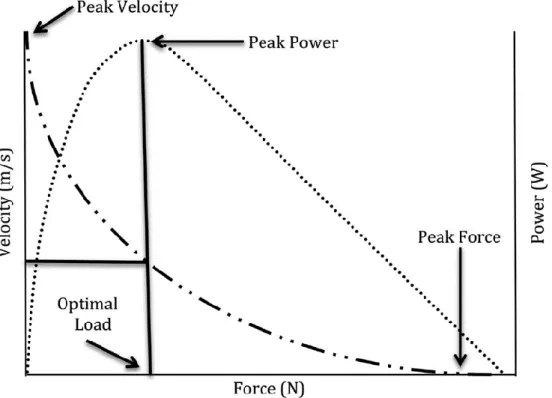
Force loading profiles were calculated for the half-squat, bench press and hip thrusts using the relative intensity corresponding to and 75% of the previously estimated 1RM, to determine the intensity that maximized power output using the same linear encoder. To draw conclusions about the true values of the effect on the selected variables, a 90% confidence interval was used. The probability that the true value of the effect represented substantial changes (positive or negative) was calculated using a modified spreadsheet (189).

RESULTS
For the between-group analysis, the same spreadsheet was used to convert the ANCOVA p-values and the effect statistic to size-based inferences. An effect was considered unclear if its AI simultaneously overlapped the thresholds for positive and negative or if the chances of the effect being substantially positive and negative were both > 5% (188). For the variables in which a decrease in the mean represents a positive outcome (total time in T-test and 10 m sprint) the negative standardized change was multiplied by -1 for the graphical representation of the data, since it is considered a positive can be considered. effect.
Regarding the OLT, moderate improvements were most likely observed for half-squat and hip thrust 1RM. Probable moderate effects were shown for half-squat and COD; and possibly small effects for CMJ peak power and SLJ. For the variables in which a decrease in the mean represents a positive outcome (total time in T-test and 10 m sprint) the negative standardized change (ES) was multiplied by -1 for the graphical representation of the data.

DISCUSSION
First, the soccer players of Loturca et al. (44) performed 18 sessions during the break (there were no official matches), whereas in this study the players performed 12 sessions during the season. Sprint performance was probably positively influenced by the OLT group, but the effects of the MCT protocol were not clear. In this study, small ESs were obtained for the 10 m distance for both OLT and MCT, with the latter group presenting a significantly wider CI.
However, in the included studies, CT incorporated plyometric or ballistic exercises, which allowed greater movement speeds to be achieved in the complex pairs, as a result of the absence of a braking phase (194). Therefore, in the absence of specific sprint or acceleration training in both protocols, only small effects were obtained. Interestingly, large effects were obtained on hip thrust 1RM and small on SLJ in MCT, and moderate and trivial were shown in the OLT group on the same exercises, characterized by a prominent application of horizontal force (185).
CONCLUSIONS AND PRACTICAL APPLICATIONS
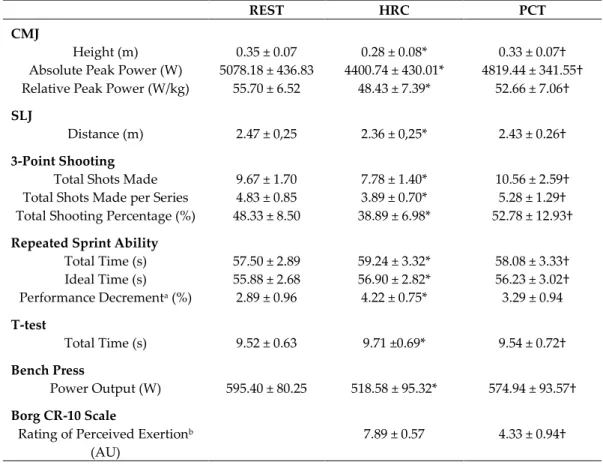
The main objective of this compendium of studies was to investigate the acute and short-term effects of various strength and power-oriented resistance training programs on neuromuscular performance variables such as maximal dynamic strength, mechanical power, sprint, vertical and horizontal jumping, and COD ability in basketball players during the in-season. period of time. Consequently, the aim of Study 3 (206) was to investigate the effects on basketball players' neuromuscular performance of an OLT and a new modified CT designed according to the findings of Study 2 (174) and with the unique feature that they performed the same exercise with a moderate (80% of 1RM) and an individually determined OL. HRC, but not PCT, led to acute declines in semi-pro basketball players' 3-point shooting accuracy.
The effects of two different explosive strength training programs on vertical jump performance in basketball. Effects of 8 weeks of heavy resistance training on upper and lower limb season on top. The effects of resistance training interventions on vertical jump performance in basketball players: a meta-analysis.
Comparison of the effects of 6 weeks of traditional resistance training, plyometric training and complex training on measures of strength and anthropometry. Acute effects of two different resistance training circuit protocols on performance and perceived exertion in semi-professional basketball players.
SUMMARY AND DISCUSSION OF RESULTS
CONCLUSIONS
GENERAL CONCLUSIONS
The results of this collection of articles allowed the conclusion that HRC caused a higher level of fatigue and a greater acute decrease in the physical and technical performance of basketball players during the season compared to PCT, which called into question its usefulness in periods of concentrated matches during the game. competitive part of the season. In addition, a systematic review and meta-analysis concluded that CT may be an effective method for increasing sprint and VJ performance in a team sports setting. Finally, contrary to initial hypotheses, 6-week CT and OLT interventions were found to produce no significant increases in all variables of strength and neuromuscular performance (ie, vertical and horizontal jump, sprint, and COD) in basketball. players, in a season.
SPECIFIC CONCLUSIONS
The systematic review of the scientific literature and the meta-analysis carried out on the use of CT in a team sports environment showed that this method is effective in increasing sprint and VJ performances. CA with loads below 85% of 1RM, interventions of 6 or more weeks duration, and ICRIs longer than 2 minutes were identified as possible moderating factors contributing to positive adaptations of sprinting and VJ abilities after CT programs in team sport athletes. Athletes in both the OLT and MCT programs improved COD ability after 6 weeks of intervention.
Furthermore, positive adaptations in sprint performance were observed in the OLT group, while improvements in horizontal jumping ability were achieved in the MCT group. However, contrary to the original hypothesis, none of the protocols contributed to increases in VJ performance of semi-professional basketball players during the season. Contrary to what had been initially hypothesized, CT did not produce greater maximal dynamic strength gains compared to OLT, as unclear differences between groups were obtained in this particular outcome.
LIMITATIONS
PRACTICAL APPLICATIONS
FUTURE RESEARCH LINES
MENCIÓN INTERNACIONAL
CONCLUSIONES GENERALES
Effects of loss of velocity during resistance training on athletic performance, strength gain, and muscle adaptation. Effects of a high-intensity resistance-based exercise circuit under hypoxia on body composition and strength. Effects of different combinations of strength, power and plyometrics training on the physical performance of elite youth soccer players.
Short-term performance effects of three different low-volume strength training programs in male college soccer players. Short-term effects of complex and contrast training on vertical jump, sprint and agility skills of soccer players. Acute effects of heavy and light resistances on the time of flight of a basketball push pass during complex upper body exercise.
CONCLUSIONES ESPECÍFICAS
Long-term effects of different training modalities on strength, speed, skill and anaerobic capacity in young male basketball players. Effects of complex strength and ballistic training on maximal strength, sprint power and strength-velocity-force profiles of semi-professional rugby union players. Effects of long-term exercise specificity on maximal strength and power of the upper and lower extremities in athletes from different sports.
Effects of two contrasting training programs on jumping performance in rugby players during the competitive phase. Effects of resistance training on muscular fitness and athletic performance in young athletes: a conceptual model for long-term athlete development. Effects of a maximal strength training cycle on power, maximal power, vertical jump height, and acceleration in high-quality 400-meter hurdle runners.
APPENDICES