Sustainability 2021, 13, 11786. https://doi.org/10.3390/su132111786 www.mdpi.com/journal/sustainability
Article
An Analysis of LGBTQIA+ University Students’ Perceptions about Sexual and Gender Diversity
Harold Tinoco‐Giraldo 1,*, Eva María Torrecilla Sánchez 2 and Francisco J. García‐Peñalvo 3
1 GRIAL Research Group, Doctoral Programme Education in the Knowledge Society, University of Salamanca, 37080 Salamanca, Spain
2 GRIAL Research Group, Research Institute for Educational Sciences, University of Salamanca, 37080 Salamanca, Spain; [email protected]
3 GRIAL Research Group, Computer Science Department, Research Institute for Educational Sciences, University of Salamanca, 37080 Salamanca, Spain; [email protected]
* Correspondence: [email protected]
Abstract: The main objective of this study was to explore the perceptions of LGBTQIA+ students regarding sexual and gender diversity in the university context by (1) identifying conceptions about a being LGBTQIA+ student in the higher education context, (2) researching perceptions of the stigma and discrimination against, and inclusion of LGBTQIA+ students and (3) to recognize discourses and scenarios identified by students in the university context regarding sexual diversity and gender diversity, distinguishing their experiences in the classroom as well as in the university, with their peers and with their professors. This research was based on a quantitative method, the sample consisted of 171 students from the School of Medicine of a public university in the United States in the state of Texas. The results showed that there is currently a greater knowledge of the subject of sexual and gender diversity and of the spaces and resources offered by the university on the subject compared to previous years, however, it is found that knowledge is still limited and that this knowledge may possibly be due to the faculty in which they study.
Keywords: LGBTQIA+; inclusion; sexual diversity; gender diversity; university experience
1. Introduction
From birth, people embark on mental, emotional and social development, in a world with which they interact through institutions that permeate beliefs, practices, attitudes and roles that are socially validated [1]. In this way, the individual begins to create his or her own identity [2]. From the moment of birth, society imposes a binary form of sex without taking into account all of the above and this imposition ignores the complex sexual diversity of today [3]. Diversity is then defined as the recognition that a person forms his/her identity in a different way from the binary sexual conception at birth and this can occur in different areas such as affective, sexual, emotional or biological [4–7].
Diversity is part of human beings, there are cultural, ethnic, political, social, sexual differences, among others, and this same diversity is capable of producing multiple agreements, as well as disagreements, in perspectives [5,8]. Sexual diversity refers to the different ways in which a human being chooses to live his or her sexual orientation [4,9].
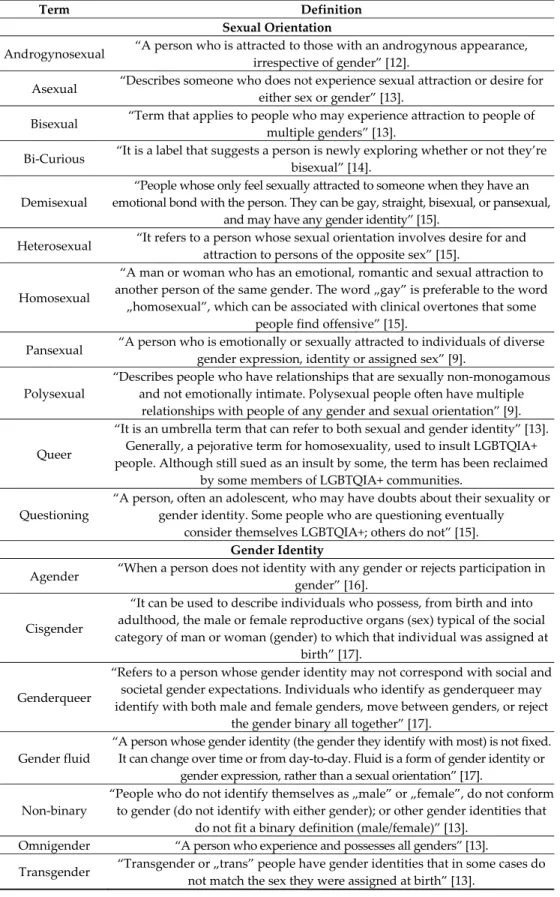
Sexual orientation refers to the emotional, sexual and affective attraction that a person feels for an individual of any gender [10]; also, to the behaviors that a person performs according to that same recognized sexual orientation. They can be classified as heterosexual, homosexual, bisexual, pansexual, polysexual, asexual, demisexual, curious although currently other sexual orientations and identities are recognized, such as queer [11] (Table 1.).
Citation: Tinoco‐Giraldo, H.;
Torrecilla Sánchez, E.M.;
García‐Peñalvo, F.J. An Analysis of LGBTQIA+ University Students’
Perceptions about Sexual and Gender Diversity. Sustainability 2021, 13, 11786. https://doi.org/10.3390/
su132111786
Academic Editors: Anita Tabacco, Gavin Duffy, Alicia García‐Holgado and Rachel Riedner
Received: 30 August 2021 Accepted: 22 October 2021 Published: 25 October 2021
Publisher’s Note: MDPI stays neutral with regard to jurisdictional claims in published maps and institutional affiliations.
Copyright: © 2021 by the authors.
Licensee MDPI, Basel, Switzerland.
This article is an open access article distributed under the terms and conditions of the Creative Commons Attribution (CC BY) license (https://creativecommons.org/license s/by/4.0/).
Table 1. Key terms.
Term Definition
Sexual Orientation
Androgynosexual “A person who is attracted to those with an androgynous appearance, irrespective of gender” [12].
Asexual “Describes someone who does not experience sexual attraction or desire for either sex or gender” [13].
Bisexual “Term that applies to people who may experience attraction to people of multiple genders” [13].
Bi‐Curious “It is a label that suggests a person is newly exploring whether or not they’re bisexual” [14].
Demisexual
“People whose only feel sexually attracted to someone when they have an emotional bond with the person. They can be gay, straight, bisexual, or pansexual,
and may have any gender identity” [15].
Heterosexual “It refers to a person whose sexual orientation involves desire for and attraction to persons of the opposite sex” [15].
Homosexual
“A man or woman who has an emotional, romantic and sexual attraction to another person of the same gender. The word „gay” is preferable to the word
„homosexual”, which can be associated with clinical overtones that some people find offensive” [15].
Pansexual “A person who is emotionally or sexually attracted to individuals of diverse gender expression, identity or assigned sex” [9].
Polysexual
“Describes people who have relationships that are sexually non‐monogamous and not emotionally intimate. Polysexual people often have multiple
relationships with people of any gender and sexual orientation” [9].
Queer
“It is an umbrella term that can refer to both sexual and gender identity” [13].
Generally, a pejorative term for homosexuality, used to insult LGBTQIA+
people. Although still sued as an insult by some, the term has been reclaimed by some members of LGBTQIA+ communities.
Questioning
“A person, often an adolescent, who may have doubts about their sexuality or gender identity. Some people who are questioning eventually
consider themselves LGBTQIA+; others do not” [15].
Gender Identity
Agender “When a person does not identity with any gender or rejects participation in gender” [16].
Cisgender
“It can be used to describe individuals who possess, from birth and into adulthood, the male or female reproductive organs (sex) typical of the social category of man or woman (gender) to which that individual was assigned at
birth” [17].
Genderqueer
“Refers to a person whose gender identity may not correspond with social and societal gender expectations. Individuals who identify as genderqueer may identify with both male and female genders, move between genders, or reject
the gender binary all together” [17].
Gender fluid
“A person whose gender identity (the gender they identify with most) is not fixed.
It can change over time or from day‐to‐day. Fluid is a form of gender identity or gender expression, rather than a sexual orientation” [17].
Non‐binary
“People who do not identify themselves as „male” or „female”, do not conform to gender (do not identify with either gender); or other gender identities that
do not fit a binary definition (male/female)” [13].
Omnigender “A person who experience and possesses all genders” [13].
Transgender “Transgender or „trans” people have gender identities that in some cases do not match the sex they were assigned at birth” [13].
Downing et al. [18] argue that in the United States, there is evidence that some people with a sexual orientation other than heterosexual often have negative experiences related
to rejection by society which affect their quality of life. One of the possible ideas that lead to discrimination against the LGBTQIA+ (Lesbian, Gay, Bisexual, Transgender, Queer, Intersex, Asexual and more) [11,19] community is the association with “risky” sexual practices and the social predominance of heteronormativity [20,21]. Thus, the impact of prejudice notoriously affects many aspects of people’s lives, both personal and social [5], this is worrying with regards to mental health [22], since discrimination usually generates different stressors which hinders access to employment opportunities for people belonging to the LGBTQIA+ community, as well as hinders inclusion in other contexts of social relations [23–25].
In this regard, Levitt [26], in addition to recognizing the above negative impacts of discrimination and stigma on those who suffer it, goes further to suggest that people who are discriminated against or stigmatized, may show low motivation to work, which would affect their job performance, in addition to the fact that it is likely to create tensions in the workplace and low self‐esteem, which could affect the potential of the individual, their family and social relationships [22,27].
Stigma, prejudice and discrimination can have an impact on the social and personal level [4,18,28,29]. At the social level, it is reflected in the stereotypes held about LGBTQIA+
people, even when these are not supported by scientific evidence, among them are feelings of stress, low self‐esteem, problems in interpersonal relationships [28–30]. On a personal level, there is talk of negative consequences especially if the person tries to hide their sexual orientation from society. Although many gay and lesbian people can learn to live with the stigmas against the LGBTQIA+ community, there is still the potential for this stigma to harm their well‐being and health, to this is added the discrimination that may emerge due to other characteristics such as ethnicity, religion, disability, etc., [31].
These stigmas, prejudices and acts of discrimination are considered to be the trigger of stress in LGBTQIA+ people [28,31] thus, the importance of social support for the LGBTQIA+ community is mentioned, taking into account that in some situations it is difficult for them to find such emotional, informational and material support in different agents of socialization such as the family, institutions, peers, schools or in the media [26,29,32,33]. According to Woulfe and Goodman [25] gender inequality can affect health services and people’s quality of life. Thus, this inequality can cause people to discriminate, causing health risks and limit access to service delivery entities such as healthcare [28].
Such discrimination places people in a state of vulnerability [33]. With the above in mind, according to Skaggs and Bridges [34], a person who may generate a value judgment of LGBTQIA+ people tend to have attitudes where the importance of the gender role prevails and may relate to people who share conservative attitudes or possibly conform to a specific religious belief.
1.1. Meaning of LGBTQIA+
First, they were LGB. Then LGTB. More and more letters were added and they became LGTBQ+. And now it’s LGBTQIA+. Just like people, this is an evolving acronym [25]. Although sexuality is only one aspect of an individual’s identity, we explain what the acronym LGBTQIA+ stands for in Figure 1.
Figure 1. LGBTQIA+ acronym.
1.2. University Expirience and LGBTQIA+
The pursuit of diversity, equity and inclusion (DEI) has become the focus of attention for universities around the world [35]. From the negative impacts of the COVID‐19 pandemic [36] to the global outcry against racial injustice; now more than ever, universities must achieve long‐term, sustainable change. Lesbians, gays, bisexuals and transgender people are in every sphere of public life; in the university, in companies, at parties, in the street and it is through education and the dissemination of content on the subject of homosexuality that people acquire the necessary knowledge that allows them to eliminate myths and taboos about the presence of and interaction with this community [3,18,26,37]. According to Hogan & Omasta [38] it is through university student movements that today the LGBTQIA+ community is constituted as an actor that influences society through its activism, making use of collective actions that mobilize against discrimination, of which they have been victims for many years. The student movements in universities seek to generate spaces for thinking about sexual diversity from the experiences of its members, and work on the issue of awareness within educational community and LGBTQIA+ visibility within it.
1.3. Sexual Diversity in Higher Education, Lack of Knowledge and Invisibility
The U.S. Department of Labor’s Office of Federal Contract Compliance Programs (OFCCP) [39] enforces regulations that prohibit discrimination based on sexual orientation and gender identity, under Executive Order 11246, including that of students, so they develop demographic and statistical studies that aim to quantify people who identify as LGBTQIA+ [26,40]. In some universities in the U.S., the proposals and programs for an inclusive education of sexual diversity are aimed at favoring the teaching‐
learning processes of the LGBTQIA+ population [31,41], based on non‐discrimination, and are considered an alternative to reduce and eradicate heteronormativity [42], where the development of an inclusive curriculum in terms of gender equity and sexual diversity, coupled with the professional teacher training in teaching strategies, are fundamental [6,32,43,44].According to the above perspectives, teachers have a fundamental role in inclusive education [32], since they can be promoters of programs and actions that promote equity and equal opportunities for all students, but they can also function as obstacles to the full development of their students [43,45]. In the specific case of educational, inclusion of sexual diversity in the USA, a positive model of academic leadership would accept sexually diverse students and develop inclusive practices for them; in addition, it would have an impact on the promotion of respect and inclusion with their peers [5,22,45,46].
Based on the above scenario, knowledge about sexual and gender diversity can influence attitudes and treatment of others, and thus the following research questions arise:
1. Is there a relationship between knowledge and attitudes about sexual and gender diversity with conceptions of being an LGBTQIA+ student in the context of higher education?
2. What are the main social and institutional factors that promote stigmatization, discrimination and inclusion of LGBTQIA+ students based on sexual and gender diversity?
3. What are the areas in the university context where both sexual diversity and gender identity are addressed?
2. Method
The process on the experience of LGBTQIA+ students at a U.S. university medical school has been a mixed method research project conducted in July‐August 2021, and which has been designed and implemented to acknowledge the views and experiences of university students who identify as lesbian, gay, bisexual, trans, queer, questioning, or other orientations or identities that do not conform to cisgender and heterosexual paradigms. A descriptive non‐experimental transactional design was used, where data were collected at a single point in time and the goal of the project was to identify gaps that may exist in the services offered for the university and the academic strategy supports that may diminish or negatively affect the academic experiences of these students.
This research was designed to obtain information that could serve as a basis for recognizing possible methods of inclusion and academic support. The intent of this paper is to provide clear information about the challenges and complications faced by LGBTQIA+ students at the institution and to acknowledge possible solutions suggested by the students themselves.
A survey was designed to be as unbiassed as possible, recognizing the logistical limitations throughout the process, the results present convincing tendencies and suggestions that should be considered when developing strategies that affect the experiences of LGBTQIA+ students [47].
The following phases were carried out for the development of this project.
Beginning. Design and content validity of the instrument. Design of the instrument in accordance with the relevant psychometric standards, validation of the questionnaire by the judges of attitudes towards perceptions about sexual and gender diversity. The survey was previously submitted to the evaluation of 13 expert judges who will review the wording, the appropriate wording, relevance and structure of the items in terms of the specific categories defining specific categories that define attitudes towards sexual and gender diversity, for this research.
Implementation. In the second phase, participants were selected according to the inclusion criteria (snowball strategy). Before starting, each student had to sign a consent form had to sign a consent form, which informed them of the objectives of the study, its characteristics, and emphasized the anonymous, confidential and voluntary nature of their participation. After signing this form, the survey was given to all participants. The responses were recorded.
Finalization. Analysis of results. The third phase corresponded to the tabulation of the data collected in the implementation for subsequent statistical analysis.
2.1. Design
The objective of data collection is to obtain quality evidence that will enable analysis to lead to the formulation of convincing and credible answers to the questions that have been posed [48]. In implementing the evaluation framework, there are three general areas that are evaluated with the survey: (1) the identification of conceptions of being LGBTQIA+ student in the university context, (2) the search for and recognition of stigma, discrimination and inclusion of LGBTQIA+ students in the same context and (3) to
recognize discourses and scenarios identified by students in the university regarding the approach to sexual diversity and gender diversity.
The survey offers the opportunity to ratify the general areas of interest in the survey of identifying gender and diversity concepts, illustrated by Herek and McLemore [49], correlated with scores on the attitudes toward lesbians and gay men which are configured on the basis of:
Acceptability. The survey examines how participants react to the intervention.
Tolerance. There is a core value of forward language, acceptance, respect and inclusion in the survey.
Practicality. The survey explores the extent to which the intervention is delivered when resources, time, commitment or some combination of these are limited in some way.
Adaptability. Adaptation focuses on recognizing content or procedures that can be changed from the survey to make them appropriate.
Integration. This approach assesses the outcome of perceptions of stigma, discrimination and inclusion of LGBTQIA+ students against the determination towards the feasibility of using another information‐seeking tool in the future.
Expansion. This approach examines the potential success of the survey in determining whether it can be used again with a different population or in a different setting.
Likewise, the survey has been created by adapting the questions and conducting cognitive interviews based on a protocol developed with the support of a previous survey conducted at Wilfrid Laurier University [50] and validated with 13 experts in LGBTQIA+
advocacy processes. These experts were randomly selected directly from ILGA WORLD North America‐ The international lesbian, gay, bisexual, trans and intersex association.
Table 2., shows the protocol used to create the data collection instrument. Each expert gives a rating to the questions in the protocol to determine what information should be generated and included in the data collection instrument. Excellent (E), Good (G), Not Applicable (N), Unnecessary (U), are the options for the experts to recognize the important aspects to be examined with the survey. Based on the highest ratings, the question options for the creation of the data collection instrument are determined.
Table 2. Protocol used to create the data collection instrument.
Protocol Questions
Personal and Professional Value of the
Survey
Perception‐
Based Survey Value for Participants
Overall Quality of
the Survey
Usefulness of the Survey
Include Different Types
of Outcomes
Compile a List of Descriptive Data on the Participants.
Meets Technical
Factors
Meets Ethical Factors
Options
Experts E G N U E G N U E G N U E G N U E G N U E G N U E G N U E G N U
1 X X X X X X X X
2 X X X X X X X X
3 X X X X X X X X
4 X X X X X X X X
5 X X X X X X X X
6 X X X X X X X X
7 X X X X X X X X
8 X X X X X X X X
10 X X X X X X X X
11 X X X X X X X X
12 X X X X X X X X
13 X X X X X X X X
Source: Based on Wilfrid Laurier university protocol [50].
Following the design of the survey, students’ perceptions about sexual and gender diversity, as well as its acceptability and feasibility, are assessed and the survey is generated online for better implementation.
Participants are contacted by email and asked to complete a web‐based version of the survey. The research working group distributes the surveys. A survey with 14 questions (Figure 2) was designed with a mixed approach, where two open‐ended question collect challenges facing for LGBTQIA+ students in the university context and additional comments. The questionnaire included a series of four Likert‐scale response options, and open‐ended text fields.
Figure 2. Students’ perceptions about sexual and gender diversity survey.
The validation allowed us to identify the potential needs of this particular group. For the implementation of the research process, seventh and eighth semester medical students identified with any sexual orientation or gender identity under the LGBTQIA+ umbrella were chosen. All criteria were explained to participants in the initial header of the online survey. The questionnaire included a series of four Likert‐scale response options, and open‐ended text fields [51]. On the other hand, the following verification steps are followed to set up the survey:
Define objectives. Decide what you hope to achieve with the survey.
Select a communication tool to send the survey.
Choose a template. Most survey tools offer templates that can be chosen according to the educational institution and the objectives of the survey.
Include clear questions.
Write an effective email invitation. The survey is sent by email, and the content of the email is important. Keep it brief and let the reader know how long the survey will take.
Include an additional link or link to the survey to ensure they have response options if they cannot find the survey.
Collect and review responses.
This questionnaire is designed using a Likert‐type scale with four options ranging from “Strongly Agree” to “Strongly Disagree” [51,52], organizing the questions into three
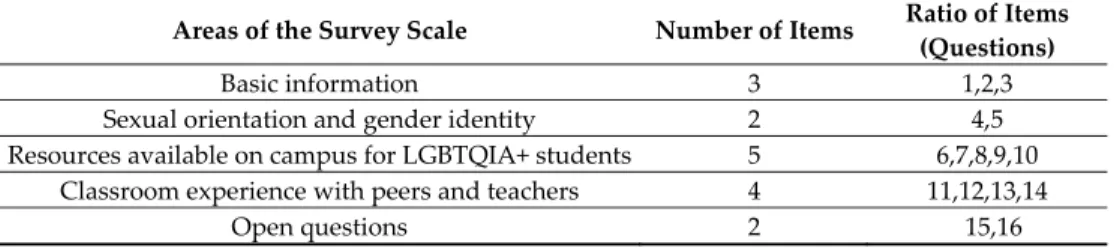
general areas that are assessed by the survey (see above). In addition to these three general areas, there are two open‐ended questions that allow for commentary and the inclusion of specific details of the challenges faced by LGBTQIA+ students and additional comments that are of general interest (Table 3.).
Table 3. Key survey indicators.
Areas of the Survey Scale Number of Items Ratio of Items (Questions)
Basic information 3 1,2,3
Sexual orientation and gender identity 2 4,5
Resources available on campus for LGBTQIA+ students 5 6,7,8,9,10 Classroom experience with peers and teachers 4 11,12,13,14
Open questions 2 15,16
2.2. Sample
The survey was distributed online, using the “snowball” sampling method. This model was chosen to access this population, which is recognized to have a low incidence and individuals who are difficult for the researcher to reach. Thus, it is necessary to reach a very specific group, and through this method it can be much more effective to obtain a sample through acquaintances and friends of the participants themselves, rather than through a purely random selection, in which a large number of individuals who are candidates for participation would be discarded. Therefore, the implementation of this strategy allows us to recognize the distinctive feature of the population we want to study (LGBTQIA+) and tends to group these individuals together, to favor their social contact.
The process of creating the sample through this “snowball” method is based on the use of the network of contacts of some initial individuals (collective subscribed to the “PRIDE”
network of the participating university) to access more people from the LGBTQIA+
collective. The following steps were taken for this process:
Define the participation strategy, describing the process by which an individual from this collective invite or refer others to participate.
Identify groups or organizations (“PRIDE” network) that can facilitate access to initial individuals who meet the characteristic feature of the study.
Obtain initial contacts and ask them to participate. This part was carried out similarly to a conventional sampling technique, aimed at obtaining a small sample size.
After the survey has been completed, ask participants for access to further contacts.
Ensure the diversity of contacts by correctly selecting the initial individuals and encouraging that the recommendation is not limited to very close contacts.
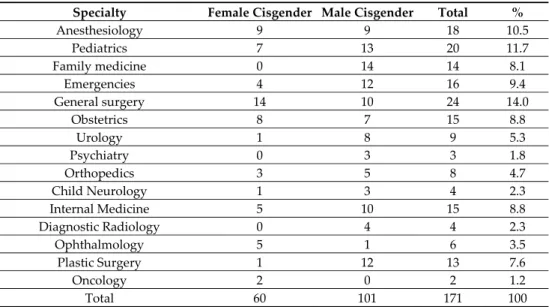
The participants in the study were students enrolled in the seventh and eighth semesters (Fourth year) 2019–2020 of the Faculty of Medicine at a university in the United States. For our study, we counted the semester N = 531 students, of which n = 102 were enrolled in the “PRIDE” network and identified with any sexual orientation or gender identity under the LGBTQIA+ umbrella where chosen. On the other hand, after implementing the snowball methodology, 94 referrals were added to the sample. From here on, 196 surveys were sent, 179 responses were received, of which eight responses obtained were disqualified during the collection process for not completing all the responses and not complying with the eligibility processes of the same. A total of 171 valid surveys were analyzed and tabulated. The responses were classify based on the type of the problems identified in the responses. Table 4., presents the distribution of the participants by specialty at the university and by gender (cisgender identity) provided by the school of medicine.
Table 4. Distribution of the sample by medical specialty reference and by gender (cisgender identity).
Specialty Female Cisgender Male Cisgender Total %
Anesthesiology 9 9 18 10.5
Pediatrics 7 13 20 11.7
Family medicine 0 14 14 8.1
Emergencies 4 12 16 9.4
General surgery 14 10 24 14.0
Obstetrics 8 7 15 8.8
Urology 1 8 9 5.3
Psychiatry 0 3 3 1.8
Orthopedics 3 5 8 4.7
Child Neurology 1 3 4 2.3
Internal Medicine 5 10 15 8.8
Diagnostic Radiology 0 4 4 2.3
Ophthalmology 5 1 6 3.5
Plastic Surgery 1 12 13 7.6
Oncology 2 0 2 1.2
Total 60 101 171 100
The communication campaign for this survey was conducted via Twitter, Facebook and Instagram. From here, interested participants were directed to a web link hosted on google that led to the opening letter and survey. All surveys were conducted in English.
Participants did not receive any compensation. Researchers electronically obtained informed consent for the survey and participants were informed of the reasons why this research was being conducted and how the information collected would be used.
The survey was developed and hosted on Google Forms. Respondents could only submit one survey and the cookie‐based anti‐duplication strategy that Google Forms offers was applied. All survey participants were anonymous and no personal or contact information was requested. Responses were encrypted and sent directly to the researchers. The university did not obtain any personal or geographic information from the participants. Prior to distributing the survey, the coordinator contacted informed the sample of the content of the research (nature, objectives, scope, etc.). In addition, the sample was informed of their voluntary and anonymous participation in order to satisfy the ethical canons of data collection (confidentiality and freedom of participation).
Likewise, this research was approved by the ethics committee of the Faculty of Medicine of the participating university.
2.3. Data Analysis
Once the participant sample and the methodological design are known, it is important to determine the data analysis to be carried out in order to obtain the different results that will allow validation and verification of whether the established objectives have been obtained. As mentioned above, the nature of the information is both quantitative and qualitative; therefore, the data analysis is based on the nature of the data.
Thus, the analyses used are as follows:
Quantitative analysis: this type of analysis is implemented on the information obtained from the survey conducted. In order to verify the behavior of the distribution of the variables, an exploratory study of the variables must be applied. In this phase, descriptive statistical analyses are carried out to study the sample distribution. Once it is determined that the subsequent phases can be carried out, a study on the adjustment to the normality of the variables is established using the Kolmogorov‐Smirnova and Shapiro‐
Wilk tests. This process will facilitate the determination of the type of test to be used in the hypothesis contrasts: parametric or non‐parametric.
Quantitative analysis: With the purpose of recognizing what was the greatest obstacle faced by LGBTQIA+ students at university, the questionnaire includes an open question, with which it is intended that participants provide information not collected in the questionnaire, to explore the possible relationships between knowledge about sexual diversity and the realities of LGBTQIA+ participants. All statistical analyses, both descriptive and inferential, were carried out in the statistical software SPSS, version 25. The analyses will be refined as the results are presented in order to facilitate the identification of the relevance between the statistical analysis carried out and the objective developed.
With the help of the statistical analysis, we calculated the average of the responses for each type of area assessed, i.e., the average of the area of participants’ knowledge of realities, knowledge of resources and experiences. Then, from the average obtained, we calculated the percentages of accurate responses for each area. These percentages reveal the participants’ level of knowledge about Sexual orientation and gender identity, Resources available on campus for LGBTQIA+ students and Classroom experience with peers and teachers (Table 5.)
Table 5. Percentages of participants’ accurate responses on perceptions about sexual and gender diversity.
Areas of the Survey Scale Participants Percentage Sexual orientation and gender identity 171 46 % Resources available on campus for LGBTQIA+ students 171 34 % Classroom experience with peers and teachers 171 20 %
3. Results
As indicated in Section 2.2, information on the results would be presented by indicating each of the key survey data, summarised in basic information, sexual orientation and gender identity, resources available on campus for LGBTQIA+ students, classroom experience with peers and teachers and open questions.
3.1. Basic Information
In terms of demographics, 100% of the respondents were full‐time undergraduate medical students. Of these, 93% were in their seventh semester and the remaining 7%
were in their eighth semester, 92% between ages of 20 to 25 and 8% between ages of 26 to 31 years (Figure 3.).
Figure 3. Percentage of answers to questions 1 to 5.
On the other hand, looking at the demographic variables, we find:
Sexual orientation: In order to test the relationship between the participants’
knowledge and the sexual orientation variable, the different sexual orientation options presented were recognized: homosexual, bisexual, pansexual, polysexual, asexual, demisexual, bi‐curious, queer, androgynosexual and heterosexual. After recognizing the basic statistics, it is essential to carry out a more concise exploration of the normality of the sample, in order to corroborate or note the differences found.
Thus, the Kolmogorov‐Smirnov test and the Shapiro‐Wilk test (K‐S) were performed to determine the normality of the group. The hypotheses of the K‐S test were:
H0: The distribution of the variable conforms to a normal distribution (sig > =0.05).
H1: The distribution of the variable does NOT conform to a normal distribution (sig < 0.05).
However, the predominant sexual orientations among the participants in this research were: homosexual, bisexual and bi‐curious, but it was decided to select the majority groups: homosexual and bisexual. The results obtained indicate significant differences (Table 6) with a medium effect size (dcohen = .624; r = .028). According to the data obtained, it is estimated that homosexual participants have higher perceptions of diversity and gender knowledge than bisexual participants.
Table 6. Level of perception as a function of the variable sexual orientation.
Sexual Orientation Number of
Participants DT T r
Homosexual 97 38.42 2.78 .003
Bisexual 28 41.40
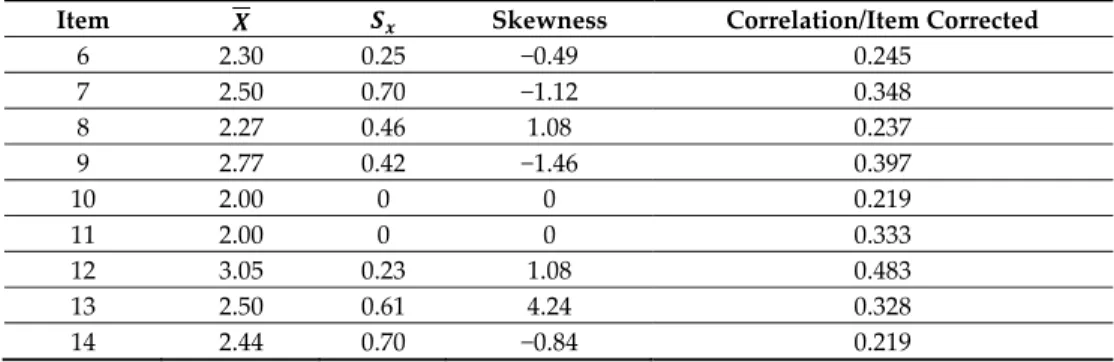
Age: The possible difference between the degree of perception of the participants and the variable age was also analyzed. For this purpose, the sample was divided into two groups: on the one hand, participants under 25 years of age (which coincides mostly with students in their seventh and eighth semesters) and those aged 26 and over. The data obtained indicate that there are no major differences (t= 1.59; p > .05), although students under 25 years of age have a higher level of perception of the subject. In addition, Table 7 highlights an overview of the items that make up the perception scale on sexual and gender diversity, with the central tendency statistics for questions 6 to 14 with the Likert scale. The asymmetry in all items indicates that they score agree or strongly agree, i.e., positive attitudes towards this issue.
Table 7. Descriptive statistics of the items of the questionnaire of perception on sexual and gender diversity.
Item 𝑿 𝑺𝒙 Skewness Correlation/Item Corrected
6 2.30 0.25 −0.49 0.245
7 2.50 0.70 −1.12 0.348
8 2.27 0.46 1.08 0.237
9 2.77 0.42 −1.46 0.397
10 2.00 0 0 0.219
11 2.00 0 0 0.333
12 3.05 0.23 1.08 0.483
13 2.50 0.61 4.24 0.328
14 2.44 0.70 −0.84 0.219
As an initial part of the survey (questions 4 to 5), participants indicated their sexual orientation and gender identity, although it was specifically reiterated that these questions could be optional (Table 8) In total, 100% of the participants responded to these questions.
More than half of the participants identified themselves as “homosexual/gay/lesbian”. A
very high percentage, 35.7%, identified as cisgender. It is worth noting that none of the participants used the heterosexual/straight option, and only one individual felt that he did not identify with the categories offered in the survey, and likewise, this participant did not let us know which category was identified with.
Table 8. Sexual orientation and gender of the participants.
Sexual Orientation Number of Participants Percentage
Homosexual 97 56.70%
Bisexual 28 16.40%
Pansexual 13 7.60%
Polysexual 12 7.00%
Asexual 2 1.16%
Demisexual 2 1.16%
Bi‐Curious 15 8.80%
Queer 1 0.59%
Androgynosexual 1 0.59%
Heterosexual 0 0.0%
Total 171 100%
Gender identity Number of participants Percentage
Cisgender 61 35.70%
Genderqueer 49 28.65%
Gender fluid 22 12.90%
Transgender 16 9.35%
Agender 8 4.70%
Non‐binary 14 8.11%
Omnigender 1 0.59%
Total 171 100%
Similarly, Figure 4 shows the relationship between each participant’s age, sexual orientation and the gender identity with which they identify. 57% of individuals identified as homosexual, 26.3% recognize themselves as cisgender, which allows us to align them between gender identity, anatomical sex and behavior according to anatomical gender; on the other hand, 89% of them are under 25 years of age. Furthermore, 69.3% of the participants identified as genderqueer recognize their sexual orientation as homosexual and 65% of them are under 25 years of age. It is noteworthy that 56.3% of the individuals identified as transgender recognize their sexual orientation as homosexual and 25% as bisexual.
Likewise, individuals identified as pansexuals, 69.2%, of whom identify as non‐
binary, feel comfortable within a broader spectrum that encompasses both masculine and feminine, either because they can oscillate between both identities and feel emotionally and sexually attracted to all of these characteristics.
It is worth noting that bi‐curious, queer and androgynosexual sexual orientations are more identified by the genderqueer identity. Only 14 participants of the total sample (8.2%) are older than 26 years and recognize that their sexual orientation is homosexual (50%), bisexual (28.6%) and bicurious (21.4%).
Figure 4. Participants ‘age vs sexual orientation and gender identity.
3.2. Resources Available on Campus for LGBTQIA+ Students
Questions 6 through 10 asked about general campus friendliness and physical resources and activities geared toward LGBTQIA+ students.
Participants felt comfortable and included on campus (18% strongly agreed, 62%
agreed), 17% agreed with the state’s gender‐specific restroom policy, however, 63% of students recognized as cisgender disagreed.
On the other hand, participants said they felt welcome at university events and scheduled activities (21% strongly agreed, 60% agreed). However, 20% agreed that it was difficult for them to communicate and identify with the ideas of other students on their campuses. Several participants (21%) described persistent patterns of isolation, exclusion, and marginalization that made them feel unsafe or out of place at the university. Participants said that hearing insults, not having resources relevant to their experience, being discouraged from same‐sex relationships, and being referred to as the wrong gender generally made school a hostile environment, which, in turn, can affect their health and well‐being.
Overall, they felt that there should be more safe spaces for LGBTQIA+ and other minorities on campus (32% strongly agreed, 48% agreed).
There were very high levels of agreement with question about full‐time staff to run LGBTQIA+ groups, possibly recognizing that the current staff were not able to cope with events or did not have a proper understanding of LGBTQIA+ issues at the university. It is important to recognize that the university has a LGBTQIA+ pride club, but 68% consider that the organization is not empowered to make decisions or create specific strategies for their needs.
3.3. Classroom Expereince with Peers and Teachers
Questions 11 through 14 were related to the classroom environment and their experiences with peers and teachers. Discrimination and intolerance against transgender students took various forms, including restricting access to restrooms and locker rooms, limiting participation in extracurricular activities and prohibiting other forms of expression. A very high percentage (51%) considered feeling uncomfortable in class regarding their sexual orientation or gender identity, having heard inappropriate
comments or negative assumptions from some teachers, on the other hand, 23%
acknowledged that they often feel uncomfortable, and the remaining 28% indicated that they have never or rarely felt any rejection. Three‐quarters of respondents acknowledged that their teachers and classmates never used gender‐neutral or gender‐diverse language, 12% indicated that such language was sometimes used, 2% indicated that it was often used, and 1% always used it; it is noteworthy that 19% of cisgender‐identified respondents felt that teachers did not use gender‐neutral language.
On the other hand, only 12% of the participants considered that information, elements and curricula did not make reference to the LGBTQIA+ community, and from that connotation, they did not feel identified with the gender identity programs that the university currently included in its curriculum.
Regarding the resources that the participants perceive that the university must to address the issue of sexual diversity, they are aware of forums, campaigns and research groups although they do not belong or attend them (26.3%), they recognize the importance of carrying out this type of activities to contribute to the acceptance and inclusion of diversity (4.3%).
In relation to the dynamics of interaction in the university context it was found that 64% of the participants mentioned different aspects, regarding the relationship spaces some of the subjects mentioned that they did not know of any place within the university where only LGBTQIA+ people related, however, 32% mentioned a specific meeting space, which is located at the entrance of one of the faculties, however, it was clarified that participating in these spaces is not for relationship dynamics with homosexual people but rather for friendships belonging to that faculty. Likewise, 16% of the cisgender‐identified individuals were unaware of the existence of any LGBTQIA+ programs or established LGBTQIA+ community figures in the university.
On the other hand, the socialization groups where they mentioned interacting are small groups integrated by cisgender‐identified individuals and some genderqueer, most of them do not describe being part of any representative university group. In this regard, Galupo [53] pointed out the importance of creating and promoting dynamics within the university campus since these interactions allow them to exchange values, beliefs and emotions, which is fundamental to generate a satisfactory university experience. The above is related to the idea of building a reality through interaction and exchange that occurs specifically in sharing in a cultural context, in this case with various social groups [30,34].
Some of the participants mentioned that in one of the classes of the faculty there are discourses that favor heteronormativity and that there are even homophobic comments, although not directed towards the individual, they mention that in their classes, in some examples or topics, teachers or students imply their rejection of homosexuality, justifying that it is “unconstitutional marital unions of persons of the same sex”.
Jourian [10] mentions that in the speeches of heterosexual students and teachers at the school, although they mention tolerance towards sexual diversity, openness towards sexual diversity is not total. The participants mention that the university is a reliable space but not with total freedom for the expression of their sexual orientation. This is supported by Bradbury‐Jones et al. [44] who states that the university should promote socialization to encourage the recognition of sexual diversity, since, as in society, the university privileges the formation of heterosexual groups in its curricula, socialization and activities.
This lack of awareness by participants reveals and hints at a lack of communication and action plans that could be reflected in areas that need improvement. It is noteworthy that among the participants, 14% of the cisgender‐identified individuals do not use inclusive language and even 20% of this percentage do not emphasize the recognition of LGBTQIA+ identities at the university. Sixty‐seven percent of participants admit to using inclusive language and recognize and acknowledge themselves within different gender identities. To be more specific, 87% of the students affirm that faculty courses do not specifically address gender identity, and only 9% of the participants consider that it is not essential to include this information when it is available on the Internet.
Furthermore, Galupo [53] mentions that, in universities, many teachers have been found to be using the same teaching methodologies as those used many years ago, which prevents them from integrating new knowledge and methodologies to meet the new needs of the emerging generations.
3.4. Additional Open‐Ended Questions
As part of the survey design, we asked what was the biggest challenge facing LGBTQIA+ students in the university? The reflection of the responses obtained allowed us to sort the information into key themes.
It is also important to recognize that cisgender‐identified students identified more generalized elements and described processes close to their reality. From this information they were divided into four categories:
Lack of resources: Recognized by the lack of attention paid by the university in programming processes and spaces for cooperation and support for the LGBTQIA+
community at the university [54].
Participant answer example. “I consider indispensable the logistical and financial support of the university to create spaces and alternatives for all communities including LGBTQIA+ in the university”.
Ignorance about the LGBTQIA+ community and cultural connotation: This refers to the total or partial discrimination to which not only students but other members of the university such as faculty and staff are subjected [55]. This lack of inadvertent discrimination is due to lack of knowledge, indifference or repression towards LGBTQIA+ identities at the university.
Participant answer example. “You can tell how ignorant they can be when they still treat my transgender study partner like a kid because she has not yet reached the fullness of her change process” “I can recognize the lack of guidance and education that many students have when they identify other genderqueer students on campus”.
Exclusion and social challenges: These categorizations refer to the lack of interest or mischaracterization of gender identity or sexuality, as well as to the forgetfulness of some individuals about the issue and the assumptions created by stigmatization or lack of clarity about being included [56]. The same happens with the exposure to social problems that LGBTQIA+ individuals are subjected to when looking for friends, partners, peers just for the fact of being identified in this community.
Participant answer example. “It is complicated to do study groups with individuals who hold gender grudges in my classroom”.
Hostility: Homophobia or transphobia are hostile attitudes towards individuals belonging to the LGBTQIA+ collective, including hatred, the singling out of the LGBTQIA+ individual as contrary, inferior or abnormal and, in the case of psychiatric discourse, placing it in the pathological or symptomatic range [55,57].
Participant answer example. “The mere fact that they insult you and use derogatory words and that they believe that because you are homosexual you like high‐heels, is an attempt to sexualize you in a negative way”.
Other challenges that the participants mentioned were:
The lack of denunciation of situations of danger and homophobia: The participants consider it essential to adopt a strategy of denouncing abuses of authority and acts of discrimination against people with a non‐heterosexual sexual orientation [35].
Participant answer example. “We must focus our actions on public demonstrations, through leaflets and protests, with the aim of pressuring legislators on the need to criminalize homophobia at the federal level and to carry out the necessary reforms to prevent discrimination in all spheres of life”.
Presence and visibility: By showing up publicly and affirming their sexual identity in the places where they perform, participants are contributing to the visibility of the cause of sexual diversity [58].