In January 2018, the European Commission published the mid-term evaluation of the current Erasmus+ programme, which served as the basis for the Commission's proposal for the next generation of the Erasmus program for 2021-2027. One of the flagships of the European Education Area is the European Universities initiative, which leads to ambitious and long-lasting transnational alliances of higher education institutions. The launch of the network was also the first major step in the implementation of the European student card initiative, which will propose a seamless interface with Erasmus+.
The second cycle of the Program for the International Assessment of Adult Competences (PIAAC) has been implemented.
The 2018 priorities
In January 2018, the European Commission published the mid-term evaluation of the current Erasmus+ programme. In addition, the Commission has proposed to strengthen the international dimension of the program beyond higher education and youth, opening it up to areas such as vocational education and sport. The program will also aim at raising awareness and a better understanding of the European Union and its values, and at promoting involvement in democratic life.
The Strategy also builds on the potential of the Youth Programmes, such as Erasmus+ Youth and the European Solidarity Corps.
Programme implementation
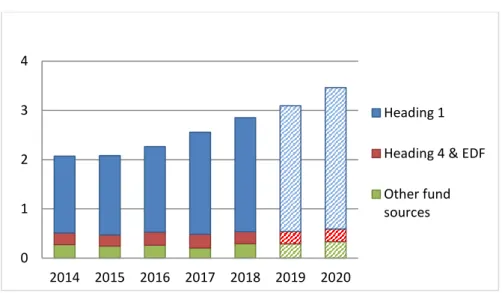
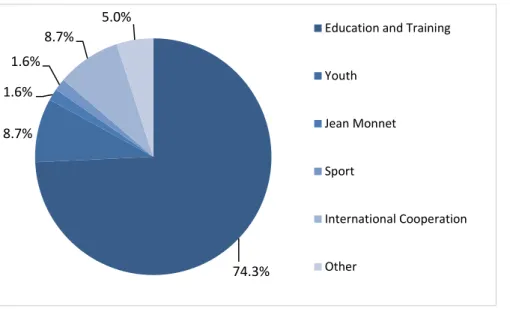
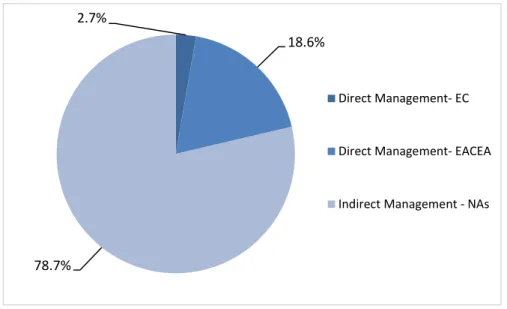
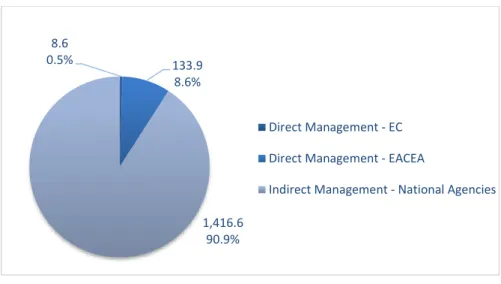
The indicative funding framework for Erasmus+ is DKK 16.4 billion. EUR for the period billion under EU budget expenditure area 1a (Competitiveness for growth and employment) and 1.9 billion EUR under heading 4 (Global Europe) to address the international dimension of the programme. The total budget for the Erasmus+ program increased year by year, including an additional budget adopted by the budgetary authority. The implementation of the Erasmus+ program in the program countries is mainly entrusted to the national agencies (indirect management), appointed and supervised by the national authorities of the participating countries of the Erasmus+ program, but is also carried out in direct management mode via education, audiovisual media and the Culture Management Agency (EACEA) and to a lesser extent by the European Commission's Directorate-General for Education, Youth, Sport and Culture.
With a view to the preparation of the future Erasmus programme, new horizontal and field-specific working groups on mobility and cooperation actions were set up in the second half of 2018.

Key Action 1 - Learning mobility of individuals
- Mobility for Education and Training
- Mobility in the field of youth
- Mobilities from the Outermost regions
- Erasmus Mundus Joint Master Degrees
- Erasmus+ Master Loans
Higher education student and staff mobility (Program countries) Higher education student and staff mobility (Partner countries) Adult Education and staff mobility. The results were the renewal of teaching and management practices and the improvement of the European dimension of the school. The launch of the network is also the first major step in the delivery of the European Student Card initiative.
The number of Erasmus+ Higher Education Charters (ECHE) awarded to higher education institutions increased again in 2018. In 2018, the program emphasized the need to train academic staff in innovative pedagogy and curricular design, and required higher education institutions to set institutional targets in terms of the number of staff to be supported to participate in such training activities abroad. The fourth call for higher education student and staff mobility between Program and Partner Countries, or international credit mobility, kept the action popular among higher education institutions (HEIs) in both Program and Partner Countries.
Project for higher education student and staff mobility between Program countries and Partner countries Coordinating organisation. Out of the more than 22,000 organizations involved in 2018 projects, the vast majority submitted only one. The success of the action is also shown in the very high satisfaction rate among participants and 95%.
Even though the Commission transferred part of the Erasmus+ budget for volunteering opportunities to the European Solidarity Corps, Erasmus+ still funded more than 9,500 volunteers in 2018. The majority of participants come from the field of Higher Education (52%) followed by that of Youth (25%), Vocational Education and Training (14%), School Education (7%) and Adult Education (1%).

Key Action 2 - Cooperation for innovation and the exchange of good
- Strategic Partnerships
- Capacity building
- Knowledge Alliances
- Sector Skills Alliances
- Collaborative Platforms
In 2018, commitments were entered into for a total amount of DKK 672 million. EUR under Key Action 2, representing 2% of the total commitments for Erasmus+. Depending on the goals and composition of the strategic partnership, projects can support innovation or the exchange of good practice. The launch of the first pilot call took place in October 2018 alongside a successful stakeholder information session.
As a key contribution to the European Education Area, the European Universities - ambitious transnational alliances of higher education institutions - will be game-changers for the universities of the future and will increase the international competitiveness and attractiveness of higher education. Transnational Cooperation Activities (TCA) between National Agencies support the added value of the EU and the quality implementation of Erasmus+. National Agencies continued to use TCAs for training and support activities tailored to the needs of various youth and longer-term actions.
The aim is to modernize the higher education institutions (new curricula, governance, etc.) in the partner countries or to contribute to the development of the education systems in the partner countries. In 2018, 436 ongoing CBHE projects were selected under the first three calls and 2017 were closely monitored by the European Commission with the support of the national Erasmus+ offices in the ex-Tempus partner countries. The action is aimed at youth organizations active in Erasmus+ Program countries and other partner countries from other parts of the world.
1,176,258 Metalworking makes up a significant amount of the EU's manufacturing sector and is therefore dependent on skilled workers in this field. The main added value of the conference for participants was the opportunity to network and exchange best practices and ideas.

Key Action 3 - Support for policy reform
- Knowledge in the fields of education, training and youth
- Initiatives for policy innovation
- Cooperation with International Organisations
- Stakeholder dialogue and policy promotion
- Support to European Policy tools and networks
The aim of the partnership with the Council of Europe in the field of youth is to promote synergies between the activities of the two institutions in the youth field. Their international costs for participating in the survey are co-financed, for a total budget of €3.8 million. The European Commission uses the PIAAC results to support the efforts of the Erasmus+ program countries to improve and reform education and training, to meet the challenges of today's changing labor markets and to support inclusive societies.
In addition, this action contributes to the implementation of the international dimension of European education and training policies by supporting policy dialogue with international stakeholders and international attractiveness and promotion opportunities. The award also indirectly contributed to the EU dialogue cycle in the field of youth. The third edition of the European Youth Event took place on 1 and 2 June 2018 in Strasbourg.
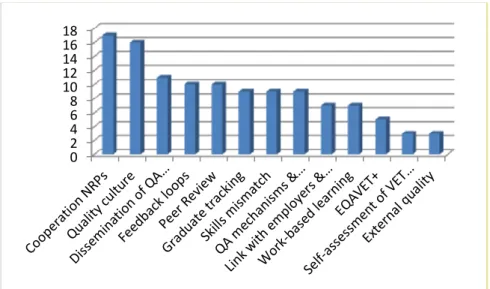
Youthpass - an EU-wide instrument for identifying and documenting non-formal and informal learning outcomes obtained by participants in Erasmus+ youth projects - has been further developed to serve European Solidarity Corps projects as well. In 2018, they managed and contributed to the further development of the European Youth Portal and were its first-level help desk. In 2018, Erasmus+ continued to support the activities of EQAVET national reference points (NRP).
As highlighted in the renewed EU agenda for higher education, many higher education institutions do not contribute enough to the innovation potential of the regions in which they are located. The European Commission has launched a project to better understand the cooperation of higher education institutions and regional authorities in the framework of the smart specialization agenda, based on the involvement of relevant stakeholders, especially higher education institutions.
Jean Monnet Activities
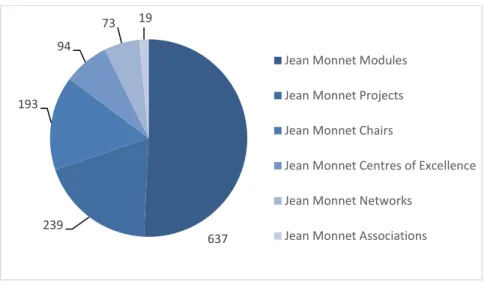
The selection of 33 new Centers of Excellence and 47 new Jean Monnet Chairs in 2018 ensures the consolidation of EU teaching and research in countries around the world. The trend of widening the range of areas addressed by the Jean Monnet Actions continued in the selected applications in 2018. The beneficiaries of the Jean Monnet Actions engage with a wide range of topics of current interest related to the EU including: migration and the crisis of refugees; economic crisis and austerity measures; misinformation and the rise of populism; the role of citizens and their current disengagement from the EU construction process; employment; protection; health care;
Many successful proposals examine the future of the EU, addressing in particular the issue of uninformed citizens and the importance of effective communication about Europe in both higher education and schools. In 2018, the European University Institute continued work on the establishment of the Florence School for European and Transnational Governance, for which a detailed business plan and progress report were submitted in May 2018. on the European Union at the University of Maynooth and in Ireland by introducing new pedagogical elements into the curriculum, including a new module for antisocial students.
A Schools Forum will link Maynooth with Irish secondary schools to facilitate reflection on the EU debate. Other pedagogical elements include an intensive field trip to EU institutions in Brussels and simulation games of EU negotiations. The project stems from a perceived need to produce critical, informed and constructive research, teaching and engagement on the EU in Ireland.
This project tackles this problem through a new annual Irish Public Forum on the 'Future of Europe' debate and by deepening collaboration with government and civil society partners. The research dimension of the project is concerned with the EU enlargement policy and challenges to the rule of law in both accession and post-accession contexts.
Sport Activities
Erasmus+ supports collaborative partnerships with a view to developing, transferring and/or implementing innovative practices in sport and physical activity between different organizations and actors in and outside of sport, including public authorities, sport-related organizations and educational bodies. Projects may include anti-doping; match fixing; dual career for athletes; the fight against violence, racism, discrimination and intolerance; social inclusion; and equal opportunities in sport. The integrity of sport such as good governance, anti-doping and the fight against match-fixing.
Fighting violence, racism, discrimination and intolerance in sport and promoting social inclusion and equal opportunities in sport. Most of the submitted non-profit European sports events covered the theme of promoting social inclusion and equal opportunities in sport, followed by promoting participation in sport and physical activity, in particular by supporting the Council Recommendation on Health-Enhancing Physical Activity (HEPA) and the EU Physical Guidelines for activities. The trainings, which cover the urgent need for social inclusion in sports, were the basis for the planning of the tournament by the project coordinators.
The European Week of Sport The annual European Week of Sport was organized for the fourth time in 2018, in collaboration with participating countries and regions and partners of the Week, to encourage participation. A new Eurobarometer on sport and physical activity published in March 2019 shows that the level of participation in sport and physical activity has not changed substantially since the previous Eurobarometer survey in 2014. Cooperation with other international organizations active in the field of sport was increased further strengthened.
The third thematic cluster meeting on sport integrity took place in Brussels on 4 and 5 December 2018. In 2018, the fifth year of implementation of this action, the Council Presidencies organized several events on the different contemporary challenges in sport.