The Carbon Group Board of Directors for the period 2019-2020 was elected in the composition of: Peter Carrott (Chairman); José Luís Figueiredo (past president);. Today, the former LCM team is Research Group 4, "Catalysis and Carbon Materials", and represents about 40% of the affiliated laboratory LSRE-LCM (https://lsre-lcm.fe.up.pt/). Current research activities are divided into three scientific areas, each of which is divided into projects and sub-projects, as shown in Figure 1: 1) Nanostructured carbon materials; 2) Environmental catalysis and technologies; 3) Energy, fuels and chemicals.

Introduction
Carbon-based (nano)materials are remarkable building blocks that have driven innovation in a host of advanced applications, ranging from Catalysis and the Environment to Energy and Smart Technologies. Our research group from the Associated Laboratory for Green Chemistry REQUIMTE/LAQV, in the Department of Chemistry and Biochemistry of the Faculty of Sciences of the University of Porto, Portugal, has developed research work within the context of K&TD projects in the fields of hybrid and doped carbon. (nano) based materials for eco-sustainable catalysis, biomass valorization, energy technologies and smart devices.
Eco-Sustainable Catalytic Systems Based on Carbon (Nano)Materials
Regarding the enantioselectivity, in the case of the epoxidation of styrene (system i), increasing the AC porosity also led to an increase in the enantiomeric excess values (%ee). Schematic representation of the procedures for heteroatom doping of MWCNTs and GFs (MWCNT_XY and GF_XY, where X = doping element and Y = ºC of thermal treatment/100).
![Figure 1. Proposed routes for the immobilization of [VO(acac) 2 ] onto amine-functionalized ACs by methods A and B](https://thumb-us.123doks.com/thumbv2/123dok_es/12394459.0/13.892.71.757.146.348/figure-proposed-routes-immobilization-acac-amine-functionalized-methods.webp)
Development of Biochar-Based Catalysts for Biomass Valorization
The produced new generation graphene-based nanocomposites have been effectively used as electrocatalysts for the determination of several pharmaceuticals and as photocatalysts in the degradation of predicted emerging pollutants. The first steps of the project's research work are aimed at the development of advanced extraction technologies for the extraction of phenolic compounds and the recovery of monomers obtained from biomass.

Hybrid/Doped Carbon-Based (Nano)materials for Energy Technologies
Another area of research and development of our research group is related to the design of high-performance solid-state smart textiles and flexible energy storage devices based on hybrid carbon nanomaterials. Electrochemical energy storage devices have become key players in the development of efficient energy management solutions [38].
![Figure 10. Applications of textile-based energy storage devices. Reproduced from ref. [33] by permission of John Wiley and Sons.](https://thumb-us.123doks.com/thumbv2/123dok_es/12394459.0/21.892.170.651.483.886/figure-applications-textile-energy-storage-devices-reproduced-permission.webp)
Smart Electrochromic Devices Based on Carbon-Poly(Nickel Complex) Nanocomposites
A set of transition metal-based POMs has already been selected for near-future doping of already optimized Co-NFs. Schematic representation of the structure of the flexible solid-state electrochromic device based on GFNP@poly[Ni(3- Mesalen)] and photographs showing the color change of the device upon application of a potential (redox process). In this communication, a brief summary of the studies developed by the Chemistry and Catalysis Coordination Group (CCC) of the Centro de Química Estrutural (Instituto Superior Técnico, Universidade de Lisboa) regarding the use of carbon materials as catalyst supports is presented. .
Therefore, the combination of the properties of homogeneous complexes with the advantages of heterogeneous systems would be achieved.
![Figure 13. Chemical structure of [Ni(3-Mesalen)] complex, morphology of N-FLG and electrochemical stability of N-FLG@poly[Ni(3- N-FLG@poly[Ni(3-Mesalen)] and pristine poly[Ni(3-N-FLG@poly[Ni(3-Mesalen)] films evaluated by chronoamperometry](https://thumb-us.123doks.com/thumbv2/123dok_es/12394459.0/24.892.128.830.213.501/chemical-structure-mesalen-morphology-electrochemical-stability-evaluated-chronoamperometry.webp)
Oxidation of alkanes
The first supported materials prepared were iron (II) and gold (III) C-scorpionate complexes immobilized in functionalized carbon materials such as activated carbon, carbon xerogel or multi-walled carbon nanotubes, which are used as catalysts for the peroxidative oxidation of cyclohexane [24 , 25]. Subsequently, these studies were extended to i) other metal complexes, not exclusively C-scorpionates [26-30]; ii) other catalytic reactions [26-31]; iii) gold nanoparticles [32-35] and iv) various nanostructured carbon materials (e.g. graphene oxide, reduced graphene oxide, graphene nanoplates, nanodiamonds and nanohorns) [35-37]. In the latter approach, in collaboration with Ana Paulo Carvalho from the Centro de Química e Bioquímica of the Faculty of Science of the Universidade de Lisboa, biomass-derived carbon obtained from lignocellulosic waste was successfully used [30,37]. Thus, the above collaboration with the Catalysis and Materials Laboratory of the Faculty of Engineering of the University of Porto (FEUP), the Centro de Química e Bioquímica of the Faculty of Science of the Universidade de Lisboa and the research groups of the Instituto Superior de Engenharia de Lisboa was fundamental for the preparation of materials used in catalytic applications, which are developed works listed in section 8 of this communication.
It should also be mentioned that this interest in the field of transition metal-based catalysts supported on carbon materials gave rise to several M.Sc.
Oxidation of xylenes
Recently, the influence of porous carbon supports on the performance of the heterogeneous catalyst [FeCl2{κ3- HC(pz)3}] was investigated [37] using materials with special porosity: microporous (GL50- ox, GL50 Norit sample moisture oxidized and S, sisal-derived activated carbon prepared by chemical activation) and mesoporous materials (CMK-3). The heterogeneous systems exhibited good activity and fairly high selectivity for the formation of the mixture of cyclohexanol and cyclohexanone from the microwave-assisted oxidation of cyclohexane, and allowed their relief.
Oxidation of styrene
Oxidation of alcohols
Carboxylation of alkanes
Conclusions
Figueiredo, Commercial gold(I) and gold(III) compounds supported on carbon materials as greener catalysts for the oxidation of alkanes and alcohols, ChemCatChem. Pombeiro, Oxidovanadium(V) complexes anchored on carbon materials as catalysts for the oxidation of 1-phenylethanol, ChemCatChem. Pestryakov, Commercial gold(III) complex supported on functionalized carbon materials as catalyst for cyclohexane hydrocarboxylation, Catal.
Pombeiro, Gold nanoparticles deposited on surface-modified carbon materials as reusable catalysts for the hydrocarboxylation of cyclohexane, Appl.
Acid-chars synthesis and properties
To the best of our knowledge, the published works focusing on acid carbonizations obtained by AMC were focused on the development of the pore structure to obtain nanoporous carbon materials. Micro- and mesopore volumes of the activated carbons prepared by solution impregnation of sour carbon S12/12 and S13.5/13.5 with K2CO3 or KOH (3g of activator per gram of sour carbon) followed by activation at 800 °C for 1 hour. The sisal-derived acid-chars prepared in the AAM group were chemically activated with K2CO3 and KOH with the aim of understanding the influence of the acid-char properties on the final properties of the activated carbons [9 ].
While K2CO3 solution obtains impregnation and further activation of acid-chars with H2SO3 12 M and 13.5 M activated carbon (S12/12/.
Acid chars as catalysts supports
The N2 adsorption isotherms (Figure 3(b)) and pore size distributions (Figure 3(c)) show that by changing the contact method of K2CO3 and acid char (S13.5/13.5/C3(s) – solution impregnation and S13.5/ 13.5/C3 – physical mixing) we can also adjust the porosity of the resulting activated carbon without significant changes in the apparent density and morphology of the samples (for more details see [9]). Data presented in Table 1 exemplify the most relevant results obtained in one of the solvents tested (CH2Cl2) and under solvent-free conditions. In both cases, the carbonic acid is practically inactive, so it acts only as a host for the complex.
However, the most important results were those obtained under solvent-free conditions as complete reagent convention was achieved while maintaining 100% epoxide selectivity.
Acid chars as catalysts and adsorbents
This decrease is attributed to the leaching of species that were not effectively bound to the acid carbon, probably those detected in the very low intensity bands assigned to acetonitrile in the FTIR spectrum of [email protected]. Thus, the results obtained with sisal-derived acidic carbon loaded with the complex [MoI2(CO)3(MeCN)2] proved that acidic carbonate can compete with more conventional carbon materials to prepare reusable catalysts that retain almost unchanged their catalytic properties. in several consecutive. Paiva in the early nineties with emerging ideas for the development of carbon fibers that could reach the automotive industry.
The conducted and ongoing research includes chemical modification of carbon nanofibers (CNF), multi-walled carbon nanotubes (MWCNT), single-walled carbon nanotubes (SWCNT), exfoliated graphite and graphene using covalent and non-covalent approaches.
Covalent functionalization of carbon nanoparticles
The research extended to carbon nanotubes in collaboration with Ya-Ping Sun's group, at Clemson University [6], and continued at the Instituto de Polímeros e Compósitos (IPC), Universidade do Minho, in collaboration with M. The reaction was performed on CNF [12 ] and MWCNT [13] in solution (diglyme) or under solvent-free conditions. In this case, the hydrolysis of the anhydride was facilitated by the presence of MWCNT.
However, the process can be reversed by heating in a high boiling point solvent, thereby recovering the anhydride form (Figure 1c) [14].
Non-covalent functionalization of carbon nanoparticles
Carbon nanoparticle-polymer interface
The production of graphene or graphene nanoribbons from graphite or carbon nanotubes is the subject of intense research. We observed that MWCNT functionalized with DCA could undergo unzipping to form graphene nanoribbons (GNRs) during scanning tunneling microscopy (STM) analysis [ 21 ]. The production of GNRs from MWCNTs in ethanol was successful [22] and the yield was sufficient to enable the production of composite films with improved mechanical properties using layer-by-layer deposition [11].
The procedure was carried out in a dilute solution of the pyrene derivative depicted in Figure 2.b [16] and tested on graphite of different origins.
Applications
In the field of electrochemistry, the investigation of the effect of electrode modification with functionalized and pristine CNP on the electrochemical response was carried out in collaboration with F. The integration of different nanocarbons in .. the form of hybrids could indeed benefit from the combination of the unique properties of each allotrope. As for the substrate, its choice must be compatible with the chemical and physical conditions of the growth process.
In the CVD synthesis of carbon, the growth parameters can be tuned to favor a specific allotrope, inducing a particular hybridization of the carbon bonds.
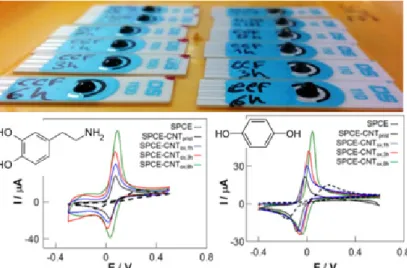
Carbon-based hybrids
The basic principle behind CVD growth is decomposition of a precursor followed by deposition of the resulting species. SEM images of the DGNP hybrids (Figure 3-a) show a porous-like structure defined by nearly vertically aligned nanosheets. The preferred vertical alignment and particular arrangement of the sp2 and sp3 carbonyl allotropes of the DGNPs present.
By taking advantage of the conductivity of nanographite, DGNP proves to be an interesting alternative in the field of biomedical applications (Figure 4).

Other carbon-based materials 1 CVD Graphene
Some of the ongoing work is focused on the use of LIG as a platform for electrochemical biosensors. On the following pages, we present a brief overview of the most relevant work that our group has developed in recent years. Adhesion and wear rate are two of the most critical aspects that govern the performance and cost/benefit ratio of CVD diamond coatings.
A stress field distribution model was developed to characterize the different behavior of the multilayer diamond coatings. In the case of NCD, boron was mainly incorporated into passive electrical sites at the grain boundaries, which impaired the conductivity of the film. Voltammetric behavior of the VACNTs/Mn3O4 nanocomposite showing a significant capacitance increase for the Mn3O4-coated VACNTs.
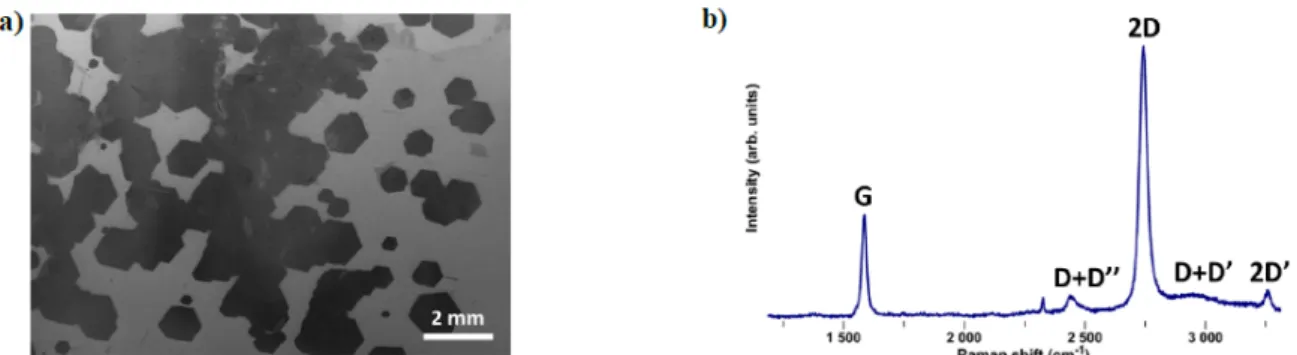
Growth of carbon nanotubes above catalyst’s Tammann temperature
There is a requirement for this type of growth: operating above the Tammann temperature of the catalyst. This requires the formation of six pentagons at the edge of the new expanding graphene layer. In Table 3 we list 21 bamboo-like growth studies, including the work of Lee et al.
Bamboo Similar growth behavior of carbon fibers most likely occurs by a sintering-like shape change.

Bamboo-like growth behavior of carbon fibers occurs most likely by a sintering-like shape change
In addition, the incorporation of H3PO4 into the initial lignin solutions results in the expansion of carbon fiber porosity, which improves the kinetics of the adsorption process. The last two chapters described the use of carbon fibers as carbon electrodes for energy storage and conversion. The influence of Pt and H3PO4 loadings on the physicochemical properties and activity of the catalyst was analyzed.
The influence of composition, surface structure and carbon support of Pt-Sn catalysts on the activity and mechanism against EOR was studied.