https://doi.org/10.1007/s00406-023-01716-5 ORIGINAL PAPER
Clinical predictors of suicidal ideation, suicide attempts and suicide death in depressive disorder: a systematic review and meta‑analysis
Pau Riera‑Serra1,2 · Guillem Navarra‑Ventura1,2 · Adoración Castro1,2 · Margalida Gili1,2 ·
Angie Salazar‑Cedillo1,2 · Ignacio Ricci‑Cabello2,3,4 · Lorenzo Roldán‑Espínola1,2 · Victoria Coronado‑Simsic1,2 · Mauro García‑Toro1,2,5 · Rocío Gómez‑Juanes1,2,5 · Miquel Roca1,2,5
Received: 10 February 2023 / Accepted: 29 October 2023
© The Author(s) 2023
Abstract
Patients with depressive disorders are especially prone to suicide risk. Among the clinical predictors of suicidality, those specifically related to depressive disorders have not been accurately detailed. Our aim was to conduct a systematic review and meta-analysis of studies reporting longitudinal predictors of suicidal ideation, suicide attempts and suicide death within depression, including diagnostic subtypes, symptoms, clinical course, and assessment scales. A systematic search of the literature between 2001 and 2022 identified 4422 references, among which 19 studies providing 45 different predictors of suicidality met the inclusion criteria. Random effects meta-analyses were performed for 22 predictors, three for suicidal ideation, eleven for suicide attempts and eight for suicide death. Heterogeneity and publication bias were inspected through I2 tests and Egger’s tests respectively. Meta-analysis results showed that severity of hopelessness predicted suicidal ideation and suicide attempts. History of suicide attempts, suicidal ideation, severe depression, and psychotic symptoms predicted subsequent suicide attempts and suicide death. Time to full remission and sleep disturbances were also found as relevant predictors of future suicide behaviours. This review specifies which predictors of suicidality within the clinical features of depression will help clinicians and policy makers to better prevent suicide risk in patients with depressive disorders. Further longitudinal studies are needed to reliably assess the predictive ability of our results and to analyse other possible clinical predictors to prevent suicidality, especially with regard to suicidal ideation.
Keywords Suicide · Depression · Meta-analysis · Prevention · Predictors · Clinical
Introduction
Every year more than 700,000 people die by suicide worldwide, accounting for 1.4% of all-cause deaths [1, 2].
Research on suicide predictors can help clinicians better detect high-risk individuals and enhance the effectiveness of suicide prevention programs [3]. Patients with depressive disorders are especially vulnerable to suicide [4] and suicidal behaviour [5–7]. Suicide attempts are found to be fivefold more common in patients with depression than in the general population [8]. Recent systematic reviews have estimated a pooled lifetime prevalence of suicide attempts in patients with major depressive disorder (MDD) to be around 31%
[9], and a suicidal ideation prevalence of nearly 38% [10].
Evidence suggests that suicidal ideation, suicide attempts and suicide death may have distinct predictors [11], so fur- ther studies were developed on the specific protective and risk factors for these three suicidal outcomes. To date, a first
* Adoración Castro [email protected]
1 Research Institute of Health Sciences (IUNICS), University of the Balearic Islands (UIB), Palma, Balearic Islands, Spain
2 Health Research Institute of the Balearic Islands (IdISBa), Son Espases University Hospital, Palma, Balearic Islands, Spain
3 Balearic Islands Health Services (IB-SALUT), Primary Care Research Unit of Mallorca, Palma, Balearic Islands, Spain
4 CIBER Epidemiology and Public Health (CIBERESP), Madrid, Spain
5 Department of Medicine, University of the Balearic Islands, Palma, Balearic Islands, Spain
meta-analysis by Hawton et al. [12] featuring 19 studies of patients with depressive disorders, reported exclusively pre- dictors of suicide deaths. A more comprehensive approach was provided by the meta-analysis of Li et al. [13], which examined predictors of suicidal ideation, suicide attempts and suicide death. This study identified twenty-nine predic- tors (ten for suicidal ideation, thirteen for suicide attempts, and six for suicide death) from 24 studies covering 954,822 participants with MDD. Despite its obvious strengths over the first meta-analysis, this second meta-analysis broadly covers sociodemographic, environmental, behavioural, and medical history factors of suicidality, and does not break down the clinical features of depression into its more spe- cific characteristics (e.g., guilt, pessimism, loss of concen- tration, severity of hopelessness, melancholic traits, time in depression, time to remission).
Previous longitudinal studies have linked these clinical predictors to an increased suicidality in patients with depres- sive disorders, both for suicidal ideation [14–17] and for suicide attempts [18–24] and suicide death [25–31]. Current knowledge of these depression-related clinical predictors has only been systematically reviewed for the suicide death out- come [12] or in the general population [32]. Therefore, our aim is to conduct a systematic review and meta-analysis of studies reporting at least one longitudinal clinical predictor of suicidality among adults with depressive disorders, break- ing down the broad concept of depression predictors into its most specific features (i.e., diagnosis subtype, clinical symp- toms, clinical course, and clinical assessment scales). More specifically, we aim to assess the impact of these depression- related clinical predictors on three suicidal outcomes: sui- cidal ideation, suicide attempts, and suicide death.
Methods
The present study is reported following the Preferred Report- ing Items for Systematic and Meta-analysis (PRISMA) guidelines [33]. We previously registered the original research protocol at the PROSPERO International Prospec- tive Register of Systematic Reviews (registration number CDR42022319840) on April 21, 2022.
Search strategy
Published studies were systematically searched in PubMed (Medline), EMBASE, PsycINFO and Cochrane Library electronic databases. We searched for grey literature in OpenGrey Website, Open Access Theses and Dissertations (OATD) and Web of Science (Science Citation Index) to not overlook relevant yet unpublished results. All litera- ture registered from January 1, 2001, to October 3, 2022,
was searched. We developed Boolean combinations of key terms and MeSH terms (e.g. “depressive disorder”, “sui- cide”, “prospective study”) inspired by the search strate- gies of prior systematic reviews [6, 12, 32, 34]. All the search terms, keywords and results can be found in the Supplementary Material (Table S1–S8). The reference lists of relevant studies and reviews were scrutinized for papers not yet identified.
Eligibility criteria
Inclusion criteria for the studies were as follows: (a) study population aged 18 years or older; (b) diagnosis of depres- sive disorder at the time of study entry according to inter- nationally validated criteria (i.e., International Classifica- tion of Diseases, ICD; Diagnostic and Statistical Manual of Mental Disorders, DSM); (c) published in English; (d) discrete suicidality measures (suicidal ideation, suicide attempt or suicide death); (e) predictors of suicidal idea- tion, suicide attempts or suicide death related to depression or suicidality itself; (f) quantitative data (e.g., test result) comparing depressed patients with suicidality (cases) and depressed patients without suicidality (controls); and (g) cohort design or case–control design (the latter was only valid for studies with suicide death outcomes).
Only studies whose designs ensured that predictors pre- ceded the outcome of interest were selected. This is man- datory for considering selected predictors as risk or pro- tective factors, and not as correlates [35]. In case–control studies in which the cases are subjects with suicidal idea- tion or suicide attempts, predictors can often be assessed at the same time as the occurrence of these outcomes. Thus, only longitudinal cohort studies, or case–control studies whose outcome of interest was suicide death, were eli- gible. Importantly, cohort studies were included in this review regardless of whether these reported on predictors of short- or long-term suicidality.
Studies were excluded when populations had: (a) intel- lectual disability; (b) neurological disorder (e.g., brain damage, dementia, epilepsy) or neurodevelopmental disorders (e.g., autism); and (c) serious mental illness other than depression (e.g., schizophrenia spectrum dis- orders, bipolar disorder) according to DSM or ICD cri- teria. However, depressed samples with less than 20% of patients diagnosed with bipolar disorder were accepted since roughly this proportion of subjects with a diagnosis of MDD may eventually develop symptoms of mania or hypomania [36]. We further excluded (d) cross-sectional studies and clinical trials; (e) study protocols, editorials, conference abstracts with no full-text available and letters to the editor; and (f) studies with too small samples of patients with depressive disorders (N ≤ 20).
Screening process
References were extracted from the databases and duplicates were automatically and manually removed through EndNote reference manager. The Rayyan systematic review platform [37] was used to conduct the screening process. Titles and abstracts were screened by five groups of two independent peer reviewers and conflicts were resolved with support from a third reviewer (AC, ASC, LRE, MG, MGT, MR, PRS, RGJ, VCS). Full texts of the articles selected in the previ- ous screening were reviewed using the same strategy and the reason for exclusion was specified. Study authors were contacted when more detailed data was needed, or when full text was not available.
Data extraction
Data from the included studies was extracted by one author and all data was cross-checked by a second peer reviewer for accuracy and completeness (AC, ASC, LRE, PRS, VCS).
Any discrepancy between authors was resolved through consensus among reviewers. Details from publication (e.g., authors, year, country), study design (e.g., follow-up length), sample characteristics (e.g., sample age, number of partici- pants with depression), suicidal measures (e.g., inventories) and predictors (e.g., description; relevant statistics) were obtained and codified for each independent study sample.
We established the following terminological distinction to refer to the collected data on predictors of suicidality. A
“prediction case” (k) was any quantitative test result (e.g., odds ratios, means difference) on a predictor extracted from the included studies. A “predictor” was any longitudinal factor predicting suicidality within the clinical features of depression (e.g., hopelessness, severity of depression, time in depression). Finally, collected predictors were subse- quently classified into broader “predictor categories” (i.e., diagnostic subtype, clinical symptoms, clinical course, and clinical assessment scale). Table S9 provides more details on the classification of the predictors found among the included studies.
Importantly, when a same predictor was reported within a study in several publications or multiple follow-ups, those studies reporting larger sample and/or longest follow-up were preferred. In addition, pre-operationalization of six- teen predictors was performed prior to the meta-analysis.
First, analogous predictors (e.g., Beck Depression Inventory, BDI; Hamilton Depression Rating Scale, HDRS) were com- bined under broader predictors (e.g., severity of depression) for better conciseness and robustness of the meta-analysis results. Second, assessment scales (e.g., Beck Hopelessness Scale, BHS) found as predictors of suicidality were rela- belled according to the construct under assessment (e.g.,
severity of hopelessness) for better intelligibility of the results. Further details are provided in Table S10.
Risk of bias
The quality of the included studies was assessed by two groups of two independent peer reviewers (AC, ASC, LRE, VCS) using the Newcastle–Ottawa Scale (NOS) adapted for cohort and case–control designs [38]. The discrepancies were resolved through the intervention of the first author of the manuscript (PRS). When the same study reported different suicidality outcomes, the NOS assessment was performed for each outcome. NOS evaluates three differ- ent domains using a “star system” score: (a) selection of the study groups; (b) comparability of the groups; and (c) the ascertainment of either the outcome or the exposure for cohorts and case-controls designs respectively. The episodic nature of suicidal behaviours posed a challenge in accurately assessing NOS criterion S4, which evaluates whether the study outcomes were already present at baseline. To address this limitation, we assigned a positive rating to this criterion only for studies in which a minority of participants (≤ 10%) had a history of the examined suicidal outcome at baseline.
The total NOS score ranges from 0 to 9, with studies scoring less than 6 being considered low quality.
Statistical analysis
First, selected characteristics of the included articles were synthesized and tabulated. Meta-analyses of the predictors were conducted with STATA 17.0. metan package was used to pool estimates of Odds Ratios (ORs) and Hazard Ratios (HRs), the latter only for cohort studies. Meta-analyses were performed for each suicidal outcome (ideation, attempts, and death). At least two primary studies had to report predic- tion cases (k ≥ 2) on the same suicidal outcome for meta- analytical calculation. When one study reported multiple measures of depression severity scales, BDI scale scores were preferred as being more frequently found, but the anal- yses were then replicated with the prediction cases from the other scales (i.e., HDRS). When ORs were not reported, these were calculated from contingency tables or from inde- pendent group means, standard deviations and sample size [39]. Similarly, confidence intervals and standard errors were calculated from p values and z scores when these were not provided [40]. Following Ribeiro et al. [32] systematic review, zero-order unadjusted effects of ORs and HRs were preferred over adjusted effects as a purer measure of the effect. Heterogeneity was quantified using I2 tests and it was also inspected visually throughout forest plots. Substantial heterogeneity was considered when I2 was higher than 50%
[41]. We conducted random-effects models for the pooled effects using DerSimonian and Laird method and assuming
between-study variances. Finally, funnel plots were exam- ined to detect publication bias of predictors, and Egger’s tests were conducted to test asymmetry in the meta-analyses.
No subgroup analysis or multivariate meta-analysis was per- formed due to the relative scarcity of prediction cases per predictor.
Results
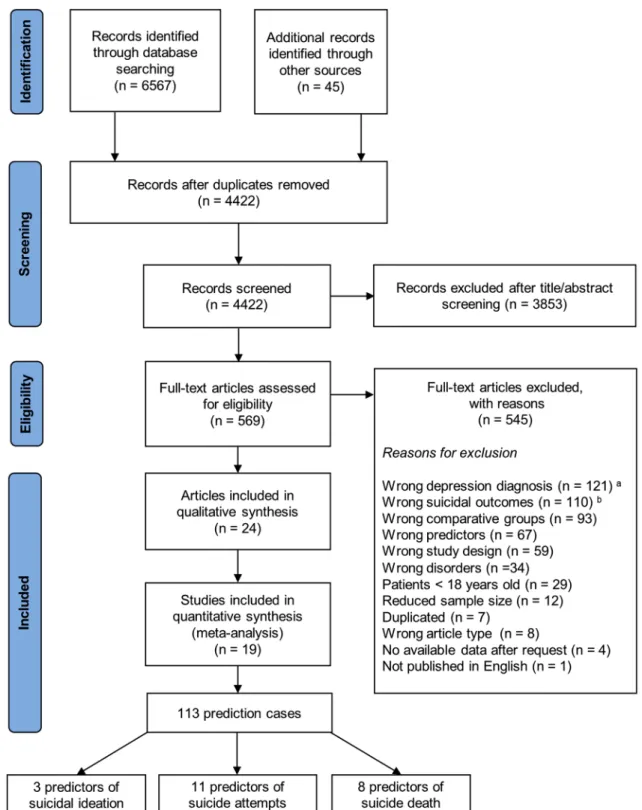
Study selectionA total of 4422 unique references were identified through- out the search strategy. Of these, 3853 were excluded after screening of titles and abstracts, and 545 were excluded after full-text review. Flow-chart of the selection process is shown in Fig. 1. As a result, we identified 24 publications [14–23, 25–29, 42–50] reporting results from 19 different studies.
One included study [14] owes its sample to the combina- tion of patients recruited from two different studies also covered by this systematic review: the “Vantaa Depression Study” [17, 21, 23] and the “Vantaa Primary Care Depres- sion Study” [22]. Thus, data from the study conducted by Baryshnikov et al. [14] was excluded when this involved a duplication and, therefore, misestimating the aggregated results (e.g., sample, mean age, mean follow-up time), but was deemed as an independent study when it provided addi- tional relevant information (e.g., suicidality predictors).
Systematic review
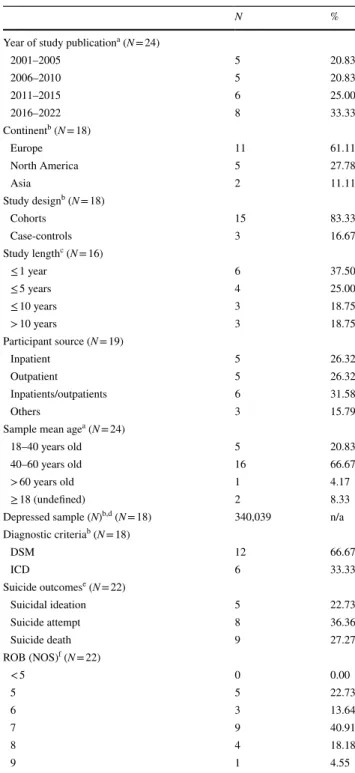
Overall, 19 studies reported quantitative data on depres- sion-related suicidality predictors from 340,039 adults with clinically diagnosed depression. Aggregated features of the included studies are displayed in Table 1. Among studies reporting sufficient data (N = 16), mean age of participants ranged from 31.4 (SD = 9.0) to 67.8 (SD = 6.1) years old, with an overall weighted mean age of 50.35 (SDw = 3.19) years old. Ten studies (reported in 15 publications) provided data from individuals with MDD [15, 17, 19–21, 23, 26, 28, 29, 43–45, 47, 48, 50], six from mixed depressive disorder samples [14, 16, 18, 22, 25, 27], two from patients with treatment-resistant depressive disorder [42, 49], and one from patients with a diagnosis of severe depression [46].
Thirteen studies (reported in 16 publications) included psy- chiatric inpatients [15, 17–21, 23, 25–27, 43–47, 50], four studies (reported in five publications) patients from special- ized units, university centres or psychiatric outpatients clin- ics [16, 28, 29, 48, 49], one study patients from primary care centres [22], and another study was a mixed sample collected from inpatients and outpatients [14]. Publication years ranged from 2001 to 2022, with no statistically signifi- cant differences found in the number of articles published
every 5 years (χ2 = 8.00; P = 0.238). Included studies were conducted in 10 different countries; more than half were conducted in Europe (N = 11), and predominantly in the Nordic countries (N = 8). The mean follow-up of the cohort studies was 7.94 years, ranging from 6 weeks to 24 years.
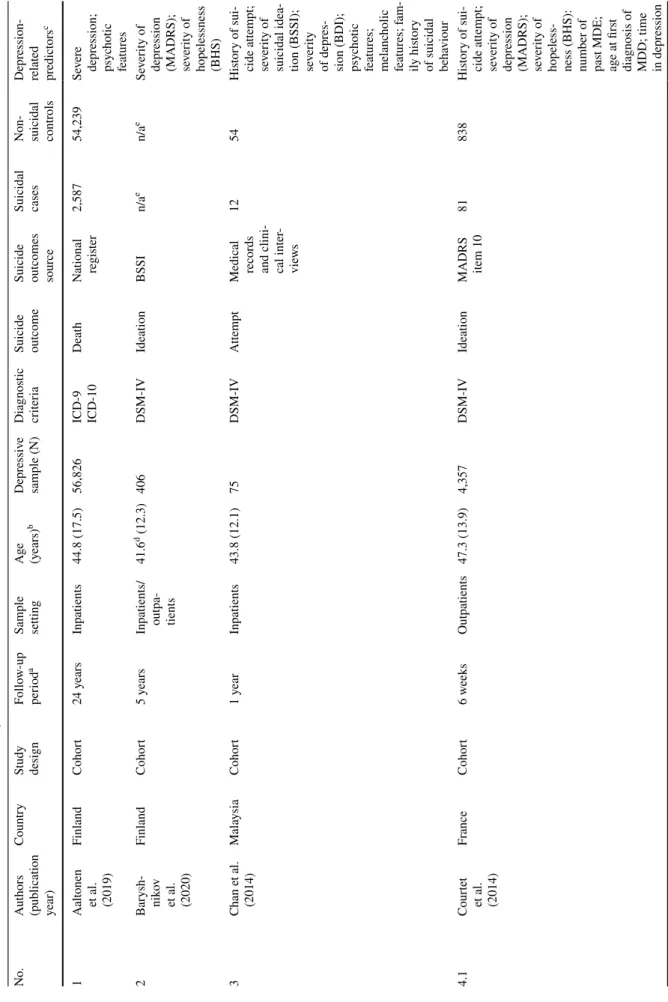
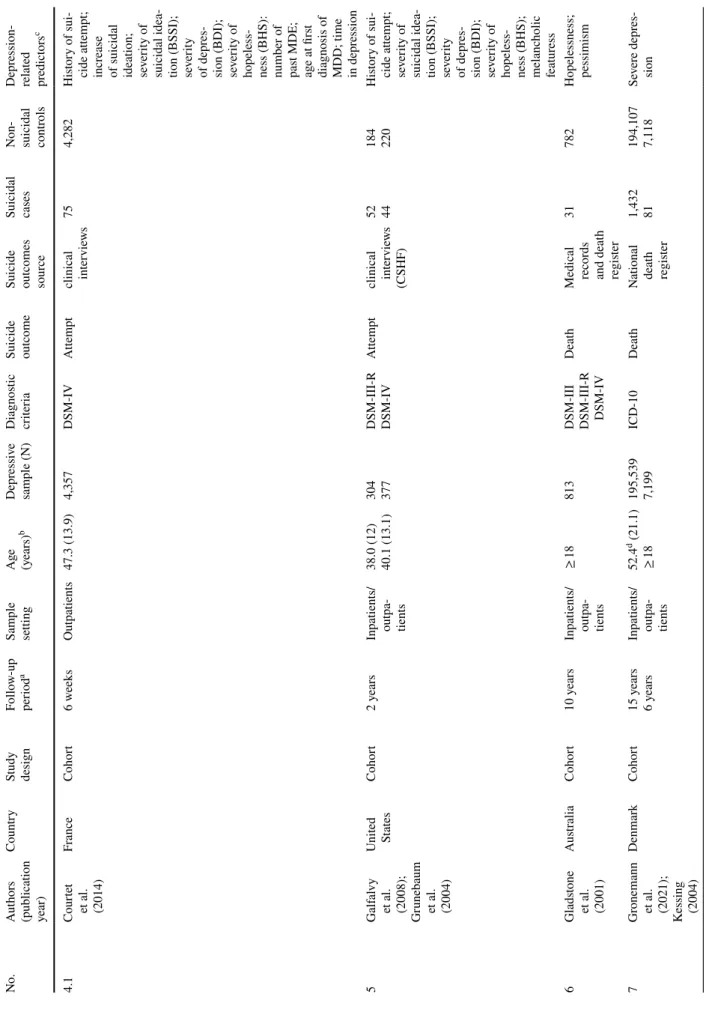
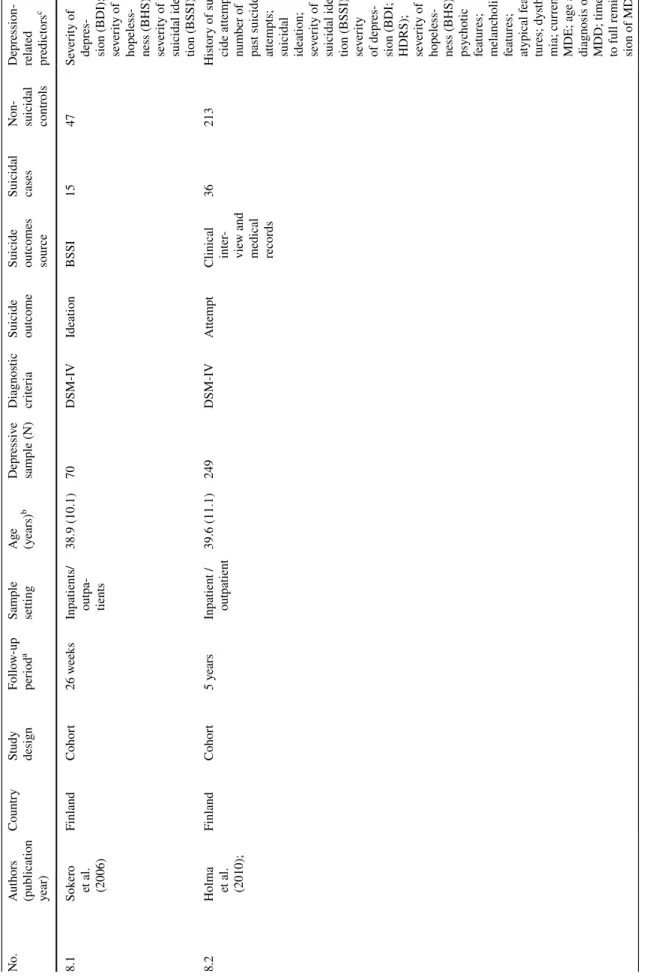
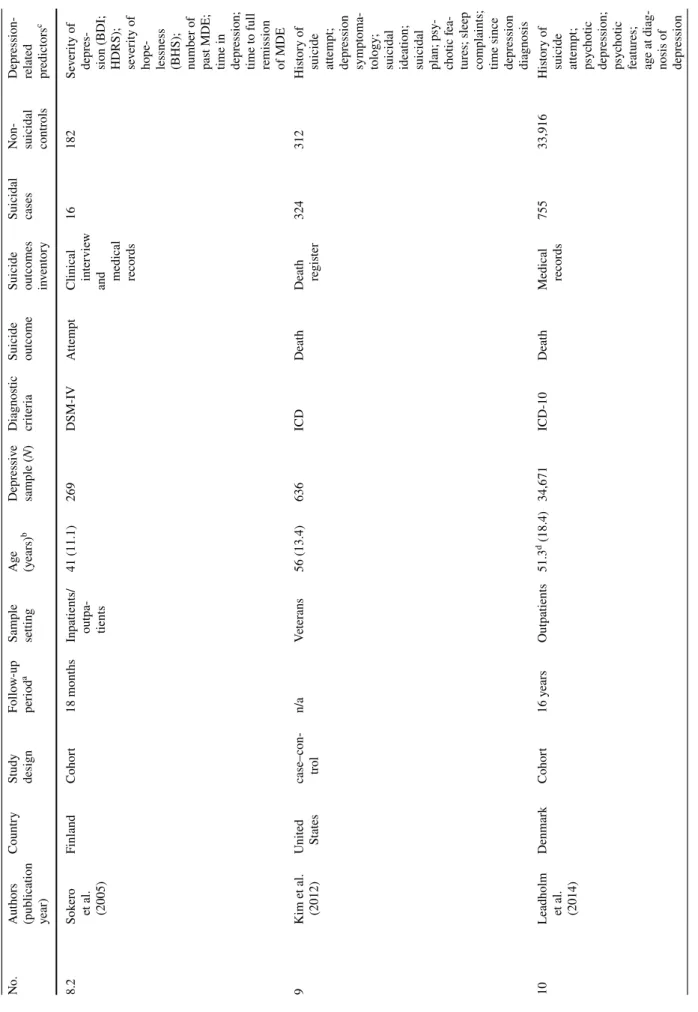
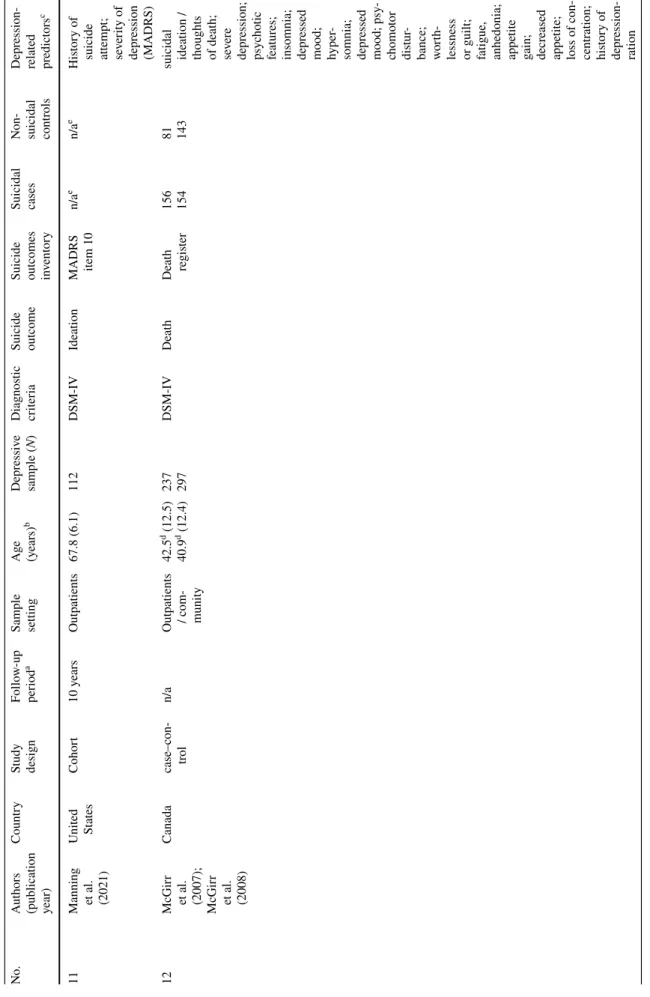
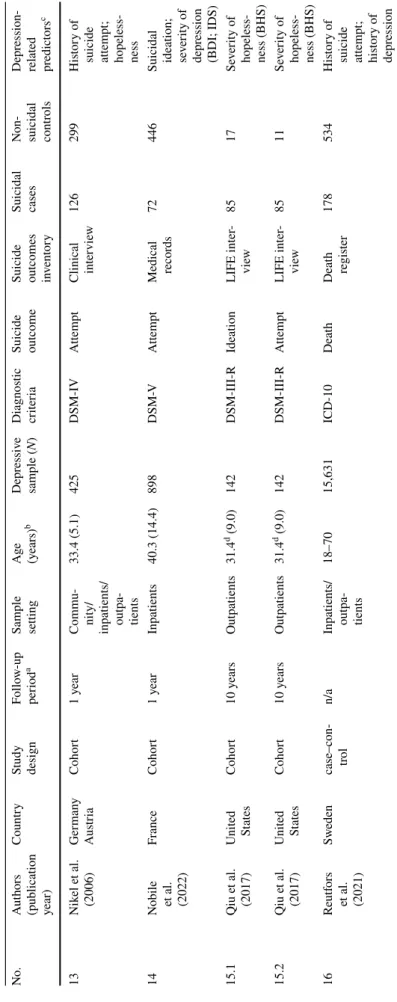
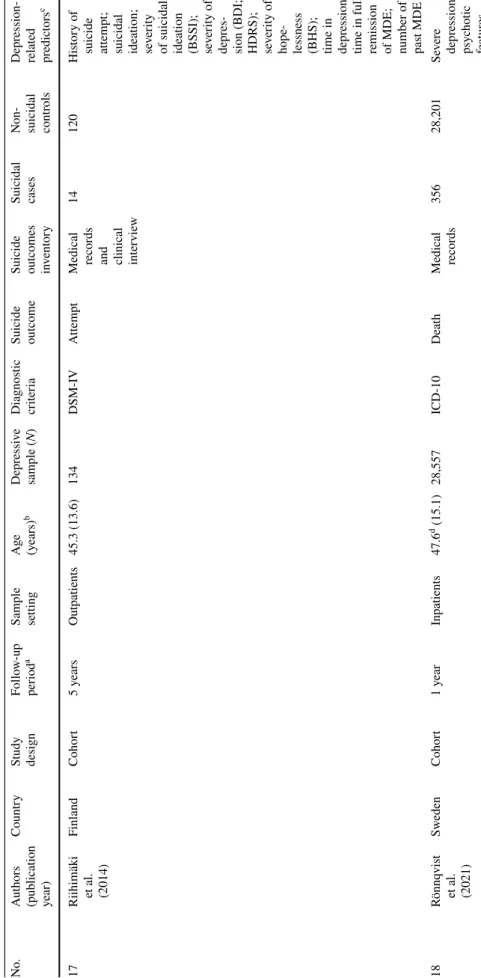
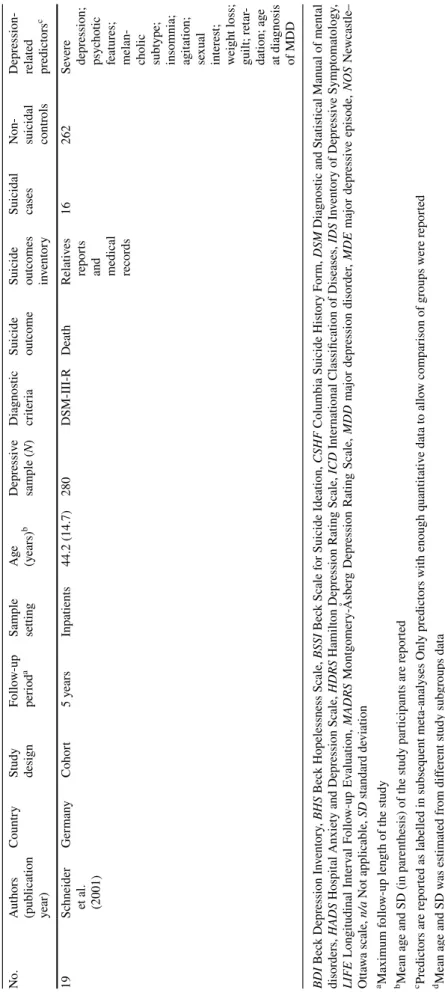
Table 2 provides a selection of characteristics of each study.
The mean NOS score of the included studies was 6.76 (SD = 1.17), and the majority of the studies (N = 14) had an NOS score above 6, which is considered to be “high qual- ity”. Further details of the NOS quality assessment for each study can be found in Table S11.
Among the included studies, we collected a total of 45 different predictors of suicidality. The most frequent pre- dictors reported were a personal history of suicide attempt (k = 11), the BDI (k = 8) and the Beck Hopelessness Scale (k = 8). According to our pre-established classification of predictor categories, we found 5 predictors from the diag- nostic subtype category (k = 19), 23 predictors from the clinical symptoms category (k = 31), 10 predictors from the clinical course category (k = 35), and 7 predictors from the clinical assessment scales category (k = 28). Further details are provided in Table S9.
Meta‑analyses
The 45 predictors of suicidality found among the included studies were supported by a total of 113 prediction cases (82 extracted as OR, 13 extracted as HR, and 18 as both). After the pre-operationalization process, 37 of the 45 collected predictors were retained. However, since most predictors were not supported by more than one study, only 22 predic- tors were ultimately meta-analysed. In total, three predictors of suicidal ideation (k = 8), 11 predictors of suicide attempt (k = 37), and eight predictors of suicide death (k = 29) were meta-analysed. The meta-analyses results on ORs are sum- marized in Table 3. The meta-analyses results on HRs are presented in Table S12.
All studies provided some predictor that was ultimately meta-analysed except the study of Gladstone et al. [26], which provided two predictors that were not reported in any other study. The mean number of prediction cases compris- ing the meta-analysed predictors was relatively low ( X = 2.87; SD = 1.04), with a maximum number of five studies reporting for a same predictor. Since it is only recommended to analyse publication bias (through Egger's test and funnel plots) in those predictors supported by 10 or more studies [41], results from publication bias tests have been omitted.
Predictors of suicidal ideation
Regarding suicidal ideation as an outcome, severity of hopelessness was the only significant predictor, with an overall estimated effect of ORw = 2.53 (95% CI 1.43–4.47).
Although the I2 statistic for assessing heterogeneity between prediction cases was substantial (I2 = 70.08%), the forest plots of these results showed the same direction of the effect
(i.e., risk factor) (Fig. S1). Severity of depression and a pre- vious history of suicide attempts were not found to be rele- vant predictors of suicidal ideation and heterogeneity among
Fig. 1 PRISMA flowchart. a Studies whose participants did not have a diagnosis of depressive disorder according to internationally vali- dated criteria (i.e., DSM, ICD) at the time of the study entry were not included. b Studies that reported only general outcomes of suicidality
(e.g., suicidal risk, suicidal behaviour), a history of suicidal ideation or attempts, or measures of self-injury without suicidal intent were excluded
the severity of depression prediction cases was prominent (I2 = 96.00%) (Fig. S1).
Predictors of suicide attempts
Time to full remission of Major Depressive Episode (MDE) was found to be the most robust predictor of subsequent sui- cide attempts (ORw = 4.16; 95% CI 2.09–8.30). Five studies provided data for history of suicide attempts predictor, which emerged to be the second greatest predictor of future sui- cide attempts, with a pooled estimated effect of ORw = 3.72 (95% CI 2.15–6.42). Psychotic features (ORw = 3.17; 95%
CI 1.59–6.33), previous suicidal ideation (ORw = 2.44; 95%
CI 1.48–3.99), severity of depression (ORw = 2.16; 95% CI 1.63–2.86) and severity of hopelessness (ORw = 2.08; 95%
CI 1.19–3.66) were also identified as significant predic- tors of subsequent suicidal attempts. When meta-analyses were conducted using HDRS scores instead of BDI scores, depression severity remained a significant predictor of sui- cide attempts (ORw = 1.93; 95% CI 1.46–2.56). Heterogene- ity among studies was substantial (I2 > 50%) for history of suicide attempts, severity of suicidal ideation, melancholic features, and time in depression predictors. However, forests plots showed that the prediction cases of all predictors were in the same direction of the effect (i.e., risk factor), except for the melancholic features predictor (Fig. S2).
Predictors of suicidal death
Suicidal ideation or thoughts of death predicted future suicide death, resulting in a pooled estimated effect of ORw = 6.05 (95% CI 1.66–22.01). Next, history of suicide attempt was the most robust predictor (ORw = 4.85; 95%
CI 3.32–7.08), followed by a diagnosis of severe depres- sion (ORw = 1.74; 95% CI 1.14–2.65), sleep disturbances (ORw = 1.64; 95% CI 1.13–2.38), psychotic features (ORw = 1.57; 95% CI 1.06–2.33), and older age at diagno- sis of MDE (ORw = 1.24; 95% CI 1.09–1.41). Heterogene- ity was substantial except for sleep disturbances, guilt, and age at diagnosis of MDE predictors. However, forest plots inspection showed that the prediction cases of sleep distur- bances and guilt predictors were in the same direction of the effect (i.e., risk factor) (Figure S3).
Discussion
Summary of main findings
Identifying the most specific predictors of suicidality within the clinical features of depression is a key aspect for the development of more sophisticated strategies for suicide prevention. In this review we systematically integrated and
Table 1 Selected characteristics of the studies included in the system- atic review (N = 19)
n/a Not applicable, DSM Diagnostic and Statistical Manual of Mental Disorders, ICD International Classification of Diseases, ROB Risk of Bias; NOS Newcastle–Ottawa Scale
a Data reported for each publication included in the systematic review
b Baryshnikov et al. (2020) data was excluded for this analysis
c Maximum follow-up of the cohort articles included in each study
d Maximum number of participants of the articles included in each study
e Two studies reported more than one suicidal outcome
f Risk of bias was assessed for each suicidal outcome
N %
Year of study publicationa (N = 24)
2001–2005 5 20.83
2006–2010 5 20.83
2011–2015 6 25.00
2016–2022 8 33.33
Continentb (N = 18)
Europe 11 61.11
North America 5 27.78
Asia 2 11.11
Study designb (N = 18)
Cohorts 15 83.33
Case-controls 3 16.67
Study lengthc (N = 16)
≤ 1 year 6 37.50
≤ 5 years 4 25.00
≤ 10 years 3 18.75
> 10 years 3 18.75
Participant source (N = 19)
Inpatient 5 26.32
Outpatient 5 26.32
Inpatients/outpatients 6 31.58
Others 3 15.79
Sample mean agea (N = 24)
18–40 years old 5 20.83
40–60 years old 16 66.67
> 60 years old 1 4.17
≥ 18 (undefined) 2 8.33
Depressed sample (N)b,d (N = 18) 340,039 n/a
Diagnostic criteriab (N = 18)
DSM 12 66.67
ICD 6 33.33
Suicide outcomese (N = 22)
Suicidal ideation 5 22.73
Suicide attempt 8 36.36
Suicide death 9 27.27
ROB (NOS)f (N = 22)
< 5 0 0.00
5 5 22.73
6 3 13.64
7 9 40.91
8 4 18.18
9 1 4.55
Table 2 Characteristics of studies included in the systematic review (N = 19) No.Authors (publication year)
Country
Study design Follow-up periodaSample settingAge (years)bDepressive sample (N)Diagnostic criteria Suicide outcome Suicide outcomes sour
ce
Suicidal cases Non- suicidal contr
ols
Depression-
related prc edictors 1Aaltonen
et al. (2019)
FinlandCohort24 yearsInpatients44.8 (17.5)56,826
ICD-9 ICD-10
Death
National r2,58754,239Severe egisterdepression; psychotic features 2Barysh- nikov
et al. (2020)
FinlandCohort5 yearsIn
patients/ outpa
- tients
41.6d (12.3)406DSM-IVIdeationBSSIn/aen/aeSeverity of depression
(MADRS); severity of
hopelessness (BHS)
3Chan et al. (2014)MalaysiaCohort1 yearInpatients43.8 (12.1)75DSM-IVAttempt
Medical records and clini- cal inter- views
1254History of sui- cide attempt; severity of suicidal idea-
tion (BSSI); severity of depres-
sion (BDI); psychotic features; melancholic features; fam- ily history
of suicidal beha
viour 4.1Courtet
et al. (2014)
FranceCohort6 weeksOutpatients47.3 (13.9)4,357DSM-IVIdeation
MADRS item 10
81838History of sui- cide attempt; severity of depression
(MADRS); severity of hopeless-
ness (BHS): number of past MDE; age at first
diagnosis of MDD; time in depr
ession
Table 2 (continued) No.Authors (publication year)
Country
Study design Follow-up periodaSample settingAge (years)bDepressive sample (N)Diagnostic criteria Suicide outcome Suicide outcomes sour
ce
Suicidal cases Non- suicidal contr
ols
Depression-
related prcedictors 4.1Courtet
et al. (2014)
FranceCohort6 weeksOutpatients47.3 (13.9)4,357DSM-IVAttempt
clinical inter views754,282History of sui- cide attempt; increase
of suicidal ideation; severity of suicidal idea-
tion (BSSI); severity of depres-
sion (BDI); severity of hopeless-
ness (BHS): number of past MDE; age at first
diagnosis of MDD; time in depr
ession 5Galfalvy
et al. (2008); Grunebaum et al. (2004)
United SCohort2 yearsIn tates patients/ outpa
- tients
38.0 (12) 40.1 (13.1) 304 377 DSM-III-R DSM-IV
Attempt
clinical inter
views (CSHF)
52 44 184 220
History of sui- cide attempt; severity of suicidal idea-
tion (BSSI); severity of depres-
sion (BDI); severity of hopeless-
ness (BHS); melanc
holic featuress 6Gladstone
et al. (2001)
AustraliaCohort10 yearsIn
patients/ outpa
- tients
≥ 18813
DSM-III DSM-III-R DSM-IV
Death
Medical records and death register
31782
Hopelessness; pessimism
7Gr
onemann et al. (2021); Kessing (2004)
DenmarkCohort15 years 6 yearsIn patients/ outpa
- tients
52.4d (21.1) ≥ 18
195,539 7,199
ICD-10Death
National deat
h register
1,432 81 194,107 7,118
Severe depres- sion
Table 2 (continued) No.Authors (publication year)
Country
Study design Follow-up periodaSample settingAge (years)bDepressive sample (N)Diagnostic criteria Suicide outcome Suicide outcomes sour
ce
Suicidal cases Non- suicidal contr
ols
Depression-
related prcedictors 8.1Sokero
et al. (2006)
FinlandCohort26 weeksIn
patients/ outpa
- tients
38.9 (10.1)70DSM-IVIdeationBSSI1547Severity of depres-
sion (BDI); severity of hopeless-
ness (BHS); severity of suicidal idea- tion (BSSI) 8.2
Holma et al. (2010);
FinlandCohort5 yearsIn
patient / outpatient
39.6 (11.1)249DSM-IVAttempt
Clinical inter
- view and
medical recor
ds
36213History of sui- cide attempt;
number of past suicide attempts;
suicidal ideation; severity of suicidal idea-
tion (BSSI); severity of depres-
sion (BDI; HDRS); severity of hopeless-
ness (BHS); psychotic features; melancholic features; atypical fea- tures; dysthy- mia; current MDE; age at
diagnosis of MDD; time to full r
emis- sion of MDE
Table 2 (continued) No.Authors (publication year)
Country
Study design Follow-up periodaSample settingAge (years)bDepressive sample (N)Diagnostic criteria Suicide outcome
Suicide outcomes inventory
Suicidal cases Non- suicidal contr
ols
Depression-
related prcedictors 8.2Sokero
et al. (2005)
FinlandCohort18 monthsIn
patients/ outpa
- tients
41 (11.1)269DSM-IVAttempt
Clinical inter
view
and medical records
16182Severity of depres-
sion (BDI; HDRS); severity of hope-
lessness (BHS); number of past MDE;
time in depr
ession; time to full
remission of MDE
9Kim et al. (2012)
United Scase–con-n/aVeterans56 (13.4)636ICDDeathDeath 324312History of tatestrolregister suicide attem
pt; depression symptoma- tology;
suicidal ideation; suicidal plan; psy
- chotic fea- tures; sleep complaints;
time since depr
ession diagnosis 10
Leadholm et al. (2014)
DenmarkCohort16 yearsOutpatients51.3d (18.4)34,671ICD-10Death Medical r75533,916History of ecords
suicide attem
pt; psychotic depression; psychotic features; age at diag-
nosis of depr
ession
Table 2 (continued) No.Authors (publication year)
Country
Study design Follow-up periodaSample settingAge (years)bDepressive sample (N)Diagnostic criteria Suicide outcome
Suicide outcomes inventory
Suicidal cases Non- suicidal contr
ols
Depression-
related prcedictors 11
Manning et al. (2021)
United SCohort10 yearsOutpatients67.8 (6.1)112DSM-IVIdeation tates MADRS item 10 n/aen/aeHistory of
suicide attem
pt; severity of depression (MADRS) 12McGirr
et al. (2007); McGir
r
et al. (2008)
Canadacase–con- troln/a
Outpatients / com
- munity
42.5d (12.5) 40.9d (12.4)
237 297 DSM-IVDeathDeath register 156 154 81 143
suicidal ideation / thoughts of deat
h; severe depression; psychotic features;
insomnia; depr
essed
mood; hyper
-
somnia; depr
essed mood; psy- chomotor distur-
bance; worth-
lessness or guilt
;
fatigue, anhedonia; appe
tite
gain; decr
eased appetite; loss of con- centration; history of depression- ration
Table 2 (continued) No.Authors (publication year)
Country
Study design Follow-up periodaSample settingAge (years)bDepressive sample (N)Diagnostic criteria Suicide outcome
Suicide outcomes inventory
Suicidal cases Non- suicidal contr
ols
Depression-
related prcedictors 13Nikel et al. GermanyCohort1 yearCommu- (2006)Austria
nity/ inpatients/ outpa
- tients
33.4 (5.1)425DSM-IVAttempt
Clinical inter
view126299History of
suicide attem
pt; hopeless- ness 14
Nobile et al. (2022)
FranceCohort1 yearInpatients40.3 (14.4)898DSM-VAttempt
Medical r72446 ecords Suicidal ideation; se
verity of depression (BDI; IDS) 15.1Qiu et al. (2017)
dUnited SCohort10 yearsOutpatients31.4 (9.0)142DSM-III-RIdeationLIFE inter-8517Severity of tatesviewhopeless- ness (BHS) 15.2Qiu et al. (2017)
dUnited SCohort10 yearsOutpatients31.4 (9.0)142DSM-III-RAttemptLIFE inter-8511Severity of tatesviewhopeless- ness (BHS) 16Reutfors
et al. (2021) Swedencase–con- troln/aIn patients/ outpa
- tients
18–7015,631ICD-10DeathDeath register178534History of suicide attem
pt; history of depression
Table 2 (continued) No.Authors (publication year)
Country
Study design Follow-up periodaSample settingAge (years)bDepressive sample (N)Diagnostic criteria Suicide outcome
Suicide outcomes inventory
Suicidal cases Non- suicidal contr
ols
Depression-
related prcedictors 17
Riihimäki et al. (2014)
FinlandCohort5 yearsOutpatients45.3 (13.6)134DSM-IVAttempt
Medical records
and clinical inter
view
14120History of
suicide attem
pt;
suicidal ideation; severity
of suicidal ideation (BSSI); severity of depres-
sion (BDI; HDRS); severity of hope-
lessness (BHS); time in depr
ession;
time in full remission of MDE; number of past MDE 18Rönnqvist
et al. (2021) SwedenCohort1 yearInpatients47.6d (15.1)28,557ICD-10Death
Medical r35628,201Severe ecordsdepression; psychotic features
Table 2 (continued) No.Authors (publication year)
Country
Study design Follow-up periodaSample settingAge (years)bDepressive sample (N)Diagnostic criteria Suicide outcome
Suicide outcomes inventory
Suicidal cases Non- suicidal contr
ols
Depression-
related prcedictors 19Schneider et al. (2001)
GermanyCohort5 yearsInpatients44.2 (14.7)280DSM-III-RDeathRelatives reports and medical recor
ds
16262Severe depression; psychotic features; melan-
cholic subtype; insomnia; agit
ation; sexual interest;
weight loss; guilt
; retar- dation; age
at diagnosis of MDD
BDI Beck Depression Inventory, BHS Beck Hopelessness Scale, BSSI Beck Scale for Suicide Ideation, CSHF Columbia Suicide History Form, DSM Diagnostic and Statistical Manual of mental disorders, HADS Hospital Anxiety and Depression Scale, HDRS Hamilton Depression Rating Scale, ICD International Classification of Diseases, IDS Inventory of Depressive Symptomatology, LIFE Longitudinal Interval Follow-up Evaluation, MADRS Montgomery-Åsberg Depression Rating Scale, MDD major depression disorder, MDE major depressive episode, NOS Newcastle– Ottawa scale, n/a Not applicable, SD standard deviation a Maximum follow-up length of the study b Mean age and SD (in parenthesis) of the study participants are reported c Predictors are reported as labelled in subsequent meta-analyses Only predictors with enough quantitative data to allow comparison of groups were reported d Mean age and SD was estimated from different study subgroups data e The number of cases and controls are susceptible to variation due to type of analysis conducted (i.e., Generalized Linear Mixed Models)
meta-analysed findings from current studies reporting clini- cal predictors of suicidality in adults with depressive disor- ders. Our systematic review identified 19 studies yielding a total of 45 different depression-related predictors of suicidal- ity. Of these, 22 predictors were ultimately meta-analysed, three for suicidal ideation, eleven for suicide attempts and eight for suicide death. Studies providing quantitative data on clinical predictors of suicidal attempts and suicide death are much more frequent than those reporting for suicidal ide- ation. A similar disparity was observed among predictor cat- egories, with more studies providing prediction cases linked to depressive clinical symptoms, clinical course, or clinical assessment scales than diagnostic subtype predictors.
Having a history of suicide attempts, previous suicidal ideation, more severe depression and hopelessness, psy- chotic symptoms, sleep disturbances, longer time to full- remission and older age at depression diagnosis were found to be relevant predictors of subsequent suicidality in adults with depressive disorders. However, few if any of these pre- dictors were able to reliably predict the targeted suicidality outcomes. The predictive capability of the predictors found in this review is consistent with the results pooled in the meta-analysis by Franklin et al. [51], which highlighted the absence of robust predictors of suicidality. In addition, the small number of potentially analysable prediction cases, as well as the heterogeneity among them, affect the reliability of our results. Despite substantial heterogeneity for most of the significant predictors of suicidality, the forest plots indicated that the prediction cases were not highly divergent in terms of the direction of the effect, with most suggesting a risk factor for suicidality. All this suggests that the main problems in this field are more the scarcity of studies and the robustness of clinical predictors than the heterogeneity of results among studies.
Importantly, the heterogeneity in follow-ups among the included cohort studies (e.g., 6 weeks vs. 24 years) does affect the interpretation of our results. In particular, the clini- cal predictors reported in this review should be interpreted as both short- and long-term suicidality predictors. There- fore, we cannot ascertain whether the predicted risk of suici- dality in cohort studies with prolonged follow-up ultimately occurred in the context of a depressive episode. However, since clinical features manifested in a first depressive epi- sode are likely to be present in subsequent episodes [52], the clinical predictors of suicidality reported in this review may be relevant to both current and future depressive episodes.
Clinical predictors of suicidality
Hopelessness emerged as a predictor for both subsequent suicidal ideation and suicide attempts, more robustly pre- dicting suicidal ideation than future suicide attempts. Our results are in line with those reported by the meta-analysis
of longitudinal studies conducted by Ribeiro et al. [32].
However, other non-included studies with populations with depression reported contradictory evidences regarding this association [53, 54]. The recent meta-analysis by Li et al.
[13] found no significant relationship between hopeless- ness and suicidal behaviours. The limited and inconsistent results found in these two systematic reviews call for further longitudinal studies on this predictor. Recent findings sug- gest that hopelessness could amplify the positive relation- ship between psychiatric symptoms and suicidal ideation [55]. Moreover, Baryshnikov et al. [14] indicate that the strength of hopelessness in predicting suicidal ideation was attenuated when the models were controlled for psychiatric symptoms, such as depression or anxiety. These findings open new study horizons for better understanding the role of hopelessness in suicide risk and suggest that the effect of psychiatric symptoms should be controlled when analysing this association.
Previous suicidal behaviours, either suicidal ideation or suicide attempts, were found to be statistically relevant pre- dictors for both suicide attempts and suicide death. These same associations were previously reported in several meta- analyses [12, 13, 56]. The different follow-up periods of the cohort studies included in this review imply that a history of suicide attempts may be a strong predictor of future sui- cidal behaviour at both the short and long term (6 weeks to 10 years). Conversely, history of suicide attempts alone does not appear to be a relevant predictor for suicidal ideation, which is consistent with previous results found in adults with a history of suicide attempt [57].
For the first time, suicidal ideation and severity of sui- cidal ideation have been meta-analysed as predictors of suicidal behaviours in patients with depressive disorders.
Our findings suggest that suicidal ideation is a relevant pre- dictor of subsequent suicide behaviours, which is in line with previous studies conducted in patients with depression [58–61]. We hypothesize that the high heterogeneity found in the severity of suicidal ideation predictor could be due to the different setting in which the patients were recruited by the pooled studies. A closer analysis revealed that the study conducted in primary care patients [22] presented lower levels of suicidal ideation than those performed in hospital settings [18, 21]. When the study conducted in primary care was excluded, subsequent analysis indicated that the sever- ity of suicidal ideation was a significant predictor of suicide attempts (ORw = 5.80; 95% CI 3.26–10.30). Therefore, to estimate the predictive ability of the severity of suicidal ide- ation, the clinical setting of the patients may be considered.
Depression severity emerged in this review as a statisti- cally relevant predictor for future suicide attempts and sui- cide death, but not for suicidal ideation. Severity of depres- sion has been previously found to be a mediator of suicidal ideation [62]. In addition, it has been detected that decreased