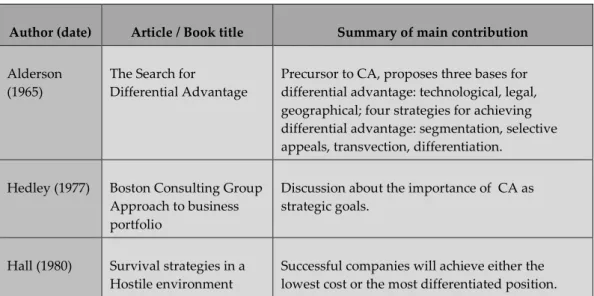
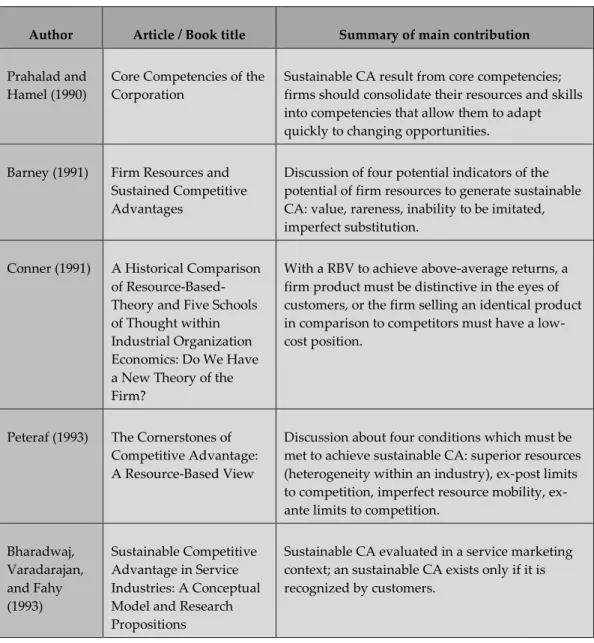
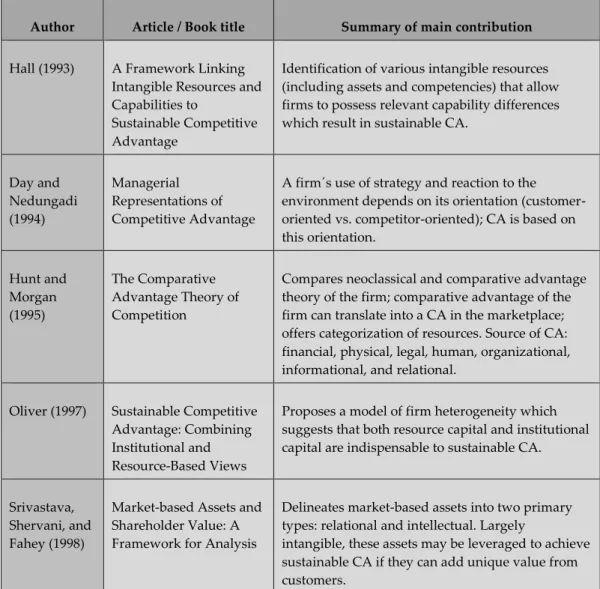
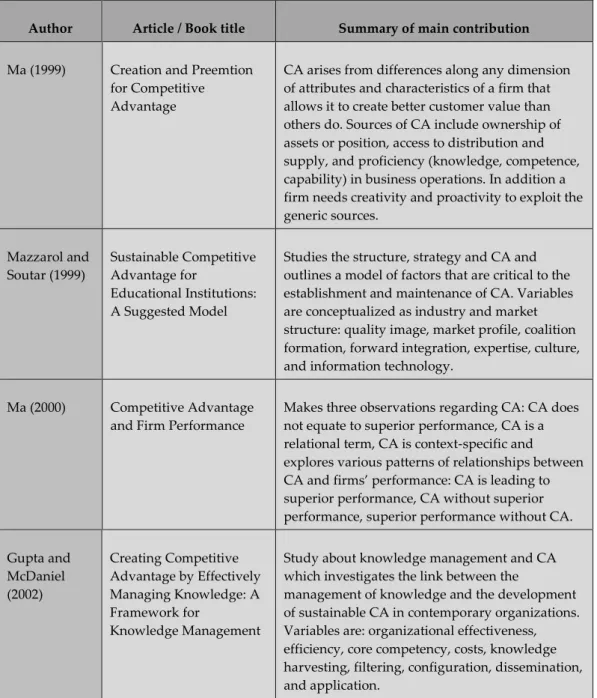
Therefore, the aim of this PhD thesis is to examine whether customer integration is a suitable approach for German BHS manufacturers to achieve competitive advantages. Various publications in the field of customer integration and achieving competitive advantages were produced before and during the course of this dissertation (e.g. Schindler, 2007; Schindler, 2014; Schindler, 2015).
THE RELEVANCE OF THE TOPIC FOR TODAY´S BUSINESS IN THE FIELD OF BHS FIELD OF BHS
The present thesis addresses the issue of gaining competitive advantage through the integration of customers in value creation from the perspective of the baggage handling system manufacturers. In order to adequately answer the research questions, this thesis also contains arguments and results of my diploma thesis “Kundenintegration im Key Account Management”5 (Schindler, 2007) presented at the FOM Fachhochschule für Oekonomie and Management, Hamburg in 2007, as well as aspects and arguments of presented my contribution in the yearbook 2014 of the UCAM-FOM Doctoral School of Business under the title “Competitive advantage under the condition of homogeneous products: Producing inhomogeneity through customer integration”.
OBJECTIVES AND ORGANIZATION OF THE RESEARCH
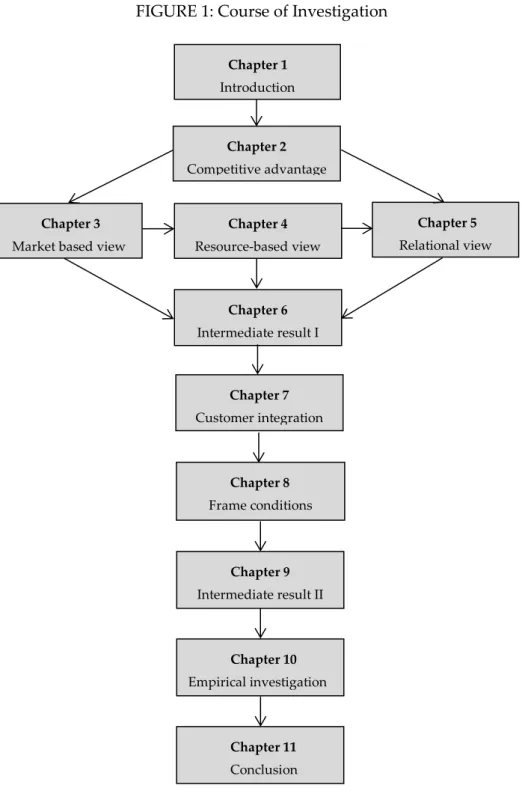
Subsequently, subchapter 4.4 discusses resource characteristics in connection with sustainable competitive success and subchapter 4.6 deals with the comparison between the RBV, the neoclassical and the transaction cost theory. In this connection, sub-chapter 5.3 deals with relationship-specific assets, knowledge sharing routines, complementary resources and competences and effective management.
DEMARCATION AND USE OF TERMS
The values mentioned in connection with the empirical study were presented in the form (x, y). Therefore, a value is only placed on the registration and designation of the relevant content and the corresponding value pair in connection with the thesis.
DETERMINATION OF THE TERM – STATUS OF RESEARCH
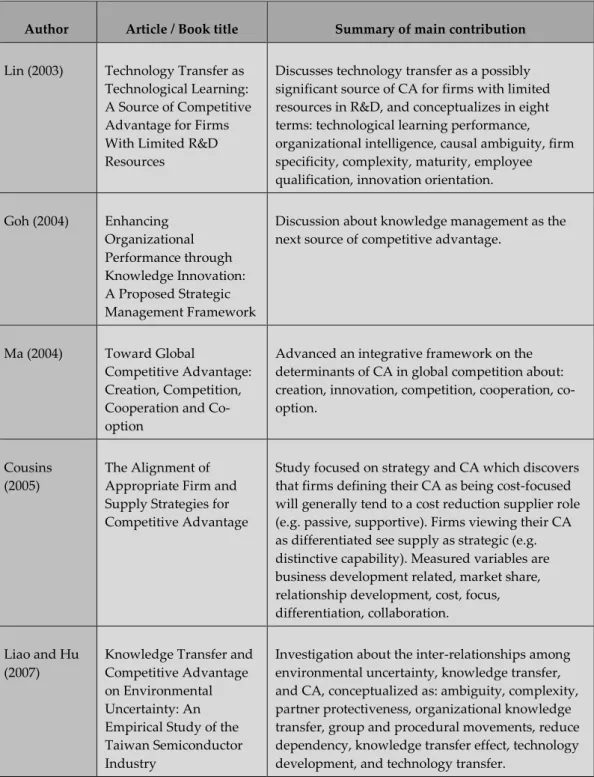
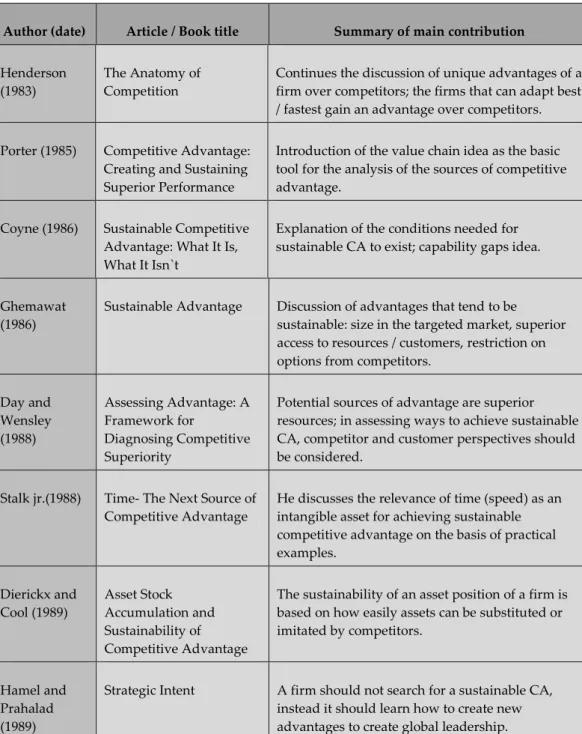
Presentation of the value chain idea as a basic tool for analyzing the sources of competitive advantage. Knowledge transfer and competitive advantage with respect to environmental uncertainty: An empirical study of Taiwan's semiconductor industry.
COMPETITIVE ADVANTAGE BY ECONOMIC RENTS
The ratio of the company's market value (M) and the replacement cost of physical assets (Vp) can be expressed as the ratio of the sum of 1, the value of intangible assets purchased by the company (VI), the value of collusive relationships with competitors (VC), capitalized Ricardian rents (VR), imbalances (VE), and the replacement cost of physical assets (VC). With regard to the resource, it is relevant to analyze the efficiency of the use of resources.

RELATION TO THE TOPIC
This will determine the client's performance in its core business at a later stage. Integrating the customer before creating the achievement creates a relationship with the customer on a relational level.
CLASSIFICATION IN STRATEGIC MANAGEMENT
To prepare for the growing environmental changes a flexible and adaptive organization of the firm is necessary (Ansoff. The first reason: The success of the experience curve concept, which started in the attempt to explain cost developments in different industries .
FUNDAMENTALS OF THE MBV
The structure of the industry and the market with its specific characteristics therefore determine the behavior of the actors, which leads to certain fixed results. Here the analysis and the design of the value chain are of decisive importance (Hahn.

STRATEGIC GROUPS, MOBILITY BARRIERS, ENTRY- AND EXIT BARRIERS BARRIERS
Strategic groups and mobility barriers
Investing in barriers to entry allows established suppliers to influence the market price level of an industry, and thus the recoverable amount of revenue. For strategic group bidders the market price level remains within a reasonable range.
Entry barriers
If a new supplier with a large production volume now enters the industry, and if the incumbents do not reduce their production accordingly, the amount of products available in the market increases (excess supply), which may cause the market to shrink. price levels and to a situation where a new entrant can no longer cover its costs. This is based on the first-mover effect, as established companies were virtually the first suppliers on the market and were the first to have the opportunity to develop customer loyalty to the product and the company.
Exit barriers
Advantages based on product differentiation can also be an effective entry barrier, especially if established firms have proprietary rights, for example in the design of products (Bain Böbel, 1984: 29). Without a change of management, the management involved in the admission will try to compensate for the erroneous decision through cross-subsidies from other business areas (Gilmour, 1973).
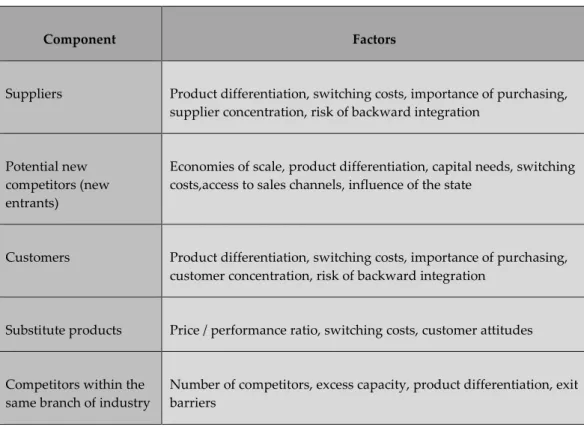
COMPETITIVE FORCES
- The bargaining power of customers
- The bargaining power of suppliers
- The threat of new entrants
- The threat of substitute products or services
- Rivalry among current competitors
Due to the market constraints due to legal restrictions and the low number of projects available, the customer's bargaining position is quite strong. Based on the fact that all potential suppliers place their offers according to the same technical system specification, the customer forces homogeneity of the.
GENERIC COMPETITIVE STRATEGIES
Cost leadership
Based on the effect of the experience curve, it is the goal of the strategy to achieve lower costs than the competitors within the industry. Following a cost leadership strategy, the supplier of the system must be able to use more or less standardized components to have a chance to achieve effects of economies of scale and must combine the components into a customized system according to the customer's system layout.
Differentiation
Therefore, the supplier will be forced to apply a special claims management after the award of the project (during the execution of the project) to earn the necessary profit, or to give up any profit. This means that price dumping would lead the client to an increased risk of loss of time related to claims management possibly leading to project delays, reduced performance or in the event of a long project duration in funding supplier financial gaps. 107 Firms' dependence on the need to achieve CA in terms of legal regulations supports them trying to have any impact on differentiation or looking for possible ways to differentiate themselves from the competition.
Concentration on core products
If the products of different suppliers can be compared with each other, it is also possible to differentiate from competitors on the cost side. Cost savings can be transferred (within certain limits) from the provider to the client and then the achievable profits or economic rents can be reduced.106 At the same time, appropriate regulation in the industry eliminates price dumping, since with approximately similar achievable factor prices on the market, the supplier would not reach the standard average profit or sustainably operated above the profitability threshold.
CRITICAL ASPECTS AND FURTHER DEVELOPMENT
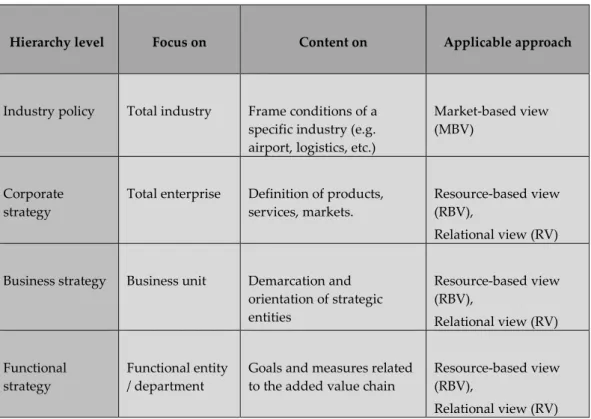
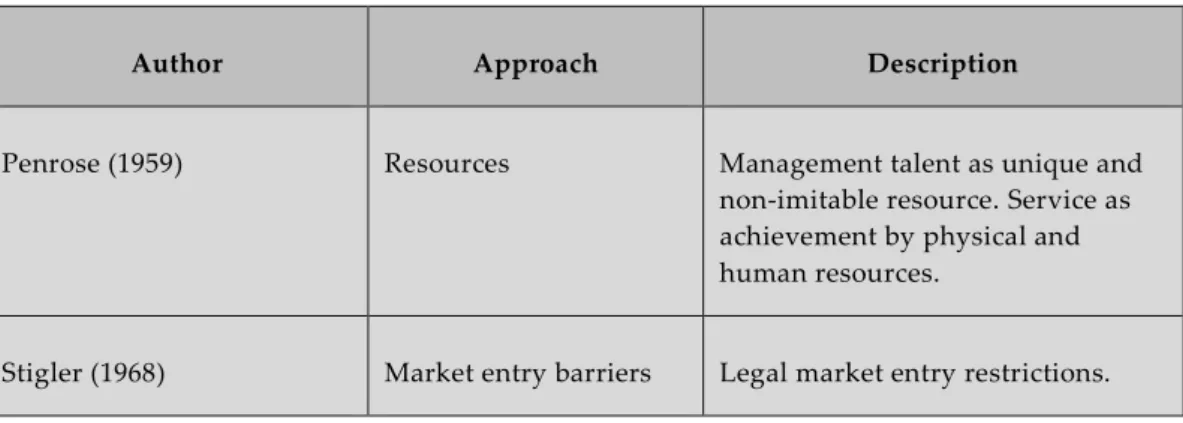
If the industry branch structure changes, different starting points apply for the choice of the strategy. In addition to the term resource, the tables also present some other terms that are included in the consideration of the RBV.
CONCEPTUAL RELATIONSHIPS
Resources and capabilities
Skills can be divided into personal skills (related to a person) of employees, and dynamic and organizational skills of the firm. The resources available to the firm can be affected by the design of the resource flow, e.g.
Core competences and cooperation
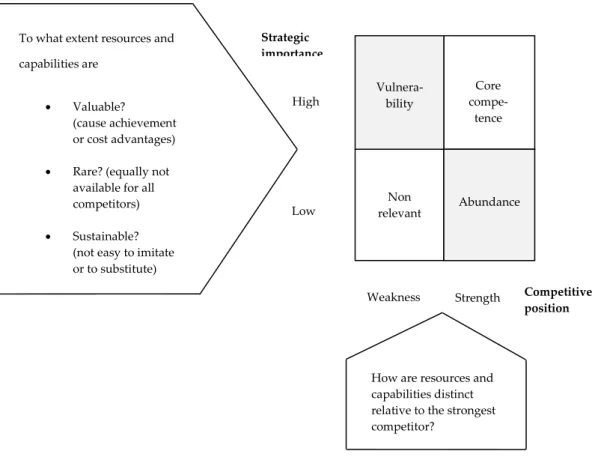
In the context of the characteristics of core competencies, this will be discussed below in more detail. A differentiation of resources/skills according to their contribution to the success of the firm is possible.
SUCCESS CHARACTERISTICS OF EFFECTIVE RESOURCES
- Strategic value
- Rareness
- Immobility
- Non-imitability
- Limited substitutability
For example, the owner of the advantageous position may already have access to the sequential resource. The easier this can be achieved, the riskier the CA of the firm that owns the advantageous position (Amit and Schoemaker Williams, 1992: 32).
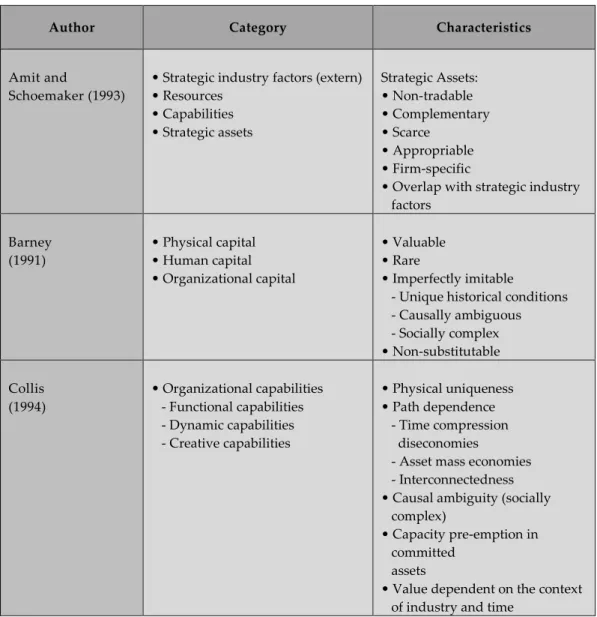
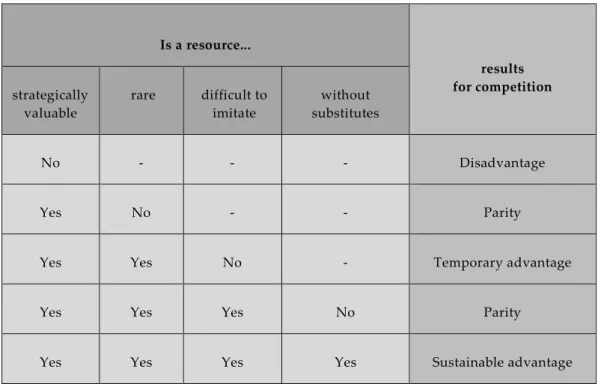
RESOURCE CHARACTERISTICS AND SUSTAINABLE COMPETITIVE SUCCESS SUCCESS
This may imply that the strategic potential for success is only available to a limited extent, or must be built up by the competition (eg protection by patents, utility models, legislation, trade law restrictions, etc.). However, if the firm imitates a resource that complements the characteristics just mentioned, the firm can establish parity with the competition.
COMPARISON BETWEEN RBV, NEOCLASSIC, AND TRANSACTION COST THEORY COST THEORY
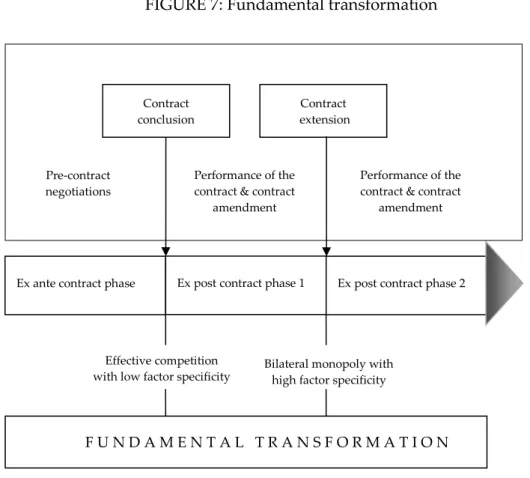
This means that companies themselves can be responsible for setting up and managing the success potential in the market. Connor argues that the RBV and transaction cost theory approaches share common assumptions, namely (a) bounded rationality, (b) possible presence of opportunistic behavior, and (c) impact of asset specificity.
CRITICAL ASPECTS AND FURTHER DEVELOPMENT
162 On the basis of empirical studies, von Hippel (1980) investigated the importance of cooperation between companies for the value chain of the companies involved. Within the framework of the RV, social capital is understood as a bundle of resources that is mainly based on a social network of relationships between companies (Duschek 2004: 62).
SOURCES OF RELATIONAL COMPETITIVE ADVANTAGE
Relation-specificity of assets
Therefore, the specificity of physical assets can be a tool to exclude competition and to strengthen the relationship between the transaction partners. The duration of safeguards affects the willingness of transaction partners to invest in relationship-specific assets (Dyer and Singh Williamson, 1985).
Systematic knowledge-sharing
Dyer and Singh argue that this provides a certain "absorptive capacity" (Cohen and Levinthal) of the firm, in which the firm must have acquired certain knowledge in the past to be able to decide which partner is most suitable for an alliance. , ' A positive evaluation of the collaboration supports the willingness to extensively exchange knowledge in order to make the alliance more efficient and successful and therefore to achieve CAs and relationship rents.
Interconnection of resources and capabilities
Each alliance partner has the need to create advantage through access to the resources, because none of the alliance partners should be able to buy the resources in the market. In addition to the purposeful synergetic combination of resources, the identification and assessment of potential resources is one of the most important challenges for achieving relational rents.
Effective governance
Nevertheless, due to the risk of the partners being exposed to opportunistic behavior, enforcement agreements are necessary to stabilize the relationship between the partners and to present a basis of common understanding. Provided that the partners' mutual expectations are not disappointed, self-enforcing agreements provide an opportunity to build trust201 between partners.
PREVENTION OF THE IMITATION OF RELATIONAL RENTS
Asset connectiveness among firms
At the same time, it is also possible that the partners are placed in a position that enables them to make follow-on investments based on relationship-specific resource combinations. By linking the resources and experiences that the partners have made jointly, they are able to further develop the resource combinations (e.g. manufacturing equipment) so that this development of a relationship-specific resource combination is a highly specialized asset that enables the partners to reach CAs .
Partner availability