INTRODUCTION
Mandate
Background
In 1996, after the entry into force of the SPS Agreement, the United States and Canada formally challenged in the WTO the EC ban on imports of beef and meat products from animals treated with these six hormones.
General considerations and introduction to the report
It should be noted that the evaluation of the voluntary use of sex hormones for therapeutic purposes in individual human patients, contraception and postmenopausal replacement therapy is beyond the scope of this report. These therapeutic applications must therefore be clearly distinguished from involuntary consumption of residues in meat and meat products, which happens unknowingly and regardless of the age, gender and individual characteristics of the consumers.
EMERGING CONCERNS RELATED TO HORMONALLY ACTIVE
Definitions
Effects of hormones at different stages of life
- Effects of sex hormones during the intrauterine and perinatal
- Endocrine effects of sex hormones on growth and puberty in
- Effects of sex hormones on reproduction
These effects appear to be due to estrogens' interference of the testosterone and 5α-dehydrotestosterone facilitation process on Mullerian inhibitory factor (MIF) (vom Saal et al., 1992). In the case of male hamsters, it is noteworthy that the disruption of reproductive function resulting from exposure to DES during the neonatal period did not affect the levels of circulating androgens (Khan et al., 1998).
Human exposure to oestrogens and its relationship to cancer
- Descriptive epidemiology
- Etiologic epidemiology
- Other hormonal effects relevant to cancer
Conversely, diets high in poultry have also been found to be unlikely to be associated with breast cancer risk (World Cancer Research Fund, 1997). A higher risk of breast cancer is associated with specific aspects of a woman's reproductive life, such as early menarche, infertility or a late first birth, and late menopause.
Sexual hormones and the immune system
- Sexual hormones and autoimmunity
- Sexual hormones and tolerance to the foetus in pregnancy;
This particular orientation of the immune response, currently known as the "Th2 profile" is the result of a complex cascade of events involving cytokines, steroid and nonsteroidal hormones, including sex hormones and neurotransmitters, as well as exposure to environmental antigens (Romagnani, 1992; Vuitton et al., 1999). This profile has been shown to be associated with non-cytotoxic, although potentially harmful, IgE-dependent allergic reactions (Brown et al., 1997; Romagnani, 1992).
OESTROGEN METABOLITES AS DNA-REACTIVE AND
- DNA damage by oestrogen-3,4-quinones
- Properties of 4-Catechol-Oestrogens: Formation of
- Redox Cycling of Catechol-Oestrogens, Their Semiquinones
- Testing the genotoxicity of oestrogens
The reaction of CE-Q with DNA demonstrates the type of DNA damage that occurs when these electrophiles bind to DNA (Cavalieri, et al., 1997). Binding of CE-Q via enzymatic activation of the CE precursors by horseradish peroxidase, lactoperoxidase and cytochrome P450 has also been shown to produce similar results (Cavalieri, et al., 1997).
Quantification of hormones in edible tissues
In summary, over the last few years the genotoxic effects of estrogen have been investigated in more detail. Mutagenicity and carcinogenicity tests of estrogens and catechol-oestrogens have shown activity, but more widely applicable tests need to be developed.
Exposure in relation to endogenous hormone production in humans at
Although the percentage of binding to each of these proteins is almost the same, the biologically active steroid is that part of E2 that is unbound or weakly bound to albumin; the binding affinity of E2 for SHBG is more than 10,000 times that of albumin (10-8 vs. 10-4 moles/L) (Fentiman et al., 1988; Lipsett, 1971). In addition, unbound SHBG can bind to its receptor and induce intracellular levels of cAMP (Fortunati et al., 1996).
Exposure considerations upon misuse
- Misplaced implants
- Off-label use
- Black-market drugs
- Secondary risks
It is generally recognized that the expression of drug metabolizing enzymes (DMEs) is regulated by hormones and gender differences in the disposition and metabolism of veterinary drugs have been described in several animal species, including ruminants (Witkamp et al., 1991, Witkamp et al., 1993a and b, van't Klooster et al., 1993, Motesissa et al., 1996). These anabolic steroids have been shown to increase the elimination rate of drugs (van Miert et al., 1988).
CHARACTERISTICS OF THE INDIVIDUAL COMPOUNDS UNDER
Pharmacokinetics and biotransformation of 17β-oestradiol in
Oestradiol disposition in the target animal
Interactions
Pharmacokinetics and biotransformation of 17β-oestradiol in
Assessment of excess exposure to oestrogens from
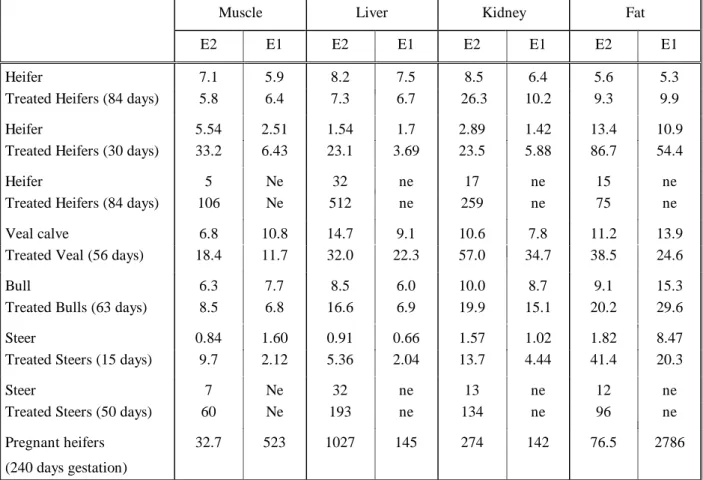
This value represents approximately 1-2% of the calculated daily production rates currently used for estradiol in prepubescent children. As previously mentioned in the Exposure Considerations section, the daily production rate of estradiol was estimated to be 6 μg/day estradiol in boys.

Genotoxicity
Consistent with this is the finding of microsatellite instability in estrogen-induced tumors (Hodgson et al., 1998). The detection of microsatellite instability in estrogen-induced tumors suggests that estrogen treatment may induce oxidative DNA damage leading to this phenotype.
DNA adducts and DNA damage
Carcinogenicity
Finally, while it is clear that exogenous estrogen, found in oral contraceptives or used in hormone replacement therapy in women, is responsible for an increased risk of endometrial cancer and, to a lesser extent, some increased risk of breast cancer, there is no direct evidence on the effects of the contribution of exogenous 17β-estradiol derived from the consumption of treated meat. Yet we know from the data derived from human populations within the range of physiological values of hormones in blood, that high levels are associated with an increased risk of breast cancer. Finally, taking into account the recent data on the formation of genotoxic metabolites of oestradiol, which suggest that 17ß-oestradiol acts as a complete carcinogen, exerting tumor-initiating and promoting effects, it must be concluded that no quantitative estimate of the risk associated with residues in meat could be presented.
Effects on growth and reproduction
Also known are the carcinogenic effects of 17β-estradiol in laboratory animals, as well as its harmful effects on pre- and perinatal development (see section 2). Under physiological conditions, endogenous 17β-estradiol, secreted by the ovary in women, exerts negative feedback effects on the secretion of the gonadotrophins FSH and LH, which act on the hypothalamic-pituitary system. These observations suggest that environmental 17β-estradiol may have deleterious effects on male and female fertility by acting through different direct and indirect mechanisms.
Effects on the immune system
It has been proven that the administration of exogenous estradiol leading to a sustained increase in serum levels causes a decrease in the secretion of gonadotropins (negative feedback effect), thereby stopping spermatogenesis and azoospermia in men, and interrupting ovarian cycles and blocking of ovulation in women. However, in the male rat, doses as low as 10 ng/rat of estradiol or the catecholoestrogens 2-OHE2 and 4-OHE2 cause, after 21 daily exposures, morphological lesions and arrest of spermatogenesis without affecting gonadotropin release, so an effect direct i These estrogens in the development of spermatids have been proposed (Seegers et al., 1991). In broilers, administration of 1 µg/kg body weight per day for 50 days caused a decrease in the number of leukocytes and reduced macrophage activity (Al Afaleg and Homeida, 1998).
Testosterone
- Pharmacokinetics and Biotransformation of Testosterone in
- Testosterone disposition in the target animal
- Pharmacokinetics and Biotransformation (in humans)
- Assessment of Excess Exposure to testosterone from
- Mutagenicity and genotoxicity of testosterone
- DNA adducts and DNA damage
- Carcinogenicity
- Effects of testosterone on growth and reproduction
- Effects of testosterone on the immune system
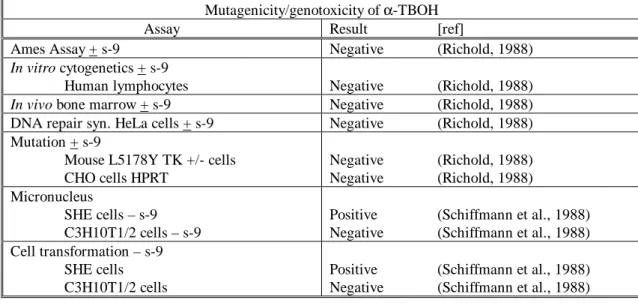
The dosage of testosterone varies with the manufacturer of the implant, but is most often 200 mg per animals (JECFA, 1988). A low level of covalent binding of testosterone to rat liver DNA has been reported (Barraud et al., 1984). Feeding of testosterone has been reported to induce uterine tumors in mice and prostate tumors in rats (Van Nie et al., 1961; Noble, 1977).
Progesterone
- Pharmacokinetics and biotransformation of progesterone in
- Progesterone disposition in the target animal
- Pharmacokinetics and biotransformation of progesterone in
- Assessment of excess exposure to progesterone from
- Mutagenicity and genotoxicity of progesterone
- DNA adducts and DNA damage
- Carcinogenicity
- Effect of progesterone on growth and reproduction
- Effects of progesterone on the immune system
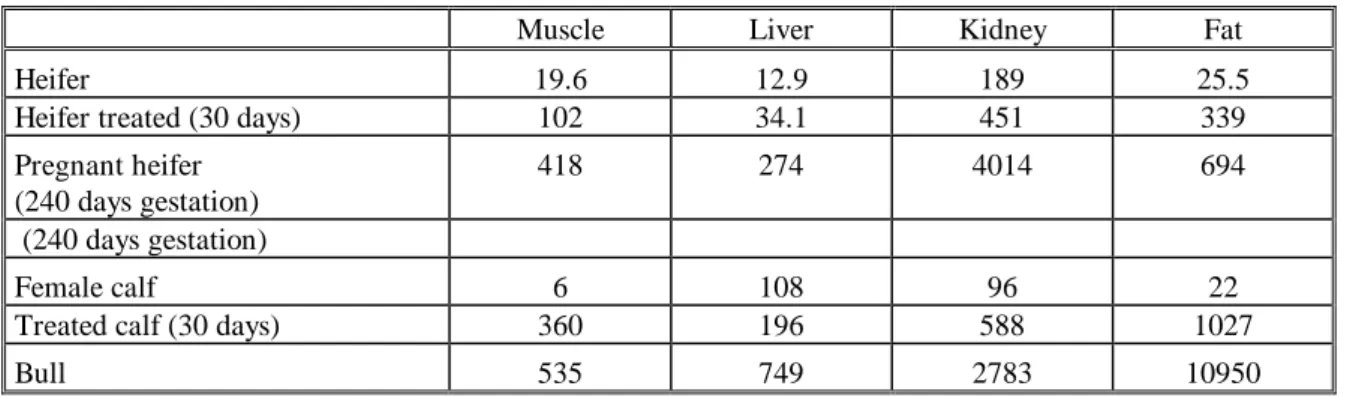
However, there is considerable uncertainty associated with the validity of the daily production rate data. Progesterone is the main progestogen secreted by the corpus luteum during the luteal phase of the ovarian cycle in adult women. Plasma levels of progesterone are low in men, children, and women during the follicular phase of the ovarian cycle.

Trenbolone
- Pharmacokinetics and biotransformation of trenbolone in
- Trenbolone disposition in the target animal
- Pharmacokinetics and biotransformation of trenbolone in
- Assessment of exposure to trenbolone from consumption of
- Mutagenicity and genotoxicity
- DNA adducts and DNA damage
- Carcinogenicity
- Effect of trenbolone on growth and reproduction
- Effects of trenbolone on the immune system
Further analyzes of the formation of polar metabolites of trenbolone are essential to assess the risk of repeated dietary exposure of humans to this compound. Adverse reproductive effects of exposure to trenbolone acetate have been reported in male and female mammals of various species (JECFA, 1988). A statistically significant change was observed when using a combination of trenbolone acetate and estradiol (20 mg).

Zeranol
- Pharmacokinetics and biotransformation of zeranol in animals
- Zeranol disposition in the target animal
- Pharmacokinetics and biotransformation of zeranol in humans
- Assessment of exposure to zeranol from consumption of
- Mutagenicity and genotoxicity of zeranol
- DNA adducts and DNA damage
- Carcinogenicity
- Effects of zeranol and growth and reproduction
- Effects of zeranol on the immune system
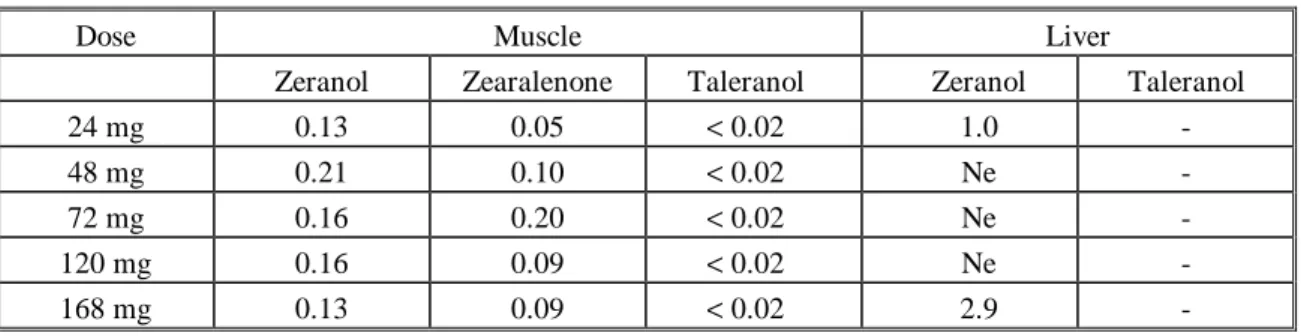
Three of the five monohydroxylated derivatives of zeranol were also observed with bovine liver microsomes. Pigs were implanted with 24-168 mg zeranol and slaughtered on the fifth day after implantation. These few analyzes with equivocal results are insufficient for an evaluation of the mutagenic/genotoxic properties of zeranol.
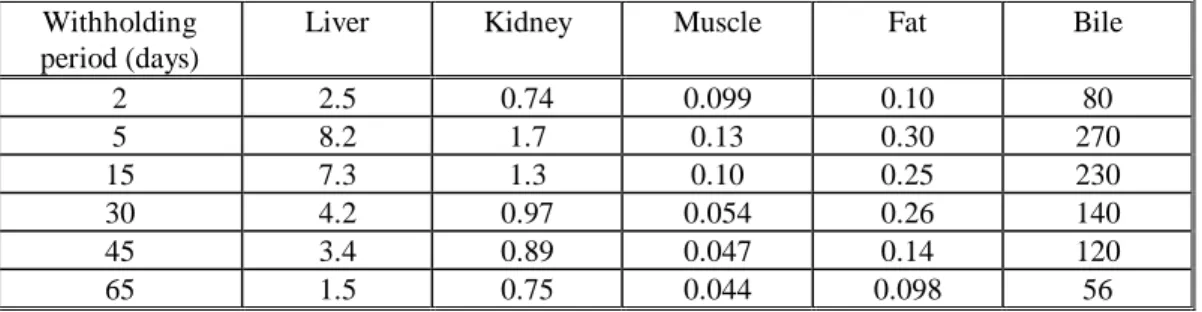
Melengestrol
- Pharmacokinetics and biotransformation of melengestrol in
- Melengestrol disposition in the target animal
- Pharmacokinetics and biotransformation of melengestrol in
- Assessment of exposure to melengestrol from consumption of
- Mutagenicity and genotoxicity of melengestrol
- DNA adducts and DNA damage
- Carcinogenicity
- Effect of melengestrol on growth and reproduction
- Effect of melengestrol on the immune systeme
In addition, further data are needed on the nature of the metabolites formed in cattle. Two of the metabolites have been tentatively identified as the 2α-hydroxy and 6-hydroxymethyl derivatives (Cooper, et al., 1967). The only study uncovered is a study of the effects of MGA on the ability of cows to eliminate E.
EXECUTIVE SUMMARY
Considering the obvious differences in sensitivity of sex and age groups to hormones, no threshold level can be established. No qualified data are available covering all aspects of the biotransformation of progesterone and testosterone. In view of the intrinsic properties of the hormones and taking into account epidemiological findings, no threshold levels can be defined for any of the 6 substances.
ANSWERS TO THE QUESTIONS IN THE MANDATE
Residue analysis has historically focused on the quantification of residual amounts of parent compounds and those metabolites that exert hormonal activity. Furthermore, no threshold value can be established for any of the hormonally active compounds and metabolites that may have endocrine, developmental and neurobiological, immunological or immunotoxicological effects. However, in the case of natural hormones, these methods cannot distinguish between endogenous and applied hormones.
ANNEX
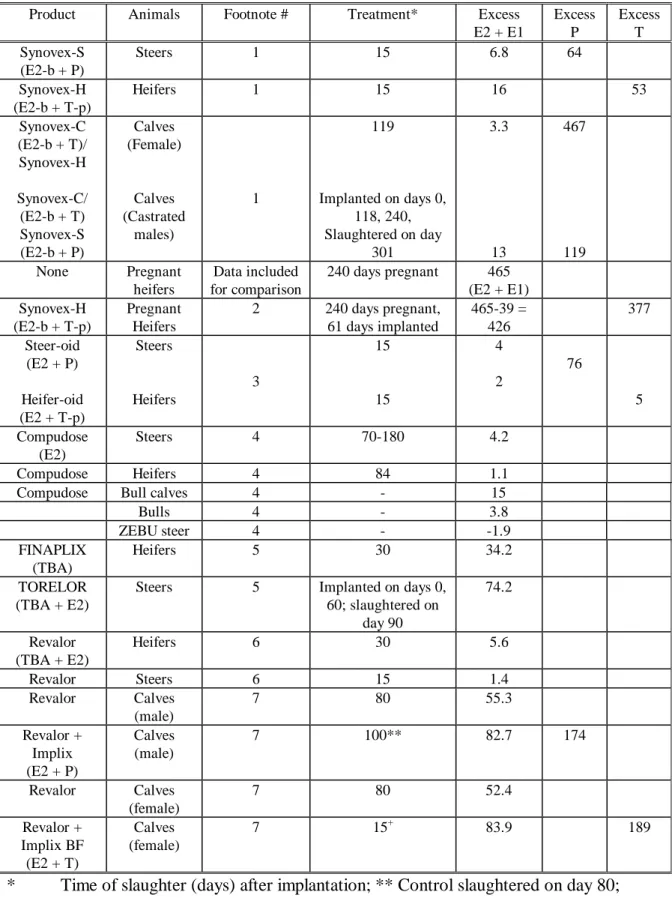
These results indicated that estimates of the theoretical maximum daily intake (TMDI) of estrogens for the consumption of tissues from steers and heifers implanted with Synovexfi S/H should be multiplied by a factor of two (2). US, Los Angeles, Non-Hispanic, Whites US, Los Angeles, Hispanics, Whites US, Los Angeles, Blacks. USA, Los Angeles, Chinese USA, Los Angeles, Philippines USA, Los Angeles, Koreans USA, Los Angeles, Japanese China, Qidong.
Effects of a single injection of estradiol valerate on the arcuate nucleus of the hypothalamus and on reproductive function in female rats. Prevention of estrogen carcinogenesis in the hamster kidney by ethinylestradiol: some unique properties of a synthetic estrogen. Early postnatal androgenization imprints selective changes in estrogen function in the rat uterus.
Effect of combined treatment with testosterone and estradiol-17β on E2 metabolism in the prostate and liver of noble rats. Net effect of oral contraceptive use on cancer risk among women in the United States.