PU Public, fully open, e.g. web
CO Confidential, restricted under conditions set out in Model Grant Agreement CI Classified, information as referred to in Commission Decision 2001/844/EC.
Innovative compact HY
for low energy BUILDings
Related task:
Lead beneficiary:
Authors and institutions:
Due date:
Data Management Plan (DMP)
DISSEMINATION LEVEL
Confidential, restricted under conditions set out in Model Grant Agreement Classified, information as referred to in Commission Decision 2001/844/EC.
This is part of the project that has received funding from the European Union’s Horizon 2020 research and innovation programme under grant agreement No 768824 The content of this document reflects only the author’s view and the Commission is not responsible for any use that may be made of the information it contains.
Project Title:
Innovative compact HYbrid electrical/thermal storage systems for low energy BUILDings
Project Acronym:
HYBUILD
Grant Agreement No: 768824 Collaborative Project
8.1 R2M
R2M – Régis Decorme, Thomas Messervey, Pascal Torres and contribution from all task leaders
M6 – 30 March 2018
Deliverable Report
Deliverable number:
D8.2
Deliverable title:
Data Management Plan (DMP)
X
European Union’s Horizon under grant agreement No 768824.
The content of this document reflects only the author’s view and the Commission is not le for any use that may be made of the information it contains.
brid electrical/thermal storage systems
Régis Decorme, Thomas Messervey, Pascal Torres and
Data Management Plan (DMP)
Publishable executive summary Acronyms and Abbreviations Glossary ...
1 Introduction ...
1.1 Aims and objectives
1.2 Relations to other activities in the project 1.3 Report structure ...
1.4 Contributions of partners 2 Approach to data management
2.1 Data availability and open access 2.1.1 Classification of Data Availability 2.1.2 Open Access Publishing
2.1.3 Open Data ...
2.1.4 Copyright Licenses 2.2 Data Storage & Sharing 3 Description of project datasets
3.1 Template: Dataset X.Y.Z
3.2 Dataset 1.1.1 - Boundary conditions for the applicability of th 3.3 Dataset 1.2.1 – Technical codes
3.4 Dataset 1.2.2 – Market codes 3.5 Dataset 1.3.1 – Market codes
3.6 Dataset 1.4.1 – Certification strategies and related requirements 3.7 Dataset 1.5.1 – KPIs
3.8 Dataset 1.6.1 – Technology cost and payback analysis 3.9 Dataset 2.1.1 – Development of adsorption module 3.10 Dataset 2.2.1 – High and low temperature latent storage
3.11 Dataset 2.3.1 – Simulation and experimental data about the DC controllers and electrical storage ...
3.12 Dataset 3.1.1 – Model based design and control
3.13 Dataset 3.2.1 – Installation and testing of the hybrid sub controlled infrastructure
3.14 Dataset 4.1.1 – Building typologies for performance tests 3.15 Dataset 4.2.1 – Functional
3.16 Dataset 4.3.1 – Advanced control algorithms and results of lab and/or field tests 3.17 Dataset 4.4.1 – Project building management documentation
3.18 Dataset 5.1.1 – Life Cycle Assessm 3.19 Dataset 5.2.1 – Life Cycle Cost analysis
Table of contents
Publishable executive summary ...
Acronyms and Abbreviations ...
...
...
Aims and objectives ...
Relations to other activities in the project ...
...
Contributions of partners ...
Approach to data management ...
Data availability and open access ...
Classification of Data Availability ...
Open Access Publishing ...
...
Copyright Licenses ...
Data Storage & Sharing ...
Description of project datasets ...
Template: Dataset X.Y.Z ...
Boundary conditions for the applicability of the HYBUILD solutions Technical codes ...
Market codes ...
Market codes ...
Certification strategies and related requirements ...
KPIs ...
Technology cost and payback analysis ...
Development of adsorption module ...
High and low temperature latent storage ...
Simulation and experimental data about the DC controllers and ...
Model based design and control ...
Installation and testing of the hybrid sub-systems in a thermally ...
Building typologies for performance tests ...
Functional design of the system components ...
Advanced control algorithms and results of lab and/or field tests Project building management documentation ...
Life Cycle Assessment ...
Life Cycle Cost analysis ...
2
... 4
... 5
... 6
... 7
... 7
... 7
... 7
... 7
... 8
... 8
... 9
... 9
... 10
... 10
... 11
... 11
... 11
e HYBUILD solutions .. 12
... 13
... 14
... 15
... 15
... 16
... 17
... 17
... 18
Simulation and experimental data about the DC controllers and ... 19
... 19
systems in a thermally ... 20
... 21
... 21
Advanced control algorithms and results of lab and/or field tests .... 22
... 23
... 24
... 25
3.20 Dataset 5.3.1 – Social Life Cycle Assessment
3.21 Dataset 5.4.1 – Standardisation overview and proposals 3.22 Dataset 6.1.1 – Distributed monitoring system
3.23 Dataset 6.2.1 – Energy Performance Analysis before intervention 3.24 Dataset 6.3.1 – Repo
3.25 Dataset 6.4.1 – Energy performance analysis after intervention 3.26 Dataset 7.1.1 – Dissemination and exploitation plan
3.27 Dataset 7.2.1 – Dissemination material 3.28 Dataset 7.3.1 – Technology and market watch
3.29 Dataset 7.4.1 – Market analysis, business models, exploitation 3.30 Dataset 7.6.1 – Decision support tool
3.31 Dataset 8.1.1 – Internal and external communication strategy 3.32 Dataset 8.2.1 – Web
3.33 Dataset 8.3.1 – Communication plan 3.34 Dataset 8.4.1 – Communication KPIs 3.35 Dataset 9.1.1 – Project Gantt Chart 3.36 Dataset 9.1.2 – Partners contact list 3.37 Dataset 9.2.1 – Individual f
3.38 Dataset 9.3.1 – Sustainable long
3.39 Dataset 9.4.1 – Contact details of linked initiatives 4 Conclusions ...
5 References ...
Social Life Cycle Assessment ...
Standardisation overview and proposals ...
Distributed monitoring system ...
Energy Performance Analysis before intervention ...
Report commissioning tasks ...
Energy performance analysis after intervention ...
Dissemination and exploitation plan ...
Dissemination material ...
Technology and market watch ...
Market analysis, business models, exploitation ...
Decision support tool ...
Internal and external communication strategy ...
Web-based platform ...
Communication plan ...
Communication KPIs ...
Project Gantt Chart ...
Partners contact list ...
Individual financial statements ...
Sustainable long-term governance structure ...
Contact details of linked initiatives ...
...
...
3
... 26
... 27
... 27
... 28
... 29
... 29
... 30
... 31
... 32
... 32
... 33
... 34
... 35
... 36
... 37
... 37
... 38
... 39
... 40
... 41
... 42
... 43
Publishable executive summary
HYBUILD is a 6 M€ project supported by the Eu programme – Energy-efficient Buildings Public
two innovative compact hybrid electrical/thermal storage systems for stand connected buildings.
This report is an initial Data Management Plan (DMP) report made public in month six (March 2018). It outlines how data are collected or generated by the HYBUILD project, in terms of how it will be organized, stored, and shared. It specifies which data will be op
will be confidential within the consortium, as far as it is possible to do so at this stage. The report has been developed following the Horizon
additional guidance from the joint OpenAIRE Management Plan” (OpenAIRE and EUDAT, 2018
Open access (OA) is understood as the free, online provision of re information to other users. There are many good reasons to make the data and
publically funded research openly available to the research community, the commercial sector and civil society. Much of the data gathered by the project is for the purpose of project management and delivery rather than new knowledge creation;
of the data is categorised as confidential (Consortium). However, the project will seek to openly disseminate its research findings, except in cases where there are defined exploitable outcomes, privacy concerns or there w
limited worth to other users.
The initial HYBUILD DMP highlights that
Cycle Assessment results of the HYBUILD system (Task 5.1) and the energy perfo of the overall system (Task 6.4
the conclusions drawn in scientific publications these data will be made available through ope This Data Management Plan will have to be research: datasets characterisation will be fine will have to be adapted accordingly.
the project, in conjunction with the release of the communication plan (D8.4).
Key words: H2020, open access, environment, demand response.
Publishable executive summary
€ project supported by the European Commission under its Horizon 2020 efficient Buildings Public-Private partnership. The project will develop two innovative compact hybrid electrical/thermal storage systems for stand-
port is an initial Data Management Plan (DMP) report made public in month six (March 2018). It outlines how data are collected or generated by the HYBUILD project, in terms of how it will be organized, stored, and shared. It specifies which data will be open access and which will be confidential within the consortium, as far as it is possible to do so at this stage. The report has been developed following the Horizon 2020 guidelines (EC DG R&I, 2017 additional guidance from the joint OpenAIRE and EUDAT webinar “How to write a Data
Plan” (OpenAIRE and EUDAT, 2018).
Open access (OA) is understood as the free, online provision of re-useable scientific information to other users. There are many good reasons to make the data and
publically funded research openly available to the research community, the commercial sector and civil society. Much of the data gathered by the project is for the purpose of project management and delivery rather than new knowledge creation; it is therefore likely that much of the data is categorised as confidential (Consortium). However, the project will seek to openly disseminate its research findings, except in cases where there are defined exploitable outcomes, privacy concerns or there will be a high administrative burden for a dataset o limited worth to other users.
highlights that the most significant datasets identified are the Cycle Assessment results of the HYBUILD system (Task 5.1) and the energy perfo
of the overall system (Task 6.4). It is these data that will validate the impact of the project and the conclusions drawn in scientific publications that arise. It is intended that where possible these data will be made available through open access repositories.
This Data Management Plan will have to be updated in conjunction with the
: datasets characterisation will be fine-tuned, and potentially their publication level be adapted accordingly. An update of the various datasets is anticipated at M the project, in conjunction with the release of the communication plan (D8.4).
Key words: H2020, open access, open data, metadata, data management, energy, built environment, demand response.
4 ropean Commission under its Horizon 2020 Private partnership. The project will develop -alone and district port is an initial Data Management Plan (DMP) report made public in month six (March 2018). It outlines how data are collected or generated by the HYBUILD project, in terms of how en access and which will be confidential within the consortium, as far as it is possible to do so at this stage. The 2020 guidelines (EC DG R&I, 2017) with and EUDAT webinar “How to write a Data useable scientific information to other users. There are many good reasons to make the data and findings from publically funded research openly available to the research community, the commercial sector and civil society. Much of the data gathered by the project is for the purpose of project it is therefore likely that much of the data is categorised as confidential (Consortium). However, the project will seek to openly disseminate its research findings, except in cases where there are defined exploitable ill be a high administrative burden for a dataset of the most significant datasets identified are the Life Cycle Assessment results of the HYBUILD system (Task 5.1) and the energy performance results . It is these data that will validate the impact of the project and . It is intended that where possible the progress of the tuned, and potentially their publication level ous datasets is anticipated at M12 of the project, in conjunction with the release of the communication plan (D8.4).
data, metadata, data management, energy, built
Acronyms and Abbreviations
AA Acronyms and Abbreviations CA Consortium Agreement
DL Deadline
EC European Commission EU European Union GA Grant Agreement
OA Open Access
ORDP Open Research Data Pilot PC Project Coordinator PO Project Officer
Abbreviations
Acronyms and Abbreviations Consortium Agreement European Commission
Open Research Data Pilot Project Coordinator
5
Glossary
Open Access (OA): Open Access provides researchers, businesses and citizens with improved and free of charge online access to EU
and research data. The objective of the open access policy is to optimise
publicly-funded scientific research, both at European level Horizon 2020 and at the member state level.
Open Data: Open data refers to the idea that certain data should be freely available for use and re-use. Open data policy is linked with
funded data or their data results from public funding. Therefore, in principle, the data should be openly accessible and re-useable.
Open Access provides researchers, businesses and citizens with improved and free of charge online access to EU-funded research results, including scientific publications
The objective of the open access policy is to optimise
funded scientific research, both at European level Horizon 2020 and at the member Open data refers to the idea that certain data should be freely available for use Open data policy is linked with open research data policy since both are publicly funded data or their data results from public funding. Therefore, in principle, the data should
useable.
6 Open Access provides researchers, businesses and citizens with improved funded research results, including scientific publications The objective of the open access policy is to optimise the impact of funded scientific research, both at European level Horizon 2020 and at the member Open data refers to the idea that certain data should be freely available for use open research data policy since both are publicly funded data or their data results from public funding. Therefore, in principle, the data should
1 Introduction
1.1 Aims and objectives
HYBUILD is a H2020 funded innovation project hybrid electrical/thermal storage systems for stand
Data Management Plan (DMP) outlines how data collected or generated by the
project will be organised, stored and shared. It specifies which data will be open access and which will be confidential within the consortium, as far as it is possible to do so at this stage.
1.2 Relations to other activities in the project
All partners contribute to the
work packages according to their particular activiti and standardisation - and WP6
data generated by the development
using the structures and standards described in the DMP.
1.3 Report structure
The report begins by outlining its purpose, intended audienc
development. Section 2 outlines the concepts of open access publishing and open access data in scientific research. Related issues such as a classification for project datasets and an overview of copyright licensing for open
described in detail in Section 3, using a standardised template. Finally, conclusions are and references presented.
1.4 Contributions of partners
As the dissemination and communication partner Management Plan document with input
Leaders (STRESS, EURAC, CNR
Aims and objectives
is a H2020 funded innovation project which will develop two innovative compact hybrid electrical/thermal storage systems for stand-alone and district connected buildings. This Data Management Plan (DMP) outlines how data collected or generated by the
project will be organised, stored and shared. It specifies which data will be open access and which will be confidential within the consortium, as far as it is possible to do so at this stage.
Relations to other activities in the project
the implementation of the Data Management Plan work packages according to their particular activities. For instance, Work Package 5
and WP6 – Demonstration and Evaluation, will collate and analyse the development of the HYBUILD technologies in the other Work Packages
standards described in the DMP.
The report begins by outlining its purpose, intended audiences, and the process for ongoing . Section 2 outlines the concepts of open access publishing and open access data in scientific research. Related issues such as a classification for project datasets and an overview of copyright licensing for open access are then discussed. Each project dataset is then described in detail in Section 3, using a standardised template. Finally, conclusions are
Contributions of partners
dissemination and communication partner, R2M has drafted and elaborated the Data Management Plan document with input to the dataset descriptions from the
AC, CNR-ITAE, AKG, CSEM, AIT, UDL, ENG, NTUA, NBK, R2M).
7 will develop two innovative compact alone and district connected buildings. This Data Management Plan (DMP) outlines how data collected or generated by the HYBUILD project will be organised, stored and shared. It specifies which data will be open access and which will be confidential within the consortium, as far as it is possible to do so at this stage.
of the Data Management Plan across the other es. For instance, Work Package 5 – LCA, LCC , will collate and analyse the the other Work Packages,
process for ongoing . Section 2 outlines the concepts of open access publishing and open access data in scientific research. Related issues such as a classification for project datasets and an access are then discussed. Each project dataset is then described in detail in Section 3, using a standardised template. Finally, conclusions are drawn,
has drafted and elaborated the Data from the respective Task L, ENG, NTUA, NBK, R2M).
2 Approach to data management
This report has been developed following the Horizon 2020 guidelines (EC DG R&I, 2015) and the joint OpenAIRE and EUDAT webinar “How to write a Data Management
and EUDAT, 2018).
2.1 Data availability and open access
Open access (OA) is understood as the free, onli
information to other users. There are many good reasons to make the data and findings from publically funded research openly available to the research community, the commercial sector and civil society.
As the “Guidelines to the rules Research Data in Horizon 2020
publications and data serves a number of purposes. It will by building on a stronger body of existing work,
duplication of effort, (iii) bring innovations to market quicker by reducing barriers to information flow, and (iv) enhance
economic and ethical principle that information that has been paid for with public money should not have to be paid for again when it is required for use by other researchers, industry, or citizens.
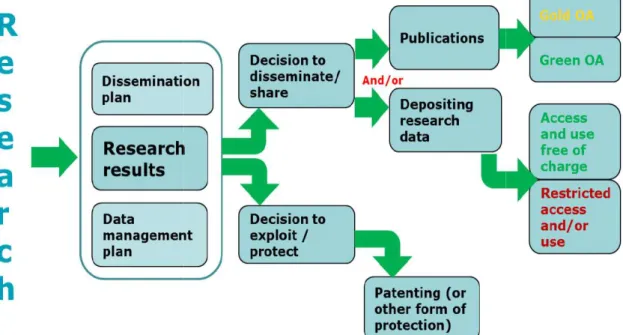
Figure 1 Open access to scientific publication and research data in the wider context of dissemination and exploitation (Reproduced from EC DG R&I (
Scientific Publications an
As outlined above, the first decision to be made in research dissemination is whether to publish research findings or to protect some aspects for commercial exploitation.
outlined in the next section of the report the path for different aspects of the
dissemination and exploitation activities of Work Package 7
process will involve patent search, the clarification of each partners’ legitimate interests in relation to the project outputs, and the introduction of IPR agreements between partners prior
Approach to data management
developed following the Horizon 2020 guidelines (EC DG R&I, 2015) and the joint OpenAIRE and EUDAT webinar “How to write a Data Management
Data availability and open access
Open access (OA) is understood as the free, online provision of re-useable scientific information to other users. There are many good reasons to make the data and findings from publically funded research openly available to the research community, the commercial sector
to the rules on Open Access to Scientific Publications and Research Data in Horizon 2020” (EC DG R&I, 2017) outline, more open access to
serves a number of purposes. It will (i) improve the quality of resea by building on a stronger body of existing work, (ii) increase efficiency of research by reducing
iii) bring innovations to market quicker by reducing barriers to iv) enhance the transparency of scientific progress. There is also the economic and ethical principle that information that has been paid for with public money should not have to be paid for again when it is required for use by other researchers, industry,
Open access to scientific publication and research data in the wider context of dissemination (Reproduced from EC DG R&I (2017) H2020 Programme Guidelines on Open Access to Scientific Publications and Open Access Research Data in Horizon 2020)
As outlined above, the first decision to be made in research dissemination is whether to publish research findings or to protect some aspects for commercial exploitation.
on of the report present outputs and processes that will determine the path for different aspects of the HYBUILD project. This work will have input
dissemination and exploitation activities of Work Package 7, which is also
patent search, the clarification of each partners’ legitimate interests in relation to the project outputs, and the introduction of IPR agreements between partners prior 8 developed following the Horizon 2020 guidelines (EC DG R&I, 2015) and the joint OpenAIRE and EUDAT webinar “How to write a Data Management Plan” (OpenAIRE
useable scientific information to other users. There are many good reasons to make the data and findings from publically funded research openly available to the research community, the commercial sector on Open Access to Scientific Publications and Open Access
” (EC DG R&I, 2017) outline, more open access to scientific i) improve the quality of research ii) increase efficiency of research by reducing iii) bring innovations to market quicker by reducing barriers to the transparency of scientific progress. There is also the economic and ethical principle that information that has been paid for with public money should not have to be paid for again when it is required for use by other researchers, industry,
Open access to scientific publication and research data in the wider context of dissemination Guidelines on Open Access to Research Data in Horizon 2020)
As outlined above, the first decision to be made in research dissemination is whether to publish research findings or to protect some aspects for commercial exploitation. The datasets outputs and processes that will determine have input from the led by R2M. The patent search, the clarification of each partners’ legitimate interests in relation to the project outputs, and the introduction of IPR agreements between partners prior
to dissemination of findings. The Exploitable results table (D7.5, month 12)
final Exploitation strategy which will include patent filings (D7.7), replication plan (D7.8), and partner exploitation agreement
2.1.1 Classification of Data Availability
Data availability is therefore categorised at this stage in one of three ways:
Open Data that is shared for re publication.
Consortium Confidential Sta
consortium and subject to the project Non (NDA) (to be signed with the SHAB
Private Data that is maintained by purposes.
Much of the data gathered by the project is for the purpose of project management and delivery rather than new knowledge creation; it is therefore likely that much of the data is categorised as Consortium. How
findings, except in cases where there are defined exploitable outcomes, privacy concerns or there will be a high administrative burden for a dataset or limited worth to other users. The two main aspects of this dissemination approach are open access to scientific publications and open access to research data. Each is considered in the following sections.
2.1.2 Open Access Publishing
Open access publishing is essentially defined as the free availabilit
publications for any user. There is no single legal definition in the context of H2020 but the HYBUILD Grant Agreement specifies that the project will:
“(a) as soon as possible and at the latest on publication, deposit a machi electronic copy of the published version or final peer
publication in a repository for scientific publications;
(b) ensure open access to the deposited publication
latest: (i) on publication, if an electronic version is available for free via the publisher, or (ii) within six months of publication (twelve months for publications in the social sciences and humanities) in any other case.
(c) ensure open access
identify the deposited publication.” (EC
To achieve this, we will use both “green” and “gold” open access routes. “Green” open access, or self-archiving, is the release of a final peer reviewed manuscrip
repository, possibly after an embargo period, whereas “gold” open access relates to open access publishing.
University of Lleida, the HYBUILD technical coordinator, outputs of its research are readily a
(RepositoriObertUDL - https://repositori.udl.cat
journal articles, conference papers and book chapters, au indefinitely with a persistent identifier.
to dissemination of findings. The Dissemination and Exploitation plan (D7
Exploitable results table (D7.5, month 12) will clarify these findings and ultimately lead to the which will include patent filings (D7.7), replication plan (D7.8), and partner exploitation agreement (D7.9) at the close of the project in month 48
Classification of Data Availability
Data availability is therefore categorised at this stage in one of three ways:
Data that is shared for re-use or that underpins a scientific publication.
Confidential data that is accessible to all partners and the Stakeholder Advisory Board (SHAB) but retained within the consortium and subject to the project Non-Disclosure Agreement (NDA) (to be signed with the SHAB – D7.6, month 12
Data that is maintained by an individual partner for their own purposes.
Much of the data gathered by the project is for the purpose of project management and delivery rather than new knowledge creation; it is therefore likely that much of the data is categorised as Consortium. However, the project will seek to openly disseminate its research findings, except in cases where there are defined exploitable outcomes, privacy concerns or there will be a high administrative burden for a dataset or limited worth to other users. The n aspects of this dissemination approach are open access to scientific publications and open access to research data. Each is considered in the following sections.
Open Access Publishing
Open access publishing is essentially defined as the free availability of peer-reviewed scientific publications for any user. There is no single legal definition in the context of H2020 but the
Grant Agreement specifies that the project will:
“(a) as soon as possible and at the latest on publication, deposit a machi
electronic copy of the published version or final peer-reviewed manuscript accepted for publication in a repository for scientific publications;
(b) ensure open access to the deposited publication — via the repository
blication, if an electronic version is available for free via the publisher, or (ii) within six months of publication (twelve months for publications in the social sciences and humanities) in any other case.
(c) ensure open access — via the repository — to the bibliographic metadata that identify the deposited publication.” (EC 2017, Article 29.2)
To achieve this, we will use both “green” and “gold” open access routes. “Green” open access, archiving, is the release of a final peer reviewed manuscript through an online repository, possibly after an embargo period, whereas “gold” open access relates to open University of Lleida, the HYBUILD technical coordinator, is committed to ensuring that the outputs of its research are readily accessible and has developed its online repository and portal
https://repositori.udl.cat). This facility can host academic outputs, i.e.
journal articles, conference papers and book chapters, authored or co-authored by indefinitely with a persistent identifier. It also facilitates to include journal articles, conference
9 .1, month 9) and will clarify these findings and ultimately lead to the which will include patent filings (D7.7), replication plan (D7.8), and
48.
use or that underpins a scientific data that is accessible to all partners and the but retained within the Disclosure Agreement D7.6, month 12).
an individual partner for their own Much of the data gathered by the project is for the purpose of project management and delivery rather than new knowledge creation; it is therefore likely that much of the data is ever, the project will seek to openly disseminate its research findings, except in cases where there are defined exploitable outcomes, privacy concerns or there will be a high administrative burden for a dataset or limited worth to other users. The n aspects of this dissemination approach are open access to scientific publications and
reviewed scientific publications for any user. There is no single legal definition in the context of H2020 but the
“(a) as soon as possible and at the latest on publication, deposit a machine-readable reviewed manuscript accepted for
via the repository — at the blication, if an electronic version is available for free via the publisher, or (ii) within six months of publication (twelve months for publications in the social the bibliographic metadata that To achieve this, we will use both “green” and “gold” open access routes. “Green” open access, t through an online repository, possibly after an embargo period, whereas “gold” open access relates to open is committed to ensuring that the online repository and portal . This facility can host academic outputs, i.e.
authored by UDL, t also facilitates to include journal articles, conference
papers and book chapters of partners in projects were UDL is coordinator (such as the case of HYBUILD, where it is technica
2.1.3 Open Data
The HYBUILD project is committed
Horizon 2020’. The rationale is very similar to that related to open access of scientific publications; research integrity will be increased th
through re-use, duplication o value from its financial contribution.
There are four main aspects of open data summarised in
Findable data has a unique, persistent ID, located in a searchable resource, and documented with meaningful metadata
Accessible data is readily and freely retrievable using common methods and protocols, metadata is accessible even if the dat
Interoperable data is presented in broadly recognised standard formats, vocabularies and languages
Re-useable data has clear licences, and accurate meaningful metadata conforming to relevant community standards and identifying its content and provenance
The data management plan establishes how this approach will be realised in practice with the initial plan presenting an overview and greater detail provided in the interim and final reports as the work packages proceed.
Project datasets for dissemination will be open access by default, at the very least to validate scientific publications. However, not all of the project work packages will produce datasets that are intended for public dissemination; much of the data created and stored during project is for internal management and communication within the consortium only. The distinction between datasets is clearly described in the dataset templates.
2.1.4 Copyright Licenses
When material is widely shared, copyright licences protect the authors o
specific rights to publishers and others to use this work. The European Commission encourages authors to retain their copyright whilst disseminating it as open access. Creative Commons provides legal tools to enable open access in these ci
enabling re-use by third parties (Creative Commons, 2018
Where research findings are published in a journal or other scientific outlet there should be consideration of the copyright agreement with the publishers, which may involve an embargo period.
At this initial stage it is not possible to define the copyrig dataset. The most appropriate licen
investigated as they are better characterised by their respective work packages management of Exploitable Results
effect.
of partners in projects were UDL is coordinator (such as the case of HYBUILD, where it is technical coordinator).
is committed to participate in the ‘Pilot on Open Research Data in Horizon 2020’. The rationale is very similar to that related to open access of scientific publications; research integrity will be increased through transparency, impact will be greater use, duplication of efforts will be reduced and civil society will benefit from better value from its financial contribution.
There are four main aspects of open data summarised in the acronym FAIR (For
data has a unique, persistent ID, located in a searchable resource, and documented with meaningful metadata
data is readily and freely retrievable using common methods and protocols, metadata is accessible even if the data is not
data is presented in broadly recognised standard formats, vocabularies and languages
data has clear licences, and accurate meaningful metadata conforming to relevant community standards and identifying its content and
enance
The data management plan establishes how this approach will be realised in practice with the initial plan presenting an overview and greater detail provided in the interim and final reports as the work packages proceed.
dissemination will be open access by default, at the very least to validate scientific publications. However, not all of the project work packages will produce datasets that are intended for public dissemination; much of the data created and stored during project is for internal management and communication within the consortium only. The distinction between datasets is clearly described in the dataset templates.
When material is widely shared, copyright licences protect the authors o
specific rights to publishers and others to use this work. The European Commission encourages authors to retain their copyright whilst disseminating it as open access. Creative Commons provides legal tools to enable open access in these circumstances, with CC
arties (Creative Commons, 2018).
Where research findings are published in a journal or other scientific outlet there should be consideration of the copyright agreement with the publishers, which may involve an embargo At this initial stage it is not possible to define the copyright arrangement for each project dataset. The most appropriate licensing arrangements for each of the project datasets will be investigated as they are better characterised by their respective work packages
anagement of Exploitable Results in WP7. The data management plan will be updated to that
10 of partners in projects were UDL is coordinator (such as the case of
to participate in the ‘Pilot on Open Research Data in Horizon 2020’. The rationale is very similar to that related to open access of scientific rough transparency, impact will be greater and civil society will benefit from better
the acronym FAIR (Force 11, 2018):
data has a unique, persistent ID, located in a searchable resource, and data is readily and freely retrievable using common methods and
a is not
data is presented in broadly recognised standard formats, data has clear licences, and accurate meaningful metadata conforming to relevant community standards and identifying its content and The data management plan establishes how this approach will be realised in practice with the initial plan presenting an overview and greater detail provided in the interim and final reports dissemination will be open access by default, at the very least to validate scientific publications. However, not all of the project work packages will produce datasets that are intended for public dissemination; much of the data created and stored during the project is for internal management and communication within the consortium only. The
f work and grant specific rights to publishers and others to use this work. The European Commission encourages authors to retain their copyright whilst disseminating it as open access. Creative Commons rcumstances, with CC-BY and CC0 Where research findings are published in a journal or other scientific outlet there should be consideration of the copyright agreement with the publishers, which may involve an embargo ht arrangement for each project ing arrangements for each of the project datasets will be investigated as they are better characterised by their respective work packages and the will be updated to that
2.2 Data Storage & Sharing
The project has five main data its intended accessibility.
Private Stored locally on organisational networks an institutional back up practices.
Consortium R2M IT teams have setup a dedicated
secure, robust and accessible to all partners. Consortium data will be uploaded to this cloud storage for simple, secure access fo partners. Data is maintained with regular backups
Web-
Open (i,ii,iii) Three facilities w (i)
(ii)
(iii)
3 Description of project datasets
Datasets are numbered according to their primary work package and task number, as laid out in the project Description of Action. For instance the “
of the HYBUILD solutions” dataset, the first dataset of Task 1.1 from Work Package 1 is named
“Dataset 1.1.1”.
The description of the datasets below is based upon the Horizon 2020 Initial DMP template provided by the UK’s Digital Curation
https://dmponline.dcc.ac.uk/
3.1 Template: Dataset X.Y.Z
Information about each dataset has been collated by Task Leaders in the format presented below.
WP / Task & Data Manager
Dataset reference / name Availability
Mandatory Metadata Data Storage & Sharing
The project has five main data storage and sharing facilities according to the type of data and Stored locally on organisational networks and assets, subject to institutional back up practices.
R2M IT teams have setup a dedicated ownCloud
secure, robust and accessible to all partners. Consortium data will be uploaded to this cloud storage for simple, secure access fo partners. Data is maintained with regular backups (see
-based platform).
Three facilities will be used during the project :
The project website www.hybuild.eu, managed by
be the first point of contact for public dissemination. It will host project technical reports and other materials such as events listings, blog articles, images, videos, links to partner organisations and related projects.
UDL open repository - RepositoriObertUDL
scientific publications indefinitely accessible and discoverable in the mode of “green” open access publishing.
Large, re-useable data sets will be deposited in an open data repository, e.g. Zenodo, selected by the task leaders during the delivery of the relevant work packages.
Description of project datasets
Datasets are numbered according to their primary work package and task number, as laid out in the project Description of Action. For instance the “Boundary conditions for the
” dataset, the first dataset of Task 1.1 from Work Package 1 is named The description of the datasets below is based upon the Horizon 2020 Initial DMP template provided by the UK’s Digital Curation Centre (DCC) via the web resource DMP Online https://dmponline.dcc.ac.uk/
Template: Dataset X.Y.Z
Information about each dataset has been collated by Task Leaders in the format presented
Work Package and/or Task numbers related to the dataset, and the Data Manager who takes responsibility.
Dataset reference / name Dataset number and name Private, Consortium or Open
European Union; H2020; HYBUILD; GA768824
11 and sharing facilities according to the type of data and d assets, subject to ownCloud server which is secure, robust and accessible to all partners. Consortium data will be uploaded to this cloud storage for simple, secure access for all (see section 3.32 –
, managed by R2M, will be the first point of contact for public dissemination. It will host project technical reports and other materials such as events listings, blog articles, images, videos, links to partner iObertUDL - will make scientific publications indefinitely accessible and discoverable in the mode of “green” open access publishing.
useable data sets will be deposited in an open data repository, e.g. Zenodo, selected by the task leaders during
Datasets are numbered according to their primary work package and task number, as laid out Boundary conditions for the applicability
” dataset, the first dataset of Task 1.1 from Work Package 1 is named The description of the datasets below is based upon the Horizon 2020 Initial DMP template Centre (DCC) via the web resource DMP Online
Information about each dataset has been collated by Task Leaders in the format presented
Work Package and/or Task numbers related to the dataset, and the Data Manager who takes responsibility.
European Union; H2020; HYBUILD; GA768824
Dataset Specific Metadata
Data set description
Standards Data sharing
Archiving and preservation (storage/backup)
3.2 Dataset 1.1.1 - Boundary conditions for the applicability of the HYBUILD solutions
WP / Task & Data Manager
Dataset reference / name Availability
Mandatory Metadata Dataset Specific Metadata
Data set description
Keyword(s) that categorize data to make it linked/searchable
Data description, origin, nature, scale, if it underpins a publication, who useful to, existence of similar data, possibilities for reuse.
Reference to existing standards in topic area governing data collection, aggregation, storage and sharing.
How the data will be shared, identification of
existence of embargo period if any, identification of software or tools necessary for reuse.
The procedure for long-term preservation, length of preservation, an estimation of costs and how this wil covered.
Boundary conditions for the applicability of the HYBUILD solutions
Work Package 1, Task 1.1
Paola Robello (Rina C, LTP STRESS) Dataset reference / name 1.1.1 / Boundary conditions for the
HYBUILD solutions.
Open (i)
European Union; H2020; HYBUILD; GA768824 Building typologies, Building classification considerations, Technological performance and/
This data set refers to Task 1.1
considerations and Building typological classification includes the characterization of a number of concerned climates in terms of monthly ambient air, air temperat distribution, ground temperature, Heating Degree Days, Cooling Degree Days, Humidity distribution
average Solar irradiation on a defined tilt angle / vertical, and other parameters to be defined.
The data set will also include parameters
number of selected building typologies (e.g. single
house, multifamily house…), such as energy consumption, heating/cooling generation, information on insulation level and window types, and other parameters
12
Keyword(s) that categorize data to make it
Data description, origin, nature, scale, if it underpins a useful to, existence of similar data, Reference to existing standards in topic area governing data collection, aggregation, storage and sharing.
How the data will be shared, identification of repository, existence of embargo period if any, identification of software or tools necessary for reuse.
term preservation, length of preservation, an estimation of costs and how this will be
Boundary conditions for the applicability of the HYBUILD solutions
Boundary conditions for the applicability of the
European Union; H2020; HYBUILD; GA768824
Building classification, Climates Technological performance and/ or features This data set refers to Task 1.1 - Specific climate
ding typological classification. It includes the characterization of a number of concerned climates in terms of monthly ambient air, air temperature distribution, ground temperature, Heating Degree Days, ree Days, Humidity distribution, Monthly/MAX n a defined tilt angle / vertical,
.
The data set will also include parameters related to a selected building typologies (e.g. single-family house…), such as energy consumption, heating/cooling generation, information on insulation level
other parameters to be defined.
Standards Data sharing
Archiving and preservation (storage/backup)
3.3 Dataset 1.2.1 – Technical codes
WP / Task & Data Manager
Dataset reference / name Availability
The aforementioned data will be retrieved database, Tabula, MetroNORM database.
Finally, data concerning the HYBUILD
requirements (e.g. optimal functioning temperature, energy demand, number of modules necessary to cover a given energy demand) will be also included, in order to enable a preliminary evaluation of the boundary conditions for the applicability of the HYBUILD solution
No specific standards for the collection of these data.
Data format: .xls, .pdf
Information about climates and building typologies will be included in D1.1 - Requirements: context of application, building classification and dynamic uses consideration which is public. Therefore, it will be publicly available on the HYBUILD project website.
An excel tool will be developed, based on existing ones, where it will be possible to find the above described clustered according to different climates and building typologies. It will be possible to crosscheck the aforementioned data with HYBUILD technologies features in order to identify the boundary conditions for their applicability in specific contexts. The excel tool will be stored in the HYBUILD ownCloud Repository and in the Rina company repository.
In the framework of the project, the tool will be used as a starting point for the demonstration activities. It is to be evaluated the possibility to make the tool available also on the project website, so that all stakeholders interested in the HYBUILD solution can use it.
The excel tool will be created and stored by Rina in its own company repository and in the project
Technical codes
Work Package 1, Task 1.2
Paola Robello (Rina C, LTP STRESS) Dataset reference / name 1.2.1 / Technical codes
Open (i)
13
retrieved from INSPIRE database, Tabula, MetroNORM database.
Finally, data concerning the HYBUILD technology requirements (e.g. optimal functioning temperature, energy demand, number of modules necessary to cover a given energy demand) will be also included, in order to enable a preliminary evaluation of the boundary conditions for the
solutions.
No specific standards for the collection of these data.
Information about climates and building typologies will be Requirements: context of application, building classification and dynamic uses consideration, which is public. Therefore, it will be publicly available on the An excel tool will be developed, based on existing ones, where it will be possible to find the above described data clustered according to different climates and building typologies. It will be possible to crosscheck the aforementioned data with HYBUILD technologies features in order to identify the boundary conditions for their The excel tool will be Repository and in the Rina In the framework of the project, the tool will be used as a starting point for the demonstration activities. It is to be ke the tool available also on the project website, so that all stakeholders interested in The excel tool will be created and stored by Rina in its own the project ownCloud repository
Mandatory Metadata Dataset Specific Metadata
Data set description
Standards Data sharing
Archiving and preservation (storage/backup)
3.4 Dataset 1.2.2 – Market codes
WP / Task & Data Manager
Dataset reference / name Availability
Mandatory Metadata Dataset Specific Metadata
Data set description
Standards Data sharing
European Union; H2020; HYBUILD; GA768824 Technical codes, Legislation requirements This data set refers to Task 1.2 -
codes. It includes a review of the main technical codes related to the HYBUILD solution and technologies, for the following countries: Spain, Cyprus, France, Finland, Greece, Germany and Italy.
No specific standards for the collection of these data.
Data format: .pdf, .doc
Data will be made available on the HYBUILD website.
Data will be stored by Rina in its own company repository and in the project ownCloud repository
Market codes
WP / Task & Data Work Package 1, Task 1.2
Paola Robello (Rina C, LTP STRESS) Dataset reference / name 1.2.2 / Market codes.
Open (i)
European Union; H2020; HYBUILD; GA768824 Dataset Specific Target Market, market trends, market drivers.
This data set refers to Task 1.2 -
codes. It includes an analysis of the target markets where the HYBUILD solution is envisaged to be marketed, namely:
Spain, Cyprus, France, Finland, Greece, Ger
The analysis will take into account the following aspects:
market trends, market size, market drivers parameters to be defined.
No specific standards for the collection of these data.
Data format: .pdf, .doc
Data will be made available on the HYBUILD website.
14 European Union; H2020; HYBUILD; GA768824
Legislation requirements
Technical and market . It includes a review of the main technical codes to the HYBUILD solution and technologies, for the following countries: Spain, Cyprus, France, Finland, Greece,
No specific standards for the collection of these data.
available on the HYBUILD website.
Data will be stored by Rina in its own company repository repository
European Union; H2020; HYBUILD; GA768824 market drivers.
Technical and market . It includes an analysis of the target markets where the HYBUILD solution is envisaged to be marketed, namely:
Spain, Cyprus, France, Finland, Greece, Germany and Italy.
The analysis will take into account the following aspects:
market trends, market size, market drivers and other No specific standards for the collection of these data.
Data will be made available on the HYBUILD website.
Archiving and preservation
(storage/backup)
3.5 Dataset 1.3.1 – Market codes
WP / Task & Data Manager
Dataset reference / name Availability
Mandatory Metadata Dataset Specific Metadata
Data set description
Standards Data sharing
Archiving and preservation (storage/backup)
3.6 Dataset 1.4.1 – Certification strategies and related requirements
WP / Task & Data Manager
Dataset reference / name Availability
Archiving and Data will be stored by Rina in its own company repository and in the project ownCloud repository
Market codes
WP1, Task 1.3.
Chiara Dipasquale (EURAC) Dataset reference / name 1.3.1 / User scenarios
Open (ii)
European Union; H2020; HYBUILD; GA768824
Load profiles, residential building demand, hourly, building modelling, dynamic simulation
Data will include typical electrical and thermal load profiles of different building typologies in different European climates. In addition to internal gains, heating and cooling demands will be provided.
Specific and annual energy or power values are already available in literature; hourly profiles are not openly available for the studied building typologies and climates.
Standard ISO 7730 for thermal internal gains; heating and cooling demands are based on simulation tools.
Data will be firstly shared within the consortium and stored on ownCloud.
This data can be used with dynamic simulation tools for energy analysis as TRNSYS, Modelica, Energy +.
Load profiles and building demands will be freely available Data will be stored in the project ownCloud
Certification strategies and related requirements
Work Package 1, Task 1.4
Paola Robello (Rina C, LTP STRESS)
Dataset reference / name 1.4.1 / Certification strategies and related requirements Open (i)
15
Data will be stored by Rina in its own company repository repository
European Union; H2020; HYBUILD; GA768824
building demand, hourly, building typical electrical and thermal load profiles of different building typologies in different European climates. In addition to internal gains, heating and cooling Specific and annual energy or power values are already literature; hourly profiles are not openly available for the studied building typologies and climates.
Standard ISO 7730 for thermal internal gains; heating and cooling demands are based on simulation tools.
Data will be firstly shared within the consortium and stored This data can be used with dynamic simulation tools for energy analysis as TRNSYS, Modelica, Energy +.
Load profiles and building demands will be freely available.
ownCloud repository.
ertification strategies and related requirements
Mandatory Metadata Dataset Specific Metadata
Data set description
Standards Data sharing
Archiving and preservation (storage/backup) 3.7 Dataset 1.5.1 – KPIs
WP / Task & Data Manager
Dataset reference / name Availability
Mandatory Metadata Dataset Specific Metadata
Data set description
Standards Data sharing
Archiving and preservation (storage/backup)
European Union; H2020; HYBUILD; GA768824 Certification, standards, requirements.
This data set refers to Task 1.4 - Certificat
requirements. It includes a review of the main certification systems, both at national and regional level, for the main countries identified, namely Spain, Cyprus, Franc
Greece, Germany, Italy. Certifications will be analysed referring to both the global HYBUILD system and the single components.
No specific standards for the collection of these data.
Data format: .pdf, .doc
Data will be made available on the HYBUILD website.
Data will be stored by Rina in its own company repository and in the project ownCloud repository
WP1, Task 1.5.
Grazia Barchi (EURAC) Dataset reference / name 1.5.1 / KPIs
Open (i)
European Union; H2020; HYBUILD; GA768824
KPIs related to energy, economic, environmental, technology performances of the HYBUILD
The KPIs defined in T1.5 will be used in WP4 for simulation characterization and in WP6 to evaluate the performance of the installed solutions.
No dedicated Standard
Open – KPIs definition and description will be available on the corresponding deliverable which is public
Data will be stored in the project ownCloud
16 European Union; H2020; HYBUILD; GA768824
Certification, standards, requirements.
Certification strategies and . It includes a review of the main certification systems, both at national and regional level, for the main countries identified, namely Spain, Cyprus, France, Finland, Greece, Germany, Italy. Certifications will be analysed referring to both the global HYBUILD system and the single
No specific standards for the collection of these data.
be made available on the HYBUILD website.
Data will be stored by Rina in its own company repository repository
European Union; H2020; HYBUILD; GA768824
KPIs related to energy, economic, environmental, HYBUILD technology.
The KPIs defined in T1.5 will be used in WP4 for simulation characterization and in WP6 to evaluate the performance of
and description will be available on the corresponding deliverable which is public
ownCloud repository.