Suggested citation: EFSA ANS Panel (EFSA Panel on Food Additives and Nutrient Sources Added to Food), 2016. Scientific Opinion on the re-evaluation sulfur dioxide (E 220), sodium sulfite (E 221), sodium bisulfite (E 222), sodium metabisulfite (E 223), potassium metabisulfite (E 224), calcium sulfite (E 226), calcium bisulfite (E 227) and potassium bisulfite (E 228) as food additives. EFSA Journal 2016;14(4):4438 151 pp. doi:10.2903/j.efsa.2016.4438
Available online: www.efsa.europa.eu/efsajournal
SCIENTIFIC OPINION
Scientific Opinion on the re-evaluation of sulfur dioxide (E 220), sodium sulfite (E 221), sodium bisulfite (E 222), sodium metabisulfite (E 223),
potassium metabisulfite (E 224), calcium sulfite (E 226), calcium bisulfite (E 227) and potassium bisulfite (E 228) as food additives
1EFSA Panel on Food additives and Nutrient Sources added to Food (ANS)2, 3 European Food Safety Authority (EFSA), Parma, Italy
ABSTRACT
The EFSA Panel on Food Additives and Nutrient Sources added to Food (ANS) was asked to deliver a scientific opinion re-evaluating sulfur dioxide (E 220), sodium sulfite (E 221), sodium bisulfite (E 222), sodium metabisulfite (E 223), potassium metabisulfite (E 224), calcium sulfite (E 226), calcium bisulfite (E 227) and potassium bisulfite (E 228) when used as food additives. The Panel noted that sulfur dioxide, bisulfite and sulfite ions existed in a series of equilibria and that these would favour bisulfite ions at the pH of the stomach and sulfite ions at physiological pHs. Therefore, it was considered that once ingested, based on their capacity to form sulfite ions, read across between the different sulfite sources is possible; however, the Panel noted the uncertainties about the reactivity of sulfites in different foods and the resulting reaction products. The overall limited database did not indicate any concern for genotoxicity and did not report any effect in the available chronic, carcinogenicity and reprotoxicity studies after oral exposure in the diet, by gavage, or in the drinking water. A no observed adverse effect level (NOAEL) of 70 mg SO2 equivalent/kg body weight (bw) per day was identified from a long-term toxicity study in rats. However, the Panel noted several uncertainties and limitations in the database and concluded that the current group acceptable daily intake (ADI) of 0.7 mg SO2 equivalent/kg bw per day (derived using a default uncertainty factor) would remain adequate but should be considered temporary while the database was improved. The Panel recommended that the database and the temporary group ADI should be re-evaluated and noted that the recommended studies could require 5 years for completion. The Panel further concluded that exposure estimates to sulfur dioxide and sulfites were higher than the group ADI of 0.7 mg SO2 equivalent/kg bw per day for all population groups.
© European Food Safety Authority, 2016
1 On request from European Commission, Question No EFSA-Q-2011-00445, EFSA-Q-2011-00446, EFSA-Q-2011-00447, EFSA-Q-2011-00448, EFSA-Q-2011-00449, EFSA-Q-2011-00450, EFSA-Q-2011-00451 and EFSA-Q-2011-00452, adopted on 9 March 2016.
2 Panel members: Fernando Aguilar, Riccardo Crebelli, Alessandro Di Domenico, Birgit Dusemund, Maria Jose Frutos, Pierre Galtier, David Gott, Ursula Gundert-Remy, Claude Lambré, Jean-Charles Leblanc, Oliver Lindtner, Peter Moldeus, Alicja Mortensen, Pasquale Mosesso, Dominique Parent-Massin, Agneta Oskarsson, Ivan Stankovic, Ine Waalkens- Berendsen, Rudolf Antonius Woutersen, Matthew Wright and Maged Younes. Correspondence: [email protected]
3 Acknowledgement: The Panel wishes to thank the members of the Standing Working Group on the re-evaluation of food additives other than gums and colours: Polly Ester Boon, Dimitrios Chrysafidis, Birgit Dusemund, David Gott, Rainer Gürtler, Ursula Gundert-Remy, Claude Lambré, Jean-Charles Leblanc, Daniel Marzin, Peter Moldeus, Pasquale Mosesso, Dominique Parent-Massin, Ivan Stankovic, Paul Tobback, Ine Waalkens-Berendsen, Rudolf Antonius Woutersen and Matthew Wright for the preparatory work on this scientific opinion and EFSA staff members: Davide Arcella, Dario Battacchi, Georges Kass, Francesca Romana Mancini, Ana Rincon and Alexandra Tard for the support provided to this scientific opinion. The ANS Panel wishes to acknowledge all European competent institutions, Member State bodies and other organisations that provided data for this scientific output.
KEY WORDS
sulfur dioxide, E 220, CAS 7446-09-5, sodium sulfite, E 221, CAS 7757-83-7, sodium bisulfite, E 222, CAS 7631-90-5, sodium metabisulfite, E 223, CAS 7681-57-4, potassium metabisulfite, E 224, CAS 16731-55-8, calcium sulfite, E 226, CAS 10257-55-3, calcium bisulfite, E 227, CAS 13780-03-5, potassium bisulfite, E 228, CAS 7773-03-7, food additive
SUMMARY
Following a request from the European Commission to the European Food Safety Authority (EFSA), the Scientific Panel on Food Additives and Nutrient Sources added to Food (ANS) was asked to deliver a scientific opinion re-evaluating the safety of: sulfur dioxide (E 220), sodium sulfite (E 221), sodium bisulfite (E 222), sodium metabisulfite (E 223), potassium metabisulfite (E 224), calcium sulfite (E 226), calcium bisulfite (E 227) and potassium bisulfite (E 228). The term ‘sulfites’ will be used throughout this document whenever all these substances are referred to as a group.
Sulfur dioxide and sulfites are authorised as food additives in the European Union (EU) in accordance with Annex II and Annex III to Regulation (EC) No 1333/2008. In 1986, the Joint FAO/WHO Expert Committee on Food Additives (JECFA) allocated a group acceptable daily intake (ADI) of 0–0.7 mg SO2 equivalent/kg body weight (bw) per day for sulfur dioxide and sulfites. In 1994, the Scientific Committee on Food (SCF) similarly allocated a group ADI of 0–0.7 mg SO2 equivalent/kg bw per day based on pigs and rats studies. The group ADI allocated by JECFA and the SCF has in both cases been determined mainly based on irritating local effects and set under the assumption that results from all sulfiting substances can be compared when taking into consideration the amount of SO2 being the theoretical result of dosing.
The Panel noted that endogenous sulfites can be generated as a consequence of the body's normal processing of sulfur-containing amino acids and that sulfites may occur as a consequence of fermentation and are naturally present in a number of foods and beverages.
Knowledge on the toxicokinetics of sulfites is primarily based on old data. Sulfites used in foods may be partially liberated as sulfur dioxide both during and after ingestion and the sulfur dioxide inhaled and absorbed through the lungs as sulfite. Sulfite is converted to sulfate, primarily in the liver, by the enzyme sulfite oxidase (SOX). The Panel noted that the activity of this enzyme is lower (10–20 times) in the human liver compared to the rat and that this was the rationale for using rats with a SOX- deficient activity in some toxicity studies. Other studies showed that an alternative pathway of the metabolism of sulfites exists, so that intermediate formation of sulfur trioxide radicals may occur. The Panel noted the absence of specific absorption, distribution, metabolism and excretion (ADME) studies measuring reaction products from the different sulfites. Furthermore, the Panel noted that it was not possible to ascertain the relative contribution of the differing pathways of sulfite metabolism at realistic levels.
Short-term toxicity studies in SOX-competent or -deficient rats indicated a no observed adverse effect level (NOAEL) of 70 mg SO2 equivalent/kg bw per day. The critical effect was gastric lesions. In subchronic studies in pigs, a NOAEL of 72 mg SO2 equivalent/kg bw per day was identified, and higher levels caused mucosal lesions in the stomach and the first part of the large intestine.
Based on the available genotoxicity data, the Panel considered that the use of sulfur dioxide and sulfites (sodium sulfite, sodium bisulfite, sodium metabisulfite, potassium metabisulfite, potassium bisulfite, calcium sulfite and calcium bisulfite) as food additives did not raise a concern with respect to genotoxicity.
Only old long-term studies, restricted to sodium and potassium bisulfites, were available. No carcinogenic potential was detected in these studies and a NOAEL of 70 mg SO2 equivalent/kg bw per day was identified. The Panel noted that a possible tumour promoting activity of sulfites in the pylorus of the glandular stomach was reported in two initiation–promotion studies in rats, which may be related to hyperplasia of the fundic glands induced by sodium metabisulfite.
The available two- and four-generation toxicity studies in rats with potassium sulfite were poorly reported, they did not meet the current requirements for end points tested and the doses used were low.
Therefore, they were of limited use for this evaluation. Potassium sulfite has also been tested for induction of malformations in offspring in rats and mice with no apparent effects. In addition, sodium metabisulfite and sodium bisulfite have been tested in rats, mice and hamsters with no apparent effects
when dams were dosed during organogenesis with doses up to 262 mg SO2 equivalent/kg bw per day for 10 days. The Panel noted that studies on reproductive and developmental toxicity were lacking for calcium sulfite, calcium bisulfite and potassium bisulfite.
Sulfite sensitivity occurs mostly in asthmatics and may occur in a small number of non-asthmatic individuals. Numerous studies confirm that sensitivity to sulfites is prevalent and, after oral intake, may present as asthmatic attacks in people suffering from asthma, but also as urticaria and angiooedema in other individuals. Most sulfite sensitivities are not true allergic reactions and the mechanisms of sulfite intolerance are unclear and likely due to various biological reactions, depending on the individual genetic background. The Panel considered that the minimal dose able to elicit a reaction is variable and dependent upon the individual physiological characteristics.
To assess the dietary exposure to sulfur dioxide–sulfites (E 220–228) from their use as food additives, the exposure was calculated based on (1) the maximum permitted levels set out in the EU legislation (defined as the regulatory maximum level exposure assessment scenario) and (2) usage or analytical data (defined as the refined exposure assessment scenario).
Considering all the analytical data received, the Panel decided to assess the refined exposure to sulfur dioxide–sulfites (E 220–228) considering two sets of concentration data: a) reported use levels and analytical results (not exceeding the MPLs) for food categories for which direct addition of sulfur dioxide–sulfites (E 220–228) is authorised, according to Annex II to Regulation (EC) No 1333/2008 and Annex IB to Regulation (EC) No 606/2009; and b) in addition to the previous dataset, the available analytical data for foods categories which may contain sulfur dioxide–sulfites (E 220–228) due to carry-over and for food categories for which the direct addition of sulfur dioxide–sulfites (E 220–228) is not authorised and whose presence cannot be explained via carry-over.
The Panel noted the following uncertainties as regards their chemistry and fate:
Differences in stability and reactivity of sulfites when used either in beverages, such as water, soft drink or wines, or in solid foods may exist.
The reaction products of sulfites appearing in various foods and beverages are not well characterised and information on their absorption and/or toxicity was limited.
However, the Panel noted that the remaining sulfur dioxide, bisulfite and sulfite ions existed in a series of equilibria and that these would favour bisulfite ions at the pH of the stomach and sulfite ions at physiological pHs. Therefore, the Panel considered that once ingested, based on their capacity to form sulfite ions, read across between the different sulfite sources is possible.
Among the uncertainties from the biological and toxicological data, the Panel considered that:
many data were obtained from toxicity studies with possible confounding factors, which were not adequately evaluated: diet with thiamine supplementation, which may induce formation of complexes with sulfites and a resulting modification of their biological effects; or sulfites administered in solution in water, which might modify their stability and/or reactivity;
numerous publications, from non-regulatory studies, have reported biological effects of SO2, sulfites and bisulfites in various cell models and in vivo, which may indicate the possibility of adverse effects. Although knowledge of the biological effects of sulfites has improved since their last evaluations, further research is needed to determine the mode of action and relative contributions of the different forms and their different metabolic pathways.
However, the Panel noted that:
the overall available database was limited;
this database did not indicate any concern for genotoxicity and did not report effects in chronic, carcinogenicity and reprotoxicity studies after oral exposure in the diet, by
gavage, or in the drinking water. A NOAEL of 70 mg SO2 equivalent/kg bw per day was identified from a long-term toxicity study in rats;
although the majority of the available toxicological studies were performed using sodium or potassium metabisulfite, because exposure is predominantly to the sulfite ion irrespective of its source, read across of these data to other sulfites and sulfur dioxide is feasible.
In addition, the Panel observed that:
the exposure to sulfur dioxide–sulfites was:
- above the group ADI of 0.7 SO2 equivalent/mg kg per bw in all population groups at both the mean and the high level in the brand-loyal scenario, and at the high level in the non-brand-loyal scenario, when calculated in the refined exposure scenario considering only direct addition of sulfur dioxide–sulfites to food;
- above the group ADI in all populations at the high level for the non-brand loyal scenario in the refined exposure scenario considering additional exposure taking into account the available analytical data for foods categories which may contain sulfur dioxide–sulfites (E 220–228) due to carry-over and for food categories for which the direct addition of sulfur dioxide–sulfites (E 220–228) is not authorised and whose presence cannot be explained via carry-over.
there are numerous reports of sensitivity/intolerance reactions in humans exposed to sulfited solid foods and beverages.
Overall, considering that:
the group ADI allocated by JECFA and the SCF of 0–0.7 mg SO2 equivalent/kg bw per day based on a NOAEL in both the pigs and rats studies was on the assumption that they can result from all sulfiting substances;
the toxicological database on sulfites and their reaction products with food components was limited;
based on the common exposure to sulfite ions, extrapolation between studies using various sulfite sources was possible;
there were data suggesting that the critical effects of sulfites (and particularly sulfur dioxide) were site of contact effects, however, it was not possible to ascertain whether there were no systemic effects;
improving the toxicological database might result in either an increase or a decrease in the group ADI, depending on, for example, the effects detected, the identified point of departure and the use of chemical specific rather than default uncertainty factors.
The Panel concluded that the current group ADI of 0.7 mg SO2 equivalent/kg bw per day (derived using a default uncertainty factor of 100) would remain adequate but should be considered temporary whilst the database was improved.
The Panel further concluded that exposure estimates to sulfur dioxide–sulfites were higher than the group ADI of 0.7 mg SO2 equivalent/kg bw per day for all population groups.
The Panel recommended that:
the database and the temporary group ADI should be re-evaluated. The Panel noted that the studies recommended below could require 5 years for completion;
additional studies performed according to recent internationally recognised Organisation for Economic Co-operation and Development (OECD) guidelines would allow more adequate risk assessment of the sulfites that are used as food additives:
- ADME data for all the sulfites, including identification of their forms and reaction products when they are used to treat beverages and solid foods. Depending on the outcome of these ADME studies, additional toxicity studies may be required, such as those described in the Guidance for submission of food additives (EFSA ANS Panel, 2012).
a mode of action analysis should be conducted when the knowledge permits;
studies on the origin and mechanisms (forms of sulfites involved) of the reactions of individuals who are sensitive or intolerant to sulfites should be conducted;
the labelling ‘contains sulfites’ should provide information on the amount of SO2 equivalent present in solid foods and beverages.
the maximum limits for the impurities of toxic elements (arsenic, lead and mercury) in the EU specification for sulfur dioxide–sulfites (E 220–228) should be revised in order to ensure that sulfur dioxide–sulfites (E 220–228) as food additives will not be a significant source of exposure to these toxic elements in food.
TABLE OF CONTENTS
Abstract ... 1
Summary ... 3
Background as provided by the European Commission ... 10
Terms of reference as provided by the European Commission ... 10
Assessment ... 11
1. Introduction ... 11
2. Technical data ... 11
2.1. Identity of the substances ... 11
2.1.1. Sulfur dioxide (E 220) ... 11
2.1.2. Sodium sulfite (E 221) ... 12
2.1.3. Sodium bisulfite (E 222) ... 12
2.1.4. Sodium metabisulfite (E 223) ... 12
2.1.5. Potassium metabisulfite (E 224) ... 13
2.1.6. Calcium sulfite (E 226) ... 13
2.1.7. Calcium bisulfite (E 227) ... 14
2.1.8. Potassium bisulfite (E 228) ... 14
2.2. Specifications ... 15
2.3. Manufacturing process ... 18
2.4. Methods of analysis in food ... 19
2.5. Reaction and fate in food ... 23
2.5.1. Reactions of sulfites with reducing sugars ... 23
2.5.2. Reactions of sulfites with proteins and amino acids ... 23
2.5.3. Reactions of sulfites with vitamins ... 23
2.5.4. Reactions of sulfites with nucleic acids and nucleotides ... 23
2.5.5. Reactions of sulfites with pigments ... 23
2.5.6. Reactions of sulfites with fatty acids ... 24
2.5.7. Reactions of sulfites with specific foods ... 24
2.5.8. Critical factors in the determination of the fate of sulfites in foods. ... 24
2.6. Case of need and use levels ... 25
2.7. Reported use levels or data on analytical results of sulfur dioxide–sulfites (E 220–228) in food 29 2.7.1. Summary on reported use levels of sulfur dioxide–sulfites (E 220–228) in foods provided by industry ... 30
2.7.2. Summary of analytical data of sulfur dioxide in foods from the Member States ... 30
2.8. Information on existing authorisations and evaluations... 31
2.9. Exposure assessment ... 31
2.9.1. Food consumption data used for exposure assessment ... 31
2.9.2. Exposure to sulfur dioxide–sulfites (E 220–228) as food additives ... 35
2.9.3. Main food categories contributing to exposure to sulfur dioxide–sulfites (E 220–228) using the regulatory maximum level exposure assessment scenario ... 38
2.9.4. Main food categories contributing to exposure to sulfur dioxide–sulfites (E 220–228) considering only direct addition to food ... 38
2.9.5. Main food categories contributing to the exposure to sulfur dioxide–sulfites (E 220–228) considering additional exposure taking into account the available analytical data for foods categories which may contain sulfur dioxide–sulfites (E 220–228) due to carry-over and for food categories for which the direct addition of sulfur dioxide–sulfites (E 220–228) is not authorised and whose presence cannot be explained via carry-over ... 39
2.10. Uncertainty analysis ... 39
2.10.1. Exposure via other sources ... 40
3. Biological and toxicological data ... 40
3.1. Physiological occurrence of sulfite ... 40
3.2. Absorption, distribution, metabolism and excretion (ADME) ... 41
3.3. Toxicological data ... 44
3.3.1. Acute oral toxicity ... 44
3.3.2. Short-term and subchronic toxicity ... 44
3.3.3. Genotoxicity ... 47
3.3.4. Long-term toxicity and carcinogenicity ... 58
3.3.5. Reproductive and developmental toxicity ... 61
3.3.6. Immunotoxicity, hypersensitivity/allergy and intolerance ... 66
3.3.7. Other studies ... 69
3.3.8. Biological and toxicological data on reaction products of sulfites. ... 70
4. Discussion ... 71
Overall considerations and conclusions ... 75
Recommendations ... 76
Documentation provided to EFSA ... 77
References ... 80
Appendices ... 94
A. Summary of reported use levels to sulfur dioxide–sulfites (E 220–228) expressed as sulfur dioxide (mg/kg or mg/L) in foods provided by the industry ... 94
B. Summary of analytical results (middle bound mg/kg or mg/L as appropriate) of sulfur dioxide provided by the Member States ... 97
C. Concentration levels of sulfur dioxide–sulfites (E 220–228) expressed as sulfur dioxide (mg/kg or mL/kg as appropriate) used in the ‘regulatory maximum level exposure assessment scenario’ and in the refined exposure scenario considering only food categories listed in Annex II to Regulation (EC) No 1333/2008 and Annex IB to Regulation (EC) No 606/2009 (dataset 1) ... 107
D. Concentration levels of sulfur dioxide–sulfites (E 220–228) expressed as sulfur dioxide (mg/kg or mL/kg as appropriate) used for foods categories which may contain sulfur dioxide–sulfites (E 220– 228) due to carry-over and food categories for which the direct addition of sulfur dioxide–sulfites (E 220–228) is not authorised and whose presence cannot be explained via carry-over, and for which analytical data were available ... 111
E. Summary of exposure to sulfur dioxide–sulfites (E 220–228) from their use as food additives considering concentration levels above the MPLs for food categories listed in Annex II to Regulation (EC) No 1333/2008 and Annex IB to Regulation (EC) No 606/2009 and, in addition, the available analytical data for foods categories which may contain sulfur dioxide–sulfites (E 220–228) due to carry-over and for food categories for which the direct addition of sulfur dioxide–sulfites (E 220–228) is not authorised and whose presence cannot be explained via carry-over (min–max across the dietary surveys in mg/kg bw per day). ... 113
F. Summary of exposure to sulfur dioxide–sulfites (E 220–228) from their use as food additives for the ‘regulatory maximum level exposure assessment scenario’ and in the ‘refined exposure scenarios’ per population group and survey: mean and 95th percentile (mg/kg bw per day) ... 114
G. Main food categories contributing to exposure to sulfur dioxide–sulfites (E 220–228) from their use as food additives in the ‘Regulatory maximum level exposure scenario’ (> 5% to the total mean exposure) and number of surveys in which the food category is contributing ... 117
H. Main food categories contributing to exposure to sulfur dioxide–sulfites (E 220–228) from their use as food additives (> 5% to the total mean exposure) and number of surveys in which the food category contributed in the ‘brand-loyal refined exposure scenario’ considering dataset 1(a). ... 120
I. Main food categories contributing to exposure to sulfur dioxide–sulfites (E 220–228) from their use as food additives (> 5% to the total mean exposure) and number of surveys in which the food category is contributing in the ‘non-brand-loyal refined exposure scenario’ considering dataset 1(a) . 122 J. Main food categories contributing to exposure to sulfur dioxide–sulfites (E 220–228) from their use as food additives (> 5% to the total mean exposure) and number of surveys in which the food category is contributing in ‘the brand-loyal refined exposure scenario’ considering dataset 2(a) ... 124
K. Main food categories contributing to exposure to sulfur dioxide–sulfites (E 220–228) from their use as food additives (> 5% to the total mean exposure) and number of surveys in which the food category is contributing in the ‘non-brand-loyal refined exposure scenario’ considering dataset 2(a) . 126 L. Summary of the available in vitro and in vivo genotoxicity studies ... 129
M. Other studies ... 143 Abbreviations ... 149
BACKGROUND AS PROVIDED BY THE EUROPEAN COMMISSION
The Regulation (EC) No 1333/20084 of the European Parliament and of the Council on food additives requires that food additives are subject to a safety evaluation by the European Food Safety Authority (EFSA) before they are permitted for use in the European Union (EU). In addition, it is foreseen that food additives must be kept under continuous observation and must be re-evaluated by EFSA.
For this purpose, a programme for the re-evaluation of food additives that were already permitted in the EU before 20 January 2009 has been set up under the Regulation (EU) No 257/20105. This Regulation also foresees that food additives are re-evaluated whenever necessary in the light of changing conditions of use and new scientific information. For efficiency and practical purposes, the re-evaluation should, as far as possible, be conducted by group of food additives according to the main functional class to which they belong.
The order of priorities for the re-evaluation of the currently approved food additives should be set on the basis of the following criteria: the time since the last evaluation of a food additive by the Scientific Committee on Food (SCF) or by EFSA, the availability of new scientific evidence, the extent of use of a food additive in food and the human exposure to the food additive taking also into account the outcome of the Report from the Commission on Dietary Food Additive Intake in the EU6 of 2001. The report ‘Food additives in Europe 20007’ submitted by the Nordic Council of Ministers to the Commission, provides additional information for the prioritisation of additives for re-evaluation. As colours were among the first additives to be evaluated, these food additives should be re-evaluated with the highest priority.
In 2003, the Commission already requested EFSA to start a systematic re-evaluation of authorised food additives. However, as a result of the adoption of Regulation (EU) 257/2010, the 2003 Terms of Reference are replaced by those below.
TERMS OF REFERENCE AS PROVIDED BY THE EUROPEAN COMMISSION
The Commission asks EFSA to re-evaluate the safety of food additives already permitted in the Union before 2009 and to issue scientific opinions on these additives, taking especially into account the priorities, procedures and deadlines that are enshrined in the Regulation (EU) No 257/2010 of 25 March 2010 setting up a programme for the re-evaluation of approved food additives in accordance with the Regulation (EC) No 1333/2008 of the European Parliament and of the Council on food additives.
4 Regulation (EC) No 1333/2008 of the European Parliament and of the Council of 16 December 2008 on food additives.
OJ L 354, 31.12.2008, p. 16–33.
5 Commission Regulation (EU) No 257/2010 of 25 March 2010 setting up a programme for the re-evaluation of approved food additives in accordance with Regulation (EC) No 1333/2008 of the European Parliament and of the Council on food additives. OJ L 80, 26.3.2010, p. 19–27.
6 COM(2001) 542 final.
7 Food Additives in Europe 2000, Status of safety assessments of food additives presently permitted in the EU, Nordic Council of Ministers, TemaNord 2002, 560.
ASSESSMENT
1. Introduction
The present opinion deals with the re-evaluation of the safety of sulfur dioxide (E 220), sodium sulfite (E 221), sodium bisulfite (E 222), sodium metabisulfite (E 223), potassium metabisulfite (E 224), calcium sulfite (E 226), calcium bisulfite (E 227) and potassium bisulfite (E 228). The term ‘sulfites’
will be used throughout this document whenever all these substances are referred to as a group.
Sulfur dioxide and sulfites are authorised as food additives in the EU in accordance with Annex II and Annex III to Regulation (EC) No 1333/2008. They have been evaluated by the Joint Food and Agriculture Organization of the United Nations (FAO)/World Health Organization (WHO) Expert Committee on Food Additives (JECFA) in 1986 (JECFA, 1987) and in 1998 (JECFA, 1999). Sulfites were also evaluated by the Scientific Committee on Food (SCF) in 1994 (SCF, 1996) and EFSA (EFSA NDA Panel, 2004, 2014).
The Panel was not provided with a newly submitted dossier and based its evaluation on previous evaluations, additional literature that became available since then and the data available following several public calls for data8,9,10. To assist in identifying any emerging issue, EFSA has outsourced a contract to deliver an updated literature review on toxicological endpoints, dietary exposure and occurrence levels of sulfur dioxide and sulfites (E 220–228), which covered the period from January 2011 up to the end of 2015.
2. Technical data
2.1. Identity of the substances 2.1.1. Sulfur dioxide (E 220)
Sulfur dioxide (E 220) has a chemical formula SO2. It has a molecular weight of 64.06 g/mol, Chemical Abstracts Service (CAS) Registry Number 7446-09-5 and the European Inventory of Existing Commercial chemical Substances (EINECS) number is 231-195-2. Its structural formula is given in Figure 1.
Figure 1: Structural formula of sulfur dioxide
The most commonly used synonyms are sulfurous acid anhydride and sulfurous oxide.
Sulfur dioxide is a colourless, non-flammable gas with a strong pungent suffocating odour (Commission Regulation (EU) No 231/201211). It is soluble in water (110 g/L at 20°C; Ough and Were, 2005) and ethanol (114 v in 1 v) (JECFA, 2006). The pKa values for sulfur dioxide are 1.76 and 7.20 (Ough and Were, 2005).
8 Call for scientific data on food additives permitted in the EU and belonging to the functional classes of preservatives and antioxidants. Published: 23 November 2009. Available from:
http://www.efsa.europa.eu/en/dataclosed/call/ans091123a.htm
9 Call for food additives usages level and/or concentration data in food and beverages intended to human consumption.
Published: 27 March 2013. Available online: http://www.efsa.europa.eu/en/dataclosed/call/130327.htm
10 Call for scientific data on selected food additives permitted in the EU- Extended deadline: 1 September 2014 (batch A), 1 November 2014 (batch B) Available online: http://www.efsa.europa.eu/en/dataclosed/call/140324.htm
11 Commission Regulation (EU) No 231/2012 of 9 March 2012 laying down specifications for food additives listed in Annexes II and III to Regulation (EC) No 1333/2008 of the European Parliament and of the Council. OJ L 83, 22.3.2012, p. 1–295.
2.1.2. Sodium sulfite (E 221)
Sodium sulfite (E 221) has a chemical formula Na2SO3 for the anhydrous and Na2SO3·7H2O for the heptahydrate form. The anhydrous form has a molecular weight of 126.04 g/mol, a CAS Registry Number of 7757-83-7 and the EINECS Number is 231-821-4. The heptahydrate form has a molecular weight of 252.16 g/mol and the CAS Registry Number is 10102-15-5 (heptahydrate). The structural formula (anhydrous) is given in Figure 2.
Figure 2: Structural formula of sodium sulfite anhydrous.
Sodium sulfite is a white crystalline powder or colourless crystals (Commission Regulation (EU) No 231/2012). It is freely soluble in water (up to 280 g/L (40°C); Ough and Were, 2005) and sparingly soluble in ethanol (JECFA, 2006). It undergoes oxidation in air. Its solutions are alkaline to litmus and to phenolphthalein (FCC, 2010-2011a).
2.1.3. Sodium bisulfite (E 222)
Sodium bisulfite (E 222) has a chemical formula NaHSO3. It has a molecular weight of 104.06 g/mol, CAS Registry Number 7631-90-5 and EINECS Number 231-548-0. The Panel noted that the EINECS number 231-921-4 indicated in the EU specifications for this food additive is not registered in the EC Inventory12. It has the structural formula given in Figure 3.
Figure 3: Structural formula of sodium bisulfite.
The most common synonym is sodium hydrogen sulfite.
Commission Regulation (EU) No 231/2012 describes sodium bisulfite as ‘a clear, colourless to yellow solution’, while JECFA (2006) and the European Pharmacopoeia (European Pharmacopoeia, 2015a) describe it as ‘white or almost white, crystalline powder’. It is freely soluble in water (3000 g/L (20°C); Ough and Were, 2005) and slightly soluble in ethanol (JECFA, 2006). It is unstable in air (FCC, 2010-2011b). On exposure to air, it gradually loses some sulfur dioxide and is gradually oxidated to sulfate (European Pharmacopoeia, 2015a).
2.1.4. Sodium metabisulfite (E 223)
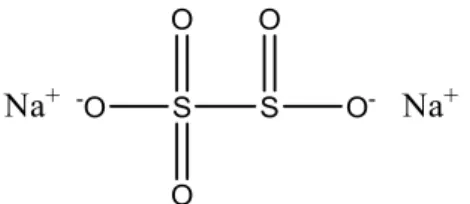
Sodium metabisulfite (E 223) has a chemical formula Na2S2O5. It has a molecular weight of 190.11 g/mol, CAS Registry Number 7681-57-4 and EINECS Number 231-673-0. It has the structural formula shown in Figure 4.
12 EC Inventory available online: http://echa.europa.eu/information-on-chemicals/ec-inventory
Figure 4: Structural formula of sodium metabisulfite.
The most common synonyms are sodium disulfite, disodium disulfite, disodium pentaoxodisulfate and sodium pyrosulfite.
Sodium metabisulfite occurs in the form white crystals or crystalline powder (Commission Regulation (EU) No 231/2012). It is freely soluble in water (540 g/L (20°C); Ough and Were, 2005) and slightly soluble in ethanol (JECFA, 2006; European Pharmacopoeia, 2015b). Its solutions are acid to litmus (FCC, 2010-2011c).
2.1.5. Potassium metabisulfite (E 224)
Potassium metabisulfite (E 224) has a chemical formula K2S2O5,a molecular weight of 222.33 g/mol, CAS Registry Number 16731-55-8 and EINECS Number 240-795-3. It has the structural formula shown in Figure 5.
Figure 5: Structural formula of potassium metabisulfite.
Potassium metabisulfite comes in the form of colourless crystals or white crystalline (Commission Regulation (EU) No 231/2012). It is soluble in water (250 g/L (0°C); Ough and Were, 2005) and insoluble in ethanol (JECFA, 2006). It gradually oxidises in air to sulfate and its solutions are acid to litmus (FCC, 2010-2011d).
The most commonly synonyms are potassium disulfite, dipotassium disulfite, potassium pyrosulfite and potassium pentaoxo disulfate.
2.1.6. Calcium sulfite (E 226)
Calcium sulfite (E 226) has a chemical formula CaSO3 and a molecular weight of 120.14 g/mol, CAS Registry Number 10257-55-3 and EINECS Number 233-596-8. The Panel noted that the EINECS number 218-235-4 indicated in the EU specifications for this food additive corresponds to calcium benzoate (EC Inventory12). It has the structural formula given in Figure 6.
Figure 6: Structural formula of calcium sulfite.
Calcium sulfite occurs as white crystals or white crystalline powder (Commission Regulation (EU) No 231/2012). It slowly oxidises in air to calcium sulfate. It is slightly soluble in water and alcohol, soluble in sulfur dioxide solutions and acids with the liberation of sulfur dioxide (Merck index, 2015).
2.1.7. Calcium bisulfite (E 227)
Calcium bisulfite (E 227) has a chemical formula Ca(HSO3)2 and a molecular weight of 202.22 g/mol, CAS Registry Number 13780-03-5 and EINECS Number 237-423-7. It has the structural formula shown in Figure 7.
Figure 7: Structural formula of calcium bisulfite
The most commonly used synonym is calcium hydrogen sulfite.
Calcium bisulfite is described as clear greenish-yellow aqueous solution having a distinct odour of sulfur dioxide (Commission Regulation (EU) No 231/2012). On standing in the air, it will form crystals of calcium sulfite dihydrate (Merck index, 2015).
2.1.8. Potassium bisulfite (E 228)
Potassium bisulfite (E 228) has a chemical formula KHSO3, a molecular weight of 120.17 g/mol, CAS Registry Number 7773-03-7 and EINECS Number 231-870-1. It has the structural formula given in Figure 8.
Figure 8: Structural formula of potassium bisulfite The most commonly used synonym is potassium bisulfite.
Potassium bisulfite occurs in the form of white, crystalline powder with an odour of sulfur dioxide.
According to Commission Regulation (EU) No 231/2012, the food additive is an aqueous solution of potassium bisulfite described as clear colourless aqueous solution. Potassium bisulfite is freely soluble in water (1000 g/L (20°C); Ough and Were, 2005).
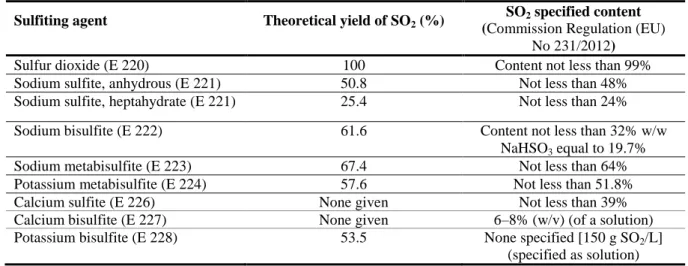
The theoretical sulfur dioxide yield of the different sulfites is given in Table 1 along with the sulfur dioxide content specified in Commission Regulation (EU) No 231/2012. The Panel noted that the sulfur dioxide yield may vary between different sulfites and the actual specified content may not reach the theoretical yields.
Table 1: Theoretical sulfur dioxide yield (Ough and Were, 2005) and specified content according to Commission Regulation (EU) No 231/2012
Sulfiting agent Theoretical yield of SO2 (%) SO2 specified content (Commission Regulation (EU)
No 231/2012)
Sulfur dioxide (E 220) 100 Content not less than 99%
Sodium sulfite, anhydrous (E 221) 50.8 Not less than 48%
Sodium sulfite, heptahydrate (E 221) 25.4 Not less than 24%
Sodium bisulfite (E 222) 61.6 Content not less than 32% w/w
NaHSO3 equal to 19.7%
Sodium metabisulfite (E 223) 67.4 Not less than 64%
Potassium metabisulfite (E 224) 57.6 Not less than 51.8%
Calcium sulfite (E 226) None given Not less than 39%
Calcium bisulfite (E 227) None given 6–8% (w/v) (of a solution)
Potassium bisulfite (E 228) 53.5 None specified [150 g SO2/L]
(specified as solution)
2.2. Specifications
Table 2: Specifications for sulfur dioxide (E 220) according to Commission Regulation (EU) No 231/2012 and to JECFA (2006)
Purity Commission Regulation (EU)
No 231/2012
JECFA (2006)
Description Colourless, non-flammable gas
with strong pungent suffocating odour
Colourless, non-flammable gas, with strong, pungent, suffocating odour.
Its vapour density is 2.26 times that of air at atmospheric pressure and
0°C. The specific gravity of the liquid is about 1.436 at 0°/4°. At 20°C, the solubility is about 10 g of
SO2 per 100 g of solution. It is normally supplied under pressure in
containers in which it is present in both liquid and gaseous phases.
Assay Content not less than 99% Not less than 99.9% SO2 by weight
Water content Not more than 0.05% Not more than 0.05%
Sulfur trioxide Not more than 0.1% -
Selenium Not more than 10 mg/kg Not more than 20 mg/kg
Other gases not normally present in the air
No trace -
Arsenic Not more than 3 mg/kg -
Lead Not more than 5 mg/kg Not more than 5 mg/kg
Mercury Not more than 1 mg/kg -
Non volatile residue - Not more than 0.05%
Table 3: Specifications for sodium sulfite (E 221) according to Commission Regulation (EU) No 231/2012 and to JECFA (2006)
Purity Commission Regulation (EU)
No 231/2012
JECFA (2006) Description White crystalline powder or colourless
crystals
White powder with not more than a faint odour of sulfur dioxide Assay Anhydrous: Not less than 95% of Na2SO3 and
not less than 48% of SO2
Heptahydrate: Not less than 48% of Na2SO3 and not less than 24% of SO2
Not less than 95.0%
Thiosulfate Not more than 0.1% based
on the SO2 content
Not more than 0.1%
Iron Not more than 10 mg/kg based
on the SO2 content
Not more than 10 mg/kg
Selenium Not more than 5 mg/kg based
on the SO2 content
Not more than 5 mg/kg
Arsenic Not more than 3 mg/kg -
Lead Not more than 2 mg/kg Not more than 2 mg/kg
Mercury Not more than 1 mg/kg -
pH pH of a 10% solution (anhydrous) or a 20%
solution (heptahydrate) between 8.5 and 11.5
8.5–10.0 (1 in 10 soln)
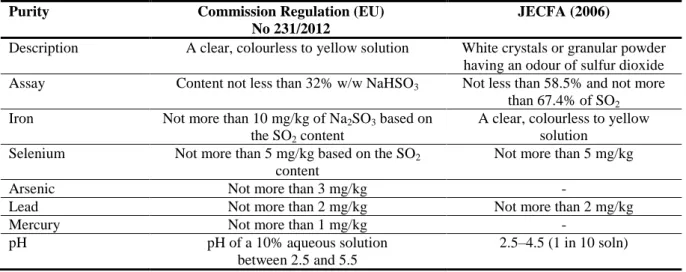
Table 4: Specifications for sodium bisulfite (E 222) according to Commission Regulation (EU) No 231/2012 and to JECFA (2006)
Purity Commission Regulation (EU)
No 231/2012
JECFA (2006)
Description A clear, colourless to yellow solution White crystals or granular powder having an odour of sulfur dioxide Assay Content not less than 32% w/w NaHSO3 Not less than 58.5% and not more
than 67.4% of SO2 Iron Not more than 10 mg/kg of Na2SO3 based on
the SO2 content
A clear, colourless to yellow solution
Selenium Not more than 5 mg/kg based on the SO2 content
Not more than 5 mg/kg
Arsenic Not more than 3 mg/kg -
Lead Not more than 2 mg/kg Not more than 2 mg/kg
Mercury Not more than 1 mg/kg -
pH pH of a 10% aqueous solution
between 2.5 and 5.5
2.5–4.5 (1 in 10 soln)
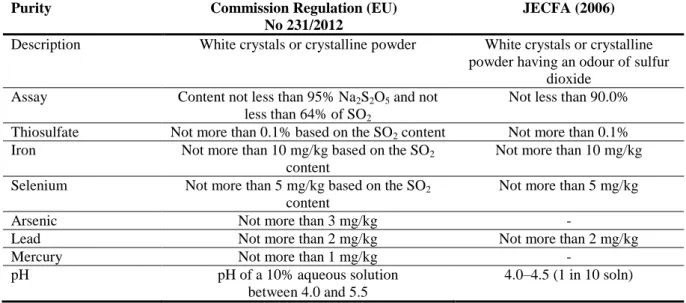
Table 5: Specifications for sodium metabisulfite (E 223) according to Commission Regulation (EU) No 231/2012 and to JECFA (2006)
Purity Commission Regulation (EU)
No 231/2012
JECFA (2006) Description White crystals or crystalline powder White crystals or crystalline
powder having an odour of sulfur dioxide
Assay Content not less than 95% Na2S2O5 and not less than 64% of SO2
Not less than 90.0%
Thiosulfate Not more than 0.1% based on the SO2 content Not more than 0.1%
Iron Not more than 10 mg/kg based on the SO2
content
Not more than 10 mg/kg Selenium Not more than 5 mg/kg based on the SO2
content
Not more than 5 mg/kg
Arsenic Not more than 3 mg/kg -
Lead Not more than 2 mg/kg Not more than 2 mg/kg
Mercury Not more than 1 mg/kg -
pH pH of a 10% aqueous solution
between 4.0 and 5.5
4.0–4.5 (1 in 10 soln)
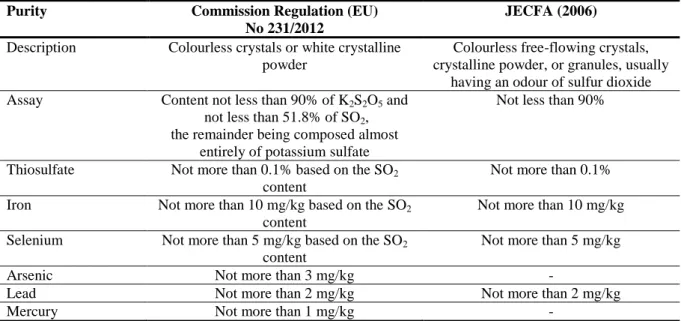
Table 6: Specifications for potassium metabisulfite (E 224) according to Commission Regulation (EU) No 231/2012 and to JECFA (2006)
Purity Commission Regulation (EU)
No 231/2012
JECFA (2006) Description Colourless crystals or white crystalline
powder
Colourless free-flowing crystals, crystalline powder, or granules, usually
having an odour of sulfur dioxide Assay Content not less than 90% of K2S2O5 and
not less than 51.8% of SO2, the remainder being composed almost
entirely of potassium sulfate
Not less than 90%
Thiosulfate Not more than 0.1% based on the SO2 content
Not more than 0.1%
Iron Not more than 10 mg/kg based on the SO2 content
Not more than 10 mg/kg Selenium Not more than 5 mg/kg based on the SO2
content
Not more than 5 mg/kg
Arsenic Not more than 3 mg/kg -
Lead Not more than 2 mg/kg Not more than 2 mg/kg
Mercury Not more than 1 mg/kg -
Table 7: Specifications for calcium sulfite (E 226) according to Commission Regulation (EU) No 231/2012
Purity Commission Regulation (EU) No 231/2012
Description White crystals or white crystalline powder
Assay Content not less than 95% of CaSO3·2H2O
and not less than 39% of SO2
Iron Not more than 10 mg/kg based on the SO2 content
Selenium Not more than 5 mg/kg based on the SO2 content
Arsenic Not more than 3 mg/kg
Lead Not more than 2 mg/kg
Mercury Not more than 1 mg/kg
Table 8: Specifications for calcium bisulfite (E 227) according to Commission Regulation (EU) No 231/2012
Purity Commission Regulation (EU) No 231/2012
Description Clear greenish-yellow aqueous solution having a distinct odour of sulfur dioxide Assay 6–8% (w/v) of sulfur dioxide and 2.5–3.5% (w/v) of calcium dioxide corresponding
to 10–14% (w/v) of calcium bisulfite [Ca(HSO3)2]
Iron Not more than 10 mg/kg based on the SO2 content
Selenium Not more than 5 mg/kg based on the SO2 content
Arsenic Not more than 3 mg/kg
Lead Not more than 2 mg/kg
Mercury Not more than 1 mg/kg
Table 9: Specifications for potassium bisulfite (E 228) according to Commission Regulation (EU) No 231/2012
Purity Commission Regulation (EU) No 231/2012
Description Clear colourless aqueous solution
Assay Content not less than 280 g KHSO3 per litre (or 150 g SO2 per litre)
Iron Not more than 10 mg/kg based on the SO2 content
Selenium Not more than 5 mg/kg based on the SO2 content
Arsenic Not more than 3 mg/kg
Lead Not more than 2 mg/kg
Mercury Not more than 1 mg/kg
The Panel noted that, according to the EU specifications, impurities of the toxic elements lead, mercury and arsenic are accepted, respectively, up to concentrations of 5, 1 and 3 mg/kg for sulfur dioxide and 2, 1 and 3 mg/kg for sulfites. The contamination at those levels could have a significant impact on the intake to these metals for which the exposures are already close to the health-based guidance values established by EFSA (EFSA CONTAM Panel, 2009, 2010, 2012).
2.3. Manufacturing process
Sulfur dioxide is produced by burning sulfur in air or oxygen; oxidation of sulfides in the roasting of sulfide minerals; by reduction of sulfuric acid with copper; or by treatment of sulfites or bisulfites with strong acids (Madhavi et al., 1995).
Sodium sulfite (E 221) is commonly produced by reacting sodium carbonate with sulfur dioxide in an aqueous medium. Sodium bisulfite (E 222) is first formed, then neutralised to form sodium sulfite.
Sodium bisulfite is neutralised by further addition of sodium carbonate or sodium hydroxide to form sodium sulfite. When sodium carbonate is used for neutralisation, the solution is boiled to expel the carbon dioxide formed during neutralisation. From the neutralised solution, sodium sulfite is obtained by crystallisation. If crystallisation is carried out at temperatures below about 35°C, the crystals formed are sodium sulfite heptahydrate (Na2SO3·7H2O). When heated at a temperature above 35°C, the heptahydrate melts incongruently resulting in the formation of anhydrous sodium sulfite. In an alternative process, anhydrous sodium sulfite is directly crystallised from the neutralised sodium bisulfite solution by evaporating the water by boiling. Processes for making sodium sulfite involving the above-described reaction, have been described (Butler, 1933; Bowman and Stougaard, 1937;
Heinke and Spormann, 1968; Hofmann et al., 1978). These patents generally are concerned with methods for obtaining anhydrous alkali metal sulfite of relatively high degree of purity, hence include certain further purification steps.
Single-step processes for making anhydrous sodium sulfite have also been described. According to Heinke and Spormann (1967), solid alkali metal sulfite salt is obtained by contact of an aqueous solution of sodium hydroxide, sodium carbonate, sodium bicarbonate, with dry sulfur dioxide- containing gas at a temperature sufficiently high that the water introduced with the solution and formed by the reaction of the alkali metal compound with the sulfur dioxide is vapourised.
According to the information provided by industry (Doc. provided to EFSA n. 37), sodium bisulfite (E 222) is produced by chemical reaction of sulfur dioxide gas with aqueous sodium hydroxide solution in usual absorber apparatuses. The concentration of sodium bisulfite solution is controlled by addition of water.
As regards the manufacturing of potassium metabisulfite (E 224), Lüdemann et al. (1968) described a single-step process in which sulfur dioxide, or gases containing sulfur dioxide, reacted with aqueous solutions of potassium hydroxide and/or potassium carbonate. The reaction components are introduced simultaneously into an aqueous solution saturated with potassium sulfite and potassium bisulfite at temperatures between 50°C and 80°C and at a pH in the range between 4 and 7.5. The reaction mixture is then cooled down in order to precipitate the potassium metabisulfite. The potassium metabisulfite is separated by filtration or centrifugation.
2.4. Methods of analysis in food
Many methods exist for the measurement of free, combined (bound) and total sulfites. Most methods are based on removing as much of the free sulfites and the reversibly bound sulfites as possible.
Irreversibly bound sulfites cannot be estimated. The determination of free sulfites is important only for industry (wine, beverages, shrimps) to predict the durability of the final product, but there is no maximum authorised amount for free sulfites in EU Legislation.
Monier–Williams type procedure:
According to Fazio and Warner (1990), many available methods for determining sulfites in foods are mostly modifications of the Monier–Williams procedure developed in 1927 and later optimised in 1986 to determine levels down to 10 mg SO2/kg in foods; meanwhile, methods have been developed with reported limit of detection (LOD) much lower than 10 mg/kg. Many methods used for their determination are based on the Monier–Williams type procedure with volumetric titration, gravimetric, polarographic or via high-performance liquid chromatography (HPLC) quantification.
This procedure is based upon distillation of sulfur dioxide from an acidic medium. Sulfur dioxide is then determined either by titration (volumetric method) or by weighting the barium precipitate, having added barium chloride (AOAC 2000; FSA, 2004).
A method employing polarographic detection by differential pulse polarography or squarewave voltammetry also exists (Stonys, 1987).
Pizzoferrato et al. (1990) tested a HPLC method combined with the Monier–Williams procedure and found that it was well suited for analysis in shrimps, mustard and onions where there are otherwise appreciable interference problems. Pizzoferrato et al. (1998) have published the results of the recoveries of sulfites in 10 different food matrices and concluded that the problems of the overestimation of sulfites through the volumetric titration are not relevant when the distillate is consequently analysed via HPLC.
HPLC after extraction:
Chung et al. (2008) presented an analytical method for the determination of free and reversibly bound sulfites in selected foods by using HPLC with fluorometric detection equipped with a pre- and post- column derivatisation system. Sulfites were extracted with a sodium tetrachloromercurate solution, reacted with sodium hydroxide to liberate the reversibly bound sulfites and subsequently separated from other interferences by a size exclusion column and determined by HPLC–fluorescence spectrometry. The method has been applied to a variety of food, with no significant interference encountered in matrixes, such as soy products, cabbage, broccoli, brassica, ginger, fungus, mushroom, mandarin peel, potato chips and biscuits. The LOD was 5 mg/kg.
An analytical method for quantitative detection of sulfites in fresh meat and shrimps has been developed by Iammarino et al. (2010, 2012). The method is based on ion-exchange chromatography with conductivity detection after extraction with a solution of sodium hydroxide, and conformity was demonstrated with Commission Decision 657/2002/EC13 concerning the performance of analytical methods and the interpretation of results and Regulation 882/2004/EC14 on official controls performed to ensure the verification of compliance with feed and food law, animal health and animal welfare rules. LODs expressed in sulfur dioxide ranged between 0.34 and 1.03 mg/kg.
Liao et al. (2013) presented a method for the determination of free sulfites in dried fruits by using anion exchange column and conductivity detection after an extraction with a 0.2 N sodium hydroxide aqueous solution.
Robbins et al. (2015) presented a selective method using electrospray ionisation and HPLC–tandem mass spectrometry (HPLC–MS/MS). A total of 12 different types of foods were evaluated. These included dried fruits and vegetables, frozen seafood, molassses and juices. The matrix was extracted with a buffered formaldehyde solution, converting free and reversibly bound sulfite to the stable formaldehyde adduct, hydroxymethylsulfonate. Extracts are prepared for injection using a C18 solid phase extraction (SPE) cartridge and hydroxymethylsulfonate is then separated from other matrix components using hydrophilic interaction chromatography (HILIC) and detected using multiple reaction monitoring (MRM). The limit of quantification (LOQ) expressed in sulfur dioxide varied from 0.12 to 0.75 mg/kg.
Yoshikawa et al. (2015) method using suppressed ion chromatography with the use of a conductivity detector was developed for the determination of free sulfites in wine. The LOD of sulfite expressed in sulfite anion was 0.27 mg/L, calculated by the Panel to be 0.22 mg/L expressed in sulfur dioxide.
For the determination of sulfites in shrimps, Iammarino et al. (2014) applied an ion-exchange chromatographic method with conductivity detection after extraction with the stabilising solution described in the previous publication (Iammarino et al., 2010).
13Consolidated version of Commission Decision of 14 August 2002 implementing Council Directive 96/23/EC concerning the performance of analytical methods and the interpretation of results. (2002/657/EC). OJ L 221, 17.8.2002, p. 8.
14Consolidated version of Regulation (EC) No 882/2004 of the European Parliament and of the Council of 29 April 2004 on official controls performed to ensure the verification of compliance with feed and food law, animal health and animal welfare rules. OJ L 165, 30.4.2004, p. 1.
Flow Injection Analysis (FIA):
Numerous flow injection analysis procedures have been described for determining sulfites in food and beverages. Depending on the type of sample, these procedures generally consist of two phases. The first phase is related the extraction process of the sulfating agent, where this must be transferred into the liquid state prior to analysis using appropriate batch pretreatment procedures. The second phase involves injecting the liquid extract into the FIA system where the extracted sulfur dioxide is analysed by a variety of means as described in the review published by Ruiz-Capillas and Jiménez-Colmenero (2009).
Tzanavaras et al. (2009) presented a spectrophotometric method for the determination of total sulfites in white and red wines. The assay is based on the reaction of o-phthalaldehyde and ammonium chloride with the analyte in basic medium under sequential injection conditions, where the reaction product passes through a gas diffusion unit followed by alkalisation with NaOH and forms a blue product with an absorption maximum at 630 nm. The reported LOD was 0.3 mg/L expressed in sulfite anion, calculated by the Panel to be 0.24 mg/L expressed in sulfur dioxide.
An automated flow injection analysis system, based on an initial analyte separation by gas-diffusion and subsequent determination by squarewave voltammetry in a flow cell, was developed by Goncalves et al. (2010) for the determination of total and free sulfur dioxide in wine. The proposed method was compared with two iodometric methodologies and demonstrated a LOD of 3 mg/L expressed in sulfur dioxide.
A chemiluminescence method for the determination of sulfite in wine (free and bound) has been developed by combining FIA and its sensitising effect on the known chemiluminescence emission produced by the oxidation of luminol in alkaline medium in the presence of permanganates by Navarro et al. (2010). The LOD was 4.7 mol of sulfite anion, calculated by the Panel to be 0.3 mg/L expressed in sulfur dioxide.
A compact system encompassing in flow gas diffusion unit and a wall-jet amperometric flow injection analysis detector coated with a supramolecular porphyrin film for the analysis of free sulfites in fruit juices was presented by Martins et al. (2011). The LOD of this method reached the level of 0.043 mg/L expressed in sulfur dioxide.
Others:
Ferrarini et al. (2000) conducted a comparative study to evaluate the total level of sulfites in 12 grape juices containing sulfites at levels around 10 mg/L, determined by three methods involving distillation, one based on aeration–oxidation and one enzymatic method. Analysis of variance disclosed a significant difference among the total SO2 content in grape juices determined by the five methods.
Each analytical method showed limits in relation to their ability to release the combined SO2. SO2
bonded to phenolic compounds was better released at low pH in the acidified juice.
A method for the determination of both free and bound sulfites in white wine samples by coulometric titration with electrogenerated iodine was described by Lowinsohn and Bertotti (2001), where the analyte was extracted from samples acidified with hydrochloric acid. Titrations of samples treated with NaOH led to the estimation of the total concentration, the results being in agreement with the ones obtained by the distillation procedure. The LOD was calculated to be 0.6 mg/L expressed in sulfur dioxide.
A reagentless method for sulfites determination is based on the use of an organic conducting polymer, polyaniline, and its absorbance variation at 550 nm, depending on the sulfite concentration. After chemical polymerisation of aniline, a very thin film of polyaniline is obtained. When the change in absorbance at 550 nm was measured for 210 s (stabilisation time), the system showed a linear response, which ranged from 0.025 to 1.50 mg sulfite/L. The method was applied to sulfite
determination in wine samples and the results were in agreement with those obtained by the iodometric titration of free sulfites (de Marcos et al., 2004).
A cyclic voltammetry analysis for the determination of free sulfites in wine was proposed by Makhotkina and Kilmartin (2010). A good correlation was obtained between a cyclic voltammetric measure, based upon the response produced before and after acetaldehyde additions, and the concentration of free sulfur dioxide in eight white wines measured by the Monier–Williams procedure.
Qin et al. (2014) found out that nanoparticles of cobalt oxides have intrinsic oxidase-like activity and can catalytically oxidise peroxidase substrates, such as 2,2'-azino-bis(3-ethylbenzothiazoline-6- sulfonic acid) diammonium salt and 3,3',5,5'-tetramethylbenzidine, to form coloured products (which can be measured via spectrophotometry), a reaction which is inhibited by sulfites. The method was tested in three food matrices and the LOD was 0.053 mol of sulfite anion, calculated by the Panel to be 0.0034 mg/kg when expressed as sulfur dioxide.
A method for the selective extraction of free and total sulfites from muscle foods (i.e. shrimps) and the following determination by a voltammetric sensor was reported by Schneider et al. (2014). The proposed method was based on the eletrocatalytic oxidation of sulfites at modified glassy carbon electrode fabricated by immobilising 9 μg of acetylferrocene on the surface of the electrode along with 35 μg of carbon black to improve the electron transfer within poly(vinyl butyral) membrane matrix.
The LOD was not explicitly given.
A method based on headspace single-drop microextraction in combination with UV–vis microspectrophotometry for the ultrasensitive determination of sulfites in fruits and vegetables was developed by Gómez-Otero et al. (2014). Sample acidification was used for SO2 generation, which is collected onto a 5,5'-dithiobis-(2-nitrobenzoic acid) microdrop for spectrophotometric measurement.
Problems caused by oxidation during the extraction process were addressed. The LOD was 0.06 mg/kg expressed as sulfur dioxide.
Silva et al. (2015) presented a squarewave voltammetric method based on sulfite electrochemical reduction using a carbon-paste electrode chemically modified with multiwalled carbon nanotubes for the quantification of sulfites in commercial beverages. The method is not applicable to red grape juice or red wine samples. The LOD was 1.0 mg/L expressed as sulfur dioxide.
Interference problems from volatile fatty acids in butter flavouring materials were found by Su and Taylor (1995). The authors recommended using alternative methods for the detection of residual sulfites in samples containing significant amounts of volatile fatty acids, such as the sulfite oxidase assay and the colorimetric pararosaniline method.
It is possible to determine the SO2 content in the headspace of packaged food. The method is based on a gas chromatographic determination, is described by Barnett and Davis (1983) and it has a LOD in the range of ng/ml (µg/L) in the headspace, but there is uncertain how it relates to the content of sulfites in the food as such.
In conclusion, most analytical methods aim to determine the content of free sulfur dioxide/sulfites and the reversibly bound sulfur dioxide/sulfites. Different food matrices may present interference problems with food constituents, and these problems may be overcome by applying the various modified methods according to food type, as described in the literature.
The Panel noted that no analytical methods are available for the determination of irreversibly bound sulfites; therefore, the ingoing amount of sulfites during food production cannot be completely estimated. The Panel also noted that there are methods available which can reach a LOD much lower than 10 mg/kg, which is established by the legislation as a legislative limit for the presence of sulfites.