This publication, which contains four articles on the different aspects of the Erasmus Mundus programme, has been prepared to discuss and reflect on the achievements and challenges we have faced since 2004. These policy notes discuss four different aspects of the programme: the employability of graduates from joint programmes, students' views of Erasmus Mundus programmes, quality assurance, accreditation and the recognition of degrees awarded and the challenges associated with the management of joint programmes. The results of the most recent Erasmus Mundus Graduate Impact Survey show that Erasmus Mundus graduates have a higher employment rate than other graduates.
A central aspect of the Erasmus Mundus student experience is mobility; all students have the opportunity to live in at least two different European countries during their studies. 2 Erasmus Mundus Graduate Impact Survey http://www.em-a.eu/en/erasmus-mundus/graduate-impact-survey.html. When the Erasmus Mundus Program started, awarding a joint degree was more or less impossible because most of the institutional and legal frameworks did not allow such degrees.
Overall, the Erasmus Mundus program can be seen as a positive contribution not only to the development of joint programs and joint degrees in Europe and elsewhere in the world, but also to European higher education. In addition, the emphasis of the Erasmus Mundus program on the awarding of a joint diploma can be seen as an incentive for the EHEA member states to implement a European approach to the quality assurance of joint programs, which will contribute to the achievement of many of the objectives of the Bologna Declaration. .

Joint Programmes and Employability: Added value, current trends and
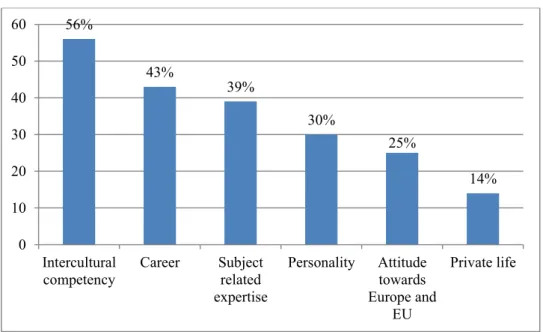
Of particular interest is a recent graduate impact study by the Erasmus Mundus Alumni Association (EMA) indicating that the majority of students who studied on an EM course perceived the greatest impact over time on their careers (as opposed to on their intercultural competences, subject-related expertise or private life) (survey results from 20149). 25 The Management Agency for Education, Audiovisual Media and Culture of the European Commission, which manages the Erasmus Mundus programme. In addition, the design of the program (whether or not it includes, for example, an internship) and the provision of career guidance services also play a role.
Finally, the assessment of competencies demonstrated/acquired by graduates of joint programs (from the perspective of students, alumni and employers) is a key component of the relative employability of these graduates. According to the Employability Group Study, only 36% of EMMCs surveyed offered specific career support services (although the question can be raised, whether career services can be the work of the institution in general, and not just that of the course as Like that). 38 The effects of mobility on students' skills and employability and the internationalization of higher education institutions, Publications Office of the European Union, 2014.
The EHEA Ministers adopted the "European Approach to Quality Assurance of Joint Programmes" at the recent Ministerial Summit in Yerevan (May 2015). From this point of view, it can be argued that joint programs are crucial for the realization of the European and global labor market.
The student perspective
Thus, the students' perspective on the mobility of the Erasmus Mundus experience is not universal; it is unique according to the mobility program and scheme. From a general perspective, the frequent mobility that is part of the collaborative nature of the program makes Erasmus Mundus unlike any other educational brand in the world. The intensive Erasmus Mundus mobility was the highlight of my Master's experience.
According to the Erasmus Mundus Graduate Impact Survey (2014), students and alumni rate their attitudes towards Europe and the European Union as one of the greatest impacts of the Erasmus Mundus experience. Another distinctive aspect of the Erasmus Mundus experience is the intensive learning that takes place both inside and outside the classroom. During the life of the Erasmus Mundus programme, approximately 300 joint degree programs have been funded.
Most students come to the Erasmus Mundus class with other degrees and years of practical experience. As an alumnus explains, the essence of this international class makes the Erasmus Mundus student perspective unique. I am from India and the Erasmus Mundus program was my first experience of living and studying abroad alone.
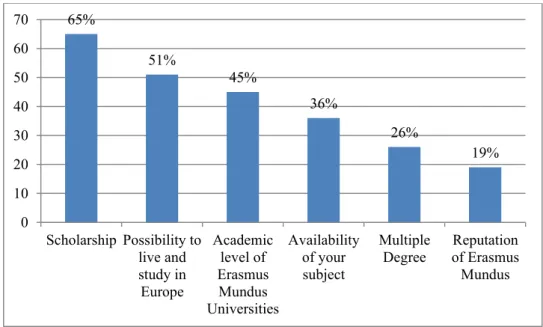
As demonstrated in figure 2, the most cited impact of the Erasmus Mundus program for students is intercultural competence. During the evolution of the programme, the policy documents describe Erasmus Mundus as a program of excellence. Almost all the Erasmus Mundus students are excellent in terms of academic and interpersonal skills.
Many of them chose the Erasmus Mundus program instead of going to traditional top universities in the US and worldwide. Having said that, there is much room for improvement on the academic and administrative quality of the Erasmus Mundus Masters and PhD programmes.' European Parliament and of the Council (2008) Establishment of the Erasmus Mundus Action Program for Improving Quality in Higher Education and Promoting Intercultural Understanding through Cooperation with Third Countries.
Joint Programmes: Quality Assurance, Accreditation and the Recognition of Awarded
Despite the appeal in the Prague Communiqué (2001), joint programs and joint degrees did not figure in the national higher education policy. In the Bucharest Communiqué (2012), European ministers responsible for higher education recommended the use of the European Area of. A joint degree is a single document awarded by higher education institutions offering the joint program and nationally recognized as the recognized award of the joint program.
The single document awarded is nationally (ie in all higher education systems) recognized as the recognized award for the joint programme. This in turn leads to complaints from graduates and damages the reputation of the joint program. This means that they award degrees that do not have a counterpart in most of the higher education systems worldwide.
In a single limited process, one quality assurance agency undertakes the review of part of the joint programme. A limited collaborative process involves two or more quality assurance agencies evaluating part of a joint program. However, there are examples of quality assurance agencies working regionally to evaluate components of a joint program offered in that region.
With the advent of the Erasmus Mundus programme, the European Association for Quality Assurance in Higher Education (ENQA) started the Transnational European Evaluation Project II (TEEP II). These joint procedures will have to be carried out by two quality assurance bodies from two of the relevant higher education systems. In 2007, the members of the European Consortium for Accreditation in Higher Education (ECA) adopted the principles for accreditation procedures regarding joint programmes.
Without this cross-border recognition of the outcomes, joint programs will need to be comprehensively assessed by all the competent quality assurance agencies undertaking program assessments. Another popular example of such prescriptive standards are the national interpretations of the Qualifications Framework for the European Higher Education Area, e.g. Their increase followed the development of European cooperation and the concretization of the European Higher Education Area.
Managing Joint Programmes
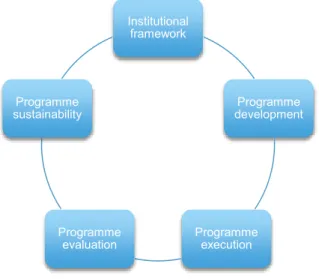
The partnership must also establish and clearly define key roles within partner institutions that cover all aspects of the program: design, implementation and support services. Program evaluation: namely the definition of the strategy of continuous quality assurance and evaluation of the program and internal and external stakeholders in both processes. e. Available data show that approximately 60% of institutions involved in JPs have an internationalization strategy to develop partnerships60.
The establishment of internal committees within the JP consortium can help to ensure the quality of all aspects of JP. PEs also place significant operational demands on HEIs in terms of development and delivery structures (marketing and recruitment, course content, information and student induction and funding). International conferences and projects for the exchange of information and best practices, for the implementation of new communication strategies and the development of online management databases have also contributed to the increase of institutional knowledge on the management of PPs.
These aspects must satisfy both the members of the partnership and their internal regulations, and be compatible with national rules. The use of feedback to revise the curriculum, as well as other aspects of the program such as student services, should be ongoing. The issues to be addressed in JP may not be related to a single institution, but to the relationship between the different institutions involved in the JP, for example the integration of the different components of the program they deliver. e) Program sustainability considerations.
Partners must participate fully in all stages of PP definition and execution in order to generate shared ownership. Balanced mobility flows between all partners can also help build mutual trust, which will contribute to achieving program quality, adaptability and sustainability. As such, the HEIs involved in the program are increasingly aware of the need to re-examine the management of financial resources in relation to PPs and the need to better balance external and internal funding and to develop a strategy for transitioning to a self-financing model.
To answer these questions, institutions must have a good understanding of the real cost (ideally the full cost) of the program. Businesses can reduce costs for students and increase the attractiveness of JP by offering scholarships. 82. After this period, all funds are directed to the HEI's general accounts.
With Erasmus Mundus Master degrees, HEIs have become more aware of the need to reorganize their activities to suit the specific requirements of PEs. Coordinating such staff throughout the partnership and defining their roles from the start of the program is also key to success.