Introduction
In Chapter 2, I analyze one of the most important questions that can be asked about governments and economic outcomes: do impasses in government formation affect the economy in the short run. For every percentage point of US GDP in trade between a given country and the US, the country's military expenditures decrease by 0.5 percentage points.
Decoupling synthetic control methods to ensure stability,
Introduction
First, we develop a proposal for decoupling synthetic control methods to overcome the limitations of the bilevel design of the SCM. 2.4, we apply both methods to estimate the causal economic effects of a prolonged impasse in government formation in Spain between December 2015 and 2015.
The synthetic control method: an evaluation of its stability, consistency
- The working of the SCM
- An evaluation of the SCM as a bilevel problem
In the special case of the SCM method, the drawbacks of two-level optimization mean that the solution / can be completely arbitrary and very unstable to small perturbations. Remotely Decoupled Synthetic Control Method SHAP The purpose of this section is to propose and present a modification of SCM.

The decoupled SHAP-distance-based synthetic control method
- Optimization function
- SHAP-based distance
- a. Outcome evolution model
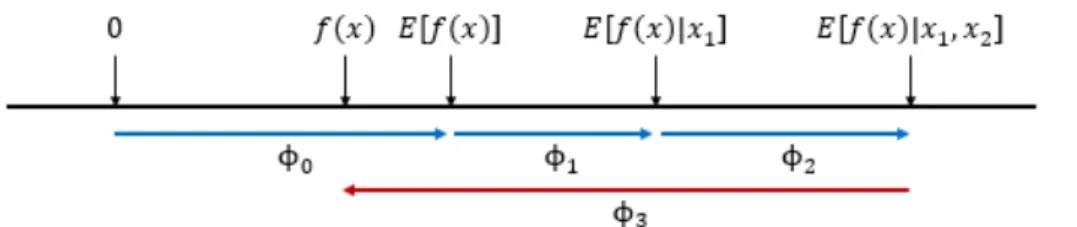
- b. Shapley additive explanation values
- c. Feature importance and SHAP-based distance
- d. Choice of the size of the restricted pool
Let us denote by ÅJ("+m) the SHAP value of the covariate @ for the treated unit at time r. The error loss is the ratio between the error of the counterfactual 0(s) and the best potential counterfactual value in terms of goodness of fit, 0(!).
Empirical illustration: the economic effects of the government
- Spain’s politic deadlock
- Results with the standard synthetic control method
- Results with the decoupled SHAP-distance synthetic control
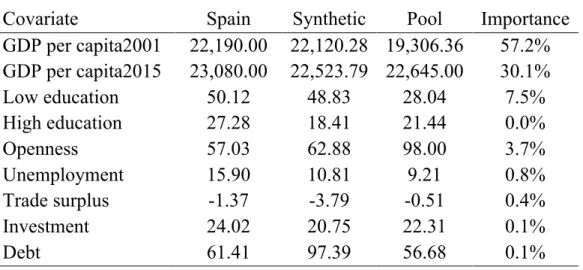
The standard deviation is higher than 50% of the mean significance estimate for almost all covariates, both with and without lagged results. In the case of a placebo test in space, we excluded countries whose MAPE for 2001–.

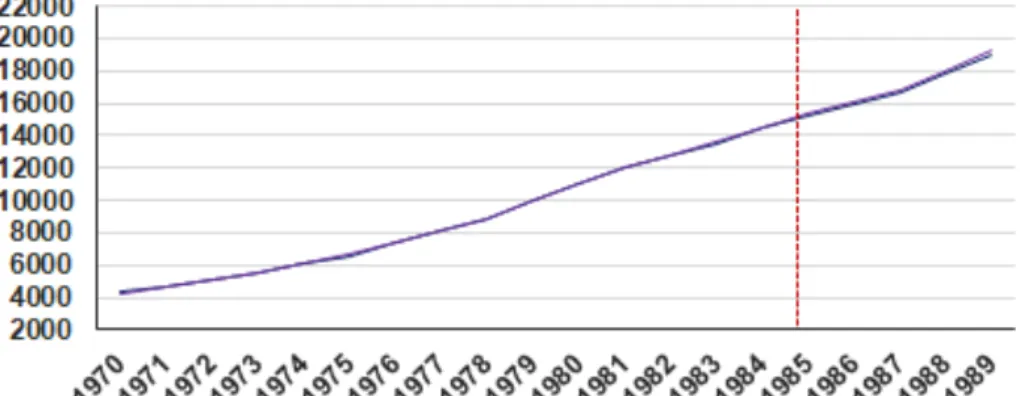
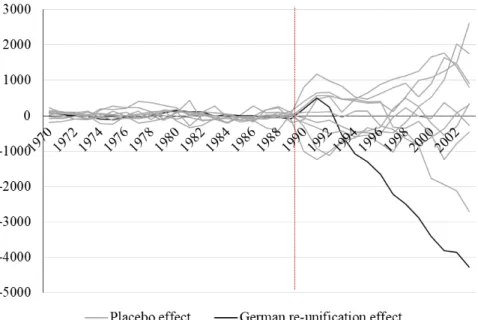
Robustness check: the German reunification and the effect of tobacco
- German Reunification
- California’s tobacco control program
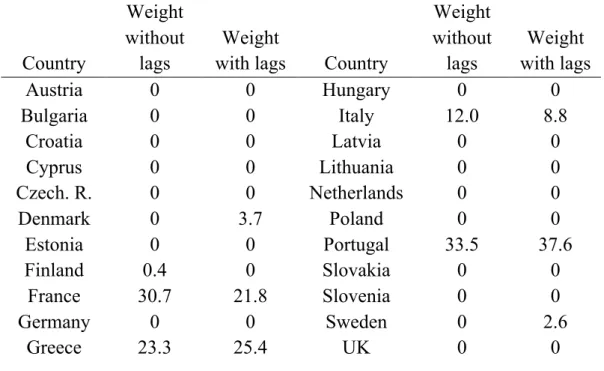
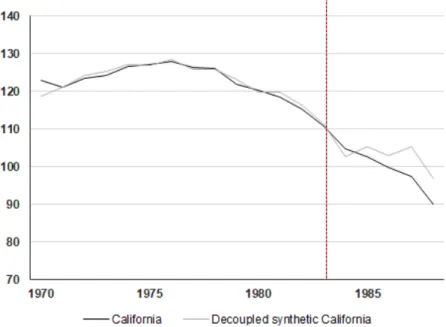
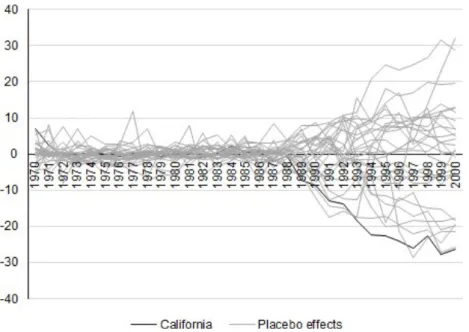
Both counterfactuals share 3 units, which account for 93.5% of significance in the decoupled method and 73% in the original synthetic method. However, when the original methodology is applied, the placebo test also fails, and even more than in the disconnected version (10% reduction, instead of 7% with.

Conclusion
Because the similarity metric is not very precise, units that are not similar to the treated unit must be considered part of the counterfactual to obtain a proper fit of the pretreatment period. Regarding the second and third case studies, we show that DSD-SCM provides a better counterfactual, both in terms of fit and similarity of units with respect to the treated unit.
Appendix
The effect of economic, political and institutional factors on
Introduction
Any analysis of COVID-19 policy is limited, given the preliminary nature and limitations of the existing data (Stock, 2020). The evidence also confirms the relevance of decision-making processes and types of decision-makers.
Modeling the decision of the policy response to the crisis
To reflect the level of information, we use the number of countries that took tough measures before a country first encountered the coronavirus. As expected, countries that experienced their first cases of coronavirus while other countries were already under lockdowns anticipated their responses.
Delaying the adoption of tough measures is a weakly dominated strategy if the government expects a collapse. Third, even if the system breaks down, the government may decide not to implement tough measures.
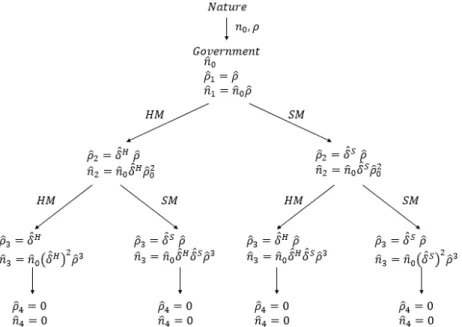
They may also have less incentive to implement harsh measures when their lack of implementation agility will reduce the expected benefit of such measures. H4: The more presidential/executive a government system is, the greater its ability to implement harsh measures quickly.
Variables, data, and sources
A scale ranging from -1 (left) to 1 (right) is used to represent the ideological position of the Prime Minister's party. The logarithm of the number of days between the first case diagnosed in the country and the next planned or expected date of the corresponding election.

Empirical model and results
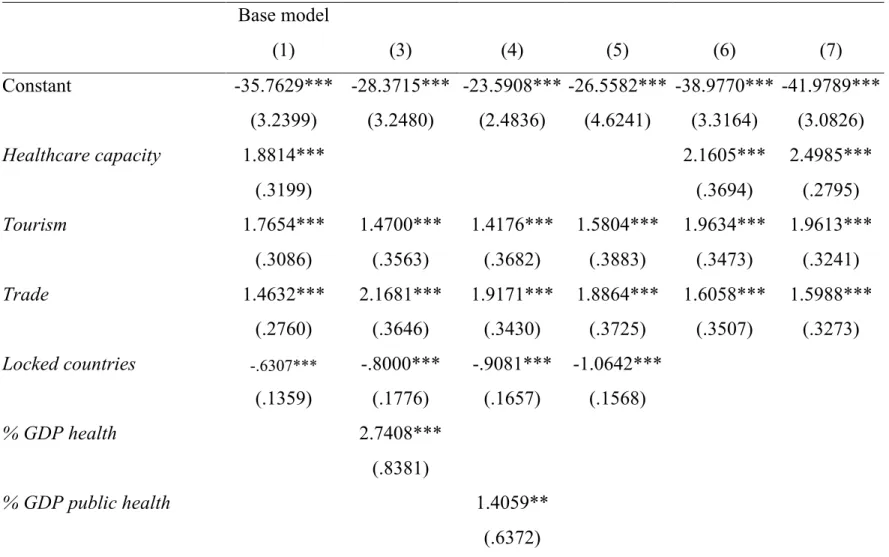
The negative binomial allows us to capture overdispersion and underdispersion, providing more robust parameter estimates and standard errors than the Poisson distribution. They are also strong, except for the US, which can be considered an outlier due to its multi-level governance system and high healthcare spending.
When the information level is measured in previously affected countries (estimates 6 and 7), the significance level changes from p<0.01 to p<0.10 and p<0.05.
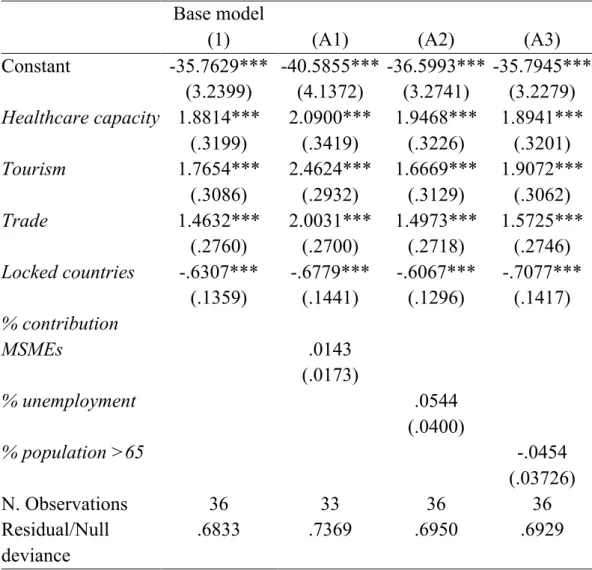
Including them in the model did not change the significance or order of magnitude of the other estimates. Data on the percentage of the population over 65 years of age were obtained from the World Bank (https://data.worldbank.org/indicator/SP.POP.65UP.TO.ZS).
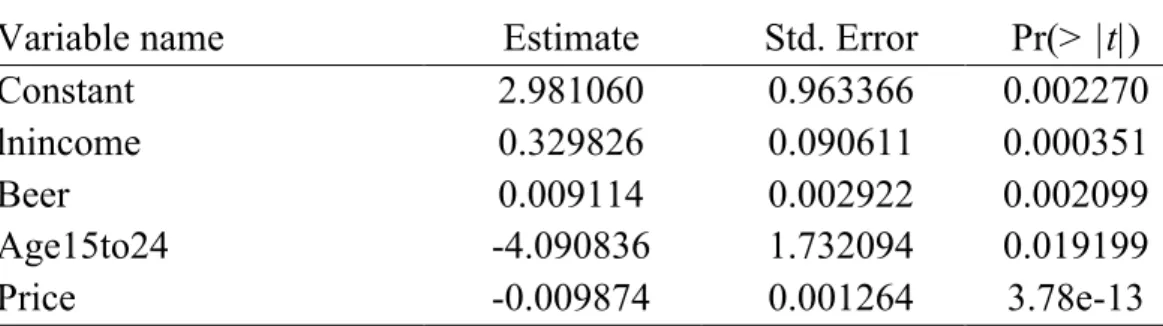
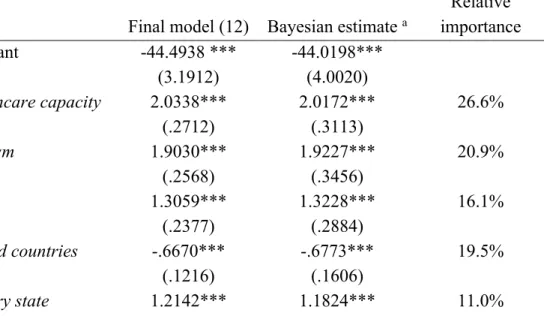
Finally, to gain a complete understanding of the model beyond the importance of the parameters, we estimate the relative importance of each variable included in the model, using a new methodology for model interpretation proposed by Lundeberg and Lee SHAP ( SHapley Additive ExPlanation) values.
Discussion and policy implications
Since the pandemic caused a decision-making process based on incomplete information, variables related to additional information (e.g., policy responses of other countries) and risk assessment (proximity bias) are key factors that directly account for 25% of the total. We are aware that our identification strategy cannot draw strong claims of causal relationships from these empirical results; this is a limitation of the current research.
Conclusion
This could be particularly relevant to the case of the US, where the debate on executive federalism (e.g. Eleazar, 1993; Bulman-Pozen, 2016) has highlighted that the absence of a formal coordinating institution has an impact on subnational policy acceptance in The United States. (Downey and Myers 2020). On the other hand, we reran our estimates in Table 3, also excluding the US, and the results remained the same.
Part 2: Ideology, political polarization, and agility of policy responses
- Introduction
- COVID and federalism: Related literature
- Modelling the subnational policy response to the crisis
- a. Dynamics of the decision-making process
- b. Political factors involved in the decision-making process
- c. Utility function of the decision-maker
- d. Hypotheses derived from the model
- Variables, data and sources
- Empirical model and results
- a. Effect of political affiliation under incomplete information
- b. Effect of political affiliation with complete information
- Discussion and policy implications
In the model with perfect information (vaccination) corresponds to the logarithm of the number of days between the first vaccination and the next predicted date of the national election. So what can we conclude about weak executive federalism in the US and the country's handling of the COVID crisis.

Appendix
Germany 16.3.2020 Closure of educational institutions, ban on public gatherings, closure of non-essential shops in several states. 3/11/2020 Closure of all educational institutions from kindergartens to universities, closure of borders and prohibition of public gatherings.
Geography and Regional Economic Growth: The High Cost
Introduction
The role of nature and geography has been, and still is, key to understanding many of the social, political, and economic outcomes and prospects of human settlements. In this article, we propose a theoretical model of the way in which geographic and natural features can contribute to regional economic growth through their effects on population density and distribution.
Regional economic model
- Capital markets
- Household maximization problem
- Equilibria with migration costs
- Equilibria with spillovers and regional interdependences
- Implications
These extensions preserve the main features of the Solow-Swan model: the diminishing returns to capital and labor, the existence of a steady-state, and the conditional convergence. Including production externalities with a concave functional form, such as for households, will add an additional agglomeration force to the equilibrium, further reinforcing the implications of the model.

Data
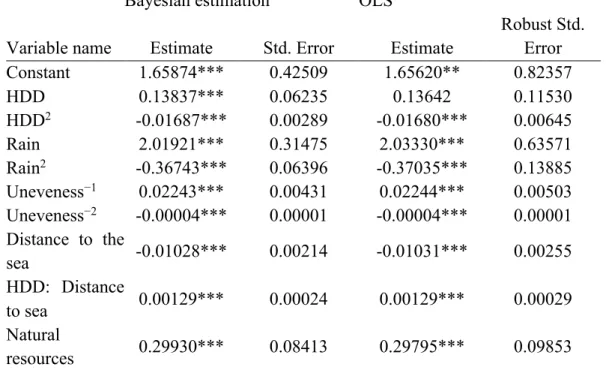
We consider several potential geographic drivers of population density (as in Mitton 2016): temperature, rainfall, access to navigable waters, and unevenness of the land. The first variable is the distance in kilometers from the border of the region to the nearest sea (or ocean).

Geographic endowment
- Estimation
- Interpretation
Also note that only distance from the sea is important for access to navigable waters. On the one hand, for cold countries with direct access to the sea, such as the UK or Finland, this does not matter because almost all NUTS 2 areas have access.
Analysis of population distribution by country
- Capital cities
- Population misadjustment
For each country, we estimate the theoretical population size that should live in each region, subject to the constraint that the total population cannot change. That is, it shows the percentage increase required for the permanent population of a NUTS 2 area to achieve the expected population distribution.

Economic consequences of population misadjustment
- Regional conditional convergence
To obtain a complete understanding of the convergence model beyond the importance of the parameters, we estimate the relative importance of each variable included in the model. 9 Table 4.8 presents the results for the three estimations of the conditional convergence model, spatially extended.

Discussion
This is evident from the evidence obtained, for example in the case of Spain, in Albalate, Bel and Fageda (2012) and Bertoméu-Sánchez and Estache (2017). In 2014, British Prime Minister David Cameron said that for too long the British economy had been "too London-focused and too centralized".11 In 2009, he had already written that "Over the last century, Britain has become one of the most centralized.countries of the developed world.”12.
Conclusion
GDP per head in Inner London was 328% of the European Union average in 2010, compared with 70% in West Wales - the largest gap of any EU country, according to Eurostat. Therefore, societies that choose to take advantage of the opportunities of the best locations according to natural conditions, instead of promoting a different distribution of population across regions through institutional intervention, achieve better economic results.
Appendix
Paying for protection: Bilateral trade with a leader and
Introduction
We then empirically estimate the effect of the relevance of bilateral trade and the bilateral trade surplus with the leading partner on the military expenditure of the smaller partner. Similarly, the larger the bilateral trade surplus (the lower the bilateral trade deficit) is for the leading partner, the lower the smaller partner's military expenditures.
A theory of bilateral trade and military spending
- Utility maximization problem
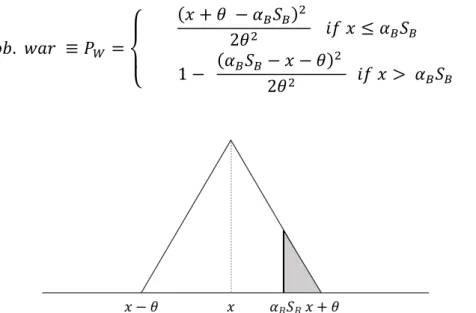
The gray area represents the probability of war, that is, the probability that the net profits ß® are higher than the share of the trade surplus captured by û. Second, the higher the effectiveness of military power ¶, the lower will be the military expenditure.
Data and Methods
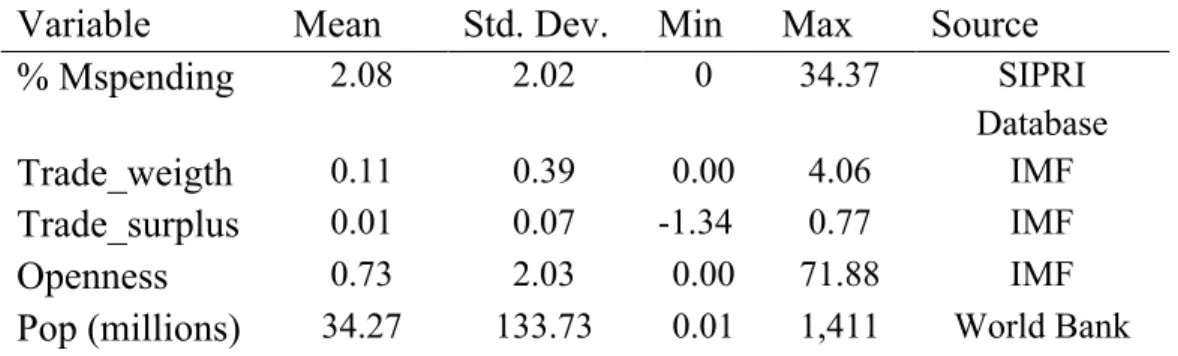
First, as can be seen in expression (5.7), the greater the gains from trade, the lower the military expenditure and the lower the probability of war, which is consistent with reports in the literature. existing (see, among others, Copeland 1996; Martin et al. 2008). According to the theoretical model, our prediction is that the higher this percentage, the lower the military spending efforts of the US trading partner.
Results
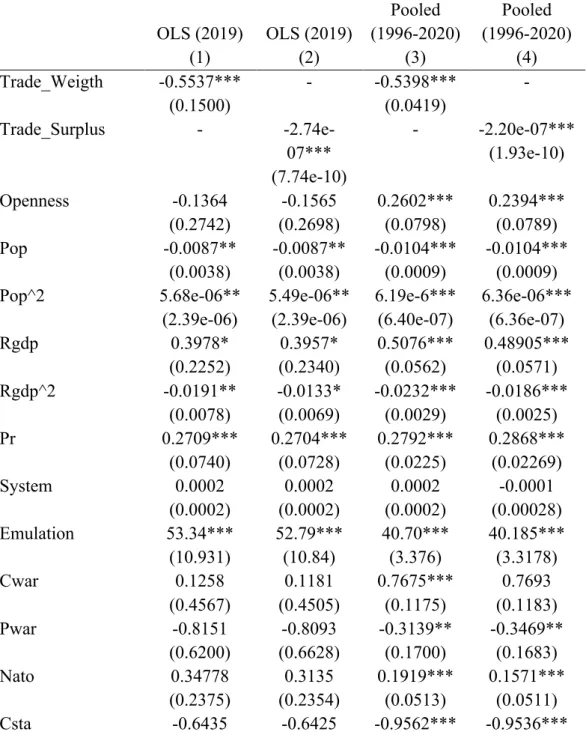
Third (3), static panel data models do not take into account the dynamic nature of military spending and its inertia, and furthermore they are unable to address any endogeneity concerns that may arise if there is reason to believe that military spending shaping bilateral trade with the US This suggests a substitution effect between military spending and trade, with a country able to protect its commercial partners.
Discussion / Conclusion
This study builds on the analysis of military alliance outcomes for smaller partners. Our analysis suggests that these developments will lead to a reduction in the weight of the bilateral trade of smaller partners with the US.
Appendix
Conclusions and Policy Implications
The relative performance of federal and non-federal states during the pandemic In R. eds), Federalism and the Response to COVID-19. Social inequalities and the collateral damage of the COVID-19 pandemic: when basic needs challenge mental health care. eds), Federalism and the Response to COVID-19.