Durante el I Periodo no se nombró ningún Director ni se constituyó un Consejo Editorial, pero la dirección de la publicación correspondió formalmente al Rector de la entonces denominada Escuela de Estudios Superiores de Deusto. Manuel ÁLVareZ torres, Nación y libertades públicas en la Constitución. cataLaI bas, Voluntad política para un tiempo de. Reformas: Presupuestos previos para abordar una reforma constitucional. docencia 205 María Luisa DomíngueZ barragán, Historia y fundamentos de la. Ampliación de las consecuencias de las sentencias firmes como figura procesal. autónomo 235 Daniel LópeZ rubIo, Radiografía de una propuesta olvidada: la pro-. Posición de reforma constitucional del Consejo General de Asturias. sobre la democracia semidirecta 263 Efrén pÉreZ Borges, La pena civil en el sistema jurídico francés. cés: "cuando la barba de tu vecino..." 297 Manuel-Óscar remeseIro FernánDeZ, Atticus Finch: emo-inteligencia. cional y liderazgo, como herramientas de gestión, en el ejercicio de.
Estudios de Deusto
Pampanunot a napaltiingan iti sentensia dagiti Kastila. tatham, Ti Korte ti Masanguanan - Dimtengen ti panawen. para iti Korte ti Panagtagilako ti ASEAN. Manuel áLVareZ Torres, Ti Nasion ken dagiti Wayawaya ti Publiko iti Espaniol. cataLaI bas, Napolitikaan a pagayatan para iti panawen dagiti reporma: Pred. kondision para iti panangikonsiderar iti reporma ti batay-linteg 205 María Luisa DomíngueZ Barragán, Pakasaritaan ken dagiti pundasion. panangpalawa kadagiti epekto ti maudi a hudisial a pannakakonbiktar kas autonomous pro-. cedural figure 235 Daniel Lopez RubIo, Panangkita iti Nalipatan a Singasing: Ti Singasing. para iti reporma ti konstitusion ti Sapasap a Konseho ti Asturias on. semi-direkta a demokrasia 263 Efrén PÉreZ Borges, Sibil a multa iti Pranses a legal nga urnos: "No." awiten ti kaarrubam ..” 297 Manuel-Oscar remeseIro FernanDeZ, Atticus Finch: Emosional nga Inte-. lligence ken Leadership, kas ramit ti panagmanehar, iti pannakaipatungpal.
Monográfico
Five Centuries Sailing The Legal World (I)
SERES HUMANOS DEL PROTOCOLO DE PALERMO
LA TRATA COMO FORMA DE EXPLOTACIÓN Unwrapping the Human Trafficking Definition of the
INTRODUCCIÓN
Por lo tanto, después de explicar en el Preámbulo que "no existe un instrumento universal que aborde todos los aspectos de la trata de personas", el Protocolo de Palermo llena este vacío. Basta que exista una situación de vulnerabilidad objetiva para que funcione en el marco de la trata.
CONCLUSIÓN
Una reformulación del paradigma de la trata puede ser útil para abordar los desafíos que plantea la creación y el mantenimiento de cualquier régimen transnacional. Es decir, lo que convierte la trata en un comportamiento de explotación es la existencia de un "defecto en el proceso" que debe ser de tamaño suficiente y donde las condiciones finalmente establecidas son indicativas de la existencia de este defecto.
INTRODUCTION
This short study therefore seeks to provide a starting point for reflection on what could be possible within the current environment to ensure that intra-regional trade enjoys additional legal guarantees and protections, while at the same time avoiding radical innovation that would be unacceptable for the still various countries. economies of the ASEAN Member States (AMSs). The possibility of providing a methodology that would ensure coherence in the interpretation of ASEAN law in the AMSs will also be discussed.
ASEAN DISPUTE SETTLEMENT MECHANISMS
An arbitral tribunal under this Protocol shall be composed of three arbitrators23 who shall apply in its deliberations the provisions of the ASEAN Charter, other ASEAN instruments and applicable rules of public international law; and if the. 18 This AB consists of seven persons, three of whom sit on a particular case, who are appointed by the ASEAN Ministers of Economic Affairs (AEM) for a term of four years, renewable once.
ASEAN TRADE TRIBUNAL 1. Introduction
The current proposals envisaged for the ATT envisage panels and AACs similar to the DSU structure of the WTO. 5 (original version): "The members of the court are elected for a term of nine years.
CONCLUSION
En Selecting Europe’s Judges: A Critical Review of the Appointment Procedures to the European Courts, editado por Michal Bobek, 24-50. En Selecting Europe’s Judges: A Critical Review of the Appointment Procedures to the European Courts, editado por Michal Bobek, 120-160.
CITIZENSHIP / NATIONALITY: AN OVERVIEW
While perpetual fealty is "the antiquated, disgusting system of feudal vassalage"15, citizenship is now seen as both a form of association and a vehicle for individual identity16, in part because of the women's rights movement17 and globalization18. The idea that there is or should be a correspondence between national identity, territoriality, state and citizenship is now being challenged and undermined through a "restructuring of governance"19. And there is now a proposal to elevate dual citizenship to the status of a human right20.
CITIZENSHIP / NATIONALITY UNDER THE PHILIPPINE AND SPANISH CONSTITUTIONS
Natural-born citizens are those who are citizens of the Philippines from birth without having to perform any act to acquire or perfect their Philippine citizenship. Article 11(2) of the SC, which states that Spaniards de origen shall not be deprived of Spanish citizenship, has no counterpart in PC23. The amendment to Presidential Decree 835" abolished the penalty of loss of rights as a citizen of the Philippines.
DUAL SPANISH-FILIPINO CITIZENSHIP / NATIONALITY NOT PROHIBITED
However, Article 22(1) provides that the period is only two years for "citizens by birth" of the Philippines and certain other countries. Datumanong (2007) that Article IV, Section 5 of the PC is not self-executing and requires congressional action. However, it is argued that the treaty is now unnecessary due to the decisions of the Philippine Supreme Court and the Spanish and Philippine legal provisions listed above.
SPANISH-FILIPINOS, SPAIN, AND THE PHILIPPINES
Spanish-Filipinos enjoy the freedoms and rights enumerated in Section 14, and Section 1 (Fundamental Rights and Public Liberties) of Chapter 2, Sections 16-29 of the CD. They have the right to engage in popular actions and participate in the administration of justice through the institution of the jury39. They also have the right to a public social security system and it is the duty of public authorities to implement a policy to provide special protection to its citizens who are physically, sensory and mentally disabled, as well as to provide pensions adequate and social services for citizens in old age40.
SPANISH-FILIPINOS, THE EU, AND ASEAN
In addition, Article 42 of the SC stipulates that the state takes particular care to protect the economic and social rights of Spanish workers abroad; the legal framework is established in Ley 40/2006, Estatuto de la ciudadanía española en el exterior (2006). In addition, the Charter of Fundamental Rights of the European Union strengthens the protection of fundamental rights and the universal values of human dignity, freedom, equality and solidarity, as well as the rights of citizens in the EU. The Philippines is a member of the Association of Southeast Asian Nations (ASEAN), so Spanish Filipinos have certain rights within ASEAN.
BASQUE-FILIPINOS AND EUSKADI
In addition, Article 9, paragraph 1, in Estautua, that their fundamental rights and duties are those laid down in the SC. Although heavily influenced by the SCC, the provisions of the PCC are not similar. Such a principle found in Article 15 of the Civil Code is not an absolute and inflexible rule.
A NUANCED APPROACH
Initial Assessment of the Citizenship Retention and Reacquisition Act and the Absenteeism Act: Policy Issues and Issues. This is a reflection on some ideas that were explained in the last panel of Deusto's Spanish-Filipino Congress (June 2019). Emerging Legal Issues", in conjunction with the congress "V Centuries Sailing the Legal World", the fifth edition of this event to strengthen the mutual relationship between Spain and the Philippines.
EMERGING LEGAL ISSUES: AN APPROACH
38 The alternative title of the exhibition (first shown at the Landesmuseum in Bonn) was “Crimea: Greeks, Scythians and Goths in the Black Sea”. The application of the Constitution and laws of Ukraine will extend to such a territory." Borrowed objects must be returned to them based on the guarantees included in the loan agreements.
SAILING A TERRA INCOGNITA
Dagiti Legal ken Moral nga Implikasionda ti Kultural a Panagsusuppiat ti Ukranio ken Krimea', Fordham International Law Journal. Ti akem ti Kappon ti Europa iti pananglapped ken panagtitinnulong ti didigra", iti Biolaw, Seguridad ken Aglawlaw/Biolaw, Seguridad ken Aglawlaw, koordinasion. Surrogacy ken Soberano: Panangsalaknib kadagiti Interes ti Agpada nga Ubing ken ti Estado," 43 North Carolina Journal of International Law and Trade Regulation (2018, n.4): 1-37.
FORCED SHARES” OR “LEGITIMAS”, BASED ON A COMPARATIVE STUDY OF SPANISH AND
PHILIPPINE SUCCESSION LAW 1
MOST RELEVANT DIFFERENCES BETWEEN BOTH SYSTEMS Having introduced the broad differences between Spanish and Philippine
If the only forced heirs are the legal parents, they will have the right to half of the property (Article 889 of the Civil Code)23. In the case of a surviving spouse with illegitimate parents, the first will receive a quarter of the property, and the second a quarter (Article 903 of the Civil Code). STOCK JUSTIFICATION OR "LEGITIMATION" REQUIRED IN THE CURRENT INVESTIGATION LAWS OF SPAIN AND THE PHILIPPINES.
JUSTIFICATION OF THE FORCED SHARES OR “LEGITIMAS” IN THE CURRENT SPANISH AND PHILIPPINE SUCCESSION LAWS
It is argued that current inheritance law implies a truly restrictive system of testator autonomy. On the contrary, the forced shares or “legítimas” are an expression of the constitutional right to inherit. Furthermore, even if the forced shares were to restrict the testator's freedom, so what?
CONCLUSIONS
Secondly, it is necessary to consider the introduction of a formally living partner as a zero heir106. On the Philippine side, the elimination of discriminatory distinction between legitimate and illegitimate children should become mandatory. However, we do not agree that the solution should be the reduction of forced shares or "legitimas".
RIGHTS IN EUROPE: STANCE OF THE SUPRANATIONAL INSTITUTIONS 1
- CONTEXT OF HISTORICAL MIGRATORY FLOWS
- CONTEXT OF INSECURITY ASSOCIATED WITH THE RISE OF TRANSNATIONAL TERRORISM
- CONSEQUENCES: THE DETRIMENT OF HUMAN RIGHTS UNDERWAY
- STANCE ADOPTED BY SUPRANATIONAL INSTITUTIONS The main concern of supranational entities after happened in recent
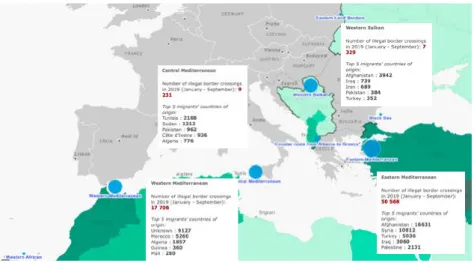
This is indicative of either poor management of the process or a lack of interest on the part of Member States. If the acts were committed with merit, the punishment should be in the upper half of the range. The Court also considered the violation of Article 13 of the Convention regarding Article 3 and Article 4 of Protocol No.
GRAVE VIOLATIONS AGAINST THE HUMAN RIGHTS OF MINORITIES AND PEOPLES
THE SECESSION-REMEDY EPISODES. THE LAST STAGE OF ITS EVOLUTION
It should be noted that this new level of the right to self-determination was recently demanded in the secessionist process in Catalonia. The lack of sufficient recognition of identity or fairer tax treatment in favor of certain regions does not constitute a case that would allow the recognition of this concrete exercise of the right to self-determination. The Right to Self-Determination under International Law: "Secessionists", Secession and Great Power Rule, London, Routledge.
Estudios
EN LA CONSTITUCIÓN ESPAÑOLA DE 1812 Nation and public freedoms in the spanish Constitution
- ESTADO DE LA CUESTIÓN
- NACIÓN Y NACIONALIDADES
- SOBERANÍA Y LA PROCLAMACIÓN DE LA SOBERANÍA POPULAR
- LA CONSTITUCIÓN ESPAÑOLA DE 1812: NACIÓN Y LIBERTADES PÚBLICAS
- CONSIDERACIONES FINALES
Este carácter multinacional puede conducir en algún momento al reconocimiento de la soberanía de cualquier Comunidad Autónoma. Tras un largo debate, el Tercer Estado se autoproclamó Asamblea Nacional, convirtiéndose en depositaria de la soberanía popular26. La soberanía reside en la nación y las Cortes serán el órgano representativo de la nación, lo que supondrá el ejercicio parlamentario de esta soberanía nacional.