
Together with the progress made in deciphering the genomes of many disease-causing microorganisms and their vectors, it is clear that the science of genomics has tremendous potential to improve health worldwide. The stimulus for the report came from the announcement of the sequencing of the human genome, and the great public interest it generated.
Introduction
The announcement of the success of the Human Genome Project has given enormous impetus to this new area of biological and medical research. It's not clear how long it will take for the next phase of the project to develop, that is, trying to determine the function of all our genes and how they interact with each other.
Genomics and the Genome Projects
Introduction
What are genes and how do they function?
The development of molecular genetics
- Classical genetics
- Molecular genetics
Characterizing the human genome
- The identification of human disease genes
- The Human Genome Project
- Mapping the human genome
Functional genomics
- Annotation of the human genome
- Proteomics
- Transcriptomics
- Gene regulation
- Bioinformatics
The genomes of other organisms
- Introduction
- The pathogen genome project
- The genomics of disease vectors
- The genomes of the worm, fruitfly, yeast and various animals
- The central importance of the mouse genome project
- Plant genomics
Summary
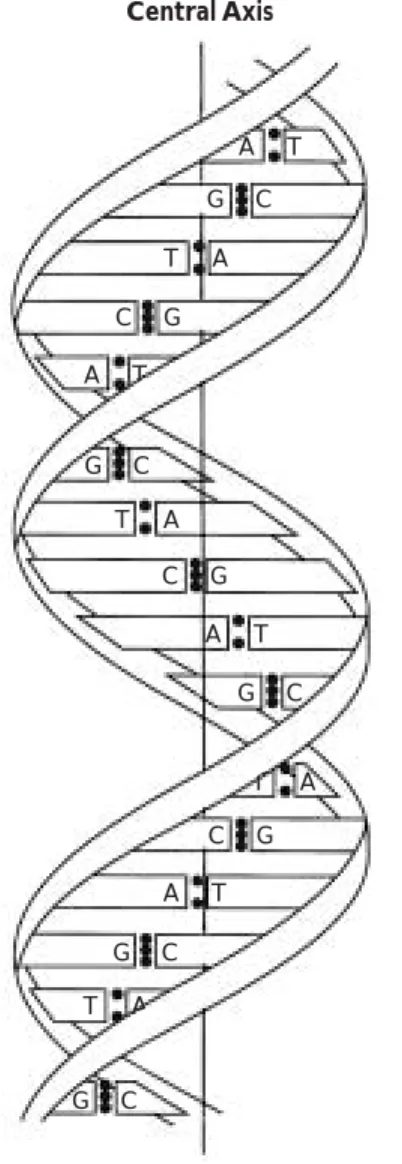
The position of the four nucleotide bases, C (cytosine), A (adenine), T (thymine), and G (guanine), is shown, along with the hydrogen bonds (black dots) that link them together. Color signals vary according to gene activity in the cell line.
The Potential of Genomics for Health Care
Introduction
Monogenic disease
Communicable disease
Cancer
Complex multifactorial disease
Developmental abnormalities and mental retardation
Ageing
Pharmacogenomics
Gene therapy
Stem cell therapy
Plant genomics and human health
Forensic medicine
Biotechnology
Broader issues of biology
Summary
Furthermore, it is likely that there will be a better understanding of the mechanisms of the variable host immune response to infection. Some of the most spectacular advances in the application of molecular and cellular biology to the study of human disease have been made in cancer. For example, there is now considerable evidence that a certain subtype of the human papilloma virus (HPV) is associated with the development of cervical cancer.
There is also evidence that the same mechanisms may be involved in the generation of common dementias, particularly Alzheimer's disease. It is hoped that a better understanding of the genetic abnormalities in unusual families of this type will lead to the discovery of genes involved in the more common forms of these conditions. These observations could have profound consequences for the health of large populations of the world.
Genomics in the context of current world health problems
When will the medical promises of genomics be fulfilled?
Maintaining the balance of research planning and health care
Will the medical applications of genome research be affordable?
Summary
Although the brief description of the potential medical applications of genomics in Section 3 suggests that they will lead to major advances in clinical practice, it is difficult at present to predict the time scale involved. Also, most importantly for this report, will this new field simply widen the gap in care delivery between different countries of the world. Companies will have to recoup the huge research and development costs that will be required to take advantage of the genomics approach to drug and vaccine design.
Especially since most of the technology is new and unexplored, the initial cost of these products can be very high. Because of these uncertainties regarding the cost of genomic research results, Section 5 advocates a slow and gradual introduction of DNA technology to developing countries. Given the fact that it is a new and rapidly developing branch of science, the future role of genomics in the delivery of health care is far from clear.
The Potential of Genomics for the Health of the
Introduction
Examples of what is feasible now
- The inherited disorders of haemoglobin
- Genetic resistance to communicable disease
- The introduction of DNA diagnostics for communicable disease
- Drug-resistant organisms
- Pharmacogenomics
- Non-communicable disease
The development and provision of services in clinical genetics
Genomics for the control of communicable disease: future directions
Forging international partnerships in academia
Regional collaboration
Information technology and bioinformatics
Summary and future possibilities
It is well established in the US, and in European and Mediterranean countries, and in some parts of the Middle East and the Indian subcontinent. There are already many examples of how this has been achieved in the case of hemoglobin disorders. China played a key role in the project, taking responsibility for characterizing 1% of the three billion base pair sequence.
Legislation and IPR Legislation should be education and training initiatives (intellectually adaptable and responsive to the needs of legislative development and property rights) of the public. As mentioned earlier, several developing countries already have advanced biotechnology capabilities (section 5.4). It is clear that genomics has significant potential to improve the health of developing countries in the future.
Potential Risks and Hazards of the Applications of
- Introduction
- Genetic manipulation
- Risks in non-human genomics
- Animals and insects
- Plants
- Changing the genetic constitution of individuals or populations
- Genetic databases
- Biological warfare and other political misuses
- Stem cell gene therapy
- Summary
Here, the general nature of these databases and some of the potential dangers are briefly outlined. Although great efforts are made to protect individuals, there are still opportunities for misuse of the databases. For example, the Tongan Human Rights and Democracy Movement spoke out to condemn the agreement.
It is crucial to recognize the urgency of the bioweapons issue and to agree on a uniform mechanism for verifying the control of pathogens and their manipulation. Are some of the questions answered of sufficient biological importance to be worth the risks involved? Some of the ethical issues arising from this new area of research are outlined in Chapter 8.
Justice and Resource Allocation: Implications for the
Introduction
Current inequities in the provision of health care
- Inequities in health status and disease burden
- Issues of development and poverty alleviation
The risk of diabetes and impaired glucose tolerance, for example, has been found to be higher among populations in developing countries and disadvantaged communities in developed countries (see section 5), while rates for cardiovascular disease are more high among the low. social classes when compared to the upper social classes in developed countries. In addition, HIV/AIDS, although common in both developed and developing countries, is considered to have the greatest urgency in less developed countries and among the poorest and most marginalized groups. These disparities in health status and disease burden reflect the fact that the least developed countries of the world lack basic health care infrastructure.
Clearly, genomics research and its applications must be considered in the context of an entire healthcare system, of which health research is only one, albeit crucial, part. Each of these facets will be necessary when assessing whether it is appropriate to implement a new technology or intervention in the context of individual national healthcare systems. For example, in Thailand, a strategic recommendation has been made to invest 3% of the national health budget in an independently managed health research programme, which will consider genomics in the context of national health priorities.
Research priorities and access to the benefits of research
- The gap between developed and developing countries in
- Redressing the developed-developing country gap
- Developing research capacities
Intellectual property and sharing the benefits of research
- Patents
- Patenting genetic material
- The TRIPS agreement
- Biological resources and benefit sharing
Ownership and access to genetic databases
Summary
This model has been coined the "triangle that moves the mountain", the three points of the triangle being research knowledge, social engagement and political action (Wasi, 2001). Box 7.1 Global Survey of Genomics Research Funding In May 2000, a global survey of genomics funding was initiated by the Stanford-in-Washington Program, supported by a grant from the Burroughs Wellcome Fund. The data should be interpreted in light of several caveats – survey response rates, particularly from private sector institutions, were very low and “genomics” has many different meanings.
Currently, the global research agenda therefore appears to be largely determined by markets in developed countries, rather than by the health needs of developing countries. In July 2000, the Okinawa Communique of the G8 Summit called for and emphasized “the further rapid release of all raw basic human DNA sequence data.” HUGO has issued two statements on gene patenting: the first in 1995 and an updated statement in April 2000 in response to the European Biotechnology Directive and other developments.

Ethical Issues in Genetic Research, Screening, and Testing,
Introduction
Informed consent
- Principles
- Genetic testing in health care and research
- Other approaches to regulating genetic testing, screening
- Genetic databases
Confidentiality of genetic information to prevent discrimination and
- Confidentiality and its appropriate limits
- Discrimination and stigmatization
Gender issues
Eugenics
The disability rights movement’s challenge to genetic screening
Nontherapeutic genetic interventions: genetic enhancements
Gene therapy, stem cell therapy and human cloning
Summary
When genetic testing and screening programs are introduced in a country, they should become part of universal health care services, available to all and not just in the private health care sector, where they will exacerbate health and other inequalities. Many of these risks in developing countries (and many developed countries) can be expected to increase in the future. As in the case of health insurance, countries should not introduce genetic screening or testing without first establishing clear and enforceable legal prohibitions on the use of genetic information in employment decisions.
However, it is important to understand what the source of the immorality of these historical eugenics movements was in order to avoid their mistakes in the contemporary age of genomics. The eugenic perspective was social, a public health focus on the gene pool and the health and well-being of the population. Even if it lacks rights, the symbolic status of the embryo as an early stage of human development can create ethical issues in how it is treated.
Education and Public Policy
- Introduction
- Level of knowledge about genetics
- Public perceptions of biotechnology and genetic engineering
- Lack of organizations for setting public policy and ethical standards
- Requirements for education and policy-making in the genomics era
- Public education
- Health care professionals
- The educational role of clinical genetics services
- Summary
The only country that has had a national vote on the future of the use of genetic engineering is Switzerland. These examples of the studies reviewed by Richmond et al. 1999) are important for several reasons. Firstly, they provide an indication of public perception and feelings about developments in genomics and biotechnology.
Differences in perception of the technology have been shown to lead to differences in attitude. In many of the developing countries where facilities for education are limited, it is essential that some form of teaching be incorporated as education programs develop. In the case of the developing countries, this should be a high priority for the post-genomic period of research and healthcare development.
Recommendations for WHO and Its Member States
Introduction
Recommendations
- Technical cooperation between WHO and its Member States
- WHO’s normative function
- An advocacy role for WHO
Closing Summary and Key Messages
The recommendations that follow are placed in the context of the key issues that Member States will need to consider in planning for this new era, as outlined in this Report. It should be emphasized that all WHO Member States will need to make their own assessments of this area and develop their future strategies in light of their particular health care priorities and their unique social and economic contexts. . More generally, it should work in support of its member states to ensure that genomics is used to reduce, rather than exacerbate, existing inequalities in global health.
In particular, the WHO should develop the mechanisms needed to evaluate such advances in comparison with more conventional approaches to medical research and development, particularly with regard to their likely cost-effectiveness and value for specific populations and settings within member countries. Through these mechanisms, the WHO can produce fast, accessible and modern reports to help governments plan their medical research and health care policies. Structured advice of this type would provide a more logical framework for setting priorities for health care research and development in Member States.