Citation:Forner-Giner, M.Á.;
Ballesta-de los Santos, M.; Melgarejo, P.; Martínez-Nicolás, J.J.;
Núñez-Gómez, D.; Continella, A.;
Legua, P. Influence of Different Rootstocks on Fruit Quality and Primary and Secondary Metabolites Content of Blood Oranges Cultivars.
Molecules2023,28, 4176. https://
doi.org/10.3390/molecules28104176 Academic Editors: Monica Rosa Loizzo, Ana Teresa Sanches-Silva and Oscar Núñez
Received: 30 April 2023 Revised: 17 May 2023 Accepted: 17 May 2023 Published: 18 May 2023
Copyright: © 2023 by the authors.
Licensee MDPI, Basel, Switzerland.
This article is an open access article distributed under the terms and conditions of the Creative Commons Attribution (CC BY) license (https://
creativecommons.org/licenses/by/
4.0/).
Article
Influence of Different Rootstocks on Fruit Quality and Primary and Secondary Metabolites Content of Blood Oranges Cultivars
MaríaÁngeles Forner-Giner1, Manuel Ballesta-de los Santos2, Pablo Melgarejo2 ,
Juan JoséMartínez-Nicolás2 , Dámaris Núñez-Gómez2 , Alberto Continella3 and Pilar Legua2,*
1 Instituto Valenciano de Investigaciones Agrarias (IVIA), 46113 Moncada, Spain; [email protected]
2 Research Group in Plant Production and Technology, Plant Sciences and Microbiology Department, Miguel Hernández University (UMH), Carretera de Beniel, km 3.2, 03312 Orihuela, Spain;
[email protected] (M.B.-d.l.S.); [email protected] (P.M.); [email protected] (J.J.M.-N.);
[email protected] (D.N.-G.)
3 Department of Agriculture, Food and Environment, University of Catania, 95124 Catania, Italy;
* Correspondence: [email protected]; Tel.: +34-966-749-669
Abstract: Blood oranges have high concentrations of bioactive compounds that are beneficial to health. In Europe, the cultivation of blood oranges is increasing due to their excellent nutritional properties. InCitruscrops, rootstocks play an important role in juice and can increase the content of bioactive compounds. The morphological, qualitative and nutritional parameters were analyzed in cultivars ‘Tarocco Ippolito’, ‘Tarocco Lempso’, ‘Tarocco Tapi’ and ‘Tarocco Fondaconuovo’ grafted ontoCitrus macrophyllaand Citrus reshni. ‘Tarocco Lempso’ grafted ontoCitrus macrophylla ob- tained the highest values of weight (275.78 g), caliber (81.37 mm and 76.79 mm) and juice content (162.11 g). ‘Tarocco Tapi’ grafted ontoCitrus reshniobtained the most interesting qualitative param- eters (15.40◦Brix; 12.0 MI). ‘Tarocco Lempso’ grafted ontoCitrus reshniobtained the most intense red juice (a*= 9.61). Overall, the highest concentrations of primary metabolites were in proline, aspartate, citric acid, and sucrose. The results showed that ‘Tarocco Ippolito’ juice grafted onto Citrus reshnihad the highest levels of total hydroxycinnamic acids (263.33 mg L−1), total flavones (449.74 mg L−1) and total anthocyanins (650.42 mg L−1). To conclude, ‘Tarocco Lempso’ grafted onto Citrus macrophyllaobtained the best values of agronomic parameters, and the cultivars grafted onto Citrus reshniobtained significantly higher concentrations in primary and secondary metabolites.
Keywords:anthocyanins; blood orange; bioactive compounds; flavones; flavanones; hydroxycinnamic acids; morphological parameters; phenolic compounds; primary metabolites; qualitative parameters
1. Introduction
Globally, the sweet orange (Citrus sinensis [L.], Osbeck) is the most important Citrusspecies in terms of production, export and consumption, with a total production of 79 million tons [1]. There are two main groups of sweet oranges, which are white oranges, whose cultivation is produced in almost allCitrusproducing countries in the world, and blood oranges, which have a smaller crop and are only produced in some countries (such as Italy or Spain) whose climatic conditions are appropriate and favor the synthesis of their characteristic red pigment [2]. ‘Sanguinelli’ in Spain, and ’Tarocco’ and ‘Moro’ in Italy are the most common and widespread cultivars of blood oranges in the countries of the Mediterranean basin [3].
The origin ofCitrusfruits and, therefore, blood oranges is not entirely clear. It is likely that blood oranges are the result of spontaneous mutations that occurred in China several centuries before Christ, and that reached Europe, specifically the Mediterranean area, thanks to migratory movements. More recently, there are dates that speak of the cultivation of lemons and bitter oranges in Sicily (Italy) since the fifteenth century that
Molecules2023,28, 4176. https://doi.org/10.3390/molecules28104176 https://www.mdpi.com/journal/molecules
are attributed to the Arabs, and other dates are attributed to Genoese and Portuguese crusaders [4].
Citruscultivars have been shown to be important reservoirs of nutrients and bioactive compounds with potent antioxidant capacity [5]. AmongCitrusfruits, blood oranges have high concentrations of these compounds as terpenoids (limonoids and carotenoids) or phenolic compounds (flavones, flavanones or hydroxycinnamic acids), containing espe- cially high concentrations of anthocyanins, whose presence makes them very beneficial for human health by presenting a strong antioxidant activity [6].
The anthocyanins present in the fruits of blood orange cultivars are water−soluble pigments found within the flavonoid family and provide them with a characteristic red coloration in crust, pulp or juice, as in other fruit trees such as sweet cherry [7] or pomegranate [8]. The synthesis of red pigments conferred by anthocyanins depends on a number of factors, including: cultivars, rootstocks or environmental factors such as the contrast between day and night temperature [9–12].
In this context, some authors [13,14] have studied the accumulation of anthocyanins in blood orange cultivars and, very recently, [15] observed a strong influence of eight rootstocks on the concentrations of several groups of phenolic compounds (four antho- cyanins, three flavanones and five hydroxycinnamic acids) in juices of ’Tarocco Rosso’ and
’Moro’. [16] observed the effect of rootstocks on different aspects such as yield and quality in blood oranges. However, although the bioactive compounds ofCitruscultivars have been extensively researched [17,18], there are few studies that have been carried out to evaluate the effect of rootstocks on them [14].
In this sense, in many of the Citrusproducing countries of the world, one of the main challenges faced by their agri-food industries is the search for newCitrusrootstocks that improve the yield of their crops in terms of quantity, increase production in terms of fruit weight, size or cumulative production per tree, and especially quality, and increase nutritional value by increasing the concentration of bioactive compounds that make them interesting from a nutritional point of view [19,20].
In this way, studies are necessary to generate knowledge of the influence of rootstocks on these bioactive compounds [14]. In addition, more studies are needed to understand how rootstocks influence overall fruit quality parameters so that rootstock/graft combinations that increase the nutritional quality of the fruit are obtained [15].
For the reasons stated above, the characterization of eight rootstock/graft combina- tions of blood oranges was proposed as a general objective for this study. Specifically, it was intended to analyze the main morphological parameters of the fruit and qualitative parameters of its juice, together with the content of primary metabolites and secondary metabolites of the juice of the cultivars: ‘Tarocco Ippolito’, ‘Tarocco Lempso’, ‘Tarocco Tapi’ and ‘Tarocco Fondaconuovo’, grafted ontoCitrus macrophyllaandCitrus reshniand cultivated under southeastern Spain environmental conditions.
2. Results
2.1. Morphological and Qualitative Parameters
In relation to the visual appearance of the fruit, the caliber or external and internal coloration varied substantially depending on the cultivars or the rootstocks. The greatest external coloration was observed in ‘Tarocco Lempso’ and the greatest internal coloration was in ‘Tarocco Ippolito’. In general, an increase in internal coloration was observed in the cultivars grafted ontoCitrus reshni(Figure1).
Table1shows the results corresponding to the morphological and qualitative char- acterization of the eight rootstock/graft combinations of blood oranges in terms of fruit weight, equatorial diameter, fruit length, thickness of the crust, number of carpels, number of seeds, crust weight, juice weight, pH, TSS, TA and MI (TSS/TA).
Figure 1. Representative images of four blood orange cultivars grafted ontoCitrus macrophylla (‘Tarocco Ippolito’ (A), ‘Tarocco Lempso’ (B), ‘Tarocco Tapi’ (C) and ‘Tarocco Fondaconuovo’ (D)) andCitrus reshni(‘Tarocco Ippolito’ (E), ‘Tarocco Lempso’ (F), ‘Tarocco Tapi’ (G) and ‘Tarocco Fonda- conuovo’ (H)).
Morphological parameters of eight rootstock/graft combinations are shown in Table1A.
‘Tarocco Lempso’ grafted ontoCitrus reshnishowed the lowest fruit weight (127.89 g), while
‘Tarocco Lempso’ grafted ontoCitrus macrophyllahad the highest average fruit weight of the eight rootstock/graft combinations studied (275.78 g). Equatorial diameters and fruit length ranged from 63.17–81.37 and 57.64–76.79 mm, respectively. The thickest crust was in
‘Tarocco Tapi’ grafted ontoCitrus macrophylla(6.25 mm), while the thinnest was in ‘Tarocco Fondaconuovo’ grafted ontoCitrus reshni(3.39 mm). The eight rootstock/graft combinations showed a number of seeds less than 0.8 per fruit, and a number of carpels ranging between 9.44 and 10.22. The highest juice content was obtained in ‘Tarocco Lempso’ grafted onto Citrus macrophylla(162.11 g). Statistically significant differences were observed between rootstocks for all morphological parameters, except for the number of seeds and carpels and juice weight. On the other hand, statistically significant differences were also observed between cultivars for all parameters, with the exception of the number of seeds and carpels.
Therefore, there was no significant interaction with the number of seeds and carpels, nor with the fruit weight and equatorial diameter, but there was significant interaction with the rest of the morphological parameters.
Table 1.Morphological (A) and qualitative (B) parameters of four blood orange cultivars (‘Tarocco Ip- polito’, ‘Tarocco Lempso’, ‘Tarocco Tapi’ and ‘Tarocco Fondaconuovo’) grafted ontoCitrus macrophylla andCitrus reshni.
Parameters
Citrus macrophylla Citrus reshni
Tarocco Ippolito
Tarocco Lempso
Tarocco Tapi
Tarocco Fonda- conuovo
Tarocco Ippolito
Tarocco Lempso
Tarocco Tapi
Tarocco Fon- daconuovo
ANOVA−Factors A: Root. B: Vari. A*B (A) Morphological parameters *
FW (g) 137.56 cd 275.78 a 177.33 b 203.44 b 136.67 cd 127.89 d 169.89 bc 167.78 bc * *** NS
ED (mm) 67.08 cd 81.37 a 73.21 b 72.81 b 64.98 cd 63.17 d 70.37 bc 68.96 bc ** *** NS
FL (mm) 57.76 c 76.79 a 66.58 b 73.77 a 60.90 bc 57.64 c 64.27 b 65.97 b * *** ***
CT (mm) 4.68 b 4.65 bc 6.25 a 4.59 bc 4.14 bc 4.02 bc 3.66 bc 3.39 c *** ** **
NC 10.11 a 9.78 ab 10.22 a 9.67 ab 9.78 ab 10.0 a 10.67 a 9.44 b NS NS NS
NS 0.11 c 0.22 bc 0.0 c 0.33 b 0.22 b 0.78 a 0.0 c 0.33 b NS NS NS
CW (g) 58.15 c 113.67 a 82.33 b 81.56 b 57.56 c 45.98 c 60.43 c 59.44 c *** *** **
JW (w:w) 79.40 d 162.11 a 95.00 cd 121.89 b 79.11 d 81.91 d 109.46 c 108.33 c NS *** *
(B) Qualitative parameters **
pH 3.68 a 3.63 ab 3.43 c 3.67 a 3.48 bc 3.15 d 3.49 bc 3.36 c *** *** ***
TSS (Brix) 13.67 bc 12.00 de 11.63 e 12.87 cd 14.33 ab 14.70 ab 15.40 a 15.07 a *** *** ***
TA (g citric
acid L−1) 7.86 d 11.50 c 11.47 c 9.37 d 13.07 bc 16.22 a 12.84 bc 13.54 b *** *** ***
MI (TSS/TA) 17.4 a 10.5 cd 10.2 de 13.7 b 11.0 cd 9.1 e 12.0 c 11.1 cd *** *** ***
Note: FW: fruit weight; ED: equatorial diameter; FL: fruit length; CT: crust thickness; NC: number of carpels;
NS: number of seeds; CW: crust weight; JW: juice weight; TSS: total soluble solids; TA: titratable acidity and MI: maturity index. Values are the mean (*n= 25 or **n= 6). *, **, *** or NS indicate significant differences for p< 0.05, 0.01, 0.001 or non−significant, respectively. Values followed by the same letter, within the same row, were not significantly different (p< 0.05), according to HSD Tukey’s least significant difference test.
Table1B shows the qualitative parameters in the eight rootstock/graft combinations analyzed. The range of pH values in the samples of the cultivars of blood oranges studied was between 3.15 (‘Tarocco Lempso’ grafted ontoCitrus reshni) and 3.68 (‘Tarocco Ippolito’
grafted ontoCitrus macrophylla). Regarding the values of TSS and TA, the fruits of ‘Tarocco Tapi’ and ‘Tarocco Fondaconuovo’ cultivars grafted ontoCitrus reshnishowed the highest content in TSS (15.40 and 15.07◦Brix, respectively), while the fruits of ‘Tarocco Tapi’ cultivar grafted ontoCitrus macrophyllaregistered the lowest TSS (11.63◦Brix). At the end of the sampling, all pigmented cultivars recorded total acidity values between 7.86 (‘Tarocco Ippolito’ grafted ontoCitrus macrophylla) and 16.22 g citric acid L−1 (‘Tarocco Lempso’
grafted ontoCitrus reshni). MI ranged from 9.1 (‘Tarocco Lempso’ grafted ontoCitrus reshni) to 17.4 (Tarocco ‘Tarocco Ippolito’ grafted ontoCitrus macrophylla). Statistically significant differences were observed between rootstocks or between cultivars for all parameters; in addition, there was significant interaction for all qualitative parameters.
2.2. External Crust and Juice Color
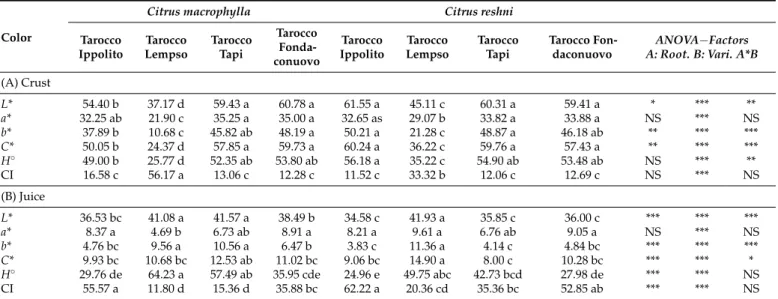
Table2shows the results corresponding to the values of the color parameters (L*,a*, b*,C*,H◦and CI) of crust and juice of the eight rootstock/graft combinations of blood oranges in the present study.
Crust color parameters of eight rootstock/graft combinations are shown in Table2A.
‘Tarocco Tapi’ grafted ontoCitrus macrophyllashowed the highest value ofa*(35.25). ‘Tarocco Ippolito’ grafted ontoCitrus reshnishowed the highest value ofb*(50.21). In order, the
‘Tarocco Lempso’ cultivar grafted ontoCitrus macrophyllashowed the lowestL*value (37.17) and ‘Tarocco Ippolito’ grafted ontoCitrus reshnishowed the highestL*value (61.55). The values of theC*parameter varied among the studied cultivars. ‘Tarocco Lempso’ grafted ontoCitrus macrophyllashowed the lowest value (24.37), while the ‘Tarco Tapi’ and ‘Tarocco Fondaconuovo’ cultivars, also grafted ontoCitrus macrophylla, along with the ‘Tarocco Ippolito’, ‘Tarocco Tapi’, and ‘Tarocco Fondaconuovo’ cultivars grafted ontoCitrus reshni, showed the highest values of theC*parameter in the range of 57.43 to 60.24. Regarding the parameterH◦, the values remained between 25.77 and 56.18. The highest CI values
were observed in ‘Tarocco Lempso’ grafted ontoCitrus macrophylla(56.17) andCitrus reshni (33.32). Between both rootstocks only statistically significant differences were observed inL*,b*andC*. However, among the cultivars, statistically significant differences were observed in all color parameters of crust. There was significant interaction inL*,b*,C*
andH◦.
Table 2.Color parameters in crust (A) and juice (B) of four blood orange cultivars (‘Tarocco Ippolito’,
‘Tarocco Lempso’, ‘Tarocco Tapi’ and ‘Tarocco Fondaconuovo’) grafted ontoCitrus macrophyllaand Citrus reshni.
Color
Citrus macrophylla Citrus reshni
Tarocco Ippolito
Tarocco Lempso
Tarocco Tapi
Tarocco Fonda- conuovo
Tarocco Ippolito
Tarocco Lempso
Tarocco Tapi
Tarocco Fon- daconuovo
ANOVA−Factors A: Root. B: Vari. A*B (A) Crust
L* 54.40 b 37.17 d 59.43 a 60.78 a 61.55 a 45.11 c 60.31 a 59.41 a * *** **
a* 32.25 ab 21.90 c 35.25 a 35.00 a 32.65 as 29.07 b 33.82 a 33.88 a NS *** NS
b* 37.89 b 10.68 c 45.82 ab 48.19 a 50.21 a 21.28 c 48.87 a 46.18 ab ** *** ***
C* 50.05 b 24.37 d 57.85 a 59.73 a 60.24 a 36.22 c 59.76 a 57.43 a ** *** ***
H◦ 49.00 b 25.77 d 52.35 ab 53.80 ab 56.18 a 35.22 c 54.90 ab 53.48 ab NS *** **
CI 16.58 c 56.17 a 13.06 c 12.28 c 11.52 c 33.32 b 12.06 c 12.69 c NS *** NS
(B) Juice
L* 36.53 bc 41.08 a 41.57 a 38.49 b 34.58 c 41.93 a 35.85 c 36.00 c *** *** ***
a* 8.37 a 4.69 b 6.73 ab 8.91 a 8.21 a 9.61 a 6.76 ab 9.05 a NS *** NS
b* 4.76 bc 9.56 a 10.56 a 6.47 b 3.83 c 11.36 a 4.14 c 4.84 bc *** *** ***
C* 9.93 bc 10.68 bc 12.53 ab 11.02 bc 9.06 bc 14.90 a 8.00 c 10.28 bc *** *** *
H◦ 29.76 de 64.23 a 57.49 ab 35.95 cde 24.96 e 49.75 abc 42.73 bcd 27.98 de *** *** NS
CI 55.57 a 11.80 d 15.36 d 35.88 bc 62.22 a 20.36 cd 35.36 bc 52.85 ab *** *** NS
Note: Values are the mean (n= 50). *, **, *** or NS indicate significant differences forp< 0.05, 0.01, 0.001 or non−significant, respectively. Values followed by the same letter, within the same row, were not significantly different (p< 0.05), according to HSD Tukey’s least significant difference test.
Table 2B shows the values of the juice color parameters of eight rootstock/graft combinations. The ‘Tarocco Lempso’ cultivar grafted ontoCitrus reshnishowed the highest values of the parametersL*(41.93),a*(9.61) andb∗(11.36). For theC∗saturation index, except ‘Tarocco Ippolito’ grafted ontoCitrus reshni(9.06) and ‘Tarocco Tapi’ grafted onto Citrus reshni(8.00), all samples studied showed similar levels. Regarding the parameterH◦, the values ranged between 24.96 and 64.26. ‘Tarocco Ippolito’ grafted ontoCitrus reshni (62.22) andCitrus macrophylla(55.57) showed the highest CI values and, ‘Tarocco Lempso’
grafted ontoCitrus macrophylla(11.80) and ‘Tarocco Tapi’ grafted ontoCitrus macrophylla (15.36) showed the lowest values. Statistically significant differences were only observed between both rootstocks in all parameters excepta*. Statistically significant differences were observed between the cultivars in all color parameters of juice. There was only significant interaction inL*,b*andC*.
2.3. Primary Metabolites Content in Juice
Figure 2shows the results corresponding to the total content of amino acids, or- ganic acids and sugars that were identified and quantified in the eight rootstock/graft combinations of blood oranges.
Figure2A shows the values of the total content of amino acids of eight rootstock/graft combinations. The highest concentrations were obtained in the ‘Tarocco Tapi’ grafted onto Citrus reshni(4274.87 mg L−1) andCitrus macrophylla(4042.03 mg L−1). The cultivar that ob- tained the second highest concentration in total amino acids was ‘Tarocco Ippolito’ grafted ontoCitrus reshni(3895.28 mg L−1). ‘Tarocco Fondaconuovo’ grafted ontoCitrus macrophylla showed the lowest content of total amino acids of the eight rootstock/graft combinations analyzed (3134.17 mg L−1). In general, a slight increase in the total concentration of amino acids was observed in the cultivars grafted ontoCitrus reshni, with the ‘Tarocco Lempso’
cultivar being statistically different (p< 0.05) between both rootstocks.
Figure 2.Total content of amino acids (A), organic acids (B) and sugars (C) in juice of four blood orange cultivars (‘Tarocco Ippolito’, ‘Tarocco Lempso’, ‘Tarocco Tapi’ and ‘Tarocco Fondaconuovo’) grafted ontoCitrus macrophyllaandCitrus reshni.Data are the mean±SE (n= 6). Different letters indicate statistically significant differences (ANOVA, HSD Tukey test;p< 0.05).
Total content of organic acids of eight rootstock/graft combinations are shown in Figure2B. The highest concentrations in total organic acids were observed in ‘Tarocco Lempso’ (18.63 g L−1) and ‘Tarocco Fondaconuovo’ (16.68 g L−1) grafted ontoCitrus reshni.
‘Tarocco Ippolito’ and ‘Tarocco Fondaconuovo’ grafted ontoCitrus macrophyllashowed the lowest total amino acid contents of the eight rootstock/graft combinations studied (10.84 and 11.03 g L−1, respectively). The cultivars ‘Tarocco Ippolito’, ‘Tarocco Lempso’
and ‘Tarocco Fondaconuovo’ increased in statistical significance (p< 0.05) of their total organic acid content when grafted ontoCitrus reshni, compared to itself grafted ontoCitrus macrophylla.
Figure2C shows the total sugar content observed in the eight rootstock/graft combi- nations analyzed. The highest concentrations were observed in ‘Tarocco Fondaconuovo’
(122.89 g L−1) and ‘Tarocco Tapi’ grafted ontoCitrus reshni(120.41 g L−1), and the low- est concentrations were observed in ‘Tarocco Lempso’ (79.98 g L−1) and ‘Tarocco Tapi’
(86.35 g L−1) grafted ontoCitrus macrophylla. Again, it was observed that blood orange cultivars grafted ontoCitrus reshnishowed statistically higher concentrations (p< 0.05) than themselves grafted ontoCitrus macrophylla.
The different subclasses of primary metabolites found in the eight rootstock/graft combinations of blood oranges are listed in Table3. In total, nineteen individual compounds were detected, quantified and divided into four subclasses: amino acids (alanine, arginine, asparagine, aspartate, glutamine, isoleucine, leucine, proline, tyrosine and valine), organic acids (citrate and lactate), sugars (fructose, glucose, sucrose and myo−inositol) and other metabolites (choline, ethanol and trigonelline).
Table 3.Individual content of amino acids (A), organic acids (B), sugars (C) and others metabolites (D) in juice of four blood orange cultivars (‘Tarocco Ippolito’, ‘Tarocco Lempso’, ‘Tarocco Tapi’ and
‘Tarocco Fondaconuovo’) grafted ontoCitrus macrophyllaandCitrus reshni.
Primary Metabolites
Citrus macrophylla Citrus reshni
Tarocco Ippolito
Tarocco Lempso
Tarocco Tapi
Tarocco Fonda- conuovo
Tarocco Ippolito
Tarocco Lempso
Tarocco Tapi
Tarocco Fon- daconuovo
ANOVA−Factors A: Root. B: Vari. A*B (A) Amino acids (mg L−1)
Alanine 74.15 cd 41.43 e 49.08 e 49.81 de 104.03 ab 88.40 bc 117.44 a 95.35 abc *** *** *
Arginine 522.13 de 752.62 ab 846.84 a 602.0 bcd 428.66 e 408.86 e 669.0 abc 464.12 e *** *** * Asparagine 384.23 c 686.22 a 663.12 ab 390.46 c 431.0 abc 415.14 bc 311.07 c 417.06 bc ** * **
Aspartate 1001.34 a 743.36 bc 921.67 ab 787.0 abc 838.0 abc 741.01 bc 905.21 ab 650.68 c * *** NS Glutamine 205.90 ab 214.51 ab 216.39 ab 231.10 ab 199.70 ab 193.06 ab 256.75 a 178.96 b NS NS *
Isoleucine 6.01 cd 3.14 e 4.02 de 4.11 de 7.65 b 7.02 bc 9.86 a 8.32 ab *** * **
Leucine 2.96 c 2.09 c 1.86 c 3.37 bc 5.85 a 2.50 c 4.05 b 4.85 ab *** *** *
Proline 1329.03 c 712.37 e 1266.0 cd 987.70 d 1749.91 a 1667.0 ab 1917.35 a 1354.0 bc *** *** **
Tyrosine 91.25 ab 37.68 c 64.48 bc 69.04 bc 113.05 a 77.52 ab 60.73 bc 70.06 bc * *** *
Valine 11.37 bc 7.36 c 8.08 c 8.05 c 16.35 b 17.71 b 23.37 a 18.32 b *** * ***
(B) Organic acids (g L−1)
Citrate 10.83 c 11.61 c 13.19 bc 11.18 c 16.00 ab 18.62 a 14.42 b 16.66 ab *** NS **
Lactate 0.01 b 0.01 b 0.01 b 0.01 b 0.02 a 0.01 b 0.02 a 0.02 a *** *** NS
(C) Sugars (g L−1)
Fructose 26.86 abc 21.89 c 25.15 bc 30.99 ab 30.58 a 33.54 a 33.51 a 33.49 a *** ** **
Glucose 25.96 b 19.57 c 21.76 c 28.80 ab 30.13 a 28.92 ab 28.75 ab 32.02 a *** *** **
Sucrose 44.81 bc 36.97 c 37.73 c 48.10 bc 49.79 bc 51.61 ab 56.18 a 55.39 a *** * **
Myo−inostol 1.63 d 1.56 d 1.72 cd 2.32 ab 2.75 a 2.25 abc 1.98 bcd 1.99 bcd *** * ***
Glu/Fru 0.97 a 0.89 b 0.87 b 0.93 a 0.99 a 0.86 b 0.86 b 0.96 a ** * *
(D) Others (mg L−1)
Choline 23.25 a 11.07 c 17.67 b 15.43 b 18.25 b 10.71 c 14.58 bc 10.67 c *** *** *
Ethanol 575.0 bcd 150.53 f 124.50 f 371.27 ef 1047.64 a 492.81 de 738.29 bc 838.81 ab *** *** NS
Trigonelline 3.91 f 5.66 f 4.90 f 6.56 ef 10.90 bc 14.42 a 12.77 ab 8.92 cd *** ** ***
Note: values are the mean (n= 6). *, **, *** or NS indicate significant differences forp< 0.05, 0.01, 0.001 or non−significant, respectively. Values followed by the same letter, within the same row, were not significantly different (p< 0.05), according to HSD Tukey’s least significant difference test.
The concentrations of individual amino acids in eight different rootstock/graft combi- nations are presented in Table3A. Of all the amino acids quantified, proline was found in the highest concentration in ‘Tarocco Tapi’, ‘Tarocco Lempso’ and ‘Tarocco Ippolito’ grafted ontoCitrus reshni(1917.35, 1667.0 and 1749.91 mg L−1, respectively). Among the different orange varieties studied, the grafting of ‘Tarocco Ippolito’ ontoCitrus macrophyllashowed the highest concentration of aspartate, with a value of 1001.34 mg L−1; however, there were no statistically significant differences (p> 0.05) with respect to ‘Tarocco Fondaconuovo’ and
‘Tarocco Tapi’ varieties grafted ontoCitrus macrophylla, nor with ‘Tarocco Tapi’ and ‘Tarocco Ippolito’ grafted ontoCitrus reshni. Arginine and asparagine were the next amino acids with the highest concentrations. ‘Tarocco Tapi’ grafted ontoCitrus macrophyllaexhibited the highest value of concentration of arginine (846.84 mg L−1), and ‘Tarocco Lempso’ grafted ontoCitrus macrophyllashowed the highest concentration of asparagine (686.22 mg L−1).
Glutamine was also found in significant concentration, ranging from 256.75 mg L−1in
‘Tarocco Tapi’ grafted ontoCitrus reshnito 178.96 mg L−1in ‘Tarocco Fondaconuovo’ grafted ontoCitrus reshni. However, alanine was present in lower concentrations than the other
amino acids, with values ranging from 117.44 to 41.43 mg L−1. Valine, isoleucine, and leucine had the lowest concentrations among all of the identified amino acids, with values ranging from 23.37 to 7.36, 9.86 to 3.14, and 5.85 to 1.86 mg L−1, respectively. All amino acids showed statistically significant differences between rootstocks or cultivars, except for glutamine. There was also a significant interaction observed among all amino acids, except for aspartate.
Table3B shows the values of the individual content of organic acid of eight root- stock/graft combinations. The main organic acid was citric acid, with the highest con- nections observed in ‘Tarocco Lempso’ grafted ontoCitrus reshni(18.62 g L−1), ‘Tarocco Fondaconuovo’ grafted ontoCitrus reshni(16.66 g L−1) and ‘Tarocco Ippolito’ grafted onto Citrus reshni(16.00 g L−1), among which there were no statistically significant differences (p> 0.05). Lactic acid was the second most abundant organic acid identified in the juice of the cultivars studied and remained in a range of 0.02 to 0.01 g L−1. There were statistically significant differences (p< 0.05) between rootstocks for the two organic acids detected.
However, between the cultivars there were only statistically significant differences in lactate.
There was significant interaction in citrate, but not lactate. The rest of the main organic acids present in citrus fruits were not detected by1H NMR since they had a concentration lower than 10 mM.
The individual sugars’ concentrations identified and quantified in the eight root- stock/graft combinations are shown in Table3C. Sucrose was the single sugar with the highest concentration, followed by fructose, glucose and myo−inositol. In relation to fruc- tose, no significant differences (p> 0.05) were found compared to the ‘Tarocco Ippolito’ and
‘Tarocco Fondaconuovo’ varieties grafted ontoCitrus macrophylla, nor with the four varieties grafted ontoCitrus reshni,being the highest values observed. As for glucose, no statistically significant differences (p> 0.05) were found between the four varieties grafted ontoCitrus reshniand ‘Tarocco Fondaconuovo’ grafted ontoCitrus macrophylla, observing a range of concentration that ranged between 28.75 and 32.02 g L−1. The highest concentrations of sucrose were observed in the ‘Tarocco Lemso’, ‘Tarocco Fondaconuovo’ and ‘Tarocco Tapi’ varieties grafted ontoCitrus reshni(51.61, 55.39 and 56.18 g L−1, respectively), and no statistically significant differences (p> 0.05) were found between them. Myo−inositol was quantified in much lower concentrations than the rest of the sugars detected, whose concentrations ranged from 2.75 g L−1in ‘Tarocco Ippolito’ grafted ontoCitrus reshnito 1.56 g L−1in ‘Tarocco Lempso’ grafted ontoCitrus macrophylla. Glu/Fru ratios remained between 0.99 and 0.86. In the four sugars identified and quantified, statistically significant differences were observed between rootstocks or between some cultivars. In addition, there was significant interaction in the four sugars.
Finally, three other individual primary metabolites were also identified in all root- stock/graft combinations: choline, ethanol and trigonelline (Table3D). ‘Tarocco Ippolito’
and ‘Tarocco Fondaconuovo’ grafted ontoCitrus reshnishowed the highest concentrations of ethanol (1047.64 and 838.81 mg L−1, respectively). ‘Tarocco Ippolito’ grafted ontoCitrus macrophyllaobtained the highest values in Choline (23.25 mg L−1) and ‘Tarocco Fondacon- uovo’ grafted ontoCitrus reshniobtained the smallest values (10.67 mg L−1). Trigonelline remained in a range of concentrations between 14.42 mg L−1in ‘Tarocco Lempso’ grafted ontoCitrus reshniand 3.91 mg L−1in ‘Tarocco Ippolito’ grafted ontoCitrus macrophylla.
Choline, ethanol and trigonelline showed statistically significant differences between root- stocks or between cultivars, however, there was only significant interaction in choline and trigonelline.
2.4. Secondary Metabolites Content in Juice
Figure3shows the total content of hydroxycinnamic acids, anthocyanins, flavones and flavanones in the eight rootstock/graft combinations of blood oranges studied.
Figure 3.Total content of hydroxycinnamic acids (A), anthocyanins (B), flavones (C), and flavanones (D) in juice of four blood orange cultivars (‘Tarocco Ippolito’, ‘Tarocco Lempso’, ‘Tarocco Tapi’ and
‘Tarocco Fondaconuovo’) grafted ontoCitrus macrophyllaandCitrus reshni. Data are the mean±SE (n= 6). Different letters indicate statistically significant differences (ANOVA, HSD Tukey test;
p< 0.05).
Total content of hydroxycinnamic acids of eight rootstock/graft combinations are shown in Figure3A. The highest content of total hydroxycinnamic acids was observed in the ‘Tarocco Ippolito’ cultivar grafted ontoCitrus reshni(263.33 mg L−1), and the second highest content was in ‘Tarocco Ippolito’ grafted ontoCitrus macrophylla(176.25 mg L−1).
Both contents were much higher than those observed in the rest of the cultivars studied.
In contrast, ‘Tarocco Lempso’ grafted ontoCitrus macrophyllashowed the lowest value of total hydroxycinnamic acid content (31.31 mg L−1). In the four cultivars studied there was a statistically significant increase (p< 0.05) in the content of total hydroxycinnamic acids when grafted ontoCitrus reshni, compared to the same grafted ontoCitrus macrophylla.
Figure3B shows the values of the total content in anthocyanins of eight rootstock/graft combinations. Again, the highest content was observed in the ‘Tarocco Ippolito’ cultivar grafted ontoCitrus reshni(650.42 mg L−1), and the second highest content was in ‘Tarocco Ippolito’ grafted ontoCitrus macrophylla(333.24 mg L−1). Interestingly, the ‘Tarocco Ippolito’
cultivar grafted ontoCitrus reshniroughly doubled in concentration compared to itself grafted ontoCitrus macrophylla. Even so, both contents remained much higher than those observed in the rest of the cultivars studied. In contrast, ‘Tarocco Lempso’ grafted onto Citrus macrophyllashowed the lowest value of total anthocyanin content (10.95 mg L−1).
In the four cultivars studied there was a statistically significant increase (p< 0.05) in the content of total anthocyanins when they were grafted onto Citrus reshnicompared to themselves grafted ontoCitrus macrophylla.
The total flavones content identified and quantified in the eight rootstock/graft com- binations are shown in Figure3C. The highest content of total flavones was observed in the ‘Tarocco Ippolito’ cultivar grafted ontoCitrus reshni(449.74 mg L−1), and the second highest content was in the same cultivar grafted ontoCitrus macrophylla(296.88 mg L−1), and likewise, both contents remained much higher than those observed in the rest of the cultivars of the study. ‘Tarocco Lempso’ grafted ontoCitrus macrophyllashowed the lowest value of total flavone content (105.99 mg L−1). The four study cultivars grafted ontoCitrus
reshniwere statistically superior (p< 0.05) to themselves, when they were grafted onto Citrus macrophylla.
Total content of flavanones of eight rootstock/graft combinations are shown in Figure3D. The highest total content of flavanones was observed in ‘Tarocco Tapi’ grafted ontoCitrus reshni(603.05 mg L−1), showing a concentration of approximately twice that of when it was grafted ontoCitrus macrophylla(301.69 mg L−1). The lowest content was in ‘Tarocco Lempso’ grafted ontoCitrus reshni(272.63 mg L−1). Between both rootstocks, there were no statistically significant differences (p> 0.05) for the ‘Tarocco Ippolito’, but there were statistically significant differences (p< 0.05) for the rest of the cultivars studied.
The different subclasses of phenolic compounds identified in the eight rootstock/graft combinations of blood oranges are listed in Table4. In total, ten individual compounds were detected, quantified and divided into four subclasses: hydroxycinnamic acids (p−coumaric acid 4−O−glucoside), anthocyanins (cyanidin 3−O−(600−caffeoyl−glucoside)), cyanidin 3−O−sophoroside and cyanidin 3−O−(600−acetyl−glucoside)), flavones (apigenin 6,8− di−C−glycoside and apigenin 7−O−(600−malonyl−apiosyl−glucoside)) and flavanones (naringenin−glucosyl−rutinoside, narirutin, naringenin−7−rutinoside, hesperidin, 7− rutinoside and didymin, naringenin−40−methyl−ether 7−rutinoside).
Table4A presents the individual content values of hydroxycinnamic acids identified and quantified in the eight rootstock/graft combinations examined in this study. The only hydroxycinnamic acid detected and quantified wasp−coumaric acid 4−O−glucoside, with the highest content found in ‘Tarocco Ippolito’ grafted ontoCitrus reshni(263.33 mg L−1), followed by ‘Tarocco Ippolito’ grafted ontoCitrus macrophylla(176.25 mg L−1). Statistically significant differences were observed inp−coumaric acid 4−O−glucoside content between rootstocks and cultivars, and there was also significant interaction between the two factors.
Table 4B shows the individual content values of the three identified and quanti- fied anthocyanins, cyanidin 3−O−(600−caffeoyl−glucoside)), cyanidin 3−O−sophoroside, and cyanidin 3−O−(600−acetyl−glucoside) in the eight rootstock/graft combinations.
The highest contents of each of these anthocyanins were observed in ‘Tarocco Ippolito’
grafted ontoCitrus reshni (64.91, 237.76, and 347.76 mg L−1, respectively), followed by
‘Tarocco Ippolito’ grafted ontoCitrus macrophylla(24.55, 134.60, and 174.10 mg L−1, respec- tively). Statistically significant differences were observed in the contents of the three antho- cyanins identified between rootstocks and cultivars, and there was significant interaction in all cases.
Table4C displays the individual content values of the two identified flavones, api- genin 6,8−di−C−glycoside and apigenin 7−O−(600−malonyl−apiosyl−glucoside), in the eight rootstock/graft combinations. The highest contents of both flavones were observed in ‘Tarocco Ippolito’ grafted ontoCitrus reshni(173.02 and 276.73 mg L−1, respectively), followed by ‘Tarocco Ippolito’ grafted ontoCitrus macrophylla(110.54 and 186.35 mg L−1, respectively). Statistically significant differences were observed in the contents of the two flavones identified between rootstocks and cultivars, and there was significant interaction in both cases.
Table4D illustrates the individual content values of the four identified and quanti- fied flavanones, naringenin−glucosyl−rutinoside, narirutin, naringenin−7−rutinoside, hesperidin−7−rutinoside, and didymin, naringenin−40−methyl−ether 7−rutinoside, in the eight rootstock/graft combinations. The highest values of contents of each of these flavanones were observed in ‘Tarocco Tapi’ grafted ontoCitrus reshni(32.97, 117.66, 428.41, and 27.35 mg L−1, respectively). Statistically significant differences were observed in the contents of the four flavanones identified between rootstocks and cultivars, and there was significant interaction in all cases.
Table 4. Individual content of hydroxycinnamic acids (A), anthocyanins (B), flavones (C), and flavanones (D) in juice of four blood orange cultivars (‘Tarocco Ippolito’, ‘Tarocco Lempso’, ‘Tarocco Tapi’ and ‘Tarocco Fondaconuovo’) grafted ontoCitrus macrophyllaandCitrus reshni.
Secondary Metabolites
Citrus macrophylla Citrus reshni
Tarocco Ippolito
Tarocco Lempso
Tarocco Tapi
Tarocco Fonda- conuovo
Tarocco Ippolito
Tarocco Lempso
Tarocco Tapi
Tarocco Fon- daconuovo
ANOVA−Factors A: Root. B: Var. A*B (A) Hydroxycinnamic acids (mg L−1)
p−coumaric acid 4−O− glucoside
176.25 b 31.31 d 65.55 cd 66.01 bc 263.34 a 57.09 cd 107.78 c 76.66 bc *** *** **
(B) Anthocyanins (mg L−1) Cyanidin
3−O− (600−caffeoyl− glucoside)
24.55 b 0.16 d 0.06 d 6.57 cd 64.91 a 2.42 d 7.15 cd 14.69 bc *** *** ***
Cyanidin 3−O− sophoroside
134.60 b 5.19 e 11.00 e 48.15 de 237.76 a 13.17 e 80.92 c 70.26 cd *** *** ***
Cyanidin 3−O− (600−acetyl− glucoside)
174.10 b 5.61 d 16.59 cd 43.51 c 347.76 a 27.91 c 110.23 b 137.79 b *** *** ***
(C) Flavones (mg L−1) Apigenin
6,8−di−C− glycoside
110.54 c 75.56 d 68.73 d 70.74 d 173.02 a 134.99 b 110.24 c 100.56 c *** *** **
Apigenin 7−O−(600− malonyl− apiosyl− glucoside)
186.35 b 30.43 e 52.29 d 73.68 d 276.73 a 47.71 de 113.30 c 110.19 c *** *** **
(D) Flavanones (mg L−1) Naringenin−
glucosyl− rutinoside
31.43 ab 8.04 d 15.80 cd 16.30 cd 29.19 abc 27.04 abc 32.97 a 20.75 bcd *** *** **
Narirutin, naringenin− 7−rutinoside
101.85 a 62.65 b 75.35 b 53.49 b 117.66 a 61.97 b 114.34 a 67.79 b *** *** **
Hesperidin,
7−rutinoside 324.16 b 247.89 bc 198.25 c 247.68 bc 337.13 ab 176.29 c 428.41 a 324.85 b *** *** ***
Didymin, naringenin−40
−methyl−ether 7−rutinoside
17.81 b 17.25 b 12.30 bc 12.55 bc 9.96 d 7.35 d 27.35 a 15.67 b ** *** ***
Note: values are the mean (n= 6). ** and *** indicate significant differences forp< 0.05, 0.01, 0.001 or non−significant, respectively. Values followed by the same letter, within the same row, were not significantly different (p< 0.05), according to HSD Tukey’s least significant difference test.
2.5. Principal Component Analysis (PCA)
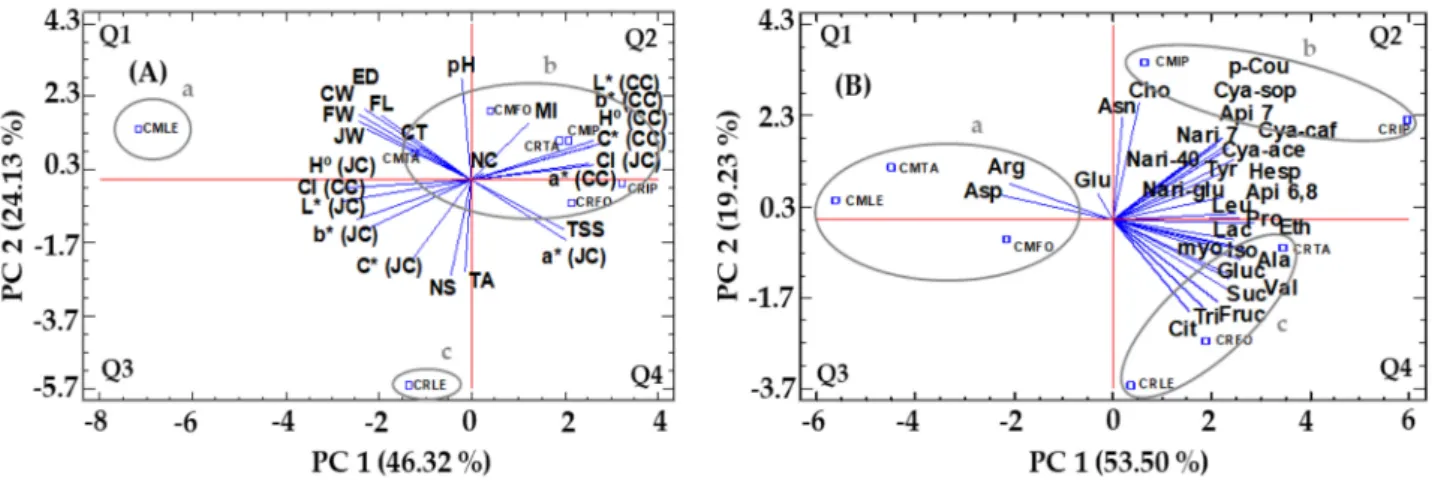
The results of the PCA by which they were organized by rootstock/graft combina- tions showed that the first two main components (PC 1 + PC 2) explained 70.45% of the total variation in morphological and qualitative parameters (Figure4A), and 72.73% for primary and secondary metabolites (Figure4B). Additionally, both figures represent the Pearson’s correlation between the rootstock/graft combinations, which is a very interesting statistical tool to establish relationships between attributes that define the characteristics of the samples.
Figure 4. Principal component analysis of morphological and quality parameters (A) and in- dividual amino acids, organic acids, sugars, phenolic compounds and other metabolites (B) in juice of four blood orange cultivars grafted ontoCitrus macrophylla(‘Tarocco Ippolito’ (CMIP),
‘Tarocco Lempso’ (CMLE), ‘Tarocco Tapi’ (CMTA) and ‘Tarocco Fondaconuovo’ (CMFO)) and Citrus reshni (‘Tarocco Ippolito’ (CRIP), ‘Tarocco Lempso’ (CRLE), ‘Tarocco Tapi’ (CRTA) and
‘Tarocco Fondaconuovo’ (CRFO)). The red lines represent the coordinate axis, while Q1−Q4 in- dicate the different quartiles of the graph. Data set: FW: fruit weight; ED: equatorial diameter;
FL: fruit length; CT: crust thickness; NC: number of carpels; NS: number of seeds; CW: crust weight; JW: juice weight; TSS: total soluble solids; TA: titratable acidity and MI: maturity in- dex; L*,a*, b*, H◦, C* and CI (CC): crust color; L*,a*, b*, H◦, C* and CI (JC): juice color; Ala:
alanine; Arg: arginine; Asp: asparagine; Asn: aspartate; Glu: glutamine; Iso: isoleucine; Leu:
leucine; Pro: proline; Tyr: tyrosine; Val: valine; Cit: citric acid; Lac: lactic acid; Fruc: fructose;
Gluc: glucose; Sucr: sucrose; Myo: myo−inositol; Cho: choline; Eth: ethanol; Tri: trigonelline;
p−cou: p−coumaric acid 4−O−glucoside; Cya−caf: cyanidin 3−O−(600−caffeoyl−glucoside));
Cya−sop: cyanidin 3−O−sophoroside; Cya−ace: cyanidin 3−O−(600−acetyl−glucoside); Api 6,8:
apigenin 6,8−di−C−glycoside; Api 7: apigenin 7−O−(600−malonyl−apiosyl−glucoside); Nari−glu:
naringenin−glucosyl−rutinoside; Nari 7: narirutin, naringenin−7−rutinoside; Hesp: hesperidin, 7−rutinoside; Nari−40: didymin, naringenin−40−methyl−ether 7−rutinoside.
The principal component analysis for morphological and qualitative parameters is shown in Figure4A. PC 1 (explains 46.32% of the variance) was positively correlated mainly with the variablesL*,a*,b*andH◦of crust. However, it was negatively correlated mainly with the variables CI of crust, andL*,b*andH◦of juice. PC 2 (explains 24.13% of the vari- ance) was positively correlated mainly with the variable’s equatorial diameter, fruit length and crust weight. In contrast, PC 2 was negatively correlated mainly with the variables number of seeds,C*of juice and titratable acidity. On the other hand, Figure4A shows Pearson’s correlation between rootstock/graft combinations establishing three groups with a correlation greater than 90.0%: (a) ‘Tarocco Lempso’ grafted ontoCitrus macrophylla, (b) ‘Tarocco Lempso’ grafted ontoCitrus reshni, and (c) ‘Tarocco Tapi’ grafted ontoCitrus macrophyllaandCitrus reshni, ‘Tarocco Fondaconuovo’ grafted ontoCitrus macrophyllaand Citrus reshni, and ‘Tarocco Ippolito’ grafted ontoCitrus macrophyllaandCitrus reshni.
The principal component analysis for primary and secondary metabolites is depicted in Figure4B. PC 1 (explains 53.50% of the variance) was positively correlated mainly with the variables cyanidin 3−O−(600−acetyl−glucoside), apigenin 7−O−(600−malonyl−apiosyl− glucoside), alanine, isoleucine, leucine, proline, lactate and ethanol. In contrast, it was negatively correlated mainly with the variables asparagine and arginine. PC 2 (explains 19.23% of the variance) was positively correlated mainly with the variablesp−coumaric acid 4−O−glucoside, cyanidin 3−O−sophotroside, narirutin, naringenin−7−rutinoside, aspartate and choline. However, PC 2 was negatively correlated mainly with the variables citric acid, sucrose and fructose. Additionally, Figure4A also shows Pearson’s correlation
between the rootstock/graft combinations of the assay, establishing three groups with a correlation greater than 90.0%: (a) ‘Tarocco Lempso’, ‘Tarocco Tapi’ and ‘Tarocco Fondacon- uovo’ grafted ontoCitrus macrophylla, (b) ‘Tarocco Ippolito’ grafted ontoCitrus macrophylla andCitrus reshni, and (c) ‘Tarocco Lempso’, ‘Tarocco Tapi’ and ‘Tarocco Fondaconuovo’
grafted ontoCitrus reshni.
3. Discussion
Blood orange fruits are beneficial to human health due to their high content of primary and secondary metabolites that provide them with a high nutritional value [21]. Grafting stems onto rootstocks is a very common agronomic practice used to increase the nutritional and agronomic quality ofCitruscultivars [22]. For this reason, knowledge needs to be generated about the effect of rootstocks on the nutritional quality of blood orange fruits, and this information can be very useful to help select new rootstock/graft combinations that respond to the growing demands for quality by today’s consumers [23]. The study parame- ters indicated that both rootstocks and cultivars had substantial influences on agronomic parameters, overall fruit quality and the content of primary and secondary metabolites. In this sense and in general, statistically significant differences (p< 0.05) were found in the different parameters and metabolites analyzed between the rootstock/graft combinations.
In addition, the analysis of PCA highlighted the influence of the rootstock/graft combina- tions in the biosynthesis of primary and secondary metabolites (Figure4). The results of the PCA analysis confirmed the strong influence of rootstocks and grafts on morphological and quality parameters and in the different primary and secondary metabolites investigated.
The morphological parameters of fruit present a very relevant role in market trends because different consumers demand different types of fruit based on their size or their juice content [21,24]. Regarding the average weight and size of fruit, the rootstock/graft combinations ‘Tarocco Lempso’ and ‘Tarocco Fondaconuovo’ grafted ontoCitrus macro- phyllaexhibited the highest values, as shown in Table1A. These values are similar to those reported by other researchers for blood oranges [2]. However, the fruit of ‘Tarocco Lempso’ and ‘Tarocco Ippolito’ grafted ontoCitrus reshniwas characterized by smaller sizes (Table1A), which may limit their use for the fresh market, but they may be suitable for juice extraction [21,25]. During periods of commercial shelf life, the crust is the main barrier of the fruit against abiotic and biotic factors that may negatively affect its quality. In this way, the crust thickness is one of the most important factors related to the disorders of fruit quality that is observed during the transport and storage of the same [26]. Therefore, crust thickness is a characteristic to take into account when analyzing the effect of rootstocks on the agronomic parameters ofCitruscultivars. Table1A displays the rootstock/graft combinations that exhibited the highest values in crust thickness. These were ‘Tarocco Tapi’,
‘Tarocco Ippolito’, and ‘Tarocco Lempso’ grafted ontoCitrus macrophylla, which are similar to what has been reported by other authors for blood oranges [2,21]. These combinations are highly suitable for long-distance transportation. Our study (Table1A) supported this observation, and a review by [23] found that whenCitruscultivars were grafted ontoCitrus macrophylla, a thicker rind was induced in most rootstocks [27,28] observed that in addition to affecting the thickness of the crust, being able to increase or decrease rootstocks can also affect the juice content. In fact, the juice content is one of the most important quality param- eters inCitrusfruits since it is an essential requirement for their commercialization [2,21]. It has been found that rootstocks have a particular influence on the juice content by absorbing water from a singular way or by affecting the crust thickness and granulation [23]. In our results it was observed, under the same climatic and edaphic conditions, that the cultivars
‘Tarocco Lempso’ and ‘Tarocco Fondaconuovo’ grafted ontoCitrus macrophyllashowed statistically different juice content values (p< 0.05) to themselves grafted ontoCitrus reshni (Table1A), which corroborated that rootstocks influenced juice content significantly [29].
Ref. [30] also noted the importance of rootstocks in juice content, however, it was noted that the effects of rootstocks on fruit juice also depended on annual climatic conditions and soil factors. Another particularly interesting attribute presented by rootstock/graft
combinations in the present study was the total or almost total absence of seeds, especially in the ‘Tarocco Tapi’ cultivar (Table1A), being another main attribute demanded by current consumers [21].
The most relevant qualitative parameters in juice are pH, TSS, TA and MI [2], although within them TSS and TA are the main parameters when representing the levels of sugars and acids, which directly affect consumer preferences [31]. The effect produced by root- stocks on both qualitative parameters has been related to its relationship with water [23].
This relationship may be due to the particularities of each rootstock with the capacity of absorption, conduction and distribution of water by the roots or with the water potentials of leaves and stems [32]. In our study, we observed pH values ranging from 3.15 in ‘Tarocco Lempso’ grafted ontoCitrus reshnito 3.68 in ‘Tarocco Ippolipo’ grafted ontoCitrus macro- phylla(Table1B), being very similar to the values of other cultivars of blood oranges such as
‘Tarocco Messina’, ‘Tarocco Meli’ or ‘Moro’ [33], ‘Sanguinello’ [34], ‘Moro’ [35], or ‘Tarocco Meli’, ‘Tarocco Rosso’ and ‘Moro’ grafted ontoCitrus macrophylla[21]. In relation to TSS, among the same blood orange cultivars grafted ontoCitrus macrophyllalower values were obtained than when grafted ontoCitrus reshni(Table1B). These results were similar to those obtained by [21] in ‘Sanguinelli’, ‘Tarocco Sant’Alfio’, ‘Tarocco Dalmuso’, ‘Tarocco Rosso’,
‘Tarocco Gallo’, ‘Tarocco Scirè’, ‘Tarocco Meli’ and ‘Moro’ grafted ontoCitrus macrophylla or those suggested by [34] in ‘Moro’ and Sanguinello. In this sense, [36] it concluded that the TSS values of blood cultivars depend on the maturity of the fruit, environmental conditions or agronomic practices. The effect of cultivars and rootstocks on TA was also observed, whose maximum value was identified in ‘Tarocco Lempso’ grafted ontoCitrus reshni, and minimum in ‘Tarocco Ippolito’ grafted ontoCitrus macrophylla, and the rest of the rootstock/graft combinations obtained values between 9.37 and 13.54 g citric acid L−1 (Table1B). Our results were similar to those obtained by [21] in the cultivars ‘Tarocco Sant’Alfio’, ‘Tarocco Dalmuso’, ‘Tarocco Rosso’, ‘Tarocco Gallo’, ‘Tarocco Scirè’ and ‘Moro’
grafted ontoCitrus macrophylla. Possibly, the difference between the acidity values observed in our results was due to the difference between physiological and development states of the fruit being different genotypes or by the orientation of the fruit on the tree, since the incidence of UV radiation was not the same in shaded areas as in sunny ones [2]. MI is an important qualitative parameter inCitrusfruits and is the most commonly used method to deduce the level of ripeness inCitrus[20]. In fact, the European Commission (EC) when it regularized the MI requirements in orange fruits decreed the minimum sugar/acid ratio for marketing, which must be at least 6.5, regardless of the species or cultivar [37]. In the present study, the highest value of MI was obtained in the ‘Tarocco Ippolito’ cultivar grafted ontoCitrus macrophylla(17.4) (Table1B), being very similar to that described by [36] in white oranges grafted onto ‘Carrizo’ citranges, ’FA13’ and ’Alemow’. The rest of MI values remained between 9.1 in ‘Tarocco Lempso’ grafted ontoCitrus reshniand 13.7 in ‘Tarocco Fondaconuovo’ grafted ontoCitrus macrophylla(Table1B), being similar to those described by [21] in ‘Tarocco Sant’Alfio’, ‘Tarocco Dalmuso’, ‘Tarocco Scirè’ or ‘Moro’ grafted onto Citus macrophylla.
In the agri-food industry, color is used as a criterion for the selection of suitable fruit pieces for marketing [4]. Therefore, the pigmentation of the fruit is an important part of the commercial aspect and is highly appreciated for its nutritional value, being the result of the presence of bioactive compounds [38]. The degree of pigmentation in crust and juice depends on several factors such as environment, cultivars or rootstocks [2]. Ref. [39] studied the effect of rootstocks on crust color, noting that rootstocks affected color development in
’Ruby Red’ grapefruits. In fact, when grafted onto ’Cleopatra’ tangerines they developed a yellowish color, and when grafted onto ’Swingle’ citrumelos they developed a pink color. However, [28] they reported that the observed differences in the color of ’Lane Late’
and ’Delta’ orange cultivars grafted onto five different rootstocks were due to the state of maturity, and not to the rootstock effect. In general, in the present study there was no clear influence of rootstocks on color parameters, neither in crust nor in juice (Table2);
however, the color parameters obtained ranged between cultivars and rootstocks, although
they did not deviate from the values obtained by other authors for other blood orange cultivars [2,23]. Another interesting aspect to note is that the color of the crust and juice were not linked, which agrees with the results obtained by [2,4,21]. This could be due to the fact that biosynthesis pathways of anthocyanins, the main pigments that give it the characteristic red/purple color, differ between crust and juice [40].
A fundamental characteristic that determines the quality and authenticity of the juice is the profile of free amino acids present [41]. In this sense, it has been proven that amino acids are important pieces in the quality of the taste [42] and aroma [43] of food. As can be seen in Table3A of the study, the essential amino acids Ala, Arg, Asp, Asn, Glu, Iso, Leu, Pro, Tyr and Val were identified. On the other hand, the total amount of essential amino acids ranged from 3134.17 to 4274.87 mg L−1, with the highest value observed in ‘Tarocco Tapi’ grafted ontoCitrus reshniand the lowest in ‘Tarocco Fondaconuovo’ grafted onto Citrus macrophylla, as depicted in Figure2A. In addition, it is interesting to note that, with the exception of Asn, there was significant interaction between cultivars and rootstocks for the amino acids detected, observing that cultivars grafted onto theCitrus reshniincreased the amounts of amino acids. Therefore, we suggest that, having the same cultivars grown under the same environmental conditions, there was a clear effect of rootstocks on amino acid metabolism. [44] obtained similar results in blood orange juice, with mean values of Pro, Ala, Val, Iso or Arg, close to 1020.19, 66.52, 17.18, 7.54 and 580.32 mg L−1, respectively, remaining within the range of values for the same amino acids in our study. [21] also identified and quantified at similar concentrations the same amino acids from our study in the ‘Sanguinelli’, ‘Tarocco Sant’Alfio’, ‘Tarocco Dalmuso’, ‘Tarocco Rosso’, ‘Tarocco Gallo’,
‘Tarocco Scirè’, ‘Tarocco Meli’ and ‘Moro’ cultivars grafted ontoCitrus macrophylla. In their study, the total amount of essential amino acids ranged from 3821.61 to 2256.88 mg L−1in
‘Tarocco Sant’Alfio’ and ‘Moro’, respectively, and the highest concentrations of individual amino acids were in Pro, Asp and Asn and the lowest in Iso, Leu and Val, broadly coinciding with our results.
Organic acids are considered one of the most important metabolites in the overall quality of juice [2,26]. The blood oranges analyzed in the study stood out for their high content of citric acid, the main organic acid inCitrus[2]. Our results were similar to those obtained by [4] in ‘Sanguinelli’, ‘Tarocco Rosso’ and ‘Tarocco Ippolito’, with values of 10.23–
16.22, 11.69–15.92 and 8.64–12.36 g Kg−1, respectively, by [45] in ‘Moro’ and Sanguinello, with values of 11.30 and 13.40 g L−1, respectively, and by [21] in ‘Sanguinelli’, ‘Tarocco Sant’Alfio’, ‘Tarocco Dalmuso’, ‘Tarocco Rosso’, ‘Tarocco Gallo’, ‘Tarocco Scirè’, ‘Tarocco Meli’ and ‘Moro’ grafted ontoCitrus macrophylla, with values of 11.96, 12.75, 11.43, 8.43, 7.28, 10.98, 14.60 and 12.75 g L−1, respectively. The second organic acid identified in the study was lactic acid with values much lower than citric acid (Table3B). On the other hand, the cultivars grafted ontoCitrus reshniobtained higher values in the concentrations of organic acids than withCitrus macrophylla, observing statistically significant differences (p< 0.05) in the total concentrations of organic acids (Figure2B), and there was a significant interaction between the rootstock and the cultivar (Table3B), which indicated a clear differentiating effect of rootstocks, being the same as cultivars under the same environmental conditions, coinciding with what was stated by [23] in its rootstock review article on the quality of Citrusfruits. Similarly, ref. [46] found different results when evaluating four rootstocks for ‘Marisol’ clementines, since the fruits grafted onto ‘Carrizo’ citranges had a higher concentration of organic acids than those from sour oranges. Ref. [28] observed that fruit grafted onto ‘Volkamer’ lemons had the lowest organic acid contents, while the fruit grafted onto ’Agria’ oranges and ‘Carrizo’ citranges had the highest levels. The rest of the main organic acids present inCitrusfruits were not detected by1H NMR when obtaining concentrations below 10 mM. This result coincides with that obtained by [21]
in ‘Sanguinelli’, ‘Tarocco Sant’Alfio’, ‘Tarocco Dalmuso’, ‘Tarocco Rosso’, ‘Tarocco Gallo’,
‘Tarocco Scirè’, ‘Tarocco Meli’ and ‘Moro’ grafted ontoCitrus macrophylla, identifying only citric acid and, in much lower concentration, lactic acid. Following this line, ref. [2] obtained concentrations of ascorbic acid and malic acid of the order of 80 and 10 times, respectively,