The guide offers advice on writing TFGs and TFMs in three disciplines - the humanities, the natural sciences and the social sciences - focusing on the differences in structure and style in each. Here, the focus is on research writing in general, and the principles can be applied to all disciplines - natural sciences, social sciences and humanities - and all levels - bachelor's degree, master's degree, doctorate or even professional research.
Subjects and verbs
New nutritional technologies and innovative techniques for optimizing yields and increasing profits in a context of rising production costs is the subject of the section below. The section below discusses new nutritional technologies and innovative techniques for optimizing yields and increasing profits in a context of increasing production costs.
Paragraphs
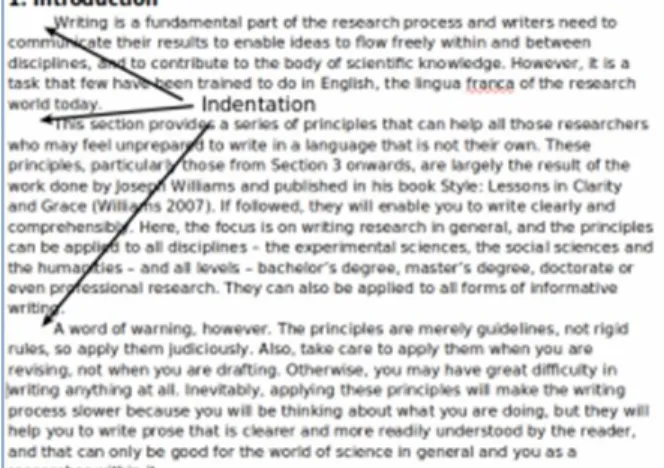
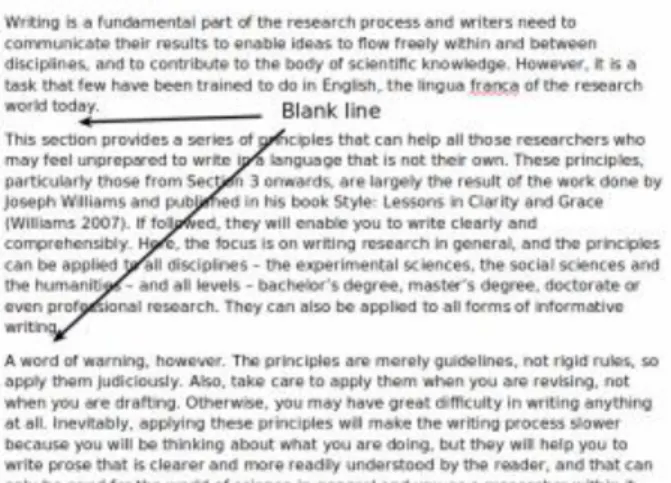
A page with paragraph breaks can be visually attractive, while a page without breaks can be quite intimidating. There are no fixed rules about the length of individual paragraphs, because much can depend on the medium, topic, audience and purpose; but in academic texts an average of two to three paragraph breaks per page.
By counting the seconds between seeing the light and hearing the thunder, you can estimate your distance from a lightning strike or storm. It is more specific than the first sentence of paragraph 1: it deals with how we can approximate the distance to the storm from the sound it makes.
At a distance of 1 km from the outlet channel, thunder is generally heard as a rumble punctuated by several claps. In general, thunder cannot be heard at distances of more than 25 km from the outlet channel.
EXPLOIT REPETITION
Since lightning strikes usually occur near the center of a storm, the resulting thunder provides a method of approximating the distance to the storm. A gun report is heard when you see smoke or a flash from a gun.
USE TRANSITIONS
MOVE FROM OLD INFORMATION TO NEW
Active or passive
He also acknowledges that "Passive has its place", but then only mentions that one of those places is the methods section. And the journal Ophthalmology uses the passive to instruct authors to use the active ("The active voice is much preferred to the passive, which should be used sparingly.").
To add to the confusion, recent research suggests that there is little basis for the claim that texts written in the active voice are easier to understand than texts that prefer the passive voice (Millar & Budgell, 2019). Below are some principles that will help you decide when to use one or the other.
Comprehension of the three text types was determined by dividing the time taken to read the texts by the number of correct answers given to a series of questions after the reading.
By rewriting the sentence using the passive, we return the main character to the subject position and improve coherence. Ayahuasca is a psychoactive substance from the Amazon, usually prepared with two main ingredients: .. the vine Banisteriopsis caapi, and the shrub Psychotria viridis.
If we follow it with the active sentence, the first information we come across is the stars and the fallen marbles, which does not refer to anything in the text we have just read. However, if we follow it with the passive sentence, the first words repeat the information we have just read, and the last words give information about size and volume, which is related to the beginning of the third sentence.
Parallelism
Physiological changes in hemostasis are necessary in the first stages of pregnancy to ensure adequate placentation, and in the last stages they have a protective function against possible bleeding during childbirth. Physiological changes in hemostasis are necessary in the first stages of pregnancy to ensure adequate placentation and in the last stages to protect against possible bleeding during delivery.
Concision
In the nominal sentence, the focus is on stabilization, the subject is four words long, and the whole sentence is 10 words long. In the nominal sentence, the emphasis is on separation, the subject is eight words long, and the whole sentence is 16 words long.
The constructions used above (as regards ... and in relation to) draw attention to a topic that was probably mentioned at least once in the previous text and is later repeated in the same sentence in pronominal form (they and it, respectively). Your sentences will be more concise and easier to understand if you make direct statements using the subject as the subject of the verb in the main clause.
Structure and content
Introduction
- Cover page
- Acknowledgements
- Table of contents
- Titles
In all respects, the table of contents lists the various sections of the paper along with page numbers, which you can automatically generate in Word using Heading styles for your section headings. Use sentence-style capitalization for section headings, which means writing only the first word and all proper nouns.
A good title contains as few words as possible that adequately describe the content and purpose of your research. The title is the part of the paper that is read the most and usually the part that is read first.
GENERAL CONSIDERATIONS
After concise skills and familiarity with your discourse community, the title should reflect your author's voice: the style and characteristics of your writing that set it apart from other people's. But to argue the case, the writer will have to quickly confirm his knowledge of the subject and find an authoritative voice, and this is where the title is important.
TITLE STYLES
Jordi Savall se verwerking van The Song of the Sibyl for a Solo Female Voice: The Arrangement of the Song for Montserrat Figueras. Jordi Savall se verwerking van The Song of the Sibyl vir 'n solo vroulike stem met Montserrat Figueras.
Full-sentence titles are less common in humanities papers, which generally deal with questions to which there are no definitive answers, let alone results, and whose evidence as such is textual (written documents, films, paintings, scores, etc.). ).
NOMINAL TITLES
COMPOUND TITLES
FULL-SENTENCE TITLES
Abstract and keywords
In all areas, the abstract should summarize the main aspects of your paper in an order that generally encompasses the purpose of your paper and the research problems you address; your research or methods; your findings following an analysis; and a brief summary of your interpretations and conclusions. First, a keyword can actually be a two to four word phrase, and a phrase can sometimes be more effective in directing a reader to your article than a single word.
ABSTRACT
To examine the role of the newspapers in the political events of this period, the paper examines a sample of newspapers published in Washington and New York between 1915 and 1920. It also evaluates the aspects they should include in each section and the guidance they provide. are given on developing the topic of the paper.
KEYWORDS
Introduction
Because the reader will have learned the important details about the content of your paper in both the title and the abstract, the beginning of the introduction is a good place to introduce some kind of example from the middle of your topic rather than repeating your objectives. or resubmit your main claim. The last paragraph of the introduction may return to the details of the first when it does this, so that it reminds the reader of the raw material they and you must constantly reconsider.
GENERAL GUIDELINES
The problem, of course, is that some of the adults in charge can't even see it: Walt Disney Pictures may live happily ever after, but more than one kid who saw the 2017 adaptation of Beauty and the Beast was disappointed by the finale of strange but somehow majestic beast. If your presentation properly addresses these five questions, you've probably included most of the necessary content.
VERB TENSES
ACTIVE VOICE AND THE FIRST PERSON
When thinking about what to cover, consider the type of approach used for a problem statement. Only use the third person plural we or us if you performed the actions as part of a group or, possibly, if you are referring to people or society in general (for example, "most of us do not expect to experience space travel " ), although it's unlikely you'll need to do this very often.
THE IMPERSONAL IT
If you, the writer, are the agent performing the action in the sentence (this is likely to be the case very often, since you are the person leading the project), simply use the first-person pronouns I or my.
NOMINALISATION
As already explained, it is generally better to avoid nominalizations (see Avoid nominalizations), i.e. use the verb form rather than the nominalization of the verb. My goal is to conduct an analysis of how this process affects temperature regulation.
DEGREES OF CERTAINTY AND HEDGING
For more examples of hedging, as well as explanations of why it is best kept to a minimum, see Avoid Hedging to Profits.
LITERATURE REVIEW
ESTABLISHING A TERRITORY (THE SITUATION)
It indicates the origins of the question you have chosen to focus on and provides context in terms of theory, research and practice. The information you provide shows readers that you have a general understanding of the research problem you have chosen to investigate and that you have enough knowledge to trust your judgment, analysis, and findings.
ESTABLISHING A NICHE (THE PROBLEM)
The information provided in the first of three steps of a typical introduction defines and describes the area of research with reference to the existing literature. The information in Step 2 makes a clear statement about a theoretical or practical issue in the literature that requires attention, improvement, or further investigation.
OCCUPYING THE NICHE (THE SOLUTION)
- Main body
The main part of the paper is where the different ambitions reveal their contrasting research goals. In the natural sciences, this part of the paper generally includes three distinct sections: Methods, Results, and Discussion.
THE IDEA OF THE DISCUSSION
In the humanities, this part of the paper is given over to just one section, also called Discussion but very different in nature from the section with that name in the natural sciences. However, in all three directions, the main part of the paper is obviously a part where you have to be very careful and make sure that the content and the content of the other parts remain consistent and coherent.
GETTING STARTED: SOME GENERAL POINTERS
Unlike other disciplines, such as the pure sciences - in which the expression of personal opinion is not conventionally expected or even accepted in written texts - in the humanities you should feel free to state your own opinion clearly and unequivocally (using making forms such as in my opinion, I think, I believe or my opinion). But as an important part of the academic discussion, you should also present your ideas with reference to the critical opinions expressed in the literature of your own field (for example, published academic studies such as monographic works, chapters or journal articles).
WRITING CRITICALLY
This means you need to examine and evaluate the sources that support and undermine your idea. However, you also need to make sure that your sources are reliable, that they come from recognized experts, or at least from people whose work is accepted in your academic field.
WRITING CONCISELY
Primary sources
Be careful when incorporating the quote into the structure of your own sentence. This will come across as clumsy writing on your part and indicates that you have not sufficiently integrated the source into your own text.
Secondary sources
The path of particles in the fluid, with some projected toward the outer wall by centrifugal force, is shown in Figure 4. The path of particles in the fluid, with some projected toward the outer wall by centrifugal force.
RESULTS
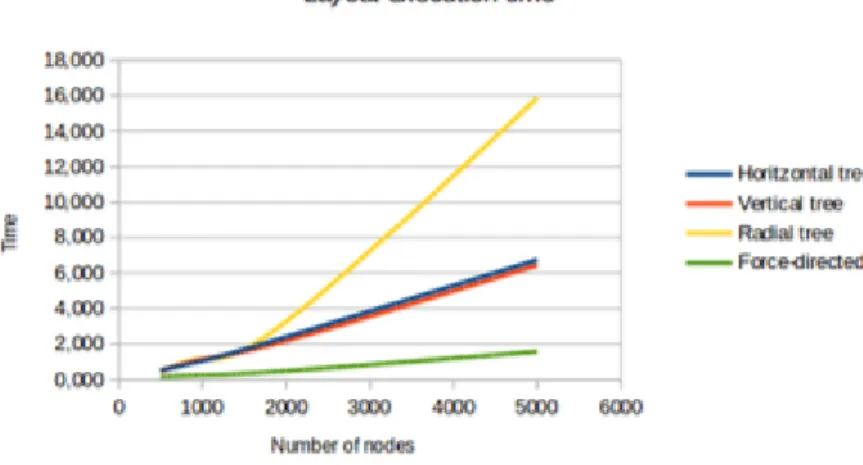
Line graphs can be used to illustrate change; they are often used to illustrate change over time, for example. Scattergrams are used to illustrate two variables at once and are often used to highlight a pattern or trend.
DISCUSSION
- Interpret results
- Compare results with the literature
- Explain results
- Evaluate results
In this move, tell readers what your findings mean in relation to the field of research and the questions raised in the introduction. Most of the key sentences are written in the present tense and often in the passive.
Conclusion
By the end of the film, Tristana is free, but still has challenges to face and overcome. For example, using three abstract nouns at one point in a text (criticism, reaction, and rebellion) not only uses the "rule of three" (a common writing technique that adds emphasis and rhythm to your text); it also relates to the film's main themes, leaving the reader with the final answer to the paper's title.
Referencing styles
A good way to make referencing (and writing your bibliography) easier starts at the research stage. The most common referencing styles in the natural sciences are APA (American Psychological Association), Chicago, and Harvard.
Editing your text
Make sure you haven't left out anything important, but also include only the most relevant arguments in your discussion, the ones that will lead the reader to the clear conclusions you've drawn.
Bibliography