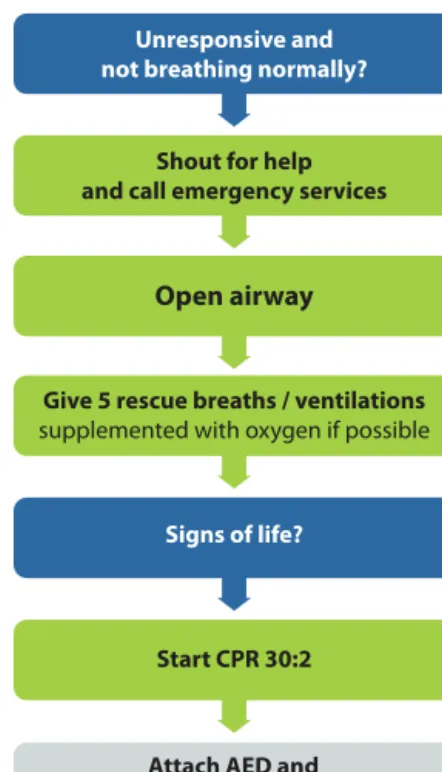
High-quality CPR remains critical to improving outcomes. The guidelines for compression depth and rate have not changed. CPR providers should provide chest compressions of sufficient depth (at least 5 cm but not more than 6 cm) at a rate of 100-120 compressions min-1. breathings/ventilations use approx. 1 s to inflate the chest with sufficient volume to ensure that the chest compressions are visible. The ratio of chest compressions to ventilations remains 30:2. Do not interrupt chest compressions more than 10 times to provide ventilation. This section has been structured to cover the potentially reversible causes of cardiac arrest that must be identified or excluded during any resuscitation. thrombosis (coronary and pulmonary); toxins (poisoning). Patients receiving fibrinolytic therapy in the ED of another PCI center should be transported, if possible, prior to routine angiography (within 3–24 hours of fibrinolytic therapy) rather than being transported only if the presence of ischemia.
Regional systems, including cardiac arrest centers, should be encouraged as there is an association with increased survival and improved neurological outcome of out-of-hospital cardiac arrest victims. Recognizing cardiac arrest can be challenging. Both bystanders and emergency responders (emergency medical dispatchers) must diagnose cardiac arrest immediately to activate the chain of survival. Checking the carotid pulse (or any other pulse) has proven to be an accurate method of confirming the presence or absence of circulation.38–42 Agonal breathing may be present in 40% of victims in the first minutes after cardiac arrest, and if responded to as a sign of cardiac arrest, is associated with higher survival rates.43 The importance of agonal breathing should be emphasized during basic life support training.44,45 Bystanders should suspect cardiac arrest and initiate CPR if the victim is unresponsive and not breathing normally. Bystanders should suspect cardiac arrest in any patient with epileptic seizures.46,47.
The ERC therefore endorses the ILCOR recommendations that all CPR providers should perform chest compressions for all patients in cardiac arrest. CPR providers who are trained and able to perform rescue breaths should perform chest compressions and rescue breaths as this may provide additional benefit to children and those experiencing an asphyxial cardiac arrest or where the response time of the EMS is extended.11 5. Early recognition of the deteriorating patient and prevention of cardiac arrest is the first link in the chain of survival.13 Once cardiac arrest occurs, only about 20% of hospital cardiac arrest patients survive to go home.143,144 Hospitals should provide a system of care which includes: monitoring of the patient's vital signs, (c) clear guidance (e.g. via call criteria or early warning scores) to assist staff in the early detection of patient deterioration, (d) a clear, unified system for calling for help, and (e) appropriate and timely clinical response to calls for help.145 Prevention of out-of-hospital sudden cardiac death.

Collapsed / sick p atient
Shout for HELP & assess patient
Signs of life?
In-hospital Resuscit ation
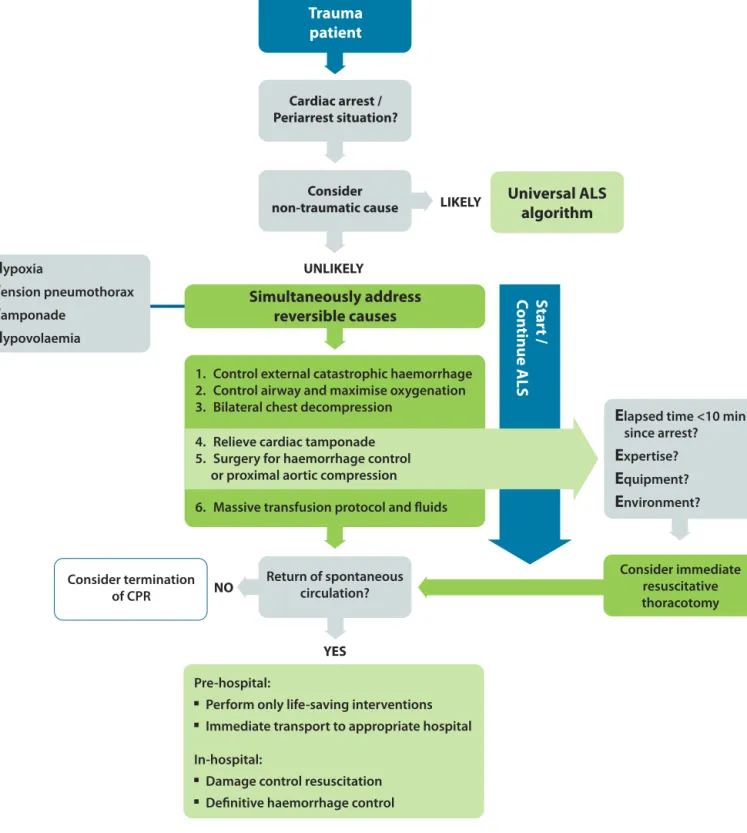
Several studies have examined the use of ultrasound during cardiac arrest to detect potentially reversible causes. 215–217 Although studies have shown that the use of this imaging modality improves outcome, there is no doubt that echocardiography has the potential to detect reversible causes of cardiac arrest. Integrating ultrasound into advanced life support requires consideration of ability training, if interruptions in chest compressions occur, they should be minimized. Fibrinolytic therapy should not be used routinely in cardiac arrest. Consider fibrinolytic therapy when cardiac arrest is caused by proven suspected acute pulmonary embolism. After fibrinolysis during resuscitation for acute pulmonary embolism, survival and good neurologic outcome have been reported in cases requiring more than 60 minutes of resuscitation. If a fibrinolytic agent is given under these circumstances, consider performing CPR at least 60-90 minutes before resuscitation attempts are completed. 258–260 Liquid CPR is not a contraindication for fibrinolysis. Traumatic cardiac arrest (TCA) has a very high mortality rate, but in those where ROSC can be induced, the neurologic outcome of survivors appears to be much better than in other causes of cardiac arrest.289,290 It is crucial that medical cardiac arrest is not misdiagnosed. diagnosed as TCA but should be treated with the universal ALS algorithm.
In cardiac arrest caused by hypovolaemia, cardiac tamponade or tension pneumothorax, chest compressions are probably not as effective as in normovolemic rest.291,292 Cardiac arrest due to acute pulmonary embolism is the most serious clinical presentation of venous thromboembolism.300 The reported incidence of cardiac arrest due to pulmonary embolism2- 9% of all OHCAs. Cardiac arrest after major cardiac surgery is relatively common in the middle postoperative phase, with reported incidences of emergency resternotomy being an integral part of resuscitation after cardiac surgery, once all other reversible causes have been ruled out. dicedinasystole or PEA, if different.
Depending on the cause of arrest and the severity of the post-cardiac arrest syndrome, many patients will require multi-organ support and the treatment they receive during this post-resuscitation period greatly impacts the overall outcome and, in particular, the quality of neurological recovery. patients. The post-cardiac autorest syndrome includes post-cardiac autorest brain injury, myocardial dysfunction after cardiac arrest, the systemic ischemia/reperfusion response, and the ongoing accelerating pathology. The severity of this syndrome will vary with the duration and cause of the cardiac arrest. Observational studies also indicate that optimal results after OHCA are achieved with a combination of TTM and PCI, which can be incorporated into a standardized post-cardiac arrest protocol as part of an overall strategy to improve neurologically intact survival.401-403.
A period of hyperthermia (hyperpyrexia) is common in the first 48 hours after cardiac arrest. Several studies document an association between post-cardiac autorest pyrexia and poor outcomes. Although the effect of elevated temperature on outcome has not been proven, it seems reasonable to treat hyperthermia occurring after cardiac arrest with antipyretics and to consider active cooling in unconscious patients.

Paedi atric basic li fe suppo rt
- Ensure the safety of rescuer and child 2. Check the child’s responsiveness
- Keeping the airway open, look, listen and feel for normal breathing by putting your face close to the child’s face and
- Assess the child’s circulation Take no more than 10 s to
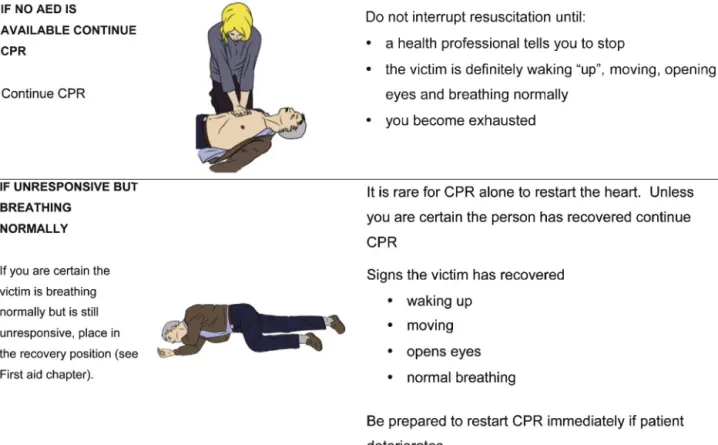
- Do not interrupt resuscitation until
Breathe in and cover the baby's mouth and nose with your mouth, making sure you have a good seal. If the nose and mouth cannot be covered in an older infant, the rescuer may attempt to cover only the infant's nose or mouth with the infant's mouth (if using the nose, cover the lip to prevent escape) (Figure 1.18). The sole rescuer compresses the sternum with soft fingertips (Figure 1.20). If there are two or more rescuers, use the surrounding technique. Place both thumbs flat next to each other on the lower half of the sternum (as above) with the tips facing the baby's head. Spread both hands with a flipper Fingers should support the baby's back. In both methods, press the lower sternum for at least one-third of the infant's anterior-posterior dimension 'schestorby4cm.512. To avoid compressing the upper abdomen, look for the angle where the lower ribs meet in the middle. Place the heel of one hand and the ring finger over this. Lift your fingers to make sure the pressure isn't working on the baby's ribs. Stand above the victim's stand, with a straightened hand, squeeze the sternum to at least a third of the anterior-posterior dimension of the chest by 5 cm (Fig. For older children or small rescuers, this is most easily achieved with both hands, with the rescuer's fingers closed (Fig. 1.22).

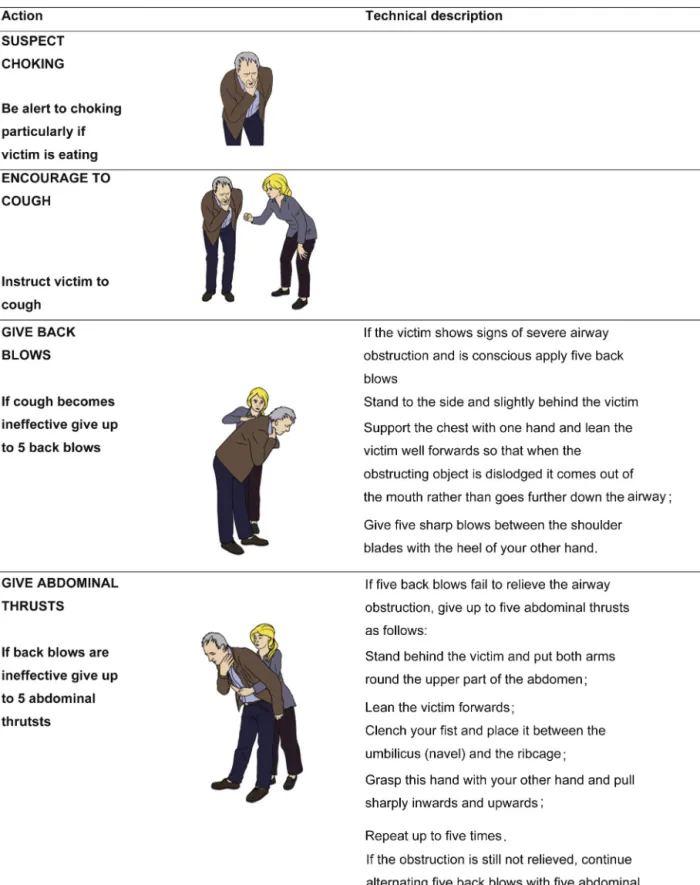
Paedi atric Foreign Body Airway Obstruction Treatme nt
Assess severity
Unconscious Open airway
Conscious 5 back blows
Encou rage cough Continue to check
An unconscious child whose airway is clear and breathing normally should be turned onto the side into the upright position. There are several recovery positions; Once the airway has been opened for rescue breathing attempts, check whether the foreign body can be seen in the mouth. Palpation of a pulse is not reliable as the only determining factor in the need for chest compressions In the absence of signs of life, rescuers (medical and professional) should begin CPR unless they are confident that they can feel a central pulse within 10 seconds (infants–arm or femoral artery; echocardiography staff experts are available, this study can help detect cardiac activity and potentially treatable causes of the arrest.534.
Achieving adequate ventilation and oxygenation – this may require the use of airway adjuncts +/− bag mask ventilation (BMV), the use of alaryngeal mask airway or other supraglottic airway, securing an effective airway by tracheal intubation and positive pressure ventilation. Give a fluid bolus (20 mlkg-1) and/or agents (eg inotropes, vasopressors, anti-arrhythmics) to treat circulatory failure due to hypovolaemia, eg from fluid loss or maldistribution, in septic shock and naphylaxis. Tracheal intubation is the safest and most effective way to maintain the airway. practitioners should perform intubation.
Caregivers usually give excessive ventilation during CPR and this can be harmful. A simple guideline to administer an appropriate tidal volume is to allow the chest wall to rise normally. Use a ratio of 15 chest compressions to 2 breaths and a compression rate of 100-120 min-1. ensure adequate lung inflation Provide normal ventilation (rate/volume) based on the age of the child, and by monitoring end-tidal CO2 and blood gas levels, to maintain normal arterial carbon dioxide tension (PaCO2) and arterial achieve oxygen levels. Both hypocarbia and hypercarbia are associated with poor outcomes after cardiac arrest. are ventilated at 12–24 breaths min −1, according to their normal normal values. Pocket Mask Ventilation (BMV) is effective and safe for a child who requires assisted ventilation for a short period of time.560,561 Assess the effectiveness of BMV by adequately observing when you ascend, monitoring and cultivating your heart rate for breath sounds, and measuring SpO2. Clinical evaluation to determine the level of oxygenation in a child is unreliable; therefore continuously monitor the infant's peripheral oxygen saturation by pulse oximetry. Pulse oximetry can be unreliable under certain circumstances, e.g.
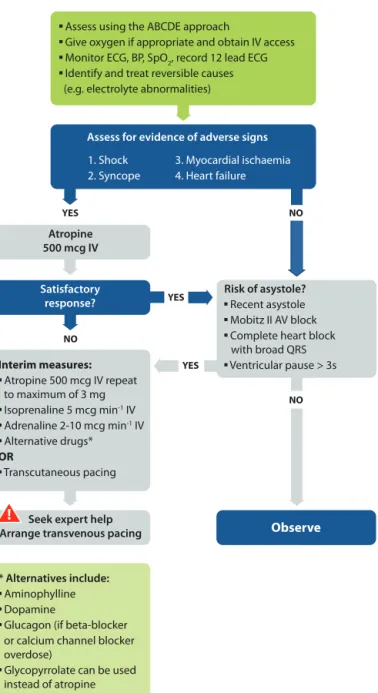
Isotonic crystalloids are recommended as the initial resuscitation fluid for infants and children with some type of circulatory failure. ld'state clinical, using the ABCDE scoring system, to decide whether further treatment is required for further use or another treatment. - chloremic acidosis.584–587. Adrenaline (epinephrine) plays a central role in cardiac arrest treatment algorithms for non-shockable and shockable rhythms. Atropine is recommended only for bradycardia caused by increased vagal-norcholinergic toxicity.596–598 The commonly used dose is 20gkg−1. Inbradycardia with poor perfusion that does not respond to ventilation and oxygenation, first drenaline, nosatropine.
There is no evidence that sodium bicarbonate is routinely tolerated during cardiopulmonary arrest. If a non-manual defibrillator is available, use an AED that can recognize pediatric shockable rhythms. set mature energy levels. For children older than 8 years, use a standard AED with standard paddles. Experience with the use of AEDs (preferably dose attenuated) in children younger than 1 year is limited; their use is acceptable if no other option is available. Place the cardiac monitor leads or adhesive pads as soon as possible to allow differentiation between a shockable and a non-shockable heart rhythm.

CARDI AC ARRES T: NON SHOCKABLE R HYTHM
Adrenaline 0.01 mg/kg
Ventilate / Oxygen ate Vascular Acc ess IO / IV
CARDI AC ARREST – SHOC KABLE R HYTHM
Shock 4J/kg
The ERC Guidelines 2015 Writing Group
Conflicts of interest