General Aspects Concerning Marine and Terrestrial Biodiversity
Introduction
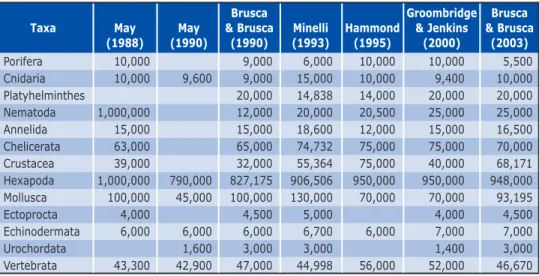
And yet the oceans apparently contain only 2% of the total number of known animal species. They have pointed out the enormous potential for spreading the distribution of marine animals (egg and larval stages), which would work against the genetic.
A comparison of biodiversity on land and sea
The diversity of body plans is therefore much greater than on the continents: of the 30 species reported, 15 (including groups such as echinoderms, urochordates or ctenophores) are exclusive to this biome. Or remember the description in 1983 of the "Megamouth" shark, Megachasma pelagios (4.5 m long) (photo 1.4), discovered in Indo-Pacific waters, or the description of Balaenoptera omurai (2003), a small rorqual (up to 9 m) . in length) from the same ocean.

Biodiversity at the deep-sea floor
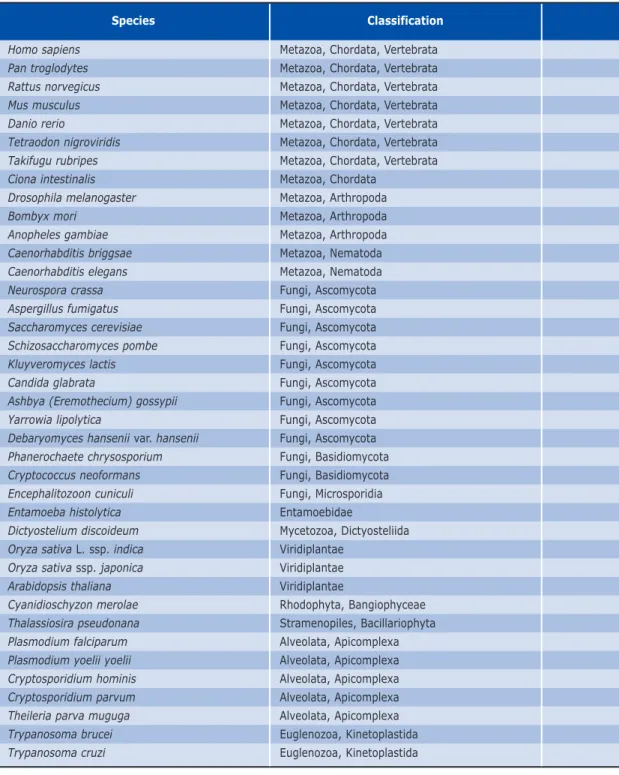
Figure 3.5 (left): Snails from the Lau Basin hydrothermal vents in the western Pacific. Most model organisms (in the sense that they are amenable to laboratory manipulation) with sequenced genomes are members of the lineage opisthokont (animals or fungi) or viridiplantae (green plants and algae), with Dictyostelium discoideum (slime mold). in the amoebozoan lineage) which is an important exception.
The Magnitude of Marine Biodiversity
How many marine species are currently described?
The co-occurrence of the two forms in southern Portugal proves that they represent two reproductively isolated species. The latter must of course be excluded from an evaluation of the extent of known biodiversity.

What is the current rate of progress in inventorying marine
Apart from molluscs, I feel that amateurs play only a minor role in the description of new marine species, probably in the order of 10-15% of the total. Grey, right scale: number of authors involved in the description of new marine species for each of the major taxa in 2002-2003.

Can we predict the global magnitude of marine biodiversity?
- Microbial diversity
- Symbionts
- Extrapolations from samples
- Extrapolations from known faunas and regions
- Approaches using ecological criteria
- Censusing taxonomists’ views
Curtis, Sloan and Scannell (2002) speculate that the total bacterial diversity of the sea is unlikely to exceed 2 million species. The currently known 9,500 marine species of free-living, associated and parasitic copepods clearly represent a small fraction of the actual number of copepods worldwide.

Epilogue
Canyons are also important hotspots for commercial species, such as the red shrimp Aristeus antennatus, one of the largest fisheries in the Catalan Sea (Sardà, Company, and Castellón 2003). The abundance of zooplankton decreases with increasing depth, but increases again in the adjacent waters. It is safe to assume that many novelties await discovery in the vastness of the pelagic realm.
Deep-Sea Ecosystems: Pristine Biodiversity Reservoir and
Introduction
The DEEP SEA is the largest ecosystem on Earth, as approximately 50% of the Earth's surface is covered by an ocean more than 3,000 meters deep. The HMS Challenger expedition marked the beginning of the "heroic" era of deep-sea exploration, and our knowledge has since advanced in parallel with technological developments. The deep sea floor extends from a depth of about 200 m down the continental slope to the abyssal plains m) and reaches the deepest part of the oceans in the Mariana Trench (11,000 m).
History of deep-sea exploration: from Forbes’ “Azoic Zone” to
Therefore, industries such as deep-water fishing or oil and gas exploration are rapidly moving to deep-water areas. In 1977, hydrothermal vents were discovered in the Galapagos Rift in the Pacific Ocean, as a result of geothermal studies investigating the balance of thermal flux on Earth (Lonsdale 1977; Corliss et al. 1979). Today we know that other reducing habitats such as cold numbers, whale traps or oxygen minimum zones also develop chemically driven communities with similar species and physiology to the vent animals (see section 3.3.2).
Deep-sea ecosystems: environmental characteristics and biodiversity
- Heterotrophic ecosystems
- Sediment margins
- Canyons
- Deep-water corals
- Seamounts
- Anoxic areas
- Abyssal plains
- Chemosynthetic ecosystems
- Hydrothermal vents
- Cold seeps
- Other reducing habitats
Canyons are deep incisions on the continental margins, and are common features on European margins such as the Catalan Sea (map 3.1), the south of France or the Portuguese side. Hydrothermal vents are called "oases" of deep-sea life because of the exuberant aspect of their dense populations of large invertebrates. Cold seep communities were discovered in 1983 at about 500 m depth in the West Florida Escarpment in the Gulf of Mexico (Paull et al. 1984).
Technology and deep-sea exploration
Figure 3.10: TOBI (Towed Ocean Bottom Instrument) is one of the UK's deep-sea sonars used to produce acoustic maps of the deep seabed. Figure 3.11: Examples of the international fleet of manned submarines and remotely piloted vehicles used for deep-sea research. The development of stable isotope and biomarker analyzes has also been essential in studying the trophic structure of deep-sea chemosynthetic communities.

Major European deep-sea research programmes
- CoML
- MarBEF
- HERMES
CoMargE (www.coml.org/descrip/c-margins.htm) focuses on the study of continental margins on a global scale, comparing known data from previous and ongoing projects and developing new research. CeDAMar (www.cedamar.org) studies life in, on and above the seabed of abyssal plains. Finally, one of the long-term legacies of the CoML initiative will be OBIS, the Ocean Biogeographic Information System (www.iobis.org).
Management and conservation
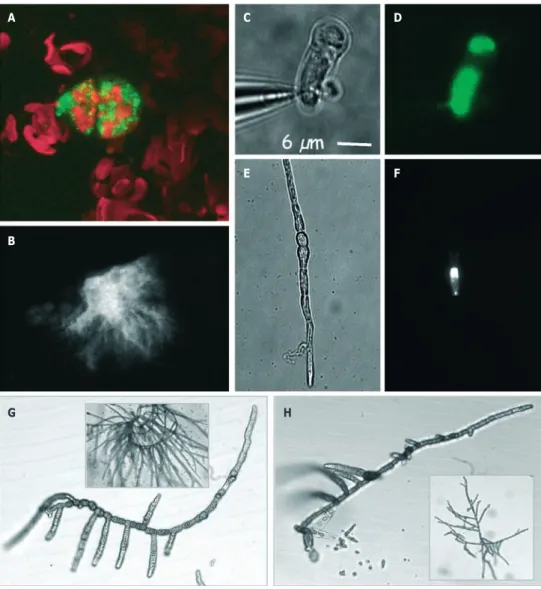
It is remarkable how poorly we understand the biology of the oceans around us. All stages of the Ectocarpus life cycle can be grown in the lab in petri dishes in natural or artificial seawater. One of the difficulties related to the development of such approaches is the phylogenetic diversity of marine biosystems.
Life Suspended in Water: the Plankton
Introduction
The word plankton comes from the Greek word for wandering and is used to describe a community of organisms that are carried around by the movement of ocean currents and water masses. Ocean circulation patterns, stratification of the water column, and upwelling events can have a large effect. Below the depth where net primary production ceases, planktonic organisms exploit marine snow—organic material that sinks from the upper horizons of the water column.
Key challenges
- Discovery
- Hotspots
- Understanding
- The carbon cycle and photosynthesis
- The nitrogen cycle
- Drivers of change: detecting and monitoring change
- Prediction
The photosynthetic activity of bacterioplankton and phytoplankton serves to fix carbon, which is then available to other consumer organisms in the plankton. The scale of the biological pump contributes to the oceans being the largest active carbon pool on the planet. Because of its large colony size, Trichodesmium is the most conspicuous of the marine nitrogen-fixing organisms.

Summary
The goal of the network is to promote the application of high-throughput genomic approaches to the study of marine organisms. Photo 5.4: View of the DNA sequencing laboratory at the Institute for Genomic Research in Gaithersburg, Maryland, USA. After a comparative study of several different members of Ectocarpales, we proposed Ectocarpus siliculosus as a model organism for brown algae.
Marine Genomics and the Exploration of Marine Biodiversity
Introduction
Apart from providing a third of the oxygen we breathe and acting as moderators of global climate change with a significant influence on the human population's terrestrial environment, these vast expanses are also an important source of high-protein food. The genome of the species is currently being investigated by a consortium of American and European pharmaceutical companies. Studies must be more than censuses of the organisms present in individual biosystems, and must include information on the genetic structure of the populations of organisms that make up a biosystem, on functional aspects of interactions within ecosystems and on the ability of populations to adapt to adapt to changing conditions.
Genomic programmes and marine biology
This does not mean that genomic approaches are not relevant to marine biology, but rather that they must be applied in a different way. Metagenomics originated in marine biology and provides a good example of how genomic approaches can be adapted to address questions posed by marine biologists. Therefore the question remains how genomic approaches can be developed for different marine biosystems.
Genomic models for marine biology: the need for model
Functional genomics approaches can then provide insights into the new biological characteristics of a particular group of organisms that are not accessible simply by analysis of the genome sequence. An EST database of sufficient breadth (tissue and developmental/life cycle stages) and depth to represent most of the organism's transcriptome. Sample sequencing of the genome sufficient to provide initial resources for gene identification, repeat content and polymorphism.
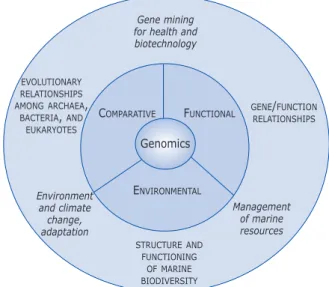
The Marine Genomics Europe Network of Excellence
Some additional details on the objectives of the three different types of joint research are provided in the following paragraphs. The goal of the Comparative Genomics Program is to identify and focus on representative marine model organisms from across the tree of life. This connection between work on model organisms and the direct application of genomic approaches in an ecological context is a very important feature of the work within the network.
Model organisms as a means to apply genomic methods to marine
However, our understanding of the biology of brown algae is limited, especially at the molecular level. Furthermore, existing model systems, for example in opisthokont or green plant genera, are of limited use due to the large evolutionary distances that separate them from brown algae (more than a billion years). In contrast, the genome sizes of members of the Ectocarpales have been found to be considerably smaller (Stache 1993), as we were able to confirm (Peters et al. 2004).
Ectocarpus siliculosus: a model organism for the brown algae
At the time this project began, several brown algae had been used as models to study some aspects of brown algal biology. In June 2004, a consortium of 35 laboratories submitted a proposal for the complete sequence of the Ectocarpus genome to the French sequencing center Genoscope. This meeting provided a forum for coordinating the genome project and allowed discussion of Ectocarpus-related research in a wide range of fields including developmental biology, cell biology, physiology, ecology and systematics, chemical ecology and biochemistry.
The Ectocarpus genome project and coastal biodiversity
Regarding the transfer of information from Ectocarpus to other brown algae, it is important to note that our understanding of the relative influence of factors such as selection, mutation, genetic drift and gene flow on the genetic composition of coastal bio-systems has been significantly hampered. by the limited availability of appropriate genetic markers, especially nuclear markers. By analyzing the conservation and polymorphism of homologous loci in Ectocarpus and other brown algae, genome-wide surveys of. In haploid-diploid species such as Ectocarpus, these parameters are of particular importance for studying the consequences of the simultaneous occurrence of free-living haploid and diploid stages on population genetic structure (eg Engel, Destombe and Valero 2004).
Additional emerging and future genomic model organisms for
The selection of Porphyra yezoensis was based on many of the same criteria behind the selection of Ectocarpus as a model for brown algae. These included genome size (approximately 300 Mbp; Kapraun et al. 1991), the ease with which cultures can be handled in the laboratory, the existence of mutants (Ohme and Miura 1988;. Genomics of green macroalgae currently appears to be less of a priority, perhaps due to the less obvious potential of these organisms for industrial applications compared to red and brown algae.
Conclusion
Her research focuses on the developmental mechanisms leading to the final architecture of the filamentous brown alga Ectocarpus siliculosus, using mainly molecular and cellular approaches. Mark Cock is a group leader at the Roscoff Biological Station and a member of the French National Center for Scientific Research (CNRS). His research includes a wide range of interests, focusing on the ecology of aquatic ecosystems and their role in the functioning of the biosphere.