Protection and safety of participants involved in the Erasmus+ projects are important principles of the programme. At European level, the European Commission's European Education and Culture Executive Agency (EACEA) is responsible for implementing a number of actions of the Erasmus+ programme.
WHAT OTHER BODIES ARE INVOLVED IN THE IMPLEMENTATION OF THE PROGRAMME?
- 20 Andorra, Monaco, San Marino, Vatican City State
- 21 Asia
- 22 Central Asia
- 23 Latin America
- 24 Iran, Iraq, Yemen
- 25 South Africa
- 26 Industrialised: Gulf
- 27 Other
- 28 Faroe Islands, Switzerland, United Kingdom
EU bodies (with the exception of the European Commission's Joint Research Centre) cannot be part of the consortium. 16Subject to signature of the Association Agreements between the European Union and those countries.
P ART B – INFORMATION ABOUT THE ACTIONS COVERED BY THIS GUIDE
In addition, some actions of the program are implemented through specific calls for proposals managed directly by the European Commission or its Executive Agency. For more information, visit the websites of the Commission and the Executive Agency.
KEY ACTION 1: LEARNING MOBILITY OF INDIVIDUALS
Organizations active in the field of education, training and youth will receive support from the Erasmus+ Program to carry out projects that promote different types of mobility. A third important element of innovation and quality of mobility activities is that organizations participating in Erasmus+ have the opportunity to organize mobility activities within a broader strategic and medium-term framework.
MOBILITY PROJECT FOR HIGHER EDUCATION STUDENTS AND STAFF
Grant support for the mobility of students Individual support for physical mobility
Students and recent graduates with fewer opportunities receive an additional amount to the individual support of their EU Erasmus+ grant of EUR 250 per month. Students and recent graduates with fewer opportunities - supplement to individual support for short-term physical mobility.
ERASMUS ACCREDITATION IN THE FIELDS OF VOCATIONAL EDUCATION AND TRAINING, SCHOOL EDUCATION AND ADULT EDUCATION
The relevant definitions and examples of eligible organizations will be published on the website of the responsible National Agency. Where to submit an application Applications must be submitted to the National Agency of the country where the applicant. This decision will be taken separately for each of the three fields and published together with this call on the National Agency's website.
Accreditation can be terminated at any time in case the organization ceases to exist or by agreement of the National Agency and the accredited organization.
MOBILITY FOR LEARNERS AND STAFF IN VOCATIONAL EDUCATION AND TRAINING
The application process for both short-term projects and Erasmus accreditation focuses on the needs and plans of the applicant organization. Preparatory visits can be carried out by any person qualified for staff mobility activities and involved in the organization of the project. To keep it simple, short-term projects include a limit on the number of participants and the duration of the project.
Applications are submitted to the national agency of the country where the applicant organization is based.
MOBILITY FOR PUPILS AND STAFF IN SCHOOL EDUCATION
Teachers or other authorized persons from the sending school must accompany the pupils throughout the duration of the activity. Student group mobility should take place at a host school, unless another location is better justified by the content and quality of the activity. 53The definition of eligible educational programs in each Program Country is determined by the competent National Authority and published on the website of the relevant National Agency.
Organizations that receive a short-term project grant in the first round of applications cannot apply for a second round of the same call for proposals.
ACCREDITED PROJECTS FOR MOBILITY OF PUPILS AND STAFF IN SCHOOL EDUCATION
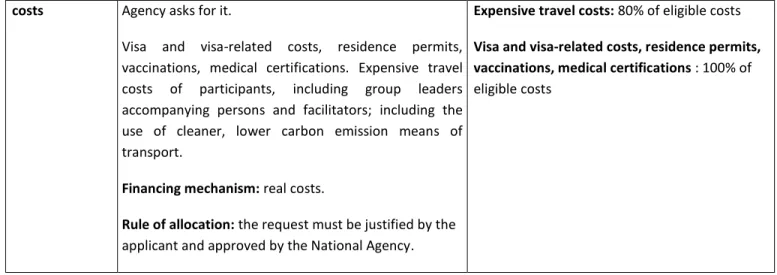
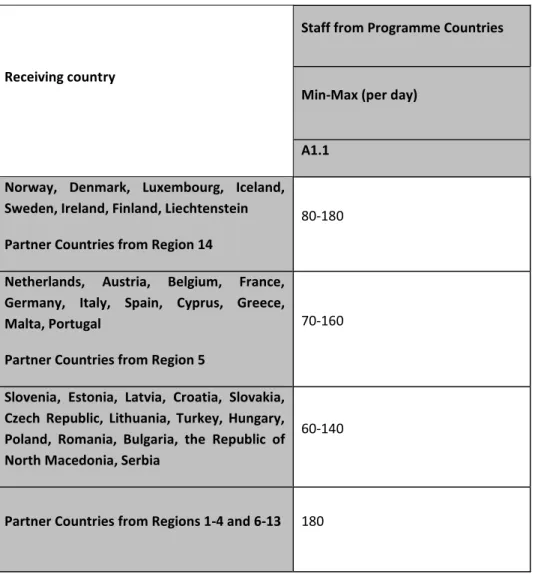
Detailed rules on basic and maximum grant, scoring of the award criteria, weighting of each criterion, the award method and the available budget for accredited projects will be published by the National Agency before the call deadline. Contribution to the travel costs of participants and supervisors from their place of origin to the place of the activity. The applicant must indicate the air distance between the place of origin and the location of the activity57 using the distance calculator supported by the European Commission58.
From the 15th day of activity, the payable rate will be equal to 70% of the base rate.
MOBILITY FOR LEARNERS AND STAFF IN ADULT EDUCATION
Qualified trainers from the sending organization must accompany the learners throughout the duration of the activity. 62The definition of eligible adult education programs and low-skilled adult learners in each Program Country is determined by the competent National Authority and published on the website of the relevant National Agency. Quality of the project design (maximum score 40 points). the proposed project objectives respond in a clear and concrete way to the needs of the applicant organisation, its staff and learners. the proposed activities and their content are suitable for achieving the project objectives. there is a clear work plan for each of the proposed activities. the project includes environmentally sustainable and responsible practices. the project involves the use of digital tools and learning methods to complement their physical mobility activities and to improve cooperation with partner organisations.
Quality of follow-up actions The extent to which:. maximum score 30 points) the applicant has proposed concrete and logical steps to integrate the results of mobility activities into the organization's regular work.
ACCREDITED PROJECTS FOR MOBILITY OF LEARNERS AND STAFF IN ADULT EDUCATION
The quality of the applicant's Erasmus plan has been assessed at the stage of the application for accreditation, so no qualitative assessment will be carried out at the stage of allocation of budgetary resources. The applicant must indicate the air distance between the place of origin and the place of activity66 using a distance calculator supported by the European Commission67. Costs of providing language learning materials and training for participants who need to improve their knowledge of the language they will use for study or training during their activity.
EUR 150 per participant eligible for Online Language Support who cannot receive it due to lack of language or appropriate level, excluding staff on the move shorter than 31 days.
LEARNING MOBILITY IN THE FIELD OF YOUTH
ERASMUS ACCREDITATION IN THE FIELD OF YOUTH
Erasmus accreditation is granted for the period from 2021 to 2027, subject to regular monitoring and continued compliance with the accreditation's requirements and instructions issued by the supervising National Agency. Accredited organizations have the possibility to apply for funding (grant request) for youth mobility activities in a simplified way. Applications are based on the previously approved accreditation plan, so a detailed list and description of the planned activities is not required.
Accredited youth organizations are not eligible for funding under standard youth exchanges and mobility projects for youth workers.
MOBILITY PROJECTS FOR YOUNG PEOPLE - “YOUTH EXCHANGES”
The application form must be accompanied by a schedule of each of the youth exchanges and preparatory visits planned in the project. Place(s) of the activity The activity must take place in the place of one (or several, in the case of itinerant activities) of the organizations participating in the activity. Place(s) of the activity The activity must take place in the country of one of the host organizations.
The extent to which young people are involved in all phases of the activities;

MOBILITY PROJECTS FOR YOUTH WORKERS
A timetable for each of the Professional Development activities, preparatory visits and System Development and outreach activities planned in the project must be attached to the application form. The activities must take place in the country of one (or more, in the case of itinerant activities) of the organizations participating in the activity. Eligible participants Representatives of the participating organizations, trainers and facilitators participating in the main activity.
The extent to which the project contributes to improving the quality of youth work of the participating organizations.
YOUTH PARTICIPATION ACTIVITIES 92
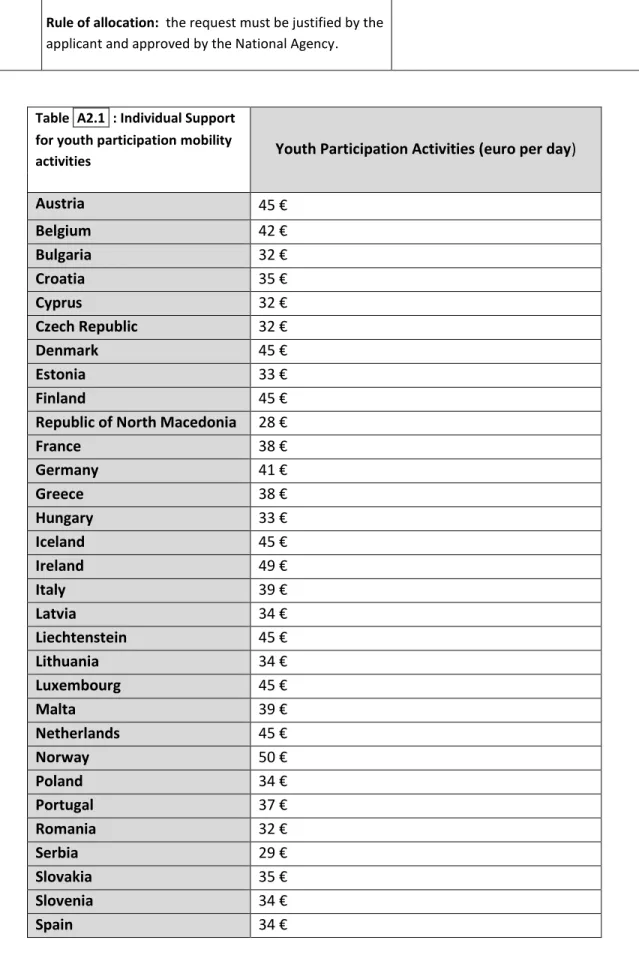
If it is an informal group of young people, one of them will register on behalf of the group. Eligible participants Young people between 13 and 30100 years old residing in the country of the participating organizations and decision-makers relevant to the topics covered by the project. A timeline of the Youth Participation Activities project with all planned activities must be attached to the application form.
A timetable for each of the planned mobility activities and events in the project must be attached to the application form.
KEY ACTION 2: COOPERATION AMONG ORGANISATIONS AND INSTITUTIONS
At the system level, they are expected to trigger modernization and strengthen the response of education and training systems and youth policies to the key challenges of today's world: environmental sustainability, digital transformation, employment, economic stability and growth, but also the need to improve social , civic and intercultural competences, intercultural dialogue, democratic values and fundamental rights, social inclusion, mental health and well-being, non-discrimination and active citizenship, critical thinking and media literacy.
PARTNERSHIPS FOR COOPERATION
Mainstreaming the use of new technologies for language learning is also part of the efforts under this priority. This priority also promotes the development of VET curricula, program offerings and qualifications, which are regularly updated and build on skills intelligence. Projects under this priority could also promote entrepreneurship, creative learning and social entrepreneurship among young people.
Intercultural dialogue, knowledge and recognition of diversity and the promotion of tolerance are key to this priority.
COOPERATION PARTNERSHIPS
For Cooperation partnerships proposals in the field of education training and youth 111 managed by the Erasmus+
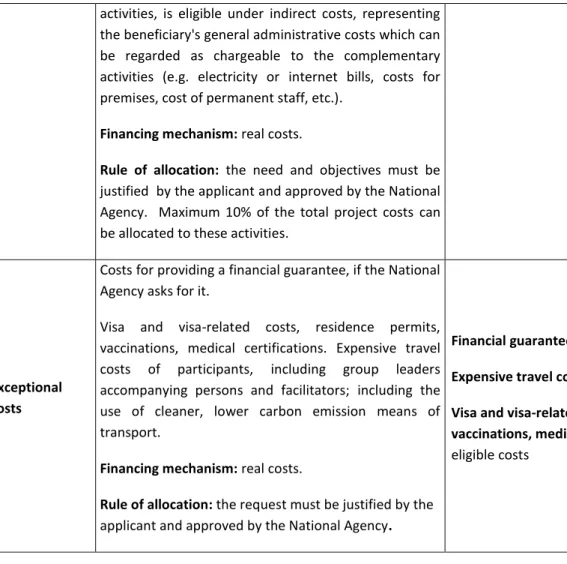
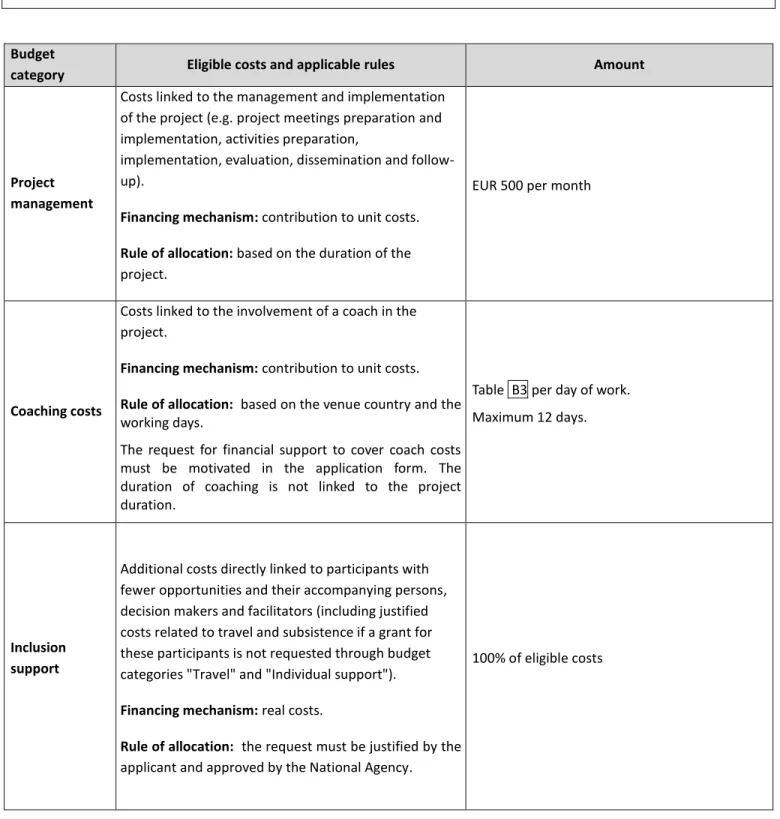
The first item, "project management and implementation" is a cost item that all types of collaborative partnerships can apply for, as they must contribute to costs that any project will incur. The other cost items can only be chosen by projects that will pursue more significant goals in the form of project results, dissemination or embedded teaching, training and learning activities. In addition, extraordinary costs and costs for the participation of people with fewer opportunities can be covered if it is justified by the project's activities/results.
Detailed tables of funding rules with the applicable rates and budget items that make up the budget of these types of projects can be found below, in the section - "Applicable funding rules for cooperation partnership proposals in the field of educational training and youth112 managed at a decentralized level. from Erasmus+ National Agencies".
For Cooperation partnerships proposals in the field of
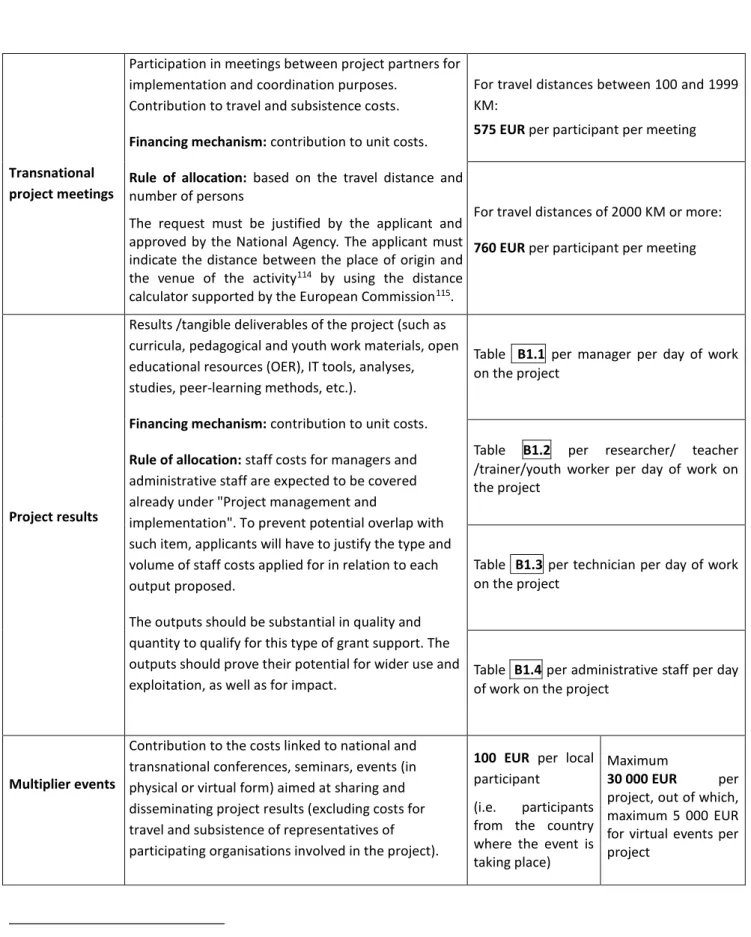
Allocation rule: based on the duration of the Collaborative Partnership and the number of participating organizations involved. Allocation rule: support for multiplier events is only provided if it is directly related to project results. Contribution to the travel expenses of the participants, including accompanying persons from their country of origin to the place of activity and back.
The applicant must indicate the distance between the place of origin and the place of the activity116 using the distance calculator supported by the European Commission117.
SMALL-SCALE PARTNERSHIPS
All the activities of a Small Scale Partnership must take place in the countries of the organizations participating in the project. The duration should be chosen during the application stage, based on the objectives of the project and on the type of activities planned over time. For small-scale partnerships managed by the Executive Agency, in ex aequo cases priority will be given to the highest scores for "relevance of the project" and then "impact".
The project budget must list the planned project activities and indicate the portion of the grant allocated to each activity.
PARTNERSHIPS FOR EXCELLENCE
CENTRES OF VOCATIONAL EXCELLENCE