EDL – European Day of Languages EFL – English as a Foreign Language EIL – English as an International Language ELF – English as a Língua Franca. TEFL - Teaching English as a Foreign Language TELT - Translating and Teaching English TLT - Teaching and Learning Technologies.
Introduction
Presentation
In the European Union, language learning is a key component of our education and training programmes, with the hope that all citizens have access to the advantages that language skills can bring. This year, the European Day of Languages (EDL) was celebrated for the first time.
Topic and the need for this study
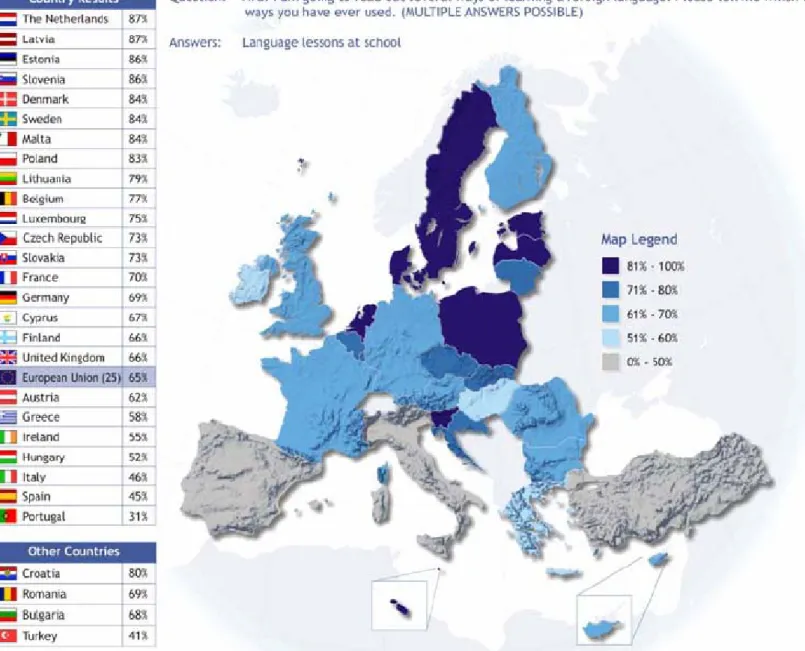
Lower signs are represented by lighter shades of pink in the northeastern part of the country. However, the number of foreign language speakers in the country is very low, as shown by Eurobarometer surveys and the results of the country's national exams.

Research Questions
As in the first study, and especially in this second case, the target idiomatic structures and. After exposure to the audiovisual materials used in the second experiment, this time with a different group of informants, the production skills activity takes the form of: watching an audiovisual clip in the foreign language (English) and providing the appropriate subtitles in the native language ( Portuguese), through the use of the developing language learning software – LvS –Learning via subtitles (fully described in Chapter 6).
Introduction
The Common European Framework
They start from the descriptors of the CEFR and seek to identify the necessary forms (lexicon, grammar, functions and concepts) needed to achieve the targeted verbal tasks. But the CEFR does not constitute a program in any way, as has already been emphasized.
Language Awareness
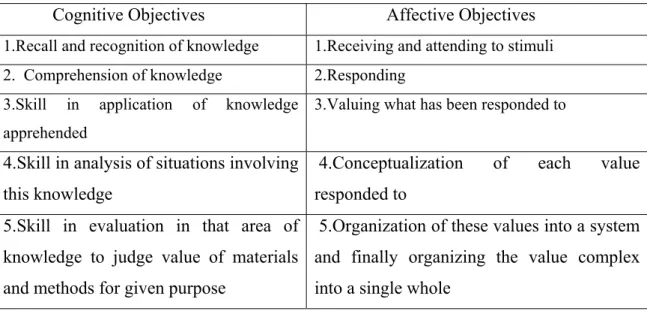
The affective dimension includes attitude and motivation, which adopts Krashen's affective filter (cf. the discussion of this concept in 2.4.1 - Krashen's hypotheses). 33 hypotheses about how language works, test them and discover the rules of the system, studying both native and foreign languages.
Second Language and Foreign-Language acquisition/learning and FL teaching
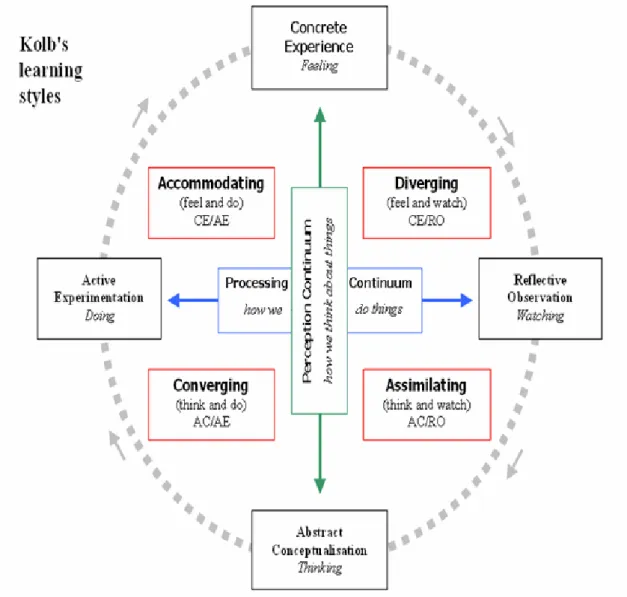
Furthermore, Krashen argues that the "natural order" is independent of the order in which the rules were taught. The stages identified by Kolb are: 1) acquisition - from birth to adolescence - the development of basic abilities and cognitive structures.
Different approaches in foreign-language teaching
The use of the native language by the instructor is allowed, for contrastive analysis between L1 and L2. In an English language classroom where the teacher is the only provider of the foreign "environment", the teaching of communicative competence fails.
The use of the mother-tongue versus the foreign-language or L2
One of the proposed speakers on the conference program has the abstract title, "The Intercultural Dimension and Teaching of English in Portugal". On this part of the Iberian Peninsula, at the final destination of a thousand-year-old pilgrimage route - the Way of St.
Internet and foreign-languages
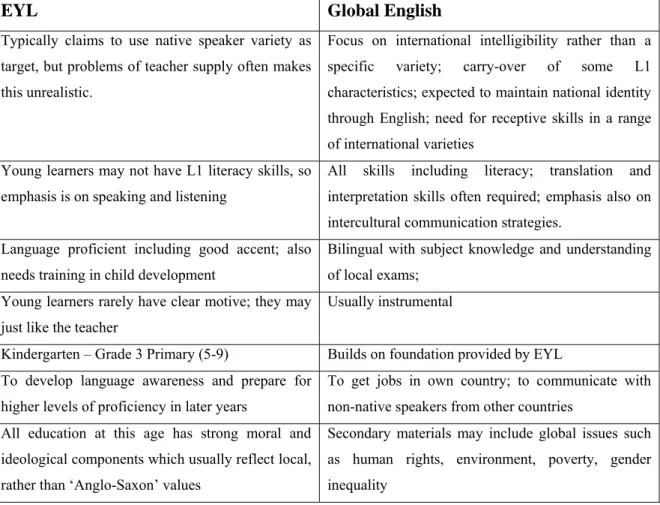
Wales is now a bilingual country, since the introduction of the Welsh Language Act 1993, which gave Welsh equal status with English in the public sector in Wales. Although the advent of the Internet led to the emergence of a global language—English—it also developed our notions of language endangerment and linguistic diversity. Crystal also considers the Internet a linguistic revolution because of the language features unique to this medium, which he designates as "Netspeak".
Principles of learning in the classroom
65 how important it is to have a certain amount of significant repetition, at different competence levels and proficiency of the speakers/learners. Teachers must present their information in an organized structure, related to an existing understanding of the world. The use of the closed captioning tool for educational purposes - LvS (Learning Through Closed Captioning) - will be a form of "active, coached practice" for students to practice the newly acquired idiomatic expressions.
Synthesis
While all the principles are interrelated in the cognitive view of learning, for our study we hope to consider, with greater emphasis, principles 5, 7, 8 and 9 in implementing Study 3 – Chapter 6. By helping learners reach a contextualized level of understanding, the ground is made fertile for creativity or production in the target language. After years of considering native language "taboo" in the non-native classroom, ELT professionals are now publicly advocating for a change of attitude, freeing this "skeleton in the closet" and seeing it as a potentially rich resource in language culture.
Introduction
Subtitling
He concluded "the addition of subtitles to the video material significantly contributes to the memorability of the language of a segment and consequently facilitates the student's ability to use that language in the right context". In the SLS experience, the reverse occurs: students 'hear' the clue in their mind and the written representation strengthens the reading and recognition skills. The advantage of the semiotic approach to meaning, to which Nida refers, is "the equal attention that must be given to design and associative meanings" (in Van de Poel & . d'Ydewalle.
Translation as language tool in the classroom and on television
Paul Bogaards investigated whether knowledge of the form could be considered useful or a hindrance to the acquisition of new lexical items. Cooper (1999) states that in the reading process, not understanding idioms is probably one of the most difficult barriers to comprehension. Results indicated that idioms related to a metaphorical theme that is more salient in the target culture will tend to be less easy.
Synthesis
100 (1991) referred to the 'idiom principle' as: “the principle of idiom is that a language user has at his disposal a large number of semi-preconstructed sentences that constitute some choices, even though they appear to be analyzed in segments. . A sequence of formulas is a sequence, continuous or discontinuous, of words or other elements, which is or appears to be prefabricated: that is, stored and retrieved from memory in its entirety at the time of use, rather than being subject to generation or analysis through language grammar (Wray, 2002: 9).
Intralingual subtitles, L2 + L2 (Portuguese), used as a didactic aid
The aims
In other words, the degree of accuracy of the answers in the tests after viewing determines the ease or difficulty of understanding the content. Our own position in this study was that of observer and at the same time part of the experimental protocol. We covered the few minutes of the viewing sessions and post-watching questions/tests and the different language teachers took care of the rest of the class time for each of the three groups.
Hypotheses
Do students respond more or less positively to subtitled television programs depending on their country of origin and the foreign language policy of that country (1 country, 1 state). How does Portuguese-language DVD soundtrack material with Portuguese-language subtitles affect the listening/reading comprehension of students of Portuguese as a foreign language. How does Portuguese-language DVD soundtrack material without subtitles affect the listening comprehension of students of Portuguese as a foreign language.
The Sample
After an initial placement test consisting of written, grammatical exercises and an oral interview, implemented by the department's four language teachers, the students were divided into four levels of competence: beginner, elementary, intermediate and advanced. The group of beginners (10) was not considered suitable for our study, as there is evidence, in other documented research, that a minimum level of foreign language proficiency is necessary for this resource to be of significant benefit (cf. Danan, 2004 ; Neuman & Koskinen, 1992; Lambert & Holobow, 1984). In the advanced group, a participant from Canada, of Portuguese descent and a near-native speaker, was also not considered.
Setting
Four of them presented a high audio/video correlation in which the picture images corresponded quite closely to the content of the soundtrack and the captions. The two exceptions were the informative program (documentary - "Consigo") about the Lisbon underground and the elderly population in the city, and the news bulletin in satirical format - "Contra - Informação" - where the picture information was reduced but soundtrack and subtitles were synchronized wash. Programs with subtitles/teletext became available in 1999 on the public channels and in 2003 on the two private channels.
Methodology
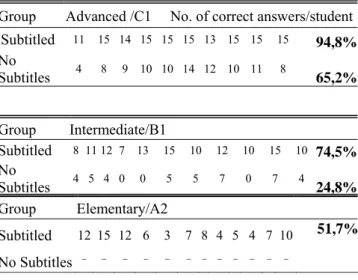
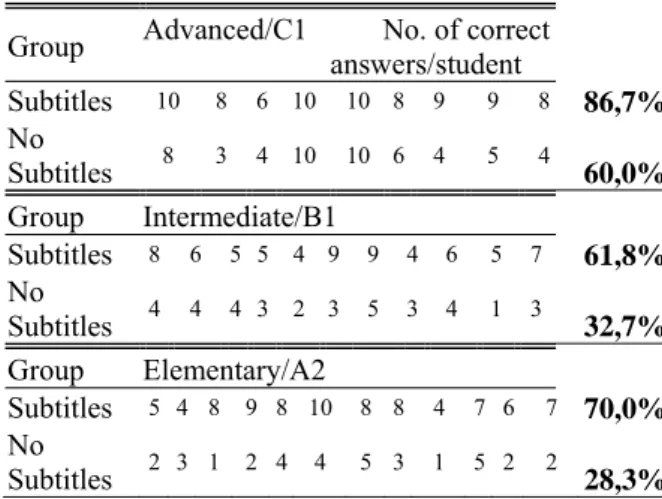
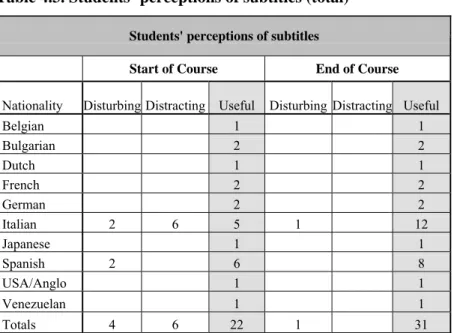
In the no-caption condition, the number of correct responses dropped to 129: 65% for the advanced group and 24.8% for the intermediate group. Thus, the results in Table 4.4 - Elementary Group - for the second segment, are signaled with a dash. The Advanced group had 56% correct answers in the captioned segment, the Intermediate group 50% and the Elementary group 51.6%.
Percentage of correct answers/ programs
Discussion
Furthermore, we cannot take it for granted that current policies in the various countries of our sample are policies adapted to the requirements of the target population. Judging by the percentages of correct answers in the subtitled segments, compared to the poorer results in the non-subtitled segments, hypothesis ii) appears to be confirmed - that subtitled material positively influenced listening/reading comprehension. 129 The material without subtitles produced low performances in the task sheets, which therefore had no effect on the listening comprehension.
Problems encountered
D’Ydewalle & Pavakunun (1997) exposed Dutch-Belgian high school children to subtitled television programs with audio tracks in Afrikaans and German, languages similar to their native languages. Those exposed to soundtracks in Chinese and Russian performed worse than the first group. 132 could buy and take them back to their countries to practice and improve Portuguese.
Conclusions
We also hope that in the future these findings can be transferred and applied to a specific reality in Portugal: the large number of Eastern European immigrants living and working in the country, mainly Ukrainians and Russians. In the advanced group, where students were more verbally competent than students at other levels, it was possible to improve reading skills in word recognition and foreign language comprehension with the availability of teletext subtitles in the foreign language. In the elementary and intermediate groups, where listening skills were likely weaker and reading skills more advanced, students could rely on teletext captioning to improve their listening skills (as previously observed and reported in Markham.
Interlingual and intralingual subtitles as didactic aids in FL learning
- The aim
- Research Questions
- Hypotheses
- The Sample
- Materials
- Methodology
- Results
- Discussion and conclusions
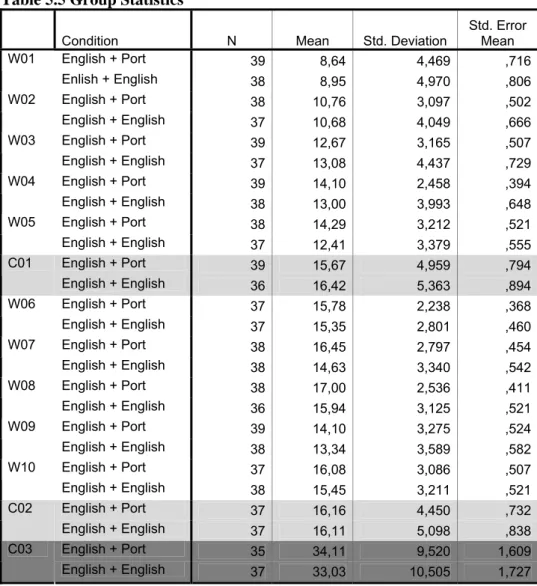
The item order was a significant factor, following the logical organization of the events in the audiovisual material. The darker shade bars represent group #2, the students in the English audio + English subtitles condition. Our mark on class 4 had the best score in the first and the last consolidation tests.
Class 4
Even the meaning of idiomatic expressions can be obtained with the help of the pictures. Some examples taken from the 10-week corpus of idiomatic expressions appearing in the dialogues of the 10 episodes are in Table 5.19. Students are asked to explain the meaning of the title "all shook up" in the text for reading comprehension.
Experiment for testing production skills in EFL
- The aim of the study
- Hypotheses
- The sample
- Setting
- Materials
- Methodology
- Discussion and Results
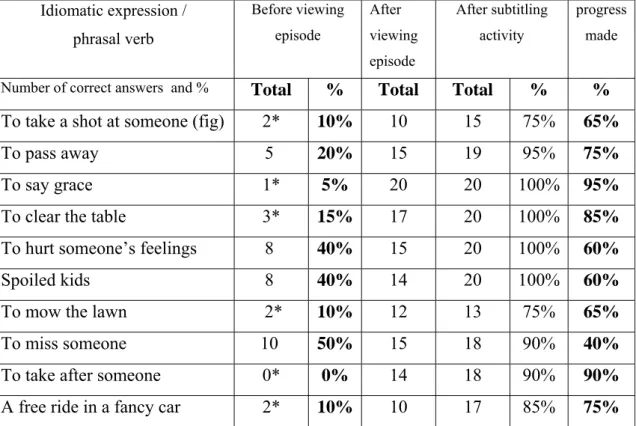
172 In the final phase of the experiment, the students had to use the LvS tool (Learning through closed captioning). After becoming more familiar with the cultural and linguistic content of the episode, the students moved on to the next task in the experiment. The majority of participants said they became aware of their own strengths and weaknesses in the language.