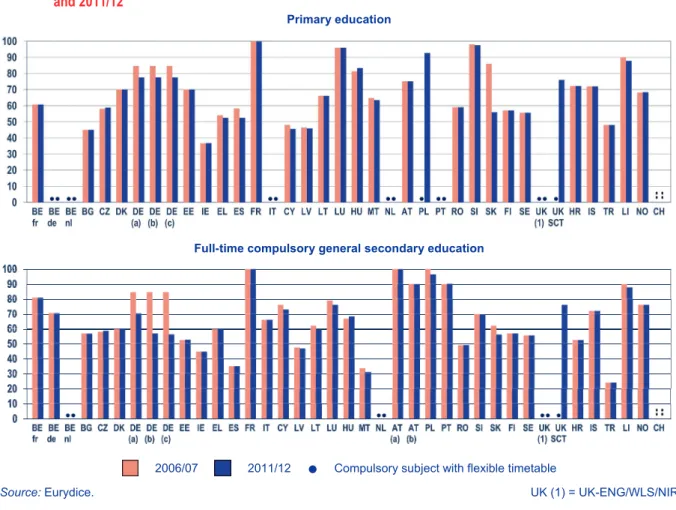
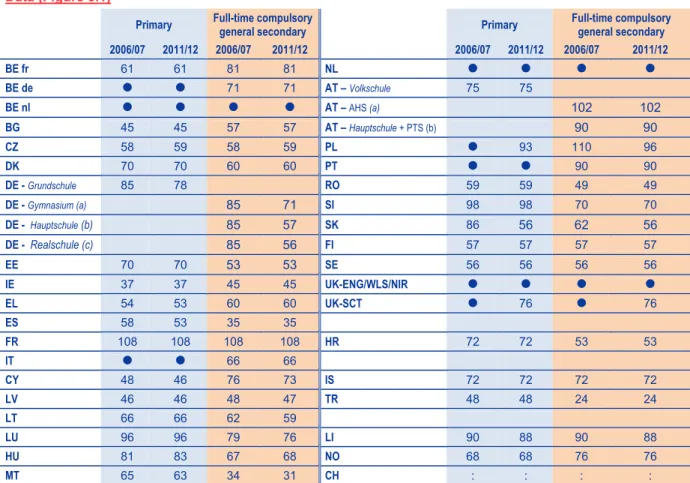
The social value of physical education and sport has also been expressed in several documents by the European Commission. The second appendix gives an overview of the recommended teaching time for physical education in full-time compulsory general education.
NATIONAL STRATEGIES AND LARGE-SCALE INITIATIVES
National strategies
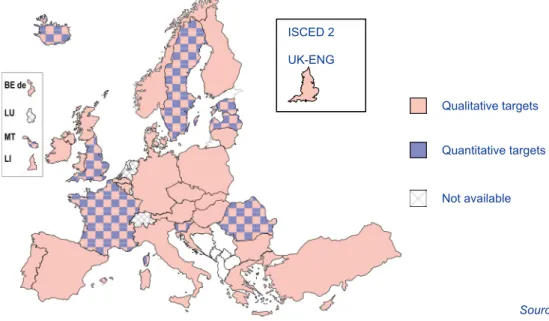
About half of the education systems covered adopt national strategies for the promotion and development of physical education and physical activity at school (see Figure 1.1).
Scope and target groups
Aims and objectives
Large-scale initiatives
Nine education systems with no formal national strategy to promote physical education and physical activity have introduced centrally coordinated large-scale initiatives to encourage and develop physical activity (see Figure 1.1). Generally, centrally coordinated initiatives are managed by bodies responsible for the promotion of physical education and physical activity.
Monitoring of national strategies
Most often, funds are allocated to schools and other stakeholders in physical education within the framework of such programs and projects. Physical education is a compulsory subject at primary and lower secondary level in all surveyed countries.

National aims
- Physical development
- Personal development
- Social development
This chapter first describes the main aims of physical education as defined in the central guidance documents. Iceland states the importance of responsibility towards living beings and the environment, while Denmark emphasizes that physical education should make children and young people aware of responsibility for their own lives and show them how to be socially integrated in the community.
Learning outcomes
In the Czech Republic, Germany and Norway, traffic rules for pedestrians and cyclists are part of the physical education curriculum, as is first aid in some countries. In Slovenia, the curriculum for physical education contains a recommendation for minuta za zdravje ('a minute for health') which encourages teachers of other subjects to interrupt their classroom lessons, clear the air and suggest that students undertake activities motor and rest for until.
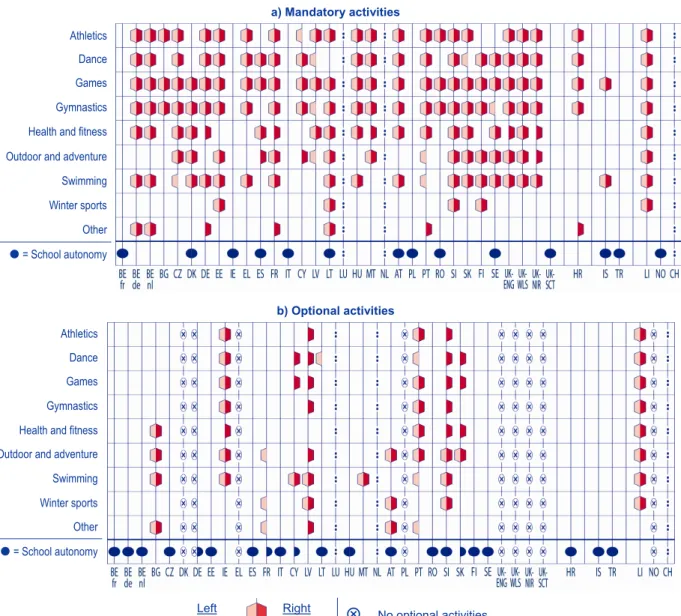
Status of physical education activities
Thus, schools and their teachers decide which physical activities are most likely to lead to desired learning outcomes. Others speak of “games” in general, but specify the skills to be learned, such as bouncing, carrying, throwing, passing and catching.
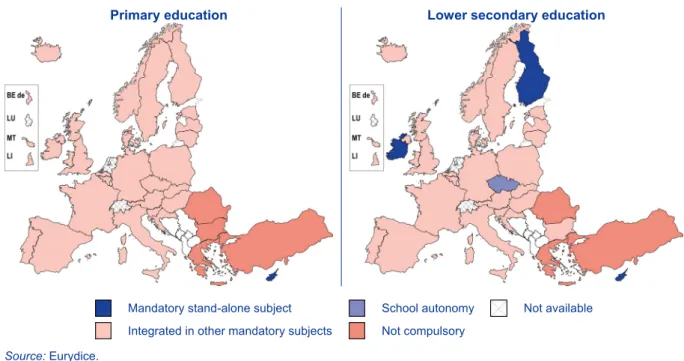
Health education
In almost all other countries, health education is an integral part of other compulsory subjects. In the Czech Republic, schools can decide whether to teach aspects of health education as an independent subject or as part of other subjects in lower secondary education.
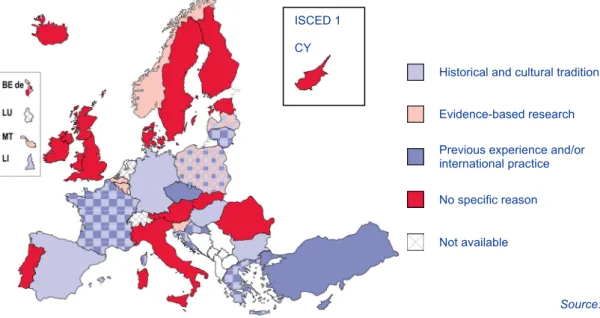
Policy reasons for selecting particular mandatory activities
Historical and cultural traditions are the most common reason underlying the choice of physical school activities. Finally, previous experiences or international practices contribute significantly to the selection of physical activities in lower secondary education in Cyprus, and at both primary and lower secondary levels in the Czech Republic, Greece, France, Lithuania, Poland, Croatia and Turkey.
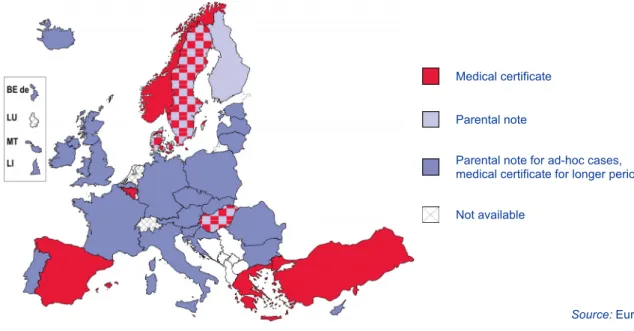
Exemptions from physical education
The importance of physical education is emphasized in the curricula of all European countries, in which it is a compulsory subject throughout full-time compulsory general education. Nevertheless, the prescribed teaching time for physical education varies considerably from country to country.
Recommendations on taught time in compulsory education
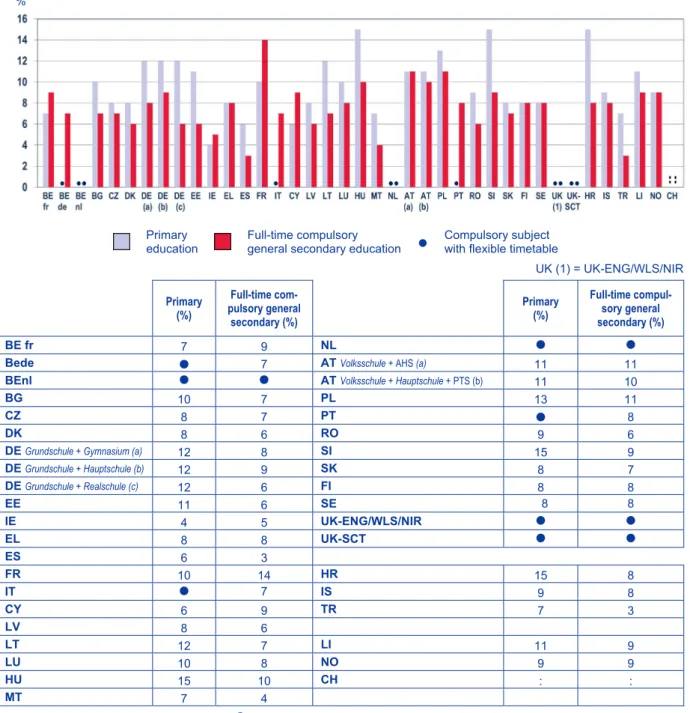
The first part of this chapter examines what minimum teaching time is recommended for this in both primary education and general secondary education. Finally, to get a better idea of the perceived importance of physical education compared to other subjects, the third part examines the share of teaching time devoted to it in the curricula at both levels of education involved.
Changes in taught time between 2006/07 and 2011/12
For detailed calculation methods, see Recommended annual teaching time in full-time compulsory education in Europe 2011/12, (EACEA/Eurydice, 2012a). For the exact amount of time (in hours) allocated annually in each school year during the entire compulsory general full-time education, see Appendix 2. Compulsory full-time education usually ends at the end of youth education (ISCED level 2). or the common structure (ISCED levels 1 and 2), except in Belgium, Bulgaria, France, Italy, Hungary, the Netherlands (VWO and HAVO), Slovakia and the United Kingdom (England, Wales and Northern Ireland), where some or all of the ISCED level 3 can be part of full-time compulsory general education.
Sweden: Teaching time for physical education is allocated for the entire full-time compulsory general education.
Share of taught time for physical education in curricula
In most of them, student progress in physical education is assessed as in any other subject. In Spain, students' learning processes in physical education are regularly assessed. Latvia, Poland and Slovenia: Grades for physical education are only given from the fourth year onwards in primary education.
Sweden: Grades for physical education at the end of each term or semester are given from year 8 onwards.
Extent of teachers' specialisation
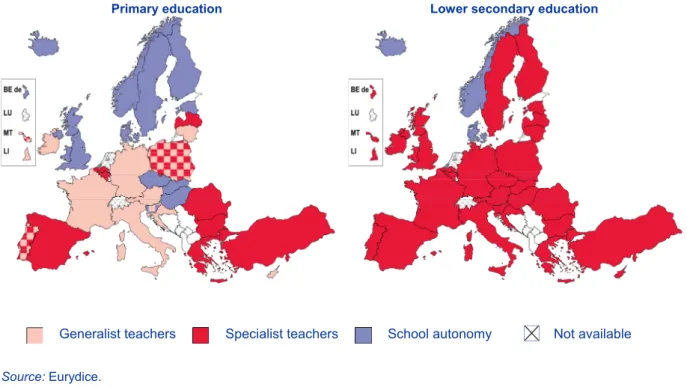
The first section of the chapter examines whether generalists or specialists teach physical education and sport at primary and lower secondary levels. In some countries where specialists normally teach physical education at primary level, general workers may do so under exceptional circumstances such as school shortages of specialist teachers. First, in years 5 and 6 in Bulgaria and Hungary, laypersons may teach physical education if they have additional qualifications that specifically entitle them to do so.
General teacher: A teacher qualified to teach all (or practically all) subjects in the curriculum, including physical education.
Initial education and qualifications of specialist teachers
Continuing Professional Development
Physical education teachers are offered special CPD courses developed by the Estonian Physical Education Association. In Cyprus, a new physical education curriculum in primary education has been gradually introduced since 2011/2012. In Malta, a new physical education curriculum for lower secondary education has been gradually introduced since 2011/2012.
Extracurricular activities are aimed at the same purposes as those specified in the national objectives of physical education at school.
Authorities or other bodies involved in provision
In addition to public authorities, many other stakeholders in the field of sport, such as Olympic committees, sports federations, associations and foundations, are initiators and contributors to a wide range of extracurricular activities. The provision of extracurricular activities can be included, for example, in educational projects and action plans of teachers or schools. The Association of School Sports Clubs in the Czech Republic organizes special physical education courses in schools and school competitions from interschool to national level.
In Estonia, since 1981, an annual two-day gymnastics competition has been held in the Tallinn German Gymnasium.
Main target groups
In Hungary, a school with at least four years of education must ensure the operation of a school sports club. It offers special conditions to students who aspire to a career in competitive sports by organizing customized school days, during which they can regularly train twice a day under the supervision of a club coach. The school and their parents sign an agreement in which they define adjustments to school work (in terms of assessment and attendance, etc.).
Primary schools (ISCED levels 1 and 2) must have a policy detailing the procedure for obtaining this special status.
Main types of activities
In the run-up to the London 2012 Olympic Games, the United Kingdom (England) introduced the School Games to motivate and inspire millions of young people across the country to participate in more competitive school sports. The main goal of schools at ISCED level 1 in the Pessoa Program in Portugal is to promote healthy eating behaviors and increase physical activity to prevent obesity through a specific methodology. Children leave the classroom and participate in various activities in the school's outdoor playground or in a gym.
Finland is planning to increase the teaching time devoted to physical education and promote the specialization of teachers in this subject.
Towards new national strategies and large-scale initiatives
About a third of the European countries covered by this report are now involved in national reforms or debates directly related to sport as practiced in society at large, and to physical education in schools. In Hungary, for example, a new reform concerns the central curriculum, continuing education and school sports equipment. In 2014, sports clubs will be established at ten pilot schools, with the aim of encouraging more students to participate in physical activities to improve their health.
Reforms of central curricula
For example, in France, where schools are currently responsible for producing assessment scales for physical education (see Chapter 4), a new assessment tool will allow students' sporting performance to be compared nationally. In the Czech Republic, standards for physical education (along with other subjects) are drawn up to improve the assessment of student learning outcomes in this area. One aim of the framework is to establish a national skill level in physical education.
Austria is implementing guidelines that define the standards to be achieved in physical education in years 8.
Reforms related to teachers
Four states are now revising their assessment standards and approaches to desired learning outcomes in physical education to standardize and facilitate assessment and facilitate comparison of its outcomes. France has a nationally defined list of sports activities and relevant skills, which is the basis for physical education programs in each individual institution. This not only allows accurate assessment of students on an individual level, but also enables inter-school comparisons on a national level.
These standards cover personal, social and sporting skills and their establishment should enable areas for improvement to be identified when student performance appears unsatisfactory.
Improvements in sports equipment and infrastructure
Country codes
Statistical code
International conventions
National abbreviations in their language of origin
Classifications
Definitions
National strategies and main large-scale initiatives, 2011/12
Youth training for the Olympic Games (Jugend trainiert für Olympia), since 1969 http://www.jtfo.net/home/. Spanish Championships for Children and Young People of School Age, 2010-20 http://www.csd.gob.es/csd/promocion/deporte-escolar/2campeonatosEspEscolar/. Motor Literacy Project (Alfabetizzazione motoria), from the 2009/10 school year to the 2012/13 school year http://www.alfabetizzazionemotoria.it/.
Let's learn swimming (Naučimo se plavati), since 1994 http://www.sportmladih.net/programi_som/naucimo_se_plavati.
Recommended taught time
The figure shows the minimum number of exact hours (60 minutes) allocated to the compulsory education in physical education during full-time compulsory general education based on national minimum recommendations in the curriculum for the indicated reference year. For more detailed calculation methods, see Recommended annual teaching time in full-time compulsory education in Europe, 2011/12 (EACEA/Eurydice, 2011). Full-time compulsory general education usually ends at the end of a secondary education (ISCED level 2) or the common structure (ISCED levels 1 and 2), except in Belgium, Bulgaria, France, Italy, Hungary, the Netherlands (VWO and HAVO), Slovakia and the United Kingdom (England, Wales and Northern Ireland), where some or all of ISCED level 3 may form part of compulsory full-time general education.
Grades in compulsory full-time general education correspond to different ages depending on the country.
EDUCATION, AUDIOVISUAL AND CULTURE EXECUTIVE AGENCY
EURYDICE AND POLICY SUPPORT
Managing editor Arlette Delhaxhe
Authors
External contributor Renata Morneau Kosinska
Layout and graphics Patrice Brel
Production coordinator Gisèle De Lel
Unit Contribution: Tony Weir (Senior Inspector, PE), Seán Mc Grath (Senior Inspector, PE). Unit contribution: Joint responsibility of the unit and experts: Imants Vasmanis, Inese Bautre (National Center for Education) and Maija Priedīte (Valmiera State High School). Unit contribution: Beata Płatos in collaboration with experts from the Ministry of National Education and the Ministry of Sports.
Contribution of the Unit: Veronica – Gabriela Chirea, in collaboration with experts: Elena Nely Avram (National Center for Assessment and Examination) and Alin Cătălin Păunescu (Ministry of National Education).