Núñez-Benjumea en representación del grupo PITES en el Hospital Universitario Virgen del Rocío, Andalucía. Barros Castro y Alejandro Lamelo Alfonsín en representación del grupo PITES del Complejo Hospitalario Universitario de A Coruña, Galicia. Viña, Piedad Ussetti, en representación del grupo PITES del Hospital Universitario Puerta de Hierro, Madrid.
Núñez-Benjumea, en representación del grupo PITES del Hospital Universitario Virgen del Rocío, Andalucía.
REFORMULATING THE DATABASE PERSISTENCE OF THE PITES INTEROPERABILITY PLATFORM
- STANDARDIZED INTEROPERABLE KNOWLEDGE MANAGEMENT SYSTEMS
- ELECTRONIC HEALTH RECORDS
- SEMANTIC INTEROPERABILITY THROUGH THE DUAL MODEL
- PERSONALIZED MEDICINE AND PRECISION MEDICINE
- LEARNING HEALTH SYSTEM
- THE PITES PLATFORM AT THE ISCIII
- EXAMPLE OF SECONDARY USE OF THE EHR SYSTEM: A DATA MINING PROJECT
- DATABASE PERSISTENCE OF THE PITES EHR SYSTEM
- EVALUATION OF STANDARDIZED EHR DATABASE SYSTEMS
- ACKNOWLEDGEMENTS
- REFERENCES
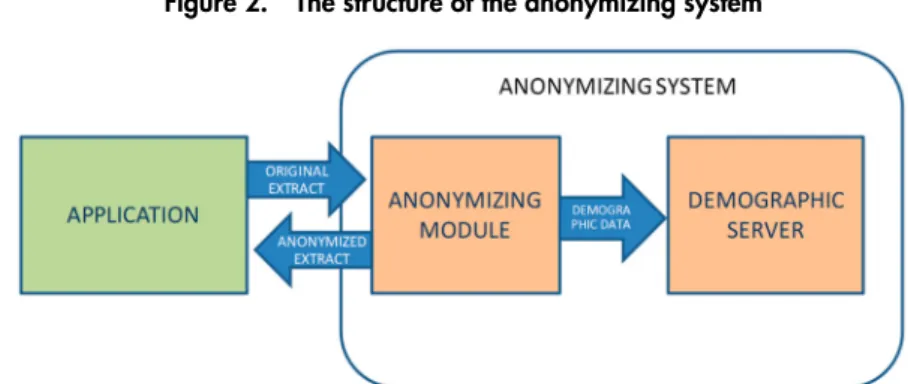
The main purpose of the PITES interoperable EHR system is the standardization, validation, communication, sharing and understanding of clinical information to make a secondary, i.e. For safety reasons, the two modules are installed in the information system of the organization that interacts with the EHR system. The structure of the information in the archetypes is used to define a new relational schema.
Moner et al., Using the research EHR platform to facilitate the practical application of the EHR standards, J.
IMPLEMENTATION OF AN EARLY DETECTION SERVICE FOR COPD EXACERBATIONS: EXPERIMENTAL EVALUATION FOR AN
EARLY DISCHARGE, HOSPITAL-AT-HOME PROGRAMME
- INTRODUCTION
- OBJECTIVES
- METHODS AND PROCEDURES .1 COPD patient telemonitoring protocol
- RESULTS
- DISCUSSION
- CONCLUSION
- ACKNOWLEDGMENTS
- REFERENCES
Conclusions: Considering that the study is not yet fully completed, the telemonitoring-based hospital-home early discharge program succeeded in showing comparable efficacy in terms of health outcomes, compliance and satisfaction, and greater efficiency in terms of use of health resources (lower number of home visits). Early discharge, home hospitalization for COPD exacerbations are programs based on the same hospital-home team structure, aimed at shortening the patient's hospital stay. The last two cases ("hospital-home" and "early discharge") are the scenarios on which this study focuses.
Focusing on both strategic lines of action (prevention and early detection on the one hand, and research on the other), within the framework of the Innovation Platform for Telemedicine (Plataforma de Innovación para Telemedicina/ PITES-ISA) research project, the general objective was to To implement and experimentally evaluate an ICT-based service that would support out-of-hospital follow-up of COPD patients in the context of early discharge, hospital-at-home programs. To implement and deploy a telemonitoring and follow-up service for COPD patients under hospital-at-home conditions. To evaluate the early discharge, hospital-at-home program for patients with exacerbated COPD supported by the telemonitoring service, in relation to traditional programs based on regular home visits by health professionals.
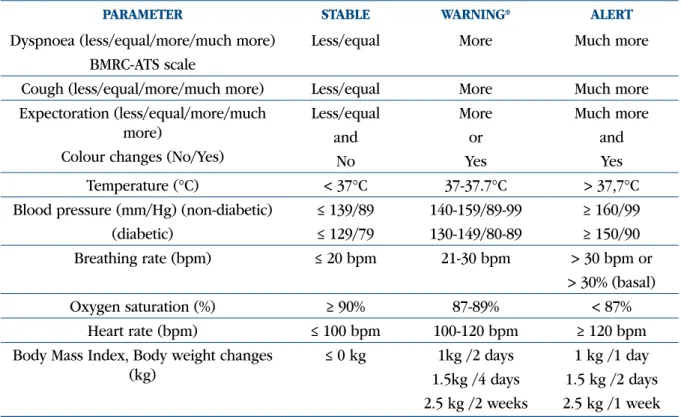
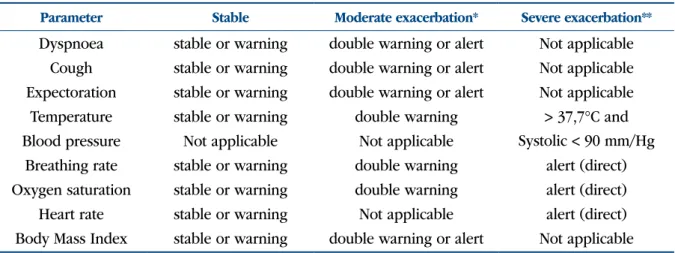
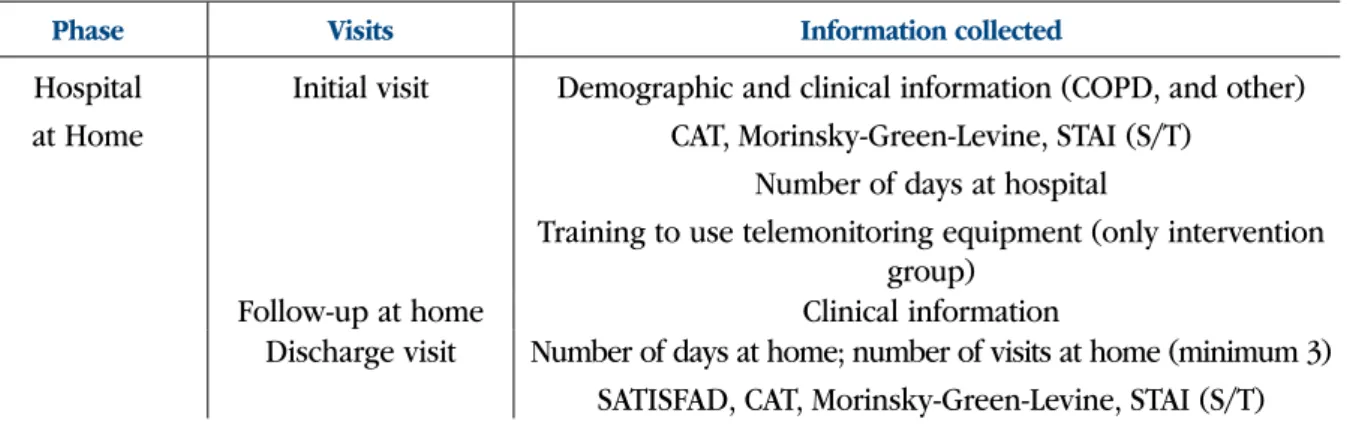
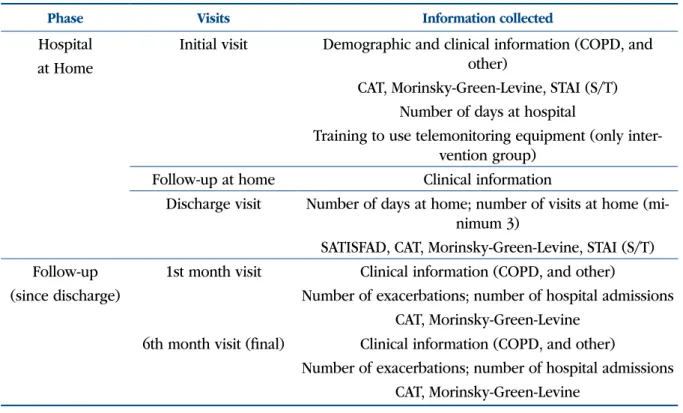
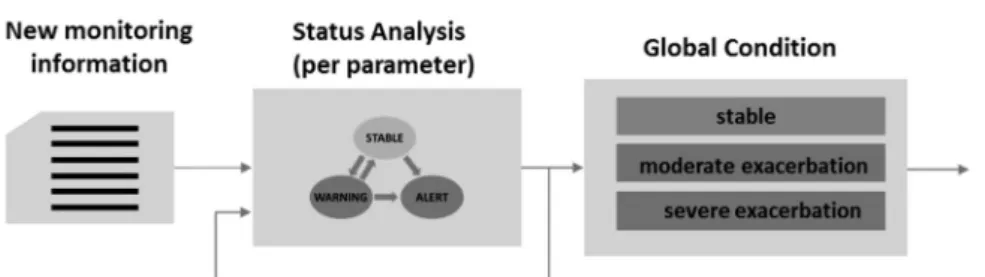
The designated purpose of the early discharge, hospital-at-home program is to detect moderate and severe changes in the patient's health status, and to take the required actions in a period not exceeding 24 hours. This evaluation of the early discharge, hospital-at-home service attempted to substantiate the following three hypotheses (H1, H2, H3). Discharge visit Number of days at home; number of home visits (minimum 3) SATISFAD, CAT, Morinsky-Green-Levine, STAI (S/T).
Support for the telemonitoring protocol means that home visit scheduling can be created and managed in advance, increasing efficiency in the use of health care resources and the hospital's home program. Hospital at home for patients with acute exacerbations of chronic obstructive pulmonary disease: a systematic review of the evidence.
SERVICIO ARAGONÉS DE SALUD: RESULTS OF THE “PITES ISA T-CUIDAENCASA: PLATFORM OF INNOVATION IN HOME
- INTRODUCTION
- METHODS AND PROCEDURES
- RESULTS
- DISCUSSION
- CONCLUSIONS
- ACKNOWLEDGMENTS
- REFERENCES
SERVICIO ARAGONÉS DE SALUD: RESULTS OF “PITES ISA T-CUIDAENCASA: INNOVATION PLATFORM AT HOME. There is a need to work on the interoperability of the information systems of different care stakeholders outside the SALUD network to ensure continuity of delivery of care plans. The four ICS-ICTs cover a broad spectrum of care coordination with a strong focus on prevention and modulation of disease progression.
A systematic evaluation of the results was performed according to the methodological approach proposed in MAST [16]. For the attention of the relatives of oncological patients, the psychologist Asociación Española Contra el Cáncer and the Aragonese Ethics Committee for Clinical Research (CEICA) are involved. Two outpatient palliative care admissions are included, although without a proper classification of need.
Then the harmonization of the communication and cooperation between the groups (UVSS / ESAD) and the patient responsible service, for the advanced assessment of the patients' needs. The Servicio Aragonés de Salud is adapted to the implementation of the electronic health record operated by the National Health System (HCDSNS) and therefore has. The results achieved during the work carried out were the creation of the Palliative Committee and a protocol for integrated home care.
On the other hand, lay the foundations for the adaptation of current platforms to transform them into interoperable systems capable of exchanging clinical data according to the standards proposed at the national level (UNE-EN ISO 13606). Also, to the Institute of Health ISCIII for promoting national standards and making the interoperability platform available for testing.

PITES-ISA IN ANDALUSIA: CLINICAL DECISION SUPPORT SYSTEM FOR THE PRESCRIPTION OF GENETIC TESTING IN THE
PITES-ISA IN ANDALUSIA: A CLINICAL DECISION SUPPORT SYSTEM FOR THE PRESCRIPTION OF GENETIC TESTING V.
GYNECOLOGICAL CANCER RISK AND SCREENING THE RISK OF THROMBOEMBOLISM DURING HOSPITALIZATION
- INTRODUCTION
- METHODS AND PROCEDURES
- RESULTS
- DISCUSSION
- CONCLUSIONS
- ACKNOWLEDGMENTS
- REFERENCES
We believe that providing clinicians with a Clinical Decision Support System (CDSS) to improve the performance of genetic testing is key to optimizing the prescribing of this type of tests. Embedding Clinical Decision Support Systems within clinician workflows is one of the key strategies for preventing decision errors in healthcare settings e.g. The modeled process addresses this phase, integrating it into the clinical decision support system mentioned in phase 2.
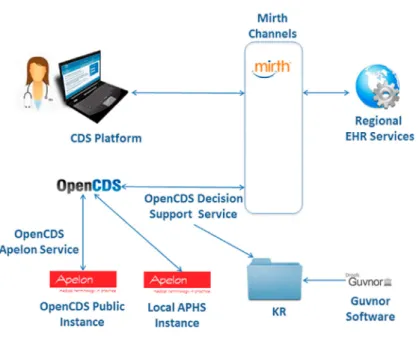
In this scenario, a clinical decision support system was developed based on a stratification of patient risk for venous thromboembolic disease (VTD). In this scenario, we have developed a semantically interoperable clinical decision support infrastructure based on a computer interpretable medical knowledge repository. A Clinical Decision Support (CDS) Knowledge Management Framework that allows us to define and manage decision support rules.
A clinical decision support engine that aggregates patient clinical information and implements a decision support rule to generate recommendations for clinicians from the knowledge module. This framework is integrated with the CDS engine to evaluate decision support rules based on the information stored in this KR. With the help of Guvnor software, we were able to translate clinical knowledge into clinical decision support rules that will be implemented by the CDSS.
The OpenCDS initiative was based on the vMR specification for modeling the decision support rules. The impact of a clinical decision support system for emergency medicine on the prevention of prescribing errors.
PITES-ISA IN CATALONIA: INNOVATION IN INTEGRATED CARE SERVICES FOR CHRONIC PATIENTS
- INTRODUCTION
- MATERIALS AND METHODS The site
- RESULTS
- DISCUSSION
- CONCLUSIONS
- ACKNOWLEDGEMENTS
- REFERENCES
To maximize the project's capacity to move forward with these 5 strategic actions, PITES-ISA operates in Catalonia within the NEXTCARE project (www. nextcarecat.cat) in the regional (Catalan) smart healthcare specialization strategy. To this end, health information exchange systems have been developed as part of the interoperability framework of the Barcelona-Esquerra health district [7] and the regional tools for interoperability at the health level (ie the Catalan IS3 program). The FS program is designed as part of the regional expansion of integrated care services in Catalonia.
In the context of perisurgical treatment, being unfit increases the risk of death and complications after major surgery. In this regard, workforce preparation and expanded clinical stratification have been identified as two key limiting factors for the successful deployment of integrated care. The protocol aims to evaluate this hypothesis by considering five main goals (Figure 3) for assessing the regional extent of the two intended use cases.
Five key objectives two achieve successful regional adoption of the Community-based Protocol for Cooperation. Adopting adaptive case management [11,20] to support collaboration is an emerging approach that facilitates case managers to adapt well-structured service workflows to patients' continuously evolving needs. To this end, the implication of the most important stakeholders in the process (staff and patients) is essential to capture the feedback of all actors in the integrated care process.
Ultimately, the outcomes of the project will help generate guidelines for large-scale deployment of new patient-centered care, including transferability analysis, facilitating the adoption of integrated care services for the management of multimorbidity with a personalized medicine foundation [23]. Integrated healthcare Barcelona Esquerra (Ais-Be): A global view of organizational development, redesign of processes and improvement of the information systems.

DEVELOPMENT OF A TELEMEDICINE SYSTEM FOR RHEUMATOLOGY PATIENTS
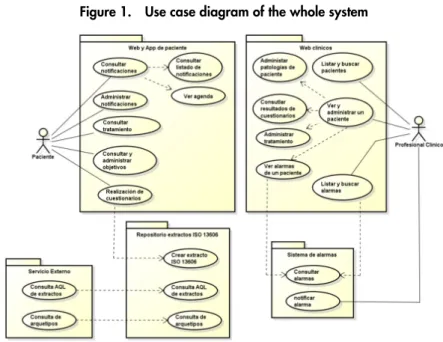
- USE CASES
- ARCHITECTURE
- PATIENT WEB APPLICATION
- PATIENT MOBILE APPLICATION
- CLINICIAN WEB APPLICATION
- BACKEND
- INTEROPERABILITY
- CONCLUSION
All these problems in treatment can be tackled using telematics solutions, and that is the purpose of the work presented in this chapter. To achieve interoperability, we created the necessary ISO 13606 archetypes, in addition to an implementation of the ISO 13606 standard and a repository of clinical extracts. Finally, it should be noted that the rest of the data is stored in an Informix database.
Authentication, as in the patient web application, is performed through the health card data. As part of these operations, communication with the repository of ISO 13606 extracts (through REST services) is included for the clinical extract storage of the completed questionnaires. The use of the ISO 13606 standard gives us the semantic interoperability of clinical information, which enables the continuity of the treatment of the rheumatology patient.
This objective was completed through the development of archetypes, the implementation of ISO 13606 standard, the generation of a clinical extract repository and the integration of all this with the rest of the PITES-ISA platform. Read and write archetypes using ADL 1.4 format [6], the one recommended in part 2 of the ISO 13606 standard. This is possible because most of the information included in an extract can be obtained from the corresponding archetype.
AQL extract query: the system provides a service for other external systems to query ISO 13606 extracts, following the official specifications of the AQL language (Archetype Query Language) [7]. Therefore, at the time of storing the extracts in the repository, we have chosen MongoDB.