This opinion of the Scientific Committee on Veterinary Measures relating to Public Health is largely based on the work of an ad hoc working group of the Committee.
BACKGROUND
TERMS OF REFERENCE
INTRODUCTION
During the early 1990s, the cloning and sequencing of the Norwalk and Southampton viruses led to a rapid increase in knowledge in the field (Xi et al., 1990), and prompted the development of sensitive molecular diagnostics (e.g. reverse transcription-polymerase chain) reaction, probes) and tools for genome characterization and viral strain comparison. Finally, considerable progress has been made towards the reliable detection of viral genome-specific sequences in food and water (Beller et al., 1997; Daniels et al., 2000; . Kohn et al., 1995), which up to present has only been implicated as the vehicle for NLVs on epidemiological grounds.
RISK ASSESSMENT
- Hazard identification
- Introduction
- Taxonomy
- Hazard characterisation
- Clinical features
- Epidemiology
- Infectious dose
- Pathogenicity and virulence factors
- Immunological response
- Exposure assessment
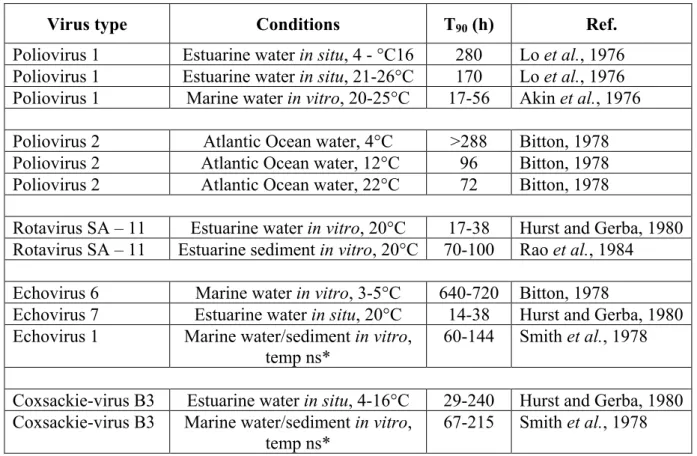
- Survival data
- Prevalence data
- Human consumption data
- Risk characterisation
The course of the disease was somewhat milder than rotavirus gastroenteritis (Pang et al., 1999). In a similar GP-based study in the Netherlands, NLVs were detected slightly less frequently - 5.0% of cases (de Wit et al., 2001b).
METHODS FOR ANALYSES
- Detection of NLVs
- Detection of NLVs in clinical samples
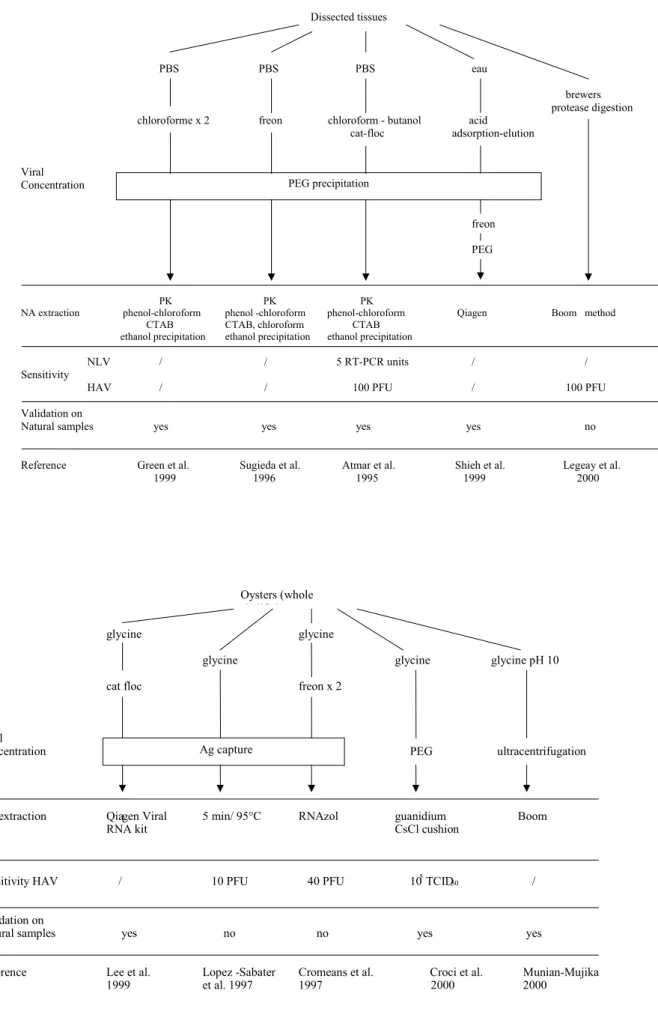
- Detection of NLVs in shellfish
- Enumeration of NLVs
- Viability
- PCR applications in routine laboratory
- Potential indicators for NLVs
- Molecular epidemiology
- Use of molecular epidemiology for virus tracing
In a recent study, approximately 106 enterovirus RNA copies/ml were detected in sewage treatment plant lagoons (Schvoerer et al., 2001). Other researchers have also concluded that FRNA bacteriophage is a promising indicator of human enteric virus contamination in oysters (Chung et al., 1998).
METHODS FOR INACTIVATION
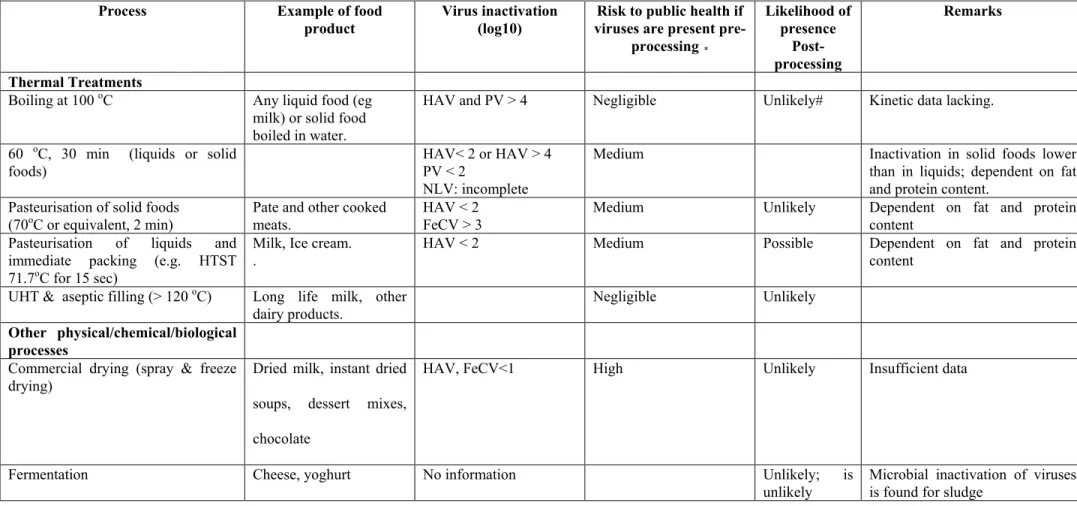
It is therefore best to assume that there will be no inactivation after one freeze/thaw cycle. Possible: Sporadic contamination with NLV, HAV, RV or PV of the mentioned foods has been reported. Likely: Contamination with NLV, HAV, RV or PV of the mentioned foods is frequently reported.
Negligible risk: the product is very unlikely to contain live viruses; treatment results in at least 4 log10 inactivation of common foodborne viruses. Low risk: the product is unlikely to contain live viruses in numbers that could cause disease in healthy individuals: treatment results in approximately 3 log10 inactivation of common foodborne viruses. Medium Risk: The product may contain viable viruses in numbers that can cause disease; treatment results in approximately 2 log10 inactivation of common foodborne viruses.
High risk: products where the level of viruses is likely to be high enough to cause disease in healthy individuals: treatment results in less than 1 log10 inactivation of common foodborne viruses.
NLVS IN RELATION TO SPECIFIC PRODUCTION PRACTICES
Seafood
- Introduction
- Bivalve molluscan shellfish
Estimated production values for aquaculture species in the EU in 1997 were €270 million for mussels, €161 million for oysters and €149 million for mussels (MacAlister et al., 1999). In the process of filter feeding, bivalve molluscs can concentrate and retain human pathogens derived from such sewage contamination. Bivalve molluscs can also accumulate naturally occurring toxic algae and disease-causing bacteria through filter-feeding activity.
The risks posed by the bioaccumulation of harmful microorganisms are compounded by the traditional consumption of certain types of shellfish (such as oysters) raw or only lightly cooked (mussels and clams), and by the consumption of the whole animal including internal organs. The predominant association of oysters, mussels, cockles and clams with incidents of infectious disease (Lees 2000, Jaykus et al., 1994) probably reflects their traditional consumption raw or only lightly cooked, and the consumption of the whole animal by including internal organs. Viral food poisoning (gastroenteritis and hepatitis caused mainly by NLV and hepatitis A virus) after consumption of sewage-contaminated bivalve molluscs has been extensively documented in the scientific literature (see section 4.2.3 and Lees, 2000).
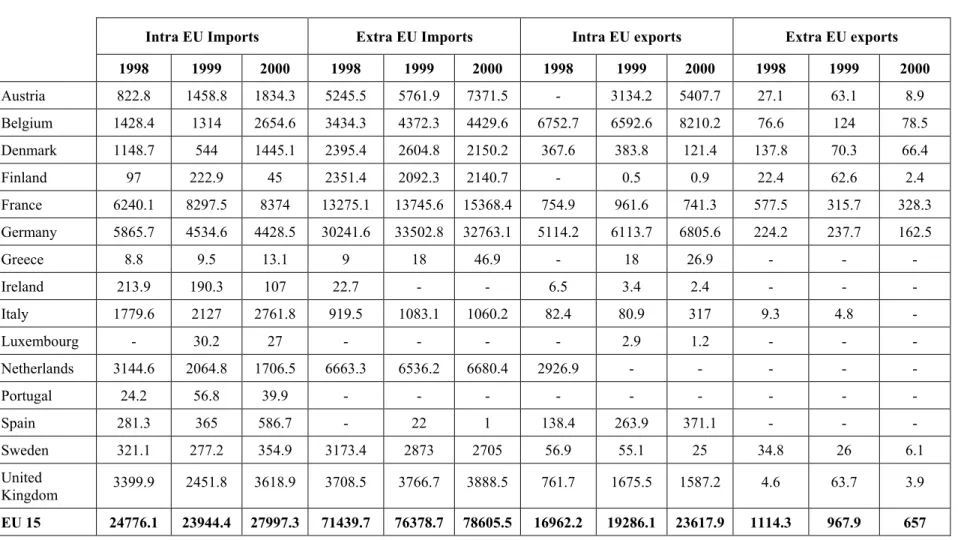
In recent years, a number of examples of transnational outbreaks have been reported following trade between EU Member States (Christensen et al., 1998) and following the importation of shellfish into the EU (Bosch et al., 2001; Sánchez et al., 2001). ).
Other food categories
- Introduction
- Fresh produce
In Finland, frozen raspberries imported from Eastern European countries were epidemiologically linked to an outbreak of NLV infection (Pönkä et al., 1999). The occurrence of caliciviruses in European river water has been documented (Gilgen et al., 1997) and the viruses survive well in ice (Kapikian et al., 1996). Infected human food handlers are often expected to be a source of infection for fresh produce (Griffin et al., 1982; Gross, 1989 and Beuchat, 1998).
Production practices lay the foundation for contamination of fresh produce with viruses from the human reservoir (Beuchat, 1998; .ICMSF, 1998; Warner, 1991). It is known that river water can contain a host of human enteric viruses (Gilgen et al., 1997). A large number of virus particles can be shed from infected individuals units per gram faeces has been estimated (Feachem et al., 1983).
This high concentration must be related to the low infectious dose of 10-100 particles (Kapikian et al., 1996).
PREVENTIVE MEASURES
Seafood
- Seafood other than bivalve molluscan shellfish
- Bivalve molluscan shellfish
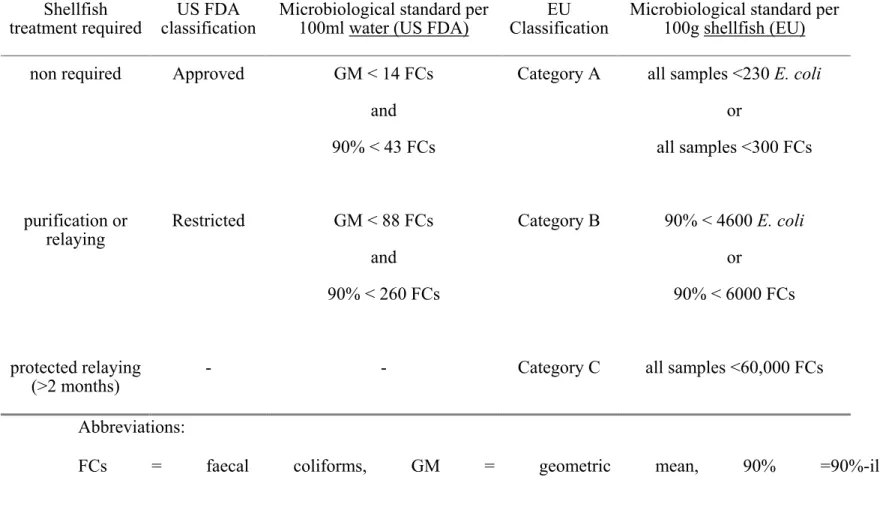
However, Council Directive 91/492/EEC refers directly to the problem of viral contamination in shellfish and the need to introduce standards when such techniques become available. There is no European data source regarding Member State classification of shellfish catch areas under Council Directive 91/492/EEC. In view of these results, it is important that harvest areas are classified using an approach that maximizes consumer protection in terms of protection against enteric virus contamination, as envisaged in Council Directive 91/492/EEC.
Such methods do not comply with the requirements of Council Directive 91/492 and are unlikely to be suitable for testing shellfish. Critical to the accuracy of the results is the compliance of the testing laboratories with the requirements of the method defined in the Council Directive 91/492/EEC. Of direct relevance to fishermen, Council Directive 79/923/EEC (Anon, 1979) on the required quality of shellfish waters sets a faecal coliform guideline standard approximately equivalent to category A (quality suitable for direct consumption) according to controls sanitary of the Council Directive. 91/492/EEC.
Council Directive 79/923/EEC remains the only piece of European legislation that offers direct protection of the quality of shellfish catch areas.
Other food categories
- Food other than fresh produce
- Fresh produce
The survival of viruses in water is long enough to cause problems for irrigation and other purposes (Bosch, 1995). Cliver and Kosten (1979) reported the interesting finding that substances present in fruits can cause inactivation of viruses. There is relatively little scientific literature describing disinfection techniques for the removal of viruses on fresh produce, and Cliver (1997b) summarizes that the methods used to inactivate viruses on foods are relatively unreliable.
He does not recommend using irradiation as a method of inactivating viruses in fruits and vegetables because of the high doses required. Seymour and Appleton, in a recent review (2001) on foodborne viruses and fresh produce, discuss the survival of viruses in water, in soil, on surfaces, and on fruits and vegetables, and a section on detergents and disinfectants. There is a lack of information about the survival of viruses on fresh products with regard to shelf life and packaging forms.
Information is also lacking on the effectiveness of current washing and disinfection processes for removing viruses.
Food handling
- Criteria for suspecting an outbreak of NLV infection
A key component of all control measures is that all food handling personnel with symptoms of gastroenteritis should be removed from the site, regardless of whether they have provided a positive sample. Special attention should be paid to risky foods such as salads, cold cuts and sandwiches. Similarly, changing food handling practices to reduce direct contact with high-risk foods such as salads and cold cuts can help break the chain of transmission.
With NLV outbreaks, factors such as cooking time, food storage temperatures etc. are of little direct relevance other than as an index of general standards in the kitchen. Because no routine method is currently available to test foods for NLVs, identification of the infectious vehicle depends entirely on epidemiological methods, which should include case-control or cohort studies where possible. When preparing the questionnaire, a comprehensive list of the food and drinks served, including ice in drinks, must be prepared.
Using statistical tests, such as the Chi-square test, associations between disease and consumption of food items can be identified.
CONCLUSIONS
Testing methods for NLVs are needed as conventional faecal indicators are unreliable for detecting the presence/absence of NLVs, e.g. can NLVs be detected in shellfish in the absence of E. Progress has also been made in the development of alternative indicators (e.g. bacteriophages) that may more reliably indicate the presence of enteric viruses than E. Food handling contamination represents a specific problem related to different food categories and different stages of the farm-to-table continuum and it needs to be solved.
Specific measures to be taken for fresh produce include the use of irrigation water and organic fertilizers uncontaminated with human faecal material, as well as the use of uncontaminated drinking water for washing and cooling (ice). The potential of chemical decontaminants such as chlorine, ozone and organic acids to reduce NLVs in fresh produce has not yet been determined. Commercial cooking of shellfish by an approved method appears to be an effective control measure for NLVs.
Few applied studies have been conducted regarding the behavior of NLVs in foods and the effect of different control strategies.
RECOMMENDATIONS
Health protection for consumers of bivalve molluscs depends on protecting the shellfish harvesting areas from sewage pollution. To improve access to information on the hygienic quality of bivalve shellfish production throughout the food chain. To develop a harmonized policy on sewage disposal in the vicinity of designated shellfish harvesting areas to provide better protection of vulnerable shellfish areas.
To ensure that the cooking procedures to be approved are effective in inactivating NLV. To promote studies aimed at better defining the behavior of shellfish contaminating viruses in order to design appropriate control strategies.
ANNEX
Collaborative evaluation of a method for the detection of Norwalk virus in shellfish tissues by PCR. Detection of Norwalk virus in stool samples by reverse transcriptase-polymerase chain reaction and nonradioactive oligoprobes. Development of a reverse transcription immunomagnetic capture PCR assay for the detection of Norwalk virus.
A nested reverse transcriptase PCR assay for the detection of small, round-structured viruses in environmentally contaminated molluscs. Seminested RT-PCR systems for small, round structured viruses and detection of enteric viruses in seafood. A virion concentration method for the detection of human enteric viruses in oysters by PCR and oligoprobe hybridization.
Detection of small round-shaped viruses in stool samples from gastroenteritis outbreaks by electron microscopy and reverse transcription-polymerase chain reaction. Molecular epidemiology of outbreaks of gastroenteritis associated with small structured round viruses in Germany in 1997/98. Incidence and genetic variability of small round-shaped viruses (SRSV) in outbreaks of gastroenteritis in the Netherlands.