SEFO
SPANISH AND INTERNATIONAL ECONOMIC & FINANCIAL OUTLOOK
VOLUME 9 | number 6, November 2020
The Spanish economy:
Outlook for recovery
The potential impact of a COVID-19 vaccine on the Spanish economy
The NGEU recovery package in Spain: Structural challenges and proposal analysis
Spain’s fiscal context: A regional perspective
Foregone revenues in respect of Spain’s key taxes
Taxing the digital economy:
Is the DST the right solution?
Consolidation in the EU banking sector: Scope and timing
Net interest income in the context of COVID-19
WHAT MATTERS
SEFO
Spanish and International Economic & Financial OutlookVOLUME 9 | number 6, November 2020Orders or claims:
Funcas
Caballero de Gracia, 28 28013 Madrid (España) Teléfono: 91 596 54 81 Fax: 91 596 57 96 [email protected] www.funcas.es
ISSN: 2254 - 3880 9772254388005
9772254389002
SEFO is a bi-monthly Economic Journal published by Funcas and written by its experts, on the most pressing issues facing the Spanish and international economy / financial system today.
Readers can find this and archived issues of SEFO at www.funcas.es. Please contact us to request permission to republish an article at [email protected]
Electronic Edition
An electronic edition of this Journal is available at
http://www.funcas.es/Publicaciones
Board of Editors Carlos Ocaña Santiago Carbó José Félix Sanz Raymond Torres
Managing Editors Alice B. Faibishenko Juan Núñez
Board of Trustees Isidro Fainé Casas (President) José María Méndez Álvarez-Cedrón (Vice president)
Fernando Conlledo Lantero (Secretary) Carlos Egea Krauel
Miguel Ángel Escotet Álvarez Amado Franco Lahoz Manuel Menéndez Menéndez Pedro Antonio Merino García Antonio Pulido Gutiérrez Victorio Valle Sánchez Gregorio Villalabeitia Galarraga
Contact [email protected]
Web Site www.funcas.es Orders or Claims:
Funcas, publications
Tel.; +34-91-5965481, Fax: +34-91- 5965796, e-mail: [email protected] Printed in Spain
Editorial and Production Funcas
Caballero de Gracia, 28. 28013 Madrid (Spain)
Ownership and Copyright:
© Funcas 2012
ISSN print edition 2254-3899 ISSN electronic edition 2254-3880 Depósito Legal: M-10678-2012 Prints: Cecabank.
SEFO
SPANISH AND INTERNATIONAL ECONOMIC & FINANCIAL OUTLOOK
Letter from the Editors
n the past few weeks, there has been a renewed sense of optimism in financial markets following the announcements from various vaccine producers regarding the high success rates in interim COVID-19 vaccine trails. A vaccine scenario would accelerate positive trends and underpin a more constructive near- term outlook for the global, and in particular, the Spanish economy.
In light of these scientific breakthroughs, we start off the November issue of Spanish and International Economic & Financial Outlook (SEFO) by assessing the anticipated impact of a COVID-19 vaccine on the path of Spain’s recovery.
Spain has been one of the countries most affected by the COVID-19 crisis. Lack of consumer confidence is one of the key factors behind under-performance. Another is the size of tourism and other services sectors most dependent on mobility. Thus, while indicators point to an encouraging strengthening of manufacturing in recent months, output in the hospitality sector in September was 50% below pre-crisis levels. Looking forward, a vaccine would improve both consumer confidence and mobility prospects, thus triggering a sustained recovery. According to estimates presented in this article, by the end of the projection period, GDP would be slightly above 3% higher than in a no-vaccine scenario. However, a vaccine is not expected to make a significant dent in government debt, which could remain close to 120% of GDP. There are also risks
associated with these forecasts related to the potential legacy of long-term unemployment and business failure, as well as the ability to absorb EU funds and the pace of economic reforms.
We then approach the topic of Spanish recovery from a longer-term, more structural perspective, exploring how the latest plan presented by the current administration will attempt to align its structural reform agenda with the general principles and priorities of the European recovery plan NGEU. In response to the economic damage wrought by COVID-19, on July 21st, 2020, the European Council agreed to an exceptional recovery package, the NGEU, sized at 750 billion euros. In examining the NGEU’s potential effects on the Spanish economy, it is important to first note that despite much-needed progress on correcting imbalances and structural reforms post-financial crisis, Spain was already showing clear signs of reform fatigue before the onset of COVID-19. Indeed, convergence with the EU had, depending on the particular metric, either stalled or reversed. Thus, interrupting this trend must be a key goal of any recovery package for Spain. However, there are several obstacles that could undermine or minimise the effectiveness of the NGEU in Spain: (1) difficulty in reaching political and social consensus; (2) fund absorption deficits;
and, (3) managerial issues. In the best-case scenario, assuming all those obstacles can be overcome, the effects of the structural reform programmes will only materialise in
I
the medium-to longer-term. For this reason, the biggest challenge policymakers must address is the timing mismatch between the urgency of the situation and the long-term nature of the recovery initiatives. The vital issue at present is to prop up as much of the productive business fabric as possible.
The November SEFO then shifts its focus to fiscal policy. We first provide an analysis of Spain’s public finances at the regional level, taking into consideration the budgetary impact of COVID-19.
Next, we discuss the estimated foregone revenues from Spain’s current tax structure as regards to the country’s main taxes. Finally, we provide an assessment of the tax on digital services, which remains stalled at the international level given lack of agreement, but has nonetheless been adopted by several Member States, including Spain.
Spain entered 2020 in a complicated financial situation with the budget from 2019 having carried over and the reduction of the deficit having stalled at 3% of GDP. However, any fiscal consolidation effort was halted by the EU’s activation of the Stability and Growth Pact’s escape clause in light of the COVID-19 crisis in March. As a result of a collapse in tax revenue and increased spending, the Funcas’ consensus forecast anticipates that Spain will post a 12.4% deficit in 2020. In comparison to the central government, Spain’s regional governments have presented a surplus of 0.44% in the first eight months of the year.
This is attributed to both the amount of tax revenue transferred and advanced by the central government to the regional governments. Looking forward, the crisis will have a differential impact on regional finances and it will be necessary to reform the regional financing system in tandem with an overhaul of the Spanish tax system to address the financial consequences of the health crisis.
Governments provide tax breaks to both individuals and companies in the form of allowances, exemptions, rate relief, credits and deferrals. By focusing on tax breaks for personal income tax (PIT), value-added tax (VAT) and corporate income tax (CIT), which together
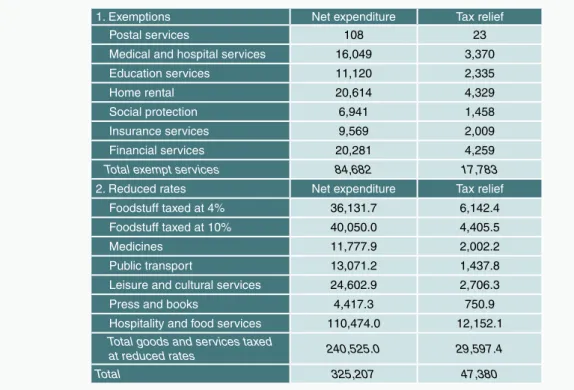
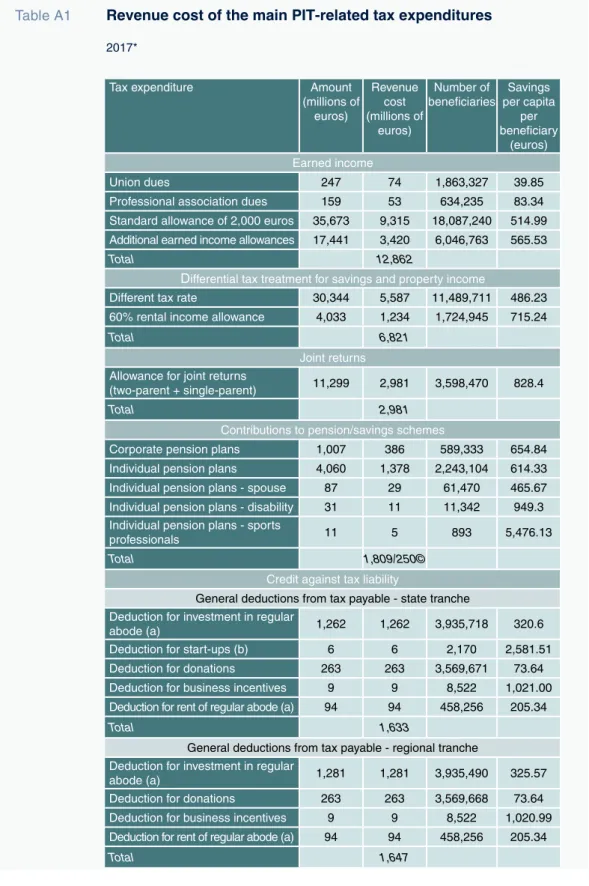
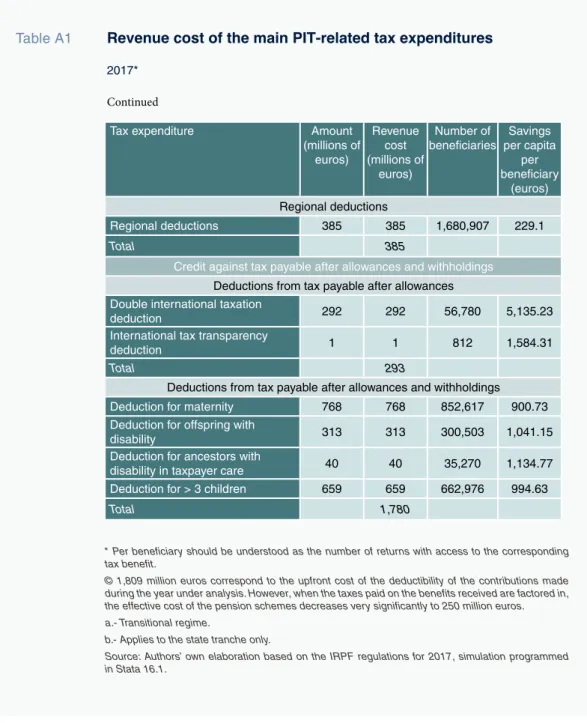
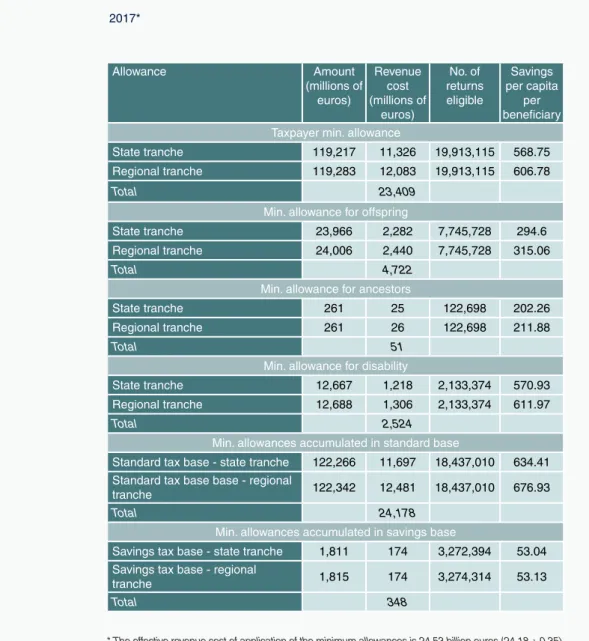
recent years, it is possible to determine the costs of these tax policies. The analysis conducted reveals that all of the foregone tax revenues, or tax expenditures, associated with these three taxes amount to 77.18 billion euros per annum, of which 61% is absorbed by VAT, 36% by PIT and the remaining 3% by CIT allowances and credit. In addition, the personal and household allowances in respect of personal income tax imply an additional annual collection cost of 24.53 billion euros. Those figures clearly indicate that there is adequate room for manoeuvre in the Spanish tax system to reduce the marginal tax burden without foregoing revenue. In other words, rationalisation of the existing tax benefits would be sufficient to finance a tax reform package that would deliver a more efficient and simpler tax system with greater revenue-collection.
The emergence of digital business models and the differing definitions of taxable presence adopted by countries has led to the significant erosion of tax bases and profit shifting (BEPS) from high-tax countries to low-tax jurisdictions. Although the EU Commission’s proposal represents the most advanced and structured attempt to incorporate the concept of a virtual permanent establishment (PE) into the international income tax legal framework, resistance from some Member States has placed it on hold. Consequently, some Member States, including Spain, have introduced their own Digital Services Tax (DST). While implementation issues may be common to many taxes, there are unique structural and design challenges inherent to the DST. In terms of the former, there are issues relating to under which circumstances the DST applies, who would bear the burden of the levy, and the characterization of the equalization tax. The design issues focus on the taxable base, the scope, the rate, and the enforcement of the tax. In light of these challenges, an international approach would ultimately be better suited to achieve a multilateral and long-term solution to the international tax issues raised by the digital economy.
The last two articles of the November SEFO analyze COVID-19’s impact on the financial sector. First, we discuss how increased profitability pressures on banks, exacerbated by lower-for-
economic deterioration, have seemingly accelerated the prospects for consolidation within national borders across the Spanish financial sector.
The merger between CaixaBank and Bankia has sparked commentary surrounding the possibility of a new wave of consolidation across the European banking sector. In recent years, M&A activity had been muted compared with the period directly following the financial crisis.
Specifically, there were 385 deals between 2009 and 2012, compared to 236 between 2016 and 2019. In Spain, the number of deposit-taking entities has declined by 31.4% (from 280 to 192) since 2007. Notably, evidence shows that there is still surplus capacity in the banking sector, thereby justifying additional consolidation. The changing nature of financial services, as well as the entrance of both Big Tech and larger fintech firms, has confirmed the benefits associated with scale such as data processing, multi- channel services, and digitalisation. Moreover, the economic consequences of COVID-19 have further depressed interest rates, necessitating a defensive cost-cutting strategy among Europe’s banks. Nevertheless, it is important to underline that consolidation is just one of the strategies banks can pursue to boost their profitability and market value.
Second, we deconstruct the underlying trends that have resulted in the decreased profitability of the European, and Spanish, banking sectors – the further compression of net interest income as a consequence of the pandemic. Banks have taken a leading role in implementing the measures introduced to halt the economic effects of COVID-19.
As a result, lending momentum has been altered significantly, marked by sharp growth in business lending and a slowdown in household lending compared to prior years. In the household segment, it is worth highlighting the moratoria extended on both mortgages and consumer loans, which impacted this trend. During the second quarter of 2020, the stock of outstanding business debt registered strong year-on-year growth, increasing almost 50 billion euros in one quarter. This comes after a decade long contraction in business lending and can be explained by the banks’ participation in channelling 90% of the loans guaranteed by the government to businesses. Despite the increase
in the stock of credit issued, banks experienced a contraction in net interest margin during the first half of 2020 (-3%). This paradox is due to the negative contribution of average loan book rates (driven by the downtrend in EURIBOR as well as narrower credit spreads), which more than offset the positive effect of the growth in the stock of outstanding credit.
This page was left blank intentionally.
What´s Ahead (Next Month)
Month Day Indicator / Event
December 3 Social Security registrants and official unemployment (November) 4 Eurogroup meeting
9 Industrial production index (October) 10 ECB monetary policy meeting
10-11 European Council meeting 11 CPI (November)
18 Foreign trade report (October)
23 Non-financial accounts: Central Government, Regional Governments and Social Security (October)
23 Non-financial accounts, State (November) 23 Balance of payments quarterly (3rd. quarter) 23 GDP (3rd. quarter, 2nd. estimate)
28 Retail trade (November)
30 Balance of payments monthly (October) 30 Preliminary CPI (December)
30 Quarterly sector accounts (3rd. quarter)
January 5 Social Security registrants and official unemployment (December) 12 Industrial production index (November)
15 CPI (December)
15 Financial Accounts Institutional Sectors (3rd. quarter) 21 ECB monetary policy meeting
28 Labour Force Survey (4th. quarter)
29 Retail trade (December) 29 Preliminary CPI (January)
29 Balance of payments monthly (November) 29 GDP (4th. quarter, advance estimate)
This page was left blank intentionally.
What Matters
The potential impact of a COVID-19 vaccine on the Spanish economy
Prevailing trends in Spain’s economy include the divergence in performance between the manufacturing and services sectors, as well as the rise in precautionary savings among households. A vaccine would tackle both recessionary factors and help GDP return to pre-crisis levels by early 2023, one year earlier than in a no-vaccine scenario.
Raymond Torres and María Jesús Fernández
The NGEU recovery package in Spain:
Structural challenges and proposal analysis While the Next Generation EU (NGEU) recovery package was launched to counteract the economic ramifications of COVID-19, its success will depend on reversing the divergence between the economic performance of Spain and the EU, which pre-dates the crisis. Unfortunately, the biggest obstacle to achieving this will be the timing mismatch between the urgency of the situation and the long-term nature of any recovery initiatives.
Ramon Xifré
5
15
Spain’s fiscal context: A regional perspective While the Spanish general government deficit is forecast at 12.4% this year, the regional governments posted a surplus during the first eight months of the year. However, the regional governments’ finances will experience greater pressure in the following years, necessitating reform of both the regional financial system and Spain’s overall tax system.
Santiago Lago Peñas
27
Consolidation in the EU banking sector:
Scope and timing
After several years of limited consolidation across the European banking sector, the announced merger between CaixaBank and Bankia has bolstered expectations of renewed M&A activity. This expectation is further supported by the existence of surplus capacity, digitalisation trends, and the economic consequences of COVID-19 for banks.
Santiago Carbó Valverde and Francisco Rodríguez Fernández
63
Taxing the digital economy: Is the DST the right solution?
Given the lack of progress on an EU-wide proposal, increasing digitalization of commerce has prompted several Member States to adopt their own Digital Services Tax (DST). Going forward, should agreement be reached at the international level, this would help address some of the unique structural and design challenges associated with DSTs, enhancing the overall efficacy of the tax.
Giulio Allevato and Antonio De Vito
51
Foregone revenues in respect of Spain’s key taxes
As a result of tax breaks for personal income tax, value-added tax, and corporate income tax, the Spanish government foregoes 77.18 billion euros worth of revenue each year.
However, closer analysis shows there is room to rationalise existing tax benefits in order to increase the efficiency and simplicity of the Spanish tax system.
José Félix Sanz-Sanz and Desiderio Romero-Jordán
37
Regulation and Economic Outlook
Recent key developments in the area of Spanish financial regulation
81
Prepared by the Regulation and Research Department of the Spanish Confederation of Savings Banks
Spanish economic forecasts panel: November 2020
83
Funcas Economic Trends and Statistics Department
Key Facts
Economic Indicators
91
Financial System Indicators
129
Social Indicators
135
Net interest income in the context of COVID-19
COVID-19 has contributed to both a significant uptick in business lending and a slowdown in household lending. While the overall stock of credit issued has increased, net interest income during 1H2020 contracted thanks to the negative contribution of average loan book rates.
Ángel Berges, María Rodríguez and Fernando Rojas
71
This page was left blank intentionally.
The potential impact of a COVID-19 vaccine on the Spanish economy
Prevailing trends in Spain’s economy include the divergence in performance between the manufacturing and services sectors, as well as the rise in precautionary savings among households. A vaccine would tackle both recessionary factors and help GDP return to pre- crisis levels by early 2023, one year earlier than in a no-vaccine scenario.
Abstract: Spain has been one of the countries most affected by the COVID-19 crisis. Lack of consumer confidence is one of the key factors behind under-performance. Another is the size of tourism and other services sectors most dependent on mobility. Thus, while indicators point to an encouraging strengthening of manufacturing in recent months, output in the hospitality sector in September was 50%
below pre-crisis levels. Looking forward, a vaccine would improve both consumer confidence and mobility prospects, thus
triggering a sustained recovery. According to estimates presented in this article, by the end of the projection period, GDP would be slightly above 3% higher than in a no-vaccine scenario. However, a vaccine is not expected to make a significant dent in government debt, which could remain close to 120% of GDP. There are also risks associated with these forecasts related to the potential legacy of long-term unemployment and business failure, as well as the ability to absorb EU funds and the pace of economic reforms.
Raymond Torres and María Jesús Fernández VACCINE IMPACT
Recent performance of the Spanish economy
According to the provisional figures, Spanish GDP registered growth of 16.7% in the third quarter, recovering 59% of the output lost in the previous two quarters. Nevertheless, GDP was still 8.7% lower year-on-year.
All components of consumption and investment recovered strongly quarter-on- quarter. Trade also had a positive impact, with growth in exports outweighing the increase in imports. In tourist service exports, however, the recovery was very timid. In real terms, the volume of exports amounted to a scant 26%
of the 3Q19 figure. The number of tourists visiting the country was just 20% of 3Q19 arrivals.
Otherwise, growth in GDP was widespread across all sectors. The manufacturing industry
stands out with growth of 33%, as do the retail, hospitality and transport services sectors, where growth reached 42.5%. Despite the third quarter rebound, however, those services remained at very depressed levels in comparison with pre-crisis levels. Conversely, the trend in manufacturing and construction exhibited a less severe drop from pre-COVID levels.
Judging by several indicators, the divergence between the various sectors widened as the quarter unfolded, with manufacturing and construction continuing to recover as the services sector once again stalled. Within the services sector there are also notable differences between the various sub-sectors.
The most affected were hospitality (in September output was tracking 50% below pre-crisis levels) together with administrative and auxiliary services, whereas the shortfall in
“ The manufacturing industry stands out in the third quarter with growth of 33%, as do the retail, hospitality and transport services sectors, where growth reached 42.5%. ”
0 20 40 60 80 100 120
Jan Feb Mar Apr May Jun Jul Aug Sept
Manufacturing Retail Transportation Hospitality
Exhibit 1 Trend in select sub-sectors (Jan. 2020 rebased to 100)
Source: INE (IPI and IASS).
The potential impact of a COVID-19 vaccine on the Spanish economy
the retail sector was much smaller (at around 5%), with the transportation sub-sector somewhere in the middle (Exhibit 1).
The trend in Spanish manufacturing has been very favourable in comparison with the rest of Europe according to the industrial production index. Whereas the contraction in output was bigger in Spain at the onset of the crisis than in the rest of the major eurozone economies, the subsequent recovery has been stronger. In September, the industrial production index in Spain had recovered to around 3% below January-February levels, compared to 9%
relative underperformance in Germany, 5% in France and 4% in Italy.
Turning to the fourth quarter, the indicators released so far point to an interruption in the recovery in GDP as a result of the restrictions imposed to combat the second wave of the pandemic. Tourism took another hit in September and October, according to air passenger numbers, while the services PMI fell significantly in September and then dropped further in October. Although the manufacturing PMI continued to strengthen (with the above-mentioned sector discrepancies widening) the combined reading for the manufacturing and services sectors has fallen below the third-quarter average.
The trend in Social Security contributor numbers in October clearly illustrates the
sector divergence. Whereas the manufacturing industry, construction and parts of the services sector continued to create jobs and bring people out of the furlough scheme, the hospitality sector registered, as it had in September, a sharp decrease in employment, a phenomenon that not only hit seasonal hires but also permanent jobs.
In short, the economic theme throughout the unfolding recovery has been the relative strength of the manufacturing and construction sectors, in marked contrast to the plight of certain services sectors, particularly hospitality, which is bearing the brunt of the economic fallout from the pandemic. Moreover, the tightening of restrictions since September in Spain and in most of the European Union will inevitably have significant knock-on effects across the entire economy.
Outlook Key assumptions
The prospects for the economy will continue to be shaped by how the pandemic unfolds.
In the near-term, the economy is bound to feel the impact of the restrictions reimposed on business activities and mobility in order to curb the second wave of transmission.
Although measures have been taken all across the country and in all of Spain’s main European trading partners, these restrictions are softer than those imposed last spring. Over the medium-term, however,
“ In September, the industrial production index in Spain had recovered to around 3% below January-February levels, compared to 9%
relative underperformance in Germany, 5% in France and 4% in Italy. ”
“ It is likely that, thanks to the vaccine, private spending will increase
in 2021 by an amount equivalent to half of the surplus savings
triggered by the pandemic. ”
the advent of a highly effective vaccine bodes well for a significant improvement in the economic outlook. Our forecasts assume that vaccination begins in the spring of 2021 and gradually ramps up throughout the second half of the year across both Spain and the rest of the EU, as the European health authorities have suggested.
The existence of a COVID-19 vaccine will erode the two main recessionary forces that have depressed economic activity. Firstly, as restrictions are gradually lifted, uncertainty will be reduced, facilitating the gradual normalisation in household savings. Judging by what has transpired in the countries that have had the greatest success in tackling the pandemic (Exhibit 2), and the trend observed in Asia during the SARS-Cov1 crisis, it is likely that thanks to the vaccine,
in 2021 private spending will increase by an amount equivalent to half of the surplus savings triggered by the pandemic. The rest of that surplus should disappear in 2022, when the savings rate is forecast to return to 8.8%, which comes close to its estimated equilibrium rate. By comparison to a no- vaccine scenario, consumer spending would increase by 14 billion euros in 2021 and by a further 25.6 billion euros in 2022.
Secondly, as vaccination becomes widespread, a recovery in overseas travel is expected, a trend already on display in Asia, where the pandemic appears to be largely under control.
Considering the anticipated timing of the rollout of the vaccine, the tourism sector will only make a partial recovery in 2021. Our assumption is that the sector will recover to 50% of 2019 levels in 2021, compared to 30%
5.7
2.0
-0.6 -3.0
0.0 3.0 6.0 9.0 12.0
Countries with lowest
transmission Countries with medium
transmission Countries with highest transmission
0.6 -1.1 6.6
-1.8 11.0
-1.5
Exhibit 2 Economic sentiment is inversely correlated with the incidence of the virus
Change in the consumer confidence index between June and October In percentage points
Notes: (1) The “countries with lowest transmission” are: Australia, New Zealand, South Korea, Japan and Finland. The “countries with medium transmission” are: Germany, Denmark, Portugal, Lithuania, Estonia, Latvia and Poland. The “countries with highest transmission” are: Spain, France, Netherlands, Belgium and the UK.
(2): To group the countries into the various categories, the analysis relies on average daily cases in the months of September and October per 100,000 inhabitants, as reported by the European Centre for Disease Prevention and Control.
(3): Highest and lowest values within country group represented.
Source: OECD.
The potential impact of a COVID-19 vaccine on the Spanish economy
“ We are estimating a yield on 10-year Spanish government bonds of 0.2%, widening to just 0.35% in 2022. ”
in 2020. By 2020, the recovery is expected to be far more palpable (85% of 2019 levels for the year but back up at 90% by the fourth quarter). In a no-vaccine scenario, we estimate that tourism activity would be at 40% of pre- pandemic levels in 2021 and only slightly higher, at 50%, in 2022.
As for economic policy, we assume that exceptionally favourable financing conditions will persist thanks to the quantitative easing measures deployed by the European Central Bank (ECB) in response to the pandemic.
We therefore expect interest rates to remain ultra-low throughout the forecast horizon.
Specifically, we are estimating a yield on 10-year Spanish government bonds of 0.2%, widening to just 0.35% in 2022. Both EURIBOR and the cost of the long-term refinancing operations (TLTRO III) are expected to remain in negative territory.
Fiscal policy is similarly expected to remain markedly expansionary. Our forecasts assume an increase in public spending, partly financed from the Next Generation EU recovery funds, totalling 14 billion euros in 2021 and 28 billion euros in 2022. We estimate a GDP multiplier effect of slightly over 1 for investment projects and lower than unity for the other types of spending.
In 2021, we also layer in the pension and public pay increases announced by the Spanish government. For 2022, we assume that pensions will increase by the same amount again but that public pay will be frozen. We have not factored in any of the tax hikes included in the draft state budget as they have yet to be passed. What is included is the minimum basic income scheme, relying on the government’s estimates to that end.
Forecasts
Due to the fresh spike in transmission and the resulting restrictions on certain activities,
which will hit certain sectors especially hard, we are forecasting a GDP contraction of 5% in the fourth quarter. That forecast is underpinned by the ongoing decline in private sector demand, particularly consumption, which Christmas is not expected to mitigate.
Foreign trade should remain a source of good news, in line with the recent manufacturing performance and the relatively favourable competitive position of Spanish exporters.
The gap is likely to widen between the manufacturing sector, which is expected to better withstand this new recessionary episode, and the services sector, particularly the segments that are more dependent on human contact such as the tourism, hospitality, restaurant, arts and leisure activities. By the end of 2020, we estimate that manufacturing activity will be back to 3% below pre-crisis levels, with the hardest-hit services segments at around 40%.
We are forecasting a GDP contraction of 12%
in 2020 as a whole, a one percentage point improvement from our September forecasts (before the third-quarter growth estimate was released, i.e., 16.7% according to the National Statistics Office, compared to a forecast 11.6%). All components of demand except for public spending are expected to detract from GDP growth in 2020.
The economic weakness anticipated in the final months of 2020 is expected to linger at the start of 2021. However, as the year unfolds, the recovery should gain traction thanks to the arrival of the vaccine and supported, albeit to a lesser extent, by the EU funds. For 2021, we are forecasting GDP growth of 6.7%, down from the 7.9% estimated in September. This time all components of demand are expected to make a positive contribution to growth, with government spending contributing the least. It is worth highlighting the expected rebound in private consumption, unlocked by a growing propensity to spend as uncertainty regarding
the path of the pandemic begins to dissipate.
A recovery is also estimated for investment, particularly in the public sector, where growth is forecast at close to 40% (albeit starting from very low levels). Foreign trade is expected to buoy GDP, driven by renewed growth across Spain’s trading partners, as well as a slight improvement in tourism during the second half of the year.
Growth should consolidate in 2022, at 6.2%, underpinned by the same interplay of drivers, notably private consumption, investment in capital goods and tourism. Nevertheless, GDP is not expected to regain all of the ground lost since the start of the crisis until early 2023, one year sooner than in the no-vaccine scenario (Exhibit 3). By the end of the projection period, the vaccine will raise GDP by slightly above 3% compared to a no-vaccine scenario.
The persistence of the external surplus during the pandemic is worth highlighting. It is a positive development (especially considering the collapse in tourism receipts, and the disruption of supply chains induced by the pandemic), and owes much to the relatively favourable competitive position of Spanish exporters. The current account is expected to present a surplus of between 1% and 2% of GDP throughout the projection horizon.
The job market is likely to act as a growth stabiliser, instead of exacerbating the crisis like in previous recessions. We expect that the ongoing furlough scheme, the financial support extended to the self-employed and the internal flexibility measures taken by private enterprises (e.g., arrangements for working from home) will continue to cushion the impact of the pandemic on employment.
“ By the end of the projection period, the vaccine will raise GDP by slightly above 3% compared to a no-vaccine scenario. ”
76 80 84 88 92 96 100 104 108 112 116
4Q19 1Q20 2Q20 3Q20 4Q20 1Q21 2Q21 3Q21 4Q21 1Q22 2Q22 3Q22 4Q22 With vaccine No vaccine
-3.3
Exhibit 3 GDP forecasts with and without a vaccine
4Q19 rebased to 100
Source: INE and Funcas forecasts.
100 98.8 97.5 96.3 95
The potential impact of a COVID-19 vaccine on the Spanish economy
Nonetheless, it will be some time before the economic recovery starts to create new jobs. We are forecasting an increase in unemployment in 2021, due to the return of discouraged, inactive job-seekers, followed by an incipient recovery from 2022. For that year, we are forecasting an average rate of unemployment of 15.5%, up 1.4 percentage points from 2019.
The increase in public spending and collapse in tax revenue will take a toll on the public deficit, which we are forecasting at 11.5% in 2020. As noted, the 2021 estimates factor in the decisions already taken or announced, notably the growth in public spending funded by the EU recovery plan. The result of those assumptions, coupled with the interplay of the automatic stabilisers, will result in an estimated reduction in the deficit to 8.6% of GDP, largely in the structural component.
Fiscal policy is expected to remain markedly
expansionary in 2022, with the deficit declining towards 5.5% of GDP that year.
Public debt will probably stagnate at high levels of close to 120% of GDP, albeit falling slightly below that level in 2022. Therefore, the advent of the vaccine is not expected to make a significant dent in Spain’s pre-existing imbalances (Exhibit 4).
Main risks
It is important to underline the margin of error implicit in any forecasting exercise in a context as uncertain as this. One of the biggest unknowns is how effective the recently- announced vaccines will be. Although the World Health Organization and many experts believe we will have an effective remedy in 2021, it is still unclear what percentage of the population will be willing to have the vaccination or how long the immunity created will last. The estimates presented above show
“ As such, the growth-enhancing effects of a vaccine will not make a significant dent in Spain’s public debt and unemployment imbalances. ”
90 95 100 105 110 115 120 125
2019 2020 2021 2022
With vaccine No vaccine
Exhibit 4 Public debt forecasts with and without a vaccine
As % of GDP
Source: Bank of Spain and Funcas forecasts.
Table 1 Economic forecasts for Spain, 2020-2022
Annual rate of change in percentages, unless otherwise indicated
Actual data Funcas forecasts Change from
last set of forecasts (a) 2007
average 2013 average
2019 average
2019 2020 2021 2022 2020 2021
1. GDP and components, constant prices
GDP 3.7 -1.3 2.6 2.0 -12.0 6.7 6.2 1.0 -1.2
Final consumption, households
and NPISHs 3.7 -2.1 2.2 0.9 -14.6 7.4 7.3 1.1 -0.2
Final consumption, government 4.2 0.9 1.4 2.3 3.8 1.7 0.5 -1.8 -1.5
Gross fixed capital formation 6.1 -7.6 4.5 2.7 -14.5 7.9 9.4 3.6 -2.0
Construction 5.5 -10.7 3.9 1.6 -16.2 7.8 5.8 0.9 -1.8
Capital goods and other products 7.5 -2.7 5.0 3.7 -12.8 8.0 12.8 6.3 -2.3
Exports of goods and services 6.5 1.8 4.0 2.3 -19.2 11.8 7.4 4.7 -3.9
Imports of goods and services 8.7 -4.0 4.4 0.7 -17.0 10.1 7.5 4.7 -2.6
Domestic demand (b) 4.4 -3.1 2.6 1.4 -10.7 5.9 6.0 0.9 -0.9
Net exports (b) -0.7 1.8 0.0 0.6 -1.3 0.8 0.2 0.1 -0.3
GDP, current prices: - billions of euros -- -- -- 1,244.8 1,107.4 1,194.9 1,282.1 -- --
- % change 7.3 -0.8 3.4 3.4 -11.0 7.9 7.3 1.0 -1.0
2. Inflation, employment and unemployment
GDP deflator 3.5 0.5 0.8 1.4 1.1 1.1 1.0 -0.1 0.2
Household consumption deflator 3.1 1.7 0.7 1.0 0.4 0.9 1.3 0.1 -0.3
Total employment
(national accounts, FTEs) 3.3 -3.4 2.5 2.3 -8.7 2.6 6.0 0.7 -1.2
Unemployment rate
(Spanish labour force survey) 12.5 20.2 18.8 14.1 16.5 17.0 15.5 -0.5 -0.2
3. Financial equilibrium (% of GDP)
National savings rate 16.7 18.8 21.7 22.9 21.2 22.2 22.5 -0.1 -0.4
- of which, private savings 13.3 22.9 23.6 23.8 30.4 27.8 24.3 -0.9 -0.6
National investment rate 26.7 21.7 19.4 20.8 20.2 20.3 20.9 0.1 0.0
- of which, private investment 17.9 17.8 17.2 18.7 17.8 17.7 18.2 0.0 -0.3
Current account surplus/(deficit) -4.5 -2.9 2.3 2.1 1.0 1.9 1.7 0.1 0.0
Spain's net lending (+) or borrowing
(-) position -3.7 -2.4 2.7 2.5 1.3 2.2 1.8 -0.5 -0.6
- Private sector -3.8 6.4 6.6 5.3 12.8 10.8 7.2 -1.1 0.0
- Govt. deficit excl. financial sector
bailout expenditure -0.9 -8.1 -3.9 -2.9 -11.5 -8.6 -5.5 0.7 -0.6
Government debt, EDP criteria 52.2 67.6 98.4 95.5 120.6 120.8 118.4 1.0 0.4
4. Other variables
Eurozone GDP -0.3 0.7 1.7 1.2 -7.5 5.0 3.5 0.5 -0.5
Household savings rate (% of GDI) 9.5 8.8 6.4 6.3 17.2 13.2 8.8 0.0 -0.9
Gross borrowings, households
(% of GDI) 93.3 128.5 102.0 92.7 89.1 81.7 76.5 -0.8 0.9
Gross borrowings, non-financial
corporates (% of GDP) 91.5 133.4 103.1 92.8 108.5 100.6 95.6 -1.4 -0.4
Spain's gross external borrowings
(% of GDP) 60.6 162.4 168.3 169.3 196.1 183.3 174.8 -1.7 0.6
12-month Euribor (annual average %) 3.74 1.90 0.01 -0.22 -0.30 -0.46 -0.45 -0.06 -0.26 Yield on 10Y Spanish bonds
(annual average %) 5.00 4.74 1.58 0.66 0.39 0.20 0.35 -0.01 -0.25
(a) Percentage-point change between the current estimates and the last set of forecasts.
(b) Contribution to GDP growth in percentage points.
Sources: 1996-2019: INE and Bank of Spain; Forecasts 2020-2022: Funcas.
The potential impact of a COVID-19 vaccine on the Spanish economy
Table 2 Quarterly forecasts for the Spanish economy
Percentage change at constant prices, unless otherwise indicated Forecasts in shaded area
Period GDP Private cons.
Public cons.
GFCF Exports Imports Contrib. to growth GDP (1)
Employ.
(2)
Unemploy.
rate Domestic
demand Net exports
2014 1.4 1.7 -0.7 4.1 4.5 6.8 1.9 -0.5 1.0 24.4
2015 3.8 2.9 2.0 4.9 4.3 5.1 3.9 -0.1 3.2 22.1
2016 3.0 2.7 1.0 2.4 5.4 2.6 2.0 1.0 2.8 19.6
2017 3.0 3.0 1.0 6.8 5.5 6.8 3.1 -0.2 2.9 17.2
2018 2.4 1.8 2.6 6.1 2.3 4.2 3.0 -0.5 2.6 15.3
2019 2.0 0.9 2.3 2.7 2.3 0.7 1.4 0.6 2.3 14.1
2020 -12.0 -14.6 3.8 -14.5 -19.2 -17.0 -10.7 -1.3 -8.7 16.5
2021 6.7 7.4 1.7 7.9 11.8 10.1 5.9 0.8 2.6 17.0
2022 6.2 7.3 0.5 9.4 7.4 7.5 6.0 0.2 6.0 15.5
QoQ change, in % (SCA data) Unemploy.
rate
2018 I 0.5 0.4 0.8 0.0 0.5 0.3 0.5 0.0 0.5 16.7
II 0.5 0.4 0.7 3.9 -0.6 1.3 1.1 -0.6 0.7 15.3
III 0.6 0.0 0.8 -0.4 0.6 -0.8 0.1 0.5 0.9 14.6
IV 0.6 0.3 0.5 0.9 0.8 0.5 0.5 0.1 0.5 14.4
2019 I 0.5 0.4 0.2 1.2 0.3 -0.2 0.4 0.1 0.7 14.7
II 0.4 -0.3 0.9 -0.3 1.5 0.3 -0.1 0.4 0.4 14.0
III 0.4 0.8 0.6 1.1 0.2 1.3 0.7 -0.4 0.1 13.9
IV 0.4 0.1 0.9 -1.0 0.2 -1.1 0.0 0.4 0.8 13.8
2020 I -5.2 -6.7 1.3 -4.8 -7.4 -5.8 -4.5 -0.7 -1.9 14.4
II -17.8 -20.0 0.3 -22.1 -33.4 -29.5 -15.6 -2.2 -17.7 15.3
III 16.7 20.2 1.1 19.9 34.3 28.4 14.5 2.2 16.0 16.3
IV -5.0 -8.0 2.0 -4.6 1.7 1.5 -5.0 0.0 -4.4 19.9
2021 I 1.5 2.1 1.3 5.0 -1.9 1.0 2.5 -1.0 0.7 19.3
II 4.6 5.7 0.0 4.3 4.8 3.3 4.0 0.6 2.1 17.3
III 5.3 6.1 -2.5 3.3 9.2 3.9 3.5 1.8 2.5 15.7
IV 0.8 3.3 -1.9 -3.9 0.9 0.6 0.7 0.1 0.4 15.7
YoY change, in % (SCA data)
2018 I 2.9 2.6 2.3 5.5 3.8 5.7 3.3 -0.4 2.7 --
II 2.3 2.2 2.6 8.8 2.1 6.8 3.7 -1.4 2.5 --
III 2.3 1.4 2.9 5.6 1.8 3.2 2.7 -0.4 2.6 --
IV 2.3 1.0 2.8 4.5 1.3 1.3 2.2 0.0 2.7 --
2019 I 2.2 1.1 2.2 5.7 1.1 0.8 2.1 0.1 2.8 --
II 2.1 0.4 2.4 1.3 3.2 -0.1 0.9 1.2 2.5 --
III 1.8 1.2 2.2 2.8 2.7 2.0 1.5 0.3 1.8 --
IV 1.7 1.0 2.6 0.9 2.1 0.3 1.0 0.7 2.1 --
2020 I -4.2 -6.1 3.7 -5.1 -5.6 -5.4 -3.9 -0.2 -0.5 --
II -21.5 -24.7 3.1 -25.8 -38.1 -33.5 -19.0 -2.5 -18.4 --
III -8.7 -10.2 3.7 -11.9 -17.0 -15.7 -7.9 -0.8 -5.5 --
IV -13.6 -17.5 4.8 -15.2 -15.8 -13.5 -12.5 -1.1 -10.4 --
2021 I -7.4 -9.7 4.8 -6.4 -10.8 -7.2 -6.1 -1.4 -8.0 --
II 17.8 19.4 4.4 25.3 40.5 36.0 16.0 1.7 14.1 --
III 6.3 5.3 0.7 7.9 14.2 10.0 4.7 1.5 0.8 --
IV 12.8 18.3 -3.1 8.8 13.3 9.1 11.1 1.6 5.8 --
(1) Contribution to GDP growth in percentage points.
(2) Full-time equivalent jobs. SCA data = seasonally and calendar adjusted data.
Source: INE and Funcas (forecasts).
that in the absence of a vaccine, the Spanish economy would take one year longer to recover to pre-pandemic levels compared to the baseline scenario.
There are other downside risks. Firstly, the bouts of economic reopening and closure may leave a legacy of long-term unemployment and business failure, heightening the risk of a financial crisis. Moreover, those sources of hysteresis imply a loss of productive fabric that will be hard to reverse.
Uncertainty regarding the timing of disbursement of EU funds, the potential for poor management of those funds at various levels of government and the economy’s ability to absorb them are other significant risks that could dampen the forecast for recovery. It is crucial that the EU plan provides an impetus for reforms to improve how the economy operates and reduces the economic and social imbalances weighing on Spain. In the current climate those reforms are also essential for generating confidence in the economy’s growth potential and solvency.
If not, concerns could increased over the sustainability of public debt, with dire economic and social consequences. In sum, with the EU stimulus package alone and in the absence of an ambitious reform programme aimed at correcting Spain’s shortcomings and boosting its productivity, Spain risks falling behind the rest of the developed economies.
Raymond Torres and María Jesús Fernández. Economic Perspectives and International Economy Division, Funcas
“ It is crucial that the EU recovery plan provides an impetus for reforms
to improve how the economy operates and reduces the economic
and social imbalances weighing on Spain. ”
The NGEU recovery package in Spain: Structural challenges and proposal analysis
While the Next Generation EU (NGEU) recovery package was launched to counteract the economic ramifications of COVID-19, its success will depend on reversing the divergence between the economic performance of Spain and the EU, which pre-dates the crisis.
Unfortunately, the biggest obstacle to achieving this will be the timing mismatch between the urgency of the situation and the long-term nature of any recovery initiatives.
Abstract: In response to the economic damage wrought by COVID-19, on July 21st, 2020, the European Council agreed to an exceptional recovery package, the Next Generation EU (NGEU), sized at 750 billion euros. In examining the NGEU’s potential effects on the Spanish economy, it is important to first note that despite much-needed progress on correcting imbalances and structural reforms post-financial crisis, Spain was already
showing clear signs of reform fatigue before the onset of COVID-19. Indeed, convergence with the EU had, depending on the particular metric, either stalled or reversed. Thus, interrupting this trend must be a key goal of any recovery package for Spain. However, there are several obstacles that could undermine or minimise the effectiveness of the NGEU in Spain: (1) difficulty in reaching political and social consensus; (2) fund absorption deficits;
Ramon Xifré RECOVERY PLAN
and, (3) managerial issues. In the best-case scenario, assuming all those obstacles can be overcome, the effects of the structural reform programmes will only materialise in the medium-to longer-term. For this reason, the biggest challenge policymakers must address is the timing mismatch between the urgency of the situation and the long-term nature of the recovery initiatives. The vital issue at present is to prop up as much of the productive business fabric as possible.
Introduction
The COVID-19 crisis has led to both human and economic losses, creating a level of instability that is unprecedented in recent times. Unfortunately, despite recent progress on the vaccine front, it is still too soon to estimate when the pandemic might end, its total impact or the nature of the subsequent economic recovery. The IMF’s October 2020 World Economic Outlook (WEO) forecasts a contraction in Spanish GDP of 12.8% in 2020, the biggest in the EU, and a recovery of 7.2%
in 2021. However, those forecasts were made before infection rates began to spike again during the second half of October, prompting the government to declare a second state of emergency on October 26th.
In general terms, the economic policy responses in the EU and eurozone to this formidable shock appear to be up to the task.
The ECB has rolled out a new 1.35 billion-euro pandemic emergency purchase programme (PEPP) aimed at reducing borrowing costs and boosting credit flows in the eurozone. The purpose of this paper is to examine the other major instrument put together by the European institutions –The Next Generation EU recovery package.
To that end, we provide a brief overview of the programme, pointing out certain features that
will be relevant to the more detailed analysis that follows. We then take a look back at the EU’s record with structural reform programmes over the past two decades, focusing on the most recent one, the Europe 2020 Strategy.
That programme provides a framework for measuring the Spanish economy’s track record with such structural challenges over the past 20 years. We then briefly review some of the recent proposals published in Spain regarding the use of the NGEU funds. Lastly, we draw certain conclusions and provide some opinions.
The Next Generation EU recovery plan [1]
Building from the Commission’s initial proposals in May, on July 21st, 2020, the European Council agreed to an exceptional recovery package, the Next Generation EU (NGEU), sized at 750 billion euros.
The agreement authorises the European Commission to issue up to 750 billion euros worth of debt on behalf of the European Union. The NGEU funds are in addition to the 1.07 trillion euros available under the Multi-Annual Financial Framework (MFF) for a combined support package of 1.82 trillion euros. The NGEU funds will be channelled via seven spending programmes and are articulated as both loans (360 billion euros) and grants (390 billion euros). The commitments must be made before the end of 2023 and the funds paid out before the end of 2026. The largest component of the NGEU is the Recovery and Resilience Facility (RRF), which accounts for nearly 90% of the total. In the case of the RRF grants, which amount to 312 billion euros, 70% of the commitments must be awarded in 2021 and 2022 on the basis of three criteria: the rate of unemployment between 2015 and 2019; GDP per capita; and the size of the population. The remaining 30%
“ The IMF’s October 2020 World Economic Outlook (WEO) forecasts a
contraction in Spanish GDP of 12.8% in 2020, the biggest in the EU,
and a recovery of 7.2% in 2021. ”
The NGEU recovery package in Spain: Structural challenges and proposal analysis
of the RRF grants must be committed in full in 2023. [2]
The member states must draw up national recovery and resilience plans in which they must present their structural reform programmes and investment projects for 2021-2023. The Commission will then evaluate those plans on the basis of a series of criteria, including: (1) consistency with the country-specific recommendations set down in the European Semester; (2) reinforcement of the member state’s growth potential, job creation and economic and social resilience;
and, (3) the contribution to the country’s green and digital transition.
The Spanish government presented its Recovery, Transformation and Resilience Plan (España Puede, Office of the Presidency, 2020a) in October 2020. That plan contained 10 guiding policies for structural reforms aligned with the general NGEU priorities.
According to the government’s estimates (Office of the Presidency, 2020b), Spain will receive approximately 60 billion euros from the RRF in non-repayable transfers and may be eligible to access up to 80 billion euros of loans. With respect to the REACT EU fund, Spain will receive a little over 12 billion euros for deployment between 2021 and 2022.
The budget plan presented by the government to the European Commission on September 15th, 2020, and the general state budget for
2021 feature investments totalling 27 billion euros to be funded from these new schemes.
European structural reform plans The structural challenges facing Spain in its quest to lock in an economically, socially and environmentally sustainable growth model have been the topic of debate and analysis for much time and are related with the plans the EU has devised to achieve similar objectives throughout the entire region.
The past 20 years have been marked by a succession of programmes designed to trigger reforms across the EU member states. The Lisbon Strategy was launched in March 2000 with the aim of turning Europe into the “the most competitive and dynamic knowledge- based economy in the world, capable of sustainable economic growth with more and better jobs and greater social cohesion”.
That strategy was articulated around two pillars, the economic and social dimensions;
a third dimension –environmental– was added later. A review of the progress in 2004 proved disappointing, prompting a revision of strategy. The new strategy was approved in 2006 with four primary initiatives: investing more in knowledge and innovation; unlocking business potential, especially for SMEs;
increasing employment opportunities for priority categories; and, a new focus on climate change and energy policy in Europe.
The progress made on those general objectives was similarly deemed to fall short of the mark.
“ According to the government’s estimates, Spain will receive approximately 60 billion euros from the Recovery and Resilience Facility (RRF) in non-repayable transfers and may be eligible to access up to 80 billion euros of loans. ”
“ The NGEU funds will be channelled via seven spending programmes
and are articulated as both loans (360 billion euros) and grants
(390 billion euros). ”
In March 2010, the European Commission presented its proposed Europe 2020 Strategy which set similar targets in search of “smart, sustainable and inclusive” growth. An effort was made to translate the 2020 Strategy into more concrete lines of initiative and new mechanisms for coordinating economic policy among the member states were articulated. Seven “flagship initiatives” were defined to focus the effort and channel resources while the EU was to deliver on five “headline targets” by 2020:
■Rate of employment of 75% among men and women aged between 20 and 64;
■3% of EU GDP invested in innovation;
■Delivery of the “20/20/20 targets” for climate change and energy (i.e., cutting emissions by 20%; generating 20% of energy from renewable sources; and, boosting energy efficiency by 20%);
■Reduction in the school drop-out rate to below 10% and increase in the share of 30- 34 year-olds having completed third-level or equivalent education to at least 40%;
■Lifting at least 20 million people out of the risk of poverty and exclusion.
Beyond the validity of the above quantitative targets, that selection of priorities and goals provides a proxy for measuring Spain’s progress in relation to the rest of the EU member states, the subject of the next section, which updates previous work in this field (Xifré 2014, 2017).
How the Spanish economy has evolved structurally since 2000 Exhibit 1 shows the number people aged between 15 and 64 who are employed as a percentage of the total number of people
“ Employment has recovered since 2013 but continues to lag the EU average significantly, by around five percentage points in 2019 (68.5%
in the EU-27 versus 63.3% in Spain). ”
50 55 60 65 70 75 80
2000 2001 2002 2003 2004 2005 2006 2007 2008 2009 2010 2011 2012 2013 2014 2015 2016 2017 2018 2019
EU-27 Spain
Exhibit 1 Rate of employment among people aged 15 to 64
Employees as percentage of total population in age group
Source: Eurostat.