Matriz MIAR para el análisis de información Revistas REDIB Red Iberoamericana de innovación y conocimiento científico. La liberación de la Madre Tierra: más que conquistar un territorio.
Editorial
Retos de inclusión comunitaria
Esto permitiría la reestructuración de la confianza entre la población y el restablecimiento de la estructura social rota por el poder monopolista. Cuestiona también el estancamiento de la región en un modelo agrícola exportador, así como la excesiva acumulación de tierra.
Emotionalities in Tension: From Militarized
Masculinity to Forms of Relationship among Genders that Build Cultures of Peace *
Some of the young people shared their experiences serving in the army. The army is the military force organized for the defense of the state and the maintenance of internal order.
Critical Education in Human Rights for the Construction of Peace: an Experience at the Carlos
Albán Holguín School *
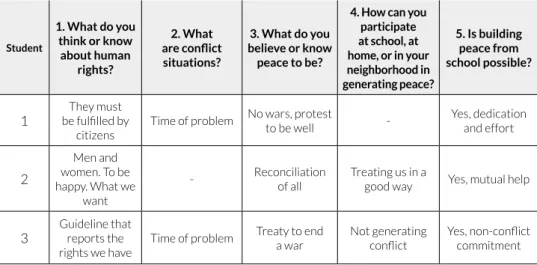
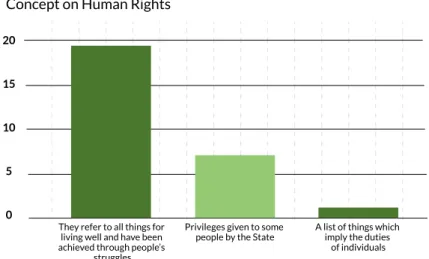
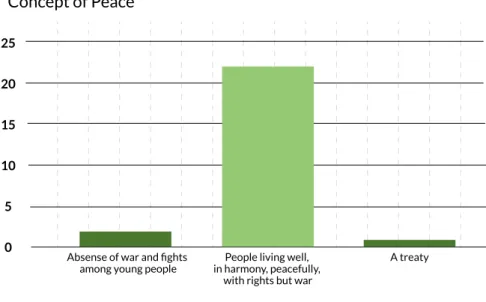
Critical Human Rights Education for Peacebuilding: A Carlos Experience. The sixth session was dedicated to planning initiatives to share knowledge about human rights and peace with the rest of the educational community.
Parenting Practices in Hearing Mothers with Deaf Children Who Use Colombian Sign Language *
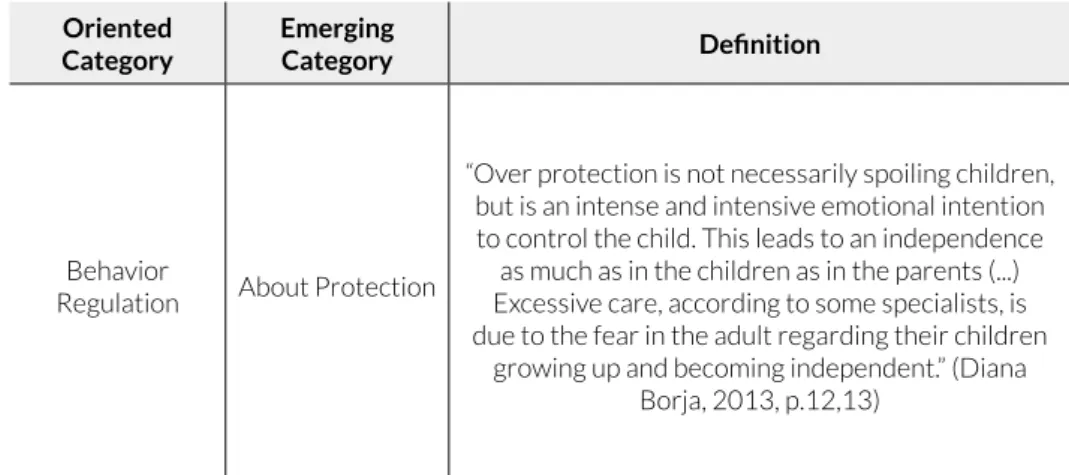
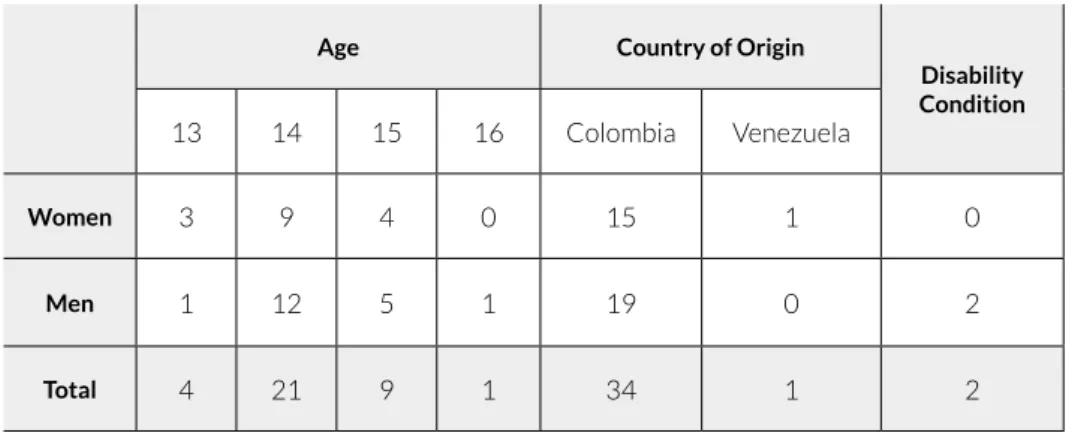
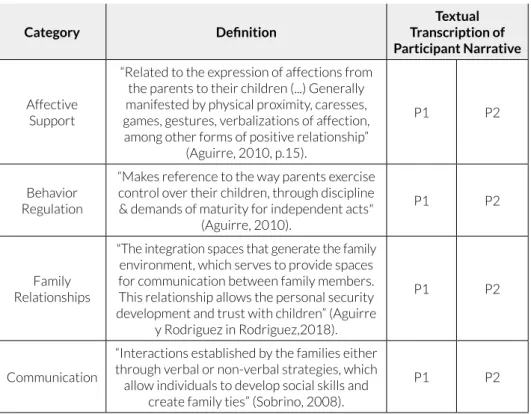
In this communication, non-verbal strategies emerged (signs or non-verbal language) which were adjusted according to the hearing ability of the child. To solve the research question, the parenting practices adopted by the mothers were first identified, and then the main factors that influenced communication between each dyad in the study were recognized. The research, in addition to the factors already mentioned, emphasizes the importance of the inclusion of Deaf people in society.
A qualitative approach was chosen for the development of the research with a phenomenological-narrative approach from the perspective of two hearing mothers without communicative competence in Colombian Sign Language. In this case, the results reflected the viewpoint of the caregivers without communicative competence in Colombian Sign Language.
The Liberation of Mother Earth: More than Taking the Territory *
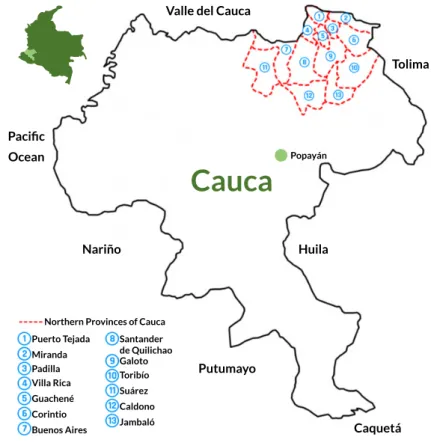
They are focused on a different relationship with the earth that allows exploration and confrontation with the prevailing system. In the north of the department of Cauca (Colombia), the indigenous people of NASA have initiated the so-called process of the liberation of Mother Earth, the result of years of struggle and organization, which constitutes a gamble in search of re-territorialization on based on a cultural basis. project built from ancestral roots. The historical-hermeneutic research approach aimed at understanding the social action of the NASA community in the process of the liberation of Mother Earth as a way of resistance and territorial defense.
The development of this research from historical-hermeneutic and qualitative approaches, through ethnographic methods, involved fieldwork through participation in gatherings, meetings, marches, conversations, meetings and other ways in which the researcher had access to information collection from participant observation. which contributed to the development of the research goal on the process of the Nasa community's Liberation of Mother Earth. Their resettlement began in the seventeenth century with a territorial institutionalization process directed by the Spanish Crown through the resguardos6 constitution until the end of the sixteenth century.

Cauca
Currently, it is a reference in the struggle, as members of the Movimiento Sin Tierra-Nietos de Quintín Lame (MST-NQL). The process of liberating Mother Earth described here constitutes one of the forms of collective subjectification that indigenous communities have created. The process of liberating Mother Earth constitutes a form of resistance to the post-ritorialization process that the Nasa people have faced to this day in the northern part of the department of Cauca.
It is a process that has allowed the strengthening of the internal organizational processes of NASA people through the reclaiming of bare land from sugar mills. In the meetings called by the Mother Earth Liberation Process, it has been possible to recognize the potential of these forms of resistance and present proposals for the construction of hopeful horizons.

The Country We Carry Inside”: Narratives of Psychology Students’ Violence as a Challenge to
Professional Work * [English Version]
The Violence of War
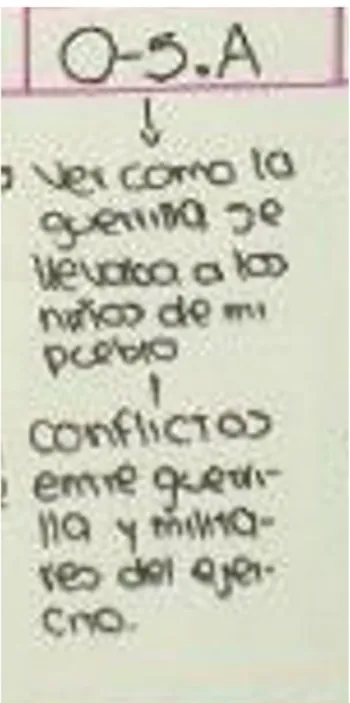
The violence of war arises from confrontations in the context of armed conflicts. The cross stories are described as direct and identified violence at a young age, at the age of 0 to 12 years old, which coincides with the worst period of violence in the country. This generates a degree of greater emotional affection (N43, personal communication, 2018, p. 44), where one day in June, relatives, acquaintances and friends are lost at a young age in a town in the lower west of Caldas called San José . 7 year old girl was killed by a stray bullet, that girl was my friend” (N27, personal communication, 2018, p. 23).
Capitalized text is retained, as it was written that way by the person who participated in the investigation. The year of the narrative is also identified, as is the page number in the Atlas.ti file where the participants' exact words are edited.
Violence in Public Spaces
It is frustrating when one has traumas caused by external factors, especially when you want to heal these traumas and progress, but are unable to, however, I will not give up" (N29, personal communication, 2018, p. 62). Another important issue is that after seeing acts of violence, the collaborators made efforts to find greater clarity of what happened at the time in government records, without finding reference to the events, which accounts for the lack of unified registers of these facts. enables the collective recognition in the same story. Regarding Criminal Gangs (BACRIM – the Spanish acronym used), the violence generated in collective narratives is presented as threats to family members or the population (Poster 13, 2017).
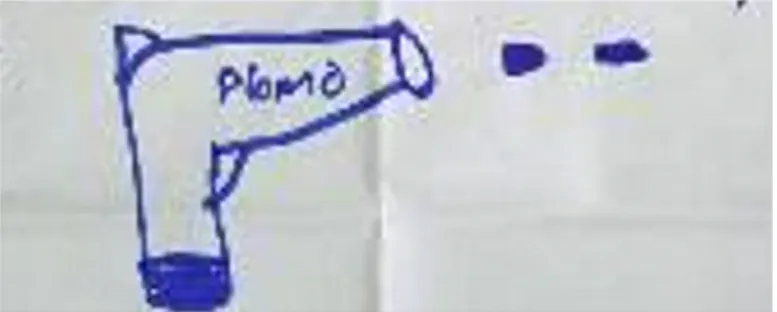
Where we came to live after being taken from the farm, it is very difficult to understand the evil of the people, in the sense that they abused us psychologically for the fact of living as "unwelcome guests", words like we were useless, nobody , verbal violence, putting me in a cold shower for 15 minutes to remove my rebelliousness, humiliation for food, they took me out of the house at night (..) During these years, in full teenage years, we lived in a neighborhood filled with drugs, robbery, death, the context was repeated again, having to see people die at the door of my house is shocking, having to live in fear, agony for your loved ones, it is another form of violence. cross-sectional accounts of gun exposure, a large percentage of participants report direct contact with firearms or blades.
School Violence
Ultimately, my parents decided to withdraw me from the educational institution (N40, personal communication, 2018, p. 6). On the other hand, the motivations for this violence repeatedly seem to be related to the physical appearance (skin color, texture) that had an impact on the development of academic and social dimensions (N14, personal communication, 2018, p. 2). It is common for a young man at this age to try to generate a good concept in front of his peers through a fight and that happened to me at the time when I went to school (6th grade), I was beaten a lot (I never won a single one) (N23, personal communication, 2018, p.3).
It is also stated the case where the student was an aggressor: "at school I became a rude person and there was a time when I bullied my classmates" (N47, personal communication, 2018 p. 7). On the one hand discrimination and on the other psychological and physical aggression, where the ways in which the violence works can in some cases resemble the traces left by the war.
Domestic Violence
She describes experiences from the past, as well as the present: "memories that I lived in childhood, when my father treated my mother badly and my brother treated me badly, and now I'm afraid that he will do something more serious to her now. that she is pregnant" (N19, personal communication, 2018, p. 12). But the interesting thing is that I told my aunt and she said it was because he loved children and basically normalized his behavior (N44, personal communication, 2018, p. 22). In addition to the above, there are several references to sexual violence, but the type of sexual violence is not explicit in the narrative.
For example: "a few times I have been sexually assaulted (...) sexual violence is the most common, especially if you are a woman, you are exposed to many things" (N42, personal communication, 2018, p. 21 ) ). My mother held my arms and I screamed when I saw my mother with her mouth and nose full of blood (N49, personal communication, 2018, p.16).

Partner Violence
Finally, in relation to the results of the workshop's particular experience, the authors were struck by two distinctive features that were found to predominate in the parallel accounts. The country that the young psychology students from the University of Manizales carry within them shows above all the sharpness of the violence experienced in Colombia, framed in the exposure to weapons, to the death of others, to physical and psychological harm. This explains the reproduction of violence that seems normalized in the public space (Koessl, 2015) as a habitus19 of everyday violence from the war, in addition to young people who seem to be unclear about the structural background of the war, of the historical implications attached to them.
The post-conflict resources were distributed among 19 of Colombia's 32 departments, and Caldas was not on the list. It is necessary to problematize the situations in which we have developed, which have led to reconciliation in the light of the characteristics of the environment, making certain violent phenomena that appear before our eyes "normal".
Colombian Regions and Armed Conflict
A Socio-economic Study in a Center-periphery Model 2000-2017 * **
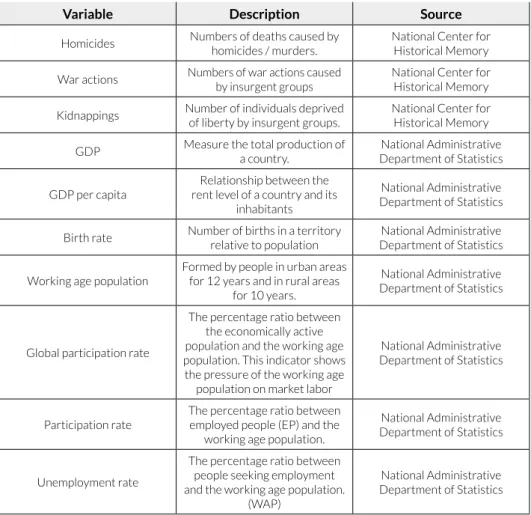
The variables of the model were found, the number of observations (Obs), the mean (Mean), the standard deviation (SD), the minimum value (Min) and the maximum value (Max). It showed the impact of the armed conflict in Colombia on the growth of the GDP of the departments with the center-periphery model. In the third phase, the construction of the model was carried out based on alternatives from the database.
This study made it possible to demonstrate the relationship between the armed conflict and economic growth in the peripheral departmental locations, which show the greatest presence of the conflict and evidence of state neglect. This is an event that marked the course of the armed conflict in the country.
The Narrative Methodological Contribution of the Lived Body toward the Deliberative Processes in Bioethics *
A Study Composed of Physicians as Observers of Bullying
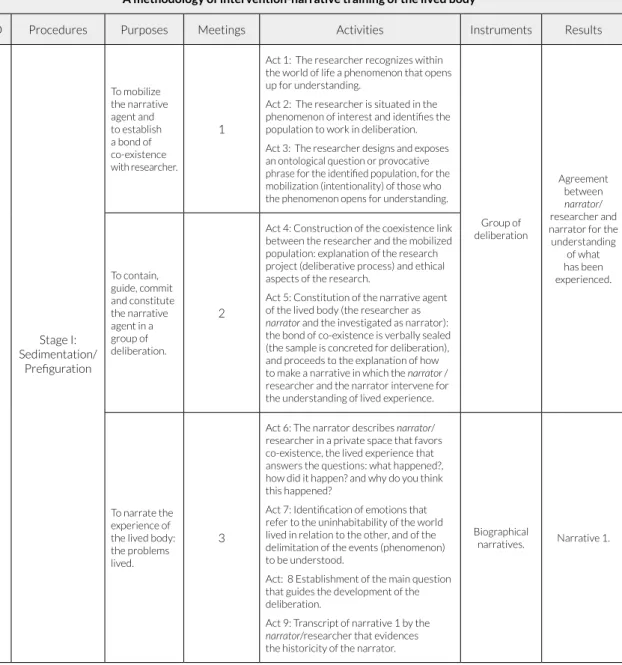
On the other hand, it mediates a morally meaningful narrative about the survived body in the understanding of said pain/suffering. To reconstruct (re-do) the narrative experience of the living body that develops the problem. Reconstruct (rewrite) the narrative experience of the living body that develops the problem.
CONFIGURE HISTORICITY (indentify idem + ipse) N2 RE-EXPERIMENTATION (of self as other, without judgment and without argument) NARRATIVE OF THE LIVING BODY. The communicative bridges that Potter (1971) emphasized (bridging bioethics) could be cemented with the narrative of the lived body.
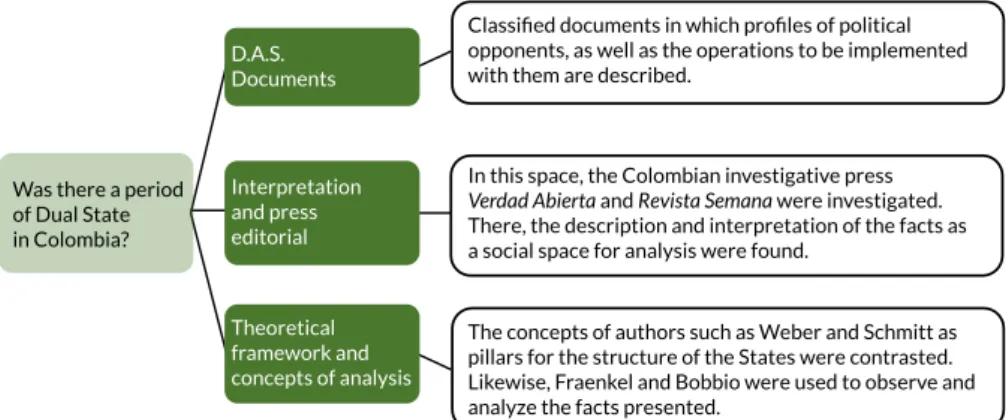
Writers such as Ernst Fraenkel (2010), who, from the historical perspective of National Socialism, proposed an alternative that he called the Prerogative State and the Normative State, which enabled the establishment of the differences that give birth to a Dual State. These concepts made it possible to analyze the evolution of the Colombian political reality from the events of the DAS and some aspects of parapolitics. There the description and interpretation of facts as a social analysis space was found.
The concepts of authors such as Weber and Schmitt as pillars for the structure of the State were contrasted. The DAS documents allowed for a direct examination of the theoretical resource and the press documents an analysis of the interpretation processes of the political reality of the moment.